
XpatAthens

XpatAthens

There are few cuisines that celebrate summer quite like Greek cooking.

When the temperatures climb, the best meals become wonderfully uncomplicated: ripe tomatoes, crisp cucumbers, fragrant herbs, creamy feta and generous glugs of extra virgin olive oil. It's the kind of food that invites everyone to linger around the table just a little longer.

Whether you're planning a relaxed lunch in the garden, a seaside-inspired dinner or simply looking for fresh ideas during the warmer months, these easy Greek recipes capture the very best of the season.


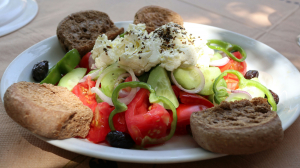
Horiatiki: The Ultimate Greek Village Salad

SnapInsta.to 618536159 18120396106565792 506689343936036182 n
@hellenic_world_

No Greek summer table is complete without a classic horiatiki. This iconic salad proves that the simplest ingredients often make the most memorable meals.

You'll need:
  • Ripe tomatoes
  • Cucumber
  • Red onion
  • Green pepper (optional)
  • Kalamata olives
  • Feta
  • Extra virgin olive oil
  • Dried oregano
  • A pinch of salt
Simply chop the vegetables into generous chunks, scatter over the olives and place a thick slice (or a few chunks) of feta on top. Finish with a generous drizzle of olive oil, a sprinkle of oregano and a little salt. Serve alongside fresh, crusty bread to mop up every last drop of those delicious juices.

Creamy Homemade Tzatziki

SnapInsta.to 634046090 122170612382665450 3915978339683332850 n
@manger.et.vivre

Cooling, refreshing and incredibly versatile, tzatziki is a staple throughout the summer months. It works beautifully as a dip, a side dish or a sauce for grilled meats and vegetables.

You'll need:
  • Greek yoghurt
  • Grated cucumber, squeezed to remove excess moisture
  • Garlic
  • Extra virgin olive oil
  • Lemon juice or white wine vinegar
  • Fresh dill or mint
  • Salt
Mix everything together until smooth and creamy, then refrigerate for at least 30 minutes before serving. The flavours become even better as they mingle.

Dakos: A Taste of Crete

SnapInsta.to 455839274 18447839761037383 2439453793944614559 n
@kouzounaskitchen

Originating from Crete, dakos is a wonderfully rustic dish that's both satisfying and refreshingly light.

You'll need:
  • Barley rusks (or toasted country bread)
  • Ripe tomatoes
  • Feta or mizithra
  • Extra virgin olive oil
  • Oregano
  • Kalamata olives
  • Capers (optional)
Lightly moisten the rusks with a splash of water, then top generously with grated or finely chopped tomatoes. Add the cheese, drizzle liberally with olive oil and finish with oregano, olives and capers for an extra burst of flavour.


Lemon and Oregano Grilled Chicken
SnapInsta.to 684884415 18575133964022874 8184126886506376064 n
@eaturselfskinny

Few aromas say "Greek summer" quite like chicken sizzling on the barbecue with lemon and oregano.
For the marinade, combine:
  • Juice of two lemons
  • Extra virgin olive oil
  • Crushed garlic
  • Dried oregano
  • Salt and freshly ground black pepper
Leave the chicken to marinate for at least 30 minutes before grilling until beautifully golden and cooked through. Serve with horiatiki and a generous spoonful of tzatziki for an effortless summer feast.


Watermelon & Feta Salad

SnapInsta.to 623114866 18115007044712871 102422970429463123 n
@40aprons

Sweet, salty and wonderfully refreshing, watermelon and feta are one of summer's most surprising — and most successful — pairings.
You'll need:
  • Watermelon, cut into cubes
  • Feta
  • Fresh mint
  • Extra virgin olive oil
  • Lemon or lime juice
  • Freshly ground black pepper
Combine everything in a large serving bowl and finish with a drizzle of olive oil and citrus juice. It's colourful, cooling and ideal for the hottest days of the year.

Gemista: Summer Comfort Food

SnapInsta.to 658309574 18397577422148448 4887715193120023830 n
@theoliveandmango

Although gemista spend a little longer in the oven, they're still one of the defining dishes of the Greek summer. They're equally delicious served warm or at room temperature, making them perfect for entertaining.
For the filling you'll need:
  • Rice
  • Onion
  • Garlic
  • Chopped tomatoes
  • Fresh parsley
  • Fresh mint
  • Extra virgin olive oil
Carefully hollow out large tomatoes and fill them with the rice mixture. Drizzle generously with olive oil before baking until the tomatoes are tender and the filling is perfectly cooked.

A Simple Greek Summer Menu

If you're hosting friends or family, there's no need to overcomplicate things. A menu built around fresh, seasonal ingredients is always a winner.

Start with creamy tzatziki served alongside warm pitta bread and olives. Follow with lemon and oregano grilled chicken accompanied by a traditional horiatiki salad. Finish on a refreshing note with chilled watermelon drizzled with a little honey and scattered with toasted pistachios.

Greek summer cooking isn't about elaborate techniques or lengthy ingredient lists. It's about making the most of beautiful produce, sharing generous plates and enjoying meals that bring everyone together.

And when the ingredients are this good, simplicity really is the secret ingredient.
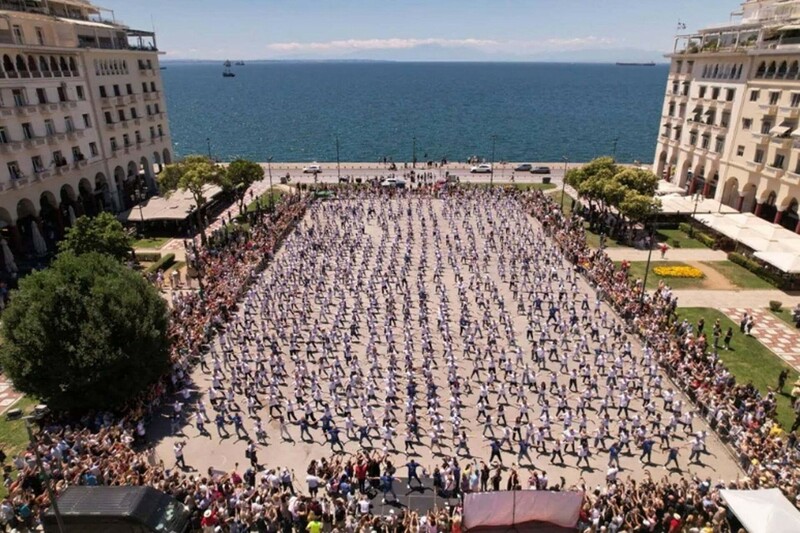
For five magical minutes, Aristotelous Square in Thessaloniki became far more than a stage for dance. It became a symbol of remembrance, solidarity and hope.

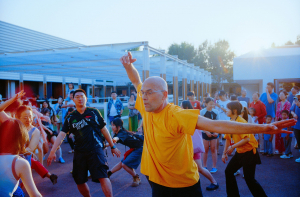
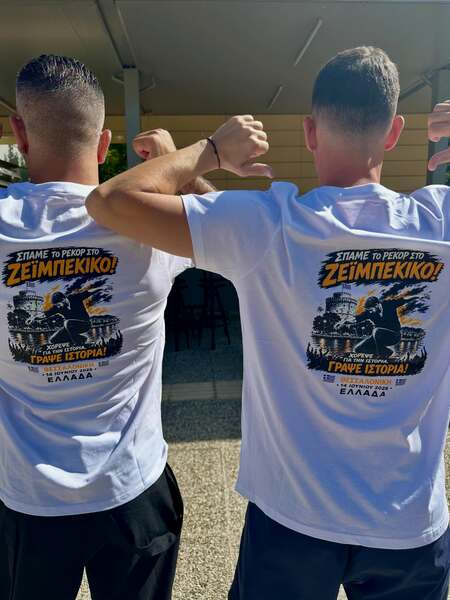
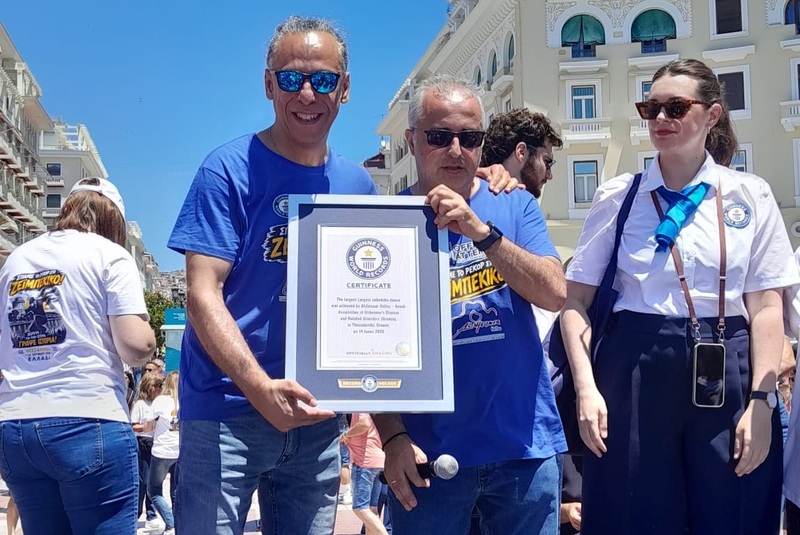
On 14 June, 830 people from 13 countries gathered in the city's iconic square to perform a carefully choreographed zeibekiko, earning Alzheimer Hellas an official Guinness World Records™ title for the Largest Zeibekiko Dance ever performed. Dancing to Mia Thessaloniki by Konstantinos Argyros, participants surpassed the previous record of 754 dancers held by Cyprus, proving that one of Greece's most deeply personal dances can also become a powerful act of collective purpose.

SnapInsta.to 722224194 18599396938029701 3862021661952014126 n
@neos_kosmos

Yet, beyond the applause, the certificates and the celebratory soundtrack of Queen's We Are the Champions, the real achievement lay elsewhere: raising awareness for Alzheimer's disease and demonstrating how dance itself can become a form of therapy.

A Dance Unlike Any Other

That the record was set with a zeibekiko made the achievement particularly remarkable.

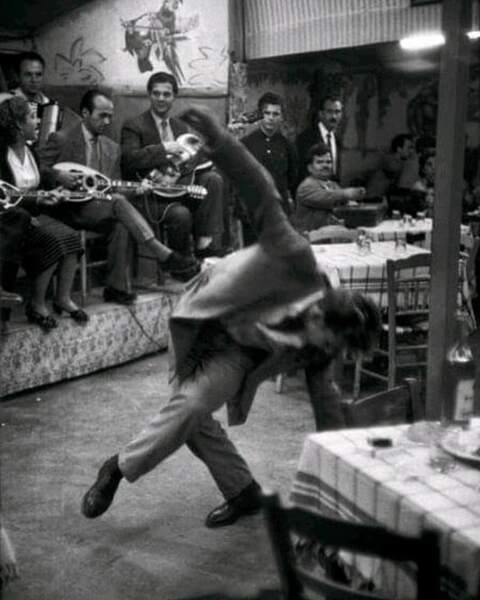
Traditionally, zeibekiko is one of the most intimate expressions of Greek culture. Originating from the Zeybeks, an irregular militia that lived in parts of the Ottoman Empire between the 17th and early 20th centuries, the dance gradually evolved into a deeply personal solo performance, historically danced by men and now embraced by women as well.

Unlike most traditional dances, zeibekiko has no fixed choreography. Dancers move freely within a circle, expressing emotion rather than following prescribed steps. Often referred to as the "dance of the eagle", it celebrates individuality, making a synchronised performance involving hundreds of dancers not only logistically ambitious but culturally extraordinary.

SnapInsta.to 619754842 18183632263317701 3180807590381943168 n
@oldgreekphotos

One Idea, Hundreds Of Dancers

The idea belonged to dance instructor Themis Parastatidis, who has spent years teaching dance to older adults living with Alzheimer's disease.
He explains how the inspiration came a year earlier, after realising just how beloved zeibekiko has become not only across Greece but among Greek communities abroad. Hence, vision quickly grew into an international movement.

Participants travelled to Thessaloniki from every corner of Greece, joined by dancers from Bulgaria, Romania, France, Germany, Austria, Norway, Serbia, Poland, Turkey, Cyprus, China and the United States. Many made the journey solely to take part in the record attempt.

Ahead of the event, free rehearsals were held on 12 and 13 June, allowing participants to learn the official five-minute choreography before stepping into Aristotelous Square for the historic performance.

SnapInsta.to 722490048 18430258021122943 8142452133208529327 n
@the_dance_club_by_kalamata

When Dance Becomes Medicine

For Parastatidis, however, the record was never simply about numbers. "Dance is not just exercise, but much more," he explains. "It trains memory, as dancers have to remember the steps and have good coordination. In addition, their mood improves because dance gives them the chance to take part in something collective, to come into contact with other people, and to meet people. Dance has many positive elements."
His work reflects an increasingly recognised understanding that movement, music and social interaction all contribute to healthier ageing.

Professor Emerita of Neurology Magda Tsolaki, President of the Panhellenic Federation of Alzheimer's Disease and Related Disorders, highlighted dance as an important form of physical activity that supports brain health and may help reduce the risk of dementia. She also noted that the event offered an opportunity to showcase Greek culture and tradition to an international audience.

The sight of hundreds of people dancing together sent another equally powerful message: community itself can be therapeutic.

More Than A World Record

The initiative was organised in collaboration with the Greek Alzheimer's Association and the Friends of the Greek Association of Alzheimer's Disease and Related Disorders.

Its wider aim extended far beyond breaking a Guinness record. The event sought to encourage conversations around prevention, early diagnosis and better support for people living with dementia and for their families.
Thousands attended the celebration in Thessaloniki, while extensive media coverage carried its message across Greece and abroad.

The awareness campaign also builds upon broader work taking place across Central Greece. Through the REMIND initiative, implemented by the Greek Association of Alzheimer's Disease and Related Disorders of Chalkida and funded by the Region of Central Greece, 38 community actions were delivered across 29 urban, rural and remote communities, reaching more than 1,800 older adults and family caregivers.

The programme also carried out 340 memory assessments to encourage earlier diagnosis and improve access to support services.

Using the Dementia Knowledge Assessment Tool (DKAT-2), alongside caregiver focus groups, researchers identified significant gaps in public awareness, particularly surrounding the early signs of cognitive decline, support for carers and access to services in more isolated areas.

The project has since been recognised as a Good Practice within the European FABCOM programme, highlighting its contribution to community-based dementia care across Europe.

A Victory Shared By Everyone

The Guinness World Records™ title was officially confirmed on site by adjudicator Lena Kuhlmann, following extensive participant counts and verification procedures. According to Guinness officials, every requirement was met flawlessly.

SnapInsta.to 724265091 18075317684674227 7152306844838297720 n
@atillateo

Thessaloniki's Mayor, Stelios Angeloudis, welcomed the achievement, expressing pride that such an important awareness initiative had taken place in the city's most recognisable square.

But perhaps the most fitting summary came from the organisers themselves: "This record belongs to everyone. To every dancer, volunteer, partner and supporter who believed that a collective dance could become a global message of solidarity, remembrance and hope for people affected by Alzheimer's disease. Today, we celebrate more than a world record. We celebrate the power of communities coming together for a common purpose."

In the end, the biggest triumph was never the number 830.

It was the reminder that memory can be honoured not only through medicine and research, but through music, movement and the simple act of dancing together.
Planning a summer in Greece filled with long swims, endless tanning sessions and lazy days on the beach, but can't bear the thought of leaving your furry best friend behind? We don't blame you. After all, they deserve to enjoy the crystal-clear waters and sunny adventures just as much as we do.

Before you grab the lead and head for the coast, though, it's worth knowing a few rules and handy tips to make sure your holiday stays fun, relaxing and stress-free, for both you and your faithful companion. A little preparation can save you from awkward surprises, long waits outside places where dogs aren't allowed, or having to completely rethink your beach plans.

Here's everything you need to know to keep your beach days legal and stress-free: 


What Does The Greek Law Say?

Greek legislation makes a clear distinction between organised and unorganised beaches, and the rules vary accordingly.

Unorganised Beaches

SnapInsta.to 698783510 17990491268970858 6545568665043611059 n
@best.greece.pictures

Dreaming of a secluded cove with no sunbeds, beach bars or booming playlists? Good news: these are generally the easiest places to enjoy with your dog.

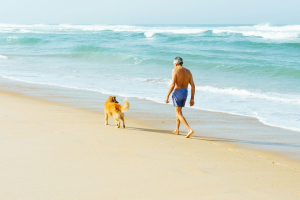
On unorganised beaches, dogs are allowed to walk along the shore, swim in the sea, and relax on the beach with their owners.

When your dog is on land, however, they must remain on a lead, wear a collar and stay under your supervision. Once they're in the water, they're free to paddle to their heart's content.

Organised Beaches

SnapInsta.to 727346119 17995813940970858 4354169200085011332 n
@best.greece.pictures

Organised beaches are those with facilities such as sunbeds, umbrellas, beach bars or entrance fees, or areas officially designated as heavily frequented. Here, the rules become stricter.
 
Dogs are only permitted if the beach operator has clearly displayed signs stating that pets are welcome. Even then, if your dog's swimming or presence disturbs other beachgoers, you may be asked to move elsewhere.

Assistance dogs are exempt from these restrictions and are permitted on all organised beaches regardless of signage.

As always, dogs must remain on a lead whenever they're out of the water.

Blue Flag Beaches

If you spot the famous Blue Flag flying overhead, be aware that the rules are different.

Blue Flag beaches prohibit dogs altogether, with the sole exception of certified assistance dogs. The restriction forms part of the programme's environmental and safety standards rather than a local decision.

SnapInsta.to 621855419 18106032823706234 1880118615415641648 n
@wu_greece

Beach-day Essentials

To avoid any unpleasant surprises during routine inspections, make sure your dog is:
  • Microchipped
  • Registered in the National Pet Registry
  • Carrying an up-to-date health booklet or pet health documentation
And, naturally:
  • Keep your dog on a lead while on land
  • Always clean up after them
Pro Tips
 
A little planning goes a long way

  • Head to the beach early in the morning or later in the evening when temperatures are lower and the crowds thinner.
  • If you're visiting an organised beach, choose a quieter section where your dog is less likely to disturb other swimmers.
  • After every swim, rinse your dog with fresh water to remove salt from their coat and skin.
Remember that Greece's beaches are home to plenty of wildlife too. Seagulls, nesting sea turtles and even the occasional mountain goat are fascinating neighbours - but probably best admired rather than chased.

And talking about particularly enthusiastic chasers: Greece's famous stray cats can be found almost everywhere. If your dog sees every cat as the start of an Olympic sprint, keep the lead short and distractions at the ready.
 
When in doubt, just ask

Not every beach follows exactly the same approach.

Always look for signs indicating whether dogs are permitted. If nothing is displayed, it's worth asking the beach bar or beach manager politely. Many smaller establishments are surprisingly accommodating, particularly during quieter hours.

Weekends in peak season can also be challenging, so if your dog isn't especially fond of crowds, weekdays are often a far more enjoyable option.

Beyond The Beach: Travelling Around Greece With Your Dog

Public transport

Public transport rules can be a little confusing.

In general, small dogs are permitted if travelling inside a suitable carrier. For larger dogs, regulations vary depending on the operator, and information isn't always easy to find.

If you're unsure, check with the transport company before travelling. Where possible, using a carrier for smaller dogs remains the simplest option.

Restaurants

You'll generally have much better luck choosing outdoor terraces rather than indoor dining rooms. Many tavernas are happy to welcome well-behaved dogs outside, particularly away from peak meal times.

Accommodation

Finding somewhere to stay requires a little forward planning. While pet-friendly accommodation is becoming more common, options remain relatively limited, especially in cities, so booking ahead is recommended.

Archaeological sites

Since 2023, Greece has become considerably more dog-friendly when it comes to archaeological sites. Dogs are now permitted at around 120 archaeological sites across the country, including Ancient Messene, Delos, Mycenae, Philippi and the Sanctuary of Asklepios at Epidaurus. They must remain on a lead no longer than one metre (or be carried), owners should carry the animal's health documentation, and larger dogs may be required to wear a muzzle.

Some of Greece's busiest monuments remain off-limits to pets, including the Acropolis, Knossos, Phaistos, Ancient Olympia, Delphi, the Ancient Theatre of Argolis and Pythagoreion on Samos. Assistance dogs are exempt under the applicable rules.

As there is no single official list covering every archaeological site, it's worth checking with local tourism authorities or simply confirming at the entrance before your visit.

With a little preparation and consideration for fellow beachgoers, Greece can be a fantastic destination for dogs and their humans alike. Choose quieter beaches, respect local regulations, pack the essentials and don't forget the fresh water - for both of you.

After all, holidays are better when every member of the family gets to enjoy the sea breeze!

SnapInsta.to 542558358 17933665131094358 3849855567409987496 n
@teka_and_uno_the_golden
If there's one holiday that never seems to lose its magic, it's islands hopping in Greece.

One day you're wandering through whitewashed alleyways with an iced Freddo in hand, the next you're diving into water so impossibly turquoise it looks filtered, before ending the evening over grilled octopus and a sunset that somehow manages to outdo yesterday's. It's little wonder that exploring the Greek islands sits firmly on so many travel bucket lists.
 
The only slight catch? Planning it.

With more than 200 inhabited islands spread across several archipelagos, organising the perfect island-hopping adventure can quickly become overwhelming. Which islands should you choose? How do you get from one to the next? How many can you realistically fit into one trip without spending your entire holiday living out of a suitcase?

Don't worry: we've done the hard part for you.

Whether you're after beach clubs and buzzing nightlife, sleepy fishing villages, ancient ruins, spectacular hiking trails or simply an excuse to slow down for a week (or two), we've put together the ultimate guide to island hopping from Athens. All that's left to do is find the route that matches your travel style, your budget and the amount of time you have to spare.

Just don't blame us when your "one-off Greek islands holiday" turns into an annual tradition. Greece has a habit of doing that.

The Golden Rule Of Island Hopping

Before you enthusiastically start pinning every Greek island you've ever seen on Instagram, here's the single best piece of advice we can give you: stick to one island group.

Greece's islands are divided into several different archipelagos: the Cyclades, the Ionian Islands, the Dodecanese, the Saronic Islands and more. While they may all belong to the same country, they're often surprisingly far apart.

It can be tempting to squeeze Mykonos, Corfu and Rhodes into the same itinerary, but you'll probably spend more time in ports, airports and ferry queues than actually enjoying the islands themselves.

Choosing one island group makes your journey infinitely smoother. The islands are naturally clustered together, ferry connections are far more frequent, and many smaller islands are linked by local boats, making hopping from one destination to the next remarkably easy. 

So… Which Greek Island Group Should You Choose?

The answer depends entirely on the kind of holiday you're dreaming of.

Every Greek archipelago has its own personality, landscapes and rhythm. Here's a quick guide to help you choose.


The Cyclades: Greece's Picture-Perfect Postcard

SnapInsta.to 671133732 18587076685019841 8658751583992453355 n
@george_kormpos
 
If you've ever imagined a Greek island holiday, chances are you've been picturing the Cyclades all along. Situated in the heart of the Aegean Sea, this iconic archipelago takes its name from the circle (kyklos in Greek) formed around the sacred island of Delos. Home to world-famous islands such as Mykonos, Santorini or Paros, the Cyclades are the Greece of postcards, Pinterest boards and every travel brochure you've ever flicked through. Think dazzling white villages bathed in sunshine, blue-domed churches, cobbled alleyways overflowing with bougainvillea and endless shades of blue stretching towards the horizon.

They're also the easiest islands to explore in a single trip. Thanks to their popularity, ferry routes are frequent and reliable, while several islands also have domestic airports, making travelling between them wonderfully straightforward. Most ferry journeys are short enough to leave you with plenty of time to actually enjoy each destination. And once you arrive, you can easily get around without a car thanks to the local bus network.

Perfect for: first-time visitors, honeymooners, groups of friends and anyone chasing the Greece of their dreams. 

A classic itinerary could look something like this:
 
🚢 ATHENS (Piraeus)
↓ 2h40–5h | €55–90
🏝️ MYKONOS (Tourlos)
↓ 45–80 min | €30–50
🏝️ PAROS (Parikia)
↓ 25–45 min | €8–20
🏝️ NAXOS (Chora)
↓ 1h15–2h | €30–55
🏝️ SANTORINI (Athinios)
↓ 2–2h30 | €35–55
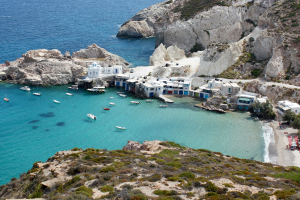
🏝️ MILOS (Adamas)
↓ 2h45–4h | €45–80
🚢 ATHENS (Piraeus)

Mykonos

Yes, it's glamorous. Yes, it's expensive. And yes, it's every bit as lively as you've heard.

Whether you're here for beach clubs, boutique shopping or sunset cocktails in Little Venice, Mykonos is an unforgettable first stop. Visit before continuing deeper into the Cyclades and swapping the party scene for a slower pace of life.

Paros

Paros strikes that rare balance between lively and laid-back.

Spend your mornings wandering around Parikia or the postcard-perfect harbour of Naoussa before heading to the beach in the afternoon.

If you have an extra day, hop over to neighbouring Antiparos, just a short ferry ride away. Smaller, quieter and effortlessly chic, it's dotted with hidden coves, sea caves and wonderfully clear swimming spots that feel a world away from the summer crowds.

Naxos

Combining spectacular beaches with traditional mountain villages, fertile valleys and some of the best local food in Greece, Naxos is the largest island in the Cyclades. If your perfect holiday includes long tavernas lunches and a slower rhythm of life, you'll probably find yourself wishing you'd booked an extra night here.

Santorini

The postcard island needs very little introduction.

While Santorini has become synonymous with spectacular sunsets and whitewashed cliffside villages, there's far more than Oia's famous viewpoints. Venture beyond the busiest streets and you'll discover charming villages such as Pyrgos and Emporio, local wineries producing exceptional volcanic wines, fascinating archaeological sites like Akrotiri and, of course, the island's extraordinary volcanic landscape.

This rugged volcanic island has exploded in popularity over the past few years, yet somehow still manages to feel refreshingly authentic.

It's an island made for exploring. Rent a 4x4 if you can, because many of its best beaches lie at the end of dusty tracks, while others require a short scramble to reach. Half the fun is discovering places that don't immediately reveal themselves.

Sarakiniko Beach is, unsurprisingly, the island's biggest star. Its smooth white volcanic rocks create an almost lunar landscape that feels unlike anywhere else in the world.
Back in Plaka, reward your adventures with something sweet from Café Palaios before climbing up to the Venetian Castle for sunset. Pro tip? Pick up takeaway cocktails on your way, the view somehow becomes even better.

Fancy Something a Little Different?

If beach clubs and postcard sunsets aren't quite your thing, there's another Cycladic route worth considering:

🚢 ATHENS (Piraeus)
↓ 4–7h | €45–75
🏝️ IOS
↓ 2–3h30 | €15–30
🏝️ KIMOLOS
↓ 50 min–1h15 | €5–10
🏝️ MILOS
↓ 2h45–4h | €45–80
🚢 ATHENS (Piraeus)

Ios may have built its reputation as Greece's ultimate party island, but it's also home to beautiful beaches such as Mylopotas and some amazing local cuisine. Don't leave without trying tsimetia, these delicate zucchini blossoms stuffed with rice.

Next comes tiny Kimolos, one of the Cyclades' best-kept secrets. Quiet, authentic and wonderfully unspoilt, it's the sort of place where your biggest decision of the day is which beach to swim at next. Make time to sample ladenia, the island's delicious answer to pizza, topped simply with tomatoes and onions. If you're visiting during summer, don't miss the open-air cinema held right by the beach.

Finish your journey in Milos before sailing back to Athens, sun-kissed, slightly saltier than when you left, and already wondering how soon you can do it all over again.

The Ionian Islands: Greece's Emerald Escape

SnapInsta.to 642968892 18065531510654162 1576042625120026222 n
@passionegrecia
 
If the Cyclades are all white and blue, the Ionian Islands are all about green.
 
Located on the country's western coast, these islands are cooler and wonderfully lush. Forested hills tumble into dramatic cliffs, olive groves stretch for miles and long sandy beaches replace the rocky coves that characterise much of the Aegean.

Life here moves at a gentler pace, making the Ionian Islands a fantastic choice for families with younger children, nature lovers and anyone looking for a more relaxed escape.

One important thing to know before you start planning: there are no ferries from Athens to the Ionian Islands. Instead, you'll need to fly from Athens to one of the main islands (Corfu, Kefalonia or Zakynthos for example), all of which have domestic airports. Once you're there, ferries make travelling between the islands pretty straightforward.

A popular itinerary would look like this:

🏛️ ATHENS
↓ 7–9h | €25–40
🏝️ CORFU
↓ 5h30–7h | €20–35
🏝️ LEFKADA
↓ 2–3h | €15–25
🏝️ KEFALONIA
↓ 5–6h | €30–45
🏝️ ZAKYNTHOS
↓ 5–6h | €30–45
🚢 ATHENS

Or, if you prefer quieter corners of Greece:

🏛️ ATHENS
↓ 7–9h | €25–40
🏝️ CORFU
↓ 5h30–7h | €20–35
🏝️ LEFKADA
↓ 2–3h | €15–25
🏝️ KEFALONIA
↓ 30–60 min | €3–8
🏝️ ITHACA
↓ 4h30–6h | €20–35
🚢 ATHENS

Corfu

Elegant and full of character, Corfu blends Venetian architecture, lush green landscapes, and crystal-clear beaches. From its lively Old Town to secluded coves and charming villages, the island offers a perfect balance of culture, nature, and relaxed Mediterranean living. 

Lefkada

Connected to the mainland by a bridge, Lefkada is famous for its spectacular turquoise waters and dramatic white cliffs. Home to some of Greece's most iconic beaches, it is a paradise for nature lovers, sailors, and anyone seeking breathtaking coastal scenery. 

Kefalonia

The largest of the Ionian Islands, Kefalonia captivates visitors with its emerald mountains, hidden caves, and stunning beaches. Authentic villages, local traditions, and unspoilt landscapes make it an ideal destination for those looking to experience the island's natural beauty.

Zakynthos

Best known for the world-famous Navagio (Shipwreck) Beach and its vibrant blue waters, Zakynthos combines spectacular scenery with a lively atmosphere. Beyond its iconic coastline, visitors will discover picturesque villages, sea caves, and the protected nesting grounds of the endangered loggerhead turtles. 

Ithaca

Small, peaceful and blissfully free from large resorts or beach clubs, Ithaca attracts travellers looking for tranquillity rather than nightlife. 

It's easy to reach from Kefalonia, but somehow feels a world away. No wonder Odysseus never stopped longing for Ithaca. 

The Dodecanese: For Slow Travellers & Culture Lovers

SnapInsta.to 544531294 18369862450150416 3659535498439120839 n
@urban_wanders
 
Scattered close to the Turkish coastline, the Dodecanese feel like another side of Greece altogether, blending medieval history, Byzantine monasteries, colourful harbours and exquisite family-run tavernas. While Rhodes often steals the spotlight, many of the surrounding islands remain blissfully under the radar. Perfect for: history lovers, slow travellers and anyone looking to venture beyond the classic Greek island itinerary.

Reaching some of these islands takes a little more planning, particularly those without airports, but once you're there they're very well connected by local ferries.

A fantastic itinerary could look like this:
 
🏛️ ATHENS
↓ 15–18h | €45–65
🏝️ RHODES
↓ 5–7h | €20–35
🏝️ PATMOS
↓ 30–45 min | €5–10
🏝️ LIPSI
↓ 20–40 min | €5–8
🏝️ LEROS
↓ 9–11h | €35–55
🚢 ATHENS

Rhodes

Rhodes is the perfect gateway into the Dodecanese.

Its spectacular UNESCO-listed Medieval Old Town is one of the best preserved in Europe, with cobbled streets that seem to transport you straight back to the era of the Knights of St John. Lose yourself among its alleyways before visiting the impressive Palace of the Grand Master. If you're lucky to visit in summer, you might even catch the island's annual Medieval Festival!

But Rhodes isn't just about history. Hire a car and venture beyond the city to discover the whitewashed village of Lindos, the famous Acropolis overlooking the sea, the lush Valley of the Butterflies and beautiful swimming spots such as Anthony Quinn Bay and Faliraki Beach.

Patmos

Small in size but enormous in cultural significance, Patmos is one of Greece's most fascinating islands.

It's best known for the Cave of the Apocalypse, where St John is said to have written the Book of Revelation. From there, a beautiful walking path leads to the Monastery of Saint John the Theologian, perched high above the island and rewarded with sweeping views across the Aegean.

Once you've soaked up the history, swap your walking shoes for a scooter and spend the afternoon beach-hopping between Petra, Vagia, Lampi and the golden sands of Psili Ammos.
End the day exactly as the Greeks would: dining by the sea while the sun slowly slips below the horizon.

Lipsi

Tiny, peaceful and blissfully untouched, this little island is one of the Dodecanese's best-kept secrets. Everything is within walking distance, the beaches are gloriously quiet and the days seem to unfold without anyone paying much attention to the time.

Book a room overlooking the harbour, spend your mornings swimming, your afternoons doing very little at all, and your evenings at the traditional café Sofoklis, enjoying fresh octopus, a glass of ouzo and conversations that last until midnight.
 
Leros

Your final stop combines authentic island charm with an easy journey back to Athens, thanks to its domestic airport.

Base yourself around Agia Marina, stroll through the colourful harbour, then climb towards the island's iconic windmills just before sunset.


The Saronic Islands: Athens' Weekend Escape

SnapInsta.to 619341694 18070401911564233 4050033221811096439 n
@rudylauer
 
Short on time? The Saronic Islands are your best friend.

Just a short ferry ride from Athens a short ferry ride from Athens, islands such as Aegina, Hydra, Spetses, Poros and Agistri are perfect for day trips, long weekends or anyone looking for a quick taste of island life without venturing too far from the capital. The Saronic Islands are perfect for an easy taste of island hopping, thanks to day cruises that typically visit three islands in one trip. 

Each island has its own distinct character. Hydra is famously rugged and car-free, Spetses is greener and wonderfully elegant, while Aegina charms visitors with its pistachio groves and relaxed waterfront.

... And Many More
 
Of course, Greece's island story doesn't end there.

The Sporades, home to Skiathos, Skopelos and Alonissos, are among the country's greenest islands and instantly recognisable as the breathtaking backdrop to Mamma Mia!. Picture pine forests tumbling into crystal-clear waters and beaches that feel worlds away from the bustling Cyclades.

Then there are the North Aegean Islands: Lesbos, Chios, Samos, Ikaria and their lesser-known neighbours. Still refreshingly under the radar, these islands blend Greek traditions with centuries of Asia Minor influence, offering remarkable food, rich history and a wonderfully authentic atmosphere away from the tourist trail.

And finally, there are the islands that refuse to fit neatly into any category. Evia, connected to the mainland by bridge, or Crete, is practically a country of its own. Vast, wildly diverse and endlessly fascinating, Greece's largest island deserves far more than a fleeting visit.

Bonus Route: For The Adventurous Traveller

Have a little more time? Skip the classic routes and venture into one of Greece's least-explored corners.
It's a journey that rewards curious travellers with spectacular scenery, extraordinary food and some of the country's most authentic island life.

🏛️ ATHENS
↓ 8–9h | €35–55
🏝️ CRETE
↓ 2–4h | €15–25
🏝️ KASOS
↓ 1–2h | €10–18
🏝️ KARPATHOS
↓ 3–5h | €15–30
🏝️ RHODES
↓ 15–18h | €45–65
🚢 ATHENS

Crete

Crete isn't just another Greek island ; it's practically a world of its own.

Large enough to deserve an entire holiday by itself, it's an ideal starting point if you have two weeks or more. Fly into Heraklion or hop aboard an overnight ferry from Athens and wake up ready to explore.

From the Venetian streets of Chania to the tranquil waters of Lake Kournas and the palm-fringed beauty of Preveli Beach, every corner of Crete offers something different.

And then there's the food. You'll quickly understand why Cretan cuisine has such an outstanding reputation.

Kasos

Welcome to Kasos, one of Greece's remotest inhabited islands. Ferry connections aren't particularly frequent, so it's worth planning this leg well in advance, but the reward is an island that feels beautifully untouched.

The tiny flight from Kasos to your next step Karpathos lasts just five minutes, making it one of the shortest commercial flights in the world. Blink, and you'll miss it.

Karpathos

Karpathos somehow manages to feel both wild and welcoming.

Base yourself in Pigadia before hiring a car to explore the island's dramatic coastline and spectacular beaches, including Kyra Panagia, Achata and Apella. Don't miss Olympos, one of Greece's most remarkable villages, perched high on a mountainside where many local women still proudly wear traditional dress.

Visiting in August? You're in luck. Summer panigyria (village festivals) are among the most memorable experiences you'll have in Greece, combining live music, dancing and enough local food to keep you happily occupied until the early hours.

Speaking of food, don't leave without trying kremmydokouloura (a delicious onion bread roll), handmade makarounes pasta and the island's famous stuffed lamb, vyzanti.

A Few Handy Tips
 
A little preparation goes a very long way when island hopping.
 
Slow Down & Leave Space For Sponteneity 

There'll always be another island. So don't spend your holiday trying to tick off as many as possible.

Island hopping is meant to be slow. It's about lingering over a three-hour lunch in a seaside taverna, discovering a beach that isn't in the guidebooks and deciding completely spontaneously to stay an extra night because you're simply not ready to leave. The ferries will still be there tomorrow.

And somehow, that's a very Greek way to travel.After all, isn't that what holidays are supposed to be about?

Ferries Are Part Of The Experience

Regular ferries (Blue Star Ferries, Saronic Ferries, and many more)  are slower but comfortable, often with cafés, outdoor decks and plenty of space to stretch your legs. High-speed ferries (Flying Dolphins, Seajets) save valuable time but cost a little more - and if you're prone to seasickness, you may prefer the slower option on windy days. Local ferries connect many smaller islands, while water taxis are handy for short hops and hidden beaches.

Whenever possible, we'd recommend choosing the ferry over a domestic flight. It's not only the more environmentally friendly option, it's also one of the great pleasures of travelling around Greece. Watching one island slowly disappear on the horizon while another gradually comes into view never really gets old.

Book In Advance

During the summer months, ferries and accommodation fill up quickly.

Booking online in advance (using platforms such as Ferryhopper for example) is always easier than waiting until you reach the port. If you're travelling long distances, overnight ferries can also be a brilliant way to save both time and a night's accommodation.

If you're flying into Greece, arriving in Athens before continuing by ferry is often cheaper than flying directly to many islands.
And if you're wondering which Athenian port to use:
  • Piraeus is best if you're staying in Athens city centre
  • Rafina is closer to Athens International Airport and particularly convenient if you're heading straight to the Cyclades
Pack Smarter 

Greece is gloriously hot in summer, but evenings on the islands can be surprisingly breezy, so pack a light jumper or jacket.

It's also worth carrying some cash, particularly on smaller islands such as Kasos or Lipsi, where card payments aren't always accepted and the island's only cash machine occasionally decides it's on holiday too.

The hardest part of planning a Greek island-hopping holiday isn't deciding whether to go; it's deciding where to begin.
 
Fortunately, whichever archipelago you choose, one thing is almost guaranteed: before your ferry has even sailed back to Athens, you'll already be planning your next trip.
There are places you visit, and then there are places that quietly change the way you see the world.

In Glyfada, lies a place many people don't even know exists. Yet every single day, it becomes a second chance for some of the Mediterranean's most extraordinary creatures.

This is the country’s only Sea Turtle Rescue Centre, run by ARCHELON, the Sea Turtle Protection Society of Greece.

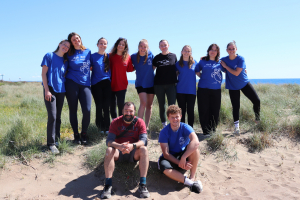
We visited the Rescue Centre, expecting to learn about sea turtles. Instead, we left with something far more valuable: a profound appreciation for the hundreds of people who dedicate their lives to protecting them.

The first person to welcome us was John, one of ARCHELON's volunteers. Still a teenager, he greeted us with infectious enthusiasm and the kind of confidence that only comes from doing something you genuinely believe in. 

What surprised us most, however, was that John was the only volunteer on duty who spoke Greek. Around him were volunteers from every corner of the globe, who had travelled thousands of miles simply to help protect Greece's sea turtles. Every year, around 500 volunteers join ARCHELON's conservation projects, creating an international community united by one common purpose.

49592342 820620788285156 8122327337682337792 o

A Story That Began With Tracks In The Sand

Every great conservation story starts with a discovery.

For ARCHELON, that moment came during the summer of 1977, when Dimitris and Anna Margaritoulis, while on holiday in Zakynthos with their children, noticed unusual tracks stretching across the beach. At the time, there had been no scientific documentation proving that loggerhead sea turtles nested in Greece.

The discovery sparked years of research, and in 1983, the non-profit organisation ARCHELON – The Sea Turtle Protection Society of Greece was officially founded with one ambitious mission: to study and protect sea turtles and the fragile coastal habitats they depend on.

Today, ARCHELON protects nesting beaches across Greece, including Zakynthos, Chania, Rethymno, and Messara Bay in Crete, Kyparissia Bay, Koroni and Lakonikos Bay in the Peloponnese.
Collectively, volunteers monitor around 100 kilometres of nesting beaches every single summer. It is a remarkable operation, powered largely by people who simply choose to care.


To support ARCHELON’s work, make a donation here! To become a volunteer and discover available projects, learn more here! 


More Than A Rescue Centre

Although ARCHELON is best known for its rescue work, protecting sea turtles is only one part of its mission.

The organisation combines wildlife rehabilitation, scientific research, conservation activities, environmental education and raising public awareness under one roof.

The Rescue Centre in Glyfada operates 24 hours a day, seven days a week, receiving injured and sick turtles from every corner of Greece.

Meanwhile, on the nesting beaches, hundreds of kilometres away, volunteers patrol the coastline before sunrise, protect nests throughout the summer and help ensure hatchlings make it safely to the sea.

Back in Athens, schoolchildren visit the Rescue Centre throughout the year to discover the importance of marine conservation through educational programmes.

Where Every Turtle Has a Story

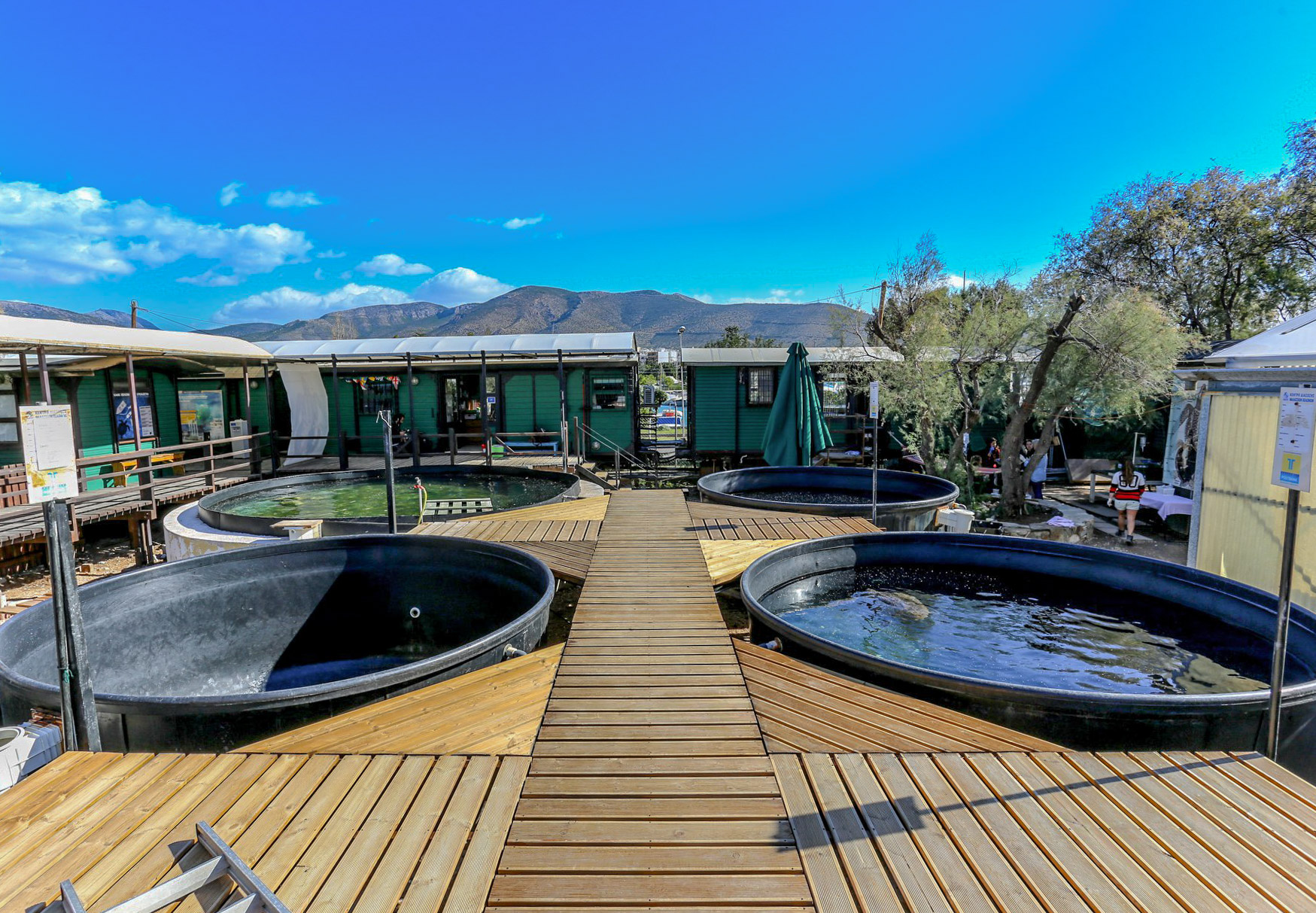
Walking through the gates of ARCHELON's Rescue Centre in Glyfada, it becomes immediately clear that this is not a place built around sadness.

Yes, every turtle arriving here carries a story of injury, danger or human impact. But the atmosphere is not one of defeat. It is a place filled with movement, dedication and hope.

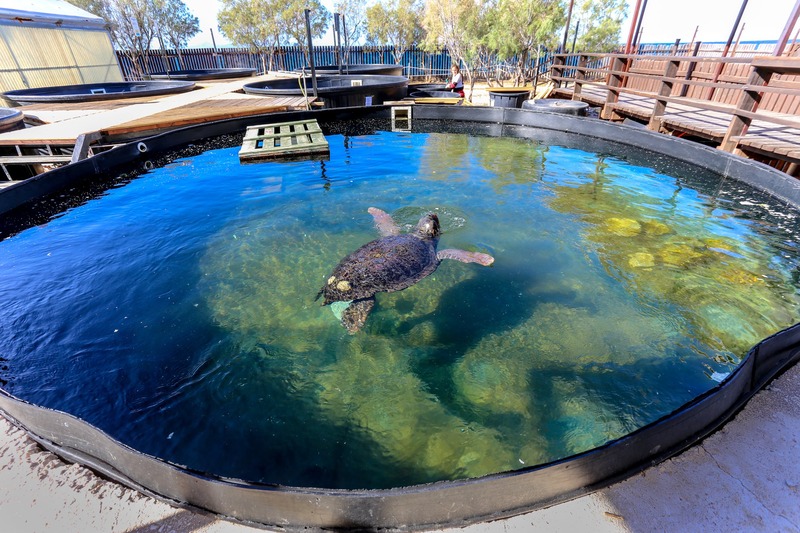
Every tank represents a second chance.

John began our tour by introducing us to the species of sea turtles that can be found in Greek waters. Although the focus of ARCHELON's work is primarily the loggerhead sea turtle (Caretta caretta), Greece is also home to two other species: the enormous leatherback turtle (Dermochelys coriacea), which can reach more than two metres in length, and the green sea turtle (Chelonia mydas).

But the turtles arriving at the Rescue Centre are not here because of natural causes. Most are victims of human activity.

Some have been injured by fishing equipment. Others have swallowed hooks hidden among their food and required surgery to remove foreign objects from their bodies. Some have suffered severe injuries caused by boats, while others arrive exhausted and stressed after dangerous encounters at sea. The Rescue Centre is often the last hope between survival and death.


rescue centre

A Place Built For Healing

One of the most unique parts of the Rescue Centre is the greenhouse area. Here, turtles suffering from more serious conditions—including pneumonia or severe injuries—are kept in controlled conditions to support their recovery.

It was one of the most moving parts of our visit. Seeing these ancient animals, some of which can live for more than 80 years, quietly recovering after experiences they should never have had, creates a strange combination of sadness and admiration.

Sadness, because so many injuries are caused by human actions. Admiration, because of the people who refuse to give up on them.

The rehabilitation team and volunteers work tirelessly, often performing delicate procedures and surgeries to remove fishing hooks, plastic waste and other dangerous materials from turtles that arrive at the centre.

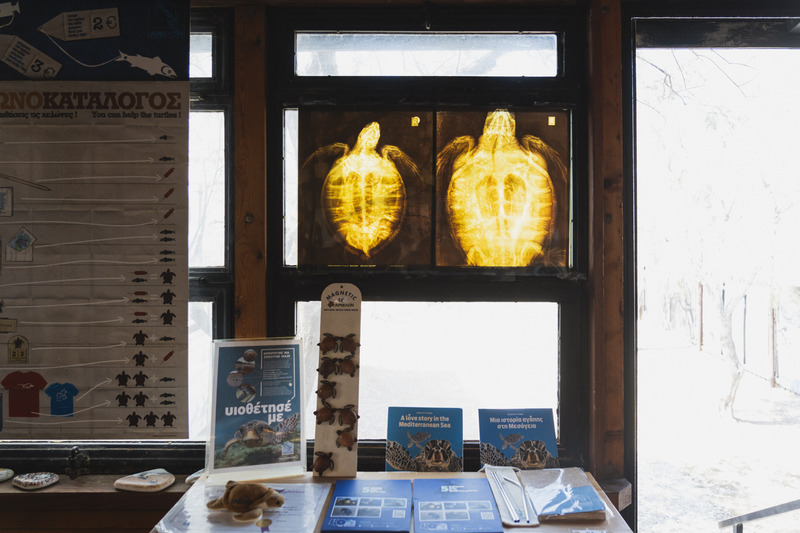
One of the most powerful reminders of this work can be found in the ARCHELON gift shop. Among the items visitors can take home as a memory of their experience is a display of fishing hooks removed from rescued turtles. 

Each hook has the name of the turtle it was taken from. Each one represents a life that almost ended. Each one represents a turtle that was given another chance.

arxelon glyfada 7

The Moment Dimitris Showed Us What Rescue Really Means
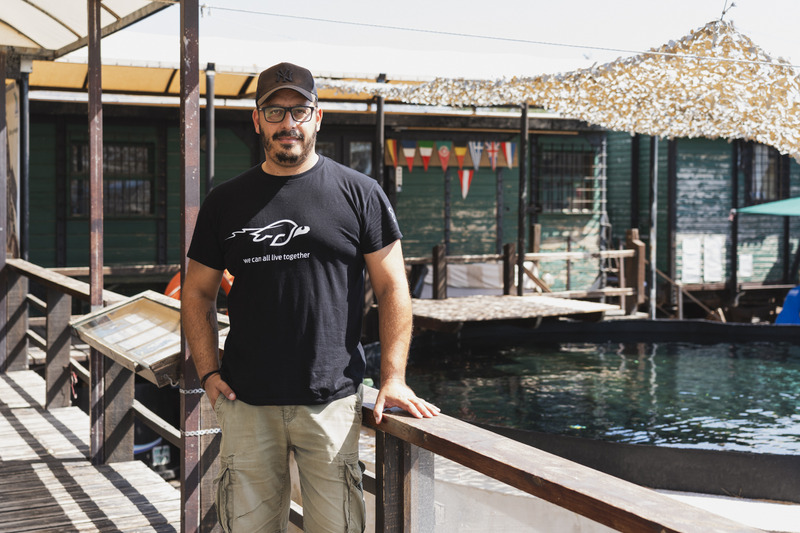
Just when we thought our visit was coming to an end, we met Dimitris, the head of the Rescue Centre.

An oceanographer with years of experience and an incredible depth of knowledge, Dimitris had one more thing to show us.

He opened videos of actual rescue operations and watching those moments was unforgettable.

Turtles found injured at sea, carefully transported, treated and eventually returned to the water. Moments of fear transformed into moments of freedom.

It was a powerful reminder that conservation is not an abstract idea. It is real people making real decisions every day that determine whether another creature gets to survive.

Dimitris also shared a wider perspective about our changing planet. He explained that Earth's climate has naturally gone through cycles of warming and cooling throughout history, including periods separated by thousands of years.

Nature has always had an extraordinary ability to adapt. Sea turtles themselves are already showing signs of adaptation.

For example, nesting seasons have gradually begun shifting earlier. While the first nests traditionally appeared later in the summer, today the first females may arrive as early as the beginning of May.
This change is connected to rising temperatures and the turtles' effort to adapt to new environmental conditions. But adaptation has limits. And this is why protection remains so important.

ARXELWN 5

The Quiet Work Behind Every Rescued Turtle

What makes ARCHELON remarkable is that the Rescue Centre is only one part of a much larger network. Every injured turtle treated in Glyfada represents an entire chain of people working behind the scenes:

The volunteers who patrol beaches.

The researchers who monitor populations.

The educators who teach children.

The people who report injured turtles.

The supporters who donate.

Without this network, many of these animals would never survive.

Since its creation, ARCHELON has rescued more than 1,600 sea turtles, successfully returning approximately 70% of them back to the sea. Those numbers represent thousands of hours of human dedication. But they also represent something bigger: a belief that even one turtle matters.

Protecting The Beaches Where Life Begins

During the nesting season, ARCHELON volunteers become the silent guardians of the coastline. Every morning, starting as early as 5:30 a.m., they walk along the beaches searching for the unmistakable signs left behind by female turtles during the night.

Their tracks often look surprisingly similar to tractor tyre marks stretching across the sand. Following these trails, volunteers locate nests, record important scientific information and ensure that each nest receives the protection it needs.

The work continues after sunset too, with evening patrols carefully monitoring the beaches while minimising disturbance to the turtles. Volunteers use red-light torches, because normal bright lights can confuse the nesting turtles and interfere with their nesting success .

A Journey Written In Nature’s Memory

When a female loggerhead turtle comes ashore, she follows an ancient instinct passed down through millions of years. Under the cover of darkness, she carefully chooses the perfect location, digs a chamber around 60 centimetres deep, lays her eggs and spends hours covering the nest with sand, carefully camouflaging it from predators.

The eggs are surprisingly small—about the size of ping pong balls—and a single female can lay between 70 and 120 eggs, sometimes creating several nests during one nesting season. Yet perhaps the most remarkable part of this process is also the most emotional: the mother turtle will never meet her babies. She gives everything to create a safe beginning for them, then returns to the sea, leaving the rest of the journey to the hatchlings.

Around one and a half months later, tiny turtles emerge from beneath the sand, no larger than a human ear, facing one of nature’s most difficult challenges: reaching the ocean. Guided by instinct, they move towards the brightest horizon, the natural reflection of moonlight over the sea, a behaviour known as phototaxis. But today, artificial lights from hotels, roads and buildings can confuse them, leading them away from the water and towards danger.

For these tiny creatures, every step matters. Only around one in every thousand hatchlings is expected to survive until adulthood, facing predators, vehicles, pollution and human activity along the way. This is why protecting nesting beaches and reducing light pollution is so important, because one wrong direction can change the fate of an entire generation.

And yet, despite these challenges, sea turtles possess one of nature’s most extraordinary abilities: the power to find their way home. After reaching maturity, female loggerheads often return to the same regions where they were born to create the next generation. They can travel thousands of kilometres across oceans and still navigate back, guided partly by magnetoreception, their ability to detect Earth’s magnetic field and use it as a natural map.

While females return to the beaches to nest, males remain in the sea and never come ashore, a behaviour that dates back millions of years to their ancient reptilian ancestors.

A Species That Came Back From The Edge
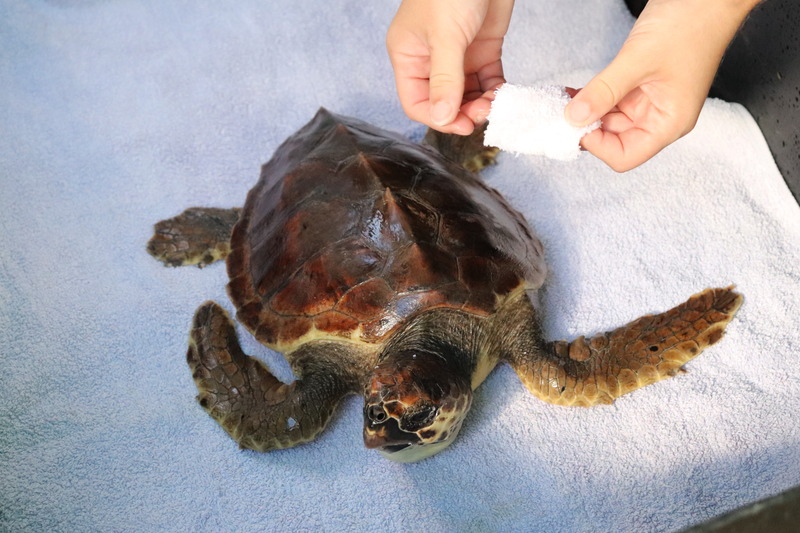
The loggerhead turtle was once classified as endangered in Greece. Thanks to decades of conservation efforts, including the work of organisations like ARCHELON, its status has improved to Vulnerable.

This is an important success story, but it is also where many people misunderstand conservation. Vulnerable does not mean safe. It means that progress has been made, but continued protection is essential.

Without volunteers monitoring nests, protecting beaches, educating communities and treating injured turtles, that progress could easily disappear.

treatment 2 2

What To Do If You Find A Turtle Or Hatchling

One of the most important messages ARCHELON shares with visitors is what to do when encountering a sea turtle. If you find an injured turtle, do not try to handle it yourself. The correct action is to immediately contact ARCHELON, whose specialised team can provide guidance and organise rescue, by calling the 24/7 Rescue Network at +30 6941 511 511.

If you find a small hatchling, it is essential not to pick it up with bare hands. Human hands can transfer bacteria and substances that may harm these fragile animals. 

Never place a hatchling directly into the sea. Those first steps from the nest to the water are a vital part of its development. The movement strengthens its muscles and helps it complete an important natural process that increases its chances of survival.

If you see hatchlings emerging from the nests in daylight, clear the top layer and smooth the sand in front of them and shield them from the sun, shading them until they enter the sea.  
Sometimes helping wildlife means knowing when not to interfere. Nature has designed these first moments for a reason. And ARCHELON’s work is about protecting that process, not replacing it.

Small Actions Create Big Changes

ARCHELON’s work continues because of the people who choose to support it. Donations help keep the Sea Turtle Rescue Centre operating, provide medical care and rehabilitation for injured turtles, maintain essential equipment and support the conservation programmes protecting nesting beaches across Greece. Every contribution, big or small, directly helps turtles receive the care they need and allows volunteers and experts to continue protecting nests, hatchlings and vulnerable sea turtle populations.

If you would like to become part of this effort, you can support ARCHELON by making a donation and helping provide life-saving care to rescued turtles. You can also choose to support the nesting projects, where volunteers work throughout the summer to monitor nests, protect hatchlings and collect important scientific data.

For those who want to experience conservation first-hand, ARCHELON welcomes volunteers from Greece and around the world. Volunteers take part in beach monitoring, nest protection, hatchling conservation, turtle rehabilitation support and environmental awareness activities. Whether you are a student, a researcher or simply someone who loves nature, there is a way to contribute.

To support ARCHELON’s work, make a donation here! To become a volunteer and discover available projects, learn more here! 

Visiting ARCHELON: An Experience That Supports Conservation

Perhaps ARCHELON’s greatest achievement is that it has transformed sea turtle conservation from something that belongs only to scientists into something everyone can participate in.

For visitors who want to experience the work of the Rescue Centre themselves, ARCHELON offers guided Sea Turtle Rescue Tours.

The experience is available by reservation for small groups in both Greek and English, making it accessible to visitors from around the world. It is suitable for adults and children, and it is also partially accessible for wheelchair users.

The Rescue Tour includes a donation of 60€ that contributes to the care of a rescued sea turtle for 10 days, helping cover essential rehabilitation costs. You are welcome to learn more about visiting the centre, HERE!
Coffee in Greece isn't just a morning pick-me-up; it's a lifestyle. It's the Freddo clutched on the way to work, the excuse for a three-hour catch-up with friends, the iced cappuccino balanced on a gym treadmill (yes, we saw that), and basically the ritual that punctuates every part of the day. Once you've mastered the art of ordering like a local, you'll realise that in Greece, coffee is about far more than caffeine ; it's about slowing down, catching up and soaking up everyday life. 

Feeling slightly intimidated by the endless options? Don't worry. Here's your step-by-step guide to ordering coffee like an expert this summer.

Step One: Choose Your Coffee

Ελληνικός καφές (Ellinikós kafés) – Greek Coffee

SnapInsta.to 628178441 18312005704255750 1278219019348522303 n
@thehellenicodyssey

Let's begin with the classic.

Greek coffee is thick, rich and unfiltered, brewed slowly in a small briki over a low flame before being served in a tiny cup with a delicate layer of foam on top. The coffee grounds settle at the bottom, so don't drink the very last sip unless you fancy a mouthful of sediment.

Strong, slightly bitter and wonderfully aromatic, this isn't your grab-and-go coffee. It's a drink made for lingering over, ideally while putting the world to rights with friends.

Φραπέ (Frappe)

SnapInsta.to 618705128 18086386130515172 3821050464619805288 n@demetrabrodskybooks

The icon of Greek summers.

Made with instant coffee shaken until deliciously frothy, the frappe has been keeping Greeks cool since the 1950s. It's light, refreshing and wonderfully nostalgic, perfect for long beach days or lazy afternoons in the shade.

Φρέντο Εσπρέσο (Freddo Espresso)

SnapInsta.to 500910436 18064593260510490 7793795029854020849 n@blurred_limes_

Simple, refreshing, addictive: A double shot of espresso is shaken vigorously with ice until perfectly chilled and topped with a velvety crema. By default, it's served black, although you can ask for sugar when ordering.

While Freddos are the undisputed stars of summer, don't expect Greeks to switch to hot coffee in winter. Plenty of locals happily sip an iced Freddo even when it's 10°C outside. 

Φρέντο Καπουτσίνο (Freddo Cappuccino)

SnapInsta.to 640935515 18569100280024054 6698209427990708383 n@_martina_dvorakova_

Many quickly find themselves becoming loyal Freddo Cappuccino devotees.

It starts with a Freddo Espresso before being crowned with a thick cloud of cold, silky milk foam, usually made with low-fat milk for that signature airy texture. Served over ice in a tall glass, it's creamy without feeling heavy and utterly made for Mediterranean summers.

Καπουτσίνο (Cappuccino)

SnapInsta.to 641779044 18517314307074086 3375847954715614530 n
@abelardopena.jr

Prefer something warm? The classic cappuccino is just as popular in Greece as it is elsewhere in Europe, making it a safe choice if you're after familiar comfort.

Step Two: Customise Your Coffee

Once you've chosen your coffee, comes the important question: how do you take it?
Greeks are precise when it comes to coffee preferences.

Here's your cheat sheet:
  • Σκέτος (Skétos) – black, with no sugar.
  • Μέτριος (Métrios) – medium sweet; the classic balanced choice.
  • Γλυκός (Glykós) – sweet.
  • Βαρύς (Varýs) – stronger coffee with less sugar.
  • Ελαφρύς (Elafrýs) – lighter coffee with more sugar.
  • Βαρύγλυκος (Variglykos) – strong and sweet.
  • Ναι και Όχι (Ne ke Ohi) – somewhere in between, for the wonderfully indecisive.
If you prefer your coffee dairy-free, you're in luck. Most cafés now offer alternatives such as oat, almond or soy milk alongside regular milk.

And yes: decaf is available too, especially in specialty coffee shops, although you may not find it in every neighbourhood café.

Finally, don't be surprised when your coffee arrives with a complimentary glass (or bottle) of water. It's standard practice in most Greek cafés and considered part of the service. 

Step Three: Learn a Few Handy Greek Phrases

Ordering in Greek is always appreciated, even if you only know a few words. Here are some useful phrases to get you started:

Καλημέρα! Έναν καφέ, παρακαλώ.
Kaliméra! Énan kafé, parakaló.
Good morning! A coffee, please.

Τι καφέ έχετε;
Ti kafé éhete?
What coffees do you have?

Θα ήθελα έναν φραπέ, μέτριο.
Tha íthela énan frapé, métrio.
I'd like a medium-sweet frappe, please.

Με ζάχαρη ή χωρίς;
Me záchari i horís?
With sugar or without?

Για εδώ ή για έξω;
Ya edó i ya éxo?
To have here or to take away?

You'll quickly notice that takeaway coffee is almost a fashion accessory in Greece. Whether people are heading to work, running errands or strolling along the seafront, there's a good chance they're carrying an iced coffee in hand. 

Ευχαριστώ πολύ!
Efharistó polí!
Thank you very much!

Don't worry about perfect pronunciation. A smile and a polite "parakaló" will go a long way, and café staff are very used to helping newcomers. 

Our Last Tip…

Turn your coffee break into a truly indulgent moment by enjoying it alongside a traditional Greek pastry or sweet.

Whether it's a flaky bougatsa dusted with icing sugar, a syrup-soaked galaktoboureko, a slice of orange cake or a buttery biscuit served alongside your espresso, pairing your coffee with a little treat is all part of the experience.

After all, if you're going to embrace Greek coffee culture, you may as well do it properly!

SnapInsta.to 481215345 2334496773572715 2397814721023483766 n
@hellenic_world_
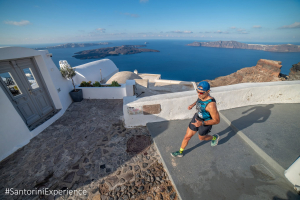
Trail running across the Caldera, open water swimming, and the debut of the Ancient Thera Run 5K

Few sporting events in the world begin quite literally from a volcano. Santorini Experience does exactly that for the 12th year. From October 16–18, 2026, athletes from around the globe will swim through the deep waters of the Caldera and run across Santorini’s volcanic slopes, in one of the world's most iconic travel destinations.

Set against a landscape where volcanic terrain meets history and the island’s singular natural identity, the Caldera, the Volcano, Ancient Thera, and the island’s coastal settlements create an extraordinary backdrop that blends sport, culture, and authentic local experiences. Santorini’s past remains ever-present, coexisting with the physical challenges of the routes and races, transforming the island once again into a vibrant meeting point of people, stories, and athletic expression.

The Ultimate Open Water Swimming Challenge From The Volcano

On Saturday, October 17, 2026, participants will take part in the event’s signature 2.4km (1.5-miles) Open Water Swimming Race. Athletes will start from the Volcano and finish at the Old Port of Fira, crossing the distinctive deep waters of Santorini’s Caldera.

Participant safety is fully ensured by the Santorini Boatmen Association, which will transport swimmers to the starting point. Lifeguard boats will accompany the race, while the use of a safety flotation buoy will be mandatory for all participants.

In addition, the organization will provide complimentary access to the cable car (both ascent and descent) upon presentation of the race registration confirmation.

2 by Elias Lefas

The Ultimate 15K Trail Running Experience

Leading the running program is the demanding 15K Trail Run, taking place on Sunday, October 18, 2026.

The race will start from the Desalination Plant in Oia, traversing some of the island’s most dramatic volcanic slopes. Santorini’s trail route stands out for its extraordinary volcanic terrain, narrow Caldera pathways, constantly changing surfaces, and impressive elevation gains.

The combination of volcanic rock, traditional cobblestone paths, and panoramic passages overlooking the Aegean Sea creates a challenging yet truly exceptional trail running experience rarely found anywhere else in the world.

SIXT Becomes Premium Mobility Partner For The Challenging 10K Trail Run

For the running races taking place on Sunday, October 18, 2026, SIXT, a member of the MOTODYNAMICS Group, joins the event as Premium Mobility Partner.

The leading mobility brand actively supports Santorini Experience and assumes exclusive naming rights for the demanding 10K Trail Run. Under the premium signature of SIXT, experienced runners will have the opportunity to test their limits on a breathtaking and adrenaline-filled route, enjoying spectacular views along the edge of the Caldera, with both start and finish located at the Desalination Plant in Oia.

A Premium Sporting Experience For Everyone: The 5K Trail Run Supported By Miele

At the same time, Miele joins the event as Silver Sponsor, supporting the most accessible and popular race of the weekend, the 5K Trail Run “Aristides Alafouzos”.

Known worldwide for its commitment to premium quality, Miele enhances the race dedicated to the memory of Aristides Alafouzos, which has been designed for both running and dynamic walking participants.

This partnership highlights the event’s commitment to offering a high-end sporting experience accessible to people of all fitness levels.

4 by Elias Lefas

The New Ancient Thera Run 5K Powered By Sandblu Santorini Makes Its Debut

For the first time in the event’s history, the race program introduces a seaside route showcasing one of Santorini’s most authentic sides, where natural beauty is closely intertwined with historical heritage.

Located in Kamari, the course unfolds between sea and mountain, at the foot of Ancient Thera, one of the island’s most significant archaeological landmarks.

The route promises a unique participation experience, featuring surprises and memorable moments along the way, within an environment of exceptional natural and cultural significance.

Stronger Than Ever Following Major International Distinctions

Santorini Experience returns stronger than ever following a series of prestigious awards that further confirm its international reach and impact.

6 by Elias Lefas

Historic Record: 12 Awards At The Sports Marketing Awards & Tourism Awards 2026

The 2025 edition of Santorini Experience emerged as one of the most awarded events of the year, demonstrating its strategic excellence.

Sports Marketing Awards 2026

The event received 7 Gold Awards and 3 Silver Awards.

Gold Awards:
  • Individual Sports 
  • Best Digital Marketing Execution Strategy 
  • Best Public Event for Sports Content 
  • Best Hybrid Sports Event 
  • Best Strategy for Product / Service Launch (for the collaboration with the Los Angeles Chargers and Stoiximan) 
  • Kids / Youth / Grassroots (for the Los Angeles Chargers NFL Camp) 
  • Best Experiential Sponsorship (for the partnership with Miele) 
Silver Awards:
  • Sports / Cultural Tourism 
  • Best Fun Experience 
  • Best Use of Social & Influencer Marketing Presence (for the partnership with SIXT, member of the MOTODYNAMICS Group) 
Tourism Awards 2026

At the same time, Santorini Experience was recognized with:
  • Gold Award in the category Integrated Marketing Campaign 
  • Silver Award in the category Sports Events 
The Tourism Awards represent the highest distinction in the Greek tourism industry, featuring participation from the country’s leading hotels, tourism organizations, and hospitality businesses. The recognition of a sporting event with a Gold Award in the Integrated Marketing Campaign category further confirms Santorini Experience’s distinctive position as one of Santorini’s most influential tourism ambassadors.

Join The Next Chapter

Building on this remarkable legacy, the Municipality of Thira, the Department of Sports & Culture of the Municipality of Thira, and ActiveMedia Group invite professional and amateur athletes from around the world to become part of the next chapter by competing in the breathtaking and idyllic landscape of Santorini.

Register now for the running and swimming races HERE!


Santorini’s Sunset Becomes An Experience At The Santorini Experience Sunset Party

The race weekend will once again be complemented by the 2nd Santorini Experience Sunset Party, now an established tradition of the event.

This one-of-a-kind musical experience, open to residents, athletes, and visitors alike, will take place during one of the island’s most magical moments—the Santorini sunset.

On Saturday, October 17, internationally acclaimed DJ Vasilis Tsilichristos will take over the decks for a special sunset set against the iconic backdrop of the Caldera.

Admission will be free, offering locals and visitors an unforgettable experience.

The event is supported by AESTIAN Philoxenia & Hospitality, the Municipal Community of Thera, Rizes Gastro Taverna, and Santorini Experience itself.

Premium Mobility Partner of the event is SIXT, a member of MOTODYNAMICS Group. 
Gold Sponsors of the event are AESTIAN Philoxenia & Hospitality, Sandblu Santorini.
Silver Sponsor of the event is Miele.
Official Water is the natural mineral water VIKOS.
Official Technical T-shirt is 42K Running.
Jewelry Partner is Spanou Jewelry. 
Partners of the event are Santorini Boatmen Association, Othen Elemental Aesthetics.
The Crucial Contribution of Hospitality Partners

Santorini Experience is made possible thanks to the invaluable support of its Hospitality Sponsors, who contribute special accommodation rates, promote the destination, and provide substantial assistance to the event.

The hotels supporting Santorini Experience to date include: Athina Luxury Suites, Sandblu Santorini, Aqua Vista Hotels, Meltemi Suites, Meltemi Village, Atlantis Beach, Eteoro Suites Santorini, Rocabella Santorini, Loizos Stylish Residences, Phaos Santorini Suites, Santo Mangata, Aressana Spa Hotel & Suites, Venus Sunrise Suites & Villas, Blue Spa Hotel, Sienna Eco Resort.

Santorini Experience is co-organized by the Municipality of Thira, the Department of Sports & Culture of the Municipality of Thira, and ActiveMedia Group.

Official Hashtag:
By Arnaud Zerdab

Like many of us, I went through the last few summers in France with the feeling that the urban heat was becoming a little heavier, more suffocating, and harder to bear each year. But for me, the real turning point occurred during my last year in France, when I was supervising a construction site 20 kilometers from Orly airport. Suffocating amid the asphalt and dust in over 40°C made me realize an obvious truth: our infrastructure and way of life are simply no longer adapted to the new climate reality. It was this realization that pushed me to look for an alternative and settle in Athens, a city that has learned to make the sun an ally rather than a constraint.

From Parisian Asphalt To The Departure For Greece

Before leaving, I closely observed this thermal vulnerability. Whether in the Toulouse metropolis – a true basin where bricks trap heat and radiate it all night long – or on the concrete of that Île-de-France construction site, the observation remained the same: in France, we endure heatwaves without being able to effectively protect ourselves.
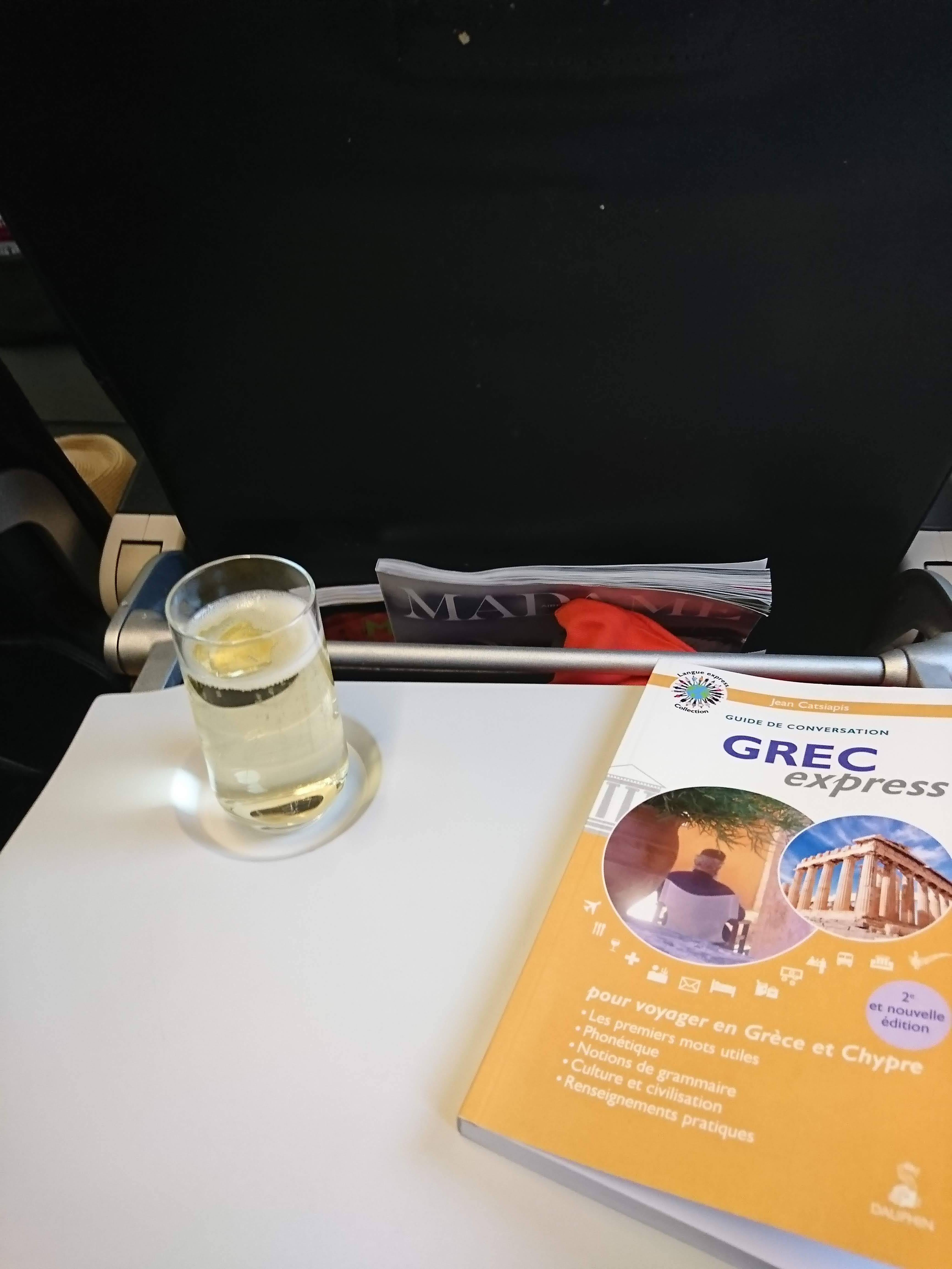
It was precisely to disconnect from this saturated atmosphere that, in the summer of 2018, I booked a ticket for Greece. A trip that would change everything, long before the upheavals of the COVID period.

DSC 0391

The 2018 Turning Point: Learning Siga-Siga

My very first encounter with Athens took place in August 2018, lasting only four days. In mid-August, the Greek capital is sacred: the city is literally empty, its inhabitants having fled to the islands or to the village, leaving the city as if suspended in time.

I was visiting a close friend, whom I met during my student years in Toulouse. She had settled here and, with her Athenian partner, they offered me the best welcome imaginable. Far from tourist circuits, they shared their daily life with me: car trips to the beaches of the Riviera or towards Artemida, authentic culinary discoveries, and above all, a deep initiation into siga-siga (slowly, slowly).

In Athens, siga-siga is not just an expression of nonchalance; it is fundamentally a philosophy of life and an intelligent management of the daily rhythm in the face of the climate. A month later, in September 2018, I returned to extend the experience. I met other equally welcoming locals, found my apartment, and the decision was made: I was moving in.
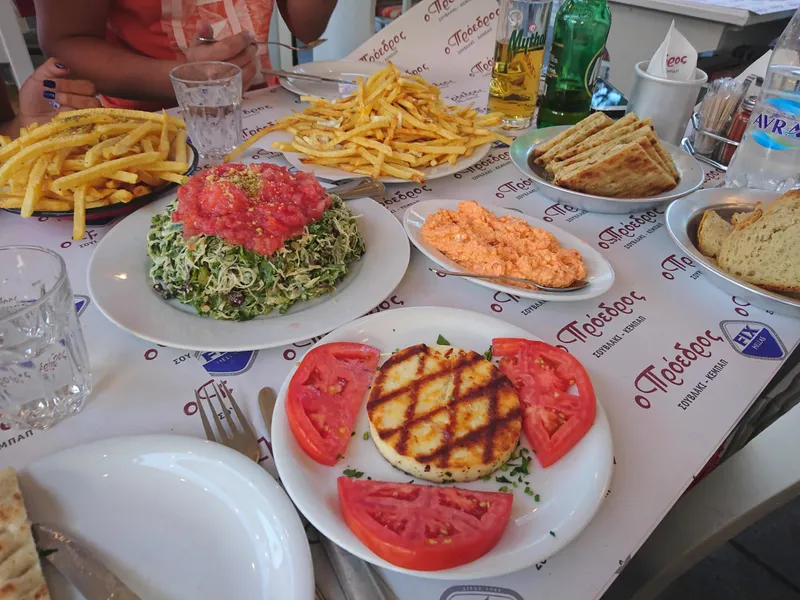
tjyzuk55cq 800

The Flip Side: The Paradoxes Of The Athenian Reality

However, loving Athens should not make one blind. This love at first sight does not negate the very real complexities of this capital. Anyone wishing to settle or invest there must face its own paradoxes.

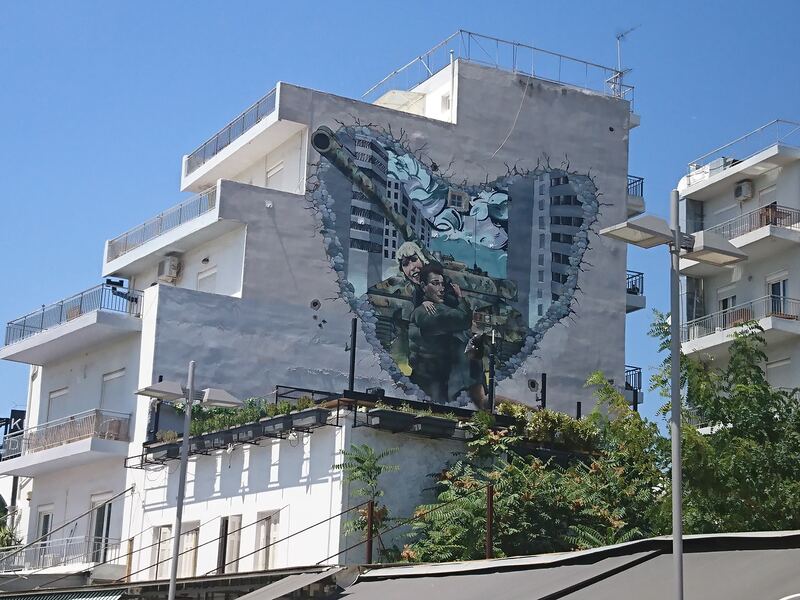
Athens is a vibrant, yet dense, city. Traffic is often chaotic, and pollution remains a real concern at the heart of the Attica basin. Fortunately, the city is moving: modernization is underway, particularly with the massive deployment of its new electric bus network and the extension of metro lines.

The other major paradox lies in its real estate market. It is primarily a "legacy" market. Behind the historically rich facades or the raw charm of the polykatoikias hides an aging housing stock, often marked by decades of worn-out plumbing, complex building columns, obsolete electrical installations, and co-ownerships with sometimes obscure rules. This is where the dream of the Mediterranean art of living clashes with the technical reality on the ground.
DSC 0493 2

A Land of Comfort That Must Be Tamed

Despite these frictions, Athens offers unique safety valves that cannot be found anywhere else. It is a city that provides a breath of fresh air for those who know where to look.

The capital is full of suspended parks and green hills – such as the National Garden, Filopappou Hill, or Lycabettus – which act as true oases of coolness and calm to escape the hustle and bustle. Added to this is an incredibly rich cultural offering. Its world-class museums, such as the Acropolis Museum or the National Archaeological Museum, are calm, air-conditioned havens where one can recharge away from the street noise and heat. This balance between effervescence and pockets of serenity has a deeply soothing effect.

The Value Added by Klehomerie: Technical Asset Management

It is precisely because Athens is full of paradoxes that one cannot manage a real estate project remotely with mere approximations. Buying a property is one thing; protecting the structure, understanding its systems, and sustaining its value is another.

At Klehomerie, my role is not to give you engineering speeches about a building's theoretical thermal performance. My core business is Technical Asset Management. I translate the complexity of the legacy market into concrete, transparent solutions:
  • Audit of structures and systems: Analyzing the real condition of the plumbing, electricity, and common areas before small hidden defects turn into costly claims.
  • Operational management: Ensuring the transition of systems, technical compliance, and the creation of a "digital safe" for your property.
  • Remote protection: Being your eyes and ears on the ground with local artisans and building managers, so that distance is never a risk factor for your property.
Athens is a magnificent city that generously rewards those who choose it. With an independent partner by your side to master its technicalities and secure your interests, you can fully enjoy its gentle way of life, with complete peace of mind.

About The Author

Professional Headshot 

Arnaud Zerdab is a Technical Asset Manager and the founder of Klehomerie, an Athens-based technical auditing and asset protection firm. Bringing a background in Construction Site Management and Corporate Security, he applies rigorous European technical standards to the Greek property market. Having relocated from France to Athens, Arnaud combines firsthand expat insight with technical expertise to help international residents and investors protect the long-term value of their Athenian assets against environmental and structural risks.

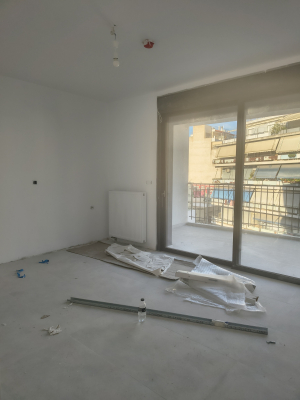
A contemporary maisonette spanning the 3rd and 4th floors, offering 126.70 m² of thoughtfully designed living space in the rapidly developing neighbourhood of Agios Nikolaos.

The asking price of €360,000 is for the property fully finished and delivered key-in-hand. Because the project is in its final stages, the buyer has the exclusive advantage of personalising the space by choosing the colors and styling of the final finishing touches to suit their aesthetic preferences.

The residence features a functional two-level layout with four spacious bedrooms, bright open-plan living areas, and expansive floor-to-ceiling windows that maximize natural light. The outdoor living spaces are remarkably generous, featuring 26.26 m² of balconies and an additional 9.76 m² semi-enclosed area.

Property Features:

• 126.70 m² maisonette (3rd & 4th floor)
• 4 bedrooms
• Spacious open-plan living area
• Large balconies (26.26 m²)
• 9.76 m² semi-enclosed outdoor area
• 2 private parking spaces
• Contemporary design and premium construction
• Excellent natural light

Location

Situated in Agios Nikolaos, just a few blocks from Agios Nikolaos Metro/ISAP Station (Green Line), the property offers quick access to central Athens while being close to schools, supermarkets, cafés, parks, and everyday amenities. An ideal choice for both owner-occupiers and investors seeking a modern home in a well-connected urban location.

Price: €360,000

Interested in seeing the finished result?

Take a virtual walkthrough of a completed and already sold apartment in the same building to experience the quality of construction, layout, and finishes you can expect HERE!

The maisonette offered for sale is currently in the final stage of construction and will be delivered fully completed, with the buyer having the opportunity to choose the colours of the final finishes.

Do you enjoy being outdoors and trying new experiences? Do you want a dose of fresh inspiration with a touch of inner guidance on a topic important to you? Might you need a pause in your busy day to step away from the noise and all the screens?! If yes, then this is your invitation to wander in wonder and co-create some magic together!

Corporate, customized, virtual or in-person, Wonder Works Walks are designed to quiet your mind, move your body and lighten your soul. Whether in the city or in a park, our guided experiences combine movement, reflection and community. Put on your comfy shoes and let’s head outside. Follow your curiosity, unblock your creativity and get inspired about your life, work or leadership path right now! 

Wonder Works Walks are ideal for: 
  • Busy professionals looking for calm.
  • People in transition wanting clarity.
  • Anyone curious about mindful walking.
  • Visitors & locals in Athens who seek a soulful alternative to standard tours.

CLICK HERE to inquire now!


Spark Curiosity, Cultivate Creativity & EnJOY!

No experience is needed — only a willingness to walk with openness.

Come out to pause, recharge, gain clarity & feel connected!

Discover all of our Wonder Works Walks below:

Custom Walk: Online or in-person in Athens, these bespoke walks happen 1:1 or with a group of friends, colleagues or strangers. An opportunity to connect with the world within and around you.

Corporate Walkshop: Boost team morale and enhance workplace culture with a corporate walk that promotes connection, creativity, and wellbeing through collaboration and refreshing new perspectives.

Athens Walk: Whether you are visiting Athens or have been living here for years, you’re invited to wander in wonder and co-create magic in a safe, judgement-free space. This walk can be 1:1 or for a small group of friends or colleagues up to 10 people. BOOK HERE!

Online Walkshops: Let’s connect and walk via Zoom! This is your opportunity to move your body, quiet your mind and lighten up your soul. Unblock your creativity, follow your curiosity and find clarity, no matter where you are in the world. BOOK HERE!

Street Wisdom: In cooperation with Street Wisdom, we regularly bring to Athens this free, creative walking practice, that combines mindfulness, neuroscience and wellness. Join us to unlock your imagination and find direction, inspiration and joy! JOIN HERE!


CLICK HERE to inquire now!

Page 7 of 476