
When Zeybekiko Becomes Therapy: Dancing Against Alzheimer's in Thessaloniki
- by XpatAthens
- Tuesday, 28 July 2026

For five magical minutes, Aristotelous Square in Thessaloniki became far more than a stage for dance. It became a symbol of remembrance, solidarity and hope.
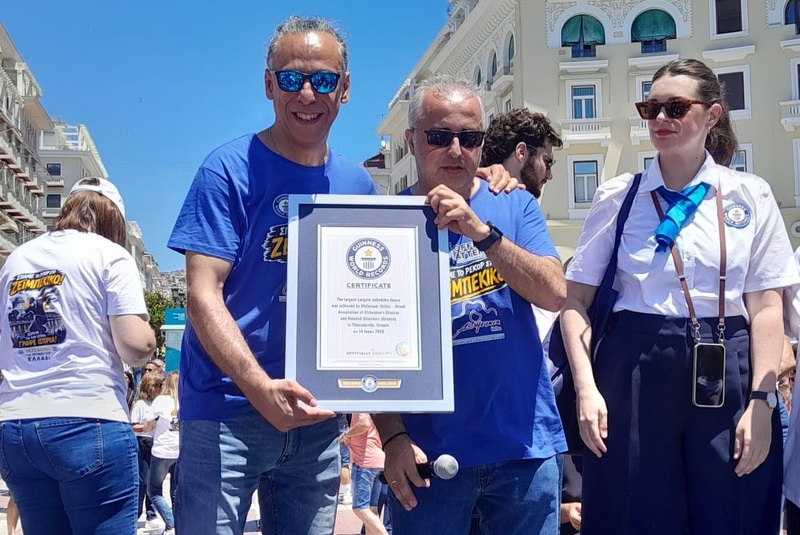
On 14 June, 830 people from 13 countries gathered in the city's iconic square to perform a carefully choreographed zeibekiko, earning Alzheimer Hellas an official Guinness World Records™ title for the Largest Zeibekiko Dance ever performed. Dancing to Mia Thessaloniki by Konstantinos Argyros, participants surpassed the previous record of 754 dancers held by Cyprus, proving that one of Greece's most deeply personal dances can also become a powerful act of collective purpose.
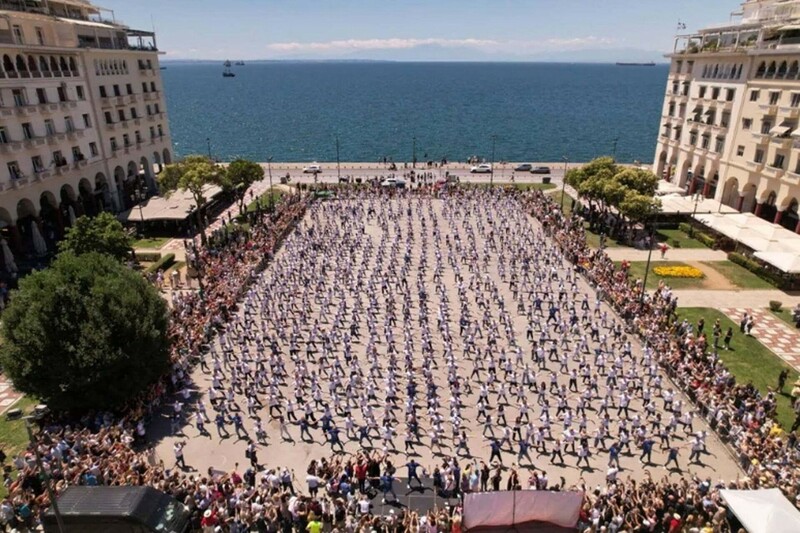
@neos_kosmos
@neos_kosmos
Yet, beyond the applause, the certificates and the celebratory soundtrack of Queen's We Are the Champions, the real achievement lay elsewhere: raising awareness for Alzheimer's disease and demonstrating how dance itself can become a form of therapy.
A Dance Unlike Any Other
Traditionally, zeibekiko is one of the most intimate expressions of Greek culture. Originating from the Zeybeks, an irregular militia that lived in parts of the Ottoman Empire between the 17th and early 20th centuries, the dance gradually evolved into a deeply personal solo performance, historically danced by men and now embraced by women as well.
Unlike most traditional dances, zeibekiko has no fixed choreography. Dancers move freely within a circle, expressing emotion rather than following prescribed steps. Often referred to as the "dance of the eagle", it celebrates individuality, making a synchronised performance involving hundreds of dancers not only logistically ambitious but culturally extraordinary.
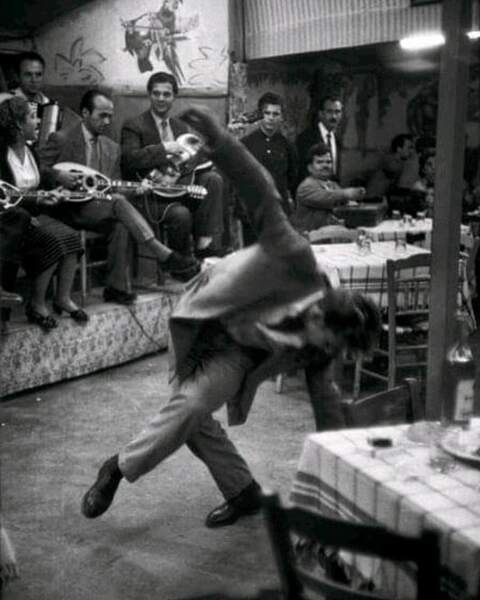
@oldgreekphotos
@oldgreekphotos
One Idea, Hundreds Of Dancers
The idea belonged to dance instructor Themis Parastatidis, who has spent years teaching dance to older adults living with Alzheimer's disease.
He explains how the inspiration came a year earlier, after realising just how beloved zeibekiko has become not only across Greece but among Greek communities abroad. Hence, vision quickly grew into an international movement.
Participants travelled to Thessaloniki from every corner of Greece, joined by dancers from Bulgaria, Romania, France, Germany, Austria, Norway, Serbia, Poland, Turkey, Cyprus, China and the United States. Many made the journey solely to take part in the record attempt.
Ahead of the event, free rehearsals were held on 12 and 13 June, allowing participants to learn the official five-minute choreography before stepping into Aristotelous Square for the historic performance.
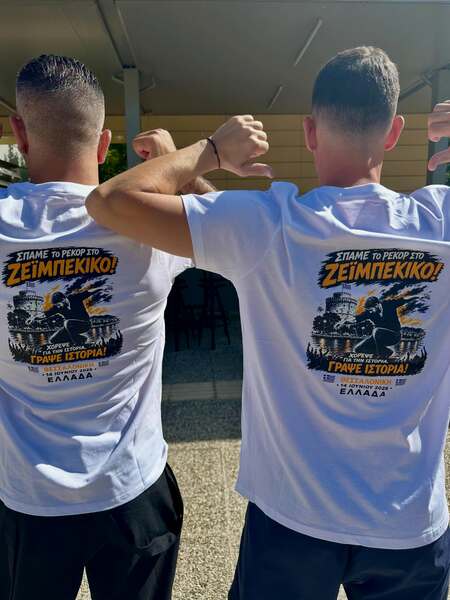
@the_dance_club_by_kalamata
@the_dance_club_by_kalamata
When Dance Becomes Medicine
For Parastatidis, however, the record was never simply about numbers. "Dance is not just exercise, but much more," he explains. "It trains memory, as dancers have to remember the steps and have good coordination. In addition, their mood improves because dance gives them the chance to take part in something collective, to come into contact with other people, and to meet people. Dance has many positive elements."
His work reflects an increasingly recognised understanding that movement, music and social interaction all contribute to healthier ageing.
Professor Emerita of Neurology Magda Tsolaki, President of the Panhellenic Federation of Alzheimer's Disease and Related Disorders, highlighted dance as an important form of physical activity that supports brain health and may help reduce the risk of dementia. She also noted that the event offered an opportunity to showcase Greek culture and tradition to an international audience.
The sight of hundreds of people dancing together sent another equally powerful message: community itself can be therapeutic.
More Than A World Record
The initiative was organised in collaboration with the Greek Alzheimer's Association and the Friends of the Greek Association of Alzheimer's Disease and Related Disorders.
Its wider aim extended far beyond breaking a Guinness record. The event sought to encourage conversations around prevention, early diagnosis and better support for people living with dementia and for their families.
Thousands attended the celebration in Thessaloniki, while extensive media coverage carried its message across Greece and abroad.
The awareness campaign also builds upon broader work taking place across Central Greece. Through the REMIND initiative, implemented by the Greek Association of Alzheimer's Disease and Related Disorders of Chalkida and funded by the Region of Central Greece, 38 community actions were delivered across 29 urban, rural and remote communities, reaching more than 1,800 older adults and family caregivers.
The programme also carried out 340 memory assessments to encourage earlier diagnosis and improve access to support services.
Using the Dementia Knowledge Assessment Tool (DKAT-2), alongside caregiver focus groups, researchers identified significant gaps in public awareness, particularly surrounding the early signs of cognitive decline, support for carers and access to services in more isolated areas.
The project has since been recognised as a Good Practice within the European FABCOM programme, highlighting its contribution to community-based dementia care across Europe.
A Victory Shared By Everyone
The Guinness World Records™ title was officially confirmed on site by adjudicator Lena Kuhlmann, following extensive participant counts and verification procedures. According to Guinness officials, every requirement was met flawlessly.
@atillateo
@atillateo
Thessaloniki's Mayor, Stelios Angeloudis, welcomed the achievement, expressing pride that such an important awareness initiative had taken place in the city's most recognisable square.
But perhaps the most fitting summary came from the organisers themselves: "This record belongs to everyone. To every dancer, volunteer, partner and supporter who believed that a collective dance could become a global message of solidarity, remembrance and hope for people affected by Alzheimer's disease. Today, we celebrate more than a world record. We celebrate the power of communities coming together for a common purpose."
In the end, the biggest triumph was never the number 830.
It was the reminder that memory can be honoured not only through medicine and research, but through music, movement and the simple act of dancing together.
It was the reminder that memory can be honoured not only through medicine and research, but through music, movement and the simple act of dancing together.
LIFE & CULTURE