
XpatAthens

XpatAthens

As parents grow older, many adult children naturally want to help them through the changes that come with aging. While providing support is rewarding, it can also bring unexpected challenges. Family members often take on new responsibilities without realizing how demanding they can become over time.

Understanding these challenges and knowing when to seek additional support can help families create a better experience for both themselves and their loved ones.

Managing Emotional Stress & Burnout

Supporting an aging parent often involves helping with appointments, household responsibilities, transportation, and other daily needs. Over time, these responsibilities can become emotionally and physically demanding.

When family members try to handle everything on their own, feelings of stress and exhaustion may develop. Recognizing these signs early is important. Seeking additional support can help create a healthier balance while ensuring that parents receive the assistance they need.

For families exploring senior living options, Independent Living with supportive services** in Houston may be a suitable choice for older adults who would benefit from a maintenance-free lifestyle, social opportunities, and access to supportive resources. Other options may be appropriate depending on an individual's needs and preferences. Exploring available resources can help families identify the level of support that best aligns with their loved one's situation.

Preventing Family Disagreements

In many families, one person naturally assumes most of the responsibility for supporting an aging parent. While this arrangement may work initially, it can sometimes lead to frustration if responsibilities are not shared or clearly communicated.

Open discussions among family members can help establish expectations and divide tasks more fairly. Creating a plan for transportation, appointments, financial matters, and regular check-ins can reduce misunderstandings and help family members work together more effectively.

Some families also find that supportive senior living communities can reduce day-to-day pressures by providing assistance with daily routines while allowing loved ones to enjoy meaningful social connections and personalized support. This can help family members focus on spending quality time together rather than managing every detail of care.

Addressing Safety Concerns

Changes in mobility, vision, balance, or memory can increase safety concerns for older adults. Families often worry about falls, household hazards, or emergency situations when they cannot be present.

Making living spaces safer can help reduce certain risks. Improving lighting, removing trip hazards, organizing frequently used items within easy reach, and using emergency response technology may help support a safer environment.

Technology can also provide added reassurance. Emergency alert systems, communication devices, and other supportive tools can help families stay connected and respond more quickly if assistance is needed.

Taking proactive steps can help older adults feel more comfortable while giving family members greater peace of mind.

Conclusion

Supporting an aging parent can be a meaningful experience, but it also comes with responsibilities that may affect emotional well-being, family relationships, and daily routines. Recognizing challenges such as burnout, family stress, and safety concerns can help families take a more thoughtful approach to providing support.

Seeking help when needed is an important part of the process. Whether through family collaboration, community resources, or senior living options, creating a support system can help ensure that older adults receive the assistance they need while preserving dignity, choice, and quality of life. Just as important, family members should remember to care for their own well-being so they can continue providing meaningful support over time.
Dreaming of a villa holiday in Europe? According to Holidu's newly released Villa Value Index 2026, Greece isn't just one of the best places to stay—it's officially home to Europe's five highest-rated villa destinations, making it the continent's top choice for unforgettable villa escapes.

While France may take the crown for overall value, travellers looking for exceptional experiences consistently rate Greece above every other destination.

Greece Tops The Ratings
 
Based on more than 45,000 private villas and thousands of verified guest reviews across 30 of Europe's most popular holiday destinations, Holidu's research reveals that the five highest-rated villa destinations in Europe are all Greek islands.

Leading the rankings is Naxos, with an impressive guest rating of 9.5/10, followed closely by:
  • Crete – 9.4/10

  • Zakynthos – 9.4/10

  • Kefalonia – 9.4/10

  • Paros – 9.4/10

These destinations consistently earn outstanding reviews from travellers who value authentic hospitality, breathtaking landscapes, privacy, and memorable stays.

Quality Over Price

While Greece may not offer the lowest villa prices in Europe, the study suggests visitors are more than happy to pay for the experience.

For example, villas in Naxos have a median nightly price of around £406, while Paros averages £466 per night. Yet despite these higher prices, both islands outperform every other European destination when it comes to guest satisfaction.

The message is clear: travellers aren't simply looking for the cheapest villa—they're looking for the best holiday experience.

The Peloponnese Offers Exceptional Value
 
For those hoping to experience Greece while keeping accommodation costs more manageable, the Peloponnese stands out as one of Europe's best-value villa destinations.

Ranked 7th overall in the Villa Value Index, the region combines:
  • Guest rating: 9.3/10

  • Median nightly villa price: £217

  • Average late-summer temperatures of around 29°C

With its beautiful coastline, charming seaside towns, archaeological sites, and easy access from Athens, the Peloponnese offers an excellent alternative to the country's more famous islands.

A Destination For Every Style Of Traveller
 
Whether you're seeking the Cycladic charm of Naxos and Paros, the lush scenery of Zakynthos and Kefalonia, or the rich history and diverse landscapes of Crete, Greece offers villa experiences to suit every type of traveller.

Many visitors choose villas for the added privacy, spacious outdoor areas, private pools, and flexibility they provide—making them ideal for families, groups of friends, or couples looking for a more relaxed way to experience the country.

Europe's Best Value vs. Europe's Best Experience
 
Although Provence, France, claimed the title of Europe's best-value villa destination thanks to its combination of affordable prices and strong guest ratings, Greece comfortably secured another distinction: the highest-rated villa destinations on the continent.

For travellers prioritising unforgettable stays, authentic Greek hospitality, and consistently exceptional guest experiences, the latest rankings suggest there's no better place to book a villa than Greece.

About the study

The Holidu Villa Value Index 2026 analysed guest-review scores and median nightly prices for more than 45,000 private villas across 30 of Europe's most popular holiday destinations. The rankings compare guest satisfaction relative to accommodation cost, using verified reviews and listings collected in July 2026. Only destinations with at least 100 villas and 1,000 verified guest reviews were included. To view the full list, please CLICK HERE!
The Mediterranean diet is commonly associated with one thing: olive oil. You might get the occasional mention of figs, or even red wine, but one thing is for certain; it’s equivalent with healthy, flavourful and even indulgent. The true reason behind what makes the world’s most studied diet so special, has been left out of the conversation. It’s not a native Greek fruit, or extra virgin liquid gold. It’s a whole way of living.


More Than Just Olive Oil


Let’s be clear, olive oil does indeed deserve its worldwide reputation. The healthiest olive oil (Extra Virgin Olive Oil, or EVOO in the western world) is minimally processed and is basically made with the same method that was used over 2,000 years ago. Rich in monounsaturated fats and polyphenols that essentially act as antioxidants and reduce inflammation, it’s no wonder it’s been extensively studied in relation to cardiovascular health. But it is not the only active ingredient in the Mediterranean diet and treating is as a magic band-aid to cover an overall unhealthy diet is missing the point. You cannot, for example, drizzle extra virgin olive oil over a plate of ultra-processed food and pretend you’re getting any benefits. The reason it’s so healthy is because of the bigger picture: what it’s served with. Vegetables, legumes, whole grains, fish and even feta cheese. It’s one piece of a large pattern, not a supplement you can add to an otherwise unchanged diet.

The Foundation: Plants

If there’s one star that actually defines the diet, it’s the sheer volume and variety of plants. In traditional Mediterranean meals, vegetables aren’t a side dish like they are in many modern cultures. They’re the main part, with everything else (protein, dairy and healthy fats) built around them. Tomatoes, eggplants, leafy greens, peppers, onions and an abundance of legumes like green beans, chickpeas, butter beans and fava beans show up daily and prepared quite simply: stewed, baked or even raw, dressed with fresh herbs, lemon and yes…olive oil. Meat or fish, which was typically enjoyed once or twice a week is a smaller component rather than the centerpiece. This is the part most modern “Mediterranean-inspired” menus get backwards, they treat vegetables as a garnish around a large piece of animal-protein instead of the other way around.

Community As A Lifestyle

The most consistent findings from long-term studies on Mediterranean populations, in fact point to something that has nothing to do with food at all, but about how people eat. Meals are a social matter. They are unhurried, genuinely enjoyed and typically shared by multiple generations. It’s a cause for conversation, laughter and intimacy that goes way beyond the time it takes to actually eat. This slower pace is connected to lower stress, higher enjoyment, improved digestion and even better portion control. Added to this, there is the emphasis around daily movement (walking to the store, working outdoors, gardening, swimming) and strong social and family ties, both of which are linked to lower stress and better long-term health. When you remove these factors, you are left with a meal plan that albeit healthy and nutrient-rich, is missing half of what made it effective in the first place.

What Happened To The Real Mediterranean Diet

Somewhere between the research studies and the supermarket shelf, the Mediterranean diet got reduced to a marketing label. Packaged foods branded as “Mediterranean-style” barely resemble what’s actually eaten in Crete or Sicily on any given weekday. Despite their containing olive flavour or even a sun-dried tomato, they remain highly processed, low in fiber and freshness and disconnected from any of the lifestyle factors that accompany a true “Mediterranean diet”. Because when you remove the word “diet” you are left with a whole region of the planet that includes numerous countries, proud cultures and thousands of years of rich history that cannot be reduced to a jar of sauce on a store shelf. So even if you’re cooking at home, don’t just focus on the popular guys (feta cheese, olive oil, oregano) but include the vegetables and legumes that make up the bulk of a real Mediterranean meal.

The takeaway isn’t complicated: eat mostly plants, cook simple food, share your meals with those you love, and move your body throughout the day, not because you have to, but because it’s part of your life. Everything else, including the olive oil, is there to support that healthy lifestyle pattern, not replace it.

About the author 

Eva, known as The Cretan Nutritionist, is a Registered Holistic Nutritionist whose international path to wellness is rooted in her Greek heritage. Raised on the island of Crete, she grew up immersed in the Mediterranean lifestyle long before she recognized it as a wellness practice. After studying Fashion Design in Athens, her path shifted when she moved to Canada and studied Holistic Nutrition, later adding certifications in Life Coaching and the Human Microbiome. Having lived across three countries and worked in corporate, hospitality, and wellness settings, Eva brings a grounded, real-world approach to health. Through coaching, workshops and seminars, she helps clients build sustainable, joyful habits rooted in the Mediterranean way of life she was raised on.
Greek creativity has never been confined by borders. While ancient art remains a powerful symbol of Greece’s cultural legacy, today’s diaspora artists are proving that this story is still being written — and rewritten — around the world.

Drawing from their Greek roots and their new environments, they create bold contemporary works that celebrate a constantly evolving identity, where past and present come together.

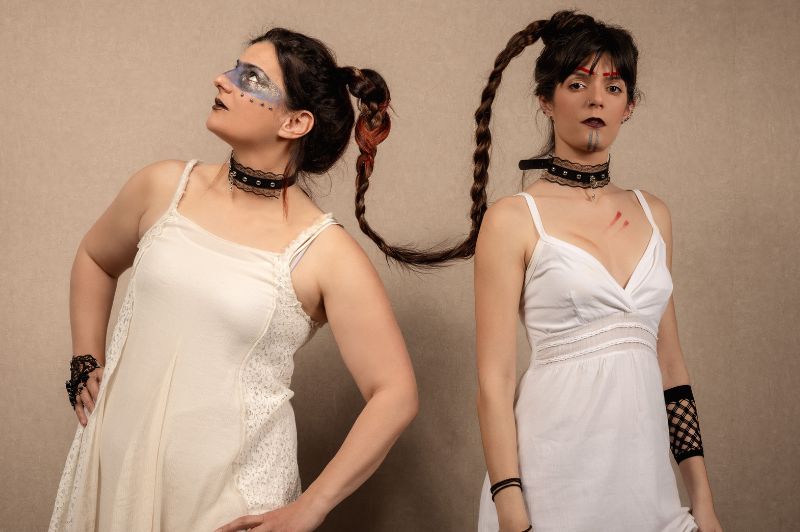
Agnese Udinotti

SnapInsta.to 650676304 18125197345569146 1629294516948725666 n
@bsullivanphoto

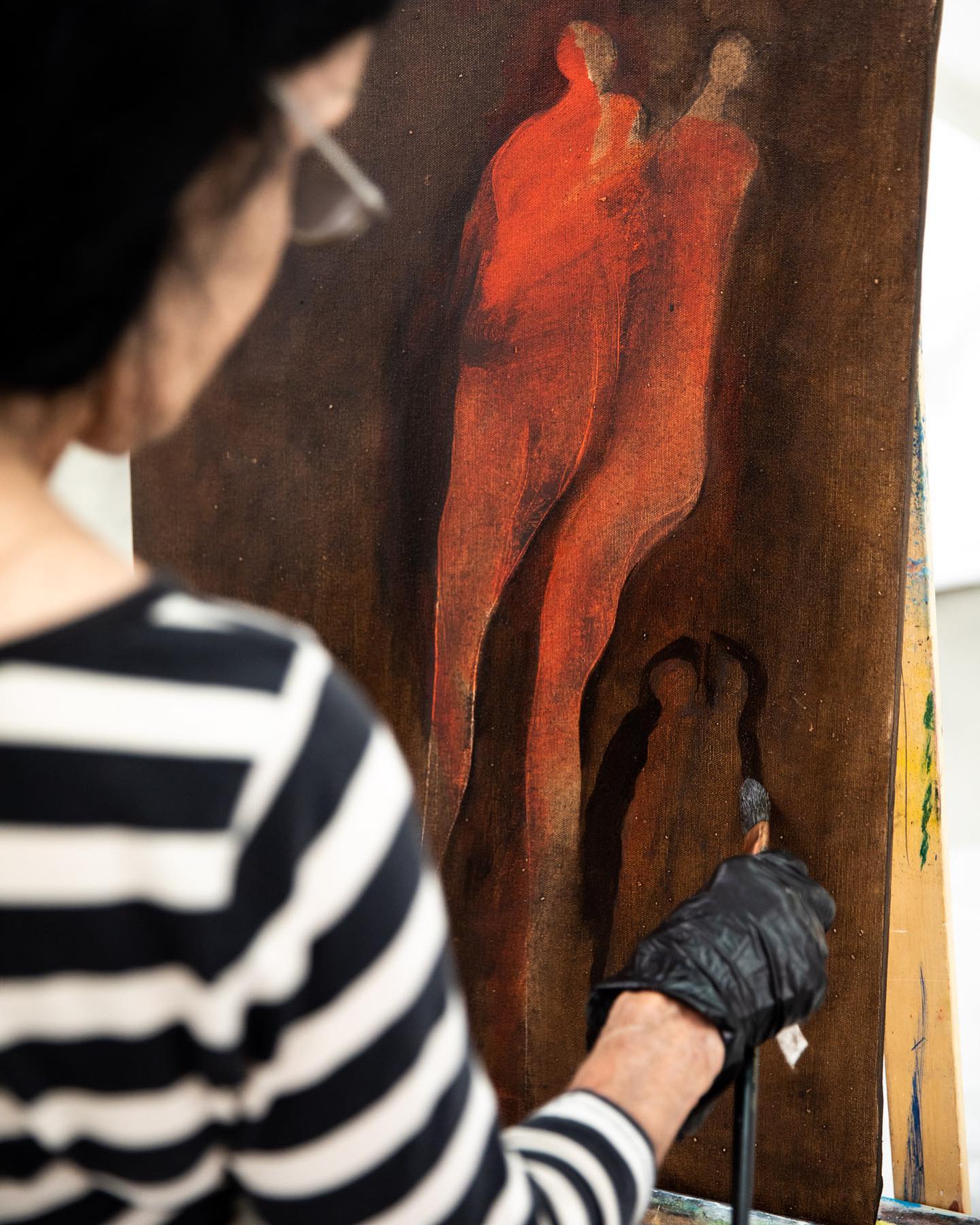
Born in Athens in 1940, Agnese Udinotti is a multidisciplinary artist whose practice encompasses poetry, painting and sculpture. At the age of four, during the Dekemvriana events, her father was executed after being falsely accused by communist forces of collaborating with the Italian occupiers solely because of his Italian surname. This tragedy profoundly shaped her work, inspiring pieces such as Monument to My Father, a three-dimensional series combining oil painting, plaster relief and her own poetry.

Udinotti's distinctive artistic language is characterised by fantastical, often winged and androgynous figures with blurred contours, inviting multiple interpretations while conveying a powerful spiritual dimension. Exhibited internationally and the recipient of numerous honours, her work is also held in the National Gallery in Athens.
She is the author of Udinotti, a collection of her writings illustrated with photographs of her sculptures, and formerly served as poetry editor of Chimera.

In 2000, she began developing the privately funded Udinotti Museum of Figurative Art in Arizona, dedicated to the symbolic power of the human form, which officially opened in 2007.
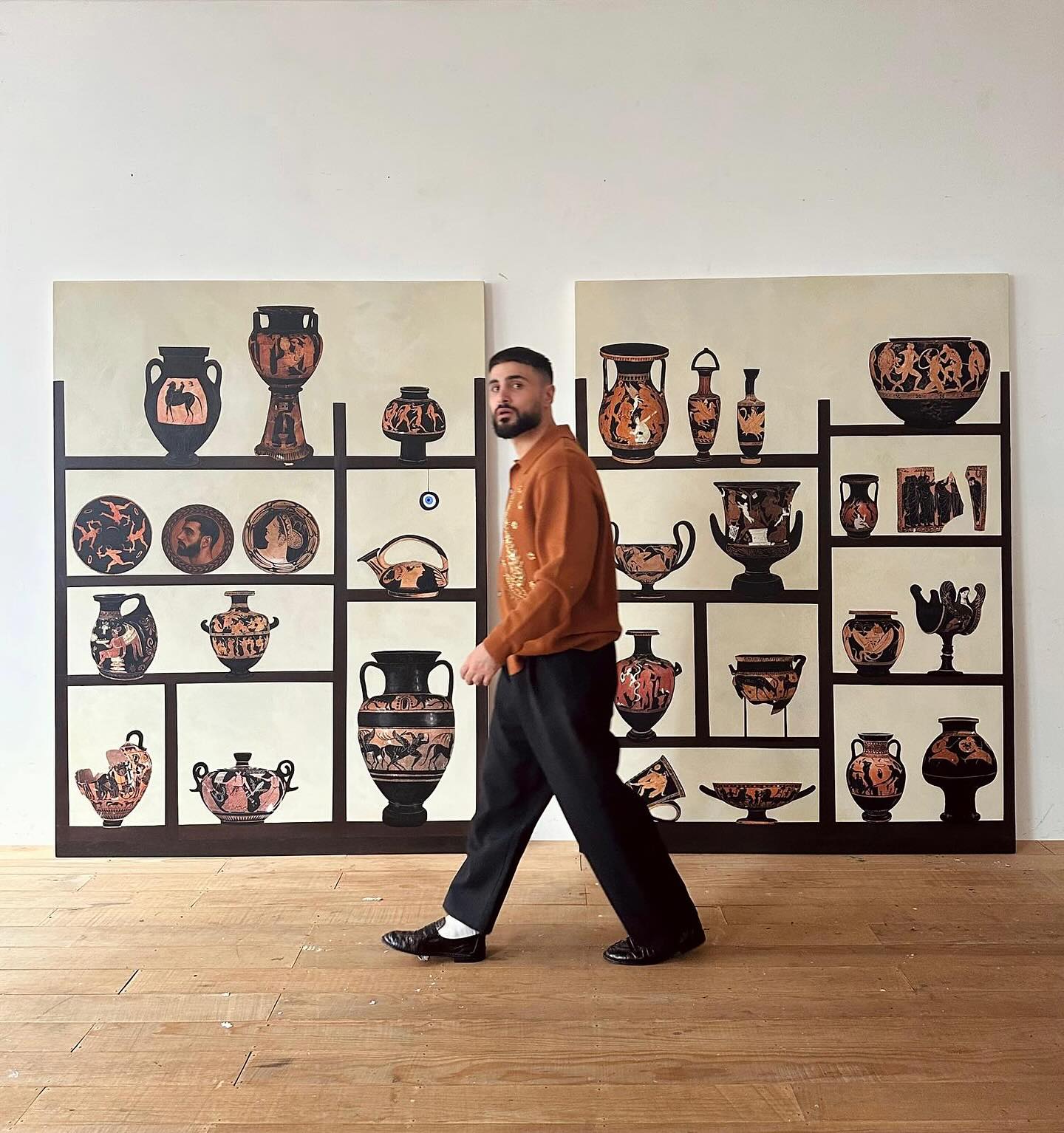

Kiriakos Tompolidis

SnapInsta.to 587310894 18546039379013099 5366260521754485415 n
@kiriakostml

Born in Essen in 1997 to a family of Greek heritage, Kiriakos Tompolidis is an emerging painter whose work explores identity, migration and belonging through a deeply personal lens.

A graduate of the Berlin University of the Arts, he draws on his family's history as descendants of Greek "guest workers" in Germany, weaving together the experiences of three generations. Combining painting with collage and the incorporation of real wallpapers, textiles and everyday objects, Tompolidis creates richly layered works that reflect the complexities of cultural memory, home and heritage. His distinctive visual language has quickly attracted international attention, culminating in his inclusion in the 2025 Taipei Biennial, Whisper on the Horizon.
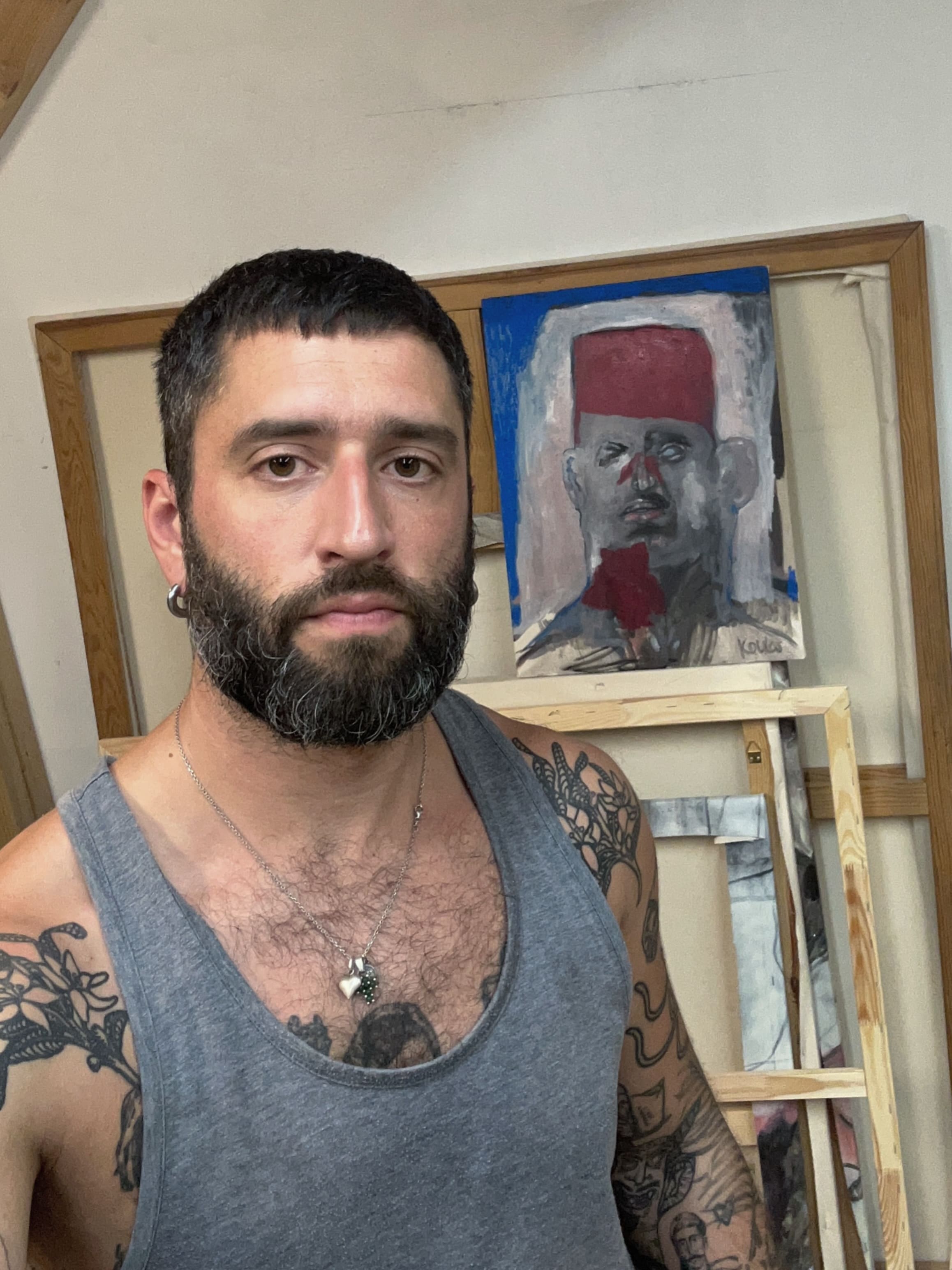
Athanassios "Saki" Koulos
 
SnapInsta.to 724312983 18430380874120212 8072263687376325135 n 1
@koulos.saki
 
Born in 1992, Athanassios (Saki) Koulos is a Belgian artist of Greek origin who now lives and works in Berlin.

The grandson of Greek and Italian migrant workers who moved north to work in factories and mines, his multicultural heritage is reflected in a multidisciplinary practice that combines collage, poetry, drawing, sculpture and even tattooing! Reassembling fragments from magazines, the internet or his own photographs, Koulos explores themes of history, sexuality and representation, giving voice to personal and collective stories often absent from dominant narratives. By dismantling images and ideas from their original contexts, he creates visual and poetic works that invite new interpretations. 
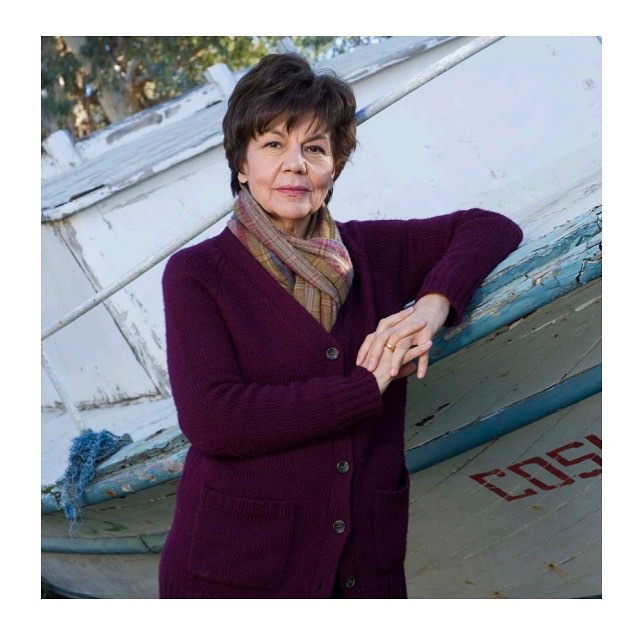
Kalliopi Lemos
 
SnapInsta.to 626406817 18358948708161987 3607089220724052558 n
@gazelliarthouse
 
Greek-born and London-based Kalliopi Lemos has established an internationally recognised practice spanning sculpture, painting and installation, using her work to explore human rights, migration and gender equality.

Her powerful works, often created with wood, metal and fabric, examine the effects of neo-capitalist and patriarchal power structures while drawing on themes of memory and the stories passed down through generations, particularly by women. Deeply influenced by Japanese aesthetics, Lemos studied the art of Ikebana for 15 years and travelled extensively in Japan, developing an appreciation for what she describes as its "simplicity and balance". This sensitivity to form is evident throughout her practice, including in her film At the Centre of the World (2015).

Honoured with numerous distinctions over the course of her career, Lemos remains one of the leading contemporary artists of the Greek diaspora.
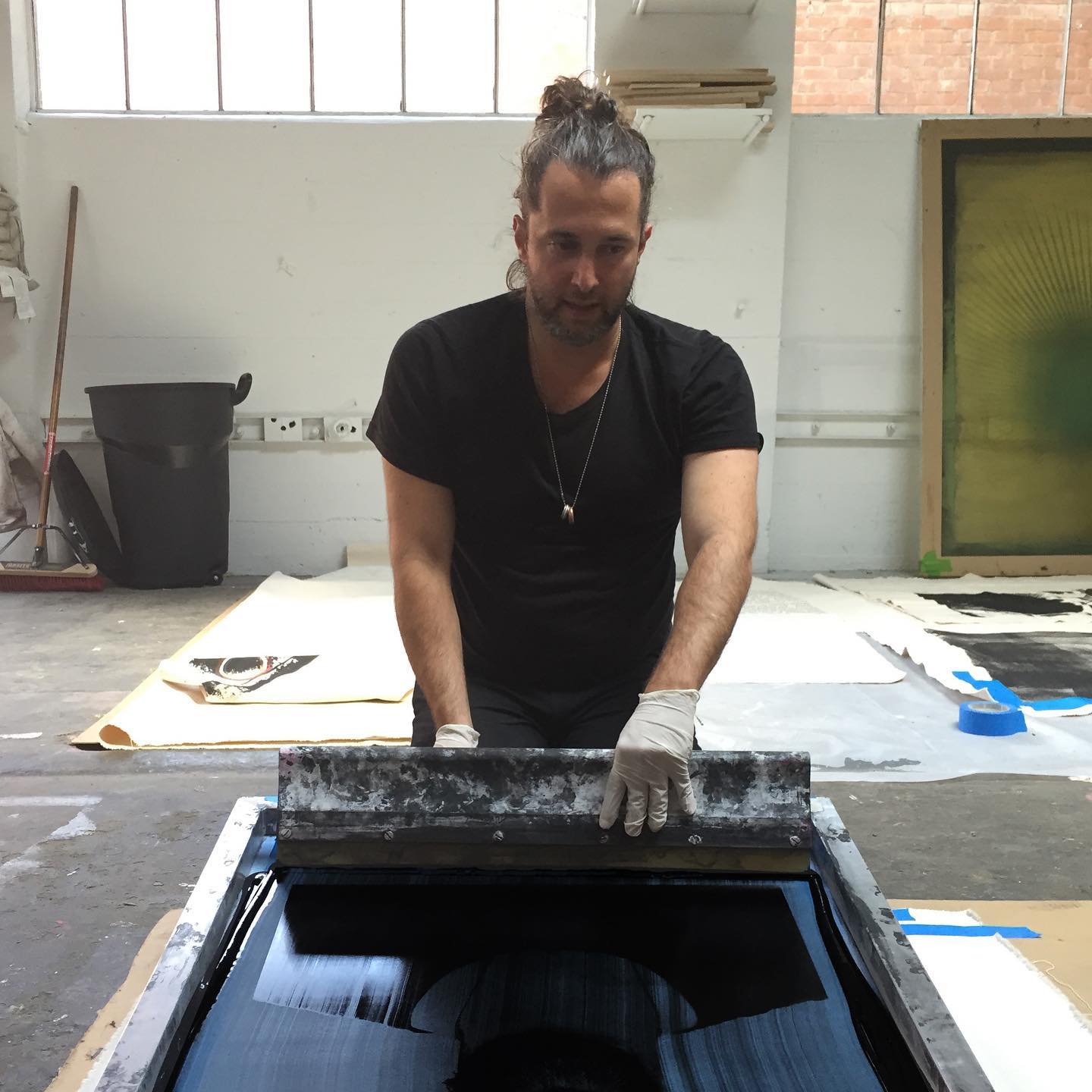
Panos Tsagaris

SnapInsta.to 627308952 18335351326244254 3536529584998961762 n
@panos_tsagaris
 
Living and working in New York, Panos Tsagaris is a visual artist and photographer whose dreamlike images blur the boundaries between reality and fiction. Rooted in an enduring fascination with spirituality and mysticism, his practice explores transformation and the interconnectedness of humanity, nature and the cosmos.

Drawing on both personal and sociopolitical realities, Tsagaris creates evocative works that bridge the conscious and the unconscious, inviting viewers into spaces of imagination, reflection and quiet introspection.
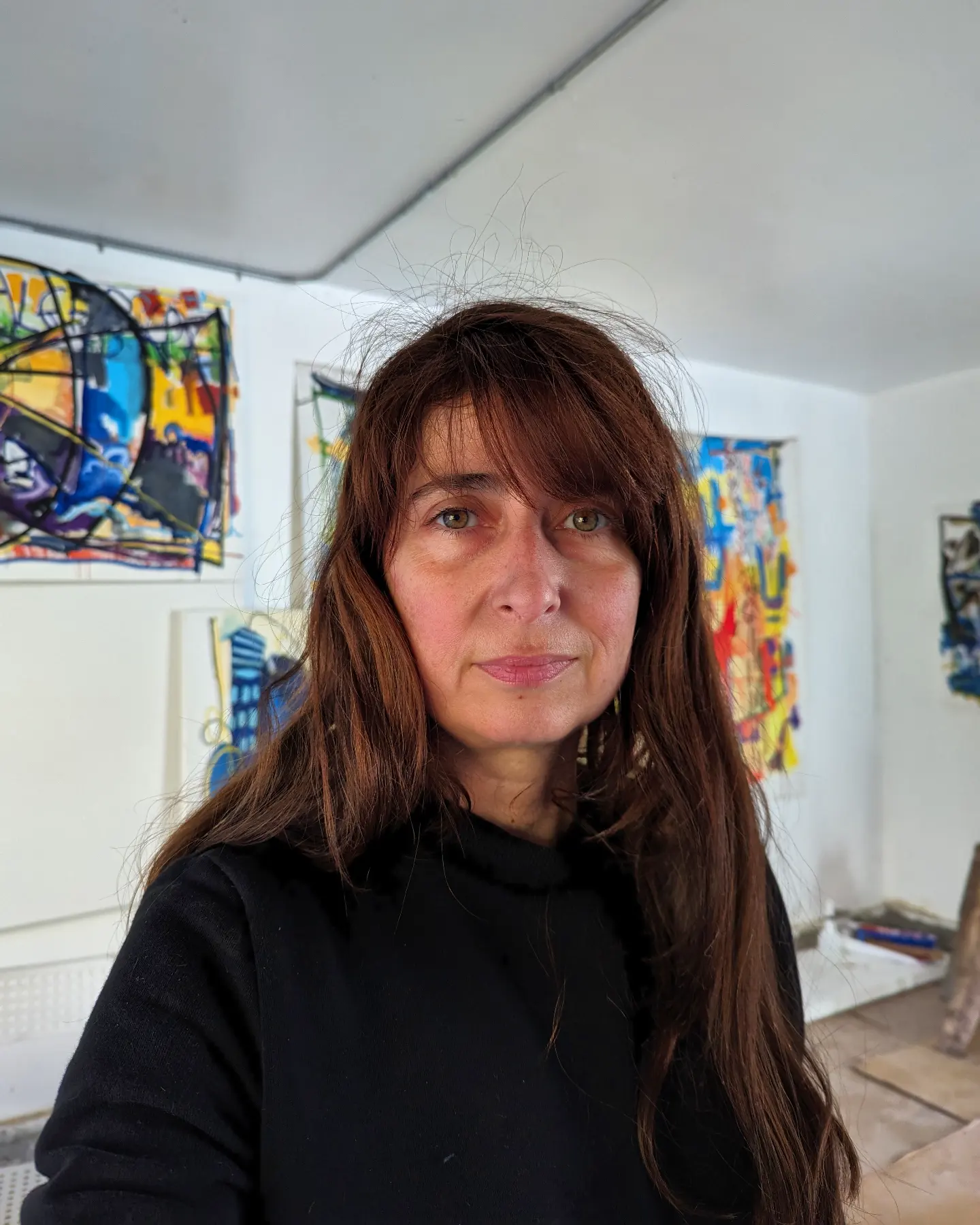
 
Despina Stokou

SnapInsta.to 629986428 18348886642229202 7303984030824464915 n
@destinisto
 
Based in Los Angeles, Despina Stokou is a contemporary artist, writer and curator whose bold paintings combine expressive brushwork, vibrant colour and text drawn from the digital world. Raised between Saudi Arabia and Athens, her international upbringing informs a practice that explores communication, identity and the ways information circulates in contemporary society.

Blending abstraction and figuration, Stokou transforms fragments of online conversations and messages into dynamic compositions that reflect the complexities of human relationships and modern life.

The roulette wheel spins, slot machines chime, and beneath the bright lights of Las Vegas, fortunes are won and lost in seconds. Today, gambling is a multi-billion-dollar industry, with entire cities built around its appeal. Las Vegas proudly embraces the title "City of Sin" – a nickname reflecting the Abrahamic belief that gambling is morally suspect. Judaism first condemned it as sinful, a view later adopted by Christianity and Islam.

Yet in ancient Greece, gambling was viewed very differently.

The Greek gods were far from perfect. Unlike the flawless deities of later monotheistic faiths, the Olympians shared human flaws and passions. Hermes, god of commerce and luck, and Pan were linked to games of chance, while Zeus, Poseidon and Hades famously divided the universe by drawing lots after defeating the Titans. To the Greeks, luck was never entirely random; even the roll of a dice was guided by the gods.

This fascination with chance stretches back to the earliest civilisations. Gambling thrived in ancient China, Egypt, Persia and Greece, as shown by archaeological finds of dice, gaming pieces and dedicated gambling spaces, alongside literary and artistic evidence. Some historians even argue that poker has roots in ancient Greece, though others trace its origins to China or Persia.

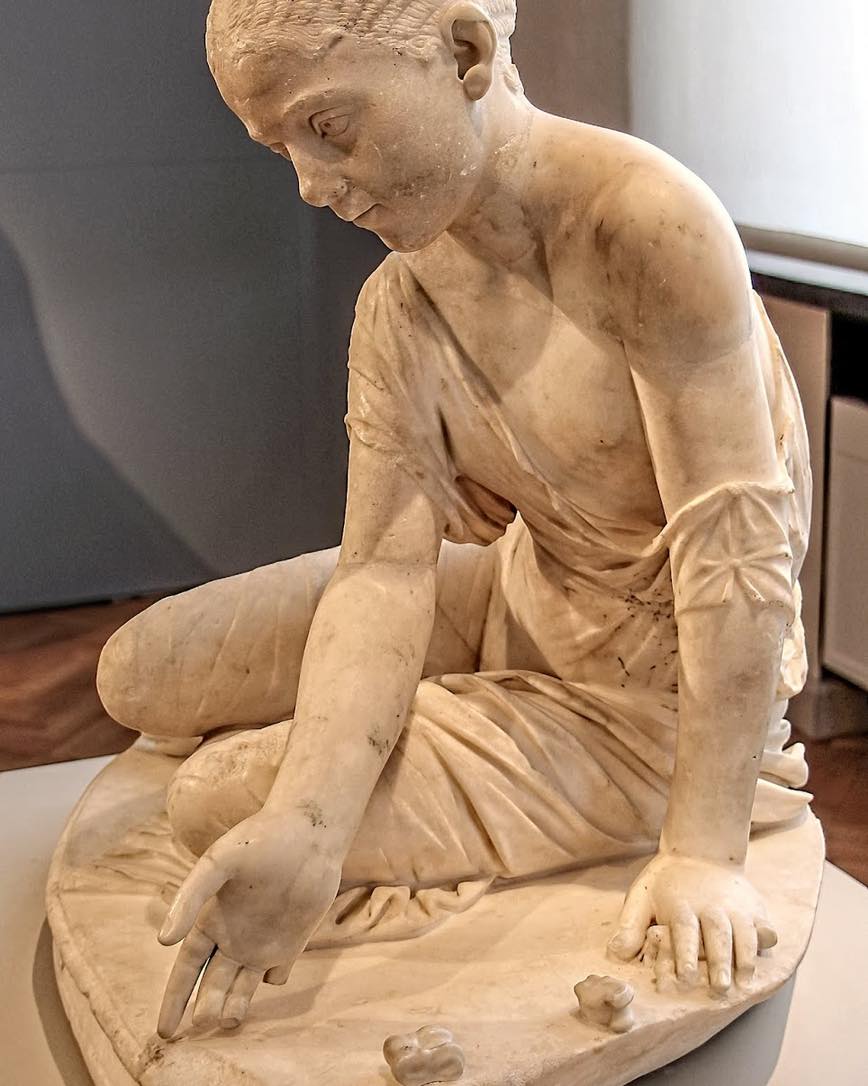
Popular Greek games included Par Impar Ludere, in which players guessed whether a hidden number of objects was odd or even; astragaloi, played with sheep or goat knucklebones used as dice; and petteia, a strategy game often compared to chess. Although myth credits the hero Palamedes with inventing dice during the Trojan War, archaeology suggests they existed in Greece as early as 6000 BCE.

SnapInsta.to 480749194 1045447274276890 5447121748111465946 n
@anticaeviae

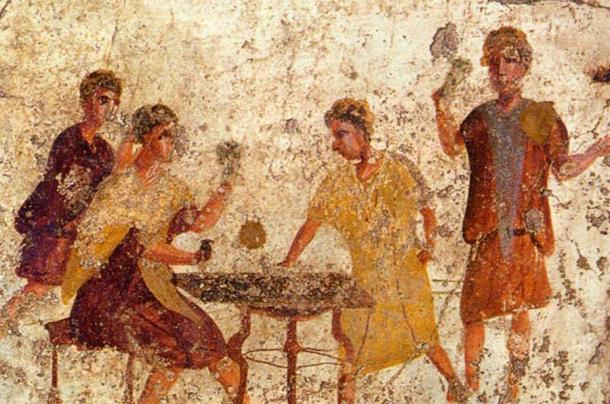
For the ancient Greeks, gambling was about more than money. Games of chance enlivened agoras, symposia and religious festivals, accompanying debate, sport and communal celebration. Rather than a hidden vice, gambling was a normal and valued part of Greek social life.


More Than a Game

SnapInsta.to 623210301 18084522950234431 5101321303885684487 n
@ancient_origins

For the ancient Greeks, gambling was not confined to the wealthy or hidden from public view. It was woven into everyday life, filling agoras, drinking parties and religious festivals. More than entertainment, games strengthened social bonds, sharpened the mind and sometimes even honoured the gods.

Competition was central to Greek society. Athletic contests, especially the Olympic Games, celebrated courage, endurance and discipline, while board games encouraged strategy and games of chance added excitement to social gatherings.

The symposium – an all-male drinking party where politics, philosophy and poetry mixed with wine – often featured games such as kottabos, in which guests flicked wine dregs at a target, frequently with wagers on the outcome. Even evenings of intellectual discussion became competitive contests.

The same spirit shaped Greece's major festivals. During celebrations such as the Panathenaic Games and the Dionysia, gambling was as common as betting at modern sporting events. Gaming formed part of festivities honouring the gods, with gamblers seeking the favour of Hermes, god of luck and commerce, and Tyche, goddess of fortune.

The Olympic Games, held every four years in honour of Zeus, attracted bettors as well as spectators. Chariot races inspired heavy wagering, while later gladiatorial contests also became popular gambling spectacles. For the wealthy, betting displayed status; for ordinary citizens, it offered the hope of changing their fortunes.


From Luck To Obsession

If gambling was deeply embedded in Greek society, so too was awareness of its dangers. The ancient Greeks even had a word for compulsive gambling: ludomania. Although they lacked a modern medical understanding of addiction, they recognised that an obsession with games of chance could consume anyone, regardless of wealth or status.

Greek philosophers were fascinated by the nature of luck and responsibility. If the gods influenced fate, how much control did people have over their own choices? Were the Olympians' gambling exploits examples to imitate or warnings against surrendering to chance?

SnapInsta.to 649238302 17977891776002367 3076985410322609377 n
@aesthetical_symphonies

Plato regarded excessive gambling as a distraction from virtue and the pursuit of a just life. Aristotle's concept of akrasia—the failure of self-control—was not aimed specifically at gambling, but closely reflects modern ideas of addiction. Other schools reached similar conclusions: the Stoics valued freedom from the influence of fortune, while the Epicureans argued that any pleasure leading to harm, including financial ruin or addiction, could never produce true happiness.

Direct evidence of gambling addiction is limited, but the Greeks' repeated emphasis on moderation suggests that ludomania carried a strong social stigma. Compulsive gambling could damage relationships and, in extreme cases, contribute to crushing debts. In cities such as Athens and Corinth, severe debt sometimes forced people to sell themselves—or even family members—into slavery.

Although the Greeks lacked modern mental health care, they recognised the stress and turmoil caused by compulsive behaviour. Those who struggled had little beyond philosophical calls for moderation and self-control.

More than two thousand years later, dice have been replaced by betting shops, online casinos and smartphone apps, but the impulse remains unchanged. Ancient Greece reminds us that the desire to test our luck is one of humanity's oldest instincts—and that the challenge, then as now, is ensuring the thrill of the game never outweighs the value of moderation.

A National "Gambling Epidemic"?

Perhaps it is no coincidence that a civilisation fascinated by games of chance thousands of years ago remains closely associated with betting today. Modern Greece has not inherited its gambling culture directly from antiquity—centuries of political, economic and technological change have transformed the industry—but gambling remains a highly visible part of everyday life.

This is not uniquely Greek. The World Health Organisation estimates that around 1.2 per cent of the world's adults experience gambling addiction. Yet Greece appears particularly vulnerable. Years of economic uncertainty, limited opportunities to save or invest, and weak safeguards for young people have helped fuel the industry's rapid growth.

The scale is remarkable. In 2024, Greeks wagered more than €15.6 billion on games of chance, compared with €21.7 billion generated by the country's tourism industry. By comparison, the entire legal US sports betting market handled around €143 billion in bets—only ten times Greece's total despite serving a population roughly thirty-four times larger.

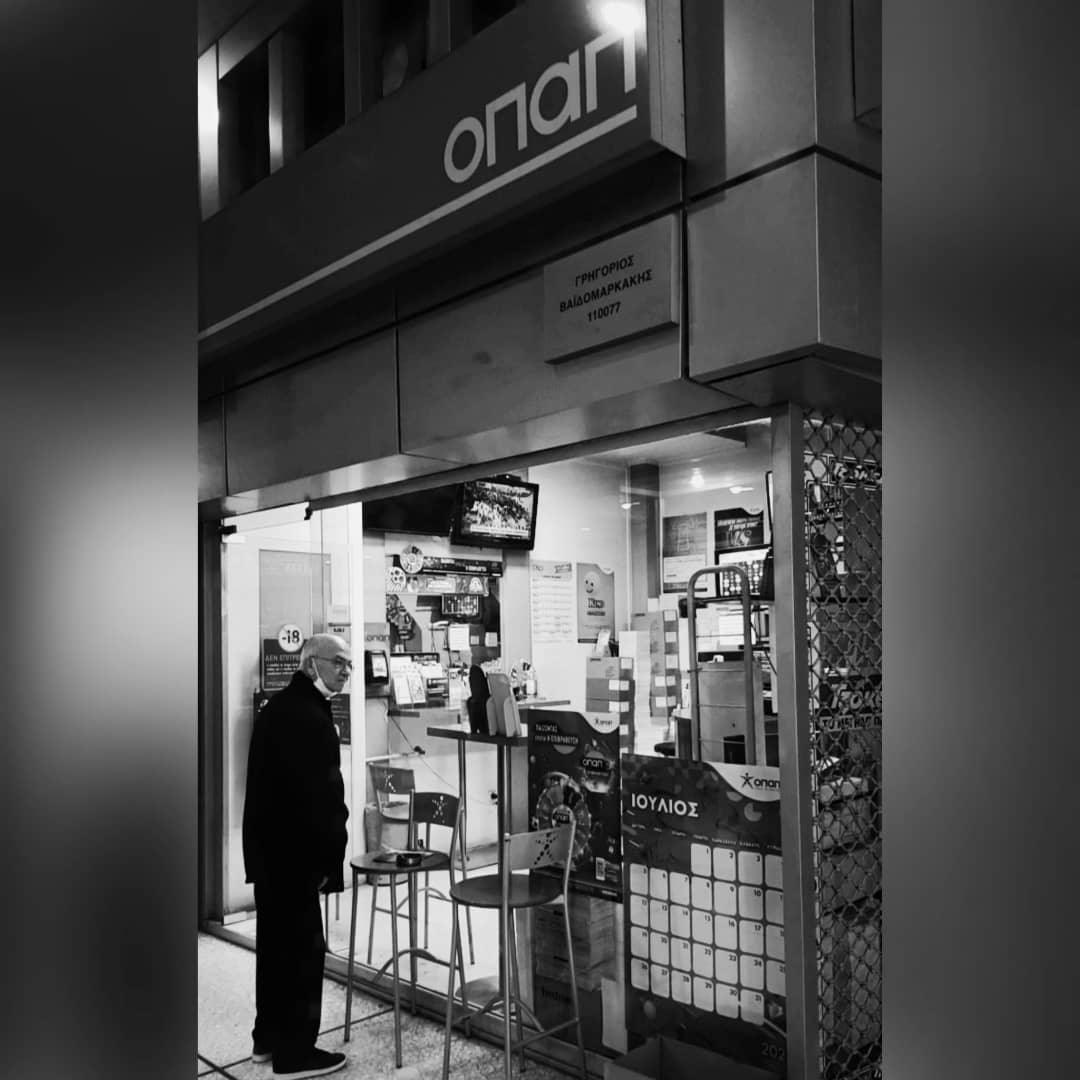
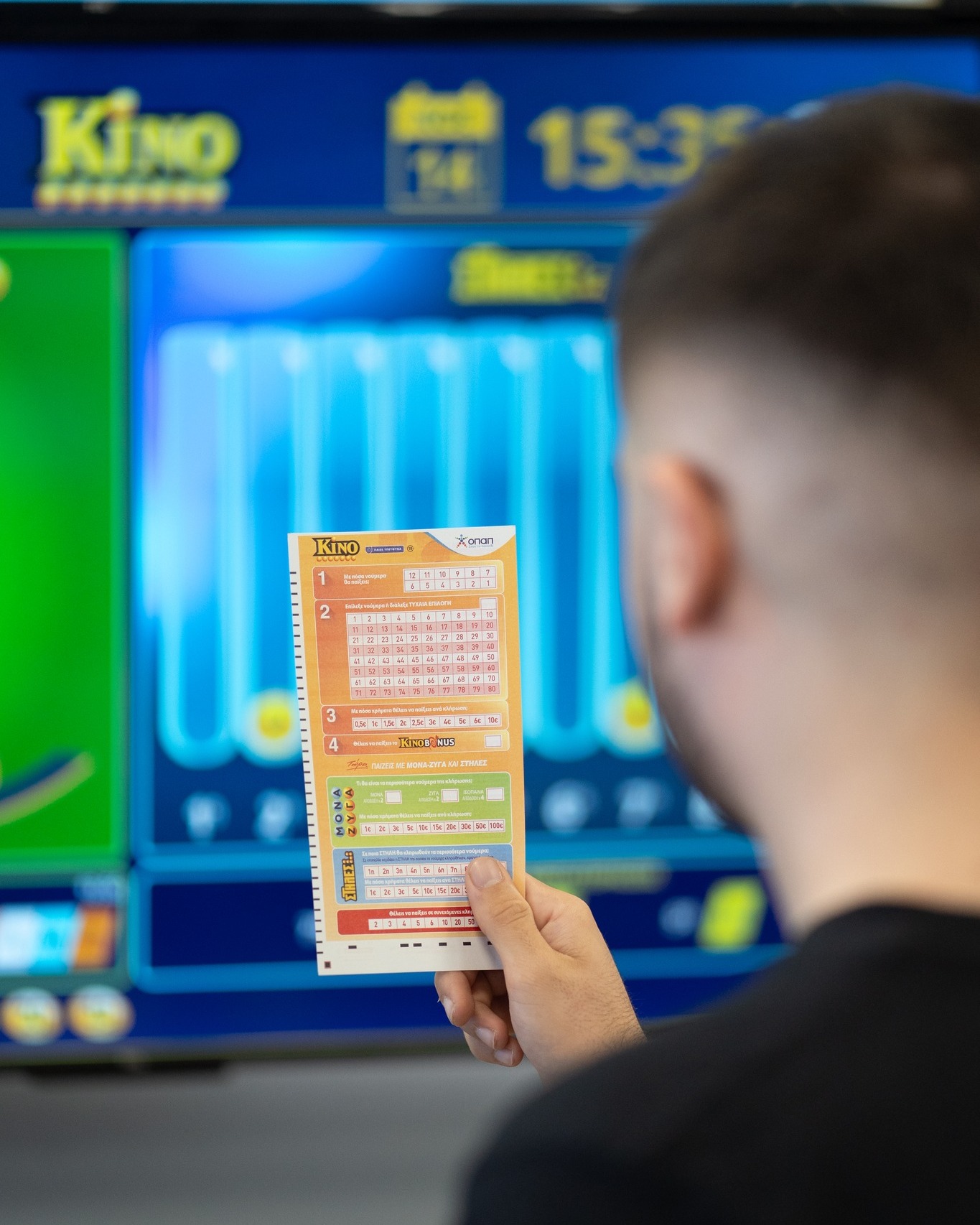
At the centre of the industry is OPAP, Greece's dominant gambling operator. Privatised in 2013, it retains exclusive rights to operate numerical lotteries and retail sports betting through more than 3,500 betting shops—more than the country's two largest petrol station chains combined. Known locally as propotzidika, after OPAP's famous PROPO football pools, these shops are a familiar sight in cities and villages alike.

SnapInsta.to 650404094 18092386432868348 8309236660398214737 n
@dio.sot

Online betting is even more widespread. Around seven in ten Greeks now gamble digitally, and Greece is forecast to record the fastest growth in online betting in Europe. Advertising is equally pervasive, with betting promotions dominating television, public transport, billboards and social media.

The result has led some observers to describe Greece as facing a national "gambling epidemic". Financial analyst Philip Chrysopoulos argues that betting should no longer be seen simply as entertainment but as a growing economic and social concern. Young men appear especially at risk, as smartphones, instant payments and online bookmakers have made placing a bet easier than ever.

A Booming Industry & A Complex Challenge

The rapid growth of gambling has been matched by an increasingly sophisticated legal framework. The Hellenic Gaming Commission (HGC) regulates the sector, licensing operators and enforcing rules designed to protect players while generating significant tax revenue. Greece now has the second-highest gross gaming revenue (GGR) as a share of GDP in the European Union, highlighting gambling's importance to the national economy.

Yet the legal market is only part of the picture. Illegal bookmakers, unlicensed betting websites and underground casinos are estimated to generate around €2 billion annually.

This raises a broader question: what if the average Greek adult invested the €291 spent each year on gambling instead? Over time, diversified investments such as the S&P 500 could produce far greater returns than games in which the odds favour the house. Yet retail investing remains relatively uncommon in Greece, where savings accounts offer little return and many people—particularly younger adults—lack the financial knowledge or confidence to invest.

SnapInsta.to 471217061 122182124378103842 2485515876076368090 n
@allwyn_kentrianos

Like the short-term rental market, gambling cannot simply be banned. The challenge is to regulate it in ways that minimise social harm. That requires more than calls for "responsible gambling". Stronger protections for children, tougher action against illegal operators and greater investment in regulators are all essential. Ironically, while the gambling industry has grown rapidly, the HGC's workforce has fallen from 173 employees in 2014 to fewer than 70 by the end of 2024.

Perhaps most importantly, the conversation must change. Gambling addiction is often recognised only after tragedy, despite its quieter consequences—financial hardship, anxiety, damaged relationships and lost opportunities.

Unlike the ancient Greeks, we no longer believe the gods decide the fall of the dice. We understand probability, recognise addiction and have the means to help those affected. The challenge for modern Greece is not to eliminate gambling, but to ensure one of humanity's oldest pastimes remains entertainment rather than a public health crisis.

Have you ever wondered why the days of the week have the names they do?

Why is Tuesday called Tuesday? Why is Monday Monday? Was someone just making things up or is there actually a reason behind it?

I became curious about this years ago and the more I learned and integrated it the more it fascinated me.

Many ancient cultures led by the Babylonians and Hellenistic astrologers associated each day of the week with one of the seven planets visible to the naked eye: the Sun, the Moon, Mercury, Venus, Mars, Jupiter, and Saturn because they believed the cosmos directly influenced human affairs. Since these planets were the only ones that wandered across the fixed stars, they were considered powerful, time-keeping gods. The Babylonians passed this system to the Greeks and Romans.

In Spanish and other Latin based languages, Martes comes from Mars. Miércoles comes from Mercury. Jueves comes from Jupiter. Viernes comes from Venus.

The more I learned about the qualities associated with each planet, the more I noticed something interesting. The energy of each day actually seemed to match the types of activities that naturally flowed best for me.

As a business owner, I now intentionally plan my schedule around these themes. Here is how I plan my week according to the planets. Whether you see this as astrology, symbolism, or simply a mindful way to organize your week, I have found it incredibly helpful.

Monday Is Moon Day.

For me, Monday is all about slowing down before speeding up. It is a day for planning, brainstorming, journaling, meditating, and listening. I avoid scheduling work meetings on this day because I want space to think creatively and connect with my intuition before the busy part of the week begins. If I do have appointments, they are usually for my own personal growth or for planning my business.

Tuesday Carries The Energy Of Mars, The War Planet.

Mars is associated with action, courage, and momentum. It's in a way a more aggressive type of energy, which tends to fuel me and get me into gear. This is when I schedule my heaviest workload. It is the day I tackle the projects I've been putting off, check things off my list, and make progress. If I need to push through something challenging, Tuesday is usually the day I dedicate to that.

Wednesday Is Connected With Mercury, The Planet Of Communication.

This has become my favorite day for video calls, networking events, teaching, group coaching and conversations. Whenever I can, I schedule meetings that involve sharing ideas or connecting with people because the energy seems to support clear communication.

Thursday Is Associated With Jupiter, The Planet Of Growth, Abundance, & Expansion.

My Thursdays tend to feel lighter. Some meetings naturally spill into this day if they need to be rescheduled, but I also notice that this is when the more enjoyable work happens. Collaborations, creative conversations, and opportunities to connect often find their way here. Sometimes I even sneak in a personal event because it still feels aligned with building relationships and expanding my world. 

Friday Belongs To Venus, The Planet Of Love.

Venus reminds us to enjoy beauty, relationships, creativity, and pleasure. On Friday’s, I usually leave plenty of space in my schedule. I'll run personal or work errands, I may have a meeting or two, or get outside. And I intentionally keep my evenings free for family, friends, or simply doing something that fills my soul and makes me happy.

Saturday Is Saturn's day, The Planet Of Restriction & Limitation.

Since it is the planet furthest from the Sun among the classical planets, it's enveloped in darkness and for this I personally think of it as a quieter, darker energy. I usually avoid scheduling anything major or important on Saturdays. Instead, I let myself color outside the lines a little. If I'm wearing all black or all red, going out with friends, or simply taking life less seriously, it somehow ends up happening on a Saturday.

Then Comes Sunday. The Day Dedicated To The Sun.

Named for our Sun, the center of our solar system. Sunday always feels bright. I love being outside in nature, opening all the windows, cleaning my home, letting fresh air and sunlight in, playing music, and preparing my space for the week ahead. It is a day that naturally invites light, gratitude, and renewal.

Do I believe you have to schedule your life this way? Not at all. But I do think there is something beautiful about paying attention to the natural rhythm of the week instead of treating every day exactly the same. I also believe there is a natural rhythm to the universe and its practices like these that help me connect with it more and be more in flow with it.  

Since I started working with these daily themes instead of against them, my weeks have felt more intentional, more balanced, and surprisingly more productive.

Maybe it's the energy from the planets. Maybe it's the power of setting intentions.

Or maybe those two things have been working together all along. Either way, I love finding all the ancient wisdom hidden all around us and to me astronomy, or the study of our stars, can tell us so much about ourselves and how best to relate to our surroundings. 

About the Author

Miosotis (Mio) Santana is a Certified Trauma Support Specialist, Transformational Trainer, Ceremonialist, and the Founder of Divine Journey, established in 2018. Through life-changing programs, retreats, and sacred circles, she guides individuals to transform from within by healing the inner child, cultivating self-love, raising vibrational frequency, and harmonizing feminine and masculine energy.

Her signature retreat, Rebirth, serves as the gateway into Divine Journey—an immersive rite of passage designed to reconnect participants with their inner power, clarity, and authentic self-expression through ritual, ceremony, and embodied practice. From there, participants deepen their path through Resilience: A Breakthrough Journey to Self-Love and Divine Mastery, a self-mastery immersion that supports conscious creation and personal sovereignty.

Now based in Greece, Mio continues to facilitate transformational experiences that blend ceremony, science, and spirit, empowering individuals to discover the divinity within every part of their journey. You can find her at www.divinejourney.life or on Instagram @Mio_Santana.

Athens has yet another reason to celebrate. According to new research by Holidu, Athens International Airport has been ranked among the five highest-rated airports in Europe for 2026, highlighting the Greek capital's growing reputation as one of Europe's most welcoming travel destinations.
Based on thousands of Google Maps reviews from travellers across Europe, Athens International Airport secured 4th place with an impressive 4.3-star rating from 53,883 reviews, making it one of the continent's most highly praised aviation hubs.

Europe's Highest-Rated Airports In 2026

According to Holidu's latest ranking, the top five highest-rated airports in Europe are:

RankAirportCountryGoogle Rating
1 Istanbul Airport Turkey ⭐ 4.4
2 Francisco de Sá Carneiro Airport (Porto) Portugal ⭐ 4.4
3 Helsinki Airport Finland ⭐ 4.4
4 Athens International Airport Greece ⭐ 4.3
5 Zürich Airport Switzerland ⭐ 4.3

Why Travellers Love Athens International Airport

With nearly 54,000 Google Maps reviews, Athens International Airport continues to earn high praise from both international visitors and locals alike. Travellers frequently highlight its clean and modern facilities, efficient organisation, easy navigation, and pleasant overall passenger experience.

As Greece welcomes millions of visitors every year, the airport plays a vital role in creating a positive first and last impression of the country. Its consistent high ratings reflect ongoing efforts to provide a smooth, reliable, and comfortable journey, whether travellers are arriving to explore Athens or heading off to discover the Greek islands.

A Strong Showing For Southern Europe

Southern Europe performed particularly well in this year's rankings, with both Istanbul Airport and Porto's Francisco de Sá Carneiro Airport retaining their first and second-place positions thanks to excellent passenger reviews. Helsinki Airport completed the top three, praised for its calm atmosphere, intuitive layout and efficient security process.

Athens' place among these leading airports demonstrates how the city continues to strengthen its position as one of Europe's premier travel gateways.

About The Study

The ranking was compiled by Holidu using average Google Maps review scores and the total number of reviews for the 100 busiest airports in Europe based on passenger numbers. Airports were ranked according to their ratings, with those receiving larger numbers of reviews given greater weight. Airports in Russia and Ukraine, as well as non-operating airports, were excluded, resulting in a final ranking of 85 European airports. The data was collected in **June 2026.

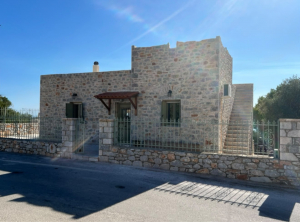
Discover the authentic beauty of the Mani Peninsula at Anemoessa Stone House, a charming stone-built retreat in the picturesque coastal village of Kokkala. Combining traditional Maniot architecture with modern comforts, this beautifully restored holiday home offers the perfect setting for couples, families, or friends looking to experience one of Greece's most unspoiled destinations.
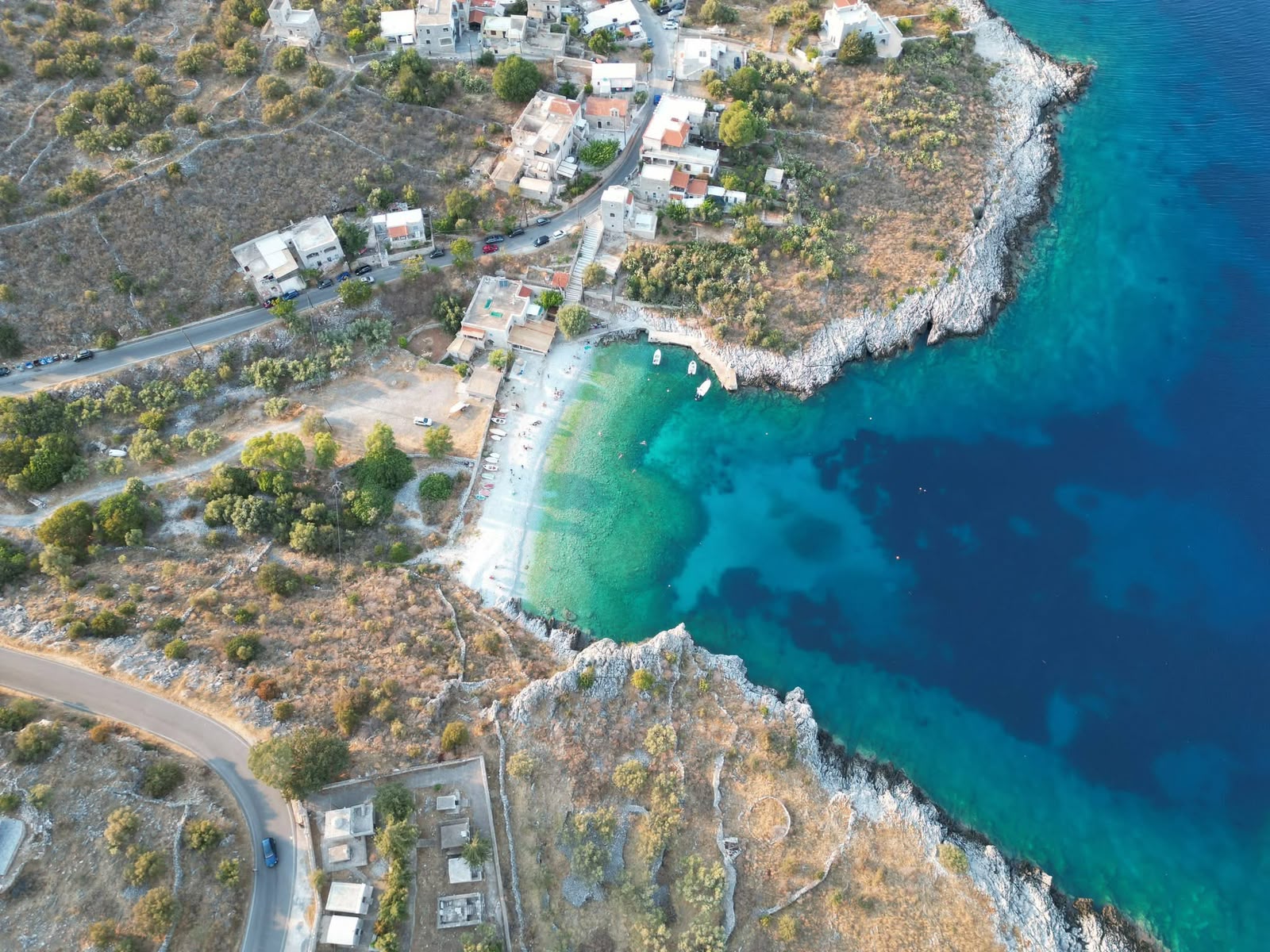
Just 100 metres from the crystal-clear waters of Marathos Beach, Anemoessa Stone House invites guests to slow down, reconnect with nature, and enjoy the timeless charm of East Mani.

WhatsApp Image 2026 07 24 at 19.58.29 1

A Home Designed For Comfort & Relaxation

Thoughtfully furnished to create a warm and welcoming atmosphere, the house comfortably accommodates up to five guests and features:
  • Two peaceful bedrooms with luxurious king-size beds
  • A spacious living room with a comfortable corner sofa bed
  • A stylish bathroom
  • A fully equipped kitchen with all modern appliances
  • Complimentary high-speed Wi-Fi
  • Air conditioning throughout the property
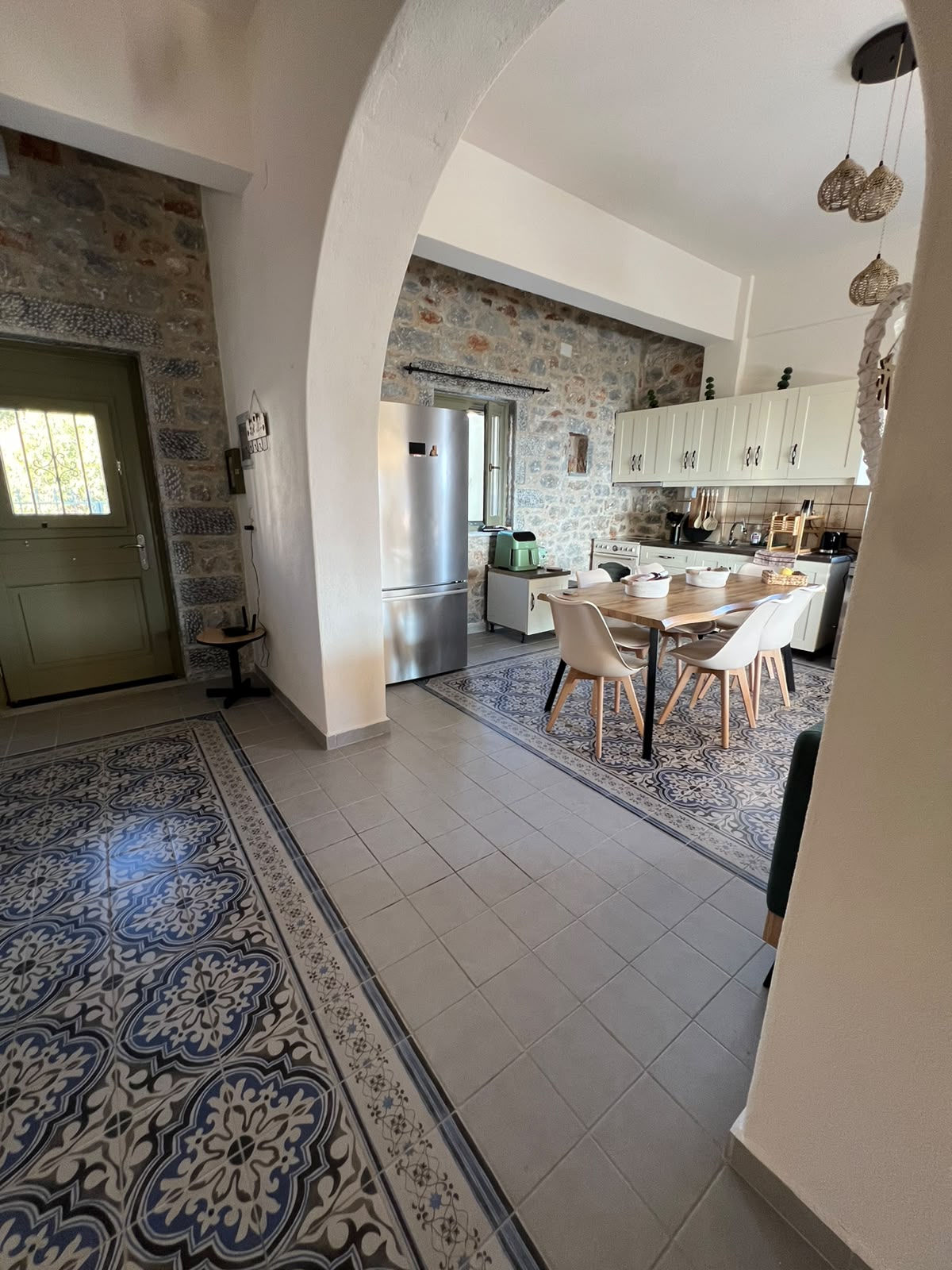
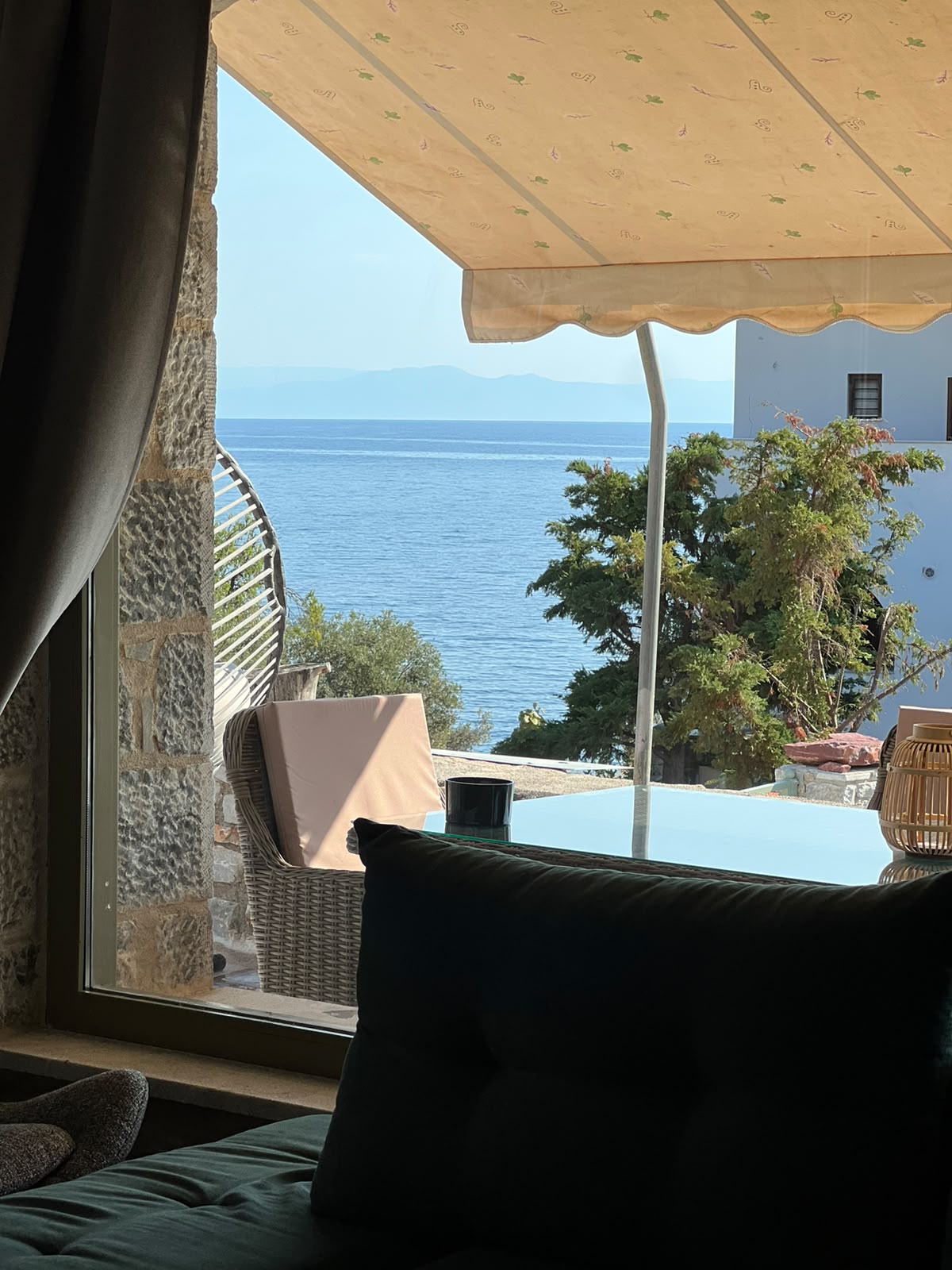
Outside, guests can unwind on the spacious veranda surrounded by olive trees, enjoy al fresco dining, or rinse off after a swim using the private outdoor shower, perfect after a day at the beach.

WhatsApp Image 2026 07 24 at 19.58.30 2

The Best Of Mani At Your Doorstep

Located in one of Mani's most charming seaside villages, everything you need is within walking distance.
Enjoy two beautiful pebble beaches:
  • Marathos Beach – calm, crystal-clear waters ideal for swimming
  • Soloteri Beach – a picturesque bay with turquoise waters beside a historic 19th-century chapel
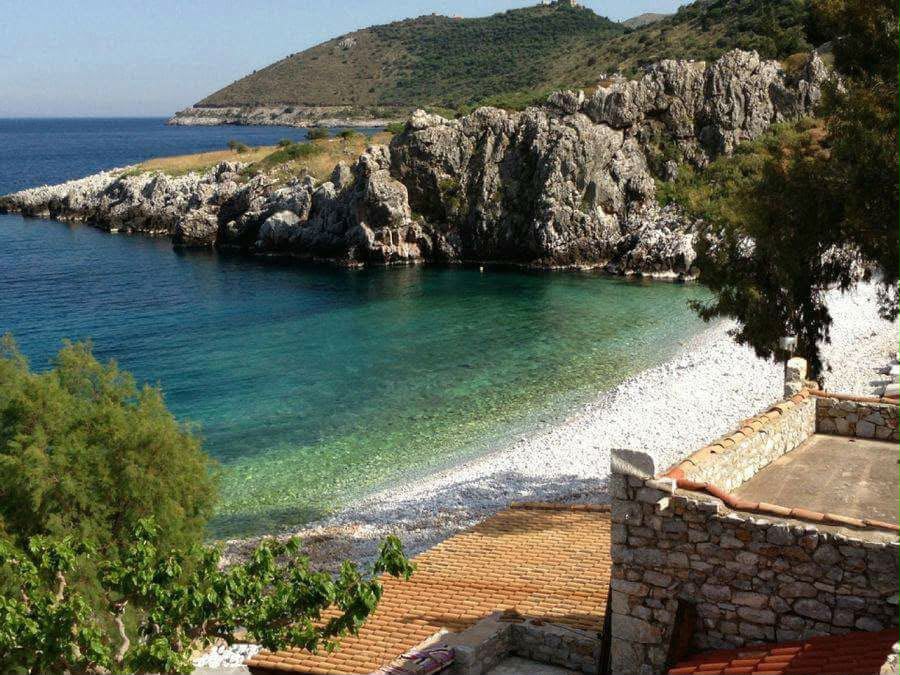
The village also offers traditional tavernas serving fresh local cuisine, a bakery, and a mini market, allowing you to experience authentic Greek village life with ease.

WhatsApp Image 2026 07 24 at 19.58.33

Explore The Untouched Beauty Of Mani

Anemoessa Stone House is ideally positioned for discovering the rugged landscapes, historic villages, and dramatic coastline that make Mani one of Greece's most captivating regions.

Nearby highlights include:
  • Gerolimenas (30 min)
  • Areopoli (25 min)
  • The spectacular Caves of Diros (27 km)
  • Cape Tainaron, the southernmost point of mainland Europe (50 min)
  • Sparta (1.5 hours)
  • Kalamata International Airport (2.5 hours)
Whether you're exploring ancient stone villages, swimming in secluded coves, hiking scenic coastal trails, or simply enjoying spectacular sunsets over the sea, every day offers a new adventure.

WhatsApp Image 2026 07 24 at 19.58.27

Why You'll Love Staying Here

Anemoessa Stone House perfectly blends authentic Maniot character with modern comfort. From its peaceful beachfront location and beautifully restored interiors to its easy access to some of the region's most iconic attractions, it's an ideal base for travellers seeking relaxation, authenticity, and unforgettable memories.

Whether you're planning a romantic escape, a family holiday, or a peaceful retreat by the sea, Anemoessa Stone House offers a truly authentic Mani experience.

Book your stay and discover the timeless beauty of Kokkala and the Mani Peninsula.
The countdown to the year's premier aviation event has begun!
On September 5 & 6, Athens Flying Week – Tanagra International Airshow takes off once again!

The largest airshow in the Eastern Mediterranean returns to Tanagra Air Base, bigger, richer and more spectacular than ever. With dozens of fighter jets, aerobatic and transport aircraft, as well as major international participants, it promises a unique show that will thrill thousands of visitors.

This now-established event will once again bring together some of the most advanced military aircraft and helicopters, as well as legendary aircraft from the past!
Fighter Aircraft From Greece & Abroad

At the heart of Athens Flying Week 2026 are:
  • The Surya Kiran, India’s “Sun Rays,” making their first-ever appearance in Greece! Nine aerobatic aircraft promise to impress even the most demanding spectators!
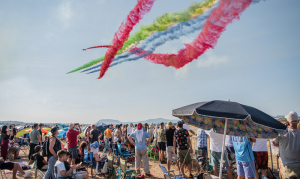
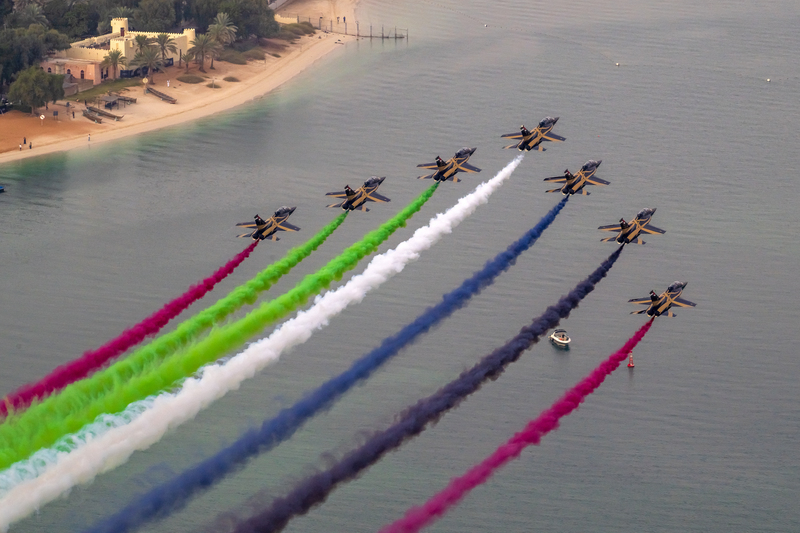
  • The breathtaking Fursan Al Emarat from the United Arab Emirates! The aerobatic team returns to Greece with an entirely new aircraft, the twin-engine Hongdu L-15 jet! For the first time, a Chinese-built fighter/trainer aircraft is coming to Athens Flying Week! Get ready for an unforgettable aerial show featuring spectacular aerobatics, vibrant colours, and the roar of 14 engines!
  • The Finnish F-18 Hornet Demo, one of the world's most impressive aerial displays, is coming to Greece and Athens Flying Week for the very first time!
  • The Spanish Eurofighter Typhoon, making its debut appearance at Athens Flying Week, is coming to amaze you!
  • The legendary F-4 Phantom will make one of its final public appearances! Don't miss the opportunity to see one of the most famous Cold War-era fighter aircraft up close before it is retired!
  • The German Air Force Eurofighter Typhoon will deliver a performance that will be talked about... Along with the German Tornado in a flight display!
  • The Austrian Pilatus PC-7 returns to Tanagra following its successful flight display debut at AFW!
  • Also, for the first time in Greece, the Canadian Skyhawks parachute team and the French Phenix parachute teamwill deliver a breathtaking high-adrenaline spectacle!
  • The Belgian A400M Atlas will be featured in the AFW26 static display! This titan of the skies will be ready to welcome visitors of all ages aboard!
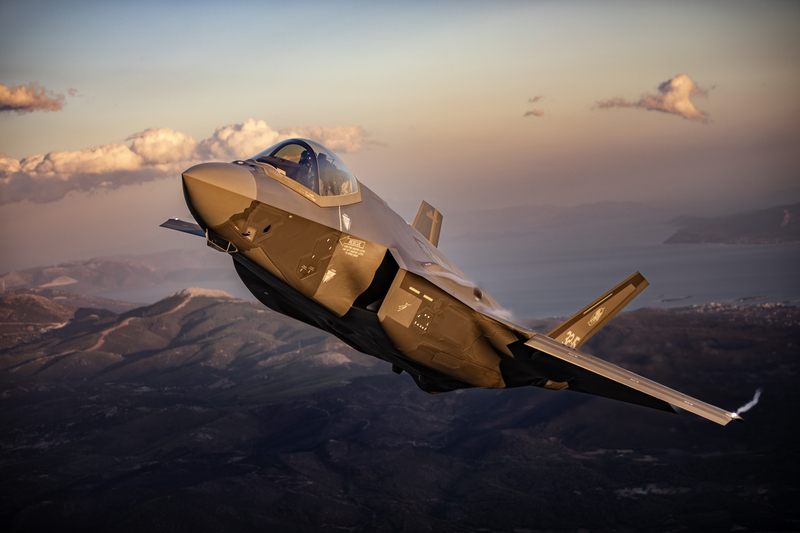
  • The Italian F-35 will be on display in the Athens Flying Week static exhibition! The world's most popular stealth aircraft is coming to Tanagra!
  • And of course, many more surprises await you at Athens Flying Week 2026!!!
Fursan Al Emarat 3 2 2

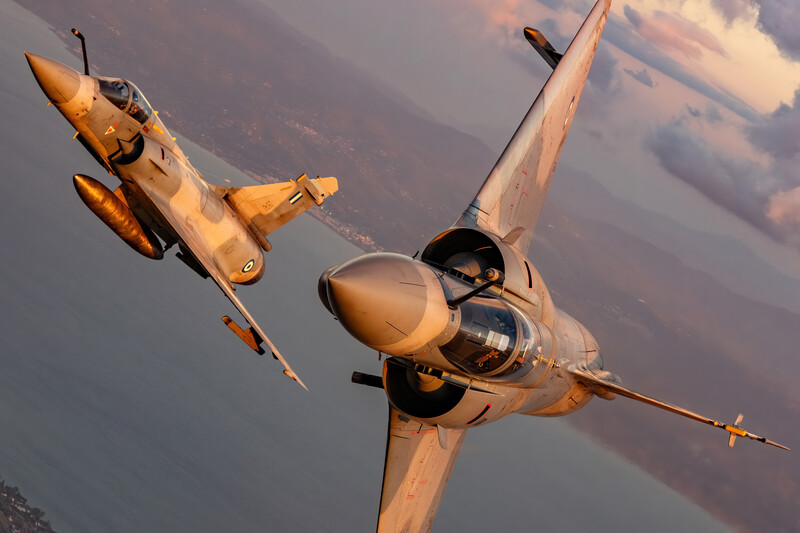
The Hellenic Air Force will once again showcase the popular F-16 ZEUS and T-6 Daedalus demonstration teams, while the F-16 Viper, Rafale, Mirage 2000-5, M-346, and the legendary F-4 Phantom will also take to the skies.

In addition, all aerial assets of the Hellenic Armed Forces will participate in impressive formations and complex operational scenarios alongside Special Operations Forces.

Legends Of The Skies

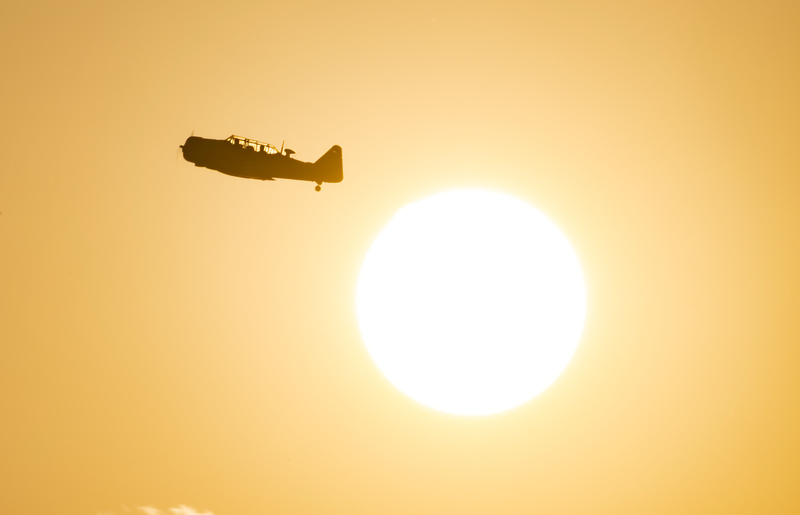
This year's event also takes visitors on a journey through time with historic Warbirds such as the Supermarine Spitfire MJ755 and the T-6 Harvard, which have made a remarkable return to the Greek skies thanks to the "Ikaros" Foundation.

T 6 Harvard 2

And of course, our civil aviation participants and favourites:

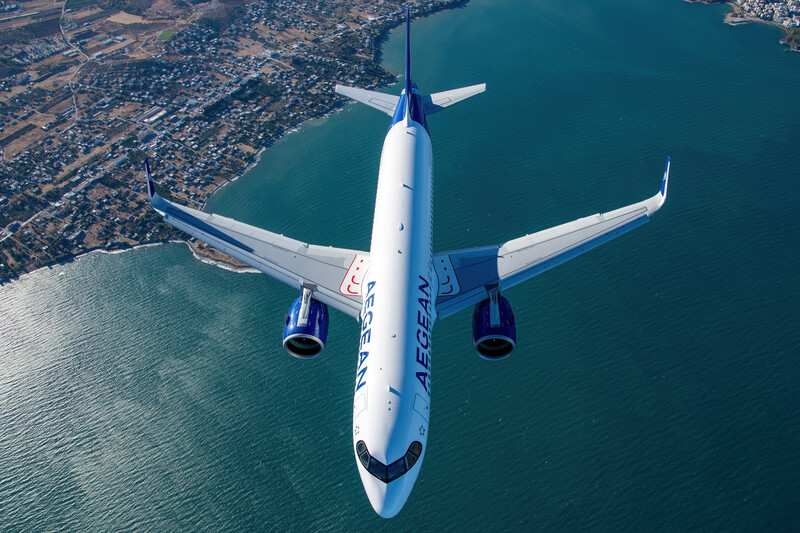
  • Aegean Airlines
  • Luca Bertossio
  • Frank Van Houten (Dutch Rush) with the Sukhoi 26MX
AEGEAN 3 2

Static Exhibition & Other Highlights

In addition to the aerial displays, Athens Flying Week 2026 will feature a large static exhibition where visitors will be able to get up close to and photograph all participating aircraft and helicopters!

Among the highlights of the extensive static display, you will see:

  • The Italian F-35
  • The Belgian A400M
  • The Austrian PC-7
  • Hellenic Air Force aircraft and helicopters
  • The Euroavia aircraft of the National Technical University of Athens
all rights reservedplease contact geert.vandeput@gmail.com for further copyright information

And many more surprises!

There will also be a commercial exhibition featuring souvenirs, Hellenic Air Force merchandise and information from aviation schools about career opportunities in the aviation industry.

We warmly thank the 
Ministry of National Defence and all the General Staffs for their invaluable support, as well as our sponsors and the Region of Central Greece for their contribution to this year's event!

Heads up… feel the magic of the skies!

Book your tickets early at more.com and through the official ticket reseller network!

Ready for take-off?


Tuesday, 04 August 2026 16:04

Europe's Open Water Elite Chooses Santorini
Olympians & World Champions Meet At The Volcano, In The Most Spectacular Gathering Of International Open Water Swimming

The countdown to Santorini Experience 2026 continues, and this year's event raises the bar even further, welcoming to the Caldera some of the biggest names in world open water swimming on October 16–18. Olympians and world champions, will line up at the start of the iconic swimming race from the Volcano, once again confirming the international character of the event and making Santorini a meeting point for the world's elite of the sport.

The field includes Leonie Beck of Germany, Olympian and double world champion, winner of both the 10km and the 5km at the 2023 World Championships, one of the leading figures in international open water swimming. Alongside her, Italy's Mario Sanzullo, Olympian and world silver medalist in the 5km, his compatriot Barbara Pozzobon, world champion with Italy and European 25km champion, and Hungary's Anna Olasz, two-time Olympian, and a two-time world silver medalist, will also line up. It is a gathering of athletes rarely seen on the same start line.

Their presence is matched on the coaching side, with two of the sport's most respected open water coaches also in attendance. Italy's Fabrizio Antonelli, named Coach of the Year by the Italian Swimming Federation (Alberto Castagnetti Trophy) in 2021, guides Gregorio Paltrinieri, Olympic gold medalist in the men's 1,500m freestyle, and a generation of Italian distance and open water champions. The event will also welcome Nikos Gemelos, technical director of the swimming race and one of Greece's most important open water coaches, with many years alongside the national team and a decisive contribution to Greek swimming's greatest international successes. He has designed the course that starts from the volcano.

Ideal Open Water Conditions In October

Beyond the spectacular backdrop of the Caldera, Santorini also offers ideal weather conditions for open water swimming and sporting events in October. According to official climate data from the Hellenic National Meteorological Service (HNMS/EMY), the average maximum air temperature is around 25°C, while sea temperatures in the Cyclades typically remain above 22°C. The weather remains warm, without the intense summer heat, while the sea remains warm enough for racing and swimming, one of the key reasons Santorini is an ideal destination for open water swimming and sporting events at this time of year.

1

A New Identity For Santorini Experience

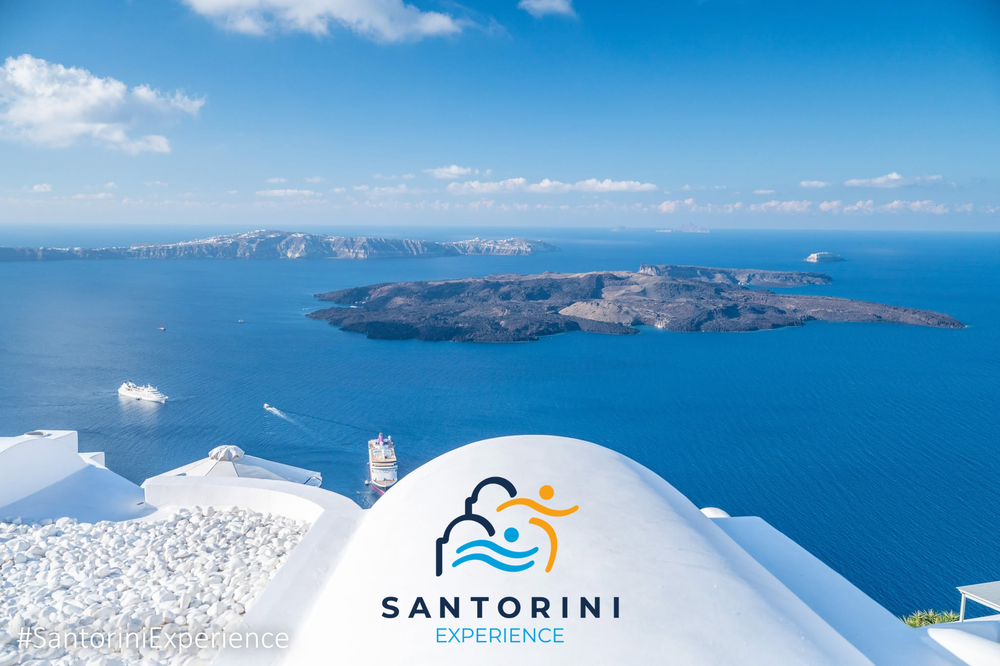
This year, Santorini Experience unveils its new logo, marking a refreshed identity for the event. Inspired by Santorini's unique terrain and the experience offered by running and swimming in the Caldera, the new logo's creative concept captures the meeting of the natural landscape with athletic action, through a clean, minimalist and contemporary design approach. The result expresses the event's dynamic evolution, creating a distinctive, timeless and instantly recognizable identity.

At the same time, the official teaser of the event is already available, offering a first taste of what participants will experience this coming October!

3

The Experience Begins Before The Start: Special Travel & Accommodation Privileges

From the very first step of the journey to the stay on the island, the event ensures that participants enjoy a complete experience in Santorini.

Discover Santorini With The Reliability Of SIXT

SIXT, a member of the MOTODYNAMICS Group, through its state-of-the-art and premium fleet, offers participants comfortable and safe transport on every route around the island, from the trip to the event to exploring Santorini. Through SIXT's dedicated page, SIXT Rent a Car, a 15% discount is offered on vehicle bookings. The offer is activated automatically via the link, with no code required, and is valid for the period from October 5 to 20.

SKY Express – From Europe to Santorini

Travel to Santorini with SKY express, ERAA's Airline of the Year and Official Airline Sponsor of Santorini Experience, drawing on its extensive international network and 9 daily flights from Athens to Santorini.

Exclusive ferry Offers From Blue Star Ferries

Blue Star Ferries is offering a 30% discount on passenger ferry tickets (all classes, excluding cabins), and 30% on vehicle tickets for routes from Piraeus, the Cyclades and the Dodecanese to Santorini and back, for trips taken between October 10 and 25, 2026.

The offer applies to registered participants of the event and extends to up to three (3) companions per participant.

For bookings and ticket issuance, participants can contact the following port offices:

Piraeus: GELASAKIS SHIPPING & TRAVEL CENTER, tel. +30 210 4222440
Santorini: DAKOUTROS TRAVEL, tel. +30 22860 22201

4

The Local Community Stands Beside Santorini Experience 2026

At Santorini Experience, the island's own local community plays a special role, people who don't just support the event, but give it character, color and soul, turning every award into a small story of Santorini.

This year's special event awards are born from marble, crafted by the well-known artist Grigoris Kouskouris and Othen Elemental Aesthetics. With a deep connection to natural material and the aesthetics of the place, he creates awards that speak the island's language, here, marble becomes a bridge between ancient Greece and today, a timeless keepsake for those who stand out this year in the Caldera.

The sense of the handmade and personal is also conveyed by Konstantina Spanou, the goldsmith behind Spanou Jewelry. With jewelry inspired by the history and landscape of Santorini, she will offer exclusive creations to the winners of each event, in both running and swimming, so that the prize is not just an award, but a piece of the island that travels with them.

The island's transport partners also stand beside the athletes. Santo Line Tours, as the event's Official Travel Agency, handles the group transport of athletes by coach, ensuring a comfortable and organized transfer to every point of action.  Vacation Into Premium, based in Oia, offers visitors to Santorini a premium package of experiences, from private transfers in luxury vehicles to exclusive private tours and caldera cruises by catamaran or other luxury boats, as well as more special experiences such as horseback riding, cooking or pottery classes and more, depending on each visitor's interests. On the water, the boats of Caldera Yachting will be alongside the swimmers throughout the race, reinforcing the safety framework and providing reassurance to every participant.

The island's hospitality, finally, embraces the event with an entire map of partner hotels covering every style of stay and every wish. From cozy, atmospheric accommodations in the heart of traditional villages, with friendly rates starting from around €50 a night, to iconic suites with private pools and volcano views, Santorini Experience visitors can choose their own experience across the whole island. Many hospitality sponsors even offer exclusive privileges and special rates for participants and their companions, making a stay in Santorini part of the experience itself, affordable, authentic and, as befits the island, unforgettable.

The hotels supporting Santorini Experience so far are the following: Athina Luxury Suites, Sandblu Santorini, NOŪS Santorini, Vedema, A Luxury Collection Resort Santorini (Empiria Group), Katikies Garden Santorini, Santo Collection Resorts & Villas, Apeiron Blue, Canaves Collection, 270 Oia’s View, Coco-Mat Hotel Santorini, Aqua Vista Hotels, Agave Santorini Design Boutique Hotel, Holiday Beach Resort, Meltemi Suites, Meltemi Village, Atlantis Beach, Eteoro Suites Santorini, The Majestic Hotel Santorini (Kord Hotels), Thimari Lodge, Rocabella Santorini, K & K Unique Holiday Homes, Loizos Stylish Residences, Sea Sound White Katikies, The Muses of Santorini Suites, Kalisti Hotel & Suites, Phaos Santorini Suites, Santo Mangata, Aressana Spa Hotel & Suites, Blue Spa Santorini, Venus Sunrise Suites & Villas, Sienna Eco Resort. 

These partnerships tangibly show how Santorini Experience remains deeply connected to the island and its people, turning every detail of the event into an experience that authentically bears Santorini's stamp.

The New Route To Ancient Thera

This year the program debuts the Ancient Thera 5k Run powered by Sandblu Santorini, a new route linking the athletic experience with the history and unique landscape of the island. Starting and finishing in Kamari, at the foot of Ancient Thera, runners will move along the Aegean and beneath the archaeological site of the ancient city, which was the island's most important center for centuries. A distinctive route where the natural landscape, culture and movement meet in an authentic experience.

The Route 15k Powered By The North Face

The route bearing The North Face's signature is one of the most demanding yet impressive experiences at Santorini Experience. Starting from the Caldera, runners will cross uphill and downhill trails with intense volcanic relief, passing through breathtaking views with the Aegean as a backdrop. The route passes by the chapel of Prophet Elias, continues through picturesque Imerovigli and reaches the entrance of Fira, at the church of Agios Gerasimos, before returning to the starting point. It is a route that combines the intensity of volcanic terrain with the uniqueness of the landscape, offering participants an authentic outdoor experience, while the partnership with The North Face highlights exactly this spirit of exploration and connection with nature that characterizes both the route and the philosophy of the brand.

Elevation Profiles Of The 2026 Routes

Santorini Experience's routes remain true to their demanding, volcanic character. The main elevation data for each route is shown in the graphic below:

Detailed features of all the routes are available HERE!

Register here for the 5k “Aristidis Alafouzos” run powered by Miele, the 10k powered by SIXT, a member of the MOTODYNAMICS Group, the 15k powered by The North Face, the Ancient Thera 5k run powered by Sandblu Santorini, and the 2.4k swim!

Premium Mobility Partner of the event is SIXT, a member of the MOTODYNAMICS Group. 
Gold Sponsors of the event are AESTIAN Philoxenia & Hospitality, Sandblu Santorini.
Official Airline Sponsor is SKY express.
Official Trail Running Shoe is The North Face. 
Silver Sponsor of the event is Miele.
Official Water is VIKOS natural mineral water.
Bronze Sponsor of the event is Blue Star Ferries. 
Official Technical T-shirt is 42K Running.
Official Travel Agency is Santo Line Tours.
Partners of the event are the Santorini Boatmen's Association, Caldera Yachting. 
Official Supporters are the Othen Elemental Aesthetics, Vacation Into Premium. 
Jewelry Partner is Spanou Jewelry. 
Helper is Spotteq.
The event will take place under the auspices of the Ministry of Tourism and the Greek National Tourism Organization.
Santorini Experience is co-organized by the Municipality of Thira, the Municipality of Thira's Department of Sports and Culture and the ActiveMedia Group.

#SantoriniExperience

Page 4 of 476