
The People Saving Greece's Sea Turtles: Inside ARCHELON's Rescue Centre
- by XpatAthens
- Thursday, 09 July 2026

There are places you visit, and then there are places that quietly change the way you see the world.
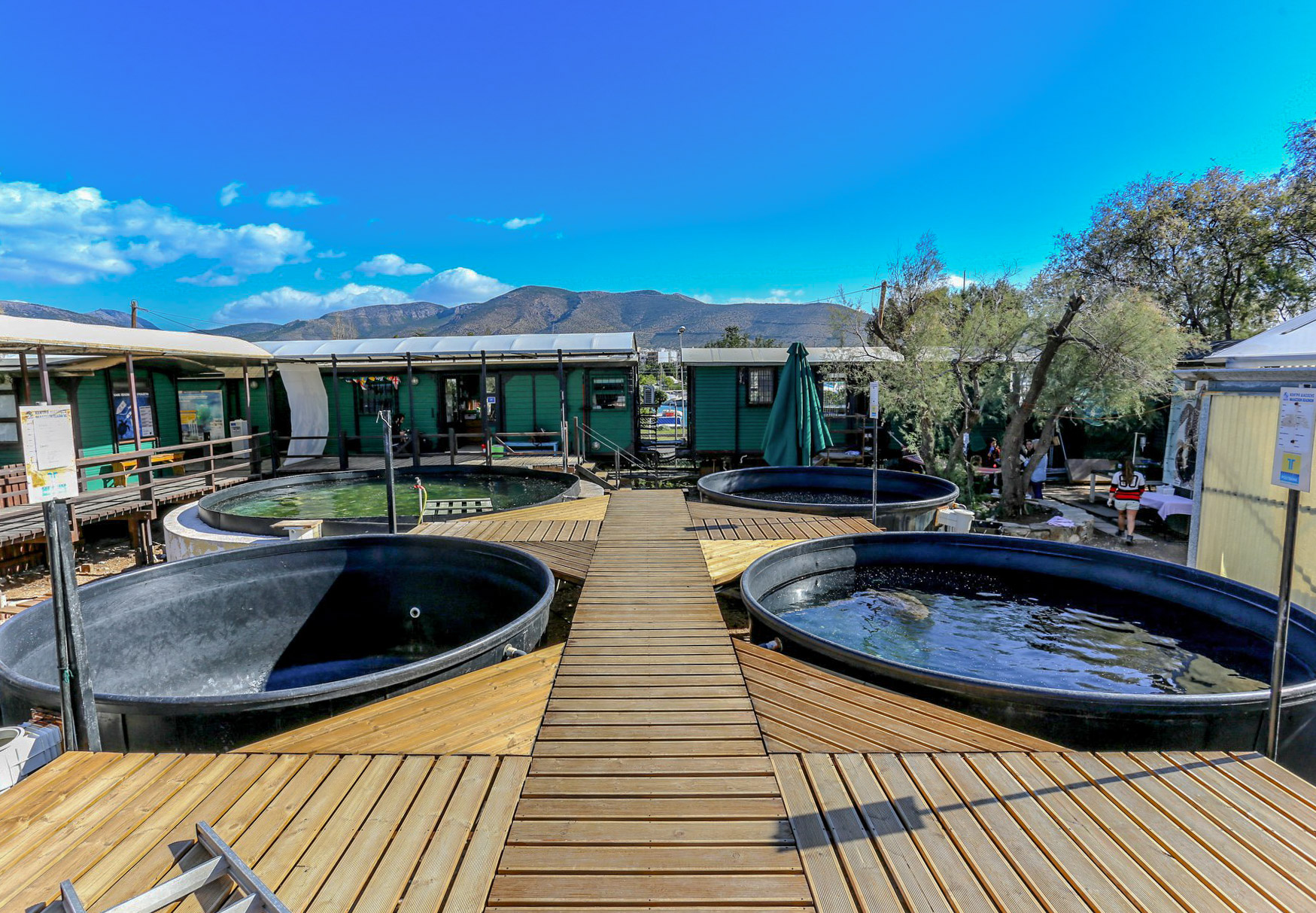
In Glyfada, lies a place many people don't even know exists. Yet every single day, it becomes a second chance for some of the Mediterranean's most extraordinary creatures.
This is the country’s only Sea Turtle Rescue Centre, run by ARCHELON, the Sea Turtle Protection Society of Greece.
We visited the Rescue Centre, expecting to learn about sea turtles. Instead, we left with something far more valuable: a profound appreciation for the hundreds of people who dedicate their lives to protecting them.
The first person to welcome us was John, one of ARCHELON's volunteers. Still a teenager, he greeted us with infectious enthusiasm and the kind of confidence that only comes from doing something you genuinely believe in.
What surprised us most, however, was that John was the only volunteer on duty who spoke Greek. Around him were volunteers from every corner of the globe, who had travelled thousands of miles simply to help protect Greece's sea turtles. Every year, around 500 volunteers join ARCHELON's conservation projects, creating an international community united by one common purpose.
A Story That Began With Tracks In The Sand
Every great conservation story starts with a discovery.
For ARCHELON, that moment came during the summer of 1977, when Dimitris and Anna Margaritoulis, while on holiday in Zakynthos with their children, noticed unusual tracks stretching across the beach. At the time, there had been no scientific documentation proving that loggerhead sea turtles nested in Greece.
The discovery sparked years of research, and in 1983, the non-profit organisation ARCHELON – The Sea Turtle Protection Society of Greece was officially founded with one ambitious mission: to study and protect sea turtles and the fragile coastal habitats they depend on.
Today, ARCHELON protects nesting beaches across Greece, including Zakynthos, Chania, Rethymno, and Messara Bay in Crete, Kyparissia Bay, Koroni and Lakonikos Bay in the Peloponnese.
Collectively, volunteers monitor around 100 kilometres of nesting beaches every single summer. It is a remarkable operation, powered largely by people who simply choose to care.
To support ARCHELON’s work, make a donation here! To become a volunteer and discover available projects, learn more here!
More Than A Rescue Centre
Although ARCHELON is best known for its rescue work, protecting sea turtles is only one part of its mission.
The organisation combines wildlife rehabilitation, scientific research, conservation activities, environmental education and raising public awareness under one roof.
The Rescue Centre in Glyfada operates 24 hours a day, seven days a week, receiving injured and sick turtles from every corner of Greece.
Meanwhile, on the nesting beaches, hundreds of kilometres away, volunteers patrol the coastline before sunrise, protect nests throughout the summer and help ensure hatchlings make it safely to the sea.
Back in Athens, schoolchildren visit the Rescue Centre throughout the year to discover the importance of marine conservation through educational programmes.
Where Every Turtle Has a Story
Walking through the gates of ARCHELON's Rescue Centre in Glyfada, it becomes immediately clear that this is not a place built around sadness.
Yes, every turtle arriving here carries a story of injury, danger or human impact. But the atmosphere is not one of defeat. It is a place filled with movement, dedication and hope.
Every tank represents a second chance.
John began our tour by introducing us to the species of sea turtles that can be found in Greek waters. Although the focus of ARCHELON's work is primarily the loggerhead sea turtle (Caretta caretta), Greece is also home to two other species: the enormous leatherback turtle (Dermochelys coriacea), which can reach more than two metres in length, and the green sea turtle (Chelonia mydas).
But the turtles arriving at the Rescue Centre are not here because of natural causes. Most are victims of human activity.
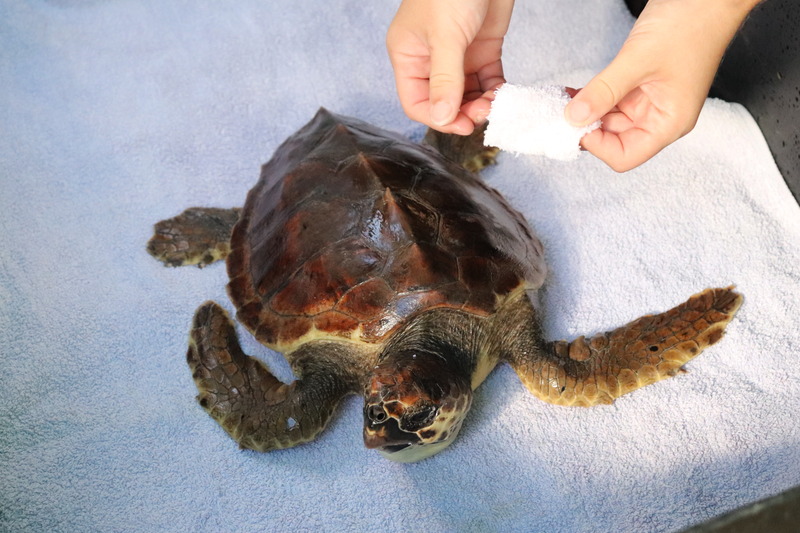
Some have been injured by fishing equipment. Others have swallowed hooks hidden among their food and required surgery to remove foreign objects from their bodies. Some have suffered severe injuries caused by boats, while others arrive exhausted and stressed after dangerous encounters at sea. The Rescue Centre is often the last hope between survival and death.
A Place Built For Healing
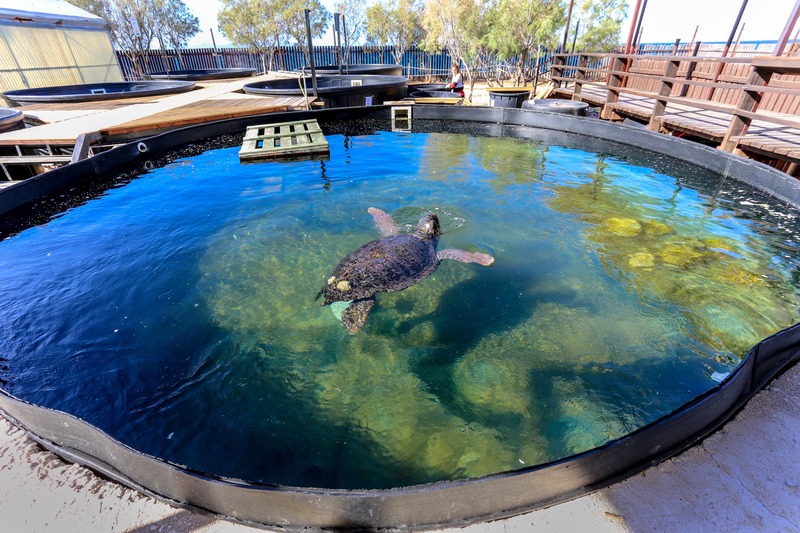
One of the most unique parts of the Rescue Centre is the greenhouse area. Here, turtles suffering from more serious conditions—including pneumonia or severe injuries—are kept in controlled conditions to support their recovery.
It was one of the most moving parts of our visit. Seeing these ancient animals, some of which can live for more than 80 years, quietly recovering after experiences they should never have had, creates a strange combination of sadness and admiration.
Sadness, because so many injuries are caused by human actions. Admiration, because of the people who refuse to give up on them.
The rehabilitation team and volunteers work tirelessly, often performing delicate procedures and surgeries to remove fishing hooks, plastic waste and other dangerous materials from turtles that arrive at the centre.
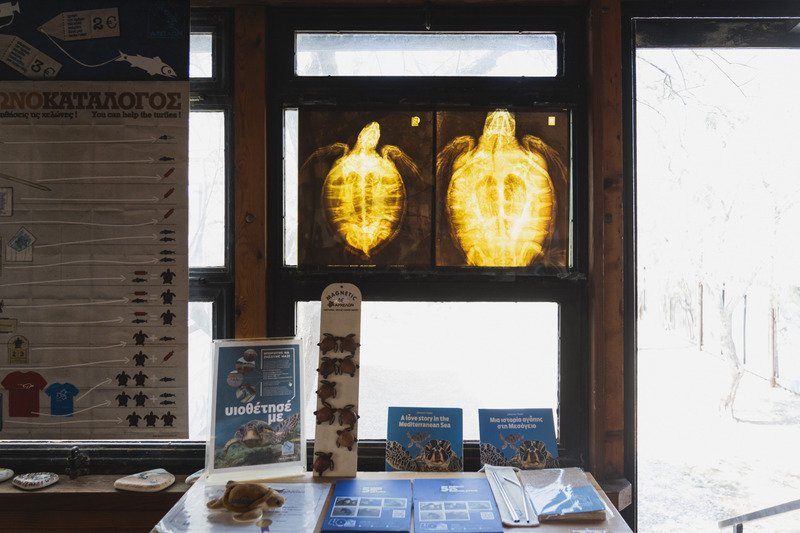
One of the most powerful reminders of this work can be found in the ARCHELON gift shop. Among the items visitors can take home as a memory of their experience is a display of fishing hooks removed from rescued turtles.
Each hook has the name of the turtle it was taken from. Each one represents a life that almost ended. Each one represents a turtle that was given another chance.
The Moment Dimitris Showed Us What Rescue Really Means
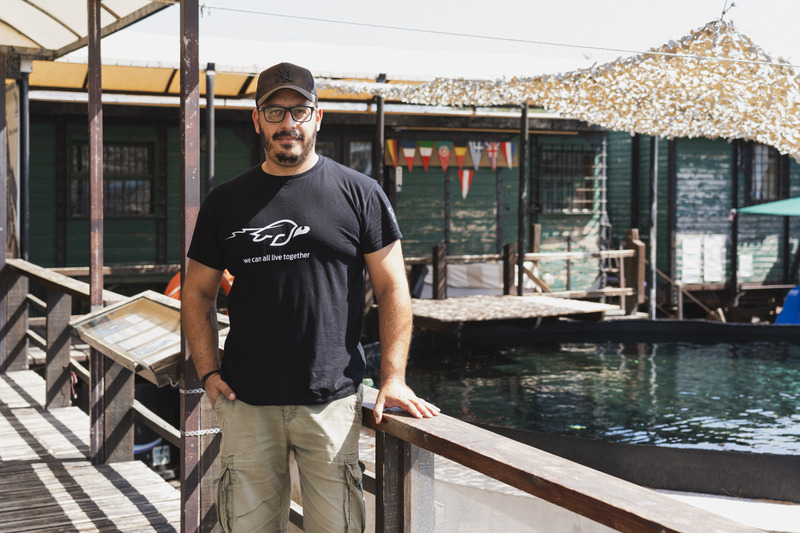
Just when we thought our visit was coming to an end, we met Dimitris, the head of the Rescue Centre.
An oceanographer with years of experience and an incredible depth of knowledge, Dimitris had one more thing to show us.
He opened videos of actual rescue operations and watching those moments was unforgettable.
Turtles found injured at sea, carefully transported, treated and eventually returned to the water. Moments of fear transformed into moments of freedom.
It was a powerful reminder that conservation is not an abstract idea. It is real people making real decisions every day that determine whether another creature gets to survive.
Dimitris also shared a wider perspective about our changing planet. He explained that Earth's climate has naturally gone through cycles of warming and cooling throughout history, including periods separated by thousands of years.
Nature has always had an extraordinary ability to adapt. Sea turtles themselves are already showing signs of adaptation.
For example, nesting seasons have gradually begun shifting earlier. While the first nests traditionally appeared later in the summer, today the first females may arrive as early as the beginning of May.
This change is connected to rising temperatures and the turtles' effort to adapt to new environmental conditions. But adaptation has limits. And this is why protection remains so important.
The Quiet Work Behind Every Rescued Turtle
What makes ARCHELON remarkable is that the Rescue Centre is only one part of a much larger network. Every injured turtle treated in Glyfada represents an entire chain of people working behind the scenes:
The volunteers who patrol beaches.
The researchers who monitor populations.
The educators who teach children.
The people who report injured turtles.
The supporters who donate.
Without this network, many of these animals would never survive.
Since its creation, ARCHELON has rescued more than 1,600 sea turtles, successfully returning approximately 70% of them back to the sea. Those numbers represent thousands of hours of human dedication. But they also represent something bigger: a belief that even one turtle matters.
Protecting The Beaches Where Life Begins
During the nesting season, ARCHELON volunteers become the silent guardians of the coastline. Every morning, starting as early as 5:30 a.m., they walk along the beaches searching for the unmistakable signs left behind by female turtles during the night.
Their tracks often look surprisingly similar to tractor tyre marks stretching across the sand. Following these trails, volunteers locate nests, record important scientific information and ensure that each nest receives the protection it needs.
The work continues after sunset too, with evening patrols carefully monitoring the beaches while minimising disturbance to the turtles. Volunteers use red-light torches, because normal bright lights can confuse the nesting turtles and interfere with their nesting success .
A Journey Written In Nature’s Memory
When a female loggerhead turtle comes ashore, she follows an ancient instinct passed down through millions of years. Under the cover of darkness, she carefully chooses the perfect location, digs a chamber around 60 centimetres deep, lays her eggs and spends hours covering the nest with sand, carefully camouflaging it from predators.
The eggs are surprisingly small—about the size of ping pong balls—and a single female can lay between 70 and 120 eggs, sometimes creating several nests during one nesting season. Yet perhaps the most remarkable part of this process is also the most emotional: the mother turtle will never meet her babies. She gives everything to create a safe beginning for them, then returns to the sea, leaving the rest of the journey to the hatchlings.
Around one and a half months later, tiny turtles emerge from beneath the sand, no larger than a human ear, facing one of nature’s most difficult challenges: reaching the ocean. Guided by instinct, they move towards the brightest horizon, the natural reflection of moonlight over the sea, a behaviour known as phototaxis. But today, artificial lights from hotels, roads and buildings can confuse them, leading them away from the water and towards danger.
For these tiny creatures, every step matters. Only around one in every thousand hatchlings is expected to survive until adulthood, facing predators, vehicles, pollution and human activity along the way. This is why protecting nesting beaches and reducing light pollution is so important, because one wrong direction can change the fate of an entire generation.
And yet, despite these challenges, sea turtles possess one of nature’s most extraordinary abilities: the power to find their way home. After reaching maturity, female loggerheads often return to the same regions where they were born to create the next generation. They can travel thousands of kilometres across oceans and still navigate back, guided partly by magnetoreception, their ability to detect Earth’s magnetic field and use it as a natural map.
While females return to the beaches to nest, males remain in the sea and never come ashore, a behaviour that dates back millions of years to their ancient reptilian ancestors.
A Species That Came Back From The Edge
The loggerhead turtle was once classified as endangered in Greece. Thanks to decades of conservation efforts, including the work of organisations like ARCHELON, its status has improved to Vulnerable.
This is an important success story, but it is also where many people misunderstand conservation. Vulnerable does not mean safe. It means that progress has been made, but continued protection is essential.
Without volunteers monitoring nests, protecting beaches, educating communities and treating injured turtles, that progress could easily disappear.
What To Do If You Find A Turtle Or Hatchling
One of the most important messages ARCHELON shares with visitors is what to do when encountering a sea turtle. If you find an injured turtle, do not try to handle it yourself. The correct action is to immediately contact ARCHELON, whose specialised team can provide guidance and organise rescue, by calling the 24/7 Rescue Network at +30 6941 511 511.
If you find a small hatchling, it is essential not to pick it up with bare hands. Human hands can transfer bacteria and substances that may harm these fragile animals.
Never place a hatchling directly into the sea. Those first steps from the nest to the water are a vital part of its development. The movement strengthens its muscles and helps it complete an important natural process that increases its chances of survival.
If you see hatchlings emerging from the nests in daylight, clear the top layer and smooth the sand in front of them and shield them from the sun, shading them until they enter the sea.
Sometimes helping wildlife means knowing when not to interfere. Nature has designed these first moments for a reason. And ARCHELON’s work is about protecting that process, not replacing it.
Small Actions Create Big Changes
ARCHELON’s work continues because of the people who choose to support it. Donations help keep the Sea Turtle Rescue Centre operating, provide medical care and rehabilitation for injured turtles, maintain essential equipment and support the conservation programmes protecting nesting beaches across Greece. Every contribution, big or small, directly helps turtles receive the care they need and allows volunteers and experts to continue protecting nests, hatchlings and vulnerable sea turtle populations.
If you would like to become part of this effort, you can support ARCHELON by making a donation and helping provide life-saving care to rescued turtles. You can also choose to support the nesting projects, where volunteers work throughout the summer to monitor nests, protect hatchlings and collect important scientific data.
For those who want to experience conservation first-hand, ARCHELON welcomes volunteers from Greece and around the world. Volunteers take part in beach monitoring, nest protection, hatchling conservation, turtle rehabilitation support and environmental awareness activities. Whether you are a student, a researcher or simply someone who loves nature, there is a way to contribute.
To support ARCHELON’s work, make a donation here! To become a volunteer and discover available projects, learn more here!
Visiting ARCHELON: An Experience That Supports Conservation
Perhaps ARCHELON’s greatest achievement is that it has transformed sea turtle conservation from something that belongs only to scientists into something everyone can participate in.
For visitors who want to experience the work of the Rescue Centre themselves, ARCHELON offers guided Sea Turtle Rescue Tours.
The experience is available by reservation for small groups in both Greek and English, making it accessible to visitors from around the world. It is suitable for adults and children, and it is also partially accessible for wheelchair users.
The Rescue Tour includes a donation of 60€ that contributes to the care of a rescued sea turtle for 10 days, helping cover essential rehabilitation costs. You are welcome to learn more about visiting the centre, HERE!
LIFE & CULTURE