
XpatAthens

XpatAthens

Wednesday, 30 September 2026 12:46

The Forgotten Connection Between Gut Health & Mood

Science is finally catching up with what Mediterranean food culture has practiced instinctively for ages: what happens in your gut doesn’t stay in your gut. In fact, your gut health may be shaping your mood, your weight and even your hormones more than you realize.

The Gut-Brain Axis: A Two-Way Conversation

We now know that your gut and brain are in constant communication through what scientists call the gut-brain axis; a network involving the vagus nerve, hormones and immune signaling. However, this is not a one-way street where the brain simply gives orders. The gut talks back and it turns out it has quite a lot to say.

Roughly 90% of the body’s serotonin (a neurotransmitter closely tied to mood and feelings of wellbeing) is produced in the gut, not the brain. Have you ever heard of the “second brain”? That is essentially the enteric nervous system and it influences everything from digestion, to stress levels, to emotional signaling.

Your Inner Ecosystem

Inside our digestive tract live trillions of bacteria, fungi and other microorganisms collectively known as the gut microbiome. Far from being passive tenants, these microbes are working hard digesting food, producing vitamins, training the immune system and manufacturing important compounds, such as short-chain fatty acids, which influence inflammation levels and brain function.

A diverse microbiome is one with a wide range of bacterial species and is generally linked to better metabolic and mental health outcomes. By contrast, a limited microbiome (often caused by processed diets or overuse of antibiotics) or an imbalanced one, where harmful bacteria outweigh beneficial ones, has been linked in emerging research to higher rates of anxiety, low mood and low energy. That said, it’s still unclear how much of this is cause and how much is correlation.

The Vicious Cycle Of Stress & Digestion

Anyone who has felt their stomach knot before a stressful meeting or presentation, knows this connection isn’t theoretical at all – in fact it’s brutally real. Stress hormones like cortisol can alter gut motility, increase intestinal permeability (we do not want this!) and completely shift the balance of bacteria living in your digestive tract. In turn, an unhappy gut will send distress signals back to the brain, further amplifying feelings of anxiety.

This is where the Greek and Mediterranean unhurried and communal approach to eating may offer more than nostalgia. Eating slowly, in good company, and ideally outdoors, isn’t just pleasant; it supports the nervous system’s “rest and digest” state that stress actively undermines. 

Our Most Ancient Ally: Fermented Foods

Long before “probiotic” became a marketing term and began to appear in everything from canned sodas to face creams, Greek households were fermenting real food as part of their meal prep routine. Traditional yogurt (like the strained, thicker Greek-style version) is packed with live active cultures that our gut bacteria loves. Trahana, a fermented mixture of cracked wheat and milk or yogurt, is a village staple that predates refrigeration. Even tsipouro and traditional olives are cured through natural fermentation and are part of this same lineage.

But what do fermented foods actually do? They introduce beneficial live bacteria into the gut and have been associated in recent studies with reduced markers of inflammation and improved microbiome diversity. A small daily serving of yogurt or a spoonful of tarhana in soup is a low-effort, highly traditional way to support this system. Some other, popular fermented foods you may have heard of are pickles, sauerkraut, kimchi, beer, kefir, kombucha, tempeh and miso.

Prebiotic Foods To Feed The Good Bacteria

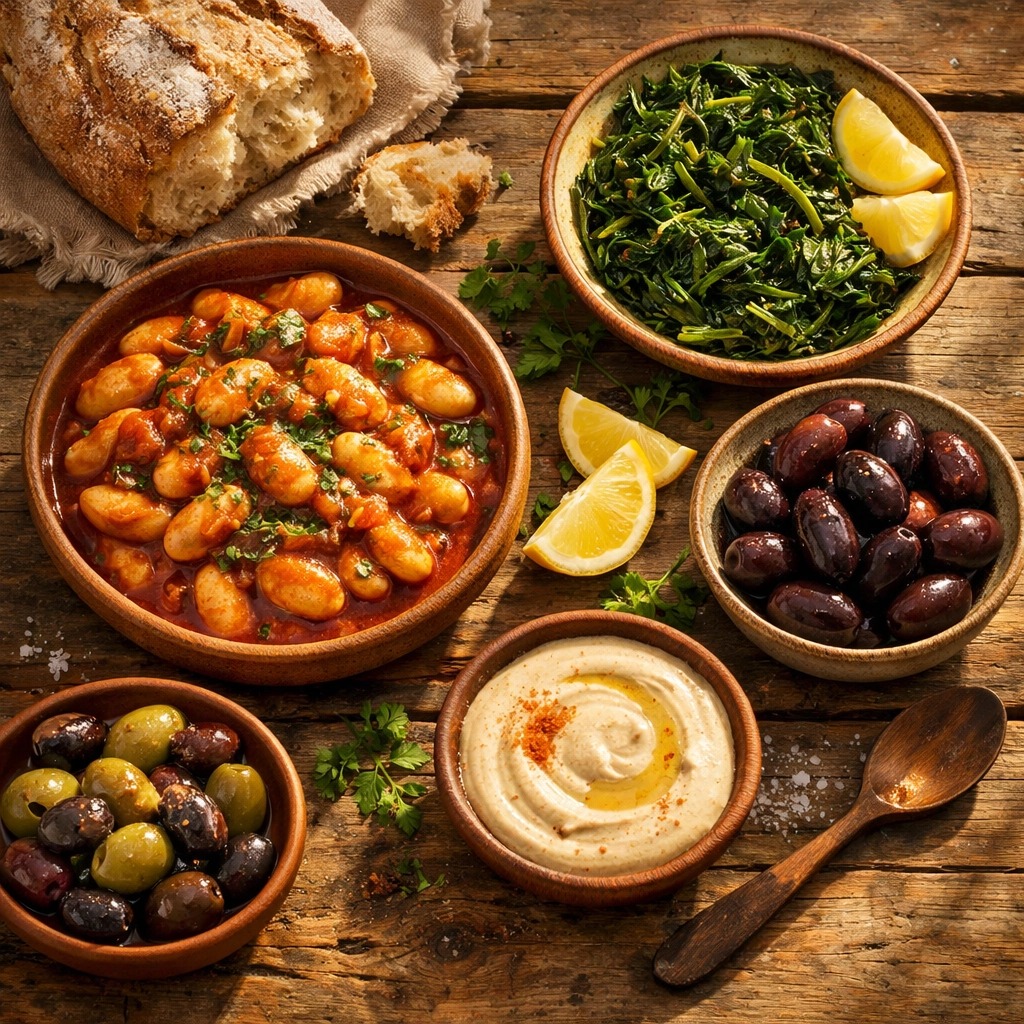
Probiotics might get the spotlight, but they are live organisms, so they need their own fuel. This is where prebiotics come in. Prebiotics are fibers that beneficial bacteria feed on, and the Greek diet happens to be full of them: onions, garlic, leeks, chickpeas and other legumes, artichokes, asparagus and whole grains all qualify. A humble bowl of chickpea stew or a plate of cooked wild greens is doing more nutritional work for us than they get credit for!

A Practical Takeaway

You don’t need supplements or an elaborate protocol to support the gut-brain connection. A dollop of Greek yogurt at breakfast, legumes a couple times a week, onions and garlic as part of your cooking and meals eaten without rushing are all quietly protective habits already embedded in the Mediterranean food culture. Modern research is simply catching up to explain why our ancestors were right all along.

This article is intended for general wellness information and is not a substitute for medical advice. Persistent mood changes should be discussed with a healthcare professional.

About the author 

Eva, known as The Cretan Nutritionist, is a Registered Holistic Nutritionist whose international path to wellness is rooted in her Greek heritage. Raised on the island of Crete, she grew up immersed in the Mediterranean lifestyle long before she recognized it as a wellness practice. After studying Fashion Design in Athens, her path shifted when she moved to Canada and studied Holistic Nutrition, later adding certifications in Life Coaching and the Human Microbiome. Having lived across three countries and worked in corporate, hospitality, and wellness settings, Eva brings a grounded, real-world approach to health. Through coaching, workshops and seminars, she helps clients build sustainable, joyful habits rooted in the Mediterranean way of life she was raised on.

We sat down with Chrysanthi Podaras, the creator of SOLACE, to talk about the story behind the exhibition, independent creativity, building a community around art and design, and her vision for creating something that goes beyond a traditional expo.

From its beginnings as a small gathering to welcoming more than 10,000 visitors, SOLACE has grown into a space where independent designers, artists, musicians and creatives come together, showcase their work, connect and build new opportunities.

This year, SOLACE is taking things even further, with a two-day edition, new installations, more immersive activities, DJs and international creators, all coming together at the Athens Conservatoire on December 19–20.


Can you tell us a little about your background and your journey into the creative and events industry?

I’m Greek-American and studied Communication and Visual Arts. I randomly got into working in the event-organising industry, even though that wasn’t originally my plan. As circumstances developed, people around me started asking me for help because I’m very social and good at organising. I had also been involved in some art initiatives, trying to raise money for people in need, so people began asking me to help with things like bar management, budgets and concepts.

It started very DIY. I once organised a huge event at a friend’s summer house, where we completely redesigned the space and had around 50 artists involved. I didn’t sleep for three days! It was my birthday, so the concept was that everyone who came was celebrating their birthday too.

That experience became the beginning of something I really enjoyed: connecting electronic music and nightlife with art, immersive experiences and different activities. I think there is a very strong drug culture and a lot of substance use around nightlife, and because I don’t drink or use anything, I also know a lot of people who don’t. I think, especially for women, it can be difficult to go out or feel safe.

I wanted to create spaces where art and music were central, and where people who might not feel comfortable going out could have an introduction to nightlife and experience something beyond simply drinking. Of course, people can drink if they want to (they’re young people after all!) but I wanted there to be something more to the experience.

How did this early work eventually lead you to creating SOLACE?

Each time, I would find a different space, create an experience and give it a theme. I was also involved in graphic design, and I’m a photographer and videographer, as well as doing post-production and sound design. This allowed me to look at the whole project from different perspectives.

As the events became bigger and more well known, I continued working as a freelancer. I don’t have a company, but I started working with other people and eventually hired people to help me. I’ve had many collaborators, and this work taught me a lot about the business side of arts and entertainment.

I also worked with the public sector, organising events and booking big artists, and worked with various advertising companies. At some point, I moved into marketing and started working for a sustainability company in shipping.

But I realised that I’m not really a nine-to-five person. I tried it because it was well compensated, and the projects I was working on were difficult to make money from, so I thought I needed to do something else for a while. But I wasn’t happy, and eventually I decided to return to what I really wanted to do.

That was when SOLACE was born.

I have a lot of designer friends, and something I noticed in Athens was that we had many bazaars and flea markets, but not many truly curated spaces. I’ve travelled a lot for fashion, and one of my favourite places is Dover Street Market, created by the founder of Comme des Garçons. Different designers are carefully selected and presented almost like an exhibition. It doesn’t feel like you’re simply walking into a shop; the architecture and presentation are part of the experience.

I started thinking about how, in Greece, we have a lot of people working with second-hand fashion and independent design, but we didn’t really have a space where independent designers could properly sell or showcase their work.

I initially created the concept for some close friends, and it started very small. In the second year, we made it bigger. I created the exhibition space while some of my friends worked on the selling space.

Today, SOLACE is an expo for independent designers and creators. It’s not only about fashion or jewellery; it’s about people who are creating things independently and want to take them to the next level.

What we do is also more than simply bringing people into a space to sell or showcase their work. We listen to their needs and try to help them develop their brands through marketing, campaigns and brand image. We offer consultations and meet-ups and work with them leading up to the event.

It’s not like other exhibitions where you pay to participate and that’s it. We try to give both the creators and the audience a different experience. I think that is what makes SOLACE different.
The first year, we had around 500 people. The second year, we had 2,500, with only around €30 spent on advertising, through some of the social media marketing techniques I used. In the third year, we had more than 10,000 people attend the Athens Conservatoire. We really didn’t expect it; we were shocked.

This year, I hope we surpass 20,000 visitors in a day. A lot of people have also suggested adding a ticket, but I really don’t want to. I don’t believe in ticketing SOLACE. I want it to be a cultural event.

I want SOLACE to be a space where people meet, network and discover each other. For me, it’s not simply a selling event. I always tell participants that they need to give it their best: show their best work, try to find clients, meet collaborators and become known within the industry.

The name “SOLACE” is quite distinctive. Where did it come from, and what does it mean to you?

I had hired a graphic designer and was pitching different names to her. I was initially thinking about “solstice” and playing around with words connected to the sun. Then I ended up thinking about “SOLACE”.

There is also a religious and spiritual meaning to the word, relating to finding peace and reaching a place where you feel at peace with yourself and the universe, where you feel connected to everything.

The truth is, it was also simply a word I liked. I’m quite good at finding brand names! My other project is Rejuv Collective, so most of the names we choose have some kind of symbolism or semiotic meaning behind them.

But this one was quite random. I was pitching names, and the graphic designer basically said, “That’s the best!” And I said, “That’s the one.” Of course, I then started looking into the different interpretations of the word.

Why was it important for you to create a platform that brings together different forms of creativity, from fashion and design to art and music?

I find that there is a real intersection between all these things. We have so many artists in Greece who aren’t getting recognised enough, and I feel that there is a real need for community.

There are so many people who want to create, but they don’t necessarily have the opportunity or the funds. I feel that SOLACE can be a platform where people can create artistic projects simply because they want to, or as part of their professional work.

There is a thirst for art and creation, but there aren’t enough opportunities. So I feel that Solace is a space where we can bring different people together, established professionals with newcomers, so that they can share experiences and learn from one another.

SOLACE has grown significantly over the past few years. What has that response taught you about Athens and its appetite for independent talent and creative culture?

I feel that Greece is incredibly rich culturally. We have a strong cultural atmosphere, and people do come here for the arts. If you look at the number of digital nomads and digital artists who are here now, there is clearly a creative energy.

At the same time, I think a lot of this has been commercialised, and after COVID we saw so many art spaces and community spaces close because people simply couldn’t afford to maintain them.

The same applies to club culture. These spaces are important because they give subcultures, young people and LGBTQ+ communities places where they can come together, have fun and express themselves. We’ve seen a huge decline in DIY and community spaces.

That’s why I think it is so extraordinary when you see a large event that still has these DIY touches and manages to function as a community.

I think this is part of why people are attracted to SOLACE. It brings together different ages and different people, and I wish we had more events like this. I wish more people would start creating these kinds of spaces so that we can build a bigger community.

Athens is a big city, with millions of people living here, and you can easily get lost in it, even though Greece itself is a small country. In some other European cities, I feel there can be a stronger sense of community.

At the same time, the size of Athens also allows for more subcultures to exist. It’s just difficult when everyone is working multiple jobs and dealing with everyday pressures. You want to find spaces where you can create and meet people who are like you.

What is it about Athens that made you want to build SOLACE here?

There is definitely a love-hate relationship with Athens. I think we all have it. We love the weather, the food, the people. Well, sometimes we love the people and sometimes we hate the people!
But living here can also be really difficult. You go somewhere else and feel relaxed, and then you come back to Athens and immediately feel stressed. People are constantly annoyed and nervous, driving is difficult and everything can feel frustrating.

But there is also beauty and a sense of comfort in the city. For people who grew up here, Athens is our comfort zone. It’s what we know and what we love.

I’ve had opportunities to leave. I could have worked in other countries and completely moved away. But I also think part of what kept me here was that Greece’s entertainment industry was still relatively underdeveloped. I was actually more interested in working in a market where there was room to build something, rather than moving to an already saturated industry.

I don’t think there are many things like SOLACE even elsewhere in Europe, so I saw it as both a business opportunity and a cultural opportunity; a chance to create something in a niche that didn’t really exist.

I’m passionate about creating things that don’t already exist. It’s harder to do that here, but it’s also more interesting. I believe Athens has a uniqueness that works really well with an exhibition like SOLACE.

When deciding who becomes part of the SOLACE experience, what do you look for?

First of all, I really appreciate sustainable practices and thematic practices. I generally look for people who are investing in themselves, their brand and what they are doing, especially when it comes to small designers and young creatives.

We are open to a lot of different creators because part of what we do is help people take their work to the next level. Even if someone isn’t particularly close to my own aesthetic, I still try to understand their market and help them get there.

We look at aesthetics, practices, portfolios and CVs, but also at what someone is actually doing and whether it feels interesting or different.

I think there is a lot of safe practice when it comes to art in Greece because of the industry and the market. But we also have some exceptional artists doing very experimental and avant-garde work.

As someone who works closely with young and emerging artists, what do you see as the biggest challenge (and the biggest opportunity) for independent creative talent in Greece?

The biggest opportunity is that Greece is small. It can be hard to get into the creative circles, but once you do, there are a lot of opportunities that come back and forth.

Everyone is struggling, though, and it is very difficult to make a living. Greece is also somewhat behind when it comes to what is happening in the wider art world.

But if you take the risk of doing something innovative, you can get a really good response. This is a place where you can take risks and do something different because not everyone is doing it. If you do something new, you have a chance of standing out because you may be the only one doing it.

At the same time, the economy makes things difficult. Even artists creating expensive or high-end work sometimes have to introduce more affordable lines because people need to be able to buy and wear their work.

There is also a culture of expecting people to work for free. A lot of people here want everything for free, which makes it difficult for creatives to sustain themselves.

But there are opportunities. Programmes such as Creative Europe and various government initiatives provide funding for creative projects, and Greece does have opportunities when it comes to arts funding.

The difficult thing is that the same people often receive that funding, but if you do your research, work hard and keep trying, there are opportunities. There are also many spaces where you can show your work without necessarily having to go through an enormous process.

Are most of the artists and designers participating in SOLACE Greek, or do you also have creators joining from abroad?

We do have creators from all over the world, although they are still a minority. This year, around 20 to 25 of our more than 100 participants are from abroad. 

We have people coming from Berlin, New York and London. We also have a lot of Greeks living abroad who come back specifically for SOLACE, so there is a mix.

This year, we have someone coming from Sweden, and last year we had people from Italy and Paris. People from Paris even told me that they had never seen anything quite like SOLACE there.

This year, I also travelled to the Czech Republic for a big streetwear expo, and we have people coming from that community as well.

So yes, we have people coming from all over the world, but most of our participants are still based in Greece.

What can visitors expect from the December edition, and is there anything you’re particularly excited about this year?

I’m very excited because we’re upgrading a lot of things, especially the installations. I’m finally able to create a larger installation because we have increased the budget, which means I can do more with set design this year.

I’m also excited because it’s a two-day event. It’s the first time we’re doing such a large two-day event, which we weren’t able to do in the past.

We don’t only have art and fashion. We also have DJs and music, and this year we’re bringing people from Europe to play as well. I’m really excited about changing the format and the set-up and creating some smaller, more immersive activities.

I think this year we’re taking SOLACE to the next level in terms of what you would expect from a European expo focused on alternative art.

We’re also having slightly fewer participants, which means I can approach the space differently. This year, I also want to work more closely with each creator and designer on how they present their booth.

So I’m very excited to show that we’re taking the exhibition to the next level, with more activities and much more organisation compared with previous years.

Visitors can expect to come, take part in activities, interact with people, meet a lot of different people, listen to different music, see different kinds of art and find gifts. It’s going to be a nice outing.

Is SOLACE also family-friendly?

Absolutely. We have visitors ranging from around 5 years old to 75, and being family-oriented is one of my goals.

There will be some explicit art, but it will be positioned more discreetly within the space than it would otherwise be. I do try to keep SOLACE family-friendly.

Looking ahead, what would you like SOLACE to become: a community, a cultural platform, an expo, or something else?

We’re currently working on an application that will be somewhere between Depop and Vinted, but specifically for independent designers.

We’re working towards an international app where people from around the world can sell their work through a curated platform.

So yes, I want SOLACE to become a community, an international expo and, eventually, an app where people can sell their work and network.

A little bit of everything!

Finally, for someone who has never experienced SOLACE, or perhaps has never even heard of it, how would you describe it, and why should they come?

You’re not going to experience anything quite like it in Greece.

We have people coming from all over the world, but what I love most is that we also bring together small independent designers that you may have never heard of, people I’ve discovered working in random basements, making incredible things, and who I’ve thought, “We need to help you build a brand.”

You’re going to find all of these people creating and showcasing their work in one space. I don’t think you can find that anywhere else in Greece.

So, if you love art, fashion, independent design and creativity, this is the place where you can find all of them together.

And it’s not just about seeing the work. People who are interested in art, fashion and music also attend, so you’re surrounded by people from the creative industries. You can meet people, network and discover interesting work that you might not come across elsewhere.

Thank you, Chrysanthi, for sitting down with us and sharing the story behind SOLACE. We can’t wait to see it all come to life!

If you love art, fashion, independent design, music and creativity, this is one to keep on your radar - see you all there!
✔️ 160+ #madeingreece brands
✔️ DJ sets
✔️ street food & cocktails
✔️ free activites for kids

Its meet up time again!

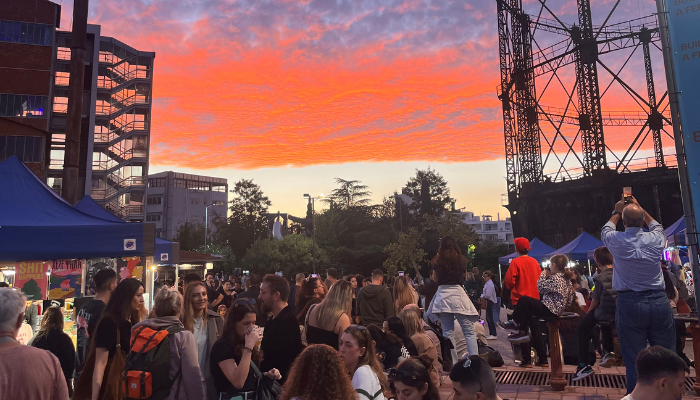
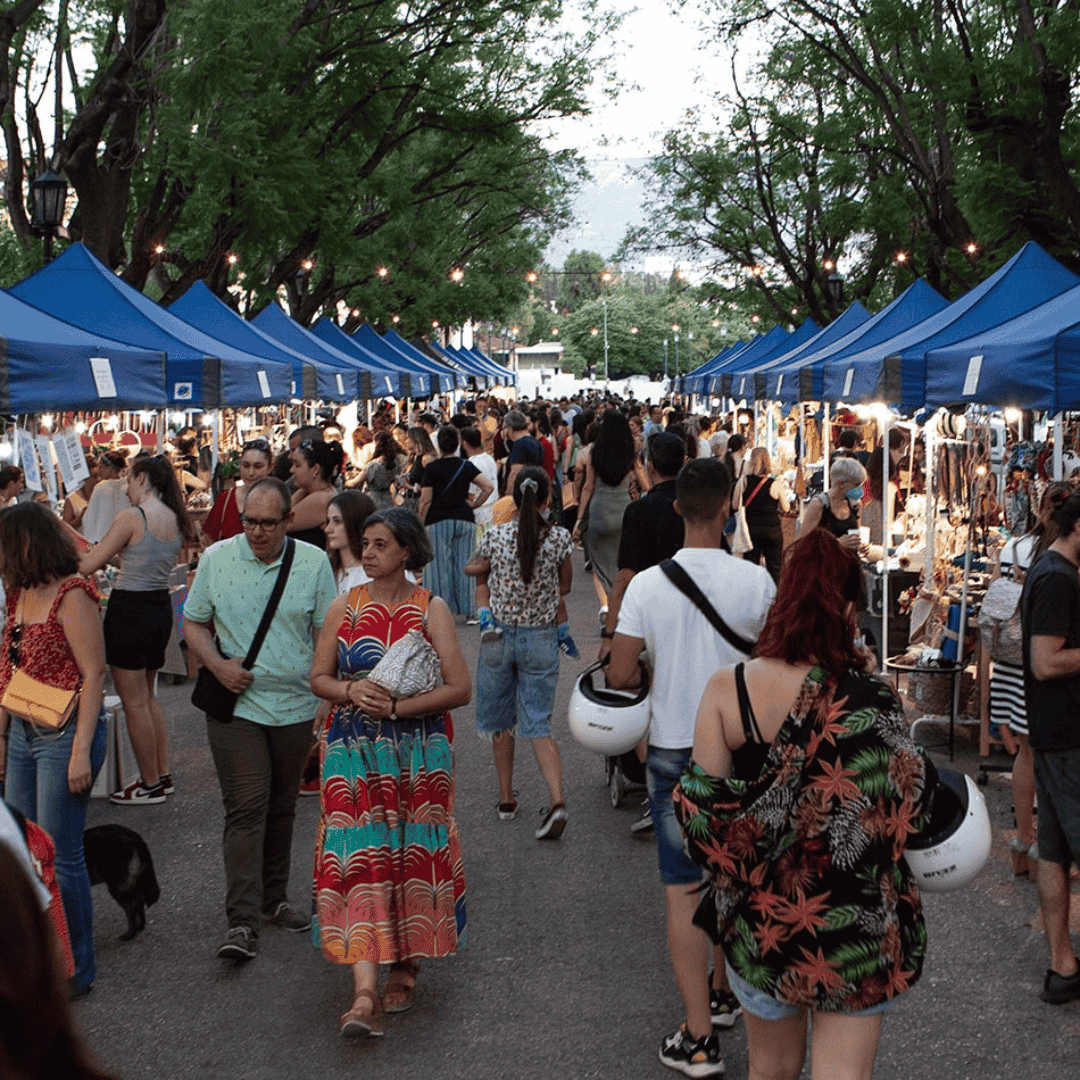
A new season, new faces, new things to fall in love with — but the same favourite rendezvous. Join us on the first weekend of October, as Technopolis fills up once again with creativity, colour, and more than 160 Greek brands worth discovering.

For two glorious days, the Meet Market will be bringing together what live-love-local is all about - independent makers, small Greek brands, new collections, dj sets, street food, yummy drinks and, of course, good vibes. From OG favourite makers returning for another round,  to new faces you’ll be meeting for the first time, let's all come together to celebrate people, ideas, and creations for a weekend full of energy, colour, and fresh discoveries.

Discover your next favourite brand making statement jewellery and clothing, handmade accessories, home décor, natural beauty products, goodies from small-scale producers, art pieces, kids’ finds, unique gifts, and one-of-a-kind vintage treasures. The hardest part of the day will be leaving empty-handed!

26

#MakersLineup

👕 Hand-Designer Clothes:

Anemuku, BAKAYARO, Be strong by mo, BLANK! Multiactive Studio, Born Backwards, Circle of Karma, CUT DESIGN, Elli Papadaki, Funny radical acne scars, Her², HIT THE ROAD, Hysterical, Inky Blinky, Kadó Handmade, Hazelnut, LINE OF VIEW, Mnous Underwear, NIKS, OVARY GANG, Pied de Kok, Razzmatazz, Sevi Waves, Social Outkast, Spread the Thread, STILVI, The Land of Moss, THE GREEN POST IT, WAKE UP! 
1


🧸 Kids, Toys & Pets:

Aeikiniton, FUNKY LITTLE STUFF, Happy button store, Mamma Cavolfiore, MAMUKA, Starflings, Two Glittery Pitayas
7


🧦 Accessories:

al.cre, ALEF, Atlas Unreal Collage, Boukla_loopstudio, Cozy Stitches, DEKAPAZ, I love bows, KALTSA ΣΟΚ, Kolombina, Le Plou, Leathermount, Molkano, Meli Nouka, Raf the Rough, THEARTIKOSHOP, TUL HANDCRAFTED DESIGN, The Ink Job, The Mpini Project, TIRAMISU EYEWEAR, towoit

5

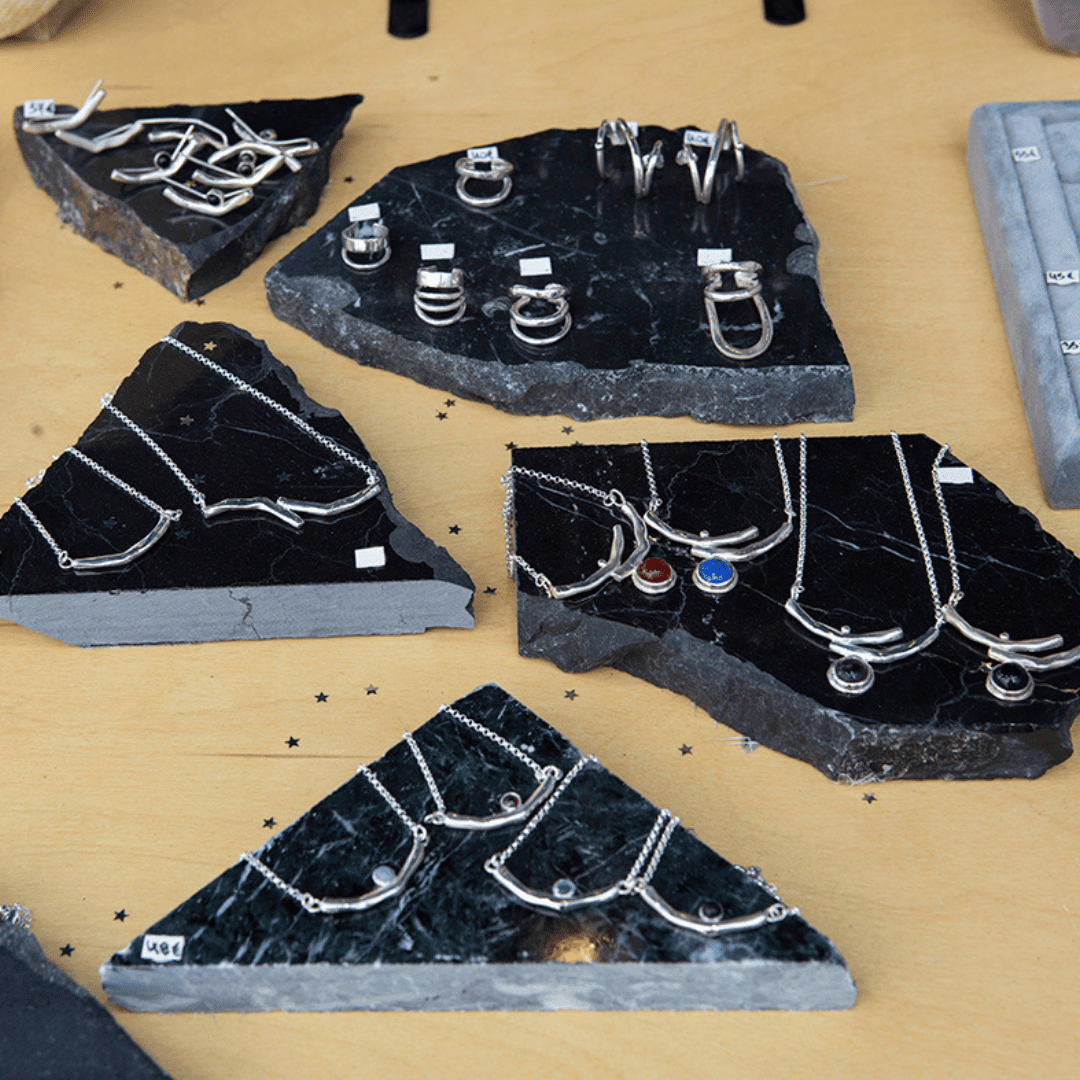
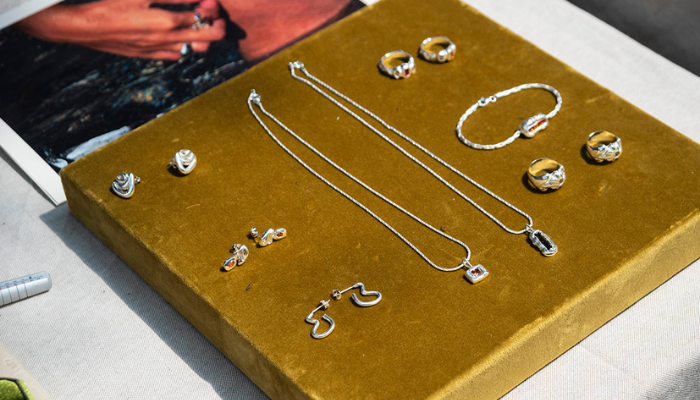
💍 Jewelry:

ALMONDTINI, ANKORIALIA, Animo jewelry, Annoushe jewelry, Argiro Handmade Projects, Cerabow, Diesblon, Evi Apostolou Jewellery, FRANDEVIV JEWELRY, Gishhjewelry, Giraffe, Gooskoo jewelry, Ilianne Jewelry, La JOYa, Lilian Syrigou, Lizetta Fotoglou, Lyxnari, Mademoiselle, Mikrama, Opseis jewellery, OW, Paav Creations, Penny’s Crafts, Proof of Concept, Sisyphus Jewelry, Sweetheart mou, Teal Heart, TORTORA STUDIO, Tsika Revoluta, Xoutou’s
8


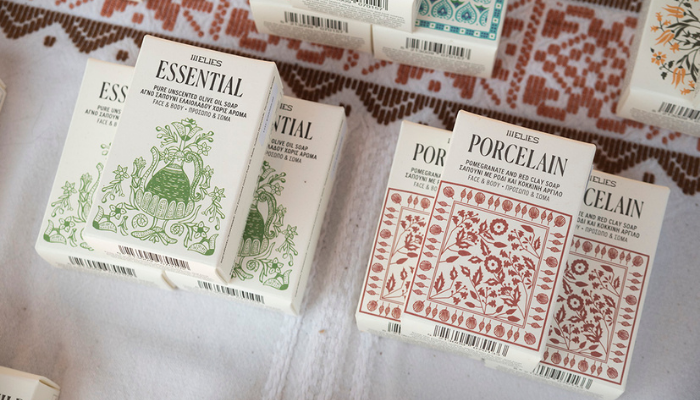
🌿 Mind, Body & Soul:

111ELIES, AETHEREAL CA, Bee Naturalles, Ethra Essentials, KALYKA, Lavandula, Myrtia Natural Cosmetics, NYMFES COSMETICS,  PAPER BOAT SOAPS & CANDLES, Soap n goods, The Couple Game, The Soaphouse, Wasteless Design
13

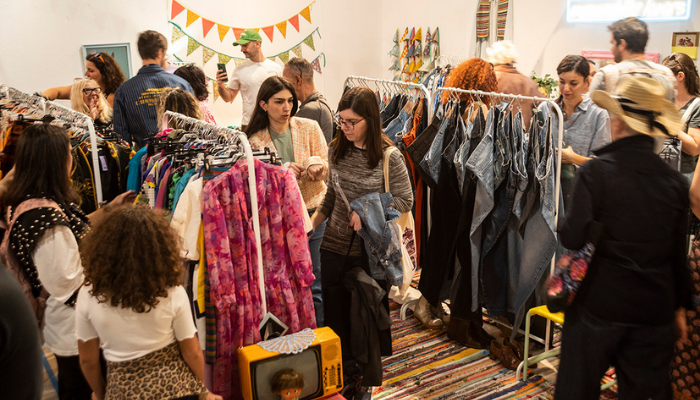
🕶️ Vintage & Retro:

AURA VINTAGE, Cinderella Secondhand, FABRIC VNTG, Handpicked Cherries, Hazel Rey Vintage, its clofie, Jenny Blond, King Kong Vintage, Lilia in Love Vintage, Memorabilia Lovers, Nostalgw, Ok Boomer, The Emerald Hut, The Lost Kids, Το Δισκάδικο, Vintage Cnty
14

 🏠 Art, Prints, & Home Deco:

Arachne, ArtCat, Art Studio YiotaNt x Yoko Soy Candles, Better Be Candles, BOK CHOY, Cactus DNA, CalliopeShop, Chaos Ceramics, Cherie Creative Studio, DOT, Eunoia Tales, Evie On Off, FRIDA WHY, Inlenso photography, inspira ceramics, Ioulia Geraskli ceramic lab, KAÏSAKI, Kati Akraio, Κουμπάκι, Little Stone Studio, Logo Lady Studio, LOUPES PRINTING, Made by Tifi, MYRUGGEDBOX, Natural Soy Candles, Meli Ceramics, Redy., ΠΟΛΥ ΚΟΥΛ, Sanopwleio, Signature Project, SOMANYBLOBS, Straypot, Urban Muses co, Vintage trip

🍫 Tasting Corner:

Άγρια Νομή, Αγρόκτημα Δρόσου, Aithra Spirits, ΓΕΥΣΕΙΣ ΝΙΚΕΖΗ, kakau worship, Μείλια, Mountain people, Οικογένεια Δασκαλάκη, ΣάΟΣ, ΖΥΜΑΡΙΚΑ ΑΝΑΓΝΟΥ
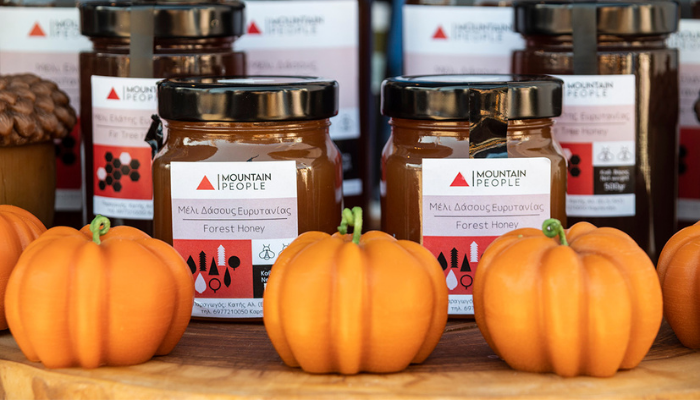
21

🍔 Street Food & Drinks:

Falafeladiko, Hurry Up, Ideas Lab, Kykao Handcrafted, Okoro, Rubik's Laboratoire, Sourmena Brew, Tarantino, The Meet Market bar, This is Loco 
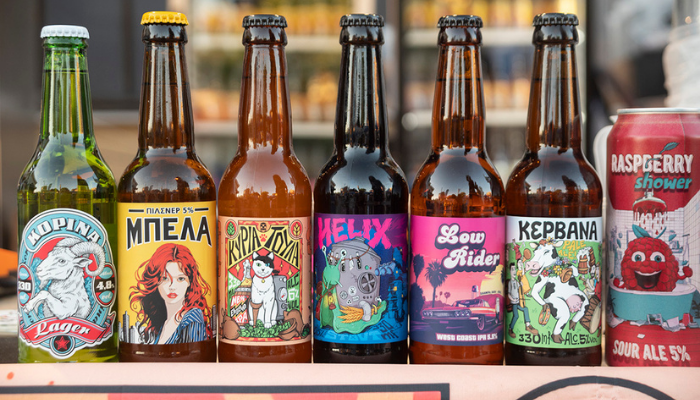
25

Think you need a whole week to squeeze in some island time? Think again. Some of the Aegean’s prettiest escapes are surprisingly close to Athens, making them perfect for a spontaneous 24-hour break when the city starts to feel a little too much.

And don’t write off October just because summer is officially over. Greece stays pleasantly warm well into autumn, and the sea can remain perfectly swimmable in October, especially on the southern islands and around the mainland. In fact, Greece is one of those places where a swim doesn’t necessarily have to end with August, making an autumn island escape all the more tempting.
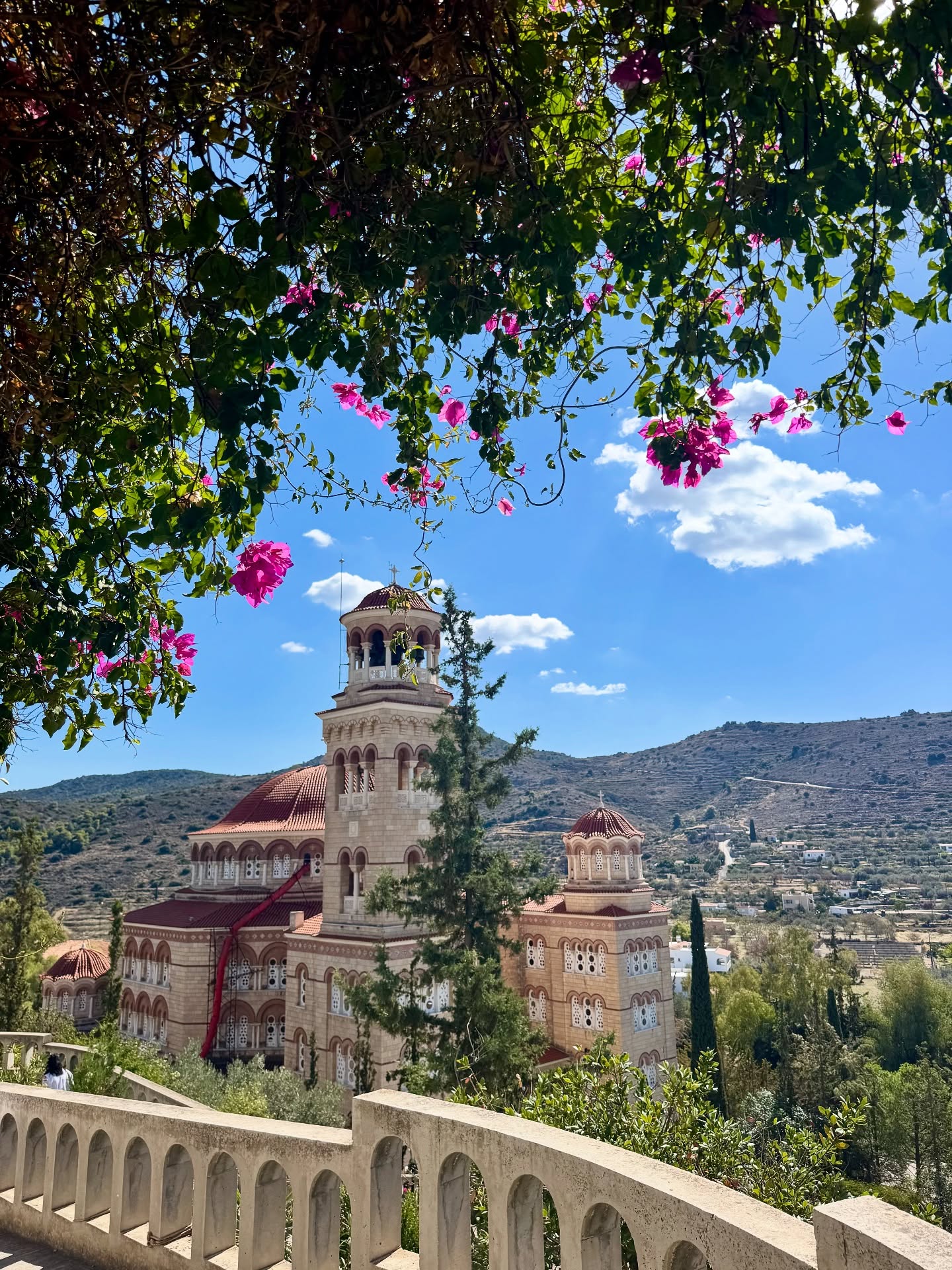
The Saronic islands of Aegina, Poros, Hydra and Spetses are among the easiest islands to reach from Athens, with frequent ferries departing from Piraeus and journey times ranging from under an hour to around two and a half hours, depending on the island and the boat. In other words: very little logistics, very little planning, and a lot of sea.

For anyone short on time, they are an ideal way to get a taste of island life without committing to a long journey.


Aegina: The Closest and Easiest Escape

SnapInsta.to 568188098 18481718299076279 8562416016398121210 n
@greenwithirena

If you want the easiest possible island day trip from Athens, start with Aegina.

Just around 40 minutes away by fast ferry, it is about as straightforward as island hopping gets.
Aegina has a little bit of everything: a pretty seaside town, family-friendly beaches, beautiful scenery and plenty of history, including the spectacular Temple of Aphaia. And; of course, there are the pistachios. Aegina’s famous nuts appear everywhere, from ice cream and pastries to savoury dishes, and are very much worth making room for in your day.

The island is wonderfully laid-back and easy to explore, whether you stick around the waterfront or hire a scooter and venture further afield.

And if you have time for a little detour, hop on a boat to Moni, a tiny island known for its crystal-clear waters, curious deer and peacocks. It is the sort of place where a quick swim can very easily turn into several hours.


Hydra: No Cars, Pure Charm

SnapInsta.to 732920624 18454867858113633 2701442852049359549 n
@lexidada

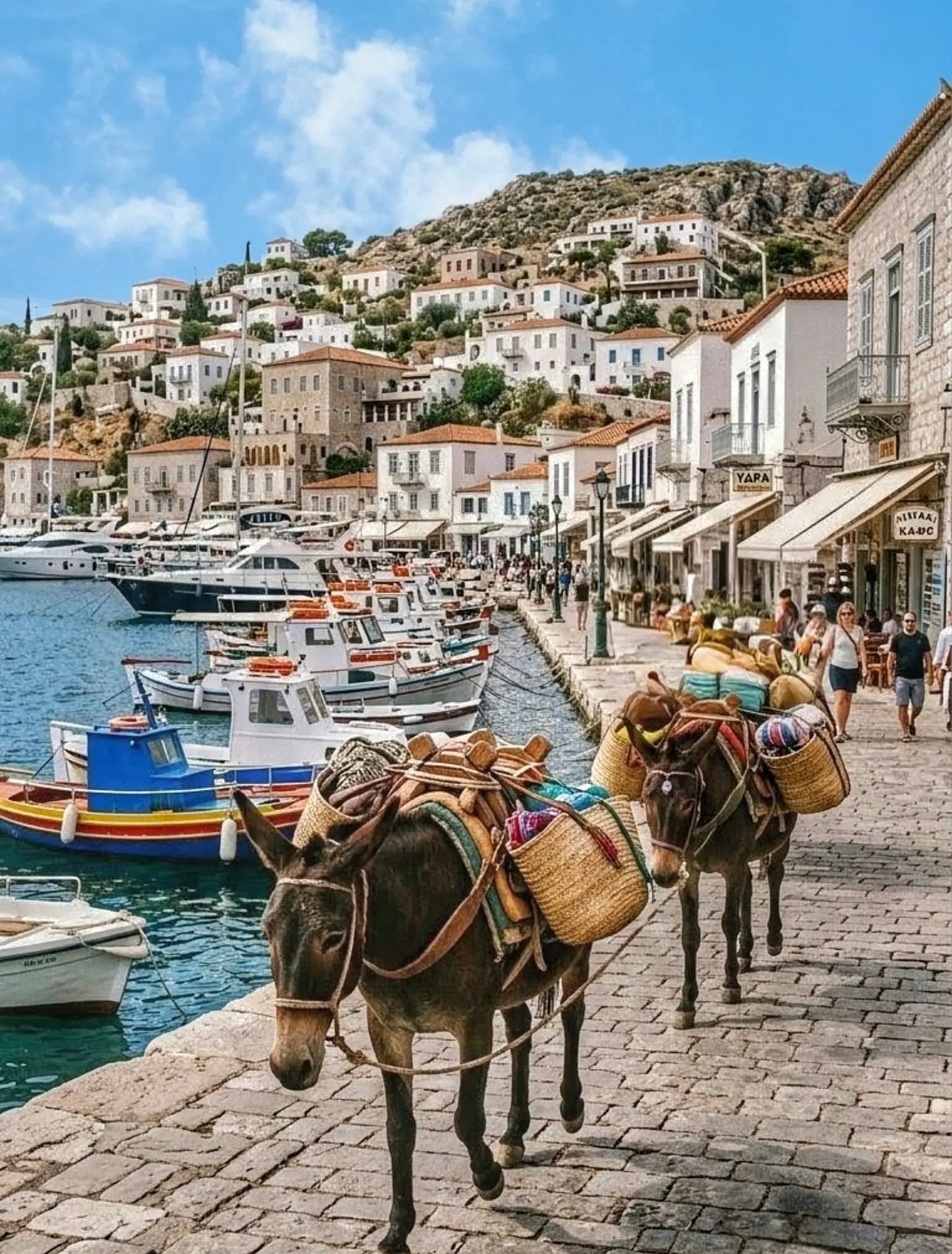
Then there is Hydra, perhaps the most effortlessly romantic of the islands near Athens. Around 1.5–2 hours away by high-speed ferry, it feels considerably further from the capital once you arrive, in the best possible way.

There are no cars here. Instead, Hydra’s steep cobbled streets are navigated on foot, with donkeys still part of the island’s everyday rhythm. Elegant stone mansions line the harbour, little boats bob in the water and the whole place has a wonderfully timeless atmosphere.

During the day, take a water taxi to one of the more secluded swimming spots, then return to wander around the old town as the light starts to soften.

It is particularly lovely if you are travelling as a couple, but photographers, art lovers and anyone who simply enjoys beautiful places will find plenty to love here.


Poros: Green, Peaceful & Underrated

SnapInsta.to 542081334 18526711789056760 4063708129412424047 n
@vasilis_karras

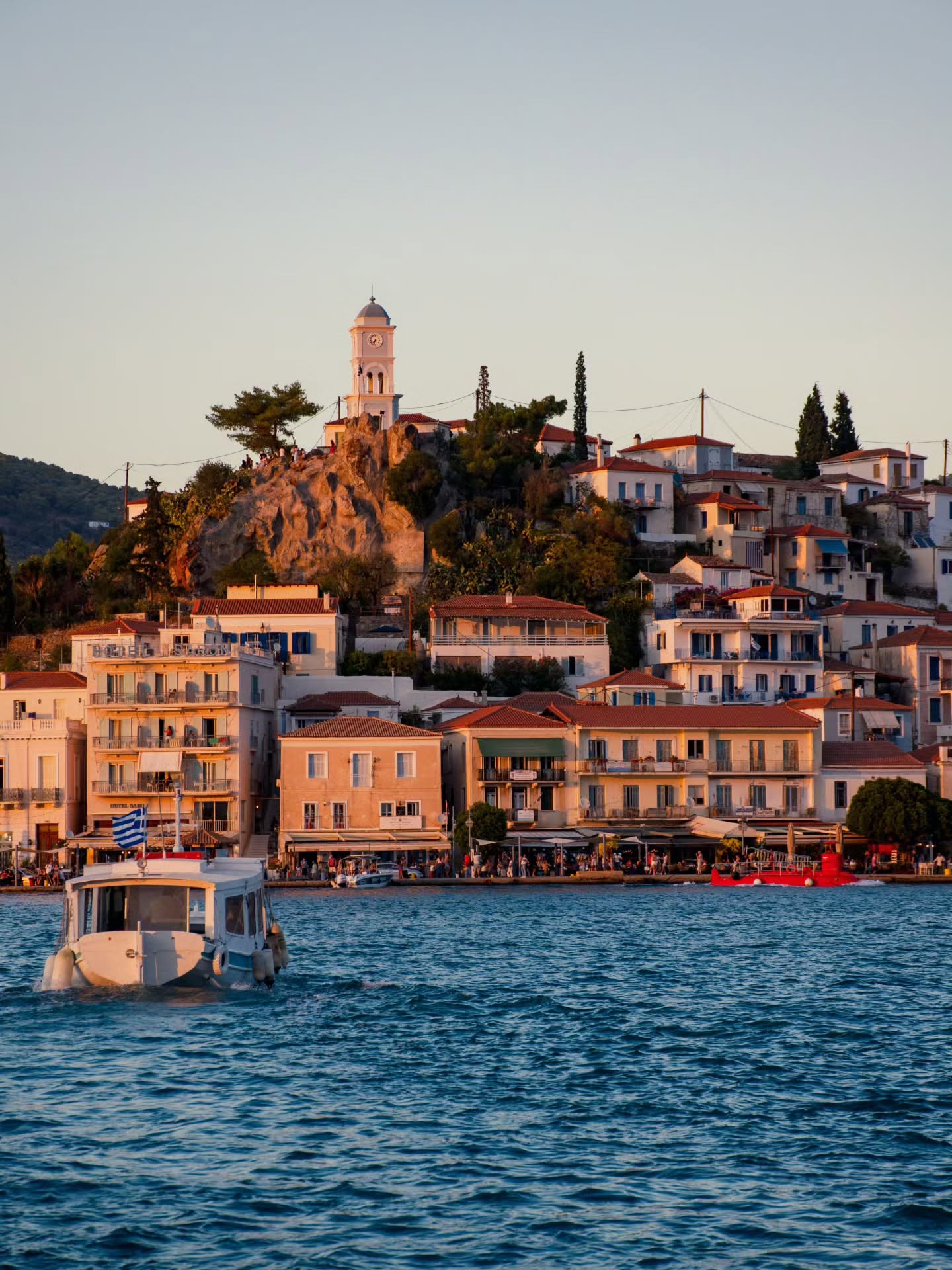
If Hydra feels a little too glamorous and Aegina a little too busy, Poros sits somewhere comfortably in between. Around 1.5–2 hours from Athens, this small, green island is wonderfully easy to explore at a slower pace.

Its charming port town is made for wandering, with waterfront cafés, little streets and plenty of spots to stop for a coffee or a long lunch. Beyond the town, pine-covered hills and calm beaches make it easy to escape into nature for a few hours.

Poros is one of those islands where you do not necessarily need a packed itinerary. Walk, swim, eat something good, watch the boats come and go; and suddenly it is time for the ferry home.


Spetses: Elegant & Refined

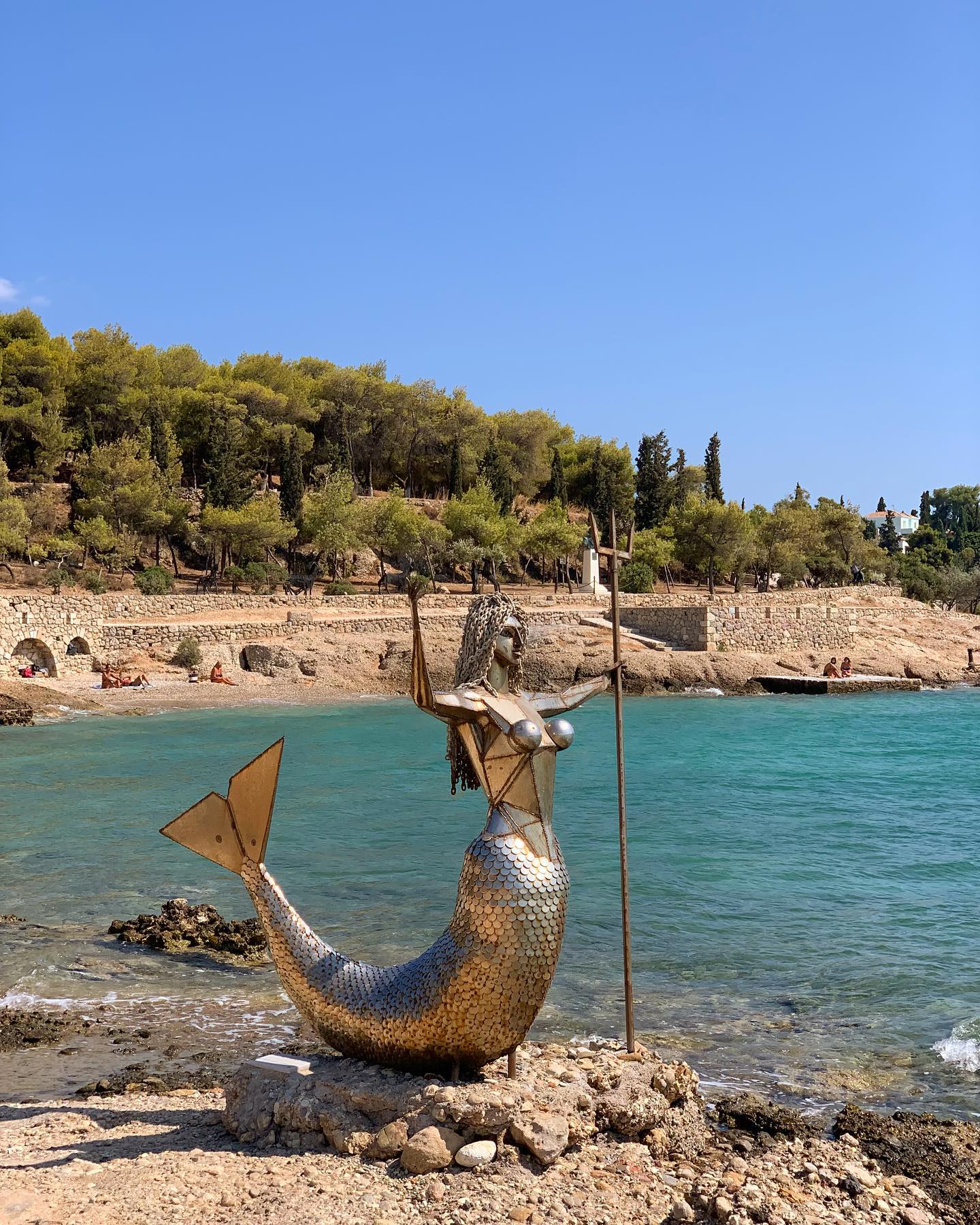
SnapInsta.to 658170189 18168946615404928 5117564819370246111 n
@dianachasingviews

A little further out, Spetses takes around 2–2.5 hours by high-speed ferry, but it is still one of the most accessible islands from Athens.

Known for its neoclassical architecture, stylish cafés, restaurants and clear-water beaches, Spetses has a more refined feel than some of its neighbours. There is also plenty of history woven into the island, making it a good choice if you like your beach days with a side of culture.

It is particularly suited to couples or anyone looking for a slightly more polished island escape, and, with its beautiful old buildings and atmospheric streets, it is rather easy to see why.


Agistri: Small, Green & Budget-Friendly

SnapInsta.to 653069586 18071296208226842 7082757243333703215 n
@d.tzankatian

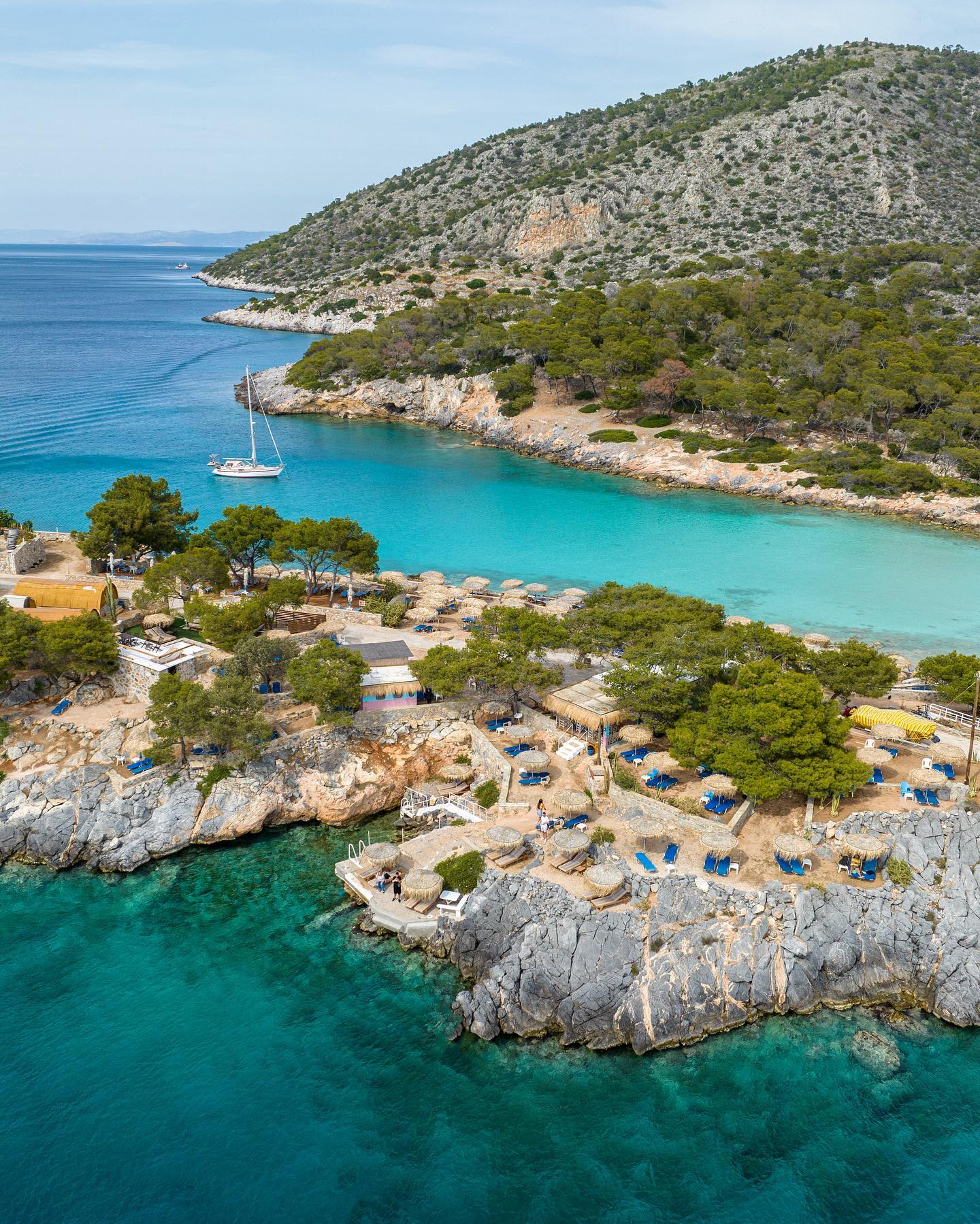
And then there is Agistri, a tiny, wonderfully green island that is often overlooked despite being exceptionally close to Athens. The journey takes around 55 minutes from Piraeus when travelling via Aegina, making it another excellent option when all you have is a day.

Think turquoise waters, pine trees, cycling routes and a distinctly relaxed atmosphere. It is also generally more affordable than some of the better-known Saronic islands, which has made it particularly popular with younger travellers and anyone travelling on a budget.

If your ideal island day consists mostly of swimming, cycling, eating something simple by the sea and doing absolutely nothing else, Agistri may be calling your name.


And If You Only Have One Day?

The easiest part is getting there. Most ferries to the nearby islands leave from Piraeus, which is connected to central Athens by metro and is also easy to reach by taxi or bus. Services are particularly frequent during spring and summer, so you can often build your island day around the ferry rather than the other way around.

And you do not necessarily have to choose just one island! Several organised day cruises from Athens combine stops around the Saronic Gulf, for example, itineraries taking in Aegina, Moni and Metopi, or combinations such as Hydra, Poros and Aegina. They are a good option if your priority is seeing as much as possible in a single day rather than settling into one island.

Whether you have 24 hours, a free Saturday or simply a sudden craving for salty air, these islands prove that a Greek island escape can be much closer to Athens than you might think.

For many Greeks, an urban landscape feels strangely incomplete without it.

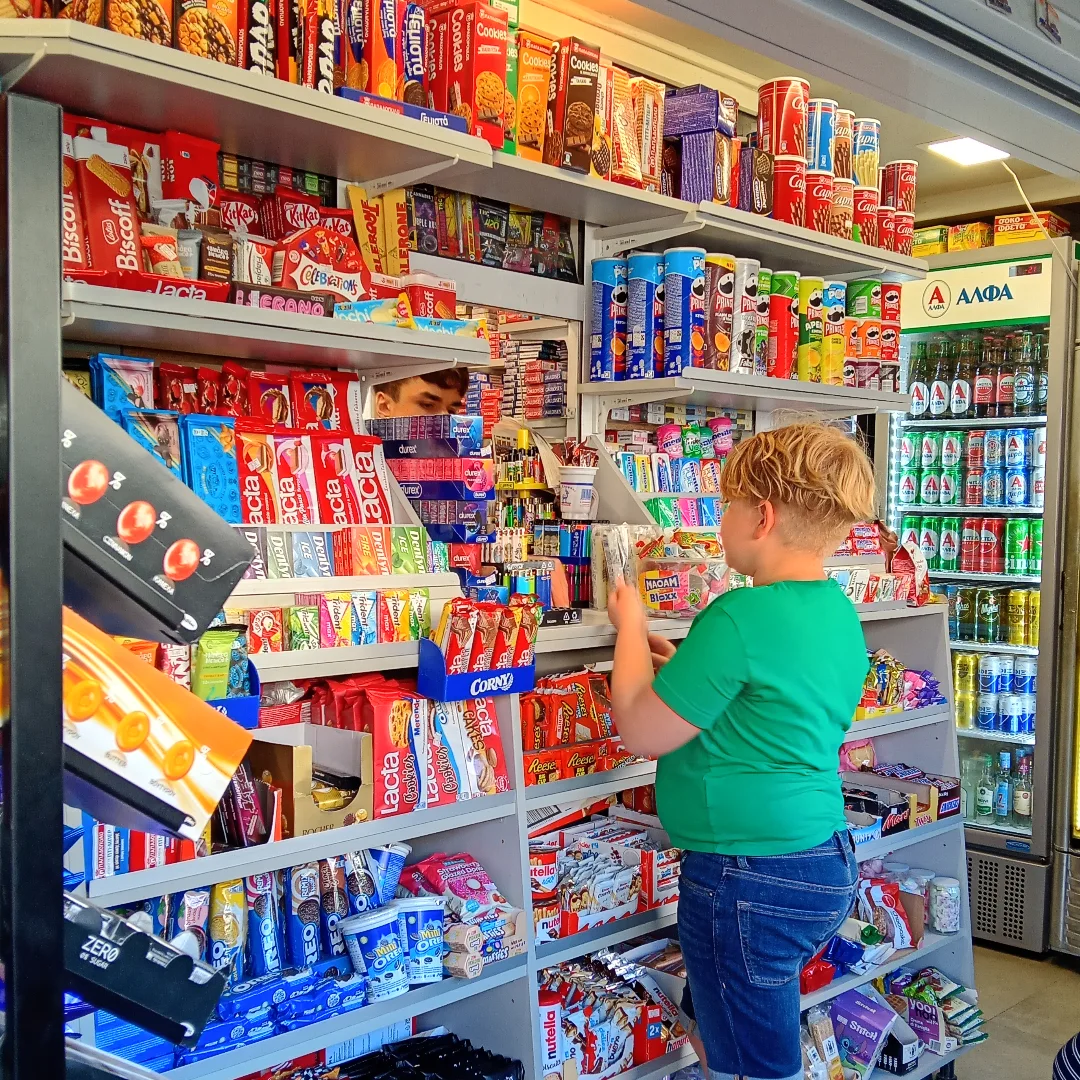
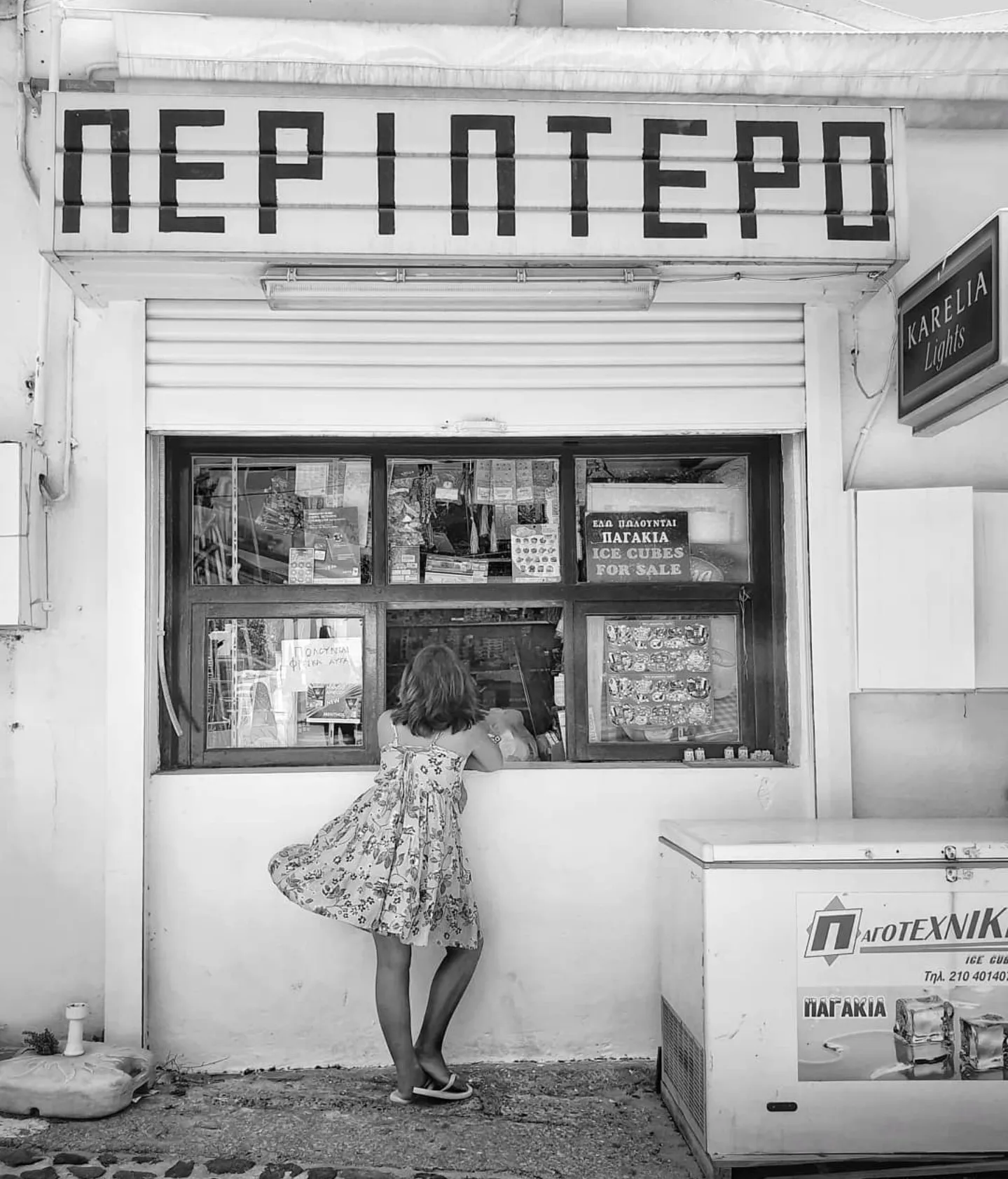
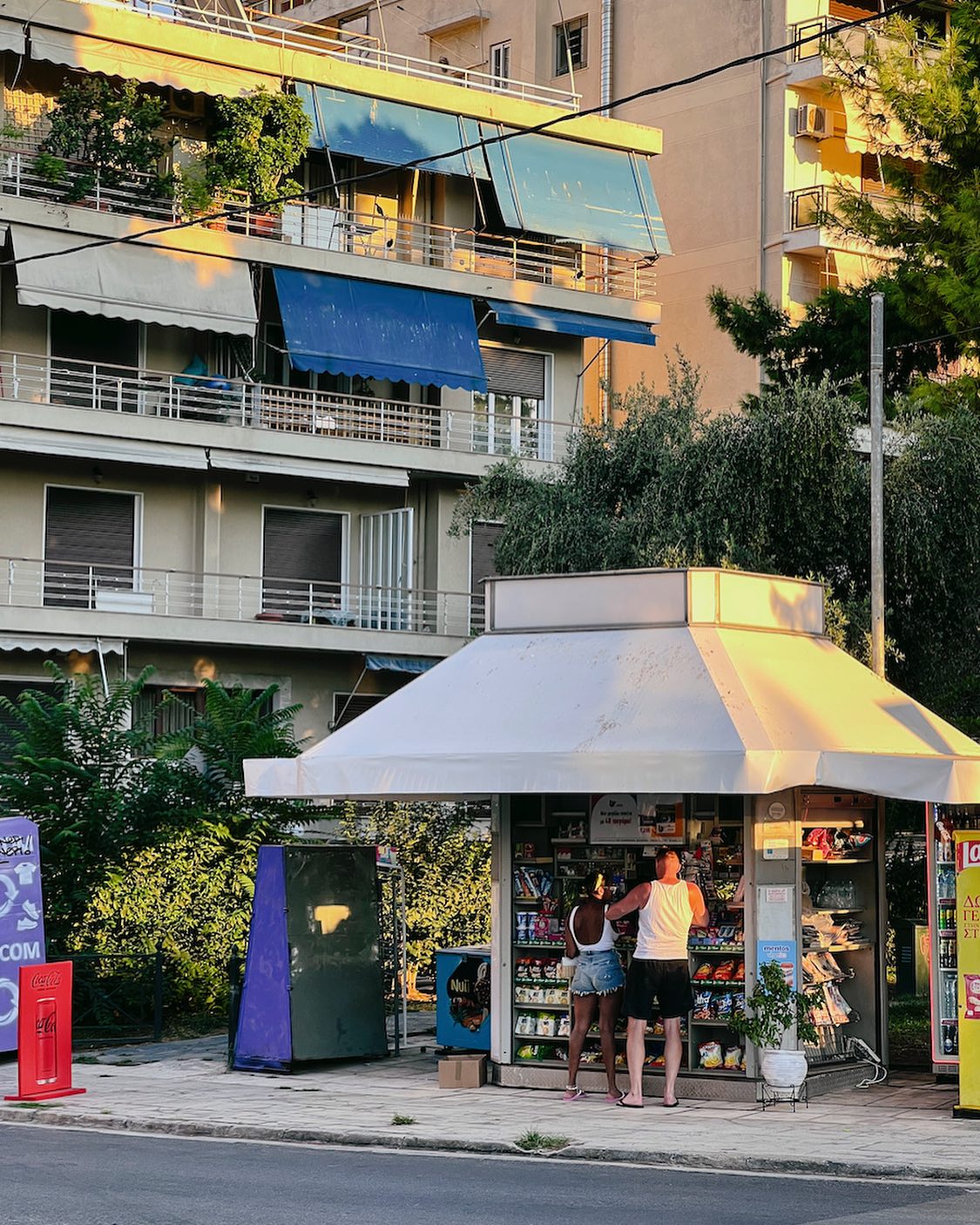
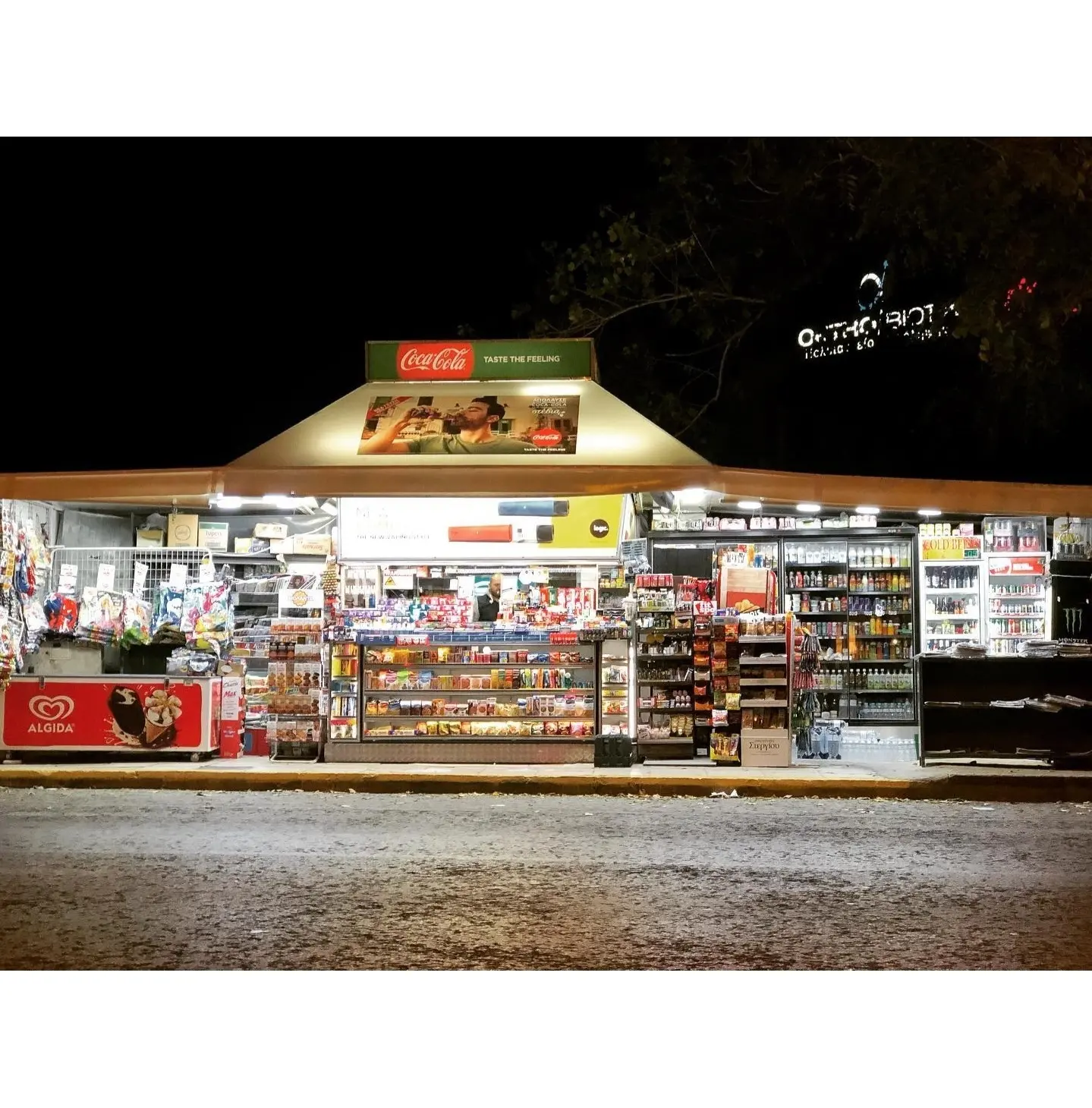
Standing quietly on a street corner, overflowing with newspapers, sweets, postcards, water bottles, chewing gum and countless everyday essentials, the periptero — the Greek kiosk — is far more than a place to buy a snack. It is a familiar landmark, a meeting point, a source of local news and, for more than a century, one of the most recognisable symbols of everyday life in Greece.

SnapInsta.to 696747978 18047695199775163 8720508960541434064 n
@muijamatkustaa

Today, however, this small institution is facing big challenges.

From Welfare Initiative To National Symbol

SnapInsta.to 654035515 18110903695775839 79581623081840661 n
@greecestagram

The story of the periptero begins in the late nineteenth century, during one of the most turbulent periods of modern Greek history.

Following the Balkan Wars, the First World War and later the Asia Minor Catastrophe, kiosk licences were granted to wounded veterans, disabled soldiers and other vulnerable citizens as a means of financial support. In this sense, the periptero was never simply a business: it was part of a broader effort to rebuild lives disrupted by conflict.

The first kiosk in Athens opened in 1911 on Panepistimiou Street, and the idea soon spread across the country, gradually becoming an institution in its own right.

At first, kiosks focused mainly on the sale of tobacco products and newspapers. They also played an important role in tobacco tax collection and acted as small centres of information, with newspapers displayed publicly for passers-by to read.

But throughout the twentieth century, the role of the kiosk expanded steadily. Sweets, magazines, batteries, drinks, household items and countless small necessities found their place behind the kiosk’s tiny windows. Open long hours, often around the clock, kiosks became reliable companions of urban life.

More importantly, they belonged to the neighbourhood.

Unlike larger shops, kiosks operated on a human scale. The kiosk owner often knew the habits, routines and stories of local residents. A quick stop for cigarettes or a newspaper could easily turn into a short conversation. The periptero became part of the social fabric of Greek cities.

An Emblem Of Greece

Over time, the kiosk became something more than a place of commerce: it became part of the visual identity of Greece itself.

SnapInsta.to 471173230 18438560407079294 1764245376804556631 n
@lostathina

Its distinctive shape, constant presence on street corners and remarkable ability to provide almost anything at any hour made it an instantly recognisable feature of the Greek city.

For generations, Greeks and visitors alike have relied on the periptero twenty-four hours a day, 365 days a year — whether for a bottle of water in the middle of summer, batteries, newspapers, snacks or last-minute essentials.

And while cities transformed around it, the kiosk remained surprisingly unchanged.

This continuity turned the periptero into something of a “memory machine”, carrying traces of everyday life across generations. Covered with newspapers, posters, advertisements, magazines and signs, kiosks became urban collages — small archives of the city itself.

For many Athenians, they are linked not only to practical needs, but also to memories: buying sweets after school, stopping for an ice cream during a summer walk, or picking up the morning newspaper on the way to work.

SnapInsta.to 649234557 18060395753691591 8536741181099391445 n
@greecestagram

Why Are Kiosks Disappearing?

Yet despite their symbolic place in Greek life, kiosks have been declining for years.

From 2011 to 2023, the number of convenience stores in Greece fell by 25.7%, while supermarkets expanded aggressively into the small retail market, competing for an industry worth more than €5 billion.

Ironically, this decline comes at a time when small retail is often described as the future of commerce. So why are kiosks struggling while mini-markets and convenience stores continue to grow?

The reasons are numerous.

Changing habits have played a major role. Newspapers and magazines are no longer essential in the age of digital media, public payphones have disappeared, and smoking restrictions have altered consumption patterns. And many people now prefer to do all their shopping in one place, often at lower prices.
The rise of delivery platforms has also changed everyday behaviour. Drinks, snacks and small necessities can now arrive at home with a few taps on a smartphone, reducing foot traffic to kiosks.

Economic pressures have added further difficulties. Greece’s financial crisis and years of austerity placed a heavy burden on small businesses, while the COVID-19 pandemic accelerated existing trends.

Regulation has also changed. Responsibility for kiosks moved from the Ministry of National Defence to the Ministry of the Interior, while municipalities introduced stricter rules regarding the use of public space. In Athens, concerns over pedestrian access, safety and urban aesthetics have led to plans for the removal of hundreds of abandoned kiosks.

Out of the 931 kiosks operating in the municipality of Athens in 2011, more than 400 have since returned to municipal ownership after being abandoned or left vacant.

Reinventing The Periptero

Like many institutions, the kiosk has adapted in order to survive.

Some have transformed into mini-markets, expanding their range to include fashion accessories, beverages and a wider selection of products. Others continue to rely on what made them special in the first place: convenience, familiarity and a close relationship with the local community.

Municipalities still allocate some kiosk licences to vulnerable groups seeking a source of income, preserving part of the social mission that gave birth to the institution more than a century ago.

The Greek periptero may be changing, but it remains much more than a small shop on a street corner.

It is a reminder that cities are built not only from buildings and roads, but also from everyday rituals, human connections and places that quietly become part of collective memory.

And perhaps that is why, even today, a Greek street without a periptero still feels just a little incomplete.
“You don’t eat meat? ... Even chicken??"

If you are vegan or vegetarian in Greece, chances are you have heard some version of this question before. Greece is, after all, a country where food is deeply woven into everyday life, family gatherings and long evenings around a table. So it might seem, at first, like giving up meat, dairy or eggs would make eating your way around the country a little complicated.
People might even tell you that it will be difficult.

And then you arrive, sit down at a taverna, order a plate of vegetables, beans, olives and bread — and realise that, actually, Greeks have been eating vegan food their whole lives.

A Surprisingly Plant-Based cuisine

The Mediterranean diet, which Greece is famous for, is centred largely around fresh, plant-based produce.

Vegetables are not simply an afterthought or something placed politely next to a piece of meat: they can be the main event. They appear in salads, pastries, stews, side dishes, dips and enormous plates of food meant to be shared.
And that makes sense when you look at Greece itself. Stretching across the southern Balkans and surrounded by an extraordinary amount of coastline, the country has developed a cuisine shaped by its geography as well as centuries of cultural exchange, with Italian, Mediterranean, Middle Eastern and Ottoman influences all leaving their mark.

So Greece’s relationship with plant-based eating goes back much further than the current vegan boom.

Long before Christianity, some philosophical and religious groups were already questioning the eating of animals. The followers of Pythagoras, the mathematician and philosopher who lived around 570–495 BC, believed that eating animals was morally problematic, partly because of their ideas about the soul and reincarnation.

So perhaps the idea of avoiding meat in Greece is not quite as foreign as it first appears.

Eating Vegan Without Even Calling It Vegan

One of the most refreshing things about eating plant-based in Greece is that traditional food does not necessarily feel like it needs a label.

During periods of nistia, or Orthodox fasting, plant-based dishes are simply part of the rhythm of the year rather than being presented as a lifestyle choice, a trend or a moral statement. Many traditional Greek dishes are naturally vegan, or can be made vegan with one small adjustment.

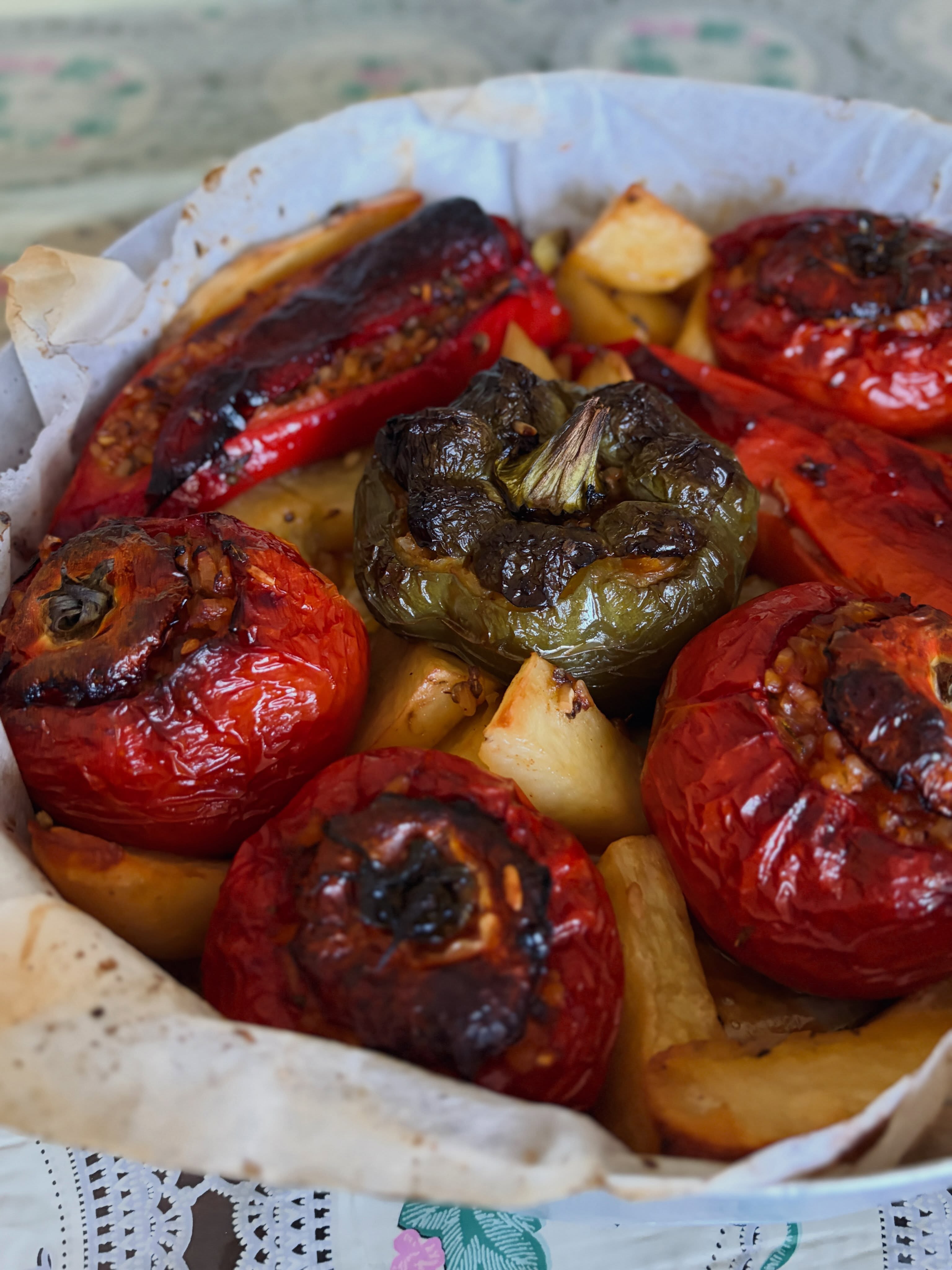
Take gemista, for example: tomatoes and peppers stuffed with rice, herbs and spices.

SnapInsta.to 727519316 18598049803056492 5276704142226437267 n
@_sappho_

Fava, a wonderfully creamy yellow split-pea purée served with olive oil, lemon and onions. Dolmades, vine leaves filled with rice and herbs. Or a horiatiki — the classic Greek salad — simply ordered without feta.
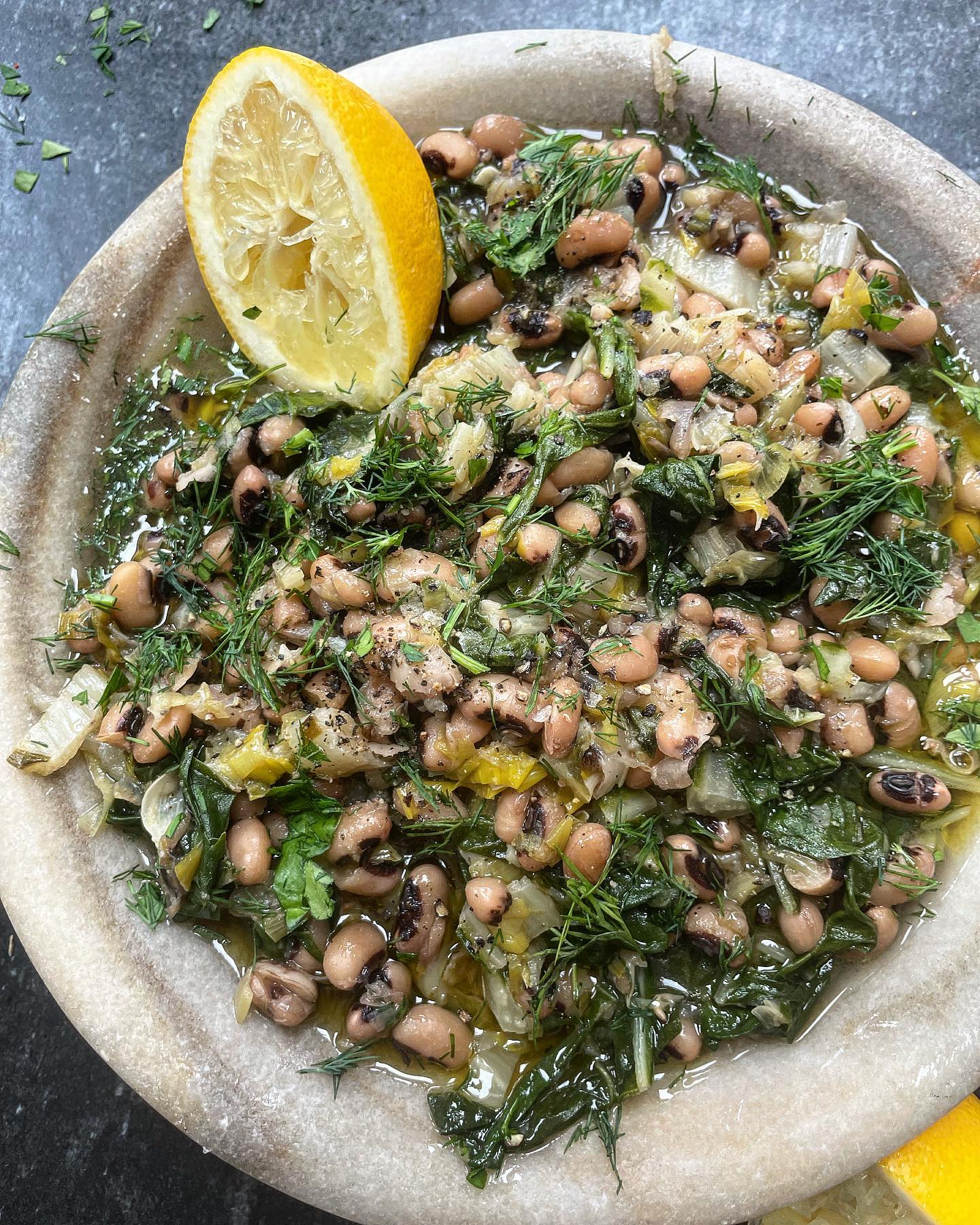
Then there are the ladera, a whole family of dishes cooked generously in olive oil. Think fasolakia, green beans slowly stewed until wonderfully soft, or briam, Greece’s answer to the ultimate tray of roasted vegetables.

And this is only the beginning.

Fasolada, a hearty white-bean soup with tomatoes, carrots, celery and olive oil, is often described as the “soup of the Greek Gods”. Aginares a la Polita combines artichokes, potatoes, carrots, lemon and dill, while imam baildi turns aubergines, onions, garlic and tomatoes into a rich, comforting dish that only needs the feta left off to become vegan.

And then there is revithada: chickpeas baked slowly with lemon, garlic and onion for three or four hours. On Sifnos, the dish is so beloved that it even has its own traditional clay cooking pot.

In other words, if you are looking for vegan food in Greece, you do not necessarily have to look for food invented for vegans.

The Secret Word: Nistisimo

SnapInsta.to 625144805 18119462965511714 68087541629436458 n
@georginahayden

There is another reason Greece can be unexpectedly easy to navigate as a vegan: Orthodox fasting.

The Greek Orthodox calendar includes several periods of fasting, with particularly strict restrictions around Lent. During these periods, meat, dairy and eggs are traditionally avoided, and depending on the day, even olive oil and fish can be excluded. Wednesdays and Fridays are also traditionally associated with fasting.

As Easter approaches, the country enters a period known as nistia. For roughly six weeks, many Greeks give up meat, dairy and eggs. Restaurants and tavernas may mark suitable dishes as nistisimo — essentially, food that complies with the fasting rules.
And suddenly, being vegan does not sound quite so unusual.

Beans, vegetables, grains, nuts, seeds and fruit become the centre of the plate, drawing on ingredients that have been part of Greek cooking for centuries. For around forty days every year, Greece quietly becomes one of the most vegan-friendly places around — without necessarily calling itself vegan.

SnapInsta.to 651985608 18424443940191647 2835211906039739893 n
@cyprustastetours

So… Is Greece Actually Vegan-Friendly?
 
Surprisingly, yes.

According to figures cited from the UK-based Vegan Society, Greece ranks tenth worldwide for vegan dining options per capita, with around 218 vegan dining options per million people. This is particularly striking when only around two per cent of Greeks identify as vegan and four per cent as vegetarian. Tourism undoubtedly plays a part: as more visitors arrive looking for plant-based options, restaurants have adapted.

Athens, in particular, has seen a rise in vegan-friendly cafés and restaurants. Areas such as Exarchia and Psyrri have several plant-based spots, while even more traditional tavernas will often have nistisimo dishes if you know what to ask for.

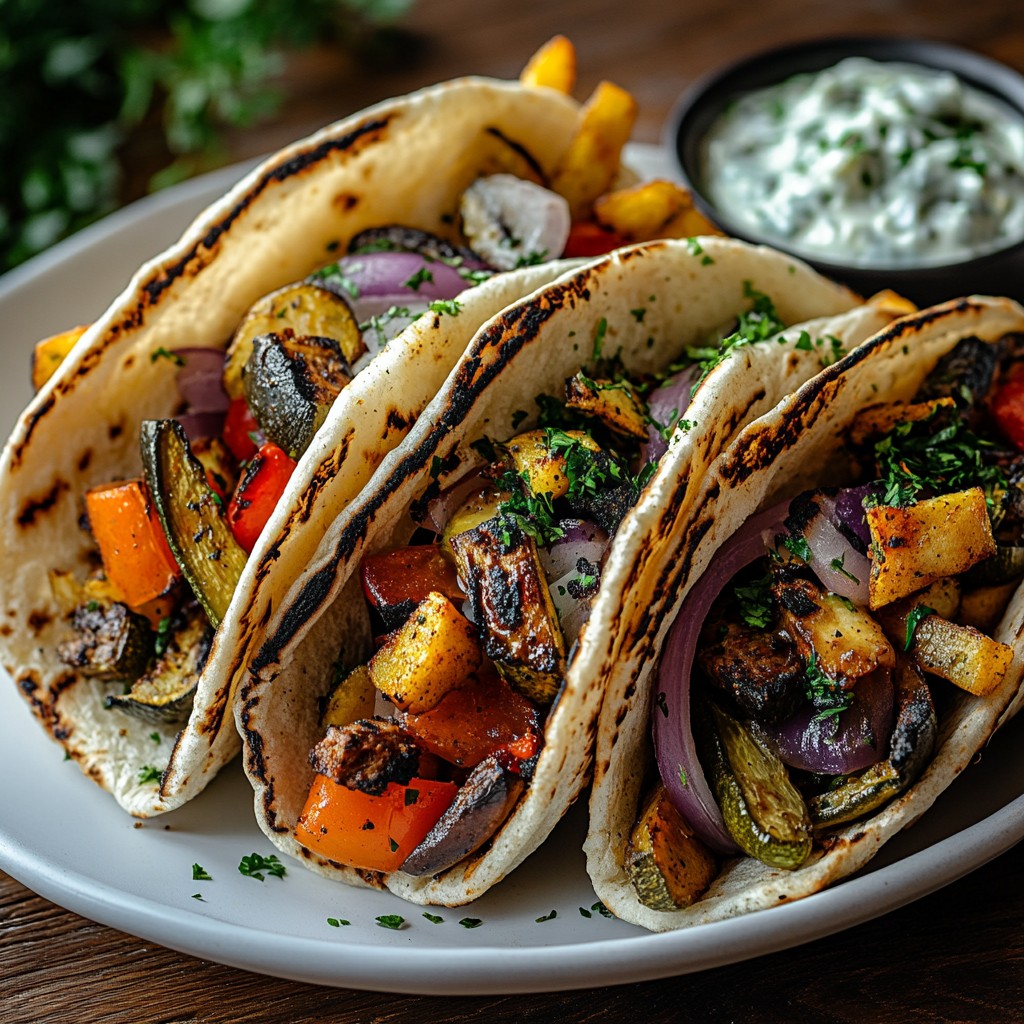
And if you are craving something a little more familiar, dedicated vegan restaurants are increasingly easy to find. In Athens, places such as Cookoomela Grill, Vegan Beat, Mama Tierra and Veganaki offer everything from vegan gyros and souvlaki to burgers, wraps and gluten-free options.

The islands have their own plant-based treasures, too. Santorini has its famous fava, tomato fritters and fresh salads; Crete offers dishes such as dakos; Naxos and Paros are known for their produce and increasingly creative vegan versions of Greek classics; and cosmopolitan Mykonos has no shortage of restaurants catering to plant-based travellers.

There is, however, one important caveat.

Greece is not uniformly vegan-friendly in quite the same way some northern European capitals have become. You are unlikely to find a dedicated plant-based menu in every mountain village, and explaining that you do not eat cheese may still earn you the occasional look of genuine confusion.

Supermarkets can also be a slightly different story. Compared with other European capitals, where plant-based alternatives such as soya steaks, vegan cheeses and meat substitutes have become increasingly commonplace, Greek supermarkets have traditionally offered fewer of these products. That is changing, particularly in larger cities, where oat and almond milk, soya yoghurt, vegan spreads, tofu and meat alternatives are becoming much easier to find.

Which is perhaps the best of both worlds: the very modern world of vegan feta and plant-based burgers alongside the incredibly old-fashioned pleasure of eating tomatoes, beans, aubergines and olives that barely need any replacing at all.

And on the islands, it can still be a little more complicated. Dedicated vegetarian options are not necessarily available everywhere, so sometimes you have to get creative with what is already on the menu.

Luckily, Greek cuisine is rather good at this.

Just ask!

One of the easiest tricks is simply to ask for modifications.

A Greek restaurant may not have a vegan menu, but that does not mean there is nothing for you to eat. A traditional dish can often be adapted surprisingly easily: a mezze plate can become a feast of hummus, olives and grilled vegetables; a salad can lose its feta; and dishes traditionally served with meat can sometimes be prepared without it.

Vegetarians may have an even easier time.

There are the endless appetiser options: tzatziki, melitzanosalata, tyrokafteri, bouyiourdi, saganaki and all sorts of cheese-based little plates designed to be shared over drinks. Then come the legumes — giant beans, lentil soup and chickpea dishes — which are some of the most satisfying options on a Greek table.

SnapInsta.to 490464864 1128487345959423 3594711619056182739 n
@vegan_prospect

And yes, vegetarian gyros are everywhere. They might come with falafel, vegetable patties, grilled cheese or another meat substitute instead of the traditional filling. More meat-heavy classics can be harder to find in vegetarian form, though. Moussaka, for instance, is not always easy to track down without meat — although vegetarian versions do exist.

In other words, being vegetarian in Greece is rarely about going hungry. It is more about knowing when to ask, what to ask for, and occasionally being willing to turn a selection of appetisers into your main course.

A Little Greek Vocabulary Goes A Long Way

If you are worried about getting lost in translation, two phrases will take you surprisingly far:

“Den troo kreas, gala, avga.”
Δεν τρώω κρέας, γάλα, αυγά.
I don’t eat meat, milk or eggs.

“Echete nistisima fagita?”
Έχετε νηστίσιμα φαγητά;
Do you have fasting/vegan dishes?
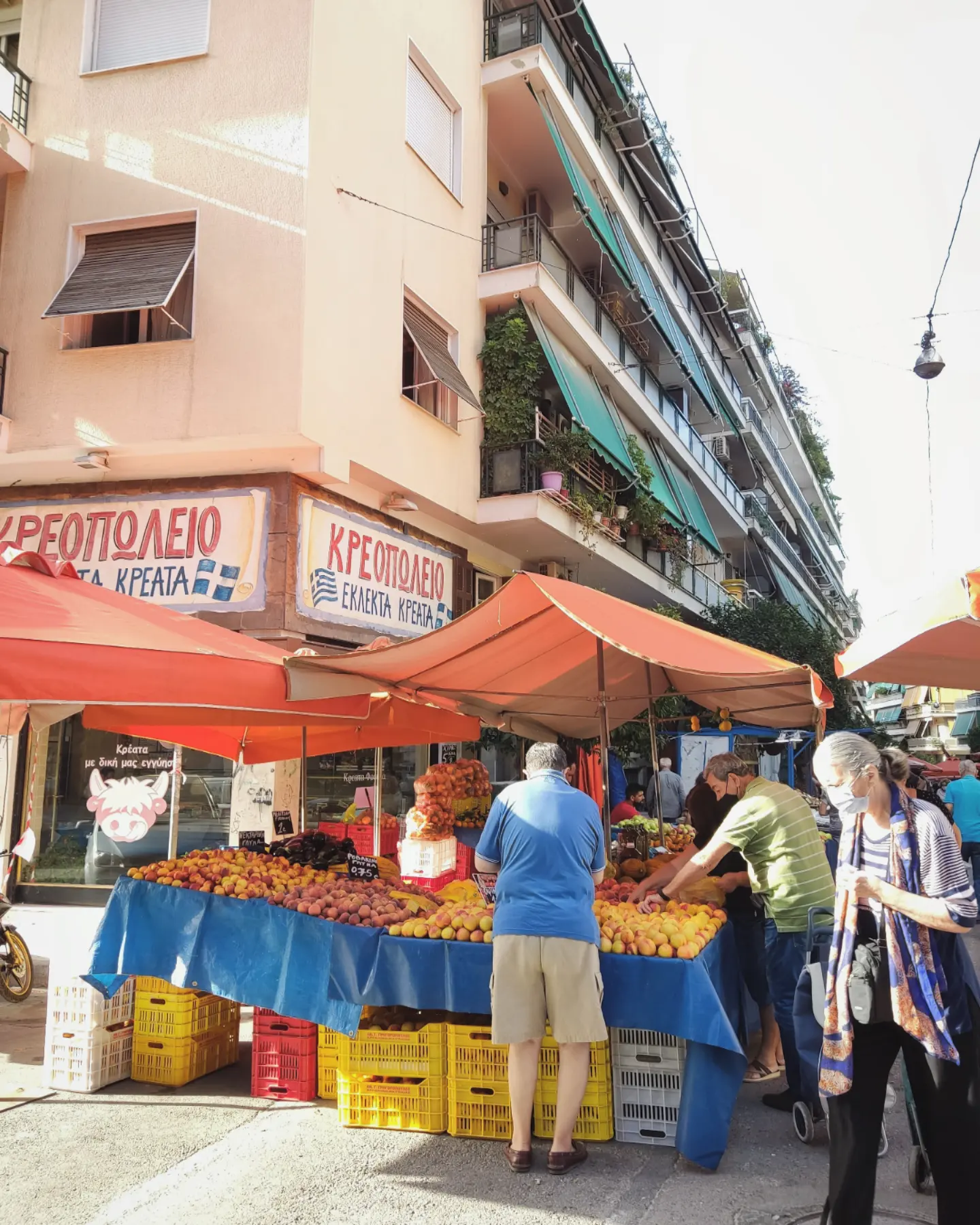
But there is also another strategy that requires absolutely no Greek at all: head to the laiki agora.

Start At The Market

Greek farmers’ markets are a vegetarian’s dream. The laiki agora is where you can stock up on fresh fruit and vegetables, nuts and olives — particularly useful if you are staying somewhere with a kitchen.

SnapInsta.to 622314596 18056716724340716 3069479970781843346 n
@girisyagohan

In conclusion, don't worry about your diet in Greece: the food is abundant, colourful and — most importantly — social. Here, eating is rarely just about what is on your plate. It is about sitting outside, taking your time, ordering another little plate for the table and letting lunch become dinner before anyone notices.

If you needed another reason to love Athens, here it is: the Greek capital has been ranked among the 10 sunniest cities in Europe, according to new research by holiday rental portal Holidu.

Analysing weather data from World Weather Online, Holidu ranked European cities based on their average number of sunshine hours per month. Athens came in at 9th place, with an impressive 261.45 hours of sunshine per monthand an overall sun score of 8.84 out of 10.

And honestly, anyone who has spent time in Athens knows that the sunshine is one of the city's greatest assets.

Athens: Where Autumn Still Feels Like Summer

While much of Europe starts preparing for cooler temperatures and shorter days as summer comes to an end, Athens continues to enjoy plenty of sunshine well into autumn.

According to the research, Athens has an average temperature of 18.38°C, while daytime highs can reach around 28°C in September and approximately 23°C in October.

This makes early autumn one of the best times to experience the city. The intense summer heat begins to ease, the streets become more comfortable for exploring, and you can still enjoy many of the things that make an Athenian summer so appealing — including outdoor dining, rooftop drinks and, of course, a swim in the sea.

From the Acropolis To The Athens Riviera

One of the things that makes Athens particularly special is how much you can fit into a single sunny day.

You can start your morning exploring the Acropolis and Parthenon, wander through the picturesque streets of Plaka and Anafiotika, stop for lunch at a traditional taverna and then head towards the Athens Riviera for an afternoon by the sea.

And unlike many European capitals, Athens gives you the opportunity to combine a major city break with a genuine beach experience without leaving the metropolitan area.

The result is a destination where history, culture, food, city life and the Mediterranean coast all come together, with plenty of sunshine as a backdrop.

Athens In The European Sunshine Top 10

Athens placed 9th overall, surrounded by destinations that are famous for their sunny climates.

Spain dominates the ranking, with Cartagena taking first place, followed by Málaga, Seville, Alicante and Murcia. Catania in Sicily came sixth, while Santa Cruz de Tenerife and Córdoba occupied seventh and eighth place respectively.

Athens was followed in tenth place by Palma de Mallorca.

The Top 10 at a Glance

  1. Cartagena, Spain – 282.18 sunshine hours/month

  2. Málaga, Spain – 277.78 hours

  3. Seville, Spain – 271.53 hours

  4. Alicante, Spain – 278.58 hours

  5. Murcia, Spain – 276.10 hours

  6. Catania, Italy – 272.38 hours

  7. Santa Cruz de Tenerife, Spain – 247.24 hours

  8. Córdoba, Spain – 266.23 hours

  9. Athens, Greece – 261.45 hours

  10. Palma de Mallorca, Spain – 257.24 hours

With Athens sitting comfortably inside the top 10, the research adds another reason why the capital remains such an attractive destination for visitors — particularly those looking to extend their summer well into September and October.

So, Is Athens Α Good Autumn Destination?

Absolutely.

The combination of warm temperatures, long sunny days, fewer summer crowds and easy access to the sea makes autumn an especially appealing time to explore Athens.

Whether you're visiting the Acropolis, enjoying coffee in a neighbourhood square, discovering the city's food scene or taking a spontaneous trip to the coast, there's a good chance you'll be doing it under blue skies.

And while Athens may not have taken the number one spot, 9th sunniest city in Europe is certainly something worth celebrating. ☀️

About Τhe Research

The ranking was produced by Holidu, using data from World Weather Online. The research considered European cities with more than 200,000 inhabitants and analysed average sunshine hours per month based on data from 2009–2026. Average temperatures were also included as a secondary data point, with sunshine hours and temperature normalised to produce an overall score out of 10.

To read more, please visit: holidu.co.uk

When you step onto the sun-drenched shores of Kos, you're walking in the footsteps of history's most influential healer. This isn't just another beautiful Greek island—it's the birthplace of modern medicine, where Hippocrates revolutionised healthcare over 2,400 years ago. And remarkably, his ancient wisdom holds the key to solving many of today's wellness challenges.

The Kos Connection: Where It All Began

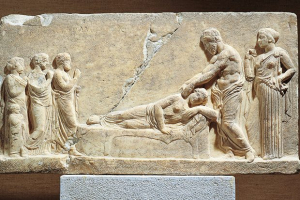
Born on Kos around 460 BC, Hippocrates transformed medicine from superstition into science. Beneath the legendary Plane Tree of Hippocrates in Kos Town, he taught his students a radical new approach: observe, understand, and treat the whole person—not just their symptoms. 

The Asklepieion, Kos's ancient healing temple perched on a hillside overlooking the Aegean, wasn't merely a hospital. It was a holistic wellness sanctuary where patients received fresh air, clean water, nourishing food, rest, and therapeutic exercise. Sound familiar? Hippocrates understood what we're only now rediscovering: true healing requires addressing body, mind, and spirit together. 

Prevention Over Cure: A 2,400-Year-Old Lesson We Forgot 

"Let food be thy medicine and medicine be thy food." 

Perhaps Hippocrates' most famous quote, yet how many of us truly live by it? In our modern world of quick fixes and pharmaceutical solutions, we've drifted far from his fundamental principle: prevention is superior to cure.

Hippocrates believed the body possesses an innate ability to heal itself when given the right conditions. His approach focused on:

  • Nutrition as foundation – Fresh, seasonal, whole foods as primary medicine

  • Movement and exercise – Physical activity as essential, not optional

  • Rest and recovery – Sleep and relaxation as healing necessities

  • Environmental factors – Clean air, pure water, and natural surroundings

  • Emotional wellbeing – Recognising the mind-body connection

Today, we're facing epidemics of lifestyle-related diseases: obesity, diabetes, heart disease, anxiety, and burnout. Conditions that are largely preventable through the very principles Hippocrates taught millennia ago. 

The Modern Disconnect

We've become a society that waits until we're broken before seeking help. We ignore warning signs, push through exhaustion, fuel ourselves with processed foods, and then wonder why we feel depleted. We treat symptoms rather than addressing root causes.

Hippocrates would be dismayed. His entire philosophy centred on listening to your body, understanding its signals, and making daily choices that support vitality rather than undermine it. 

Why Kos Matters Today

Kos isn't just historically significant—it's a living reminder of what's possible when we prioritise holistic wellness. The island embodies Hippocratic principles: 

Natural healing environment – The Mediterranean climate, mineral-rich thermal springs, clean air, and abundant sunshine create ideal conditions for restoration.

Nourishing Mediterranean diet – Fresh fish, olive oil, vegetables, herbs, and fruits—the very foods Hippocrates prescribed.

Slower pace of life – Time to rest, reflect, and reconnect with yourself away from modern stressors. 

Connection to nature – Beaches, mountains, and countryside that invite movement and mindfulness.

Ancient wisdom preserved – The Asklepieion and Hippocrates sites serve as tangible connections to healing traditions.

When you come to Kos for wellness, you're not just taking a holiday—you're returning to the source of holistic healing itself.

Applying Hippocratic Wisdom to Your Life 

You don't need to visit Kos to embrace these timeless teachings (though we highly recommend it!). Here's how to integrate Hippocratic principles into daily life: 

1. Prioritise Prevention

Don't wait for illness to force change. Regular movement, quality sleep, stress management, and nourishing food are investments, not luxuries. 

2. Eat Real Food 

Choose whole, unprocessed foods as close to their natural state as possible. Let your kitchen be your pharmacy. 

3. Move Your Body Daily

Hippocrates prescribed walking as universal medicine. Find movement that brings joy, not punishment. 

4. Rest Without Guilt

Recovery isn't weakness—it's essential for health. Honour your body's need for quality sleep and downtime.

5. Treat Yourself as a Whole Person 

Your physical symptoms may have emotional roots. Your stress may manifest physically. Everything is connected.

6. Listen to Your Body

Pain, fatigue, and discomfort are messages, not inconveniences. Learn to hear what your body is telling you.

7. Seek Natural Solutions First

Before reaching for medication, consider whether lifestyle changes might address the root cause. 

The Hippocratic Oath For Yourself 

Hippocrates required his students to take an oath—a commitment to ethical, compassionate care. What if you took an oath to yourself?

"I will honour my body as the vessel of my life. I will nourish it with wholesome food, move it with joy, rest it with intention, and treat it with the respect it deserves. I will seek prevention over cure, and listen to its wisdom. I will remember that true health encompasses body, mind, and spirit—and I will tend to all three with equal care."

Return to the Source

There's something profoundly moving about experiencing wellness on the very island where these principles were born. At Evexia Kos, we've built our entire philosophy on Hippocratic foundations—because after 2,400 years, his wisdom hasn't just endured; it's become more relevant than ever.

Whether you join us on Kos or simply embrace these teachings wherever you are, remember: you have the power to prevent illness, restore vitality, and create lasting wellness. Hippocrates knew it. The ancient healers of Kos proved it. And now it's your turn to live it.

Originally published on evexia-kos.com

About the Author

Gilly Gwilliams is the founder of Retreats in Greece and Evexia Wellness on the island of Kos. A passionate wellness seeker, she is on a mission to showcase Greece as a leading wellness destination while helping people reconnect with themselves through meaningful retreat experiences. Inspired by her own journey through health challenges, Gilly believes in the power of holistic wellbeing, purposeful living, and creating space for personal transformation. Originally from the UK and now living in Kos with her husband, two dogs, and a lively collection of animals, she combines her love of Greece, nature, and wellness to help others live healthier, happier lives.

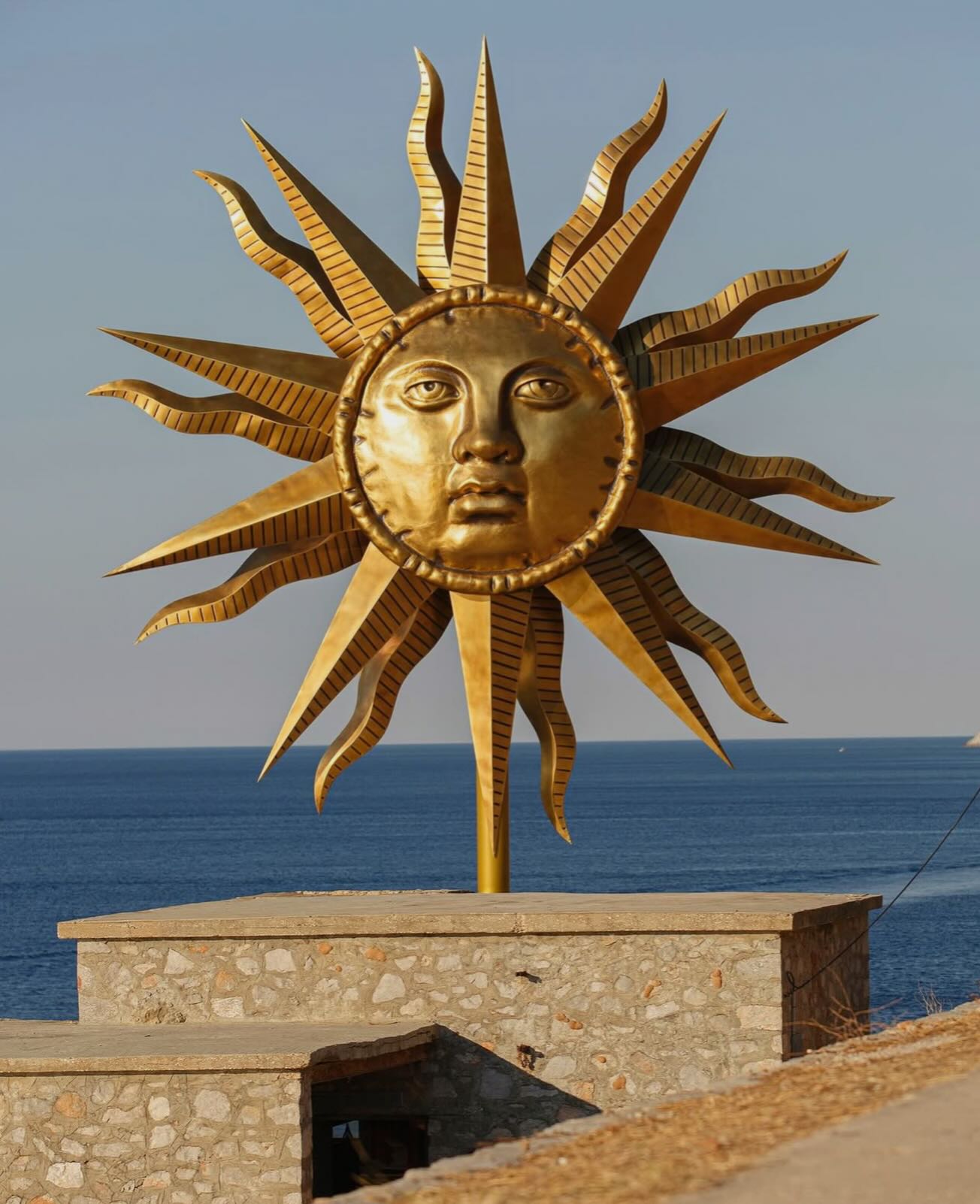
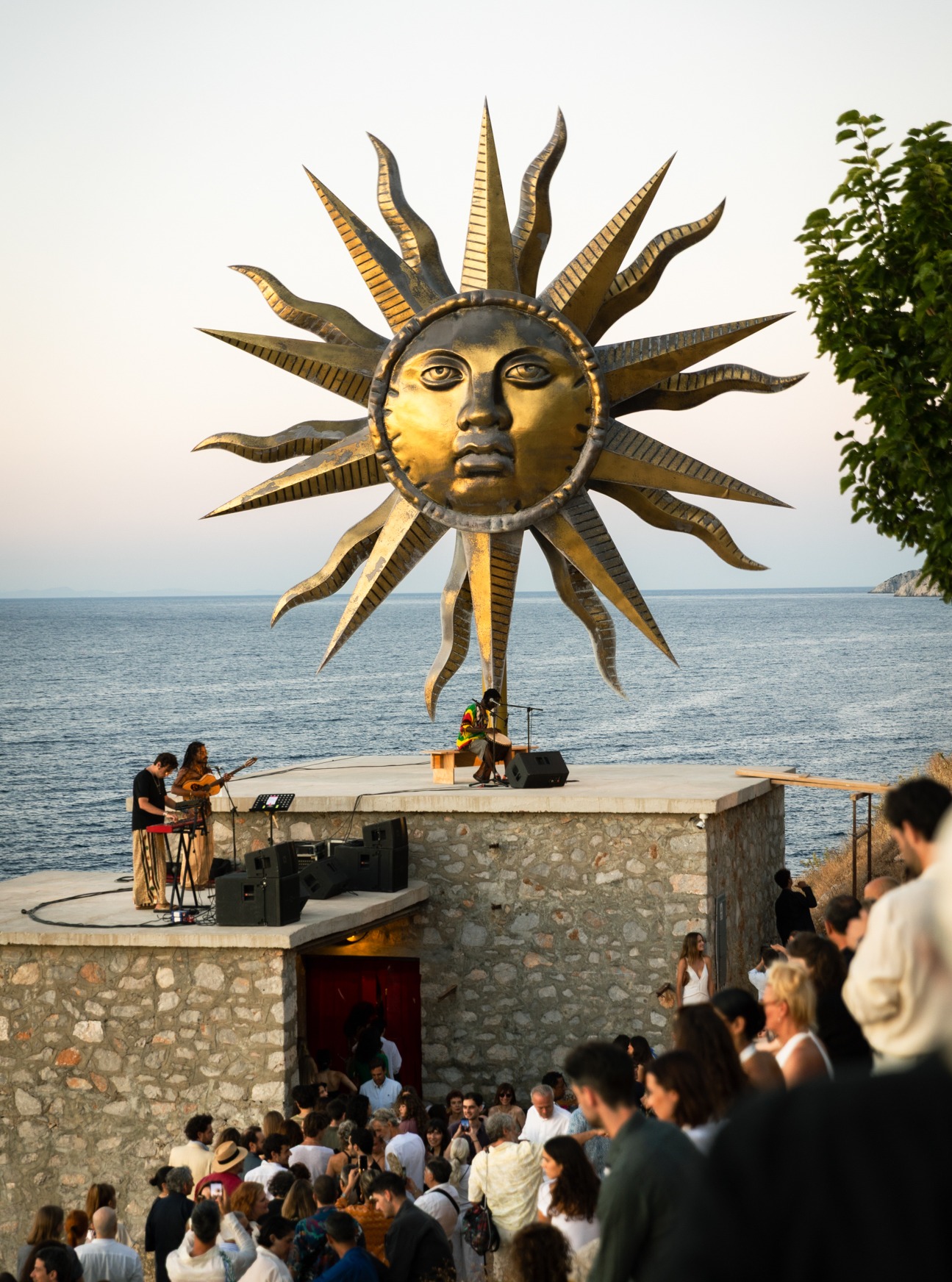
If you have ever been to lovely, car-free and wonderfully quiet Hydra, just a short hop from Athens, you will probably have been greeted by a rather majestic and mysterious sight: a huge golden sun, slowly turning in the Aegean breeze.

SnapInsta.to 652810422 17977412603991924 7686062027628927958 n
@wearegalleria

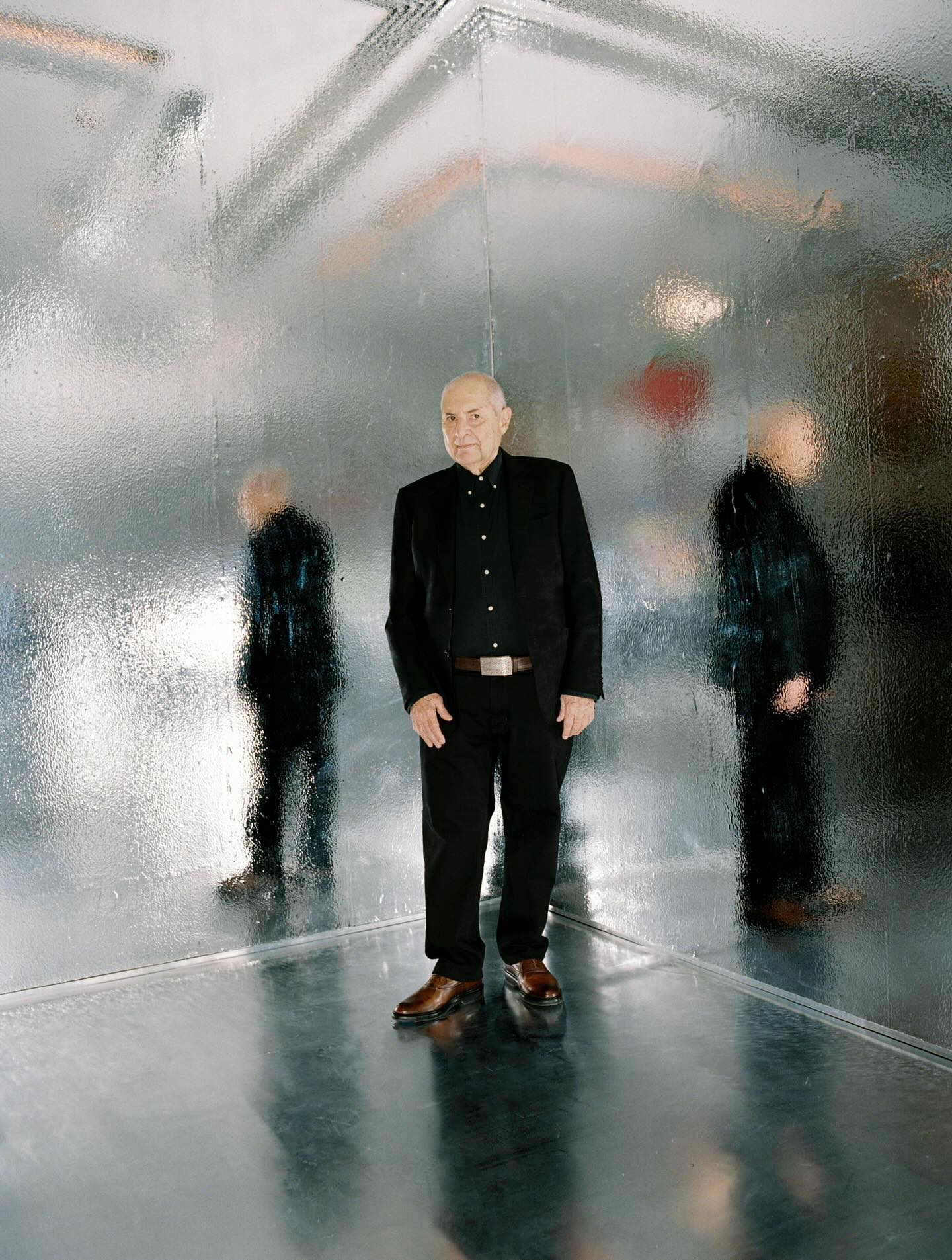
It looks as though it has always been there. But this particular piece of Hydra's landscape is surprisingly young. The sculpture arrived on the island in 2022, created by American artist Jeff Koons as part of a larger exhibition simply called Apollo.

The exhibition was commissioned by the Athens-based DESTE Foundation for Contemporary Art, founded by Greek-Cypriot industrialist, collector and hotelier Dakis Joannou.

SnapInsta.to 730040745 18598411381047717 5561332458634120459 n
@oddamagazine

Each summer, the foundation invites an artist to create a site-specific installation for the old Slaughterhouse on Hydra, now known as the DESTE Project Space Slaughterhouse. The exhibitions are free and open to the public — a rather extraordinary little contemporary-art tradition on an island better known for donkeys, whitewashed houses and swimming in impossibly blue water.

But how did Jeff Koons, one of the world's most famous and expensive living artists, end up taking over a tiny former slaughterhouse on a Greek island? The answer, rather appropriately, begins with friendship.
Joannou and Koons had been close friends since the 1980s. Yet, despite their friendship, Joannou had never invited Koons to exhibit at the Slaughterhouse. The reason was practical: the project had a very limited budget. Then, over lunch in New York, Koons mentioned that he would love to do the project. Joannou, of course, agreed.

What happened next was rather more mysterious. The exhibition was delayed for two years because of the pandemic, and during that entire time Joannou had virtually no idea what his friend was planning. “I didn’t know anything about it until two hours before the show,” he later recalled. Koons had even asked Joannou's assistant to sign a non-disclosure agreement!

Turned out there was plenty to keep secret.

Jeff Koons: Apollo
, which ran from 21 June to 31 October 2022, transformed the old Slaughterhouse into a surreal temple to the ancient god. Inside, Koons placed new sculptures alongside wonderfully ordinary, even cheeky contemporary objects, creating a playful dialogue between antiquity and modern life.
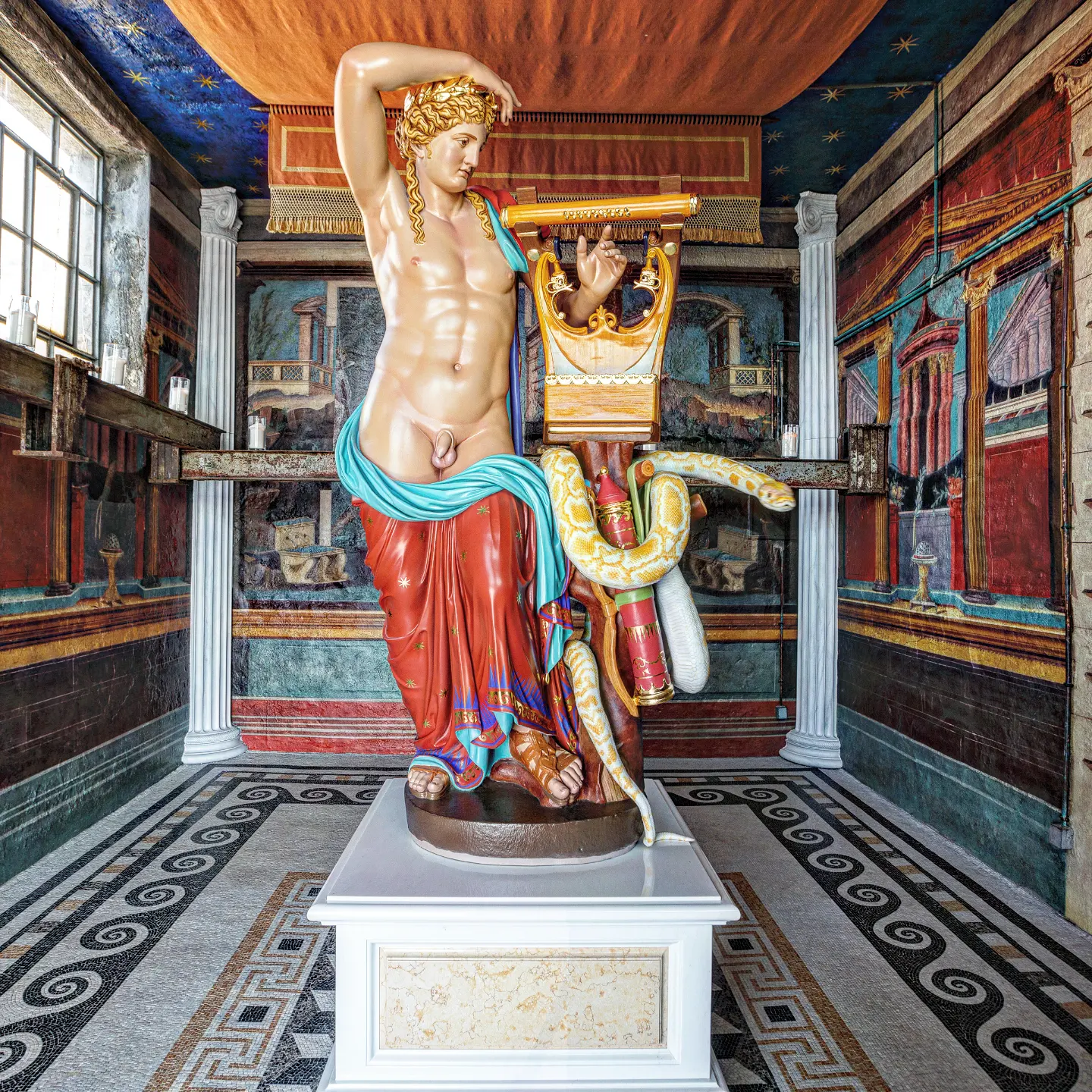
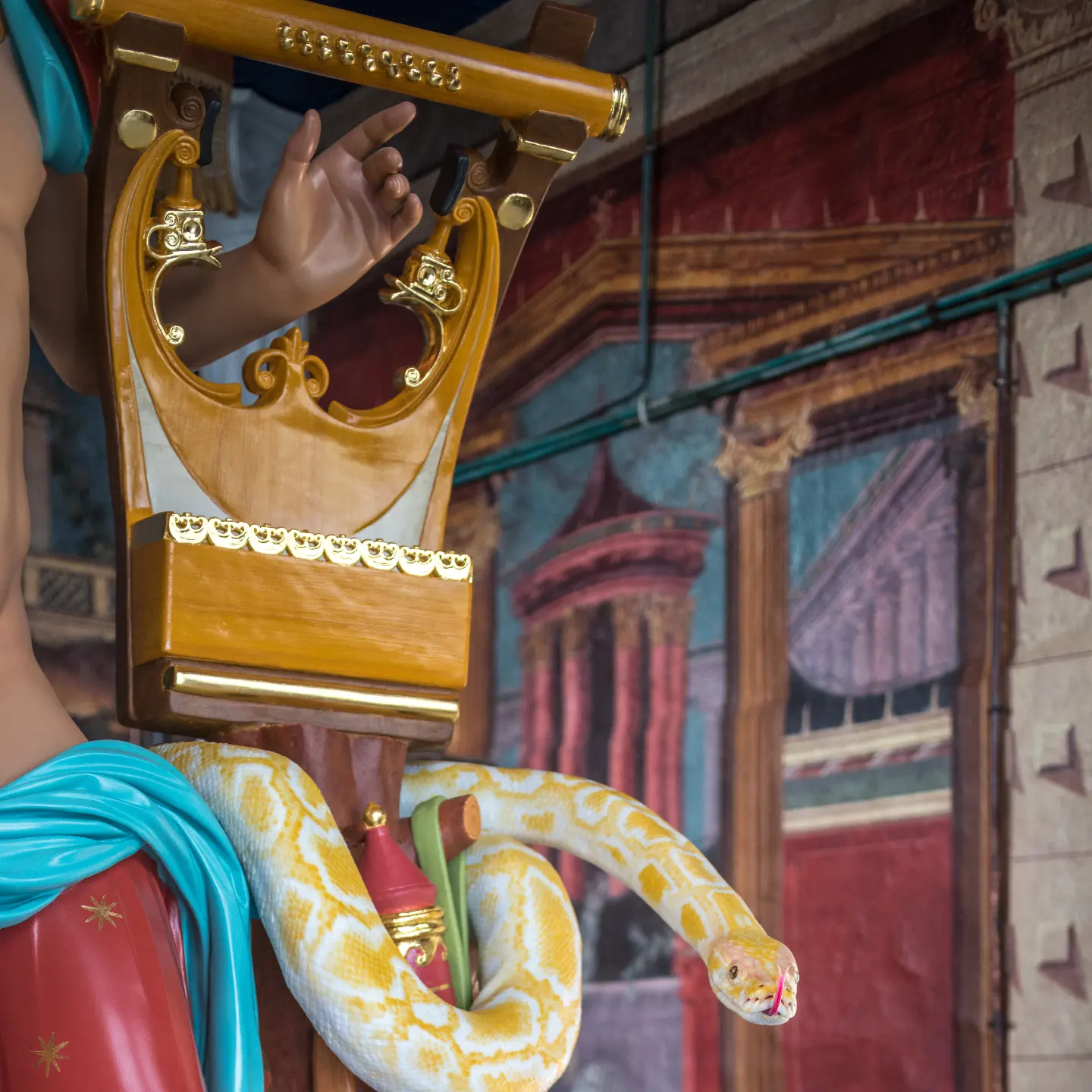
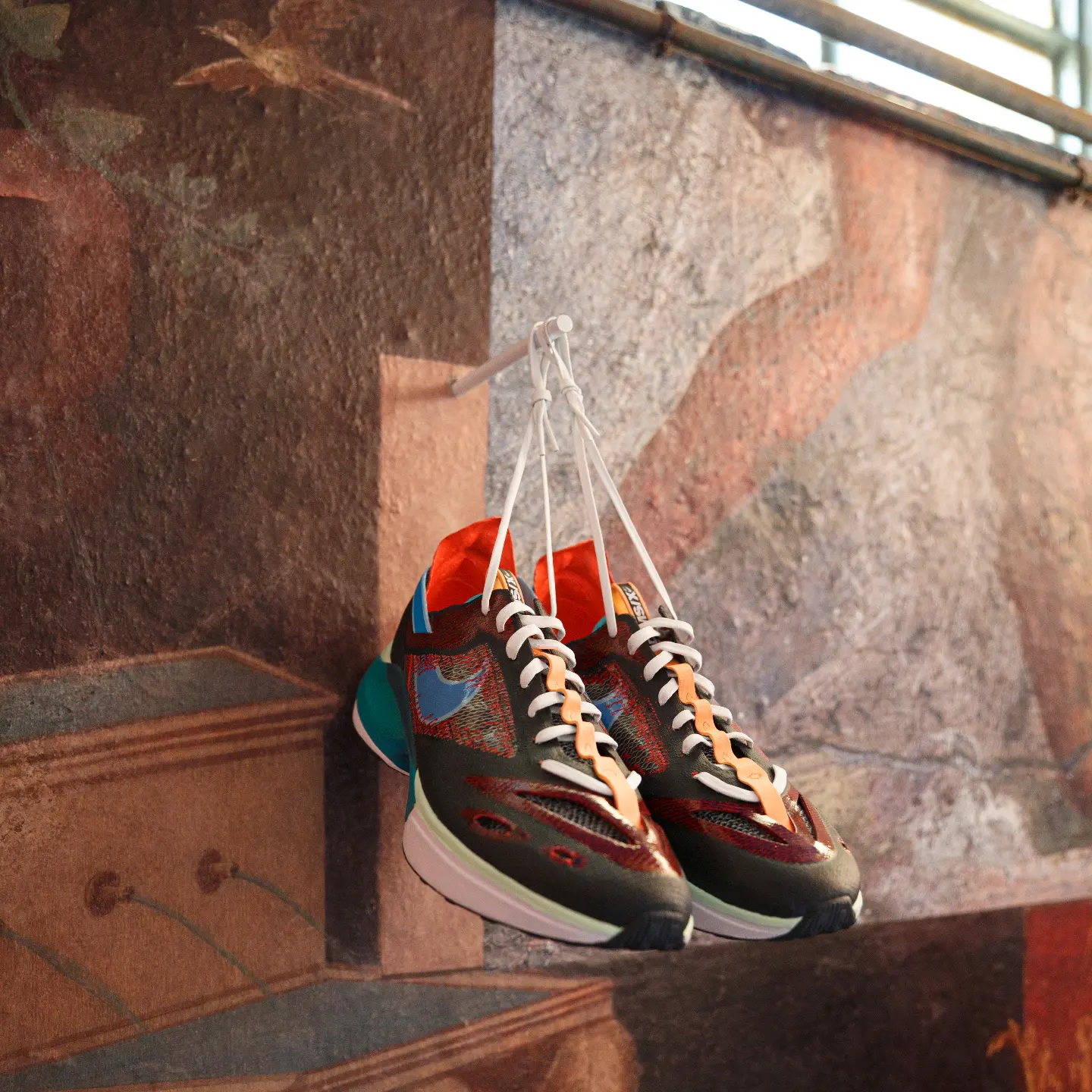
At the centre was Apollo Kithara: a brightly coloured, almost otherworldly Apollo playing the ancient stringed instrument that would eventually evolve into the guitar, accompanied by a remarkably lifelike animatronic snake. Elsewhere stood Gazing Ball Tripod and a pair of Nike trainers recreated in gleaming, polychromed bronze — because if there is one thing Koons enjoys, it is putting the everyday and the extraordinary in the same room.

SnapInsta.to 621687488 18010133951819813 2206989984957048356 n
@destefoundation

SnapInsta.to 627792028 18222359989308555 3352555270987902026 n
@destefoundation

SnapInsta.to 623036276 18067738571531469 2605630094341104832 n
@destefoundation

And then there was Apollo Wind Spinner.
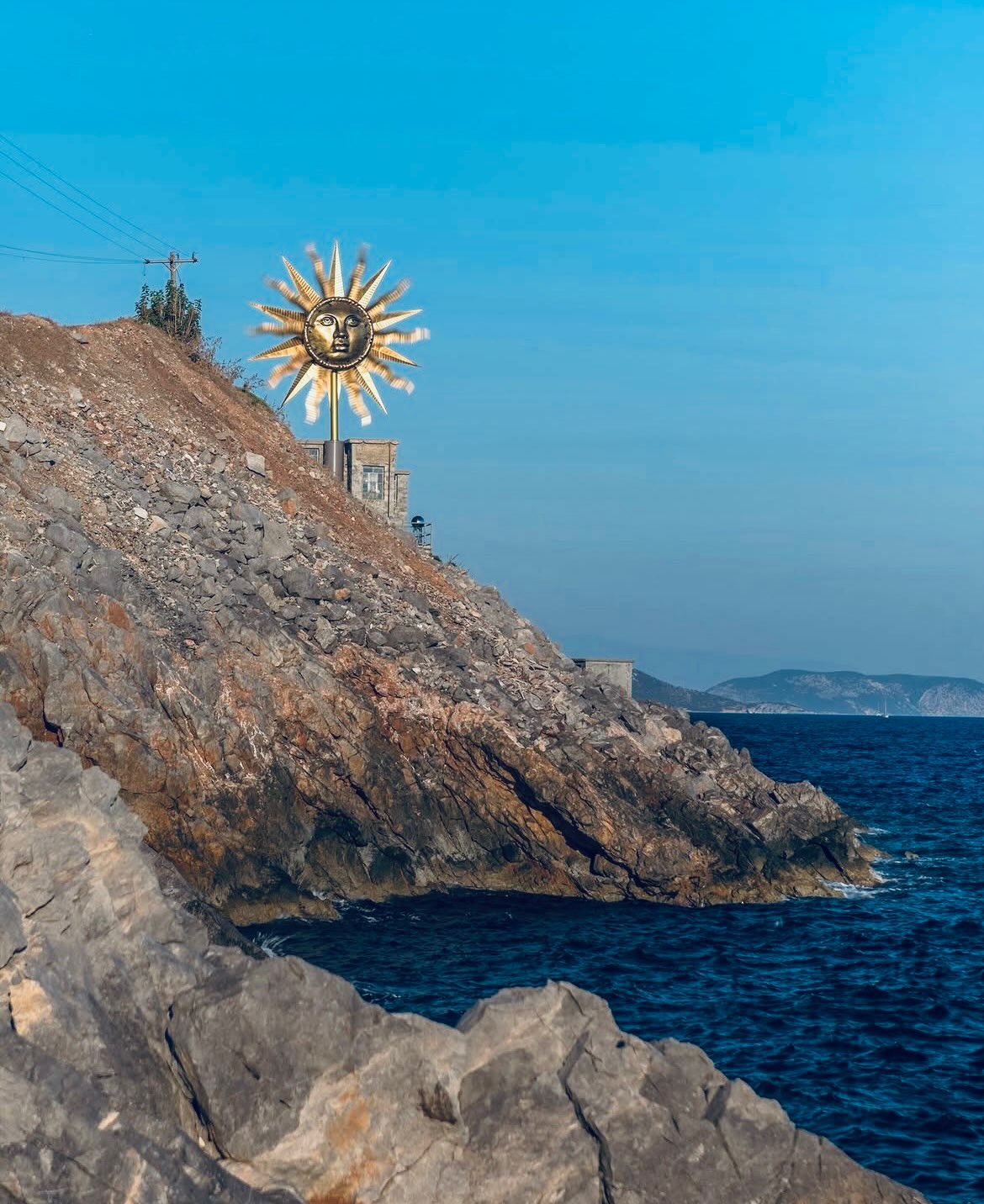
Almost nine metres wide, made from steel and bronze and inspired by the ancient god, the enormous sculpture was designed to move with the wind. Its golden surface catches the changing Aegean light; its face is that of Apollo, the god of beauty and the arts; and its great circular form turns slowly, endlessly.

Apollo Wind Spinner did not leave when the show closed. It remained on Hydra, where it has gradually become something of a landmark,  almost a lighthouse for the island.

SnapInsta.to 751076462 18608645518011862 5550849349620710320 n
@lorenzosamper

From the sea, it greets boats and visitors approaching Hydra harbour. From the other side, it welcomes those walking towards the old Slaughterhouse. And somehow, despite its size and unmistakably contemporary pedigree, it does not look out of place, quite the opposite.

The golden sun has slipped surprisingly easily into the visual language of the Greek islands. It catches the Aegean breeze, reflects the changing light, turns with the weather and never quite looks the same twice. One moment it gleams brilliantly; the next, it seems almost muted against the sea and stone.
 
The sculpture moves with the elements, echoing the slow rhythm of island life, where the sea, the sun and the wind dictate the pace of the day. It is ancient mythology filtered through contemporary art, but also something much simpler: a giant golden object learning, somehow, to belong to its surroundings.

And perhaps that is why Apollo has become more than an artwork. It has become part of the summer landscape itself, one of those images that feels increasingly inseparable from the Greek summer.
 
SnapInsta.to 728152479 18608667028038952 8568830170571814444 n
@destefoundation

If you ask a Greek what filotimo means, chances are you will get a pause, a smile, and then a rather long answer.

There is no neat English equivalent — and, truth be told, even Greeks cannot quite agree on a single definition. Perhaps that is precisely the point.

The philosopher Thales is said to have put it rather beautifully: “Filotimo to the Greek is like breathing. A Greek is not a Greek without it. He might as well not be alive.”

The word itself offers a first clue: Filotimo comes from filos (philos), meaning friend or, more broadly, “loving”, and timí (timē), meaning honour. Literally, it might be rendered as “friend of honour”. But this deceptively simple translation hardly captures the world contained within those three syllables.

In its simplest form, filotimo means doing good. But it is far more than simply being a good person. It is a complex constellation of virtues — honour, justice, dignity, pride, self-sacrifice, generosity, gratitude, courage, duty and hospitality, all somehow bundled together. And even that list does not quite get us there.

Filotimo also demands self-respect and a profound sense of personal freedom: the freedom to choose what is right and to act upon that choice because it comes from within.
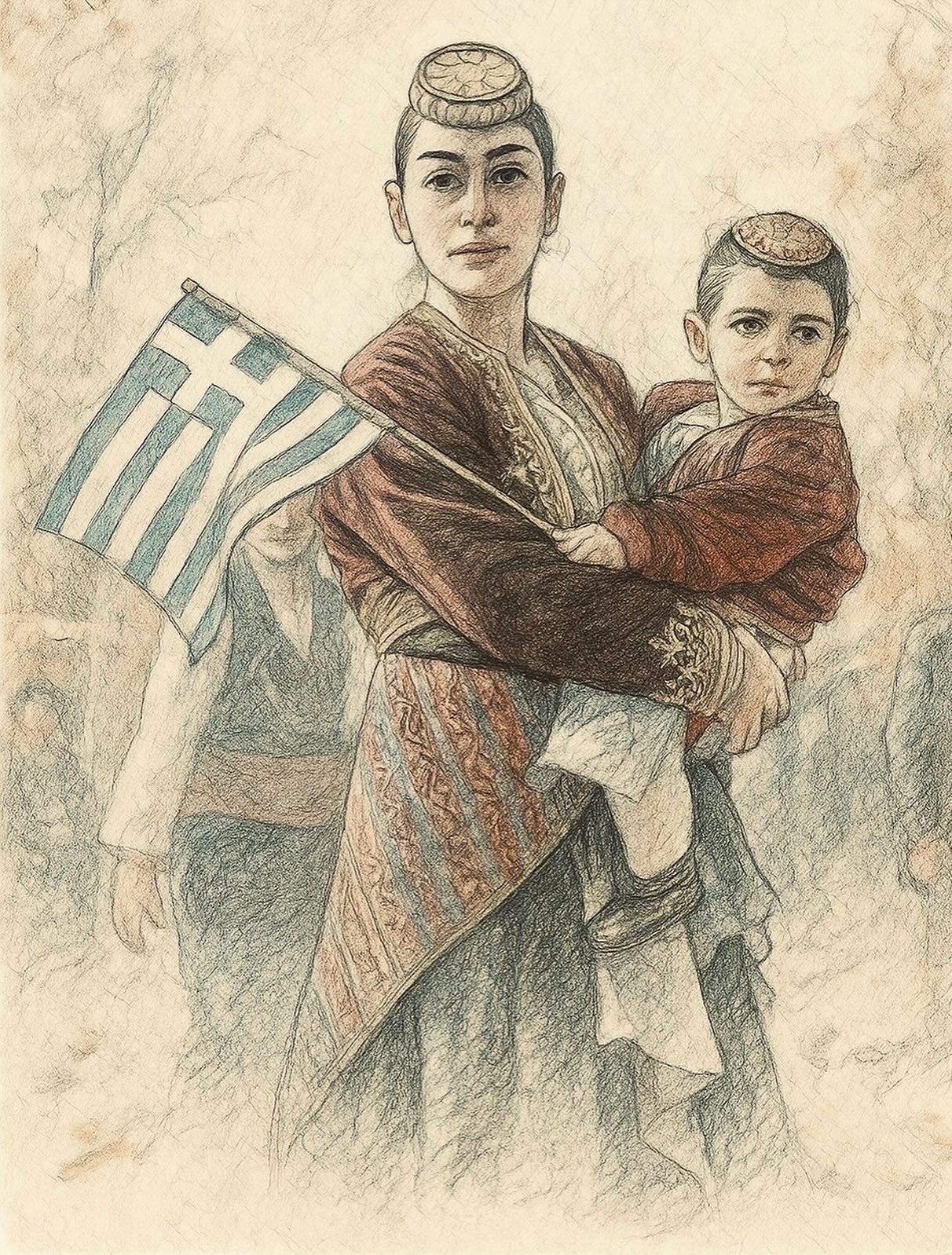
It means doing what is good and honourable without expecting anything in return. It means taking pride in doing the right thing, while being humble enough not to seek applause for it. It encompasses love for others, too: sincere affection, compassion and generosity.

Its first expression can perhaps be seen remarkably early in life. In Greek children, filotimo is often described as beginning with a natural, loving respect for their parents — expressed through small acts of gratitude, little gifts, a helping hand or an unexpected kindness. From there, the circle widens: appreciation and admiration for one's heritage and ancestors, followed by pride in being Greek, which in turn becomes a sense of duty towards one's country.

SnapInsta.to 573321256 17948859081045845 6475937825779312999 n
@pontianlegacies

There is something almost magical about filotimo. It is said that if you appeal to a Greek's filotimo, they will find it almost impossible not to help you. It is not simply an appeal to generosity; it is an appeal to the person's deepest sense of who they are and what they believe they ought to do.

At its heart, filotimo is also about self-respect and dignity — about knowing that you are walking the right path. To be filotimos is to act consistently with your principles and to do what is right in full awareness of your choices. Your actions become a reflection of your ideals and your character. You retain your pride not because you place yourself above others, but because you refuse to betray the person you believe yourself to be.

From Personal Honour To Collective Duty

But filotimo was not always the noble virtue we understand it to be today.

The first known written reference to the word appears in the early writings of the Greek Classical period, when filotimia was used in a rather ironic sense. It would take a couple of centuries for the word to acquire the positive meaning we associate with it today.

By the fourth and fifth centuries BC, something had changed. As democracy took shape in classical Athens, the meaning of filotimia shifted from the individual towards the collective. Competition gave way, at least in principle, to cooperation, and the filotimos man was no longer simply someone hungry for personal praise. He was a man who might enjoy the admiration of his city, but who first served his community.

That collective dimension may help explain why filotimo has remained so deeply relevant to Greek life: For nearly four centuries, Greece lived under Ottoman rule. Heavy taxation and limited access to education forced much of the population into subsistence farming, while communities became inward-looking and tightly bound by pride, local loyalties and personal relationships. Rather than developing the kind of institutional consciousness that was taking root elsewhere in Western Europe, Greek society came to rely heavily on relationships between people — on trust, obligation and emotion.

In other words, filotimo could do the work that institutions sometimes failed to do.

It was not law or logic that necessarily prompted someone to act, but a deeply human sense of responsibility towards another person. You helped because you knew someone, because you understood their suffering, because you felt that you could not simply stand by.

This is how one virtue is particularly celebrated in filotimo : courage. In one of Plato's dialogues, Socrates suggests that even a man lacking many virtues may be saved if he possesses unconditional courage. It is an idea that feels remarkably close to the heart of filotimo: when the moment comes to choose between what is easy and what is right, courage is what allows a person to act.

And perhaps that is why filotimo continues to reveal itself most clearly in difficult moments. It is easy to speak of honour when nothing is at stake. It is rather harder to put it into practice when doing the right thing carries a cost.

And stories of this kind run through modern Greek history, right up to the present day: During the Second World War, for example, filotimo became a powerful force behind the assistance given to Allied soldiers after the Axis invasion of Crete. Local people hid Australian and British servicemen despite knowing that sheltering enemy soldiers could mean death. During the German occupation, Greeks likewise risked their lives to hide Jews being hunted by the Nazis.

SnapInsta.to 634875811 17952843807074500 6538652138492068971 n
@thanasis.klaras

More recently, the same instinct was visible on the islands of the Aegean during the refugee crisis of 2015. On Lesvos and other islands, locals plunged into icy waters as fragile boats carrying refugees struggled towards the shore. Fishermen, volunteers, housewives, pensioners, teachers, artists and students gathered on beaches day after day, offering food, clothes, shelter and, in many cases, their own homes to people fleeing war and terror. It was an international humanitarian disaster, but on the ground, much of the response came down to individuals deciding to care for other individuals. That, too, is filotimo.

SnapInsta.to 640063828 18557116696022502 4899344497899975358 n
@oekizil
 
A Virtue You Cannot Claim For Yourself

All the virtues we associate with the word — courage, generosity, honour, dignity, duty, compassion, self-sacrifice — belong to filotimo. But it is important not to mistake the list for the thing itself. Filotimo is greater than the sum of its parts. It is the instinct that brings those virtues together and turns them into action.

And there is an intriguing paradox at the heart of the word: unlike friendship or love, filotimo cannot be claimed by the person who possesses it. You cannot simply announce, “I have filotimo.” It is the other person, the one observing, who decides whether you do. It requires recognition, coexistence and a sense of togetherness.

This is perhaps where the popular Greek “legend” that filotimo is something Greeks are simply born with — something running through their veins — falls short. To have filotimo is not merely to inherit a national trait. It is to behave in a way that makes others recognise it in you.
And if you don't have filotimo, the shame is not necessarily yours alone. You embarrass your family, your ancestors and your community. The idea that an individual is accountable not only for themselves but also for those around them runs remarkably deep in Greek culture. Alongside filoxenia, the famous Greek tradition of hospitality, filotimo becomes one of those invisible, horizontal forces that help govern the collective Greek soul.
 
There is even an old belief that a truly happy life is impossible when the soul lacks filotimo. Perhaps that is why the word has survived so stubbornly, through empires, occupations, wars, economic crises and generations of enormous social change.

Is Filotimo Disappearing?

Despite these numerous examples — some of them pretty recent — one question arises: is filotimo being lost? 

Perhaps it is less a question of losing it than of choosing it.

For some, particularly among younger generations growing up in an increasingly digital world, filotimo may feel less instinctive than it once did. Individualism is stronger; human relationships are increasingly mediated by screens; and the old, intimate networks of neighbourhood, family and community can feel more fragile.

And perhaps this is precisely why filotimo matters now more than ever.

Because at its heart, it asks us to do something rather unfashionable: to remember that we belong to one another.
It is a form of civic responsibility that does not necessarily begin with an institution, a rule or a government. It begins person to person — horizontally — with the recognition that another person's dignity matters, that another person's suffering concerns us, and that caring for one another is not an optional extra but part of living together.

Maybe filotimo is an old answer to a very modern problem: how do we remain human when everything around us encourages us to think only of ourselves?

If you cannot quite define filotimo, something that is for sure is that you can recognise it. In someone else's actions, in a community pulling together, in a stranger reaching out a hand, in the quiet decision to do what is right when nobody is watching.

And perhaps the most Greek answer of all is not to have a definition, but to simply do something about it.

Page 3 of 476