
What is Filotimo? The Untranslatable Word That Defines Greek Culture
- by XpatAthens
- Wednesday, 12 August 2026

If you ask a Greek what filotimo means, chances are you will get a pause, a smile, and then a rather long answer.
There is no neat English equivalent — and, truth be told, even Greeks cannot quite agree on a single definition. Perhaps that is precisely the point.
There is no neat English equivalent — and, truth be told, even Greeks cannot quite agree on a single definition. Perhaps that is precisely the point.
The philosopher Thales is said to have put it rather beautifully: “Filotimo to the Greek is like breathing. A Greek is not a Greek without it. He might as well not be alive.”
The word itself offers a first clue: Filotimo comes from filos (philos), meaning friend or, more broadly, “loving”, and timí (timē), meaning honour. Literally, it might be rendered as “friend of honour”. But this deceptively simple translation hardly captures the world contained within those three syllables.
In its simplest form, filotimo means doing good. But it is far more than simply being a good person. It is a complex constellation of virtues — honour, justice, dignity, pride, self-sacrifice, generosity, gratitude, courage, duty and hospitality, all somehow bundled together. And even that list does not quite get us there.
Filotimo also demands self-respect and a profound sense of personal freedom: the freedom to choose what is right and to act upon that choice because it comes from within.
Filotimo also demands self-respect and a profound sense of personal freedom: the freedom to choose what is right and to act upon that choice because it comes from within.
It means doing what is good and honourable without expecting anything in return. It means taking pride in doing the right thing, while being humble enough not to seek applause for it. It encompasses love for others, too: sincere affection, compassion and generosity.
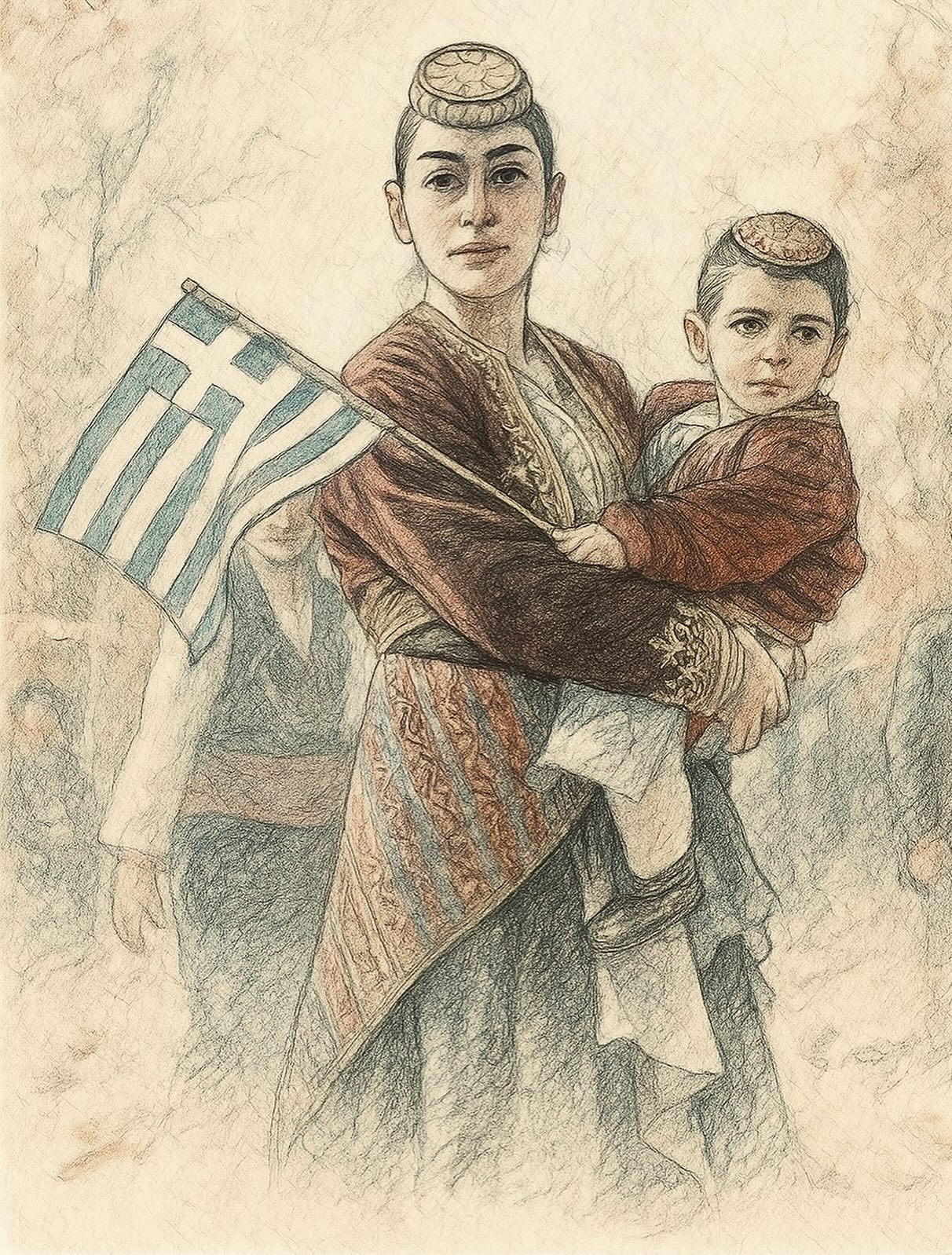
Its first expression can perhaps be seen remarkably early in life. In Greek children, filotimo is often described as beginning with a natural, loving respect for their parents — expressed through small acts of gratitude, little gifts, a helping hand or an unexpected kindness. From there, the circle widens: appreciation and admiration for one's heritage and ancestors, followed by pride in being Greek, which in turn becomes a sense of duty towards one's country.
@pontianlegacies
@pontianlegacies
There is something almost magical about filotimo. It is said that if you appeal to a Greek's filotimo, they will find it almost impossible not to help you. It is not simply an appeal to generosity; it is an appeal to the person's deepest sense of who they are and what they believe they ought to do.
At its heart, filotimo is also about self-respect and dignity — about knowing that you are walking the right path. To be filotimos is to act consistently with your principles and to do what is right in full awareness of your choices. Your actions become a reflection of your ideals and your character. You retain your pride not because you place yourself above others, but because you refuse to betray the person you believe yourself to be.
From Personal Honour To Collective Duty
But filotimo was not always the noble virtue we understand it to be today.
The first known written reference to the word appears in the early writings of the Greek Classical period, when filotimia was used in a rather ironic sense. It would take a couple of centuries for the word to acquire the positive meaning we associate with it today.
By the fourth and fifth centuries BC, something had changed. As democracy took shape in classical Athens, the meaning of filotimia shifted from the individual towards the collective. Competition gave way, at least in principle, to cooperation, and the filotimos man was no longer simply someone hungry for personal praise. He was a man who might enjoy the admiration of his city, but who first served his community.
That collective dimension may help explain why filotimo has remained so deeply relevant to Greek life: For nearly four centuries, Greece lived under Ottoman rule. Heavy taxation and limited access to education forced much of the population into subsistence farming, while communities became inward-looking and tightly bound by pride, local loyalties and personal relationships. Rather than developing the kind of institutional consciousness that was taking root elsewhere in Western Europe, Greek society came to rely heavily on relationships between people — on trust, obligation and emotion.
In other words, filotimo could do the work that institutions sometimes failed to do.
It was not law or logic that necessarily prompted someone to act, but a deeply human sense of responsibility towards another person. You helped because you knew someone, because you understood their suffering, because you felt that you could not simply stand by.
This is how one virtue is particularly celebrated in filotimo : courage. In one of Plato's dialogues, Socrates suggests that even a man lacking many virtues may be saved if he possesses unconditional courage. It is an idea that feels remarkably close to the heart of filotimo: when the moment comes to choose between what is easy and what is right, courage is what allows a person to act.
And perhaps that is why filotimo continues to reveal itself most clearly in difficult moments. It is easy to speak of honour when nothing is at stake. It is rather harder to put it into practice when doing the right thing carries a cost.
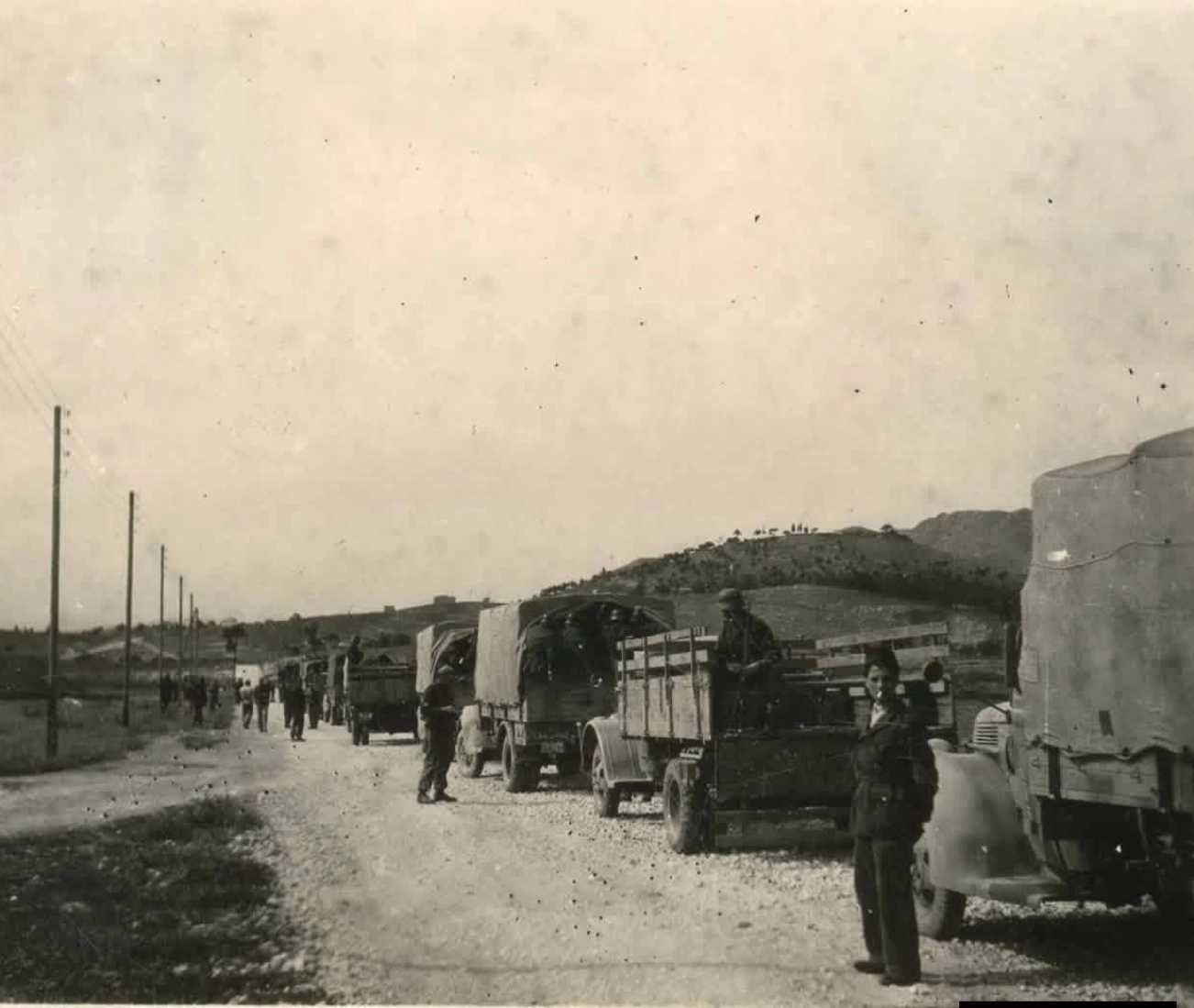
And stories of this kind run through modern Greek history, right up to the present day: During the Second World War, for example, filotimo became a powerful force behind the assistance given to Allied soldiers after the Axis invasion of Crete. Local people hid Australian and British servicemen despite knowing that sheltering enemy soldiers could mean death. During the German occupation, Greeks likewise risked their lives to hide Jews being hunted by the Nazis.
@thanasis.klaras
@thanasis.klaras
More recently, the same instinct was visible on the islands of the Aegean during the refugee crisis of 2015. On Lesvos and other islands, locals plunged into icy waters as fragile boats carrying refugees struggled towards the shore. Fishermen, volunteers, housewives, pensioners, teachers, artists and students gathered on beaches day after day, offering food, clothes, shelter and, in many cases, their own homes to people fleeing war and terror. It was an international humanitarian disaster, but on the ground, much of the response came down to individuals deciding to care for other individuals. That, too, is filotimo.

@oekizil
@oekizil
A Virtue You Cannot Claim For Yourself
All the virtues we associate with the word — courage, generosity, honour, dignity, duty, compassion, self-sacrifice — belong to filotimo. But it is important not to mistake the list for the thing itself. Filotimo is greater than the sum of its parts. It is the instinct that brings those virtues together and turns them into action.
And there is an intriguing paradox at the heart of the word: unlike friendship or love, filotimo cannot be claimed by the person who possesses it. You cannot simply announce, “I have filotimo.” It is the other person, the one observing, who decides whether you do. It requires recognition, coexistence and a sense of togetherness.
And there is an intriguing paradox at the heart of the word: unlike friendship or love, filotimo cannot be claimed by the person who possesses it. You cannot simply announce, “I have filotimo.” It is the other person, the one observing, who decides whether you do. It requires recognition, coexistence and a sense of togetherness.
This is perhaps where the popular Greek “legend” that filotimo is something Greeks are simply born with — something running through their veins — falls short. To have filotimo is not merely to inherit a national trait. It is to behave in a way that makes others recognise it in you.
And if you don't have filotimo, the shame is not necessarily yours alone. You embarrass your family, your ancestors and your community. The idea that an individual is accountable not only for themselves but also for those around them runs remarkably deep in Greek culture. Alongside filoxenia, the famous Greek tradition of hospitality, filotimo becomes one of those invisible, horizontal forces that help govern the collective Greek soul.
There is even an old belief that a truly happy life is impossible when the soul lacks filotimo. Perhaps that is why the word has survived so stubbornly, through empires, occupations, wars, economic crises and generations of enormous social change.
Is Filotimo Disappearing?
Despite these numerous examples — some of them pretty recent — one question arises: is filotimo being lost?
Perhaps it is less a question of losing it than of choosing it.
For some, particularly among younger generations growing up in an increasingly digital world, filotimo may feel less instinctive than it once did. Individualism is stronger; human relationships are increasingly mediated by screens; and the old, intimate networks of neighbourhood, family and community can feel more fragile.
And perhaps this is precisely why filotimo matters now more than ever.
Because at its heart, it asks us to do something rather unfashionable: to remember that we belong to one another.
It is a form of civic responsibility that does not necessarily begin with an institution, a rule or a government. It begins person to person — horizontally — with the recognition that another person's dignity matters, that another person's suffering concerns us, and that caring for one another is not an optional extra but part of living together.
Maybe filotimo is an old answer to a very modern problem: how do we remain human when everything around us encourages us to think only of ourselves?
If you cannot quite define filotimo, something that is for sure is that you can recognise it. In someone else's actions, in a community pulling together, in a stranger reaching out a hand, in the quiet decision to do what is right when nobody is watching.
And perhaps the most Greek answer of all is not to have a definition, but to simply do something about it.
LIFE & CULTURE