Jeff Koons’ Apollo: a new symbol of the Greek summer
- by XpatAthens
- Wednesday, 12 August 2026

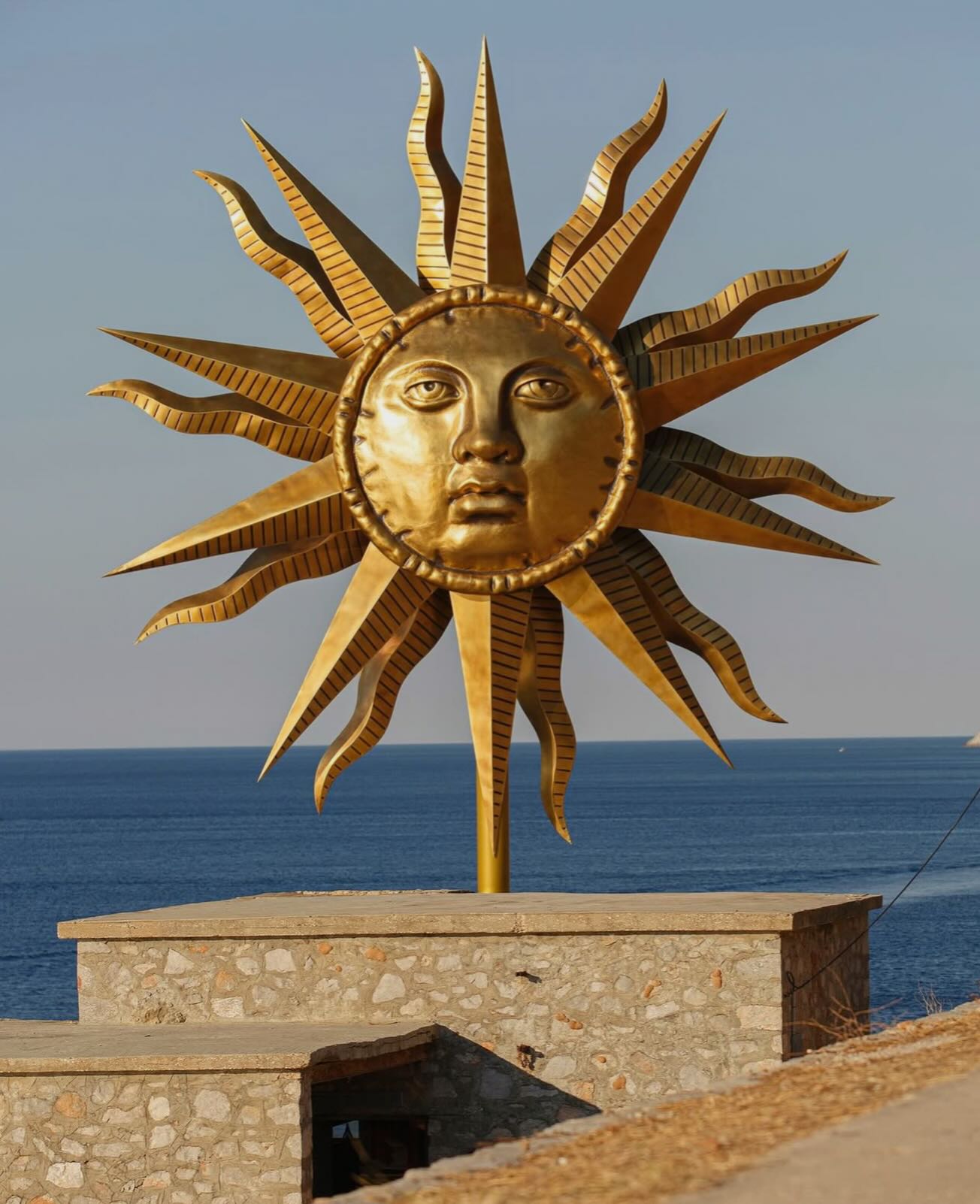
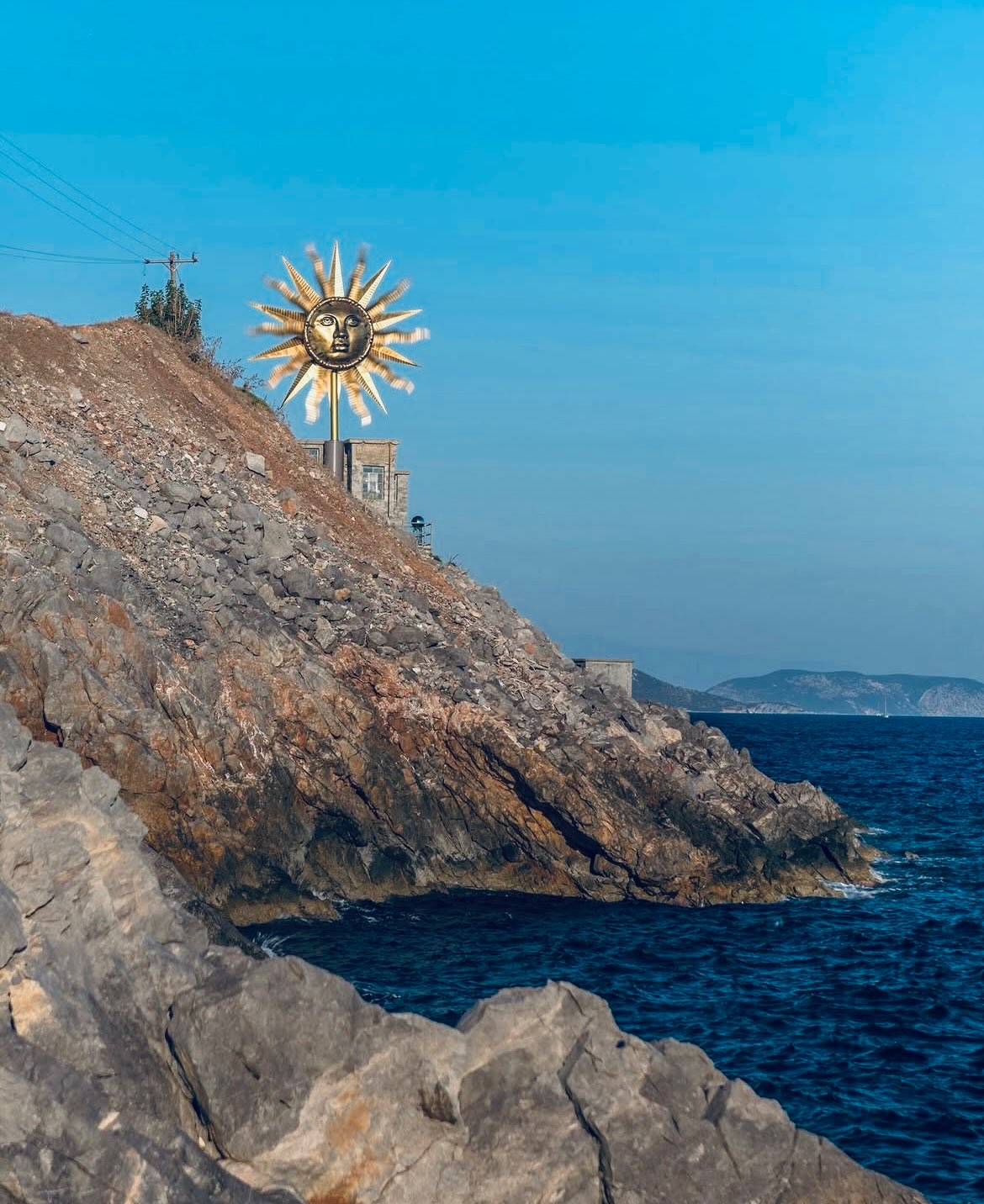
If you have ever been to lovely, car-free and wonderfully quiet Hydra, just a short hop from Athens, you will probably have been greeted by a rather majestic and mysterious sight: a huge golden sun, slowly turning in the Aegean breeze.
@wearegalleria
@wearegalleria
It looks as though it has always been there. But this particular piece of Hydra's landscape is surprisingly young. The sculpture arrived on the island in 2022, created by American artist Jeff Koons as part of a larger exhibition simply called Apollo.
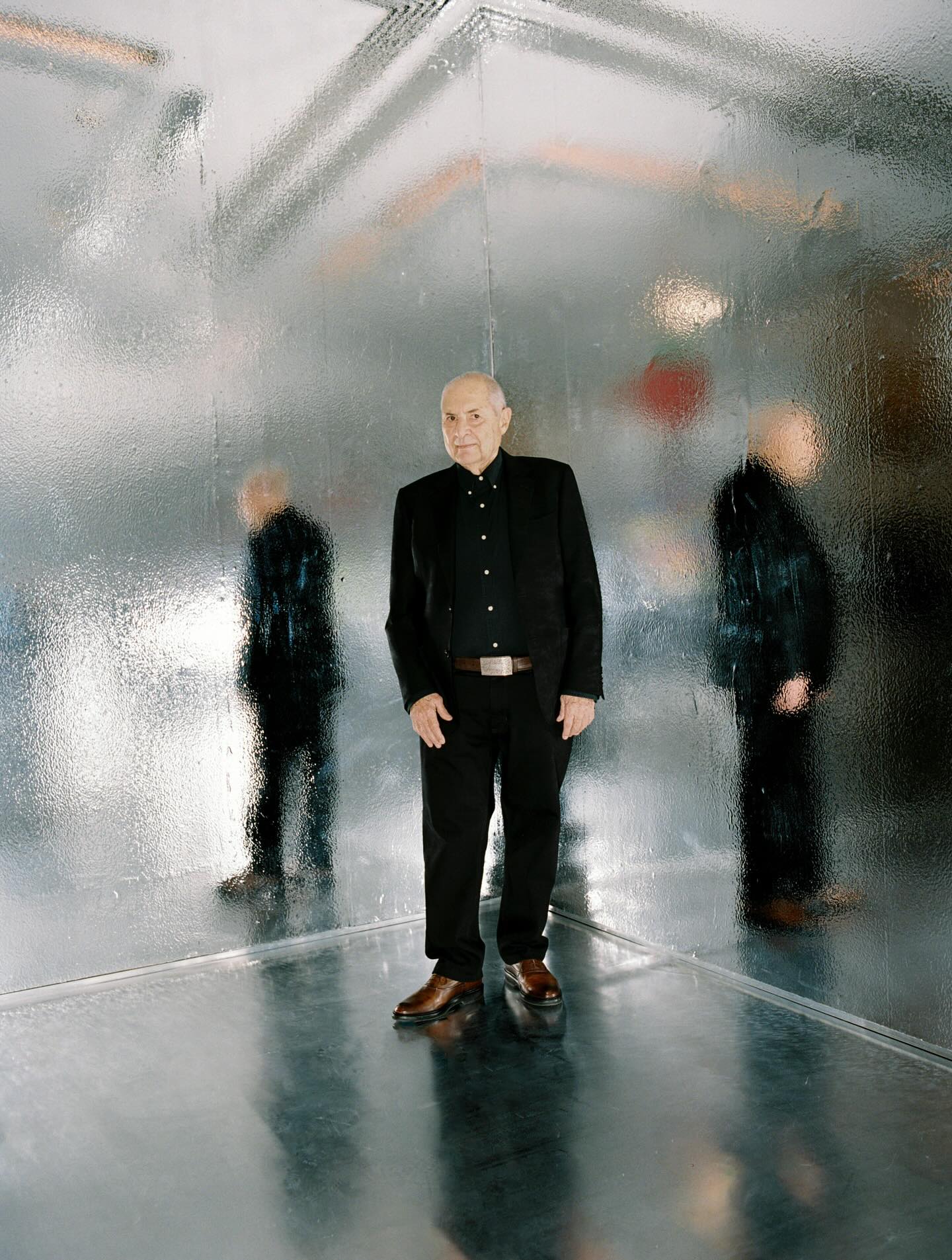
The exhibition was commissioned by the Athens-based DESTE Foundation for Contemporary Art, founded by Greek-Cypriot industrialist, collector and hotelier Dakis Joannou.
@oddamagazine
Each summer, the foundation invites an artist to create a site-specific installation for the old Slaughterhouse on Hydra, now known as the DESTE Project Space Slaughterhouse. The exhibitions are free and open to the public — a rather extraordinary little contemporary-art tradition on an island better known for donkeys, whitewashed houses and swimming in impossibly blue water.
@oddamagazine
Each summer, the foundation invites an artist to create a site-specific installation for the old Slaughterhouse on Hydra, now known as the DESTE Project Space Slaughterhouse. The exhibitions are free and open to the public — a rather extraordinary little contemporary-art tradition on an island better known for donkeys, whitewashed houses and swimming in impossibly blue water.
But how did Jeff Koons, one of the world's most famous and expensive living artists, end up taking over a tiny former slaughterhouse on a Greek island? The answer, rather appropriately, begins with friendship.
Joannou and Koons had been close friends since the 1980s. Yet, despite their friendship, Joannou had never invited Koons to exhibit at the Slaughterhouse. The reason was practical: the project had a very limited budget. Then, over lunch in New York, Koons mentioned that he would love to do the project. Joannou, of course, agreed.
What happened next was rather more mysterious. The exhibition was delayed for two years because of the pandemic, and during that entire time Joannou had virtually no idea what his friend was planning. “I didn’t know anything about it until two hours before the show,” he later recalled. Koons had even asked Joannou's assistant to sign a non-disclosure agreement!
Turned out there was plenty to keep secret.
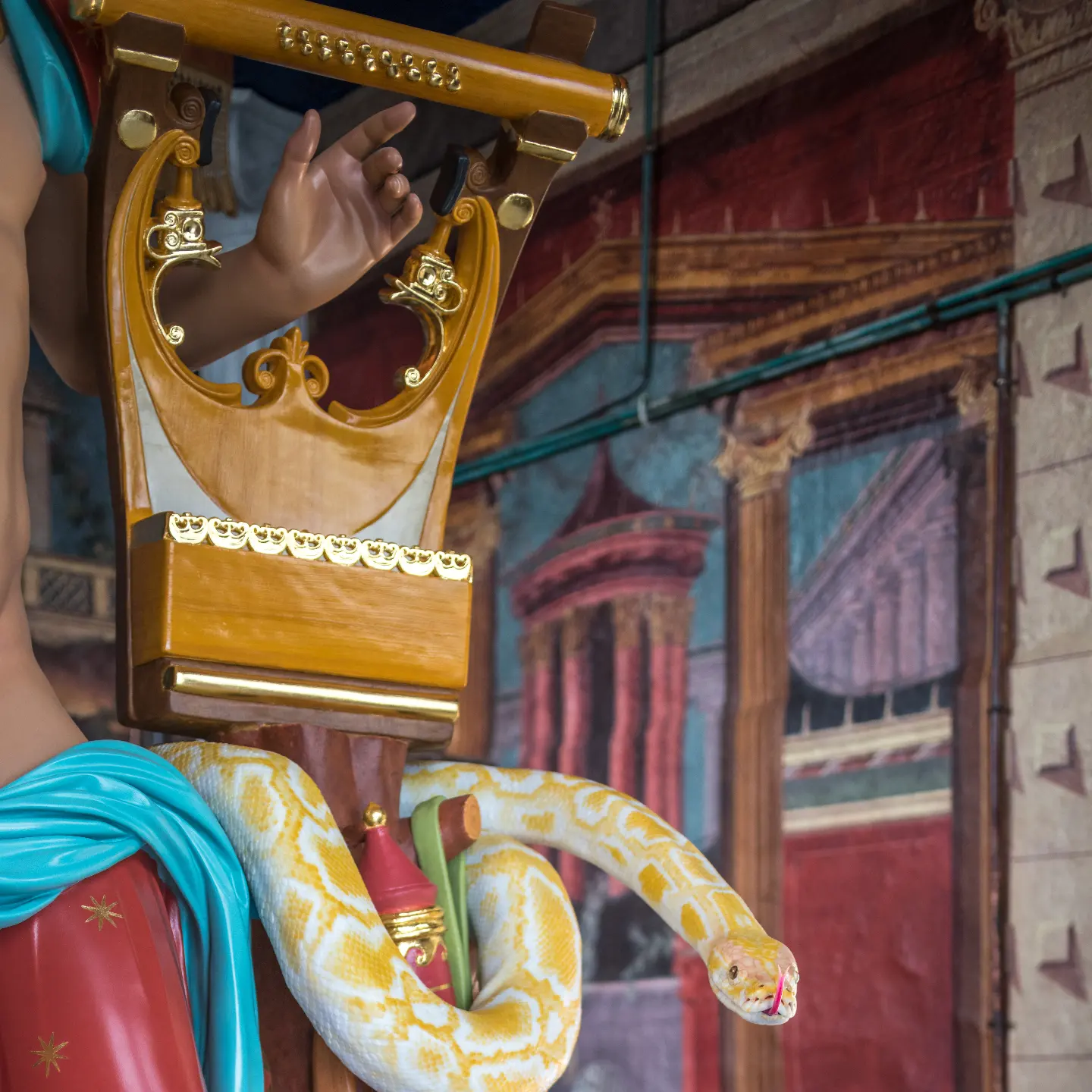
Jeff Koons: Apollo, which ran from 21 June to 31 October 2022, transformed the old Slaughterhouse into a surreal temple to the ancient god. Inside, Koons placed new sculptures alongside wonderfully ordinary, even cheeky contemporary objects, creating a playful dialogue between antiquity and modern life.
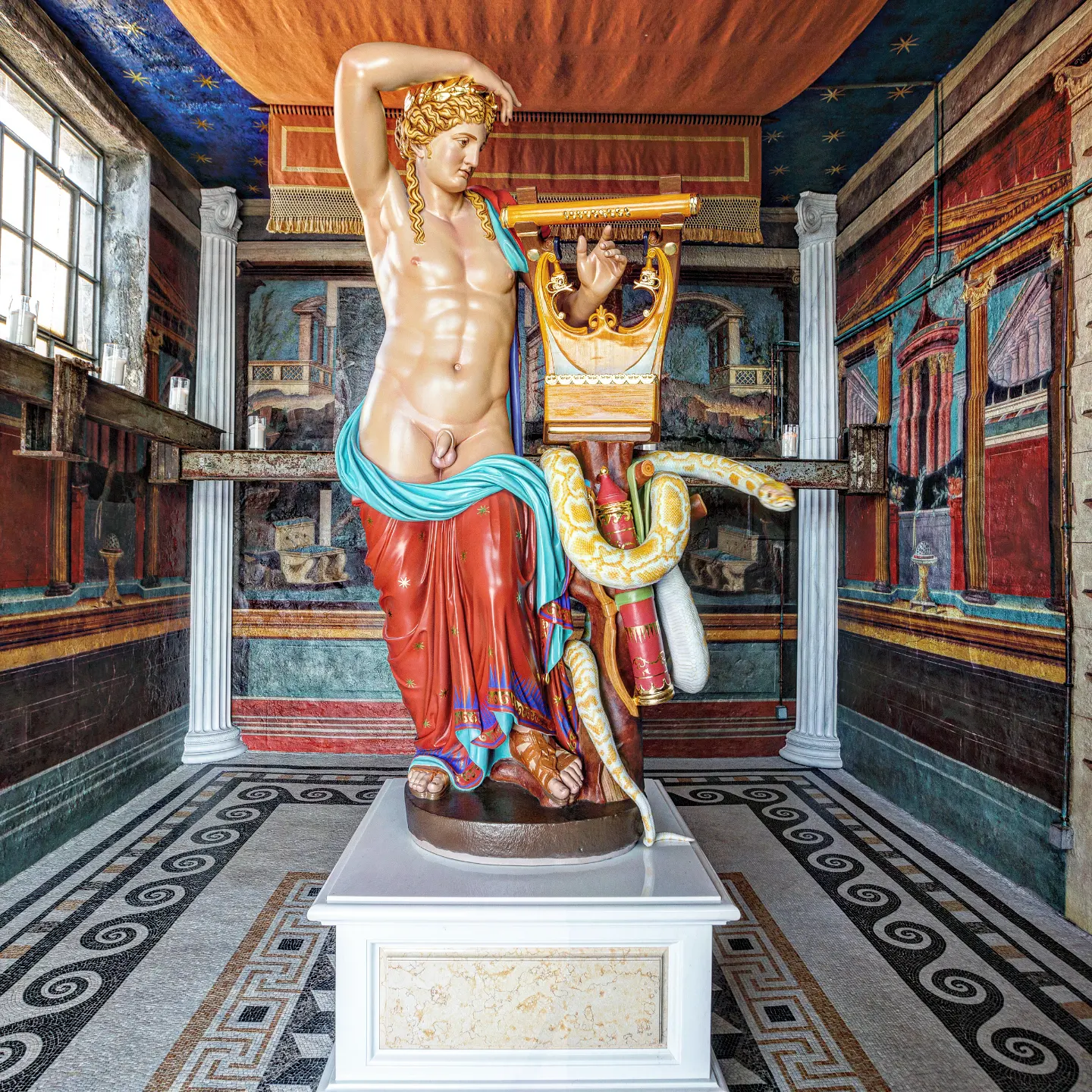
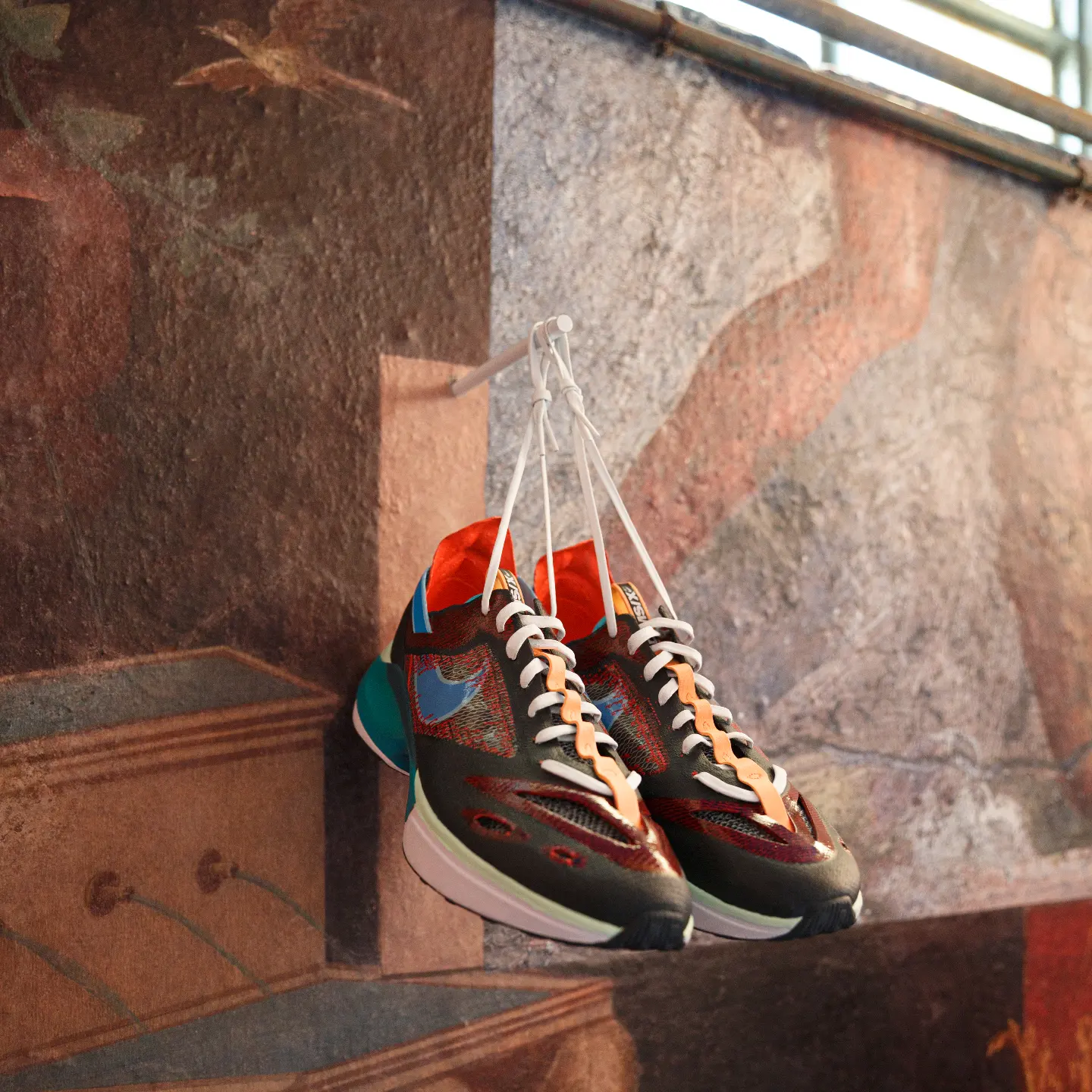
At the centre was Apollo Kithara: a brightly coloured, almost otherworldly Apollo playing the ancient stringed instrument that would eventually evolve into the guitar, accompanied by a remarkably lifelike animatronic snake. Elsewhere stood Gazing Ball Tripod and a pair of Nike trainers recreated in gleaming, polychromed bronze — because if there is one thing Koons enjoys, it is putting the everyday and the extraordinary in the same room.
@destefoundation
@destefoundation
@destefoundation
And then there was Apollo Wind Spinner.
@destefoundation
@destefoundation
@destefoundation
And then there was Apollo Wind Spinner.
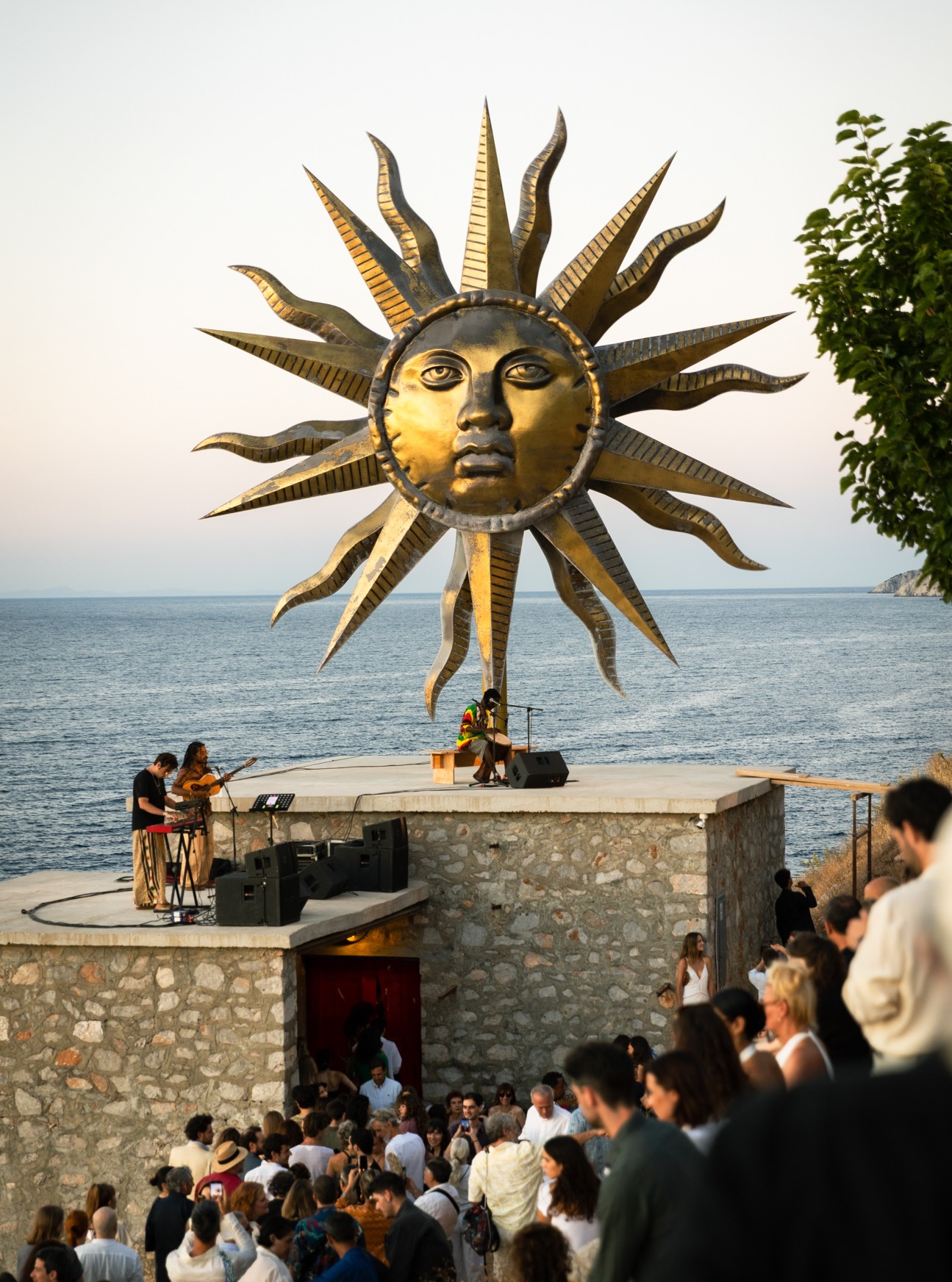
Almost nine metres wide, made from steel and bronze and inspired by the ancient god, the enormous sculpture was designed to move with the wind. Its golden surface catches the changing Aegean light; its face is that of Apollo, the god of beauty and the arts; and its great circular form turns slowly, endlessly.
Apollo Wind Spinner did not leave when the show closed. It remained on Hydra, where it has gradually become something of a landmark, almost a lighthouse for the island.
@lorenzosamper
@lorenzosamper
From the sea, it greets boats and visitors approaching Hydra harbour. From the other side, it welcomes those walking towards the old Slaughterhouse. And somehow, despite its size and unmistakably contemporary pedigree, it does not look out of place, quite the opposite.
The golden sun has slipped surprisingly easily into the visual language of the Greek islands. It catches the Aegean breeze, reflects the changing light, turns with the weather and never quite looks the same twice. One moment it gleams brilliantly; the next, it seems almost muted against the sea and stone.
The sculpture moves with the elements, echoing the slow rhythm of island life, where the sea, the sun and the wind dictate the pace of the day. It is ancient mythology filtered through contemporary art, but also something much simpler: a giant golden object learning, somehow, to belong to its surroundings.
And perhaps that is why Apollo has become more than an artwork. It has become part of the summer landscape itself, one of those images that feels increasingly inseparable from the Greek summer.
@destefoundation
LIFE & CULTURE