

No Meat, No Problem: Discovering Greece, Plant-Based
- by XpatAthens
- Monday, 07 September 2026

“You don’t eat meat? ... Even chicken??"
If you are vegan or vegetarian in Greece, chances are you have heard some version of this question before. Greece is, after all, a country where food is deeply woven into everyday life, family gatherings and long evenings around a table. So it might seem, at first, like giving up meat, dairy or eggs would make eating your way around the country a little complicated.
People might even tell you that it will be difficult.
And then you arrive, sit down at a taverna, order a plate of vegetables, beans, olives and bread — and realise that, actually, Greeks have been eating vegan food their whole lives.
The Mediterranean diet, which Greece is famous for, is centred largely around fresh, plant-based produce.
Vegetables are not simply an afterthought or something placed politely next to a piece of meat: they can be the main event. They appear in salads, pastries, stews, side dishes, dips and enormous plates of food meant to be shared.
Vegetables are not simply an afterthought or something placed politely next to a piece of meat: they can be the main event. They appear in salads, pastries, stews, side dishes, dips and enormous plates of food meant to be shared.
And that makes sense when you look at Greece itself. Stretching across the southern Balkans and surrounded by an extraordinary amount of coastline, the country has developed a cuisine shaped by its geography as well as centuries of cultural exchange, with Italian, Mediterranean, Middle Eastern and Ottoman influences all leaving their mark.
So Greece’s relationship with plant-based eating goes back much further than the current vegan boom.
Long before Christianity, some philosophical and religious groups were already questioning the eating of animals. The followers of Pythagoras, the mathematician and philosopher who lived around 570–495 BC, believed that eating animals was morally problematic, partly because of their ideas about the soul and reincarnation.
So perhaps the idea of avoiding meat in Greece is not quite as foreign as it first appears.
Eating Vegan Without Even Calling It Vegan
One of the most refreshing things about eating plant-based in Greece is that traditional food does not necessarily feel like it needs a label.
During periods of nistia, or Orthodox fasting, plant-based dishes are simply part of the rhythm of the year rather than being presented as a lifestyle choice, a trend or a moral statement. Many traditional Greek dishes are naturally vegan, or can be made vegan with one small adjustment.
Take gemista, for example: tomatoes and peppers stuffed with rice, herbs and spices.
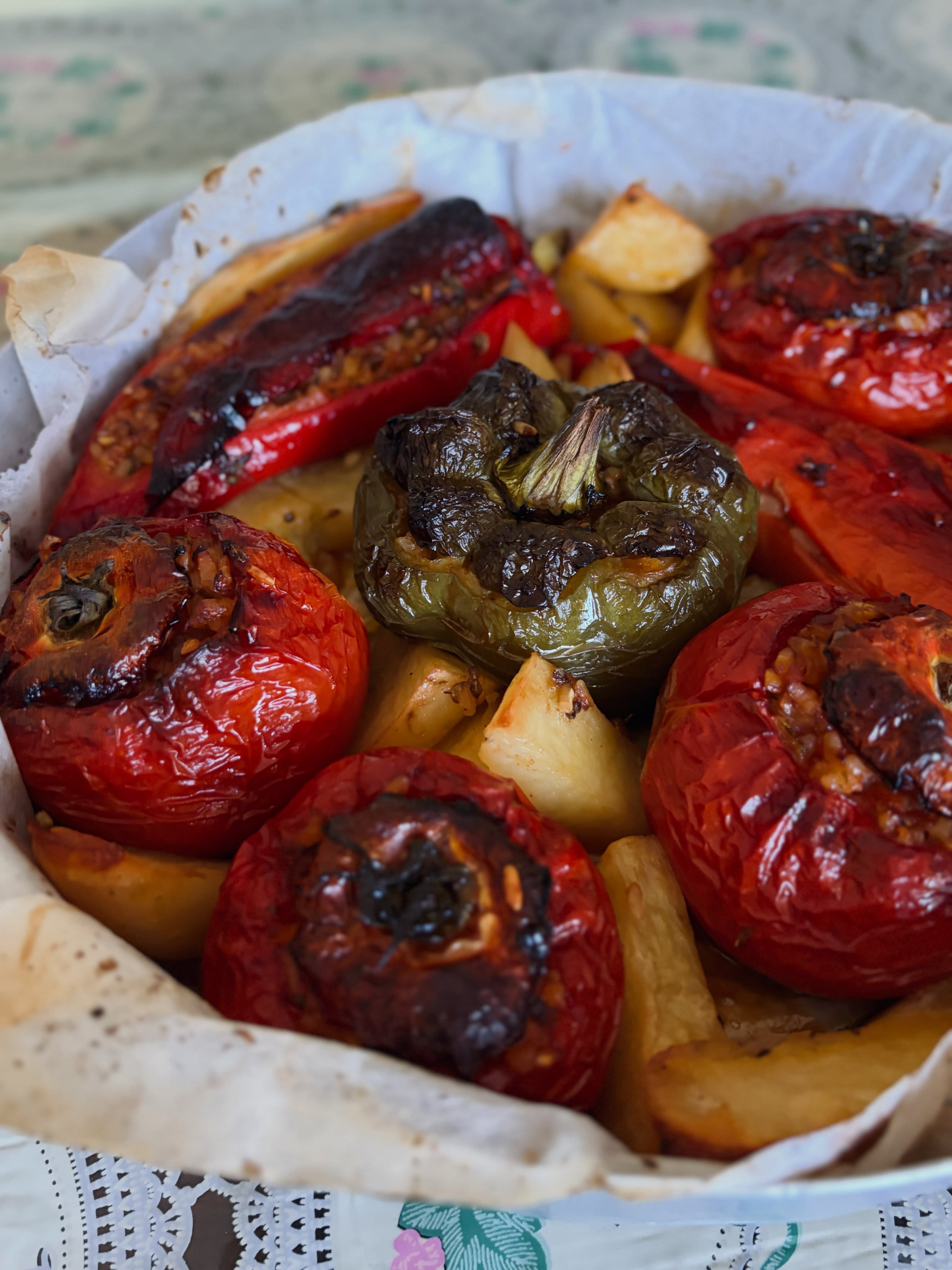
@_sappho_
Fava, a wonderfully creamy yellow split-pea purée served with olive oil, lemon and onions. Dolmades, vine leaves filled with rice and herbs. Or a horiatiki — the classic Greek salad — simply ordered without feta.
@_sappho_
Fava, a wonderfully creamy yellow split-pea purée served with olive oil, lemon and onions. Dolmades, vine leaves filled with rice and herbs. Or a horiatiki — the classic Greek salad — simply ordered without feta.
Then there are the ladera, a whole family of dishes cooked generously in olive oil. Think fasolakia, green beans slowly stewed until wonderfully soft, or briam, Greece’s answer to the ultimate tray of roasted vegetables.
And this is only the beginning.
Fasolada, a hearty white-bean soup with tomatoes, carrots, celery and olive oil, is often described as the “soup of the Greek Gods”. Aginares a la Polita combines artichokes, potatoes, carrots, lemon and dill, while imam baildi turns aubergines, onions, garlic and tomatoes into a rich, comforting dish that only needs the feta left off to become vegan.
And then there is revithada: chickpeas baked slowly with lemon, garlic and onion for three or four hours. On Sifnos, the dish is so beloved that it even has its own traditional clay cooking pot.
In other words, if you are looking for vegan food in Greece, you do not necessarily have to look for food invented for vegans.
The Secret Word: Nistisimo
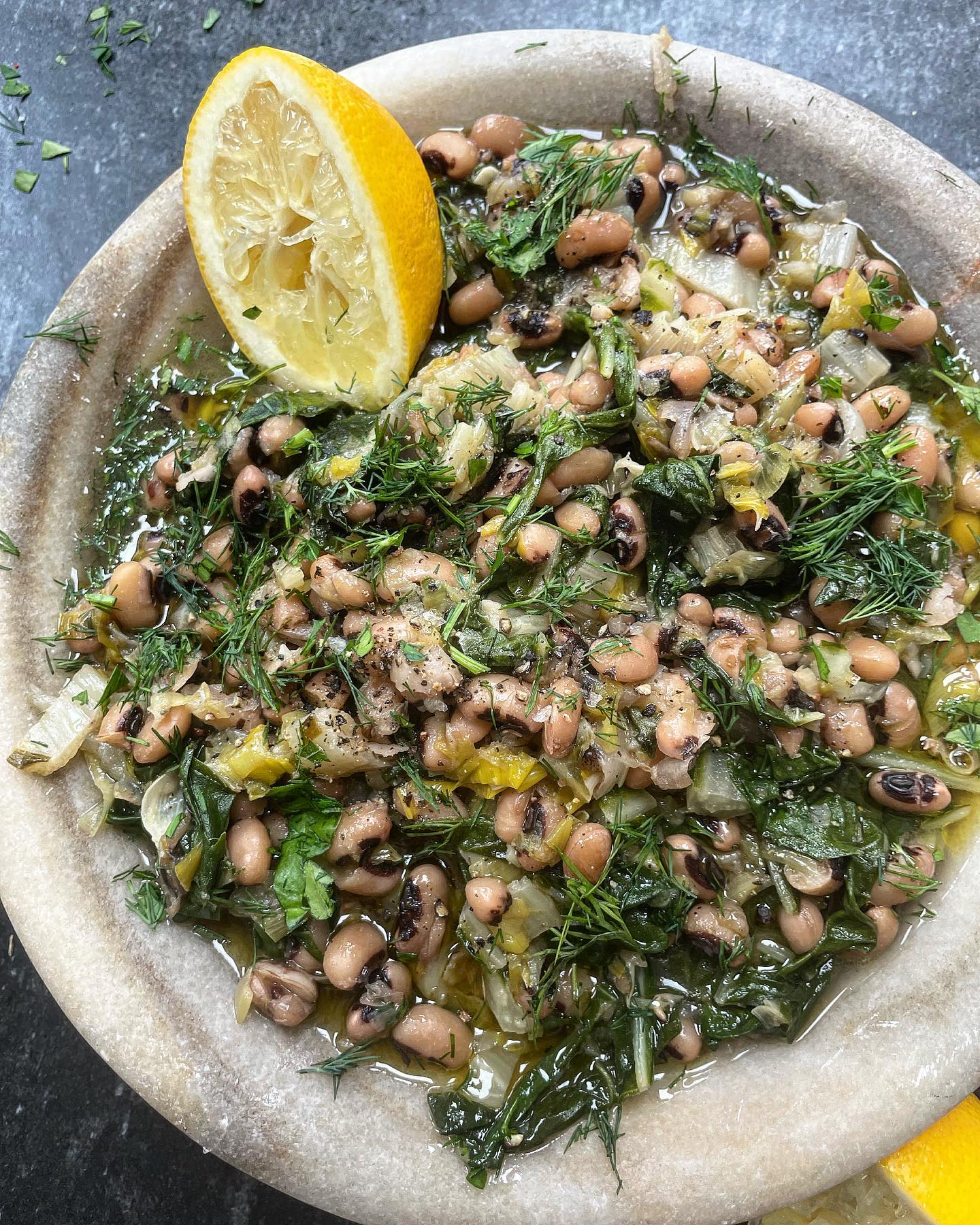
@georginahayden
@georginahayden
There is another reason Greece can be unexpectedly easy to navigate as a vegan: Orthodox fasting.
The Greek Orthodox calendar includes several periods of fasting, with particularly strict restrictions around Lent. During these periods, meat, dairy and eggs are traditionally avoided, and depending on the day, even olive oil and fish can be excluded. Wednesdays and Fridays are also traditionally associated with fasting.
As Easter approaches, the country enters a period known as nistia. For roughly six weeks, many Greeks give up meat, dairy and eggs. Restaurants and tavernas may mark suitable dishes as nistisimo — essentially, food that complies with the fasting rules.
And suddenly, being vegan does not sound quite so unusual.
Beans, vegetables, grains, nuts, seeds and fruit become the centre of the plate, drawing on ingredients that have been part of Greek cooking for centuries. For around forty days every year, Greece quietly becomes one of the most vegan-friendly places around — without necessarily calling itself vegan.
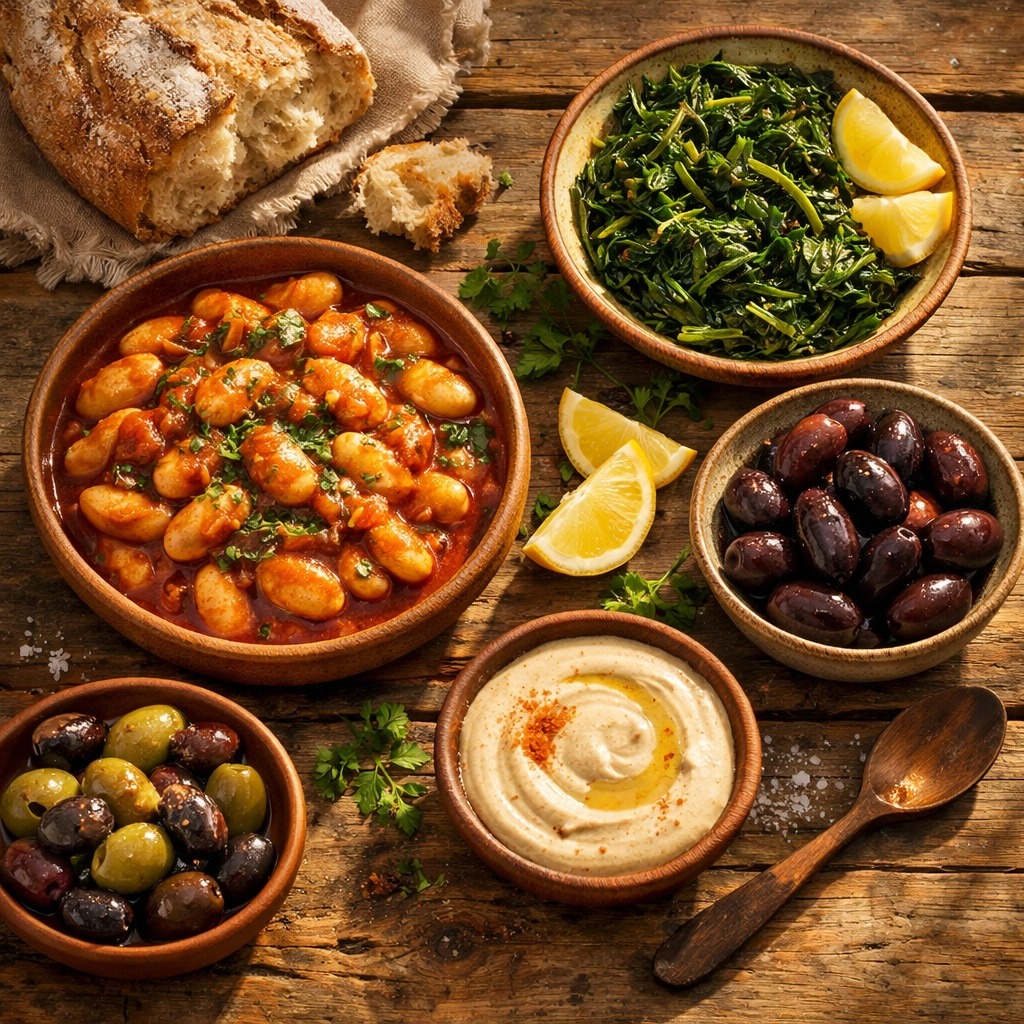
@cyprustastetours
So… Is Greece Actually Vegan-Friendly?
@cyprustastetours
So… Is Greece Actually Vegan-Friendly?
Surprisingly, yes.
According to figures cited from the UK-based Vegan Society, Greece ranks tenth worldwide for vegan dining options per capita, with around 218 vegan dining options per million people. This is particularly striking when only around two per cent of Greeks identify as vegan and four per cent as vegetarian. Tourism undoubtedly plays a part: as more visitors arrive looking for plant-based options, restaurants have adapted.
Athens, in particular, has seen a rise in vegan-friendly cafés and restaurants. Areas such as Exarchia and Psyrri have several plant-based spots, while even more traditional tavernas will often have nistisimo dishes if you know what to ask for.
And if you are craving something a little more familiar, dedicated vegan restaurants are increasingly easy to find. In Athens, places such as Cookoomela Grill, Vegan Beat, Mama Tierra and Veganaki offer everything from vegan gyros and souvlaki to burgers, wraps and gluten-free options.
The islands have their own plant-based treasures, too. Santorini has its famous fava, tomato fritters and fresh salads; Crete offers dishes such as dakos; Naxos and Paros are known for their produce and increasingly creative vegan versions of Greek classics; and cosmopolitan Mykonos has no shortage of restaurants catering to plant-based travellers.
There is, however, one important caveat.
Greece is not uniformly vegan-friendly in quite the same way some northern European capitals have become. You are unlikely to find a dedicated plant-based menu in every mountain village, and explaining that you do not eat cheese may still earn you the occasional look of genuine confusion.
Supermarkets can also be a slightly different story. Compared with other European capitals, where plant-based alternatives such as soya steaks, vegan cheeses and meat substitutes have become increasingly commonplace, Greek supermarkets have traditionally offered fewer of these products. That is changing, particularly in larger cities, where oat and almond milk, soya yoghurt, vegan spreads, tofu and meat alternatives are becoming much easier to find.
Which is perhaps the best of both worlds: the very modern world of vegan feta and plant-based burgers alongside the incredibly old-fashioned pleasure of eating tomatoes, beans, aubergines and olives that barely need any replacing at all.
And on the islands, it can still be a little more complicated. Dedicated vegetarian options are not necessarily available everywhere, so sometimes you have to get creative with what is already on the menu.
Luckily, Greek cuisine is rather good at this.
Just ask!
One of the easiest tricks is simply to ask for modifications.
A Greek restaurant may not have a vegan menu, but that does not mean there is nothing for you to eat. A traditional dish can often be adapted surprisingly easily: a mezze plate can become a feast of hummus, olives and grilled vegetables; a salad can lose its feta; and dishes traditionally served with meat can sometimes be prepared without it.
Vegetarians may have an even easier time.
There are the endless appetiser options: tzatziki, melitzanosalata, tyrokafteri, bouyiourdi, saganaki and all sorts of cheese-based little plates designed to be shared over drinks. Then come the legumes — giant beans, lentil soup and chickpea dishes — which are some of the most satisfying options on a Greek table.
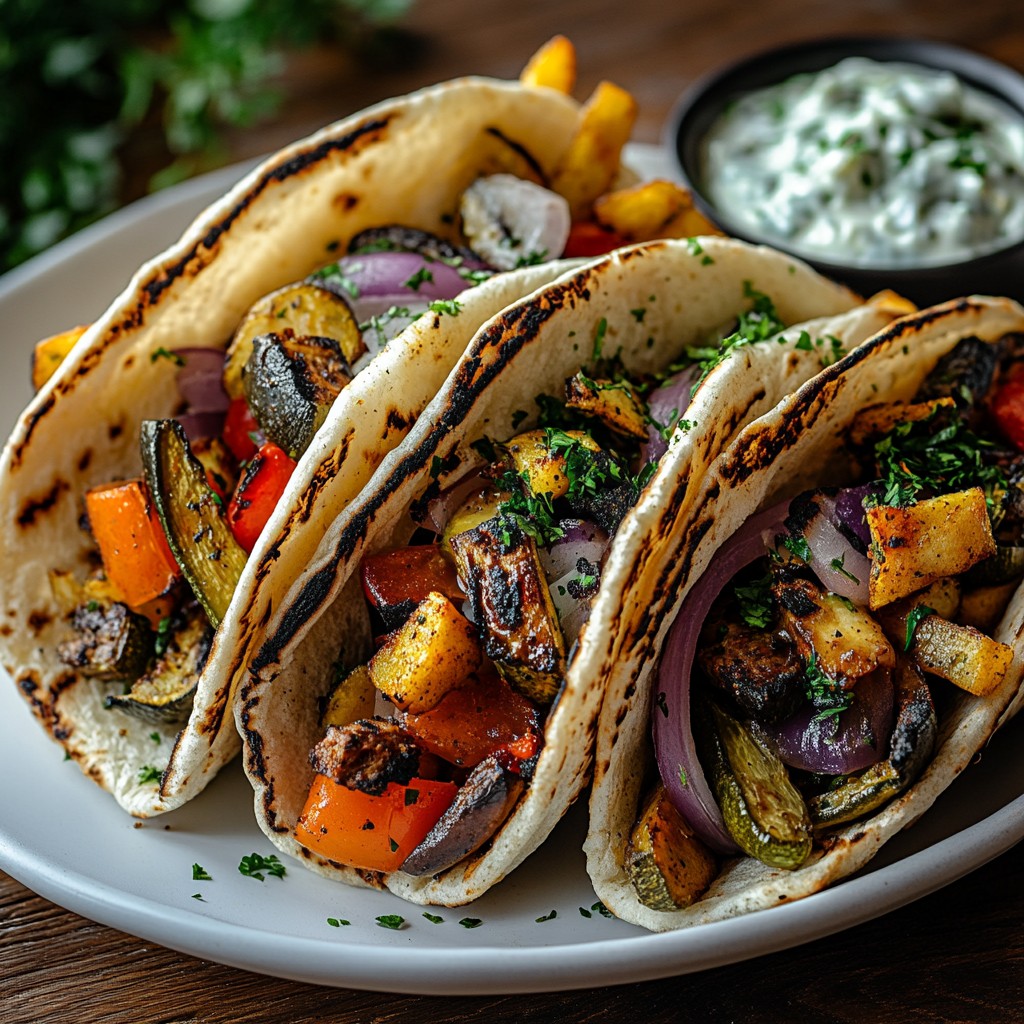
@vegan_prospect
@vegan_prospect
And yes, vegetarian gyros are everywhere. They might come with falafel, vegetable patties, grilled cheese or another meat substitute instead of the traditional filling. More meat-heavy classics can be harder to find in vegetarian form, though. Moussaka, for instance, is not always easy to track down without meat — although vegetarian versions do exist.
In other words, being vegetarian in Greece is rarely about going hungry. It is more about knowing when to ask, what to ask for, and occasionally being willing to turn a selection of appetisers into your main course.
A Little Greek Vocabulary Goes A Long Way
If you are worried about getting lost in translation, two phrases will take you surprisingly far:
“Den troo kreas, gala, avga.”
Δεν τρώω κρέας, γάλα, αυγά.
I don’t eat meat, milk or eggs.
Δεν τρώω κρέας, γάλα, αυγά.
I don’t eat meat, milk or eggs.
“Echete nistisima fagita?”
Έχετε νηστίσιμα φαγητά;
Do you have fasting/vegan dishes?
Έχετε νηστίσιμα φαγητά;
Do you have fasting/vegan dishes?
But there is also another strategy that requires absolutely no Greek at all: head to the laiki agora.
Start At The Market
Greek farmers’ markets are a vegetarian’s dream. The laiki agora is where you can stock up on fresh fruit and vegetables, nuts and olives — particularly useful if you are staying somewhere with a kitchen.
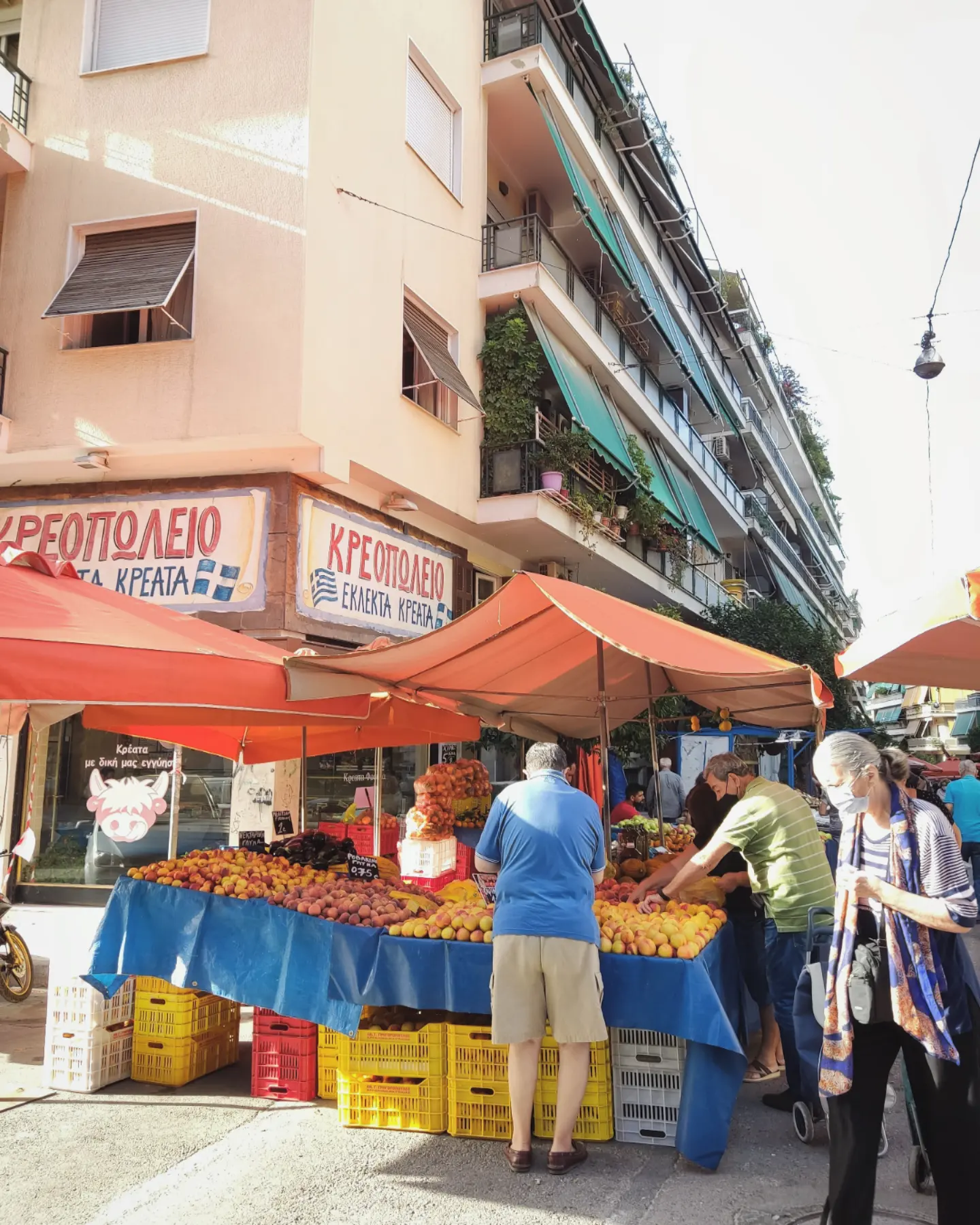
@girisyagohan
@girisyagohan
In conclusion, don't worry about your diet in Greece: the food is abundant, colourful and — most importantly — social. Here, eating is rarely just about what is on your plate. It is about sitting outside, taking your time, ordering another little plate for the table and letting lunch become dinner before anyone notices.
LIFE & CULTURE