
XpatAthens

XpatAthens

There’s a particular kind of tired that a normal holiday doesn’t touch.

Not the “I need sunshine and a lie-in” kind.

The kind where you’re holding everything together for everyone else… and what you really crave is quiet. Space. A chance to hear yourself think again.

That’s where a solo retreat comes in.

A solo retreat isn’t “travelling alone”. It’s not about being brave, or proving you can do it. It’s about choosing supported solitude — a retreat experience designed around you, with the space to rest, reflect, and reset without the social pressure of a group.

Why People Choose A Solo Retreat (The Real Reason Behind It)

Most people don’t book a solo retreat because they want to be alone.

They book because they want to feel like themselves again.

A solo retreat can be the right choice when:
  • You’re burnt out and you don’t want to be “on” for anyone
  • You’re in a transition (a breakup, grief, menopause/perimenopause, a career shift)
  • You’re carrying decision fatigue and you need clarity
  • You’re craving a reset, but group dynamics feel like too much right now
  • You want support… but you also want privacy
A solo retreat is often what you choose when you’re ready to listen to yourself again.

The Benefits Of Doing A Retreat On Your Own

1) You can finally exhale
Without the subtle pressure to socialise, compare, or keep up, your nervous system can downshift properly. You stop performing. You start recovering.
2) The experience is built around you
Your pace. Your energy levels. Your needs. Your boundaries.
A solo retreat gives you the freedom to rest when you need to rest — and to go deeper when you feel ready.
3) You get depth, not just inspiration
Group retreats can be powerful, but solo retreats often go deeper because there’s more space for reflection and one-to-one guidance.
4) You don’t have to be “good at retreats”
You don’t need to be flexible, extroverted, spiritual, chatty, or confident.
You can arrive exactly as you are.
5) It can be the gentlest way to try a retreat for the first time
If you’ve been curious about retreats but worry about fitting in, being the “odd one out”, or feeling awkward in a group — a solo retreat removes that fear completely.

Solo Retreat vs Group Retreat: What’s The Difference?

Both can be life-changing — they just change you in different ways.

Group retreats are brilliant when you want…
  • Community and shared energy
  • Motivation and momentum
  • A set schedule that carries you
  • The “we’re in this together” feeling
  • A more budget-friendly option (often)
Solo retreats are ideal when you want…
  • Privacy, quiet, and space to think
  • A programme tailored to your body and mind
  • One-to-one guidance (or a lighter-touch supportive container)
  • Flexibility — less pressure, more breathing room
  • A retreat that fits your season of life
A group retreat can change you through connection. A solo retreat can change you through clarity.

“But Will I feel Lonely?”

It’s a fair question — especially if you’re used to being surrounded by people.

But a solo retreat isn’t being left alone to figure it out.

It’s choosing solitude with support.

And often, what people discover is this:

Lonely is being surrounded by noise and still not feeling heard. A solo retreat is the opposite.

About the Author

Gilly Gwilliams is the founder of Retreats in Greece and Evexia Wellness on the island of Kos. A passionate wellness seeker, she is on a mission to showcase Greece as a leading wellness destination while helping people reconnect with themselves through meaningful retreat experiences. Inspired by her own journey through health challenges, Gilly believes in the power of holistic wellbeing, purposeful living, and creating space for personal transformation. Originally from the UK and now living in Kos with her husband, two dogs, and a lively collection of animals, she combines her love of Greece, nature, and wellness to help others live healthier, happier lives.

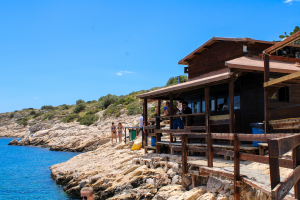
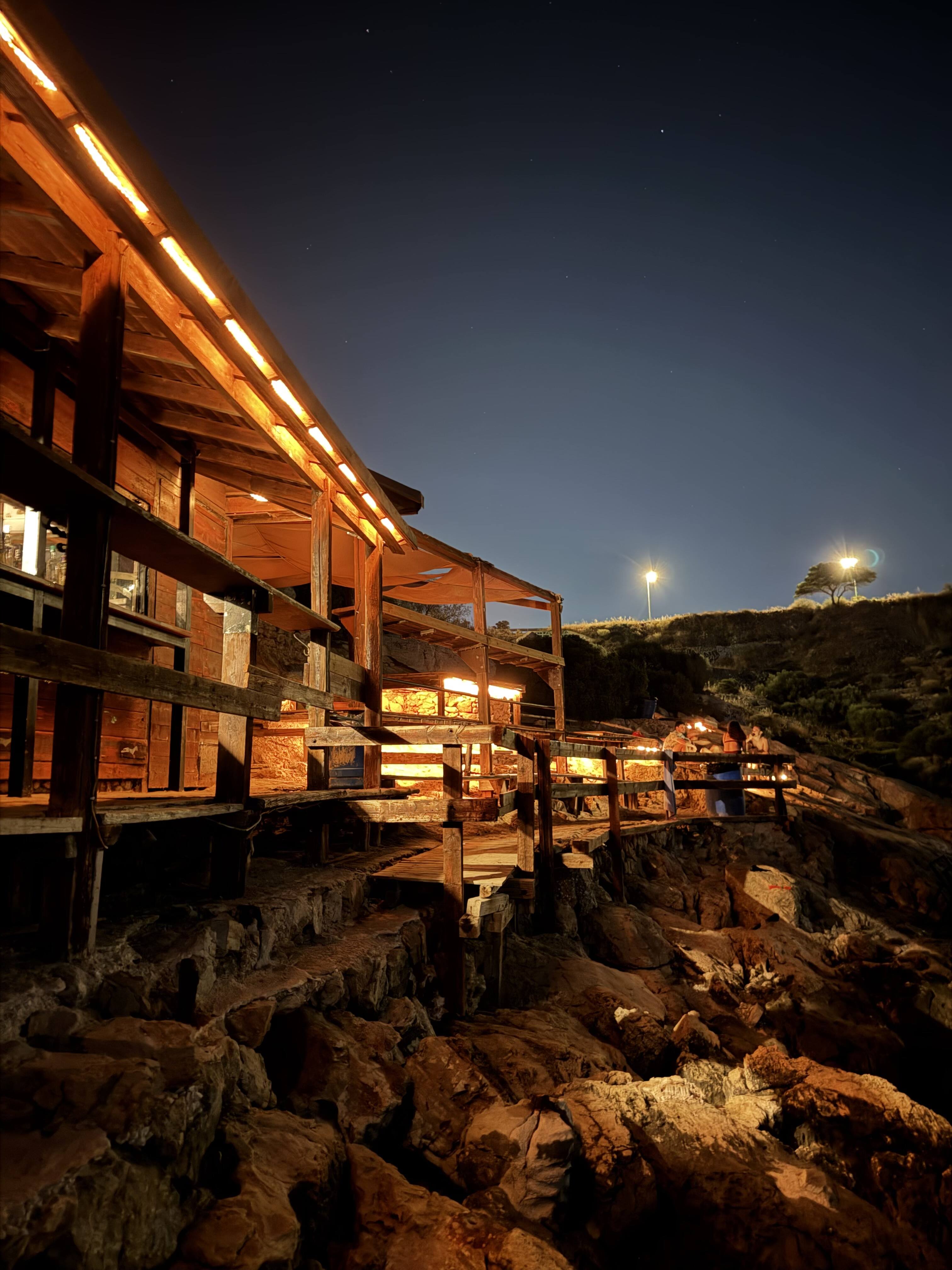
There are places in Athens that make you feel like you have briefly escaped the city. Limanakia Beach Bar is one of them.

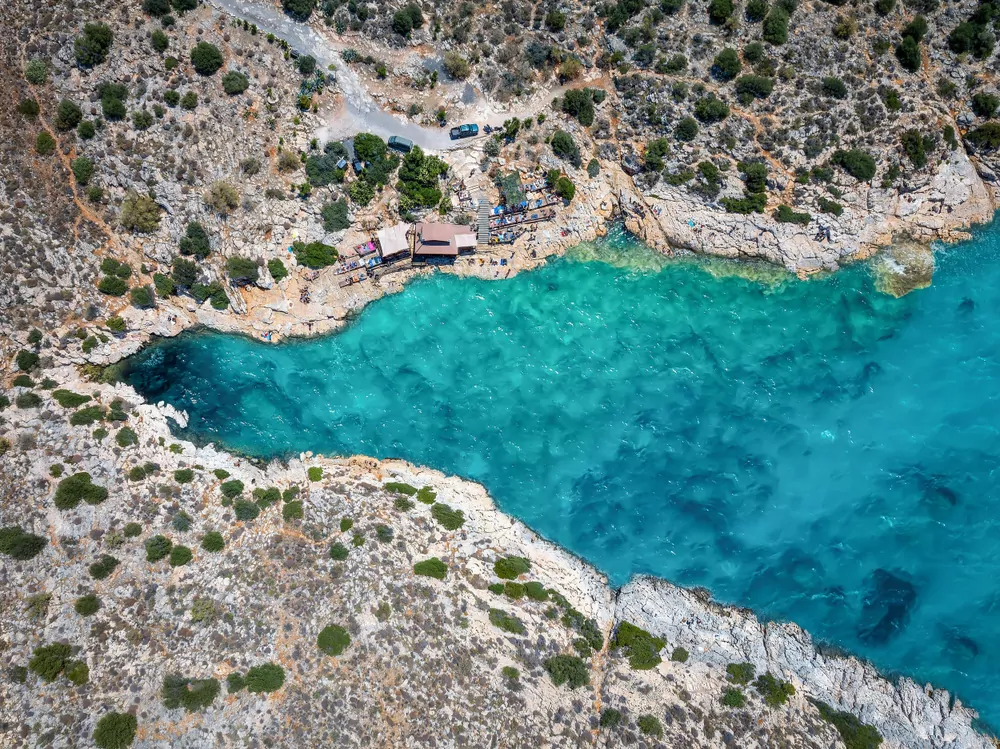
Located at the A' Limanakia of Vouliagmeni, right by the sea, Limanakia has been part of the Athenian Riviera since 1969. With 57 years of history, it is one of those rare summer spots that has managed to remain genuinely timeless. And while Vouliagmeni already has that wonderful feeling of being a little removed from the city, almost like an island within Athens, there are not many places quite like Limanakia.

IMG 4047

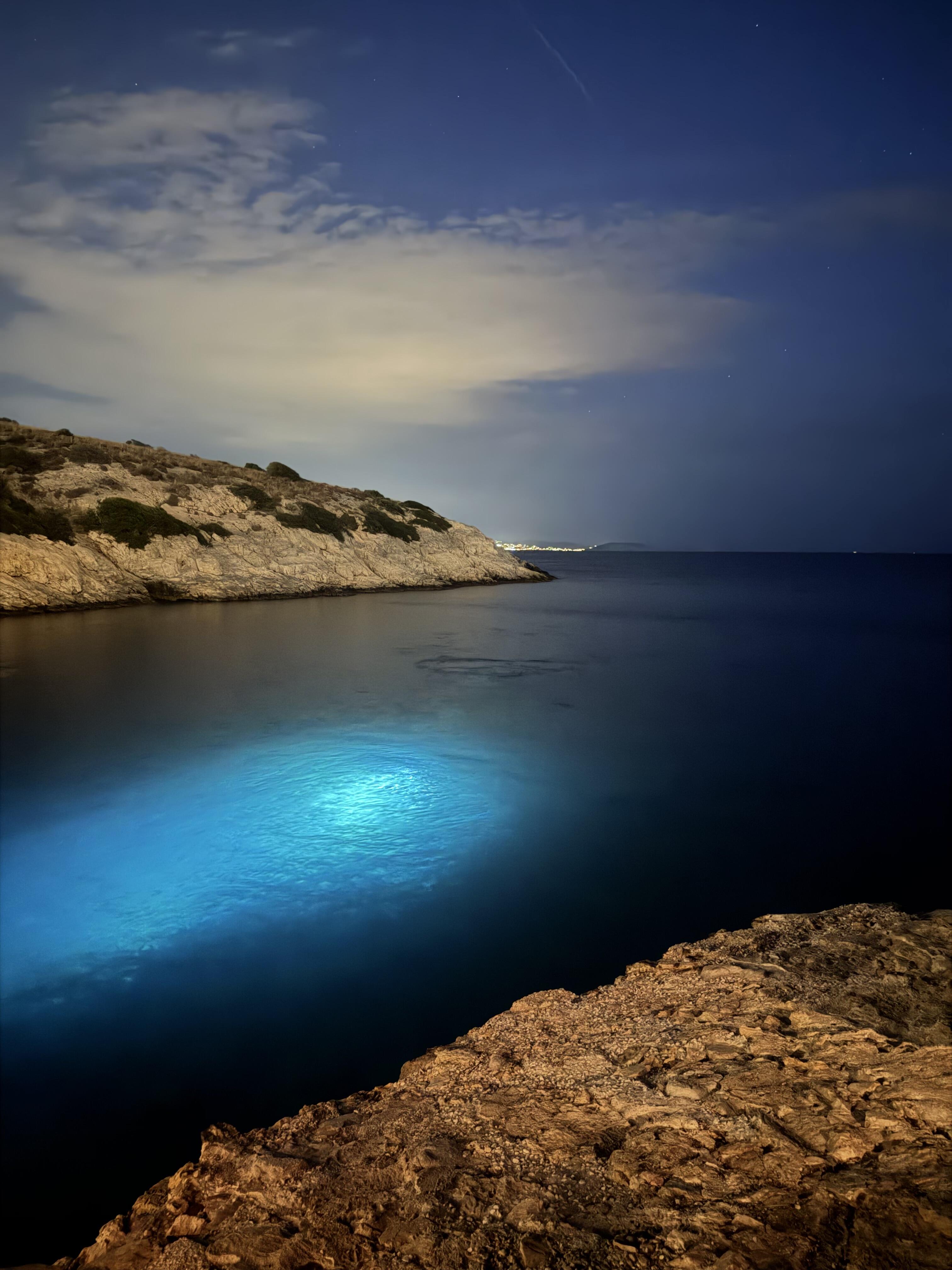
What makes the setting so special is how close you are to the water. The seating area is essentially right above the sea, on what feels like a small wooden pier, meaning you are completely connected to your surroundings. You can sit with your coffee, look out at the water and quite literally feel the sea beneath you. It is peaceful, refreshing and the perfect setting for a slow summer day.

207B3871 1D15 4153 BEB6 7A2B543BB5ED 2

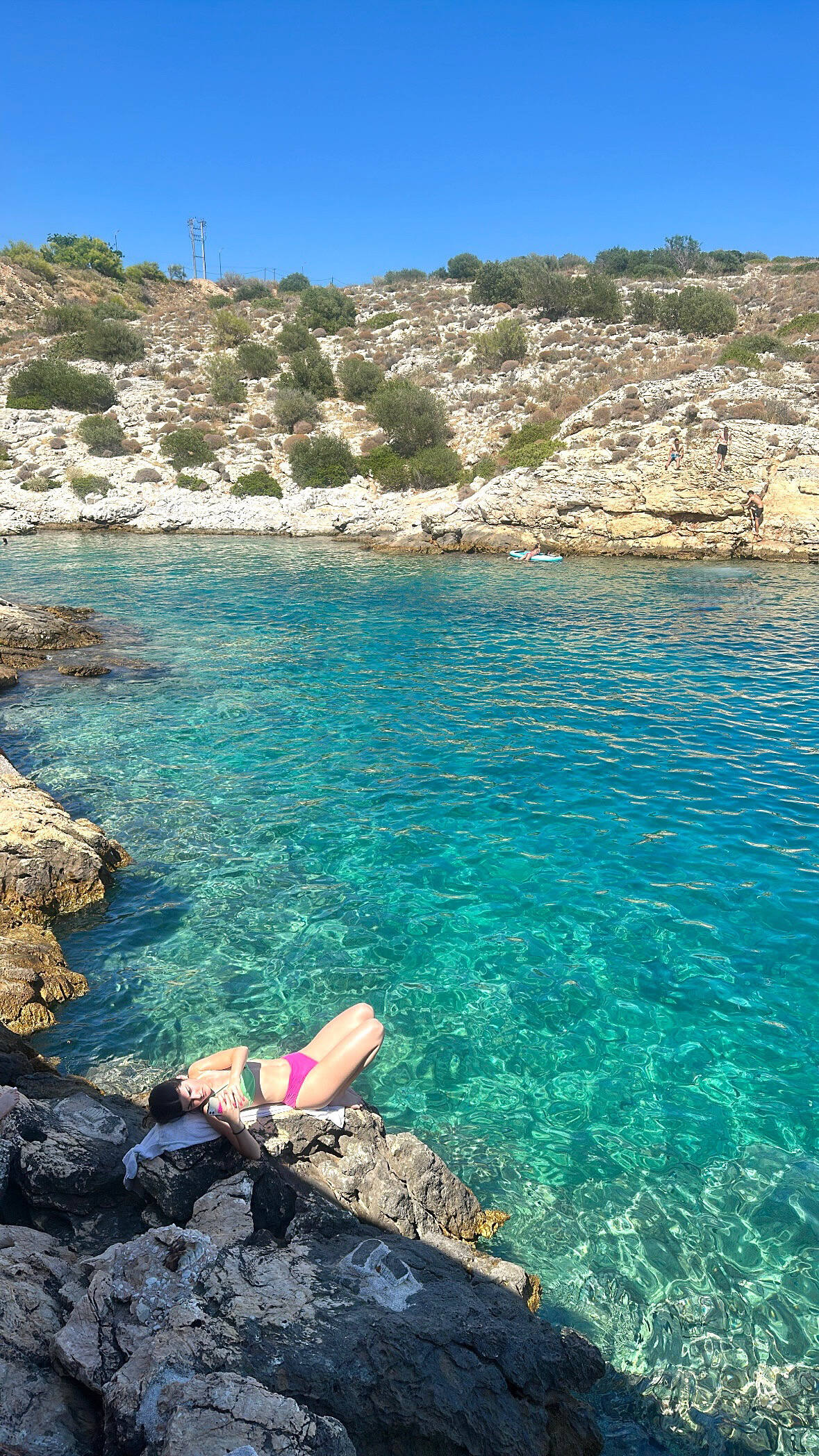
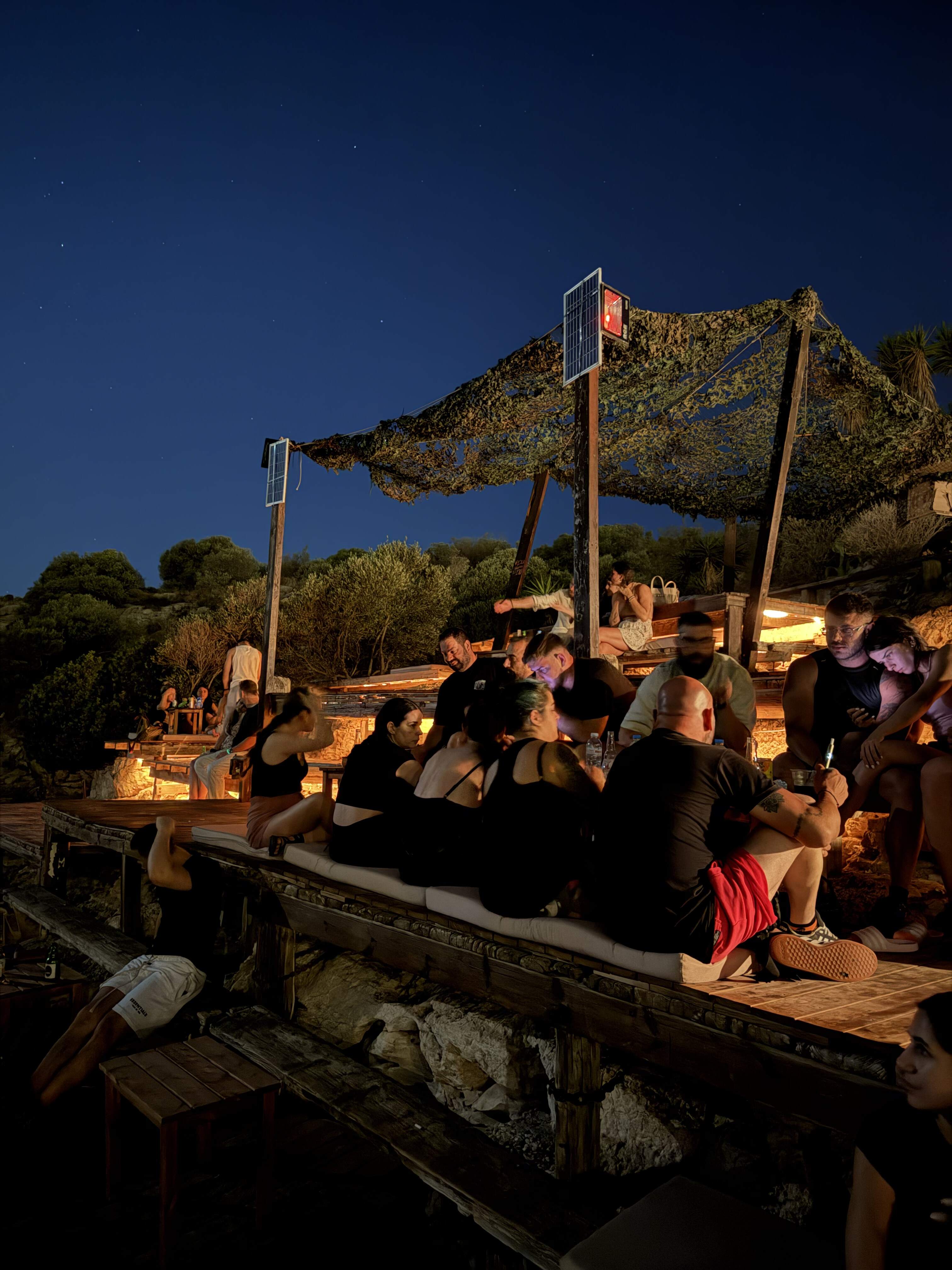
And that is exactly what makes Limanakia beach bar so easy to enjoy. You can arrive in the morning, go for a swim, grab a coffee or a refreshing drink and spend some time by the water. Later, as the day starts to wind down, the atmosphere naturally shifts. By the evening, you can sit back with a drink, enjoy the music and take in the sea views as the sun goes down.

IMG 4710 2

The overall atmosphere is incredibly relaxed. The music creates the perfect soundtrack without ever taking over the space, and the vibe is genuinely chill, easy-going and unpretentious. You can have a conversation, enjoy your drink and simply let the day unfold. It is the kind of place where you might plan to stay for an hour and, before you know it, you have spent the entire afternoon there.

There is also something particularly special about the story behind Limanakia. This is a four-generation family business, passed down from one generation to the next. Despite its refreshed aesthetic and philosophy, the space has remained connected to its history and original identity. That balance between the old and the new is part of what gives Limanakia its character.

IMG 4519 2

When we visited, Pola and Aldo made us feel genuinely welcome from the very beginning. There is a warmth and friendliness to the place that makes you immediately feel comfortable. They are more than happy to welcome you, show you the Limanakia experience and make sure you feel at home by the sea. And honestly, that personal touch adds to the relaxed atmosphere of the whole place.
 
In a city as busy as Athens, finding a place that allows you to slow down like this is always a little special. Add the location, the music and the relaxed atmosphere, and Limanakia really does feel like a small island escape without ever leaving Athens.

IMG 4698 2

Whether you are looking for a peaceful morning by the sea, a relaxed afternoon or a chilled evening drink with good music, Limanakia Beach Bar is one of those places in Vouliagmeni that is well worth discovering, and perhaps even more worth returning to.
 
Authentic Athens & Parkside Living

Located just off Evelpidon, on the quieter side of Kypseli, this 64 sqm mezzanine apartment sits directly opposite Pedion tou Areos—one of Athens’ largest and most beautiful green spaces.

The location offers a rare balance of nature and authentic Athenian city life. Step outside and you’re immediately in the park, ideal for morning walks, outdoor yoga, or bike rides. Within a 10-minute walk, you’ll reach the vibrant pedestrian street of Fokionos Negri, known for its lively mix of cafés, restaurants, and bars. Nearby, the Kypseli Municipal Market hosts a dynamic calendar of events—from local farmers’ markets to cultural festivals such as the Beer Festival and Ethiopian New Year celebrations.

Known for its creative spirit, Kypseli is one of Athens’ most culturally rich neighbourhoods, offering a vibrant mix of theatre, live music, and grassroots events just moments from your doorstep.

The apartment was refurbished this year, blending an old-school Athenian aesthetic with modern comfort. Curated with restored vintage pieces from my grandparents’ collection, it includes a 1950s TV, a 1960s typewriter, and a handmade 1970s wooden linen cupboard, giving the space a strong sense of character, history, and warmth.

The apartment includes:
  • 1 bedroom with a double bed
  • 1 bathroom
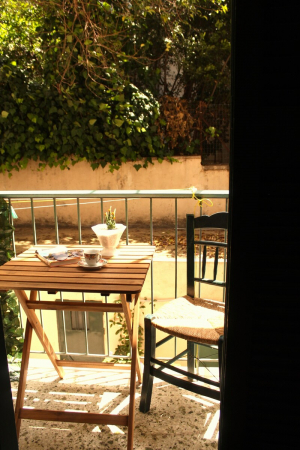
  • A kitchen with balcony access
  • A comfortable living area
  • A dedicated workroom with fast, reliable WiFi (ideal for remote work)
Pet-friendly—furry companions are welcome!

This home is best suited for expats or digital nomads seeking mid- to long-term stays (3+ months), as well as couples or retirees relocating to Athens who need a comfortable and welcoming base while finding their permanent home.

An ideal choice for those looking to experience a more authentic, lived-in side of Athens—whether through its café culture, creative community, or the everyday rhythm of the neighbourhood.

Prices from €850/month (bills included), with discounts available for longer stays.
What happens when one of the world's most famous islands becomes the subject of a documentary that looks beyond its glamorous image? Super Paradise - The Story of Mykonos takes audiences on a captivating journey through the island's remarkable transformation, from a quiet Cycladic fishing community to an international symbol of freedom, culture, luxury, and reinvention.

Ahead of the special open-air screening at STOA Culture on Saturday, July 18, at 9:00 PM, we spoke with Paul Typaldos, producer, screenwriter, and the creator of the documentary's original concept, about the inspiration behind the film, the stories that shaped it, and what he hopes audiences will discover about the real Mykonos beyond its iconic reputation.

Whether you're fascinated by Greek history, documentary filmmaking, or simply curious about the island's extraordinary evolution, the film offers a fresh perspective on one of Greece's most talked-about destinations.

MYK S DOUKAS 0574 2
Image credit: Steve Krikris


Ready to experience the untold story of Mykonos? Click here to secure your tickets for the screening at STOA Culture on Saturday, July 18th!


Before we dive into the film, could you tell our readers a little about yourself and your journey into filmmaking? What first drew you to documentary storytelling?

I am Greek American and was originally born in New York. I have always been interested in film and photography, and in the early 2000s, I decided to make a radical change. I was living in New York at the time, and it got into my head that I wanted to go to film school. But I have always been inspired by different points-of-view, and so, instead of following a traditional route, I packed my bags and moved to Buenos Aires where I attended the Universidad del Cine. My experiences in Argentina and in Latin America opened my eyes to the possibilities of documentary storytelling as a form. What really captured my imagination is how documentary films can shine a light on unknown places, unknown people and unknown stories. At another level, what is really inspiring is that you don’t need a massive crew, you don’t need infinite amounts of money, you just need curiosity and to be willing to “let go” of the illusion that you can control what unfolds at a story level.

Super Paradise - The Story of Mykonos was born from your original idea. What sparked the inspiration for this project, and why did you feel that now was the right time to tell Mykonos' story? Was there a special connection with the island?

Steve Krikris is the director, writer and co-producer of Super Paradise, and a close friend of mine. After I moved to Athens in 2018, we began talking about potential projects that we would be able to produce with Filmiki, the production company behind Super Paradise. In 2019/2020, we met up and I told him about this idea that I had for a project in Mykonos. The original idea was not a documentary, it was a totally different form – a fiction that was set on the island in the 1970s. Steve liked the idea, we pitched it to Filmiki and they liked it as well. And then Covid-19 happened and everything came to a grinding halt. At some point during the lockdown, Nicholas Alavanos, the CEO of Filmiki, approached me and said that there were funding possibilities for documentaries at the Greek Film Centre. Dafni Kalafati, writer and producer of Super Paradise, wrote the application for funding from GFC, it was approved, and it set the wheels in motion.

Our special connection to the island is Steve Krikris. He experienced Mykonos first hand during the late 1970s and early 1980s and he has personal relationships with many of the characters who we meet throughout the film. Steve brought all of this to bear as we worked together, along with Dafni and Editor Marios Kleftakis, to create the structure for the story that we tell over the course of Super Paradise.

What we all understood at a very early stage is that while this is a story that is set on a small island in the middle of the Aegean Sea, it is one that has global repercussions. The simple reality is that mass tourism is unequivocally destroying Mykonos, in the same way that it is crushing tourist destinations across the world, whether it be Ibiza, Bali, Tulum, you name it. So in a sense, while Super Paradise tells the story of the island through the points-of-view of an eccentric cast of characters, it is also a stark warning about the dangers of mass tourism and over-development.

Many people know Mykonos for its luxury lifestyle and vibrant nightlife, but your documentary explores a much deeper history. What surprised you the most during your research into the island's transformation?

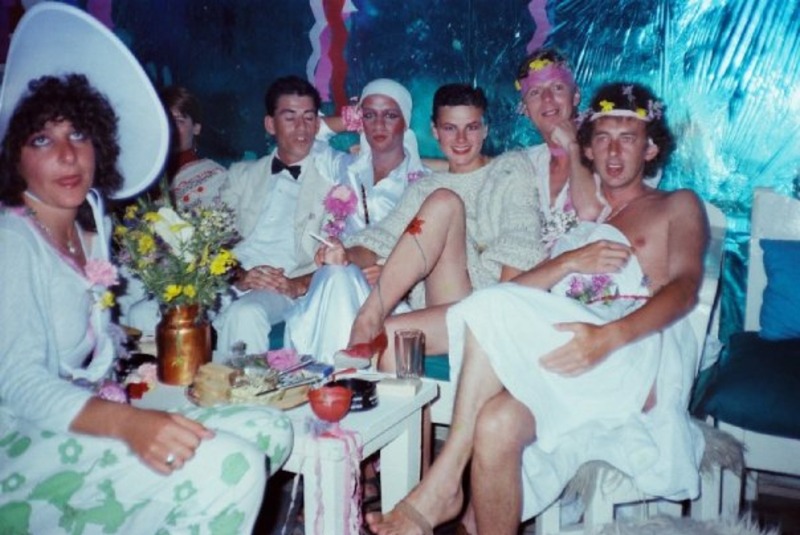
We were not really interested in “reporting” on what Mykonos is and in re-affirming known stereotypes about the island. From the very outset, we understood that at the very heart of the story is the idea of transformation. How did a poor fishing island become a global destination? How did 1970s inclusivity yield to the exclusivity that defines our times? What was sacrificed along the way? These are questions that inform the story, and what was perhaps the most surprising aspect of the research is that we gradually began to understand how the people who “created” the 1970s paradise continue to co-exist with this new reality. 
Dimitris Koutsoukos 21
Image credit: Dimitris Koutsoukos

The documentary features archival footage, Super 8 recreations, drone cinematography, animation, and interviews with people who helped shape the island over several decades. How did you approach blending these different storytelling techniques into one cohesive narrative?

This was a true team effort and from an early stage, we made a decision to “mash up” different formats in service of the story. Each of these formats brings a unique energy to the film, with some carrying more weight than others. The archival footage is massively important, it constitutes approximately 40% of the film, and it has a timeless quality to it because much of it is Super 8 and 16 mm. This enables us to create an “anchor” that transports audiences to idyllic 1970s Mykonos, allowing it to stand in stark contrast to the island today, which we dynamically represent through the use of drones and cell phone footage. The animation is the bridge between the past and the present, and the talented animator Eirini Vianelli did amazing work. 

Throughout the film, we hear from residents, artists, entrepreneurs, farmers, intellectuals, and longtime visitors. Without giving too much away, could you share a memorable person featured in the documentary whose story particularly stayed with you?

Vaggelio Syrianou, the iconic bouncer at Pierro’s Bar, had a “run in” with the fashion designer Valentino. It did not end well…for him.

MYK S DOUKAS 0639
Image credit: Loukas Doukas

Mykonos has often represented different things to different generations, from a hidden Cycladic paradise and a place of artistic freedom to one of the world's most exclusive destinations. After making this film, how has your own perception of the island changed?

I think that what is amazing about Mykonos is that the spirit of the 1970s still exists. Sure, it’s harder to find it, but it is still there. If you go for an early morning or late afternoon swim at Agios Sostis, you will feel it; if you speak to the locals at Bakoya, you will get a sense of it. It’s really a matter of wading through the distractions and opening yourself up to experiencing the island in a different way.

Following its world premiere at the Thessaloniki International Documentary Festival, Super Paradise has travelled to several international film festivals. How have audiences outside Greece responded to the documentary, and have any reactions particularly stayed with you?

Super Paradise has played at almost 15 festivals around the world, including the Los Angeles Greek Film Festival, the Australia Greek Film Festival and Beldocs in Serbia. Global audiences have immediately connected with the universal themes that the film touches upon, but I have to say that the most amazing screening that we have had was in Mykonos last summer. At Cine Manto, the open air cinema in Chora, we screened the film for everyone who participated in the project, including almost all of the characters. That was truly special, very emotional, and something that made all of the effort worthwhile.

The film will now be screened as part of STOA Culture, where the courtyard of the historic Arsakeio Arcade is transformed into an open-air summer cinema, followed by an after-party celebrating the spirit of the Greek summer. What makes this screening especially meaningful for you, and what do you hope audiences will take away after watching the film?

We are very excited and grateful for the opportunity to participate as part of STOA Culture. Screening a film about an island that personifies “Greek summer” in the middle of the summer, in the middle of Athens…we can’t really ask for anything else. What do we want audiences to take away? Rather than take away, we would ask them to “let go,” to allow themselves to be transported through space and time to a tiny Greek island in the middle of the Aegean Sea.
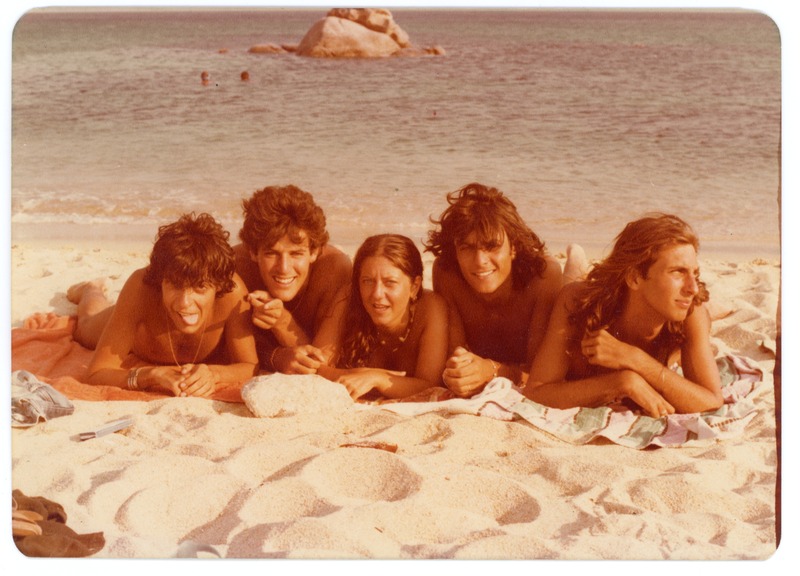
Steve Krikris 71
Image credit: Steve Krikris

A big thank you to Paul Typaldos for taking the time to chat with us and for giving our readers a glimpse into the story behind Super Paradise - The Story of Mykonos. We wish him and the entire cast and crew every success and hope audiences enjoy this remarkable cinematic journey through one of Greece's most iconic islands.

SUPER PARADISE | MAIN CREDITS

Directed by Steve Krikris
An Original Idea by Paul Typaldos
Written by Paul Typaldos, Dafni Kalafati, Steve Krikris
Producers: Paul Typaldos, Dafni Kalafati
Executive Producers: Marianna J. Latsi, Pathi Katsoufi, Nicholas Alavanos 
Co-Producers: Steve Krikris, Titus Kreyenberg, Dimitris Logiadis
Editor: Marios Kleftakis
Cinematographer: Stelios Pissas
Sound Recordist: Lefteris Kabalonis 
Original Music: Coti K.
Animation: Eirini Vianelli
Sound Design: Leandros Ntounis
Produced by FILMIKI Productions
In Co-Production with WDR, ERT, unafilm
In Association with ARTE
With the support of the Hellenic Ministry of Culture and Sports, the Hellenic Film and Audiovisual Center-Creative Greece, and the Municipality of Mykonos
International Sales: The Party Film Sales

With the Participation of:

Michalis Apostolou, Louky Bloem, Monika Derpapas, Loukas Doukas, Hazel Fouski, Tamar Howe, Yorgos Karaoglou, Makis Kontizas, Dimitris Koukouletos, Andreas Koutsoukos, Dimitris Koutsoukos, Robert McCabe, Dimitris Papaioannou, Aimilios Papikas, Babis Pasaoglou, Brian Piccini, Dimitris Salahas, Evangelina Syrianou, Irene Syrianou, Makis Tselios, Marilli Tsopanelli, Ilias Velopoulos, Yiorgos Veltsos, Yorgos Voulgaris, Nikiforos Vourakis, Kostas Zouganelis

Ready to experience the untold story of Mykonos? Click here to secure your tickets for the screening at STOA Culture on Saturday, July 18th!


There are few cuisines that celebrate summer quite like Greek cooking.

When the temperatures climb, the best meals become wonderfully uncomplicated: ripe tomatoes, crisp cucumbers, fragrant herbs, creamy feta and generous glugs of extra virgin olive oil. It's the kind of food that invites everyone to linger around the table just a little longer.
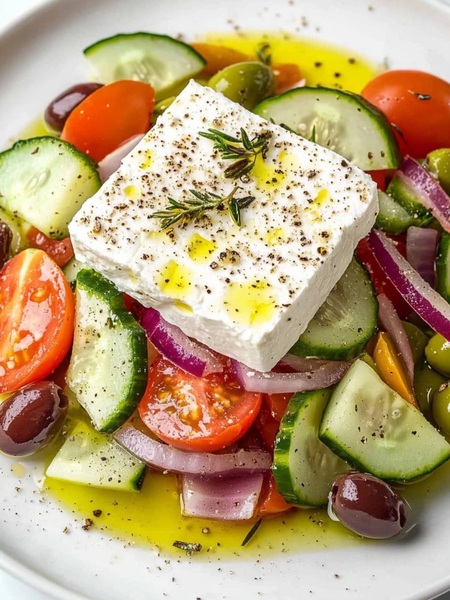
Whether you're planning a relaxed lunch in the garden, a seaside-inspired dinner or simply looking for fresh ideas during the warmer months, these easy Greek recipes capture the very best of the season.


Horiatiki: The Ultimate Greek Village Salad

SnapInsta.to 618536159 18120396106565792 506689343936036182 n
@hellenic_world_

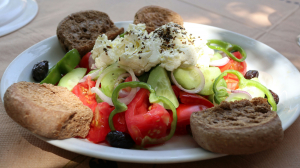
No Greek summer table is complete without a classic horiatiki. This iconic salad proves that the simplest ingredients often make the most memorable meals.

You'll need:
  • Ripe tomatoes
  • Cucumber
  • Red onion
  • Green pepper (optional)
  • Kalamata olives
  • Feta
  • Extra virgin olive oil
  • Dried oregano
  • A pinch of salt
Simply chop the vegetables into generous chunks, scatter over the olives and place a thick slice (or a few chunks) of feta on top. Finish with a generous drizzle of olive oil, a sprinkle of oregano and a little salt. Serve alongside fresh, crusty bread to mop up every last drop of those delicious juices.

Creamy Homemade Tzatziki

SnapInsta.to 634046090 122170612382665450 3915978339683332850 n
@manger.et.vivre

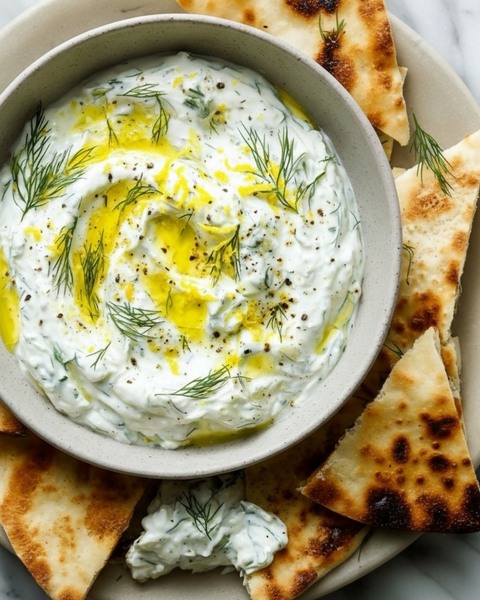
Cooling, refreshing and incredibly versatile, tzatziki is a staple throughout the summer months. It works beautifully as a dip, a side dish or a sauce for grilled meats and vegetables.

You'll need:
  • Greek yoghurt
  • Grated cucumber, squeezed to remove excess moisture
  • Garlic
  • Extra virgin olive oil
  • Lemon juice or white wine vinegar
  • Fresh dill or mint
  • Salt
Mix everything together until smooth and creamy, then refrigerate for at least 30 minutes before serving. The flavours become even better as they mingle.

Dakos: A Taste of Crete

SnapInsta.to 455839274 18447839761037383 2439453793944614559 n
@kouzounaskitchen

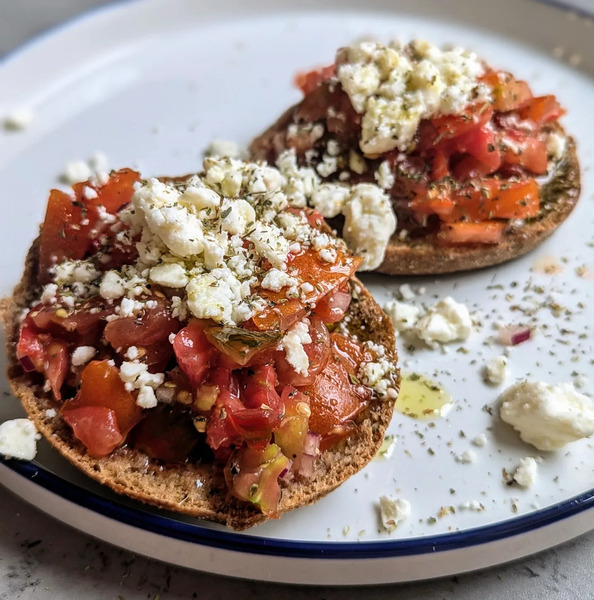
Originating from Crete, dakos is a wonderfully rustic dish that's both satisfying and refreshingly light.

You'll need:
  • Barley rusks (or toasted country bread)
  • Ripe tomatoes
  • Feta or mizithra
  • Extra virgin olive oil
  • Oregano
  • Kalamata olives
  • Capers (optional)
Lightly moisten the rusks with a splash of water, then top generously with grated or finely chopped tomatoes. Add the cheese, drizzle liberally with olive oil and finish with oregano, olives and capers for an extra burst of flavour.


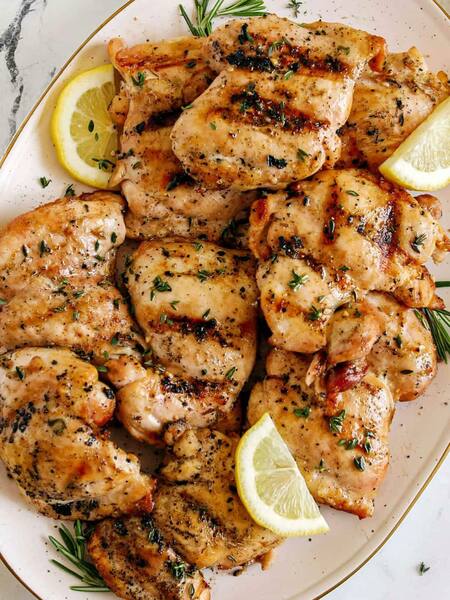
Lemon and Oregano Grilled Chicken
SnapInsta.to 684884415 18575133964022874 8184126886506376064 n
@eaturselfskinny

Few aromas say "Greek summer" quite like chicken sizzling on the barbecue with lemon and oregano.
For the marinade, combine:
  • Juice of two lemons
  • Extra virgin olive oil
  • Crushed garlic
  • Dried oregano
  • Salt and freshly ground black pepper
Leave the chicken to marinate for at least 30 minutes before grilling until beautifully golden and cooked through. Serve with horiatiki and a generous spoonful of tzatziki for an effortless summer feast.


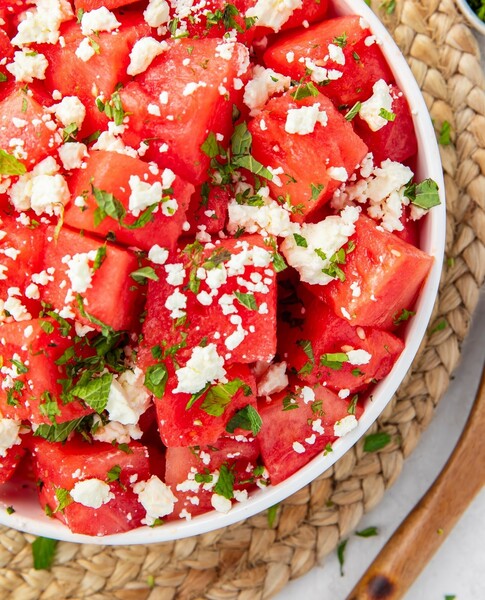
Watermelon & Feta Salad

SnapInsta.to 623114866 18115007044712871 102422970429463123 n
@40aprons

Sweet, salty and wonderfully refreshing, watermelon and feta are one of summer's most surprising — and most successful — pairings.
You'll need:
  • Watermelon, cut into cubes
  • Feta
  • Fresh mint
  • Extra virgin olive oil
  • Lemon or lime juice
  • Freshly ground black pepper
Combine everything in a large serving bowl and finish with a drizzle of olive oil and citrus juice. It's colourful, cooling and ideal for the hottest days of the year.

Gemista: Summer Comfort Food

SnapInsta.to 658309574 18397577422148448 4887715193120023830 n
@theoliveandmango

Although gemista spend a little longer in the oven, they're still one of the defining dishes of the Greek summer. They're equally delicious served warm or at room temperature, making them perfect for entertaining.
For the filling you'll need:
  • Rice
  • Onion
  • Garlic
  • Chopped tomatoes
  • Fresh parsley
  • Fresh mint
  • Extra virgin olive oil
Carefully hollow out large tomatoes and fill them with the rice mixture. Drizzle generously with olive oil before baking until the tomatoes are tender and the filling is perfectly cooked.

A Simple Greek Summer Menu

If you're hosting friends or family, there's no need to overcomplicate things. A menu built around fresh, seasonal ingredients is always a winner.

Start with creamy tzatziki served alongside warm pitta bread and olives. Follow with lemon and oregano grilled chicken accompanied by a traditional horiatiki salad. Finish on a refreshing note with chilled watermelon drizzled with a little honey and scattered with toasted pistachios.

Greek summer cooking isn't about elaborate techniques or lengthy ingredient lists. It's about making the most of beautiful produce, sharing generous plates and enjoying meals that bring everyone together.

And when the ingredients are this good, simplicity really is the secret ingredient.
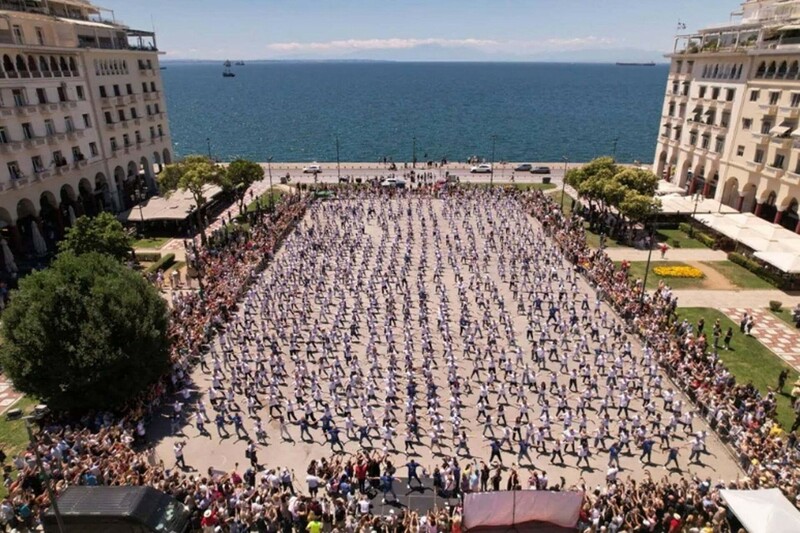
For five magical minutes, Aristotelous Square in Thessaloniki became far more than a stage for dance. It became a symbol of remembrance, solidarity and hope.

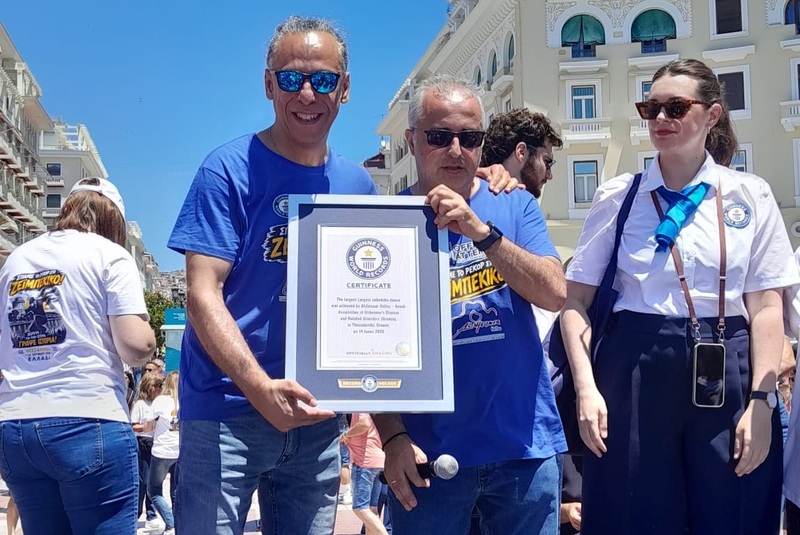
On 14 June, 830 people from 13 countries gathered in the city's iconic square to perform a carefully choreographed zeibekiko, earning Alzheimer Hellas an official Guinness World Records™ title for the Largest Zeibekiko Dance ever performed. Dancing to Mia Thessaloniki by Konstantinos Argyros, participants surpassed the previous record of 754 dancers held by Cyprus, proving that one of Greece's most deeply personal dances can also become a powerful act of collective purpose.

SnapInsta.to 722224194 18599396938029701 3862021661952014126 n
@neos_kosmos

Yet, beyond the applause, the certificates and the celebratory soundtrack of Queen's We Are the Champions, the real achievement lay elsewhere: raising awareness for Alzheimer's disease and demonstrating how dance itself can become a form of therapy.

A Dance Unlike Any Other

That the record was set with a zeibekiko made the achievement particularly remarkable.

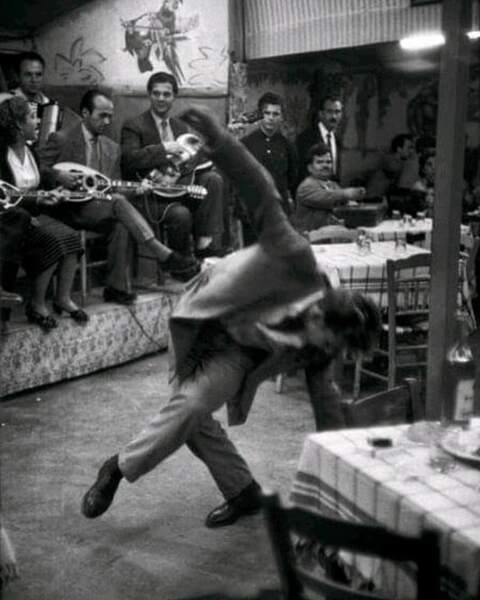
Traditionally, zeibekiko is one of the most intimate expressions of Greek culture. Originating from the Zeybeks, an irregular militia that lived in parts of the Ottoman Empire between the 17th and early 20th centuries, the dance gradually evolved into a deeply personal solo performance, historically danced by men and now embraced by women as well.

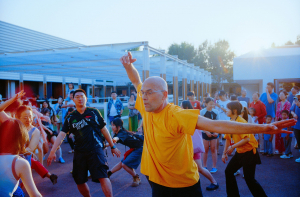
Unlike most traditional dances, zeibekiko has no fixed choreography. Dancers move freely within a circle, expressing emotion rather than following prescribed steps. Often referred to as the "dance of the eagle", it celebrates individuality, making a synchronised performance involving hundreds of dancers not only logistically ambitious but culturally extraordinary.

SnapInsta.to 619754842 18183632263317701 3180807590381943168 n
@oldgreekphotos

One Idea, Hundreds Of Dancers

The idea belonged to dance instructor Themis Parastatidis, who has spent years teaching dance to older adults living with Alzheimer's disease.
He explains how the inspiration came a year earlier, after realising just how beloved zeibekiko has become not only across Greece but among Greek communities abroad. Hence, vision quickly grew into an international movement.

Participants travelled to Thessaloniki from every corner of Greece, joined by dancers from Bulgaria, Romania, France, Germany, Austria, Norway, Serbia, Poland, Turkey, Cyprus, China and the United States. Many made the journey solely to take part in the record attempt.

Ahead of the event, free rehearsals were held on 12 and 13 June, allowing participants to learn the official five-minute choreography before stepping into Aristotelous Square for the historic performance.

SnapInsta.to 722490048 18430258021122943 8142452133208529327 n
@the_dance_club_by_kalamata

When Dance Becomes Medicine

For Parastatidis, however, the record was never simply about numbers. "Dance is not just exercise, but much more," he explains. "It trains memory, as dancers have to remember the steps and have good coordination. In addition, their mood improves because dance gives them the chance to take part in something collective, to come into contact with other people, and to meet people. Dance has many positive elements."
His work reflects an increasingly recognised understanding that movement, music and social interaction all contribute to healthier ageing.

Professor Emerita of Neurology Magda Tsolaki, President of the Panhellenic Federation of Alzheimer's Disease and Related Disorders, highlighted dance as an important form of physical activity that supports brain health and may help reduce the risk of dementia. She also noted that the event offered an opportunity to showcase Greek culture and tradition to an international audience.

The sight of hundreds of people dancing together sent another equally powerful message: community itself can be therapeutic.

More Than A World Record

The initiative was organised in collaboration with the Greek Alzheimer's Association and the Friends of the Greek Association of Alzheimer's Disease and Related Disorders.

Its wider aim extended far beyond breaking a Guinness record. The event sought to encourage conversations around prevention, early diagnosis and better support for people living with dementia and for their families.
Thousands attended the celebration in Thessaloniki, while extensive media coverage carried its message across Greece and abroad.

The awareness campaign also builds upon broader work taking place across Central Greece. Through the REMIND initiative, implemented by the Greek Association of Alzheimer's Disease and Related Disorders of Chalkida and funded by the Region of Central Greece, 38 community actions were delivered across 29 urban, rural and remote communities, reaching more than 1,800 older adults and family caregivers.

The programme also carried out 340 memory assessments to encourage earlier diagnosis and improve access to support services.

Using the Dementia Knowledge Assessment Tool (DKAT-2), alongside caregiver focus groups, researchers identified significant gaps in public awareness, particularly surrounding the early signs of cognitive decline, support for carers and access to services in more isolated areas.

The project has since been recognised as a Good Practice within the European FABCOM programme, highlighting its contribution to community-based dementia care across Europe.

A Victory Shared By Everyone

The Guinness World Records™ title was officially confirmed on site by adjudicator Lena Kuhlmann, following extensive participant counts and verification procedures. According to Guinness officials, every requirement was met flawlessly.

SnapInsta.to 724265091 18075317684674227 7152306844838297720 n
@atillateo

Thessaloniki's Mayor, Stelios Angeloudis, welcomed the achievement, expressing pride that such an important awareness initiative had taken place in the city's most recognisable square.

But perhaps the most fitting summary came from the organisers themselves: "This record belongs to everyone. To every dancer, volunteer, partner and supporter who believed that a collective dance could become a global message of solidarity, remembrance and hope for people affected by Alzheimer's disease. Today, we celebrate more than a world record. We celebrate the power of communities coming together for a common purpose."

In the end, the biggest triumph was never the number 830.

It was the reminder that memory can be honoured not only through medicine and research, but through music, movement and the simple act of dancing together.
Planning a summer in Greece filled with long swims, endless tanning sessions and lazy days on the beach, but can't bear the thought of leaving your furry best friend behind? We don't blame you. After all, they deserve to enjoy the crystal-clear waters and sunny adventures just as much as we do.

Before you grab the lead and head for the coast, though, it's worth knowing a few rules and handy tips to make sure your holiday stays fun, relaxing and stress-free, for both you and your faithful companion. A little preparation can save you from awkward surprises, long waits outside places where dogs aren't allowed, or having to completely rethink your beach plans.

Here's everything you need to know to keep your beach days legal and stress-free: 


What Does The Greek Law Say?

Greek legislation makes a clear distinction between organised and unorganised beaches, and the rules vary accordingly.

Unorganised Beaches

SnapInsta.to 698783510 17990491268970858 6545568665043611059 n
@best.greece.pictures

Dreaming of a secluded cove with no sunbeds, beach bars or booming playlists? Good news: these are generally the easiest places to enjoy with your dog.

On unorganised beaches, dogs are allowed to walk along the shore, swim in the sea, and relax on the beach with their owners.

When your dog is on land, however, they must remain on a lead, wear a collar and stay under your supervision. Once they're in the water, they're free to paddle to their heart's content.

Organised Beaches

SnapInsta.to 727346119 17995813940970858 4354169200085011332 n
@best.greece.pictures

Organised beaches are those with facilities such as sunbeds, umbrellas, beach bars or entrance fees, or areas officially designated as heavily frequented. Here, the rules become stricter.
 
Dogs are only permitted if the beach operator has clearly displayed signs stating that pets are welcome. Even then, if your dog's swimming or presence disturbs other beachgoers, you may be asked to move elsewhere.

Assistance dogs are exempt from these restrictions and are permitted on all organised beaches regardless of signage.

As always, dogs must remain on a lead whenever they're out of the water.
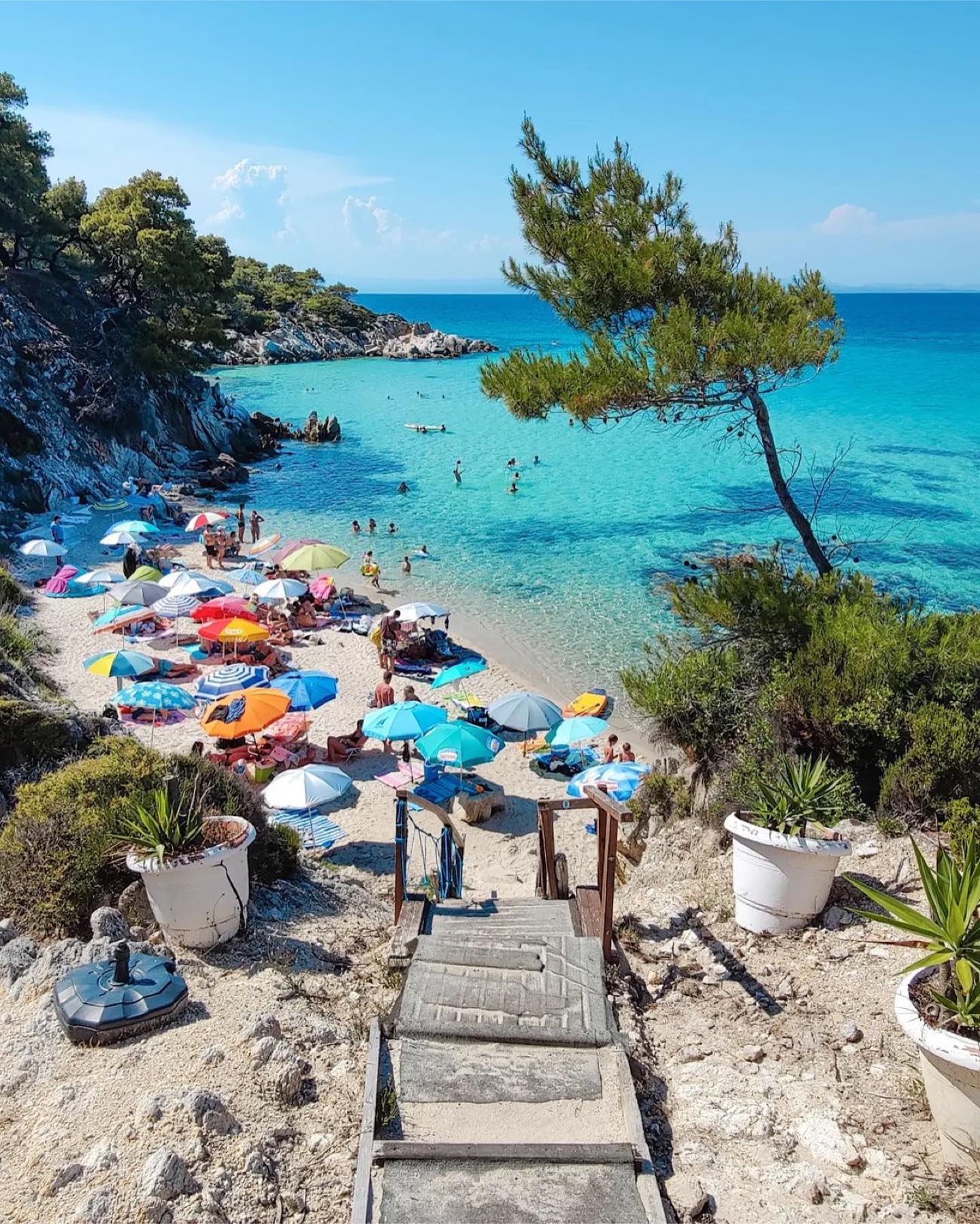
Blue Flag Beaches

If you spot the famous Blue Flag flying overhead, be aware that the rules are different.

Blue Flag beaches prohibit dogs altogether, with the sole exception of certified assistance dogs. The restriction forms part of the programme's environmental and safety standards rather than a local decision.

SnapInsta.to 621855419 18106032823706234 1880118615415641648 n
@wu_greece

Beach-day Essentials

To avoid any unpleasant surprises during routine inspections, make sure your dog is:
  • Microchipped
  • Registered in the National Pet Registry
  • Carrying an up-to-date health booklet or pet health documentation
And, naturally:
  • Keep your dog on a lead while on land
  • Always clean up after them
Pro Tips
 
A little planning goes a long way

  • Head to the beach early in the morning or later in the evening when temperatures are lower and the crowds thinner.
  • If you're visiting an organised beach, choose a quieter section where your dog is less likely to disturb other swimmers.
  • After every swim, rinse your dog with fresh water to remove salt from their coat and skin.
Remember that Greece's beaches are home to plenty of wildlife too. Seagulls, nesting sea turtles and even the occasional mountain goat are fascinating neighbours - but probably best admired rather than chased.

And talking about particularly enthusiastic chasers: Greece's famous stray cats can be found almost everywhere. If your dog sees every cat as the start of an Olympic sprint, keep the lead short and distractions at the ready.
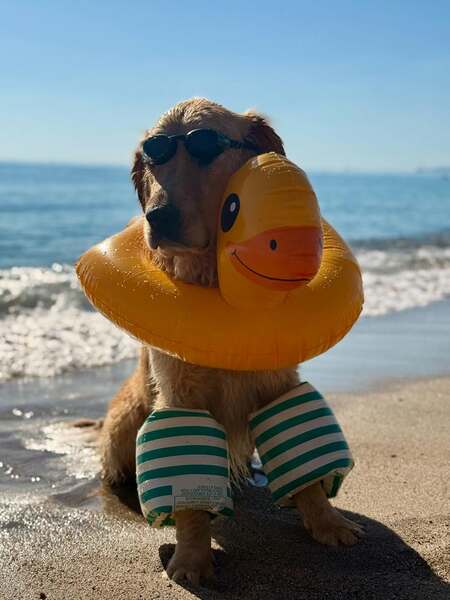
 
When in doubt, just ask

Not every beach follows exactly the same approach.

Always look for signs indicating whether dogs are permitted. If nothing is displayed, it's worth asking the beach bar or beach manager politely. Many smaller establishments are surprisingly accommodating, particularly during quieter hours.

Weekends in peak season can also be challenging, so if your dog isn't especially fond of crowds, weekdays are often a far more enjoyable option.

Beyond The Beach: Travelling Around Greece With Your Dog

Public transport

Public transport rules can be a little confusing.

In general, small dogs are permitted if travelling inside a suitable carrier. For larger dogs, regulations vary depending on the operator, and information isn't always easy to find.

If you're unsure, check with the transport company before travelling. Where possible, using a carrier for smaller dogs remains the simplest option.

Restaurants

You'll generally have much better luck choosing outdoor terraces rather than indoor dining rooms. Many tavernas are happy to welcome well-behaved dogs outside, particularly away from peak meal times.

Accommodation

Finding somewhere to stay requires a little forward planning. While pet-friendly accommodation is becoming more common, options remain relatively limited, especially in cities, so booking ahead is recommended.

Archaeological sites

Since 2023, Greece has become considerably more dog-friendly when it comes to archaeological sites. Dogs are now permitted at around 120 archaeological sites across the country, including Ancient Messene, Delos, Mycenae, Philippi and the Sanctuary of Asklepios at Epidaurus. They must remain on a lead no longer than one metre (or be carried), owners should carry the animal's health documentation, and larger dogs may be required to wear a muzzle.

Some of Greece's busiest monuments remain off-limits to pets, including the Acropolis, Knossos, Phaistos, Ancient Olympia, Delphi, the Ancient Theatre of Argolis and Pythagoreion on Samos. Assistance dogs are exempt under the applicable rules.

As there is no single official list covering every archaeological site, it's worth checking with local tourism authorities or simply confirming at the entrance before your visit.

With a little preparation and consideration for fellow beachgoers, Greece can be a fantastic destination for dogs and their humans alike. Choose quieter beaches, respect local regulations, pack the essentials and don't forget the fresh water - for both of you.

After all, holidays are better when every member of the family gets to enjoy the sea breeze!

SnapInsta.to 542558358 17933665131094358 3849855567409987496 n
@teka_and_uno_the_golden
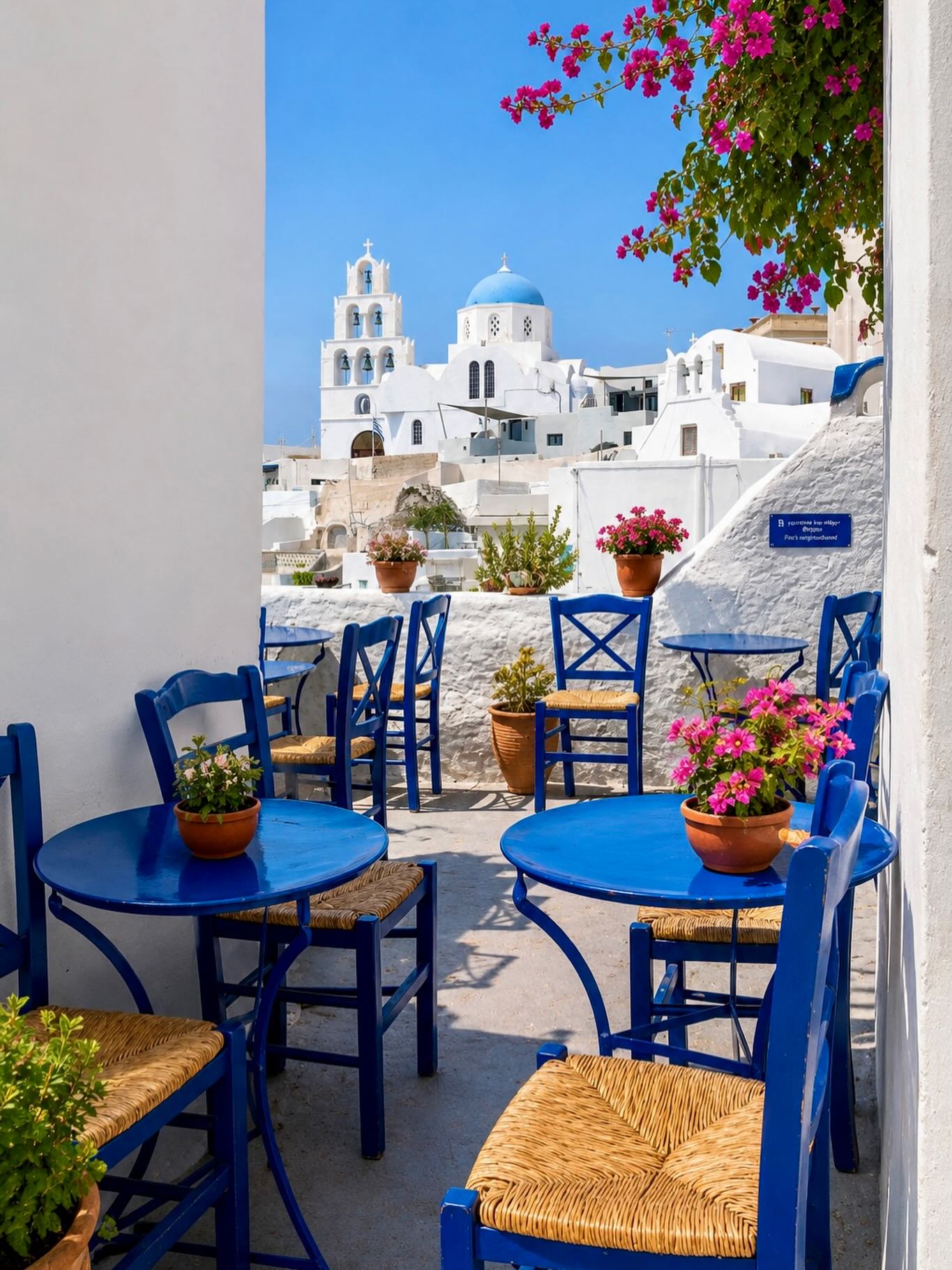
If there's one holiday that never seems to lose its magic, it's islands hopping in Greece.

One day you're wandering through whitewashed alleyways with an iced Freddo in hand, the next you're diving into water so impossibly turquoise it looks filtered, before ending the evening over grilled octopus and a sunset that somehow manages to outdo yesterday's. It's little wonder that exploring the Greek islands sits firmly on so many travel bucket lists.
 
The only slight catch? Planning it.

With more than 200 inhabited islands spread across several archipelagos, organising the perfect island-hopping adventure can quickly become overwhelming. Which islands should you choose? How do you get from one to the next? How many can you realistically fit into one trip without spending your entire holiday living out of a suitcase?

Don't worry: we've done the hard part for you.

Whether you're after beach clubs and buzzing nightlife, sleepy fishing villages, ancient ruins, spectacular hiking trails or simply an excuse to slow down for a week (or two), we've put together the ultimate guide to island hopping from Athens. All that's left to do is find the route that matches your travel style, your budget and the amount of time you have to spare.

Just don't blame us when your "one-off Greek islands holiday" turns into an annual tradition. Greece has a habit of doing that.

The Golden Rule Of Island Hopping

Before you enthusiastically start pinning every Greek island you've ever seen on Instagram, here's the single best piece of advice we can give you: stick to one island group.

Greece's islands are divided into several different archipelagos: the Cyclades, the Ionian Islands, the Dodecanese, the Saronic Islands and more. While they may all belong to the same country, they're often surprisingly far apart.

It can be tempting to squeeze Mykonos, Corfu and Rhodes into the same itinerary, but you'll probably spend more time in ports, airports and ferry queues than actually enjoying the islands themselves.

Choosing one island group makes your journey infinitely smoother. The islands are naturally clustered together, ferry connections are far more frequent, and many smaller islands are linked by local boats, making hopping from one destination to the next remarkably easy. 

So… Which Greek Island Group Should You Choose?

The answer depends entirely on the kind of holiday you're dreaming of.

Every Greek archipelago has its own personality, landscapes and rhythm. Here's a quick guide to help you choose.


The Cyclades: Greece's Picture-Perfect Postcard

SnapInsta.to 671133732 18587076685019841 8658751583992453355 n
@george_kormpos
 
If you've ever imagined a Greek island holiday, chances are you've been picturing the Cyclades all along. Situated in the heart of the Aegean Sea, this iconic archipelago takes its name from the circle (kyklos in Greek) formed around the sacred island of Delos. Home to world-famous islands such as Mykonos, Santorini or Paros, the Cyclades are the Greece of postcards, Pinterest boards and every travel brochure you've ever flicked through. Think dazzling white villages bathed in sunshine, blue-domed churches, cobbled alleyways overflowing with bougainvillea and endless shades of blue stretching towards the horizon.

They're also the easiest islands to explore in a single trip. Thanks to their popularity, ferry routes are frequent and reliable, while several islands also have domestic airports, making travelling between them wonderfully straightforward. Most ferry journeys are short enough to leave you with plenty of time to actually enjoy each destination. And once you arrive, you can easily get around without a car thanks to the local bus network.

Perfect for: first-time visitors, honeymooners, groups of friends and anyone chasing the Greece of their dreams. 

A classic itinerary could look something like this:
 
🚢 ATHENS (Piraeus)
↓ 2h40–5h | €55–90
🏝️ MYKONOS (Tourlos)
↓ 45–80 min | €30–50
🏝️ PAROS (Parikia)
↓ 25–45 min | €8–20
🏝️ NAXOS (Chora)
↓ 1h15–2h | €30–55
🏝️ SANTORINI (Athinios)
↓ 2–2h30 | €35–55
🏝️ MILOS (Adamas)
↓ 2h45–4h | €45–80
🚢 ATHENS (Piraeus)

Mykonos

Yes, it's glamorous. Yes, it's expensive. And yes, it's every bit as lively as you've heard.

Whether you're here for beach clubs, boutique shopping or sunset cocktails in Little Venice, Mykonos is an unforgettable first stop. Visit before continuing deeper into the Cyclades and swapping the party scene for a slower pace of life.

Paros

Paros strikes that rare balance between lively and laid-back.

Spend your mornings wandering around Parikia or the postcard-perfect harbour of Naoussa before heading to the beach in the afternoon.

If you have an extra day, hop over to neighbouring Antiparos, just a short ferry ride away. Smaller, quieter and effortlessly chic, it's dotted with hidden coves, sea caves and wonderfully clear swimming spots that feel a world away from the summer crowds.

Naxos

Combining spectacular beaches with traditional mountain villages, fertile valleys and some of the best local food in Greece, Naxos is the largest island in the Cyclades. If your perfect holiday includes long tavernas lunches and a slower rhythm of life, you'll probably find yourself wishing you'd booked an extra night here.

Santorini

The postcard island needs very little introduction.

While Santorini has become synonymous with spectacular sunsets and whitewashed cliffside villages, there's far more than Oia's famous viewpoints. Venture beyond the busiest streets and you'll discover charming villages such as Pyrgos and Emporio, local wineries producing exceptional volcanic wines, fascinating archaeological sites like Akrotiri and, of course, the island's extraordinary volcanic landscape.

This rugged volcanic island has exploded in popularity over the past few years, yet somehow still manages to feel refreshingly authentic.

It's an island made for exploring. Rent a 4x4 if you can, because many of its best beaches lie at the end of dusty tracks, while others require a short scramble to reach. Half the fun is discovering places that don't immediately reveal themselves.

Sarakiniko Beach is, unsurprisingly, the island's biggest star. Its smooth white volcanic rocks create an almost lunar landscape that feels unlike anywhere else in the world.
Back in Plaka, reward your adventures with something sweet from Café Palaios before climbing up to the Venetian Castle for sunset. Pro tip? Pick up takeaway cocktails on your way, the view somehow becomes even better.

Fancy Something a Little Different?

If beach clubs and postcard sunsets aren't quite your thing, there's another Cycladic route worth considering:

🚢 ATHENS (Piraeus)
↓ 4–7h | €45–75
🏝️ IOS
↓ 2–3h30 | €15–30
🏝️ KIMOLOS
↓ 50 min–1h15 | €5–10
🏝️ MILOS
↓ 2h45–4h | €45–80
🚢 ATHENS (Piraeus)

Ios may have built its reputation as Greece's ultimate party island, but it's also home to beautiful beaches such as Mylopotas and some amazing local cuisine. Don't leave without trying tsimetia, these delicate zucchini blossoms stuffed with rice.

Next comes tiny Kimolos, one of the Cyclades' best-kept secrets. Quiet, authentic and wonderfully unspoilt, it's the sort of place where your biggest decision of the day is which beach to swim at next. Make time to sample ladenia, the island's delicious answer to pizza, topped simply with tomatoes and onions. If you're visiting during summer, don't miss the open-air cinema held right by the beach.

Finish your journey in Milos before sailing back to Athens, sun-kissed, slightly saltier than when you left, and already wondering how soon you can do it all over again.

The Ionian Islands: Greece's Emerald Escape

SnapInsta.to 642968892 18065531510654162 1576042625120026222 n
@passionegrecia
 
If the Cyclades are all white and blue, the Ionian Islands are all about green.
 
Located on the country's western coast, these islands are cooler and wonderfully lush. Forested hills tumble into dramatic cliffs, olive groves stretch for miles and long sandy beaches replace the rocky coves that characterise much of the Aegean.

Life here moves at a gentler pace, making the Ionian Islands a fantastic choice for families with younger children, nature lovers and anyone looking for a more relaxed escape.

One important thing to know before you start planning: there are no ferries from Athens to the Ionian Islands. Instead, you'll need to fly from Athens to one of the main islands (Corfu, Kefalonia or Zakynthos for example), all of which have domestic airports. Once you're there, ferries make travelling between the islands pretty straightforward.

A popular itinerary would look like this:

🏛️ ATHENS
↓ 7–9h | €25–40
🏝️ CORFU
↓ 5h30–7h | €20–35
🏝️ LEFKADA
↓ 2–3h | €15–25
🏝️ KEFALONIA
↓ 5–6h | €30–45
🏝️ ZAKYNTHOS
↓ 5–6h | €30–45
🚢 ATHENS

Or, if you prefer quieter corners of Greece:

🏛️ ATHENS
↓ 7–9h | €25–40
🏝️ CORFU
↓ 5h30–7h | €20–35
🏝️ LEFKADA
↓ 2–3h | €15–25
🏝️ KEFALONIA
↓ 30–60 min | €3–8
🏝️ ITHACA
↓ 4h30–6h | €20–35
🚢 ATHENS

Corfu

Elegant and full of character, Corfu blends Venetian architecture, lush green landscapes, and crystal-clear beaches. From its lively Old Town to secluded coves and charming villages, the island offers a perfect balance of culture, nature, and relaxed Mediterranean living. 

Lefkada

Connected to the mainland by a bridge, Lefkada is famous for its spectacular turquoise waters and dramatic white cliffs. Home to some of Greece's most iconic beaches, it is a paradise for nature lovers, sailors, and anyone seeking breathtaking coastal scenery. 

Kefalonia

The largest of the Ionian Islands, Kefalonia captivates visitors with its emerald mountains, hidden caves, and stunning beaches. Authentic villages, local traditions, and unspoilt landscapes make it an ideal destination for those looking to experience the island's natural beauty.

Zakynthos

Best known for the world-famous Navagio (Shipwreck) Beach and its vibrant blue waters, Zakynthos combines spectacular scenery with a lively atmosphere. Beyond its iconic coastline, visitors will discover picturesque villages, sea caves, and the protected nesting grounds of the endangered loggerhead turtles. 

Ithaca

Small, peaceful and blissfully free from large resorts or beach clubs, Ithaca attracts travellers looking for tranquillity rather than nightlife. 

It's easy to reach from Kefalonia, but somehow feels a world away. No wonder Odysseus never stopped longing for Ithaca. 

The Dodecanese: For Slow Travellers & Culture Lovers

SnapInsta.to 544531294 18369862450150416 3659535498439120839 n
@urban_wanders
 
Scattered close to the Turkish coastline, the Dodecanese feel like another side of Greece altogether, blending medieval history, Byzantine monasteries, colourful harbours and exquisite family-run tavernas. While Rhodes often steals the spotlight, many of the surrounding islands remain blissfully under the radar. Perfect for: history lovers, slow travellers and anyone looking to venture beyond the classic Greek island itinerary.

Reaching some of these islands takes a little more planning, particularly those without airports, but once you're there they're very well connected by local ferries.

A fantastic itinerary could look like this:
 
🏛️ ATHENS
↓ 15–18h | €45–65
🏝️ RHODES
↓ 5–7h | €20–35
🏝️ PATMOS
↓ 30–45 min | €5–10
🏝️ LIPSI
↓ 20–40 min | €5–8
🏝️ LEROS
↓ 9–11h | €35–55
🚢 ATHENS

Rhodes

Rhodes is the perfect gateway into the Dodecanese.

Its spectacular UNESCO-listed Medieval Old Town is one of the best preserved in Europe, with cobbled streets that seem to transport you straight back to the era of the Knights of St John. Lose yourself among its alleyways before visiting the impressive Palace of the Grand Master. If you're lucky to visit in summer, you might even catch the island's annual Medieval Festival!

But Rhodes isn't just about history. Hire a car and venture beyond the city to discover the whitewashed village of Lindos, the famous Acropolis overlooking the sea, the lush Valley of the Butterflies and beautiful swimming spots such as Anthony Quinn Bay and Faliraki Beach.

Patmos

Small in size but enormous in cultural significance, Patmos is one of Greece's most fascinating islands.

It's best known for the Cave of the Apocalypse, where St John is said to have written the Book of Revelation. From there, a beautiful walking path leads to the Monastery of Saint John the Theologian, perched high above the island and rewarded with sweeping views across the Aegean.

Once you've soaked up the history, swap your walking shoes for a scooter and spend the afternoon beach-hopping between Petra, Vagia, Lampi and the golden sands of Psili Ammos.
End the day exactly as the Greeks would: dining by the sea while the sun slowly slips below the horizon.

Lipsi

Tiny, peaceful and blissfully untouched, this little island is one of the Dodecanese's best-kept secrets. Everything is within walking distance, the beaches are gloriously quiet and the days seem to unfold without anyone paying much attention to the time.

Book a room overlooking the harbour, spend your mornings swimming, your afternoons doing very little at all, and your evenings at the traditional café Sofoklis, enjoying fresh octopus, a glass of ouzo and conversations that last until midnight.
 
Leros

Your final stop combines authentic island charm with an easy journey back to Athens, thanks to its domestic airport.

Base yourself around Agia Marina, stroll through the colourful harbour, then climb towards the island's iconic windmills just before sunset.


The Saronic Islands: Athens' Weekend Escape

SnapInsta.to 619341694 18070401911564233 4050033221811096439 n
@rudylauer
 
Short on time? The Saronic Islands are your best friend.

Just a short ferry ride from Athens a short ferry ride from Athens, islands such as Aegina, Hydra, Spetses, Poros and Agistri are perfect for day trips, long weekends or anyone looking for a quick taste of island life without venturing too far from the capital. The Saronic Islands are perfect for an easy taste of island hopping, thanks to day cruises that typically visit three islands in one trip. 

Each island has its own distinct character. Hydra is famously rugged and car-free, Spetses is greener and wonderfully elegant, while Aegina charms visitors with its pistachio groves and relaxed waterfront.

... And Many More
 
Of course, Greece's island story doesn't end there.

The Sporades, home to Skiathos, Skopelos and Alonissos, are among the country's greenest islands and instantly recognisable as the breathtaking backdrop to Mamma Mia!. Picture pine forests tumbling into crystal-clear waters and beaches that feel worlds away from the bustling Cyclades.

Then there are the North Aegean Islands: Lesbos, Chios, Samos, Ikaria and their lesser-known neighbours. Still refreshingly under the radar, these islands blend Greek traditions with centuries of Asia Minor influence, offering remarkable food, rich history and a wonderfully authentic atmosphere away from the tourist trail.

And finally, there are the islands that refuse to fit neatly into any category. Evia, connected to the mainland by bridge, or Crete, is practically a country of its own. Vast, wildly diverse and endlessly fascinating, Greece's largest island deserves far more than a fleeting visit.

Bonus Route: For The Adventurous Traveller

Have a little more time? Skip the classic routes and venture into one of Greece's least-explored corners.
It's a journey that rewards curious travellers with spectacular scenery, extraordinary food and some of the country's most authentic island life.

🏛️ ATHENS
↓ 8–9h | €35–55
🏝️ CRETE
↓ 2–4h | €15–25
🏝️ KASOS
↓ 1–2h | €10–18
🏝️ KARPATHOS
↓ 3–5h | €15–30
🏝️ RHODES
↓ 15–18h | €45–65
🚢 ATHENS

Crete

Crete isn't just another Greek island ; it's practically a world of its own.

Large enough to deserve an entire holiday by itself, it's an ideal starting point if you have two weeks or more. Fly into Heraklion or hop aboard an overnight ferry from Athens and wake up ready to explore.

From the Venetian streets of Chania to the tranquil waters of Lake Kournas and the palm-fringed beauty of Preveli Beach, every corner of Crete offers something different.

And then there's the food. You'll quickly understand why Cretan cuisine has such an outstanding reputation.

Kasos

Welcome to Kasos, one of Greece's remotest inhabited islands. Ferry connections aren't particularly frequent, so it's worth planning this leg well in advance, but the reward is an island that feels beautifully untouched.

The tiny flight from Kasos to your next step Karpathos lasts just five minutes, making it one of the shortest commercial flights in the world. Blink, and you'll miss it.

Karpathos

Karpathos somehow manages to feel both wild and welcoming.

Base yourself in Pigadia before hiring a car to explore the island's dramatic coastline and spectacular beaches, including Kyra Panagia, Achata and Apella. Don't miss Olympos, one of Greece's most remarkable villages, perched high on a mountainside where many local women still proudly wear traditional dress.

Visiting in August? You're in luck. Summer panigyria (village festivals) are among the most memorable experiences you'll have in Greece, combining live music, dancing and enough local food to keep you happily occupied until the early hours.

Speaking of food, don't leave without trying kremmydokouloura (a delicious onion bread roll), handmade makarounes pasta and the island's famous stuffed lamb, vyzanti.

A Few Handy Tips
 
A little preparation goes a very long way when island hopping.
 
Slow Down & Leave Space For Sponteneity 

There'll always be another island. So don't spend your holiday trying to tick off as many as possible.

Island hopping is meant to be slow. It's about lingering over a three-hour lunch in a seaside taverna, discovering a beach that isn't in the guidebooks and deciding completely spontaneously to stay an extra night because you're simply not ready to leave. The ferries will still be there tomorrow.

And somehow, that's a very Greek way to travel.After all, isn't that what holidays are supposed to be about?

Ferries Are Part Of The Experience

Regular ferries (Blue Star Ferries, Saronic Ferries, and many more)  are slower but comfortable, often with cafés, outdoor decks and plenty of space to stretch your legs. High-speed ferries (Flying Dolphins, Seajets) save valuable time but cost a little more - and if you're prone to seasickness, you may prefer the slower option on windy days. Local ferries connect many smaller islands, while water taxis are handy for short hops and hidden beaches.

Whenever possible, we'd recommend choosing the ferry over a domestic flight. It's not only the more environmentally friendly option, it's also one of the great pleasures of travelling around Greece. Watching one island slowly disappear on the horizon while another gradually comes into view never really gets old.

Book In Advance

During the summer months, ferries and accommodation fill up quickly.

Booking online in advance (using platforms such as Ferryhopper for example) is always easier than waiting until you reach the port. If you're travelling long distances, overnight ferries can also be a brilliant way to save both time and a night's accommodation.

If you're flying into Greece, arriving in Athens before continuing by ferry is often cheaper than flying directly to many islands.
And if you're wondering which Athenian port to use:
  • Piraeus is best if you're staying in Athens city centre
  • Rafina is closer to Athens International Airport and particularly convenient if you're heading straight to the Cyclades
Pack Smarter 

Greece is gloriously hot in summer, but evenings on the islands can be surprisingly breezy, so pack a light jumper or jacket.

It's also worth carrying some cash, particularly on smaller islands such as Kasos or Lipsi, where card payments aren't always accepted and the island's only cash machine occasionally decides it's on holiday too.

The hardest part of planning a Greek island-hopping holiday isn't deciding whether to go; it's deciding where to begin.
 
Fortunately, whichever archipelago you choose, one thing is almost guaranteed: before your ferry has even sailed back to Athens, you'll already be planning your next trip.
There are places you visit, and then there are places that quietly change the way you see the world.

In Glyfada, lies a place many people don't even know exists. Yet every single day, it becomes a second chance for some of the Mediterranean's most extraordinary creatures.

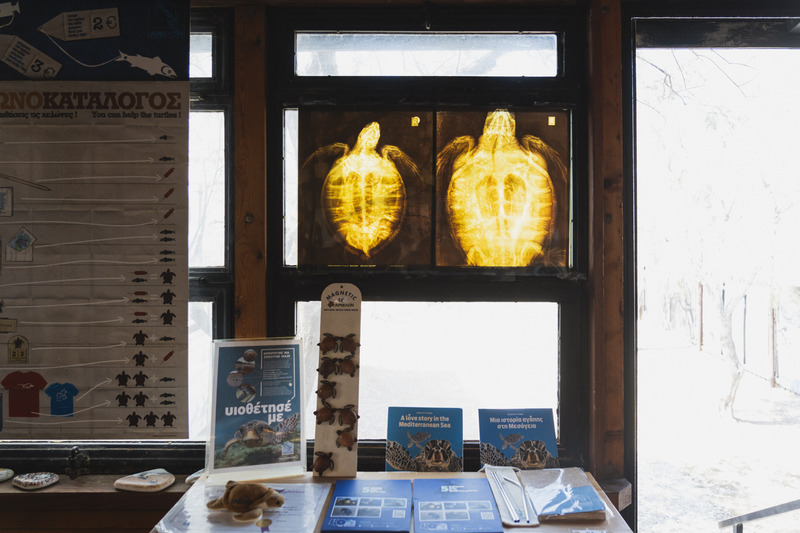
This is the country’s only Sea Turtle Rescue Centre, run by ARCHELON, the Sea Turtle Protection Society of Greece.

We visited the Rescue Centre, expecting to learn about sea turtles. Instead, we left with something far more valuable: a profound appreciation for the hundreds of people who dedicate their lives to protecting them.

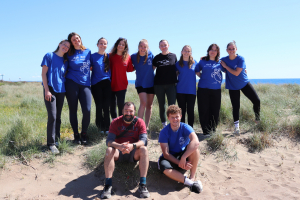
The first person to welcome us was John, one of ARCHELON's volunteers. Still a teenager, he greeted us with infectious enthusiasm and the kind of confidence that only comes from doing something you genuinely believe in. 

What surprised us most, however, was that John was the only volunteer on duty who spoke Greek. Around him were volunteers from every corner of the globe, who had travelled thousands of miles simply to help protect Greece's sea turtles. Every year, around 500 volunteers join ARCHELON's conservation projects, creating an international community united by one common purpose.

49592342 820620788285156 8122327337682337792 o

A Story That Began With Tracks In The Sand

Every great conservation story starts with a discovery.

For ARCHELON, that moment came during the summer of 1977, when Dimitris and Anna Margaritoulis, while on holiday in Zakynthos with their children, noticed unusual tracks stretching across the beach. At the time, there had been no scientific documentation proving that loggerhead sea turtles nested in Greece.

The discovery sparked years of research, and in 1983, the non-profit organisation ARCHELON – The Sea Turtle Protection Society of Greece was officially founded with one ambitious mission: to study and protect sea turtles and the fragile coastal habitats they depend on.

Today, ARCHELON protects nesting beaches across Greece, including Zakynthos, Chania, Rethymno, and Messara Bay in Crete, Kyparissia Bay, Koroni and Lakonikos Bay in the Peloponnese.
Collectively, volunteers monitor around 100 kilometres of nesting beaches every single summer. It is a remarkable operation, powered largely by people who simply choose to care.


To support ARCHELON’s work, make a donation here! To become a volunteer and discover available projects, learn more here! 


More Than A Rescue Centre

Although ARCHELON is best known for its rescue work, protecting sea turtles is only one part of its mission.

The organisation combines wildlife rehabilitation, scientific research, conservation activities, environmental education and raising public awareness under one roof.

The Rescue Centre in Glyfada operates 24 hours a day, seven days a week, receiving injured and sick turtles from every corner of Greece.

Meanwhile, on the nesting beaches, hundreds of kilometres away, volunteers patrol the coastline before sunrise, protect nests throughout the summer and help ensure hatchlings make it safely to the sea.

Back in Athens, schoolchildren visit the Rescue Centre throughout the year to discover the importance of marine conservation through educational programmes.

Where Every Turtle Has a Story

Walking through the gates of ARCHELON's Rescue Centre in Glyfada, it becomes immediately clear that this is not a place built around sadness.

Yes, every turtle arriving here carries a story of injury, danger or human impact. But the atmosphere is not one of defeat. It is a place filled with movement, dedication and hope.

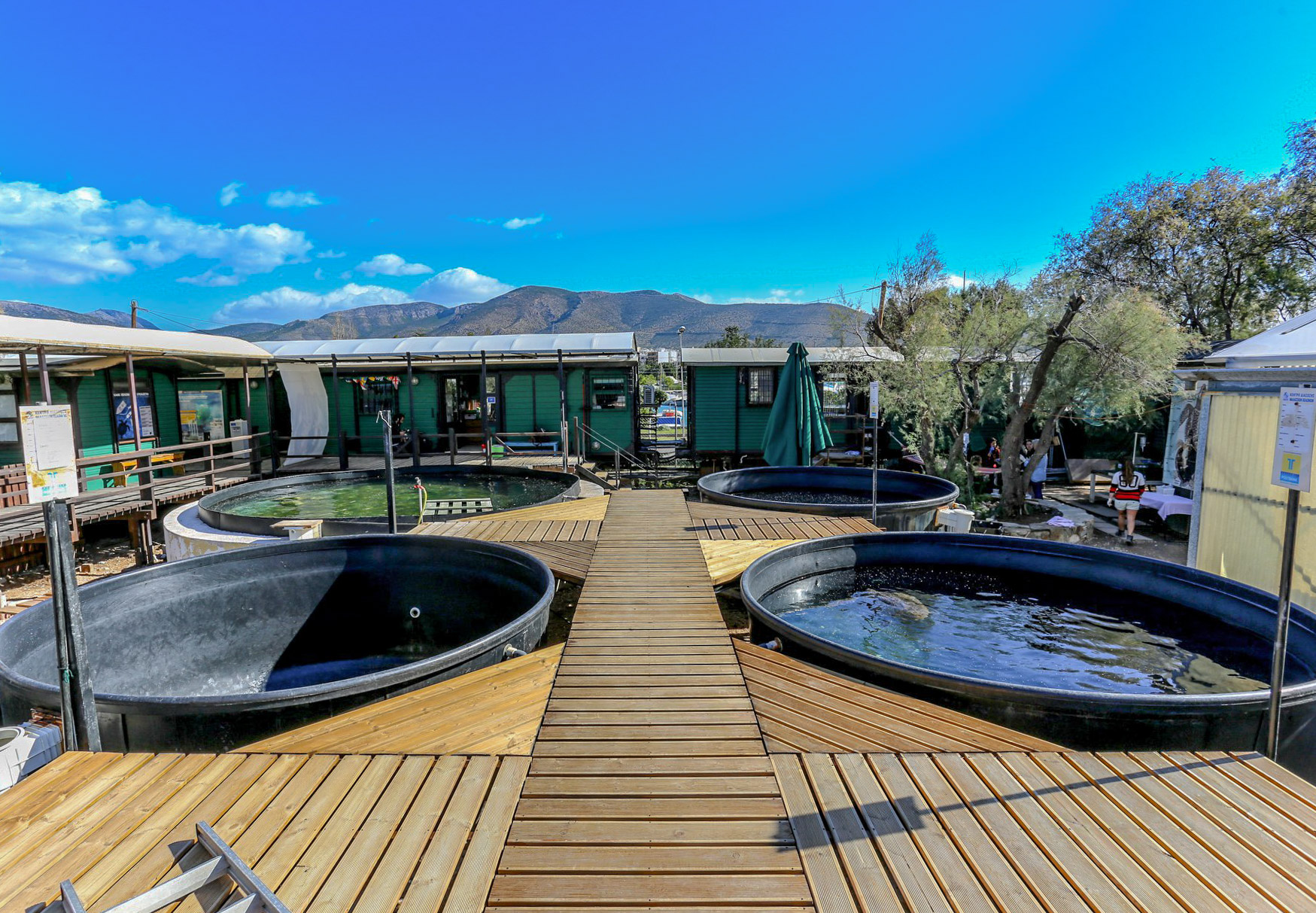
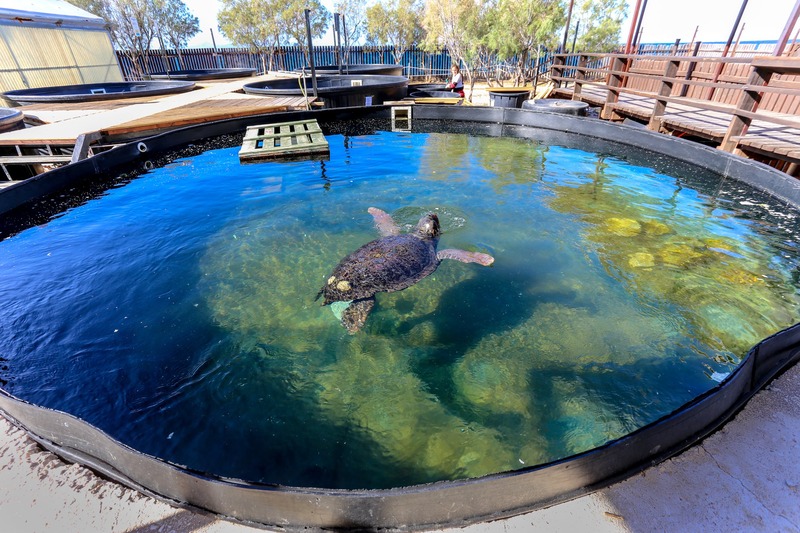
Every tank represents a second chance.

John began our tour by introducing us to the species of sea turtles that can be found in Greek waters. Although the focus of ARCHELON's work is primarily the loggerhead sea turtle (Caretta caretta), Greece is also home to two other species: the enormous leatherback turtle (Dermochelys coriacea), which can reach more than two metres in length, and the green sea turtle (Chelonia mydas).

But the turtles arriving at the Rescue Centre are not here because of natural causes. Most are victims of human activity.

Some have been injured by fishing equipment. Others have swallowed hooks hidden among their food and required surgery to remove foreign objects from their bodies. Some have suffered severe injuries caused by boats, while others arrive exhausted and stressed after dangerous encounters at sea. The Rescue Centre is often the last hope between survival and death.


rescue centre

A Place Built For Healing

One of the most unique parts of the Rescue Centre is the greenhouse area. Here, turtles suffering from more serious conditions—including pneumonia or severe injuries—are kept in controlled conditions to support their recovery.

It was one of the most moving parts of our visit. Seeing these ancient animals, some of which can live for more than 80 years, quietly recovering after experiences they should never have had, creates a strange combination of sadness and admiration.

Sadness, because so many injuries are caused by human actions. Admiration, because of the people who refuse to give up on them.

The rehabilitation team and volunteers work tirelessly, often performing delicate procedures and surgeries to remove fishing hooks, plastic waste and other dangerous materials from turtles that arrive at the centre.

One of the most powerful reminders of this work can be found in the ARCHELON gift shop. Among the items visitors can take home as a memory of their experience is a display of fishing hooks removed from rescued turtles. 

Each hook has the name of the turtle it was taken from. Each one represents a life that almost ended. Each one represents a turtle that was given another chance.

arxelon glyfada 7

The Moment Dimitris Showed Us What Rescue Really Means
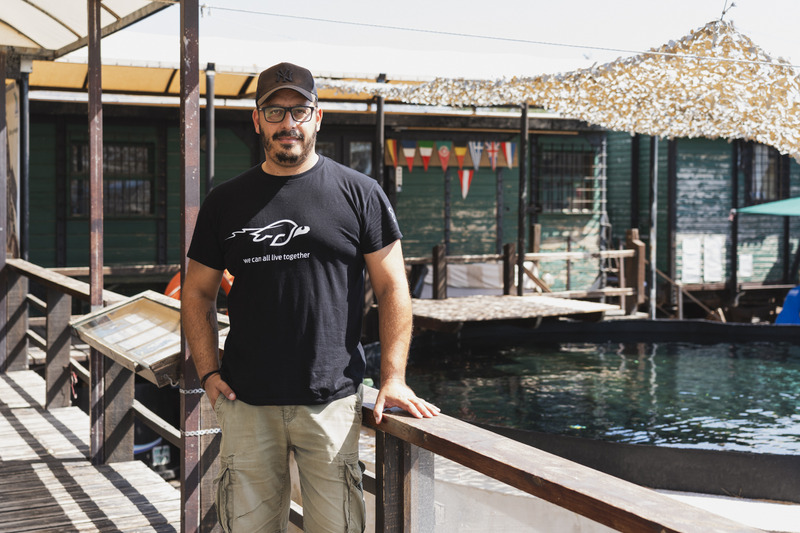
Just when we thought our visit was coming to an end, we met Dimitris, the head of the Rescue Centre.

An oceanographer with years of experience and an incredible depth of knowledge, Dimitris had one more thing to show us.

He opened videos of actual rescue operations and watching those moments was unforgettable.

Turtles found injured at sea, carefully transported, treated and eventually returned to the water. Moments of fear transformed into moments of freedom.

It was a powerful reminder that conservation is not an abstract idea. It is real people making real decisions every day that determine whether another creature gets to survive.

Dimitris also shared a wider perspective about our changing planet. He explained that Earth's climate has naturally gone through cycles of warming and cooling throughout history, including periods separated by thousands of years.

Nature has always had an extraordinary ability to adapt. Sea turtles themselves are already showing signs of adaptation.

For example, nesting seasons have gradually begun shifting earlier. While the first nests traditionally appeared later in the summer, today the first females may arrive as early as the beginning of May.
This change is connected to rising temperatures and the turtles' effort to adapt to new environmental conditions. But adaptation has limits. And this is why protection remains so important.

ARXELWN 5

The Quiet Work Behind Every Rescued Turtle

What makes ARCHELON remarkable is that the Rescue Centre is only one part of a much larger network. Every injured turtle treated in Glyfada represents an entire chain of people working behind the scenes:

The volunteers who patrol beaches.

The researchers who monitor populations.

The educators who teach children.

The people who report injured turtles.

The supporters who donate.

Without this network, many of these animals would never survive.

Since its creation, ARCHELON has rescued more than 1,600 sea turtles, successfully returning approximately 70% of them back to the sea. Those numbers represent thousands of hours of human dedication. But they also represent something bigger: a belief that even one turtle matters.

Protecting The Beaches Where Life Begins

During the nesting season, ARCHELON volunteers become the silent guardians of the coastline. Every morning, starting as early as 5:30 a.m., they walk along the beaches searching for the unmistakable signs left behind by female turtles during the night.

Their tracks often look surprisingly similar to tractor tyre marks stretching across the sand. Following these trails, volunteers locate nests, record important scientific information and ensure that each nest receives the protection it needs.

The work continues after sunset too, with evening patrols carefully monitoring the beaches while minimising disturbance to the turtles. Volunteers use red-light torches, because normal bright lights can confuse the nesting turtles and interfere with their nesting success .

A Journey Written In Nature’s Memory

When a female loggerhead turtle comes ashore, she follows an ancient instinct passed down through millions of years. Under the cover of darkness, she carefully chooses the perfect location, digs a chamber around 60 centimetres deep, lays her eggs and spends hours covering the nest with sand, carefully camouflaging it from predators.

The eggs are surprisingly small—about the size of ping pong balls—and a single female can lay between 70 and 120 eggs, sometimes creating several nests during one nesting season. Yet perhaps the most remarkable part of this process is also the most emotional: the mother turtle will never meet her babies. She gives everything to create a safe beginning for them, then returns to the sea, leaving the rest of the journey to the hatchlings.

Around one and a half months later, tiny turtles emerge from beneath the sand, no larger than a human ear, facing one of nature’s most difficult challenges: reaching the ocean. Guided by instinct, they move towards the brightest horizon, the natural reflection of moonlight over the sea, a behaviour known as phototaxis. But today, artificial lights from hotels, roads and buildings can confuse them, leading them away from the water and towards danger.

For these tiny creatures, every step matters. Only around one in every thousand hatchlings is expected to survive until adulthood, facing predators, vehicles, pollution and human activity along the way. This is why protecting nesting beaches and reducing light pollution is so important, because one wrong direction can change the fate of an entire generation.

And yet, despite these challenges, sea turtles possess one of nature’s most extraordinary abilities: the power to find their way home. After reaching maturity, female loggerheads often return to the same regions where they were born to create the next generation. They can travel thousands of kilometres across oceans and still navigate back, guided partly by magnetoreception, their ability to detect Earth’s magnetic field and use it as a natural map.

While females return to the beaches to nest, males remain in the sea and never come ashore, a behaviour that dates back millions of years to their ancient reptilian ancestors.

A Species That Came Back From The Edge
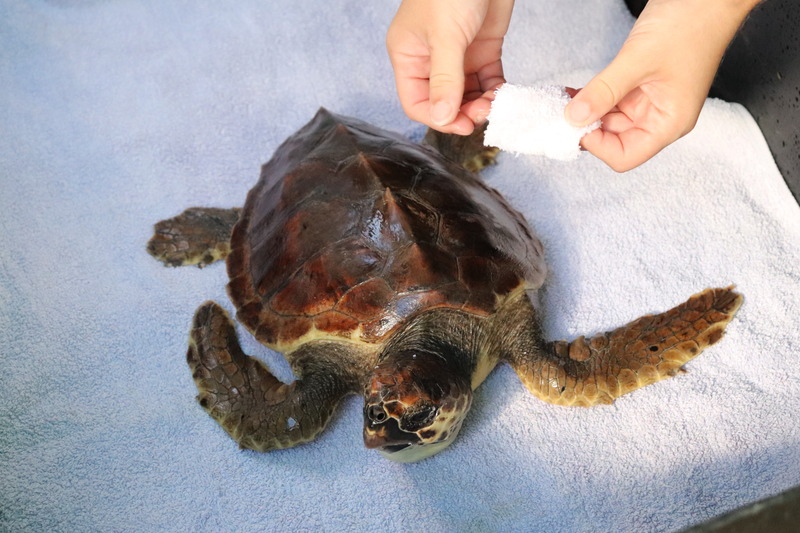
The loggerhead turtle was once classified as endangered in Greece. Thanks to decades of conservation efforts, including the work of organisations like ARCHELON, its status has improved to Vulnerable.

This is an important success story, but it is also where many people misunderstand conservation. Vulnerable does not mean safe. It means that progress has been made, but continued protection is essential.

Without volunteers monitoring nests, protecting beaches, educating communities and treating injured turtles, that progress could easily disappear.

treatment 2 2

What To Do If You Find A Turtle Or Hatchling

One of the most important messages ARCHELON shares with visitors is what to do when encountering a sea turtle. If you find an injured turtle, do not try to handle it yourself. The correct action is to immediately contact ARCHELON, whose specialised team can provide guidance and organise rescue, by calling the 24/7 Rescue Network at +30 6941 511 511.

If you find a small hatchling, it is essential not to pick it up with bare hands. Human hands can transfer bacteria and substances that may harm these fragile animals. 

Never place a hatchling directly into the sea. Those first steps from the nest to the water are a vital part of its development. The movement strengthens its muscles and helps it complete an important natural process that increases its chances of survival.

If you see hatchlings emerging from the nests in daylight, clear the top layer and smooth the sand in front of them and shield them from the sun, shading them until they enter the sea.  
Sometimes helping wildlife means knowing when not to interfere. Nature has designed these first moments for a reason. And ARCHELON’s work is about protecting that process, not replacing it.

Small Actions Create Big Changes

ARCHELON’s work continues because of the people who choose to support it. Donations help keep the Sea Turtle Rescue Centre operating, provide medical care and rehabilitation for injured turtles, maintain essential equipment and support the conservation programmes protecting nesting beaches across Greece. Every contribution, big or small, directly helps turtles receive the care they need and allows volunteers and experts to continue protecting nests, hatchlings and vulnerable sea turtle populations.

If you would like to become part of this effort, you can support ARCHELON by making a donation and helping provide life-saving care to rescued turtles. You can also choose to support the nesting projects, where volunteers work throughout the summer to monitor nests, protect hatchlings and collect important scientific data.

For those who want to experience conservation first-hand, ARCHELON welcomes volunteers from Greece and around the world. Volunteers take part in beach monitoring, nest protection, hatchling conservation, turtle rehabilitation support and environmental awareness activities. Whether you are a student, a researcher or simply someone who loves nature, there is a way to contribute.

To support ARCHELON’s work, make a donation here! To become a volunteer and discover available projects, learn more here! 

Visiting ARCHELON: An Experience That Supports Conservation

Perhaps ARCHELON’s greatest achievement is that it has transformed sea turtle conservation from something that belongs only to scientists into something everyone can participate in.

For visitors who want to experience the work of the Rescue Centre themselves, ARCHELON offers guided Sea Turtle Rescue Tours.

The experience is available by reservation for small groups in both Greek and English, making it accessible to visitors from around the world. It is suitable for adults and children, and it is also partially accessible for wheelchair users.

The Rescue Tour includes a donation of 60€ that contributes to the care of a rescued sea turtle for 10 days, helping cover essential rehabilitation costs. You are welcome to learn more about visiting the centre, HERE!
Coffee in Greece isn't just a morning pick-me-up; it's a lifestyle. It's the Freddo clutched on the way to work, the excuse for a three-hour catch-up with friends, the iced cappuccino balanced on a gym treadmill (yes, we saw that), and basically the ritual that punctuates every part of the day. Once you've mastered the art of ordering like a local, you'll realise that in Greece, coffee is about far more than caffeine ; it's about slowing down, catching up and soaking up everyday life. 

Feeling slightly intimidated by the endless options? Don't worry. Here's your step-by-step guide to ordering coffee like an expert this summer.

Step One: Choose Your Coffee

Ελληνικός καφές (Ellinikós kafés) – Greek Coffee

SnapInsta.to 628178441 18312005704255750 1278219019348522303 n
@thehellenicodyssey

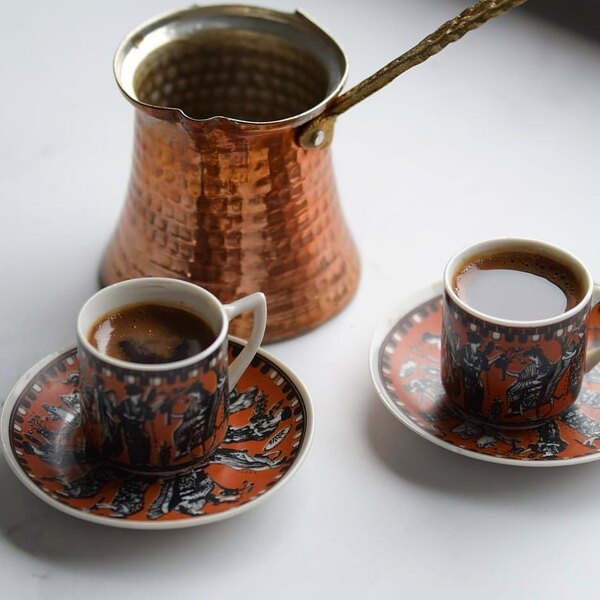
Let's begin with the classic.

Greek coffee is thick, rich and unfiltered, brewed slowly in a small briki over a low flame before being served in a tiny cup with a delicate layer of foam on top. The coffee grounds settle at the bottom, so don't drink the very last sip unless you fancy a mouthful of sediment.

Strong, slightly bitter and wonderfully aromatic, this isn't your grab-and-go coffee. It's a drink made for lingering over, ideally while putting the world to rights with friends.

Φραπέ (Frappe)

SnapInsta.to 618705128 18086386130515172 3821050464619805288 n@demetrabrodskybooks

The icon of Greek summers.

Made with instant coffee shaken until deliciously frothy, the frappe has been keeping Greeks cool since the 1950s. It's light, refreshing and wonderfully nostalgic, perfect for long beach days or lazy afternoons in the shade.

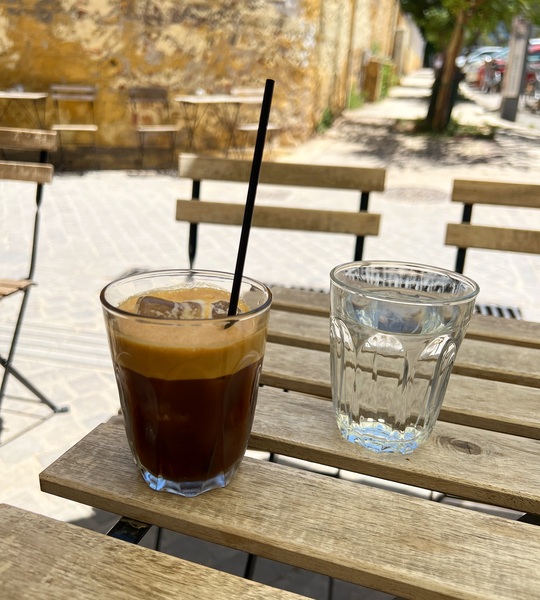
Φρέντο Εσπρέσο (Freddo Espresso)

SnapInsta.to 500910436 18064593260510490 7793795029854020849 n@blurred_limes_

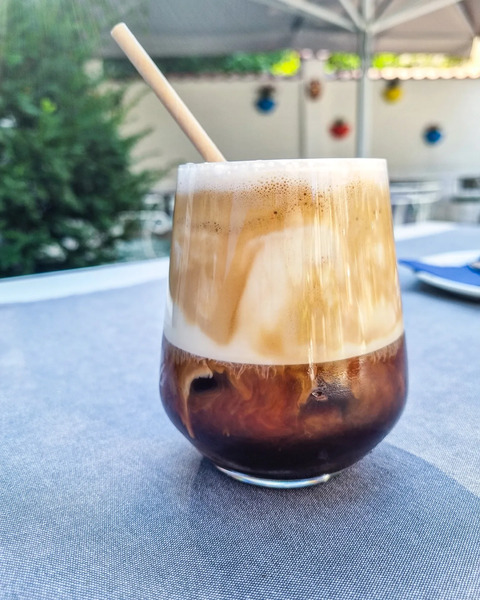
Simple, refreshing, addictive: A double shot of espresso is shaken vigorously with ice until perfectly chilled and topped with a velvety crema. By default, it's served black, although you can ask for sugar when ordering.

While Freddos are the undisputed stars of summer, don't expect Greeks to switch to hot coffee in winter. Plenty of locals happily sip an iced Freddo even when it's 10°C outside. 

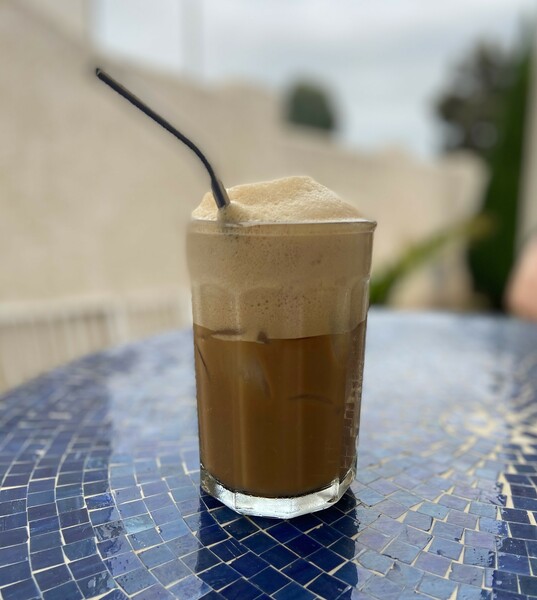
Φρέντο Καπουτσίνο (Freddo Cappuccino)

SnapInsta.to 640935515 18569100280024054 6698209427990708383 n@_martina_dvorakova_

Many quickly find themselves becoming loyal Freddo Cappuccino devotees.

It starts with a Freddo Espresso before being crowned with a thick cloud of cold, silky milk foam, usually made with low-fat milk for that signature airy texture. Served over ice in a tall glass, it's creamy without feeling heavy and utterly made for Mediterranean summers.

Καπουτσίνο (Cappuccino)

SnapInsta.to 641779044 18517314307074086 3375847954715614530 n
@abelardopena.jr

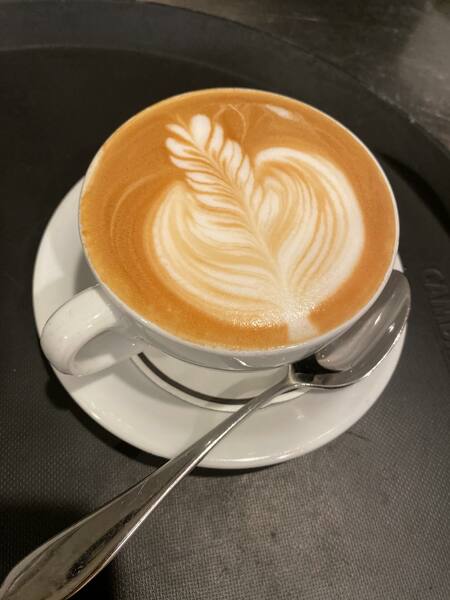
Prefer something warm? The classic cappuccino is just as popular in Greece as it is elsewhere in Europe, making it a safe choice if you're after familiar comfort.

Step Two: Customise Your Coffee

Once you've chosen your coffee, comes the important question: how do you take it?
Greeks are precise when it comes to coffee preferences.

Here's your cheat sheet:
  • Σκέτος (Skétos) – black, with no sugar.
  • Μέτριος (Métrios) – medium sweet; the classic balanced choice.
  • Γλυκός (Glykós) – sweet.
  • Βαρύς (Varýs) – stronger coffee with less sugar.
  • Ελαφρύς (Elafrýs) – lighter coffee with more sugar.
  • Βαρύγλυκος (Variglykos) – strong and sweet.
  • Ναι και Όχι (Ne ke Ohi) – somewhere in between, for the wonderfully indecisive.
If you prefer your coffee dairy-free, you're in luck. Most cafés now offer alternatives such as oat, almond or soy milk alongside regular milk.

And yes: decaf is available too, especially in specialty coffee shops, although you may not find it in every neighbourhood café.

Finally, don't be surprised when your coffee arrives with a complimentary glass (or bottle) of water. It's standard practice in most Greek cafés and considered part of the service. 

Step Three: Learn a Few Handy Greek Phrases

Ordering in Greek is always appreciated, even if you only know a few words. Here are some useful phrases to get you started:

Καλημέρα! Έναν καφέ, παρακαλώ.
Kaliméra! Énan kafé, parakaló.
Good morning! A coffee, please.

Τι καφέ έχετε;
Ti kafé éhete?
What coffees do you have?

Θα ήθελα έναν φραπέ, μέτριο.
Tha íthela énan frapé, métrio.
I'd like a medium-sweet frappe, please.

Με ζάχαρη ή χωρίς;
Me záchari i horís?
With sugar or without?

Για εδώ ή για έξω;
Ya edó i ya éxo?
To have here or to take away?

You'll quickly notice that takeaway coffee is almost a fashion accessory in Greece. Whether people are heading to work, running errands or strolling along the seafront, there's a good chance they're carrying an iced coffee in hand. 

Ευχαριστώ πολύ!
Efharistó polí!
Thank you very much!

Don't worry about perfect pronunciation. A smile and a polite "parakaló" will go a long way, and café staff are very used to helping newcomers. 

Our Last Tip…

Turn your coffee break into a truly indulgent moment by enjoying it alongside a traditional Greek pastry or sweet.

Whether it's a flaky bougatsa dusted with icing sugar, a syrup-soaked galaktoboureko, a slice of orange cake or a buttery biscuit served alongside your espresso, pairing your coffee with a little treat is all part of the experience.

After all, if you're going to embrace Greek coffee culture, you may as well do it properly!

SnapInsta.to 481215345 2334496773572715 2397814721023483766 n
@hellenic_world_
Page 11 of 481