XpatAthens

XpatAthens

In the heart of Ano Petralona, beneath the Hill of Philopappou, a historic neoclassical house is finding a new purpose. The Philopappou Project brings together flexible working, a sense of belonging and the character of one of Athens' most atmospheric neighbourhoods.

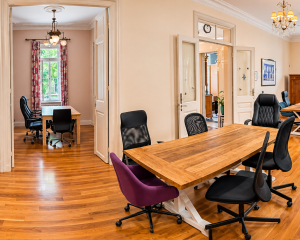
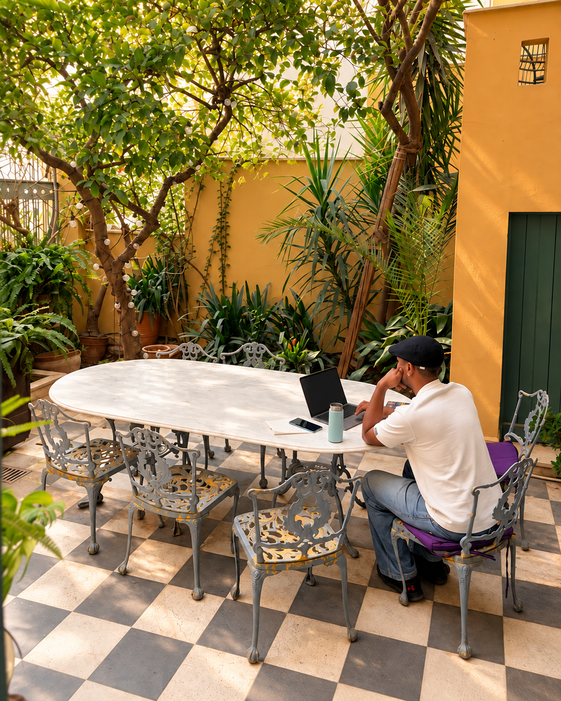
There is something quite different about working somewhere that feels like a home rather than an office. High ceilings, beautiful wooden floors, generous natural light, rooms with their own personalities and a little garden tucked away between the buildings. Add a good coffee, a friendly dog and the freedom to work whenever inspiration strikes, and you begin to understand what The Philopappou Project is all about.

We recently visited this distinctive coworking space in Ano Petralona, and what immediately caught our attention was that it doesn't follow the conventional coworking model. Rather than creating a large, anonymous office filled with rows of desks, the idea here is much more personal: a boutique workspace where independent professionals, remote workers, entrepreneurs and small teams can work alongside like-minded people while becoming part of a genuine community.

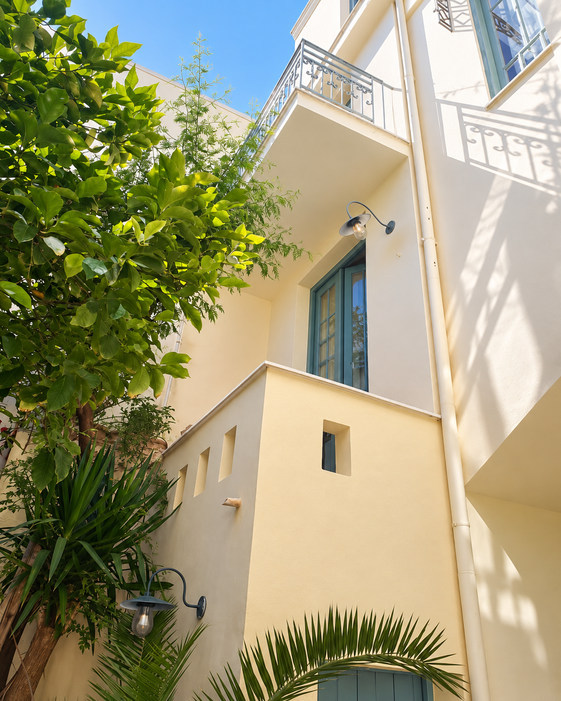
Located at 26 Troon Street, The Philopappou Project has transformed a historic Athens residence into a contemporary working environment, without losing the character that makes the building special.

More Than A Coworking Space: A Place For Work, Events & Business Services

While coworking is an important part of The Philopappou Project, the concept extends well beyond providing a place to work. The property brings together 3 key offerings: flexible coworking facilities, a distinctive venue for hosting events and professional gatherings, and virtual office services for businesses and independent professionals looking for a presence in Athens. Through its virtual office solutions, the project also offers a professional registered business address, making it possible for businesses to establish an official presence without needing to rent a permanent physical office. Together, these services make The Philopappou Project a flexible professional hub designed to support different business needs.

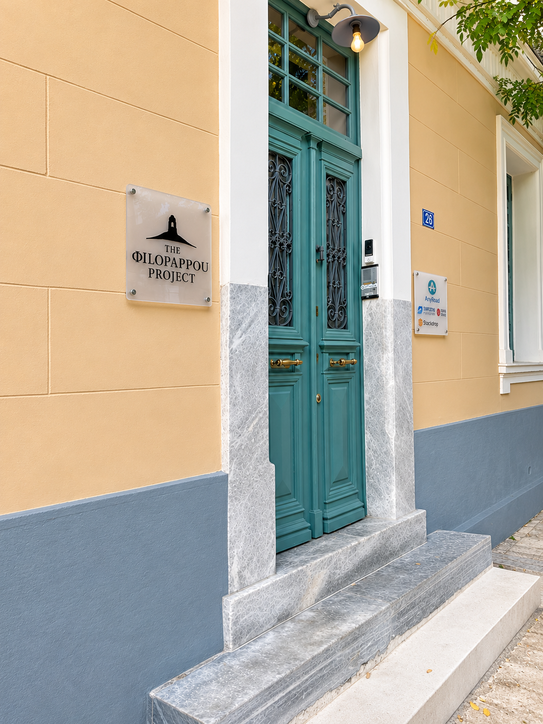
Teal Doorway with Marble Steps

A Historic Neoclassical House With A New Purpose

The story begins with the building itself. Dating back to 1905, this beautiful neoclassical house has had a life long before becoming a coworking destination. For generations, it served as a home. Around seven years ago, the entire property was leased by an American company, which used the building as its headquarters. When the company's needs eventually changed, the opportunity arose to give the house an entirely different purpose.

That idea became The Philopappou Project.

IMG 7044 2

Founded by Greek-American entrepreneur Michael Luna, the project opened its doors as a boutique coworking concept, bringing new life to the property while preserving its residential character. 

The building itself is one of its greatest assets. It is also a building with a little cinematic history. Its distinctive interiors have attracted film and television productions, with the house appearing in the Greek television series Mpampa, s'agapo! and the 2009 film Pethaino gia Sena. It has also been featured in Aegean Airlines' magazine in an article about the neoclassical houses of Petralona.

A Membership Built Around Community

Perhaps the most interesting aspect of The Philopappou Project is the philosophy behind it. This is not a coworking space designed simply to provide desks to as many people as possible. It is built around the idea of creating a close-knit community of professionals who enjoy working alongside like-minded people.

That is why the space operates exclusively through memberships, rather than offering traditional walk-in or drop-in access. And the process of becoming a member is a little more personal than simply signing up for a desk. Michael takes the time to meet prospective members for an introductory conversation, getting to know them, their professional backgrounds and their approach to working. For him, finding the right people is just as important as creating the right workspace.

There is a very practical reason behind this approach, too. With members using the house throughout the day for focused work, meetings and calls, maintaining a comfortable, respectful atmosphere is essential. By getting to know people before welcoming them into the community and managing access through an app-based system, Michael can help protect the environment everyone has come to enjoy. The intention is to avoid unexpected interruptions and ensure that members can concentrate on their work without compromising the experience of others.

Secret Garden

It is a deliberate approach to coworking, where the quality of the community takes priority over the number of people coming through the door.

In keeping with this philosophy, the space accommodates approximately 20–25 people per day. Rather than filling every available corner with desks, the idea is to maintain a boutique environment where members have room to work comfortably, get to know one another, exchange ideas and build meaningful professional connections.

For those who prefer a more permanent working arrangement, there is also the possibility of having a dedicated private office for a small team. These spaces offer the opportunity to establish a more permanent base within the building while still enjoying the benefits of the wider coworking community and its shared facilities. And the project is far from standing still: The Philopappou Project continues to evolve, with plans to introduce additional private office spaces as the community grows and the needs of its members develop.

The sense of community extends beyond working hours, too. Regular get-togethers, social gatherings and organised events create opportunities for members to connect outside their everyday routines. For freelancers and remote professionals who might otherwise spend most of their working days alone at home, this can make a real difference.

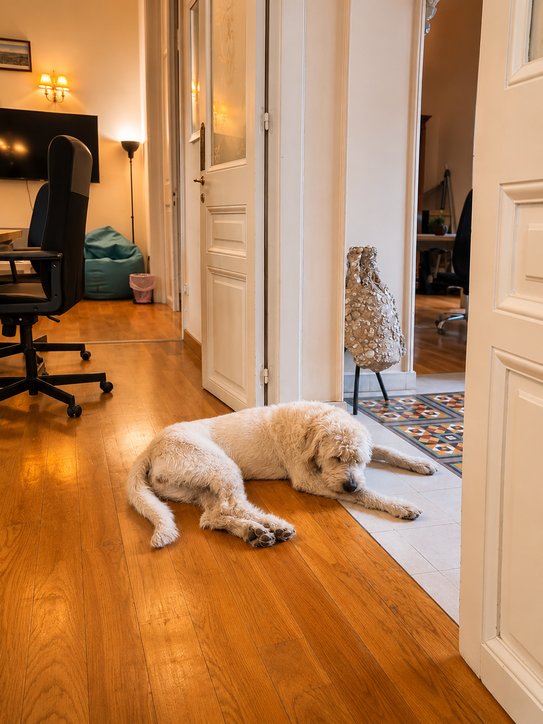
And, of course, no introduction to the community would be complete without mentioning Yuki, the adorable four-legged mascot of the space. Michael's dog is a much-loved presence around the house, adding another touch of warmth to an already welcoming, genuinely pet-friendly environment.

Sleeping Dog in a Warm Home Office

A Workspace That Works Around You, 24/7

One of the most appealing aspects of The Philopappou Project is its 24/7 accessibility. There is no conventional office timetable, so members can organise their working hours according to their own schedules.

Whether you are an early riser, someone who prefers working late into the evening or a remote professional operating across different time zones, the flexibility is there.

Access is managed through an app-based system, allowing members to enter the building independently. The system also provides the team with visibility over access, helping maintain the security and exclusivity of the space.

Connectivity is another priority. Members benefit from fast fibre-optic internet, complemented by Starlink satellite connectivity, offering an additional connection option. Electricity, water, heating and air conditioning are also included.

Importantly, members are not expected to bring their entire office with them. The space provides equipment and practical working essentials without additional charges, including printers, projectors and screens.

There are two meeting rooms for private conversations, presentations and professional meetings, alongside storage facilities for those who need somewhere to keep their belongings.

Beyond the practical essentials, there are plenty of little touches that make the working experience more enjoyable. Members have access to a shared kitchen stocked with snacks, coffee facilities with a proper coffee machine, and even a table football game for those moments when it's time to step away from the screen, unwind and challenge a fellow member to a quick match. There are also storage facilities and a shower, making the space particularly convenient for those who spend long hours working there.

Discover The Rooms: From The Secret Garden To The Romeo & Juliet Balcony

One of the most enjoyable parts of exploring The Philopappou Project is discovering that every corner of the house has its own personality. Rather than feeling like a conventional office, the building retains the charm of its former life as a residence, with original architectural details, beautiful furnishings and little unexpected spaces that make you want to explore further.

The first-floor garden, affectionately known as the Secret Garden, is one of its most charming features. Surrounded by greenery, it offers a peaceful outdoor setting where members can enjoy their coffee, take a break or have an informal conversation away from their desks. It is also a lovely setting for smaller gatherings, accommodating around ten people.

Terrace Work

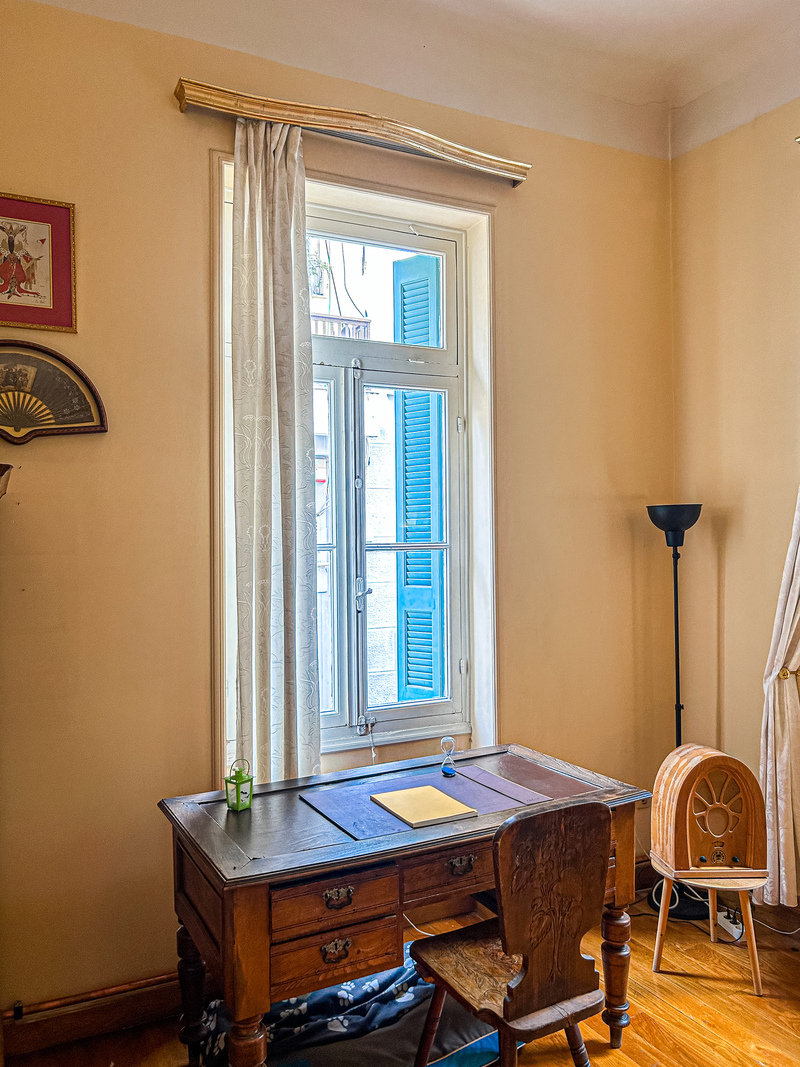
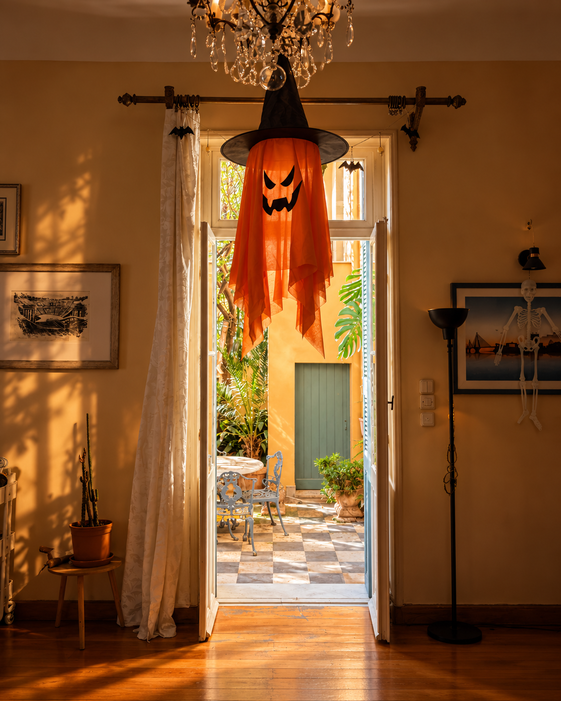
Upstairs, the house reveals even more of its character. The original wooden floors, alongside sections featuring beautiful patterned tiles, have been carefully preserved, while the traditional neoclassical windows allow natural light to flow throughout the rooms. There is a lovely sense of continuity between the building's past and its present, with original furniture sitting alongside more contemporary working areas. 

Other details are equally memorable. The second-floor marble fireplace is a beautiful reminder of the house's original character, while the bathroom, playfully named the Grand Budapest Bathroom, stands out with its rich emerald-green tiles and almost regal atmosphere.

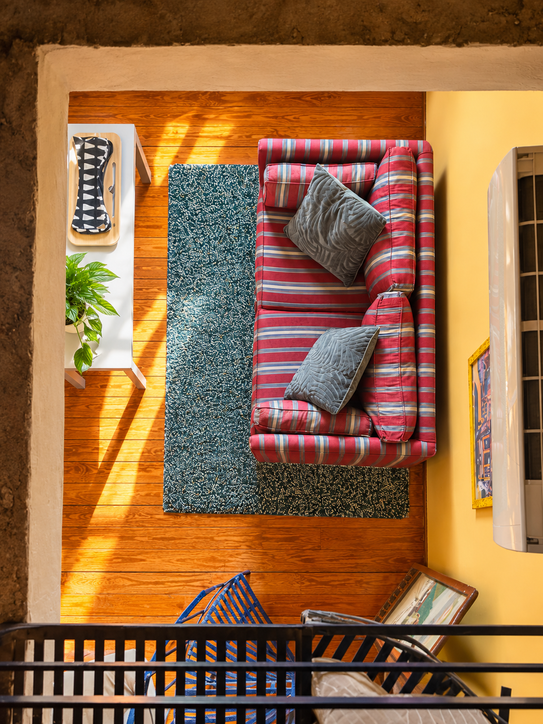
One of the corners I particularly loved, however, was a cosy little nook tucked between the interior and the terrace. Almost like a miniature attic, this charming elevated corner sits on a wooden platform. With a comfortable sofa, an armchair and a window overlooking the surroundings, it feels like the perfect little hideaway for reading, enjoying a coffee or simply taking a moment away from work. Just beside it, an old-fashioned wrought-iron staircase leads up to the terrace, adding yet another beautiful architectural detail to the experience.

Sunlit Top Down Cozy Living Room

And the terrace itself is worth discovering. Offering 360-degree views across the surrounding neighbourhood and towards Philopappou Hill, it provides a wonderful outdoor escape. We can easily imagine this becoming a favourite spot during the warmer months, particularly in the evenings, when fairy lights illuminate the terrace and the atmosphere becomes even more inviting.

There is also the Romeo & Juliet Balcony, another lovely little outdoor corner where members can step away from their screens, enjoy their coffee and take in the atmosphere of the neighbourhood.

Romeo and Juliet Balcony

What makes these spaces so special is that they haven't been stripped of their original identity to accommodate a modern workspace. Instead, the house's history, architectural details and residential charm have become an essential part of the coworking experience. 

From Working Together To Bringing People Together: Events At The Philopappou Project

Event hosting is one of the key offerings of The Philopappou Project, opening the doors of this distinctive property to individuals, businesses and independent organisers looking for a venue with character in Athens. Beyond serving its coworking community, the house is available for private events, workshops, professional gatherings, wellness activities and social occasions.

With several individual spaces, a garden and a rooftop terrace, the property offers different possibilities depending on the nature and size of each event. Organisers can hire selected areas or make use of the entire house, creating an atmosphere that feels very different from a conventional event venue.

The space has already welcomed a variety of activities, including workshops with a psychotherapeutic focus, parties, yoga retreats, parties and other community-oriented gatherings.

Pumpkin Ghost in a Golden Courtyard

This flexibility makes it particularly interesting for independent event organisers, wellness professionals, creative communities and businesses looking for a distinctive venue in Athens.

Event arrangements and pricing depend on the areas selected, whether that is the first floor, second floor, rooftop or the entire house.

One important detail is that members always receive priority when it comes to booking the space. After all, the community remains at the heart of the project.

Sunlit Rooftop Terrace Overlooking the City 2


Ano Petralona: Working In One Of Athens' Most Characterful Neighbourhoods

The location is another reason why The Philopappou Project feels so different.

Situated in Ano Petralona, the property is surrounded by a neighbourhood that has managed to retain much of its authentic Athenian character. Away from the busiest tourist streets, Petralona offers a more relaxed atmosphere, with traditional neighbourhood cafés, independent restaurants, local shops and small cultural spots.

It is the kind of area where you can discover a favourite coffee place just around the corner, enjoy a relaxed lunch or finish the working day with dinner somewhere nearby.

And then, of course, there is Philopappou Hill.

Just a short walk from the building, the Hill of Philopappos is one of Athens' most beautiful green spaces. Its walking paths, pine trees, archaeological interest and open views towards the Acropolis make it a wonderful escape from the city's everyday rhythm.

The hill takes its name from the Monument of Philopappos, built in honour of the Roman-era benefactor Gaius Julius Antiochus Epiphanes Philopappos. It is also closely connected to the wider historical landscape surrounding the Acropolis.

One of the lovely things about this location is how quickly you can move between different sides of Athens. You can spend your morning working in a peaceful residential neighbourhood and, just a little later, find yourself surrounded by the city's ancient history.

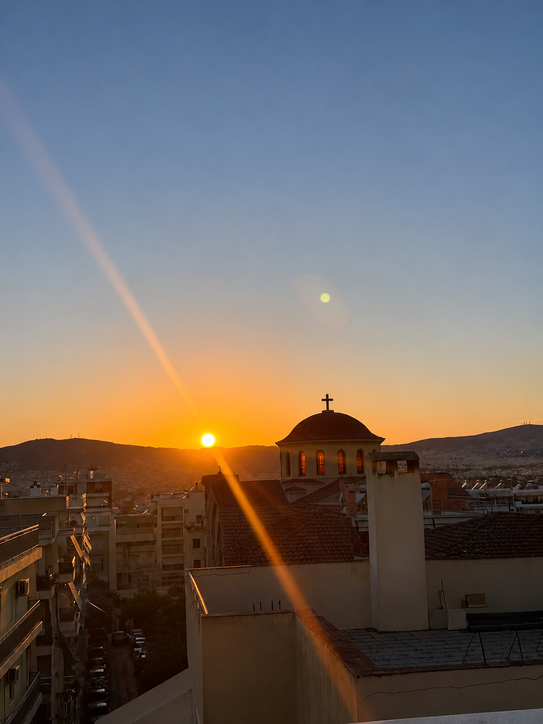
Golden Sunset Over the City 2

The Philopappou Project is approximately an eight-minute walk from Petralona Metro Station, while Thissio and the Acropolis area are around 12–15 minutes away on foot. Philopappou Hill itself is just a three-minute walk from the property.

There are also cafés, restaurants, a cinema and parking options in the wider neighbourhood, making the area convenient for both everyday working and after-work activities.

In many ways, the location reflects the philosophy of the project: a place that feels connected to Athens without being caught up in its busiest parts.

Coworking, Virtual Offices & Business Address Services

The Philopappou Project offers different membership options depending on how frequently you plan to work from the space and the type of environment you need.

Whether you are looking for occasional access, a regular workspace or your own dedicated desk, there are flexible arrangements to suit different working styles and professional needs.
Coworking memberships start from €180 per month, with options ranging from flexible access for a set number of working days to unlimited hot-desking and dedicated desks with personal storage. Longer-term commitments are also available, with special rates for three-, six- and twelve-month memberships.

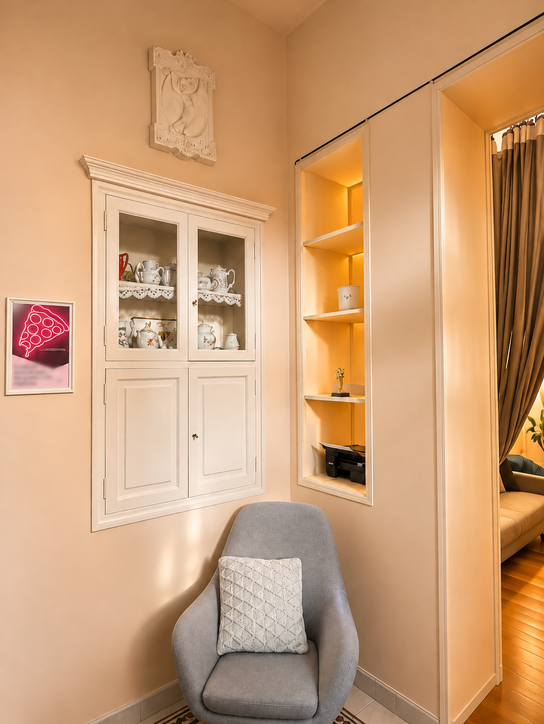
Neon Pizza Poster in Cozy Room

Beyond coworking memberships, The Philopappou Project provides a range of professional services for businesses and individuals who need a presence in Athens without necessarily maintaining a permanent office. These include virtual office solutions, registered business address services, meeting room hire, private team spaces and event hosting. Virtual office services start from €40 per month, offering an accessible option for professionals and businesses looking for a professional base in the city.

Together, these services position The Philopappou Project as more than a workspace: it is a place where businesses can establish a professional presence, organise events, meet clients and access flexible working facilities, all within one distinctive property.

For a closer look at the available memberships, services and current rates, visit the official website or contact the team directly.

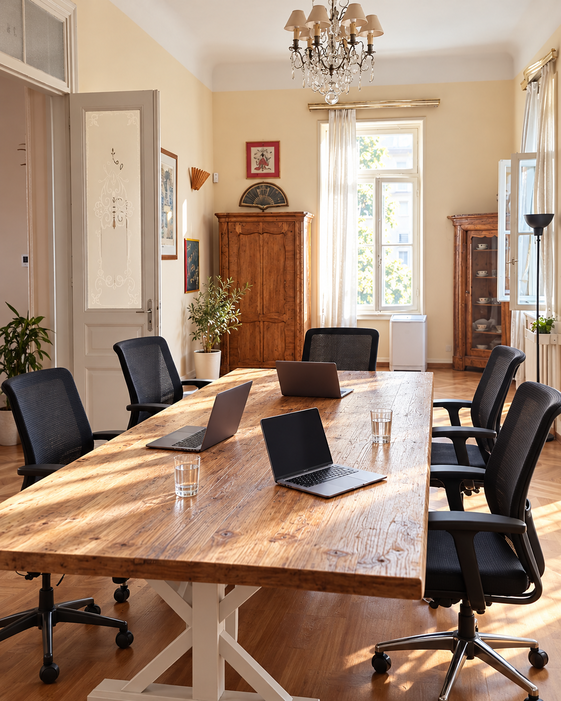
Sunlit boutique coworking interior

A Different Way To Experience Work In Athens

As remote working continues to change the way people organise their professional lives, spaces like The Philopappou Project offer an interesting alternative to both the traditional office and working from home.

It combines the practical requirements of a modern workspace with the atmosphere of a historic Athenian residence. It offers flexibility without sacrificing connection, privacy without losing the sense of community, and a working environment that feels personal rather than corporate.

What makes the concept particularly appealing is its understanding that a coworking space should be about more than providing somewhere to open a laptop. It should also create opportunities to meet people, exchange ideas, discover new perspectives and feel part of something.

And perhaps that is the best way to describe The Philopappou Project: a workspace worth leaving home for.

Ready to find your place in the community?

Arrange a tour and experience the space for yourself!

The Philopappou Project
26 Troon Street, Ano Petralona, Athens 11851
Telephone: +30 694 633 8325
Tuesday, 24 November 2026 01:05

The Almost Christmas Athens Rooftop Party

XpatAthens and newly launched WeAreThree Events invite you out on Saturday, December 12 from 17:00-22:00. We're getting together to enjoy (an early) evening party. Enjoy the sunset, have a drink with a view of the Acropolis, and have fun with great people from around the world!

Whether you're new to Athens or having been living here for years ~ come out for good music, friendly conversations and a relaxed evening with expats, locals, travellers and nomads.

Join us for our Almost Christmas, Christmas Party in Athens!


PRICE & RESERVATION:


Price per person in advance: €10 
Payment Link: https://pay.vivawallet.com/oloi-mas-one-amke-payment-link

Your €10 entry includes:

> A welcome shot of Masticha when you arrive.
> A name tag to help you meet people.
> A DJ bringing everyone to the dance floor!

Note: Drinks are not included in the entry fee. Consumption is payable directly to the venue.
 
Price per person at the door: €12 
Space is limited. Book your place and come enjoy the evening! 
Email any questions that you have to: info@wearethree.eu 
Tuesday, 24 November 2026 00:07

How Technology Can Help You Sleep Better?

About one in three adults aren't getting enough sleep on a regular basis, according to the Centers for Disease Control and Prevention and that figure hasn't budged much over the past decade. Poor sleep damages mood, memory, metabolism, and long-term heart health, so it's hardly a minor inconvenience. The good news? Technology has genuinely caught up with the problem. From wearable trackers to smart sound systems, the right tools don't just flag that your sleep is bad; they hand you real options to fix it. This article covers exactly how technology can help you sleep better, what the science says, and how to build a routine that actually holds.

The Science Behind Sleep Tech & Why It Works

Sleep technology works because it targets the two things that wreck rest most reliably: environment and behavior. Devices listed among the best tools for sleep address real physiological triggers - light exposure, sound, temperature, and timing - rather than just displaying the problem on a screen. Your body runs on a circadian rhythm, a 24-hour internal clock that responds to environmental cues called zeitgebers. When those cues get thrown off by bright screens, irregular schedules, or ambient noise, your brain can't produce melatonin at the right time. Sleep tech steps in at exactly that point. The phrase "best tools for sleep" isn't just marketing copy; it describes a genuine category of devices studied by sleep researchers at institutions like Harvard Medical School and the National Institutes of Health. Knowing what these tools actually do to your nervous system helps you pick the ones worth buying, rather than spending money on something that looks impressive but doesn't shift the underlying physiology.

How Sleep Trackers Give You Real Data

A sleep tracker - whether it's a ring, a wristband, or a bedside device - monitors your heart rate, movement, and in some cases blood oxygen levels throughout the night. That data gets translated into a picture of how much time you spend in each sleep stage: light, deep, and REM. Most people assume they sleep fine until they see the numbers. It's common to discover that what felt like eight hours was actually five and a half, with long periods of restless waking that you don't consciously remember. The Oura Ring and similar devices don't just report; they detect patterns over days and weeks, so you can identify which habits (a late meal, alcohol, a high-stress workday) actually push your sleep quality down. That feedback loop is what makes trackers genuinely useful. Without data, you're guessing. With it, you can run small experiments: adjust your bedtime by 20 minutes, cut caffeine before noon, keep the room cooler, and compare the results across a two-week window.

Sound & Light Devices That Reset Your Internal Clock

Light is the strongest environmental signal your brain uses to set its internal clock. Too much blue-spectrum light in the evening suppresses melatonin production, and most homes, plus nearly every phone and laptop, put out exactly that kind of light. Smart bulbs with tunable color temperature can shift on their own from cool white during the day to warm amber after sunset, no manual adjustment required. Red-spectrum night lights in hallways and bathrooms let you move around at night without resetting your sleep cycle the way a bright overhead fixture would. On the sound side, white noise machines and pink noise speakers mask the irregular sounds (traffic, neighbors, pipes) that trigger brief arousals throughout the night. A 2021 study from Northwestern University found that slow-oscillation auditory stimulation during non-REM sleep improved memory consolidation the following morning. The effect wasn't subtle. Pairing a consistent sound environment with managed light exposure is one of the most science-backed approaches to better sleep that doesn't require a prescription.

Building A Tech-Assisted Bedtime Routine That Actually Works

The hardest part of sleep improvement isn't finding a device, it's using it consistently. Technology helps most when it automates the parts of a sleep routine that humans tend to skip because they're tired, distracted, or just forget. Smart home ecosystems let you program a sequence of events: lights dim at 9:30 PM, the thermostat drops to 67 degrees, the white noise machine starts, and your phone switches to Do Not Disturb, all without manual input. That kind of automation removes the friction that normally kills good intentions. The best results come from treating your devices as infrastructure rather than gadgets. Set them once, trust the routine, and measure the outcome over a few weeks. Behavior change research consistently shows that automation outperforms willpower for habits that require consistency across dozens of days. Sleep is no different. A single good night doesn't rebuild your sleep architecture; a nightly sequence does.

Smart Thermostats & Temperature Control

Your body temperature needs to drop by about one to two degrees Fahrenheit for you to fall asleep and stay asleep. Most people set their thermostat for daytime comfort (somewhere around 70 to 72 degrees) then can't figure out why they toss and turn. Smart thermostats like Ecobee or the Google Nest let you schedule a temperature drop that starts roughly an hour before your target bedtime and holds through the early morning, when your body naturally begins to warm back up. Some people take it further with a mattress cooling pad, which circulates water at a set temperature through the bed surface. For hot sleepers especially, this makes a dramatic difference in sleep continuity. The American Academy of Sleep Medicine points to 65 to 68 degrees as the ideal sleep environment for most adults, and smart thermostats make hitting that target automatic. You don't have to get up and adjust anything. The environment shifts on its own, and your biology follows.

Managing Screens Without Giving Up Your Devices

Telling people to stop using their phones at night is perfectly reasonable advice that almost nobody follows. A more practical move is making your devices work with your sleep biology instead of against it. Night Shift on iPhone and Night Light on Android shift screen color toward warmer tones after sunset, reducing blue light exposure without stripping away functionality people actually need. Blue light-blocking glasses do the same job if you're watching a television or using a computer monitor that doesn't have a built-in filter. But beyond color, the bigger issue is cognitive arousal, the mental stimulation from news, social media, or work email that keeps your nervous system running long after you've put the phone down. App timers and screen time limits, built natively into both iOS and Android, can lock you out of high-stimulation apps after a chosen hour. That's not punishment; it's a boundary your future self will appreciate. Pair that with a simple wind-down app guiding you through a short breathing or body-scan exercise, and the gap between screen time and sleep time gets a lot shorter.

Conclusion

Technology works best for sleep when it replaces guesswork with data and willpower with automation. Trackers show you what's actually happening while you rest, light and sound devices correct the environmental signals your circadian rhythm depends on, and smart home tools make a consistent pre-sleep routine something that runs itself. You don't need every category, start with one device that targets your specific problem, track the results for two weeks, and build from there. Understanding how technology can help you sleep better is about matching the right tool to the real cause of your poor sleep, not collecting gadgets. The science is solid. The tools are more accessible than they've ever been. And consistent, restorative sleep is a problem technology is genuinely equipped to help you solve.

In Greece, the Peloponnese might just be home to some of the country's strangest and most surreal locations.

From the haunted village of Timboulis, where peculiar motionless inhabitants are brought to life by magic, to an abandoned castle straight out of a fairy tale, the region has no shortage of unexpected wonders.

Driving from Olympia to Pylos, you will eventually find yourself in the town of Agrilos, overlooked by a rather magnificent architectural anomaly: the Fairytale Castle of Agrilis.

SnapInsta.to 657531745 18088853816239633 6579690839160858361 n
@angela_angierose

As Greece emerged from the post-war period, the country was rebuilding itself and redefining its cultural identity. It was in this context, in 1960, that the eccentric, US-born doctor of Greek descent Harry Fournier decided to retire to the village of his parents. Having made his fortune as a surgeon in Chicago, he decided to settle in Agrilos and give back to the place his family called home, gradually turning it into a curious showcase of his imaginative philanthropy.

From a 26-metre-high wrought-iron replica of the Eiffel Tower, marking the entrance to the town, to a large metal geographical globe standing outside the local high school, Fournier set out to celebrate both his Greek heritage and his own sense of fantasy. Through these unusual public landmarks, he hoped to reconnect members of the Greek diaspora, of which he was one, with their roots, reshaping the village in his own wonderfully fantasist way.

SnapInsta.to 689394732 18084190355374266 9190331424996621356 n
@pointofview_gr

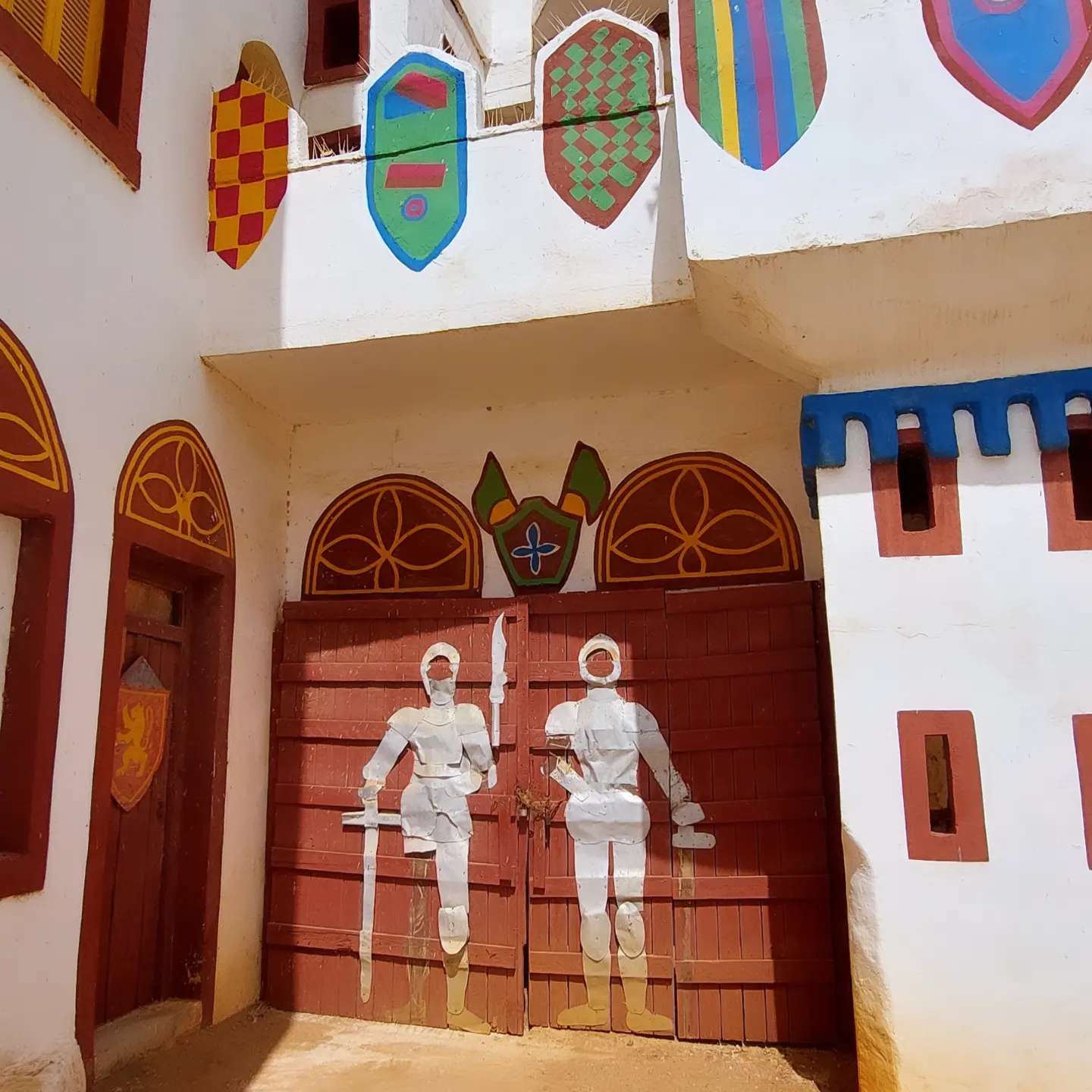
And fantasy is certainly the word when it comes to the Fairytale Castle. Less a medieval fortress designed for defence than a creation straight out of children's stories and ancient legends, it brings together knights and horses, maidens, mythical creatures and echoes of Ancient Greek mythology. Its turrets, towers and ornamental ironwork, adorned with colourful mythological figures, make it look almost like an oversized castle from a child's toy collection.

SnapInsta.to 626285305 18037133090781335 1571516909602514928 n
@spots.of.the.world

SnapInsta.to 858252473 18008290838989466 5622254220682222824 n
@angela_angierose

SnapInsta.to 657153176 18076896887139846 7377801807310791583 n
@angela_angierose

Surprisingly, local interest in maintaining the site or transforming it into an official museum or cultural establishment has remained sporadic. This means that visitors can simply explore the grounds and enjoy the beautiful views over the Ionian Sea by... showing up! All you need to do is ask the guardian to open the gates, with no official opening hours or ticket prices in place. How convenient! The castle can therefore be visited throughout the year, making it a worthwhile detour for anyone passing through Filiatra and interested in eclectic architecture or local history.

However, visitors should bear in mind that, as the castle has never been officially taken into care, it remains in an abandoned state, so caution is advised when exploring the ironwork and surrounding areas. Its unconventional materials and seaside location have also left it exposed to corrosion and decay. Without formal preservation efforts, the castle risks further deterioration, potentially resulting in the loss of this unique piece of modern cultural heritage.

Nonetheless, despite its uncertain future, the castle continues to inspire curiosity and wonder. So, if you happen to be travelling through the Peloponnese, don't miss out on its amazing little oddities. They are sure to leave you with a head full of fairy tales, fantasy and a little bit of magic.

SnapInsta.to 859025735 18008290802989466 3544603000274537014 n
@angela_angierose

Opening: Friday, 20 November, 19.00
Hours: Thursday – Saturday, 17.00-20.00

FokiaNou Art Space is pleased to present the group exhibition “Painters’ Painters”, a celebration of painting, the classic, stalwart medium of fine art.The term refers to painters that other painters love or admire because they see in the work something they can understand and relate to, whether it is technique, brushwork, palette, composition, or just the behavior of paint. In short, a painter’s painter is one who excites other painters to go to the studio and start painting.

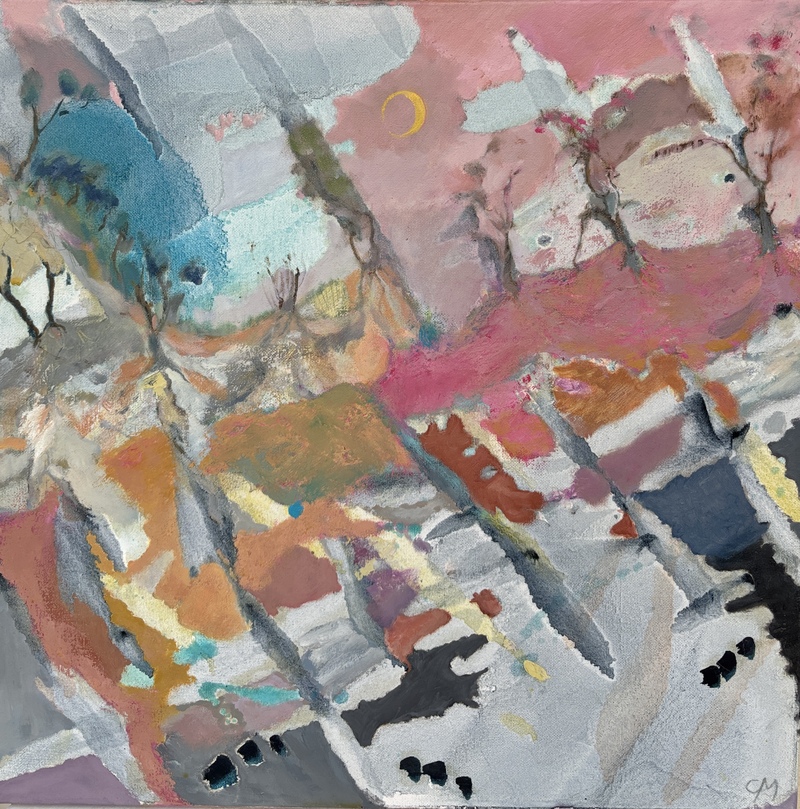
Camille Marquand.Keep it In the Ground 1

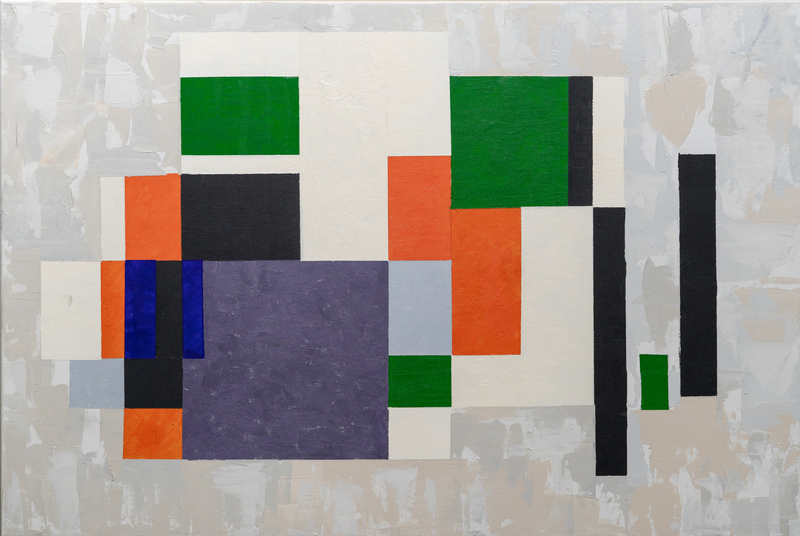
The artists invited to participate by curators Mary Cox and Panagiotis Voulgaris are:  John Bicknell, Mary Cox, Irini Diadou, Mark Hadjipateras, Chris Hawtin, Camille Marquand, Vassiliki Pantazi, Foteini Poulia,  Marios Trichas. This group exhibits a wide range of styles, from abstraction to hyperrealism, revealing the diverse influences that inform painting, including emotional states, photographic imagery, nature, and fantasy.

Mark Hadjipateras. Untitled

FokiaNou Art Space is an active, open hub of creativity that fosters collaboration between Greek and international artists. In 2024, it celebrated ten years of continuous operation, having presented—under the curation of Panagiotis Voulgaris and Mary Cox—over 80 group, solo, and duo exhibitions, as well as workshops and talks. At the same time, it consistently strengthens its international outreach by participating in such events as the TRYST Art Fair at the Torrance Art Museum in Los Angeles, the Athena exhibition in Karlsruhe (2025), and the SuperMarket Independent Art Fair in Stockholm (2023, 2019). In September 2026, it participated in Platforms Project, continuing its consistent presence at domestic and international events and fostering dialogue among independent contemporary art spaces.
What does it really mean to live life on your own terms? How do we maintain our identity through motherhood, navigate life's transitions and find the confidence to make choices that feel true to us? 

We sat down with Nadia Georgiou, a life and parenting coach with more than 25 years of experience in communications and a decade dedicated to coaching, to discuss personal development, motherhood, relationships and the importance of taking responsibility for the life we want to create. Through her own experiences of living abroad, becoming a mother and making a significant career change, Nadia shares her perspective on what it means to find your own voice and take the first steps towards a more fulfilling life.

You spent more than 25 years working in corporate communications before deciding to become a life coach. What inspired you to make such a significant career change?
 
I worked in public relations and communications for major corporations in the United States and Greece. Two of the projects I particularly enjoyed were the Athens 2004 Olympic Games, the bidding phase for the Games, and Mega Channel. I had more than 25 years of experience in major corporate projects when I decided to leave the corporate world and become a consultant. It was great because it gave me more flexibility and allowed me to do other things as well. However, there came a point when I realised that this was no longer for me.

I remember the exact moment. I was in a client meeting with a colleague. The CEO of the company and his right-hand person were sitting across from us, and we were discussing something very important. I found myself looking out of the window and thinking, "What exactly am I doing here?"

My second thought was that it wasn't fair to the client, but it wasn't fair to me either. That was the moment I decided to make a change. Even though I was at the top of my career, I knew I was done with that kind of work. I had enjoyed it, faced many challenges and grown professionally, but that chapter had come to an end.

I started thinking about what I wanted to do next. I used to joke that I was trying to figure out what I wanted to do when I grew up, even though I was already 40!

I had always been interested in psychology, but it wasn't something I necessarily wanted to pursue professionally. Then I heard about life coaching. I had no idea what it involved, so I started researching it, attended some sessions myself and experimented with the process to understand it better.

I liked what I saw, particularly the results. So I decided to study life coaching. I became a Certified Life Coach and Master in Strategic Intervention from the renown Master Performer Coach Tony Robbins and the top psychotherapist Cloe Madanes. 

That's when I realised this was what I wanted to do. It was still about communication, but on a much more personal level. And this felt much closer to who I am.

You chose the name It's My Life for your coaching practice. Is there a story behind it, and what does living life on your own terms mean to you?

When I finished my life coaching studies, I wanted to establish my own practice, and I was looking for a name. It's My Life is one of my favourite Bon Jovi songs, and that's exactly where the name comes from.

I really like the song because it talks about my life, your life, everyone's life, and asks what you are doing now. What are you doing one year, two years or five years from now? What are you doing with your life today? That's how I decided to name my business after the song.

As for living life on your own terms, I think each of us defines what that actually means. For me, it means being authentic. It means being able to speak up, express my needs and wants, recognise them in the first place and then live a life that makes me happy and fulfilled.

You've lived in Greece and abroad. What do you appreciate most about life in Greece, and how does it compare with your experiences elsewhere?

Yes, I lived in the USA for nine years and in Italy for two. Life here is completely different from living abroad. Even Italy, which is so close geographically, has significant differences between its regions. 

I remember one time when I was living in Boston and some friends had come to visit from Greece. We decided to go to Harvard Square one Sunday evening, where there was a brewery full of students.

We arrived at around 8:30 or 9 p.m., and the owner told us that because it was Sunday and he didn't have many customers, he was going to close at nine!

Coming from Greece, where people often start going out at nine in the evening, this was quite a shock. I remember thinking, "What do you mean you're closing at nine?"

I’m not the person that goes out every evening but I do enjoy having options. Although I think Greek society can be quite closed in certain respects, there are things I really appreciate.
The beautiful weather and the natural light are important to me. It's also easy to get from one place to another. You don't have to travel far to reach the mountains or the sea, and you can easily meet friends for coffee or a drink.

I particularly enjoy the social aspect of going out for coffee in Greece. It's not simply about having an espresso and leaving, as you might experience in Italy. Here, you sit down, talk and socialise. I really enjoy that.

I also appreciate genuine Greek hospitality. And, though at times it’s difficult to see, I value the culture we have. Sometimes we tend to rely too much on our past achievements and don't move forward as much as we should, but there is a richness of culture here, and that's important to me.

Having lived and worked abroad, how have these experiences shaped your perspective on life, relationships and personal development?

Well, Greece, like I mentioned, is a country that, until relatively recently, was more culturally isolated in certain ways. The majority of people living here were Greek, so you didn't necessarily have the same cultural diversity and exposure to different perspectives that you might find elsewhere.

For me, interacting with people from different cultures and countries is very important because it opens my mind. It introduces me to new ways of thinking, different foods, religions and ways of approaching life.

That was one of the things I loved most about living abroad. In fact, when I was in the United States, I had very few Greek friends. Most of my friends came from all over the world.

Now that I think about it, my interest in different cultures started when I was quite young. When I was around 12, there was something called pen pals. There was an organisation, I think in Finland, where you could send your name, interests and the countries you would like to find someone to correspond with. They would send you the name and address of a boy or girl of a similar age, and you would start writing letters to each other.

I still have some of those friends!

As a mother yourself, what do you appreciate about raising a child in Greece? Are there particular aspects of Greek life that you would like your daughter to experience?

I haven't raised children in another country, so I can't really compare my personal experience with how things work elsewhere. But, like everywhere in the world, there are advantages and disadvantages to raising a child in Greece.

One of the difficulties is the lack of privacy in many traditional Greek families. You have the grandmother, grandfather, cousins, uncles, aunts and everyone else involved. They all want to know what you're doing, and they often feel entitled to tell you what you should be doing.

In that sense, there isn't always much privacy. I also think that some old traditions and expectations can be quite conservative. There are certain things you're expected to do simply because that's how they've always been done. Fortunately things are changing now.

On the other hand, most grandparents are available to give you a hand when you need so. And I really appreciate being able to raise my daughter in an environment where there are no wars and where safety is something I generally take for granted. At least, that's how I experience life in Greece.

I also love the fact that you can connect with people in your neighbourhood and that they can help you when you need something. I remember one summer our freezer stopped working and the technician wouldn’t come for a week. My neighbour offered to store our food in her freezer so it wouldn’t go wasted. That sense of familiarity and support is a big plus.

Tell us a little about the people you work with. Who typically comes to you for life coaching, and what are some of the challenges you help them navigate?

I work with women and I admit that’s what I enjoy the most. The majority of them are mothers, whether they have young children or older ones.

Women that are mothers and experience a new reality which is beautiful and at the same time full of challenges. Very often, as women, we tend to lose our identity and we take on the particular role of motherhood. We get confused about who we are, our priorities become unclear and we certainly don't prioritize ourselves. It becomes very difficult to find out who we are or to continue being the person we were before.

And that’s because no one has taught us how to be good enough mothers without losing our self, our personal identity. Especially because, in many families, women still carry more of the responsibility for raising children. When you become a mother, you have to take care of your child, your husband, your home and your work, if you're working. You're also a daughter, perhaps a sister and a friend, among others. There are so many roles to fulfil.

Very often, my clients who are mothers tell me that they have no time for themselves. Their own needs don't just come second; they come pretty much last.

I also work with women who don’t have children Again, particularly in Greece, many of us were brought up to behave in a certain way, play a particular role or follow specific directions.
Sometimes we don't know whether what we're doing is actually what we want or whether it's something that was imposed on us by our parents, grandparents or someone else.

I help women find their own voice and recognize what they genuinely want for themselves.


If you’d like to learn more about Nadia and her coaching services, or get in touch with her, you can visit her website or email her at nadia@itsmylife.gr.

You can also find her on Facebook &  Instagram.

Has this interest in women's identity and the challenges they face always been part of your perspective, or did becoming a mother make you more aware of it?
It was always clear to me that, in Greece as well as in other countries, we tend to lose our identity or allow it to be shaped by other factors.

Of course, when I became a mother, I experienced this firsthand. But it was something I had already observed before becoming a parent.

And yes, I did experience it myself, particularly at the beginning. It was a huge adjustment.

I remember the first night after coming home from the hospital. I had to wake up at around three or four in the morning to put the baby's towels in water because she had soiled them. My husband was asleep and didn't move.

I remember thinking, "Oh my God, is this how it's going to be?"

How did you find your balance again and make time for yourself?

I started slowly, by taking baby steps. At the beginning it was just five, ten, sometimes fifteen minutes.

I would take a little break, and that could mean sitting around doing nothing, calling a friend, taking a nap, listening to music or doing whatever made me happy and helped me feel more relaxed. That's how I started: with small steps.

I always say that everything starts with small steps. When we have dreams or goals, they can sometimes seem so far away or so enormous that we think there's no way we can achieve them.
But we have to start somewhere. We take one small step forward, perhaps two steps forward and one backwards. The journey isn't always a straight line, and you're certainly not going to get there in a day or a week. It takes time.

Beyond motherhood and parenting, what other major challenges do you see women facing, and how can life coaching help them navigate these situations?

One example would be a woman who has a job and earns a good salary but isn't happy there.

She starts asking herself: Do I leave my job or do I stay? What are my options? What is the economy like right now? I don’t like where I am right now but will I be able to find another job that pays the same?

Perhaps her parents tell her she's crazy for even considering leaving a well-paid position. Her friends might be in similar situations. But she doesn't feel good, and she isn't happy. So what does she do?

Another challenge might involve having older parents who need care. You have to look after them, but you also need to continue living your own life. They may expect you to do certain things, and you have to figure out where to set your boundaries and limits.

How can you do what you need to do without losing your identity or forgetting who you are?

We all face difficulties in life. I don't know anyone who is simply happy all the time. That's not how life works. Life has ups and downs.

The point isn't to try to avoid difficulties because you can't. There's no way around them. What matters is developing the characteristics you need to face them and continue moving forward. It's about building resilience.

Have you noticed any differences between Greek and international clients in the way they approach life coaching?

I would say that, some years ago, Greeks were a little more skeptical about things like life coaching.

We shouldn't forget that psychology itself was once considered a major taboo in Greece. People wouldn't openly tell others that they were seeing a psychologist or a psychotherapist.
Even today, some people think that working with a life coach is essentially the same as working with a psychologist, just with a different, perhaps more appealing, name. But it's not. They are completely different approaches.

I think this perception is changing. From what I've seen through my own clients and those of colleagues, people are becoming more familiar with coaching and understand the differences much better.

Have you ever worked with someone who needed support with the emotional side of relocating or returning to Greece after living abroad?

Yes, actually. I worked with a Greek woman who had lived in Australia for many years, almost her entire life.

She was considering coming to Greece, but she was very skeptical and, I would say, quite frightened.

Her parental family lives in Thessaloniki, and although she spoke with them on the phone, she was so hesitant that she was even afraid of visiting them.

Moving on to parenting, how can parents help their children develop confidence and resilience in a society full of expectations?

First of all children mirror our behavior. So, if you want to help your child develop self-confidence, they need to see that quality in you first. You have to start working on yourself because confidence isn't something we're simply born with. It's something we develop and can be learnt.

You need to work on yourself so that you can help your child through your own example.

Another extremely important factor is to set boundaries. Without boundaries, children can feel chaotic and confused. They may think that having too many options means they can simply do whatever they want, but that's not how a child's brain works. Boundaries are essential.

A third factor is to allow children to fail early in life. Instead of being overprotective and trying to correct everything they do so that they always appear perfect, let them make mistakes.
Whether it's at school, when they're visiting a friend's house or when they're interacting with others, they don't have to get everything right all the time.

That's how we learn. We learn through our mistakes. The question here is if you, as a parent, can take it and how you feel about it.

I also think it's important to teach children that their opinions matter. Just because they're younger doesn't mean we shouldn't listen to them.

Teach them that it's okay to say no. Teach them that not everyone will like them, and that this is absolutely fine.

And, because you mentioned expectations, tell them that they're beautiful just the way they are. You don't love them because they're good students with excellent grades, because they're great athletes or because they keep the house tidy.

You love them because they're who they are.

There is sometimes confusion between life coaching and psychotherapy. Could you explain the main differences and what someone can expect from working with a life coach?

There is a huge difference between the two.

Psychology and psychotherapy, for example, go deeper. They involve a different kind of work, which can take many years. Of course, you can also combine life coaching with psychotherapy, because they serve different purposes.

Life coaching is essentially a personal empowerment service. It's a results-oriented approach and a dynamic support system designed to improve your everyday life.

It helps you prioritise things, set goals, work towards your dreams and establish boundaries. It guides you through the process.

Think about a basketball player who has a coach. Together, they set a goal. What does the coach do? The coach brings out the player's strengths and talents, helping them recognise what makes them successful.

At the same time, the coach helps them face the different obstacles that might come their way. Just because you've decided to move in a particular direction doesn't mean the road will be clear.

The coach supports you mentally and emotionally throughout that journey, helping you overcome challenges and stay focused on your goal.

And perhaps, at some point, you may both realise that the original goal wasn't actually the right one for you. Maybe you need to change direction.

That's exactly what a life coach does.

It's a system that supports you in taking responsibility, making decisions and putting things into action so that your everyday life gradually becomes different and closer to what you would like it to be.

What does working with you actually look like? If someone is interested in life coaching, how can they get in touch, and what can they expect from the sessions?

Anyone interested in working with me can reach me through my website or social media, including Facebook and Instagram.

I offer both online and face-to-face sessions.

Initially, I arrange a free introductory session of approximately 20–30 minutes, which takes place online. During this meeting, we get to know each other, discuss the issue the person would like to work on and decide whether we both feel that working together would be a good fit.

Once we agree to move forward, we have weekly sessions lasting one hour. The weekly structure is important because it creates momentum and allows the process to build gradually.
Between sessions, there are usually exercises for the person to work on, helping them start putting things into action.

Depending on the client and the stage of the process, I often incorporate different forms of art into the session. This might include painting, writing, sculpting or other creative activities.
I believe that at times art helps us express ourselves, especially our difficult emotions, much better.

I remember one client who painted a rock she had found at the beach. Before that, she had also done a drawing. She was amazed by what she could see in her own work, not because she had created an incredible painting, but because the images helped her recognise feelings and emotions that had been difficult to express verbally.

I love art myself, I paint in various forms and formats. So I like using it as another way to help people explore their thoughts and feelings.

Who can benefit most from life coaching? Is it something you would recommend to everyone?

I believe that in order to do anything, you have to decide that it's what you want. Nobody can push you or force you into it. It's a decision you have to make yourself.

And that decision requires discipline. You have to say, "I'm going to do this, and I'm going to follow through." It's essential to take responsibility for making the changes you want in your life.
Then comes enthusiasm. Part of my job is to help you maintain that enthusiasm and motivation because that's how you reach the point you want to get to.

Life coaching is for people who want to improve their quality of life, who have a goal or a dream they want to achieve, or who want to discover something within themselves that they haven't yet recognised.

Obviously they need to be mentally healthy. Otherwise, I'm not the right professional for them.

Another principle behind life coaching is that there is no such thing as failure in the traditional sense. We learn from our mistakes, and what we might initially consider a failure can simply be another step that brings us closer to where we want to be.

Every person can make changes if they genuinely want to, but it's important to understand that moving from wanting something to achieving a goal requires action. Massive action.

As my teacher Tony Robbins says, you have to take massive action to achieve something. If you simply sit around waiting for something to happen, it never will. And then you'll end up blaming someone else.

You have to take responsibility and get into action.

Finally, what would you say to someone who wants to make a fresh start but doesn't know where to begin?

Take the first step. It doesn't matter if it's right or wrong; just take the first step.

Because that first step will lead you to a second one. If you keep sitting around trying to decide exactly which step you should take, you'll never get anywhere.

And it's okay to make mistakes. We haven't necessarily been brought up with that way of thinking, particularly in Greece, where there's often this expectation that we should be perfect and shouldn't make mistakes.

But we do make mistakes. And that's absolutely fine.

Sometimes, all you need is the courage to take that first step.

Thank you, Nadia, for taking the time to share your story, insights, and experience with us. It was a pleasure learning more about your journey and the work you do to support people in navigating life’s changes, building confidence, and finding their own path.

If you’d like to learn more about Nadia and her coaching services, or get in touch with her, you can visit her website or email her at nadia@itsmylife.gr. You can also find her on Facebook &  Instagram.

 

Thursday, 19 November 2026 14:09

Christmas Party At Ten Twenty Club

Get into the festive spirit and join us for a special Christmas celebration at Ten Twenty Club on Saturday, 12 December!

We're bringing together everything that makes the festive season special: fun activities for the little ones, sports, good food and live music, all wrapped up in a day of Christmas cheer.

There will be plenty to enjoy throughout the day, including mini tennis for the kids, padel for all ages and levels, a festive Christmas lunch and a live jazz band to set the mood.

Whether you're coming with family, meeting friends or simply looking for a lovely way to celebrate the season, you're welcome!

RSVP & Enquiries: +30 697 043 6385
Thursday, 19 November 2026 14:06

80s Night At Ten Twenty Club

Get ready to dance the night away! Ten Twenty Club invites you to a night out filled with your favourite 80s hits, great food and plenty of retro vibes.

Join in on Saturday, 28 November from 20:30, for a fun-filled evening celebrating the music, style and spirit of the 80s. Expect all your favourite tunes, delicious burgers and food to keep you fuelled on the dance floor.

Feel like dressing up? Bring out your best 80s-inspired outfit and get ready to boogie!

RSVP & Reservations
 
To reserve your spot, contact Ten Twenty Club: +30 697 043 6385

Gather your friends, put on your dancing shoes and get ready for an unforgettable 80s night!
Join us for a 30-minute live Q&A session via Zoom with Tonia from TaxWise Greece on 4 December at 6:00 PM.

Whether you're an expat living in Greece, considering relocating, or looking to better understand the country's administrative and tax requirements, this is an opportunity to get answers to some of your most important questions.

Topics we may cover include:
  • Social Security Coverage and Eligibility

  • AMKA (Greek Social Security Number)

  • The S1 Form

  • Article 5B – The Special Tax Regime for Foreign Tax Residents

  • Buying and Selling Property in Greece


Have Your Say!

Vote in our questionnaire and let us know which topic you'd most like us to discuss. The topic receiving the most interest will help shape our session.

How Will The Q&A Work?

This will be an interactive session. Attendees will have the opportunity to unmute their microphones and ask Tonia one question directly.

To ensure everyone has a fair opportunity to participate within our 30-minute session, each attendee will be limited to one question, with no follow-up questions.

Come prepared with your question and make the most of this opportunity to get practical insights from an accounting professional!

Join the Live Q&A via Zoom!
 
Wednesday, 18 November 2026 16:35

Athens Santa Run Returns To The Heart Of Athens!

A city, thousands of Santas and plenty of Christmas cheer!

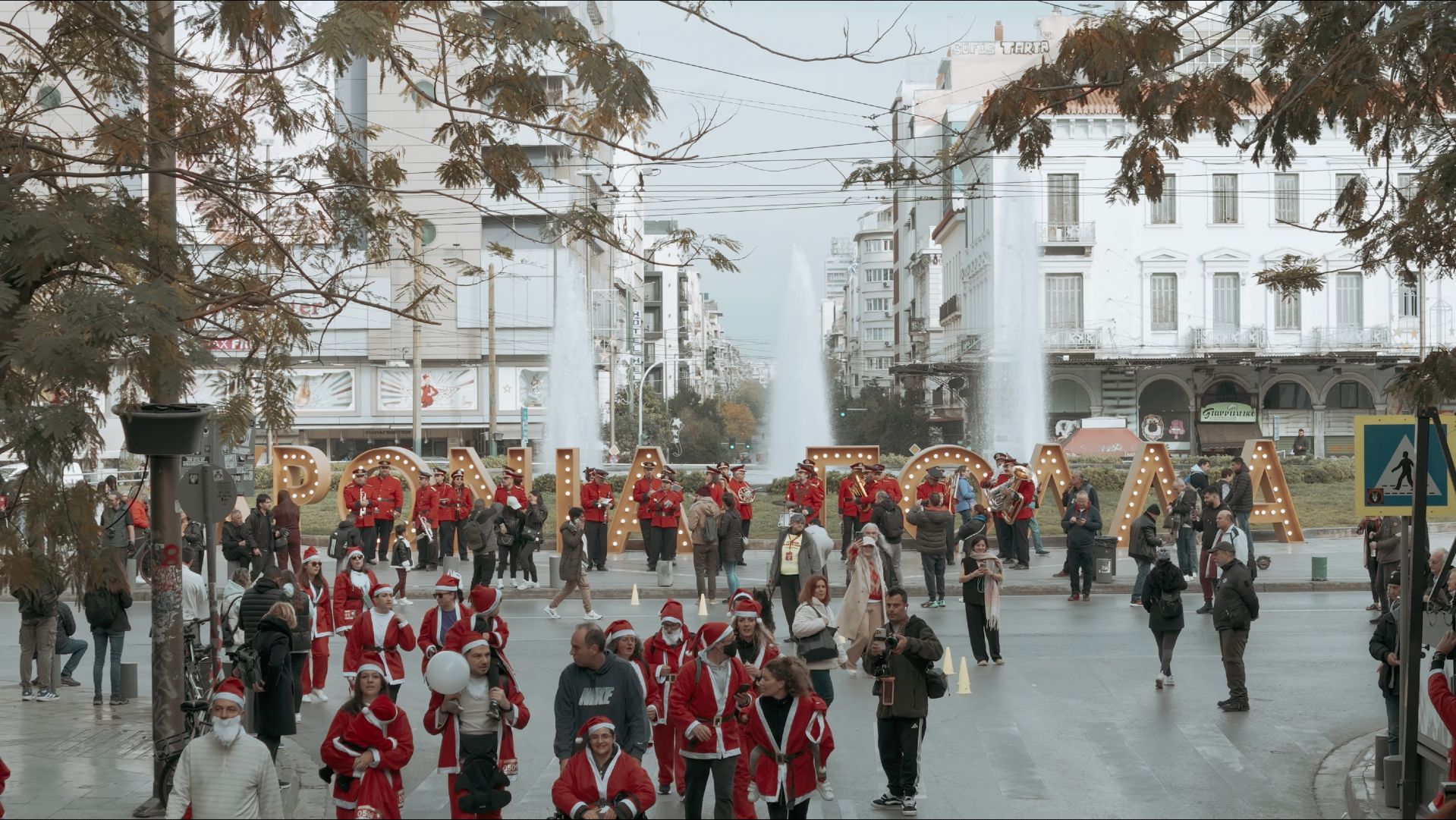
The Municipality of Athens, through the Organisation of Culture, Sports and Youth (OPANDA), the city's largest running club, Offline Running Association, and ActiveMedia Group are bringing back the most festive running event of the year to the streets of Athens!

For the second consecutive year, the event will take place on Sunday, 20 December 2026, at 10:00, starting in front of Athens City Hall. Get ready for a festive morning where Christmas spirit, good vibes and outdoor activity come together!

Athens Santa Run 2

The Route

The festive 2.8 km route starts at Athens City Hall, one of the city's most central meeting points.

The event is open to everyone, young and old! Participants will run along Athinas Street, with the Acropolis appearing ahead of them, before turning onto Ermou Street. They will then continue via Agion Asomaton Street towards Piraeus Street, heading in the direction of Omonia Square.

The celebration will conclude with a return along Athinas Street and a festive finish at historic Kotzia Square, right in front of City Hall.

Running for a Good Cause

Every registration is an opportunity to give back.

Part of the event's proceeds will be donated to the Athens Municipality Reception and Solidarity Centre (KYADA), which provides daily support to individuals and families experiencing poverty, social exclusion and isolation.

Through its initiatives in accommodation, food assistance, social support and inclusion, KYADA offers meaningful help to those who need it most.

An additional portion of the proceeds will go towards purchasing sports equipment for OPANDA.

Athens Santa Run 3

Registration

Registration is available online through more.com, with every participation supporting the charitable mission of Athens Santa Run 2026.

To register, please click here!

The registration deadline is Thursday, 17 December 2026.

Places are limited to 1,500 adults and 500 children. Children must register together with a parent or legal guardian. Please note that registrations will not be available on the day of the event.

For more information, visit the official website: athenssantarun.gr

Participation Package

Participation packages will be distributed on Saturday, 19 December, at the registration area set up at Kotzia Square.

Each participant will receive their own Santa Claus costume, a commemorative finisher's medal and gifts from the event sponsors.

This year's event is held under the auspices of the Ministry of Tourism and the Greek National Tourism Organisation (GNTO).

Co-organisers

Municipality of Athens, Offline Running Association, ActiveMedia Group

With Thanks to Our Supporters

Helpers: Hotel Grande Bretagne, Korpi Natural Mineral Water, Vichy Laboratoires

Under the Auspices of: Ministry of Tourism, Greek National Tourism Organisation (GNTO)
Page 1 of 481