Super Paradise – The Story Of Mykonos: Paul Typaldos Explores The Untold Story Of Greece's Most Famous Island
- by XpatAthens
- Wednesday, 15 July 2026

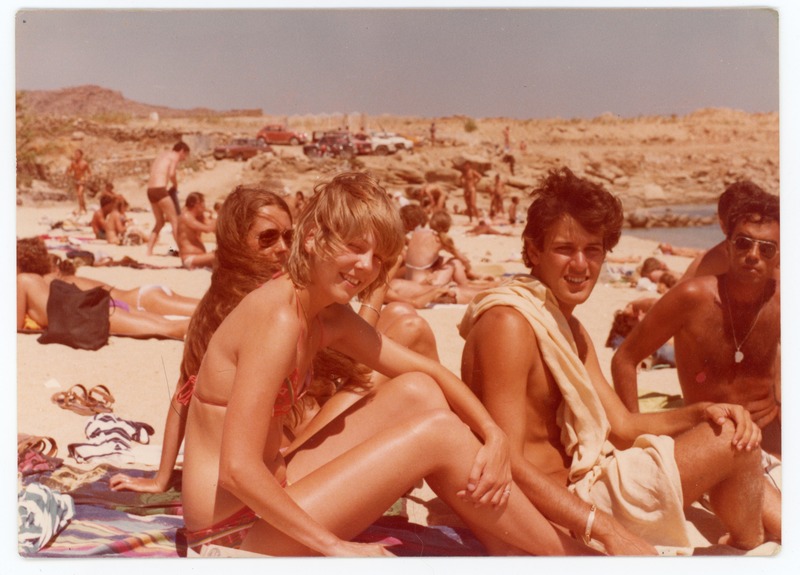
Image credit: Steve Krikris
Ready to experience the untold story of Mykonos? Click here to secure your tickets for the screening at STOA Culture on Saturday, July 18th!
I am Greek American and was originally born in New York. I have always been interested in film and photography, and in the early 2000s, I decided to make a radical change. I was living in New York at the time, and it got into my head that I wanted to go to film school. But I have always been inspired by different points-of-view, and so, instead of following a traditional route, I packed my bags and moved to Buenos Aires where I attended the Universidad del Cine. My experiences in Argentina and in Latin America opened my eyes to the possibilities of documentary storytelling as a form. What really captured my imagination is how documentary films can shine a light on unknown places, unknown people and unknown stories. At another level, what is really inspiring is that you don’t need a massive crew, you don’t need infinite amounts of money, you just need curiosity and to be willing to “let go” of the illusion that you can control what unfolds at a story level.
Super Paradise - The Story of Mykonos was born from your original idea. What sparked the inspiration for this project, and why did you feel that now was the right time to tell Mykonos' story? Was there a special connection with the island?
Steve Krikris is the director, writer and co-producer of Super Paradise, and a close friend of mine. After I moved to Athens in 2018, we began talking about potential projects that we would be able to produce with Filmiki, the production company behind Super Paradise. In 2019/2020, we met up and I told him about this idea that I had for a project in Mykonos. The original idea was not a documentary, it was a totally different form – a fiction that was set on the island in the 1970s. Steve liked the idea, we pitched it to Filmiki and they liked it as well. And then Covid-19 happened and everything came to a grinding halt. At some point during the lockdown, Nicholas Alavanos, the CEO of Filmiki, approached me and said that there were funding possibilities for documentaries at the Greek Film Centre. Dafni Kalafati, writer and producer of Super Paradise, wrote the application for funding from GFC, it was approved, and it set the wheels in motion.
Our special connection to the island is Steve Krikris. He experienced Mykonos first hand during the late 1970s and early 1980s and he has personal relationships with many of the characters who we meet throughout the film. Steve brought all of this to bear as we worked together, along with Dafni and Editor Marios Kleftakis, to create the structure for the story that we tell over the course of Super Paradise.
What we all understood at a very early stage is that while this is a story that is set on a small island in the middle of the Aegean Sea, it is one that has global repercussions. The simple reality is that mass tourism is unequivocally destroying Mykonos, in the same way that it is crushing tourist destinations across the world, whether it be Ibiza, Bali, Tulum, you name it. So in a sense, while Super Paradise tells the story of the island through the points-of-view of an eccentric cast of characters, it is also a stark warning about the dangers of mass tourism and over-development.
Many people know Mykonos for its luxury lifestyle and vibrant nightlife, but your documentary explores a much deeper history. What surprised you the most during your research into the island's transformation?
We were not really interested in “reporting” on what Mykonos is and in re-affirming known stereotypes about the island. From the very outset, we understood that at the very heart of the story is the idea of transformation. How did a poor fishing island become a global destination? How did 1970s inclusivity yield to the exclusivity that defines our times? What was sacrificed along the way? These are questions that inform the story, and what was perhaps the most surprising aspect of the research is that we gradually began to understand how the people who “created” the 1970s paradise continue to co-exist with this new reality. 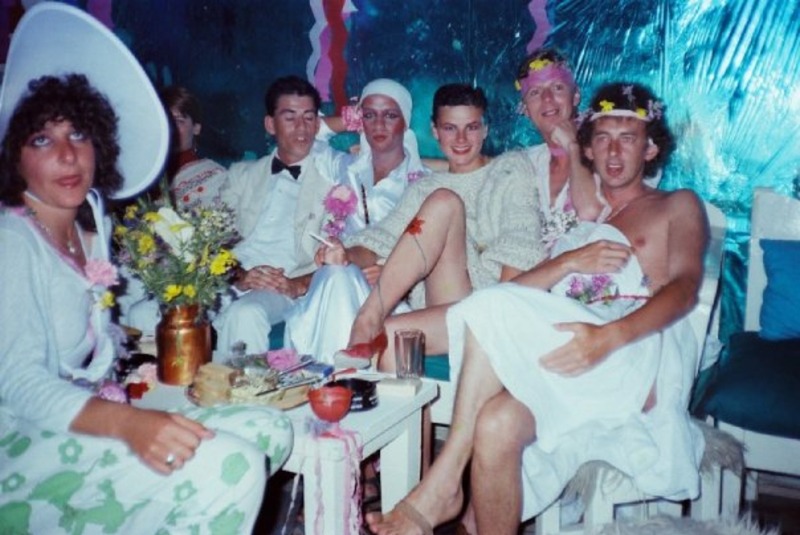
Image credit: Dimitris Koutsoukos
The documentary features archival footage, Super 8 recreations, drone cinematography, animation, and interviews with people who helped shape the island over several decades. How did you approach blending these different storytelling techniques into one cohesive narrative?
This was a true team effort and from an early stage, we made a decision to “mash up” different formats in service of the story. Each of these formats brings a unique energy to the film, with some carrying more weight than others. The archival footage is massively important, it constitutes approximately 40% of the film, and it has a timeless quality to it because much of it is Super 8 and 16 mm. This enables us to create an “anchor” that transports audiences to idyllic 1970s Mykonos, allowing it to stand in stark contrast to the island today, which we dynamically represent through the use of drones and cell phone footage. The animation is the bridge between the past and the present, and the talented animator Eirini Vianelli did amazing work.
Throughout the film, we hear from residents, artists, entrepreneurs, farmers, intellectuals, and longtime visitors. Without giving too much away, could you share a memorable person featured in the documentary whose story particularly stayed with you?
Vaggelio Syrianou, the iconic bouncer at Pierro’s Bar, had a “run in” with the fashion designer Valentino. It did not end well…for him.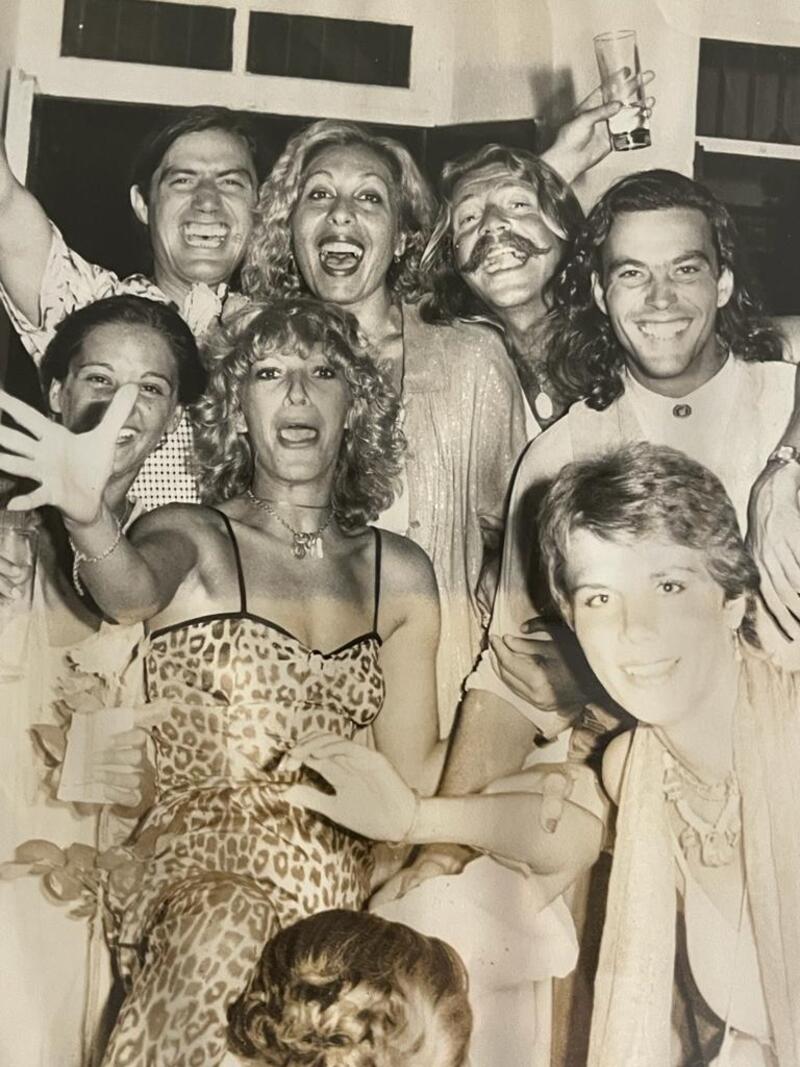
Image credit: Loukas Doukas
Mykonos has often represented different things to different generations, from a hidden Cycladic paradise and a place of artistic freedom to one of the world's most exclusive destinations. After making this film, how has your own perception of the island changed?
I think that what is amazing about Mykonos is that the spirit of the 1970s still exists. Sure, it’s harder to find it, but it is still there. If you go for an early morning or late afternoon swim at Agios Sostis, you will feel it; if you speak to the locals at Bakoya, you will get a sense of it. It’s really a matter of wading through the distractions and opening yourself up to experiencing the island in a different way.
Following its world premiere at the Thessaloniki International Documentary Festival, Super Paradise has travelled to several international film festivals. How have audiences outside Greece responded to the documentary, and have any reactions particularly stayed with you?
Super Paradise has played at almost 15 festivals around the world, including the Los Angeles Greek Film Festival, the Australia Greek Film Festival and Beldocs in Serbia. Global audiences have immediately connected with the universal themes that the film touches upon, but I have to say that the most amazing screening that we have had was in Mykonos last summer. At Cine Manto, the open air cinema in Chora, we screened the film for everyone who participated in the project, including almost all of the characters. That was truly special, very emotional, and something that made all of the effort worthwhile.
The film will now be screened as part of STOA Culture, where the courtyard of the historic Arsakeio Arcade is transformed into an open-air summer cinema, followed by an after-party celebrating the spirit of the Greek summer. What makes this screening especially meaningful for you, and what do you hope audiences will take away after watching the film?
We are very excited and grateful for the opportunity to participate as part of STOA Culture. Screening a film about an island that personifies “Greek summer” in the middle of the summer, in the middle of Athens…we can’t really ask for anything else. What do we want audiences to take away? Rather than take away, we would ask them to “let go,” to allow themselves to be transported through space and time to a tiny Greek island in the middle of the Aegean Sea. 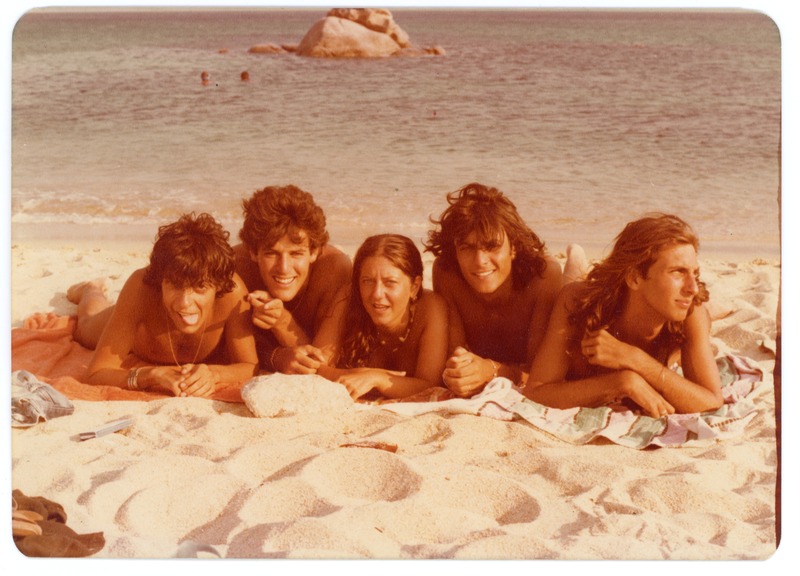
Image credit: Steve Krikris
A big thank you to Paul Typaldos for taking the time to chat with us and for giving our readers a glimpse into the story behind Super Paradise - The Story of Mykonos. We wish him and the entire cast and crew every success and hope audiences enjoy this remarkable cinematic journey through one of Greece's most iconic islands.
SUPER PARADISE | MAIN CREDITS
Ready to experience the untold story of Mykonos? Click here to secure your tickets for the screening at STOA Culture on Saturday, July 18th!
LIFE & CULTURE