

Ingredients
BUSINESS CENTRE

XpatAthens
Tuesday, 02 March 2021 15:44
Prassopita: Leek And Feta Pie
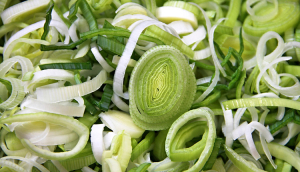
Leek and feta pie is one of the most delicious pies in Greek cuisine. It is easy, flavoful and packed with leeks, herbs, and delicious feta cheese. Master spreading the phyllo pastry and you're good to go for this and other delicious pies!
Yield: 12 servings
Difficulty: Easy
Difficulty: Easy
Prep Time: 20 minutes
Cooks in: 90 minutes
Cooks in: 90 minutes
• 1 kilo leeks
• 2 onions
• 4 tablespoons olive oil
• 3 sticks celery
• 1 garlic clove
• salt
• pepper
• 3 spring onions
• 1/2 bunch mint
• 1/2 bunch dill
• the zest of 1 lemon
• lemon juice, of 1/2 lemon
• 300 g feta cheese
• 1 egg
• 700 g phyllo pastry
• 100 g olive oil, for brushing
Preparation
Preheat oven to 160 C (320F) Fan.
Place a pot of water over high heat. Add salt and bring to a boil. Chop the leeks into 1-2 cm rounds and add them to the pan. Let them boil for 2-3 minutes to remove the bitter taste that comes from the green part of the leeks
Drain and place the same pan over high heat. Let it get hot. Coarsely chop the onions. Add 4 tablespoons of olive oil to the hot pan. Add the onions and leeks and sauté. Chop the celery into rounds, mince the garlic and add both to the pan.
Season with salt, stir often and sauté for 10-15 minutes until they caramelize nicely. Transfer the sautéd vegetables to a bowl and add finely chopped spring onions, mint, and dill. Add the pepper, lemon zest, and lemon juice.
Crumble the feta cheese with your hands and add it to the bowl. Finally, add the egg and mix until all of the ingredients are completely combined.
To learn how to use phyllo pastry to complete this recipe, please visit: akispetrtzikis.com
• 2 onions
• 4 tablespoons olive oil
• 3 sticks celery
• 1 garlic clove
• salt
• pepper
• 3 spring onions
• 1/2 bunch mint
• 1/2 bunch dill
• the zest of 1 lemon
• lemon juice, of 1/2 lemon
• 300 g feta cheese
• 1 egg
• 700 g phyllo pastry
• 100 g olive oil, for brushing
Preparation
Preheat oven to 160 C (320F) Fan.
Place a pot of water over high heat. Add salt and bring to a boil. Chop the leeks into 1-2 cm rounds and add them to the pan. Let them boil for 2-3 minutes to remove the bitter taste that comes from the green part of the leeks
Drain and place the same pan over high heat. Let it get hot. Coarsely chop the onions. Add 4 tablespoons of olive oil to the hot pan. Add the onions and leeks and sauté. Chop the celery into rounds, mince the garlic and add both to the pan.
Season with salt, stir often and sauté for 10-15 minutes until they caramelize nicely. Transfer the sautéd vegetables to a bowl and add finely chopped spring onions, mint, and dill. Add the pepper, lemon zest, and lemon juice.
Crumble the feta cheese with your hands and add it to the bowl. Finally, add the egg and mix until all of the ingredients are completely combined.
To learn how to use phyllo pastry to complete this recipe, please visit: akispetrtzikis.com
Published in
Greek Food & Diet
Tagged under
Tuesday, 29 June 2021 17:40
Weigh Loss Surgeon Praises Mediterranean Diet
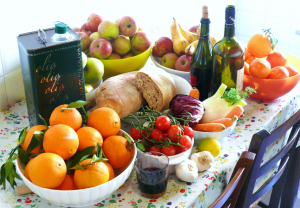
Imagine getting famous via TikTok, but you’re not an Instagram model, you’re a world-renowned weight-loss surgeon. This is what happened to Dr. Terry Simpson, he has gone viral on TikTok with a plethora of ‘hard truth’ videos regarding nutrition and weight loss. Dr. Simpson boasts 327,000 TikTok followers alone, with many more on Instagram, Facebook, and YouTube.
What separates Dr. Simpson from other weight loss ‘experts’, is that he is an expert in Culinary Medicine (a new discipline in the medical field) and is a big believer in the Mediterranean Diet as a FIRST step to try and address the symptoms of being overweight, being obese and PCOS. His motto is, “you gotta be able to cook, otherwise losing weight will be near impossible”.
His Mediterranean diet consists of lots of home-cooked meals, using colorful fruits and vegetables and legumes. The way our Yiayia’s used to cook. The ‘Modern Mediterranean’ diet is NOT the same Mediterranean Diet that our ancestors ate. The ancient Mediterranean Diet is primarily based around Vegetables, Fruit, Legumes, Goats and Sheep’s Milk, Red Wine, and seeds/nuts.
Some examples of foods you must eat, according to Dr. Simpson:
1. Berries- Raspberries, Blueberries, Blackberries, Strawberries
2. Chia seeds
3. Oats
4. Wholegrains
5. Colourful vegetables (red and yellow capsicums)
6. Fermented dairy
7. Clean protein (wild salmon, high-quality grass-fed meat, free-range poultry)
8. Nut milk (Almond milk, oat milk)
Dr. Simpson is a pioneer in the field of bariatric surgery and patient education, with several websites dedicated to providing information online for patients. He is one of the leading bariatric surgeons in the use of social media to broadcast timely, relevant, healthcare news. Dr. Simpson is involved in research and clinical trials to further advance the field of bariatric surgery. He is currently involved in the examination of the Linx as a device for anti-reflux in Sleeve patients, as well as the use of the Mediterranean Diet for long-term weight loss.
To read this article in full, please visit: greekcitytimes.com
Published in
Greek Food & Diet
Tagged under
Thursday, 13 July 2023 21:33
Watermelon Granita - The Perfect Drink To Survive The Heatwave
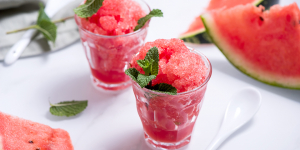
Originally from Sicily, granita is a semi-frozen dessert with crystalline texture, made from sugar, water, and various flavorings, mainly fruit juices. It's extremely popular all around Greece, especially among kids, and it's the ultimate drink to survive the Greek summer's scorching heat.
Yield: 4-6 servings
Difficulty: Easy
Prep Time: 15 minutes
Ready in: 6 hours
Ready in: 6 hours
Ingredients:
- 150 g water
- 150 g brown sugar
- 800 g watermelon, cleaned
- 1 teaspoon(s) vanilla extract
- lemon juice from 1 lemon
- lemon zest from 1 lemon
- sliced watermelon for decor
Preparation:
- In a pot, add the water with the sugar and place it over medium heat for about 2 minutes.
- As soon as it starts bubbling, let it boil for 2-3 minutes, and then remove from heat. Set the syrup aside to cool.
- Cut the watermelon into 2-3 cm pieces and puree them along with the syrup, the vanilla extract, and the lemon zest and juice into a blender.
- Share the mixture into ice-cube trays and freeze them for 5-6 hours.
- When they freeze well and you are about to serve them, pour the ice cubes into the blender and puree them until they look like snow.
- Fill the glasses and serve with watermelon slices.
To read the complete recipe and learn the nutritional information, please visit: akispetretzikis.com
Published in
Greek Food & Diet
Tagged under
Friday, 17 September 2021 07:00
Great Reasons To Add Greek Yogurt To Your Daily Diet
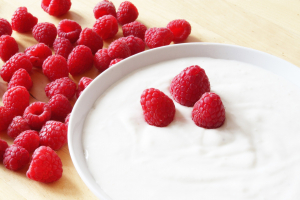
Greek yogurt is considered one of the world’s best superfoods and a nutrient-packed snack that has so many health benefits, it is the ideal dairy to add to your everyday diet!
It’s different from other yogurts as produces add an extra step to their process so that excess water, lactose, and minerals drain out. What’s left is a creamy, rich yogurt with less sugar and more carbs. The acidity also makes it easier for your body to absorb other nutrients.
A cup of plain Greek yogurt can help you meet the recommended dietary guideline of three daily servings of low-fat or non-fat dairy products. People who are lactose intolerant may also find Greek yogurt easier to digest because of the bacterial breakdown of the milk’s sugars.
The benefits of consuming Greek yogurt include supporting weight loss, keeping the intestinal system healthy, regulating blood pressure, increasing bone density, boosting immunity, aiding the digestive system, and promoting thyroid function. Other benefits include supporting blood production, supporting muscle growth, preserving oral health, and improving mood.
Here are some detailed reasons to add Greek yogurt to your daily diet:
Power of Protein: Yogurt has a much higher amount of protein than milk. Your body uses protein to build bones, muscles, cartilage, skin, hair, and blood.
Helps You Lose Weight: Greek yogurt contains almost twice the amount of protein found in standard protein products and a lot less sugar, which will make you feel satisfied for longer!
Prevents Yeast Infections: Greek yogurt contains a high quantity of probiotic bacteria, which is essential for the wellbeing of your natural flora, helping keep this infection at bay.
Helps Regulate Blood Pressure: High sodium intake is frequently the most common cause of high blood pressure, however, Greek yogurt supplies some of these blood pressure-regulating minerals, such as potassium, magnesium, and calcium.
To read this article in full, please visit: greekcitytimes.com
Published in
Greek Food & Diet
Tagged under
Friday, 15 October 2021 07:00
Greek Stuffed Eggplant Recipe
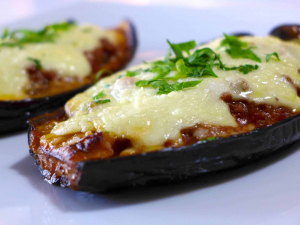
Greek stuffed eggplant or Melitzanes papoutsakia as they are called in Greece is a Greek dish that receives its name from the resemblance of its shape with little shoes. The taste and the ingredients used for this ‘Papoutsakia’ recipe are very similar to the popular Greek dish moussaka.
Extra juicy and absolutely delicious, this aubergine-based traditional recipe will certainly amaze you!
Ingredients
- 5 eggplants
- 500g minced beef
- 1 large red onion, finely chopped
- 2 cloves of garlic, finely chopped
- 1 glass of red wine
- 1 tin chopped tomatoes or tomato juice (passata)
- 1 cinnamon stick
- 1 tsp oregano
- 100g grated kefalotyri or any hard yellow cheese
- olive oil
- salt
- freshly ground pepper
- 2–3 tbsps chopped parsley
- 100g flour
- 100g butter
- 900ml milk (3 and 3/4 cups)
- 2 egg yolks
- a pinch of nutmeg
- 4 large potatoes, boiled
- 50g milk
- 1 tbsp butter
- 2 egg yolks
Instructions
- Cut the eggplants into two pieces and carve them crosswise (the flesh). Season the eggplants and place them in a colander for about half an hour. Wash them with plenty of water and drain them on some kitchen paper.
- Preheat the oven to 200C. Season the eggplants with salt and pepper and drizzle with olive oil. Place the eggplants (with the skin facing up) in a baking tray, lined with parchment paper. Bake the eggplants for 40 minutes, until softened.
- In the meantime, prepare the meat sauce for the ‘papoutsakia’. Peel and chop the onions and garlic. Place a large pan on medium heat, add some olive oil and the onions and sauté, until softened. Stir in the garlic and sauté. Turn the heat up, add the minced beef breaking it up with your spoon and sauté. Deglaze with the red wine and wait 1-2 minutes to evaporate. Stir in the canned tomatoes, the cinnamon stick, a pinch of sugar, the oregano, and season. Bring to the boil, turn the heat down and simmer with the lid on for about 30 minutes, until most of the juices have evaporated. In the end, add 1-2 handfuls of grated cheese and chopped parsley and stir.
Published in
Greek Food & Diet
Tagged under
Tuesday, 26 October 2021 07:00
Patsas: Greece's Hangover Soup
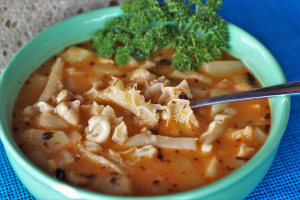
Yesterday, the 25th of October, 2021 was International Patsas (Tripe) Day, celebrating Greece’s famous hangover soup!
Greek Tripe Soup
Patsas is traditionally made from tripe, legs of pig or cow and many also add pig intestines to the recipe. Some people prefer to use beef or lamb, depending on their personal taste.
In Greece, especially in Athens and Thessaloniki, this strong-smelling soup is highly consumed after a big night at the Bouzoukia, as apparently it relaxes the stomach, making it Greece’s favorite hangover food.
It is very common to find people heading to a Patsazidiko, which is a tavern normally found close to the meat markets in the city centre, to eat a bowl of patsas before heading home after a huge night.
Patsatzidika often serves up multiple varieties of this dish. Patsas in the taverns are usually made either with tripe or with feet and the two are occasionally combined and accompanied by other organ cuts, such as the large intestine or pancreas. Greek chefs cut, pre-boil, then simmer the organs for hours to get a soft texture. Then they add salt, pepper, lemon, and sometimes red pepper and onion.
Patsas is sometimes topped with kokkino (fat from the broth mixed with red pepper), skordostoubi (chopped garlic in vinegar), or red pepper shavings.
Tripe soup is also popular in Turkey, Spain, Portugal, and other parts of Europe!
To read this article in full, please visit: greekcitytimes.com
Greek Tripe Soup
Patsas is traditionally made from tripe, legs of pig or cow and many also add pig intestines to the recipe. Some people prefer to use beef or lamb, depending on their personal taste.
In Greece, especially in Athens and Thessaloniki, this strong-smelling soup is highly consumed after a big night at the Bouzoukia, as apparently it relaxes the stomach, making it Greece’s favorite hangover food.
It is very common to find people heading to a Patsazidiko, which is a tavern normally found close to the meat markets in the city centre, to eat a bowl of patsas before heading home after a huge night.
Patsatzidika often serves up multiple varieties of this dish. Patsas in the taverns are usually made either with tripe or with feet and the two are occasionally combined and accompanied by other organ cuts, such as the large intestine or pancreas. Greek chefs cut, pre-boil, then simmer the organs for hours to get a soft texture. Then they add salt, pepper, lemon, and sometimes red pepper and onion.
Patsas is sometimes topped with kokkino (fat from the broth mixed with red pepper), skordostoubi (chopped garlic in vinegar), or red pepper shavings.
Tripe soup is also popular in Turkey, Spain, Portugal, and other parts of Europe!
To read this article in full, please visit: greekcitytimes.com
Published in
Greek Food & Diet
Tagged under
Thursday, 25 November 2021 07:00
Why Ikarian Honey Could Be The Key To Longevity

In Ikaria honey is used to treat everything from wounds to stomach issues, influenza, and the common cold. Ikarians start their day with a simple spoonful of raw local honey, which has a high antioxidant level. This may reduce inflammation and also contains amino acids and vitamin C which are known to speed the growth of healthy tissue in the body.
This famous Greek island is a part of ‘Blue Zones’ a name given to 5 places in the world- Ikaria, Sardinia in Italy, Okinawa of Japan, Nicoya of Costa Rica, and Loma Linda of California, USA, whose inhabitants surpass the life expectancy and reach over the age of 90 years.
A new television report by CBS has taken a close look at why Ikarian honey could be one of the main keys as to why the locals here keep healthy and strong well into old age.
“Up the winding mountain roads of this isolated isle, you’re likely to notice brightly-painted boxes dotting the landscape. And what’s happening inside those boxes is generating some buzz: Bees busy making rare honey that locals believe is one of the secrets to a long life,” notes CBS.
“Up the winding mountain roads of this isolated isle, you’re likely to notice brightly-painted boxes dotting the landscape. And what’s happening inside those boxes is generating some buzz: Bees busy making rare honey that locals believe is one of the secrets to a long life,” notes CBS.
Ikarian beekeeper Andoni Karimalis explained to CBS correspondent Jonathan Vigliotti that people on the island “have been eating the honey for generations, to keep healthy and strong well into old age.”
At work in her weaving studio, 109-year-old Yiayia Ioanna from Ikaria agrees there is something special about it. So does 87-year-old-beekeeper Giorgos Stenos. He eats the honey “every single day.”
For centuries humans have valued honey for its medicinal properties. And in Ikaria, known in ancient times as the “healing island,” the honey is different from that found on most supermarket shelves.
As a result, the pollen and nectar collected by the bees are free of chemicals and pesticides normally found in commercial or private farming. And unlike most honey sold in the other parts of the world, Ikarian honey is also unheated, unfiltered, and unpasteurized – all processes which can destroy the natural vitamins and minerals.
Although this has been one of Ikaria’s best-kept secrets, after the CBS report aired live on American television, there has been a huge response with people all over the world wanting to get their hands on some of this Ikarian gem!
Originally published: greekcitytimes.com
Originally published: greekcitytimes.com
Published in
Greek Food & Diet
Tagged under
Tuesday, 07 December 2021 07:00
Delicious Hot Chocolate

Nothing says Christmas like a steaming cup of delicious hot chocolate topped with whipped cream and marshmallows!
Add a fireplace, some cute Christmassy pajamas, and a bit of Mariah Carey and you've got yourself the perfect festive night.
Ingredients
- 480g soy milk
- 2 - 4 tablespoons granulated sugar
- 4 tablespoons cocoa powder
- 50g chocolate couverture, finely chopped
To serve
- whipped cream
- marshmallows
- chocolate couverture, melted
- hazelnut chocolate spread, grated
Execution Method
- Heat the milk in a saucepan over medium heat.
- Pour half of it into a mug. Set aside and keep warm.
- Add the sugar and cocoa powder to the remaining milk in the saucepan.
- Heat until it comes to a boil while whisking continuously.
- Lower heat and cook the mixture for another 2 minutes, until the sugar and cocoa powder have melted and are completely incorporated.
- Remove from heat. Add the chocolate and stir until it melts.
- Add the rest of the milk and stir until completely combined.
- Serve with whipped cream, marshmallows, melted chocolate, and sprinkle with grated chocolate.
Published in
Greek Food & Diet
Tagged under
Thursday, 09 December 2021 12:59
Chocolate Truffles Recipe
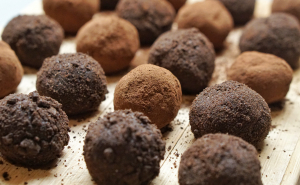
If you are looking to make a sweet edible treat this Christmas, also ideal as a small gift, try these decadent Sokolatenia Troufakia (chocolate truffles) with dark chocolate, walnuts, and Petit Beurre biscuits.
They can be stored in the refrigerator for over a week, as long as they are in an airtight container.
Ingredients
160g dark chocolate
180g Petit Beurre biscuits
1/2 cup full cream milk
1/3 cup fresh cream
1 tablespoon liqueur
1 & 1/4 cup chopped walnuts
Method
- Chop chocolate into small pieces and completely melt over low heat in a double boiler.
- Place biscuits in a large bowl and crush them into very small pieces. Add a quarter of a cup of chopped walnuts.
- Pour melted chocolate over biscuits and walnuts and mix together with a wooden spoon.
- Add milk, fresh cream, and liqueur and mix thoroughly with a wooden spoon until all ingredients are well combined.
- Cover bowl with cling wrap and place in refrigerator (not freezer) for 1.5 hours.
- Remove from refrigerator and take a teaspoon of the mixture and begin forming them into ball-like shapes by rolling the mixture in your palms. It makes it easier by wearing food handling gloves, otherwise wet your hands with water in between each truffle.
- Roll each truffle into the chopped walnuts and place them back in the refrigerator covered tightly until ready to serve.
Originally published on: greekcitytimes.com
Published in
Greek Food & Diet
Tagged under
Thursday, 23 December 2021 07:00
Christopsomo: Where Bread Meets Fine Art
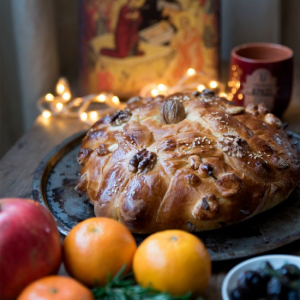
Christopsomo, or “Christ’s bread,” has been an indispensable part of the Christmas Day table in every Greek household throughout the centuries.
If you are ever fortunate enough to spend a Christmas in Greece, you will be certain to become enchanted by the enticing aromas of baked bread, pastries, cookies, and other foods during the holiday season.
Greek Christopsomo
Some Greek holiday goodies are steeped in ancient regional traditions, while others you will find throughout the entire country, but perhaps with a local twist.
The bread is traditionally baked on Christmas Eve and served on Christmas Day at the table when the whole family gathers to eat together. It is believed that this sweet bread brings blessings to the family during this holy season.
The dough for Christopsomo is divided into two pieces. The first portion, the largest, forms the main base. The somewhat smaller portion is made into a large cross with curled and split ends and several other symbolic shapes.
In the past, symbols represented aspects of the family’s life and professions as well. For example, if the family were fishmongers, images of fish would be shaped and added to the loaf.
In more agriculturally-based times, the surface of the bread would often be covered with flowers, leaves, or fruits, indicating the family’s hopes for a good harvest and healthy herds of animals.
A walnut is placed in the middle of the cross, symbolizing life as well as fertility. The walnut shell can also be interpreted as representing the cave in which the Christ Child was born.
Baking the most elaborate possible Christopsomo is an unspoken challenge for bread makers in Greece. In many parts of the country, “Christ’s bread” has truly become a piece of timeless art, with incredibly beautiful, intricate decorations.
If you are ever fortunate enough to spend a Christmas in Greece, you will be certain to become enchanted by the enticing aromas of baked bread, pastries, cookies, and other foods during the holiday season.
Greek Christopsomo
Some Greek holiday goodies are steeped in ancient regional traditions, while others you will find throughout the entire country, but perhaps with a local twist.
The bread is traditionally baked on Christmas Eve and served on Christmas Day at the table when the whole family gathers to eat together. It is believed that this sweet bread brings blessings to the family during this holy season.
The dough for Christopsomo is divided into two pieces. The first portion, the largest, forms the main base. The somewhat smaller portion is made into a large cross with curled and split ends and several other symbolic shapes.
In the past, symbols represented aspects of the family’s life and professions as well. For example, if the family were fishmongers, images of fish would be shaped and added to the loaf.
In more agriculturally-based times, the surface of the bread would often be covered with flowers, leaves, or fruits, indicating the family’s hopes for a good harvest and healthy herds of animals.
A walnut is placed in the middle of the cross, symbolizing life as well as fertility. The walnut shell can also be interpreted as representing the cave in which the Christ Child was born.
Baking the most elaborate possible Christopsomo is an unspoken challenge for bread makers in Greece. In many parts of the country, “Christ’s bread” has truly become a piece of timeless art, with incredibly beautiful, intricate decorations.
Published in
Greek Food & Diet
Tagged under