XpatAthens

XpatAthens

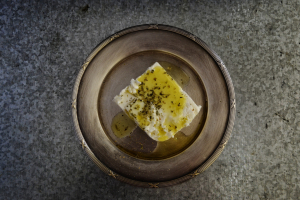
According to dieticians and doctors around the globe, Feta is the healthiest cheese option in the world and now there is clear evidence to prove it.

The Biomedical Research Foundation of the Academy of Athens (BRFAA) announced that a group of researchers has decoded the “DNA” of authentic feta cheese produced in Greece, unlocking its secrets at a molecular level, it was announced on Wednesday.

Dr. George Tsangaris and Dr. Athanasios Anagnostopoulos analyzed several varieties of feta cheese from all over Greece bearing the indication “Protected Designation of Origin” (PDO), identifying their nutritional properties and value.

It was discovered that all varieties of PDO Feta contain 489 different types of protein known, among others, for their antimicrobial activity and for strengthening the immune system. The research also identified many proteins related to vitamins and other oligo-elements known, among others, to benefit the nervous system, to maintain good kidney function, to help regulate arterial pressure and reduce cholesterol. According to researchers, these 489 proteins make up the “identity” of original Greek Feta cheese, which thus emerges as one of the protein-rich cheeses in the world.

Researchers used a ground-breaking method recently developed and exclusively implemented by the BRRFAA Proteomics Facility, called trophometry, foodometry, or nutriometry. Using a high-resolution mass spectrometer, scientists are able to qualitatively and quantitatively determine all the molecules contained in both solid and liquid foods, as well as in food supplements. The grand sum of these elements forms the “trophometric trace” of each individual food product, which is unique for everything we eat or drink and can thus be compared to the human DNA profile.

In addition to proving Greek Feta’s high nutritional value, the new BRFAA method can help determine the quality of the milk used during production; shield the market against instances of food adulteration; and, finally, distinguish authentic PDO feta made in Greece from other varieties of white cheeses.

Since 2002, ‘Feta’ has been a protected designation of origin (PDO) product in the European Union and the term can only be used to describe brined cheese made exclusively of sheep’s or sheep’s and goat’s milk in specific regions of Greece. In other countries, the term can also be used to describe white cheeses that are sometimes made with cow’s milk.

Originally published on:greekcitytimes.com

Thursday, 27 January 2022 07:00

Traditional Greek Winter Dishes

Greek cuisine is humble and simple, with a focus on fresh, healthy, and tasty ingredients, including vegetables and herbs, and that applies both to light and heartier dishes.

Since it is rather cold outside, here is a small list of traditional Greek winter staple dishes you should definitely try!


Fasolada

Fasolada
@toxwrioudaki

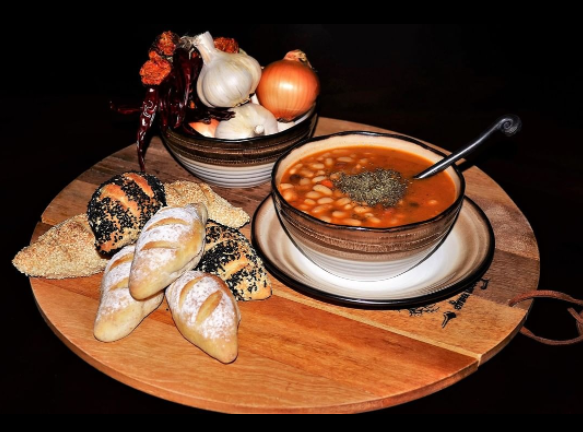
Fasolada is a traditional Greek bean soup – a very easy-to-make vegetarian recipe. This thick soup is traditionally made with white beans cooked with olive oil, onions, carrots, tomatoes, and celery. An all-time classic Greek winter staple, perfect for warming the body!

Meatball Soup - Giouvarlakia

Giouvarlakia
@aikaterineapostolake

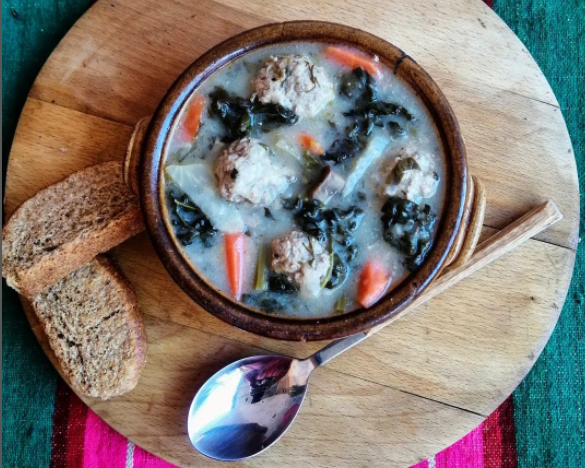
Another Greek comfort food, giouvarlakia is the ideal dish to keep you warm. It's a tasty meatball soup finished off with the infamous egg-lemon sauce (avgolemono) and complemented with vegetables of your liking. If you want to experiment a little bit, you can also try out the alternative version with tomato sauce. 

Spetsofai 

Spetsofai
@agnomarket_meat

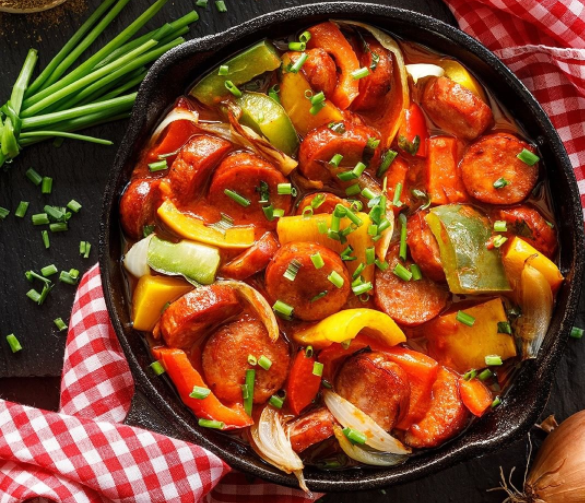
Yet another wintertime favorite, Spetsofai is a traditional dish originating from Pelion, the scenic mountain village of Thessaly. Made with country sausages and peppers cooked in a thick tomato sauce, this delicious dish is perfectly paired with feta cheese and a slice of bread to dip in the sauce. Eggplants are used in the original recipe, and in some areas, hot paprika and red hot chili peppers are used instead of ordinary peppers. It's a must-try, regardless of which version you make.

Chicken Soup - Kotosoupa

Kotosoupa
@olivemagazine_gr

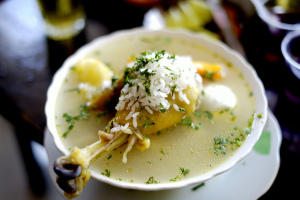
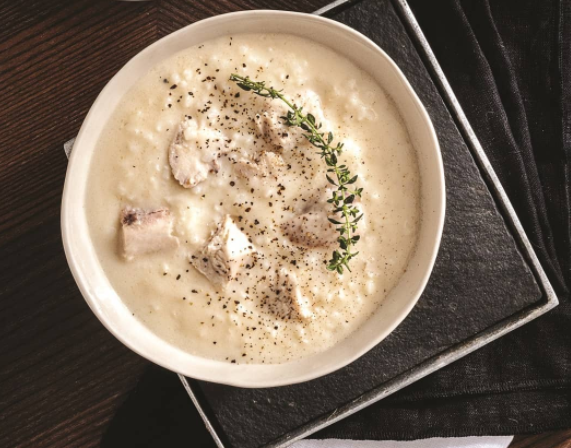
Kotosoupa avgolemono (chicken soup with egg-lemon sauce), another Greek winter classic, is commonly served on cold days. It's very easy to cook; it's just chicken soup with rice and a lot of egg-lemon sauce. Not to mention that it is also used as a remedy to treat the common cold!

Kalamata olives are only found on the Peloponnese peninsula in southern Greece and have played a part in the human diet for thousands of years. Growing under the amazing Greek sun, the olive trees here have much larger leaves than other types of olive trees around the nation and the world and absorb more sunshine.

This dark cherry-sized fruit — yes, the olive is a fruit — that has been used by Greeks for thousands of years not only tastes great, but it also serves up a host of nutritional benefits.

It’s no secret that doctors and dieticians call it one of the healthiest foods on earth and that’s because they are high in sodium, rich in healthy fats, and contain a natural antioxidant.

Kalamata olives contain a range of health-promoting vitamins and minerals and are particularly high in iron and vitamin A. It is said that regular consumption may help lower the risk of cardiovascular disease and various cancers.

History of Kalamata olives

The earliest cultivation of olive trees was probably over five thousand years ago, since Ancient Greek times. Despite being known as ‘Greek black olives,’ they are in fact deep purple in color and compared to green and black olives, they are bigger in size and have plumper, oblong shape.

Growers pick these Kalamata olives by hand to avoid bruising the fruit. Following the harvesting of the olives, workers either process them into olive oil or prepare them to be table olives.

Kalamata olives contain a stone in the middle, and generally, they are not pitted before being sold. However, when fresh the olives are incredibly bitter, and so they enter a process of ‘debittering.’

General Nutrition of Kalamata Olives

Kalamata olives are a good source of fiber, calcium, vitamin C, vitamin A, vitamin E, and vitamin K. They also provide some magnesium, phosphorous, and potassium per serving as well as B vitamins.

While Kalamata olives are high in fat considering their serving size, the majority of their fat is monounsaturated, also known as a “healthy” fat. It is said a 4-tablespoon serving of Kalamata olives has 2.7 grams of monounsaturated fats and 0.3 grams of polyunsaturated fats.

To read this article in full, please visit: greekcitytimes.com


Sea buckthorn berries have been used in traditional medicine throughout Central Asia and Eastern Europe for centuries.

The small orange-yellow berries are described as a superfood. They are full of vitamins, antioxidants, and fatty acids that have been shown to aid in hair and nail growth, benefit eye health, and even boost the immune system as well as increase concentration.

Ancient Greek figures in pharmacology, medicine, botany, and nutrition have long been known for the healing, beneficial qualities of the sea buckthorn berries.

Alexander the Great ate the superfood

Alexander the Great noticed the beneficial qualities of the sea buckthorn berries superfood during his military campaigns in the then known world which he incorporated into his own diet as well as the diet of his troops to give them strength and vitality.

According to ancient sources, the famed Greek leader noticed that his horses loved the berries, and after eating them, they had more strength, shinier hair, recovered more quickly from injury and illness, and seemed to radiate health.

It’s from Alexander that sea buckthorn berries got their scientific name, Hippophae, which comes from the Ancient Greek words hippos and phaos, meaning “shining horse,” referring to the radiant effect the berries had on his horses.

To read this article in full, please visit: greekreporter.com
Thursday, 14 April 2022 07:00

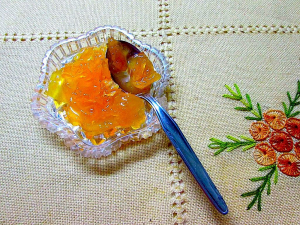
Traditional Orange Spoon Sweet

Spoon sweets are sweet preserves, served in a spoon as a gesture of hospitality and are a big deal here, in Greece. They can be made from almost any fruit, though sour and bitter fruits are usually preferred.

Check the below recipe for an easy-peasy recipe for a delicious orange spoon sweet that will excite your guests' palate!

Ingredients 

2 kilos oranges
800 g granulated sugar
800 g water
1 tablespoon glucose
2 star anises
2 pods of cardamom
lemon juice of 1 lemon

To serve

strained yogurt
rosemary

Instructions
  • Remove the zest of the oranges and add it to a bowl. You can add 80 g brandy and 2 tablespoons sugar, and use it as orange extract. Store it in the refrigerator, sealed in a jar.
  • Cut the top and bottom ends of the oranges and then score the rind all around the orange. Carefully remove the peels, wrap them, and pierce them with a toothpick.
  • Transfer the peels to a pot with boiling water and boil for 5 minutes. Drain the water and follow the same process 1-2 more times, depending on the bitterness of the rind.
  • In the same pot add the sugar, the water, the glucose, the anise, the cardamom, the peels of the oranges, and transfer over low heat. Boil for 40-50 minutes.
  • Remove from the heat and add the lemon juice.
  • Let it cool well. The more the syrup is cooling down, the more it will thicken.
  • Serve with yogurt and rosemary. You can store it sealed airtight in a jar, in a cool and dry place.
To read the full recipe, please visit: akispetretzikis.com
Monday, 23 May 2022 07:00

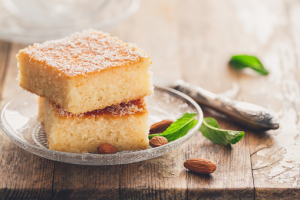
Greek Semolina Cake - Revani

Revani (also spelled ravani) is a Greek cake known for its citrus flavors and use of semolina flour. The sponge cake is made with lemon zest and sweetened with a simple syrup with orange zest.

Here's an easy-to-follow recipe for the perfect revani, a delightful addition to any sweet table!


Ingredients

For the cake: 
  • 1 cup all-purpose flour
  • 1 cup fine semolina
  • 1 tablespoon baking powder
  • 1/2 cup unsalted butter
  • 1 cup granulated sugar
  • 3 large eggs, separated
  • 1 teaspoon vanilla extract
  • 1 lemon, zested
  • 1 cup milk
  • 1 pinch salt
For the syrup: 
  • 1 1/2 cups water
  • 1 1/2 cups granulated sugar
  • 2 strips orange zest
  • 1 teaspoon fresh lemon juice
Instructions
  • Preheat the oven to 350 F. Grease the bottom and sides of a 9 x 13-inch pan and set aside.
  • Mix the flour, semolina, and baking powder in a medium bowl.
  • Cream the butter with the sugar until light and fluffy using an electric mixer. With the mixer running, add the egg yolks one by one. Continue mixing until the batter turns light yellow. Add the vanilla extract and lemon zest.
  • With the mixer on low speed, add the flour mixture in 3 batches alternating with the milk.
  • Clean the beaters well and beat the egg whites in a separate bowl with a pinch of salt until soft peaks form.
  • Using a spatula, gently fold the egg whites into the batter until just combined. Don't mix too much, or you will "flatten" your egg whites.
  • Pour the batter into the pan, level with a spatula, and bake for 45 minutes or until the cake is a nice golden color.
To make the syrup:
  • Add the water, sugar, and orange zest to a saucepan and bring to a boil. Simmer for 5 minutes. Add the lemon juice and cool.
  • While the cake is still warm, cover it with syrup. When the cake cools, you can sprinkle it with some powdered sugar, cinnamon, and almonds, if using.
To read this recipe in full and discover useful tips for delicious revani, please visit: thespruceeats.com
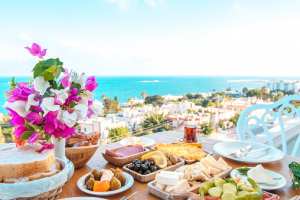
More than one in four hotels in Greece have embraced the “Greek Breakfast,” an initiative connecting the tourism industry to the hospitality sector.

The Hellenic Chamber of Hotels (HCH) describes the new program’s purpose in the following way: “to help connect the gastronomical wealth of the country with the Greek hotel guest experience.

“Greek Breakfast” promotes the regional culinary heritage of Greece in a program formulated to highlight local specialties and products. It is an innovative and highly-structured program requiring strict adherence to well-defined specifications by participating hotels to ensure quality and authenticity,” writes the HCH.

Speaking to Greece Is, the HCH explained that participating hotels are required to serve specific ingredients or dishes that originate exclusively from – and thus represent – the region where a hotel is located. These ingredients/recipes are listed for every region of Greece by the HCH and their inclusion in the breakfast menu must be strictly adhered to, while there are also optional dishes/ingredients that can be added to a breakfast menu.

Apart from regional products and recipes, hotels around the country that are participating in the program must all include inherently Greek products in their menu, such as rusks, olive oil, olives, yogurt, honey, and fresh, locally-grown fruit as the basis of the “Greek Breakfast.”

To read this article in full, please visit: greece-is.com
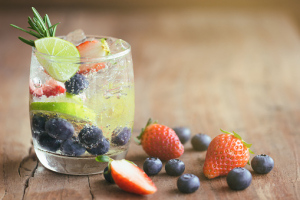
The craze of infused water has taken the world by storm, and we have the perfect way to add a Greek twist to your infused water concoctions.

Recent studies have shown many health benefits of drinking infused water. These benefits include weight loss, increased hydration, and a means of detoxing.

When you are in need of a beverage that quenches your thirst, why not choose one that is also good for you—one with a Greek twist? 

1. Fresh Day Infusion

What you need:
Mastiha + filtered water

One must-try infusion you will love is infused water with mastiha from the mastic trees on Chios. This tree resin has valuable health properties such as aiding in relieving digestive issues due to its antioxidants and anti-inflammatory compounds.

Preparation of infused water: Head to your health food store and get some mastiha resin— you can even find mastiha powder—and add some to your water and enjoy the fresh, earthy taste while reaping the health benefits. 

Bonus: Add some fresh mint to your infused drink for a truly Mediterranean experience!

2. Cherry Bliss Infusion

What you need:
Cornelian cherries + Greek Honey + filtered water

Another great Greek twist you can add to your infused water drink is Cornelian cherries from Drama in northeastern Greece. Cornelian cherries have a potent astringent action and, therefore, have traditionally been used for curing diarrhea and dysentery. They are also valued for their potent tonic and restorative properties.

Preparation of infused water: Wash the cherries and cut them into halves; add them to your water. If you desire to sweeten your cherry-infused water, add a teaspoon of Greek honey.

Bonus: You can also add Greek lemons to this drink for a concoction that tastes something like Cherry Coke!

To read this article in full, please visit: greekreporter.com
Tuesday, 10 October 2023 07:00

Greek Bougatsa Recipe

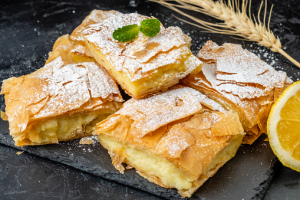
Golden and creamy perfection! Bougatsa (Greek custard pie with phyllo) is a traditional Greek dessert made with the most creamy custard wrapped in golden brown crispy phyllo, sprinkled with melted butter, and garnished with icing sugar and cinnamon. Simply amazing! A traditional Greek dish, perfect for every time of the day, as a delicious snack or a filling dessert.

The key to making the most flavourful Greek Bougatsa is to use good quality fresh butter to butter the phyllo sheets. The authentic Greek Bougatsa recipe calls for ‘galaktos’ butter made from cow’s milk, which has a rich flavor and amazing smell!

Working with phyllo can be tricky as it's brittle and can dry out very quickly. Don’t forget to brush the top of the bougatsa with enough butter and scar with a knife to help release the steam.

Try out this delicious traditional Greek bougatsa recipe and amaze your friends and family with this crispy and velvety delight. Enjoy!

Total Time: 1 hour 20 minutes
Yield: 8-10 portions

Ingredients

For the bougatsa
  • 400–450 g phyllo dough
  • 200 g butter, melted
  • 200 g sugar
  • 1 kg milk
  • 120 g all-purpose flour
  • 4 eggs
  • 1 tsp vanilla extract

For the topping
  • ground cinnamon
  • icing sugar
Instructions
  1. To make this traditional bougatsa recipe, start by making the filling. To prepare the filling for the bougatsa add in a large bowl the sugar, eggs, and flour; whisk until the ingredients combine.
  2. Pour into a saucepan the milk and the vanilla extract and bring to a boil. Right before the milk comes to a boil, pour 1/3 of the milk & vanilla extract mix into the flour mixture from step 1 and stir.
  3. Turn the heat down. Add the flour & milk mixture into the saucepan with the remaining warm milk. Whisk very quickly, until the mixture has thickened and is smooth and creamy. Do not remove the pan from the stove while whisking. This should take 2-3 minutes.
  4. Remove the pan from the stove and stir occasionally to keep the custard from forming a skin on top, while you prepare the rest of the bougatsa recipe.
  5. For this bougatsa recipe, you will need a large baking tray, approx. 20×30 cm / 8×12 inch. Using a pastry brush, butter the bottom and sides of the tray.
  6. Unroll the phyllo dough from the plastic sleeve. To make this bougatsa recipe you will need 10-12 phyllo sheets. Use 5-6 sheets of phyllo for the bottom of the bougatsa and 4-5 sheets for the top.
To read this article in full and find out useful tips for a delicious bougatsa, please visit: mygreekdish.com
Wednesday, 18 December 2024 07:00

Eggnog With A Greek Twist

Bring a Mediterranean twist to the classic holiday eggnog with flavors inspired by Greece! This creamy and aromatic drink combines traditional eggnog ingredients with the distinct taste of Greek honey and mastiha.


Ingredients:

  • 4 cups whole milk
  • 1 cup heavy cream
  • 4 large eggs (separated)
  • 3/4 cup Greek honey (or to taste)
  • 1/4 cup mastiha liqueur (optional)
  • 1/4 teaspoon ground cinnamon
  • 1/4 teaspoon ground nutmeg (plus more for garnish)
  • Lemon zest (from 1 lemon)
  • 1 teaspoon vanilla extract

Instructions:

  1. Heat the Base:
    In a medium saucepan, combine the milk, heavy cream, Greek honey, cinnamon, nutmeg, and lemon zest. Heat the mixture over medium heat, stirring occasionally, until it is just about to simmer (do not boil). Remove from heat.
  2. Whisk the Yolks:
    In a mixing bowl, whisk the egg yolks until they become pale and creamy. Gradually add a ladle of the warm milk mixture to the yolks while whisking continuously to temper them. Slowly add the yolk mixture back into the saucepan, whisking constantly.
  3. Cook the Eggnog:
    Return the saucepan to medium-low heat and cook until the mixture thickens slightly and coats the back of a spoon (about 5 minutes). Remove from heat and stir in the mastiha liqueur (if using) and vanilla extract.
  4. Beat the Whites:
    In a separate bowl, beat the egg whites until soft peaks form. Gently fold the egg whites into the cooled eggnog mixture for a frothy texture.
Chill and Serve:
Refrigerate the eggnog for at least 2 hours. Before serving, give it a gentle stir. Pour into glasses and garnish with a sprinkle of nutmeg or a drizzle of Greek honey.
 
Page 335 of 464