XpatAthens

XpatAthens

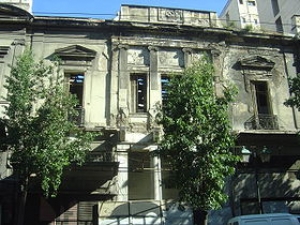
I have often daydreamed, if I had the means, which of the many pre-World War II buildings around Athens that have been abandoned and abused I would choose to save. While a tough decision, I’ve always been pretty certain it would be the Athinogenis Mansion (Megaron Athinogenous) in one of the most run-down parts of downtown Stadiou Street, between Klafthmonos and Omonia squares.

I cannot remember it ever looking well-kept, even though it represents an important period of Greek history in the late 19th century and is the last architectural vestige of three buildings designed in Athens by French architects.

However, it seems I might have to find a new crumbling edifice to focus my daydreams on, as it appears a knight in shining armor has already stepped up to save the Athinogenis Mansion, because for the first time in two decades, a plan for the building’s restoration has been put forward that not only sounds reasonable, but also looks as if it may be getting under way, unlike numerous past failed efforts.

On paper, the owners of the emblematic building are four Cypriot companies – Korovina, Apure, Lagadia and Boyaca – but behind them, the plans for restoring the building belong to a well-known Cypriot shipowner who prefers to remain unnamed.

Crews have already started clearing the premises and the Culture Ministry will then carry out a study of its structural condition. Once it gets the green light, the owner can proceed with the study for its renovation.

To read more, please visit ekathimerini.com

By Dimitris Rigopoulos

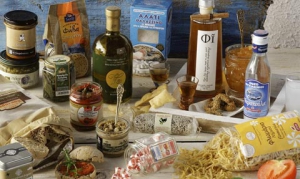
Greek food is taking center stage at a number of unlikely locations around Athens this month. Over 500 Greek producers, prominent chefs, restaurateurs, hotel owners, wine professionals and food specialists are participating in three large-scale gastronomy festivals taking place at the Technopolis cultural complex in Gazi, Stadio Irinis kai Filias (Peace and Friendship Stadium) in Neo Faliro and the Benaki Museum’s Pireos Street annex.

The past few years have seen local foodies moving away from international trends and focusing more on Greek flavors, products and small producers. Is this a form of roots revival, a patriotic effort to support local producers, a healthy rethink of traditional dishes, or even a kind of introversion during this difficult period? Possibly a combination of all of the above, but the fact that it leads to the development of local culinary culture is certainly a key positive point.

Following four highly successful events, “Greece, Celebration, Flavors” a festival organized by Athens city guide Athinorama and its food-focused sibling Athinorama Umami, has become quite an institution. Featuring 130 Greek producers, this year’s event starts today and runs through Sunday at Technopolis. The parade of Greek products will be complemented by a number of culinary and cultural events, concerts and visual art activities. During the course of the festival, the products on display will also be on sale, allowing visitors to sample the goods at their own leisure.

On the same days, the Peace and Friendship Stadium turns into a culinary arena and open-air market. The first edition of the Athens Food Festival will host over 200 small producers from around Greece presenting more than 500 types of traditional local products, recipes and culinary secrets from across the country, while noted Greek chefs and food specialists will also take part in presentations.

The festival’s program is based on four core themes: culinary presentations, product display, tastings and conferences. The event’s agenda includes an exhibition of high-quality products from small Greek producers, such as cheese, wine, honey and flour, as well as workshops and demonstrations of production methods used in rural parts of the country. A traditional olive press – billed as the largest ever to be erected at a trade show – will be used for the in situ production of virgin olive oil from a selection of Greek varieties, including the Koroneiki, Manaki and Ladoelia, among others.

To read more, please visit ekathimerini
by Yiouli Eptakili
Thursday, 16 July 2015 07:00

Five Of The Best Bars In Athens

A round up of the very best drinking dens in the Greek capital, including the TAF Foundation, the Clumsies, By The Glass, 48 Urban Garden and Galaxy Bar - and drinks that range from cocktails made with white and black rum with pineapple and passion fruit to premium gins and some of Greece's best wines.

Greece may be struggling to find a way out of its economic crisis, but the citizens of Athens still have plenty of choice when it comes to escaping their woes over a drink.  Whether you're in town to party or talk politics, here are five great places to drink in the country's capital.

1) taf Foundation
Through a tiny door in the middle of an antique-shop-filled street in Monastiraki is the TAF Foundation - taf is the Greek letter T but in this case also stands for The Art Foundation - a courtyard arts space.  The yard is lined with a bar (think high tables and seats, covered in winter and open to the elements in summer) and the whole place feels like sitting in the middle of a film set.  The in-house exhibition this summer is of cocktail posters.  For each poster, a cocktail: the Hangover is white and black rum with pineapple and passion fruit, Peacock Blues is gin, honey, grapefruit and spearmint. Website (in Greek): http://theartfoundation.metamatic.gr/

2) The Clumsies
New cocktail bar The Clumsies is home to an experimental kitchen where you can find the staff distilling the essence of blue cheese and mixing it with alcohol. The Clumsies created Greece's first premium gin and the drinks list includes a cocktail made with frapa lemon, bitters, oregano and rosemary.  Speak to the bartender and he or she will customize your drink to your tastes.  Vasilis Kyritsis, one of the owners laughs,  "A friend observed that we spilled a few things behind the bar, but we say the right way is to be a little bit clumsy!"

Read more about The Clumsies here. Website: http://theclumsies.gr/

3) By The Glass
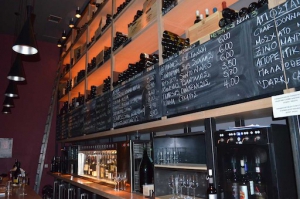
By The Glass offers the best of Greece's modern wines - fabulous whites, roses and reds. Sit in the arcade or inside at one of the high tables and try the tiny 25ml measures, or 'by the glass,' or full bottles.  As the name suggests, a special sealing method is used to make every bottle in the house available by the glass.  Food to compliment each of the wines is also available. Website: http://www.bytheglass.gr/#!home-en/c1lvn

To read more, please visit: Olive Magazine
by Audrey Gillan
Some good reportage about Greece for a change!

The OECDreleased a list that ranks countries based on the highest number of scientists per capita in fields such as mathematics, physics, technology and engineering. As it turns out Greece was placed among the 10 “smartest” countries in the world.

The first place was occupied by South Korea with 32% of students in the country studying in a scientific field, according to data from 2012. The country showed a significant drop in numbers since 2002 when percentage was 39%.

Germany came second with 31% and Sweden placed third with 28%. Sweden also placed second, after Norway, in regards to the widespread use of computers in the workplace. Finland came fourth with 28% as well, while according to the OECD most students in the country specialize in the research and production of medicine.

To read more, please visit: Greek Reporter
by
Ioanna Zikakou
Monday, 28 May 2018 07:00

An Insider's Guide To Visiting Athens

There’s so much more to Athens than what meets the eye and travel writer Rebecca Hall, who has lived in Athens for 10 years, shares her inside scoop for visiting the city!

Acropolis and Parthenon

We all know the Acropolis and Parthenon are two very famous places to visit in Athens.  One of my insider’s tips, though, is to actually go to just below the entrance of the Acropolis, where you’ll see some metal steps, as well as rough, slippery steps carved out of the rocks.  Ascend either (only a short climb, but wear trainers if you’re going up the rock steps as they really are slippery, even in dry weather due to being cut out of marble), and join others to sit and admire the 360 degree of Athens and all the way down to the port of Piraeus and further still, the nearby islands.  At sunset it’s spectacular.  Best of all, it’s free.

Syntagma Metro Station Archaeological Collection

Not everybody’s into archeology, and I respect that.  It’s pretty hard to come to Greece, especially Athens – however, and not be confronted with archeology at almost every turn. It’s just there, which is kind of wonderful if you think about it, in this day and age.This insider tip for visiting Athens is clever in that you don’t actually have to pay to go to a museum…and it’s unique in that it’s located actually inside a Metro/Underground station – in the ticket hall! For more information on the underground exhibitions, click HERE.

To read this article in full, please visit: Life Beyond Borders
Tuesday, 24 September 2019 07:00

B&E Goulandris Foundation

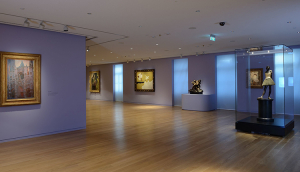
The Greek capital welcomes the Basil & Elise Goulandris Foundation – one of the most anticipated cultural projects of the past years.

Apart from the Museum of Contemporary Art in Andros, Basil and Elise envisioned the creation of a museum in Athens, which would allow a broader audience to become introduced to modern and contemporary art.
The collection focuses on modern and contemporary art by Greek and foreign artists, including rare works by masters of the European avant-garde such as Cézanne, van Gogh, Gauguin, Monet, Degas, Rodin, Toulouse-Lautrec, Bonnard, Picasso, Braque, Léger, Miró, Giacometti, Balthus, and others, as well as works by distinguished Greek modern painters including Parthenis, Bouzianis, Vasileiou, Hadjikyriakos-Ghika, Tsarouchis, Moralis, Tetsis and others.
The museum covers a surface area of 7,250 sq.m. and consists of 11 floors.  The museum is home to a museum shop and a café-restaurant which is located on the mezzanine floor. On-site there is also a library with around 4,500 books, a children's workshop, and a state-of-the-art, 190-seat amphitheater, designed to host events including lectures, conferences, screenings, performances, concerts, and other artistic and scientific activities.

The foundation is located in Pagrati, within easy access from the city center and Athens' other significant museums.

Basil & Elise Goulandris Foundation

Address: 13 Eratosthenous,116 35, Athens
Phone: 210 7252895

Working Hours: Tuesday - Sunday 10:00-18:00, Friday 10:00-22:00, Monday Closed
 
Photo: Basil & Elise Goulandris Foundation
 

Instagram_Banner_-_Leaderboard.png

During a Covid-19 media briefing, Greek Civil Protection Deputy Minister Nikos Hardalias informed that the epidemiological picture of Greece continues to show improvement, as the number of new cases and those hospitalized is decreasing.

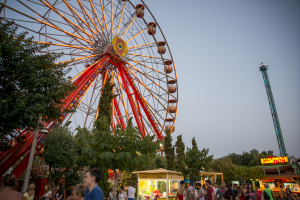
More specifically, the deputy minister announced that as of Saturday, June 19, amusement parks and wellness services will be permitted to resume operations.

Amusement parks will operate under strict social distancing measures while all customers and staff must wear masks at all times.

The resumption of wellness services includes the reopening of spas, therapeutic baths, and thermal springs and will take place in accordance with strict health measures.

The deputy minister also announced that indoor movie theaters will reopen as of Thursday, July 1 under a 50 percent capacity limit. Moviegoers will be allowed to enter after booking their seat online and showing either a Covid-19 vaccination certificate or a negative self-test result at the door. Masks must be worn at all times in indoor movie theaters.

With regard to people wearing masks while exercising in gyms, he said that those with a vaccination certificate are exempt from the rule.

To read this article in full, please visit: news.gtp.gr
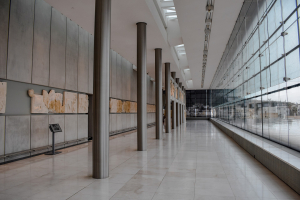
The award-winning Acropolis Museum, dedicated to the rich archaeological heritage of the Athenian Acropolis from the Bronze Age to Byzantine times, has launched ten new educational programs for school pupils, from kindergarten to high school.

Designed to motivate thinking and enhance the museum experience, the Museum’s education department has put together nine on-site programs for groups of up to 25 visitors, students, and teachers, and one online program, presenting a virtual tour of the most important works of the Acropolis.

The on-site programs last between 60 and 90 minutes and are available in both Greek and English. They include expertly guided and interactive tours through the Museum’s galleries, exploring the collections.


To find more information about the programs, click here!

Younger classes (kindergarten and the first grades of primary school) have the opportunity to learn about the eating habits and favorite recipes of the ancient Athenians, plants and animals, the Olympian gods, and the Panathenaic festival, while older classes (4th to 6th grades primary and 7th grade junior high) can explore the story of the fabled hill and its monuments, how the ancients depicted themselves in art, the Parthenon sculptures, and the secrets of ancient marble sculpting.

For high school students, an on-site program will introduce them to various professions of the ancient Athenians, and a 90-minute online tour presents the Acropolis Museum, its architecture, the excavation at its base, and some of the Museum’s most celebrated exhibits.

Originally published on: greece-is.com
In the ever-evolving landscape of entrepreneurship, knowledge is not just power—it's the cornerstone of success. Whether you're an aspiring business owner, a seasoned entrepreneur, or someone simply looking to foster their entrepreneurial spirit, books can serve as invaluable guides on your journey to success. From timeless classics to modern insights, here are five books that will unleash your inner entrepreneur and inspire you to reach new heights in business and beyond.

The Lean Startup by Eric Ries
Goodreads Score:
4,1/5

In "The Lean Startup," Eric Ries introduces the concept of building a business through continuous innovation and adaptation. Drawing from his experiences as a startup founder and advisor, Ries offers practical strategies for testing ideas, measuring progress, and maximizing efficiency. This book is a must-read for anyone looking to launch a business in today's fast-paced world, emphasizing the importance of agility, experimentation, and customer feedback.

Zero to One by Peter Thiel
Goodreads Score: 4,2/5

In "Zero to One," billionaire entrepreneur Peter Thiel shares his insights on what it takes to create a truly groundbreaking company. Thiel challenges conventional wisdom, urging entrepreneurs to focus on creating unique, monopolistic businesses rather than competing in crowded markets. Through thought-provoking ideas and real-world examples, "Zero to One" encourages readers to think boldly, innovate relentlessly, and build the future they envision.

The 4-Hour Workweek by Timothy Ferriss
Goodreads Score: 3,9/5

"The 4-Hour Workweek" by Timothy Ferriss is a game-changer for anyone seeking to escape the 9-to-5 grind and live life on their own terms. Ferriss shares his strategies for achieving financial freedom and lifestyle design through automation, outsourcing, and mini-retirements. Packed with practical tips, case studies, and actionable advice, this book challenges conventional notions of work and productivity, empowering readers to build businesses that support their ideal lifestyles.

Start with Why by Simon Sinek
Goodreads Score:
4,1/5

In "Start with Why," Simon Sinek explores the power of purpose-driven leadership and its impact on business success. Sinek argues that great leaders and companies inspire action by communicating their "why"—the underlying purpose that drives everything they do. Through inspiring stories and compelling insights, "Start with Why" helps entrepreneurs uncover their own why and harness it to build passionate, loyal communities around their brands.

The E-Myth Revisited by Michael E. Gerber
Goodreads Score:
4,1/5

"The E-Myth Revisited" by Michael E. Gerber offers invaluable insights into the common pitfalls that plague small businesses and how to avoid them. Gerber introduces the concept of the entrepreneurial myth—the misconception that most businesses are started by entrepreneurs when, in reality, they are started by technicians suffering from an entrepreneurial seizure. Through practical advice and illuminating anecdotes, Gerber provides a roadmap for building a business that thrives beyond its founder, emphasizing the importance of systems, processes, and scalability.

These five books offer a wealth of knowledge and inspiration for aspiring and seasoned entrepreneurs alike. Whether you're looking to launch a startup, grow your business, or simply cultivate an entrepreneurial mindset, these books will equip you with the tools, strategies, and insights you need to succeed in today's competitive landscape. So pick up a copy, dive in, and unleash your inner entrepreneur. Your journey to success starts now!

Wednesday, 18 February 2015 13:50

Delos: Where Light Was Born

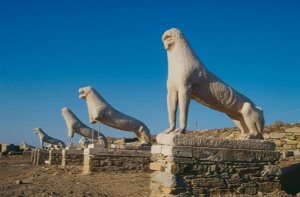
It’s a UNESCO world heritage site. It’s an ark of history, floating lazily on the waters of the Aegean Sea, just a few miles away from cosmopolitan Mykonos. It’s a chance to walk around the revival of the glory of Greek civilization. It’s the head priest of the Cyclades, the birthplace of the immortals. It’s Delos. In ancient times, the myth of god Apollo, god of light, and goddess Artemis having been born there rendered the island sacred; no mortal would ever be allowed to be born on its land.

But, a cradle of gods as the island has been, no mortals would ever be allowed to die on it either.

So, apart from it being a conspicuous religious and economic centre, the island had also been exclusive in that: even during the years of peak of the Delian Alliance, women on the brink of childbirth and people close to dying would be carried to the neighbouring island of Rineia. The whole of the known world of that age was aware of the sacredness of the island and of its uniqueness.

Nowadays, Delos reserves its uniqueness to the know world: nowhere else in the Globe is there a natural insular archaeological site of this size and importance. No other island on Earth hosts so many monumental antiquities from the Archaic, the Classical, and the Hellenistic periods, i.e. the centuries of the great Greek art, on a territory used exclusively as an archaeological site. Delos is not a museum; Delos is not there to tell a story. Delos is history itself.

To read more, please see visitgreece.gr

Page 9 of 452