

BUSINESS CENTRE
XpatAthens
My Week in Athens… April 12
Springtime weather has everyone outside… The week’s tragedy was fresh in everyone’s mind – but still something about the sunshine, the fresh air and the families outside made Saturday a ‘good day’…
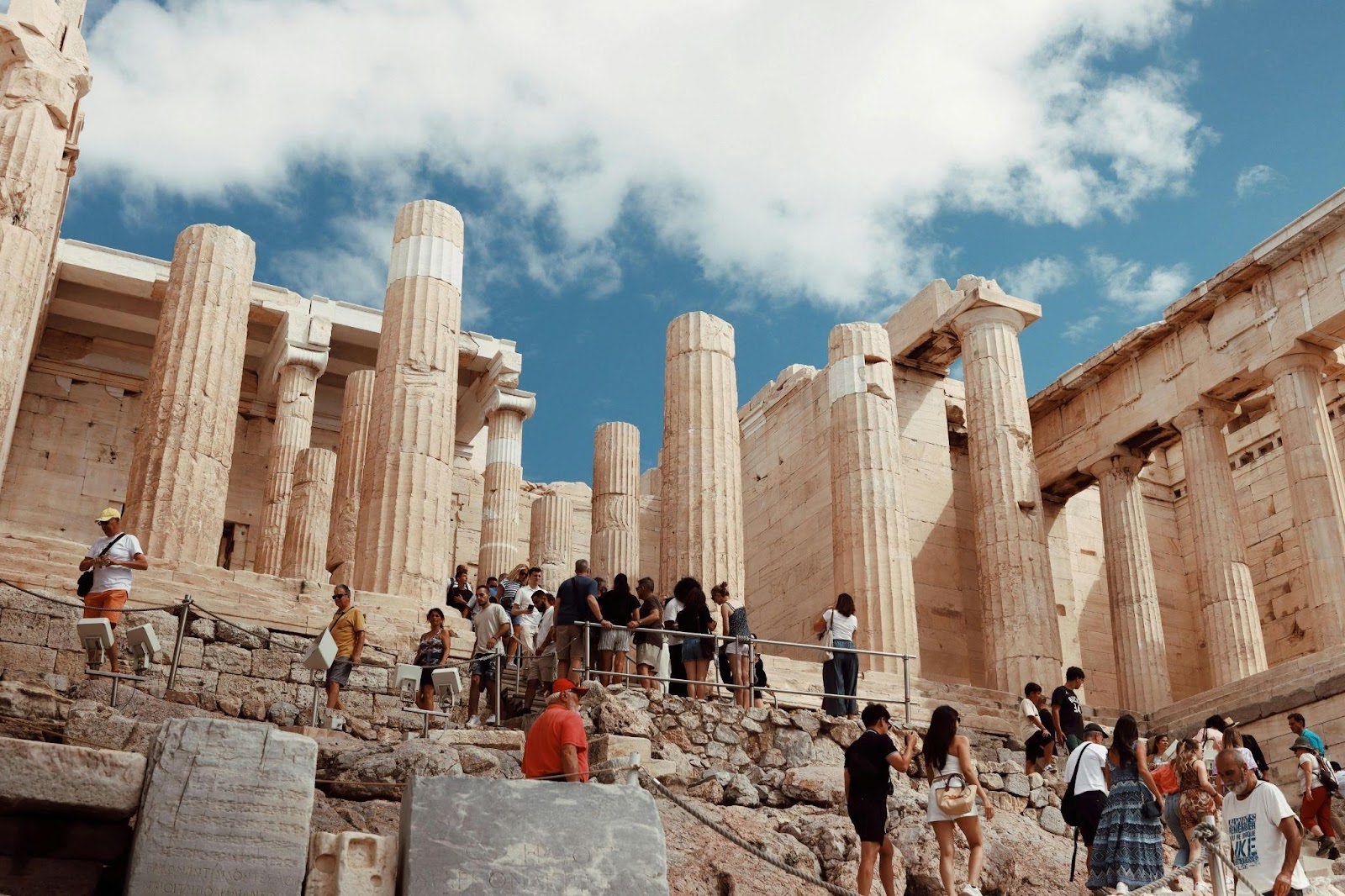
I spent the afternoon learning about the past – the ancient past on display at the National Archeological Museum of Athens.
I know, I know - I figured I knew as much as one needed to know about ‘all that stuff’… I mean, it’s kind of everywhere in Athens. Well, was I ever wrong.
This time, we were lucky to be escorted through the museum by a professional Guide (friend of a friend of a friend…). This made all the difference. She knew the history, the symbolism, the cultural realities, the archeological controversies, the stories, the myths, the regional contexts, the social customs, the religious background – and anything else we cared to ask her about! For the first time, the rocks and the statues really came alive. There is really so much there to take in – the richness of the Hellenic past cannot be comprehended just by walking around and reading the little descriptive paragraphs alongside the endless rows of statues…
And what’s more, we got to see the brand new exhibit of the Antikythera Shipwreck, the sunken treasures of a 2nd century BC cargo ship. This is a really cool display (both in content and in concept!), and includes the Antikythera Mechanism – what some are calling the first ‘computer’.
All of that for the 7euro admission charge (Guide extra!) – not bad for a Saturday afternoon. And totally worth the visit.
National Archeological Museum
44 Patission Street
http://www.namuseum.gr/wellcome-en.html
See you next week.
Jack
In this weekly space, keep up with ‘Jack’ as he navigates daily life in Athens… Anecdotes, stories, hits & misses, the good, the bad and, well, the rest…
How To Become A Greek Citizen: A Guide To Naturalization
Greece is more than a beloved travel destination; it’s also a country that offers the security, opportunity, and cultural richness of EU citizenship. With a Greek passport, you gain the right to live and work not only in Greece but anywhere in the European Union. While many pursue citizenship through descent, naturalization offers another powerful path, open to anyone who meets the legal requirements, regardless of heritage.
Greek citizenship through naturalization is available to foreign nationals who satisfy a number of legal conditions. To apply, you must:
- Be at least 18 years old
- Have no irrevocable convictions for serious crimes in the past 10 years
- Prove continuous legal residence in Greece:
- 7 years for general applicants
- 5 years if residency began before March 24, 2010
- 3 years if you're an EU national, married to a Greek citizen, a parent of a Greek minor, or a recognized refugee/stateless person
- Hold a valid Greek residence permit (e.g., long-term permits, EU/EFTA family cards, refugee certificates)
Your application must be supported by a complete and properly certified file. Key documents include:
- Naturalization Statement signed at your local municipality, in front of two Greek witnesses
- Valid passport and residence permit
- Certified birth certificate, translated into Greek
- Proof of income or tax return from the previous year
- Greek social security number (AMKA)
- Certified translations and authentications of all foreign documents
The road to Greek citizenship involves several official steps:
- Sign and submit the Naturalization Statement
- Collect and file all required documentation
- Demonstrate continuous, legal residency
- Take language and integration assessments
- Complete an interview with the Naturalization Committee
- Await the committee’s decision
- If successful, take the oath of allegiance and be registered as a Greek citizen
The interview is a critical part of the process. It assesses:
- Language proficiency – both verbal and written Greek
- Knowledge of Greece – its history, culture, and democratic system
- Personal background – your life in Greece, reasons for applying, and long-term intentions
- Community ties – evidence of social and cultural integration
While it’s possible to apply on your own, working with a legal expert like Expat Law can save time, prevent costly mistakes, and increase your chances of approval. Their team provides:
- Up-to-date guidance on all legal requirements
- A customized application strategy based on your background
- Careful review of documents to avoid delays
- Representation in legal proceedings if needed
- Full support from start to finish
End-to-end assistance tailored to your case:
- Document preparation and legal verification
- Application submission and follow-up with authorities
- Legal representation in appeals or complex scenarios
- Ongoing guidance throughout the process
What American Expat Parents Should Know When Raising Infants In Greece
Understanding Maternity, Parental Leave, and State Support
Greece has expanded support for new parents in recent years. In 2024, the government raised the tax-free income threshold by €1,000 for families with children. It also extended the maternity allowance from four to nine months and increased the heating allowance from €3,000 to €5,000 per child.
These measures aim to ease financial stress for young families. A key part of this support is the birth allowance, a one-time payment for every child born in Greece. Effective from 2024, the amount is now graduated. For the first child, parents receive €2,400, rising to €3,500 for the fifth and subsequent child, providing meaningful relief for growing families.
If you’re an American living and working in Greece, you may qualify for certain local benefits depending on your residence and employment status. Parents who contribute to Greece’s national insurance (EFKA) can apply for maternity and parental leave allowances. Eligibility often depends on your work contract, so confirm with your employer or local EFKA office.
Families also receive child benefits that vary by income and family size, ranging from about €28 to €70 per child. These payments are made six times annually in bi-monthly installments by OPEKA. Applications must be submitted through the government’s digital portal. Local municipalities and expat groups can help guide you through the process.
Infant Formula, Pricing, and Regulation in the Greek Market
Many expat parents are surprised by how expensive infant formula is in Greece. According to Le Monde, an 800-gram container of powdered formula can cost up to €27, nearly double the price in other European countries.
Newsday Greece reports that the rising prices forced the government to implement a 7% profit cap on baby formula. Greek authorities also fined several international companies for violating these caps. For parents, this means pricing is now more regulated, but selecting the right formula still requires care. When buying baby formula, always check for EU labeling and safety approval.
Pharmacies across Greece stock many EU-certified brands, and pharmacists can help you choose the right one for your baby. Imported U.S. brands are harder to find and cost more. Many American parents follow product safety news back home. You may have read about the Similac lawsuit in the U.S., which raised concerns about specific infant formulas.
According to TorHoerman Law, various Similac products were linked to necrotizing enterocolitis, a severe intestinal condition in premature infants. However, this case applies only in America and does not affect Greek or EU-regulated products. Still, staying informed about recalls can help you make safer choices, especially if you import formulas from abroad.
Food safety in Greece follows strict EU standards, and local products are regularly inspected. If you live on an island or in a rural area, keep an extra tin or two, since delivery delays are common during peak seasons.
Healthcare, Pediatric Access, and Vaccination Norms
Greece has both public and private healthcare systems, and expat parents often use a mix of both. The public system provides reliable pediatric care through regional hospitals and health centers, but wait times can be long. Private clinics, while more expensive, offer faster appointments and English-speaking pediatricians.
To access public healthcare, register with the national insurance system (EFKA) and obtain an AMKA number. This gives your family access to child health visits and vaccinations. Most vaccinations in Greece follow the World Health Organization’s schedule, so you won’t find major differences compared to the U.S.
A helpful tip for expat families: in many Greek neighborhoods, pediatricians still make house calls for newborn checkups. This can be a big comfort, especially during your baby’s first few weeks. Local parent groups can recommend trusted doctors who speak English or are familiar with the needs of foreign families.
If you plan to split time between the U.S. and Greece, carry a record of your baby’s vaccination history to avoid duplication. Pharmacies in Greece also provide over-the-counter baby medications, but you’ll need a doctor’s prescription for antibiotics or specialized formulas.
Once your child’s healthcare needs are met, the next challenge is managing day-to-day essentials such as formula and supplies, especially outside major cities.
Managing Baby Supplies & Daily Life Across Greece
Outside of Athens and Thessaloniki, access to baby supplies can vary. Pharmacies are the primary source of baby formula, diapers, and baby care items. In smaller towns or islands, it’s smart to order in bulk or through online Greek pharmacies that deliver nationwide.
Shipping from the U.S. can be unpredictable due to customs and inspection delays. Rely on EU-certified brands found locally when possible. These products meet high safety standards and are easier to replace if lost or recalled. Island residents should plan around ferry schedules and delivery slowdowns, especially during holidays.
Keep a small emergency kit, formula, diapers, wipes, and basic medication, for times when stores close early or shipments are delayed. To understand daily living costs, consider the example of an American family that relocated from Texas to Greece. According to CNBC, they found life more affordable and balanced.
The family, earning about $136,000 annually, reported spending roughly $1,400 per month on rent and utilities. Additionally, they spend $1,900 on food and $1,200 on medical expenses during their first month. Although their initial relocation cost about $15,000, they described the Greek lifestyle as more fulfilling, and financially lighter compared to the U.S.
While day-to-day logistics can take effort, most expat families adapt quickly. Many American parents say that once they understand how local systems work, they find Greece a welcoming and supportive place to raise children.
Frequently Asked Questions
1. What documents do American expats need to access healthcare in Greece?
American expats need an AMKA number (social security ID) to access Greece’s public healthcare. You can apply for it through your local KEP (Citizens’ Service Center) with your passport, residence permit, and proof of address. Private health insurance is recommended to cover services not included in the public system.
2. What are the private childcare options for infants in Greece?
For infants under 4 years old, you'll find both municipal and private infant care centers (Vrefonipiakoi Stathmoi). Private crèches (daycare) can admit babies as young as 2–6 months, though public centers often start closer to 6 months. For personalized care, private nannies or babysitters are also widely available.
3. How can American parents find English-speaking pediatricians in Greece?
Most major cities, such as Athens, Thessaloniki, and Heraklion, have English-speaking pediatricians who cater to expat families. You can find them through private hospitals, embassies, or expat Facebook groups. Many clinics list English fluency on their websites, and some even offer telehealth consultations for added convenience.
Raising infants in Greece as an American expat comes with adjustments, but the rewards typically outweigh the challenges. Understanding how to access parental support, manage formula choices, and navigate healthcare will make your family’s transition smoother.
Greek culture deeply values children and community, so you’ll find many locals willing to offer advice or lend a helping hand. With the right preparations and local insights, you can create a safe, nurturing environment for your little one to thrive under the Mediterranean sun.
My Week in Athens… April 19
Crisis or not, Easter means one thing for sure: food. And although many tables were undoubtedly ‘leaner’ than in the past, I think most of us will admit to taking a second helping of lamb, or an extra koulouri… in any case, sitting around a table crowded with family, friends and neighbours, felt really great. A blur of faces, voices, arms, bumps and hugs. Wonderful.
Wandering around an empty Athens on Monday morning made me think about day-to-day life in a modern metropolis. And the blur of faces, voices, arms, bumps and, well, hugs. So many faces, so many voices, so many stories – everyone so different. Who really knows what the taxi driver’s life is like, or the lady at the supermarket. Surely different than yours or mine – or is it?
Sitting around the table at Easter, participating in simple traditions that date back centuries, I realized that we aren’t so different. Here is a country that, on days like Sunday, join together in some great unspoken agreement to be together, to observe the same traditions, in more or less the same way, in more or less every corner of the country. It’s powerful.
See you next week.
Jack
In this weekly space, keep up with ‘Jack’ as he navigates daily life in Athens… Anecdotes, stories, hits & misses, the good, the bad and, well, the rest…
Greek Property Laws & Compliance
It’s no secret that buying and selling property in Greece comes with a lot of red tape! Thankfully in recent years there have been significant efforts made to organize and simplify property related processes, not to mention a massive leap in digitization.
To help you along in the process, we recommend that you have the below checklist of Greek property portfolio documents in order. Of course, every case is unique and the below may not cover your specific property needs.
Feel free to reach out to us with your questions and we’ll connect you with a trusted professional.
* Building Permit and revisions if any
* Authorized Drawings attached to the building permit
* Declaration/Drawings of Law No. 3843/10 if submitted
* Declaration/Drawings of Law No. 4495/17 (or Law No. 4178/13, 4014/11)
* As Built Drawings/Floor Plans
* Title Deeds
* Energy Performance Certificate
* Structural Report or Structural Stability Report if required
* Certification of Construction Inspection if issued
Here is a more detailed look at some of these requirements:
Declaration of Property in Greece - Law No. 4495/17
The first step in verifying the legal status of your property in Greece is to conduct an on-site inspection after gathering authorized building plans and licenses.
If illegalities have been determined, we can begin the initial phase of declaring the property. Through the electronic system of the Technical Chamber of Greece, the owner will be given a unique application code of the declaration and the invoice of the initial lump-sum payment necessary to validate the process.
Fines are determined depending on property size, the type of use of the structure, the frame time it was built, as well as the area’s set tax value. The fees required for each declaration and completion of final documentation/property portfolio differ depending on the nature, size and complicity of the structure.
Electronic Building ID Code & Certificate
The Electronic Building ID Code is a key tool that provides detailed information for all registered properties in Greece. Property transactions and title searches are now simpler, faster and most importantly, more transparent. This code, which can also be described as the “as-built status” of a property, is representative of what has been built on-site in terms of dimensions, area surface and use of buildings.
All property transactions cannot be complete without the Electronic Building ID Code Certificate which is issued for all buildings and parcels without structures and valid for 2 months. If there are any layout, facade and property-use changes, the Building UD Code must be updated to ensure the legal status of the property.
All information collected from building permits and drawings, the Greek Tax Authorities, Hellenic Cadastre details, Declarations of Legality and Energy Performance Certificates are all recorded on an electronic database. These details are then all electronically linked to Greek authorities and public entities related to property ownership to secure access to the exact same property information.
Energy Performance Certificates & Inspections
According to Greek Law, all deeds of conveyance and rental agreements for existing buildings are complete and valid only after an Energy Performance Certificate is issued and submitted to the Greek tax office or notary public. Energy Performance Certificates (or EPC’s) are unique documents issued through an electronic system of the Greek Ministry of the Environment only by Certified Energy Inspectors; they state the level of efficiency in terms of energy consumption after concluding an inspection of the building in question.
In order to collect the data needed for certification, we will visit your property and its surroundings to conduct a thorough inspection. During this process we will access each room for a general overview of insulation/exterior shading, note the size and type of glazing structures, inspect the heating, hot water, cooling and lighting system (in cases of commercial property). If floor plans are not provided, the property will be measured on-site. Following the inspection process, a certificate will be issued and valid for 10 years regardless of rental and ownership title changes.
If you're looking for the right professional to handle things efficiently and stress-free - we can help! Contact us whenever you’re ready and we’ll connect you with tried and trusted partners.
This content has been created in collaboration with our partner K Sirouni Architects.
Understanding Greek Rental Laws & Property Ownership
Renting In Greece: Your Rights & Responsibilities
Renting a property as an expat in Greece comes with specific rights and duties that protect both tenants and landlords. Here’s what you need to know:
Key Rental Laws in Greece
- Lease Agreements Are Binding:
- Greek rental agreements typically last three years unless otherwise stated.
- Verbal agreements are valid but always insist on a written contract for clarity and legal backing.
- Security Deposits:
- Landlords can request up to two months’ rent as a security deposit.
- This deposit is returned at the end of the lease, provided there’s no damage or unpaid rent.
- Eviction Rules:
- Tenants cannot be evicted arbitrarily.
- Greek law mandates a legal process for evictions, safeguarding tenant rights.
Tenant Responsibilities
- Rent Payments: Always pay your rent on time to avoid disputes.
- Property Care: Tenants are expected to maintain the property and report major repairs to the landlord.
Pro Tip: When negotiating a lease, double-check who’s responsible for utilities and maintenance fees—it’s not always clear in contracts.
Owning Property In Greece: What Expats Need To Know
Dreaming of taking the next step owning a slice of Greek history? Buying property in Greece involves some unique legal requirements for foreigners. Here’s a quick rundown:
Foreigners Can Own Property—With Conditions
- Expats from EU countries face no restrictions when buying property.
- Non-EU citizens may need special permission to purchase properties in border regions (e.g., islands near Turkey).
The Purchasing Process
- Hire a Lawyer: A Greek Lawyer can help you verify the property’s legal status and ensure there are no outstanding debts, burdening the property.
- Obtain a Greek Tax Number (AFM): This number is required for any property transaction.
- Notary Involvement: All property sales must be finalized through a notary, ensuring a legal and transparent transfer.
Taxes and Fees
- Expect to pay around 8-10% of the property’s value in taxes and fees, including transfer tax, legal fees, and notary costs.
- Property owners are also subject to annual ENFIA (property tax).
Navigating Legal Challenges As An Expat
Despite Greece’s welcoming charm, expatriates can face occasional legal hiccups. Here’s how to stay ahead of potential pitfalls:
- Understand Your Lease: Don’t sign anything you don’t fully understand—have a bilingual lawyer or translator review the terms.
- Verify Property Ownership: Before purchasing, confirm the seller has clear ownership rights and that the property is free from legal disputes.
- Keep Track of Deadlines: Rental agreements, taxes, and permits often come with strict timelines. Missing a deadline can lead to hefty fines.
Helpful Resources for Expats
- Greek Ombudsman Office: Handles disputes between landlords and tenants.
- Local Real Estate Agents: Familiar with expat-friendly properties and their legal nuances.
Why Understanding Greek Property Laws Matters
Whether you’re renting or buying, knowing your rights and responsibilities ensures a smooth experience in Greece’s real estate market. Understanding tenancy laws protects you from unfair practices, while navigating ownership regulations lets you invest with confidence.
Relocating to Greece is a dream for many, but it pays to do your homework. With the right legal guidance, you’ll enjoy the sun, sea, and history without a hitch.
FAQs
1. Can expats negotiate rental agreements in Greece?
Yes! Lease terms can often be negotiated, but always get the agreement in writing to avoid misunderstandings.
2. Are Greek property taxes high?
Not particularly, but property owners must budget for annual ENFIA taxes and one-time transfer fees during the purchase process.
You can take legal action, as Greek law requires landlords to return deposits unless there’s documented damage or unpaid rent.
For more in-depth information on expat legal matters in Greece, check out Expat Law’s Guide on Greek Rentals.
Inheriting Property In Greece As A Non-Resident: What You Need To Know
Step 1: Get a Greek Inheritance Lawyer on Your Side
- Identify what assets and debts are part of the estate
- Advise whether it’s smarter to accept or reject
- Prepare and submit all necessary court declarations
- Properties, bank accounts, and other assets
- Any outstanding debts tied to the estate
ENFIA: Greece’s Real Estate Property Tax
Who Pays ENFIA?
- Full or bare ownership
- Usufruct and occupancy rights
- Surface rights
- Exclusive use of parking spaces, storage areas, and swimming pools
- Location
- Area and use
- Age of the property
- Floor level and number of façades
> Supplementary Tax (Legal Entities Only): 0.55% of property value; reduced to 0.1% if the property is used for business activity.
ENFIA applies to all real estate acquired in Greece.
Log into the AADE platform and file the E9 form to declare your property’s details, including:
- Address and size
- Use and age
- Floor level and special features
The AADE system processes your E9 and generates your ENFIA assessment.
You’ll be notified via the AADE platform (and optionally by email). Pay:
- In full by the end of the next month after issuance, or
- In up to 10 monthly installments (minimum €10 each), with the final payment due in February.
My Week in Athens… April 26
Sunday was a gorgeous day – in what promises to be at least six months of more-or-less gorgeous days! – and I wanted to be outside in the sunshine, doing something active… so I dusted off my bicycle and ventured out for a spin.
I headed for the Olympic Stadium complex, since I know that a few of the main gates are normally open and I could cycle around the grounds…. I must say, living in the northern suburbs (or almost anywhere north of the waterfront) means one thing for cyclists: HILLS. But rather than take them as the horrible torture that they really are, I try to take them as a ‘physical challenge’. Right.
Add to that the constant threat of speeding cars that clearly don't notice bicycles, and you have yourself an adventure, to say the least.
But I have to say that I was very pleasantly surprised – cars stopped at intersections to let me go by, drivers gave me lots of space as they drove around me, I made it out alive. It wasn’t nearly as bad as it has been in the past. And the OAKA complex was quite busy: other cyclists, families with kids, skateboarders, remote-control car racers, even a couple tourists snapping pics…
In fact, I’m feeling so pumped after my afternoon ride, that I’m thinking about joining the ‘Freeday’ group for their Friday night adventures around the streets of Athens…
The Freeday outings have turned into a wildly popular weekly social event, with people of different ages and backgrounds from all parts of the greater Athens area meeting, making new friends and sharing their love of bicycling as they discover a different face of the city.
The bikers start gathering at a different designated spot each Friday night and set off for their weekly adventure, cycling around the deserted (or not) streets of Athens. Picture 100’s of bicycles on Kifissias…! The outing usually lasts a few hours, but many of participants continue throughout the night, taking in the sunrise at a different location each time. Check them out on Facebook.
Is Athens on the long road towards being a bicycle-friendly city? Maybe so. I’m even starting to believe that all those hills really are just a ‘physical challenge’. Right.
See you next week.
Jack
In this weekly space, keep up with ‘Jack’ as he navigates daily life in Athens… Anecdotes, stories, hits & misses, the good, the bad and, well, the rest…
My Week in Athens… May 3
Summer is here, judging by the incredible weekend weather… Who wants to stay home? Friday night arrived and a few of us headed to the centre for a couple drinks. With no destination in mind, we headed towards the Gazi district – plenty of choice for a couple drinks, and a few for some good food too.
Sure, Gazi is young, trendy, even predictable (is that so bad?!) – but it was also buzzing with amazing energy… people everywhere, out to enjoy the beautiful night. We ended up at The Hive – a well-known multi-level bar & event space on the main square, with a small bar inside and a great rooftop terrace. Upstairs, the terrace was jammed full of people, enjoying in the beautiful view and the charged dance music. Later in the evening we headed downstairs where we were greeted by a live band – a great band! 2 female singers – mix of Greek and English pop music. Fantastic. Later on, after another visit to the rooftop, we wandered around the square – still busy with people - decided against a late-night souvlaki – and headed home…
Athens comes alive at night. It's a transformed city after dark - bright lights, music, sound, people, action - the city truly buzzes in a way that few others do. At least after the sun sets, we are spoiled for choice on where to meet friends and enjoy a spring evening...
I loved the buzz of the night. Bring on summer!
Athens nightlife. Not to be missed. Now appearing everywhere ;)
See you next week.
Jack
In this weekly space, keep up with ‘Jack’ as he navigates daily life in Athens… Anecdotes, stories, hits & misses, the good, the bad and, well, the rest…