

WELLNESS HUB

XpatAthens
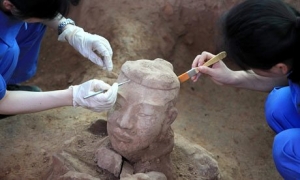
Ancient Greeks May Have Inspired China's Terracotta Army
Eleni Meraki – Introduction To The Founder Of Storytelling Platform Guts & Tales

Eleni left her advertising career in Amsterdam and started her new life with a new home base, Athens. She is a mind trainer, coach and writer. Helps conscious entrepreneurs with finding their voice and launched her “Be Your Own Muse” 12-week online program for women. A multi-passionate entrepreneur with a big vision – all to do with living with meraki.
5 Things to Know About Eleni Meraki
- Hill of the Muses
- Dutch-Greek
- Storyteller
- Lucky number is 24
- Allergic to chit-chat
"Discomfort is where the magic happens. I've always been chasing a rich life and view change as an inevitable force to embrace."
My career started in the marketing & advertising industry. I learned the art of marketing and advertising from the best in the industry, working for the biggest global brands in a variety of roles. I learned tremendously much, yet I wasn't meant to be doing that for the rest of my life. I was looking for more meaning in my life. I started my blog in this period and was getting so much satisfaction and inspiration out of doing it. Looking back it feels like listening to all these stories of people with guts, I was mentally preparing myself to do the same.
After five years of building my “career”, I decided to jump. I had an idea and a business plan of what I wanted to do and I was clear that I needed to move to my other home country, Greece. I felt I had, somehow, to be of service here. It was what they call 'a calling'. The majority of people around me thought I had gone mad. I was giving my safe life up to move to a country in despair, with only a rough idea and savings for just a couple of months of living.
Guts & Tales is a storytelling platform founded by Eleni Meraki but grown to be a global collective of writers, dreamers, doers, shifters, visionaries, and generally people with guts. On this website, you can find change-stories of people that have made major career and life changes in pursuit of personal fulfillment. Alternatively, they offer a coaching program for people that want to make a change in their life or career themselves.
The platform recently started sharing stories of people living in Greece and is always looking for more inspiring tales to share. If you’d like to share your tale, looking for a professional coach or just want to get inspired click here.
The Small Island Of Fourni To Become First Energy-Independent Community In Greece
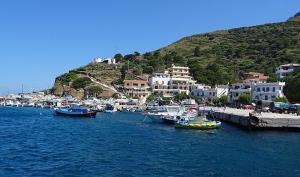
Photo thanks to: Turhan Akman
The Pocket Parks Of Athens - A Great Way To Tackle Pollution
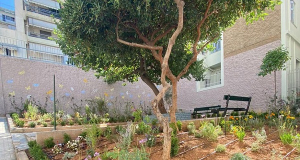
The idea of pocket parks, a new way to upgrade urban space, has found fertile ground in the Greek capital, which is focusing on the green and sustainable development of the urban fabric. Athens, like many other large cities around Europe and the world, suffers from a lack of free public spaces.
The urban planning model of previous decades and the conditions created in the city, especially after the waves of domestic migration from rural areas to the capital, have resulted in a cramped living environment, not just in the centre of the city but also in many other districts.
Scientists around the world dealing with climate change and construction are sounding the alarm, pointing to pocket gardens as an essential way of improving everyday life in the city in many areas. In the US and the UK, 'pocket parks' are already being considered as a means of tackling crime and isolation in densely populated areas and, above all, protecting the environment. These practices are also being adopted in Athens, where this concept of small gardens is now being introduced in many corners of the city, as part of the "Adopt Your City" program.
So, what are exactly pocket parks? '''Pocket parks'' are green spaces in sites that have been abandoned for many years and have turned into rubbish dumps. They are located in densely populated neighborhoods of the city and become the bases to utilize every last inch of public space for the benefit of the cities’ inhabitants. These parks are great assets for a city; not only do they contribute to the protection of the environment thanks to their plants and cooling effects, but they also play a role in addressing the isolation felt by large cities’ dwellers. This benefit is ever more important during the pandemic. In other words, they have a very significant social contribution.
The Municipality of Athens has already created four pocket parks in the districts of Kypseli, Kolonos, Pangrati, and Metaxourgeio. This is just the beginning, as the municipal authorities plan to create more parks in other neighborhoods as well as in the city centre, in order to reclaim spaces that have been abandoned for many years.
Of particular interest is the way in which pocket parks are designed in order to become year-round green lungs, using eco-friendly concrete in the pavement and footways, recycled wood benches, densely planted evergreen and deciduous trees, and an underground irrigation system. The flowerbeds are bordered with low evergreen shrubs (myrtle leaf) to prevent people from stepping on them, while a corner is transformed into a vertical garden by placing climbing shrubs. There are also signs next to each plant giving useful information about its identity, as well as structures for useful insect nests. In addition, the gardens are lighted by state-of-the-art autonomous photovoltaic systems, including a digital panel with information on temperature, humidity and other environmental factors.
To read this article in full, please visit: greeknewsagenda.gr
Parthenon Marbles: The Times Submits Proposal To The British Museum
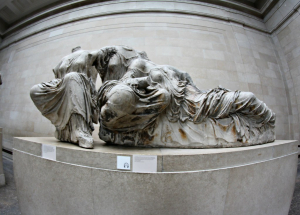
The timing of the article coincides with the recent announcement that a UK-based research institute could reproduce the Marbles to the nearest millimeter using 3D printing technology, so the British Museum can exhibit the copies.
The proposal was recently put forward by Oxford University’s Institute of Digital Archeology, which has developed a robot “with a human touch,” as the newspaper describes, with the ability to create faithful copies of archeological monuments.
Speaking to the Times, Roger Michel, founder and executive director of the institute, said that if the British Museum did not give permission for the Greek sculptures to be photographed, “guerrilla” tactics could be used, potentially enlisting “an army of patriotic Greeks with 3D cameras to take the images.”
Mr. Michel explained that once the three-dimensional scans are taken, the institute can create a highly detailed 3D model of the sculptures. This is then uploaded into a carving robot, with the ability to reproduce the sculptures in stone to the nearest millimeter. “It looks like something out of the first Terminator movie, but the delicacy of the carving is just extraordinary. It’s as good as anything a human sculptor can do,” says Michel.
The Times article states that the British Museum should “embrace” this latest technological opportunity.
“The marbles should be returned to Greece, where they can be exhibited at the magnificent Acropolis Museum in Athens. The British Museum should agree to exhibit the 3D copies. In return, Greece could pledge not to allow more copies to be made. In this way, the Greeks can regain their cultural heritage and the British Museum can maintain its status as the most important historical collection in the world,” the Times article concludes.
Originally published on: greece-is.com
“Venus de Milos” Returns To The Island Albeit As Replica
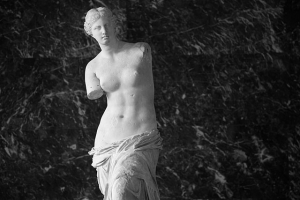
The installation of the replica appears to be on the occasion of a tribute documentary about Aphrodite de Milos, entitled “Looking for Venus”, a co-production of Anemon, Cosmote TV, and the French company Yuzu Productions.
On the occasion of the completion of 200 years since the discovery of the statue and after the issuance of relevant permits and supervision of procedures by the Organization for Management & Development of Cultural Resources and the Ephorate of Antiquities of Cyclades, as well as the financing of the creation and transportation of the statue to the island by company Imerys SA, the filming of the documentary has already started, the municipality of Milos said.
The documentary “Looking for Venus” will present the historical event of the finding, transportation, and fame of the statue and explore how the Venus of Milos, of all the ancient masterpieces, stood out as a timeless and unique work of art, allowing millions of visitors’ eyes to admire her as the most beautiful woman in the world.
About the statue
The Venus de Milo is believed to depict Aphrodite the Greek goddess of love, whose Roman counterpart was Venus. The sculpture is sometimes called the Aphrodite de Milos, due to the imprecision of naming the Greek sculpture after a Roman deity (Venus).
The work was originally attributed to the 4th-century Athenian sculptor Praxiteles, but, based upon an inscription on its plinth, it is now widely agreed that the statue was created later, and instead is the work of Alexandros of Antioch.
Made of Parian marble, the statue is larger than life-size, standing 204 cm (6 ft 8 in) high. The statue is missing both arms, with part of one arm, as well as the original plinth, being lost after the statue’s rediscovery.
To read this article in full, please visit: keeptalkinggreece.com
4 Lesser-Known Greek Winter Escapes
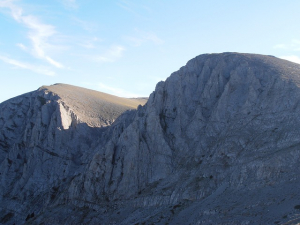
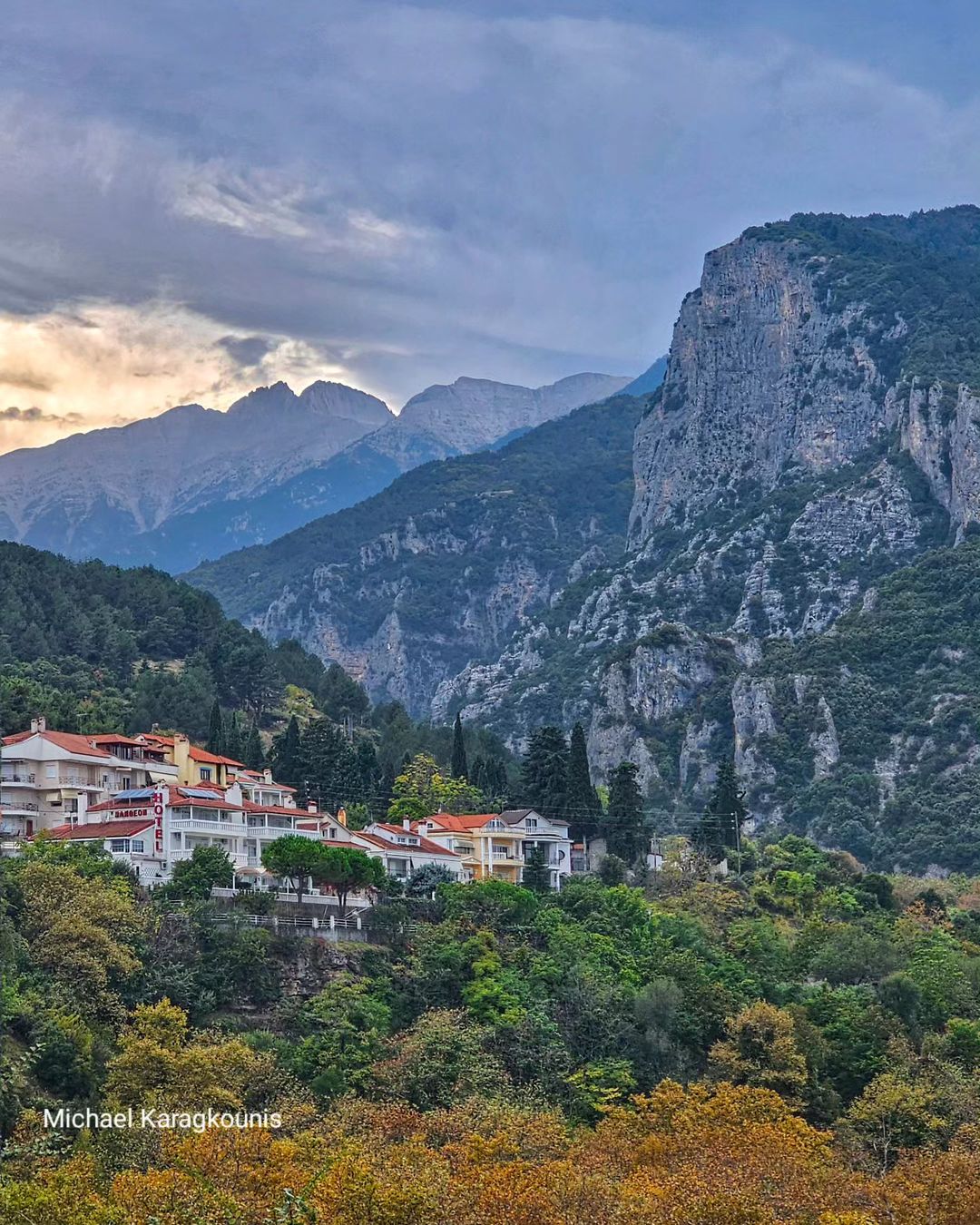
@mikaragkounis
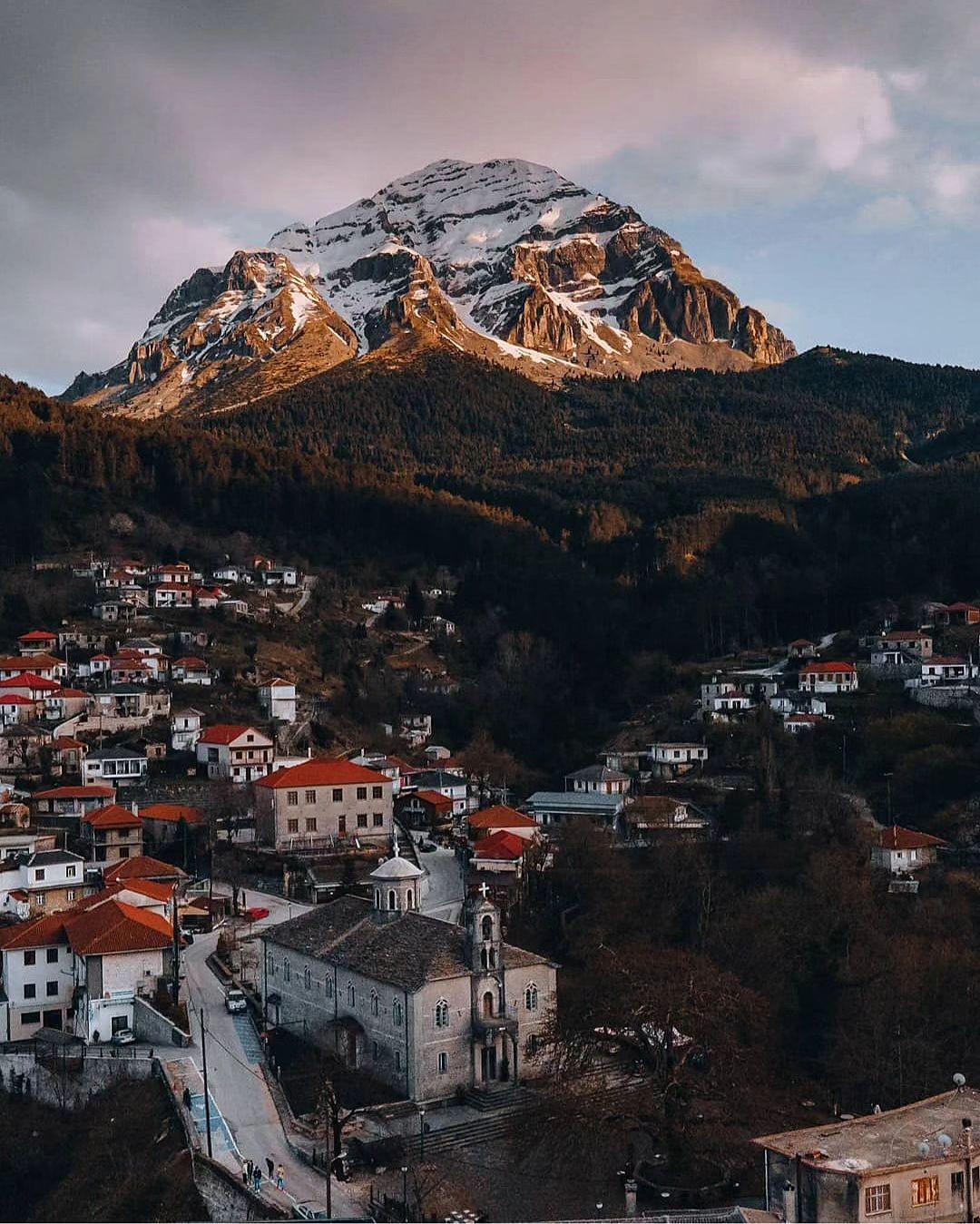
@georgebozouris
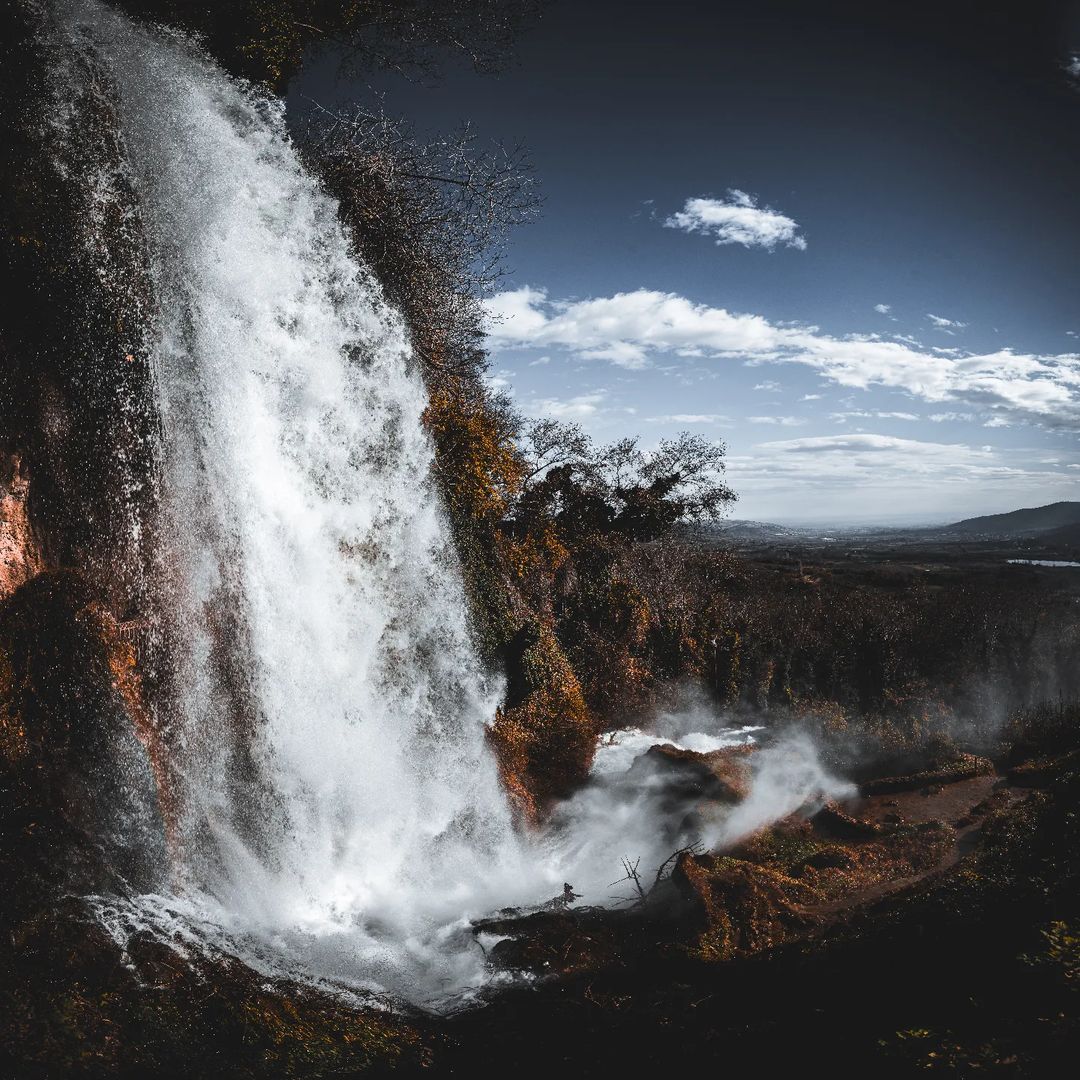
@takis_dim_photo
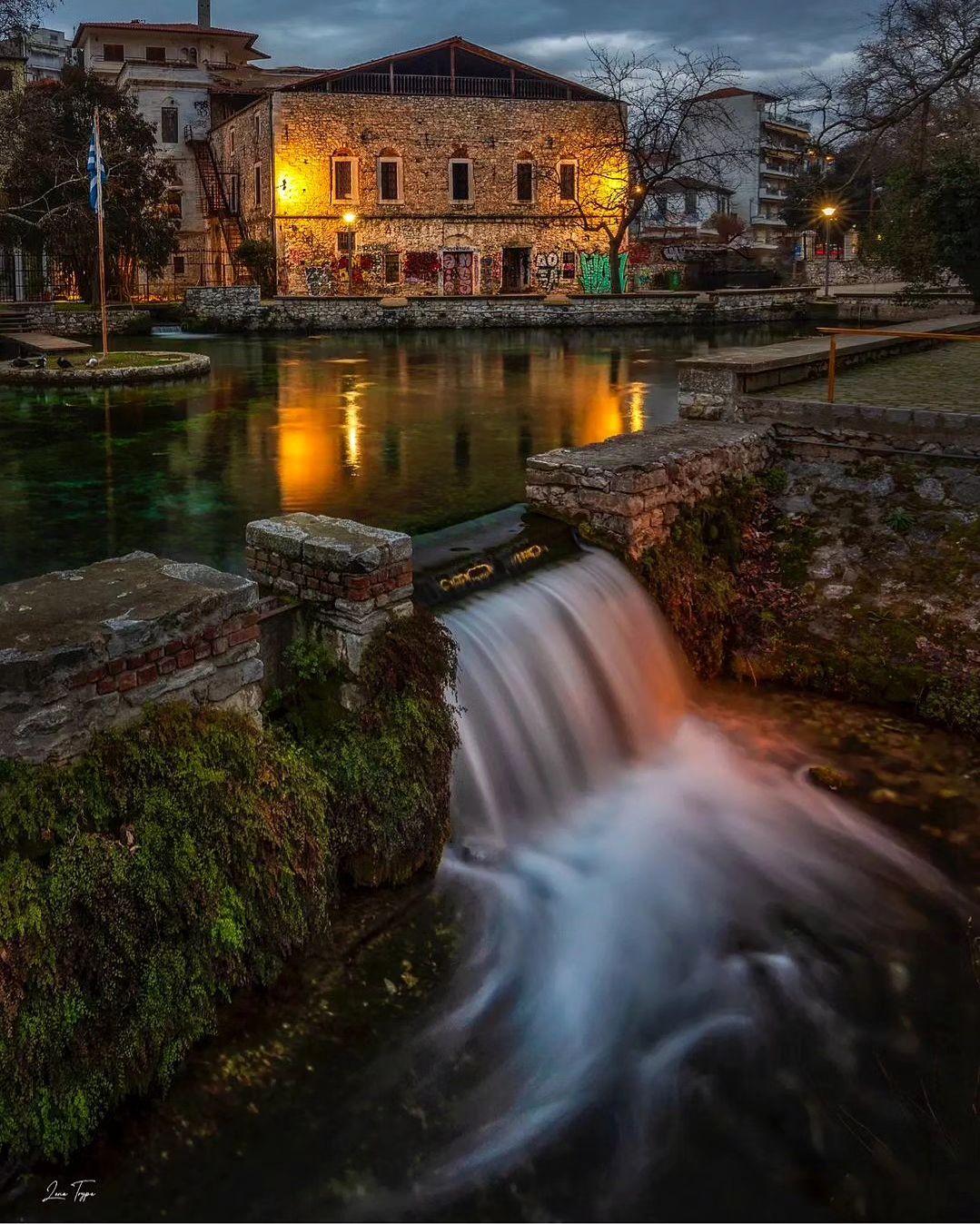
@lenatrypa
Greek Tax Residency Rules Explained

Below, we break down exactly what it means to be a non-tax resident and the steps you must take to protect your status.
What Is a Non-Tax Resident of Greece? (Greek Tax Residency Explained)
Many people believe that simply leaving Greece automatically makes them a non-tax resident of Greece. This is incorrect.
Under Greek tax residency rules, tax status is not determined by what you say; it is determined by law and formal registration with the Greek tax authorities.
If you do not officially transfer your tax residency from Greece, you may still be considered a Greek tax resident, even if you live abroad.
Greek Tax Residency: The 183-Day Rule in Greece
The starting point for determining Greek tax residency is the 183-day rule in Greece. If you spend more than 183 days in Greece within the calendar tax year (January–December), you are generally considered a Greek tax resident.
The Greek tax year runs strictly from January to December. However, the 183-day rule alone does not fully determine your tax status.
Center of Vital Interests Under Greek Tax Law
In addition to the 183-day rule, the Greek tax authorities examine your center of vital interests.
This includes:
- Where you work
- Where your family lives
- Where you rent or own property
- Where you manage your finances
- Where your economic and social life is based
Even if you spend time abroad, if your center of vital interests remains in Greece, you may still be classified as a Greek tax resident.
How to Become a Non-Tax Resident of Greece
To become officially recognized as a non-tax resident of Greece, you must:
- Prove that you live abroad for more than 183 days
- Demonstrate that your center of vital interests is outside Greece
- Submit the required documentation
- Complete the formal process of transfer tax residency from Greece
This process may require:
- Tax residency certificate from the foreign country
- Employment contract abroad
- Proof of permanent residence abroad
- Supporting documentation requested by the tax office
Becoming a non-tax resident of Greece is a formal administrative procedure — not a simple declaration.
Issuing an AFM: Why Your Initial Tax Status Matters
When someone issues a Greek Tax Identification Number (AFM) for the first time, many register as ordinary Greek tax residents for convenience.
However, if you are living abroad or uncertain about permanent relocation, it may be strategically safer to register as a non-tax resident of Greece from the beginning.
Changing from non-tax resident to Greek tax resident is generally simpler.
Changing from Greek tax resident to non-tax resident of Greece can be significantly more complex and document-heavy.
For more tips on the early stages of relocation, check out these common questions expats ask when moving to Greece.
Declaring Foreign Income In Greece
If you are registered as a Greek tax resident, you are generally required to declare worldwide income in Greece.
If you worked abroad while remaining a Greek tax resident for that tax year, you must declare foreign income in Greece.
Whether you pay tax in Greece depends on the applicable Double Taxation Agreement (DTA) Greece has signed with that country. But the obligation to declare exists.
Double Taxation Agreement Greece: What It Really Means
A Double Taxation Agreement does not automatically mean you pay no taxes.
It determines:
- Which country has taxing rights
- Whether income is taxed exclusively in one country
- Whether foreign tax credits apply
Double Taxation Agreements allocate taxation, they do not eliminate it.
Temporary Relocation & Greek Tax Residency Risks
If you move abroad temporarily and do not properly manage your Greek tax residency status, you may:
- Remain classified as a Greek tax resident
- Be required to declare foreign income in Greece
- Face administrative complications later
- Experience delays when attempting to transfer tax residency from Greece
Not Sure About Your Greek Tax Residency Status?
Our partners at TaxWise Greece specialize in helping the international community navigate the "183-day rule," center of vital interests, and the formal transfer of tax residency.
Ready to get started?
- Head over to TaxWise Greece for more expert resources.
- Schedule a confidential session with a tax professional to review your specific situation and ensure your status is structured correctly from the start.
What I Love About August In Athens
Following a late-afternoon rant by an acquaintance on all the thing she hates about August in Athens (generally focused on ‘the heat’ and ‘why I can’t go to an island’), I’ve decided to share all the things I love about Athens, on this blistering mid-August afternoon.
1. The heat. Let’s get this out of the way: I moved here for many reasons, one of which is the climate. So I am overjoyed to be able to live in a place where I spend the better part of the day, for the better part of the year, sweating. And often complaining about it. Bring it on.
2. The empty streets. Athens in August feels like it’s all mine. It’s the time of year when I love to pull out my camera and take an early morning walk in my favourite neighbourhoods, and really take in the feeling of the city in it’s deserted glory.
3. The seaside. Jumping on a tram or on my bike and heading down to the beach in August is far more fun than in June or July, when everyone else seems to have the same idea. Many of the beaches at Alimos, or futher down towards Glyfada or Vouliagmeni, are just perfect for an August swim.
4. No traffic. See #2 above.
4a. Finding parking. Ditto above. For those late-late-night drinks under the Acropolis.
5. No line-ups. At the supermarket, at the bank, at Mikel café in the morning. Yes, this matters to me.
6. August sales. Since I didn’t spend my savings on a week away, surely I have some left-over Euros for 50-60% off at my favourite shop?
7. The pace. In August, everything (and everyone) seems to move more slowly. There is a leisurely, uber-relaxed vibe, that causes me to stop and, quite literally, smell the roses.
Would I prefer to be dancing on the beach on some far-away island? Perhaps. But August in Athens offers its own pleasures, and is a perfect option for those of us who are (not) stuck here.
Until next week,
Jack
In this weekly space, keep up with ‘Jack’ as he navigates daily life in Athens… Anecdotes, stories, hits & misses, the good, the bad and, well, the rest…
Discover Metsovo
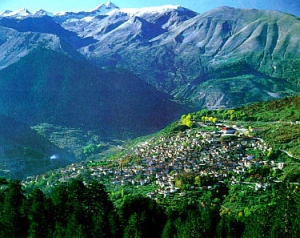
Metsovo is a town on the mountains of Pindus in Northern Greece. It is a popular winter holiday destination, ski resort and hikers love it in warmer months. Most residents are descendents of Vlach shepherds, a language still widely spoken in the village, and many are involved in the tourist industry. They dress in traditional costume, sell handicrafts and tempt travellers with regional cuisine.
There is a tradition in wood carving and many people make furniture, barrels, beehives, toys, utensils and they decorate churches and altars. It is a pretty little town, built on the ruins of ancient Tymphi and extending along one of Pindus' highest peaks. It is close to the peak of Katara, above the beautiful artificial Lake Aoou.
Its architecture is alpine, in stark contrast to the whitewashed buildings in other parts of Greece. The church of Agia Paraskevi has a carved icon screen and wall mosaics, copies of those at Ravenna.
It is well-known for its cheeses and winemaking. The Katogi vineyard belonging to the Averoff family is the most famous. A museum named Averoff Gallery is dedicated to Georgios Averoff.
Unlike many small towns around the world, there is plenty of work for Metsovo's young people, so the town has a youthful buzz.
On Sundays and feast-days, women wear their embroidered traditional dresses. Old men still have their special places in the main square so they can debate important issues while swinging their worry beads and drinking strong coffee.
To read more, please visit getaway.ninemsn.com