XpatAthens

XpatAthens

A world-renowned Greek-Australian neuroscientist has discovered a new, previously unmapped area in the human brain. Professor George Paxinos, a researcher at the Neuroscience Research Australia-NeuRA, suspected the existence of this area in the human brain for the past 30 years, however today’s better detection and imaging methods made it possible for him to finally prove its existence.

Named the ‘Endorestiform Nucleus’, this part of the brain is located in the lower cerebellum section, an area that combines sensory and kinetic information to correct posture, balance, and fine motor skills.
 
"There is nothing more enjoyable for a neuroscientist than finding a previously unknown area of the human brain. What is important is that this area is absent in monkeys and other animals. There must be some things that are unique to the human brain beyond its larger size, and this area is probably one of them," Paxinos told the Athens-Macedonian News Agency (ANA).
 
"What remains to be done is to determine the function of this newly discovered brain region. Now that it has been mapped, it will be possible for it to be studied by the wider research community," he added.
 
Source: AMNA
Monday, 14 September 2020 12:22

How To Start A Great School Year

With schools having just started, kids and parents are getting prepared for the new school year; children are happy to see their friends again and share their summer vacation news.
 
However, this year, the return to school will be different. With COVID-19 still going strong, this year's return will be a new experience for children, parents, and teachers – it's much like mapping an unknown territory. So how do you prepare your child to deal with the new conditions in their daily life? I'm not referring to masks or hand washing. I'm talking about the emotional part that we accidentally overlook sometimes.
 
Start with yourself. How do you feel about your child going to school? If you are worried, so will your child. If you think that the situation will continue to be terrible, your child will believe the same. If your attitude is positive and centered, your child will have the same attitude. Let me remind you that children copy and reflect on our emotions. The more calm and stable you are, the better it is for your child. If you have younger children, there's no need to add to their stress. It is very imperative to assure them that it's okay if they forget some rules. After all, that's what the teachers are there for.
 
Listen to your child and their concerns, let them speak, and don't rush to offer your opinion. They may be afraid their friends won't go to school this year, and they will lose them. If you notice a denial on their part, this may be why they don't want to go either. Talk to them about friendship, how relationships change so that if there is a change, it'll be easier for them to accept it.
 
Take their worries seriously, even if they do not seem important to you. Research shows that today's children are under a lot of stress–they do not need any more from us. What they need is our love and support to meet the challenges that this school year will bring.
 
Here's to a great start!


ypografi-nadia-georgiou-eng.jpg

If there’s a topic you’re interested in and would like to learn more about you may contact me via email. For more information about me and my work check the XpatAthens Directory or visit my website. Because this is your life!

Friday, 13 August 2021 07:00

August Full Moon At The Acropolis Museum

As the August full moon rises over the Parthenon, the Acropolis Museum welcomes locals and visitors to experience this annual event like never before.

On Saturday 21 August 2021, the Museum exhibition areas will remain open from 8 am to 8 pm with free entry to all visitors, on the occasion of the Museum’s participation in the “Greece 2021” initiative. The Museum's second-floor restaurant will be open until midnight so that visitors can take in spellbinding views of the full moon while enjoying a nice dinner. 

On Sunday 22 August 2021, the Museum exhibition areas will remain open from 8 am to 10 pm. The second-floor restaurant will be open during the same hours while visitors will have the opportunity to participate in the gallery talk “Afternoons in the Acropolis Museum”, where they will be introduced to the fascinating stories hidden in the treasures of the Museum’s galleries.

For more information, please click HERE!
In just a few days, on June 23 and 24, SNF Nostos Health will be here, inspired by the SNF Health Initiative to focus this year on humanity’s most valuable resource: health.

In 2016, the Stavros Niarchos Foundation (SNF) initiated a process of investigating areas of possible support for public health in Greece. Building on a long track record of grantmaking in the area of health since 1996, SNF engaged experts to identify and map community needs and held dedicated discussions with the Greek state. As an outcome of the latter, in September 2017, SNF officially announced its intention to fully support a series of major projects to enhance the country’s public health sector. On March 21st, 2018, SNF and the Greek State signed a Memorandum of Understanding marking the start of SNF’s Health Initiative in Greece.

To date, the Health Initiative encompasses 17 constituent projects, with the Health Initiative S.A. serving as the special purpose vehicle set up by SNF to facilitate their coordination and implementation as well as a transparent and participatory process at every stage.


To learn more about this new initiative visit snfhi.org
Interested in your Greek roots and family history? Greek Ancestry is the first digital platform created to primarily meet the specific needs of people of Greek descent.

Founded in January 2020 by historian Gregory Kontos, an expert in Greek migration history, Greek Ancestry offers high-quality research tools as well as archive material in English.

“People of Greek descent in third or fourth generation in USA, Canada, Australia, often do not speak Greek,” Kontos told state broadcaster ERT.

The platform offers tips for the correct search of the Greek roots as well as lovely stories in the category “Yiayia & Me.”

According to Greek Ancestry founders:

Interest in genealogy and family history is growing internationally. Despite the immense interest, prior to 2020 access to online records and resources from Greece was non-existent. Greek Ancestry is the first digital platform created to meet the specific research needs of people of Greek descent and those interested in Greek archival records. Through our searchable databases, users are able to access an immense number and a remarkable variety of records from all over Greece and the Greek Diaspora. At the same time, our educational initiatives provide the background necessary for high-quality research.

Greek Ancestry’s databases are the product of the systematic work of an entire team of indexers in Greece and abroad. However last but not least, the invaluable help and support of good friends, like Carol Kostakos Petranek, a pioneer of Greek genealogy, is undoubtedly a key element behind Greek Ancestry. It is our to continue our records preservation and digitization initiatives, expand our online records collections, and assist people with their research needs.

To read this article in full, please visit: keeptalkinggreece.com
A Journey to Vourvoulos (Not the One on Santorini)

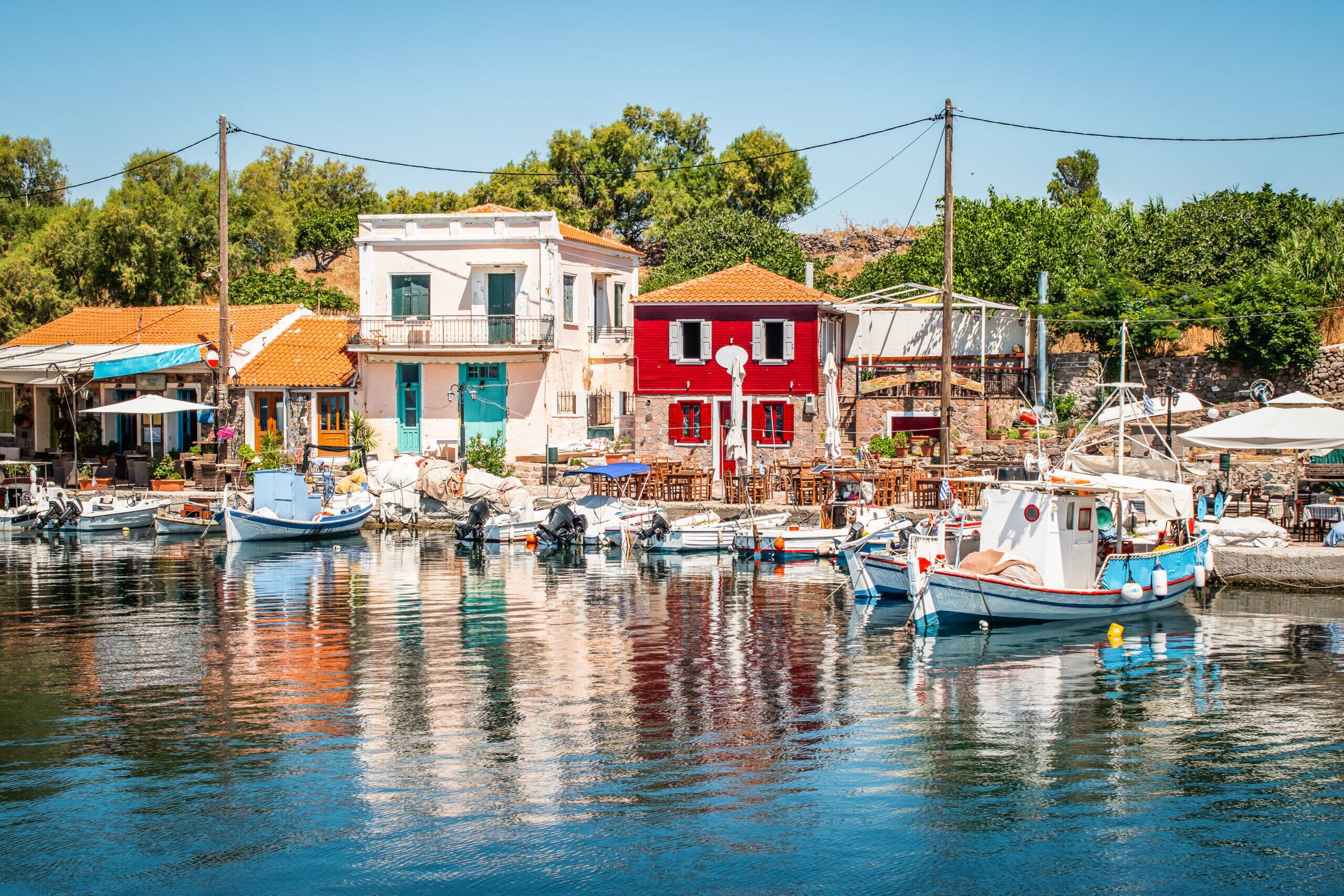
From the first page, Fire on the Island transports you to the lesser-known Vourvoulos — not the Santorini village, but a fictional coastal town in Greece where beauty and hardship coexist. Through deeply evocative writing, Timothy Jay Smith doesn't just paint a scene; he places you right there. You can feel the sun and sense the sea breeze in the air. This is a Greece that tourists rarely see, raw, real, and heartbreakingly human.
shutterstock 1646611345 scaled 2

Plot: Fire, Secrets & Soul

Greek-American FBI agent Nick Damigos arrives to investigate a string of suspicious arsons. As the mystery slowly unfolds, so do the lives of the villagers, complex, conflicted, and deeply intertwined. But while the fire is the plot’s ignition point, the heart of this book lies not in whodunnit suspense, but in its intimate human storytelling; its exploration of grief, identity, belonging, and resilience.
Smith uses the thriller structure as a vessel to explore something much bigger: the emotional and social layers that make up real communities facing real crises.

Characters & Greek Reality: A Village That Feels Alive

What makes Fire on the Island stand out is how deeply rooted in Greek life it feels. Smith doesn’t simply set his story in Greece, but he captures the rhythms, customs, tensions, and nuances of Greek village life with startling accuracy.

The characters, from Vassoula, the unapologetic village siren who flirts with fire in every sense, and Ridi, the Albanian immigrant, to Takis, the gay man and fierce and rebellious Athina, who represents a restless Greek youth. They all reflect different aspects of Greek society and especially, its contradictions.

Even secondary details reflect real Greek life: the stray cats, the gossip in cafés, the mingling of tradition and modernity. And then there is the church, not just a backdrop but a living part of the village ecosystem. In Vourvoulos, as in most Greek communities, the church isn’t only spiritual; it’s social, cultural, and often political. It's where people gather, judge, confess, celebrate, and mourn.
Whether it’s the tolling of bells or the priest appearing as an authority or social figure, the presence of the church helps anchor the novel’s events in a deeply Greek context. Its role is essential, just like in many real Greek villages, where faith and tradition often shape the boundaries of freedom, love, and identity.

By incorporating the church, along with its influence, its expectations and its (not always) silent rules, Smith once again adds another layer of realism to the story. It becomes clear that in Vourvoulos, as in much of Greece, the past is never fully past, and institutions like the church continue to hold both comfort and constraint.
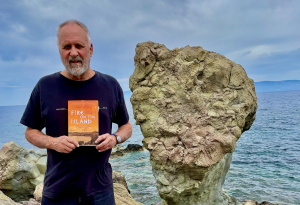
Tim reading in harbor 1

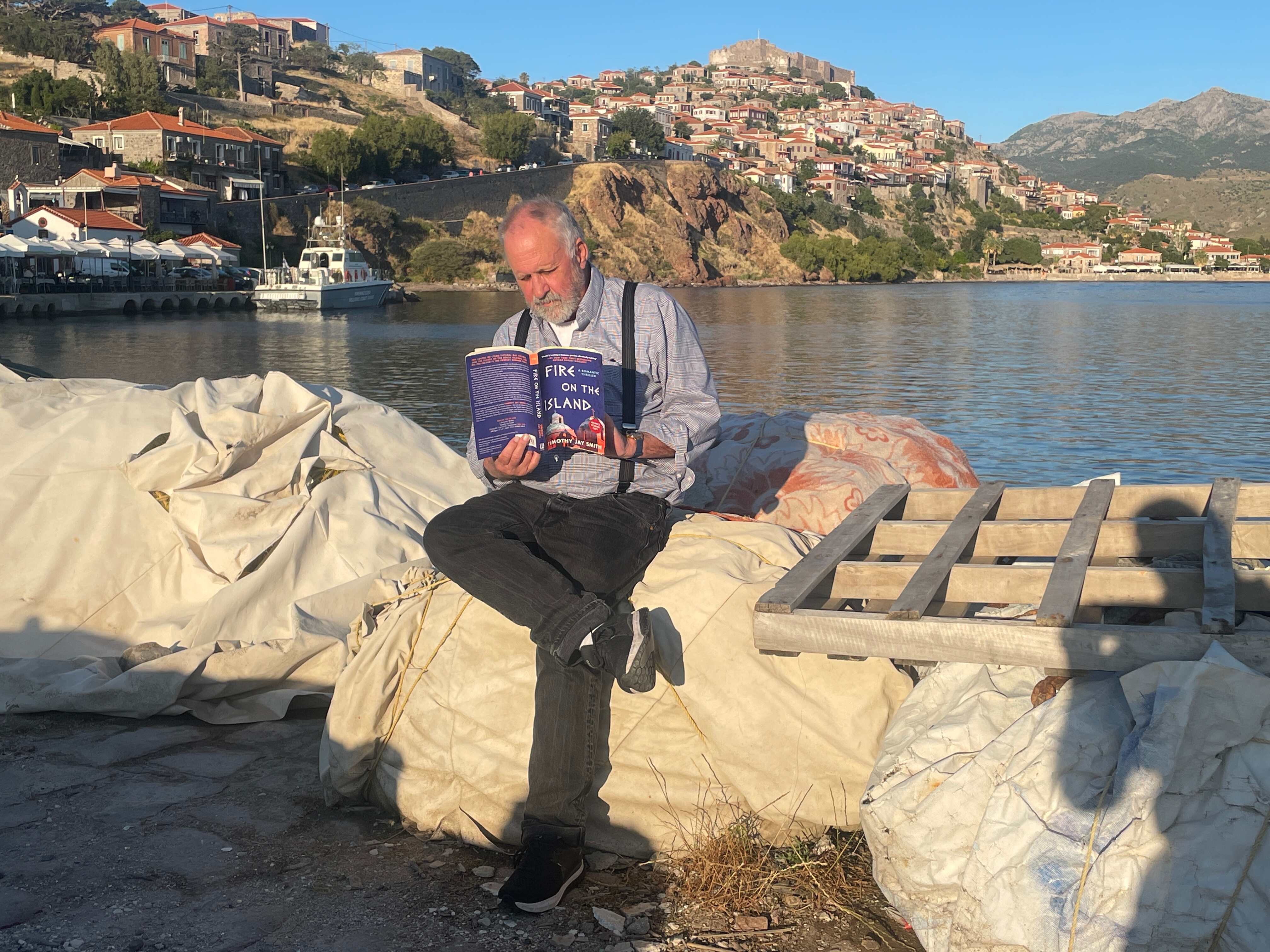
Ready to dive into the story? Get your copy of Fire on the Island HERE!

Feminism & The Matriarchal Undercurrent
 
What may not be obvious at first but becomes strikingly clear is the feminist undercurrent running through the novel. Women, in all their forms and power, are the true emotional and moral anchors of this story.

You have Shirley, the English expat who came all the way from Australia, full of wit, experience, and unflinching strength. Then her daughter Lydia is the force of reason, the one who refuses to accept things at face value. She’s determined to complete the puzzle, to do her own research, to uncover what’s really going on beneath the surface, and she’s not afraid to wrestle with the norms of her community if that’s what it takes. And finally, Lydia’s daughter, Athina, full of fire, questioning everything around her, already a force of disruption in a rigid society.

These three women — grandmother, mother, and daughter — form a matrilineal triad, a modern Greek matriarchy, standing firm in a patriarchal setting. They don’t dominate with violence or ego, but with intelligence, emotion, and endurance. They challenge gender roles with their actions, choices, and refusal to be anyone but themselves.

Themes: Humanity, Hardship & Grief

Timothy Jay Smith masterfully blends social issues with personal, emotional journeys. Fire on the Island it’s about how people survive, adapt, and care in a world full of complexities. Beneath the sun-drenched beauty of Greece lies a community dealing with issues that feel all too real:
  • The refugee crisis, shown not as an abstract problem but through human faces and suffering, especially in Jura’s story who may not be a refugee but experiences the luck of many
  • Xenophobia, both casual and systemic, echoing wider European tensions
  • The suppression of LGBTQ+ identities, especially in small, deeply traditional societies
  • Suicide and the lifelong trauma of adoption, and how these wounds quietly shape lives
  • Sexual firsts, revealing how coming-of-age is rarely what we expect
And deeply present in all of this is griefraw, real grief. Grief for a child lost. Grief for a partner lost. Grief for a life not fully lived. Grief for love denied, for freedom never found, for a sense of home that may never exist.

Smith doesn’t dramatize grief; he honors it. He allows his characters to sit with it, wrestle with it, and sometimes, rise from it. Jura’s heartbreaking loss, Takis’s internal despair, Athina’s aching restlessness, they all carry forms of grief that are deeply human and universally felt.

Yet even with all this weight, the novel doesn’t collapse under it. What emerges instead is a strong current of resilience and compassion. The village is fractured, yes, but some people still show up, with food for refugees, with water, with care for stray animals, with truth, even when it’s difficult. And that’s what Fire on the Island ultimately celebrates: the endurance of kindness, even in a world set ablaze.
Tim standing outside hammam 1
 

A Moment That Hurts (and Stays)
 
There are many moments in the book that strike the heart, but one scene that stands apart is that of Jura, the immigrant woman who nearly drowns, not metaphorically, but literally, trying to reach Greece. She survives, but her child does not. This moment, soaked in Ancient Greek tragic irony, is written with such emotional precision that it nearly breaks you. It's a quiet, crushing moment that forces the reader to sit with the weight of grief, helplessness, and injustice.

But Light Breaks Through

Despite the heartbreak, there’s joy, connection, and community. There’s the group giving sandwiches to refugees. There’s the care for stray cats, a subtle yet deeply Greek act of grassroots compassion. There’s Dingo, the stray dog Nick saves. In a world full of problems, these small gestures shine bright.

Language: A Truly Greek Story 

The use of Greek language throughout the book is not only charming but grounding. Smith sprinkles Greek expressions and words with effortless precision, giving the reader the feel of the language without ever making it confusing. For readers unfamiliar with Greek, it’s a fun introduction. For Greek readers, it’s a sign of deep cultural respect and accuracy.

It feels like a mini Greek lesson, wrapped in storytelling, one that adds local flavor and roots the novel even deeper in its Aegean soil.

Lived Experience: Why This Story Feels Authentic

What makes Fire on the Island resonate so deeply is that it’s not written from a distance. It’s clear that Timothy Jay Smith has lived and breathed Greece not just visited, but truly experienced it. The villages, the people, the way the sea smells in the morning, the way gossip travels faster than the wind, all of it speaks to someone who knows this world from the inside. And that’s what good writing is: writing what you know, and doing it with honesty and heart.

The characters don’t feel imagined, they feel observed, absorbed, and lovingly recreated. Every one of them could be someone you’ve met in a Greek village. And, perhaps, in a way, they are. There’s a quiet sense that pieces of Timothy himself are woven into each of these people, that their struggles, desires, and contradictions are not only reflections of Greek society, but of a writer who sees and feels deeply.

This is why Fire on the Island doesn't just tell a story but transports you in a lived reality, one only someone who truly knows Greece could portray so truthfully.
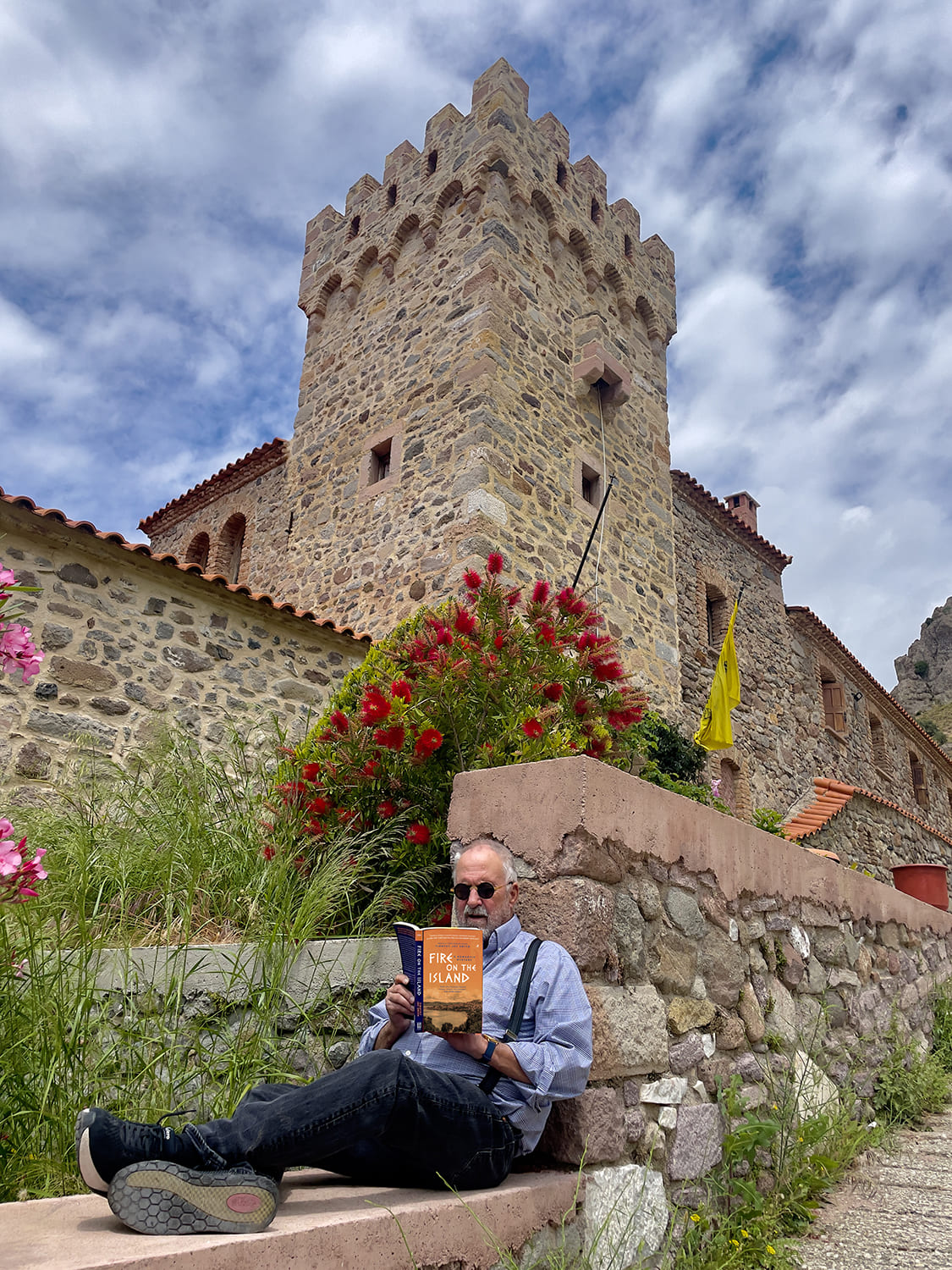


Conclusion: A Book That Bears & Shares Real Feelings

Fire on the Island is more than a mystery. It’s more than a Greek village story. It is a novel of human truths, full of emotion, contradiction, warmth, and shadows.

It gives you what every great book should: the feeling that you’ve lived somewhere else, that you’ve felt other lives, that you’ve walked in someone else’s shoes under someone else’s sun. And when you close the final page, you feel a little changed, a little more aware, a little more compassionate, a little more human.

If you’re looking for a book that speaks to the soul, that delivers both tension and tenderness, that brings Greece alive in ways most travel guides never could, Fire on the Island is for you.

Ready to dive into the story? Get your copy of Fire on the Island HERE!

About the Author
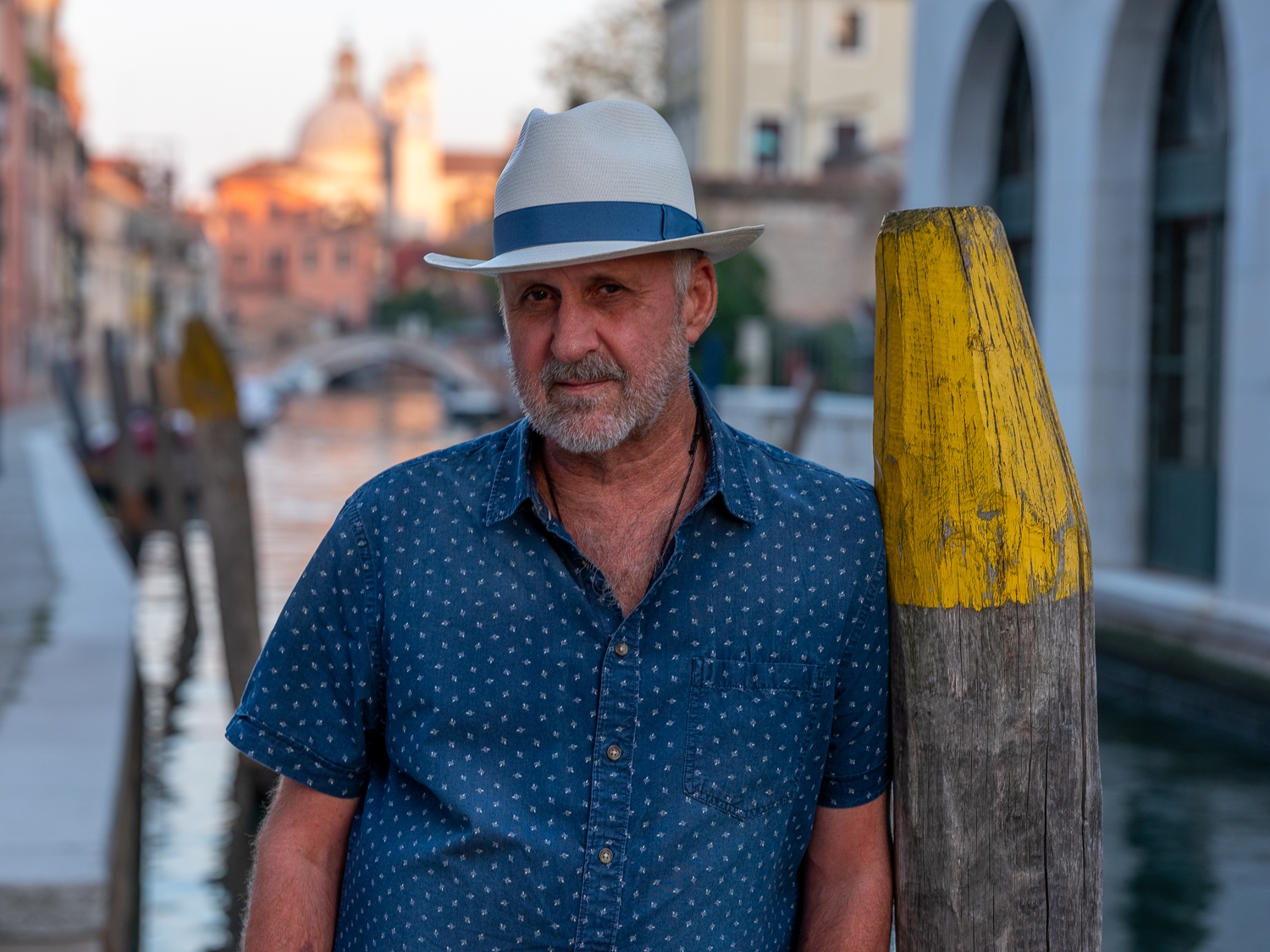
Tim in Venice leaning against yellow pole 2

Timothy Jay Smith
 is a critically acclaimed author with a lifelong passion for Greece. His travels and experiences, from working as a sociologist in Greece to aiding refugees on Lesvos, have inspired his immersive, character-driven stories. An award-winning novelist, screenwriter, and playwright, Smith’s work has garnered numerous accolades, including the Gold Medal in the Faulkner-Wisdom Competition for Fire on the Island not to mention that his screenplay adaptation of it was named Best Indie Script by WriteMovies. His diverse career has taken him around the world, from the streets of Istanbul to the jungles of Africa, giving him a unique perspective that brings depth and authenticity to his writing. Smith’s novels and screenplays have won top honors in competitions, and his stories resonate with readers for their vivid settings, complex characters, and rich social commentary.


Spending time away from home normally has one of two effects: 1) you may appreciate where you are, but you miss home and your own space…  2) you may appreciate where you’re from, but “omg I want to move here”.

I’ve had to spend an unusual week on the road, for work, jumping between Zurich, Berlin and Istanbul. My reactions have truly spanned the 2 extremes above – and have even fluctuated from minute to minute. To be perfectly honest, I had moments over the past days where I questioned my desire to live in Athens, with its challenges, its graffiti, its difficulties, its dramas…

Zurich is like a ‘perfect society’ - Pristine, wealthy, efficient, on time (down to the second!), sophisticated, beautiful. One could say, the way a 21st century city ought to be…

Istanbul, by contrast, is huge, bustling, cosmopolitan, historic, developing, energized. Berlin is modern, trendy, creative, progressive, young, open, cool. Athens, on the other hand, is none of these things - at first glance - but Athens is actually all of these things, depending where you look.  

It struck me that Athens is not easily defined, and does not have an easily discernable character, no global footprint as a city (apart from ‘historic’ and whatever news reports you choose to believe…!).

And that’s cool. Because it means that we still have time to make one. And according to my mother, challenges, difficulties and drama (and maybe even graffiti) create character.

And so it goes… When I woke up at home on Sunday morning, and walked out to greet the shining sun, I knew that in fact I do want to live in Athens. The rest is details.

Cheers to 21st century Athens!

Jack

Monday, 16 February 2015 12:34

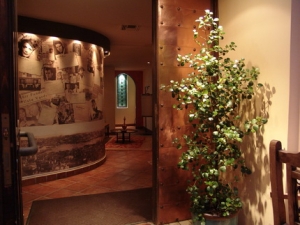
Welcome to Pandeli Restaurant in Kifissia

Pandelis Tsobanoglou, an intelligent and working Greek of Minor Asia, fascinated with tastes and flavours, was meant to be identified with the finest of oriental cuisine. In 1901 he opened his fist cook shop in the Fishmarket of Istanbul. The small shop bubbles over by the exuberant personality of Pandelis. Eating at becomes a favour for everyone very soon. Governors and men of letters, politicians, journalists and artists are huddled into his next tiny restaurant. Ataturk used to have lunch there whenever he was in town and in 1933 Prime Minister of Greece El. Venizelos honoured their friendship by giving Pandelis his golden cigarette-case. became very famous all over the world and was visited as well as by Kings. Pandelis clinked glasses a great number of times with famous or gourmet people, but mostly with friends. ”My friends and the pleasure I offer them mean the whole world to me” he used to say.

In 1955 the restaurant moves to its present place, next the entrance of Spice Market overlooking Galata Bridge, the Goldenhorn and Bosphorus. The old chef is hereafter supported by his son Christos Tsobanoglou who has undertaken the overall responsibility since 1967.

Pandeli’s cuisine constitutes the highlight of the local gastronomy for the 20th century and its ingenuity acquires universal appreciation.
In 2003 Christos Tsobanoglou and his children Paris and Sofia have opened the restaurant in Athens at Kefalari Kifisia and have brought the quality in oriental cuisine as well in Greece.
Nobody has over doubted that at restaurants one will taste the best choice of the food market, cooked the unique way- the Pandeli’s way by using the best and freshest ingredients.

Pandeli was recently (2004) been awarded from the Chaine de Rotisseurs of Greece. Also, The most of the foreign tourist guides mention restaurant as the number one choice (e.g. the French “Les Guides bleus”).

Istanbul: Misir Carsisi No.1, Eminonu, Istanbul, Turkey, tel. 0212 522 55 34

Athens: Pentelis 3, 14562 Kfisia, Athens, tel. +30 210 80 80 787

Address:
PANDELI RESTAURANT
3, Pentelis str., 145 62
Kifissia, Athens

Telephone: +30210 8080787


Do you have a recommendation or recipe to share? Send it to us at ideas@xpatathens.com!


Thursday, 19 February 2015 12:08

Permanent Olympic Venues: A Great Idea

t’s pretty embarrassing when what used to be one of the world’s most stirring traditions has devolved into a game of “not it.” As The Washington Post  reported this week, “Krakow, Poland, Stockholm, St. Moritz and Davos, Switzerland, and Munich, all former candidates to host the 2022 Winter Olympics, have taken themselves out of the running.”

On Tuesday, New York City Mayor Bill de Blasio “ruled out any possibility” that his city would submit a bid to host the 2024 Summer Olympic Games “after looking at the pros and cons of bidding for and hosting the event.”

It’s no secret that the Olympic host city  selection process has become a spectacle in and of itself. The story always opens the same. First up, the giddy bidding process. Millions upon millions are collectively spent  putting together sleek, glittering marketing packages putting cities in the best possible soft light of international cameras. A site is chosen. Excitement. Agendas. Ribbon cutting ceremonies. Cut to a couple years later and cue the stories of corruption, waste, and lack of preparation. Insert obligatory photos of wet paint/construction sites/some other last minute detail the week before the event. Next up the Games themselves — a exhilarating but brief burst of awe, wonder and nationalism (just make sure the cameras don’t linger on the empty seats too long). Then comes the aftermath, including the big bill and — eventually — the pictures of dilapidated, neglected stadiums which are now intricately connected to the Olympic tradition.

If this is what a “winning” Olympic host city receives, it’s not surprising that so many cities are passing the proverbial torch on to somewhere else.

Permanent Olympic venues won’t solve all of these problems, but they will help to address most of them, and they will help to revive the Olympics for generations to come.

To read more, please visit hellenicleaders.com

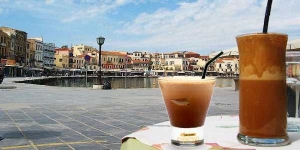
Summer has already arrived in Greece; the sun is shining, the days are growing longer, the beaches are full of people looking for some fun and relaxation, and the cafes offer some of the most praised beverages against the hot weather. Cold variations of coffee are a must for everyone in Greece this time of the year. Enjoy your frappe while playing backgammon or chatting with your friends at a sea front cafe, try a cappuccino freddo after work and relax in the summer breeze or taste a strong espresso freddo before work and feel the energy flow within you.

The war of different coffee variations has begun. The traditional fans of frappe will not give up on the national cold coffee beverage for any other Italian-style coffee type, no matter what. The strong flavor and texture of frappe is unique and it symbolizes the summer, light spirit, good company and easy-going life. Dimitris Vakondios invented it by chance in 1957 during the International Thessaloniki Fair and ever since the frappe is typical of Greek contemporary culture. Add some milk and sugar to two or three tablespoons of Nescafe, stir very well in a shaker, pour some water and lots of ice cubes and there you go, your summer frappe is ready.

There are of course other alternatives to try. Cappuccino freddo is especially favored by Greeks. The Venetian monks version of cappuccino was established in the 17th century when they added milk and honey to Greek coffee. A milk foam called “afrogala” in Greek, lots of ice and some syrup depending on how sweet you like your coffee, create the biggest rival of frappe during the summer.

To read more, please visit greekreporter.com

By Stella Tsolakidou
Page 151 of 452