Wellness Hub Top Banner
XpatAthens

XpatAthens

Monday, 06 April 2020 15:52

Showcasing Greece From Home

As we go through an unprecedented crisis, with profound consequences for both our fellow citizens and the economy, it has become more critical than ever to protect public health. The Ministry of Tourism, the Greek National Tourism Organization (GNTO) and all tourism bodies stand by the Greek government in the fight against the coronavirus pandemic, advocating that the only responsible choice is to "stay home."
 
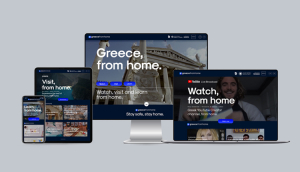
Alongside the state's measures to support the travel industry, the Ministry of Tourism, GNTO, and Marketing Greece created the online platform GreeceFromHome, an initiative to enhance the image of our country during the pandemic.

The platform's primary objectives are to help people around the world stay in touch with Greek culture, to discover and be inspired by Greece's beauty, and to enhance their digital skills–all while staying at home.


The #greecefromhome initiative consists of 3 pillars:

Watch

People are encouraged not just to stay home, but to stay connected to Greek culture through the GNTO Greek Creators channel Visit Greece on YouTube. The channel will offer new and curated content by Greek artists and personalities from around the world. It will include Greek-inspired music, gastronomy, theater, dance, sports, and fashion as well as videos of destinations and experiences from all over Greece.

Visit

Being at home doesn't mean you can't "visit" Greece. Through www.discovergreece.com, visitors can enjoy rich content and inspiring digital experiences. Archaeological sites and museums, villages and traditions, gastronomy, sightseeing, enjoying nature and of course the sea ... all from the safety of your home.

Learn

This time presents unique challenges for businesses and professionals. Digital skills are more important than ever – whether one is working from home, connecting with customers, or distance learning – so we want to help you with the free online training courses provided by Grow with Google. The courses are flexible and personalized, designed to build your confidence and skills. Learn about creating a digital marketing plan, using social media effectively, the art of storytelling, and much more. Staying at home can also mean staying ahead.
 
Wherever you are, while we're apart at home, let's stay together!

To discover #greecefromhome, please click here

Greek Maritime Golf Event, the top golf tournament for the maritime community returns for the 8th year renewing its annual appointment with the Greek and world maritime industry, on September 8-11, 2022, at Costa Navarino, Messinia.
 
Golf action in 2 new signature courses
The best golf event in Greece and Cyprus, as distinguished at the Sports Marketing Awards 2020, is expected to bring together more than 80 leading executives from the maritime industry forming 20 teams of four. Golfers will have the opportunity to play in the two new 18-hole signature golf courses, designed by two-time Masters champion and Ryder Cup legend José Marίa Olazábal at Navarino Hills. The action will take place in an idyllic landscape full of centuries-old olive trees with stunning views of the Ionian Sea, the historic Bay of Navarino and the picturesque port of Pylos.
 
The games
Participants will compete on a team level on Friday, September 9, in the two (2) ball better ball (3/4 hcp) at The Hills Course. Respectively, on Saturday, September 10, they will take part in a shotgun scramble that will take place at the International Olympic Academy Golf Course.

Watch the tournament’s teaser video HERE
 
Distinctions for the top teams 
Participating teams will claim the significant prizes for the top three positions in the overall standings; while special awards will be given to individual players who will achieve the best scores in the “Longest Drive” and “Closest to the Pin” categories.
 
IRI/The Marshall Islands Registry is the event’s Platinum Sponsor.
Mainline Shipping Company and Jotun Hellas are Golden Sponsors. 
DNV is the Silver Sponsor. 
Boo Productions is the Audio Visual Partner.
 
Greek Maritime Golf Event, is organized by Birdie Events, through an initiative of the recognized Greek PGA golfer, Mr. Thanos Karantzias. The award-winning sports marketing agency of ActiveMedia Group has undertaken the event’s Golf Production. The tournament is addressed exclusively to distinguished executives of the Greek shipping community.
 
The tournament will bring together representatives of the Greek and world shipping industry, who will have the opportunity to enjoy their favorite sport, golf, in a completely safe destination, with the necessary approvals of the Health Scientific Committee of the General Secretariat of Sports, taking into account the strict specifications set by the Hellenic Golf Federation and the health & safety conditions that will be valid at that time.
 
More information about the schedule of this year’s event and the unique moments that golfers will experience during the tournament, will be announced in the coming weeks.

Photo Credit: Greek Maritime Golf Event by Mike Tsolis

Hashtags: #greekmaritimegolfevent #costavarino #navarinohills
A vibrant carnival extravaganza sweeps through the city's neighborhoods, igniting joy and festivity at every turn.

With 80 lively events spread across 55 diverse locations, the pulse of the carnival resonates throughout the Municipality of Athens. From lively Tsiknopempti festivities to spirited carnival celebrations, the city comes alive with traditions and merrymaking. For 23 days, every corner of the city becomes a stage for music, dance, and cultural revelry, creating memories to cherish for years to come.

Experience the vibrant fusion of music and tradition on Tsiknopempti.

On Thursday, March 7th, the melodies of carnival tradition will reverberate through Varvakeio Agora, Monastiraki Square, and the surrounding streets. At 11:30, join the public in Varvakeio Agora to welcome the Philharmonic Orchestra of the Municipality of Athens. Meanwhile, at 12:00, the "Vakhes” Greek Dancing Group will kick off its carnival procession from Syntagma Square. Their carnival route includes a stop at Kotzia Square to showcase the custom of the Ribbons of Naxos, before culminating in the lively ambiance of Monastiraki Square. There, the enchanting tunes of the bands Charisma and Isidoros Pateros will captivate audiences with their music and songs, ensuring an unforgettable celebration.

Witness the enchanting spectacle as young revelers embrace the carnival festivities.

Children, the heart of the carnival, dress themselves in colorful costumes and swarm the squares and cultural venues of Athens, eager to partake in the joyous celebrations and engage in playful enactments that bring them closer to the carnival tradition. The National Gallery, the Museum of Folk Art and Tradition "Angeliki Hatzimichali", the Plato Academy Digital Museum, libraries, creative learning centers, and the Hellenic Children's Museum extend a warm invitation to families, offering a plethora of educational and museum-pedagogical programs. From workshops exploring visual arts and constructions to musical movement and fairy tale dramatizations, along with theatrical games and captivating music and dance events, there's something for everyone to enjoy.

Carnival activities unfold across various squares, including Gyzi, Plyta, Agios Georgios, Agios Dimitrios (Panormos), and the Kolokynthou Municipal indoor swimming pool, as well as Mayor Dimitris Beis Park. Meanwhile, Thymarakion Square and the pedestrian street at the junction of Gennaios Kolokotronis and Matrozos undergo a magical transformation into vibrant party hubs, igniting the spirits of both young and old alike.

Experience the rich tapestry of tradition and the vibrant carnival routes winding through the streets of the city.

Apokria, a cherished Greek celebration steeped in ancient roots, exudes a timeless charm and a distinct regional flair across Greece. The Municipality of Athens proudly shines a spotlight on tradition and carnival customs, infusing Athenian neighborhoods with their essence. Throughout the carnival season, cultural clubs grace the city streets, presenting traditional dances and reviving local carnival customs, thus immersing us in the true spirit of the Carnival and spreading jubilant merriment.

The festivities kick off on Tsiknopempti, March 7th, with the "Vakhes” Greek Dancing Group leading the way. During their carnival route, they'll pause at Kotzia Square to honor the custom of the Ribbons of Naxos. The revelry continues on Sunday, March 10th, with the Zakynthian Union of Athens hosting the carnival sergiani in Plaka, featuring chants and traditional dances of Zakynthos. Meanwhile, Platonos Square comes alive with a carnival event showcasing pranks from across Greece, accompanied by live traditional music from regional cultural organizations and the delightful wanderings of Horostasi through the streets of Plaka, complete with merry-go-rounds, events, carnival dances, and songs.

On Saturday, March 16th, the Lesvos Farmers' Union "Agios Dimitrios" and the Cultural Association of Traditional Dances and Cultural Activities "O Molyvos" promise to whisk us away on another journey into the carnival tradition with a revival of "Patinada," a cherished local custom of Lesvos. Finally, on Sunday, March 17th, we bid farewell to the Athenian Carnival with a grand procession in the city center, presented by the Athens Chamber of Commerce and Industry with support from OPANDA, featuring animators, jugglers, Brazilian percussionists, and other entertainers.

The neighborhoods of Athens will be pulsating with excitement as carnival routes flood the streets with joyous rhythms. On Sunday, March 10th, a carnival route of percussion will traverse from Attica Square to Victoria Square, while Morfes Ekfrasis will transport us to Votanikos for a carnival reminiscent of days past. Then, on Saturday, March 16th, the percussion ensemble Bloco Swingueira will electrify the city with the irresistible beats of Brazilian rhythm and dance.

Discover a symphony of cultural delights with a lineup of concerts, music, dance events, and theatrical performances.

The Music Ensembles of the Municipality of Athens will enchant audiences throughout the carnival season with their melodic offerings, filling various corners of Athens with their harmonious tunes. The Philharmonic Orchestra will grace neighborhoods with their musical presence, while Martha Moreleon and the Big Band inject a jazzy flair into the carnival celebrations. Additionally, the Greek Music Workshop, led by Dora Loizou and Manolis Skoulas, promises to elevate the Halloween festivities with their captivating melodies.

Moreover, this year's eclectic carnival program, curated by the Municipality of Athens, boasts an array of entertainment options. Concerts, music, and dance events, as well as theatrical performances, will unfold in cultural venues across the city. From the Arts Centre hosting a concert on March 9th to the Polychoros Municipality of Athens Anna & Maria Kalouta featuring theatrical performances on March 9th and 10th, there's something to entice every artistic palate. The Melina Cultural Centre will come alive with a dynamic music and dance event on March 10th, while the Olympia Municipal Music Theatre "Maria Callas" presents a music theater performance directed by Giorgos Vassiliadis on March 10th. Additionally, the Municipal Market of Kypseliwill host a vibrant music and dance event on March 13th, rounding out the cultural festivities with flair and finesse.

Experience the grand finale of the carnival season on Clean Monday atop the iconic Filopappos Hill.

This cherished tradition brings together families and friends to celebrate the beginning of Lent in a joyous atmosphere filled with kite flying and the beloved custom of Kouloumas. Joining in this jubilant occasion are the illustrious Philharmonic Orchestra of the Municipality of Athens and the captivating sounds of the Charisma band, creating an unforgettable ambiance of harmony and merriment against the backdrop of the Athenian skyline.


To read the full program in Greek, please click HERE


Reaching your full potential isn’t about overnight success; it’s about steadily building habits, and exploring new ways to grow. Each of us has a unique mix of talents and strengths, and discovering how to leverage them can lead to both personal and professional fulfillment. Here are key steps to help you unlock your potential and thrive.


1. Define Your Goals with Purpose

Unlocking your potential starts with a clear understanding of what you want to achieve. Setting purposeful goals gives you direction and helps you prioritize your efforts. Goals should be specific, measurable, achievable, relevant, and time-bound (SMART). This way, you’re working toward objectives that are both inspiring and practical.

Once you set your goals, break them into smaller steps. For example, if your goal is to become proficient in a new skill, map out weekly or monthly milestones to make progress feel more attainable and motivating.

2. Identify & Leverage Your Strengths

Understanding your strengths is key to tapping into your full potential. Reflect on the areas where you excel, what activities you enjoy, and where you’ve received positive feedback. Tools like StrengthsFinder or the Myers-Briggs Type Indicator (MBTI) can offer insights into your unique strengths and personality traits.

Once you identify your strengths, look for ways to incorporate them into your goals and daily tasks. Leveraging strengths creates a sense of flow and fulfillment, making your work feel less like a struggle and more like an opportunity to thrive.

3. Develop Self-Discipline & Consistency

The road to achieving your potential requires self-discipline and consistency. This means committing to regular, focused practice and not relying solely on motivation. Even on days when motivation wanes, sticking to routines can keep you moving forward.

Practical ways to build self-discipline include:
  • Setting up a daily or weekly schedule with specific times for productive activities.
  • Minimizing distractions by designating focused workspaces or using tools like “do not disturb” modes on devices.
  • Holding yourself accountable by tracking progress and celebrating small wins.
Consistency doesn’t mean doing everything perfectly; it means showing up and putting in the effort, day by day.

4. Invest in Learning & Growth

Personal and professional growth comes from continuous learning. Stay curious and open to acquiring new knowledge and skills, as learning feeds creativity, keeps you adaptable, and pushes you toward your potential.

To invest in growth:
  • Take courses in areas that interest or challenge you.
  • Read books, listen to podcasts, and attend seminars or workshops.
  • Seek out mentors or join communities where you can learn from others’ experiences and insights.
The more you learn, the better equipped you are to approach challenges with a fresh perspective and expanded skill set.

5. Embrace Feedback & Constructive Criticism

Feedback, especially when constructive, is one of the most powerful tools for growth. Rather than seeing criticism as a setback, view it as an opportunity to learn and improve. Ask for feedback from people you respect, and don’t shy away from constructive advice.
When receiving feedback:
  • Listen openly, without reacting defensively.
  • Reflect on the feedback and assess how it aligns with your goals.
  • Identify actionable steps to implement improvements.
Embracing feedback and adjusting accordingly helps you continuously evolve and refine your strengths.

6. Focus on Well-Being & Balance

Taking advantage of your potential requires balance. Burning out from overworking or neglecting self-care can hinder your progress and keep you from achieving sustainable growth. Make time for physical, mental, and emotional well-being to keep yourself energized and motivated.

Some ways to prioritize well-being include:
  • Practicing regular physical activity, like exercise or yoga, to relieve stress and boost energy.
  • Setting aside time for mindfulness practices such as meditation or journaling to clear your mind.
  • Ensuring you get adequate rest and relaxation to recharge.
A well-balanced approach gives you the resilience to handle challenges and the energy to pursue your goals wholeheartedly.

Reaching your full potential is a journey of self-discovery, resilience, and continual growth. By setting clear goals, cultivating a growth mindset, building supportive networks, and maintaining balance, you can tap into your unique strengths and create lasting, fulfilling progress. With each small step, you’ll find yourself closer to becoming the best version of yourself.       

We sat down with Richard Marranca, writer, educator, and lifelong explorer of the arts and humanities. With a background that spans literature, history, philosophy, and even sociology, Richard brings a uniquely interdisciplinary perspective to everything he does. His work blends academic insight with a deeply personal, reflective approach inspired by thinkers like Carl Jung and Ralph Waldo Emerson, encouraging students and readers alike to ask not just what stories mean, but what they reveal about ourselves.

From his early travels to years of teaching and writing across diverse subjects, Richard Marranca has always been driven by creativity, connection, and a fascination with the ancient world. Whether he’s leading a classroom discussion, practicing meditation, or studying with organizations like the Egypt Exploration Society, he continues to explore how past civilizations can illuminate modern life.

How were you first drawn into these themes of the ancient world: the myths, the symbols, and all of that fascinating history? 

Around here, in New Jersey where I live, "old" is relative. There are many Victorian homes in my neighbourhood, dating back to the late 19th century—which I love walking around—but that, or a 100-year-old pizzeria, is about as far back as the local history goes.

For me, the spark was partly pop culture. As a kid, we watched all the Greek and Roman films and the biblical epics at Easter. It’s interesting how these origins start so early in our lives. I received a book collection about the ancient world for Christmas one year—I still have it on my shelf—which covered everything from prehistoric times and Sumeria to Egypt, Greece, and Rome. It’s actually quite similar to what I teach now in my humanities surveys: a chronological journey from the earliest civilizations through to the Renaissance. In a way, I’ve been doing the same thing since I was ten years old.
Another major factor was the Metropolitan Museum of Art in Manhattan. I went there constantly as a child with neighbors and relatives. It’s one of the great museums for Greek, Roman, and Egyptian collections. Then, when I was seven, I took a formative trip to Italy with my mother, aunt, and grandmother. We visited relatives in Calabria and saw Greek ruins in Southern Italy. My relatives in Sicily live near Agrigento, the Valley of the Temples, and seeing those Greek temples made me feel different from my peers who just went to the Jersey Shore every summer. It made me realize this stuff was truly amazing.

I might have become an archaeologist or a historian if I had been more singularly focused, but in college, I was drawn to a variety of things, including creativity. I eventually studied at New York University and did a semester in Athens through their program.

So, it all started very young, around ages eight to ten. While the arts and humanities don't always offer the immediate economic payoff that STEM does, they provide a spiritual, humanistic, and artistic quality that is invaluable. In the end, it’s worth it because you find the energy in these places and you start connecting the dots.

Like you said, we can draw a lot of energy from these ancient places. Is there specific knowledge, perhaps life lessons, that we can take from these ancient cultures and philosophies?

There are so many great messages to be found. Studying the arts and humanities in Greece or Italy provides innumerable life lessons. Of course, the people you meet today are perhaps the most important part of any journey. You might go there to study Homer or Socrates, or to walk the Agora as Socrates did, and that is wonderful; but it’s often the spontaneous moments that stay with you, like having ice cream with an elderly couple you just met, or simply petting the local cats and dogs. There is a spiritual energy and a sense of inspiration there.

From the ancient world, I think we primarily gain the value of community and friendship. That is a very strong Greek value today, as it was in antiquity. Someone like Epicurus had such a profound message about friendship, while Aristotle gives us an amazing sense of curiosity; he was truly interested in everything.

Lately, I’ve been doing a lot with Socrates in my classes. I have my students watch videos and read short selections, even in my English courses. I ask them to form Socratic groups where they simply ask each other questions. I think this is vital today, with the far left and the far right constantly at each other's throats. It is important to see if people can sit in the same room and discuss politics or religion without anger. I love the way Socrates looked for contradictions in what people say, because people tend to generalize and manipulate. Clarifying statements and concepts in that way is fascinating.

I might be answering this in a somewhat academic way, but on a personal level, I just love the mix of old and new in Athens. That is something we simply don't have here. Last summer, I stayed at the Lord Byron Hotel; right across the street was where Byron stayed in a monastery, and just a few miles away was the Parthenon. To go up there in the morning, or to just sit on a roof watching the birds sail by with the Parthenon right above you; those moments are magical.

I can’t quite explain it eloquently, but I tell my students: "Imagine what the world would be like if we didn't have these places." It would be a different, lesser world. It’s almost like something out of science fiction because the existence of these places is so important. It’s an adventure, and honestly, getting lost in Athens is often even better than seeing the sites you're "supposed" to see.

What life lessons have you personally gained over your years working with different civilizations and cultures, and how have these lessons influenced your life coaching practices?

Well, I see the humanities as "fertile soil." Whether you are studying philosophy, literature, or even watching modern adaptations, like the recent and upcoming films based on The Odyssey, the humanities provide a foundation for almost any endeavor. They inform psychology, religion, and especially creativity. Most artists I know strive to learn as much as possible about ancient cultures because those stories are built on universal symbols and archetypes.

I am particularly drawn to the Greek sense of balance and beauty. I love that their architecture and society were built on a human scale. By contrast, the Romans built on a massive scale, and America today feels like the Roman scale on steroids. I prefer the quality of small theaters and the lack of "giganticism." Aristotle even spoke about the ideal size for a city to remain functional and human-centric.
The humanities are like a Swiss Army knife; the tools they provide are useful for almost any situation. You never know where life will take you or which tools you'll need, especially now when the challenges we face are so vast. The East needs the West, and the West needs the East. Similarly, the modern world needs the ancient world to maintain a balancing act.

While you can study the ancient world for its battles and dates, you can also study it for its wisdom. The ancient essays on friendship and community are simply amazing. That has been my primary focus lately, learning about the depth of community and friendship through ancient works.

You have traveled extensively, and we can really feel that wealth of experience when you speak. What advice would you give to someone who wants to get the most out of their travels? Have you encountered any specific challenges or lessons along the way?

Over the last several years, I’ve spent a lot of time in Asia, but lately, I’ve been drawn back to Europe. I’ve realized that I want to experience living in all of these different places, and I’m trying to find a way to manage that. For instance, last summer I spoke at Sorsogon State University in the Philippines, then traveled through Asia and back to Europe. It was a lot of movement.

When it comes to my recommendations for travel, I think the most important thing is to get close to the people. I love just milling around different areas and sitting. I remember particularly enjoying the area near Hadrian’s Library in Athens: the sky, the broad expanse, and the people walking by. I love just watching and talking to people; it’s fun, surprising, and sometimes you end up with friends for life.
If someone is new to travel, I often suggest staying in hostels. They are much more popular in Europe than in America and are great for meeting others. It’s a cliché, but you really should view travel as a journey rather than a destination. Not every aspect of it is fun; sometimes the "rough points" are the ones that teach you the most.

Be spontaneous. Follow the locals. It is always more special when you actually get to know the people who live there instead of just being part of the "travel crowd" in a hotel that could be anywhere in the world, the same bed, the same breakfast. When I studied in Athens, I didn't want to stay in the student housing with my peers. I went off on my own and stayed in a youth hostel. It must have been 95 degrees the whole summer, but I was so excited just to be in that environment.

I also think traveling by yourself is great if you have the nerve for it, though you do have to be careful depending on the country. It makes me a bit sad to see how the world has changed; there are places I visited in the past that I wouldn't go to now because they’ve become more dangerous. Similarly, some places have become so crowded at certain times of the year that they lose their appeal. I love watching old movies like Roman Holiday and seeing how relatively empty Rome was back then, it feels like the lost world of my grandparents’ generation.

If you could share one ancient idea with the world right now, whether Greek or from any other civilization you prefer, what would it be?

Initially, I was going to say Pythagoras, because I love his unique early advocacy for vegetarianism. That is quite special. However, I think I’ll stick with Socrates and his emphasis on conversation.
Specifically, I mean the art of true conversation: being genuinely interested in what people say and staying present. We shouldn't be fragmented, mentally moving ahead to the next task while a conversation is still happening. So much of that distraction happens now because of technology. We need to be mindful and situated, finding people important enough to give them not just our time, but "pure time" and pure interest. We need to truly hear them.

I sometimes realize that even after all these years, some of my relatives or friends hardly know anything about me, and it makes me wonder if the same is true in reverse. Do I really know them? Do I listen? My students, for instance, have so much to say. Just because I’m the teacher doesn't mean I have special insights into everything; in many ways, they know more than I do.

Everyone has a story. So, yes, I believe the message for now is communication: going around, asking people questions, genuinely listening, and building community.

How does experiencing Athens in person change the way you read the classic texts and connect with the historical figures you write about?

Walking through the Agora and the museums, it undeniably changes your perspective. Seeing the actual devices they used for democracy, the mechanisms for counting votes, is profound. When you go back to the trial of Socrates or the very notion of people freely making a choice, it becomes incredibly vivid once you've stood where those events unfolded.

On my last trip, I finally made it to the site of Plato’s Academy. It is essentially a park now, and I believe there are plans for further work on it, but it was amazing to stand there and realize that, in many ways, this is where the Western university began. It is deeply inspiring to know you are carrying on a tradition that is still moving forward.

There is also a certain romantic allure to island hopping while reading Homer; it brings the text to life in a way a classroom never could. I’ve only mentioned the "big figures" so far, but I haven't even touched on my interest in Alexander the Great, or the incredible women of antiquity like Aspasia or the scholars of Alexandria. There is simply so much depth and so many dimensions to explore once you are there.

You are currently writing a book. What is it about, and what inspired this particular project?

It’s actually a bit of a funny story. I was recently at a funeral home for a relative’s passing, and I found myself thinking I should interview the director for my book. He’s essentially doing the same thing the ancient Egyptian priests did: mummifying people. Nothing ever truly changes, does it?

I’m actually working on two books. The first is a collection of interviews, essays, and images centered on mummies. It started with Egyptian mummies, but as the project evolved, it became a comparative study. I’ve added sections on European bog bodies, the Capuchin crypts in Rome and Palermo, and the "Spirit Cave Man" from Nevada, one of the earliest natural mummies. I’ve even interviewed experts on Ötzi the Iceman.

This project was sparked by a lecture I attended by the wonderful Egyptologist Salima Ikram. I got to know her and interviewed her several times; she’s the first entry in the book. I’ve also included the great classicist Paul Cartledge, who discusses the funerary practices of Philip II and Alexander the Great. It’s nearly finished, and I’m just waiting on a few final pieces.

The second book is a bit of "goofy" fiction, likely for a teen audience but hopefully for adults too. It’s about a "mummy time traveler"—a kid finds a mummy case in an attic, thinks it’s a Halloween prop, but accidentally awakens a mummy and they go on adventures through time. It’s my usual mix of serious academic study and lighter, imaginative fun.

Beyond your books, you also write articles and conduct interviews. Is there a specific research topic or idea you are currently focused on?

I have a few things in motion. I’m starting an essay on Saint Francis that I hope to publish by Easter, focusing on his messages of compassion, nature, and simple living. I’m trying to give it a modern tone. I also have an upcoming interview at the Museum of Natural History in New York regarding the 12,000-year-old Spirit Cave Man.

On a different note, I want to write an essay on friendship, and I recently published a vampire story where the vampires are actually humanists who met Mozart and Leonardo da Vinci. Whether I’m writing fiction or nonfiction, I find I’m often exploring the same subjects, it uses a different part of the brain.

What questions or areas do you still want to explore that you haven't tackled yet?

I’d love to get back into writing about Asian philosophy and literature. I’ve practiced meditation with a group for years; I’m mediocre at it, but it has kept my life balanced. When I started doing this in high school, people found it "weird", the way people used to view yoga or jogging decades ago. Now, it’s everywhere.

I’m also deeply concerned about the environment and want to write more about that, especially with the news about melting ice sheets. In terms of psychology, I’m delving into consciousness through the lens of Carl Jung and evolutionary biology. I enjoy combining the humanities with science because academics often stay in their own "lanes," which can get boring. I’d rather be wide-ranging. And, of course, I’m still waiting for someone to invite me to help out at an archaeological dig in Egypt or Greece—I’d happily just pick up dirt!

I’m going to give you four historical figures. For each one, could you name the characteristic you value most?

Alexander the Great: His undaunted courage and vision. He was fearless and achieved things even the Romans couldn't replicate. He was a true genius of his time.

Plato: I have to go with his vision of clarity. His Allegory of the Cave is still the blueprint for modern stories like The Matrix. It’s that profound notion of moving from darkness to light and finding clarity even when you feel alone.

Pythagoras: He is such a mysterious, "East-meets-West" figure. At a time of war and repression, he came up with the idea of universal compassion through vegetarianism. He saw animals as "cousins." That perspective was singularly unique for his era.

Homer: Whether Homer was one person or a committee, the genius lies in the seamlessness of the storytelling. I value the theme of the Nostos, or the homecoming in the Odyssey. It’s the ultimate adventure, going out into the unknown, facing monsters, yet never forgetting the way back home.

Thank you so much, Richard, for sharing your insights, stories, and passion for the ancient world with us. Your perspective on blending history, creativity, and personal growth offers a refreshing and meaningful way to engage with the humanities! 

Wednesday, 18 February 2015 11:57

Sparta: Greece's Ancient Warrior City

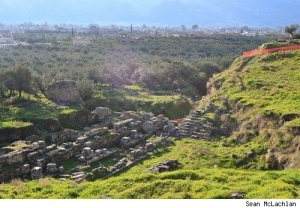
After having seen Athens and Corinth, I couldn't resist visiting one of the other great city-states of ancient Greece: Sparta. Sparta needs no introduction. It's a star player on the History and Discovery channels and that schlocky pseudo-historical film 300. While I wanted to see the ancient ruins where brave warriors once strode, my main reason for going was to explore nearby Mistra, a Byzantine ghost town with a castle that rivals Acrocorinth.


Sparta is a three-and-a-half hour bus ride from Athens. The route passes along the Aegean shore, through the Isthmus of Corinth, and into the Peloponnese, the peninsula that makes up southwestern Greece. Passing Corinth, the road ascends into rough hills that were being buffeted by a snowstorm.

Luckily the roads were in good condition and I made it on time. The clouds were breaking over the Vale of Sparta although it remained bitterly cold. My first stop was at the Fifth Ephorate of Byzantine Antiquities to learn more about how the economic crisis was affecting archaeologists' ability to explore and preserve Greece's past. The Ephorates are divided by region, in this case Lakonia, roughly the central and southern Peloponnese, and also by period. There's a Fifth Ephorate of Prehistoric and Classical Antiquities too.

Archaeologists Lygeri Nikolakaki and Ageliki Mexia greeted me in their cramped office overflowing with books, reports, and maps. They spread out several maps in front of me to demonstrate just how rich their area was in medieval remains. Castles, churches, monasteries, and medieval towns dotted the landscape. This area was called the Morea in late Byzantine times and was one of the few centers of wealth, art, and learning during the waning days of the empire in the 14th and 15th centuries.

One region caught my eye--the Mani peninsula. The Ephorate has recorded some 2,000 Byzantine and post-Byzantine monuments on the peninsula, and the map showed hiking trails crisscrossing the area. The Maniots were always semi-independent, fierce fighters and pirates who never fully submitted to the Greeks, Romans, Crusaders, or Byzantines. Their culture remains distinct even today. As I was researching this trip I was already planning another one.

Author: Sean McLachlan
Source: Gadling.com

Just 160 MPs backed the government's candidate for president, Stavros Dimas, in the first of three votes on Tuesday. Dimas had been expected to draw at least 161 of the 200 votes he needed but indpendent lawmaker Panayiotis Melas voted «present.» He was one of 135 lawmakers who voted «present» - there is not a «no» vote in the presidential ballot.

Five MPs, including two former Golden Dawn deputies, were absent. Four of the absentees were independents, one from SYRIZA.

The next ballot will be held at noon on Tuesday. The threshold will be 200 votes again. It will fall to 180 for the final ballot on December 29.

To read more, please visit ekathimerini.com

Friday, 17 April 2015 13:41

Greek Easter In Pelio

With the combination of Greek Easter and 20+ degree spring weather, the long weekend called for a road trip. So we packed up a car with a few friends and headed out on Friday towards Pelio. It was my first time in Pelio since I was a kid – and it won’t be my last.

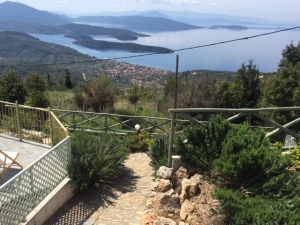
Pelio is actually the mountain range in the southeastern part of Greece’s Thessalia region, easily reachable by car, a few hours drive from Athens via Volos. This is an area of beautiful mountain drives, hiking trails, springs and waterfalls, beaches and even ski hills in winter. Google tells me there are 24 villages nestled across the region, with beautiful traditional homes and mansions, many of which have been turned into hotels and inns. This is the place to go for long mountain drives, dramatic scenery and lovely beaches.

We stayed in the village of Milies, in a stone-built inn overlooking a deep valley – more or less centrally located for easy driving access to the region. For Easter we had booked lunch at a place called Lagou Raxi. This is a very nice ‘country hotel’, newly built on a mountain-top in the village of Lafkos in South Pelio, with seriously stunning views down to the sea. Lagou Raxi is a beautiful spacious property, with a fantastic swimming pool, nicely decorated and delicious food in the restaurant. The owners, Sue and Christian, are fellow expats who have made Lafkos their home and have clearly poured their hearts into this unique property. In fact, Sue and Christian become your hosts during your stay here, and make you feel right at home. But this is much more than just a hotel – they also offer scheduled activities throughout the year, from yoga to painting to hiking. Not hard to get used to this…

One thing is for sure – I will add Pelio to my ever-growing list of must-see places in Greece.

Until next week,

Jack


Lagou Raxi
Lafkos, South Pelio
+30 24230 65144
Find them HERE!

For 7 years running, you have been invited to select the best European destination. From Amsterdam to Zadar, select which tourist destinations you'd like to be featured the most in 2016!

After Bordeaux in 2015, we encourage you to select your favourite European destination for 2016. The process is simple. There is no need to register ~ with just one click, your vote is in!

The European Best Destination 2016 is an event organised by the European organisation "European Best Destinations". 

Birthplace of philosophy, democracy and drama, the city of Athens is not only an open-air museum of world-class cultural heritage attractions but also a contemporary metropolis with an urban personality. Named after the most benevolent Greek Goddess, Athena, the goddess of wisdom and inspiration, Athens has always been at the cultural fore.

With equal measures of grunge and grace, Athens merges the past with the present in the most slender way! A city of paradoxes and great contrasts, in the country that first invented the courtesy and generosity towards people who are far from their home, hospitality (xenia).

An intellectual beacon of the ancient world with spectacular Mediterranean landscapes bathed in the renowned light, Athens is a sophisticated cosmopolitan hub with delicious gastronomic delights, electrifying nightlife, creative vibes and a booming art scene.

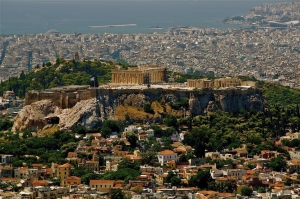
From the iconic Acropolis, rising above the city, to charming up and coming neighborhoods and contemporary art galleries, the city of the Classic Marathon and the Olympic Games is a majestically quirky clash of past and present.

One of the world's oldest cities with a recorded history of 3,500 years, the Greek capital is constantly undergoing urban renewals to keep up with the evolution of time. Athens lives up to all the hype!


Students of the Aristotle University of Thessaloniki have created an innovative interactive tool that helps dyslexics read easier online, says a report in Chinese agency Xinhua.

The tool named “3asyR” (Easy Reader) allowed dyslexics and people with learning disabilities to easier read the website created for the 1st International Journalism Summer School.

The tool provides the opportunity for users to underline words or highlight material on online texts and choose among 15 dyslexic friendly colors and font size options or a Text-to-Speech option, supporting almost all languages.

To read this article in full, please visit: Greek Reporter
Page 249 of 461