

In 2026 Dive (Back) Into Greek Mythology!
- by XpatAthens
- Monday, 19 January 2026

The summer of 2025 brought an unexpected thrill to the Port of Piraeus. Along the bustling quays, the luckiest passers‑by may have caught a fleeting glimpse of some very familiar faces. From Zendaya to Matt Damon, with Anne Hathaway gliding in between, it felt as though half of Hollywood had suddenly materialised on Greek soil. And such a constellation of A‑listers could only mean one thing: an iconic project led by the equally iconic Christopher Nolan. His new film, Odyssey, was already stirring a palpable sense of anticipation across Greece.
Filming began on 25 February 2025, and from that moment on, the production embarked on what can only be described as a world tour. Morocco’s sun‑drenched landscapes set the tone, before the journey swept through Sicily and the Aeolian Islands, crossed the United Kingdom and Iceland, ventured into the wilds of Scotland, skimmed the sands of Western Sahara, and paused in Malta and Ireland, eventually wrapping in the studios of Los Angeles. A modern odyssey in every sense, with Greece, naturally, at its heart. The Peloponnese and Messenia played a starring role, with scenes captured in and around the coastal town of Pylos, and even atop the dramatic Acrocorinth overlooking Corinth.
Homer’s Odyssey, the ancient Greek epic composed towards the end of the 8th century BC, tells the story of Odysseus’ long and perilous journey back to his island of Ithaca after the Trojan War. What should have been a homecoming becomes a ten‑year saga filled with trials, temptations and mythical encounters, all in the hope of reuniting with his wife Penelope and his son Telemachus. And even when he finally reaches his shores, his troubles are far from over.
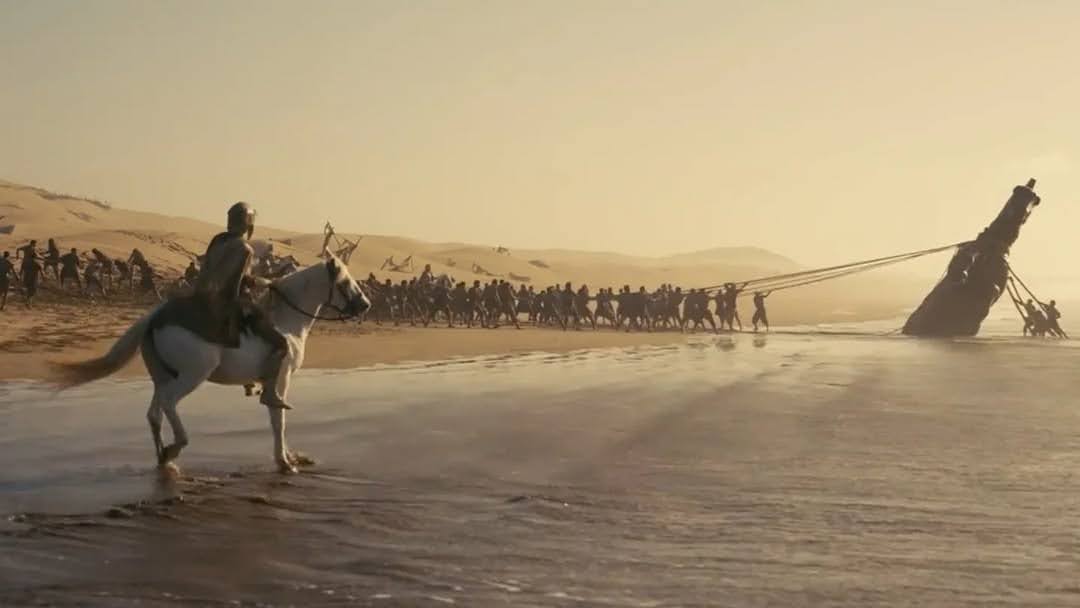
@nolanarchives
Nearly three thousand years after it first emerged, The Odyssey continues to speak to us because it touches on the most fundamental human experiences. It isn’t simply a tale of gods and monsters (even if we can’t help looking forward to shivering alongside Odysseus’ men as Poseidon unleashes his wrath or imagining ourselves succumbing to the Sirens’ hypnotic song) : at its heart, it is a deeply human story, exploring what it means to be alive, lost, tempted, brave, fragile, and forever searching for a home, both in the literal sense and in the emotional one.
The epic is threaded with themes that feel as fresh today as they did in antiquity: loyalty tested by time, the pull of temptation, the fear of the unknown, the ache of nostalgia, and the lifelong quest to understand who we are. These emotions belong to no single era or culture; they resonate with anyone who has ever felt torn, hopeful, or uncertain.
Part of the enduring charm of The Odyssey lies in its hero. Odysseus is not a flawless demi‑god but a wonderfully human figure who lies, hesitates, makes mistakes, gives in to temptation and fails more than once. His vulnerability makes him relatable, even modern. Today’s heroes, whether in films, novels or series, tend to resemble him far more than the untouchable champions of ancient myth.
This timelessness explains why The Odyssey has inspired artists across the ages. In literature, Nikos Kazantzakis offered a monumental reinvention of the myth in The Odyssey: A Modern Sequel, while James Joyce transformed it into a modern masterpiece with Ulysses, set in the Dublin of the early twentieth century. In cinema, Christopher Nolan’s Interstellar echoes the structure of the ancient epic with its lost hero and impossible return, while Hayao Miyazaki’s Spirited Away follows a young girl through strange worlds, trials and transformation. Philosophers such as Hannah Arendt have read Odysseus’ return as a meditation on identity and memory, while Adorno and Horkheimer famously interpreted him as the first “modern subject”, a man who shapes his destiny through cunning and control. Even psychology has embraced the epic as a model for personal transformation, and contemporary pop culture continues to draw from it, from video games like Assassin’s Creed Odyssey to the myth‑infused characters of Marvel’s universe. Every era reinvents The Odyssey, and that constant reinvention is precisely what keeps it alive.
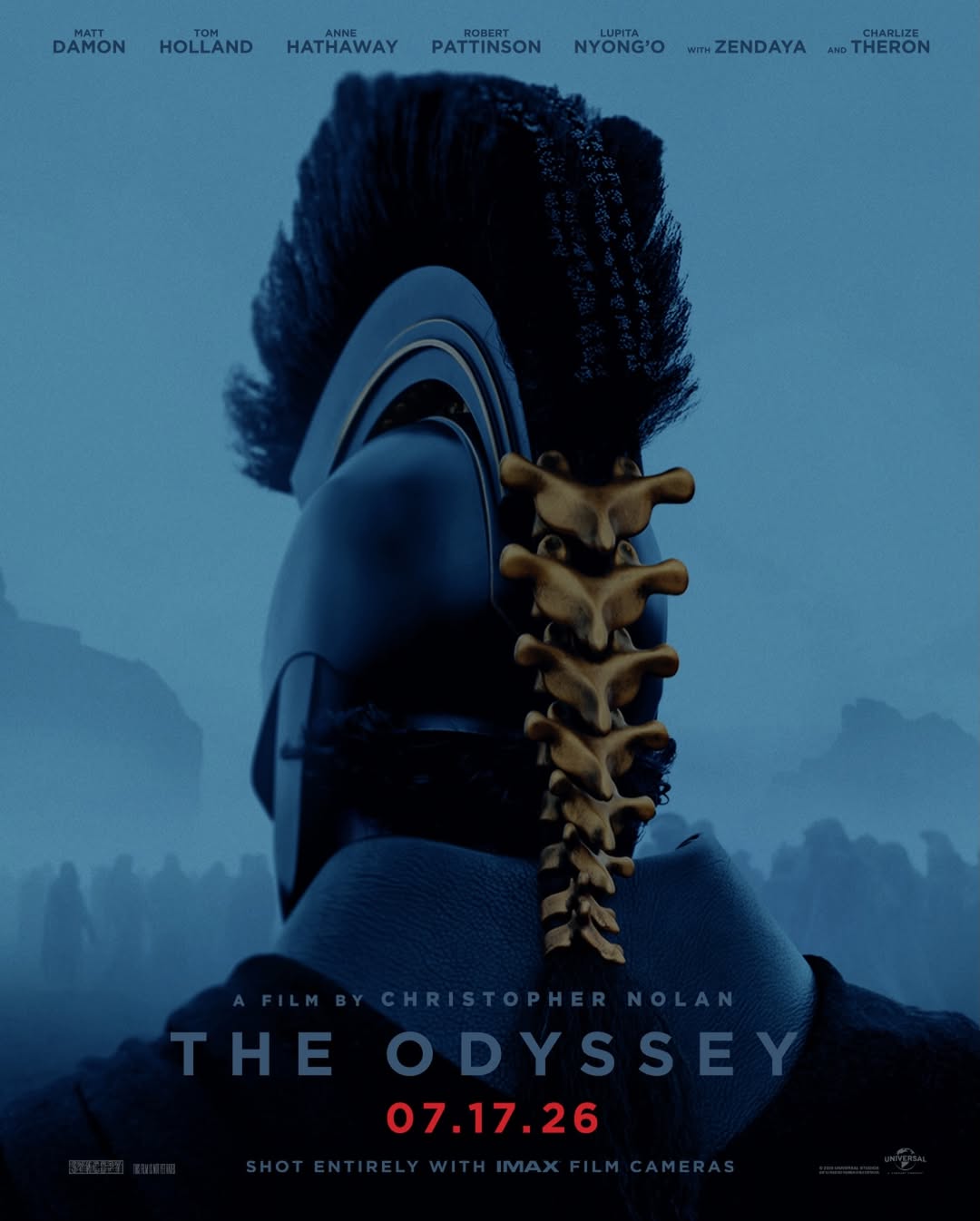
To bring this legendary tale to life, Christopher Nolan has embarked on one of his boldest projects yet, assembling a truly stellar cast: Matt Damon as Odysseus, Tom Holland as Telemachus, Anne Hathaway as Penelope, or Zendaya as Athena, with additional roles played by Robert Pattinson, Mia Goth, Lupita Nyong’o, and more, the film promises a modern retelling of the myth on a scale as ambitious as the epic itself.
With its American release scheduled for 17 July 2026, audiences will need to wait a little longer - but the excitement is already building.
Before or after watching what is sure to be a masterpiece of a film, dive (or dive back) into the myth once cherished by the rhapsodes of ancient Greece. You may even find yourself exploring the country through a fresh lens: tracing Odysseus’ imagined route across islands and coastlines, rediscovering landscapes steeped in legend, or seeking out the real‑life locations that shaped both the ancient epic and Nolan’s bold new interpretation. This is the kind of story that draws us to Greece not merely for its sun and sea, but for the chance to follow a tale that has travelled across millennia and still feels astonishingly alive.
Homer’s Odyssey, the ancient Greek epic composed towards the end of the 8th century BC, tells the story of Odysseus’ long and perilous journey back to his island of Ithaca after the Trojan War. What should have been a homecoming becomes a ten‑year saga filled with trials, temptations and mythical encounters, all in the hope of reuniting with his wife Penelope and his son Telemachus. And even when he finally reaches his shores, his troubles are far from over.
@nolanarchives
Nearly three thousand years after it first emerged, The Odyssey continues to speak to us because it touches on the most fundamental human experiences. It isn’t simply a tale of gods and monsters (even if we can’t help looking forward to shivering alongside Odysseus’ men as Poseidon unleashes his wrath or imagining ourselves succumbing to the Sirens’ hypnotic song) : at its heart, it is a deeply human story, exploring what it means to be alive, lost, tempted, brave, fragile, and forever searching for a home, both in the literal sense and in the emotional one.
The epic is threaded with themes that feel as fresh today as they did in antiquity: loyalty tested by time, the pull of temptation, the fear of the unknown, the ache of nostalgia, and the lifelong quest to understand who we are. These emotions belong to no single era or culture; they resonate with anyone who has ever felt torn, hopeful, or uncertain.
Part of the enduring charm of The Odyssey lies in its hero. Odysseus is not a flawless demi‑god but a wonderfully human figure who lies, hesitates, makes mistakes, gives in to temptation and fails more than once. His vulnerability makes him relatable, even modern. Today’s heroes, whether in films, novels or series, tend to resemble him far more than the untouchable champions of ancient myth.
This timelessness explains why The Odyssey has inspired artists across the ages. In literature, Nikos Kazantzakis offered a monumental reinvention of the myth in The Odyssey: A Modern Sequel, while James Joyce transformed it into a modern masterpiece with Ulysses, set in the Dublin of the early twentieth century. In cinema, Christopher Nolan’s Interstellar echoes the structure of the ancient epic with its lost hero and impossible return, while Hayao Miyazaki’s Spirited Away follows a young girl through strange worlds, trials and transformation. Philosophers such as Hannah Arendt have read Odysseus’ return as a meditation on identity and memory, while Adorno and Horkheimer famously interpreted him as the first “modern subject”, a man who shapes his destiny through cunning and control. Even psychology has embraced the epic as a model for personal transformation, and contemporary pop culture continues to draw from it, from video games like Assassin’s Creed Odyssey to the myth‑infused characters of Marvel’s universe. Every era reinvents The Odyssey, and that constant reinvention is precisely what keeps it alive.
To bring this legendary tale to life, Christopher Nolan has embarked on one of his boldest projects yet, assembling a truly stellar cast: Matt Damon as Odysseus, Tom Holland as Telemachus, Anne Hathaway as Penelope, or Zendaya as Athena, with additional roles played by Robert Pattinson, Mia Goth, Lupita Nyong’o, and more, the film promises a modern retelling of the myth on a scale as ambitious as the epic itself.
With its American release scheduled for 17 July 2026, audiences will need to wait a little longer - but the excitement is already building.
Before or after watching what is sure to be a masterpiece of a film, dive (or dive back) into the myth once cherished by the rhapsodes of ancient Greece. You may even find yourself exploring the country through a fresh lens: tracing Odysseus’ imagined route across islands and coastlines, rediscovering landscapes steeped in legend, or seeking out the real‑life locations that shaped both the ancient epic and Nolan’s bold new interpretation. This is the kind of story that draws us to Greece not merely for its sun and sea, but for the chance to follow a tale that has travelled across millennia and still feels astonishingly alive.
LIFE & CULTURE