

BUSINESS CENTRE

XpatAthens
Two Crete Aquariums Among Best In World
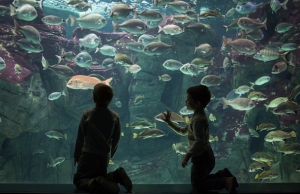
“The Travelers’ Choice awards are recognizing the top zoos and aquariums around the world that are the favorites of the TripAdvisor community,” Barbara Messing, chief marketing officer for TripAdvisor, said in an announcement.
The Aquaworld Aquarium & Reptile Rescue Centre in Hersonissos ranked 7th and the Cretaquarium Thalassocosmos in Heraklion raked 23rd among the world’s best.
Meanwhile, in the list of Europe’s top aquariums, the Aquaworld Aquarium & Reptile Rescue Centre in Hersonissos ranked 3rd and the Cretaquarium Thalassocosmos in Heraklion ranked 9th.
“Travelers visiting these award-winning attractions can get a close look and learn about the magnificent creatures that inhabit the world around us”, Ms. Messing added.
To read more, please visit: Greek Travel Pages
Jack Swings Back Into Fall In Athens
Bids Invited For Hilton Athens Owner
Blue Air Links Athens with Bucharest

Operation Clean-Up: Changing The Face Of Athens
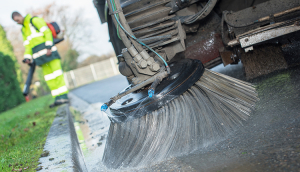
For the first time, the City of Athens is moving towards a strategy of total cleaning interventions that have shown significant results. For the last 12 months, 37 cleaning operations in 37 different areas have been changing the image of dozens of Athenian neighborhoods.
How Things Are Changing
Every Sunday, entire city areas are sanitized. To achieve the required cleansing result, dozens of cleaning staff gather in a specific area to wash sidewalks, streets, and public spaces with hot water. Due to the current circumstances, they also carry out the required disinfection.
These operations are the pinnacle of everyday cleaning and combined with smaller-scale but equally significant actions, they are changing the city for the better. For example, the group interventions that take place in the squares. During those interventions, a large group of staff take care of the green and wash and repair the equipment within a few hours. The cleaning staff is also in charge of washing-out the bins–that are gradually being replaced by new ones throughout Athens–and organized recycling.
Street cleanings have been happening every Sunday for about the last year, neighborhood-by-neighborhood, and not just for hygienic reasons during Covid. The Mayor would say 'it’s about returning to the basics of quality of life,' and it’s starting to have a noticeable effect. Attention to neighborhoods outside the touristic center – focusing on the neighborhoods where people actually live – is part of telling people that they are wanted and belong in Athens.
Equipment
Today, Athens is renewing its old cleaning equipment, but it has also obtained new, modern machinery to make cleaning even more efficient. The cleaning operations rely on modern equipment such as large vacuum cleaners, 20 high-pressure cleaners, water trucks, sweepers, and other equipment for washing and sweeping sidewalks, squares, and pedestrian streets. In other words, the municipality is moving away from superficial cleaning, which may have temporarily given the feeling of cleanliness but did not offer the desired result.
How Often Do Cleaning Operations Take Place?
Every Sunday and in a different area. In every Municipal Community, non-stop. The Municipality of Athens now follows a cleanliness cycle where one cycle closes a new one opens up. The cleaning cycle is supported by daily actions in every corner of the city. "This couldn't go any further, and we all saw it for so many years," explains Mayor of Athens Costas Bakogiannis. "We have the human resources and we are renewing the equipment. We had to, at all costs, find another way to clean Athens. We had to design the cleanliness plan from scratch, avoiding one mistake: Clean it in fragments, without planning, phobically. We've reached a threshold and applied dynamic interventions in the whole city, in entire neighborhoods. And as it turns out, we are winning the bet. We have a lot of work ahead of us, but now we know how to deliver the results that all Athenians want", he adds, talking about the citiy's new cleaning strategy.
Operations By Date
Votanikos- Kato Petralona 19/01/20, Kypseli 26/01/20, Kolonaki - Exarchia 02/02/20, Gyzi- Goudi 09/02/20, Pagrati 16/02/20, Pagrati- Neos Kosmos 23/02/20, Patissia 08/03/20, Omonia 10/05/20, Akadimia Platonos 17/05/20, Neapoli Exarcheion 24/05/20, Probonas 31/05/20, Neos Kosmos 07/06/20, Plateia Amerikis (Filis Street) 14/06/20, Kolonos 21/06/20, Ampelokipi 28/06/20, Metaxourgio 5/7/20, Sepolia 12/7/20, Kolonaki 19/7/20, Plaka 26/7/20, Agios Panteleimon 6/9/20, Exarcheia 13/9/20, Kato Patissia 20/9/20, Kato Patissia 28/9/20, Sepolia 4/10/20, Ano Petralona and Thiseio 11/10/20, Neos Kosmos 18/10/20, Ellinorosson 25/10/20, Votanikos 01/11/20, Agios Pavlos 8/11/20, Lambrini 15/11/20, Omonia 22/11/20, Metaxourgio 29/11/20, Koukaki 6/12/20, Commercial Triangle 13/12/20, Kypseli 10/01/2021, Kypriadou, Ano Patisia 17/01/21, Gyzi, 24/1/21, Kato Petralona, 31/1/21
XpatAthens extends a warm thank you to This Is Athens and the City Of Athens for sharing with us news and inspiring stories about how Athens is constantly becoming a cleaner, friendlier, and more welcoming city to live in.
Line 3 To Piraeus Ready In Coming Days
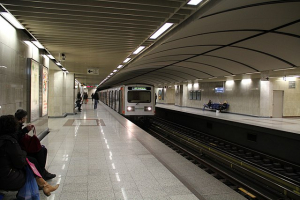
Speaking to ERT, he highlighted the substantial advantages that the metro lines 3 and 4 additions will provide to not only all Athens citizens but also to the environment. Karagiannis noted that with the operation of the metro in Piraeus, the country’s largest airport will be connected to the largest port in less than an hour. The trial runs for Metro Line 4 started last Tuesday.
“An additional 340,000 passengers will travel daily on this line alone, while 2,000 new trees will be planted in Athens, and, for the first time, architectural contests for square redevelopments will be launched in collaboration with the Municipality of Athens,” he said.
Karagiannis also announced the project for the extension of Line 2 to Ilion will be tendered by the end of 2022 and the extensions to Menidi and Zefiri will follow in the next phase.
Originally published on: ekathimerini.com
LAMPSA Hellenic Hotels Rewards Associates with a Second-Year Bonus of €1.3 million
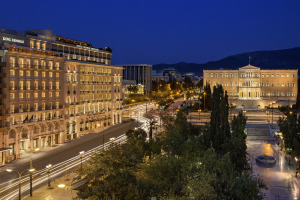
Recognizing the unwavering professionalism and tireless efforts of its people, LAMPSA SA will be distributing a bonus of €1000 net to each associate, irrespective of their ranking at the company's three flagship hotels in Athens. This reward serves as a testament to their commitment to delivering exceptional hospitality services and their ability to excel during demanding periods.
LAMPSA SA, a company with a long-standing history in the hospitality field, firmly upholds the belief that employee recognition lies at the core of its corporate philosophy. By fostering strong bonds and trust- based relationships with its workforce, the company has consistently positioned itself as a leader in the tourism industry. For the second year in a row, LAMPSA SA has been named among Greece's ten most attractive employers according to the prestigious Employer Brand survey conducted by Randstad. This accolade reflects the enduring commitment of LAMPSA SA to charting a shared path with its employees, driving future accomplishments and continuing to thrive as the oldest hospitality and tourism organization in Greece.
The bonus initiative not only symbolizes LAMPSA SA's gratitude towards its valued associates but also reinforces their pivotal role in achieving the company's vision. Through their exceptional skills and outstanding achievements, they contribute significantly to the company's success and the promotion of Greek hospitality.
Children First
What To Do With A Greek Snail
Mystras – The Dead City
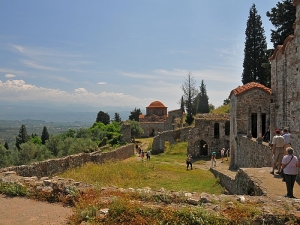
Magnificent, spectacular a glorious place, Mystras (5 Km north-west of Sparti) is one of the most exciting cities in Peloponnese. Standing still in time, the dead city lies on the slope of the sheer, strange hill with the fortress at its top. The whole of Mystras is an open-air museum; A reminder of glorious era of power and culture. Because of its good preservation, Mystras is sometimes compared to Pompeii in Italy.
It is one of the UNESCO World Heritage Sites. There are two entrances: one at the bottom of the site and the other one in the middle. It is about 6 km away from Sparti. In the modern village of Mystras - situated 1 km or so from the archaeological site, there are a few restaurants and hotels.
Its fortifications and churches, its palaces and mansions, its roads and fountains, charm thousands of visitors daily and offers them valuable insights in the evolution and culture of the Byzantines.
For two centuries Mistras was at the forefront of developments and had a brilliant history full of glory, splendour and political, social and cultural contributions. Its story begins in the mid-13th century when the Franks were dominant in the Peloponnese. In 1249 Villehardouin II built an impregnable fortress at the top of a hill called Mistras or Mizithras. Ten years later Villehardouin found himself a prisoner of the Byzantine Emperor Michael Paleologus and bought his freedom by handing over the fortresses of Mistras, Monemvasia and Mani. Mistras offered security, so that the inhabitants of neighbouring Lacedaemonia, as Sparti was then called, made their homes on the slopes surrounding the fortress.
The settlement and the Hora (town) were protected by a wall, but the new houses were built outside the enclosure. Another wall protected the new settlement, Kato Hora. The strategoi (generals) governed the town, and as of 1308, when the seat of the Diocese had been moved to Lacedaemonia,
Mistras became in the mid-14th century the capital of the Peloponnese and the seat of the Seignioly (Despotate) of the Moreas, with a ruler or despot who enjoyed tenure for life.
Sightseeing
The Palaces
The palaces of the despots of Morea dominate Mistras from their rocky foundations in the centre of Ano Hora where the Monemvasia gate leads from Kato Hora. It is a spectacular complex, comprised of buildings built at different times. The first, the "mansion of the Cantakuzenoi", was constructed in the first years, perhaps by the Franks. The second edifice dates from the same period (1250-1350). The third, a four-storey building, was erected between 1350 and 1400, as was the fourth, a two-storey mansion which was the residence of the despot. The fifth building (1400-1450) was the palace of the Paleologoi. Its length is 38 m. and its width 12 m. The first storey was intended for the departments of the Seigniory. The second was the throne hall. The abandoned palaces constitute an important attraction for the modern visitor. After their restoration, they are a vivid reminder of an era that has left an indelible mark on history. As is the grand square before them, the site of official displays during the days of Mistras' glory and a market in later years, when the town was a busy commercial centre.
Tel: +30 27310 83377
To read more, please visit thegreektravel.com