XpatAthens

XpatAthens

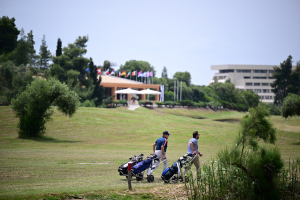
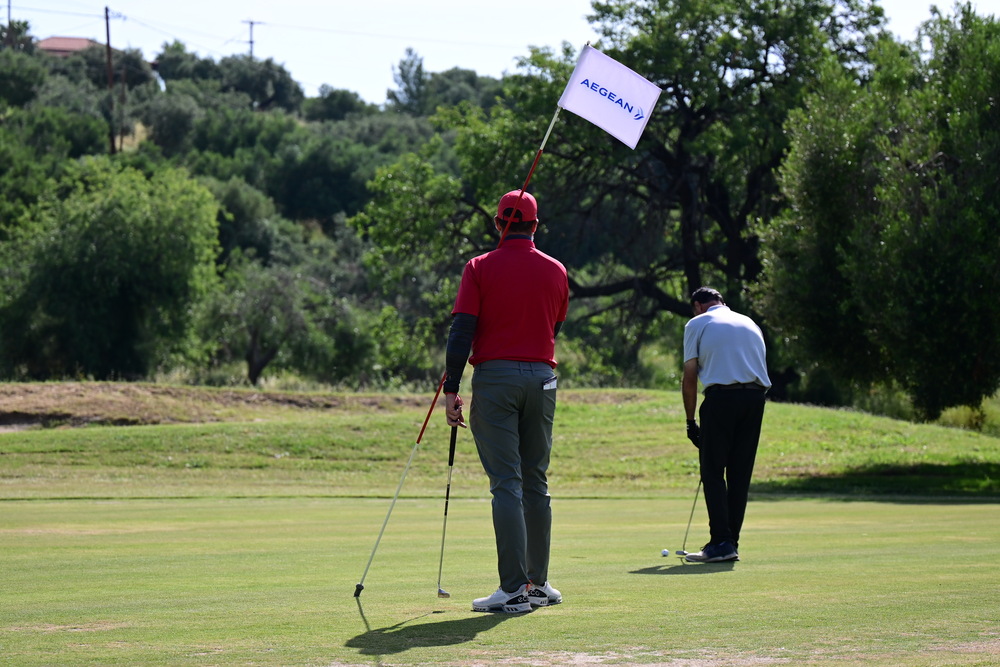
Professionals and amateur golfers from Europe, the ideal weather, the impressive golf course of Porto Carras, and the excellent facilities of Porto Carras Grand Resort,  created a unique setting for the international golf tournament Porto Carras Pro-Am Aegean Mini Tour, held from May 14 to 18, 2024, on the peninsula of Sithonia, in Halkidiki.

In one of the most beautiful and idyllic landscapes in Greece, and on the only 18-hole par 72 golf course in Northern Greece, overlooking the Aegean Sea and the stunning pine forests on Mount Itamos, golfers from twelve countries participated, representing Austria, Bulgaria, France, Germany, the United Kingdom, Italy, the Netherlands, Romania, Serbia, Sweden, the Czech Republic, and Greece.

The golf tournament contributed to the promotion and development of golf tourism in Northern Greece, with visitors enjoying the perfect destination while playing golf amidst the estate’s vineyards, the impressive three lakes of the course, pine trees, and olive trees, while also participating in many parallel activities.

FootGolf with the Legends 2004 Team
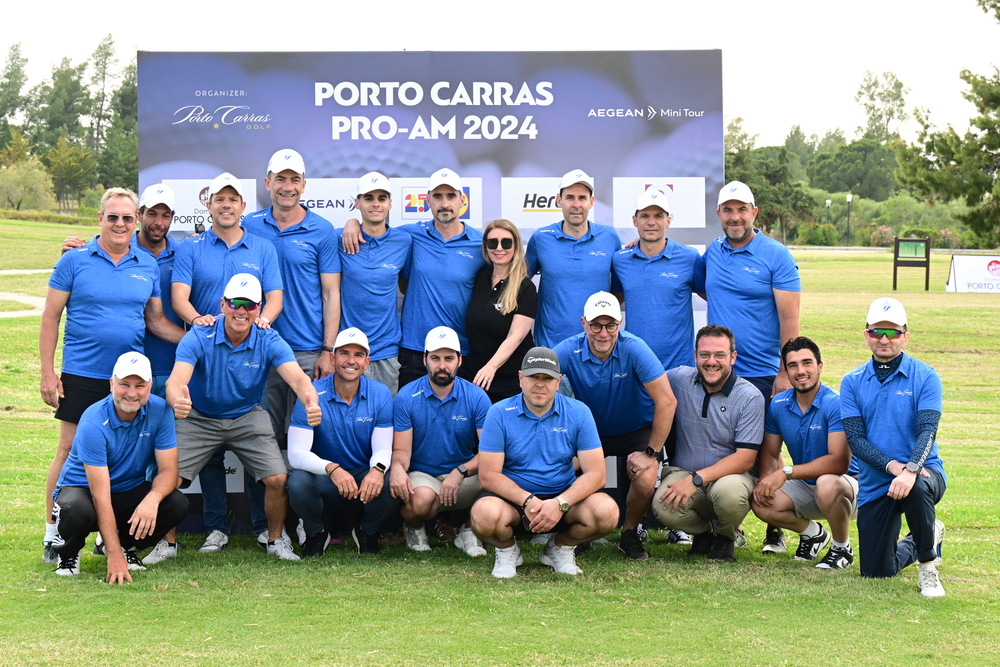
4 Porto Carras Pro Am by Zagas Photography

With the support of the tournament’s Official Airline, AEGEAN, the exciting FootGolf event was held. Football legends and European champions such as Zisis Vryzas, Fanis Katergiannakis, Angelos Basinas, Vasilis Tsiartas, Takis Fyssas, and Kostas Chalkias, who won Euro 2004 with the Greek national team, as well as the international football player Nikos Lymperopoulos, visited the Porto Carras Grand Resort. Among them, many internationals were invited to place a football into holes larger than those found in golf with as few strokes as possible. The rules of the game closely resembled those of golf, promising an entertaining sport blending elements of football and golf, ensuring a delightful experience filled with fun and joy. The international footballers had the opportunity to enjoy the facilities of Porto Carras, which included participating in a golf clinic, taking a boat trip, and experiencing a wine tasting at Greece’s largest organic vineyard, Domaine Porto Carras.

The Golf Competition

The Porto Carras Pro-Am Aegean Mini Tour schedule at the award-winning Porto Carras Grand Resort, recognized as the top golf hotel in Greece, began on Wednesday, May 15, with a practice round for all participants, followed by a Welcome Cocktail by Domaine Porto Carras in the evening. The golfers enjoyed the amazing cocktails by Domaine Porto Carras and the refreshing mocktails by Souroti. On Thursday, May 16, the 1st round of the Pro-Am took place, and on Friday, May 17, the 2nd round followed. On Saturday, May 18, the competition concluded with the Open Tournament for the professionals and the Individual for the amateurs.

During the games, golfers had the opportunity to enjoy high-quality coffee from Miele coffee machines, protein bars from Lidl, Souroti water, Sknipa beers, traditional Greek souvlaki, and fruits at the registration area, and refreshment stations on the golf course.

Tournament Winners

The schedule officially concluded with the Awards Gala Dinner, which included the awarding ceremony to the winners in both team and individual categories. The event was hosted by the accredited journalist Efi Alevizou. During the night, an honorary award was presented in memory of the late former president of Aegean Airlines, Mr. Theodoros Vassilakis, for his contribution to the development of golf in Greece. The award was given from the Golf and Sports Manager of Porto Carras Grand Resort, Mr. Panagiotis Sabaziotis to the General Legal Counsel of Aegean, Ms. Katia Avramidou. Another honorary award was given to the Greek national team of Legends 2004, the European champions of 2004. The award was presented by the General Manager of Porto Carras Grand Resort, Mr. Konstantinos Anglopoulos to the president of Legends 2004, Takis Fyssas.

In the Pro-Am tournament teams’ competition, the champion team was composed of Papadopoulos, Avramidou, Maltezakis, Piperas.  The second-place team included Christos Nikopoulos, Gkotsis, Werner, and Kalogiros, while the third-place team featured Themis Ginis, Fistrek, Hoppen, Fasois. In the special team awards, the top team during the first-day consisted of Sofronis, Bountis, Van Duijne, Fragistas, while the top team on the second day was Elli, Marian Abrashev, Alexander Abrashev, Tourgaidis.
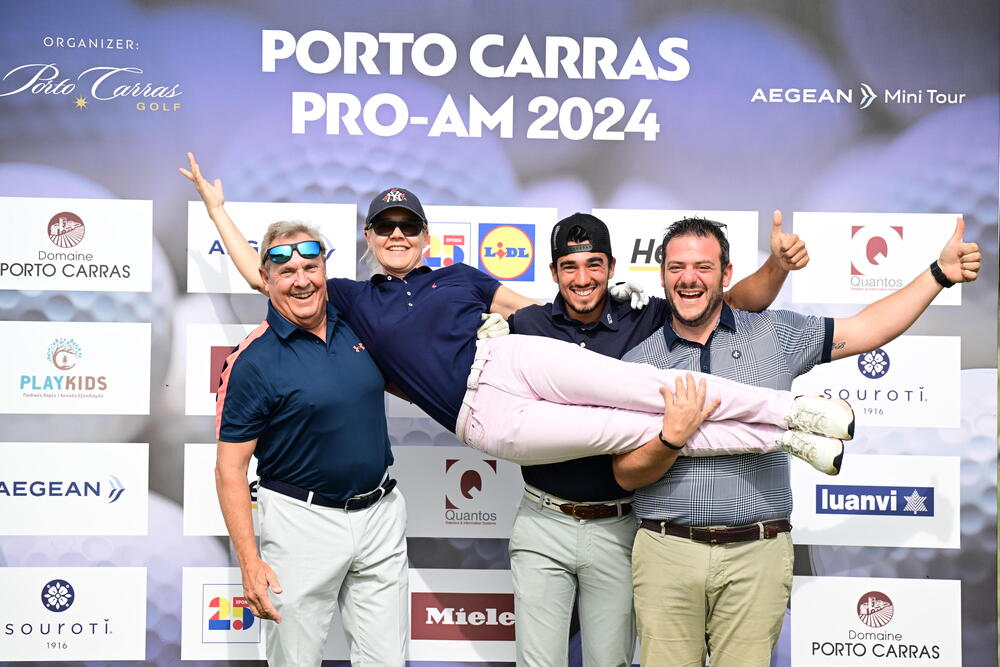
3 Porto Carras Pro Am by Zagas Photography

At the individual level, the Swedish Henrik Engdahl was the Pro champion. In the Amateur Gross category, Alexander Abrashev was first, Christian Werner was second, and Marian Abrashev was third. In the Amateur Net category, Anastasios Gkotsis was first, Philippos Piperas was second, and George Karakasis was third. The Longest Drive award for the first day was received by Christian Werner, and the second day by Anastasios Gkotsis, while in the Closest To The Pin category, Petros Tourgaidis won the first day, and Michalis Archangelitis the second.

The guests enjoyed a specially designed menu with unique savory and sweet “golf” selections, cocktails, and mocktails by Souroti, and excellent wines by Domaine Porto Carras. In addition to trophies, the tournament winners received special gifts from Domaine Porto Carras and Sknipa.

Wine Tasting for a Good Cause

6 Porto Carras Pro Am by Zagas Photography

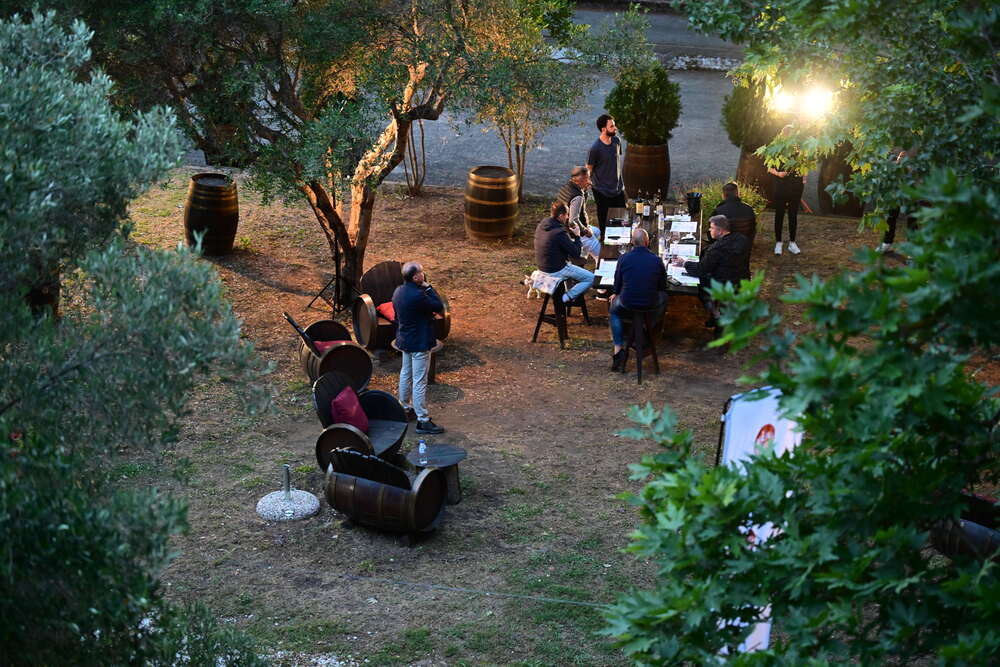
The largest unified organic vineyard in Greece, Domaine Porto Carras, supported the event as a Platinum Sponsor and organized two Wine Tasting Sessions for the event’s guests on Thursday, May 16. Participants had the opportunity to experience firsthand Domaine Porto Carras and taste the exquisite varieties of the historic vineyard. In addition, Porto Carras Pro-Am Aegean Mini Tour, with the support of Domaine Porto Carras, reinforced the Association of Parents of Children with Neoplastic Diseases of Northern Greece “LAMPSI”.

During the two Wine Tasting Sessions and at the Awards Gala Dinner, participants had the opportunity to contribute to this cause. The total amount collected by the event was donated to the “LAMPSI” association, which, among other things, ensures the excellent medical and pediatric care of children suffering from malignant diseases, for the creation, organization, staffing, and equipment of specialized oncology, hematology units, providing moral, social, and financial support for the treatment, care, education, and social reintegration of children and providing all possible assistance, information, and other forms of support to the families of sick children. More information about the Association “LAMPSI”.

Golf Lessons for Beginners

Finally, on Saturday, May 18, non-golfers along with the Legends 2004 team participated in a Golf Clinic. There, they learned the basic principles of the Olympic sport of golf and had fun improving their flexibility, concentration, and mental health.

2 Porto Carras Pro Am by Zagas Photography

Porto Carras Pro-Am was organized by Porto Carras Golf under the auspices of the Ministry of Tourism, the Greek National Tourism Organization, the Halkidiki Tourism Organization, the PGA of Greece, a member of the Confederation of Professional Golf, and the major sponsor, AEGEAN.

The Official Airline of the tournament was AEGEAN, a member of the leading airline alliance, Star Alliance. For the 12 th consecutive year and 13 th overall, AEGEAN is declared the passengers’ top preference and wins the title of “Best Regional Airline in Europe” according to the Skytrax World Airline Awards 2023.

The event’s sponsors:

Platinum Sponsor: Domaine Porto Carras
Official Airline: AEGEAN
Gold Sponsors: Lidl, Auto Hellas Hertz, Play Kids
Silver Sponsors: Miele, Quantos
Bronze Sponsors: Souroti, Luanvi, Olga Karaververi
Official Sponsors: Taylormade, Dacristo, Sknipa Beer, Cross Sportswear
Official Partners: Jardin Plus, Kapa Olive Farm, Liokladi, Messinian Spa
The sports marketing agency of the year ActiveMedia Group was responsible for the event’s Golf Production.

#portocarrasproam #aegeanminitour #portocarras

Porto Carras Porto Carras Grand Resort is the historic iconic resort that has contributed significantly to the establishment of luxury tourism in Greece, especially in Halkidiki. For 50 years, it has been offering high-level services and authentic Greek hospitality to its guests in an environment of unparalleled beauty and intense contrasts. Located alongside a sandy coastline of 9 kilometers and surrounded by a verdant area of 18,000 acres, with gardens under the shade of pine trees dressing the slopes of Mount Meliton. Its facilities include an 18-hole golf course, the biggest organic vineyard in Greece, a spa and wellness center, restaurants with high-level gastronomy, a casino and a marina that provides integrated services. In addition, a wide range of sports and cultural activities on land and sea are available to visitors of all ages.

Wednesday, 18 February 2015 13:53

Discover Anemotripa Cave

Mountain escapes used to be connected to trekking, rafting or climbing. Here you will discover something different that will offer you the best cave impressions in one of the most amazing mountains in Greece. Anemotripa Cave is located in the Tzoumerka mountain chain and more specifically in Pramanta village. The cave is at an altitude of 900m and has a total length of 350 m (270 can be visited). Anna Petrocheilou (speleologist) was the main researcher of the cave who decided to explore it in 1960.

The entrance and the exit of the cave are the same. Under well-colored stalagmites three little lakes in the colors of grey, pink and white have taken shape. The interior part of the cave houses various species of insects as the species of Lepidopterans.

The path: After the entrance of the lake the hall leads to the First Chamber which has a length of 17 m. In the left side you can find the Chamber of the River.
The ladder leads to the Big Room with a height nearing 6 meters.

Anemotripa is composed of 3 main levels; the highest one is not accessible by visitors since it had collapsed in the past. Thus, you can start your tour through the median level that is the main touristic path and offers a unique atmospheric environment that will magnetize you from the very first moment. In the cave’s lowest level there is an underground flowing river. Moreover, the cave is divided into several room spaces that are connected by corridors, sometimes uphill, sometimes downhill. Fascinating stalactites and stalagmites, waterfalls, ponds and the underground river are only some of the ingredients that if we mix them with the cave’s natural colors, the result becomes really majestic.

Author: Mary Kallivoka

Friday, 20 February 2015 16:32

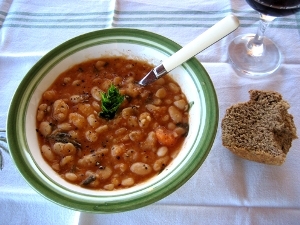
Fassolada-Greek Bean Soup

This is such a Greek food staple and yet one can never eat it at a Greek restaurant in Greece, unless it is a taverna somewhere up in the mountains where soups and stews are available to the weary travellers. There is nothing exceptional about the recipe as far as the ingredients go: beans, onion, celery, tomato, carrots, olive oil. That’s it.

Yet again, this is one of those foods that are perfect for cold weather, warm and comforting and most importantly highly nutritious. In my family we ate it together with: feta cheese, black Kalamata olives, smoked mackerel dressed in olive oil and lemon, and of course loads of bread, so it became a full meal.

If you want something less rustic, you can whizz everything in the blender and serve it as a veloute with croutons or even crispy bacon.

INGREDIENTS for 4-6 people

500gr dry white beans, soaked
2-3 carrots, sliced
1 onion, sliced
half bunch of celery, chopped
1 400g can of chopped tomatoes
1 clove garlic  (optional)
olive oil
salt, pepper

DIRECTIONS

Soak the beans in warm water with a bit of salt for at least 8 hours. Drain, rinse and fill the pan again with fresh water. Bring to the boil and skim the froth.
Add all the ingredients: carrots, celery, onion, tomatoes, garlic if you are using and 1-2 tbsp of olive oil.
Boil until tender, about two hours. The fresher the beans the quicker they boil. You can also use a pressure cooker if you are really in a hurry. It will only take 10 minutes.
When the beans are ready, season well with salt and pepper. The soup should be thick and creamy. This usally occurs naturally due to the starch contained in the beans. If, however your soup turns out watery, you can easily thicken it by dissolving one tbsp of flour and letting it boil for one minute.
Serve hot with some extra pepper and olive oil on top.

KALI OREKSI!

http://foodjunkie.eu

Summer sales begin on Monday July 13 2015 and run until Monday August 31 2015. The Commercial Association of Athens has suggests that shops remain open on Sunday July 19 from 11 am to 8 pm.

Happy shopping!!

Source (translated by XpatAthens): Express.gr
Thursday, 25 August 2016 07:00

A Small Picnic Paradise In Varnavas

Parents are often asking where the best places are to show their children the experience of fall. Many expat parents remember those September and October autumn days in their home countries with colored leaves, chestnuts and walks in the forests. And the general idea is that this is something one can only find in Greece’s countryside, but not in Athens. Yet, there are many places in and around the city that can give you that autumn feeling. Family Goes Out shows us one of them:

On a warm Sunday morning in September, my friend Sofia invited me and the girls to drink a coffee near Kapandriti.  Kapandriti is situated in the green corner of North Attika,  37 km from Syntagma square. Sofia said that she knew a ‘small paradise’, a picnic place where the children would be able to play in the forest and we would be able to watch them and relax.

When we got there, I could not agree more with my friend. This place is indeed a small paradise.

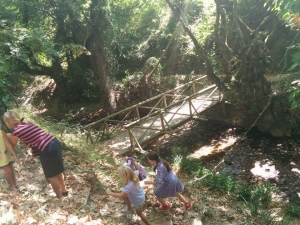
It is called Kioski and is actually just a kiosk on the side of the mountain road in between the villages of Kapandriti and Varnava. The kiosk is surrounded by oak and chestnut trees and there are picnic tables and a hammock around. Behind the kiosk is a steep staircase carved in the mountain that leads to an exciting river. The river was almost dry in this period of the year but has lots of water in the winter time. A wooden bridge leads across the river and can be the start of a beautiful hike. The kiosk serves coffee, (alcoholic) drinks, small snacks like toast, crisps and ice cream and some freshly prepared mezedes. There is a mobile bathroom near the kiosk and there is a small parking area.

The children played in the sand near our table whilst we had our coffee. Later they climbed down to the river and played around the water. The water was only a few centimeters high and because all of our children can swim, I did not worry. A romantic wooden bridge took them to the other side of the river and they had fun throwing stones in the water. Later on, they relaxed in the Kioski hammock, climbed in trees and collected stones and leaves. We ordered lunch and the children had ice cream. We had a lovely morning.

To read more, please visit: Family Goes Out
Monday, 22 February 2016 07:00

Top Ancient Greek Artworks

From rare bronzes found in the sea to goddesses that proved a millennium ahead of their time, ancient Greek art is majestic, vital and full of high drama. Here are some of the most important works from ancient Greece:

Fallen Warrior from Temple of Aphain (c 480-470 BC)
There is a tragic pathos to this mighty sculpture of a dying hero from a temple on the Greek island of Aegina. Tragedy is a Greek concept. The tragedies of Sophocles, Euripides and Aeschylus are still performed. This statue shows a strong man fallen, heroic to his last breath.

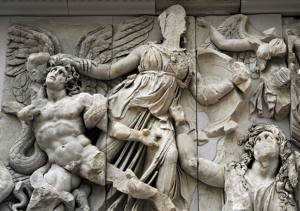
The Pergamon altar (180-160BC)
Classical Greek art changed rapidly as Greece itself went through wars and imperial transformations. In what is called the Hellenistic age it became much more emotional, sensual and even sensationalist. The furious sculptures on the Pergamon altar – which can be seen in its own museum in Berlin – are full of passion and psychological drama.

The Riace bronzes (460-420BC)  
These tremendous statues found in the sea off southern Italy in 1972 are important because so few original Greek bronze statues survive.  Most of the classical nudes in museums were carved in marble in the Roman era, as reproductions of such rare, and now largely lost, originals.  Here we see the true majesty of Greek art in its classical age, which occured in the fifth-century B.C.

Goddesses from the east pediment of the Parthenon (c 438-432BC)
Sitting and reclining in graceful unison, these goddesses carved in marble for the Parthenon in Athens are among the most beautiful and mysterious images of human form ever created.  Incredibly, the artist makes the draperies that cover their bodies as real and richly textured as similar garments painted by Leonardo da Vinci a millennium later - and who didn't have to produce his illusions in stone.  These are dream goddesses.

The Dionysus Cup by Exekias (c540BC)
Dionysus, god of wine and madness, sails on his boat, surrounded by dolphins, in this delightful painting. Part of the fascination of Greek art is that its themes were taken up by artists down the centuries, as the myths of this culture were constantly being rediscovered. So this image of Dionysus can be compared with later portrayals of the wine god by Titian, Michelangelo, or Cy Twombly.

To read more, please visit: The Guardian


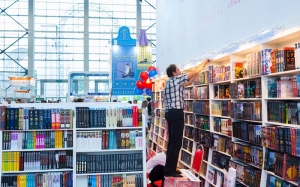
Greece was the recent guest of honour at Moscow’s recent 29th International Book Fair, which took place early September 2016 at Moscow’s largest exhibition center.
 
The Russian Federal Agency for Press and Mass Communication appointed Greece as the Guest of Honour on the occasion of the Joint Year Greece-Russia 2016, while Russia was in turn the Guest of Honour at the 13th International Thessaloniki Book Fair in May 2016.

Visitors had the chance to become acquainted with aspects of Greek culture as there were around 600 publications from 50 publishing houses, all representing the scientific and artistic side of Greece spanning from antiquity, the Byzantine era, the Enlightenment, 20th century, and modern day.

Prominent Greek writers and artists went to Moscow to participate in the programme of events, which included 30 events aimed at introducing the modern cultural face of a small country with a great history that maintains deep historical and cultural ties with Russia through literature, cinema, visual arts, and music.

The programme at Moscow’s International Book Fair was developed by the Hellenic Foundation for Culture with the collaboration and support of Cavafy Archive-Onassis Foundation, the State Museum of Contemporary Art, the Greek Film Archive, the Greek Film Center, Michael Cacoyannis Foundation, ASIFA HELLAS, Greekanimation.com, Greek IBBY, the Embassy of Greece to the Russian Federation, as well as with the Department of Byzantine and Modern Greek Studies of the Lomonosov Moscow State University.

To read this article in full, please visit: Greek News Agenda
Google has announced that it will fund the research at the Aristotle University of Thessaloniki on the future of digital journalism.

The research will be carried out by assistant professor of the Department of Journalism and Mass Media, Nikos Panagiotou and it will be funded through the Digital News Initiative Fund.

“People are turning to other kinds of information, turning to either blogs or social media, and especially in Greece this is becoming a dominant trend,” Panagiotou said.

He says that Google will help implement his research by providing funding for laboratory equipment, as well as by funding the development of pan-European sample of 5,000 people.

To read this article in full, please visit: Greek Reporter

The Financial Times has called for better capitalism in The New Agenda, the newspaper's first major brand campaign since 2008.

To mark the occasion, The Financial Times scrapped its paywall for September 18, while also distributing its print edition wrapped in its new campaign cover.

Headlined as Capitalism: Time for a Reset the discussion will concentrate on the pursuit of profit and how to promote a broader sense of corporate purpose. The Financial Times aims to challenge leaders in the boardroom and beyond to safeguard the future of free enterprise and wealth creation by pursuing profit with purpose.

The New Agenda campaign will also be manifested in branded events, field marketing, through partnerships and sponsorships, and other communications.

To introduce the new concept, editor Lionel Barber said: "The liberal capitalist model has delivered peace, prosperity and technological progress for the past 50 years, dramatically reducing poverty and raising living standards throughout the world." "But, in the decade since the global financial crisis, the model has come under strain, particularly the focus on maximizing profits and shareholder value. These principles of good business are necessary but not sufficient. It's time for a reset," he continued.

The campaign is entirely content-driven. Through a series of incentives and articles, audiences will be encouraged to consider the implications of great economic and societal change, including the ethics of investing, the potential risks of high technologies, and the future of the corporation itself.

Finola McDonnell, FT's chief communications and marketing officer, said: "Our readers want a guide to the risks and opportunities that disruption brings. But they also want to be challenged: The FT has the authority and credibility to ask fundamental questions of business and, with this campaign, we are highlighting the choices that will determine the future of the economic order, reflecting what we do every day through our unrivalled journalism."


To Read A Sample Of The New Agenda Content Click Here


Have you ever lost something and would try almost anything to get it back? Well, maybe try making a Fanouropita! This spicy cake is traditionally baked in Greece to honor St. Fanourios, the patron saint of revelation, between the 26th and 27th of August. Many Greeks, however, also regularly bake a Fanouropita in the hopes that the saint of revelation will help them find their lost belongings. In fact, the cake’s name also reveals its supposed object-finding powers: it was named after St. Fanourios, whose name originates from the Greek word “fanerono,” which means “I reveal.” So, Fanouropita quite literally means, “a pita that reveals.”
 
Even if you don’t believe in the Fanouropita’s power, or have an app to help you find lost items, the cake is still worth making! This quick, easy-to-make, and versatile cake is perfect for the Lenten season, and can easily be made vegan—all you have to do is replace the honey with sugar and add tahini.
 
Just a word of caution, though. While the main ingredients for the cake are walnuts, a dried fruit of your preference (we suggest raisins here), cinnamon, oil, sugar, and flour, it is said that all the ingredients must add up to an odd number (e.g. 7, 9, 11, 13, and so on). The recipe at the bottom has 11 ingredients without the icing sugar. If you chose to include the icing sugar, which we suggest you do, consider adding a second type of dried fruit to make the number of ingredients odd again.
 
Hopefully, this cake will help you find what you are searching for... And if it doesn’t—at least you got a tasty treat out of the experience!

Yield: 1 cake (25cm)
Difficulty: Intermediate
Cooks in: 1 hour and 20 minutes

Ingredients
 
  • 450g of flower
  • 260g of sugar
  • 1 cup of olive oil
  • 1 cup and 2 tbsp of orange juice
  • 100g of walnuts
  • 90g of raisins
  • 4g of powdered cinnamon
  • 1 tsp of powdered cloves
  • 20g of baking powder
  • 1 tsp of salt
  • 1 tbsp of red wine vinegar
  • Icing sugar for dusting (optional)
 
To find out important tips on how to prepare a Fanouropita, please visit: Kopiaste
Page 14 of 452