

RELOCATION

XpatAthens
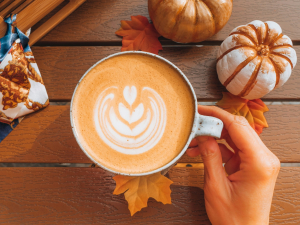
Greek-Inspired Pumpkin Spice Latte
-
1 cup milk (cow, oat, or almond)
-
1/2 cup strong brewed espresso or coffee
-
2–3 tbsp pumpkin puree
-
1–2 tsp greek honey (or more to taste)
-
1/2 tsp pumpkin pie spice (or 1/4 tsp cinnamon + pinch nutmeg + pinch clove)
-
A tiny pinch of mastiha powder
-
Whipped cream (optional)
-
Cinnamon or crushed mastiha for garnish
-
Warm the milk:
In a small saucepan, gently heat the milk over medium heat. Add the pumpkin puree, honey, pumpkin spice, and mastiha. Whisk continuously until frothy and fragrant (about 3–5 minutes). -
Brew the coffee/espresso:
While the milk warms, prepare 1/2 cup of strong espresso or coffee. -
Combine:
Pour the espresso into a mug. Slowly add the spiced pumpkin milk mixture, stirring gently. -
Top it off:
Add whipped cream if you like. Sprinkle a little cinnamon or crushed mastiha on top for garnish. -
Serve and enjoy:
Sip slowly and enjoy that warm, cozy, Greek-inspired pumpkin flavor!
Oinousses
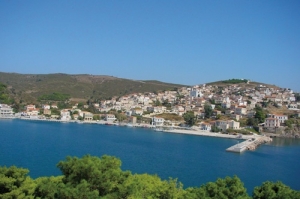
Oinoússes is a complex of nine islands and skerries located between Chios and the Erythraia peninsula in Asia Minor, out of which only one is inhabited (the one bearing the same name). Oinousses has been known since ancient times. Due to its strategic position it was conquered over the centuries by the Genoese, the Venetians, and the Turks. The islands’ striking natural beauty explains why they form part of the European network "NATURA 2000".
Oinoússes is famous for its century long naval tradition. In fact, some of the major Greek ship owners were born in this island and established later their maritime headquarters in London or New York. Monuments and sites of the island preserve this time-honoured maritime tradition. At the entrance of the port, visitors are welcomed by the bronze sculpture of the Mermaid, whereas while strolling around the centre of the island they will encounter the famous “Naftosyni Square” (meaning “a square dedicated to sailor’s craftsmanship”), where a statue in honour of the Unknown Sailor stands.
The “Nautical Lyceum”, the major “Naval Academy”, and the first regional Naval Museum also depict the island’s significant maritime culture. The museum, which was founded in 1965, features permanent exhibits, such as paintings of popular ship painters, naval instruments and ship models – most of which were constructed by French prisoners in England at the time of the Napoleonic Wars.
To read more, please see visitgreece.gr
Loukoumi Rose Delight
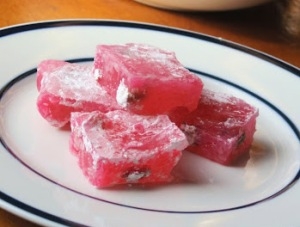
What are loukoumi? They are candies from Greece similar to Turkish Delight or Aplets & Cotlets which are somewhat popular in North America. Our theme of the week over at I Heart Cooking Clubs is In The Pink -- Pink Foods so I thought I would give Tessa's recipe for Loukoumi in her book Food From Many Greek Kitchens a try. There is a photo in the book of a beautiful plate of powdered sugar covered soft pink jelly looking candies studded with pistachios. That was what I was going for...
adapted from Tessa Kiros -- Food From Many Greek Kitchens
Ingredients
2 cups sugar
1 teaspoon lemon juice
1/2 cup corn starch
1/2 teaspoon cream of tartar
2 teaspoons rose water
3 tablespoons shelled pistachios, halved lengthwise (I tried halving one but it was tricky and I didn't want to cut my finger, so I just put them in a ziplock bag and hammered them gently and then sifted off the really small crumbs and kept the bigger chunks)
red food coloring (I had red, pink, and rose, wilton tub colors and decided to go with "rose" which I'm kind of sorry I did and wish I went with the pink, the rose turned into super bright in your face pink, although I did google some rose loukoumi and they were the same color mine turned out, I just liked the soft baby pink of the loukoumi in the book better personally)
1/4 cup confectioners sugar, for coating
2 tablespoons cornstarch extra, for coating
Directions
Put the sugar and lemon juice in a pan with 3/4 cup of water. Stir until the sugar dissolves. Bring to a boil. Simmer without stirring for 30 to 40 minutes, or until a small dab is soft and pliable between your fingers when it's dropped into cold water (soft ball stage or 240 on a candy thermometer).
Combine the cornstarch and cream of tartar in a large heavy-bottomed saucepan and whisk in
1 and 1/2 cups water until smooth. Cook on medium heat, stirring constantly until thick.
Slowly stir in the sugar syrup. This was really tricky, everything got all lumpy and I thought I messed it up, but I kept whisking until it came together. Simmer over very low heat until very thick and pale golden, 60 to 70 minutes. Mine did not take that long, I'd say it turned rather quickly...
Stir often to ensure that your mixture isn't sticking to the pan. Brush and 8 and 1/4 by 4 and 1/2 inch dish with straight sides with oil and line with plastic wrap. The closest thing to that size I had was a loaf pan and I couldn't visualize how that would work, so I used an 8 by 8 inch square silicone pan that I had lined with aluminum foil that I had sprayed with cooking spray. Seemed to work perfectly.
Stir in the rose water and pistachios into the mixture and add the coloring drop by drop until you have a soft rose petal pink.
Pour spread?!? into the dish and cool overnight, covered.
Combine the confectioners sugar and cornstarch on a plate. Cut the loukoumi into 1 and 1/4 inch squares and toss in the sugar mix.
It will keep for week in a covered tin or box, not an airtight container.
http://nummykitchen.blogspot.gr
How To Celebrate A Greek Christmas
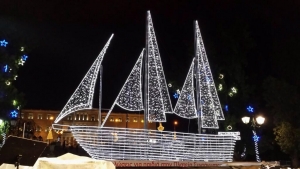
Greek Christmas celebrations last for 13 days, from Christmas Eve until Epiphany, January 6 - the day that the Magi arrived in Bethlehem - bringing gifts to the Christ child. Many Greek Orthodox residents fast during the four weeks of advent, so elaborate preparations are made for the Christmas feast. Greek culture has not traditionally inclulded elaborate decorations, although in recent years we see more and more lights and seasonal decorations. Athens now also boasts one of the largest Christmas trees in Europe and its lighting is an annual tradition. On the islands, traditional fisherman communities and their families still decorate a small ship instead of a tree, symbolizing their ties to the sea. Greeks have traditionally given simple gifts, and usually on Epiphany, instead of on Christmas, symbolizing the gifts of the magi.
Greek Holiday Baking
Baking is an important part of Greek cooking for Christmas. Bread is the most important of the Greek holiday foods. Historically, flour and yeast were scarce and expensive and thus saved for special meals. Traditional items, such as Christmas bread or stravropsomo, a fruit-filled loaf, decorated on top with the sign of the cross and Chistopsomto or “Christ’s Bread”, a leavened bread made of flour, sesame seeds, and spices, such as anise, orange, cloves, and cinnamon accompanied by dried figs, are eaten on Christmas Eve.
Other traditional Greek Christmas sweets include diples - fried dough strips dripped with honey, kourabiedes - holiday butter cookies, kataifi - phyllo-wrapped confections made from cinnamon and sugar and drizzled with honey, melomacrona - popular honey cakes, and the ever-popular sweet pastry, baklava.
Christ’s Bread
Greek Christmas celebrations begin on Christmas Eve with the breaking of Chistopsomto. The loaf is set on the table and surrounded with nuts, dried fruit, and other treats. The head of the household blesses the loaf and each person gets a slice, drizzled with honey. Before anyone eats the bread, the group lifts the table slightly three times, signifying the Christian trinity. In some regions of Greece, an olive branch is inserted into the bread on end, like a tree, symbolizing peace. Other regions leave the first slice of the loaf outside the front door for the poor.
The Christmas Feast
The traditional Christmas Day feast is centered about either a turkey or goose, stuffed with a mixture of rice, pine nuts, chestnuts, cinnamon, cloves, and allspice. Roast pork with cabbage or cauliflower is another popular holiday choice, one that dates back to the early Christian era. Family is important in Greek culture and the Christmas meal is usually a large one, often featuring two or more main dishes. Side dishes, such as roast potatoes and grilled vegetables often accompany the meal.
Greek Holiday Food Symbols
Pomegranates, the bright red fruits indigenous to the Mediterranean, have been a symbol of prosperity since the days of the ancient Greeks. It is commonly used during the Christmas season, both as decoration and as food. Basil is also a Greek Christmas symbol. A sprig is traditionally wrapped around a cross and sprinkled with holy water each day during the season.
Regional Customs
Different regions throughout Greece have their own variations on holiday traditions. One such charming custom comes from the Greek region of Epirus; there, the Christmas bread is decorated with dough shapes representative of the family’s occupation, a shoe for a cobbler or a plow for a farmer. Additional small loaves, called kouloures, are made in celebration for the animals – donkeys, sheep, and goats – in this traditional rural area, and are broken up and given to the beasts as a symbol of good health for the coming year. Other figure eight shaped loaves, koliantines, are baked for the children, also as a symbol of health.
All in all, celebrating a Greek Christmas is about sharing the joy of the season with family and friends! Here are a some ideas on how to give your Christmas a Greek touch.
- Take the children to see Santa Claus (more commonly referred to in Greece as Saint Nicholas), who can often be found outside shopping areas giving treats to children.
- Expect neighborhood children to sing "kalanda" (Christmas carols) on Christmas Eve and offer their good wishes to you. Have dried figs, walnuts, almonds and - most important - coins on hand to offer the youngsters who come to your house.
- Prepare a holiday feast for Christmas Eve. Serve traditional foods and wine with baklava for dessert.
- Bake loaves of "Christopsomo" (Christ bread), a sweet bread formed into shapes of your choice. You can also decorate the loaves with symbols that reflect your family's trade. Serve the bread with dried figs.
- Display a wooden bowl with a piece of dangling wire holding a sprig of fresh basil wrapped around a wooden cross; this is the Greek symbol for Christmas. Keep fresh water in the bowl to keep the basil alive.
- Immerse the basil and cross in holy water once a day and sprinkle drops in every room of your house to keep the 'bad spirits' or 'killantzarin' away. These spirits are known to slide down the chimney between Christmas and Epiphany (January 6) and play mischievous pranks on your family.
- Remind your children to hang their socks over the fireplace, where small gifts will appear.
- Serve vasilopita, or Christmas cake, on December 31. Bake a florin (gold coin) into the cake. Whoever finds the coin in his or her piece of cake will have good luck in the coming year.
- Exchange gifts on January 1, which is St. Basil's Day. Also perform a renewal ceremony on this day by replacing all the water in your jugs with St. Basil holy water.
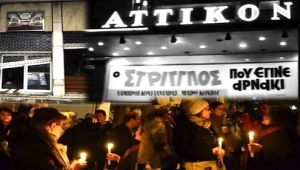
Burnt Down Emblematic Athens Movie Theaters To Reopen
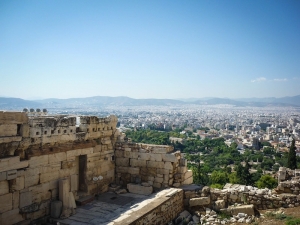
An Expat's Guide To The Best Spots In Athens
Thesmophoria - An Ancient Greek Thanksgiving Celebration
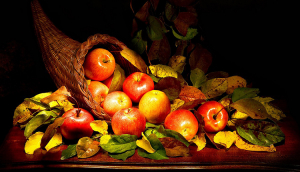
Thesmophoria, in Greek religion was an ancient festival held in honor of Demeter Thesmophoros which was celebrated by women in many parts of the Greek world. The meaning of the name Demeter Thesmophoros still remains unresolved, although it perhaps translates to “bringer of treasure or wealth,” an obsolete sense of thesmos.
Ever since ancient times, festivals for giving thanks have been celebrated in many regions around the world.
When Hades, the god of the underworld, abducted Persephone, her mother Demeter wouldn’t feed the world, and winter came upon the land. When Persephone was returned Demeter gave the gift of agriculture to humanity.
The Greeks believed that it was because of Demeter that the earth provided the harvest it did. Honoring her with offerings and ceremonies would guarantee a new and fresh harvest every year. The holiday dedicated to Demeter was called Thesmophoria.
October 9th - Exploring Greece In Autumn
January 23 - Proud Moments & Great Achievements
Two Greek Vineyards Among The Best In The World
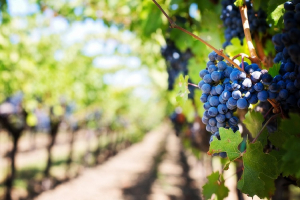
1,500 wineries around the world competed for a place among the world's 50 best wineries, with around 3,500 votes cast by an international academy of wine tourism experts.
South America dominated the top 10 and Chile was the biggest winner of the night, with 8 vineyards in the top 50.
These are the two Greek vineyards that gained a place among the top 50 in the world:
Ranking: No 48
Wine region: Naoussa
Standout points: Some of Greece’s best expressions of the noble Xinomavro grape.
Winemaker: Stellios Boutaris
Wine style: Modern style focusing on indigenous Greek varieties, especially Xinomavro
To read this article in full, please visit: cnn.com