

RELOCATION

XpatAthens
Friday, 10 July 2015 01:07
My Week Of Uncertainty
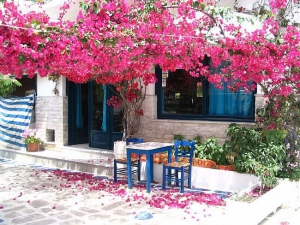
It has been a couple of weeks since I last wrote anything in this space - and what a couple of weeks it has been... Apart from the total confusion and uncertainty that I think all of us have experienced, I have personally experienced a range of emotions, unlike any I have felt before. What does the expat community make of everything that is happening in our adoptive home?
What stands out for me, beyond the material impact of profound crisis, is the intensity of what I have been feeling for the past 10 days. I was raised in Canada, a place where crisis seems impossible, where the system is never far from 'perfect', where 'intense emotionality' reads as cursing under your breath when someone breaks the speed limit.
So to live in Greece during the past weeks has been nothing short of jaw-dropping for me. There have been moments where I just sit motionless, unable to think clearly or act. Like, how is this all possibly happening? What's coming next...?
I learned early on that intensity of emotion was a basic part of life in Greece - from screaming matches with taxi drivers who cut you off to the daily screaming matches on television news to the life-ending reactions when January temperatures hit 0 degrees. Greece is not a land of subtle response. But until the events of the past week, I've experienced this mostly as an observer.
This week... I've felt sad, frustrated, shocked, angry, afraid, tired, confused, ashamed, panicked - intensely so, and often all at once. I am completely emotionally drained. Writing this, all I want to do is sleep. Reading the wide variety of (mis)information and opinions from various news sources and social media - including those of people who have never set foot in this country, and those of people who have never set foot outside this country - made all the above much (much) worse. And this from a guy who has the luxurious option of hopping on a plane and going back 'home' at any moment. I worry deeply about the societal costs of all this 'crisis', the impact on the nervous system of a nation and a culture...
I'm not sure where all this will lead - nor even where I think it should lead. Maybe everything gets somehow fixed next week; maybe we all wake up back in Kansas; maybe 'it gets better', as the saying goes... And maybe it doesn't.
There has been an eerie calm around town the last few days, like we are collectively holding our breath waiting for the next act to begin. If I am the example, then we are simply drained and have used up our reserves of 'intensity'... Who would have thought that possible in this country? Maybe we are just resigned to accept whatever happens next, too exhausted to do anything else...
While I waited in the ATM line to get my €50 early this morning, I recalled some of the reasons I moved here in the first place: to feel the sun on my skin, to dive into the sea as often as possible, to soak in the beauty of the land, to be part of a unique and ancient culture, to experience life more fully, to feel intensely. Κουράγιο...
Until next week,
Jack
Published in
My Week In Athens
Tagged under
Monday, 16 December 2024 07:00
From Saint Nicholas To Santa Claus & The Tradition Of Giving Gifts

The story says that Saint Nicholas was born on March 15, 270 AD and died on December 6, 343 AD. He lost both of his parents as a young man and reportedly used his inheritance to help the poor and sick. A devout Christian, he later became a famous 4th-century Greek Bishop of Myra, which was in Asia Minor (modern-day Demre, Turkey). Because of the many miracles attributed to him, he is also known as Nikolaos the Wonderworker. He had a reputation for secret gift-giving, such as putting coins in the shoes of those who left them out for him.
How Saint Nicholas Is celebrated In Greece
According to Christmas traditions in Greece, the patron saint of the holiday is Saint Nicholas, who is also the protector of sailors. For this reason, you will often see boats decorated with many sparkling lights, rather than the traditional Christmas trees. The Christmas season in Greece begins on December 6th, which is Saint Nicholas Day and ends on January 6th with the Feast of the Epiphany (Theophania). The Greek Navy pays tribute to the patron saint of sailors with a special ceremony at the Hellenic Naval Academy.
How Saint Nicholas Is celebrated In Greece
According to Christmas traditions in Greece, the patron saint of the holiday is Saint Nicholas, who is also the protector of sailors. For this reason, you will often see boats decorated with many sparkling lights, rather than the traditional Christmas trees. The Christmas season in Greece begins on December 6th, which is Saint Nicholas Day and ends on January 6th with the Feast of the Epiphany (Theophania). The Greek Navy pays tribute to the patron saint of sailors with a special ceremony at the Hellenic Naval Academy.
From Saint Nicholas to Santa Claus
Over the years, stories of Saint Nicholas' miracles and work for the poor spread to other parts of the world. He became known as the protector of children as well as sailors and was associated with gift-giving. He was a popular saint in Europe until the Reformation in the 1500s, a religious movement that led to the creation of Protestantism, which turned away from the practice of honoring saints. Saint Nicholas, however, remained an important figure in Holland.
Over the years, stories of Saint Nicholas' miracles and work for the poor spread to other parts of the world. He became known as the protector of children as well as sailors and was associated with gift-giving. He was a popular saint in Europe until the Reformation in the 1500s, a religious movement that led to the creation of Protestantism, which turned away from the practice of honoring saints. Saint Nicholas, however, remained an important figure in Holland.
The Dutch continued to celebrate the feast day of St. Nicholas on December 6 and it was a common practice for children to put out their shoes the night before. In the morning, they would discover the gifts that St. Nicholas had left there for them. It is said that Dutch immigrants brought St. Nicholas, known to them as Sint Nikolaas or by his nickname Sinter Klaas, and his gift-giving ways to America in the 1700s.
In America, St. Nicholas went through several transformations and eventually, Sinter Klaas became Santa Claus and instead of giving gifts on December 6, he became a part of the Christmas holiday. In the 1820 poem "An Account of a Visit from St. Nicholas" by Clement Clarke Moore, he is described as a jolly, heavy man who comes down the chimney to leave presents for deserving children and drives a sleigh pulled by flying reindeer. The cartoonist Thomas Nast added to the St. Nicholas legend with an 1881 drawing of Santa as wearing a red suit with white fur trim. Once a kind, charitable bishop, St. Nicholas had become the Santa Claus we know today.
Published in
Greek Traditions
Tagged under
Tuesday, 21 June 2016 07:00
Greece's Economy To Return To Growth This Year OECD Says
In recent news, the Organization for Economic Co-Operation Development has predicted that the economy in Greece will hit a 1.9% growth rate by the year 2017 and that we see already see improvement in the second half of 2016.
Specifically, a return to growth will come after a deep and prolonged recession in Greece, as recovering confidence boosts investment and consumption and improved competitiveness raises exports. However, the Organization points out that the huge public debt burden is undermining investment and confidence, making some form of additional debt relief crucial.
Unemployment in the country is still very high, which is causing serious social problems, but is now gradually receding. At the same time, OECD stressed the need for modernization of the Employment Organization and expanding active policies in the labor market. The report also mentions that weak productivity accounts for much of the decline in output since the onset of the crisis and suggests the full implementation of structural reforms, so as to boost productivity.
To read this article in full, please visit: Greek News Agenda
For the OECD Economic forecast summary, please click here.
To read this article in full, please visit: Greek News Agenda
For the OECD Economic forecast summary, please click here.
Published in
Greece In The News
Tagged under
Thursday, 22 September 2016 07:00
Major Luxury Tourism Projects Across Greece Help Boost Economy
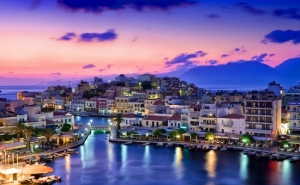
Foreign investors are placing their bets on Greek tourism with more than 3,200 new rooms in the works.
Experts say new accommodation units, most in the luxury category, as well as the accompanying services, will further boost the tourism sector and help the Greek economy.
Among the projects underway are Miriam Hellas in the Lassithi prefecture of Crete, which will be handled by a Russian-interests consortium. The project is budgeted at 408 million euros and involves the development of 850 acres of land near the popular Elounda area which will include 380 tourist homes, three five-star hotels as well as a marina, shops, wellness centers, restaurants and bars, athletic centers, and recreational parks.
Another is the Arabic-interests RSR Eagle Resort in Karystos, Evia, which will include some 400 tourism residences, hotels, a marina, and a conference center with a budget of 200 million euros.
To read this article in full, please visit: Greek Travel Pages
To read this article in full, please visit: Greek Travel Pages
Published in
Greece In The News
Tagged under
Tuesday, 06 June 2017 08:48
Extreme Aerial Dance Above Corinth Canal By Katerina Soldatou
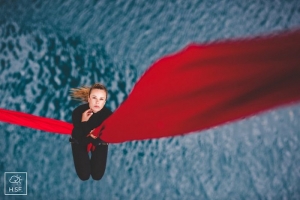
Dancer and yoga instructor Katerina Soldatou on Tuesday carried out a breathtaking performance of extreme aerial dance suspended above the Corinth Canal, as part of the “Greece Has Soul” programme. The event was held in order to raise awareness of the environment and the need to respect the history of each place.
Article Source: Greek Reporter
Published in
Videos
Tagged under
Wednesday, 23 May 2018 17:06
How The Lost Art Of Traditional Cretan Weaving Is Making A Comeback

Alexandra Theohari, owner of KLOTHO, is reviving a traditional art of weaving in Crete by creating clothes, bags, and other objects using these techniques. Theohari and her team's designs are all handmade, with displays of motifs and patterns that symbolize classical Greece. Why Athens delves further into this lost art form and how Theohari is bringing it back.
"The entire production process occurs in Klotho’s studio which was set up in Rethymno to support the local economy. To be true to this ancient practice, products are handmade, producing short run collections or on demand."
Alexandra says, “The process is done in the traditional weaving method. It’s not a motorised process at all. The pattern is chosen and woven on the traditional wooden looms as we remembered them from our grandmothers.”
To read this article in full, please visit: Why Athens
Published in
People
Tagged under
Tuesday, 23 October 2018 13:22
October 23 - A Time To Celebrate
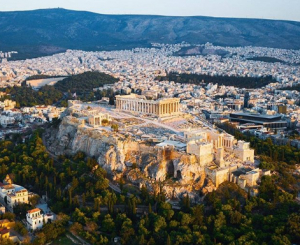
October 28th is a day of great importance to Greeks, as it marks the National Holiday or Oxi Day. Learn everything about this historic day and see how you can admire Athens from above, following the best hikes we can recommend!
Please click HERE to view this issue of our newsletter!
Published in
Newsletters
Tagged under
Monday, 28 January 2019 07:00
Has The Phaistos Disk Finally Been Deciphered?
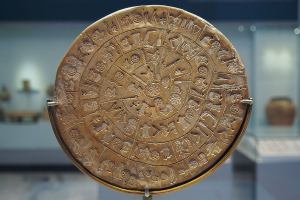
It’s been 10 years since British linguist Gareth Owens and Oxford University phonetics professor John Coleman have been working towards deciphering the enigmatic Phaistos Disk. The Phaistos Disk is a Minoan Bronze Age clay disk that was discovered in Crete in 1908 by Italian archaeologist Luigi Pernier.
Following ther extensive study of the disc, the two professors will present the results of their research at Cambridge University on February 3 in a lecture titled ‘From Linear B to the Phaistos Disk.’
Even though experts have been trying to decipher the script for decades, according to Owens and Coleman they can now read 99 % of the text, which is a Minoan lyrical hymn to a goddess. In fact, Gareth Owens has described the hymn as ‘The Bible of Crete.’
Listen to the voice of the disc, here.
Published in
Greece In The News
Tagged under
Thursday, 04 June 2020 21:10
Athens Playgrounds To Reopen On June 5
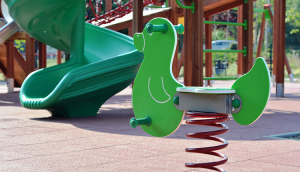
One by one, municipalities in Greece are announcing the reopening of playgrounds, as the Hellenic Interior Ministry has granted them to reopen.
Playgrounds were closed for the public at the beginning of lockdown restriction measures. The circular issued by the Interior Ministry states that for the reopening of playgrounds, all playgrounds should "meet all safety requirements," "in full accordance with the existing health conditions per region and the observance of the outlined and enforced protection measures."
According to a statement, the Culture, Sports & Youth Organization of the City of Athens (OPANDA) will proceed with the reopening of all playgrounds in Athens. "OPANDA has taken all necessary measures to meet hygiene requirements and follow the operating rules of the premises, following the Joint Ministerial Decision and the instructions of the Health Scientific Committee," it is emphasized in the announcement. Playgrounds will be open from Monday to Sunday from 08:00 to 22:00.
Meanwhile, the Municipality of Athens continues to plan the reconstruction of 19 playgrounds, which will be delivered by the end of July–remodeled according to the latest safety standards, suitable and accessible to children with mobility difficulties.
Originally posted in Greek on ethnos.gr
Originally posted in Greek on ethnos.gr
Translated by Codico Lab
Published in
Local News
Tagged under
Thursday, 21 January 2021 09:30
A Greek Scientist Among National Geographic Explorers
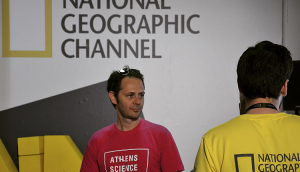
Thodoris Anagnostopoulos has become a member of the large family of National Geographic explorers. He is a geneticist, science engager, social entrepreneur, and the co-founder of SciCo (Science Communication), which aims to promote science through innovative ways to the general public.
In his new venture, Thodoris, together with the SciCo team, British Council Greece, and STEM teachers from Xanthi, is initiating an environmental education program for students in Pomakochoria, Thrace. The National Geographic Society will support the project, which is expected to begin in the fall of 2021. The aim of the project is to alleviate the social isolation of young Pomaks, as well as to raise awareness about climate change, the exploitation of renewable energy sources, and the preservation of the natural wealth of the area.
A Few Words About The National Geographic Society
Since 1888, the National Geographic Society - one of the largest educational and scientific non-profit organizations in the world, known to the general public by National Geographic magazine, as well as the synonymous television channel - has brought together the most charismatic people from around the world; its famous "explorers".
Biologists and environmentalists, geologists, archaeologists, photojournalists, and directors… Their backgrounds and work are different, but their profiles and goals are the same: They are top professionals in their field, with a strong sense of responsibility and respect for others, the environment, and culture committed to working to create a sustainable future while supporting diversity and equality.
The Idea Behind The Project
The Pomaks, an officially recognized national minority of Greece by the Treaty of Lausanne, have been experiencing geographical and cultural isolation in recent decades. Thirty-five thousand Pomaks live in the mountains of Rhodope, in a unique natural environment. In addition, their villages, as well as the wider region of Thrace, are a valuable source of "clean" energy: a high dynamic of wind energy due to the mountain morphology and access to direct sunlight most days of the year.
The development of Renewable Energy Sources is particularly important for Greece, as they reduce the effects of climate change, create energy sustainability, and create new employment opportunities. However, the selection and design of all of the above should be based on scientific data, in order to avoid negative consequences for nature and wildlife (especially for birds).
With these goals in mind, Explorer Thodoris Anagnostopoulos designed this innovative program. He, in collaboration with members of SciCo, the many years of experience of British Council Greece in matters of intercultural and participatory education, as well as teachers from Xanthi, will organize extracurricular workshops STEM (Science, Technology, Engineering, Mathematics) of environmental education, aimed for students 10 to 16 years old.
Thodoris Anagnostopoulos notes: "Using science as a neutral "language" that bridges cultural differences, the project proposes STEM environmental education outside school, as a tool for creative collaboration between Pomak and non-Pomak students and alleviating the social isolation of the former. The laboratories are adapted to the needs and special characteristics of the area and will focus on Renewable Energy Sources. Children will initially have the opportunity to study projects on a small scale and will gradually implement them in their schools and the local community to address real problems. This approach will create a safe and unrestricted space for education, enhancing the collaborative climate and students' skills.
In fact, in 2017 SciCo designed a similar program called STEMpowering Youth program, which enabled more than 12,400 educators and teenagers in remote areas to solve real local problems, through science and technology.
About Thodoris Anagnostopoulos
Science engager, social entrepreneur, and public speaker. He studied Biology and holds a Ph.D. in Genetics from Kings College London. He is the President and Co-Founder of the Social Enterprise SciCo, which aims to promote science through innovative ways to the general public while having an international presence. He is also the founder of Theta Communications, a company that specializes in experiential human resources training. Co-founder of the Athens, Thessaloniki, Patras, Thessaly and Mediterranean Science Festivals, the Mind the Lab, the School Lab online training program, the STEMpowering Youth training program, and the NGO Green Project.
In 2012, he was trained by former US Vice President Al Gore on climate change and is his ambassador for the Climate Reality Project. From 2013 to 2017 he was the President of the Onassis Scholars Association. He is the first Greek Fellow of Ashoka and in 2017 he was awarded the British Council UK Alumni Social Impact Award. Theodoris is a member of the Explorers Club of New York and has traveled to 92 countries on six continents.
Originally published in Greek on vassosotiriou.gr
Translated by Codico Lab
In his new venture, Thodoris, together with the SciCo team, British Council Greece, and STEM teachers from Xanthi, is initiating an environmental education program for students in Pomakochoria, Thrace. The National Geographic Society will support the project, which is expected to begin in the fall of 2021. The aim of the project is to alleviate the social isolation of young Pomaks, as well as to raise awareness about climate change, the exploitation of renewable energy sources, and the preservation of the natural wealth of the area.
A Few Words About The National Geographic Society
Since 1888, the National Geographic Society - one of the largest educational and scientific non-profit organizations in the world, known to the general public by National Geographic magazine, as well as the synonymous television channel - has brought together the most charismatic people from around the world; its famous "explorers".
Biologists and environmentalists, geologists, archaeologists, photojournalists, and directors… Their backgrounds and work are different, but their profiles and goals are the same: They are top professionals in their field, with a strong sense of responsibility and respect for others, the environment, and culture committed to working to create a sustainable future while supporting diversity and equality.
The Idea Behind The Project
The Pomaks, an officially recognized national minority of Greece by the Treaty of Lausanne, have been experiencing geographical and cultural isolation in recent decades. Thirty-five thousand Pomaks live in the mountains of Rhodope, in a unique natural environment. In addition, their villages, as well as the wider region of Thrace, are a valuable source of "clean" energy: a high dynamic of wind energy due to the mountain morphology and access to direct sunlight most days of the year.
The development of Renewable Energy Sources is particularly important for Greece, as they reduce the effects of climate change, create energy sustainability, and create new employment opportunities. However, the selection and design of all of the above should be based on scientific data, in order to avoid negative consequences for nature and wildlife (especially for birds).
With these goals in mind, Explorer Thodoris Anagnostopoulos designed this innovative program. He, in collaboration with members of SciCo, the many years of experience of British Council Greece in matters of intercultural and participatory education, as well as teachers from Xanthi, will organize extracurricular workshops STEM (Science, Technology, Engineering, Mathematics) of environmental education, aimed for students 10 to 16 years old.
Thodoris Anagnostopoulos notes: "Using science as a neutral "language" that bridges cultural differences, the project proposes STEM environmental education outside school, as a tool for creative collaboration between Pomak and non-Pomak students and alleviating the social isolation of the former. The laboratories are adapted to the needs and special characteristics of the area and will focus on Renewable Energy Sources. Children will initially have the opportunity to study projects on a small scale and will gradually implement them in their schools and the local community to address real problems. This approach will create a safe and unrestricted space for education, enhancing the collaborative climate and students' skills.
In fact, in 2017 SciCo designed a similar program called STEMpowering Youth program, which enabled more than 12,400 educators and teenagers in remote areas to solve real local problems, through science and technology.
About Thodoris Anagnostopoulos
Science engager, social entrepreneur, and public speaker. He studied Biology and holds a Ph.D. in Genetics from Kings College London. He is the President and Co-Founder of the Social Enterprise SciCo, which aims to promote science through innovative ways to the general public while having an international presence. He is also the founder of Theta Communications, a company that specializes in experiential human resources training. Co-founder of the Athens, Thessaloniki, Patras, Thessaly and Mediterranean Science Festivals, the Mind the Lab, the School Lab online training program, the STEMpowering Youth training program, and the NGO Green Project.
In 2012, he was trained by former US Vice President Al Gore on climate change and is his ambassador for the Climate Reality Project. From 2013 to 2017 he was the President of the Onassis Scholars Association. He is the first Greek Fellow of Ashoka and in 2017 he was awarded the British Council UK Alumni Social Impact Award. Theodoris is a member of the Explorers Club of New York and has traveled to 92 countries on six continents.
Originally published in Greek on vassosotiriou.gr
Translated by Codico Lab
Published in
Local News
Tagged under