
SERVICES

XpatAthens
Thursday, 22 October 2026 12:51
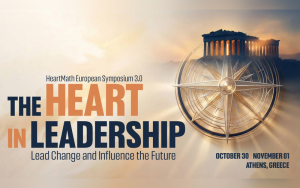
HeartMath European Symposium 3.0: The Heart In Leadership
Rethinking Leadership Through Science, Resilience & Human Connection
Leadership is changing, and The Heart in Leadership symposium invites leaders, professionals and change-makers to explore what comes next. Bringing together international thought leaders, researchers and experienced practitioners, this live event examines how self-regulation, emotional resilience and heart coherence can shape decision-making, strengthen teams and support more effective leadership.
Grounded in more than 400 published research studies, the symposium combines scientific insights with real-world case studies, practical frameworks and evidence-based techniques that participants can apply in their professional and personal lives.
The programme features contributions from leaders across healthcare, business, public service and human performance, exploring how a leader’s internal state can influence communication, organisational culture and performance under pressure.
What to Expect
The programme explores seven key pillars of heart-based leadership, including evidence-based techniques for coherence and self-regulation, employee wellbeing and performance in healthcare, and the role of trust, communication and organisational culture in creating long-term value. Participants will also discover how heart coherence is being applied in large organisations, including healthcare environments and public service, with insights from a programme implemented across 65,000 police officers in the Netherlands.
Additional sessions will examine authentic communication and brand growth, sustainable performance, and healthier ways of working that support clarity, resilience and effective decision-making under pressure.
Who Should Attend?
Designed for professionals whose decisions and actions influence people and organisations, the symposium welcomes CEOs, founders, senior executives, healthcare and wellbeing professionals, public safety leaders, HR and organisational development specialists, coaches, trainers, researchers, entrepreneurs, and communication, brand and marketing leaders.
Confirmed Speakers Include: Deborah Rozman, Gregg Braden, Arianna Huffington, Howard Martin, Dr Rich Safeer, Maria Koutsaviti, Nipun Mehta, Lucas Donat, Roel Leduc, Muriël Thijssen, Nina Kaloutsa, Dimitris Dimitriadis and Sai Balaji.
Whether you lead a team, manage an organisation or work in a high-pressure professional environment, The Heart in Leadership offers an opportunity to discover new perspectives and practical approaches to leadership in a changing world.
Event Details
Dates: 30 October – 1 November 2026
Opening Hours:
-
Friday, 30 October: 14:00–20:00
-
Saturday, 31 October: 10:00–20:15
-
Sunday, 1 November: 10:00–19:00
Venue: DAIS Conference Center, 151 Mesogeion Avenue, Marousi
Get Directions on Google Maps
Click here to reserve your seat!
Published in
Events In Athens
Tagged under
Thursday, 22 October 2026 10:59
Athens At Night: From Rooftop Bars To Hidden Hangouts

With so much to see and do in Athens, there simply aren’t enough hours in the day to fit everything in. Luckily for you, the city barely sleeps – and how could it, when dinner often starts at 10 pm and stretches well into the night, leaving just enough time to hop from bar to bar? Inevitably, you’ll find yourself wandering the streets after dark, ready to dive headfirst into the city’s flamboyant nightlife.
Clubs? Of course! There’s something for every taste. But Athens after dark has so much more to offer than just the dance floor…
For starters? Rooftops, of course! Because we simply can’t get enough of Athens from above. Whether you’re after a sunset drink or a full-on dinner with a view, the Greek capital has rooftops galore to choose from. Around Voutadon and Monastiraki, panoramic terraces such as Attic Urban Rooftop, Thea Terrace and A for Athens offer front-row seats to the city’s iconic skyline. The choice is yours: go for a lively, buzzing atmosphere or opt for something a little more elegant and intimate.
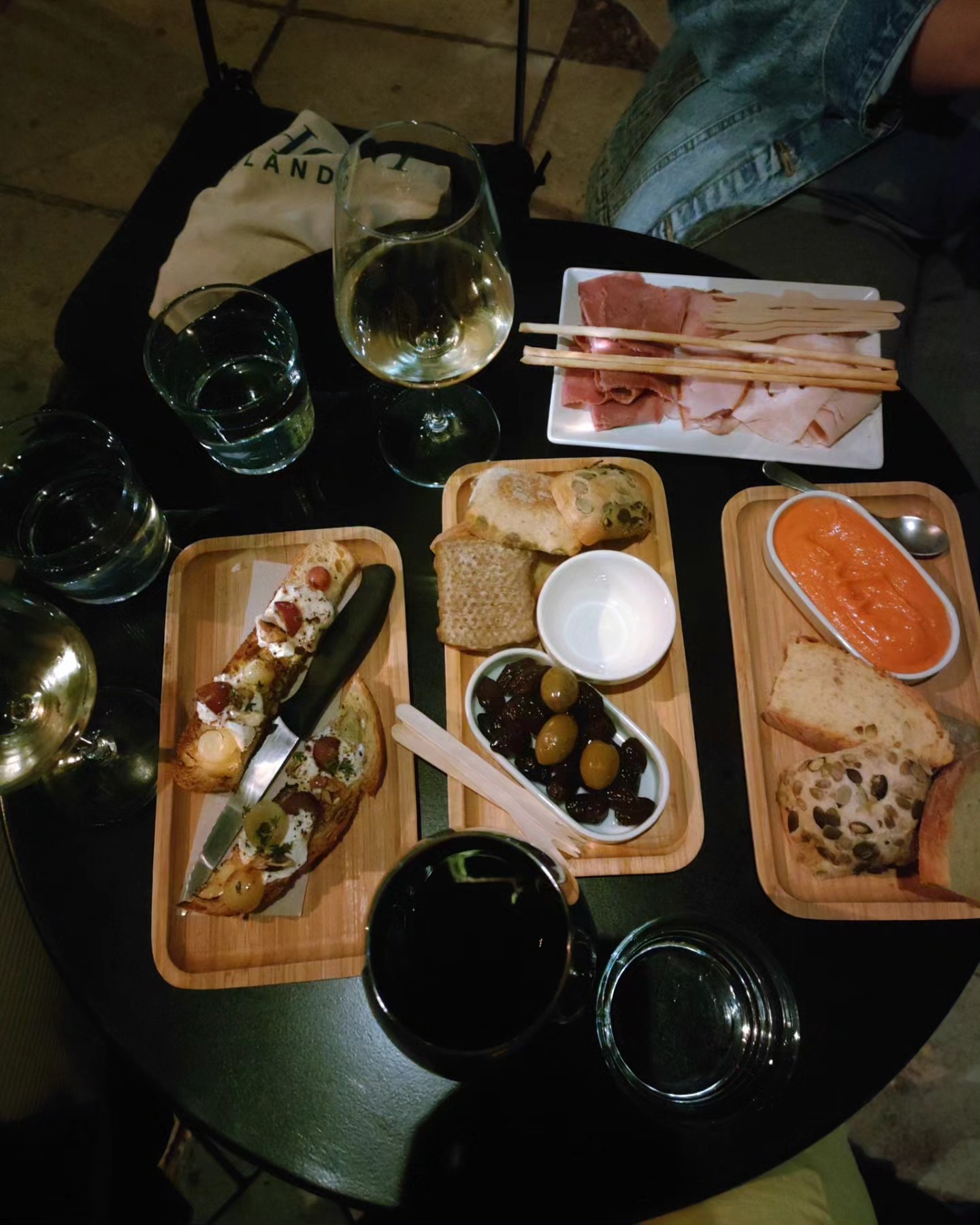
Speaking of the latter, Athens has an impressive repertoire of wine and cocktail bars to explore. Wine lovers, in particular, will find their happy place around Pangrati and Romvis, where independent spots champion Greek grape varieties, natural wines and carefully crafted drinks, often away from the crowds and the city’s more overrun hotspots.
@makrina_petropoulou
@makrina_petropoulou
For a little oenological adventure, start with Heteroclito, where you might just stumble upon your holy grail if you’re after a natural wine or a limited-production bottle. Then there’s Junior Does Wine, showcasing more than 60 independent wineries from Greece and beyond, alongside seasonal bites to nibble on. And for those who like their wine with a side of expertise, Oinoscent was founded by sommelier Aris Sklavenitis, who was named Greece’s Best Sommelier. Now, that’s a recommendation worth raising a glass to!
More of a cocktail person? No worries, Athens has you covered, too. There’s 7 Jokers, the go-to spot for your favourite bartender’s favourite bartender; The Bar in Front of the Bar, with its wonderfully unconventional concept and ever-changing menu. Here, six original cocktails are created daily, all following a zero-waste philosophy, so you never quite know what delicious surprise awaits. And then there’s Baba au Rum, which ranked 20th in the world’s 50 Best Bars list. Nothing less!
Ultimately, whether you’re sipping cocktails on a rooftop high above the city or exploring a tucked-away wine bar in a basement, why stop at a good drink? Why not pair it with a little music, too?
Eclecticism is the name of the game when it comes to Athens’ smaller music venues. One minute, you might stumble across Balkan beats or traditional Greek melodies on a street corner; the next, you could find yourself immersed in Berlin-style minimal techno. The city’s music scene is wonderfully unpredictable, and that’s precisely what makes exploring it so much fun.
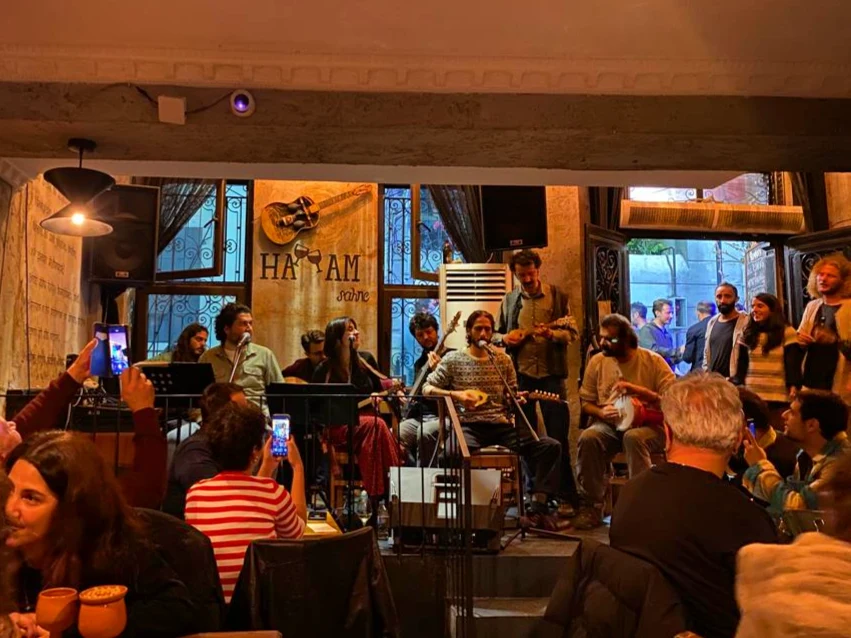
If there’s one genre worth discovering while you’re here, it’s rebetiko, often described as the Greek equivalent of the blues. Born out of working-class culture, it carries a whole world of longing, heartbreak and rebellion in its melodies. In Psiri, Enastron or Το Ρεμπετάδικο του Ψυρρή are some favourite among those looking to dive into Greece’s musical soul alongside some yummy mezze. Exarchia, a neighbourhood with a character all of its own, is also home to some excellent rebetiko haunts. Head to Kavouras, strategically located on the first floor of a souvlaki joint that never closes, or to Aggelos, and if you're lucky enough, you might catch Lena Kitsopoulou, a celebrated Greek actress, performing rebetiko songs on a Saturday.
@agoraminor
@agoraminor
Looking for something completely different? Then it’s time to discover the bouzoukia. This quintessentially Greek nightlife experience is not to be missed: picture the biggest Greek hits performed live by a singer whose fame may vary, the crowd singing along at full volume, and bouquets of flowers flying towards the stage throughout the night. Subtle? Absolutely not. Unforgettable? You bet!
And if you’re after something a little more unusual than a straightforward live music gig, Athens has plenty of surprises up its sleeve. Take The Speakeasy, a bar inspired by the illicit drinking dens of the 1920s, hidden inside an otherwise unremarkable apartment building near Syntagma Square. Finding the right doorbell is half the adventure: you’ll need word of mouth (or a peek at their Facebook page) to get through the door. Then there’s Crust, a little New York-style pizza joint with a rather unexpected secret. Head downstairs and you’ll find yourself in a basement venue hosting everything from jazz concerts and open-mic nights to techno, house and disco sets. For a more arty evening, The Art Foundation, tucked away in Monastiraki, combines a gallery space with an arthouse cinema, offering a cultural detour from the usual bar-hopping routine.
Eventually, even the most dedicated night owls might fancy a little peace and quiet. Luckily, Athens is just as enchanting when you step away from the crowds. Wander up Filopappou Hill to admire the city lights and take in the views, let your imagination run wild among the ancient ruins and winding streets of Plaka, or stroll along the peaceful paths of the National Garden for a more romantic end to the evening.

@urbanlife_gr
@urbanlife_gr
And if all that wandering has worked up an appetite, don’t worry: in Athens, the night doesn’t have to end just yet. The city’s 24-hour restaurants, known as afteradika, a term derived from the Greek nightlife expression for after-hours, are there to save the day (or, rather, the night). Pull up a chair, order one last meal and watch the hours slip away.
After all, if you’re lucky – and bold – enough to explore Athens’ nightlife to the fullest, you might just find yourself watching the sun rise over the city, with the Acropolis standing proudly in the background. Now, that’s what we call making a night of it!
Published in
City Discovery
Tagged under
Thursday, 22 October 2026 10:40
Halloween In Greece: How A Global Tradition Has Found Its Place In Athens

Coming to Greece for Halloween? Brought your witch’s hat, or fancy carving your very own pumpkin? While Halloween may not be a traditional Greek holiday, the country has gradually embraced this imported celebration, giving it a flavour of its own.
@maranastas
@maranastas
Fuelled by globalisation, films, social media and growing expat communities, Halloween has become increasingly visible in Athens these past few years. But there are limits to how far the tradition has travelled. You probably won’t find little ones knocking on your door in search of sweets, unless maybe you happen to be part of an international community organising Halloween activities. Instead, the festivities tend to revolve around costume parties, themed nights out and a good excuse to get a little spooky.
In modern Athens, bars and clubs seize the occasion to throw lively Halloween parties, complete with ghoulish decorations, elaborate costumes and themed drinks. Younger generations have also taken to the tradition, often embracing it for the fun, fashion and party atmosphere rather than any particular spiritual significance. Many of the city's Halloween events cater primarily to expats and visitors, but that doesn't mean locals can't join in the fun!
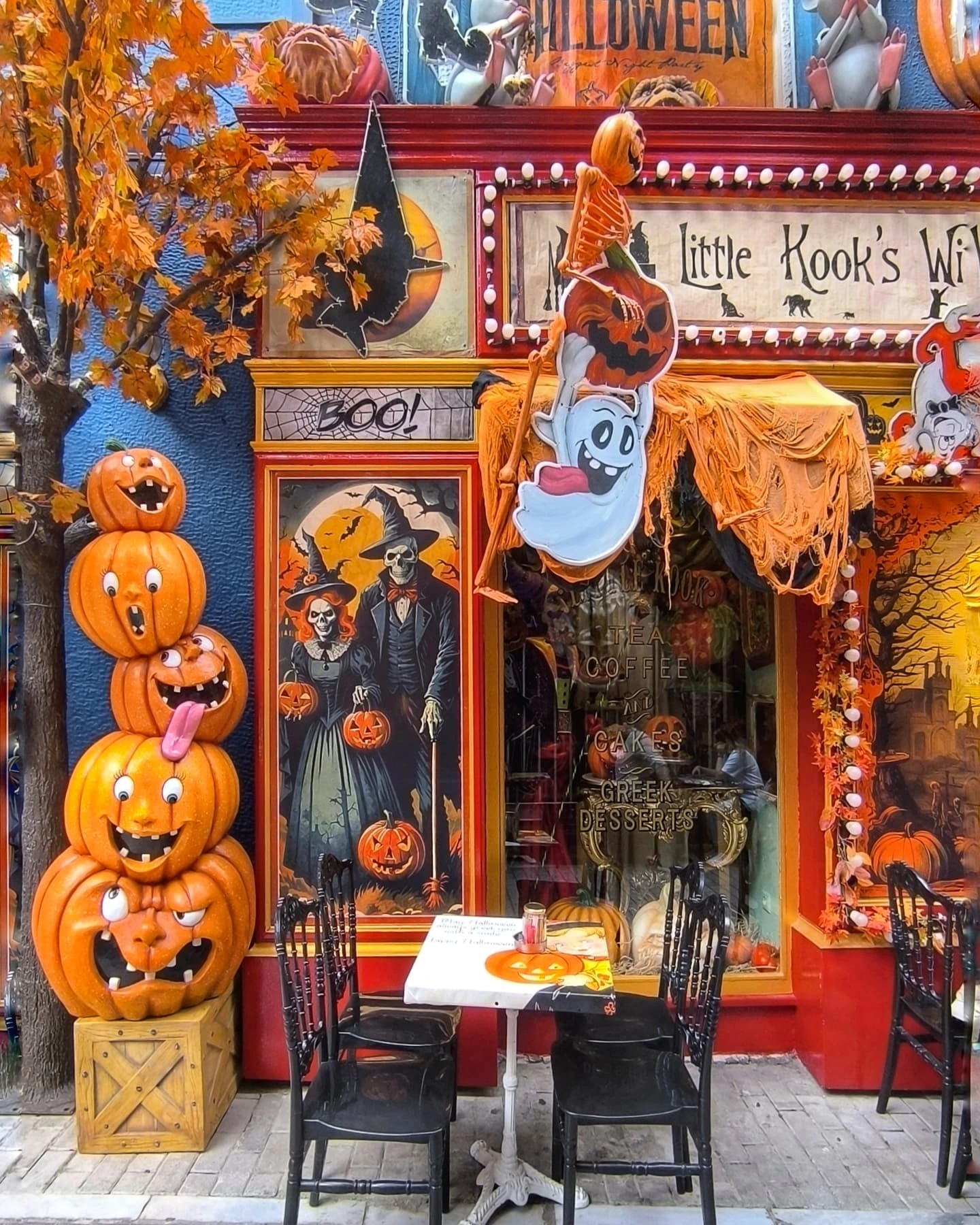
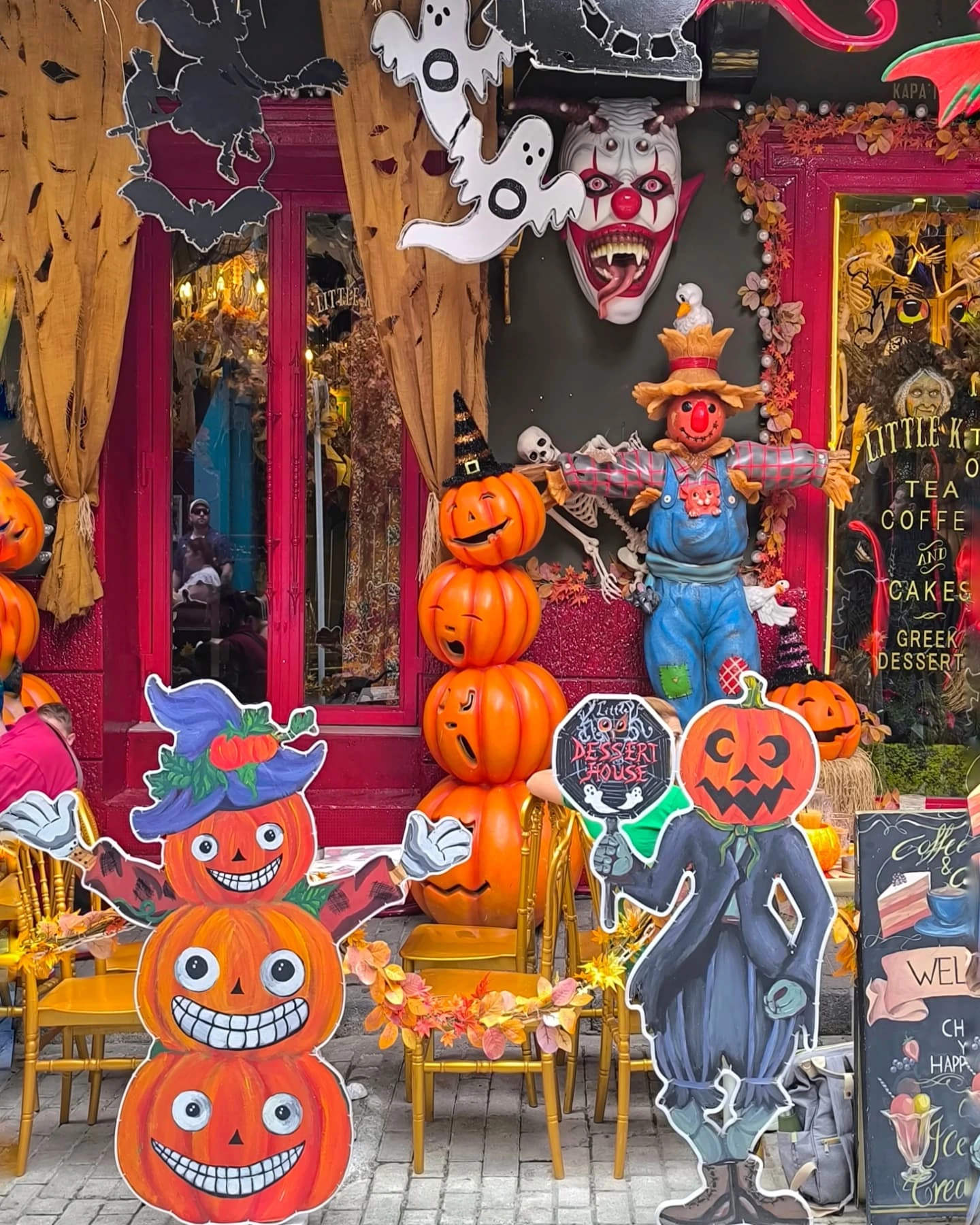
Themed cafés and shops give the city a seasonal makeover, with pumpkins, spooky decorations and suitably indulgent treats. Little Kook and Cap Cap, both known for their immersive, fantastical settings, are particularly worth checking out if you're after a picture-perfect Halloween outing. Even without a costume, you can still get your fix of eerie enchantment - and perhaps a sweet treat or two along the way.
@donzy
@donzy
For those who prefer their Halloween with a little more adrenaline, Athens' escape rooms offer the perfect opportunity to put your nerves to the test. At Hide N Seek, by Brainiac Escape Rooms, you'll investigate a terrifying crime scene alongside your police partner. At Arxitektoniki, in Kerameikos, The Purge: Anarchy challenges you to survive until morning.
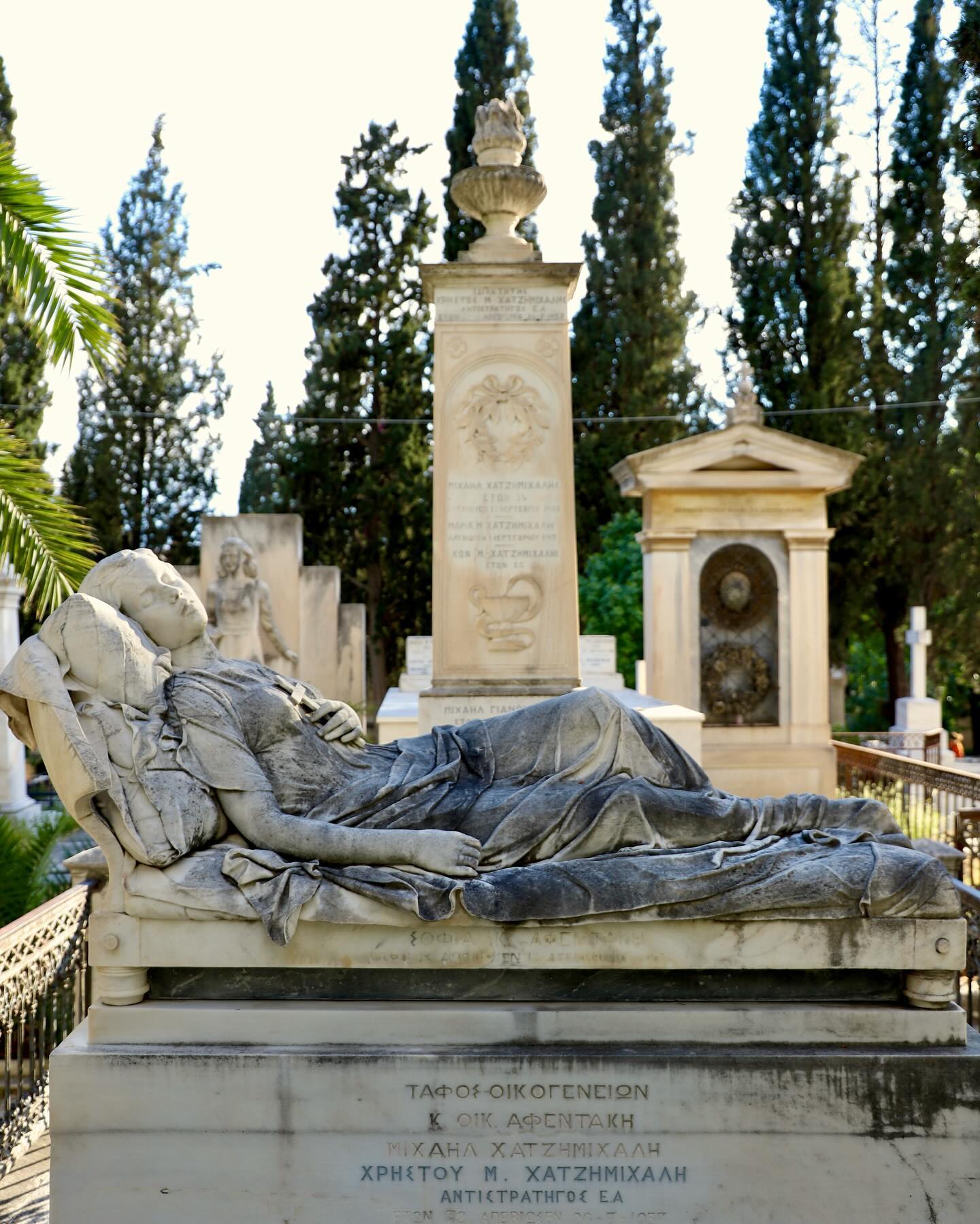
And if you'd rather trade jump scares for something with a little more history, why not explore Athens' spookier side at the First Cemetery of Athens? More than just a burial ground, this historic site feels almost like an open-air museum, filled with elaborate mausoleums, remarkable sculptures and the graves of some of Greece's most prominent historical figures, such as Theodoros Kolokotronis, one of the leading figures of the Greek War of Independence. One of its most famous works is I Koimomeni (The Sleeping Girl), a striking sculpture by Yannoulis Chalepas depicting a young woman lying peacefully in death. With its impressive monuments, three churches and quiet, atmospheric paths, the cemetery makes for a fascinating outing for anyone who enjoys a touch of the macabre.
@soundaffects
@soundaffects
Still, while Halloween is finding its place in contemporary Greek life, it hasn't replaced the country's own long-standing traditions surrounding death, remembrance and the spiritual world. For all the costumes and spooky decorations, Greece already has its own rich calendar of customs connecting the living with those who have passed away.
For starters, the Greek equivalent of a day dedicated to the dead doesn't fall on 1 November. In the Greek Orthodox tradition, Psychosavvato (Ψυχοσάββατο), or Saturday of Souls, is observed several times throughout the year, particularly before Lent and Pentecost. Rather than a celebration of all things spooky, it is a solemn occasion devoted to remembering and praying for the departed. Families may visit cemeteries, light candles and prepare koliva, a traditional mixture of boiled wheat, pomegranate, raisins and nuts symbolising resurrection and eternal life. Prayers and blessings are offered for the souls of loved ones, making Psychosavvato a moment of reflection and remembrance rather than fear, costumes or trick-or-treating.
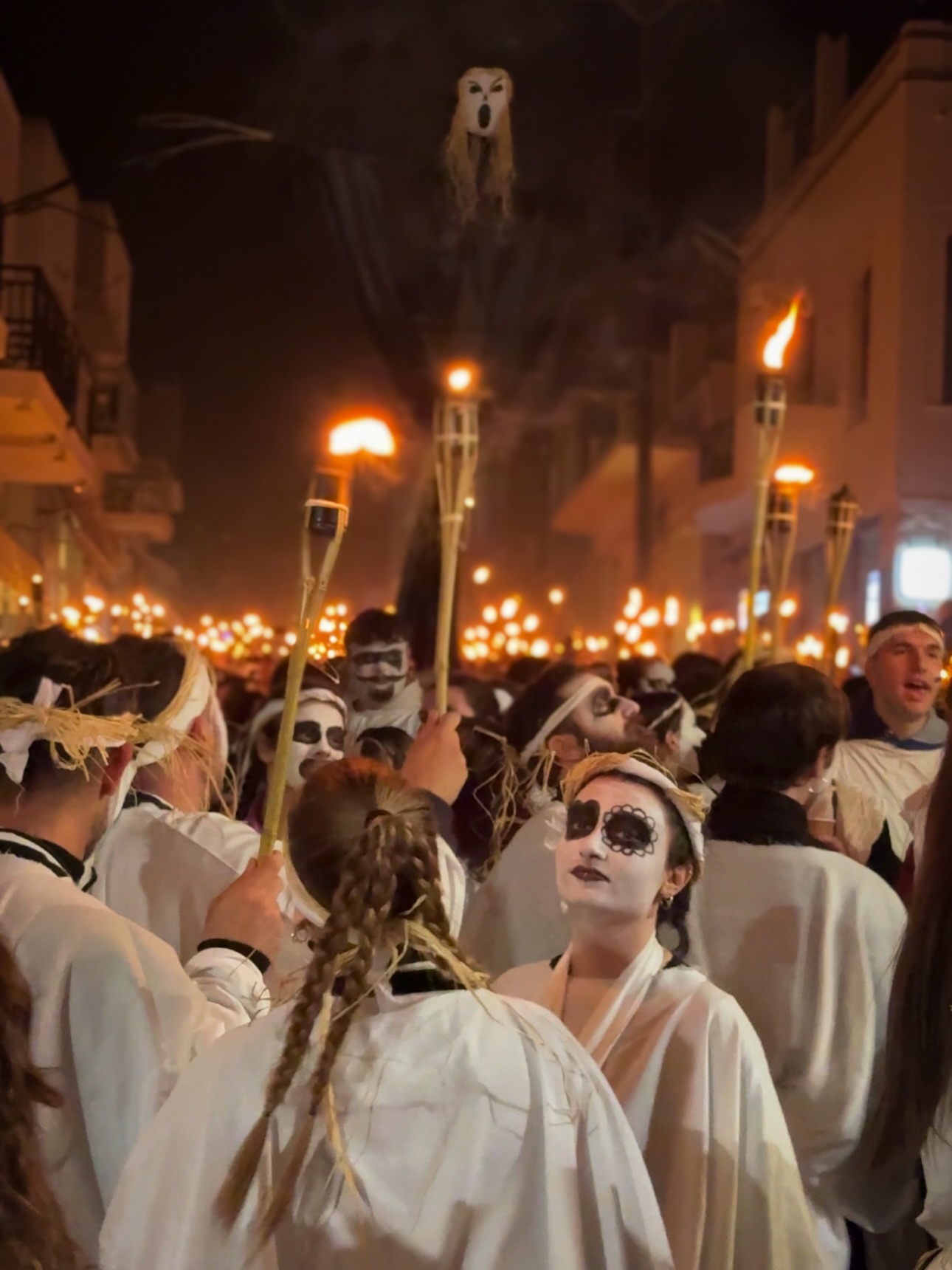
But if it's rather disguises, parades and seasonal festivities you're after, there's another date to put in your diary: Apokries, Greece's carnival season, which takes place in the weeks leading up to Lent, usually in February or early March. Expect elaborate costumes, street celebrations, parties and plenty of opportunities to let your alter ego out for the day. It's a much more deeply rooted Greek tradition and a wonderful way to experience the country's playful side!
@tzeni_doro
@tzeni_doro
In conclusion, Halloween may not have centuries of history behind it in Greece, but it is carving out its own little corner of Athenian life. Whether you fancy a themed cocktail, a terrifying escape room or a stroll among historic tombs, there's plenty to explore. Besides, Greece has never been a stranger to adopting foreign customs and making them its own. Valentine's Day, once a relatively unfamiliar celebration, now brings its fair share of pink hearts and chocolates, while the Christmas tree, introduced to Greece under King Otto in the nineteenth century, has become an unquestioned festive staple.
Published in
City Discovery
Tagged under
Wednesday, 21 October 2026 15:09
Exploring The Lit Side of Athens: Independent Bookstores & Literary Evenings

Athens may be famous for its ancient philosophers, but the city’s love affair with books is very much alive and kicking. Beyond the big-name bookshops, a wonderfully eclectic world of independent stores, second-hand treasures, book cafés and literary hangouts is waiting to be discovered. Whether you are hunting for a forgotten Greek classic, browsing comics, or simply looking for somewhere cosy to spend an afternoon with a book and a coffee, Athens has plenty of places to get lost between the pages.
Bookinist
Start with this second-hand bookshop founded 13 years ago by Nasos Koulis. Here, finding your next read is less of a shopping trip and more of a treasure hunt. As Koulis puts it, “These are places where a constant treasure hunt takes place, both for us and for the buyers. It starts from the same point: the desire to acquire something we consider unique.” And that is rather the magic of second-hand bookshops: you never quite know what you are going to stumble upon.
Location: Mavrokordatou 9, Athens
Location: Mavrokordatou 9, Athens
Pataki Bookstore
For something more polished, head to Pataki Bookstore on Akadimias Street. Elegantly arranged and beautifully designed, it is the kind of place where you can easily lose an hour without noticing. The English-language selection is relatively small and does not follow a particular genre or theme, but there is a raised reading area that is perfect for hiding away with a book and recharging your batteries. Despite being a very large shop, it manages to retain a surprisingly cosy atmosphere, thanks in part to freestanding wall panels that create little pockets of privacy. Introverts, this one has your name written all over it!
Location: Akadimias 65, Athens
Location: Akadimias 65, Athens
Parimin
Then there is a bookshop that takes the idea of a homely atmosphere to another level. Rather than simply creating the feeling of a home, this shop is actually housed inside an old period residence. Wander through its overgrown courtyard, complete with a little table and chairs, before climbing the stairs framed by stained-glass windows and wonderfully haphazard stacks of books. Spread across three storeys, it is full of charm and grace. There may be little in the way of English-language books, but the atmosphere alone makes it worth a visit. The second floor is particularly enchanting, with an old fireplace, a typewriter and a gorgeous ceiling covered in plaster grape vines.
Location: Charilaou Trikoupi 11, Athens
Location: Charilaou Trikoupi 11, Athens
Alfeios Bookstore
This minuscule second-hand shop is squeezed into two shop fronts facing each other inside a slightly ramshackle downtown arcade. But what it lacks in space, it more than makes up for in character. Old volumes are stacked practically all the way to the ceiling, surrounding you with stories from every direction and that irresistible old-book smell. Better still, Alfios has a surprisingly good selection of English-language books, with around 80–100 titles of varying ages and genres, including a small selection of those iconic Penguin paperbacks.
Location: Charilaou Trikoupi 22, Athens
Location: Charilaou Trikoupi 22, Athens
Comicon
@save_the_bookstores
@save_the_bookstores
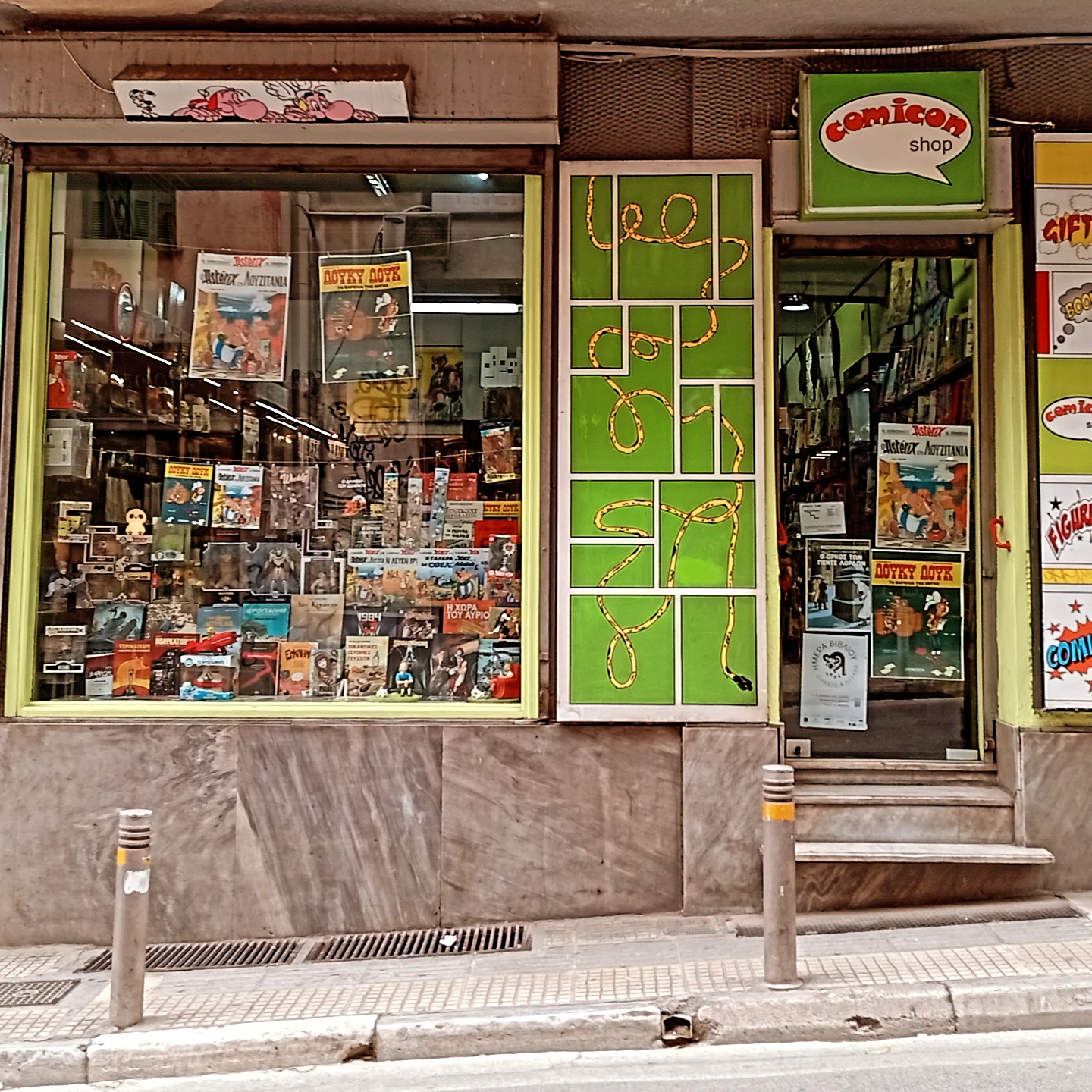
If your literary tastes lean more towards comic books and graphic novels, make your way to Comicon on Solonos Street. According to its owner, it boasts the largest collection of Tintin comics in Greece — quite the claim! The shop is packed with popular and obscure comics and graphic novels, as well as a sizeable English-language section. Its shelves of comic-book merchandise are an attraction in themselves, making Comicon the sort of place where you can happily disappear into another universe for an afternoon.
Location: Solonos 128, Athens
Location: Solonos 128, Athens
Little Tree Books & Coffee
For a slower, more caffeinated kind of bookish experience, there is Little Tree Books and Coffee. Book cafés are one of those simple pleasures that seem to make perfect sense: browse the shelves, pick out your next read, then sit down with a coffee or tea and immediately start reading it. This independent bookshop stocks new books, mostly in Greek, alongside a respectable selection of English translations. It is also a lovely place to discover works by Greek writers that have been translated into English. Located near the Acropolis on Kavalloti Street, its cosy setting is instantly recognisable, with a few seats outside and wide-open doors offering a peek at the shelves within.
Location: Kavalloti 2, Athens
Location: Kavalloti 2, Athens
Tsigaridas
If you are specifically searching for English-language books, Tsigaridas is a particularly useful stop. The shop specialises entirely in books in English, making it a brilliant find for international visitors and English-speaking residents. It is especially good for books about Greece, with a large bookshelf near the entrance dedicated to works set in the country and Greek-themed non-fiction. Of course, if you are simply after a good novel or some general non-fiction, there is plenty more to explore.
Location: Mavrokordatou 1, Athens
Location: Mavrokordatou 1, Athens
Greekbooks.gr
Over on Ippokratous Street, Greekbooks.gr is an adorable three-storey bookshop that is particularly pleasant to wander through. Its English-language section is very small, so Greek readers will have considerably more to choose from, but the shop is beautifully laid out and its aesthetics are spot on. A little tip: make your way up to the top floor and keep an eye out for the creative book-themed pendant lights.
Location: Solonos 110, Athens
Location: Solonos 110, Athens
Lemoni
@bookshop_lemoni
@bookshop_lemoni
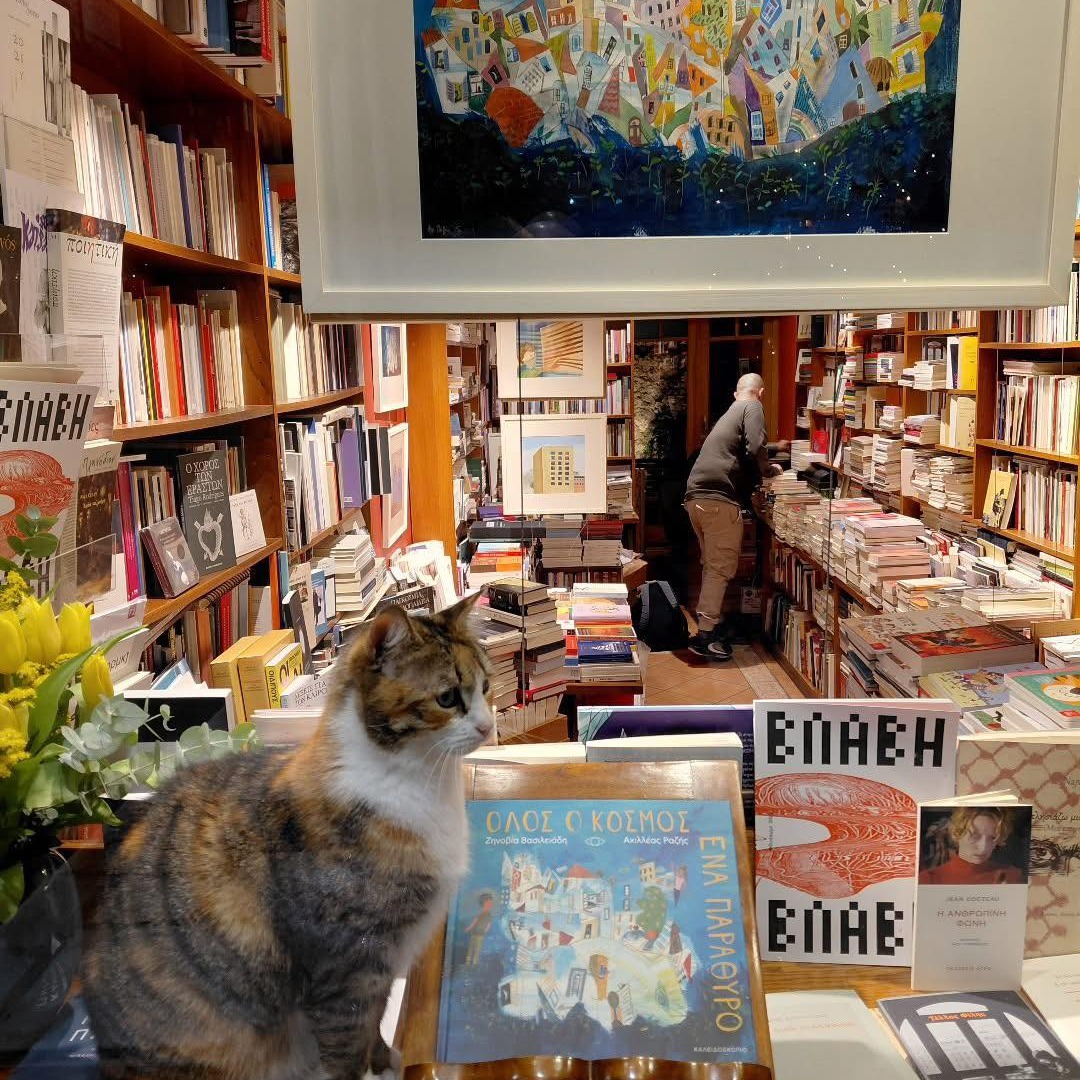
Then there is Lemoni, affectionately known as the “Lemon Bookshop”. Tucked away in the heart of Athens, it covers a wide range of subjects but specialises particularly in poetry and philosophy. From the outside, it looks deceptively small. Step inside, however, and you will find yourself surrounded by so many books that you may suddenly feel rather tiny. Which, for a bookshop, is arguably exactly how it should be.
Location: Iraklidon 22, Athens
Location: Iraklidon 22, Athens
Free Thinking Zone
For something a little more lively, Free Thinking Zone brings books into the realm of conversation and cultural debate. Part bookshop and part cultural events space, this vibrant creative hub puts activism at centre stage, with discussions exploring politics, ideology, history and all sorts of other bookish topics. There is a well-rounded English-language section for visitors, as well as an in-house coffee and regular panel discussions. The owner is also known for being wonderfully helpful with recommendations and more than happy to chat, whether you are in the mood for something light-hearted or a little more serious. It is the sort of place where you come for a book and stay for the conversation.
Location: Skoufa 64 & Griveon 1, Athens
Location: Skoufa 64 & Griveon 1, Athens
Evripidis Sti Stoa
Further north, Evripidis sti Stoa in Halandri has become something of an Athens institution. One of the oldest and most beloved bookshops in the northern suburbs, it has been closely intertwined with the commercial life of the area for decades. In 1998, the heirs of founder Evripidis Vasilopoulos took a bold gamble, creating a huge three-storey, multi-purpose venue inspired by large bookshops abroad. The gamble paid off, and the shop’s café quickly became a favourite with locals, bookworms from across Athens and passing visitors from its very first day. Today, it remains the perfect place to combine two essential pleasures: finding a new book and settling down with something hot to drink.
Location: Andrea Papandreou 11, Chalandri
Location: Andrea Papandreou 11, Chalandri
Polyglot
Back in central Athens, Polyglot is a true multilingual treasure trove. Its ever-changing international collection contains more than 20,000 titles in German, Turkish, French, Italian, Spanish, Portuguese and English. And if you cannot find the book you are after, the staff are happy to order it for you. The shop also hosts literary events, making it an ideal spot for anyone wanting to explore literature beyond Greece’s borders.
Location: Akadimias & Benaki, Athens
Location: Akadimias & Benaki, Athens
Bookbar By Kaktos
@bookbar_by_kaktos
@bookbar_by_kaktos
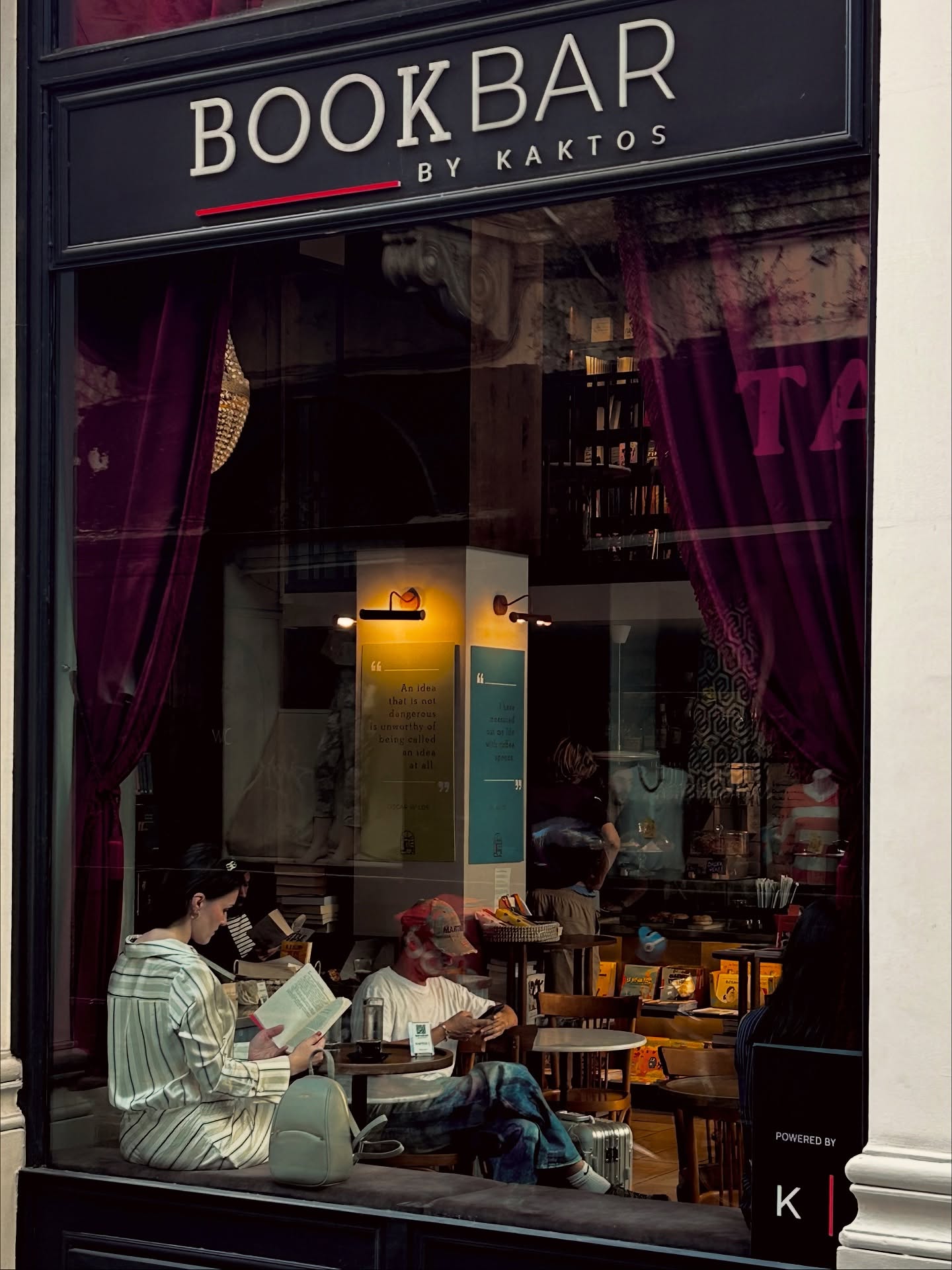
Finally, Bookbar by Kaktos is one of the newer additions to Athens’ literary scene. Opened in 2023, this book café occupies a historic building tucked away on Aiolou Street. Much of its collection comes from the well-known Greek publisher Kaktos, alongside a solid selection from other publishers. It is a fitting final stop on a literary tour of Athens: a place where books, coffee and the city’s social life come together under one roof.
Location: Aiolou 39, Athens
Location: Aiolou 39, Athens
From Bookshops To Literary Evenings: Athens’ Literary Events
But Athens’ literary scene does not stop at the bookshelves. Throughout the year, literature finds its way into conferences, festivals, cultural spaces and even theatre stages, giving book lovers plenty of opportunities to swap a quiet afternoon of reading for a lively evening of ideas, conversations and performances.
For those who like their literature with a more academic twist, October brings a particularly interesting line-up of international conferences in Athens. The month includes events such as the International Conference on English Poetry and Literary Forms, the International Conference on Literary Criticism and Cultural Identity and the International Conference on Global Literature and Cultural Exchange. The topics range from poetry and literary forms to identity, cultural exchange, translation, migration and the role of literature in an increasingly globalised world. These are academic conferences rather than casual literary evenings, so they will be particularly appealing to students, researchers and serious literature lovers. The listings can also change, so it is worth checking the conference organiser's website for the latest details before making plans.
For something much more festive, September is all about the Athens Book Festival. Admission is free, making it an easy addition to an Athens itinerary whether you are a dedicated library rat, a casual reader or simply curious to see what is on offer.
And if you fancy taking your literary adventures from the page to the stage, George Orwell’s 1984 is returning to Athens’ Dipylon Theatre for a second season. The production by Giorgos Papageorgiou returned on 12 October 2026, with performances scheduled on Mondays and Tuesdays. It offers a theatrical take on Orwell’s famous dystopian novel — a suitably thought-provoking choice for an evening out.
Last but not least, a brand-new initiative whose second edition we are already eagerly awaiting: Athens launched a brand-new addition to its literary calendar in March 2026: the Athens International Literature Festival (AILF). Its inaugural edition took place at Technopolis City of Athens, bringing together writers and readers as part of what the festival describes as an “invitation to explore, to converse, and to rethink contemporary literature”. The festival’s first edition has now come and gone, but it certainly adds a promising new chapter to Athens’ literary calendar. As for a 2027 edition, nothing has been confirmed yet, so bookworms will have to keep their fingers crossed.
From academic discussions on poetry and cultural identity to sprawling book festivals and theatrical interpretations of literary classics, Athens offers plenty of ways to experience literature beyond the traditional bookshop. And perhaps that is what makes exploring the city’s literary side so much fun: you can spend the afternoon hunting for a dusty second-hand treasure, stop for a coffee with your latest find, and end the evening listening to writers, watching a play or debating ideas that have been around for centuries. In Athens, there is always another page to turn.
Published in
Books
Tagged under
Monday, 12 October 2026 22:45
Beyond The Olive Oil: Why Greek Wellness Needs More Than Greek Ingredients

Greek wellness has an obvious visual language.
Olive oil. Herbs. Sea salt. Honey. Aromatic plants. Natural stone. Sunlight. The sea.
They all make sense. They are genuinely connected to Greece and its landscape. But there is a question worth asking: is using Greek ingredients enough to create a genuinely Greek wellness experience?
Not really.
A spa can use olive oil in a massage, add oregano to a treatment room and call a facial a “Mediterranean Ritual” without offering anything particularly Greek beyond the branding.
The difference lies somewhere deeper.
Greek Ingredients Are Only The Starting Point
Greece has an extraordinary natural heritage that can inspire wellness experiences.
Locally connected ingredients can all have a place within contemporary spa treatments. They can bring texture, scent, sensory associations and a stronger connection to the destination.
But an ingredient on its own doesn't tell a story.
A bottle of Greek olive oil used in a massage doesn't automatically make that massage Greek. The same is true of lavender grown in Greece, a rosemary scrub or a treatment inspired by the Aegean.
The important question is how these elements are used and why they are there.
What is the treatment trying to achieve?
How was it designed?
What is the role of the therapist?
How does the guest experience change from one treatment to another?
How was it designed?
What is the role of the therapist?
How does the guest experience change from one treatment to another?
This is where a Greek wellness concept can move beyond decoration.
From Ingredients To Rituals
One of the most interesting opportunities for Greek wellness is the development of treatments that feel like rituals rather than products.
Instead of simply offering a massage with Greek olive oil, for example, a spa could create a complete experience around a particular therapeutic idea, combining the treatment itself with sensory elements, preparation, consultation and aftercare.
The guest isn't simply receiving a treatment.
They are entering an experience with a beginning, a process and an end.
That distinction matters because modern travellers are increasingly looking for experiences that feel connected to where they are. They don't necessarily want another treatment that could have been offered in London, Dubai or Singapore with a different product on the shelf.
They want to feel that they are in Greece.
What Does “Greek” Actually Feel Like?
This is where things get more interesting.
A Greek wellness experience doesn't have to mean blue-and-white interiors, ancient columns or a treatment named after Aphrodite. In fact, those things can sometimes make a concept feel more like a stereotype than an authentic expression of place.
Greekness can be much more subtle. It can be found in the ingredients selected, the relationship with nature, the rhythm of the experience, the hospitality, the way treatments are personalised and the knowledge behind them.
It can also be found in the details that guests may not immediately identify as “Greek” but nevertheless make the experience feel connected to its surroundings.
A spa overlooking the sea, for example, doesn't need to turn the sea into a marketing slogan. It can simply allow the landscape, light, climate and sense of place to become part of the experience.
The Therapist Is Part Of The Experience
There is another element that is easy to overlook: the person delivering the treatment.
A genuinely distinctive wellness concept cannot exist only on a treatment menu. The team needs to understand what sits behind that menu.
What is the purpose of each treatment?
How should it be adapted to different guests?
What should the therapist observe?
How should the experience be personalised?
How should it be adapted to different guests?
What should the therapist observe?
How should the experience be personalised?
This is why training and treatment protocols matter.
Without them, even a beautifully designed Greek wellness concept can become inconsistent from one therapist to another and, ultimately, lose the identity it was created to have.
So, What Could Make Greek Wellness Distinctive?
The answer lies in the way everything comes together.
The ingredients.
The treatment design.
The therapist.
The environment.
The guest journey.
The philosophy behind the experience.
When these elements work together, Greece can offer something more distinctive than a spa treatment with a Mediterranean label.
This is the thinking behind Authentic Greek Traditional Therapeutics, bringing elements of Greek therapeutic heritage into contemporary wellness and hospitality in a way that is structured, personalised and relevant to today's guest.
Bringing The Concept To Life
Enthymesis Wellness explores what Greek wellness can look like when it becomes part of the experience itself, rather than simply an aesthetic or a collection of local ingredients. Working with hotels, spas and wellness destinations, the team develops concepts, treatments and guest experiences inspired by Authentic Greek Traditional Therapeutics, alongside the training and protocols needed to bring them to life.
The aim is to create wellness experiences that have a clear sense of place, experiences that feel connected to Greece, while still meeting the expectations of the contemporary spa guest.
Published in
Mindful Reads & News
Tagged under
Monday, 12 October 2026 22:40
The Missing Piece Of Greek Tourism: Authentic Wellness
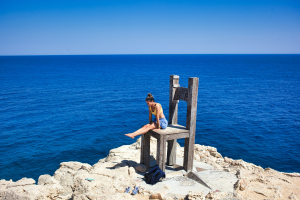
Greece already has a very strong tourism identity.
Visitors come for the sea, islands, food, culture and history. But as travellers increasingly look for experiences that support their wellbeing, another opportunity is emerging: creating wellness experiences that feel genuinely connected to Greece.
Because there is a difference between offering wellness in Greece and offering Greek wellness.
What Does “Authentic” Wellness Actually Mean?
Authenticity has become one of the most frequently used words in tourism.
But what does it actually mean when we talk about wellness?
It doesn't simply mean using Greek ingredients or giving a treatment a name inspired by mythology.
A genuinely Greek wellness experience should have a deeper connection to the country's traditions, environment and therapeutic philosophy.
Here are five elements that can help create that connection.
1. A Philosophy, Not Just a Treatment Menu
A spa can offer massages, facials and body treatments without necessarily having a distinctive wellness philosophy.
Authentic wellness starts with a bigger question:
What do we believe contributes to wellbeing, and how does that belief influence the experience we create?
For a Greek wellness concept, this could involve drawing inspiration from Greek Traditional Therapeutics and ideas associated with Hippocratic medicine.
2. Personalisation
Not every guest arrives at a spa with the same needs.
Someone may want deep relaxation, while another person may be looking for an energising experience. Someone else may simply want to disconnect from a busy schedule.
A personalised approach begins by understanding the individual rather than automatically giving everyone the same treatment.
This is one of the core principles behind Enthymesis Wellness, a wellness company which develops wellness experiences based on understanding the individual and then selecting appropriate treatments, techniques, herbs, oils and rituals.
3. A Connection to Place
A wellness experience should ideally tell you something about where you are.
In Greece, that might mean drawing inspiration from local herbs, oils, food traditions, landscapes or therapeutic knowledge.
It could also mean designing the experience differently depending on whether the spa is located on a Cycladic island, in a mountain resort or in an urban hotel in Athens.
There is no reason Greek wellness should look exactly the same everywhere.
4. Professional Expertise
Authenticity isn't achieved simply by adding local ingredients.
A wellness concept also needs properly trained professionals who understand the treatments and the philosophy behind them.
For hospitality businesses, this means investing in staff training, clear treatment protocols and consistent standards.
5. A Complete Guest Journey
Finally, wellness shouldn't begin and end with the treatment itself.
The way guests are welcomed, consulted, guided through the experience and looked after afterwards can all contribute to how meaningful the experience feels.
This is why spa concept development can involve everything from the treatment menu to the guest journey and staff training.
Why Does This Matter?
Travellers increasingly want experiences that feel connected to their destination.
A spa that could exist anywhere in the world may offer excellent treatments, but a spa that reflects its location can become part of the reason people remember the destination.
For Greece, authentic wellness could therefore become more than another tourism product.
It could become another way of telling the country's story.
Bring Authentic Greek Wellness To Your Destination
Enthymesis Wellness works with hotels, spas, wellness retreats and hospitality destinations to create wellness concepts inspired by Greek Traditional Therapeutics and Hippocratic medicine.
From concept development and therapeutic menu design to staff training, certification and ongoing consultancy, the team helps hospitality businesses develop wellness experiences that combine Greek heritage with contemporary standards.
Want to explore what authentic Greek wellness could look like for your property? Get in touch with Enthymesis Wellness.
Published in
Travel Greece
Tagged under
Monday, 12 October 2026 22:37
What Does Your Body Need Today? A New Way To Think About Self-Care

Self-care has become one of the most familiar words in wellness.
We are told to sleep more, exercise, meditate, take a bath, book a massage, switch off our phones and make more time for ourselves.
And yet, sometimes self-care can start to feel like another list of things we are supposed to be doing.
But what if the question isn't “What should I do for my wellbeing?”
What if it is simply:
“What does my body need today?”
That small change in perspective can completely alter the way we think about taking care of ourselves.
Self-Care Isn't One-Size-Fits-All
There is no universal self-care routine that works equally well for everyone.
What feels restorative to one person may feel completely wrong for another. One person may need movement after a long day. Another may need stillness. Someone might want deep physical work, while someone else may benefit from a slower, more gentle experience.
Even the same person may need something different from one day to the next.
This is where a more personalised approach to wellness becomes interesting.
Instead of automatically reaching for the same treatment, ritual or routine, we can start paying attention to our current state: our energy, our physical sensations, our mood and what we actually feel drawn towards.
Self-care becomes less about following a formula and more about responding to ourselves.
Listening Before Doing
We are often very good at noticing what our body is asking us to do when something becomes uncomfortable.
But listening to the body can also mean noticing subtler signals.
Are you feeling restless or depleted?
Do you want movement or quiet?
Do you feel like being touched or left alone?
Would warmth feel comforting today, or would you rather have a cooling, refreshing experience?
Do you want movement or quiet?
Do you feel like being touched or left alone?
Would warmth feel comforting today, or would you rather have a cooling, refreshing experience?
These aren't necessarily questions that need complicated answers.
They simply encourage us to pause before choosing what comes next.
In a spa environment, this can change the experience completely. Instead of selecting a treatment simply because it sounds appealing on a menu, the experience can begin with understanding the individual person and adapting accordingly.
The Value Of Personalisation
Personalisation is increasingly discussed in wellness, but genuine personalisation goes beyond putting someone's name on a treatment card.
It means recognising that the same treatment does not necessarily have the same meaning or effect for every guest.
The Enthymesis Wellness approach places particular emphasis on individual constitution and personalised application, drawing on its interpretation of Greek Traditional Therapeutics and Hippocratic philosophy. Its treatments incorporate therapeutic rituals, specially developed oils and Greek herbal blends, with the experience adapted to the individual rather than treated as a generic spa service.
Self-Care Can Be Much Simple
Perhaps one of the most useful things about this way of thinking is that self-care doesn't always have to become another project.
You don't necessarily need a complicated morning routine, an hour-long meditation or a perfectly planned wellness weekend.
Sometimes it can begin with something much simpler:
Pause. Notice. Ask. Respond.
What do I need right now?
More movement?
More rest?
Warmth?
Quiet?
Connection?
A moment where nobody needs anything from me?
More rest?
Warmth?
Quiet?
Connection?
A moment where nobody needs anything from me?
The answer won't always be the same, and that's precisely the point.
From Routine To Ritual
There is also a difference between doing something automatically and experiencing it with intention.
A routine might be something we repeat because we are supposed to.
A ritual creates a moment of attention.
This is particularly relevant in spa and wellness experiences. A treatment can be much more than 60 minutes in a beautiful room. The way the guest is welcomed, the preparation beforehand, the treatment itself and the time afterwards can all become part of a more meaningful experience.
For Enthymesis Wellness, this idea sits at the heart of its approach: wellness experiences are designed as structured therapeutic systems, rather than simply collections of relaxation treatments. The company combines its interpretation of Greek Traditional Therapeutics with treatment protocols, personalised applications and specific rituals.
Perhaps Self-Care Starts With Listening
We often think of wellness as something we give our bodies.
A massage. A treatment. A workout. A healthy meal. A retreat.
But perhaps there is another way to look at it.
Wellness can also be about learning to listen.
To notice when we need to slow down. To recognise when we need stimulation rather than rest. To understand that our needs change. And to choose experiences accordingly.
Because taking care of yourself doesn't have to mean doing more.
Sometimes, it means becoming a little more attentive to what is already there.
A More Personal Approach To Wellness
This philosophy is central to the work of Enthymesis Wellness, a Greek wellness brand that brings its interpretation of Hippocratic philosophy and Greek Traditional Therapeutics into contemporary spa experiences. Its work combines personalised treatments, therapeutic rituals, Greek herbal blends and structured protocols, alongside spa concept development and professional training.
Because perhaps the most personal form of self-care begins with a very simple question: what does your body need today?
Published in
Mindful Reads & News
Tagged under
Monday, 12 October 2026 22:31
What Can Hippocrates Teach Us About Modern Wellness? The Lost Healing Wisdom Of Ancient Greece & Why It Matters Today
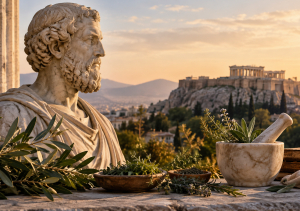
When we think about wellness in ancient Greece, it is easy to picture temples, olive oil, herbal remedies and sun-drenched landscapes. But Greek approaches to health were about much more than individual treatments. At their heart was an idea that feels surprisingly familiar today: wellbeing is connected to the way we live as a whole.
Long before the modern wellness industry began talking about personalised experiences, balance and preventative care, Hippocratic medicine placed considerable emphasis on understanding the individual and their relationship with their environment.
Health Was Never Just About One Thing
The Hippocratic tradition viewed health through a broader lens. Diet, movement, sleep, environment and lifestyle were considered part of the picture rather than completely separate from health.
This way of thinking is particularly interesting today, when wellness is increasingly moving away from quick fixes and towards more holistic experiences.
Modern wellness travellers are often looking for more than a massage or a beautiful spa. They want experiences that help them slow down, reconnect with themselves and perhaps understand their own needs a little better.
That shift makes some of the principles associated with Greek therapeutic traditions surprisingly relevant.
From Standardised Treatments To Personalisation
One of the biggest changes taking place in contemporary wellness is the move towards personalisation.
Instead of assuming that the same treatment will work equally well for everyone, wellness practitioners are increasingly interested in the individual: their preferences, their lifestyle, their current state and what they actually need from an experience.
This idea has strong parallels with Greek Traditional Therapeutics, where the individual was central to the therapeutic approach.
It is also at the heart of the philosophy behind Enthymesis Wellness, a Greek wellness consultancy inspired by Hippocratic medicine and Greek Traditional Therapeutics. Rather than creating standardised spa experiences, its approach begins with understanding the individual and then considering which treatments, techniques, herbs, oils and rituals are appropriate for that person.
What Could Greece Reclaim?
Greece already has many of the ingredients associated with modern wellness: its Mediterranean diet, natural landscapes, thermal springs, herbs, traditional practices, climate and a culture that places considerable value on food, community and time spent outdoors.
Yet the opportunity may lie in bringing these elements together through a more coherent philosophy.
Rather than simply using Greek ingredients or adding a few references to ancient Greece, authentic Greek wellness could mean looking more deeply at the ideas behind traditional approaches to wellbeing and considering how they can be interpreted responsibly today.
This is where initiatives such as Enthymesis Wellness become interesting. Based on the philosophy developed at Enthymesis, its wellness and spa centre in Corfu, the concept is to bring elements of Greek therapeutic heritage into contemporary hospitality and spa environments.
Looking Back To Move Forward
The growing interest in wellness does not necessarily mean that we need to invent something completely new.
Sometimes, it may mean looking again at knowledge that has been part of a culture for centuries and asking what still has relevance today.
For Greece, that could offer an opportunity to develop a wellness identity that feels genuinely connected to the country, not simply because of its scenery, but because of its history, philosophy and traditions.
Perhaps the future of Greek wellness isn't about creating something entirely new. Perhaps it is about rediscovering what was already there.
Published in
Greek Philosophy & History
Tagged under
Monday, 12 October 2026 22:27
From Ancient Greek Therapies To Modern Spas: Can Tradition Shape The Future Of Wellness?
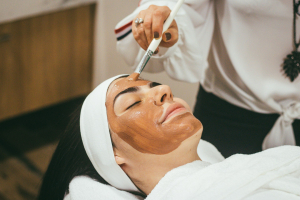
The wellness industry is constantly looking for the next big thing.
New treatments, technologies and trends appear every year. But perhaps the future of wellness doesn't always require something completely new.
For Greece, some of the most interesting inspiration may already exist in its own therapeutic heritage.
The question is: how can ancient ideas be responsibly translated into modern wellness?
From Traditional Principle To Modern Experience
Ancient therapeutic traditions existed in a very different context from today's spa industry. They should not simply be copied and presented as modern treatments.
Instead, we can look at some of the underlying ideas and ask how they might translate today.
Understanding the Individual → Personalised Wellness
Traditional approaches placed importance on understanding the individual.
Today, this can translate into personalised consultations and treatments rather than automatically offering every guest the same experience.
The goal is to create a wellness journey that responds to the person rather than simply following a fixed formula.
Balance → A More Holistic Approach
The idea of balance remains central to many modern wellness philosophies.
Rather than focusing on one isolated aspect of wellbeing, a contemporary wellness experience can consider rest, movement, relaxation, environment and lifestyle together.
This doesn't mean trying to optimise every part of life.
Sometimes balance means simply recognising when we need to slow down.
Nature → Contemporary Botanical Experiences
Greece has an extraordinary botanical heritage.
Herbs, aromatic plants and natural oils have long been part of Mediterranean life.
Today, these can inspire modern spa rituals and sensory experiences, provided they are incorporated thoughtfully and supported by appropriate professional knowledge.
Therapeutic Rituals → Structured Spa Experiences
Traditional therapeutic practices often involved a sequence rather than a single action.
Modern spas can similarly create structured experiences where consultation, preparation, treatment and recovery form part of one journey.
The result is more than an individual treatment; it becomes an experience with a beginning, middle and end.
The Importance Of Not Simply Copying the Past
There is an important distinction between drawing inspiration from tradition and claiming to recreate it exactly.
Modern wellness operates within contemporary expectations around professional training, safety, hospitality and quality.
This is why translating traditional knowledge into a modern spa environment requires expertise.
It involves deciding which elements can be meaningfully adapted, how they should be incorporated into treatments and how staff should be trained to deliver them consistently.
Building The Bridge Between Tradition & Modern Hospitality
The philosophy combines research and practical experience in areas including Greek Traditional Therapeutics, Hippocratic medicine, naturopathy, Unani medicine and international spa therapies.
Rather than simply reproducing historical practices, Enthymesis Wellness works with hospitality destinations to develop contemporary spa experiences inspired by Greek therapeutic heritage.
This can include everything from treatment menus and protocols to guest journey design, staff training, certification and ongoing quality support.
Could Tradition Become Greece's Competitive Advantage?
The global wellness market is increasingly sophisticated.
Travellers can find beautiful spas almost anywhere. What can make a destination memorable is the story, philosophy and sense of place behind the experience.
For Greece, its therapeutic heritage could become part of that story.
The opportunity isn't to turn modern spas into ancient Greek replicas.
It is to ask a more interesting question: What can Greece's own wellness heritage teach us about creating meaningful experiences today?
Perhaps the answer lies somewhere between tradition and innovation: taking what remains relevant from the past and giving it a thoughtful place in the future of wellness.
If you're interested in creating a wellness experience rooted in Greek heritage while meeting contemporary hospitality standards, get in touch with Enthymesis Wellness.
Published in
Mindful Reads & News
Tagged under
Monday, 12 October 2026 19:00
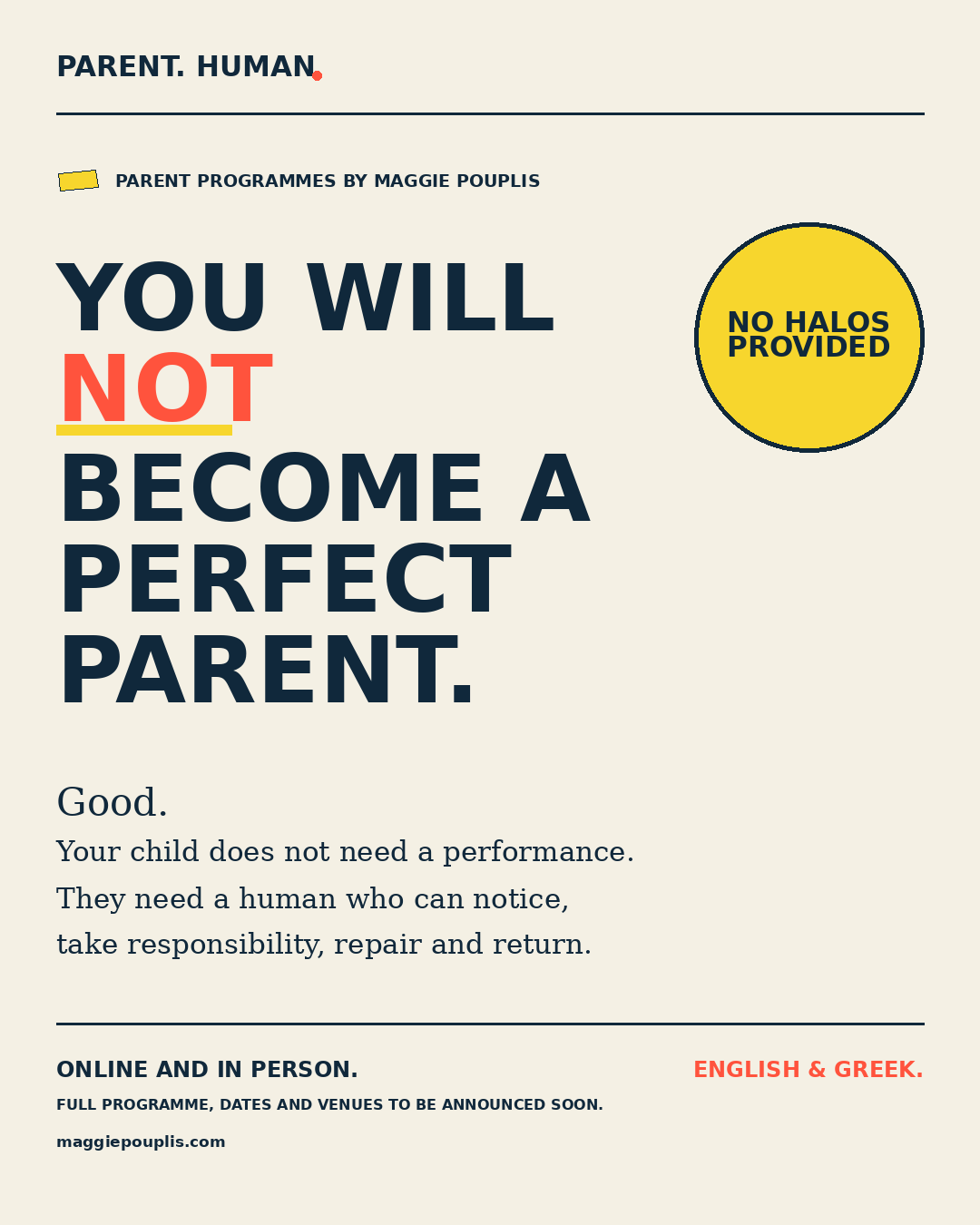
This Workshop Will Not Make You A Perfect Parent

A live, interactive parenting workshop in Athens or online
Parenting is not about being perfect. It is about understanding your own reactions, recognising what happens in your nervous system and finding your way back to connection without giving up healthy boundaries.
Led by Maggie Pouplis, this interactive 90-minute workshop, part of her PARENT. HUMAN. parent programmes, offers an introduction to the nervous system behind parenting reactions and practical ways to respond with greater awareness, regulation and responsibility.
Through four key steps — notice, understand, hold the limit and return — participants will explore how to recognise their own activation, better understand difficult moments and approach challenging interactions with their children differently.
Because understanding your child's feelings matters, but so does understanding your own.
For parents who wish to explore these practices in greater depth, a 12-week Parent Circle is also available. This guided parent-coaching programme includes weekly 60-minute meetings, a small group of up to 10 participants, lifetime access to English-language JAI parent learning materials and a closing eBook created for the programme. Sessions are available in person or online.
Neither option promises perfect parenting. Both offer space to develop a more regulated, responsible approach to family life.
The 12-week programme is a parent-coaching experience, not professional training or therapy.
Learn more or enquire about participation HERE!
Workshop Details
When: Open Dates
Duration: 90 minutes
Location: Athens or online
Language: Greek or English
Organizer's page: maggiepouplis.com
When: Open Dates
Duration: 90 minutes
Location: Athens or online
Language: Greek or English
Organizer's page: maggiepouplis.com
Published in
Workshops & Trainings
Tagged under