
XpatAthens

XpatAthens

Thursday, 29 October 2026 13:54

Love & Death: Art Exhibition

The Visual Arts Group of Mairi Tzermia, presents Love & Death, a contemporary art exhibition exploring the fundamental duality that shapes human existence through a variety of materials, techniques and artistic styles. 

The exhibition opens on Monday, 2 November 2026, at 19:00, at the Artemis Cultural Centre in Marousi. Curated by visual artist Argyro Pafili, the exhibition brings together contemporary artists to explore the contrasts and connections between love and war.


Opening Hours:
Daily: 10:00 - 14:00 & 17:00 - 20:00; Saturday: 10:00 - 14:00 
Wednesday, 28 October 2026 15:43

🍂 Give thanks and give back!

🍂 Give thanks and give back! Join the Daughters of Penelope, Hesperus Chapter #359, bringing together the Greek-American community and the Hellenic diaspora in Athens, for our Thanksgiving Luncheon as we celebrate 45 years of community service. Every seat you reserve supports our charitable causes, because all proceeds go directly to the people and programs we serve.


📅 Sunday, November 29, 2026, at 1:00 PM
📍 Athens Marriott Hotel

Reserve your place today and bring a friend! RSVP: hesperus359@yahoo.com

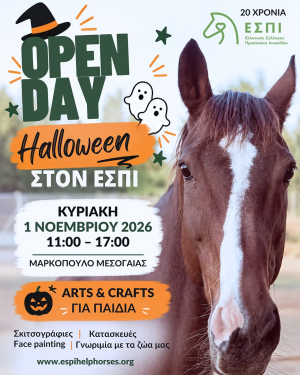
A Halloween Sunday filled with creativity, animals and autumn fun!

On Sunday, 1 November, visitors of all ages are invited to spend a fun-filled day at the ESPI animal sanctuary in Markopoulo, enjoying creative activities, food, drinks and a welcoming atmosphere.

Little visitors can look forward to a variety of Halloween-themed activities, including:
  • ✏️ Caricature drawing

  • 👻 Halloween arts and crafts

  • 🎨 Face painting

  • 🧡 Other fun and creative activities

And, of course, no visit would be complete without spending time with ESPI’s beloved horses and donkeys!

Bring your family, embrace the Halloween spirit and enjoy a lovely autumn day while supporting the important work of ESPI in protecting equines.

Come along for a day of creativity, community and animal love!
Why understanding your child's behaviour doesn't mean accepting every behaviour.
By Maggie Pouplis

Somewhere along the way, the conversation about gentle parenting became rather confused. Apparently, we now have two options. We can either be strict adults who demand obedience and show very little interest in what children feel, or we can become endlessly understanding humans who calmly validate every emotion while our children dismantle the living room.

I would like to propose a third option.

We can understand our children, respect their emotions, listen to their perspective and still tell them, quite clearly, that some behaviours are simply not acceptable.

Because connection is not permissiveness. And empathy is not the absence of boundaries.

In fact, I would argue that helping a child understand what is acceptable, what is dangerous and what responsibility looks like is an essential part of our relationship with them.

The Difference Between Understanding & Excusing

Imagine a nine-year-old who has always been relatively peaceful. When other children tease them, they usually walk away. They may complain, cry or ask for help, but they do not respond physically.

Then one day, something changes. Another child insults them, perhaps even kicks them, and the nine-year-old reacts by physically overpowering the younger child and putting them in a dangerous situation.

Suddenly, everyone is asking the same question.

What happened to this child?

We may hear familiar explanations. Children are children. Boys will be boys. They have reached that age. They are learning to stand up for themselves.

But none of these explanations is sufficient when someone could have been seriously injured.

The child's anger may be entirely understandable. The insult or physical provocation needs to be addressed. Their previous experiences may help explain why they reacted as they did.
And none of that makes the violent reaction acceptable.

We can recognise that a child has been wronged without giving them permission to wrong someone else.

This distinction becomes increasingly important as children develop a more sophisticated understanding of relationships, fairness, intentions and consequences. Their capacity to reason about an event may be growing, while their ability to manage an intense reaction is still developing. Knowing what they should do does not always mean they can do it consistently, especially when they are overwhelmed.

But development should guide our expectations and our teaching. It should not become a convenient explanation for doing nothing.

A Boundary Is Not A Punishment

A boundary tells a child what is acceptable, what is not and what the adult will do to keep everyone safe. A punishment, particularly when driven by anger or humiliation, may simply communicate that the person with the most power gets to decide who suffers.

Those are not the same lessons.

The American Academy of Pediatrics recommends discipline that teaches appropriate behaviour through clear limits, consistent guidance and developmentally appropriate consequences. It also advises against physical punishment and shaming.

This does not mean consequences disappear. It means they should serve a purpose beyond making the child feel bad.

When a child becomes physically aggressive, the immediate priority is safety. Stop the behaviour. Separate the children if necessary. Check whether anyone has been hurt. Involve the appropriate adults.

Then, when the situation is sufficiently calm, we can begin the conversation that actually matters.

Not a twenty-minute speech about how disappointed we are.

A conversation about what happened, what the child chose to do, why that choice was dangerous and what they can learn to do differently.

We might say:

"I understand that you were furious when you were kicked. That should not have happened, and we will deal with it. But picking someone up and putting them at risk of injury was dangerous. You were responsible for that action. Being angry does not give us the right to hurt someone."

Notice what is happening here. We are not dismissing the child's experience. We are also not negotiating whether violence is acceptable.

Both things can be true

Maggie Pouplis is an author, certified Parent Coach and nervous system educator, and the founder of Bonding Nest. Her work focuses on communication, emotional development, boundaries and the relationship between children and the adults raising them.

Explore Maggie's parenting programmes HERE!

Responsibility Without Shame

There is another distinction we need to make, and I think it matters enormously.

A child who behaves aggressively has done something wrong. That does not automatically make them a bad child.

When we confuse behaviour with identity, we risk moving the conversation away from what needs to change. A child who hears only "You are aggressive" or "You are a bully" may begin to understand themselves through that label, rather than through the choices they can learn to make.

We can be firm without defining the child by their worst moment.

And we should not underestimate the importance of honesty in these conversations. Children sometimes deny, minimise or change parts of a story because they are frightened, ashamed or hoping to avoid consequences. That does not mean every denial is calculated manipulation. It does mean we have an opportunity to teach that telling the truth matters, including when the truth is uncomfortable.

A useful response might be:

"I need to understand what happened, and I want you to tell me the truth. You are not in trouble for having feelings. We do need to address what you did."

The responsibility remains. The relationship remains, too.

And once the child is ready, we can discuss repair. What needs to happen now? Does someone need practical help or reassurance? What would a meaningful apology involve, and is the other child comfortable receiving one? What support will prevent the same situation from happening again?

Repair is not a performance we demand to make adults feel that the incident has been neatly resolved.

Children Need To Practise What We Teach

Telling a child to control their anger is not the same as teaching them how.

We can practise alternatives during calm moments. What can you say when someone provokes you? How can you move away safely? Which adult can you ask for help? What happens if the first adult does not understand or respond?

We can even role-play situations that children recognise from their own lives, allowing them to explore several possible responses without the pressure of an actual confrontation.

The American Academy of Pediatrics' guidance on emotional development combines emotion recognition and validation with clear limits, modelling and coping skills. These are compatible responsibilities, not opposing parenting philosophies.

And adults have some uncomfortable work to do here as well.

We cannot reasonably expect children to resolve conflict respectfully while watching us insult other drivers, threaten consequences we never intend to follow through on, or use shame whenever we lose patience.

We are not expected to be perfect. Fortunately, because that would eliminate most of us from the profession of being human.

But we do need to demonstrate that the rules apply to us, too. When we cross a line, we acknowledge it, apologise where appropriate and show what taking responsibility looks like.

Kindness Is Not Compliance

The goal is not to raise children who never disagree, never get angry and always do what they are told.

It is to help them understand that they have a right to their feelings, their voice and their boundaries, while recognising that other people have those rights as well.

A child should be able to say no. To challenge something unfair. To tell an adult they disagree. To ask for help. To recognise when someone has crossed a boundary.

And they should understand that defending themselves does not mean having unlimited permission to harm others.

Connection makes these conversations possible. Boundaries give them clarity. Consistent guidance helps children practise alternatives until those alternatives become more available when they need them.

So no, understanding your child does not mean accepting everything your child does.

Sometimes the most respectful thing we can say is a very clear no, followed by an equally clear message:

"I am here to help you learn a different way."


Maggie Pouplis is an author, certified Parent Coach and nervous system educator, and the founder of Bonding Nest. Her work focuses on communication, emotional development, boundaries and the relationship between children and the adults raising them.

Explore Maggie's parenting programmes HERE!

What children need when language, culture, identity and belonging are changing around them.

By Maggie Pouplis

There is something rather fascinating about the way adults talk about raising children between cultures. We tend to focus on the advantages. The languages they will speak, the places they will discover, the perspectives they will acquire and, of course, the rather impressive CV they are apparently building before they have even learned to tie their shoelaces.

And yes, growing up between cultures can offer extraordinary opportunities. But somewhere between celebrating bilingualism and telling everyone how adaptable children are, we sometimes forget to ask a much simpler question: where does the child actually feel they belong?

For an internationally mobile family, belonging is not always as straightforward as having an address, attending a school or speaking the local language. A child can be born in one country, have parents from two others, attend an international school in Greece and still find themselves wondering which part of that story makes them who they are.

Adults may experience this as an exciting international identity. Children may experience it as something much more complicated. Both experiences are valid, and neither needs to be universal.

Belonging Is Not A Postcode

Consider a child who speaks English at home and Greek at school. At home, their family has its own expressions, celebrations, humour and expectations. At school, there are different social rules, different jokes and perhaps a very different idea of what it means to fit in. The child learns to move between those environments, sometimes with remarkable ease and sometimes with considerable effort.

We often interpret that flexibility as evidence that everything is fine.

But being able to adapt to different environments and feeling equally comfortable in them are not necessarily the same thing.

Research on school belonging reminds us that feeling connected is a meaningful part of children's educational experience. The OECD's PISA 2022 findings, for example, examine students' sense of belonging alongside experiences of loneliness and social connection. Although these findings concern mainly 15-year-olds, rather than all children growing up internationally, they underline why belonging deserves attention beyond academic achievement.

For families, that means looking beyond whether a child is doing well at school and asking whether they feel known, included and comfortable being themselves.

Maggie Pouplis is an author, certified Parent Coach and nervous system educator, and the founder of Bonding Nest. Her work focuses on communication, emotional development, boundaries and the relationship between children and the adults raising them.

Explore Maggie's parenting programmes HERE!


When Language Becomes More Than Communication
 
Language is not simply the ability to order something at a café or complete a school assignment. It is also how we tell stories, express affection, understand humour and participate in relationships.

A child learning Greek may become quite competent in everyday conversations while still struggling to follow a fast-moving playground disagreement. They may understand every word a teacher says but miss an unspoken social expectation. Or they may begin to prefer one language, leaving a parent wondering whether part of the family identity is slipping away.

Not every language preference is an identity crisis. Sometimes a child simply finds one language easier in a particular setting. However, the connection between language, participation and inclusion is important. UNICEF's work on language development and school integration highlights how access to the language of instruction affects children's opportunities to participate in school and social life. The report focuses on refugee children, whose circumstances can be substantially different from those of internationally mobile professional families, but it offers a useful reminder: language support is also participation support.

There is no need to turn the family dinner table into an additional language examination centre. Children generally have enough assessments in their lives already.

What helps is creating opportunities for language to remain connected with actual relationships: stories with grandparents, conversations with friends, familiar books, cultural celebrations and shared experiences that have meaning beyond vocabulary.

Children Should Not Have To Choose Which Parts Of Themselves Belong

One of the quieter challenges of growing up between cultures is the pressure to explain yourself.

Where are you really from?
Which country do you like better?
Do you feel Greek or something else?

Adults may ask these questions with genuine curiosity, but children do not always have an answer. And they should not be required to produce one that makes everyone else comfortable.

Identity is not a multiple-choice questionnaire. Children can feel attached to several places, feel differently about those attachments over time, or identify more strongly with a community of people than with a particular country. Some will embrace their international background. Others will occasionally wish their lives looked a little more like those of their classmates.

Neither response automatically means something has gone wrong.

Parents can help by allowing these feelings to coexist. A child can enjoy living in Greece and miss another country. They can love the language spoken at home and prefer using Greek with friends. They can be grateful for their experiences and still complain bitterly about having to start again somewhere new.

Gratitude is not a prerequisite for being allowed to struggle.

What Can Parents Do?

Start with curiosity rather than reassurance. Instead of immediately explaining why living abroad is such a wonderful opportunity, ask what feels familiar to your child and what still feels uncomfortable. Ask who they feel most themselves around. Listen to the answer without rushing to correct it.

Keep meaningful connections alive. That might involve regular contact with friends or relatives abroad, family traditions, familiar stories or simply the freedom to speak the language that feels most natural in a particular relationship.

Help build belonging in the present, too. Encourage friendships and repeated opportunities for social participation, rather than assuming that attending school will automatically produce a sense of community. When language or cultural differences create difficulties, work with teachers to understand what support would be useful.

And allow children to develop their own relationship with the place they now call home. It does not have to look exactly like yours.

The OECD's findings on family support and school belonging show an association between supportive home environments and stronger feelings of belonging at school. This is not a magic formula, but it is a useful reason to take everyday connection seriously.

Growing Roots Without Drawing Borders

Perhaps the most useful shift is to stop thinking of belonging as something a child must achieve by choosing one place over another.

For some children, belonging grows through familiar relationships, predictable routines and the freedom to bring different parts of their lives into the same conversation. It is less about producing a neat answer to where they are from and more about knowing they do not have to hide parts of themselves to be accepted.

Children growing up between worlds do not necessarily need us to tell them how fortunate they are.

Sometimes they simply need us to ask what their world feels like from where they are standing.

And then, rather importantly, wait for the answer.

Maggie Pouplis is an author, certified Parent Coach and nervous system educator, and the founder of Bonding Nest. Her work focuses on communication, emotional development, boundaries and the relationship between children and the adults raising them.

Explore Maggie's parenting programmes HERE!


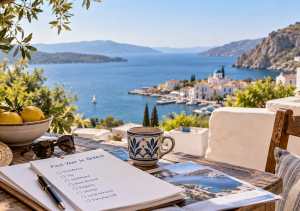
Retiring to Greece usually starts with a place: a flat in Pangrati, a house above a bay in the Peloponnese, a village on Crete you have been visiting for twenty summers. The paperwork comes later, and that is where a good first year can quietly go wrong. Most of it is straightforward once you know the order. Here is what to sort out, and when.

Early On: The Greek Tax Number

Almost nothing works without an AFM, the Greek tax number: not registering your lease, not a bank account, not electricity or internet. That is why most people get it first, often before they move.

You apply online through myAADE, the tax authority’s portal, and confirm your identity by video call (myAADElive), which works from abroad, in Greek or English. Applying is free, though waiting times vary. If you’d rather not do it online, you can sign an authorisation at a KEP (citizens’ service centre) or a Greek consulate, and a lawyer or accountant files the application for you. Identification can also be done in person at a tax office.

Request your TAXISnet access key (κλειδάριθμος) in the same application. With it you activate your login to the tax portal you will use every year.

Residence: EU & Non-EU

EU citizens can move freely. If you stay longer than three months without working, you need sufficient funds and health insurance, and you register your residence with the police aliens department.

Everyone else, including British retirees moving now (rather than those already covered by the Brexit Withdrawal Agreement), needs a residence permit. For most retirees that means the financially independent person permit, which starts with a national (type D) visa from a Greek consulate before you arrive. You show resources of at least €3,500 a month (plus 20% for a spouse, 15% per child), usually through a pension, bank funds or other legal income, and full health insurance, and you may not work in Greece. The permit is typically issued for up to three years and is renewable as long as you still meet the requirements.

Property buyers have a second route, the Golden Visa: €800,000 in Attica, Thessaloniki, Mykonos, Santorini and islands with more than 3,100 inhabitants, €400,000 elsewhere (in both cases a single property of at least 120 m²), or €250,000 for certain conversions to residential use and restorations of listed buildings.

One thing to know early: a residence permit and tax residence are not the same thing. Greece treats you as tax resident when your main home or centre of vital interests (family, main income) is here, or once you have spent more than 183 days here within any 12 months, in which case you count as resident from your first day here.

The First Months: Home, Bank, Health

Your lease is registered online by the landlord, and you accept it in TAXISnet with your own login. An unregistered lease is a red flag: you will need the registered version as proof of address for the bank and for most authorities.

A Greek bank account makes daily life, utility direct debits and tax payments much smoother than a foreign card. Bring your passport, AFM, proof of address and proof of your pension.

Healthcare depends on where your pension comes from. If you receive a state pension from the UK or another EU country and that country remains responsible for your healthcare (typically when you have no Greek pension), you may be entitled to an S1 form from it. In Greece you get an AMKA (social security number) and register the S1 with the public health system (EOPYY; in practice often through your local EFKA social security office). You are then covered on the same terms as people insured in Greece. The S1 can only be registered once you live here, and non-EU retirees need proof of health cover for the visa anyway, so most people bridge the first months with private insurance. Retirees without an S1, for example those with only a private pension or from the US, Canada or Australia, usually need private health insurance.

The Tax Decision Of Your First Year: 7% Or The Normal Scale

Greece offers foreign pensioners a special regime: a flat 7% on all foreign-source income for 15 years, subject to a few statutory and treaty exceptions (Article 5B of the Income Tax Code), instead of the normal progressive rates of 9% to 44%. You may qualify if you receive a qualifying pension from abroad, were not Greek tax resident in five of the previous six years, and move from a country that cooperates with Greece on tax matters. Greek-source income is taxed under the normal Greek rules. Each spouse has to qualify in their own right, and the regime only applies once AADE has approved your application.

A few things are worth knowing before you decide:
  • The deadline moved in 2026. Applications are now due by 31 October of the year you want the regime to start, with supporting documents (proof of your foreign pension and, where AADE’s records don’t already show it, of your previous tax residence) by 30 November. If you moved your tax residence to Greece by 2 July, you can choose that year or the next; if later, only the following year. For anyone transferring their tax residence after 2 July 2026, that means applying by 31 October 2027 for tax year 2027. Many older articles still mention 31 March.
  • It is not automatically the better deal. As an indicative example based on the 2026 rates: for a single person whose only income is a pension of €30,000 a year, the normal scale costs around €5,000 and the 7% regime €2,100. On two pensions of €15,000 each, the difference shrinks to roughly €270 a year for the couple. The 7% also applies to all your other foreign income: better for most foreign interest and rent, but it can be less advantageous for foreign dividends, which are normally taxed at 5% under Greece’s standard rules, depending on foreign withholding tax and treaty relief.
  • The 7% on your foreign income is paid once a year, in a single payment, by the last working day of December. Missing it takes you out of the regime. Tax on any Greek income follows the normal payment rules, and you still file a Greek tax return every year. You can opt out by 31 October of a given year, but you cannot come back in.
Your Home Country Does Not Disappear

Moving to Greece does not switch off your old tax office automatically. The double tax treaty between Greece and your former country decides which country may tax each type of pension. For many private pensions and statutory social security pensions that is Greece, but you may need to apply for treaty relief in your former country, usually with a Greek tax residence certificate; British retirees, for example, use HMRC’s DT-Individual form. Government pensions (civil service, armed forces, German Beamte) often follow special treaty rules and stay taxable in the country that pays them, whatever regime you choose in Greece; some treaties make an exception for Greek nationals. Under the 7% regime, foreign tax is credited only where the rules allow and only up to the Greek tax. And US citizens may continue to have US tax filing and reporting obligations while living abroad, depending on their income and circumstances.

Every Year After That

  • Income tax return (E1): filed every year, usually between mid-March and 15 July, covering both Greek and foreign income.
  • The 7% payment, if you are in the regime: by the last working day of December.
  • If you own property: the E9 property declaration (due by 31 January of the year after a purchase), and ENFIA, the annual property tax, payable in up to 12 monthly instalments.
A Calm First Year

None of this is difficult, but the order matters: AFM, residence, lease and bank, healthcare, then the 7% decision, due by 31 October of the year you want it to start. Get the first steps right and the rest becomes routine. If you would like someone to check whether the 7% regime pays off in your case, or to prepare and file the application and your Greek tax return, the team at taxomade works with retirees moving to Greece, in English, German, Spanish and Greek.

Rules as of October 2026. Thresholds and deadlines change; check the current figures before you act.

By Manoli Chionidis and Leonard Amling, Co-founders of taxomade

founders taxomade 2

When: 6–13 February 2027
Location: Samahita Retreat, Koh Samui, Thailand

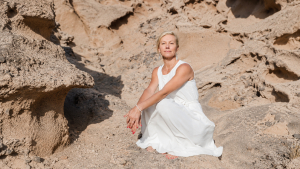
Sacred Pause is a week-long yoga and manifestation retreat designed to offer a meaningful pause between life’s chapters. Set against the lush tropical beauty of Koh Samui, Thailand, this experience invites you to slow down, breathe deeply and reconnect with the clarity, purpose, passion and inspiration already within you.

A Space To Slow Down & Reconnect

Life rarely leaves enough room to pause, reflect and listen to what truly matters. Sacred Pause offers an opportunity to step away from daily responsibilities, soften the pace and create space for physical, mental and emotional renewal.

Hosted at Samahita Retreat, a beachfront sanctuary set along 200 metres of coastline, the retreat combines authentic yoga practices, nourishing food and thoughtful hospitality in an environment that supports personal growth and transformation.

Through movement, meditation, breathwork and guided inner exploration, participants are invited to reconnect with themselves, move beyond habitual patterns and rediscover a sense of presence, clarity and inner peace.


An Exclusive Offer for Our Readers

As a special treat for our readers, enjoy €200 off your Sacred Pause: Yoga & Manifestation Retreat when you book before November 30th. 

For more information and to book the retreat, click here!


What To Expect
 
The retreat combines daily yoga and meditation practices with restorative sessions and transformational workshops, creating a balanced rhythm of movement, reflection and rest.

Your daily experience includes:
  • Morning practices

  • Restorative yoga

  • Manifestation workshops

  • Hypnotherapy sessions

  • Time for yourself

Throughout the week, there will be room for both shared experiences and solitude, allowing each participant to find their own rhythm without pressure or expectation.

Retreat Info
 
When: February 6 - February 13, 2027 (Arriving one night early is highly recommended to allow time to settle in, rest and ease into the retreat experience. Additional nights can be arranged directly with the Samahita team after registration) 
Where: Samahita Retreat, Koh Samui
Cost: From €2,600
Email: vicktomsky@gmail.com

Organiser's page 

An Exclusive Offer for Our Readers

As a special treat for our readers, enjoy €200 off your Sacred Pause: Yoga & Manifestation Retreat when you book before November 30th. 

For more information and to book the retreat, click here!


What if you could step away from the noise of everyday life for two hours, lie back, and let yourself be carried by sound?

This is an invitation to slow down, soften, and receive.

Through the seven chakras, we'll explore a sensory journey combining the soothing qualities of sound and vibration with the deep support of Restorative Yoga. Each stage pairs a carefully selected frequency with a restorative pose, inviting you to settle into stillness, turn inward, and experience the connection between sound, body, and awareness.

From the grounding qualities of the Root Chakra to the expansive symbolism of the Crown, you'll be guided through an experience designed to encourage relaxation, release tension, and reconnect with yourself.

There is nothing to achieve, nothing to fix, and nowhere else you need to be.

As we approach the end of the year, give yourself the gift of two hours to pause, replenish your energy, and return to the world feeling more rested, grounded, and restored.

Come as you are. 
Let sound soften the noise. 
Give yourself permission to rest.

Exclusive Reader Offer: Enjoy a special discounted rate of €50 instead of €70 when you book by 15 November!


Workshop Details
 
When: Friday, 27 November 2026, 18:00 - 20:00
Location: White Lotus Yoga Studio, Kifisia 

Price: 

€50 — For White Lotus members and non-members who book and pay by 31 October 2026.
€70 — For bookings and payments from 1 November 2026 onwards.

Organiser's page

How to Book & Pay 

Payment by IRIS: 6948890034 
To reserve your place, please send Vicky Tomsky a WhatsApp message at 6948890034.

Bank transfer enquiries: vicktomsky@gmail.com
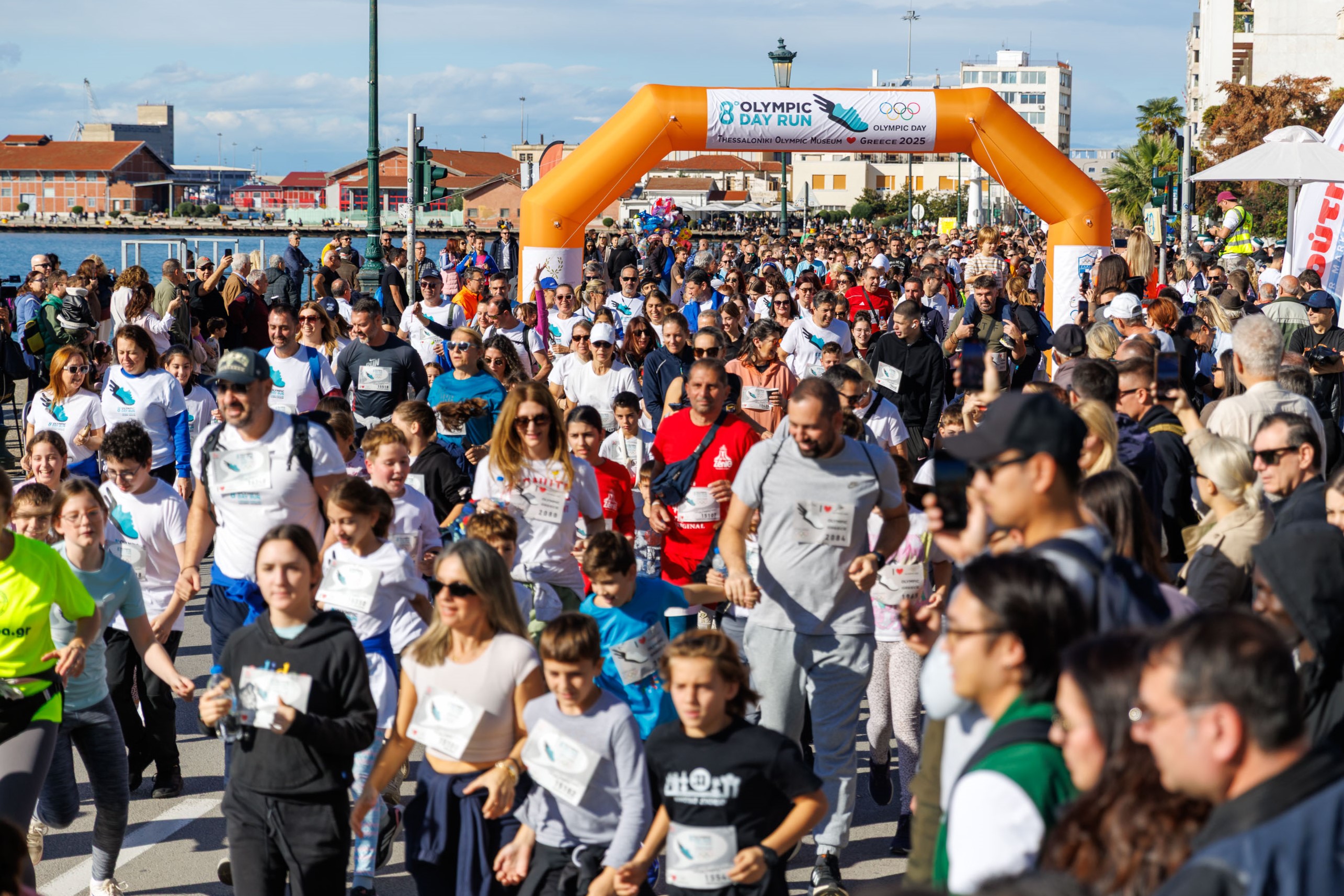
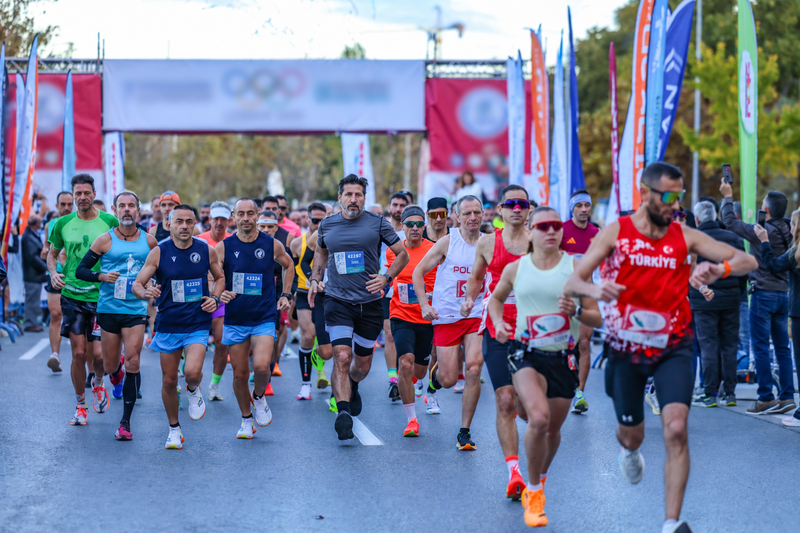
Thessaloniki welcomes the global Olympic family for the 9th Olympic Day Run Greece / Thessaloniki City Half-Marathon, a celebration of sport, inclusion and Olympic values.

The event invites runners of all ages and abilities to take part in a range of races, including the half-marathon, 10K, 5K, Family & Schools Run & Fun 1.5K, and She Run 1.5K, celebrating women's empowerment and equality.

Participants can discover Thessaloniki through routes that combine the city's historic landmarks, vibrant urban atmosphere and beautiful waterfront. A wider programme of activities from October to December will also connect Olympic heritage with sport, culture and education.

Registration deadline: Sunday, 1 November 2026

Participants who register for the 9th Olympic Day Run Greece can also secure free participation in the anniversary 10th Olympic Day Run Greece, 
making this year's event an opportunity to be part of the celebrations for two editions.

To register, please CLICK HERE!

Follow the event on Facebook and Instagram.
Run in Thessaloniki. Celebrate The Olympic Values. Honour Our Olympic Heritage.
 
Thessaloniki is once again preparing to become the centre of a global Olympic celebration, hosting the 9th Olympic Day Run Greece / Thessaloniki City Half-Marathon, described by the organisers as Greece’s only Olympic half-marathon.

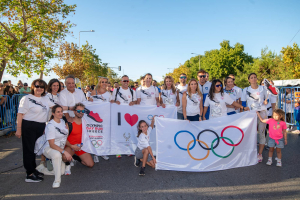
On Sunday, 22 November 2026, the heart of the global Olympic family will beat in Thessaloniki. Olympians, Paralympians, members of the Olympic community and thousands of runners from Greece and abroad will gather in the city, joining together in a celebration of Olympic values.

Olympic Day, an international initiative held under the auspices of the International Olympic Committee (IOC) and celebrated in more than 150 countries, brings millions of people together worldwide. In Thessaloniki, the event takes on a special significance, transforming the city, with its rich sporting and cultural heritage, into a meeting point for the international Olympic community.

Register for the 9th Olympic Day Run Greece and secure 
FREE participation in the anniversary 10th Olympic Day Run Greece!


The 9th Olympic Day Run Greece / Thessaloniki City Half-Marathon welcomes participants of all ages and abilities, from experienced athletes to recreational runners and families. The message is simple: at Olympic Day Run, it is not only champions who run — everyone can take part.
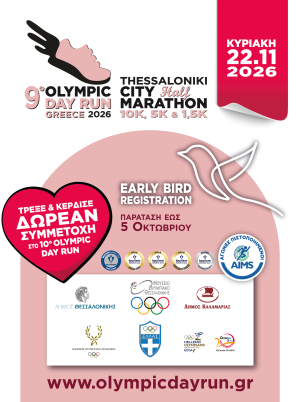
Alongside the flagship half-marathon, the programme includes AIMS-certified 10K and 5K races, the Family & Schools Run & Fun 1.5K, offering a memorable experience for children and families, and the She Run 1.5K, a distinctive race celebrating women's empowerment, equality and the power of participation.

Featuring one of the world's most recognisable sporting symbols — the Olympic rings — the event offers runners unique routes through the historic heart of Thessaloniki and along the city's beautiful waterfront, with views towards Mount Olympus.


The city's seaside setting, contemporary urban life, history and cultural heritage create a distinctive backdrop for this international city-running event, which aims to strengthen Thessaloniki's position on the global map of sports and cultural tourism.

A wider programme of activities running from October to December will connect Olympic heritage with sport, culture and education, extending the experience beyond race day.

On Sunday, 22 November, Thessaloniki will become an open stage for the Olympic spirit. Through international participation, the power of the Olympic brand and a broader programme of activities, the city aims to strengthen its identity as “Thessaloniki Olympic City” and an “Olympic Heritage Destination”, attracting visitors seeking experiences that combine sport, culture and history.

The event is organised by the Thessaloniki Olympic Museum, the Municipalities of Thessaloniki and Kalamaria, the Hellenic Olympic Committee, the International Olympic Academy, the Association of Olympians, SEGASand DIO Olympia. It is held under the auspices of the International Olympic Committee, with the support of Olympians, Paralympians, institutional bodies, sports clubs and local sports organisations.

Run in Thessaloniki. Experience the Olympic spirit. Become part of the global Olympic family.

Registration is open until Sunday, 1 November 2026.


Register at olympicdayrun.gr.
Follow Olympic Day Run Greece on Facebook and Instagram for the latest updates.

Page 4 of 481