Halloween In Greece: How A Global Tradition Has Found Its Place In Athens
- by XpatAthens
- Thursday, 22 October 2026

Coming to Greece for Halloween? Brought your witch’s hat, or fancy carving your very own pumpkin? While Halloween may not be a traditional Greek holiday, the country has gradually embraced this imported celebration, giving it a flavour of its own.
@maranastas
@maranastas
Fuelled by globalisation, films, social media and growing expat communities, Halloween has become increasingly visible in Athens these past few years. But there are limits to how far the tradition has travelled. You probably won’t find little ones knocking on your door in search of sweets, unless maybe you happen to be part of an international community organising Halloween activities. Instead, the festivities tend to revolve around costume parties, themed nights out and a good excuse to get a little spooky.
In modern Athens, bars and clubs seize the occasion to throw lively Halloween parties, complete with ghoulish decorations, elaborate costumes and themed drinks. Younger generations have also taken to the tradition, often embracing it for the fun, fashion and party atmosphere rather than any particular spiritual significance. Many of the city's Halloween events cater primarily to expats and visitors, but that doesn't mean locals can't join in the fun!
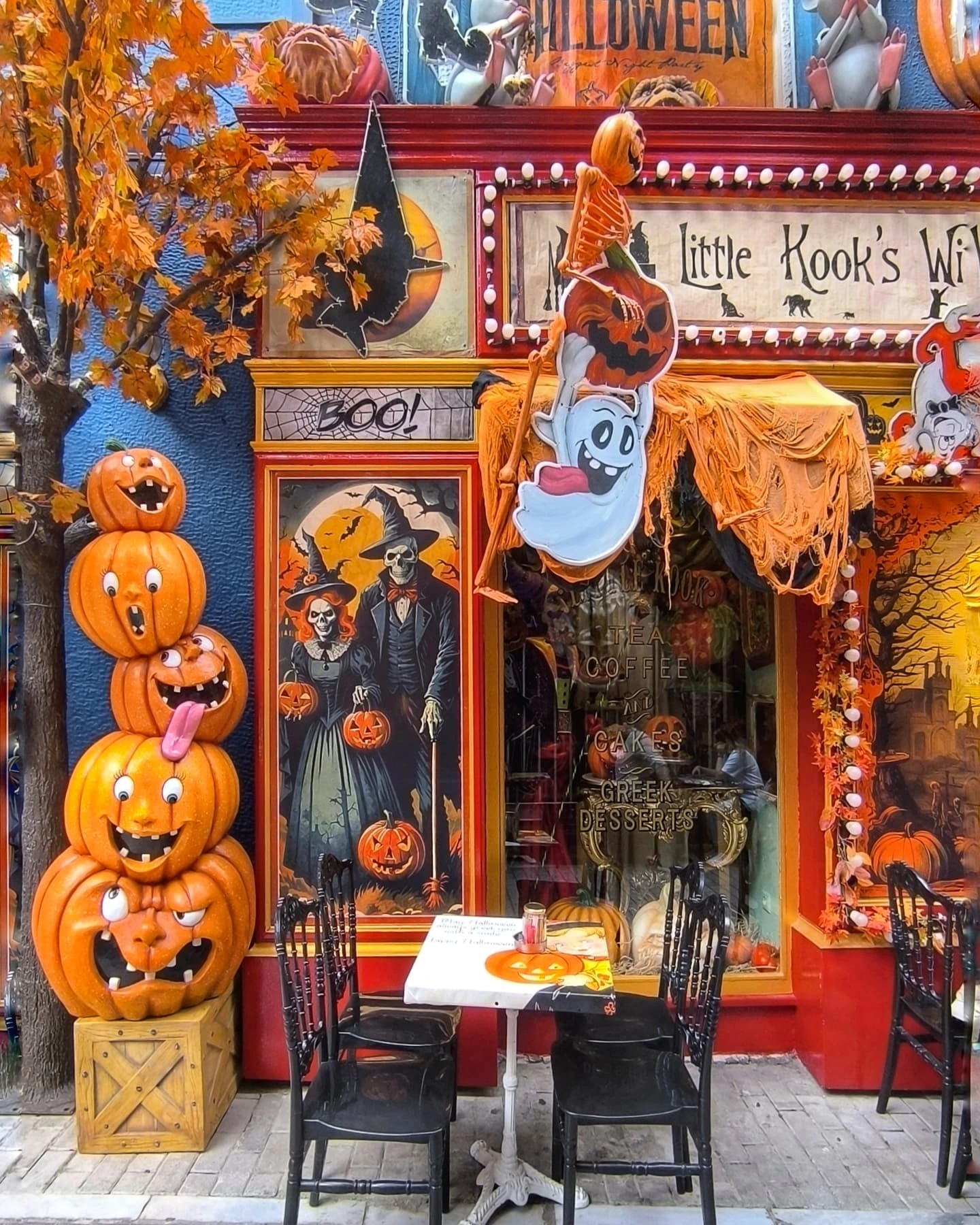
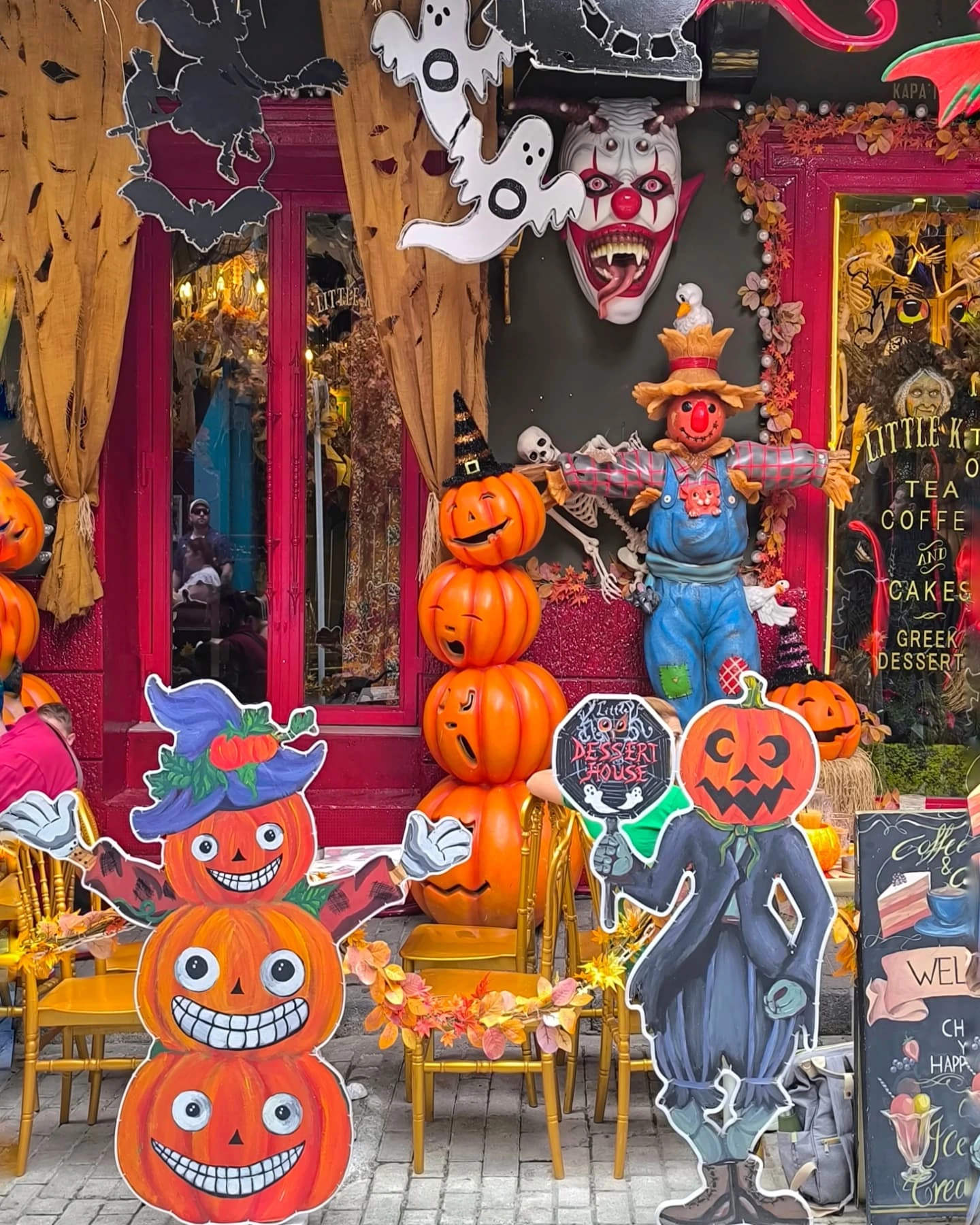
Themed cafés and shops give the city a seasonal makeover, with pumpkins, spooky decorations and suitably indulgent treats. Little Kook and Cap Cap, both known for their immersive, fantastical settings, are particularly worth checking out if you're after a picture-perfect Halloween outing. Even without a costume, you can still get your fix of eerie enchantment - and perhaps a sweet treat or two along the way.
@donzy
@donzy
For those who prefer their Halloween with a little more adrenaline, Athens' escape rooms offer the perfect opportunity to put your nerves to the test. At Hide N Seek, by Brainiac Escape Rooms, you'll investigate a terrifying crime scene alongside your police partner. At Arxitektoniki, in Kerameikos, The Purge: Anarchy challenges you to survive until morning.
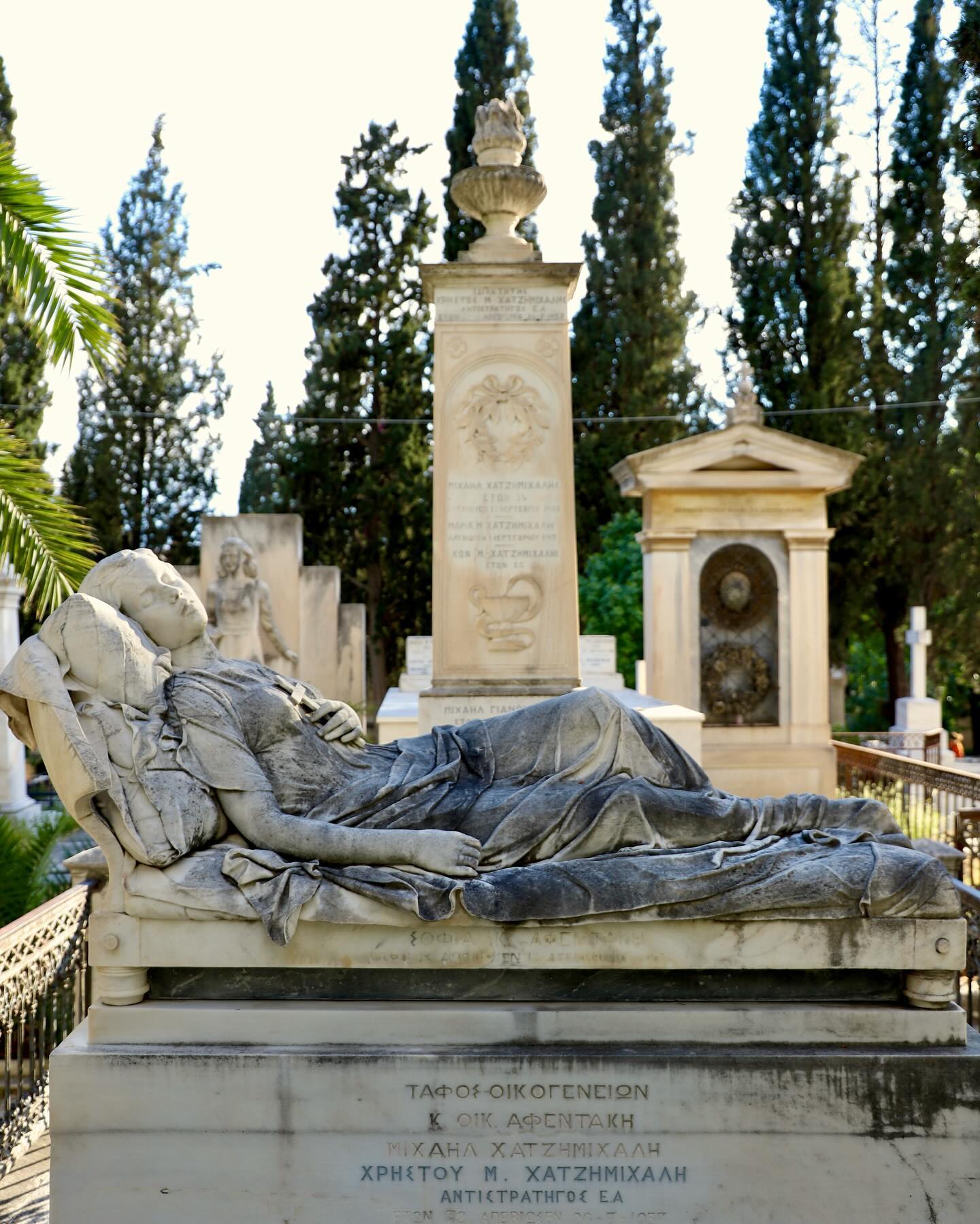
And if you'd rather trade jump scares for something with a little more history, why not explore Athens' spookier side at the First Cemetery of Athens? More than just a burial ground, this historic site feels almost like an open-air museum, filled with elaborate mausoleums, remarkable sculptures and the graves of some of Greece's most prominent historical figures, such as Theodoros Kolokotronis, one of the leading figures of the Greek War of Independence. One of its most famous works is I Koimomeni (The Sleeping Girl), a striking sculpture by Yannoulis Chalepas depicting a young woman lying peacefully in death. With its impressive monuments, three churches and quiet, atmospheric paths, the cemetery makes for a fascinating outing for anyone who enjoys a touch of the macabre.
@soundaffects
@soundaffects
Still, while Halloween is finding its place in contemporary Greek life, it hasn't replaced the country's own long-standing traditions surrounding death, remembrance and the spiritual world. For all the costumes and spooky decorations, Greece already has its own rich calendar of customs connecting the living with those who have passed away.
For starters, the Greek equivalent of a day dedicated to the dead doesn't fall on 1 November. In the Greek Orthodox tradition, Psychosavvato (Ψυχοσάββατο), or Saturday of Souls, is observed several times throughout the year, particularly before Lent and Pentecost. Rather than a celebration of all things spooky, it is a solemn occasion devoted to remembering and praying for the departed. Families may visit cemeteries, light candles and prepare koliva, a traditional mixture of boiled wheat, pomegranate, raisins and nuts symbolising resurrection and eternal life. Prayers and blessings are offered for the souls of loved ones, making Psychosavvato a moment of reflection and remembrance rather than fear, costumes or trick-or-treating.
But if it's rather disguises, parades and seasonal festivities you're after, there's another date to put in your diary: Apokries, Greece's carnival season, which takes place in the weeks leading up to Lent, usually in February or early March. Expect elaborate costumes, street celebrations, parties and plenty of opportunities to let your alter ego out for the day. It's a much more deeply rooted Greek tradition and a wonderful way to experience the country's playful side!
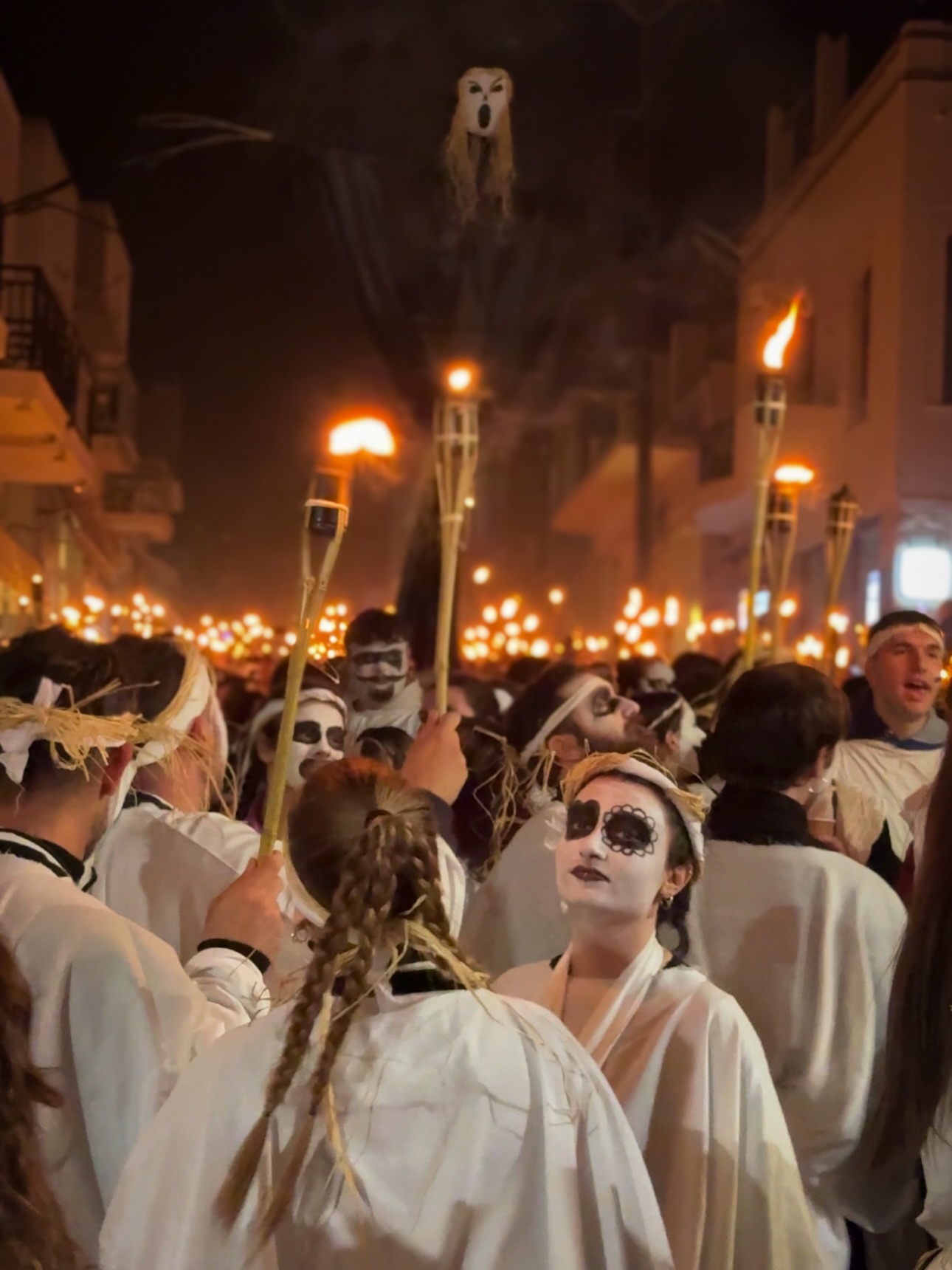
@tzeni_doro
@tzeni_doro
In conclusion, Halloween may not have centuries of history behind it in Greece, but it is carving out its own little corner of Athenian life. Whether you fancy a themed cocktail, a terrifying escape room or a stroll among historic tombs, there's plenty to explore. Besides, Greece has never been a stranger to adopting foreign customs and making them its own. Valentine's Day, once a relatively unfamiliar celebration, now brings its fair share of pink hearts and chocolates, while the Christmas tree, introduced to Greece under King Otto in the nineteenth century, has become an unquestioned festive staple.
LIFE & CULTURE