

WELLNESS HUB

XpatAthens
Greek Sparkling Wines – A Champagne Alternative
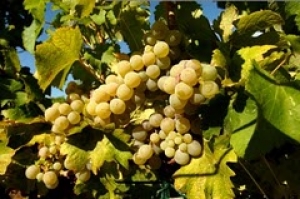
1. CAIR ROSE RESERVE 1996 BRUT – 81.3
Reserved sparkling wine by Athiri and Mandilaria with continuous thin bubbles and high acidity. Delicate aroma of red fruits and ripe peach. Notes of baked walnut. Long aftertaste.
2. CAIR BLANC DEMI SEC – 81.3
Sparkling semi dry wine by Athiri with medium but continuous sparkling. Apricot and vanilla with a honey-like taste. Balance of acidity and bubbles in the mouth. Long and pleasant aftertaste
3. ΑΜΥΝΤΑS BLANC DE NOIR DEMI SEC – 80
Sparkling semi dry wine by Xinomavro with soft and pleasant babbles forming a continuous ‘rope’. Unripe apple and flower honey. High acidity and metallic notes. Sweet and pleasant aftertaste.
4. KTIMA EFHARIS EVA ROSE – 79.7
Salmon colour and medium persistent bubbles. Sweet rose and red fruits of medium intensity with vegetal notes. Sweet and fruity mouth. Pomegranate and red fruits in the aftertaste
5. POEME ΖΙΤΣΑ DEMI SEC – 79
Medium lemon colour and thin interrupted bubbles. Complex nose, with unripe white fruits and baked aromas. In the mouth, there is bread and fruits of white flesh while acidity diminishes. Medium length aftertaste.
We also tasted: 6. EMERY GRAND PRIX BRUT 7. ΑΜΥΝΤΑΙΟΝ ROZE DEMI SEC 8. AMYNTAION ROSE SEC 9. CAIR BRUT 10. POEME ΖΙΤSΑ BRUT
gourmed.gr
Reform Proposals Ready For Creditors
Greece's government prepared reform measures on Sunday to secure a financial lifeline from the euro zone, but was attacked for selling «illusions» to voters after failing to keep a promise to extract the country from its international bailout.
Leftist Prime Minister Alexis Tsipras has insisted Greece achieved a negotiating success when euro zone finance ministers agreed to extend the bailout deal for four months, provided it came up with a list of reforms by Monday.
Greeks reacted with relief that Friday's deal averted a banking crisis which fellow euro zone member Ireland said could have erupted in the coming week. This means Tsipras has stood by one promise at least: to keep the country in the euro zone.
Tsipras maintains he has the nation behind him despite staging a climbdown in Brussels. Under the deal, Greece will still live under the EU/IMF bailout which he had pledged to scrap, and must negotiate a new programme by the early summer.
"I want to say a heartfelt thanks to the majority of Greeks who stood by the Greek government ... That was our most powerful negotiating weapon,» he said on Saturday. "Greece achieved an important negotiating success in Europe."
To read more, please visit ekathimerini.com
Simon Reeve: I Could Happily Live In Greece
Modern family - Greece With Grown-Up Kids
Athens Named Best European Capital For Food Lovers
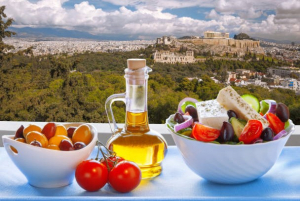
Originally published on: news.gtp.gr
Constantine “Dean” Karnazes Is The New Ambassador Of Greek Tourism
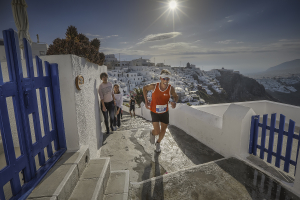
Photo credit: Loukas Hapsis
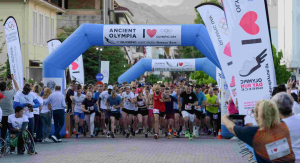
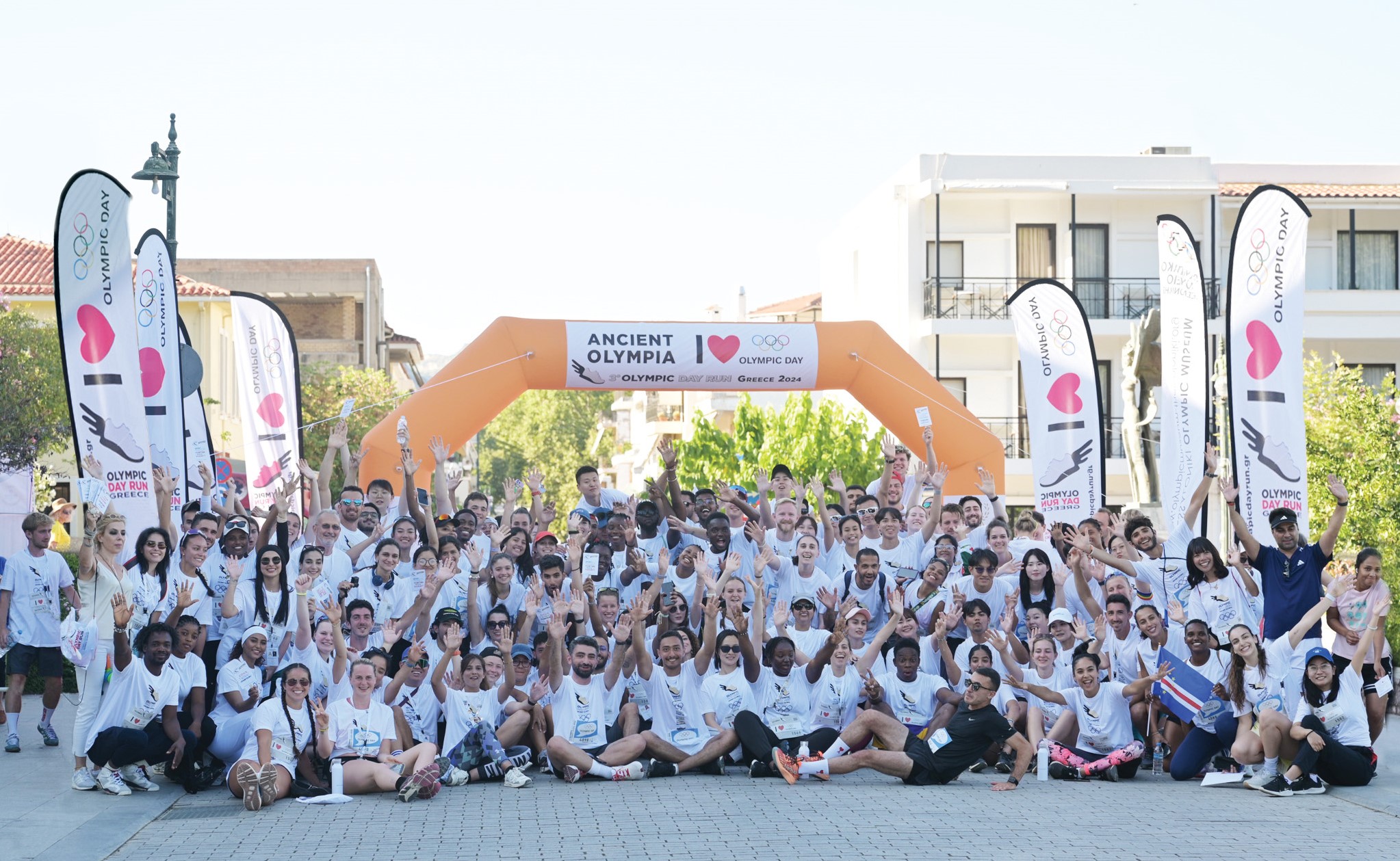
5th Olympic Day Run: Ancient Olympia Celebrates 130 Years Of The Modern Olympic Games

Kae International Movers

International Movers is an expert removal company, specialized in packing, storing and transporting household goods and office effects both domestically and internationally. We have an extensive range of moving services which we provide to organizations and private individuals.
Kae International Movers has affiliated offices worldwide through the representation of Euromovers International and IAM memberships. Kae International have their own offices in GREECE and the CZECH REPUBLIC. Our vision is to become the preferred choice for moving individuals, corporate and organizations by providing our clients with cost-effective, high-level quality services in global moving and relocation.
We aim to achieve this through:
Creating transport solutions that match the requirements of each client.
- Operating in a cost effective manner to deliver "value for money"
- Employing the highest standards of work and commitment to our customers to ensure a smooth, seamless, safe operation that delivers and surpasses our customers’ expectations.
- Partnering with same quality service providers which reach all parts of the globe.
- Recruiting, training and developing people who have the desire to serve.
Epidavros – A Quick Day-Trip from Athens
Amidst the blue of the Saronic Gulf, well protected on its own smaller gulf, where the scent from the valley's orange blossoms meets the sea breeze in its picturesque friendly port, Ancient Epidavros, traditional yet modern, both tranquil and cosmopolitan, is always ready to welcome travelers whatever the season. Midway along the east coast of the Argolida district, easy to reach by highway via the Corinth Canal, the little town is built on the site of the ancient city-state of Epidavros.
Quiet pleasant people, occupied in fishing, tending orange groves and tourism, a mild climate, beautiful surroundings and a sound infrastructure provide the framework for all that one needs for a quick get-away from Athens.
Its sheltered location and natural surroundings, the beauty of the landscape and fertility of the soil, attracted not only men but also gods. It was here that Asklepios' most splendid sanctuary was situated. Here yet another important nucleus of ancient Greek civilization was created.
Some History
The first inhabitants of the area were the Carians and then later the Dorians. The city took part in the Trojan War; it fought against the Persians at Plataea and Salamis and found itself on the side of the Spartans in the Peloponnesian War. Good sailors and merchants, the people of Epidavros founded colonies and raised their town to a high level. Their civilization came to light during excavations on the peninsula that bisects the Bay of Epidavros, the "island" as the locals call it today.
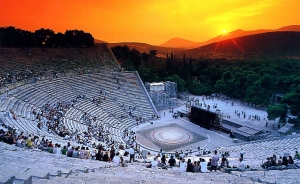
We can find remains from the Acropolis with Roman walls, ruins of a palace and houses, columns from the Doric temple and nearby, Mycenaean tombs; while under the sea, not very deep, lies a section of the ancient city. Its jewel however can be found on the west side of the peninsula: the ancient theatre, or the "little one”, as it has been dubbed, to distinguish it from the "big one” in the Sanctuary of Asklepios. Built in the 4th century BC, it was dedicated to Dionysos, but for centuries remained buried under six meters of earth. In 1971, archaeologists began their digs. And today, elegant with its stone seats, it not only reaffirms the achievements of ancient civilization it also plays host to marvelous concerts.
Some Ancient History
Epidaurus was independent of Argos and not included in Argolis until the time of the Romans. With its supporting territory, it formed the small territory called Epidauria. Reputed to be the birthplace of Apollo's son Asclepius, the healer, Epidaurus was known for its sanctuary situated about five miles (8 km) from the town, as well as its theater, which is once again in use today. The cult of Asclepius at Epidaurus is attested in the 6th century BC, when the older hill-top sanctuary of Apollo Maleatas was no longer spacious enough.
The asclepieion at Epidaurus was the most celebrated healing center of the Classical world, the place where ill people went in the hope of being cured. To find out the right cure for their ailments, they spent a night in the ‘enkoimeteria’, a big sleeping hall. In their dreams, the god himself would advise them what they had to do to regain their health. Found in the sanctuary, there was a guest house for 160 guestrooms. There are also mineral springs in the vicinity which may have been used in healing.
The Famous Ancient Theater
The prosperity brought by the Asklepieion enabled Epidaurus to construct civic monuments too: the huge theatre that delighted Pausanias for its symmetry and beauty, which is used once again for dramatic performances, the ceremonial Hestiatoreion (banqueting hall), baths and a palaestra. The theater was designed by Polykleitos the Younger in the 4th century BC. The original 34 rows were extended in Roman times by another 21 rows. As is usual for Greek theatres (and as opposed to Roman ones), the view on a lush landscape behind the skênê is an integral part of the theatre itself and is not to be obscured. It seats up to 15,000 people.
The theatre is marveled for its exceptional acoustics, which permit almost perfect intelligibility of unamplified spoken word from the proscenium or skênê to all 15,000 spectators, regardless of their seating. Famously, tour guides have their groups scattered in the stands and show them how they can easily hear the sound of a match struck at center-stage. A 2007 study by Nico F. Declercq and Cindy Dekeyser of the Georgia Institute of Technology indicates that the astonishing acoustic properties are either the result of an accident or the product of advanced design: The rows of limestone seats filter out low-frequency sounds, such as the murmur of the crowd, and amplify/reflect high-frequency sounds from the stage.
Source: Epidavros.net