

XpatAthens

XpatAthens

Monday, 06 November 2017 08:04

Mid-Season Sales Until November 15th

Fall sales have officially started in Greece, running from November 1st through November 15th, 2017. 

According to legislation, regional authorities are allowed to determine when they want to hold the discounted shopping period, meaning that places such as Evros, Rodopi, the islands of the Dodecanese and part of Iraklio in Crete have set different dates for their autumn sales. In Thessaloniki, meanwhile, the sales period will be shorter, from this Wednesday until Friday, November 10.

 
To read this article in full, please visit: Ekathimerini
Tuesday, 17 July 2018 18:54

July 3rd - Summer Of Culture

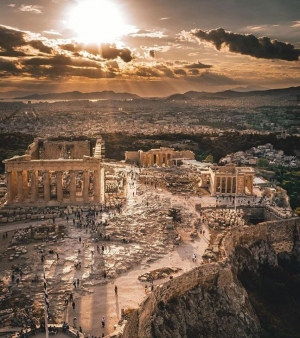
Athens is a city known all over the world for its rich history and culture. So, with millions of visitors every year, it's no wonder why the Acropolis won a major tourism award and how many ancient artifacts are yet to be found, such as a sculpture of a hunting dog dating back to 520 BC. It's a city full of surprises and beauty!


Please click HERE to view this issue of our newsletter!
Remember to stay connected with us through our weekly newsletterFacebook, and Twitter!
Greece is a surprising country; it surprises tourists – especially ones who scratch beneath the surface – and it also, occassionaly, surprises Greeks as well. After all, the notion that Greece is just golden beaches and clean blue seas isn't entirely true. In fact, Greece offers an abundance of off-the-beaten-path destinations and attractions, many of which are in the mainland and have absolutely nothing to do with a beach holiday!

The travel section of The Telegraph recently featured an article about 10 of the country's most surprising places, here are some of our favorite.

1. The Odontotos Railway in the Peloponnese

This is probably the closest you'll get to a Swiss landscape in Greece. Forget the crystalline beaches and white Cycladic homes; with the Odontotos (Toothy) rack railway you will travel through a mountainous, inaccessible part of the Peloponnese that bring the Alps to mind. Running for 23km from Diakofto to Kalavryta, the rack railway will take you through thick forests, steep inclines, and lush canyons that create an image of Greece you never imagined existed.

2. Grevena: The Fungi Capital of Greece

The mountainous Greek town of Grevena in Macedonia is rightfully called the Mushroom Capital of Greece. 1,300 species of mushrooms grow in abundance the oak forests near the town. Grevena claims a mushroom museum, a slew of tavernas serving forest fungi specialties, and public mushroom sculptures. Check out the annual four-day festival at the end of August for pure fungi pleasure.
 
3. Pyrgos: The Marble Village on Tinos Island

The village of Pyrgos on Tinos island is the historic home of a school of marble sculpture. Despite its small size, Pyrgos offers three museums: a museum dedicated to Yannoulis Chalepas, a Pyrgos native and one of the most praised sculptors in Greece, one showcasing contemporary talent, and finally the extensive Museum of Marble Crafts. Visit the village’s cemetery – which feels more like an art gallery than a burial ground – to admire the beautiful sculptures and memorials.
 
To discover more surprising destinations and attractions in Greece, please visit: The Telegraph
Sunday, 23 June 2019 20:14

Navarino Challenge 2019 Goes Green

In its 7th edition, “Navarino Challenge”, to be held from 11- 13 October 2019, in Messinia and at Costa Navarino, continues to innovate with a roster of environmentally friendly activities.

“Navarino Challenge” allows participants to be informed and involved in its activities to support the sacred goal of combating childhood obesity through exercise and awareness of the benefits of a Mediterranean diet.

With a view to adopting a more eco-friendly strategy, the organizers: a) have declared the start and end points of the Navarino Dunes runways as strictly smoke-free areas, b) have declared the beautiful Voidokilia beach, through which the runners cross, as strictly plastic-free, c) will offer participants an eco-friendly bag by Luanvi, event’s official sports supplier.

This year, the event will further promote charity by supporting: a) the Institute of Preventive Medicine, Environmental and Occupational Health, Prolepsis with a program on Food Aid and Promotion of Healthy Nutrition, DIATROFI.
Additionally, Captain Vasilis and Carmen Konstantakopoulos Foundation will support b) WWF Hellas and c) Karkinaki.
All participants can contribute any sum they wish through the GivenGain online platform. As part of this year’s “Navarino Challenge”, Barney Spender and Roddy Gibson’s award-winning documentary “The Road to Sparta” that recounts the effort of four runners, including that of Greek-American ultramarathon Dean Karnazes (who participated with the Navarino Challenge Support Team) to run the “Sparthathlon” race, will be screened at the Agora, Costa Navarino, on Friday, October 11.

Register for Navarino Challenge 2019 today


Running routes
Participants can choose between the top-of-the-range Ford Go Further Greek Half- Marathon (21.1km), 10km by PlantBox, and 5km (running & dynamic walking). Starting from the Navarino Dunes of Costa Navarino, professional and amateur athletes will run along the coast to Pylos, crossing the beautiful Voidokilia beach, following the Homeric trail that Telemachos traced for Odysseus in King Nestor’s land. It is the only trail run that combines soil, sand and asphalt.
On the same day, the children’s 1km course will take place. The routes have been planned by the former marathon runner, current classic marathon course national record holder, running coach and director of All About Running, Nikos Polias. The event includes race timing for all runners.

The olive tree, a key symbol of Ancient Greece, the Olympic Games, of the Mediterranean diet, and of Messinia in particular, is given its due place of honour at Navarino Challenge. Peloponnese-based PlantBox, the award-winning team at the Athens Startup Awards, will offer an original olive tree package to each participant. Participants will also receive 2 high quality cosmetics by Messinian Spa, a range of cosmetics based on Kalamata olive oil and other natural Greek products.

Enjoy the uniqueness of the running routes in the following video!

Learn more details about the route of the Ford Go Further Greek Half-Marathon in the following video!

Accommodation Packages at The Westin Resort Costa Navarino Navarino Challenge participants who have booked their package at The Westin Resort Costa Navarino, taking part in the main events (running, swimming) can also enjoy the full program that includes more than 20 sporting activities. The first 50 to book their package at The Westin Resort Costa Navarino stand a chance to win free participation at the Authentic Athens Marathon 5km race on Sunday, November 10, 2019.

More information on accommodation packages can be found here!


XpatAthens is proud to be a Media Sponsor Of Navarino Challenge!


Pre-sale is also available online via www.viva.gr or by phone at 11876 as well as at all Viva pre-sale points. For more information on accommodation packages in the region visit VitaNTravel: http://vitantravel.gr/
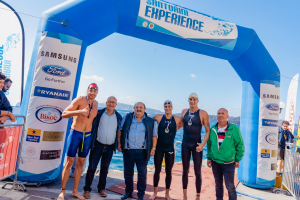
Samsung is the official technology partner for another year. Official sponsors of the event are Ford Motor Hellas and the Natural Mineral Water “Vikos”.
Luanvi is the official sports supplier of the event for one more year.
Official supporters are Poseidonia, Municipality of Pylos-Nestor and PlantBox. Messinian Spa is the Official Beauty Partner for the first time.
Partners of the event are Pylos Poems, Fysiotek Sports Lab, Athens Easy Transfers. Avance Rent A Car is the official rental partner.
National Geographic is the strategic partner of the event and 24 Media its premium media partner. “Navarino Challenge” has joined the Greek actions of the #BeactiveHellas 2019 program of the European Commission and is under the auspices of the General Secretariat of Sports.
The event is held under the auspices of the Greek National Tourism Organization with the approval of the Hellenic Swimming Federation. Navarino Challenge is co-organized by Costa Navarino, The Westin Resort Costa Navarino and Active Media Group with the support of the Municipalities of Pylos- Nestor and Trifilia. Athletic Partners: Explore Messinia, FitnessArt, Navarino Golf Academy, Navarino Outdoors, Navarino Racquet Academy, Pilates by Mandy, Red Swim Academy, Swim Academy, Triantafyllidis Beach Arena, Vizantinos target sport club Assisted by: Karalis City Hotel & Spa, Karalis Beach Hotel, Lifeguard Patrol, Pylos Association of Enterprises for Tourism Development, Maritime Athletic Pylos Association “Nestor”, Target Security, METAXA, The Blue Beetle, Fever-Tree, NoS, Southern Comfort 3

Hashtags: #navarinochallenge #costanavarino #sportsunitepeople #eatwell #runwell #livewell
Photo credit: Elias Lefas 
Every day at 6 in the evening, Greeks turn on their TV's to watch a broadcast that at other times they might have missed. It is the health ministry's daily coronavirus briefing then begins with Sotiris Tsiodras, a soft-spoken Harvard-trained professor of infectious diseases, delivering the latest facts and figures with the occasional emotional plea.
 
Nikos Hardalias, the civil defense minister, invariably follows, straining the seriousness of the situation while urging Greeks to "stay at home." The bookish professor and no-nonsense minister are the faces associated with the government's effort to contain the spread of the virus. Their efforts to keep Greece virus-safe seem to be paying off: in a population of just over 11 million, there were, as of last Monday, 2,145 confirmed cases of coronavirus and 99 fatalities–much fewer than any other European country.

From the outset, the scientific advisory committee pushed for the socially disruptive choice of lockdown, a devastating prospect for a country that had only just begun to show signs of economic revival. Carnival parades were canceled throughout the country, and on 4 March, before most of Europe, schools were closed. Within days, bars, cafes, restaurants, nightclubs, gyms, malls, cinemas, retail stores, museums, and archaeological sites were also closed down. Next, the government shut down beaches and ski resorts, banned gatherings of more than 10 people, prohibited travel to islands to all but permanent residents, and took-on the Greek Orthodox church to give up services and the rite of Holy Communion. At the same time, air links with the most affected countries were suspended.

But the pandemic was also a catalyst for the administration to enact long-overdue digital reforms aimed at both protecting citizens' health and modernizing the state. "When the pandemic broke, the need to simplify government processes became paramount," Greece's minister of digital governance, Kyriakos Pierrakakis, told the Guardian. "One of the first things we did to limit the incentives for people to exit their homes was to enable them to receive prescriptions on their phones. That, alone, has saved 250,000 citizens from making visits to the doctor in the space of 20 days. It has dramatically helped reduce the number of people exiting their home, which can only be a good thing." Documents that once required going to government offices and dealing with Greece's complicated bureaucracy were made available online.

During these challenging times, Greece has also managed almost to double the number of ICUs. "If we pull through this, if we show that we are competent and can deliver, the rest will come," said Alex Patelis, the Prime Minister's economics adviser."The faster you deal with a health crisis, the greater the short-term economic costs, but then the greater the long-term benefits too."

From once being the black sheep of Europe, Greece is now a shining example of crisis management and efficient administration!

To read this article in full, please visit: The Guardian

On Tuesday 18 May 2021, entrance to the permanent exhibition will be free. The Acropolis Museum will be open from 10 a.m. until 6 p.m. At the excavation beneath the Museum, archaeologists will be available to answer to visitors' questions. The restaurant on the second floor and the shop on the ground floor will be open during the same hours.

The Acropolis Museum participates in the digital celebration of the International Museum Day organized by the International Council of Museums (ICOM) and dedicated to the theme "The Future of Museums: Recover and Reimagine".

The Museum invites online visitors to a Virtual Tour at the Acropolis Museum with a VR 360ᵒ video, offerings users the feeling that they are in the real galleries and the choice to look towards the direction they will choose.


When one starts reading Aspasia, it’s not what they expect. Instead of easing into a traditional narrative, they come across something surprising; a terrible crime, one that’s hard to comprehend, unsettling even. But let me tell you: this is not a story of a devastating crime. This is a story of resilience, of strength, and of the quiet but powerful dignity that emerges when someone reclaims their life in the aftermath of tragedy.

Me holding Aspasia

A Journey Through Rural Greece in the 1990s

The plot takes us back to 1992, to a small village in Crete. For anyone who wasn’t old enough to remember that time — or hadn’t even been born (like me) — Aspasia offers something rare: a beautifully accurate journey back to the 90s, before smartphones, social media, or even widespread electricity in some areas. It captures the essence of a hidden Greek village, off the beaten track, untouched by modernity, where time seems to pass a little differently.

The village feels alive with the warmth and quirks of 90s Greek rural life. There’s the koutsompola neighbor — the town gossip — always watching, always whispering. There are the pappoudes, the old men who hold court at the kafeneio (the traditional Greek coffee house), exchanging stories and playing prefa. There’s the old daughter still living with her mother, her presence echoing generations of women rooted in family duty.

And, of course, there’s the "treli tou xoriou", the so-called “crazy woman of the village,” a staple figure in many small communities, someone both ostracized and oddly accepted. But as the story unfolds, we begin to question that label. Is she really mad, or is she simply someone the village never took the time to understand?

Even the stray cats seem to play their part, weaving themselves through alleyways and scenes like subtle witnesses, giving the story a lived-in realism. Wetzel gets the details right: the religious icons for protection, the communal rhythms of Greek life, the superstitions, the weathered charm of the land itself.

Grab your copy of Aspasia HERE and let the journey begin.

Katerina – The Protagonist Who Grounds the Story

Katerina narrates in the first person, and through her eyes, we experience the texture of life in this remote Cretan village. But who is she? An American expat, though not a sugarcoated version of one. She’s not some wide-eyed tourist romanticizing the Greek islands. She’s a working mother, living day to day, trying to make ends meet in a place that is as beautiful as it is challenging.

Her husband, Dimitris, is present in the book, yet far away from her, working on a cargo ship. He’s a loving husband, doing what he can to provide for their family, but his absence is palpable. His hard-earned wages are meant to help Katerina fulfill a dream: to open a frontistirio, a uniquely Greek type of private tutoring school. That one detail alone tells you how deeply this book understands Greek life.
 
But while Dimitris is out at sea, Katerina is left to hold everything together. And this is where Wetzel’s storytelling shines: she doesn’t romanticize her; she gives us the raw, unpolished reality of a woman who is struggling, adapting, and surviving.

The book takes us briefly through Katerina’s language struggles, and more importantly, her emotional ones: the persistent feeling of being the xeni — the foreigner. No matter how long she stays, no matter how much she gives, she knows she will always be “the outsider” in some people’s eyes. That quiet alienation is something anyone who has uprooted their life for a new country will understand.

Yet at the core of Katerina’s character is love: big, consuming, unconditional love. Her daughter is her world, and everything she does revolves around being the best mother she can be. And her empathy extends beyond people, even to the most fragile of creatures, like the tiny grey kitten she adopts despite already having five cats. That one moment says so much about her: her heart always has room for one more vulnerable soul.

Aspasia – The Little Girl with a Big Heart

And then there’s Aspasia, the real protagonist, the one who gives the book its name. She is only five years old, yet she carries a strength and light that feel far beyond her years.

Aspasia is everything a child should be: innocent, curious, and full of life. She’s a little bundle of joy, a ray of sunshine who wants to explore, to create, and to understand the world around her. She radiates the unfiltered love and boundless curiosity that define childhood at its purest.

But what makes her so compelling isn’t just her innocence, it’s her deep, instinctive kindness. Aspasia has a fierce, protective love for her cats (as any child who adores animals will understand), and she approaches the world with a heart wide open.

Above all, her bond with her mother is the emotional core of the story. She trusts Katerina completely, confides in her, and draws her sense of safety and belonging from her. Their relationship is tender and unshakable, a love so big and so beautiful that it gives the entire book its emotional heartbeat.

A Story That Dares to Go Deep

Aspasia is not just a picturesque journey into a Cretan village; it’s a book that isn’t afraid to stare into the shadows. Florence Wetzel dives into themes that are as uncomfortable as they are necessary: abuse, mental illness (including OCD), trauma, animal abuse, complicity, as well as family dysfunction and broken trust. She also explores the fragile illusion of safety — how we convince ourselves we are secure until that sense is shattered — and the moral boundaries we’re willing to cross when protecting the ones we love.

What’s striking is how these topics are handled: honestly and unapologetically. This isn’t surface-level drama but rather a deep excavation of human pain, survival, and the messy moral gray areas that often go unspoken.

And remember that when this book was first written, many of these subjects were still taboo, especially in more conservative settings like small Greek villages. To tackle them so openly shows just how ahead of her time Wetzel was. She takes the reader by the hand and leads them through discomfort, not for shock, but for truth.

Aspasia as a Modern Greek Tragedy

We could say that Aspasia carries the soul of a Greek tragedy. Florence Wetzel herself has said she drew inspiration from Sophocles’ Antigone, and it shows. The book is filled with characters caught in impossible situations, facing moral dilemmas with no clear path forward.

Even the name Aspasia holds profound weight. In Ancient Greece, Aspasia was one of the most influential women of her time, known for her intellect, resilience, and fearlessness. Giving this name to a little girl feels almost as if she draws strength directly from her namesake, embodying courage, brightness, and a quiet but unshakable will to survive.

This is where the tragedy deepens: we see tragic figures who are torn. Katerina, for instance, is completely fractured, facing unbearable dilemmas, unsure which path to take. Aspasia, too, must endure painful circumstances that no child should face, her innocence standing in heartbreaking contrast to the darkness surrounding her.

Wetzel even layers in hints of epic irony where we, as readers, often understand or sense truths that the protagonists cannot yet face, making the emotional impact even stronger.

Grab your copy of Aspasia HERE and let the journey begin.

Greek Words That Shape the Story
 
One of the delightful layers of Aspasia is the way Florence Wetzel sprinkles the narrative with Greek words and idioms. This roots the book deeply in its setting, making you feel like you’re truly there.
 
We hear words like kolokithia (literally “zucchinis,” but used as an expression when something doesn’t make sense) or períptosi (a term used for someone seen as a little crazy). These serve as cultural markers and windows into how people think, speak, and relate to one another in this community.

The result? You don’t just read about Greece; you hear it, you feel it, you pick up its quirks. For anyone who loves languages, it’s intriguing and even educational as you might find yourself learning a bit of Greek along the way.

A Final Thought

All in all, it was especially touching to see the mother-daughter relationship portrayed with such care and love. In a time when we’re constantly bombarded with despicable stories about broken families and failed parenting, it felt refreshing to see an example of someone being a truly good parent. It’s a reminder of how far one can go for family, and as Greeks, we deeply believe in protecting our own.
If there’s one line from Aspasia that stays with me, it’s this:

“There were two kinds of people in this world: those who saw something small and wanted to help it grow, and those who saw something small and wanted to exploit it for their own amusement.”

I hope that everyone who reads this book chooses to be the first type.

About The Author


Florence Wetzel was born 1962 in Brooklyn, NY. She writes in different genres, including the memoir Sara My Sara: A Memoir of Friendship and Loss. Her novels include the thriller The Woman Who Went Overboard, the Swedish mystery The Grand Man, and Dashiki: A Cozy Mystery. She has also authored horror short stories, a book of poems and memoir essays, and co-authored jazz clarinetist Perry Robinson's autobiography. Her latest book is Aspasia: A Novel of Suspense and Secrets, published July 2025.

You can follow Florence and more of her work here or on her personal Instagram or Facebook account.

XpatAthens recently sat down with Florence to speak about her connection to Greece and her inspiration behind Aspasia - enjoy the interview here!

Wednesday, 18 February 2015 12:33

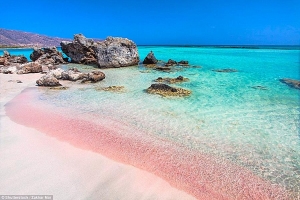
Popular Cephalonia Beach To Reopen Soon

One of Greece’s most popular beaches was expected to reopen to visitors after repair works were carried out following several landslides recently. Myrtos beach, an iconic location on the Ionian island of Cephalonia and a permanent fixture in campaigns advertizing Greece as a leading tourist destination was set to welcome local and international travelers soon.

The announcement was made by Transport Minister Michalis Chrysochoidis who visited the area to inspect the progress of the repairs. The road to Myrtos had been in a state of disrepair since the island was hit by two strong earthquakes that damaged a major portion of its road and marina infrastructure in the beginning of the year.

The first round of emergency repairs in the area were being carried out on a 7 million euro budget, while a call for tender regarding additional repairs was expected to be announced at the end of the high tourist season.

To read more, please visit ekathimerini.com

Thursday, 19 February 2015 13:30

Greece Needs Debts Cancelled And Growth

As economists, we note that the historical evidence demonstrates the futility and dangers of imposing unsustainable debt and repayment conditions on debtor countries; the negative impact of austerity policies on weakening economies; and the particularly severe effects that flow on to the poorest households.

We therefore urge the troika (EU, European Centra Bank and IMF) to negotiate in good faith with the Greek government so that there is a cancellation of a large part of the debt and new terms of payment which support the rebuilding of a sustainable economy. This settlement should mark the beginning of a new EU-wide policy framework favouring pro-growth rather than deflationary policies (Report, 14 January).

We urge the Greek government to abandon the austerity programme that is crushing economic activity and adopt a more expansive fiscal policy setting, targeting immediate relief from poverty and stimulating further domestic demand; to launch a fully independent investigation into the historic and systemic failure of the Greek public financial management processes (including any evidence of corruption) that led to the accumulation of debt, the disguising of the size and nature of the debt and the inefficient/ineffective use of public funds; and to consider the establishment of a judicial body or alternative mechanism that is independent of government and charged with a future responsibility of investigating corruption from the highest to lowest levels of government.

To read more, please visit theguardian.com

Exactly two years after the state broadcaster was abruptly shut down by the previous government, ERT began broadcasting again in place of its successor NERIT.

Employees at Greece's state television ERT hugged each other and cried on Thursday 11th June 2015 as the channel aired its first broadcast in two years, after it was shut down under one of the previous government's most drastic austerity measures.

Leftist Prime Minister Alexis Tsipras, who is racing to reach a cash-for-reforms deal with the European Union and IMF, had called ERT's closure "a great wound" of his country's bailout. He made its reopening one of his priorities as part of efforts to roll back cuts demanded by the lenders.

Employees gathered on the set in the early hours of 11th June 2015 in tears as anchors prepared to present the first early-morning talk show. Ahead of the programme, the channel played out footage of some of Greece's most famous landmarks and scenery, as the national anthem blared out.

"It's a special day for all Greeks, for philhellenes, for those who love Greece and for those who love freedom of information," anchor Nikos Aggelidis said at the start of the show. "We're nervous. We're very touched."
Visibly moved, his co-presenter Vasiliki Haina added in a shaky voice: "It's a special day for us, a difficult day." The news ticker at the bottom of the screen read: "The return of ERT two years since the black."

To read more, please visit: The TOC
Page 280 of 452