

XpatAthens

XpatAthens

Wednesday, 09 August 2023 07:00

August In Athens: Fun Things To Do In The City

It may be a little hard watching everyone packing their suitcases and heading for one of the so much-appraised Greek islands, but, just because you are stuck in Athens during the hottest month of the year, it doesn't mean you can't have a blast! 

The Greek capital is full of surprises; a city that never sleeps; a city that has something up its sleeve for everyone, locals and visitors. Here's a list of fun things to do in the city this August!

Watch A Movie At An Open-Air Cinema

Therinos
@neofilms_gr

In Greece, you know it’s summer when outdoor cinemas are finally open. It’s the ultimate sign of summer the season. Movies under the starlit sky, jasmine-scented gardens, and fresh popcorn; what else could you ask for? Almost every Athenian neighborhood has its own open-air cinema or “therinos” in Greece, with Cine Thisio perhaps being the most pretty one, since just above the movie screen one can see the lit Acropolis.

Explore The Athenian Riviera

Athenian Riviera
@petros.sg

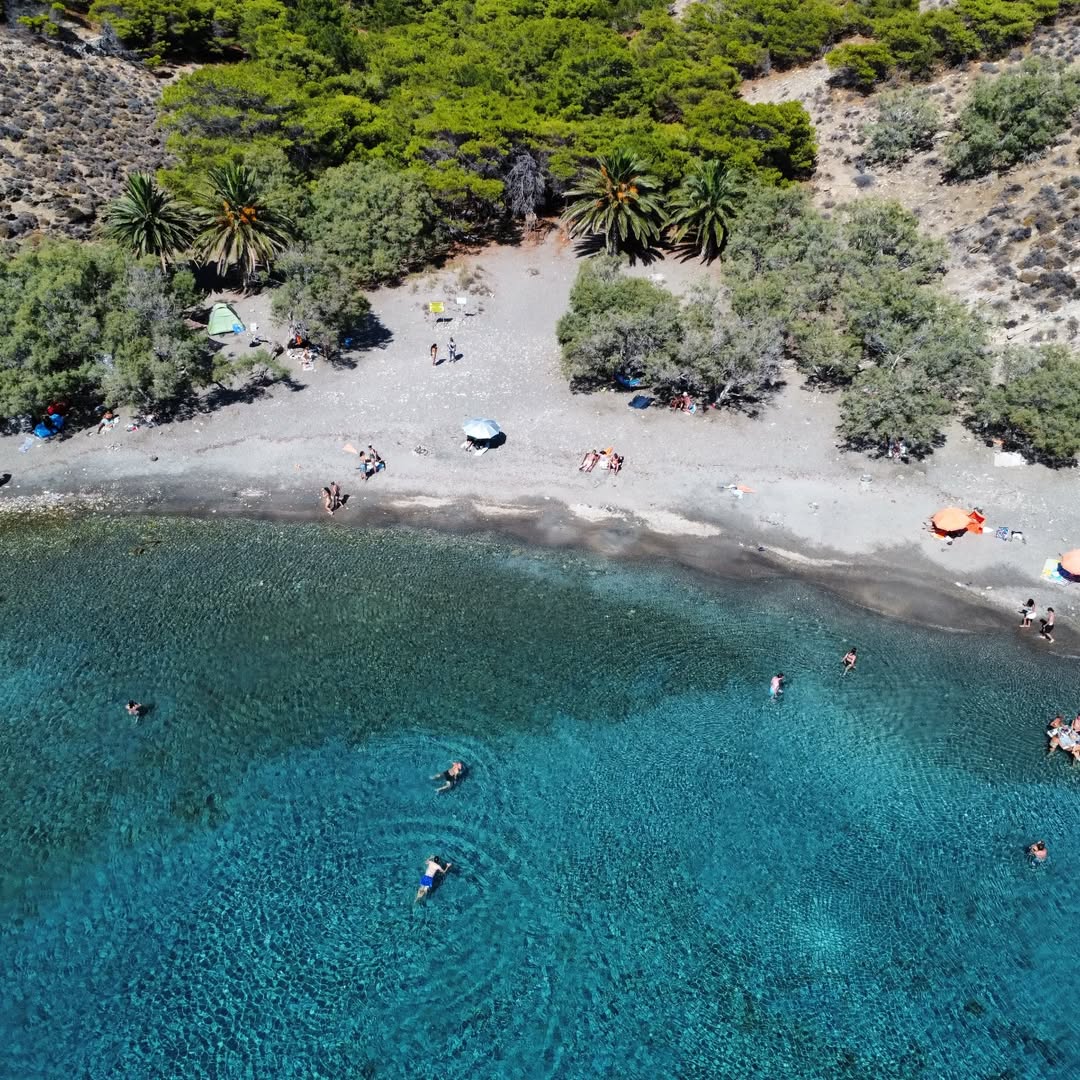
Who said you have to leave the Greek capital to find lovely beaches and have a great summer vacation? The Athens riviera has an array of organized and non-organized beach heavens that will make you feel you have escaped to a Greek island. Except for swimming though, there is so much you can do along the Athenian riviera; exercise, eat seafood, sip cocktails at a beach bar, and the list goes on. 

Drink Cocktails At A Rooftop Bar

Rooftop Bar
@msroofgarden

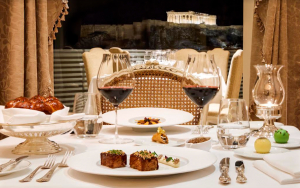
Sitting outside at bars and restaurants is, of course, an integral part of summer in Greece, and rooftop bars take the al fresco experience to a whole new level. Whether you’re looking for a romantic setting with gourmet food and lounge music, a place to party under the stars, or a spot to chile, Athens has a rooftop for everyone. Just imagine enjoying an exotic drink all while contemplating the mesmerizing views towards the Acropolis and gazing at majestic sunsets; pure magic!

Attend A Performance At The Odeon Of Herodes Atticus

Odeon Of Herodes .Atticus
@marco_marro

Summer in the city also means outdoor concerts. Therefore, a visit to the Odeon Of Herodes Atticus is a must! This stunning gem sitting on the southwest slope of the Acropolis Hill is one of the prime locations for the Athens Festival, happening every year from May until September, and for years it has been welcoming top-notch names from the local and international music and theatre scene. 

Stroll Around Plaka

Plaka
@billxen

For many, Plaka is the most beautiful neighborhood of Athens, and justifiably so. Just below the Sacred Rock of Acropolis the oldest neighborhood of Athens is teaming with impressive neoclassical buildings, small churches, taverns, scenic cafes, museums, galleries, bougainvillea decorated houses, and breathtaking views. Wandering its winding streets is a unique experience that makes for lots of Instagram-worthy moments!
According to ancient myth, the sacred island of Delos was the birthplace of Apollo and Artemis – namesakes in our modern age for the two space missions putting humans on the moon (the Apollo mission sending the first men in 1969, and the current Artemis mission soon to send the first woman).

Today, the island of Delos has also inspired a different mission: to spread knowledge of climate change around the world. Being one of the most important archeological sites in the world (the whole island is an open museum) already affected by the climate crisis and the rising sea level, it appears the perfect spot to send a message from; The “Alpha Mission – Delos” project, created in collaboration with space research centers around the world, aims to combine art and technology to inspire action for the environment.

Representatives from the sectors of arts and culture, space technology, archaeology, and philosophy took part in a unique event at UNESCO’s Paris headquarters, as part of the project. The event consisted of a discussion about the future and how to salvage our planet for the next generations, followed by the screening of last year’s much-talked-about concert at Delos titled “The [Uncertain] Four Seasons.”

For the first time bringing a classical music orchestra for a broadcast concert amongst the ancient ruins on Delos, the performance consisted of an algorithmic re-composition of the Vivaldi classic (The Four Seasons). The work, meant to highlight the uncertainty about the future of our planet, was broadcast live at the Athens Concert Hall then. Contributing musicians included the European Union Youth Orchestra along with Ukrainian and Russian musicians, as well as the Crimean-born and Berlin-based violinist Diana Tishchenko, and Greek virtuoso Sokratis Sinopoulos on the lyra. The concert was dedicated to the pioneering Greek composer Vangelis.

Participants at the event at UNESCO’s headquarters in Paris included the President and co-founder of the World Human Forum, Alexandra Mitsotaki; astrophysicist, planetologist and Director of Research at the National Centre for Scientific Research (CNRS) in Paris, Athena Coustenis; the philosopher Patrick Viveret; and the Director of the French School of Athens, Véronique Chankowski.

To read this article in full, please visit: greece-is.com


In the annals of ancient Greek history, a plethora of occupations once thrived, each playing a vital role in the fabric of society. Yet, as time unfurled its ceaseless march, many of these professions faded into obscurity, their legacy preserved only in the pages of history.

Let's take a look at some traditional occupations that have all but disappeared in the wake of modernization.


Newspaper Seller (Εφημεριδοπώλης) 

newspaper seller

In the bustling streets and squares of Greek cities, newspaper sellers were a ubiquitous sight, their voices echoing through the urban landscape as they hawked the day's headlines to passersby. Armed with bundles of newspapers, these vendors provided a vital link between readers and the latest news and information. However, with the rise of digital media and declining print circulation, the role of the newspaper seller has steadily diminished, leaving behind a bygone era of street-level journalism.

Milk Carrier (Γαλατάς)

galatas1


Before refrigeration became commonplace in Greek households, milk carriers played a crucial role in delivering fresh dairy products to doorsteps each morning. Laden with metal or wooden pails filled with milk, these diligent workers traversed neighborhoods, providing families with a daily supply of this essential staple. However, with the advent of supermarkets and packaged dairy products, the tradition of door-to-door milk delivery has largely disappeared, consigning the milk carrier to the annals of history.

Shoe Polisher (Λούστρος)

loustros


Shoe polishers once plied their trade, offering their services to passersby seeking to restore luster to their worn footwear. Armed with brushes, cloths, and pots of polish, these artisans meticulously buffed and shined shoes to a gleaming finish, earning a modest living from their skilled labor. With the decline of traditional cobbling and the rise of disposable footwear, the demand for shoe polishers has dwindled, relegating this once-respected craft to the margins of society.

Laterna Player (Λατερνατζής)

laterntzis


In the twilight hours of Greek evenings, the haunting strains of the laterna once filled the air, captivating listeners with its melancholy melodies and nostalgic tunes. Operated by itinerant musicians known as laternantzides, these portable barrel organs provided entertainment and diversion to audiences gathered in public squares and tavernas. 

Haulier (Αγωγιάτης)

agogiatis
Haulier, or agogiatis in Greek, was a livelihood transporter who utilized pack animals, carts, and even sleds in winter landscapes. They transported everything, from clients as a sort of road itinerary service, to goods and food supplies. Often, they also undertook the transportation of patients, corpses, etc. From the 1920s onwards, with the advent and widespread use of motorized vehicles, αγωγιάτες gradually became marginalized and subsequently faded away.

Ice Seller (Παγoπώλης)

pagopolis 2

In the sweltering summer months, the ice seller was a welcome sight in Greek neighborhoods, providing relief from the oppressive heat with blocks of ice harvested from mountain lakes and rivers. Laden with wooden carts or wagons filled with ice, these intrepid vendors traversed the streets, offering their chilly wares to parched and overheated passersby. With the widespread availability of refrigeration and commercially produced ice, the tradition of artisanal ice harvesting and sales has faded, leaving behind memories of a cooler, simpler time.

Metal Polisher (Γανωτής)

ganotis


The "ganotis" in Greece was a skilled metal polisher specializing in revitalizing copper utensils. Their expertise lay in restoring the shine and removing corrosion from these items, preserving their beauty and functionality. Through meticulous cleaning and polishing techniques, they transformed dull utensils into gleaming treasures, showcasing their craftsmanship and dedication to preserving Greek heritage.

Moving to Greece as an expat can be both exciting and overwhelming. Whether you're relocating to Athens, Thessaloniki, or one of the beautiful Greek islands, these practical tips will help you navigate your transition more smoothly and settle into your new Mediterranean lifestyle.

1. Master the Greek Bureaucracy Early

Greek bureaucracy can be complex, but understanding the system early will save you countless hours of frustration. Start by obtaining your AFM (tax number) as soon as possible – you'll need it for almost everything, from opening a bank account to signing a rental agreement.

Visit the local tax office (DOY) with your passport, rental agreement, and completed M7 form. While there, also inquire about residency requirements if you plan to stay long-term. Keep multiple copies of all documents, as Greek offices often require original paperwork rather than photocopies.

2. Choose Your Location Wisely

Greece offers diverse living experiences, from bustling urban centers to tranquil island communities. Consider your priorities: proximity to international schools, healthcare facilities, transportation links, and your workplace.

Athens neighborhoods like Kolonaki and Kifissia are popular with expats but come with higher costs. Thessaloniki offers a more affordable alternative with excellent cultural amenities. Island living provides unmatched natural beauty but may limit access to certain services. Research thoroughly and, if possible, spend time in different areas before making your final decision. When planning your relocation, working with affordable international movers in Greece can help you transport your belongings efficiently while staying within budget.

3. Learn Basic Greek – It Makes All the Difference

While many Greeks speak English, especially in tourist areas and among younger generations, learning basic Greek will significantly enhance your daily life and integration into the community.
Start with essential phrases for shopping, dining, and emergencies. Greeks genuinely appreciate foreigners making an effort to speak their language, and you'll often receive warmer service and better prices. Consider enrolling in Greek language classes – many cities offer courses specifically designed for expats, and it's also a great way to meet other internationals in similar situations.

4. Understand the Healthcare System

Greece has both public and private healthcare systems. EU citizens can use their European Health Insurance Card (EHIC) for emergency treatment, but long-term residents should register with the public system (ESY) or consider private insurance.

For routine care, many expats prefer private healthcare due to shorter waiting times and English-speaking doctors. Research hospitals and clinics in your area, and establish relationships with a general practitioner, dentist, and any specialists you might need. Keep in mind that many doctors in tourist areas and major cities speak English, but this becomes less common in rural locations.

5. Embrace the Greek Lifestyle & Build Your Network

Greece operates on a different rhythm than many Northern European or North American countries. Shops often close during afternoon siesta hours (roughly 2-5 PM), dinner is typically served much later (9-10 PM), and the pace of life is generally more relaxed.

Join expat communities both online and offline. Facebook groups for expats in your city, international clubs, and volunteer organizations are excellent ways to meet people and get local advice. Don't overlook connecting with Greek locals as well – they can provide invaluable insights into the best local services, hidden gems, and cultural nuances that will enrich your experience.

Final Thoughts

Relocating to Greece offers the opportunity to experience one of Europe's most historically rich and naturally beautiful countries. While the transition requires patience and preparation, most expats find that Greece's warm climate, welcoming people, and relaxed lifestyle more than compensate for any initial challenges.

Take time to research thoroughly, be patient with bureaucratic processes, and remain open to new experiences. Your Greek adventure awaits, and with proper preparation, you'll be well-equipped to make the most of your new Mediterranean home.
Wednesday, 13 November 2024 15:18

The Salvation Army In Greece

The Salvation Army is an international Christian movement that operates in 127 countries worldwide. In Greece, the Salvation Army has been operating as a nonprofit company since January, 2011, standing by vulnerable groups, most especially: young families and single mothers, the elderly and the so-called ‘new poor’ – those formerly of the middleclass who now need help in positively adapting to a new lifestyle which incorporates a lower standard of living.

WHO WE ARE

After successfully founding and running the Salvation Army in Thessaloniki, Greece, Captains Polis Pantelidis and Maria Konti Galinou relocated to Athens to establish similar programs and activities. These Athens initiatives fall under two main areas: the ‘By Your Side’ community program and the Christian Church, or ‘corps’, division.
HOW WE DO IT


‘BY YOUR SIDE’ COMMUNITY PROGRAM
:

ADOPT A FAMILY PROGRAM
This program provides a concrete way for groups of friends to help their fellow humankind by providing concrete assistance in a pro-active, transparent manner. Particular emphasis is placed on maintaining the privacy and dignity of those on the receiving end.
With the individual’s dignity in mind, we aim to support those benefiting by the program to reach their full potential – with a view to their achieving independent living. It is open to all, regardless of age, culture, nationality, political and/or religious beliefs.

PARENTS AND TODDLERS GROUP


We consider family to be the heart of any community; any link by marriage, adoption or blood is considered family. Accordingly, we provide families with a safe, controlled, fully equipped environment where young children can play together or with their carers. Perhaps equally important, the carers also have an opportunity to socialise with each other.The programme is open to children aged 6-months to 4-years-old, regardless of race or political, cultural and/or religious beliefs. In order to participate, an application form must be filled out and accepted. Participants are also encouraged to support the program with any donation possible - even as small as 30 cents per session.

CHARITY ‘SHOP’

Following international Salvation Army tradition, this shop makes donated new and second-hand articles available to the general public. Small donations are requested to be used to support other Salvation Army activities in the community.
All donors, customers and volunteers involved in the charity shop are viewed as human beings with equal rights. Staff, whether paid or volunteer, must be attentive to the physical, emotional and spiritual needs of all participants.
As for customer care, all donated articles are selected to meet quality standards. Each piece is washed and pressed on the Salvation Army premises.

GREEN LIGHT PROJECT

The Salvation Army in Athens actively participates in the fight against human trafficking. Equally important is the issue of prostitution, where many girls are trapped, often at a very young age. This program provides a nonthreatening place where victims of trafficking and women working in the sex industry can regularly drop in for a ‘normal’ chat and cup of coffee - hence facilitating their societal integration. The program also hosts workshops.

The trafficking of humans for sexual exploitation is against the basic human right of freedom, and thwarts people’s right to set their own boundaries. We believe that human trafficking does not have a place in human society and must be eradicated.

CHURCH OR ‘CORPS’:

Like most Salvation Army centres, we hold weekly worship services on our premises on Sunday mornings, from 11.00-13.30. These meetings have a relaxed atmosphere and include hymn singing, Bible readings, members of the congregation talking about their Christian experiences, and presentations by worship or drama groups. We also host supplementary activities, like Sunday School, Bible studies and prayer meetings.
Our belief follows the mainstream tenets of Christian faith, with particular emphasis on the saving grace of Jesus Christ. We aim to share the message of Christian love to everyone, while at the same time working with and respecting all other faiths and beliefs.

We view the fight against poverty, abuse and social injustice as an expression of true Christianity. We desire to lend a listening ear and helping hand to those in need, in order to encourage them to reach their full potential and achieve independent living. We intend to care for the community by encouraging change through hope, and example.

How can you participate?
The Salvation Army aims to spread the Christian message of God's love to all, as well as extend humanitarian aid, regardless of politics, religious beliefs or race. We invite you to contact us and join this effort, as volunteers, donors or sponsors.

Offering Aid To Refugees

The Salvation Army in Athens has been working with the refugees arriving in Athens from the Greek islands. We distribute around 700 to 1000 sandwiches and around 150 to 200 litres of milk. Also, we visit the people living in Athens' squares during the day assessing their needs and help them accordingly. We support with nappies, baby milk, clothing, shoes, socks and soon we will be able to provide sleeping bags and water proof coats. So many stories and so many lives and each one of them very special. The problem is here to stay and with the winter months approaching we would like to be ready to be a positive step on their journey.

Wednesday, 18 February 2015 12:30

Kypseli, Tzoumerka

Kypseli Village is built at an altitude of 650 meters, at Tzoumerka, between the peaks "Tzouma" and "Ftelia". The village welcomes visitors to the stunning natural scenery, with architecture, traditional folklore, long-lasting elements. In the houses, churches, mills, bridges, the local black stone chipped by famous masters, exudes an air of simplicity and authenticity.


The small paved square with the parish church of St. Nicholas, the planes and the simple cafes and grills, are forming the picturesque village ambience. The Karali Folk Museum with collection, which spans the last two centuries, is one of the points of interest.

The material is more than 1800 items and includes pastoral and agricultural utensils for household use, weapons and costumes of the region, wood carvings, embroidery, coins, tools and various miscellaneous items of folk art.

The Annunciation Monastery, established in 1700 with magnificent frescoes in good condition.

The Church of St. Nicholas, built in 1904, located in the central village square.

The Church of San Marco and the Church of St. Cosmas Aitolos.

Wander to the two mills to the position Goura, which are declared as preserved monuments, as well as the church of Saint Panteleimon.

Source: Xenion.gr

Thursday, 19 February 2015 13:28

Economists: Greece Will Stay In The Eurozone

That’s the view of economists in a Bloomberg survey as the anti-austerity SYRIZA party appears set to take power after elections on Jan. 25. They say there’s an 80% chance that Greece sticks with the euro even if Alexis Tsipras forms a majority government. More than half of respondents see Greece getting debt relief, whoever wins.

There’s a 15% chance Greece will leave the 19-nation currency union if Tsipras forms a coalition government with one of the centrist parties, the Bloomberg survey shows. That compares with 5% under an alliance led by New Democracy.

The risk increases to 20% if SYRIZA gets an overall majority, compared with 5% under a New Democracy majority, the poll shows.

A victory for Tsipras, either alone or in coalition, would result in debt relief for Greece, according to 87% of those polled, while 57% said the same of a Samaras victory.

“Compromise is not as hard as it looks,” said Alan McQuaid, chief economist at Merrion Capital in Dublin. “SYRIZA does not have a democratic mandate to take Greece out of the single currency. It may have to form a coalition to govern, requiring compromise even on its flagship policy. And Europe can give.”

To read more, please visit thetoc.gr/eng

Monday, 28 September 2015 07:00

Could This Start-Up Save The Greek Economy?

A week-long start-up accelerator program kicked off mid-September in London with the aim of finding an idea that will make an immediate contribution to the crisis-worn Greek economy.

Six short-listed companies worked with mentors and investors, including Google executive Steve Vranakis and George Kartakis of Paypal-owned Braintree, to refine their ideas before competing in a Dragons Den-style event at the end of the week.

The ideas included a chemical formula to protect historical sites from graffiti, a scheme to recycle unused hotel toiletries, a Mastiha liqueur importer, an online education manager, a digital diary for booking civil weddings and an internet shop for items handmade by Greek businesses.

The accelerator challenge, which was run in partnership with Watershed Entrepreneurs, was organised by Reload Greece, a non-profit organisation that encourages entrepreneurship from Greek expats and others that will have a social and economic impact in Greece.

"As we are based in London, we are tapping into the diaspora, the global community who are connected with Greece," said co-founder Effie Kyrtata, a 25-year-old Athenian who moved to London seven years ago.

"We’ve seen a lot of people leave Greece and come to other countries – the brain drain, the lost generation – and lose contact with Greece. We want to create a bridge between Greece and the UK."  

To read more, please visit: The Telegraph
Monday, 05 September 2016 07:00

Best Old Towns And Villages In Greece

Rhodes Town - Dodecanese
 
Between Karpathos and the shores of Asia Minor, Rhodes shows evidence of Western European influence from the days of the Knights and Italian domination.

Corfu Town - Ionian Islands

Corfu is considered the closest to Western Europe, both geographically and culturally. It was the first area of the country to be conquered by the Romans and then eventually passed through the hands of the Venetians, the French, and the British. The Corfiots have a long tradition in music, theatre, and intellectual pursuits.

Monemvasia - Peloponnese

Considered the Gibraltar of the Peloponnese, Monemvasia was fortified during the Middle Ages to protect the inhabitants from raids by the Avars, Slavs, and pirates. The town took its name from the Greek words meaning single approach, the point at which the rock is connected with the mainland. This medieval fortress-state is built on a rock 300 meters above the sea.

Zagorohoria - Epirus

The villages here seem to have been discovered around 912, but the area was really developed during the Ottoman occupation because of the privileges awarded to its inhabitants by the conquerors. There is a chain of 46 traditional villages in the mountains north of Ioannina, whose natural boundaries are Mts Mitsikelli, Gamila, and the Aoos River. Thick pine and fir forests, crystalline streams and stunning scenery, this area never fails to awe its visitors with majestic natural beauty.

Mani - Peloponnese

The chaos of Mani’s past history and the severity of its bizarre customs forced almost every family to have its own defensive town to live in, its own chapel, and their own cemetery. In Mani, there are 250 villages and hamlets, 800 towers, and six castles!

To read this article in full and for more old town destinations, please visit: Hip Greece
Tuesday, 31 January 2017 07:00

Microbreweries In Greece

In recent years, microbreweries throughout Greece have been producing beers that come with their own Greek stamp of authenticity. From Argos, Messinia, Patras, Evia, Serres and Komotini to Crete, Santorini, Tinos, Chios, Corfu, Kefalonia, Rhodes and Piraeus, microbreweries are on the rise, creating distinctive, unpasteurized, unfiltered, aromatic beers, expanding production, raising new capital and trying to satisfy international demand as local interest in their beers also grows.

The competitive advantage of Greek microbreweries is the high quality of the tasty beers from unique recipes, achieved on account of the production of small quantities so as to enhance the flavour, the aromas and the nutritional value of the beer. They also produce organic beers using local honey and grains, just as they did thousands of years ago. Microbreweries apply environmentally-friendly processes which minimize the ecological impact and support the community through local employment practices, as well as the local economy by sourcing materials and services.

Greek brewers – once professors, pharmacists, chemists, enologists – decided to devote themselves to experimenting with beer. Their allies: the mild Greek climate, the natural fresh water springs, hops and grains, together with other ingredients used to make their beer taste good, such as pure aromatic Greek honey, citrus, spices and flowers. The first Greek microbrewery began in 1997, and today at least 20 more are operating in some of the most beautiful destinations in Greece.

To read this article in full, please visit: Greek News Agenda
Page 276 of 452