
Wellness Hub Top Banner
XpatAthens

XpatAthens

A three day international event celebrating experience, wellness, & gastronomy.

The highly acclaimed Porto Carras Grand Resort, where nature meets the sea and historical heritage meets modern hospitality, is proud to present Porto Carras Athlos for the first time. This is a sports tourism and wellness event being held for the first time in Northern Greece, aiming to establish itself as a new and iconic institution. The event will take place over the three-day weekend of Holy Spirit, from May 29 to June 1, 2026, transforming the enchanting destination of Sithonia into a vibrant hub of gathering, action, and shared experiences for sports enthusiasts.

The Philosophy of “Athlos”: The Power of Personal Excellence

The choice of this name stems from the heart of Greek heritage and the pursuit of harmony between body and spirit. In contrast to the traditional notion of superhuman effort, Porto Carras Athlos redefines the word, as the true Athlos is not the timer or the record, but the decision to participate. It is the moment when the visitor leaves everyday life behind to find themselves in a unique destination, finishing with a smile and writing their own personal story. The event is not just a series of races, but a community of people who share the same need for movement, connection, and well-being.

Mythological Trails Through the Unparalleled Landscape of Sithonia 

The event combines athletic competition with the region’s rich mythology and breathtaking natural landscape, transforming Sithonia and one of the Mediterranean’s premier destinations, into a vibrant gathering place, offering breathtaking routes:
  • The Giant Run Series (21km, 10km, 5km, 1km): Inspired by the epic Battle of the Giants, runners don’t just participate in a race, they tour the paradise of Porto Carras. The routes constantly change: they start alongside the world-class marina, traverse the shady paths through the pine forests that border the sea, and pass through the iconic, lush vineyards of Domaine Porto Carras. Every kilometer becomes a visual experience and a symbolic journey of self-improvement.
  • Skylias Open Water (5km, 3km, 1km): Dedicated to the legendary diver Skylias, one of the most iconic figures of antiquity, the open-water races invite participants to dive into history. Against the backdrop of the 9km coastline, swimmers will compete in the Blue Flag certified, calm, and crystal clear waters of Toroneos Gulf.
Innovative Concept: Sports, Education & High Gastronomy 

Porto Carras Athlos is not limited to competitions, but is a holistic lifestyle event designed to bring people together through shared experiences. Special emphasis is placed on the younger generation, through Football Clinics, Baby Swimming Sessions, and activities that promote teamwork. At the same time, the visitors’ experience is elevated by the cultural and culinary character of Domaine Porto Carras, which has been in operation since 1967 and is the largest organic vineyard in Greece, offering unique wine-tasting sessions of fine vintages in a setting of unparalleled aesthetic appeal.

Beach Volley Camp by Olympian Efi Sfyri

As one of the largest and most well-established resorts in the Mediterranean, Porto Carras Grand Resort places its modern sports facilities at the heart of the festival, inaugurating two brand new beach volleyball courts through specialized camps led by Olympian, European champion and well-known beach volleyball player Efi Sfyri

At the same time, the schedule will include Beach Soccer, Tennis, and Padel, the innovative sport of Footgolf, as well as Yoga and Pilates sessions right by the water.

Registration & Information

Secure your spot now at this major sports tourism event! Registration is available exclusively through the more.com platform

Special, discounted accommodation packages at the Porto Carras Meliton Hotel, managed by SWOT Hospitality, for participants and their accompanying guests will be announced very soon.

#portocarrasathlos

Porto Carras  

Porto Carras Grand Resort is the historic iconic resort that has contributed significantly to the establishment of luxury tourism in Greece, especially in Halkidiki. For 50 years, it has been offering high-level services and authentic Greek hospitality to its guests in an environment of unparalleled beauty and intense contrasts. 

Located alongside a sandy coastline of 9 kilometers and surrounded by a verdant area of 18,000 acres, with gardens under the shade of pine trees dressing the slopes of Mount Meliton. Its facilities include an 18-hole golf course, the biggest organic vineyard in Greece, a spa and wellness center, restaurants with high-level gastronomy, a casino and a marina that provides integrated services. In addition, a wide range of sports and cultural activities on land and sea are available to visitors of all ages. 

Website: www.portocarras.com 

We sat down with Richard Marranca, writer, educator, and lifelong explorer of the arts and humanities. With a background that spans literature, history, philosophy, and even sociology, Richard brings a uniquely interdisciplinary perspective to everything he does. His work blends academic insight with a deeply personal, reflective approach inspired by thinkers like Carl Jung and Ralph Waldo Emerson, encouraging students and readers alike to ask not just what stories mean, but what they reveal about ourselves.

From his early travels to years of teaching and writing across diverse subjects, Richard Marranca has always been driven by creativity, connection, and a fascination with the ancient world. Whether he’s leading a classroom discussion, practicing meditation, or studying with organizations like the Egypt Exploration Society, he continues to explore how past civilizations can illuminate modern life.

How were you first drawn into these themes of the ancient world: the myths, the symbols, and all of that fascinating history? 

Around here, in New Jersey where I live, "old" is relative. There are many Victorian homes in my neighbourhood, dating back to the late 19th century—which I love walking around—but that, or a 100-year-old pizzeria, is about as far back as the local history goes.

For me, the spark was partly pop culture. As a kid, we watched all the Greek and Roman films and the biblical epics at Easter. It’s interesting how these origins start so early in our lives. I received a book collection about the ancient world for Christmas one year—I still have it on my shelf—which covered everything from prehistoric times and Sumeria to Egypt, Greece, and Rome. It’s actually quite similar to what I teach now in my humanities surveys: a chronological journey from the earliest civilizations through to the Renaissance. In a way, I’ve been doing the same thing since I was ten years old.
Another major factor was the Metropolitan Museum of Art in Manhattan. I went there constantly as a child with neighbors and relatives. It’s one of the great museums for Greek, Roman, and Egyptian collections. Then, when I was seven, I took a formative trip to Italy with my mother, aunt, and grandmother. We visited relatives in Calabria and saw Greek ruins in Southern Italy. My relatives in Sicily live near Agrigento, the Valley of the Temples, and seeing those Greek temples made me feel different from my peers who just went to the Jersey Shore every summer. It made me realize this stuff was truly amazing.

I might have become an archaeologist or a historian if I had been more singularly focused, but in college, I was drawn to a variety of things, including creativity. I eventually studied at New York University and did a semester in Athens through their program.

So, it all started very young, around ages eight to ten. While the arts and humanities don't always offer the immediate economic payoff that STEM does, they provide a spiritual, humanistic, and artistic quality that is invaluable. In the end, it’s worth it because you find the energy in these places and you start connecting the dots.

Like you said, we can draw a lot of energy from these ancient places. Is there specific knowledge, perhaps life lessons, that we can take from these ancient cultures and philosophies?

There are so many great messages to be found. Studying the arts and humanities in Greece or Italy provides innumerable life lessons. Of course, the people you meet today are perhaps the most important part of any journey. You might go there to study Homer or Socrates, or to walk the Agora as Socrates did, and that is wonderful; but it’s often the spontaneous moments that stay with you, like having ice cream with an elderly couple you just met, or simply petting the local cats and dogs. There is a spiritual energy and a sense of inspiration there.

From the ancient world, I think we primarily gain the value of community and friendship. That is a very strong Greek value today, as it was in antiquity. Someone like Epicurus had such a profound message about friendship, while Aristotle gives us an amazing sense of curiosity; he was truly interested in everything.

Lately, I’ve been doing a lot with Socrates in my classes. I have my students watch videos and read short selections, even in my English courses. I ask them to form Socratic groups where they simply ask each other questions. I think this is vital today, with the far left and the far right constantly at each other's throats. It is important to see if people can sit in the same room and discuss politics or religion without anger. I love the way Socrates looked for contradictions in what people say, because people tend to generalize and manipulate. Clarifying statements and concepts in that way is fascinating.

I might be answering this in a somewhat academic way, but on a personal level, I just love the mix of old and new in Athens. That is something we simply don't have here. Last summer, I stayed at the Lord Byron Hotel; right across the street was where Byron stayed in a monastery, and just a few miles away was the Parthenon. To go up there in the morning, or to just sit on a roof watching the birds sail by with the Parthenon right above you; those moments are magical.

I can’t quite explain it eloquently, but I tell my students: "Imagine what the world would be like if we didn't have these places." It would be a different, lesser world. It’s almost like something out of science fiction because the existence of these places is so important. It’s an adventure, and honestly, getting lost in Athens is often even better than seeing the sites you're "supposed" to see.

What life lessons have you personally gained over your years working with different civilizations and cultures, and how have these lessons influenced your life coaching practices?

Well, I see the humanities as "fertile soil." Whether you are studying philosophy, literature, or even watching modern adaptations, like the recent and upcoming films based on The Odyssey, the humanities provide a foundation for almost any endeavor. They inform psychology, religion, and especially creativity. Most artists I know strive to learn as much as possible about ancient cultures because those stories are built on universal symbols and archetypes.

I am particularly drawn to the Greek sense of balance and beauty. I love that their architecture and society were built on a human scale. By contrast, the Romans built on a massive scale, and America today feels like the Roman scale on steroids. I prefer the quality of small theaters and the lack of "giganticism." Aristotle even spoke about the ideal size for a city to remain functional and human-centric.
The humanities are like a Swiss Army knife; the tools they provide are useful for almost any situation. You never know where life will take you or which tools you'll need, especially now when the challenges we face are so vast. The East needs the West, and the West needs the East. Similarly, the modern world needs the ancient world to maintain a balancing act.

While you can study the ancient world for its battles and dates, you can also study it for its wisdom. The ancient essays on friendship and community are simply amazing. That has been my primary focus lately, learning about the depth of community and friendship through ancient works.

You have traveled extensively, and we can really feel that wealth of experience when you speak. What advice would you give to someone who wants to get the most out of their travels? Have you encountered any specific challenges or lessons along the way?

Over the last several years, I’ve spent a lot of time in Asia, but lately, I’ve been drawn back to Europe. I’ve realized that I want to experience living in all of these different places, and I’m trying to find a way to manage that. For instance, last summer I spoke at Sorsogon State University in the Philippines, then traveled through Asia and back to Europe. It was a lot of movement.

When it comes to my recommendations for travel, I think the most important thing is to get close to the people. I love just milling around different areas and sitting. I remember particularly enjoying the area near Hadrian’s Library in Athens: the sky, the broad expanse, and the people walking by. I love just watching and talking to people; it’s fun, surprising, and sometimes you end up with friends for life.
If someone is new to travel, I often suggest staying in hostels. They are much more popular in Europe than in America and are great for meeting others. It’s a cliché, but you really should view travel as a journey rather than a destination. Not every aspect of it is fun; sometimes the "rough points" are the ones that teach you the most.

Be spontaneous. Follow the locals. It is always more special when you actually get to know the people who live there instead of just being part of the "travel crowd" in a hotel that could be anywhere in the world, the same bed, the same breakfast. When I studied in Athens, I didn't want to stay in the student housing with my peers. I went off on my own and stayed in a youth hostel. It must have been 95 degrees the whole summer, but I was so excited just to be in that environment.

I also think traveling by yourself is great if you have the nerve for it, though you do have to be careful depending on the country. It makes me a bit sad to see how the world has changed; there are places I visited in the past that I wouldn't go to now because they’ve become more dangerous. Similarly, some places have become so crowded at certain times of the year that they lose their appeal. I love watching old movies like Roman Holiday and seeing how relatively empty Rome was back then, it feels like the lost world of my grandparents’ generation.

If you could share one ancient idea with the world right now, whether Greek or from any other civilization you prefer, what would it be?

Initially, I was going to say Pythagoras, because I love his unique early advocacy for vegetarianism. That is quite special. However, I think I’ll stick with Socrates and his emphasis on conversation.
Specifically, I mean the art of true conversation: being genuinely interested in what people say and staying present. We shouldn't be fragmented, mentally moving ahead to the next task while a conversation is still happening. So much of that distraction happens now because of technology. We need to be mindful and situated, finding people important enough to give them not just our time, but "pure time" and pure interest. We need to truly hear them.

I sometimes realize that even after all these years, some of my relatives or friends hardly know anything about me, and it makes me wonder if the same is true in reverse. Do I really know them? Do I listen? My students, for instance, have so much to say. Just because I’m the teacher doesn't mean I have special insights into everything; in many ways, they know more than I do.

Everyone has a story. So, yes, I believe the message for now is communication: going around, asking people questions, genuinely listening, and building community.

How does experiencing Athens in person change the way you read the classic texts and connect with the historical figures you write about?

Walking through the Agora and the museums, it undeniably changes your perspective. Seeing the actual devices they used for democracy, the mechanisms for counting votes, is profound. When you go back to the trial of Socrates or the very notion of people freely making a choice, it becomes incredibly vivid once you've stood where those events unfolded.

On my last trip, I finally made it to the site of Plato’s Academy. It is essentially a park now, and I believe there are plans for further work on it, but it was amazing to stand there and realize that, in many ways, this is where the Western university began. It is deeply inspiring to know you are carrying on a tradition that is still moving forward.

There is also a certain romantic allure to island hopping while reading Homer; it brings the text to life in a way a classroom never could. I’ve only mentioned the "big figures" so far, but I haven't even touched on my interest in Alexander the Great, or the incredible women of antiquity like Aspasia or the scholars of Alexandria. There is simply so much depth and so many dimensions to explore once you are there.

You are currently writing a book. What is it about, and what inspired this particular project?

It’s actually a bit of a funny story. I was recently at a funeral home for a relative’s passing, and I found myself thinking I should interview the director for my book. He’s essentially doing the same thing the ancient Egyptian priests did: mummifying people. Nothing ever truly changes, does it?

I’m actually working on two books. The first is a collection of interviews, essays, and images centered on mummies. It started with Egyptian mummies, but as the project evolved, it became a comparative study. I’ve added sections on European bog bodies, the Capuchin crypts in Rome and Palermo, and the "Spirit Cave Man" from Nevada, one of the earliest natural mummies. I’ve even interviewed experts on Ötzi the Iceman.

This project was sparked by a lecture I attended by the wonderful Egyptologist Salima Ikram. I got to know her and interviewed her several times; she’s the first entry in the book. I’ve also included the great classicist Paul Cartledge, who discusses the funerary practices of Philip II and Alexander the Great. It’s nearly finished, and I’m just waiting on a few final pieces.

The second book is a bit of "goofy" fiction, likely for a teen audience but hopefully for adults too. It’s about a "mummy time traveler"—a kid finds a mummy case in an attic, thinks it’s a Halloween prop, but accidentally awakens a mummy and they go on adventures through time. It’s my usual mix of serious academic study and lighter, imaginative fun.

Beyond your books, you also write articles and conduct interviews. Is there a specific research topic or idea you are currently focused on?

I have a few things in motion. I’m starting an essay on Saint Francis that I hope to publish by Easter, focusing on his messages of compassion, nature, and simple living. I’m trying to give it a modern tone. I also have an upcoming interview at the Museum of Natural History in New York regarding the 12,000-year-old Spirit Cave Man.

On a different note, I want to write an essay on friendship, and I recently published a vampire story where the vampires are actually humanists who met Mozart and Leonardo da Vinci. Whether I’m writing fiction or nonfiction, I find I’m often exploring the same subjects, it uses a different part of the brain.

What questions or areas do you still want to explore that you haven't tackled yet?

I’d love to get back into writing about Asian philosophy and literature. I’ve practiced meditation with a group for years; I’m mediocre at it, but it has kept my life balanced. When I started doing this in high school, people found it "weird", the way people used to view yoga or jogging decades ago. Now, it’s everywhere.

I’m also deeply concerned about the environment and want to write more about that, especially with the news about melting ice sheets. In terms of psychology, I’m delving into consciousness through the lens of Carl Jung and evolutionary biology. I enjoy combining the humanities with science because academics often stay in their own "lanes," which can get boring. I’d rather be wide-ranging. And, of course, I’m still waiting for someone to invite me to help out at an archaeological dig in Egypt or Greece—I’d happily just pick up dirt!

I’m going to give you four historical figures. For each one, could you name the characteristic you value most?

Alexander the Great: His undaunted courage and vision. He was fearless and achieved things even the Romans couldn't replicate. He was a true genius of his time.

Plato: I have to go with his vision of clarity. His Allegory of the Cave is still the blueprint for modern stories like The Matrix. It’s that profound notion of moving from darkness to light and finding clarity even when you feel alone.

Pythagoras: He is such a mysterious, "East-meets-West" figure. At a time of war and repression, he came up with the idea of universal compassion through vegetarianism. He saw animals as "cousins." That perspective was singularly unique for his era.

Homer: Whether Homer was one person or a committee, the genius lies in the seamlessness of the storytelling. I value the theme of the Nostos, or the homecoming in the Odyssey. It’s the ultimate adventure, going out into the unknown, facing monsters, yet never forgetting the way back home.

Thank you so much, Richard, for sharing your insights, stories, and passion for the ancient world with us. Your perspective on blending history, creativity, and personal growth offers a refreshing and meaningful way to engage with the humanities! 
Improv night with HOI POLLOI on Sunday March 29th! HOI POLLOI improv troupe invites you to another hilarious, awkward, long-form improv show powered by the Athens English Comedy Club and House of Improv!

Featuring some of Athens’ most experienced improvisers, including a very tall Irish guy!

Hoi Polloi improv troupe welcomes you to one more evening of pure, chaotic, improvised fun - inspired entirely by your suggestions!

A single word from you, the audience will shape the very turn of events unfolding in front of you on stage. Expect glorious laughs, moments of touching joy, and complete and utter insanity. 

Improv c AECC Leonidas Kaklamanis3

💪 A team of improvisers take inspiration from the crowd at the beginning of the show and then perform a random number of scenes. Some scenes will appear once and then disappear forever, other scenes or characters might reappear. Free improv utilizes all the tools of improvisation theater, offering stories and scenes that can be both funny and dramatic, surreal and grounded, short and long. 

💥 A show where ideas and references collide and nothing ever quite goes as planned. 

⁉ Every night will be completely different, and anything can happen.

This is improv that celebrates the weird, warm, confusing, and human side of all of us, performed in - let's be real - moderate English. 

Improv c AECC Leonidas Kaklamanis5

About HOI POLLOI

The HOI POLLOI (/ˌhɔɪ pəˈlɔɪ/ from the greek words “the many”) troupe is made up of experienced improvisers with 3 to 15 years of practice. After performing together regularly they decided to join forces and creating a new, unstoppable, ensemble.

Created with the vision to offer amazing improv to English speakers in Athens, they bring diverse backgrounds, strong chemistry, and a shared love for playful, honest scenes.

Funny, awkward, energetic, and sometimes touching — their focus is always great improv, making eachother and the audience look good, and creating a great night out.

Find House of Improv online: 

Instagram
TikTok
Facebook

About the Athens English Comedy Club

🦉Founded in 2019, the Athens English Comedy Club is the first, and only, purely English comedy club in Greece!

📩 Sign up to our newsletter for direct-to-email updates and exclusive ticket offers!

Follow us on social media!

Facebook

Instagram

Twitter

YouTube

TikTok


Event Info 

Date: Sunday March 29th

Time: 21:00 (Doors open 20:40)

Tickets:
€8 early-bird
€12 general admission
€15 at the door

🎭 €5 for actors (box-office only, with an active Greek Actors Union ID. Email/phone reservation required)

We also offer 3 free tickets per show to persons with disabilities or unemployed persons (email/phone reservation required).

Duration: 1h15 + interval

Recommended for ages 16+


Thursday, 26 March 2026 13:02

The Meet Market: #EasterEdition 2026

Spring is calling, and the city’s favorite nomadic market returns to Technopolis!

Join in for a two-day celebration of creativity, music, and flavors. With over 150 local makers, the #EasterEdition is the ultimate destination for handpicked gifts, unique jewelry, ceramics, wellness products, and one-of-a-kind Easter candles (lambades). Vintage lovers can explore three dedicated zones of retro treasures, while foodies can enjoy a curated selection of street food and Greek craft beers.

What’s On:

  • Shopping: 150+ Designers, Makers, and Vintage collectors.

  • Music: Non-stop DJ sets from 10+ local favorites.

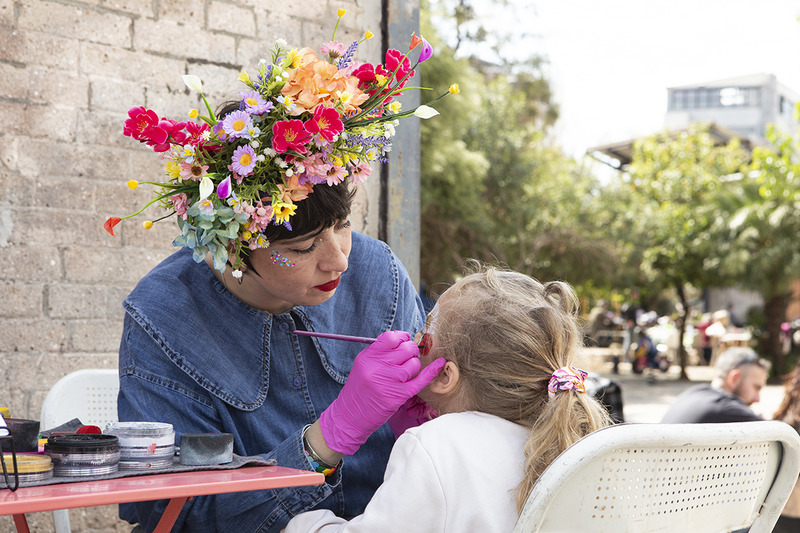
  • Family Fun: Free face-painting, gardening workshops, and a "Pollock-style" craft session.

  • Easter Egg Hunt: 100 hidden eggs waiting to be found for special prizes!

  • Grand Raffle: Enter to win one of three gift baskets filled with exhibitor products.

🌷 The Meet Market #EasterEdition at Technopolis City of Athens 
📌 Michanourgeio, Michanourgeio Courtyard, Warehouse & Central Yard 
📅 Saturday, April 4 & Sunday, April 5, 2026 
🕐 Opening Hours: 12:00 – 22:00 
📍 100 Piraeus St., Gazi 11854 
🎫 Free Entrance

✔ 150+ exhibitors 
✔ DJ sets 
✔ Street food & cocktails 
✔ Free activities for children

Spring finds the city in a creative rhythm, and The Meet Market is back with its most festive Easter edition yet. For two days, the heart of the city transforms into a meeting point for creators, brands, and visitors seeking authentic experiences, music, flavors, and inspiration in a unique springtime setting.

The days are getting longer, the mood is lifting, and The Meet Market is officially kicking off the festival season with its established #EasterEdition event on April 4 & 5 at Technopolis City of Athens. Everything you need for the perfect weekend in the city is waiting for you: shopping, music, drinks, food, activities, meetups, gifts, and good vibes.

vintage 3

The Place To Be For Lovers Of All Things Authentic & Handmade

More than 150 makers will fill the spaces of Technopolis with well-designed clothing and accessories, unique jewelry, home decor, ceramics, posters, and wellness products. In our tasting corner, you’ll discover delicious selections from Greek producers, alongside one-of-a-kind Easter candles (lambades) and special creations to gift this Easter.

For vintage lovers, not one, not two, but three dedicated spaces filled with handpicked pieces will turn your search into a true treasure-hunting experience.

candles lampades for kids

Our favorite DJs will take over the decks, rotating throughout the weekend to keep the rhythm going from start to finish. On the culinary side, you’ll find street food options for every taste, alongside Greek craft beers from independent microbreweries, with an emphasis on small-batch production and a wide variety of flavors.

general

Little visitors can expect a rich program of free activities and games, including the beloved Easter Egg Hunt that you simply can't miss! Hidden somewhere within Technopolis are 100 colorful Easter eggs… Can you find them? If you do, bring them to the Central Cashier and win prizes!

And of course, don’t forget to enter The Meet Market grand raffle, where 3 lucky winners will walk away with 3 gift baskets overflowing with products from the exhibitors!

#MakersLineup:

Hand-Designer Clothes:

Adelie Pengu, Aelia.You, Anemuku, BAKAYARO, Born Backwards, Circle of karma, CUT DESIGN, Eating the Goober, eek, Elli Papadaki, Funny Radical Acne Scars, Hazelnut Streetwear, Inky, Kado Handmade, Marsel Creations, Nerida, NIATA, ΝΙΚs, Ohet, OINOVERSE, Ovary Gang, Razzmatazz, Social Outkast, STILVI CLOTHING, ΣΥΝΑRΤΗΣΙΕΣ, The Lost Kids, The Spiral Project

clothes 2

Kids, Toys & Pets:

Aeikiniton, amilima, Antalou, Cow Makes MOO, Fiogos Handmade Baby Collection, Funky Little Stuff, Happy button store, Koka Handmade, Mamuka, Minibox, Mon Petit Chou, Nok Nok, TSIOU woodcrafts, Two Glittery Pitayas, Pitsy Ricky, Woofresh

kids

Accessories:

Al.cre, ALEF, Anakata, Boukla Loop Studio, Crocheterie Arachne, Her2, KALTSA ΣΟΚ, Le Plou, Molkano, ΜΠΛΑΝΚ!, Ode to Socks, The Feeddogs, THE INK JOB, The Mpini Project, Tul Handcrafted Design,  UNIVERSE 25 EYEWEAR

jewlery

Mind, Body & Soul:

Aethereal Candles, Ethra Essentials, Kalliope’s Botanicals, KALYKA, Labora Essences, LAVANDULA, Nymfes Cosmetics, Ofelima Holistic Skincare, The Soaphouse, ZEST NATURAL COSMETICS

mind body soul

Vintage & Retro:

Aura Vintage, Avant Garden, Cinderella Secondhand, Emerald Hut Vintage, Fabric Vintage, Hazel Ray Vintage, Its Clofie, King Kong Vintage, Lilia in Love, Memorabilia Lovers, Munda Vintage, Nostalgώ, OK Boomer, Retro So It is, To Diskadiko, TETOIO

vintage 2

Homedeco & Art:

Abstract Studio, Aethereal Ceramics, Armony Candles, ARTIO creative studio, Better Be Candles, Bok Choy Athens, Cactus DNA, Conseederate, danaismouart & Labeldone, EleniPal Ceramics, eunoia candles, Evie On Off,  hēpe, Inlenso Photography, Its Popiz, Kati Akraio, Loupes Printing, Madame Ginger, Made by Tifi, Meli Ceramics, Nātural Soy Candles, ΠΟΛΥ ΚΟΥΛ, Signature Project, SOMANYBLOBS, Straypot, Studio Anna Kiosse, The Couple Game, Tiny Truths, TO BEE OR NOT TO BE?, To Lemoni Art, Village Tree Ceramics, Vintage Trip

home deco

Tasting Corner:

Άγρια Νομή, Αγρόκτημα Δρόσου, ΖΥΜΑΡΙΚΑ ΑΝΑΓΝΟΥ, Aithra Spirits, ARCHETYPON Extra Virgin Olive Oil, Αστική Μέλισσα, Αχταρμάς, Bee Naturalles, ΓΕΥΣΕΙΣ ΝΙΚΕΖΗ, Οικογένεια Δασκαλάκη, Phil’s Granola, ΣάΟΣ, Vlachos Deli, Wellen Granola

tasting corner

Street Food & Drinks:

608BREWING CO, Falafeladiko, Hurry Up, Ideas Lab, Joshua Tree, Rubik’s laboratiore, Sourmena Brew, Tarantino Burgers

food

#DJ Lineup:

Saturday, 4/04
12:00 - 14:00: djk_aka_zegas
14:00 - 16:00: Rrose Sélavy
16:00 - 18:00: Pipe Dee
18:00 - 20:00: George Garavellos
20:00 - 22:00: dj kotétrataté

Sunday, 5/04
12:00 - 14:00: Winjer
14:00 - 16:00: Psontis
16:00 - 18:00: Afrogirl
18:00 - 20:00: Dj Kiten
20:00 - 22:00: Mr. G

djs

Kids activities:

Saturdaym 4/04
13:00 - 16:00 || Face-painting by Mountzoures
14:00 - 17:00 || Al-fresco activities by ΠΑΙΖώΝΤΑΣ
17:00 - 18:30 || Educational Workshop "Artistic Flower Shop" by ARTποιω

Κυριακή 5/04
13:00 - 16:00 || Face-painting by Mountzoures
13:00 - 15:00 || "Pollock-style" splattered crafts with the Tamtoom team!
16:00 - 17:00 || Gardening for kids by Pots & Plants by b2mt
17:00 - 18:30 || Bubble & Juggling Show by Fundastick Performing Arts 

Access:
Kerameikos Metro Station
Trolley: No. 21 (from Omonoia), Bus Stop «Fotoaerio»
Buses: 035, 049, 227, 815, 838, 914, Β18, Γ18, Bus Stop «Fotoaerio»

Facebook: Τhe Meet Market
Instagram: @themeetmarket.gr
YouTube: The Meet Market


Can’t make it to the event? No problem!
All your favorite creators under one digital roof. Visit the Meet Market's e-shop!


You’ve probably noticed it by now: Greece is absolutely overflowing with churches - more than 10,000 scattered across islands, mountains, villages and cliff edges. With so many of them dotting the landscape, it’s only natural that some turn out to be wonderfully unusual: tucked into rock faces, shaped in unique styles, or carrying the kind of wild backstories you’d expect from a novel.

With the celebration of March 25th, it’s a particularly special time to explore these landmarks. Not only is it a major national holiday, it is also a major Orthodox celebration—the Annunciation—where churches across the country become the heart of the festivities. To mark the occasion, we’ve looked beyond the famous blue domes to find the hidden gems that truly stand out.

Kakavo Cave Church — The Roofless Wonder Of Lemnos
Perched right at the top of Mount Kakavo in Lemnos from which it takes its name, this 14th‑century oddity is one of Greece’s most surprising churches. Its claim to fame? It has no roof at all. Not a missing one, not a ruined one ; simply none, because the entire sanctuary sits safely tucked beneath a natural cave. Practical, really. Back in the day, monks used this hidden spot as a refuge from Turkish raids, but as time went on they left for Mount Athos, leaving behind a tiny, open‑sky chapel that now stands as both a peaceful place of prayer and a wonderfully isolated curiosity.
 
Agia Theodora — The 17 Trees Chapel

SnapInsta.to 619410127 18086912089875411 3425831173373327245 n
@gkhmaladze78
 
Why does such a small 12th‑century Byzantine church, tucked between Arcadia and Messinia, attract so many visitors? Agia Theodora owes its fame to the 17 trees that spring straight out of its roof, trunks and branches piercing through the walls and tiles, all mysteriously nourished by the nearby river. The Guinness Book of World Records even listed it as a “wonderful nave”, and while the setting is already magical on its own, the legend behind it gives the place an even deeper aura.

The story goes that Agia Theodora was the eldest daughter of a very poor family, who forced her to disguise herself as a man and serve as a mercenary soldier to support them. As “Theodoros”, she caught the eye of a young girl who, hurt by “his” lack of interest, accused “him” of leaving her pregnant. Condemned to martyrdom by the girl’s family, the deeply God‑fearing Theodora prayed before her beheading and her hair became trees, her blood became the flowing river, and her body became the temple itself.

Trypti Church — Athens’ Hidden Cave‑Carved Sanctuary
 
While visiting Athens, don’t miss this rather strange little church hidden on Mount Ymittos, the perfect excuse for a little hike. Known as Trypti Church, it’s built directly inside a cave, with the exterior chapel of the Ascension of Jesus forming an open, hollowed‑out sanctuary carved straight into the rock. It’s lovingly tended all year long by the locals, who keep this tucked‑away spot glowing with candles, flowers and quiet devotion.

Ropoto Virgin Mary — The Leaning Miracle 

SnapInsta.to 639469427 18449657350111367 990908192982410677 n
@mr.kaspars
 
In 2012, a major landslide turned life upside down in the small village of Ropoto, tucked into the mountainous region of Trikala. After years of ignoring warnings about unstable ground, the inevitable finally happened: houses cracked open, roads collapsed, and residents were forced to abandon their homes. Yet in the middle of all this destruction, one building remained standing : the Church of the Virgin Mary. Leaning at a dramatic 17‑degree angle, it somehow avoided collapsing and suffered no serious damage. Many locals and believers are convinced this wasn’t luck at all, but a genuine miracle. Today, the church has become both a symbol of hope and faith, and a rather unusual tourist attraction. And although the area hasn’t been officially declared completely safe, that certainly doesn’t stop visitors from coming, snapping photos, and sharing the story of this stubborn little survivor.

Chapel of Nikolaos Xenos — The Pebble‑Clad Fisherman’s Masterpiece

SnapInsta.to 628440674 18307276729258849 5349483111495794156 n
@farahsamuray
 
Past the megayachts in Vouliagmeni’s hyper‑modern marina, tucked away down a short path on Laimos Hill near the tip of the peninsula, you’ll stumble upon a hidden little chapel, a true gem covered in pebbles and maritime motifs. It’s the work of local fisherman and sculptor Nikolaos Xenos, who, with remarkable dedication, brought all the materials by boat himself and carried out the entire construction by hand. A real passion project that took years to complete, the chapel is tiny but brimming with details, including an interior filled with icons. Its architectural style is unlike any traditional Christian chapel you’ll find in the city, and its folk‑art touches and sea‑faring imagery make this holy spot stand out beautifully against the marina’s sleek restaurants and fashion boutiques.

Agios Isidoros, Leros — The Chapel In The Sea

SnapInsta.to 524773777 18056591171590432 2794747159463755726 n
@gokcenkuru_
 
A stunning little chapel perched on a rock in the Mediterranean Sea : that’s Agios Isidoros, one of the true gems of the island of Leros. Standing about 50 metres off the coast, the tiny whitewashed church is linked to the land by a narrow footpath that seems to float above the water. The building itself is simple, with just a few pieces of religious art hanging on the walls and a golden light fixture adding a touch of ornate charm.

Agios Isidoros sits in the Bay of Gourna, not far from the village of Kokkali, and was built on the site of an ancient temple, the remains of which can still be seen behind the altar. More traces of old structures lie scattered in the waters around the chapel, giving the whole place a quiet, timeless feel. And as if that weren’t enough, it also happens to be one of the very best spots on the island to watch the sunset!

Agios Spyridon, Nafplio — The Basilica That Became A Crime Scene
 
An unassuming church that has witnessed some truly wild chapters of Greek history: the Church of Agios Spyridon in Nafplio, which at the time belonged to the Republic of Venice. With the Venetians allowing freedom of religion, the Nafplian Brotherhood of Orthodox Greeks openly raised funds in 1702 and built Agios Spyridon right in the heart of the city. The church was designed as a single‑dome basilica, its walls covered in Byzantine paintings, the most striking being a colourful fresco of the First Ecumenical Council of Nicaea. A hexagram was even placed on the floor, an unusual feature for a Greek Orthodox church.

Nafplio fell back under Ottoman rule in 1715 and stayed that way until it became the capital of the First Hellenic Republic at the start of the Greek Revolution in 1821. And then came the moment that sealed Agios Spyridon’s place in history: in 1831, Greece’s head of state, Ioannis Kapodistrias, was assassinated right at its entrance by members of a rival clan who opposed his vision for the newly independent country.

Kapodistrias’s embalmed body was displayed in his mansion for several days, and since holding a funeral in the very church where he was murdered was deemed inappropriate, the ceremony took place in nearby Agios Georgios. Shortly afterwards, his internal organs were placed in a casket beneath the altar of Agios Spyridon. A bell tower was added in 1853, and only minor renovations have been made since.

To this day, the church still bears the scars of that dramatic moment: the bullet mark believed to have killed Kapodistrias is framed in brass and glass on the right side of the entrance, a quiet but powerful reminder of the turbulent history this church has witnessed.

Agios Sostis, Athens — From Paris Exposition To Athens

SnapInsta.to 619845587 18118826731577239 6308207308865620272 n
@iliasx_01
 
Shortly after the end of the Greco‑Turkish War of 1897, King George I of Greece was travelling in an open carriage with his daughter, Princess Maria, when an assassination attempt took place. In the midst of the attack, George showed astonishing bravery, shielding Maria from a volley of bullets fired by two rifle‑wielding shooters. This act of courage made him so wildly popular that Athens’ mayor, Spiros Mercouri, pushed the city government to build a church on the very spot of the attempt, as a tribute to the king’s heroism.

Mercouri soon learned that Greece was taking part in the 1900 Paris Exposition with a pavilion featuring a large Byzantine‑style church surrounded by Greek ruins. He arranged for the entire structure to be shipped back to Greece once the seven‑month exhibition ended. In the meantime, he had a stone foundation laid at the site of the assassination attempt. After the Paris Exposition closed, the 150‑ton church was dismantled, transported to Athens, and reassembled block by block on its new foundation.

It was named Agios Sostis (Christ the Holy Saviour) in honour of the king and princess who had been “saved” from the assassin’s bullets.

Meteora — The Monasteries Suspended Between Earth & Sky

SnapInsta.to 567953001 18528506344057795 1032446882994323685 n 1
@anastasi.simple
 
Of course, when it comes to astonishing religious sites, there’s no skipping Meteora. These monasteries rise out of a spectacular landscape in Thessaly, on the northern Greek mainland, where the first hermits carved out their refuges in crevices and caves at dizzying heights at the foot of the Pindos Mountains back in the 9th century. These early places of prayer were primarily shelters — remote, hidden, and safe. Between the 12th and 14th centuries, the first monasteries were built on top of the towering rock pillars. The monk Athanassios Meteoritis founded the very first one, Metamorphosis (Megalo Meteoron), in 1356, and he was the one who gave the entire region its name: Meteora.

Until the early 20th century, the monasteries were practically unreachable. People and supplies were hauled up in nets and baskets using winches — and you can still see remnants of these old systems at some of the monasteries today. Nowadays, all the inhabited monasteries have stairways, making them far easier to access. Over the centuries, a total of 24 Greek Orthodox monasteries and hermitages were built here, and six of them are still active and open to visitors. No surprise, then, that Meteora is now a UNESCO World Heritage Site — a place where nature, faith and sheer human determination come together in the most breathtaking way. 
 
Agios Andreas, Syggrou Park — Greece’s Only Gothic Orthodox Chapel
 
If you’re planning a walk through the lovely Syggrou Park of Agios Andreas, make sure you stop by this one‑of‑a‑kind church. Agios Andreas is the work of Bavarian architect Ernst Ziller — the very same artist behind the Syggrou Villa. His foreign background explains the chapel’s utterly unique appearance: it is, in fact, the only Gothic‑style Orthodox church in all of Greece.

This small chapel in Alsos Syggrou follows the basilica type, yet its architecture shares several features with the Catholic church of Agios Loukas in Neo Irakleio, Attica. The result is a delightful little oddity: a Gothic gem tucked inside a Greek park, standing quietly apart from every other Orthodox church in the country.

Agios Stefanos, Galissas — The Cliffside Chapel 

SnapInsta.to 639769895 18569060455049862 1230826665520867315 n
@hundertmalmeer
 
Agios Stefanos is a little treasure you truly have to earn. Built by a fisherman who was saved from the tentacles of a giant octopus after praying to the saint for help, the chapel sits tucked among the rocks in the Galissas area — reachable only by a short walk down the cliff or by boat. On the 19th of August and the 26th of December, the feast days of Agios Stefanos, crowds of people make their way to this tiny seaside sanctuary to attend the liturgy. And after the service, every pilgrim is treated to loukoumi, the beloved local sweet, along with fragrant mastic from Chios. A small chapel with a big story, perched right where the sea meets the rocks.
Friday, 20 March 2026 20:00

Internship At Wellness Hub Greece

Wellness Hub Greece is a sister platform to XpatAthens and we're looking for a dynamic intern to join the team! If you're passionate about community building and digital media, this is your chance to help grow Greece’s premier wellness platform. Learn more about Wellness Hub Greece here.

Key Responsibilities:

  • Platform Management: Uploading content to the backend and overseeing our community inbox.

  • Strategic Outreach: Reaching out to community and wellness providers to tell them about our platform.

  • Creative Collaboration: Coordinating with team members to brainstorm newsletter and social media communication.

  • Editorial Input: Contributing fresh content ideas for our magazine and overall content strategy.

If you are interested, please express your interest by telling us more about yourself at hello@wellnesshubgreece.com or info@xpatathens.com.

Thursday, 19 March 2026 15:05

The Athens Singers Easter Concert

Join us for a journey through the St. Luke Passion, a work defined by its lyrical simplicity and profound emotional clarity. Distinguished from the dense complexity of Bach’s larger Passions, this setting focuses on intimate storytelling, moving chorales, and reflective arias.

Experience the story of the Passion of our Lord through this rare, elegant setting!

Event Details

Date: Friday, 3 April at 8:30PM
Place: St Paul's Anglican Church Filellinon 27, Athens, Metro: Syntagma
Tickets: 15€, Cash Only
Reservations: 697 26 04 551 / athenssingers23@gmail.com

Note: Seats are limited


St Luke poster 2026 xpat
From Holy Monday to Holy Wednesday, the Maria Callas Museum of the City of Athens invites children aged 5 to 10 to the MCM Kids Easter Camp, a camp filled with music, theater, visual arts, and play! Every morning from 10:00 to 13:00, children will experience the magic of spring inside and outside the Museum, participating in experiential art-filled activities.

Through play and artistic experience, children become familiar with the performing arts and discover the life and work of Maria Callas. At the same time, they get to know the Museum as a space for creating experiences and play, exploring their imagination and creativity while understanding how opera combines different arts into a single unified experience.

MCM Kids Easter Camp Program:

Holy Monday, April 6, 2026 | When the Egg Went Missing! 
Easter Treasure Hunt in the Museum & Visual Arts Play 

A mysterious musical Easter egg that was supposed to be in a performance of Carmen has gone missing inside the Museum! Children are called to find it through a musical treasure hunt. Guided by imagination, cooperation, and the sounds emerging from the exhibits, kids explore the Museum spaces, solve riddles, and discover hidden stories. The day concludes with an artistic game, where children capture their hunting experience by creating their own 3D Easter egg, inspired by the colors, sounds, and emotions of the day.

Holy Tuesday, April 7, 2026 | Musical Canvases! 
Visual Arts Play & Musical Storytelling 

Spring is in the air inside and outside the Maria Callas Museum, and inspiration comes from nature and music! Children head outside to observe the colors and images of spring through an exploration game. Afterward, they listen to musical excerpts in the museum's themed stage rooms, connecting sounds, emotions, and images. Finally, they collectively create a large spring canvas, which isn't just a piece of art, but the backdrop for a story born from their play and imagination. The children's story will be presented within the Museum's exhibition space!

Holy Wednesday, April 8, 2026 | OPERA: SOS! 
Drama Education Program 

On the final day, everything is turned upside down! The opera is lost, and nothing is in its place. The children take action, splitting into teams of set designers, musicians, singers, actors, and technicians. Through collaboration, they rebuild an opera from scratch—its story, its music, its sets, and its roles. The day culminates in the presentation of the "Lost Opera," where everything they learned and created over the previous days comes together in a celebration of art and teamwork.

General Information:

  • Dates: Holy Monday – Holy Wednesday, April 6 - 8, 2026

  • Hours: 10:00 – 13:00

  • Ages: 5 – 10 years old

  • Cost: €18 per child/day or €50 per child for all three days. A 10% sibling discount applies.

  • Flexibility: Bookings can be made for one or more days; attendance for the full program is not mandatory.

  • Reservations: Limited spots available. Booking is required via more.com.
  • Important Note: Children should bring their own mid-morning snack.

For Chaperones/Parents: 

While the children enjoy the Easter activities on Holy Tuesday and Holy Wednesday, accompanying adults can:

  • Tour the museum exhibition space with a reduced ticket (€7).

  • Enjoy coffee or breakfast with a 15% discount at the La Divina café.

  • Explore the museum gift shop.

The first edition of the Athens International Literature Festival (AILF) will be taking place at Technopolis City of Athens from 27 to 29 March with free entrance, welcoming visitors to a three-day celebration of the power of literature. Discussions, book signings, masterclasses and a packed slate of side events will transform Technopolis into an open space for thoughtful dialogue and joyful creativity.

Top international writers, among them 2025 Nobel Prize winner László Krasznahorkai and Booker Prize winners David Szalay (2025) and Paul Lynch (2023), will be joined by activists, journalists, athletes, and filmmakers to discuss the hot-button issues of our times, such as identities and gendered violence, migration and the rise of the far right, and the relationship between literature and other aspects of modern life, like politics and cinema.   
  
How To Book Your Seats

Entrance to the festival is free, but getting a free entry pass is necessary to participate in the panel discussions that will be taking place in the Gasholder 1 – Auditorium “Miltiadis Evert” and the Purifier Hall. A limited number of passes will be available for early booking through the more.com platform on Monday 23 March at 12:00. The rest will be available at the AILF registration desk two hours before the start of each event and will be distributed on a first-come, first-served basis. Entry pass holders will have to be at the venue 20 minutes prior to the start of the panel. Please allow yourself plenty of time to get to the venue, as latecomers will not be seated and their entry passes will be invalid.  

For those unable to get an entry pass, LED screens in the Upper Courtyard and the INNOVATHENS space will be showing the discussions for all visitors, no booking required. 

Live Translation

Live translation into Greek, English and the Greek sign language will be available for all panel discussions. To get access to the digital translation platform, visitors will be able to scan a QR code prominently displayed at the venue and connect through their mobile phone. To listen to the live translation, visitors will have to use their own headphones.
 
The AILF Side Events

A rich slate of side events will round out the festival, expanding the visitors’ literary experience beyond the venues of the panel discussions and into the city and the world of the imagination. Guided tours of the Industrial Gas Museum and a walking tour of downtown Athens, digital art installations, screenings and musical events make up a diverse program of experiences where literature enters a creative dialogue with Athens and its industrial heritage, music and the moving image, graphic arts and the new technologies. Entrance to the AILF side events will be free on a first-come, first-served basis

Screenings: When Words Become Images

Literature meets cinema for a night dedicated to the intense and uncompromising gaze of the late Hungarian director Béla Tarr. On Saturday 28 March at 21:00, join us for a screening of the iconic film Werckmeister Harmonies at the Gasholder 1 – Auditorium “Miltiadis Evert”, an evocative, poetic masterpiece that had a profound impact on European cinema. The film will be introduced by Béla Tarr’s long-time collaborator and screenwriter, László Krasznahorkai. 

On Sunday 29 March, after 20:30, the festival will be screening clips from the video installation and filmed public events created by the ongoing community project the AfroGreeks (11 films), an artistic endeavor that is in direct conversation with the themes of the panel Deconstructing “white thinking” on its own turf with Lilian Thuram, Demis Nikolaidis, Lauretta Macauley and moderator Panagiotis Menegos. The project is run by the Døcumatism collective and the Afro-Greek protagonists themselves and is presented as a video installation complemented by public events, workshops, a podcast, musical events, discussions, screenings and audiovisual material from the history of the African diaspora in Greece and the Mediterranean over the past four centuries.

Digital Technology & Literature Become One 

As a Major Sponsor of Technopolis City of Athens, COSMOTE TELEKOM continues to forge new paths at the intersection of Art and Technology, presenting its own Art/Tech Corner at the 1st Athens International Literature Festival. On Saturday and Sunday from 14:00 to 20:00, visitors will have the opportunity to experience an innovative literary universe, where words and stories come alive through immersive, interactive, and multisensory journeys.

What if you could walk inside your favorite book? At the Art/Tech Corner, Immersive Cinema by Poetics transforms storytelling into a new digital experience through 360° VR projections, from the cosmic sci-fi of Arthur C. Clarke in 2001: A Space Odyssey, as visualized by Stanley Kubrick, to the dystopian fantasies of Philip K. Dick. Visitors will also get the opportunity to discover a striking literary and audiovisual work chronicling writer John Hull’s personal journey into the world of blindness, based on his audio diaries. 
 
The Art/Tech Corner hosts two unique works of digital art and literature that allow the written word to escape the page and become a digital experience, curated by the Athens Digital Arts Festival (ADAF). Words, stories, movement, and interaction invite the audience to “read” with their body, gaze, and touch. Invading Space Characters by Vera Sebert is a game where poetic prose about memory loss slowly moves across the screen while the viewer/player destroys characters one by one with a click, opening gaps within the poem itself. As the letters disappear, reading becomes fragile and the text is deconstructed right before our eyes, like memory gradually fading. Acqua Alta by Adrien M and Claire B is a book brought to life through augmented reality. Ink drawings and foldable paper transform into an intimate dance performance. A mundane story is disrupted by a strange flood of ink, transforming a simple narrative into a dreamscape.
 
Guided Tours: Journeys Through Memory

Highlighting the connection between AILF and the venue hosting it, on Saturday and Sunday at 12:00, the team of the Industrial Gas Museum will lead guided tours for adults and teenagers through Athens’ former gasworks, a rare industrial monument and the best-preserved gas factory in Europe. Participants will meet at the Central Chimney and follow the original gas production line to admire the machinery, experience the factory smells still lingering on site, and gain insight into the workers’ roles and everyday life in the historic Gazi district through historical documents and audiovisual materials.
The first edition of the AILF special section Athens, a city for writers is dedicated to accomplished Greek writer Menis Koumandareas (1931-2014), a formidable chronicler of Athens. On Sunday 29 March, at 11:00, we take to the streets of the city for a walking tour highlighting the landmarks that inspired his writing and instilled his characters with life and specificity. Starting from Hotel Grand Bretagne, we will follow the traces of Koumandareas’ literary heritage from the heart of the city to Monastiraki and Gazi, and get to know the city through his eyes. Guided by Alexandra Tranta, Doctor of Archaeology and Museum Studies and literary executor of Menis Koumandareas, this literary walk explores the neighborhoods, textures, and urban stories that shaped his work. 

Parties: Musical Nights At The Auditorium Courtyard

As each festival day draws to a close, music takes over and the conversations sparked by the festival continue in a more relaxed, joyful atmosphere. Every night, in the Auditorium Courtyard, three unique dj sets will round out your AILF experience.  

On Friday 27 March, at 21:00, En Lefko 87.7 radio producer Sakis Tsitomeneas sets the tone for AILF with a special DJ set, opening the festival with cinematic soundscapes, pop, electronica, and ambient textures that will get us moving. On Saturday 28 March, at 20:00, radio producer and DJ of Nostos 100.6 Iliana Stergiopoulou, takes over the decks for the second day of AILF, inviting the audience to a unique musical experience full of eclectic sounds, from neo soul, RnB and downtempo to electro jazz, electronica, sophisticated indie, and soul. The closing party of the festival on Sunday 29 March, at 20:30, will be in good hands, with the performers/protagonists of the AfroGreeks project, Tokyo (Tony Youngster) and Pepper & Spice (Konstantinos Kalagbor) delivering a dynamic dj set full of black music, accompanied by open-air screenings of videos from the AfroGreeks community project. 

Make Your 1st AILF Unforgettable: Meet The Writers & Get Merchandise

AILF’s in-depth masterclasses will give participants the chance to gain insight into the creative process of two internationally acclaimed writers, Booker Prize winner Paul Lynch and prominent American novelist Nicole Krauss. After each panel discussion, there will be book signings at the specially modified Old Retorts venue, where visitors will be able to meet and talk to the writers on a first-come, first-served basis. Greek editions of the writers’ books and festival merchandise will be available to buy both at the Technopolis shop and the festival book café, which will take over the INNOVATHENS space. 

At the end of March, in the heart of Athens, literature will provide the inspiration for three days of dialogue, creativity and community. The 1st Athens International Literature Festival will transform Technopolis City of Athens into a space where ideas meet creators and the audience becomes part of a vibrant, multifaceted celebration of literature. 


See the full program of festival events at ailf.gr

The 1st Athens International Literature Festival is brought to you by COSMOTE TELEKOM (Technopolis City of Athens Major Sponsor), Natural Mineral Water ARRENA® (Technopolis City of Athens Sponsor), Athenaeum Eridanus Luxury Hotel (Official Hospitality Sponsor), Welcome Pickups (Official transport sponsor), Skroutz.gr (Official Patron), Athens Conservatoire (Educational Partner) and is supported by the Embassy of Ireland, the Goethe Institute of Athens (Goethe-Institut Athen), the French Institute of Greece (Institut français de Grèce), and the Italian Cultural Institute in Athens (Istituto Italiano di Cultura in Atene). 

For all the latest festival news, follow the AILF official accounts. 

Website: www.ailf.gr
Facebook: AILF - Athens International Literature Festival 
Instagram: @ailf.gr
Page 2 of 461