

WELLNESS HUB

XpatAthens
Friday, 22 January 2016 13:57
Knitting For Solidarity
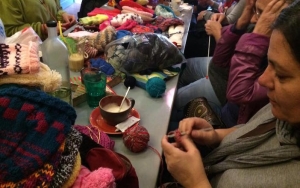
Irini Akritidou, a woman from Thessaloniki— a grand daughter of refugees from Pontos who learned to knit from her grandmother has started a movement to turn her knitting skills that were passed from one generation to the 21st century’s refugees.
The effort was initiated by Irini Akritidou, who used the power of social media— and Facebook in particular— to organize and mobilize thousands of fellow Greek women in a nationwide knitting campaign to produce hats, scarves and gloves for refugees passing through Greece.
In just a few months’ time, several thousand people have joined the Knitting Solidarity Facebook Group and calls to action are sent via Facebook to women throughout Greece— and now the world. To date, thousands of hats, scarves and sets of gloves have been made— “Made with love and solidarity for these people,” Dimitra Fotiadou, one of the group’s organizers, told The Pappas Post in an interview.
The group’s organizers and granddaughters of Greek refugees from Asia Minor said they learned to knit from their own refugee grandmothers so putting their trans-generational skills to use for this generation’s refugees seemed like an appropriate contribution to the Greek cause to help people in need.
When asked what drove the women to start the effort: “Love,” Dimitra Fotiadou responded. “Love for humanity.”
According to Fotiadou, many of the women currently involved live in far away villages and towns and can’t do their part to volunteer or help refugees who are passing through Greece’s islands and big urban centers.
This is yet more proof that the Greek Islands should be awarded the Nobel Peace Prize. To read more and cast your vote, click here.
This is yet more proof that the Greek Islands should be awarded the Nobel Peace Prize. To read more and cast your vote, click here.
To read more, please visit: Pappas Post
Published in
People
Tagged under
Friday, 29 January 2016 07:00
Chinese Artist Ai Weiwei Sets Up Studio On Lesvos - Highlights Plights Of Refugees
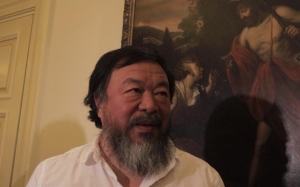
Chinese artist Ai Weiwei has set up a studio on the Greek island of Lesbos to highlight the plight of refugees.
The island has been the main point of entry into the EU for hundreds of thousands of refugees over the past year and the studio would produce several projects with themes related to the refugee crisis from him and his students, Ai told reporters.
“As an artist, I have to relate to humanity’s struggles... I never separate these situations from my art,” he said. The artist is as well-known for his clashes with the Chinese authorities as for his work.
Ai praised the people of Lesbos for having a “very good understanding” of the refugees’ plight,their needs and for being “very helpful and very tolerant”, but emphasised they had limited resources to deal with the issue.
To read more, please visit: ekathimerini
Published in
People
Tagged under
Thursday, 03 March 2016 07:00
This is Filotimo: 92-Year-Old Woman Delivers Sandwiches To Refugees In Central Athens
One of the things I learned from my upbringing was to never question when someone less-fortunate needed help.
“Help first, then ask questions,” my dad would tell me when I worked shifts at the Chateau Restaurant and Lounge on Pittsburgh’s North Side as a kid.
The restaurant was in a bit of a rough neighborhood and I was always perplexed at my dad’s willingness to offer free food— often to random people or groups. The Pittsburgh Steelers football players always got free lunches at my dad’s place. Their training facility was nearby and they often came for some good old diner food after a tough practice session.
And the police too.
“Celebrities and cops are always free,” my dad explained. The celebrities because they bring more people and the police because they protect us.
And then there were the homeless and the poor— from the surrounding neighborhood of Manchester, a run-down neighborhood that had seen its share of problems.
You always give first and ask questions later— if someone needs food, you help them.
I often questioned my dad’s business acumen as I grew older, asking him about cost of goods and food, the profit and loss margin on the free food we were giving and whether or not he could really afford to give away all this free food.
“Shame on you,” he responded, asking me if I’ve ever been deprived of anything at home. He reminded me that despite his regular giving, I always had clothes on my back, food on my table and everything I asked for, so obviously… the restaurant was doing well.
A Facebook post on my newsfeed reminded me of my long-departed dad today, because I think it’s what he would have done.
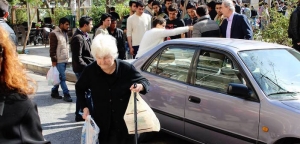
Liana Denezaki shared a few pictures that were shot by Odysseas Galanakis in central Victorias Square in Athens, showing a 92 year old woman unloading and distributing bags and bags of sandwiches and cakes that she, herself, prepared.
By
Gregory Pappas
Gregory Pappas
To read more, please visit: Pappas Post
Published in
People
Tagged under
Tuesday, 07 June 2016 07:00
Yannis Behrakis - 2016 Pulitzer Prize Winning Photojournalist
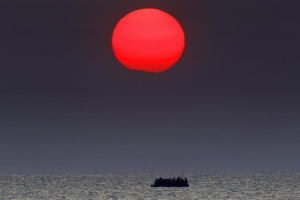
Meet Yannis Behrakis, a Pulitzer Prize winning photojournalist from Athens. Bekrakis, along with his team from Thomson Reuters, won the esteemed prize in 2016 for Breaking News Photography for the coverage of the European refugee crisis.
Behrakis studied photography at the School of the Arts and Technology and received his BA from Middlesex University. While in Athens, he started working as a studio photographer and then as a contractor for Reuters. Behrakis was offered a staff position in 1988 and has worked there ever since, documenting many cultural and historic events.
In this exclusive interview with Greek Reporter, Behrakis discusses his experience documenting the refugees and how important it was to him to be able to share their stories.
For more information on Yannis Behrakis, please visit: Greek Reporter
For more information on Yannis Behrakis, please visit: Greek Reporter
Published in
People
Tagged under
Wednesday, 26 October 2016 21:26
The Struggle Behind The Lens - Interview With Greek Filmmaker Takis Bardakos
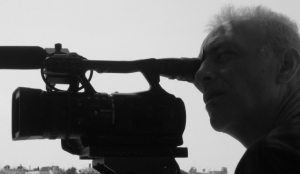
On October 5, 2016 Athens From Beneath, an insightful documentary about Greece’s unemployed, will premiere in the U.S. at the New York City Greek Film Festival, an extraordinary feat for the man behind the lens Takis Bardakos, who directed, produced, and wrote the film while he too was struggling with his own economic crisis, one that left him and his family homeless and unemployed.
Takis Bardakos, 59, who has a quiet, gentle presence but an endearing strength behind his voice, would rather talk about the plight of his fellow Greeks than about his own struggles. The only way in is to discuss his passion for film, especially his new documentary that holds true for far too many Greeks.
“Even though I was unemployed [and had no cash flow], I decided to start filming,” says Takis. “I found myself one morning outside church in a middle-class area with wealthy people and saw more than 150 people with bowed heads, waiting patiently to receive food. I never expected that in a parish with well-to-do residents, there would be so many people who didn’t even have food to eat. I met my colleague, and he comes out with food for his family.”
“I have to do something about it,” he says about the “new poor” in Greece, a country not used to seeing homelessness. Athens From Beneath was Takis’ solution to the growing problem, a way to cultivate social awareness. “I saw people sleeping in ruins, many living under bridges, sleeping in abandoned cars, other people, sick, and sleeping in cardboard boxes to protect themselves from the cold. I saw many looking in the trash and decided to start shooting, without a budget, but determined to get to the end.”
To read this article in full, please visit: Greek TV
Published in
People
Tagged under
Friday, 11 November 2016 20:47
Anastatica Project Revives Old Greek Music & Spreads It All Over The World
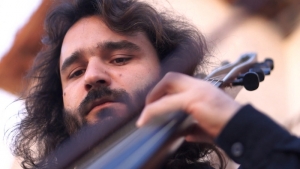
‘People often think old Greek music is dead. It is not, it only needs a little bit of humidity in order to blossom again,’ says Greek vocalist Katerina Papadopoulou explaining why she initiated project Anastatica.
Anastatica project is a collaboration between musicians and a vocalist that remaster old traditional tunes and songs and turns them into ethnic music. Vocals and dance are equally incorporated into their music. They value music that is transferred from place to place and from one era to another, without losing its originality and drive.
To read this article in full, please visit: Greek TV
Published in
People
Tagged under
Sunday, 13 November 2016 18:16
Confessions Of A Greek Marathon Legend
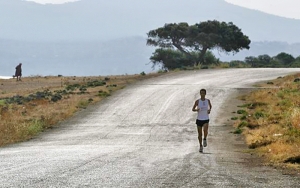
Nikos Polias, multi-times Panhellenic Marathon champion and record breaker, talks about his passion for running the classic route.
From an early age, running was an important part of my life. In the vacant lot in the neighborhood I grew up in and, later, on the track at Karaiskakis Stadium, in my hometown of Piraeus, running became more than a sport for me. It was a way to relax, to express myself as well as to socialize. I still have friends who used to be running buddies back then.
I tried my legs at sprinting for a while, but soon realized that my true potential lay in endurance running. Despite its difficulty, the Classic Marathon route enchanted me from the first time I ran it, back in 1993. It was my first marathon ever and I ended up a Greek champion, much to everyone’s surprise, including my own.
To read this article in full, please visit: Greece Is
To read this article in full, please visit: Greece Is
Published in
People
Tagged under
Monday, 14 November 2016 17:54
Leonard Cohen's Hydra
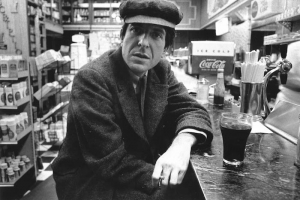
On September 27, 1960, six days after his twenty-sixth birthday, Cohen bought a house in Hydra for $1500, using a bequest from his recently deceased grandmother. This was a "big deal" in the words of one of his friends, a commitment to place and a world that was mysterious and unusual. Buying the house was a complicated act, needing the assistance of his friend Demetri Gassoumis as translator, adviser, and witness to the deed. Cohen later said that it was the smartest decision he ever made. The tree-story, ancient whitewashed building, with its five rooms on several levels, was run down and had no electricity, plumbing or running water. Yet it was a private space where he could work, either on the large riled terrace or in his music room on the third floor.
He knew he had been accepted by the community when he began receiving regular visits from the garbage man and his donkey. To a friend he explained that, “Having this house makes cities less frightening. I can always come back and get by. But I don't want to lose contact with the metropolitan experience.” Buying the house also gave him confidence, “The years are flying past and we all waste so much time wondering if we dare to do this or that. The thing is to leap, to try, to take a chance.”
It was a place of solitude, of plodding donkeys (even today no cars are allowed on the island; nor would they get very far if they were), cold water and kerosene lamps. In such primitive surroundings, amid the stunning beauties of the island and the glories of the Aegean, where fishermen still wrested a living from the sea and ferries scrabbled one from the land, Leonard found his peace, his sitting-down time, as he called it, where he could -as all pots must - recollect in tranquillity. Here he could live in virtually complete seclusion, at a fraction of the cost it would take in Northern Europe or Canada, where the people were unconcerned as to who you were or what you did; And where breathtaking vistas opened up for the seeing - both external and internal.
Leonard Cohen was a Canadian songwriter who died on November 7, 2016 at his home in Los Angeles, California. He was 82 years old.
To read this article in full, please visit: Leonard Cohen Files
Leonard Cohen was a Canadian songwriter who died on November 7, 2016 at his home in Los Angeles, California. He was 82 years old.
To read this article in full, please visit: Leonard Cohen Files
Published in
People
Tagged under
Tuesday, 13 December 2016 19:36
The Athenian - Authentic Greek Souvlaki In London
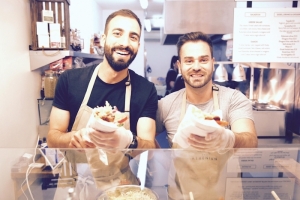
We are Efthymios and Neofytos, two Londoners born and raised in Athens and Cyprus. We have recently launched The Athenian, a small street food venture in London, offering freshly-made souvlaki prepared in the healthiest, most authentic way possible.
We are sure you know that our home country has been through some troubling times recently. By creating our own little business here in London, we help support people back home by sourcing our products from small, independent producers and farmers as well as local businesses here in the UK. We aim to keep our carbon footprint low where we can, without ever compromising on the authentic Mediterranean experience we want to bring to our customers.
We are proud to say we can trace back all of the carefully-selected ingredients used in our souvlaki. Our pita is hand-made in Athens, our olive oil is from the small town of Sitia in Crete, our herbs are from the mountainous town of Karpenisi and our dairy products come from the beautiful region of Messinia in the Peloponnese.
On moving to the UK, we realised that Greek cuisine was being somewhat misrepresented here. We were often disappointed by out-dated, unappetizing dishes and our search for lovingly-made, mouth-watering souvlaki was nearly impossible.
That’s how The Athenian came about: we wanted to bring something new to the people of London, with an updated image of Greek cuisine, to the city’s thriving food markets. By paying us a visit you will find souvlaki the way it is meant to be made: simple, fresh and authentically Greek.
To read this article in full, please visit: The Athenian
Published in
People
Tagged under
Sunday, 15 January 2017 21:24
Designer Elena Syraka - Drawing From Greece’s Ancient History For Inspiration
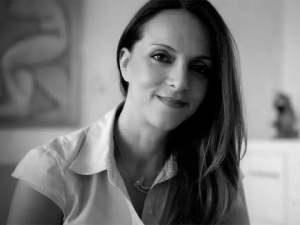
Elena Syraka created her first pieces of jewellery while at school, without realising this would ultimately be her calling. After studying at the Veloudakis Fashion School in Athens, she went on to ESMOD in Paris, where she decided to focus on jewellery design. Her official debut into the field was in 1995 and about a decade later, she decided to focus exclusively on fine jewellery. Her designs balance between opposite elements, such as the masculine and the feminine, the strict and the fluid.
With a passion for ancient civilisations and a deep interest in Greek history and heritage, Elena offers a contemporary interpretation of classical symbols.
Elena’s jewellery is handcrafted in Athens and various collections come in limited edition numbered pieces. She has now reached her 20th anniversary as a jewellery designer and is proud to see her Nour collection being exhibited in major museums around the world.
To read this article in full, please visit: Why Athens
Published in
People
Tagged under