

XpatAthens

XpatAthens

Tuesday, 29 March 2022 20:34

National Archaeological Museum

The National Archaeological Museum is the largest museum in Greece and one of the most important in the world. Originally destined to receive all the 19th century excavations, mainly from Attica and other parts of the country, it gradually took the form of a central National Archaeological Museum and was enriched with finds from all parts of the Greek world. His rich collections, enumerating more than 11,000 exhibits, offer the visitor a panorama of ancient Greek culture from the beginning of prehistory to the late antiquity.

The museum is housed in the imposing neoclassical building, built at the end of the 19th century in designs by L. Lange and eventually formed by Ernst Ziller. Its exhibition grounds, dozens of halls on each floor, cover an area of 8,000 m² and houses the five major permanent collections:

• The Collection of Prehistoric Antiquities, including works of the great civilizations that developed in the Aegean from the 6th millennium to 1050 BC. (Neolithic, Cycladic and Mycenaean) and finds from the prehistoric settlement of Thira.
• The Sculpture Collection, which presents the evolution of ancient Greek sculpture from the 7th century. B.C. until the 5th c. AD, through unique works of art.
• The Vase and Minerals Collection, which includes representative works of ancient Greek ceramics from the 11th century. B.C. up to the Roman era, as well as the Stathatos Collection, a timeless collection of miniature artifacts.
• The Metallurgical Works Collection with many unique original works, statues, figurines and miniature works.
• Finally, the unique for Greece Collection of Egyptian and Eastern Antiquities with works of art, dating from the pre-emptive period (5000 BC) to the times of the Roman conquest.

The museum has a rich photographic archive and a library with many rare editions, which is continuously enriched for the needs of scientific staff. It also has modern workshops for the maintenance of metallic objects, ceramics, stone, casting workshops, organic materials, photographic workshop and chemical laboratory. There are also halls of periodical exhibitions, a lecture theater, as well as one of the largest collections of the Archaeological Resources Fund.

The National Archaeological Museum accepts thousands of visitors each year. Along with the exhibition of exhibits, he organizes periodical exhibitions and participates by lending his works to exhibitions both in Greece and abroad.

In addition, it serves as a research center for scientists from all over the world and participates in the development of special educational and other programs. Archaeological lectures are organized in the amphitheater, while innovation is also the possibility of guiding people with hearing problems by scientific staff.


Wednesday, 18 February 2015 13:06

Methana

The peninsula of Méthana with its two steep volcanic slopes is actually a volcano that emerged from the sea! Welcome the opportunity to explore a stunning volcanic landscape with dense vegetation, coastal villages and diverse flora and fauna. The establishment of the spa complex in 1870 made it a popular spa town attracting mainly senior citizens from many European countries.


Follow a fascinating route to the fishing village of Agios Geórgios and on to the Baths of Pausanias, one of the peninsula’s hot springs, or follow the footsteps of the ancient historian Pausanias to the ancient city of Méthana.

In the village of Paleókastro stand the remains of the classical walls and gates of an acropolis, the rest of which fell into the sea due to a volcanic eruption.

The peninsula boasts approximately 32 volcanoes. Climbing to the largest crater is a truly challenging experience. Start from Kaméni Hóra and follow the path on a 25-minute climb to the lip of the volcano. Step on now solid red lava flows and take in views of a different world of savage black, red and green crags and sharp abysses… Last but not least, soak up the atmosphere along the island’s volcanic beaches (Nissaki Ayion Anaryiron, Limniónas and Vathý).

To read more, please see visitgreece.gr

From excellent weather and great family hotels, Greece offers a lot for a family holiday. Chrissy from Travel Passionate shares her reasons why Greece is the perfect family destination all year round, along with family-friendly destinations!

The Food

The Mediterranean cuisine of Greece with its fresh vegetables, fruits, and olive oil are perfect for a healthy meal. Also, in most tavernas and restaurants in Greece, you will find delicious homemade food ideal for children. The tavernas and restaurants are also child-friendly, many of them offering chairs and special menus for kids.

Activities For Children

There are many activities in Greece that children will find interesting. There are many monuments and historical sites that can be found around the country and children can learn history and mythology in a fun way. Your kids will love the stories of the ancient Gods of the Olympus and their magical powers. Other exciting activities include water parks, horseback riding, child-friendly museums, the big Aquarium in Crete, the Planetarium and the Attica Zoo in Athens.

Family-Friendly Hotels
 
The are many hotels in Greece that offer facilities that are perfect for family holidays. Large family rooms, babysitting services, pools for children, playgrounds, entertainment rooms, animation services, private sandy beaches with watersport activities, tennis courts, basketball and other sports facilities are all ideal for children.

To read this article in full, please visit: Travel Passionate
Castle Cover, insurance specialists for people who are over fifty, researched retirement prospects in 23 countries to determine the Top 10 places to retire! Factors taken into account included house prices, health care costs, average temperature, rainfall and hours of sunshine – as well as grocery bills, crime rates and taxation.
 
According to Castle Cover, ‘While the economic crisis remains dire, this country continues to offer a relaxed lifestyle for many who have already made their pile. As the birthplace of democracy, Greece has evolved into a visually spectacular nation that offers great weather, readily available health care and – believe it or not – a low crime rate. Just make sure the locals don't mistake you for a German.’

Other countries also included on the list of Best Places To Retire are Spain, Portugal, Australia, the US, and Morocco.

To read this article in full, please visit: The Telegraph
Friday, 10 November 2017 10:15

August 29 - Last Days Of Summer

See a beautiful photo story of the Acropolis museum, grab a coffee at one of these new wave cafes in Athens, and hear a different perspective about what it's like to travel to Greece with grown kids!
 
Please click HERE to view this issue of our newsletter!

Remember to stay connected with us through our weekly newsletterFacebook, and Twitter!
The National and Kapodistrian University of Athens (NKUA) - E-learning Programme of its Center of Continuing Education and Lifelong Learning addresses the international public through the universal language of culture. Perceived as an inherent part of their mission, they have set out an extrovert effort to introduce fascinating facets of Greece to the world. And this, by deploying the distinguishable and longstanding features of its cultural heritage, as well as via the contemporary identity shaped in country’s everyday life.
 
YouGoCulture, an initiative of the E-Learning Programme of the NKUA, constitutes an innovative and unique attempt to promote Greek culture in an extrovert manner and on two levels: on the one hand it shall showcase the country's priceless cultural heritage and on the other, familiarize the international public with aspects of the Greek society of today.

Balancing learning and entertainment in a promising and technologically updated way, this interactive online platform offers unique and individualized experiences regarding Greece's great history and the uniqueness of the cultural flourishing of its regions (including the broader south-eastern Mediterranean).

YouGoCulture offers exceptional Virtual Tours of certain “sites” of the longstanding culture of Greece and the Eastern Mediterranean. YouGoCulture is an integrated environment of images and information, but also of consolidated popular knowledge. The platform records points of global interest and offers access to them by familiarizing the world with the achievements of civilizations that constituted the cradle of the evolution and the values of the modern world as we know it.

Each destination is presented on the basis of its important cultural heritage (the “Myth”) and its contemporary life (the “Experience”). Points of Interest (POIs) are identified, having as reference marks the archaeological sites and other spots of cultural significance, based on the rationale of consolidated documentation of each destination, providing the history and the contemporary life, through the production of original audiovisual material, accompanied by informative text.

The vision of the people behind this project started as the need to utilize the competitive advantages of the Greek environment, while it was founded upon the experience and high level of specialization of the academic staff of the UoA, and hopefully of others, who are also embracing the effort.


Find YouGoCulture on Social Media:

Facebook

The Greek Ministry of Culture is expected to submit the final nomination file for the inscription of the island of Spinalonga on the UNESCO World Heritage List, at the end of the month.
 
“It will be Crete’s first monument to be included on the World Heritage List of UNESCO,” Culture Ministry Secretary General Maria Andreadaki-Vlazaki said.
 
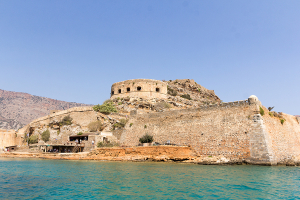
After the Palace of Knossos, Spinalonga is the most visited archaeological site in Crete and the 6th in Greece. The small islet attracts countless visitors every year due to its unique architecture and historical importance. Spinalonga features a well-preserved 16th century Venetian defense fortification.
 
The Region of Crete has managed to secure 900,000 euros in EU funding in order to complete the 3rd phase of restoration which includes maintenance works on its fortification and buildings.
 
It is worth noting that from the early 20th century up until 1957, Spinalonga was used as a leper colony, while the last inhabitant left the island in 1962. The tiny island became famous as the setting of ‘The Island’ a best-selling novel by Victoria Hislop.
 
 
To read this article in full, please visit: Greek Travel Pages
Photo Credit: Wikimedia Commons
Wednesday, 19 June 2019 16:15

June 19 - It's (Not) All Greek To Me

Greek culture is of signifact importance and is appreciated all over the world! Hence the fact that visits to Greek museums and sites have seen a big increase since last year! Also, don't forget to check the 'Greekest Places' in America, that make the US major fountains of Greek identity.

Please click HERE to view this issue of our newsletter!
Remember to stay connected with us through our weekly newsletterFacebookTwitter and Instagram!


Monday, 06 January 2020 12:58

Hadrian's Unknown Reservoir In Athens
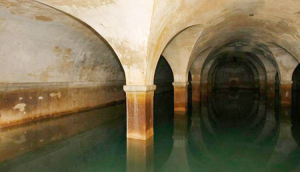
One of the most extraordinary engineering achievements of Roman Athens lies below a modern open-air cinema right in the center of the city. In the warm summer nights, Athenian cinephiles gather to watch their favorite films, atop a nearly 2,000-year-old reservoir.

Due to Athens' growing water needs, Emperor Hadrian ordered a project to increase the city's water supply. An aqueduct starting at the foot of Mount Parnitha and extending more than 20 kilometers to a reservoir at the base of Mount Lycabettus was constructed in 125 CE. At the time it was completed in 140 CE, the aqueduct was Athens' most significant infrastructure project to date.

Hadrian's reservoir is located at the western foot of Mount Lycabettus, and its pipes covered the water needs of the area's residents for over 1,000 years. The tank was abandoned during the Ottoman rule, causing most residents to become reliant on wells. Restoration works began in 1847, though it stopped to be Athens' primary water source in 1929 when the Marathon Dam was constructed.

Today, only a small amount of water still makes it to the reservoir, only parts of the steps and 2 column bases remain at the site. A surviving segment of its architrave can be seen in the National Gardens near the Children's Library.

The reservoir is located in Dexameni (Reservoir) Square in Kolonaki, right below the homonymous cinema. Even though access inside the reservoir is not allowed, the large viewing portals on the western walls offer great views of its interior.

Every year on Epiphany (January 6), the reservoir opens for the ritual of the Great Blessing Of The Waters, where a priest immerses a cross in the water and then sprinkles the congregation with holy water.

Photo: Cine Dexameni
Celebrating Christmas and New Year in Greece goes together with many traditions, such as sweets, and carols.  During December, you can listen to Greek carols all over the country: in Greek, they are called “kalanta”.

Greece is rich in music and depending on the geographical regions, there are also different Christmas and New Year songs, using different instruments and rhythms.

Because this year it is doubtful Greek children will be able to sing from door to door, due to the coronavirus, we selected some examples of Greek “kalanta“ for you to listen to online. At the same time, we took the opportunity to introduce you to some Greek geography! Enjoy!

Christmas Carol from Crete 

Crete is the largest island in Greece and the fifth-largest island in the Mediterranean Sea. It is also the most populous island in Greece with a population of more than 600,000 people.
 
LISTEN TO THE CAROL HERE

Christmas Carol from Trace

Western Thrace is a geographic and historical region of Greece, located between the Nestos and Evros rivers in the northeast of the country. Together with the regions of Macedonia, Epirus, and sometimes Thessaly, it is often referred to informally as northern Greece. It is also called Greek Thrace to distinguish it from Eastern Thrace, which lies east of the river Evros and forms the European part of Turkey. In Thrace live about 400.000 people. More than two-thirds of the population are Orthodox Christian Greeks, while the other third are Muslims, who are an officially recognized minority of Greece. Of these, about half are of Turkish origin, while another third are Pomaks who mainly inhabit the mountainous parts of the region.

LISTEN TO THE CAROL HERE  

New Year Carol from Ikaria

Ikaria belongs to the Aegean islands – separate islands in the North Aegean Sea, but are often grouped under the general term for tourist or administrative purposes. The largest among them are Lesbos (the third largest island in Greece), Thassos, Samos, Chios, Ikaria, Lemnos and Samothraki.

LISTEN TO THE CAROL HERE  

New Year Carol from the Dodecanese Islands 

The Dodecanese are a group of 12 larger plus 150 smaller Greek islands in the Aegean Sea, of which 26 are inhabited. The most historically important and well-known is Rhodes (Rodos), which, for millennia, has been the island from which the region is controlled. Also, Kos and Patmos are historically very important; the remaining nine of the 12 are Astipalea, Kalimnos, Karpathos, Kasos, Leros, Nisyros, Symi, Tilos, and Kastellorizo.

LISTEN TO THE CAROL HERE


Visit OMILO to read and listen to the entire Greek New Year song in Greek and learn more about Christmas and New Year traditions!

omilologoSmall.png
About OMILO

Omilo Greek Language and Culture inspires people from all over the world to learn Greek, while exploring Greece. They offer 1- and 2-week courses for adults that combine beautiful course locations, experienced teachers, and a balanced combination of Greek classes with cultural activities. All these make Omilo a place where people enjoy learning modern Greek and have fun.

Besides the courses, Omilo also creates online publications to help adults expand their language skills through Language Books and eBooks for different language levels.



Page 324 of 462