

BUSINESS CENTRE

XpatAthens
XpatAthens Meets E-Table Greece

If you have any questions or would like to get in touch with us, drop us a line at info@xpatathens.com.
Enjoy!!
Navarino Challenge - International Promotion Of The Event In New York
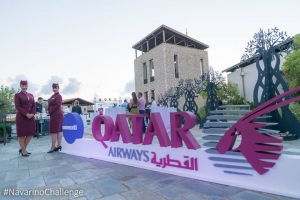
The "Navarino Challenge" will take place between the 13th and 15th of October 2017, in Messinia and Costa Navarino, as part of its overseas promotional strategy and is renewing the cooperation with Qatar Airways.
Please use the promo code ATHNAVCH to book an exclusive offer for roundtrip tickets to Athens from over 150 places, via the following link: http://www.qatarairways.com/gr/el/cugs/navarinochallenge.page Offer valid from 3 to 15 October 2017 included (Outbound) and (Inbound) to be completed on or before 25 October 2017. This offer refers to roundtrip tickets to Athens from more than 150 destinations, including New York, USA.
Website
YouTube
Hashtags: #navarinochallenge #costanavarino #eatwell #runwell #livewell
Official Airline Partner: Qatar Airways
Official Sponsor: “Vikos” natural mineral water
Official Supporters: BIC®, BIC® Sport, Wyndham Grand Athens, Poseidonia, Surf Salad
Assisted by: Navarino Outdoors, Swim Academy, Navarino Racquet Academy, Apia
Strategic TV Partner: National Geographic
Photo: A view from the cocktail “A Night to Remember by Qatar Airways” in Navarino Challenge 2016.
Photo credit: Elias Lefas
Athens Public Transport Announces Discount

Free Museums & Sites For Oxi Day On October 28th
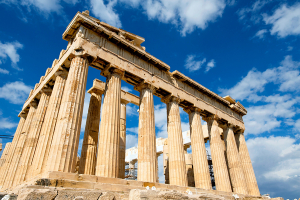
NASA Confirms That The Myth Of Odysseus Is Real

"We believe that the myth revolves around real events," says Panagiota Preka-Papadima, a Professor of astrophysics at the University of Athens.
She and a team of scientists have published articles in various international scientific journals and concluded that some of the events described in the Epics are real, while the natural phenomena mentioned, correspond to the time of their narration.
"Odysseus arrived in Ithaca on October 25, 1207 B.C.," they wrote. "Five days later there was a 75% solar eclipse covering the Ionian Sea and then the murder of the suitors happened," they continue.
NASA maps describing natural phenomena from 4500 B.C. to 10,000 A.D. have verified the October 25, 1207 B.C. eclipse.
Furthermore, another eclipse, which took place on October 30, 1207, from 2.30 pm to 5.30 pm, is believed to be reflected in the Odyssey. In Rhapsody Y, just before the murder, Homer describes Theoklymenos saying to the suitors:"... and the sun was gone from the sky, and a heavy darkness spread everywhere!".
"This is a description of the eclipse that covered 3/4 of the sun's disk," says Mrs. Papadima. "The date of the eclipse, October 30, 1207 B.C., is in complete agreement with the Homeric descriptions of the weather, autumnal country life, and the noontime of the murder of the suitors," continues Ms. Papadima.
Researchers have concluded that there is a historical core to the myth of Odysseus and this is a compelling revelation for science and Greek culture alike!
To read this article in full, please visit: greecehighdefinition.com
Hilarious Ancient Greek Beliefs & Traditions
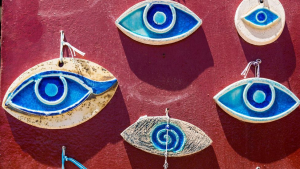
Here are some of the funniest and weirdest Ancient Greek beliefs and traditions!
1. Sneezing Prevents You From Getting Pregnant
This isn’t just some old wives’ tale, you see. Soranus, an ancient Greek physician, actually believed that women sneezing would act as a form of contraception, thus preventing pregnancy. After making love, he instructed women to squat, sneeze, and rinse.
2. Magical Sweat Was A Cure-All
Ancient Greeks admired their athletes and saw them as celebrities of a sort. Not only were they revered, but they were also thought to have magical sweat. How it worked: The athletes all performed naked and were rubbed with olive oil, and the sweat which they expelled during competitions was considered to have magical healing powers.
Slaves would scrape the sweaty skin of athletes after competitions. This sweat/oil mixture was called “gloios.” The gloios was in turn bottled and sold as an all-healing ointment for aches and pains.
3. There Is Evil In The Air
There is one ancient Greek superstition that is even now completely interwoven into the society of modern Greece. Generations upon generations have passed down the belief of the evil eye, or “mati.” There is evidence of the evil eye having an influence on the traditions of Greek society as far back as the 6th century BC when it commonly appeared on drinking vessels.
It is believed that someone can cast the evil eye onto another person out of envy (either good or bad) and jealousy. You are said to be hexed with the evil eye if you are dizzy or if you have a headache and yawn a lot. The good news is that you can have the “spell” broken by someone who knows how to perform a special ritual involving oil, water, and prayers.
4. The Island Of Mykonos Is A Breeding Ground For Vampires
Before the Age of Enlightenment in the 18th century, there were creatures endemic in Greek folklore who were considered to be dangerous. These “walking dead” creatures were called vrykolakes.
As the legend goes, vrykolakes would leave their graves at night and knock on the doors of their presumptive victims, saying their names aloud. If there was no answer after the first knock, no harm came to the innocent.
To read this article in full, please visit: greekreporter.com
The Kypseli Neighborhood: A Queen Of Reinvention
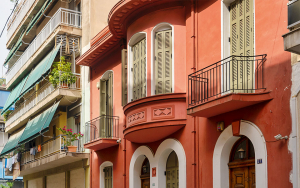
Kypseli means “beehive” in Greek and that’s a great metaphor for this area that always throngs with activity. It’s one of the most densely populated urban areas in Europe – and you can feel it. The old apartment blocks stand close together and certain streets can provoke a sense of claustrophobia that sometimes detracts from the spectacular, historic architecture that abounds. The upside is that, while they might be a little cramped for space, the worker bees of Kypseli are constantly working hard on creative projects, chic eateries, and cool galleries, which all come together to form a vibrant honeycomb of cultural life.
Kypseli is one of the oldest neighborhoods in Athens, but it only started to take on its present form in 1937 when architect Vasilios Tsagris began transforming a stream called Levidi into a long stretch of gardens with trees, water fountains, play areas and statues, including a much-loved dog statue which appeared in 1940. The now-pedestrianized Fokionos Negri Street became Kypseli’s central thoroughfare, as a middle-class to upper-middle-class neighborhood grew around it between the 1930s and the 1970s, leaving a treasure trove of architectural gems, from art deco to Bauhaus and mid-century modernist.
It’s still possible to relive the glory days of Kypseli’s golden era, a time when international stars like Frank Sinatra would hang out on Fokionos Negri whenever they visited Athens. Catch a movie at Stella, a retro open-air cinema whose bright neon-pink lighting is a throwback to the neighborhood’s glamorous, showbiz past. English-language films are screened without dubbing and the screen is surrounded by a mosaic of concrete balconies. After the film, head for a stiff cocktail at Au Revoir, a classic-with-a-Greek-twist drinking hole, run by the Papatheodorou family since 1958.
Diversity Dominates
Kypseli continues to attract people from around the world, with foreign-run shops and businesses abounding across the neighborhood and its multiculturalism extending to its food options as well. Kypseli manages to hold all of its old and new residents together in peaceful coexistence: traditional Greek kafeneios, tavernas, and bars sit comfortably alongside authentic food and social spaces from around the world, while creative spirits are constantly adding splashes of cool to the mix. Taken together, Kypseli is more than just a hive of activity; it’s a kaleidoscopic neighborhood of culture, cuisine, and creativity.
To read this article in full, please visit: greece-is.com
Main image: Dimitris Vlaikos
Understanding Tax In Greece | Double Taxation

With deep expertise in Greek tax legislation, the team at TaxWise Greece assists individuals and businesses in determining their tax residency status and offering tailored guidance to meet their unique financial needs.
Given the extensive Greek international community, TaxWise Greece frequently supports expats and international businesses in managing their tax obligations, including:
- Income, Capital Gains, and Value Added Tax (VAT)
- Social Security and Wealth Tax
- Inheritance and Gift Taxation
- Double Taxation Agreements (with countries such as the US, UK, Australia, Canada, and Israel)
- Establishing Tax Residency & Compliance
- Shipping and Vessel Taxation
- Special Greek Tax Incentives for Foreigners
Determining Greek Tax Residency
Clarifying your residency status is the first step toward tax compliance. The specialized team at TaxWise Greece is well-versed in helping clients navigate these criteria. Generally, you are considered a Greek tax resident if:
- Your permanent home or center of vital interests is in Greece.
- You reside in Greece for more than 183 days within a twelve-month fiscal year (consecutive or not).
For individuals considered tax residents in both Greece and another country, the situation becomes more nuanced, requiring careful application of the double taxation treaties Greece has established with over 50 nations to prevent being taxed twice on the same income.
Greek Tax Year & Filing Deadlines
The Greek tax year aligns with the Gregorian calendar (January 1st to December 31st). For most residents, tax returns must be filed between April and June of the following year. For those with business income, taxes are often paid in installments based on the earnings declared.
- Income Tax: Employers deduct the appropriate tax amounts from salaries each month for employees and businesses.
- Capital Tax: Gains from interest, royalties, lottery winnings, inheritance, or property transfers are taxed at rates ranging from 10% to 20%.
- Value Added Tax (VAT): Standard VAT is set at 24%, with some services qualifying for reduced rates.
- Social Security Tax: Employers contribute 25.06%, while employees contribute 16% of salaries.
Los Angeles Chargers Make History With First-Ever NFL Flag Football Event In Greece

- Greece’s First-Ever Flag Football Camps
- Friday, October 10 from 10-12pm
- Youth ages 11-13 will have the chance to participate in a flag football camp hosted by the Chargers to learn and understand the fundamentals of flag football in a safe environment.
- Saturday, October 11 from 12-2pm
- Teens ages 13+ will have the chance to participate in a flag football camp hosted by the Chargers to learn and understand the fundamentals of flag football in a safe environment.
- Friday, October 10 from 10-12pm
- Flag Football Exhibition Game
- Friday, October 10 at 12:30pm
- A flag football exhibition game featuring NFL Legends and current athletes in a high-energy showcase game, demonstrating the excitement of flag football to a new audience.
- Friday, October 10 at 12:30pm
- Watch Party: Chargers vs. Dolphins
- Sunday, October 12 at 7:30pm
- Greek media and NFL fans will unite in Santorini to watch the Chargers take on the Miami Dolphins.
- Sunday, October 12 at 7:30pm
Elias Chimney Cleaning & Repair Services
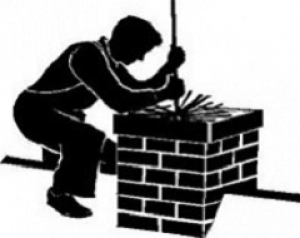
With over 20 years of trusted experience in chimney cleaning and repair, Elias offers clean, top-quality work at very approachable pricing for both homes and apartments. Service is available 7 days a week anywhere within Attica!
To book your appointment call Elias at 697 6825484 or email: ilias-vergos@hotmail.com.
Here are some helpful tips to keep in mind:
1. It is very dangerous to use a fireplace (and its chimney) if it's not routinely cleaned.
2. Freshly cut and damp wood produce more smoke than dry wood.
3. A chimney windbreak hat is necessary for better ignition and in order to avoid over-smoking.
4. Chimneys should be cleaned every 2 tons of wood burned.
5. Cleaning your chimney reduces the harmful substances contained in smoke and released into the atmosphere.
6. A proper chimney cleaning reduces the risk of fire and any other subsequent damage to your home.