


XpatAthens

XpatAthens

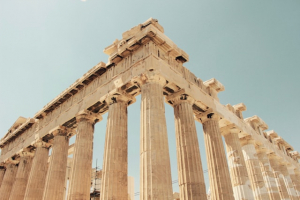
When it comes to architecture in Athens a visitor's first thought will most probably be the Parthenon and the second the sea of apartment blocks that dominate downtown residential neighborhoods such as Kolonaki and Pangrati and spread outward to the suburbs.

However, if you take a closer look you will find, tucked between the ancient sites, the neoclassical buildings, and the monotonous apartment buildings a bunch of modernist architectural gems.

Among them, the National Hellenic Research Foundation and the Athens Tower, have been overlooked in part due to being erected during the military dictatorship of 1967-1974 and dismissed as “junta” projects. But the Greek architects of these and other landmark post-war structures were largely inspired by the Bauhaus school and sought to amalgamate Greek urban life with the international spirit of the times. Here are 3 of the most notable modernist buildings in Athens.

Embassy Of The United States

The US Embassy in Athens is a monumental example of mid-century modernism. The Embassy was designed by Walter Gropius, one of the most influential architects of the 20th century and founder of the Bauhaus school, alongside Greek architect Perikles Sakellarios.Opened to the public on July 4, 1961, the building features brilliant white Pentelic marble, black marble from the Peloponnese and grey marble from Marathon, and a simple colonnade that wraps around the entire structure.

The Embassy's expansive courtyard was designed to encourage people to linger, converse and debate ideas openly. Unfortunately, the openness Gropius envisioned has had to submit to security concerns and now the unique outdoor landscaping has now given way to security fencing.

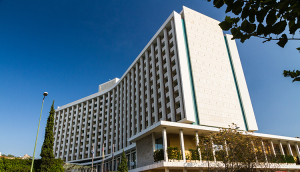
The Athens Hilton

The Athens Hilton opened its doors to the public on April 20, 1963. Conrad Hilton himself attended the inaugural celebrations and proclaimed the new building “the most beautiful Hilton Hotel in the world.” The Athens Hilton is a bold showcase of contemporary architectural ideas, seamlessly blending timeless local materials with cutting-edge modernism.

The building's facade is adorned with massive reliefs created by the noted mid-century artist Yiannis Moralis. The reliefs depict ancient and mythical themes and manage to combine modern and classical.

Emmanuel Vourekas, Procopius Vassiliades, Spyros Staikos, and Anthony Georgiades were the 4 architects responsible for the building's design. Vourekas was one of the busiest Greek architects of the era is also the architect of the Megaron-Athens Concert Hall.

National Hellenic Research Foudation

This building was designed by Constantinos Doxiadis, the father of ekistics – the science of human settlement. Doxiadis oversaw projects around the world, from Islamabad, where he was in charge of the city's master-plan, to Detroit. At the time of the NHRF commission in 1962, his firm, employed about 400 people, half of which were deployed internationally, while the other half worked from the firm's headquarters in Kolonaki.

The National Hellenic Research Foundation was the first Greek public building to materialize the dictum that "form follows function." It consists of three principal structures, a six-story office building, a three-level library, and the entrance foyer and lecture hall. The buildings are dressed in white and pink marble to project monumentality, without compromising the foundation’s mission.


To read this article in full and discover more modernist buildings in Athens, please visit: greece-is.com

Photo: Andy Chisholm - stock.adobe.com
 
Wednesday, 13 November 2024 00:09

The Smile Of The Child

Who We Are:

"The Smile of the Child" was created in 1995 by 10-year-old Andreas Yannopoulos, who, shortly before leaving from life, expressed in his diary his wish to found an organization that will ensure for all children what he had so generously enjoyed: love, affection, care and respect.

The dream of 10-year-old Andreas became reality and today the Organization "The Smile of the Child", recognized internationally, with a Vision: the Smile of every child, implements nationwide, 365 days a year and 24 hours a day, effective and direct actions for preventing and addressing particular phenomena that threaten children.

In the course of 23 years of action "The Smile of the Child" has supported more than 1.480.000 children and their families. Children victims of any form of violence, missing children, children with health problems, children living in poverty or threatened by poverty, have found a solution.

The Organization is staffed by spezialized scientific personnel, has the precious support of volunteers and is based on citizens and companies that actively provide their support in practice through donations and sponsorships.

What We Do:

- We are next to every child victim of Violence Physical, Sexual and Psychological Abuse, Neglect, Bullying, Smuggling & Trafficking.
- We are next to every missing child. 
- We stand by each child with health problems.
- We support each child living in or being at the risk of poverty.


To learn more about the organization click HERE!


15 Awards at the Sports Marketing Awards 2023 & 3 Awards at the Tourism Awards 2023.

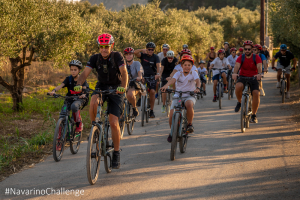
Navarino Challenge, the best sports tourism event in Greece as it has been distinguished within the past years, returns for its 11th year on October 13-15, at Costa Navarino and Pylos.
 
The message of the event is “Sports Unites People” and following the purpose of the Olympic Movement, Navarino Challenge will gather for another year people of all ages and abilities, amateurs and professional participants from Greece and abroad, in a rich schedule full of sports activities for all by hosting its guests at the hotels: W Costa Navarino, The Westin Resort Costa Navarino and The Romanos, a Luxury Collection Resort.
 
Together with the Greek-American ultramarathoning legend and current ambassador of Greek Tourism, Constantine “Dean” Karnazes, along with dozens of Olympians and Paralympians, this year’s event will promote the value of participation and not victory or competition, with more than 40 activities and Olympic sports. With the message #eatwell #runwell #livewell and its recognition as the best wellness program in Europe, the event will endorse exercise and proper nutrition while promoting the benefits of the Messinian diet. 
 
It is worth to be noted that in 2022, Navarino Challenge had more than 3,000 participations of all ages and abilities, as well as more than 20 athletes with disabilities. Watch last year’s highlights video and get ready for this year’s action: https://youtu.be/x2aVusvzL34
 
64 awards in 10 years for the top sports tourism event
Navarino Challenge reached at the top of the Sports Marketing Awards 2023, winning 15 awards for the 2022 anniversary event. More specifically, the event received 3 Platinum and 11 Gold awards, such as:
  • The best branding strategy, as it had the highest score in the whole section and received the Platinum distinction
  • The best native advertising campaign that led to another Platinum award
  • The best sponsorship of the entire awards institution for the collaboration with Stoiximan, which received the highest distinction and the 3rd Platinum award.
  • The best sports/cultural tourism event
  • The best sales strategy
  • The best event in team sports
  • The best Multi-Sport Event
  • The best health and wellness event
  • The best event for children 
  • The best summer sports event 
  • The best sponsorship platform for the collaboration with Miele Hellas
 
It also received 1 Silver Award in the category “Most Innovative Use of Content Creators & Influencers for a Sports-Related Activity”.

Navarino Challenge remained at the top of Tourism Awards 2023. In the respective awards of 2023, for the ten-year anniversary of the event, it received 2 Gold Awards in the categories “Sports Tourism” and “Health & Wellness Tourism” and 1 Platinum Award in the category “Integrated Communications Campaign,” collecting the highest score in the highly competitive field of tourism, section “Branding / Media/ Public Relations’’.
Grand Sponsor: That Gorilla Brand’s Adventures For A Cause – Fundraising Initiative #2
That Gorilla Brand, the world’s biggest lifestyle brand dedicated to the protection of the mountain gorilla, a dynamic, premium lifestyle brand driven by contemporary aspects of fashion and films, as well as a genuine, adventurous spirit, will make its dynamic debut in this year’s Navarino Challenge. Through its initiatives this year, That Gorilla Brand will help raise money to improve sanitation facilities in Uganda. Out of the total 16 schools located around the edges of Bwindi Impenetrable National Park (BNIP), which is home to mountain gorilla habitats, only three meet the hygiene standards for children and teachers, and all the remaining 13 schools require significant financial and humanitarian assistance to meet basic standards of health sanitation and provide clean and safe bathroom facilities. Watch the related video of That Gorilla Brand here.
That Gorilla Brand is the event’s Grand Sponsor. 
Miele is the Official Sponsor.
Luanvi is the Official Sports Supplier.
SIXT, member of the MOTODYNAMICS Group, is the Premium Mobility Partner.
Costa Navarino and the hotels W Costa Navarino, The Westin Resort Costa Navarino and The Romanos, a Luxury Collection Resort, are the Official Hospitality Sponsors.
Poseidonia Restaurant and Karalis Beach Hotel are the Official Supporters.
Messinian Spa is the Official Beauty Partner.
SKAI is the Premium TV Partner.
Deree - The American College of Greece is the Educational Partner.
FitnessArt, F45 Barrio Salamanca, Moraitis Watersports, Mouratoglou Tennis Center – Costa Navarino, Navarino Golf Academy, Navarino Outdoors, Pilates by Mandy, Red Swim Academy, Swim O’ Clock, Triantafyllidis Beach Arena, Vizantinos target sport club are the event’s Athletic Partners.
Navarino Challenge is Assisted by Vita N Travel, Karalis City Hotel & Spa and Pylos Association of Enterprises for Tourism Development.
 
The event is organized by ActiveMedia Group which is also responsible for the event’s Sports Production.
 
More information on this year’s activities, the opening of running registrations, and special accommodation packages will be announced in the coming weeks.

Photo Credit: Elias Lefas
Greece is renowned for its rich history, stunning landscapes, and vibrant culture. However, beyond the well-known landmarks and myths, there are many intriguing aspects of Greece that remain lesser-known.

Here are 18 fascinating facts about Greece that might surprise you:


1. The World’s Oldest Computer:
The Antikythera mechanism, often considered the world’s first analog computer, was discovered in an ancient shipwreck off the coast of the Greek island Antikythera in 1901. Dating back to around 150-100 BC, it was used to predict astronomical positions and eclipses for calendrical and astrological purposes.

2. Over 6,000 Islands: Greece boasts over 6,000 islands and islets scattered in the Aegean and Ionian Seas, but only around 227 of them are inhabited.

3. The Birthplace of Democracy: While this is well-known, what’s often overlooked is that the democratic system established in Athens around the 5th century BC involved a complex system of direct democracy where citizens could participate directly in decision-making.

4. World’s Longest National Anthem: Greece’s national anthem, "Hymn to Liberty," has 158 stanzas. Written by Dionysios Solomos in 1823, it is the longest national anthem in the world.

5. Ancient Greek Firefighters: The city of Alexandria, founded by Alexander the Great, had an ancient form of firefighters. They were organized to protect the vast library and other important structures from fire.

6. Musical Heritage: Rebetiko, often referred to as the Greek blues, emerged in the early 20th century among the urban working-class and has roots in the refugee populations that came to Greece after the Greco-Turkish War.

7. Olympic Flame Tradition: The tradition of lighting the Olympic flame originated in Ancient Greece. The flame was lit to signify the start of the ancient Olympic Games held in Olympia.

8. First actor: Thespis of Icaria, a 6th-century BC poet, is often considered the first actor in Greek drama. His name gave rise to the term "thespian," meaning actor.

9. The Greek Language: Modern Greek is derived from ancient Greek, and it is one of the oldest recorded living languages still in use today, with written records spanning over 34 centuries.

10. Ancient Innovations: The ancient Greeks were pioneers in many fields, including the development of the crane, the water mill, and the alarm clock, showcasing their ingenuity.

11. Seismic Activity: Greece is one of the most seismically active countries in the world. The country experiences thousands of small earthquakes each year, due to its location along multiple tectonic plate boundaries.

12. Marathon Origins: The marathon race commemorates the run of the soldier Pheidippides, who ran from the battlefield of Marathon to Athens to announce the Greek victory over Persia in 490 BC, covering approximately 26 miles.

13. Rich Flora and Fauna: Greece is home to more than 6,000 species of plants and a wide range of wildlife, many of which are endemic to the region, including the Cretan wild goat and the monk seal.

14. Ancient Theater Acoustics: The ancient theater of Epidaurus, built in the 4th century BC, is renowned for its exceptional acoustics, allowing the audience to hear performances with incredible clarity, even from the back rows.

15. Coffee Culture: Greece is the fifth highest country in the world in coffee consumption. It has its own unique coffee patents, such as freddo espresso, freddo cappuccino, frappe, and, of course, greek coffee which you can't find anywhere else in the world.

16. Ancient Gymnasiums: The word "gymnasium" comes from the Greek word "gymnasion," which means "school for naked exercise." In ancient Greece, gymnasiums were centers not only for physical training but also for intellectual education and social interaction.

17. First Historian: Herodotus, known as the "Father of History," was a Greek historian who lived in the 5th century BC. He was the first to systematically collect materials and critically arrange them into a historical narrative.

18. Pioneers in Medicine: Hippocrates, often called the "Father of Medicine," was a Greek physician of the Classical period. He established the Hippocratic School of Medicine and is credited with laying the foundations of modern medicine. The Hippocratic Oath, taken by physicians to this day, is named after him.

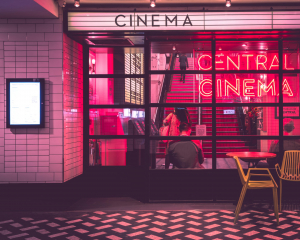
The air is getting crisp, the city smells like rain on warm pavement, and Athens has officially entered its coziest season. While it's tempting to pull up a blanket, light a candle, and let Netflix automatically play the next episode, autumn in Athens has a better alternative: the city’s charming, small-scale cinemas.

These theaters are more than places to watch a film — they’re community hangouts, cultural landmarks, and secret escapes from the fast pace of the city. Grab a warm drink, your favorite sweater, and explore the Top 5 Cinemas in Athens that prove movie nights are better outside the living room.

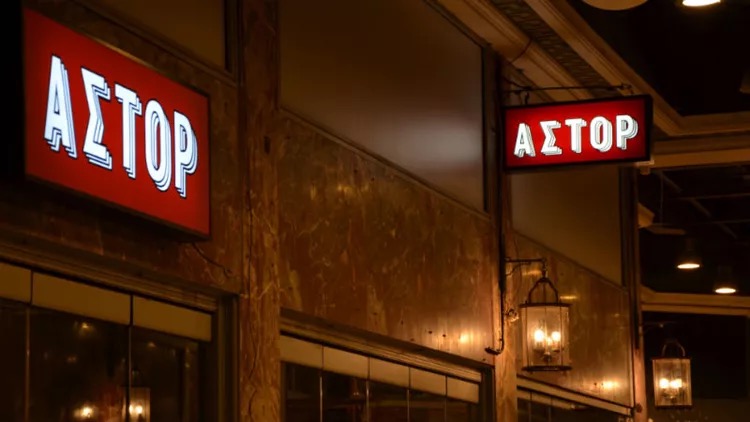
1. Astor


Image

📍 Stoa Korai, Panepistimio

A legendary underground cinema, operating since the 30s, with a cult following, Astor is known for its curated selection of indie films, retrospectives, and classic screenings. The vibe is warm, nostalgic, and slightly retro — the kind of place where you can watch Casablanca on a Tuesday and a silent film accompanied by live music on a Thursday.

✨ Best for: cinephiles, date nights with an “old-school romantic” twist.

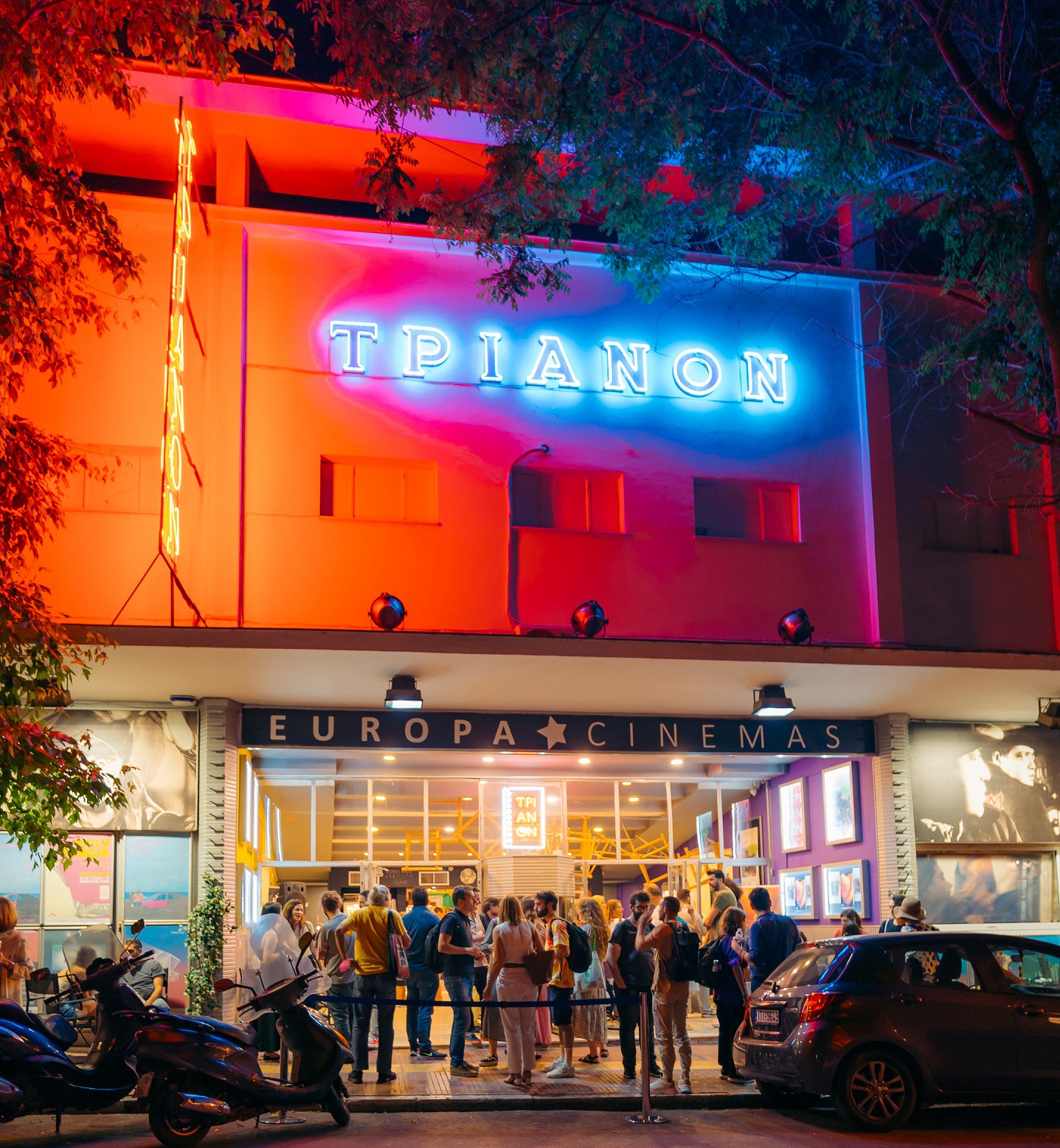
2. Trianon Cinema


Image 1

📍 Patission / Victoria Square

A true Athenian classic and one of the few cinemas focusing on international film festivals, documentaries, and art films. Occasionally, Trianon doubles as a live performance venue or a cultural space for talks and special screenings. The façade alone screams vintage cinema magic.

✨ Best for: film festivals, premieres, artsy crowd energy.

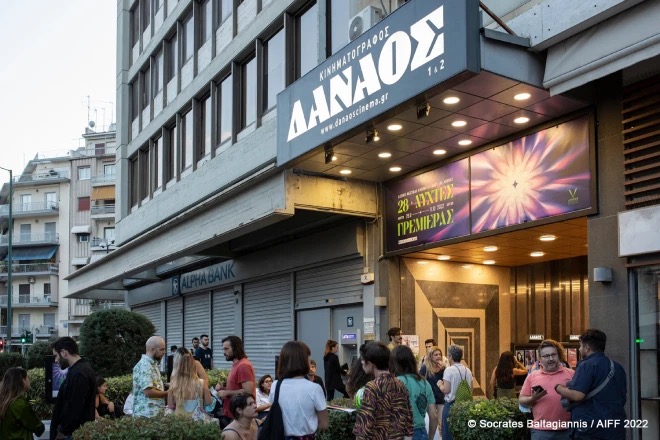
3. Danaos Cinema

Image 3

📍 Amphitheas Avenue, Fix

A modern but charming independent cinema known for showing the best European cinema releases. Danaos regularly participates in Athens’ film festivals and hosts Q&As and special events with filmmakers. The seating is comfortable, the sound is great, and the atmosphere still feels personal.

✨ Best for: those who want the film quality of a big-chain cinema without the mall energy.

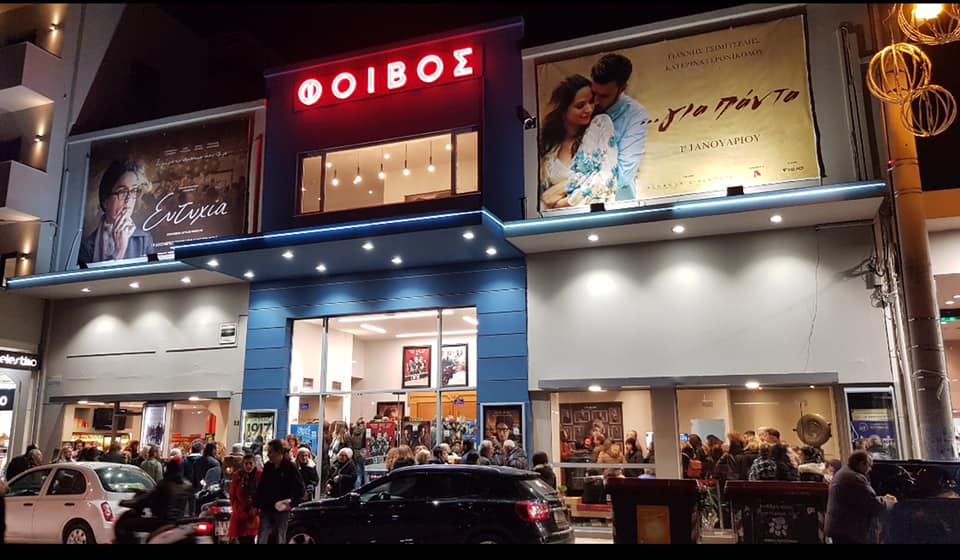
4. Foivos


83233799 2772121292834762 4162323883967381504 n

📍 Ethnikis Antistaseos 3, Peristeri

Built in 1953, Foivos is a true neighborhood treasure. Foivos feels like cinema therapy — intimate hall, relaxed atmosphere, affordable tickets, and an audience that genuinely cares about movies. If you want to feel like a local, this is your spot.

✨ Best for: heartfelt indie experiences & cozy autumn walks afterward.

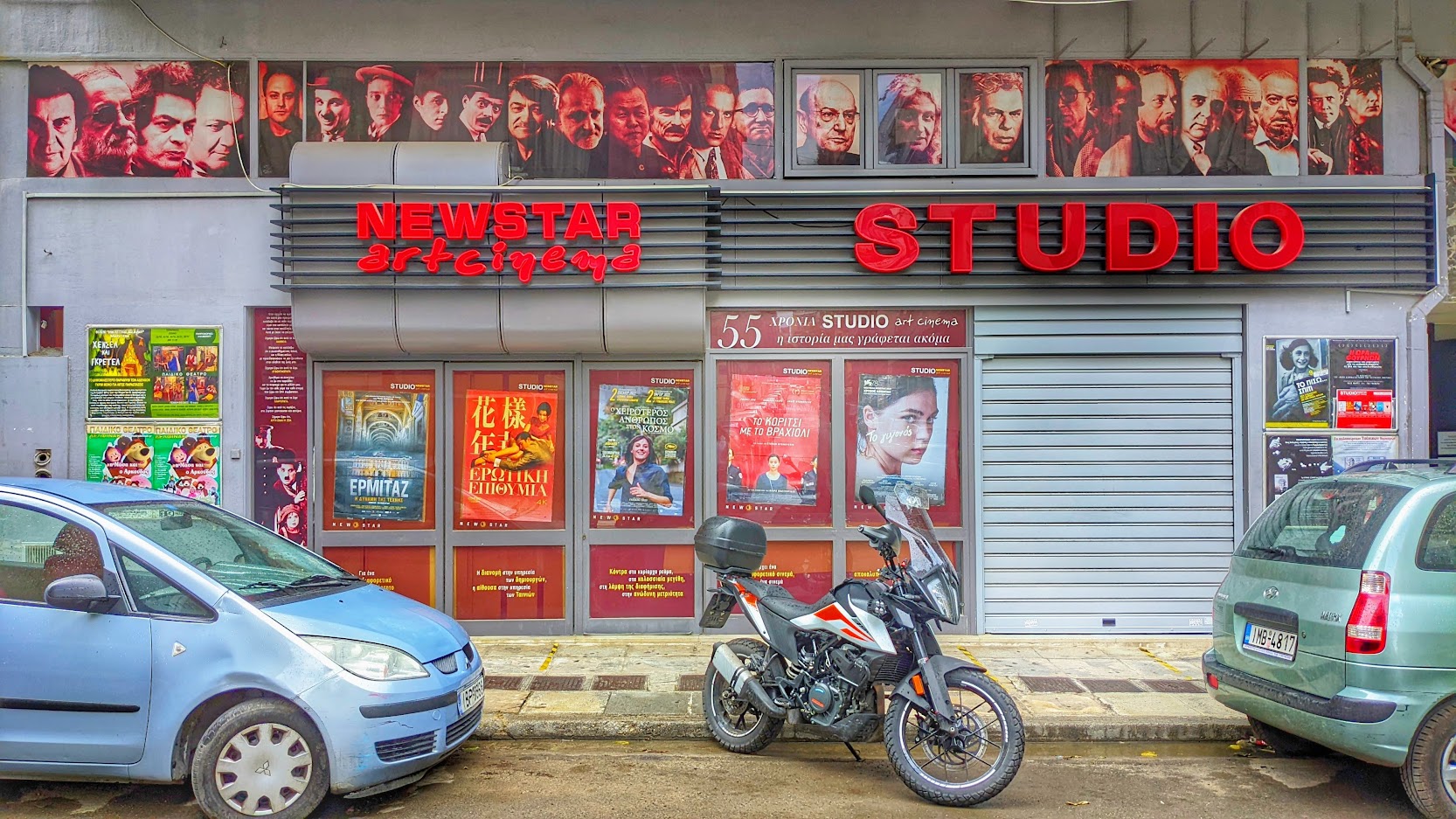
5. Studio New Star Art Cinema


PXL 20220611 123819989.MP 01

📍 Stavropoulou 33, Athens

A historic arthouse venue that champions world cinema, independent productions, rare films, and retrospectives you won’t find anywhere else. If you love the kind of movies that don’t hit mainstream theaters, Studio will feel like home.

✨ Best for: discovering films you didn’t know you needed.


Monday, 15 December 2014 13:35

Copy of What To Do With A Greek Snail

Lorem ipsum dolor sit amet, consectetuer adipiscing elit, sed diam nonummy nibh euismod tincidunt ut laoreet dolore magna aliquam erat volutpat. Ut wisi enim ad minim veniam, quis nostrud exerci tation ullamcorper suscipit lobortis nisl ut aliquip ex ea commodo consequat. Duis autem vel eum iriure dolor in hendrerit in vulputate velit esse molestie consequat, vel illum dolore eu feugiat nulla facilisis at vero eros et accumsan et iusto odio dignissim qui blandit praesent luptatum zzril delenit augue duis dolore te feugait nulla facilisi. Nam liber tempor cum soluta nobis eleifend option congue nihil imperdiet doming id quod mazim placerat facer possim assum. Typi non habent claritatem insitam; est usus legentis in iis qui facit eorum claritatem. Investigationes demonstraverunt lectores legere me lius quod ii legunt saepius. Claritas est etiam processus dynamicus, qui sequitur mutationem consuetudium lectorum. Mirum est notare quam littera gothica, quam nunc putamus parum claram, anteposuerit litterarum formas humanitatis per seacula quarta decima et quinta decima. Eodem modo typi, qui nunc nobis videntur parum clari, fiant sollemnes in futurum.

Monday, 16 February 2015 09:28

Food Mafia In Glyfada

The first thought that I had reading the large, one-page menu at Food Mafia was that this place is worth returning to a second and even a third time. The concept of a menu that encompasses flavors and aromas from around the world combined with the undeniable talent of Elias Skoulas are definitely intriguing.

Simply read the menu and you will understand. Rethymno borders on Vietnam, octopuses flirt with snails and the variety of flavors and aromas is taken to the extreme. And this is just on the first visit. After that, it’s up to you.

Full dinner: 30 – 40 euro per person without wine

Address: Laodikis and Filikis Eterias 10 Esperidon Square Glyfada

Open for lunch as well.

Written by Dionysis Koukis

Translated by Eleni Georgiou

athinorama.gr


Do you have a recommendation or recipe to share? Send it to us at ideas@xpatathens.com!

Wednesday, 18 February 2015 14:02

Katakolo

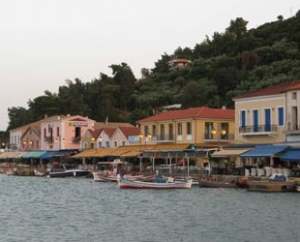
Katakolo is a small, some would say sleepy, port town located about 15km from Pirgos on the western coast of the Peloponnese. Its main claim to fame is a deepwater port suitable for the largest cruise ships you can imagine, along with the fact that it is only 35km from Ancient Olympia. It is also where my wife´s family is from, so I have spent more than a few summer holidays sitting around Katakolo chatting with friends, watching the cruise ships come and go and exploring the surrounding areas.

A short history of Katakolo

Katakolo has always been a port town, with its original heyday being the end of the 19th to the mid 20th century when it was the main point of departure for the region’s famous raisons. The Pirgos – Katakolo rail link was completed in 1881, a full 10 years before the Greek state railway line between Athens and Lamia was constructed. Katakolo’s port was funded entirely by the local Pirgos authorities to facilitate the transport of finished raisons to the ships at Katakolo where they were shipped to all the major ports of Europe. The Katakolo of those days can still be seen in the old warehouse buildings along its back streets, some of which have been nicely restored.

Since 2003, Katakolo has undergone a surprising and very pleasing makeover. The port was renovated in that year with funds donated by the town’s most famous of sons, John Latsis. With the renovated port came more cruise ships with more tourist dollars and in a surprisingly short time Katakolo has become a much nicer place to hang out in with most of its old buildings lovingly restored, the cafes and tavernas along the waterfront full of smiling people and its relaxed bars pulling in the locals from Pirgos on the weekends.

To read more, please visit travelsingreece.com

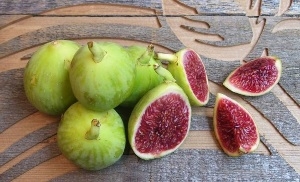
"But how are you even Greek?" is the reaction I always get when I tell people I don't like figs. I know, I know, how am I even Greek when I don't eat the fruit of the gods, the humble fig? So prominent is it in Greek cooking, figs are making a culinary comeback, used more and more not just in sweet dishes but in savoury. And dried, preserved or sweetened they are delectable enough, but just freshly picked off a tree they can reduce grown men to tears - I've seen it with my own eyes.

And no wonder - in Greek mythology figs are associated with Bacchus, also known as Dionysus, the god of wine and song. Yet this very ancient and biblical fruit is making a resurgence in modern times.

A fig tree is said to appear in some images of the Garden of Eden, giving a religious connotation to this Grecian delicacy. Figs are mentioned in the Christian Bible, but not only that, the Muslims' Koran, and the Jewish Torah. The early Greeks so highly prized figs that it was considered an honour to bestow upon the winner of various competitions both the foliage and fruit of a fig tree. And when modesty became popular in ancient times, the private parts of Greek statues were covered with fig leaves. This also comes from the religious belief Adam and Eve covered their nakedness with leaves that are usually said to be from the fig tree after they ate the forbidden fruit. Even some religious scholars believe the forbidden fruit was in fact a fig. Also, in Greek mythology, when Zeus was pursuing Ge and her son, Sykeus, in the war of the Titans, in order to save her son, Ge metamorphosed into a fig tree.

Figs enjoy a Mediterranean climate that has a long, hot, dry summer, that's why they are so commonly found in Greece and Italy and feature heavily in both cuisines. The fig tree can live as long as 100 years and grow to 100 feet tall, although domestic trees are kept pruned to a height of about 16 feet. There are hundreds of varieties of figs, ranging in colour from nearly black to almost white, and only the female fruits are edible. The green varieties are normally reserved for drying.
The shelf life of fresh figs is brief indeed. They must be picked ripe from the trees as they do not ripen well once picked. A very firm fig is not ripe and will not properly ripen further. Snatch them up and use them as soon as you find them in the market as they will spoil within seven to ten days of harvesting. In most cases this means you have about three days at most to use them at home. Select figs that are clean and dry, with smooth, unbroken skin. The fruit should be soft and bouncy to touch, but not mushy and overripe. Use your nose when picking figs and smell the fruit. If it smells slightly sour, it has already begun to ferment. The fruit is sweet to taste and in ancient times, was used a sweetener before refined sugar. And given they are among the richest plant sources of calcium and fibre you can rest assured you are doing your body a good deed by indulging in figs.

But even though there is a short window to indulge in fresh figs, figs as a fruit can be consumed all year round. Dried figs are readily available - and many varieties and brands are imported from Greece to Australia for consumption here. Also, figs can be made into jams, and preserved for savoury dishes or as spoon sweets to enjoy with coffee. There are also biscuits readily available filled with a fig jam. Fresh and dried figs are also perfect for breakfast. Mixed in with Greek yoghurt and honey it makes a nutritious breakfast option. Preserved figs are great to include in muesli and of course, fig jam is perfect on a toasted piece of sourdough.

By Penni Pappas
http://neoskosmos.com

Sunday, 17 April 2016 18:07

International Day For Monuments & Sites

With the Olympic Games taking place in Rio de Janeiro, Brazil, in August 2016, ICOMOS has dedicated this year's International Day For Monuments & Sites, Monday April 18, 2016, to the heritage of sports.

In celebration of this day in Greece, the Ministry of Culture and Athletics has announced that all archaeological sites will have free admission to the public on Monday April 18, 2016. Museums will also participate, with the exception of museums that are closed on Monday's.

During the upcoming Easter holidays, sites and museums in Greece will hold the following hours:

Friday April 29: 12:00-17:00
Saturday April 30: 8:00-15:00
Sunday May 1: Closed
Monday May 2: Open with regular hours
Tuesday May 3: Closed due to reschedule of May 1st holiday (Protomagia)

Source: lifo.gr
Page 24 of 452