

XpatAthens

XpatAthens

Visiting folk museums that present how houses and other spaces were set up in the past can be a fascinating experience, but during one’s visit, it’s hard to forget one is in a museum.

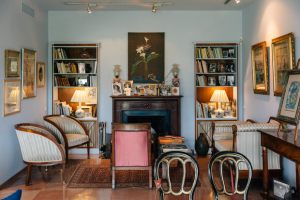
One of the key charms of the Katakouzenos House Museum (KHM) is that it almost feels still lived in. The 300m sq apartment on Vas. Amalias Ave is filled with impressive and highly elegant furnishings, books, and paintings by the likes of Chagall, who was one of the illustrious and globally famous friends of the owners. It is a cultural gem on the 4th floor looking out to the Parliament Building that still, not enough people know about.

The KHM was once the private residence of acclaimed psychiatrist Angelos Katakouzenos and his intellectually pioneering wife Leto, who belonged to the cultural elite of Europe’s so-called “1930s generation,” and were cultural ambassadors of Greece abroad and arbiters of international tendencies in Greece.

When she was a young woman, the museum’s director Sophia Peloponnisiou, connected with Leto Katakouzenou during the last decades of her life.

They developed a close and loyal friendship during which Peloponissiou made her dedication to her friend’s cultural visions a priority, offering her time and efforts in helping her publish her autobiography, soon published in its fifth version, and helping to organize cultural initiatives. Following Leto Katakouzenos’s death, the young woman discovered that she had been assigned the honor of continuing the pair’s cultural vision by keeping the apartment and its legacy ‘alive’.

Hosting a year-round series of cultural events such as talks, music and theatre performances, readings, and screenings, the KHM contains an extensive collection of over 40 paintings, some drawings, and prints, numerous works of art (decorative objects, sculptures), paintings in various media from the 1930s-1970s and a quality collection of 18th and 19th C. French and Hellenic furniture. The series of paintings includes a set of four large mahogany doors especially painted for the Katakouzenoi by their close friend Nikos Chatzekyriakos-Gkikas and many more paintings by the same artist in various media.

Further works by Spyros Vasileiou, Giannis Tsarouches, Giorgos Gounaropoulos (all prominent artists of the “1930s generation”) are hung all over the house. The watercolor and pastel portrait of Leto by Marc Chagall is perhaps the best work of art by a non-Hellene artist. “What makes the KHM collection of paintings quite unique, apart from their undoubted artistic and monetary value, is the way they were acquisitioned” notes Peloponissiou. “None of the works was purchased; indeed most were given by the artists themselves as gifts, tokens of friendship or gratitude.

To read this article in full, please visit: greekcitytimes.com
Wednesday, 06 August 2025 19:18

Colibri Corfu

Colibri is a sacred seaside sanctuary on Corfu Island, Greece, where conscious living, creativity, and community come to life at the Colibri Farm. There, at the same land that holds the Colibri Spirit Festival - an extended version of our festival is now alive every day with Colibri. Nestled along the island’s stunning coastline, Colibri hosts daily yoga classes, transformational workshops, ecstatic dance nights, live music, and nourishing food - all centered around a deep connection to nature and holistic well-being. Our community-driven venue brings together locals and international wellness seekers in a vibrant, open-air environment.
 
At the heart of the experience is our vibrant Colibri Restaurant, serving delicious, healthy food made with love to support body, mind, and spirit. Whether you're enjoying brunch under the olive trees or a sunset dinner with your feet in the sand, the restaurant is a destination in itself - open daily from morning until night.
 
You can also stay onsite in our cozy and eco-friendly Glamping accommodations directly at the Colibri Farm. Choose a package that includes your Glamping stay plus full access to Colibri’s daily program - a seamless way to drop in fully and recharge.
 
Whether you're looking for a mindful retreat, a place to connect, or a stage to feel alive - Colibri creates a magical space where heaven meets earth. Book your Glamping & Beach Pass here.

Key Highlights

  • Prime wellness destination combining yoga, workshops, dance, music, and healthy food

  • Open-air, eco-conscious beach sanctuary with intentional gatherings

  • International and local community hub centered on creativity and connection

  • Onsite Glamping options available with full access packages

  • Situated on Corfu Island, offering access to natural beauty and Greek culture

  • Buy tickets or packages now


Contact Info

Address: Colibri, Corfu, Kerkira, Greece 491 00

Website: thecolibri.com

Emailinfo@thecolibri.com

Contact Number: +306972125542
Colibri Instagram

colibri beach

I recently had the pleasure of visiting Jeff and Sharona at the Silk House, the newest addition to their thoughtfully curated Halo Collection. Having already established The Hive in the vibrant Kypseli neighbourhood and The Hill perched in Lycabettus, the Silk House in Metaxourgio feels like the crowning jewel of their journey so far.

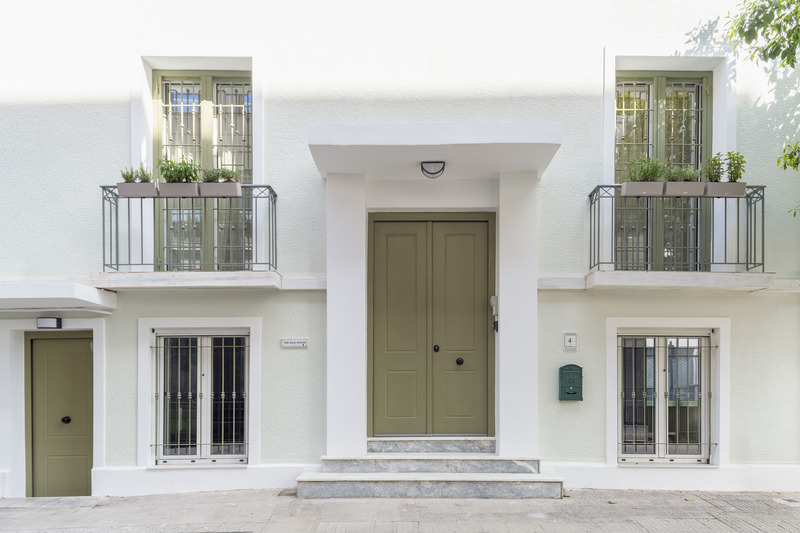
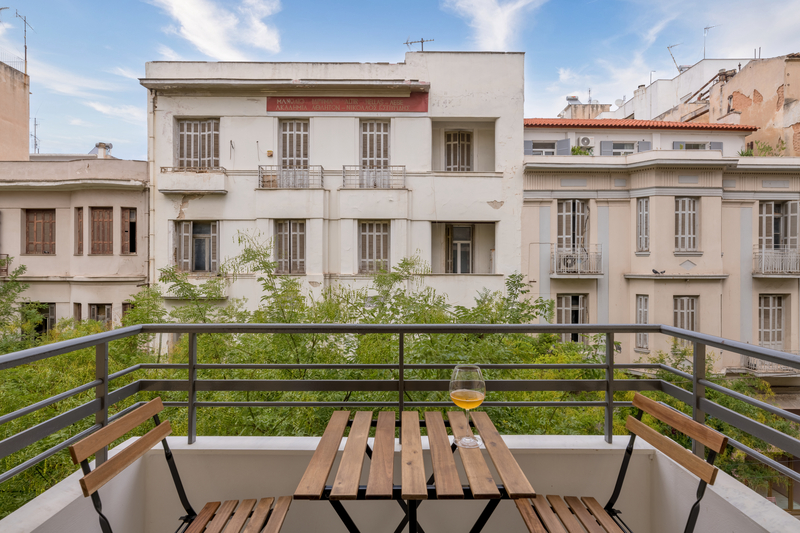
From the moment I turned the corner, the house made an impression. Metaxourgio is a neighborhood known for its grit and vibrancy, filled with "hype" spots to eat and drink, but the Silk House stands out like a calm, aristocratic anchor. Even from the street, the facade is soothing, a beautiful, balanced blend of old-world elegance and contemporary lines.

DSC 7727 2
The Silk House, Exterior

But when I walked inside? My jaw literally dropped.

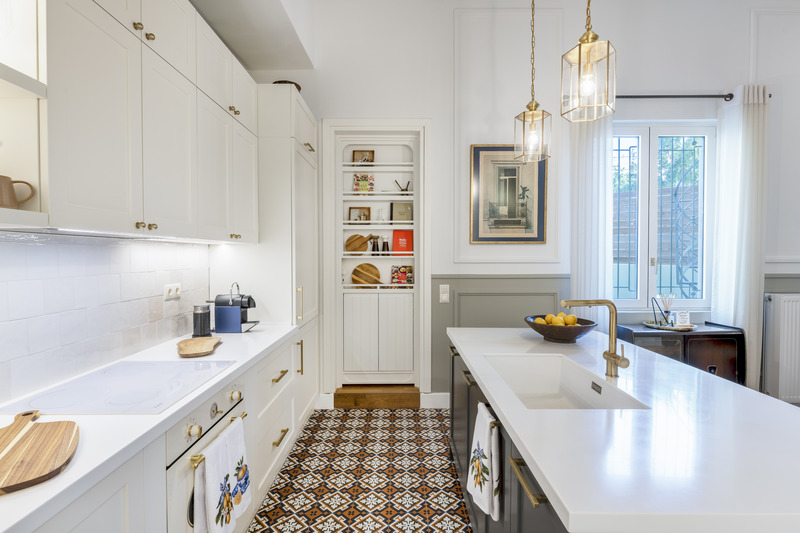
It is rare to find a space that masters the combination of old and new so seamlessly. It doesn't just look like a rental; it feels like a place meant to be lived in. Everything makes sense. The colors are so beautiful they immediately lift your mood, and the original flooring in the kitchen is absolutely stunning, a real showstopper.

DSC 7611 2 2
The Silk House, Kitchen

As they gave me a tour, I realized that the house is full of hidden corners; it’s the kind of place where not everything is as it seems at first glance. I found myself stopped in my tracks by the details:
  • The Heritage: Vintage suitcase trunks from Jeff’s family collection anchor the bedroom, while mid-century armchairs have been transformed with lush, modern upholstery.
  • The Atmosphere: A sleek electric fireplace makes the living area feel incredibly cozy, perfectly balanced by the view through the window of a striking piece of local graffiti, a nod to the urban heart of Athens.
  • The Experience: For anyone who appreciates all-time classics, the 1950s Grundig radio is a total blast to see (and hear). Even the smaller touches are elevated, from the clouds-of-comfort beds and pillows to the organic Greek olive oil toiletries in the bathroom.
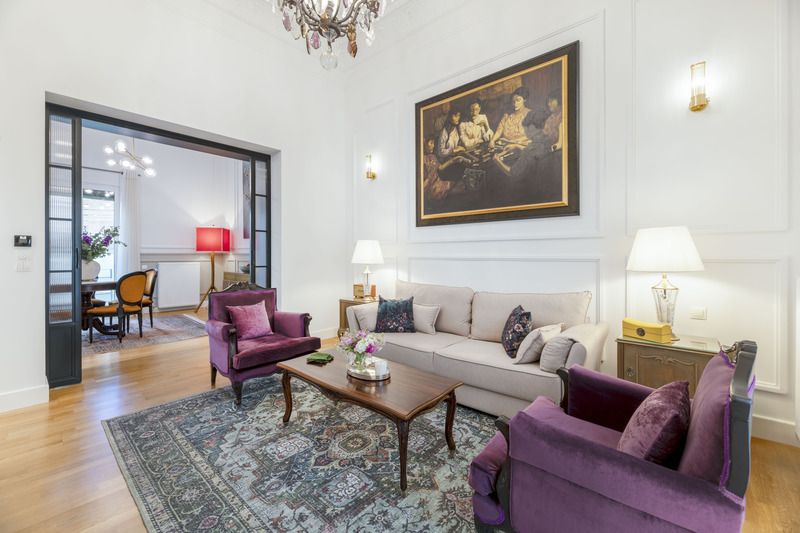
Every detail, from the scent of the diffusers to the secret lighting, is a testament to their "circle of care." It was in this setting, surrounded by the warmth of their hospitality and the beauty of the Silk House, that we sat down to talk about how it all began.

Silk house
The Silk House, Living Room

We are here at the Silk House, one of 3 stunning properties in the Halo Collection. Looking at what you’ve built here,do you have your sights set on other renovations in the city center, or are you looking to expand further out?

Jeff: Honestly, we would love to find a new area and bring the beauty of what we’ve done here into a different context. For us, it’s more about the building itself than the specific neighborhood. We’ve been looking at the potential of old warehouses, the New York-style loft vibe.

Sharona: We looked at Botanikos, which is where the big warehouses are, near the new stadium. But those are "serious" warehouses. If you try to build a home there now, you’re fighting with trucks; it might take 10 or 15 years before that area truly matures.

Jeff: We spend a lot of time just walking, looking at buildings and asking, "What about this one?" We found a warehouse in Exarchia about a year ago, but the ceiling height wasn't right. It has to be the right fit.

How exactly do you choose a property to bring back to life?

Jeff: That’s a really interesting question, but to be honest, I don’t think we go out specifically looking for a certain property. It’s more like a place comes along, you look at it, and you just go, "Oh." You see the high ceilings or the way the light hits, and you realize you can work with it. The first couple of properties were almost accidental, really. It wasn't until we got here and planted ourselves that our brains started working and we got that clarity on the direction we wanted to go. We always knew we wanted an old house. When we bought the Silk House, it was actually two separate units, so we had to put the staircase in ourselves. Those old houses are so hard to find.

Sharona: Initially, the dream was just to find an old house to live in ourselves! We ended up buying a place in Lycabettus that everyone called a "basement," but when you actually walk in, it’s anything but. It has this little private courtyard where no one bothers you, just total peace and quiet. For our other property in Kipseli, my sister-in-law originally sent us the pictures of that one, and it was the light and that 1930s style of living that attracted us. We really wanted to keep that. So, in the beginning, it wasn't a grand plan, but we eventually realized what was available and what we could do with it.

DSC 1960
The Hill, Courtyard

What was the defining moment when you decided to leave Asia, move to Greece, and build the Halo Collection?

Jeff: Well, we’ve always had this idea because my mother’s Greek and my father’s Greek-Canadian, so Greece has always played a part. Our daughters spent summers here. When I finished 40 years in Asia and retirement was knocking on my door, I thought, "What have I been doing in Asia? Building companies." So we thought, retirement should look like building something again. That was the start of the Halo Collection.

Sharona: We came back and forth from Singapore for over 20 years because we had a home in Mykonos. After a year or two, someone said, "Why don’t you rent it out?" Again, accidental! We could only spend a month there a year, so we said okay. That rental business lasted more than 20 years and did very well, but the island has changed tremendously. It’s not what it used to be.

Jeff: We learned a lot, though, about what people like on holiday. An island is different; people want to do nothing, go to the beach, and go home. Athens has more of a neighborhood feel. It’s urban. People are looking for how they can fit in and see a little bit of Greece. We took what we knew after 24 years, what people look at when they walk in the front door, the small things like arranging a car or a boat trip. Those things make them feel comfortable, rather than a flashy new place that has no soul. 

You’ve moved away from the Mykonos "beach party" vibe to focus on these urban Athenian neighborhoods. Now that you’ve recently launched the Silk House on Airbnb, how are you finding the response to your more curated approach?

Sharona: Each of our properties is a little different, and that’s intentional. The one in Lycabettus, for instance, is such a unique little space, but when you give it to an agent, they just see "bread and butter." They want cookie-cutter. They don't want the "additional dish" or those extra touches we love giving our guests. We aren't really interested in the whole "Airbnb shoot-and-shut-up" style; we want to find a middle ground by creating unique spaces. If the market is ready for it, we’ll see it in the feedback.

Jeff: We’re still learning the market ourselves, With the Silk House, we literally just launched on Airbnb and it’s already showing its colors. People were asking for one or two-year stays within the first two days! I’m like, "Okay, now where do we go?" It’s encouraging, but it's a learning curve.

Sharona: It’s a very specific niche. Three-bedroom houses only make up about 5% of the Airbnb market as most of it is studios and one-bedrooms. So we don’t really fit in a standard category. We’re appealing to a whole different group of people,

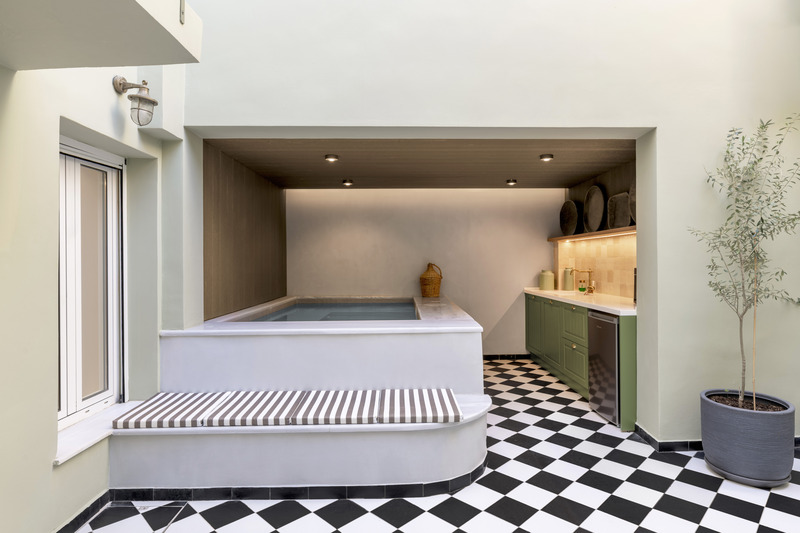
Jeff: Exactly. People who want a certain aesthetic and they’re willing to pay for it. To add to that, we put in a heated plunge pool here at the Silk House, which was my idea. Sharona was like, "Oh my god, the bloody plunge pool," but now she sees it’s a great move because nobody else has one. It’s outdoor but partially covered, so in the July heat, people can just cool off.

DSC 7842 2
The Silk House, Plunge Pool

It sounds like you're building a very specific identity for these homes. How did the name "Halo" come about to tie it all together?

Sharona: It was almost an accident! But it works because a halo is a circle, and it implies a "circle of care" around the space and the neighborhood. That’s the thread across all three properties. We were just sitting around thinking, "What are we going to do?" and that name just came out. It represents the experience of all the different bits and pieces of the neighborhood coming together.

Each house also has its own distinct name. How do you choose those?

Jeff: Exactly! This is the The Silk House because in the back studio, they used to make silk, as the area used to have lots of silk-making workshops. The Hive is because they used to keep bees in Kypseli, they had honey there. At least that's what we were told! Kypseli in Greek means Beehive.

DSC 1460
The Hive

Sharona: They’re actually going into urban honey now. There’s a guy with an NGO who encourages beehives on rooftops. We thought about doing one here, but then I thought, we have guests going up the stairs, what if they touch the beehive? Maybe that’s a good reason for them not to go up! "Please don't go up, we've got lots of bees."

Jeff: But it's an alternative experience. Having honey on the table and knowing where it came from. The Hill is the last one, which is up on Lycabettus. So every name has to do with the neighborhood.

DSC 1999 2
The Hill

What is the biggest challenge in modernizing these historic Athenian properties?

Jeff: To keep true to the area and the look, despite what people might want. Today, everyone wants a bathroom associated with every bedroom. Greek houses weren't built that way. We could do it, but we feel it would lose the flavor of the house. Likewise, we wanted to add a floor to this building, but structurally it would have changed too much. We want to tell people, "This is original."

Sharona: Another example are the kitchens which were often tiny and isolated. In a modern world, that doesn't work. We renovate for flow, but keep the soul. A big challenge is also the historical value of the area. You have to worry about ruins. If we dig and find something, everything stops. There’s a sign out front saying this was the road from Kerameikos to Plato's Academy. If we dig too deep and find something, the whole project stops! In the historical center, everything is historical.

DSC 7600
The Silk House, Dining Room

What is something you simply won't negotiate on when you're building?

Jeff: Plumbing and electricity. We put in the best. I think Greeks sometimes think, "How can we fix this just for the next few months?" No, when we do something, we do it for the next ten years.

Sharona: You have to do the foundation properly. We almost had a fire here because the previous people did the wiring poorly. When our engineers dig, they don’t cut corners.

Jeff: It’s tempting to save 50% on something like air conditioning, but we use the most expensive VRV systems because they last and they are sustainable. They read the room and shut off when the temperature is right, which is much more economical.

How do you strike that final balance between the antique and the modern?

Sharona: It’s all about the mix. You try to weave the old in with the new so it feels intentional. For example, if you look at the cabinetry here, we built in new storage but kept the paneling around it to give that immediate sense of history. You have your 65-inch TV and your electric fireplace, which are obviously very new, but then you surround them with old books and pieces that have a story. 

Jeff: We’re very protective of the original character. In this house, the floors are original and the ceilings are exactly as they were in the 1930s. Actually, we would have lost all of that if we had tried to add another floor. Even the furniture has a history. Most of our chairs and tables are things people literally threw away. We find them in these massive Monastiraki “junk” stores where people are just letting treasures go. I take them to "my guy" just down the road; he has a great eye and he refurbishes them. We even have pieces that I brought over, vintage items from my mother’s collection, that just add to that lived-in feeling. And then there’s the 1950s Grundig radio. It’s a beautiful old stereo system that actually works! We found an old man, one of the few people left in Greece who can still fix them, and he got it running perfectly. You can actually turn it on and listen to the radio right now. 

DSC 8046 2
The Silk House, One of the two old radios
Sharona: It’s interesting because in places like Glyfada or Kifisia, everyone is chasing that modern 'Australian glass' style. They’re beautiful houses, but you have to wonder whether they will hold their style in 20 or 30 years. We prefer a different approach. You don’t have to throw things away to make a space feel modern. Sometimes it’s just about taking a dark cabinet that feels a bit too heavy and refurbishing the color or changing the handles to something more contemporary. It creates this slight, sophisticated shift while keeping the soul of the piece intact. You simply cannot find things like that in the 'new world' in Asia—it would cost you an arm and a leg—but here, the treasures are right in front of you if you're willing to look.

After living all over the world, what is the one thing about Athens that you missed most?

Sharona: The weather, for sure. 

Jeff: And the people are so genuine. You don't see that as much in Asia; people are more guarded.The amount of time people have reached out to help us! Our carpenter is 50 meters up the road; he’s always keeping an eye out. He’ll text Sharona and say, "You left your keys in the door." It’s a neighborhood thing. Neighborhoods are disappearing everywhere else, but this element is still very strong in Greece. The culture is just so strong here. Take Easter, for example; we recently celebrated it, and seeing it done so joyously... it’s incredibly inviting.

Sharona: We met a guy down the street fixing his house, and he just said, "Come in, come in!" He told us when he's finished, he'll invite us for coffee. We like the neighborhood so much we might even live here ourselves in a few years. It just feels like a home.

DSC 0358
The Hive, Balcony View


Thank you so much, Jeff and Sharona, for opening your doors and sharing the heart behind these incredible spaces. It was a true pleasure to experience the "circle of care" you’ve built within the Halo Collection firsthand.
Wednesday, 18 February 2015 12:37

Mystras – The Dead City

Magnificent, spectacular a glorious place, Mystras (5 Km north-west of Sparti) is one of the most exciting cities in Peloponnese. Standing still in time, the dead city lies on the slope of the sheer, strange hill with the fortress at its top. The whole of Mystras is an open-air museum; A reminder of glorious era of power and culture. Because of its good preservation, Mystras is sometimes compared to Pompeii in Italy.


It is one of the UNESCO World Heritage Sites. There are two entrances: one at the bottom of the site and the other one in the middle. It is about 6 km away from Sparti. In the modern village of Mystras - situated 1 km or so from the archaeological site, there are a few restaurants and hotels.

Its fortifications and churches, its palaces and mansions, its roads and fountains, charm thousands of visitors daily and offers them valuable insights in the evolution and culture of the Byzantines.

For two centuries Mistras was at the forefront of developments and had a brilliant history full of glory, splendour and political, social and cultural contributions. Its story begins in the mid-13th century when the Franks were dominant in the Peloponnese. In 1249 Villehardouin II built an impregnable fortress at the top of a hill called Mistras or Mizithras. Ten years later Villehardouin found himself a prisoner of the Byzantine Emperor Michael Paleologus and bought his freedom by handing over the fortresses of Mistras, Monemvasia and Mani. Mistras offered security, so that the inhabitants of neighbouring Lacedaemonia, as Sparti was then called, made their homes on the slopes surrounding the fortress.

The settlement and the Hora (town) were protected by a wall, but the new houses were built outside the enclosure. Another wall protected the new settlement, Kato Hora. The strategoi (generals) governed the town, and as of 1308, when the seat of the Diocese had been moved to Lacedaemonia,

Mistras became in the mid-14th century the capital of the Peloponnese and the seat of the Seignioly (Despotate) of the Moreas, with a ruler or despot who enjoyed tenure for life.

Sightseeing

The Palaces

The palaces of the despots of Morea dominate Mistras from their rocky foundations in the centre of Ano Hora where the Monemvasia gate leads from Kato Hora. It is a spectacular complex, comprised of buildings built at different times. The first, the "mansion of the Cantakuzenoi", was constructed in the first years, perhaps by the Franks. The second edifice dates from the same period (1250-1350). The third, a four-storey building, was erected between 1350 and 1400, as was the fourth, a two-storey mansion which was the residence of the despot. The fifth building (1400-1450) was the palace of the Paleologoi. Its length is 38 m. and its width 12 m. The first storey was intended for the departments of the Seigniory. The second was the throne hall. The abandoned palaces constitute an important attraction for the modern visitor. After their restoration, they are a vivid reminder of an era that has left an indelible mark on history. As is the grand square before them, the site of official displays during the days of Mistras' glory and a market in later years, when the town was a busy commercial centre.


Tel: +30 27310 83377

To read more, please visit thegreektravel.com


As was expected the economist Yanis Varoufakis was given the key position of Finance Minister. Another influential economist, Nikos Dragasakis was appointed Deputy Prime Minister while Giorgos Stathakis will head the ‘super ministry’ of Economy, Shipping and Tourism. Theodoros Dritsas will be a deputy minister in the same ministry.

Alexis Tsipras has reorganized the government, merging several ministries and creating new bodies, such as the Anti Corruption office to be led by Panos Nikoloudis.

The full cabinet:

Prime Minister - Alexis Tsipras

Deputy Prime Minister – Nikos Dragasakis

Minister of State: Nikos Pappas

Deputy Minister of State: Terence Quick

Parliamentary Speaker: Zoe Konstantopoulou

Minister of State to Coordinate Government Operations:  Alekos Flambouris

Minister of State to Combat Corruption: Panagiotis Nikoloudis

Government Spokesperson: Gavril Sakellaridis 

Ministry of Interior and Administrative Restructuring

Minister: Nikos Voutsis

Deputy Ministers:

  • Giorgos Katrougalos (Administrative Restructuring)
  • Yiannis Panousis (Protection of Citizens)
  • Maria Kollia Tsaroucha (Macedonia / Thrace)
  • Tasia Christodoulopoulou (Immigration Policy)

Ministry of Economy, Infrastructure, Shipping and Tourism

Minister: Giorgos Stathakis

Deputy Ministers:

  • Theodoris Dritsas (Shipping)
  • Elena Kountoura (Tourism)
  • Christos Spirtzis (Infrastructure, transport and networks)

Ministry of Productive Reconstruction of the Environment and Energy  

Minister: Panagiotis Lafazanis

Deputy Ministers: 

  • Yiannis Tsironis (Environment)
  • Vangelis Apostolou (Agricultural Development)
  • Panagiotis Sgouridis
  • Ministry of Culture and Education

    Minister: Aristeidis Baltas  

    Deputy Ministers:

  • Nikos Xydakis (Culture)
  • Tasos Kourakis (Education)
  • Kostas Fotakis (Research and Innovation)
  • Stavros Kontonis (Sports)

Ministry of Finance

Minister: Yanis Varoufakis

Deputy Ministers:

  • Nadia Valavani
  • Kostas Mardas

Ministry of Health and Social Security

Minister: Panagiotis Kouroublis

Deputy Ministers:

  • Andreas Xanthos (Health)
  • Dimitris Stratoulis (Social Security)

Ministry of Labour and Social Solidarity

Minister: Panos Scourletis

Deputy Ministers:

  • Rania Antonopoulou (Unemployment)
  • Theano Fotiou

To read more, please visit thetoc.gr/eng

By Pavlos Zafiropoulos


Expat Explorer, one of the largest surveys of it's kind, wants to hear from you! Help us to help them gather information about living and working in Greece!

The survey takes approximately 10 minutes to complete and is open until Monday April 27th. It can be taken here: https://start.yougov.com/refer/v2fdHjNr0y73P7.

The 2014 Expat Explorer survey interviewed almost 10,000 expats about their views on different elements of life abroad, from general experience, through to personal finance and family life. The data is publicly available on an interactive portal designed to help expats make the most of their life abroad: http://expatexplorer.hsbc.com/.
Ryanair has announced that it will increase the frequencies to flights on its Chania routes to Athens and Thessaloniki this August due to overwhelming demand, as part of its Chania summer 2015 schedule.

The flights from Chania to Athens will increase from three to four daily and to Thessaloniki will rise from one to two per day.

Ryanair’s Chania summer schedule also includes two new routes to Glasgow and Manchester (29 routes in total), and extra flights to Dublin. The airline expects the summer schedule to deliver one million passengers annually and support 1,000 on-site jobs at Chania Airport.

According to the airline, Greek customers and visitors can now choose from 29 routes to/from Chania this summer, while enjoying allocated seating, a free second carry-on bag, reduced fees, an improved website and app with mobile boarding passes, as well as Ryanair’s Family Extra and Business Plus services.

To read more, please visit: Greek Travel Pages
In the midst of renewed (never-ending?) talk of crises and new economic measures, blockades and taxes, refugees and borders, somehow this week we hit the weather jackpot. This is more like it - early February and 17 degrees! I heard it once said that climate is 80% of life. Maybe this is what explains the fact that Athens hasn't totally buckled under the pressure. We are coming frighteningly close - no argument there - but the shining sun manages to play some very welcome tricks on the soul...


And when the weather turns warm, the feet feel like wandering - getting out of the house is top of the to-do list. 
 
This week I popped out to a couple great places - neither really 'new', and neither really cheap, but worth adding to your list...


Living in Thiseio, everyone knows the old Stavlos bar. This is the historic building at the top of Herakleidon St., the (actual) horse stables of King Othon during the mid-19th century. The building has gone through various incarnations, most recently as 'Root Artspace '. That business has now been re-opened as The Sowl, and has undergone a considerable makeover the process. The beautifully restored space has been given a warm 'southwest' feel in both the decor and the menu. Think 'tex-mex' meets 'bohemian', and throw in a colourful water fountain. Almost deliberately over-the-top... They serve up delicious food, including a Mexican fusion-style menu and modern Greek selections. And there is a surprisingly interesting wine list with some nice international choices. All this means that your night out will cost you more than your local taverna - but it's 17 degrees outside after all ;)


Ths Sowl is still functioning as an art and events space, with a event room and an upstairs gallery. I actually went by on Saturday for a morning yoga class run by Lynn Roulo, and stayed afterwards for brunch with the group.


On another warm night I was invited for dinner at Cinco in Kolonaki. Cinco has been on my list to try for a long time - the Iberian/Japanese/Peruvian fusion menu is pretty unique in Athens, and I heard the vibe was very cool... I was not disappointed. Definitely interesting menu (sea bass ceviche with pomegranate-tigers milk and red quinoa…!) and a relaxed trendy vibe, in a lofty industrial space. There is a ceviche bar, there are interesting cocktails, there was retro pop playing that night - a trendy spot by any standard, and easy to imagine that you are far away from Athens... Again, this is not your neighbourhood taverna - think The Sowl and then some. A bit over-priced if I’m being honest, but not the usual Athens kitchen...


I was pleasantly surprised by the fact that they both accept credit cards, but even my neighbourhood mini-market has touchless payments these days. A topic for another time...!


Go ahead - get out and enjoy this Athenian winter... It's 17 degrees outside after all. 


Until next time,


Jack


The Sowl
Herakleidon 10, Thiseio
+30 210 345 0003
Skoufa 52, Kolonaki
+30 210 364 3603
Tuesday, 05 April 2016 07:00

The National Historical Museum Of Athens
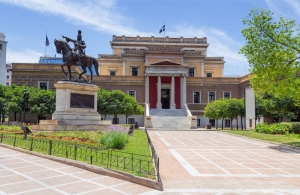
What was once the Old Hellenic Parliament Building in Athens, it is now the National Historical Museum, home to interesting items and artifacts that are from the period of 1453 to the Second World War. The museum emphasizes the Greek Revolution and Dave found that the museum built upon his knowledge of the Greek War of Independence.

There are hundreds of items on display, ranging from weapons to a collection of traditional Greek costumes. The ship's wooden mastheads  from the revolution era were particularly striking. Perhaps even a little cartoon like!

The Old Parliament Building is certainly worth seeing from the outside, even if you do not have the time to visit the museum. The building is of a neoclassical design, and an impressive bronze statue stands at the front. This is of General Theodoros Kolokotronis, one of the most prominent characters of the Greek War of Independence. Anyone interested in the creation of modern Greece should definitely visit this museum!

Visit on a Sunday. It’s free!

To see more of Dave’s experience at the museum, please visit: Dave’s Travel Pages.
Traditionally cooked with meat, these potatoes are a classic Greek dish. Crunchy on the outside and soft on the inside, Greek-style, roasted potatoes are hard to resist. Elena Paravantes from Olive Tomato shares her mother’s recipe, which adds two special ingredients.


Serves: 6
Difficulty: Easy
Prep Time: 35 minutes
Cooks in:
 45 minutes
Ingredients
  • 2 pounds potatoes cut in small wedges (if long cut wedges in half)
  • ½ cup olive oil
  • 2-3 teaspoons dry oregano
  • 1-2 tablespoons lemon juice
  • 3 cloves
  • 3 allspice
  • 2 garlic cloves quartered
  • ½ teaspoon salt
  • freshly ground pepper
To read this recipe in full, please visit: Olive Tomato
Page 296 of 463