

XpatAthens

XpatAthens

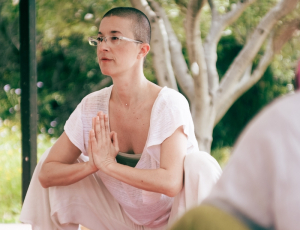
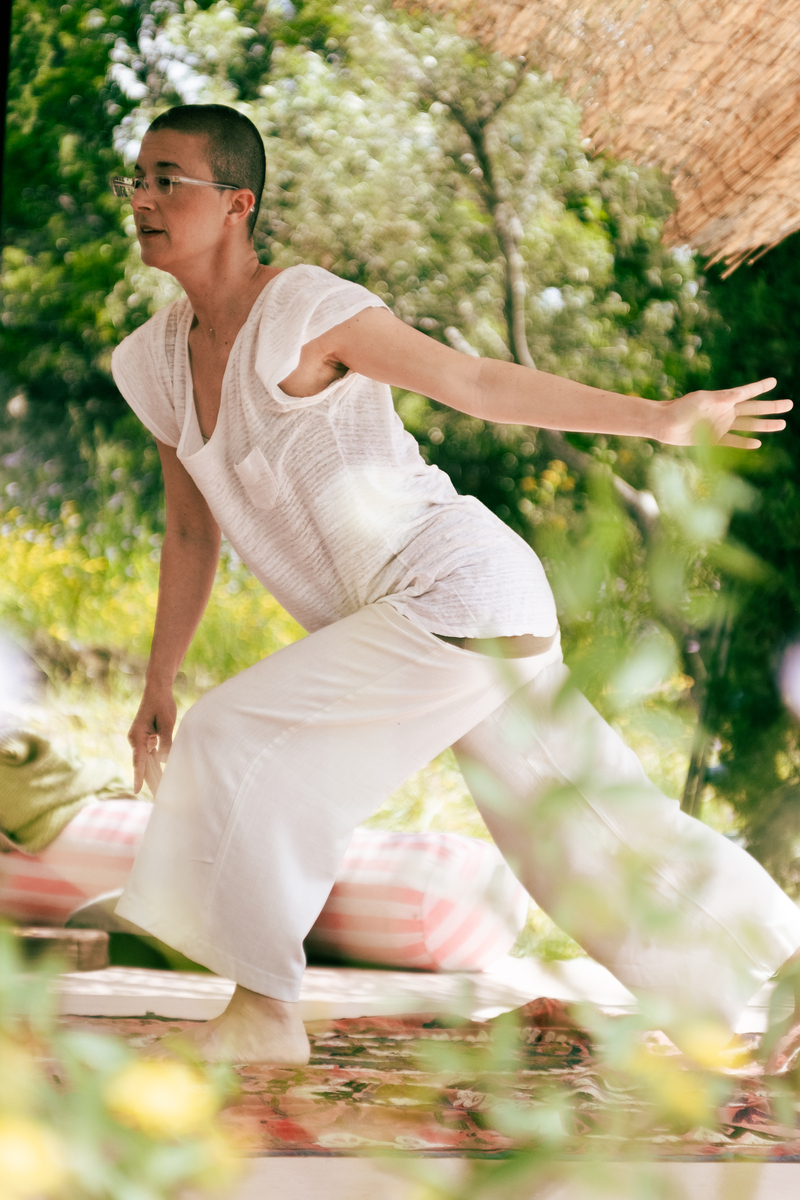
We recently had the pleasure of sitting down with Dimitra Natskouli at Ariadne’s Garden of Spiritual Arts, a sanctuary tucked away in the mystical landscape of Delphi. More than just a venue, the Garden is a peaceful retreat space and artist residency inspired by the Delphic spirit of “Know Thyself.” Here, archetypal shadow work is approached through the mystical side of Greek mythology and unfolds through the arts.

Whether you join a drop-in session for Hatha and aerial yoga, explore intuitive painting and dance movement therapy, or host your own private retreat, Ariadne's Garden is a space designed to slow down, reconnect, and explore the self in a grounded, supportive environment.

In this conversation, Dimitra shares how she weaves philosophy, breath, and myth into a "playground" for the soul.
1DSCF7113 2

Your background is a fascinating tapestry of philosophy, dance therapy, and Byzantine iconography. How did these diverse threads come together to form the vision for Ariadne’s Garden?
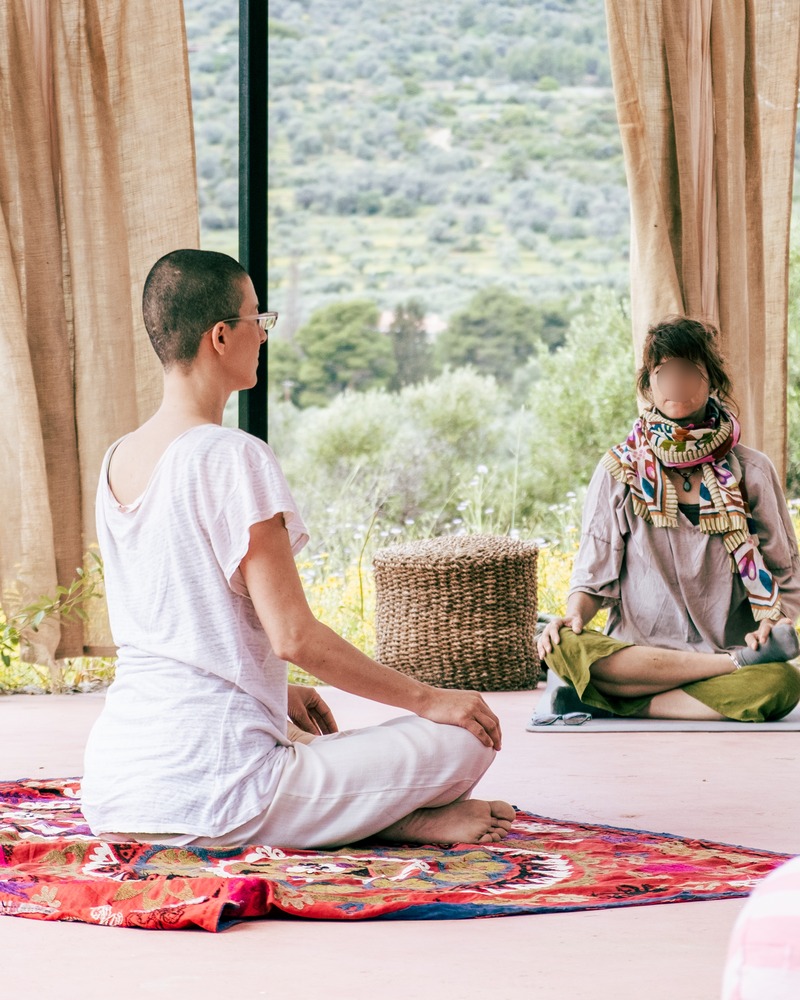
Ariadne’s Garden is the playground where these three worlds meet and collaborate.

On one hand, Ancient Greek philosophy enters through archetypal shadow work, where myths are “de-symbolised” and become mirrors, very much in the spirit of the Delphic “Know thyself.”  On the other hand, dance therapy, under the umbrella of embodied mindfulness practices, brings everything back into the body, grounding insight into lived experience. And, lastly, Byzantine iconography offers something unique: a precise visual language which gives form to the inner images that arise when mind and body begin to speak to each other. Somehow, these three had been my tools since my teenhood while stryggling with my existential hypervigillance to find my inner truth. To be honest, I still struggle, but, now it’s more fun!
 
You are often known as “Ieri Pnoi” (Sacred Breath). How does the concept of “breath” influence the way you’ve designed the physical spaces and the rhythm of the retreats?

Breath is, quite literally, my starting point. Before anything else, I exist as breath. It has become a quiet architect in both my life and my work. Every space in the garden is designed with one simple question in mind: can this place breathe? And the same applies to the rhythm of the retreats.

There is time expansion and space for expression,always followed by silence, and integration.  The garden belongs to Gaia , and we are simply learning to be in relationship with Her. Mother and child - Gaia and human in a healthy relationship is the vision of the garden. In other words an intimacy and alighnment of our breath to hers. Above all, Ariadne’s Garden is a place to breathe.

1DSCF7219 2
 
The name “Ariadne” is deeply symbolic in Greek mythology. Why did you choose this archetype to represent your sanctuary, and how does the “Labyrinth” play a role in the guest experience?

In a way, the name chose me. Ariadne Koumaris—philosopher, translator, and founder of this space—created this garden in the 1980s and 90s as a place dedicated to self-awareness, long before “retreats” became a trend. Her students, many from Europe and the US, helped shape the venue based on principles of sacred geometry, so they could come, detox, and be in dialogue with her work.

Mythologically, Ariadne is the one who does not enter the labyrinth, and yet, without her, no one finds their way out. According to Plato she represents the part  of the psyche that does not get lost in illusion, but guides us through it. Labyrinth, our life in ignorance, takes us to the trauma. And the hero is the one that can face it, recognise it as part of their soul and transform it, Then find the way out to liberaton. Guests are invited to face their patterns, their stories, even their wounds,  then to understand and integrate them.  And somewhere along the way, they begin to sense their own thread.  This is the myth we are working on this year’s retreats, once a moth, in memory of the founder of the garden Ariadne Koumaris.
 
How do you feel the specific geology of this Delphic landscape impacts the healing work that happens here?

Delphi has always been a place where people came to listen more carefully, and attention is where most healing begins. There is a particular clarity in the landscape: something both grounding and slightly disarming. It’s not a place where you can hide for long. Whether one speaks in terms of energy or simply presence, the combination of mountains, silence, history, and even the mineral richness of the land creates a unique quality of presence.

1DSCF7220 2
 
You specialize in “Shadow Work” through archetypal exploration. For someone who has never explored their “shadow” before, how does Ariadne’s Garden provide a safe “playground” for that encounter?

Well, I  love this work and consider it essential for anyone who wants to live their life consciously, however I d say that I am pretty far from specialising in it. Returning back to self comes through opening the senses inside and outside, but this happens when we feel safe, right?. Ther’s so many tabboos about shadow work. The “shadow” is not something dark and dramatic, but something deeply intimate. It is a  withdrawn child of ours. With careful listening, understanding and a good dose of humor, something that indicates detachment from past, this child may become the gate to our true innocence.

Archetypal work through creative expression, and embodied practices, can make this work playful, joyful and interestingly authentic.
 
As a Visionary Artist, how do you see the relationship between a person’s creative expression and their psychological well-being?

Creative expression is often the psyche speaking before the mind has had the chance to organize a proper sentence. It tends to speak through what we might call the “inner child”—the part of us that plays, imagines, and creates without overthinking. Of course, this inner world also carries our wounds, our memories, our unfinished stories.

Through intuitive art, both sides are given space. The wounded and the creative are not separate but they are part of the same movement. Art doesn’t fix anything. But it may  reveal what is alive. Isnt it in itself, is a powerful beginning?
 
Dance Movement Psychotherapy is a core part of your work. How does moving the body help us access the “invisible and mythical” parts of ourselves that words often miss?

When we move with awareness, we allow the psyche to breathe through the body. What emerges is often symbolic rather than logical; it can resonate with specific myths. In archetypal work, each life is seen as an emanation of a myth, an expression of something both deeply personal and universally human.

Through movement, this inner story begins to unfold. In a way, the body remembers what the mind has forgotten, or the soul remembers itself in a body that breaths openly. I personally believe that ther is nothing we can learn, just to remember.

1DSCF7179 2

Ariadne’s Garden isn’t just for seekers; it’s also an Artist Residency. What happens when you bring “the seeker” and “the artist” together?

They usually realise they are the same person…

You see, the seeker is the artist that has not yet expressed themselves and the artist is the seeker in a dialogue with their art as a remedy The seeker is looking for meaning and the artist is giving it form.
When the two meet, something becomes both deeply personal and unexpectedly universal. This itself can be a way to pure joy. Joy! Isnt’t it a good teacher?
 
If a guest leaves Ariadne's Garden with only one thing—a feeling, a tool, or a realization—what do you hope that is?

A quiet, embodied sense of: “I can meet myself.” Not fix or  improve. Just meet. From there, most things tend to reorganise themselves quite naturally.


If you are looking to reconnect, create, or simply find your own "thread" you can explore upcoming retreats here!

Thank you, Dimitra, for sharing the magic of the Garden with us. It was an honor to explore the "thread" of your journey and to witness how Ariadne’s Garden continues to be a lung of inspiration for seekers and artists alike.

Wednesday, 18 February 2015 12:36

Butterfly Valley Of Rhodes

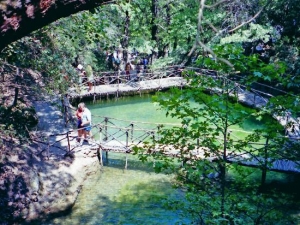
A unique nature reserve is to be found inland on Rhodes, “Butterfly Valley” (in Greek “Petaloúdes”). Apart from its aesthetic value, it is also the site of the only natural forest of Liquidambar orientalis (Oriental Sweetgum trees) in Europe, and a resting point for the Jersey tiger (Panaxia Quadripunctaria), a nocturnal moth. An excellent place for families with children who wish to enjoy the beauties of nature and examine the life cycle of butterflies as part of their summer holiday.

You can take a peaceful walk through the shaded, green valley with its small river and beautiful waterfalls. You are permanently surrounded by butterflies camouflaging themselves against the tree trunks as you walk up towards the monastery at the top, or rest for a while on one of the wooden benches along the way.

Visitors can witness a spectacular phenomenon which occurs only rarely in nature. Huge numbers of butterflies congregate in this small valley during the final stage of their life cycle. Every year, at the end of the wet season (late May), thousands of butterflies attracted by the scent of the Oriental Sweetgum trees cover the entire landscape. They are actually adult insects that follow the waterways and migrate here to reproduce (females leave for other suitable areas to lay their eggs in the early fall) due to the high humidity of the area.

Hush, hush..butterflies are resting here…The moths cannot eat during this final phase of their life cycle, so they rest here to conserve energy. Any loud noise would force them to fly away, thereby consuming valuable energy. Observe them as they “sleep” well-camouflaged in black and yellow; in flight their cherry-red overwings flash. If you are quiet and still, they may even land on your arm –that would make a wonderful photo!

To read more, please visit visitgreece.gr

Thursday, 19 February 2015 13:34

Unprecedented Media Coverage Of Election

This year’s general election garnered unprecedented and widespread international media attention. 1,060 media representatives from more than 45 countries were accredited, the vast majority of whom were foreigners. The media coverage in terms of representatives sent to Greece increased by 35% compared to the 2012 general elections. Spain, in particular, was the country which showed the most eager interest in the events.

With 70 media representatives accredited and two political leaders present during the pre-election period (Mariano Rajoy and Pablo Iglesias), Spain followed the political developments in real time and up close.

The 2015 Elections Press Center of the General Secretariat for Communication and Promotion was hosted at the Zappeion Conference Centre, the same venue which served as the headquarters of Greece’s presidency in the Council of the European Union during 2014.

To read more, please visit greeknewsagenda.gr

Monday, 07 November 2016 15:35

metamatic:taf

metamatic:taf is a pioneering cultural and digital centre in Athens established in 2009. It has a dual role of an independent space that organizes and hosts cultural events related to all forms of artistic production. It is also a meeting point where people can gather and socialize, assuming a new Athenian identity.
 
metamatic:taf has defined a contemporary model of cultural production and action, operating as a continuously evolving formation within urban networks. Having being established as an open space for circulating ideas and practices based on participatory culture, experimentation and cross-disciplinary exploration, metamatic:taf seeks to establish extended partnerships with communities of creators across a wide cultural spectrum, whilst building a substantial relationship with its audience through active engagement and co-creation.
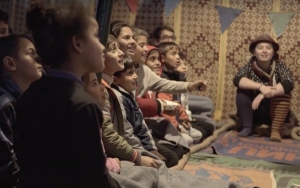
They are clowns, performers, musicians, dancers, play workers and play specialists - And their focus is to bring play to refugee families living in harsh conditions across Europe. In this video, Ash and his team travel to refugee camps in Greece and beyond to make the “kids feel good, feel daft, and feel playful.” Something so simple can bring so much joy!


Source: BBC Three
Combining some of our fall favorites, pumpkin and feta cheese, this savory pie will be a hit with all your family and friends. This healthy recipe is from Olive Tomato is rich in vitamin A, potassium, and carotenoids. We hope you enjoy!


Serves: 4-6
Difficulty: Easy
Cooks in: 1 hour


Ingredients
  • 1/4 - 1/2 cup + 2 tablespoons olive oil
  • 3 pounds (1- 1/2 kg) pumpkin
  • 2 medium onions
  • 8-9 ounces (200-250 grams) crumbled feta cheese
  • 1/2 cup chopped fresh mint or 2 tablespoons dry mint
  • Salt/pepper
  • 1 egg
  • A pinch of cumin
  • 12 phyllo sheets
To view the full recipe, please visit: Olive Tomato
Friday, 13 December 2019 09:50

The Rise Of The Freelance Workforce

There’s been a lot of talk recently about freelancers disrupting the workforce and existing markets. A 2016 McKinsey Global Institute report found that a huge 20-30% of the workforce in Europe and the US engage in some form of independent work – and its more than just new players like Uber making up the numbers. We’re seeing a broader shift in both corporate strategy and workforce attitudes that’s changing the way we do business, for the better.

Empowering Individuals

A big factor in the rising freelance workforce comes from an increasing desire for more freedom and control. Around 61% of respondents to our Great Big Survey, which included 40,000 workers from around the world, said that work-life balance is the main driving force behind flexible working.

Workers also want greater autonomy to forge ahead on their own path. You can see this in the OECD’s Entrepreneurship at a Glance 2015 report, which surveyed people aged 18-64 from 41 different countries. This study found that 48% of men and 36% of women would rather start their own business than work for someone else.

Spotting The Trend

The people behind the gig economy (using freelancers on an ad-hoc basis) were early birds: they recognised a rising value for independence and entrepreneurial spirit and they leapt at the chance. All companies have the power to respond and integrate this system to benefit their own workforce, and there’s evidence they’re starting to do so. Around 42% of executives surveyed by Deloitte in their Global Human Capital Trends 2016 report said they planned to employ more ad-hoc workers over the next three to five years.

This isn’t simply a response to worker demands. 58% of businesses told us that reducing permanent staff overheads is key to their post-recession plans. It also helps them work in a more agile way, scaling their workforce up and down to meet changes in demand and new industry developments.


REGUS IWG20167 35946 Regus Spaces Digital Banners Grxpat 90x728px

Building Networks, Improving Organizations

To integrate larger numbers of freelance workers, companies are changing their office environments. PwC’s 2016 Emerging Trends in Real Estate survey found that more and more businesses are looking for high-quality, flexible and serviced office and co-working spaces, like Regus, where they can scale up and down quickly.

This also benefits the workforce in providing a space to share ideas, do business and collaborate – rather than simply taking work home. This helps productivity, but also wellbeing. Around 84% of respondents to the 2016 Regus Great Big Survey said co-working reduces loneliness, while 53% said it helps fight stress.

Creative Networks

The next step is to ensure that these flexible, changing teams are working in the most creative and productive ways possible. According to the 2017 Deloitte Human Capital Trends report, this will mean moving away from management hierarchies and towards groups of empowered networks that are able to change regularly and quickly.

These project networks will work closely together to get the job done, before disbanding and relocating for the next task. That will require flexible and creative office spaces that can adapt to new challenges and opportunities. We’re confident that our Regus shared and co-working office spaces with short-term leases are the solution for the foreseeable future.

Explore Regus' flexible workspace locations to help increase business productivity!

This content has been sponsored by IWG - an XpatAthens Brand Partner.

Wednesday, 19 May 2021 12:24

Athens Reopens For Summer

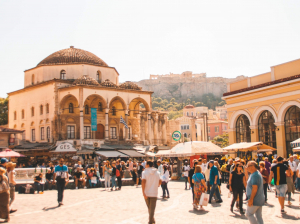
It’s been a long road, we cannot lie. But this month, Athens finally opens its doors and legendary sites to the world once more with the official restart of tourism in Greece by the Greek Government on Saturday, 15 May. Everything that makes summertime in Athens so amazing is back on the menu in May!

In short, we mean a return to idyllic days on the sun-drenched shores of our beautiful beaches. Sunset cocktails on stylish rooftops with the Acropolis for company. High-spirited meals with friends, old and new, in leafy squares. Open-air movies at jasmine-scented summer cinemas and live gigs at ancient arenas under the stars.

We can visit our favourite museums and galleries again as if for the first time and check out some brand new ones too: such as the landmark National Gallery of Art, fresh from an extensive 8 year makeover, and the old Public Tobacco Factory, due to be reborn in June as an emblematic culture hub, with an international exhibition “Portals”.

Let’s hit the shops (without having to make an appointment first); trawling for hot street fashion, vintage treasure, or cool souvenirs. And relish together all those sights, sounds, and unpredictable encounters that signal the return of Athens’ seductive summer energy, as we freely explore the city’s beating urban neighborhoods, each with its own distinct village vibe.

During the extended second lockdown (in effect to varying degrees since 7 November), the City of Athens has rolled up its sleeves to ensure that the Greek capital is both safe and more accessible to welcome back visitors and residents alike this month. These expansive initiatives have included improving sidewalks and cleaning streets, removing graffiti across the city, smartening up the National Garden and scenic slopes of Mount Lycabettus, and planting bright flora and new “pockets parks” to green up the urban experience. Athens has also refined its social distancing protocols to ensure that citizens and visitors experience a buoyant, re-charged, and well-prepared city.

More specifically, here’s what now open (or about to open) in Athens this month:

• Restaurants and bars have reopened their outdoor spaces.
• Open-air archaeological sites such as the Acropolis and the Roman Agora are open with strict protocols.
• Organised beaches are operating again with strict health protocols.
• Hairdressers, barbers, beauty, and nail salons are open (by appointment).
• Parks have reopened and fishing in coastal municipalities is permitted again.
• Museums and conservatories are operating with visitor quotas and protocols.
• Summer cinemas and outdoor cinema screenings recommence on 21 May with 75% capacity.
• Live shows in outdoor spaces and theatre venues resume on 28 May for seated attendance only, with a fixed occupancy rate of 50%.

Originally published on: thisisathens.org


Whether you've just arrived in town – or have been here for years – Athens always has new secrets to share! 
 
This is Athens is the official guide to this captivating city of ancient energies and booming urban culture. Compiled by a team of specialist local writers, This is Athens brings you an authentic and intimate portrait of a living Athens beyond the guidebooks – along with daily curated listings of all the best events and great weekend inspiration all-year round. From must-know neighbourhoods and emerging art hubs, to gourmet hotspots, cool shopping and the buzziest bars, This is Athens will help you to get the most out of living in Athens!

Thank you This is Athens for your contribution as an 
XpatAthens Partner.
490BC. The Persians fall at the Battle of Marathon, despite outnumbering the Athenians four to one. An Athenian herald named Pheidippides is dispatched to Athens, 42km away, to break the news. Once there, he utters the joyous words, νικῶμεν (nikomen)—“we have won”—and collapses. Most historical accounts then have him dying on the spot from exhaustion. This may or may not be a romanticized version of the events; though to be fair, Pheidippides had also just legged it 240km from Athens to Sparta and back again to ask for help when the Persian fleet landed in a bay near the town of Marathon.

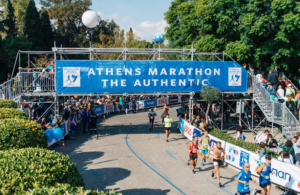
Today, more than 1,500 marathon races are organized worldwide. But Greece is where it all began. At the first modern Olympic Games in Athens in 1896, a 42km race from Marathon to Athens featured as one of the defining events of the new Olympic era. It was a way of recalling the ancient glory of Greece. Fittingly, a Greek water-carrier, Spyridon Louis, won the race in 2 hours, 58 minutes, and 50 seconds. (Currently, Kenyan runner Felix Kandie holds the Athens Marathon record at 2 hours, 10 minutes, and 37 seconds.) Every year, long-distance runners from across the globe challenge their bodies and spirits to retrace the legendary footsteps of Pheidippides. With its combination of hills, heat, and history, many find it to be the toughest—but most poetic—Marathon route of them all.

What it’s like to run the Athens Marathon

Every year at 9 am on the day of the race, locals and visiting spectators line the streets of Marathon, where the ancient battlefield once stood, to cheer on jittery competitors at the starting blocks. Today, Marathon is a modest coastal town of about 8,000 residents, with a small archeological museum and an artificial lake. The runners pass around the Marathon Tomb, the final resting place of the Greek soldiers who lost their lives during the legendary battle of the Marathon. They then run near the base of Mount Penteli, onward to Pallini, and finally hit the streets and suburbs of the Greek capital.

Those who’ve run the classic Athens Marathon before—or done their homework—know to dread the uphill stretch after Rafina at around the 18km mark. This goes on until about 32km when the route shifts gently downhill to reach the wide, crowd-thronged avenues of the city centre. From there, it’s like a race through history.


For more information on the Athens Authentic Marathon 2021, click HERE!

Spectator sport: the best spots to watch the Marathon

Head to the stadium around 10-10.30 am to secure a seat on the marble tiers. You can soak up the party atmosphere and catch the first victorious runners entering the stadium, usually, around 11 am. Try for a spot on either side of the stadium entrance or right at the back in the centre, where the actual finish line is.

Some other great vantage points are at the 40km mark, outside the Megaron Athens Concert Hall, or a bit further up Vasilissis Sofias Avenue, outside the Hilton hotel. This is where the runners really need you to cheer them on for their final burst of endurance. There’s a grassy pocket across the road from the Hilton that makes a symbolic spectator’s choice. It’s right next to Dromeas (The Runner), a 12-meter tall glass and iron sculpture by local artist Costas Varotsos.

Instagram addicts should head a little further out of the city centre to the Katehaki pedestrian bridge at the 37.5km mark, where you can snap a dramatic aerial view of the colorful stream of runners as they pass below (the closest metro station is Ethniki Amyna).

Run your own best race

The Athens Marathon isn’t just for professional athletes. Thousands of ordinary people from Athens and all over the world register for the other running races that take place on the sidelines: there’s a 5km, 10km, Power Walking Race, 1.2km Special Olympics Race, or even a Kids Race (registration for the Athens Marathon usually closes about two and a half months before the race, but you can still sign up for the side events until much later). Depending on your fitness levels, these are all great ways to feel part of this momentous experience.

To read this article in full, please visit: thisisathens.org


Whether you've just arrived in town – or have been here for years – Athens always has new secrets to share! 

This is Athens is the official guide to this captivating city of ancient energies and booming urban culture. Compiled by a team of specialist local writers, This is Athens brings you an authentic and intimate portrait of a living Athens beyond the guidebooks – along with daily curated listings of all the best events and great weekend inspiration all-year round. From must-know neighbourhoods and emerging art hubs, to gourmet hotspots, cool shopping and the buzziest bars, This is Athens will help you to get the most out of living in Athens!
 
Thank you This is Athens for your contribution as an XpatAthens Partner.

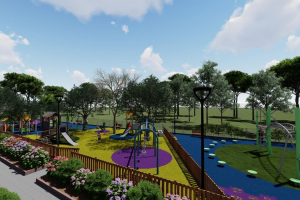
Attica regional authorities pledged this week to cover the costs of a theme park for people with disabilities (AMEA) to be constructed in the coastal suburb of Elliniko.

 The new 9,000m2 park will include pools and treatment areas and will be able to cater to the needs of some 500 children with disabilities and people with multiple sclerosis.

The project, to be funded by the Attica Region, will go up at the former Athens airport at Elliniko near Glyfada and will be accessible via Metro among other means of mass transport.

To read this article in full please visit news.gtp.gr

Page 294 of 463