

The Thread Of Self-Discovery: A Conversation With Dimitra At Ariadne’s Garden
- by XpatAthens
- Friday, 24 April 2026

We recently had the pleasure of sitting down with Dimitra Natskouli at Ariadne’s Garden of Spiritual Arts, a sanctuary tucked away in the mystical landscape of Delphi. More than just a venue, the Garden is a peaceful retreat space and artist residency inspired by the Delphic spirit of “Know Thyself.” Here, archetypal shadow work is approached through the mystical side of Greek mythology and unfolds through the arts.
Whether you join a drop-in session for Hatha and aerial yoga, explore intuitive painting and dance movement therapy, or host your own private retreat, Ariadne's Garden is a space designed to slow down, reconnect, and explore the self in a grounded, supportive environment.
In this conversation, Dimitra shares how she weaves philosophy, breath, and myth into a "playground" for the soul.
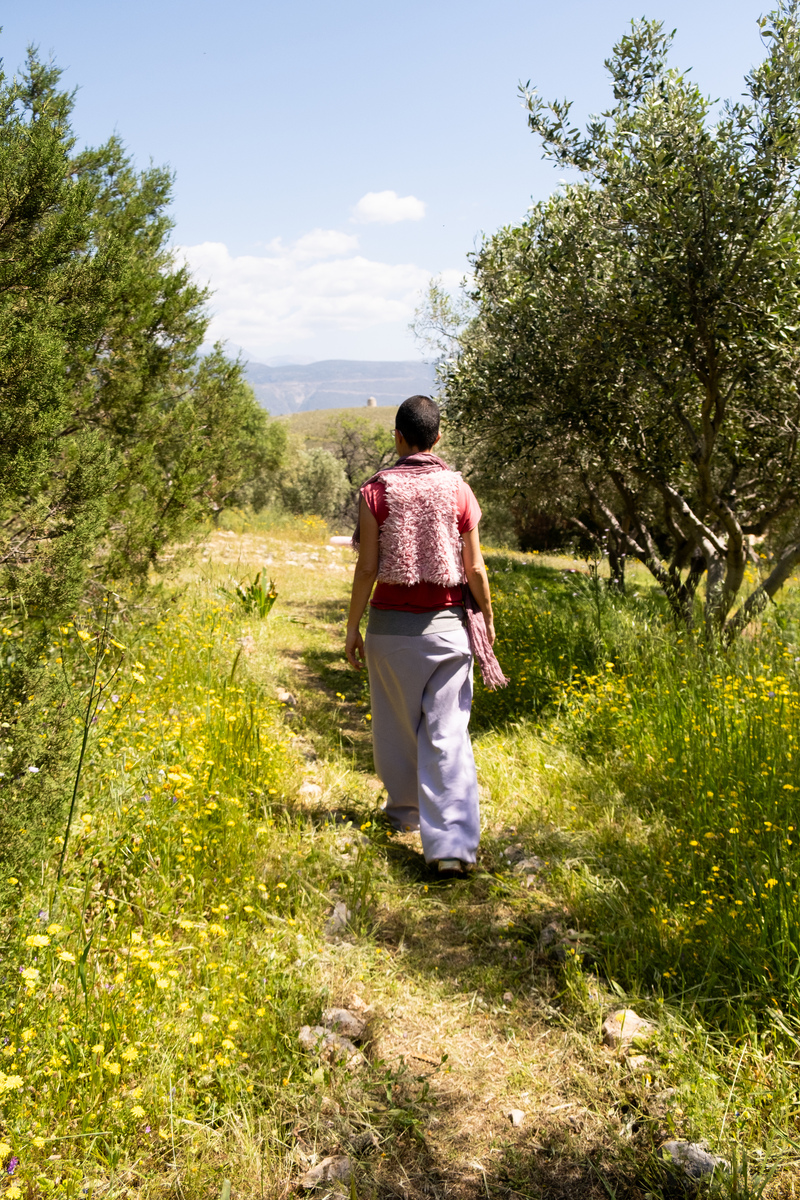
Your background is a fascinating tapestry of philosophy, dance therapy, and Byzantine iconography. How did these diverse threads come together to form the vision for Ariadne’s Garden?
Whether you join a drop-in session for Hatha and aerial yoga, explore intuitive painting and dance movement therapy, or host your own private retreat, Ariadne's Garden is a space designed to slow down, reconnect, and explore the self in a grounded, supportive environment.
In this conversation, Dimitra shares how she weaves philosophy, breath, and myth into a "playground" for the soul.
Your background is a fascinating tapestry of philosophy, dance therapy, and Byzantine iconography. How did these diverse threads come together to form the vision for Ariadne’s Garden?
Ariadne’s Garden is the playground where these three worlds meet and collaborate.
On one hand, Ancient Greek philosophy enters through archetypal shadow work, where myths are “de-symbolised” and become mirrors, very much in the spirit of the Delphic “Know thyself.” On the other hand, dance therapy, under the umbrella of embodied mindfulness practices, brings everything back into the body, grounding insight into lived experience. And, lastly, Byzantine iconography offers something unique: a precise visual language which gives form to the inner images that arise when mind and body begin to speak to each other. Somehow, these three had been my tools since my teenhood while stryggling with my existential hypervigillance to find my inner truth. To be honest, I still struggle, but, now it’s more fun!
You are often known as “Ieri Pnoi” (Sacred Breath). How does the concept of “breath” influence the way you’ve designed the physical spaces and the rhythm of the retreats?
Breath is, quite literally, my starting point. Before anything else, I exist as breath. It has become a quiet architect in both my life and my work. Every space in the garden is designed with one simple question in mind: can this place breathe? And the same applies to the rhythm of the retreats.
There is time expansion and space for expression,always followed by silence, and integration. The garden belongs to Gaia , and we are simply learning to be in relationship with Her. Mother and child - Gaia and human in a healthy relationship is the vision of the garden. In other words an intimacy and alighnment of our breath to hers. Above all, Ariadne’s Garden is a place to breathe.
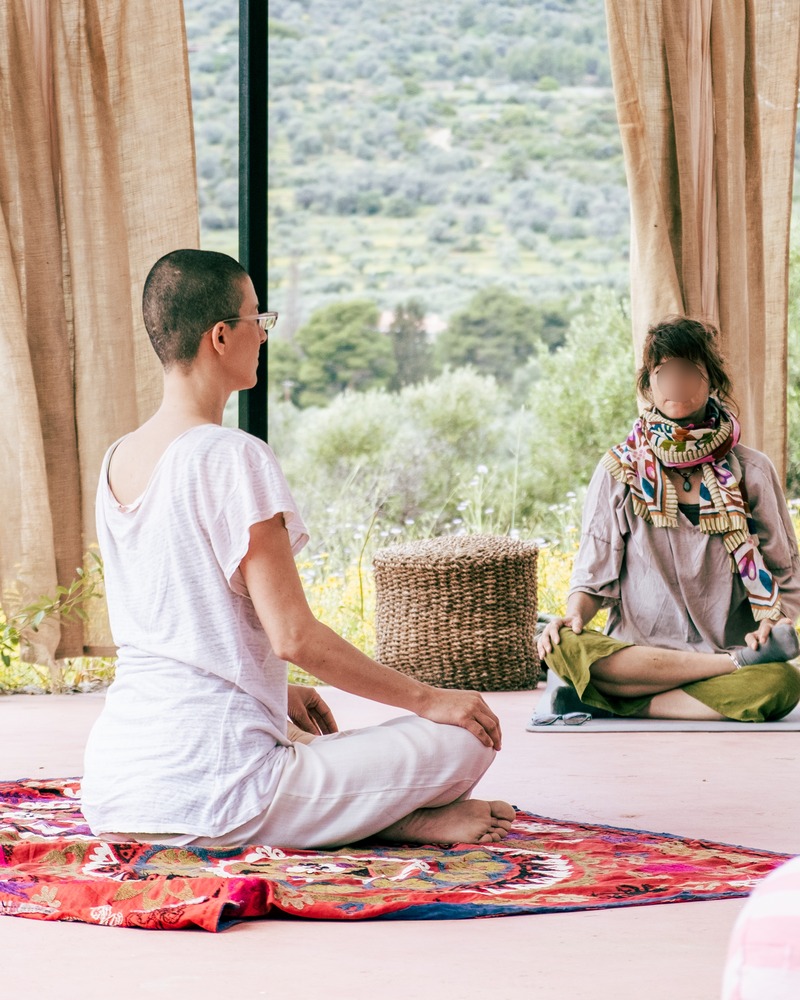
The name “Ariadne” is deeply symbolic in Greek mythology. Why did you choose this archetype to represent your sanctuary, and how does the “Labyrinth” play a role in the guest experience?
In a way, the name chose me. Ariadne Koumaris—philosopher, translator, and founder of this space—created this garden in the 1980s and 90s as a place dedicated to self-awareness, long before “retreats” became a trend. Her students, many from Europe and the US, helped shape the venue based on principles of sacred geometry, so they could come, detox, and be in dialogue with her work.
Mythologically, Ariadne is the one who does not enter the labyrinth, and yet, without her, no one finds their way out. According to Plato she represents the part of the psyche that does not get lost in illusion, but guides us through it. Labyrinth, our life in ignorance, takes us to the trauma. And the hero is the one that can face it, recognise it as part of their soul and transform it, Then find the way out to liberaton. Guests are invited to face their patterns, their stories, even their wounds, then to understand and integrate them. And somewhere along the way, they begin to sense their own thread. This is the myth we are working on this year’s retreats, once a moth, in memory of the founder of the garden Ariadne Koumaris.
How do you feel the specific geology of this Delphic landscape impacts the healing work that happens here?
Delphi has always been a place where people came to listen more carefully, and attention is where most healing begins. There is a particular clarity in the landscape: something both grounding and slightly disarming. It’s not a place where you can hide for long. Whether one speaks in terms of energy or simply presence, the combination of mountains, silence, history, and even the mineral richness of the land creates a unique quality of presence.
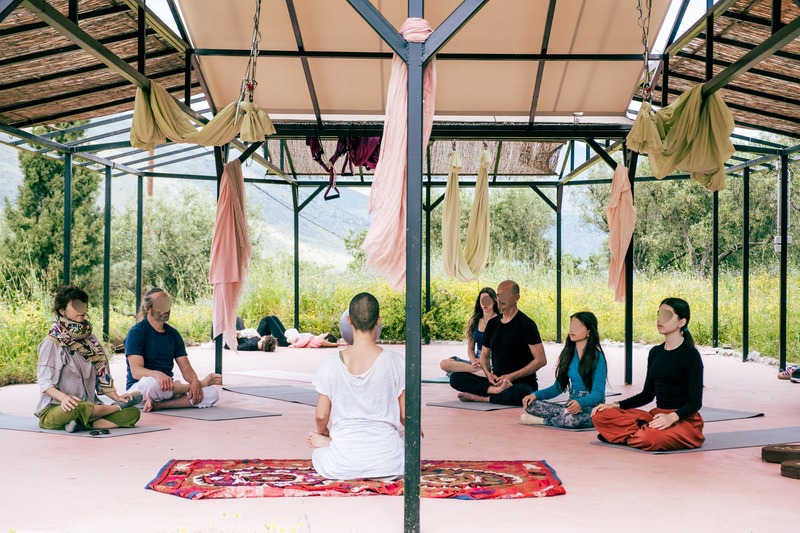
You specialize in “Shadow Work” through archetypal exploration. For someone who has never explored their “shadow” before, how does Ariadne’s Garden provide a safe “playground” for that encounter?
Well, I love this work and consider it essential for anyone who wants to live their life consciously, however I d say that I am pretty far from specialising in it. Returning back to self comes through opening the senses inside and outside, but this happens when we feel safe, right?. Ther’s so many tabboos about shadow work. The “shadow” is not something dark and dramatic, but something deeply intimate. It is a withdrawn child of ours. With careful listening, understanding and a good dose of humor, something that indicates detachment from past, this child may become the gate to our true innocence.
Archetypal work through creative expression, and embodied practices, can make this work playful, joyful and interestingly authentic.
As a Visionary Artist, how do you see the relationship between a person’s creative expression and their psychological well-being?
Creative expression is often the psyche speaking before the mind has had the chance to organize a proper sentence. It tends to speak through what we might call the “inner child”—the part of us that plays, imagines, and creates without overthinking. Of course, this inner world also carries our wounds, our memories, our unfinished stories.
Through intuitive art, both sides are given space. The wounded and the creative are not separate but they are part of the same movement. Art doesn’t fix anything. But it may reveal what is alive. Isnt it in itself, is a powerful beginning?
Dance Movement Psychotherapy is a core part of your work. How does moving the body help us access the “invisible and mythical” parts of ourselves that words often miss?
When we move with awareness, we allow the psyche to breathe through the body. What emerges is often symbolic rather than logical; it can resonate with specific myths. In archetypal work, each life is seen as an emanation of a myth, an expression of something both deeply personal and universally human.
Through movement, this inner story begins to unfold. In a way, the body remembers what the mind has forgotten, or the soul remembers itself in a body that breaths openly. I personally believe that ther is nothing we can learn, just to remember.
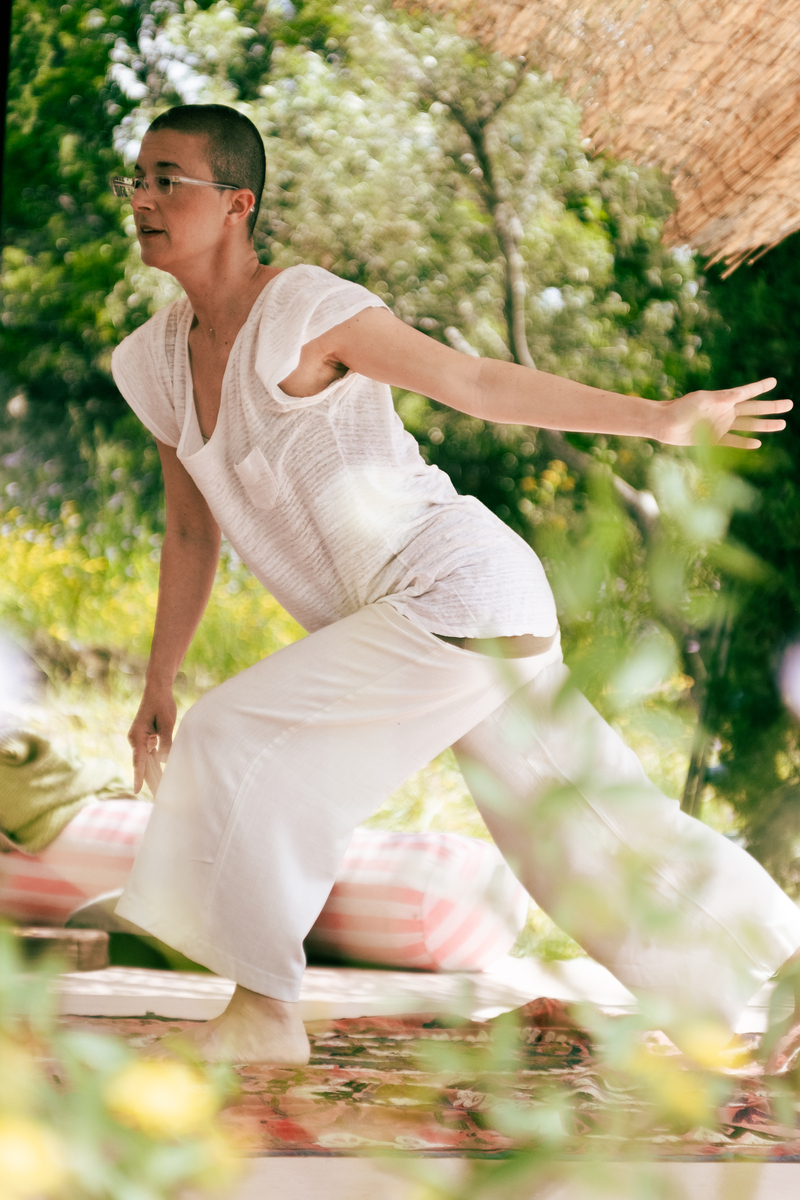
Ariadne’s Garden isn’t just for seekers; it’s also an Artist Residency. What happens when you bring “the seeker” and “the artist” together?
They usually realise they are the same person…
You see, the seeker is the artist that has not yet expressed themselves and the artist is the seeker in a dialogue with their art as a remedy The seeker is looking for meaning and the artist is giving it form.
You see, the seeker is the artist that has not yet expressed themselves and the artist is the seeker in a dialogue with their art as a remedy The seeker is looking for meaning and the artist is giving it form.
When the two meet, something becomes both deeply personal and unexpectedly universal. This itself can be a way to pure joy. Joy! Isnt’t it a good teacher?
If a guest leaves Ariadne's Garden with only one thing—a feeling, a tool, or a realization—what do you hope that is?
A quiet, embodied sense of: “I can meet myself.” Not fix or improve. Just meet. From there, most things tend to reorganise themselves quite naturally.
If you are looking to reconnect, create, or simply find your own "thread" you can explore upcoming retreats here!
Thank you, Dimitra, for sharing the magic of the Garden with us. It was an honor to explore the "thread" of your journey and to witness how Ariadne’s Garden continues to be a lung of inspiration for seekers and artists alike.
LIFE & CULTURE