
XpatAthens

XpatAthens

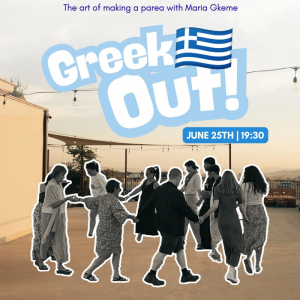
As an expat in Athens, it’s easy to meet people but harder to build the kind of connections that make a city feel like home. That’s exactly what Greek Out 🇬🇷 is about.

​Inspired by the Greek concept of "parea" - the feeling of belonging to a group of people who genuinely enjoy spending time together - we’re creating an evening where conversations go beyond small talk.

Whether you've just arrived in Athens or have been here for years, come join us for a sunset gathering designed to turn strangers into familiar faces and, hopefully, new friends.

🏛️ What to Expect :
• Become part of a parea and experience a key aspect of Greek culture
• Enjoy meaningful conversations, games, and shared experiences
• Learn about Greek customs, culture, and a few useful language insights
• Meet fellow expats, internationals, digital nomads, and locals in a relaxed setting
• Ask questions about relocating to Greece, visas, and the Greek AFM
• Enjoy drinks on the rooftop while watching the sunset over Athens
​[No Greek language skills required]

​Spots are limited to keep the experience interactive. 🙏🏼

Register here and let's Greek Out together.

​Στην υγειά μας! 🥂
Ready to kick back, meet new people, and enjoy a beautiful summer night out?

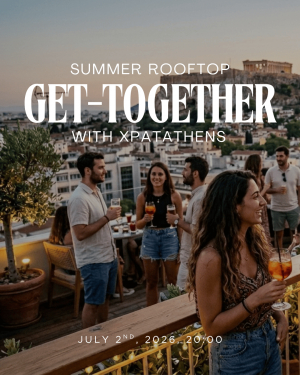
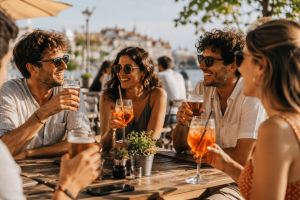
Join the XpatAthens international community on July 2nd, at 8 PM, for a relaxed evening of after-work drinks, casual mingling, and great conversation. Whether you’ve been living in Athens for years, just recently arrived, or are traveling through, this is the perfect space to expand your circle and connect with a warm, welcoming crowd.

Mingle, Unwind & Connect

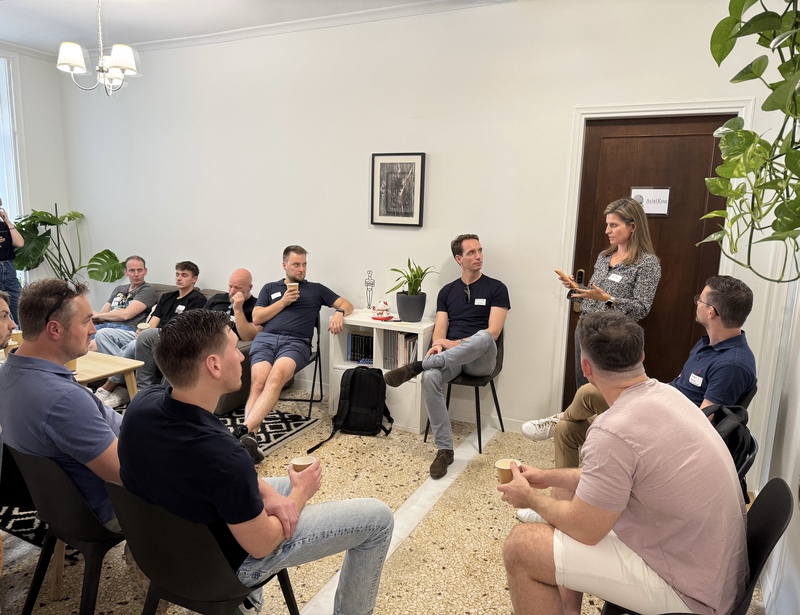
There are no rigid formats or formal agendas here, just a classic summer get-together. It’s a wonderful opportunity for expats, locals, and global minds alike to share stories, swap recommendations about life in the city, make new friends, or simply relax with a drink in hand after a busy day.

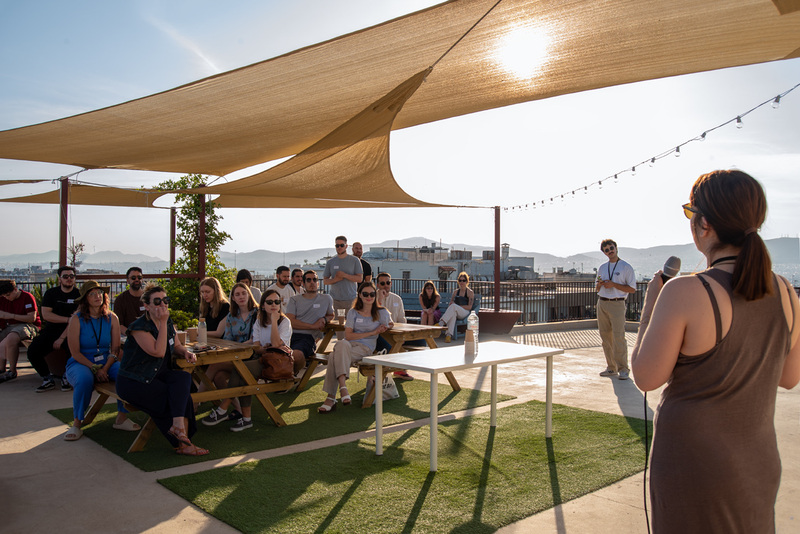
We’ll be gathering under the summer sky on a gorgeous Athens rooftop, taking in the city views and enjoying the laid-back community vibe.

We are absolutely delighted to see you there, catch up with old friends, and welcome new faces to the group. Let’s toast to a beautiful summer evening together!

How to RSVP

To help us secure the right amount of space on the rooftop, please let us know you are coming!

  • To secure your spot: Send a quick email to info@xpatathens.com and let us know how many people will be joining you.

  • Please note: This is a casual meetup, so everyone will pay for their own consumption at the venue.

The exact rooftop venue is being finalized and will be sent directly to everyone who RSVPs. We can’t wait to see you there!

What does it take to build a coworking space that feels more like a community than an office? We sat down with Olga, co-founder of Stone Soup, to talk about the journey from a run-down building in Exarchia to one of Athens' most beloved coworking communities. From the philosophy behind the name and the power of human connection to the evolution of Athens as a hub for creatives, entrepreneurs, and remote workers, Olga shares the story, values, and people-first approach that continue to shape Stone Soup today.

Can you tell us about your journey and how the idea for Stone Soup first came about?

I studied Communications and Media at the University of Athens and then moved to Amsterdam for a Master's degree in New Media. I think what's most interesting about how I ended up here at Stone Soup is my time in Amsterdam. That's where I discovered coworking spaces, which were still a relatively new concept at the time. As an expat living in a foreign country, being part of a coworking space made me feel like I belonged to a community. It also helped me find my first job, connect with accountants and other professionals, and ultimately build a circle of friends.

Before that, I had spent a few months alone at home, and while it was nice at first, I eventually reached a point where I felt isolated and started wondering what I was doing there. So that experience really inspired me.

What also impressed me was that many coworking spaces back then had a strong vision and a clear idea of the future they wanted to help create. Coworking wasn't just about investment or shiny offices. It was about bringing people together around a shared purpose and building something better for everyone. That resonated deeply with my values, and I wanted to create something similar here in Athens.

When I returned from the Netherlands in 2013, Greece was in the middle of the economic crisis. Opening a coworking space right away wasn't really an option because unemployment was so high and very few people were looking for office space. At the same time, my business partner had also decided to move to Athens. He loved the energy of the city, the country, and the people, and wanted to stay here for a while. So instead of launching a coworking space immediately, we started as an agency.

The building itself was in terrible condition. There was practically nothing we could use, so we had to rebuild everything from scratch. We did most of the work ourselves. The space wasn't ready for people to come and work from, so everything happened organically. People started bringing things from their homes—couches, chairs, curtains—and together, around 10 to 15 of us, we slowly transformed these walls into something meaningful.

At the same time, we started getting projects from Amsterdam, London, and later New York. Through our networks, people who wanted to build new products and services heard about us and decided to work with teams based in Athens. Those projects allowed us to pay salaries and support the people who had joined us.

In the beginning, we offered the space at very low cost, mainly to help people get started. A lot of artists, creatives, technology teams, and small studios found a home here because we provided an affordable solution during a very difficult period. Then, around 2019, we gradually evolved into a fully fledged coworking space.

Let’s start with the name because it sets the whole vibe. Do you want to explain it to us? How does that "sharing" philosophy actually show up for a new member who walks in today. 

I guess you can already see where the idea came from based on our story. We borrowed the concept from the Stone Soup story itself. In a way, this space was the big pot in the middle of the village.

People became curious about what we were doing, and we'd tell them, "We're building something great. Come join us." Slowly, everyone started contributing a little of what they had. Sometimes that was furniture or equipment, and sometimes it was knowledge, skills, ideas, or connections. That's really how Stone Soup was built, and it's still what inspires us today.
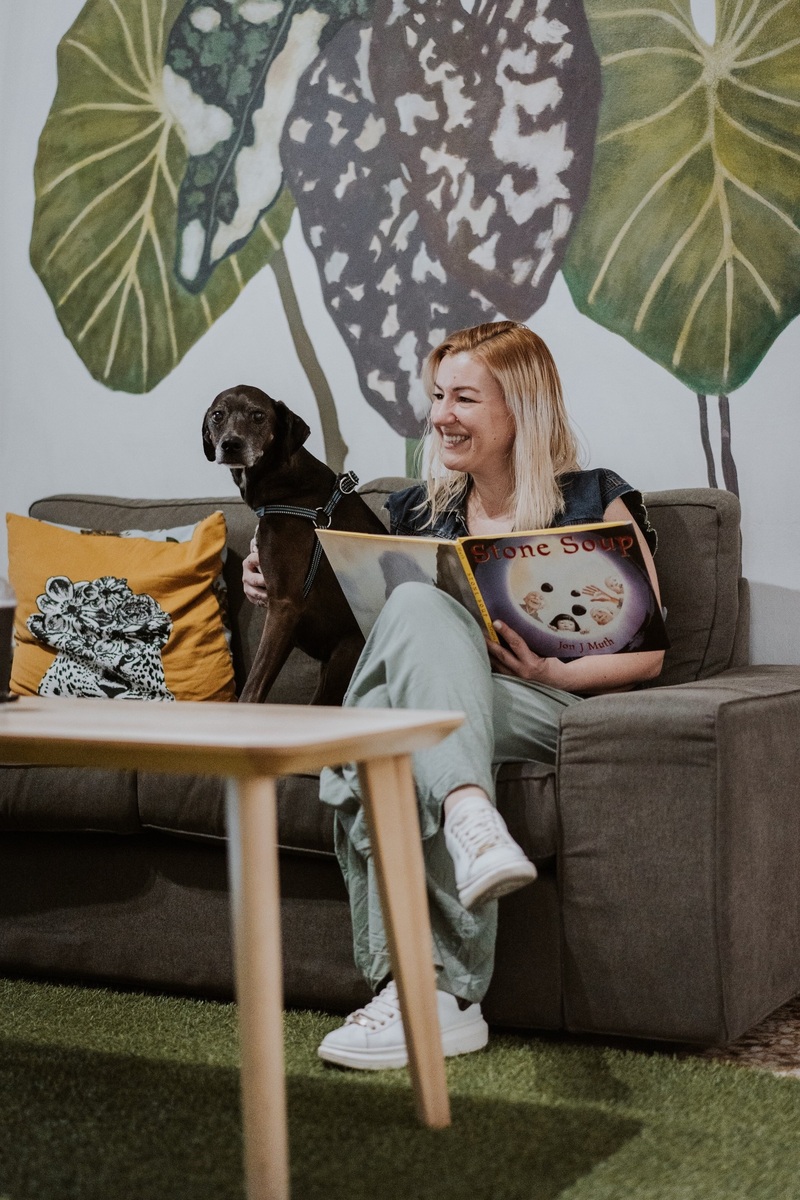
From the beginning, it was always a people project. The question was: how do you bring people together? How do you encourage them to think not only about themselves, but also about the community they're part of? We live in a very individualistic world, and it's easy to become isolated. People often forget the value of being together and the genuine joy that comes from contributing to something bigger than yourself. One of the lessons of the Stone Soup story is that when you contribute, you also receive something in return. The sense of belonging, happiness, and satisfaction that comes from being part of a community is very difficult to achieve alone.

Copy of Stone Soup Book

Was that sense of community and collective contribution something you intentionally set out to create, or did it develop naturally as Stone Soup evolved?

No, I had no idea. It grew completely organically. Things just started happening, and at some point we realized, "This is actually working."

The funny thing is that the story itself came from a book we had here called The Pragmatic Programmer. It's a programming book, but it uses a number of stories and metaphors, including the Stone Soup story, the Boiled Frog, and the Broken Window.

We used those stories a lot in the early days. For example, the broken window theory is the idea that if something is left broken, people stop caring and things continue to deteriorate. But if you fix it, people are more likely to respect it and help maintain it. The boiled frog is about how problems can develop gradually without anyone noticing until it's too late. These stories offered useful ways of thinking about projects, communities, and how people behave.

Stone Soup was one of those stories. At some point in early 2014, we realized we still didn't have a proper name. We were operating under the name "Appsterdam Greece," but we knew we needed something that better reflected what we were building. As we discussed different ideas, we kept coming back to the Stone Soup story because it perfectly described what was happening here: people coming together, each contributing something small, and collectively creating something much bigger than any of us could have built alone.

Roof terrace 4

How has Athens' coworking scene evolved over the years, and what do you think has kept Stone Soup relevant as the market has grown?

It's interesting because the landscape was very different back then. Before companies like Spaces arrived, there were only four or five local coworking spaces in Athens, most of them independent. The real shift happened after COVID, when coworking became more commercialized and investment-driven. Suddenly, you saw more buildings being acquired, renovated, and operated according to a specific business model.
In the early days, coworking was more of a movement than a business. Many spaces were created by people who simply wanted to build the kind of work environment they wanted for themselves. Each space had its own character, community, and philosophy. Today, coworking has become much more standardized, which isn't necessarily bad, but it's definitely different.

For us, the value has always been about more than desks and offices. Of course, we provide the infrastructure, great internet, meeting rooms, communal spaces, rooftop areas, and operational support, but what really makes a difference is the community. George and I are here every day, talking to members, helping them connect, and supporting them however we can.

What's interesting is that everyone gets something different out of the space. Some people make friends, some find business partners, others meet clients or collaborators. The best sign that a coworking space is working is when people stay because they feel at home. If you ask many of our members why they're still here, they'll simply say, "Because I like being here."

Of course, that's not for everyone. Some people prefer a more traditional corporate environment, and that's perfectly fine. What's great is that Athens now has enough variety for different people and different ways of working. We've simply stayed true to who we are: a community-driven space where people can do great work and feel they belong.

Stone Soup has a unique mix of community and productivity. How do you balance creating a social environment while also giving people the space they need to focus and get work done?
A big part of it comes from the facilities we offer, but also from the community activities we organize. For example, we'll often have informal lunches on the rooftop and invite people to bring their food and spend some time together. We also organize drinks and other gatherings, giving members a chance to get to know each other outside of work.

Because we know our members well and understand what they do, we can often make introductions that might otherwise take months to happen naturally. Sometimes we see opportunities for collaboration and help create those connections.

At the same time, we understand that people's needs change. Startups, for example, go through different phases. There are periods when they're very open to networking and meeting people, and then there are periods when they're focused entirely on delivering and hitting deadlines. During those times, they naturally participate less in community activities, and that's completely fine.
If there's one word that defines coworking, it's flexibility. That's what we try to offer here. You can start with a desk and later move into a private office for a team of ten. You can book meeting rooms when you need them or simply use the space in whatever way works best for you. We provide the environment, the support, and the community, but people are free to engage with it in the way that suits them best.

Copy of Dutch investors and entrepreneurs visiting Stone Soup

Athens has become a magnet for expats, remote workers, and digital nomads. What do you think makes the city so appealing, and what kind of experience can international professionals find here that they might not find elsewhere?

I think it's many of the same things that attract people to Southern European countries in general: the climate, the food, the culture, and the way of life. These are things that have always drawn people here.

Today, we have members and expats who come to Athens for a few months, a year, or even longer. Many are looking not only for good weather, but also for a different pace of life and a stronger connection with people. The climate and the culture go hand in hand.

That's something we've always wanted to reflect at Stone Soup as well. We want people who choose us to experience the local character of Athens. We don't want to be a standardized or generic coworking space. We want people to find that warm, authentic Greek atmosphere that they're often looking for when they come here.

Athens has a unique energy. It's vibrant, a little chaotic at times, full of life and personality. The people are expressive, the food is great, and there is always something happening. For many international professionals, that's exactly what makes the city special and what turns a temporary stay into something much longer.

Many international professionals arrive in Athens without an established network and often face challenges ranging from housing to bureaucracy. How does Stone Soup help newcomers settle in and feel part of the city?

From what I've seen, it's usually not the culture that shocks people. If anything, they're surprised by the cost of living, the housing market, and sometimes the bureaucracy. Housing is probably the biggest challenge. Many expats come planning to stay for a year and are surprised by how difficult it is to find a place to live. The reality is that even many Greeks are struggling with the same issue.
What I experienced myself when I was living in Amsterdam was how valuable a coworking space can be when you're new to a city. It's not just a place to work. For many people, especially expats, it's a place to meet others, build relationships, find support, and become part of a community.

We see that here all the time. Many international members love coming to the space because it helps them connect with people much faster than they would otherwise. They meet potential collaborators, business partners, friends, and sometimes even find practical help for everyday life in Athens.

In fact, expats are often some of the most active members of our community. They want to get involved, meet people, and experience everything the city has to offer. In that sense, Stone Soup can definitely act as a soft landing pad. It gives people a sense of belonging at a time when they're still finding their feet in a new city.

IMG 1770

For someone visiting Stone Soup for the first time, what does the experience feel like? 

For everyone, the experience is different. It depends on their personality, what they're looking for, and how they choose to engage with the people and opportunities around them. But however different those experiences may be, I believe most people find something valuable here, whether that's new connections, fresh ideas, professional support, or simply a sense of belonging.
For me what stands out most about Stone Soup is that I feel enabled here. If I need help with something, there is usually someone around who can help, share knowledge, or point me in the right direction. Just as importantly, I enjoy the conversations and the feeling of being connected to other people.

I think the people who get the most out of coworking are those who are open to engaging with others. And if they're not, we try to help them open up in subtle ways, without putting any pressure on them. That's one of the reasons we have a Community Manager. Their role isn't simply to manage the office or act as a receptionist; it's to help people connect and support the community every day.
The neighborhood is also a big part of the experience. When we started, Exarchia was a very different place. Molotov cocktails were part of everyday life, and people were often hesitant when we told them where we were based. Since then, the area has changed significantly. There has been a lot of development, but at the same time, it has kept much of its independent character.
What I love today is the number of small creative businesses around us. There are independent studios, concept stores, craftspeople, jewelry makers, designers, and artists. Almost every shop has its own story and its own person behind it. That's something you don't find everywhere anymore.

We actively try to support and promote these local businesses because they are part of what makes the neighborhood special. So a perfect day at Stone Soup isn't just about working. It's also about stepping outside, exploring the area, discovering local makers, grabbing lunch nearby, and feeling connected not only to the community inside the space but also to the creative energy of Exarchia itself.

stone soup 16

Stone Soup has always evolved alongside its community. As you look to the future, how do you see Stone Soup continuing to evolve, and what guides your decisions along the way?

It is true that our approach has always been to observe and respond. Of course, we try to be proactive where we can, but I'm not a big believer in long-term master plans. Life has taught me over the last ten years that no matter how much you plan, things rarely happen exactly as expected.

What has worked for us is staying alert, paying attention, talking to people, and understanding what they need. That's really how Stone Soup was built. By listening to members, understanding how they work, and adapting the space accordingly.

We never had an architect come in and design everything from the start and tell people where they should sit, work, or meet. The community shaped the space. People showed us where they wanted meeting rooms, where they felt productive, where they liked to gather, and where they felt comfortable. In many ways, Stone Soup evolved by observing how people naturally used it.
I like spaces that feel lived in. Spaces where you can sense that people have spent time there, worked there, and left part of themselves behind. Over the years, members have left books, paintings, furniture, ideas, and little details throughout the space. None of it was planned. It happened naturally, and that's what gives the place its character.

So if there's a next ingredient for the Stone Soup pot, it's probably more of the same: continuing to listen, adapt, and create a space that feels alive. We'd love to bring even more greenery, more warmth, and more personality into the space, while staying true to the community that has shaped it from the beginning.


If this conversation resonated with you, the best thing to do is simply reach out through Stone Soup’s website, email, or social media

Even better, book a tour and come spend a few hours to experience the space, meet the community, and see whether Stone Soup feels like home.
For freelancers, remote workers, entrepreneurs, and expats, finding the right place to work can be one of the biggest challenges when settling into life in Greece. While cafés offer flexibility and home offices provide comfort, neither can replace the sense of connection, productivity, and opportunity that comes from being part of a thriving coworking community.

One space that has been helping professionals build those connections in Athens for over a decade is Stone Soup Coworking. Located just a short walk from Panepistimio metro station in the city center, Stone Soup has grown into one of Athens' most established independent coworking communities, bringing together freelancers, startups, creatives, remote teams, and international professionals under one roof.

But Stone Soup represents something larger than just a workspace. It reflects why coworking has become one of the best ways to work, network, and build a life in Greece.

Greece's Growing Remote Work & Expat Community

Over the past few years, Greece has become an increasingly attractive destination for remote workers, entrepreneurs, and digital nomads. With its Mediterranean lifestyle, rich culture, growing startup ecosystem, and relatively affordable cost of living compared to many Western European capitals, cities like Athens are attracting professionals from around the world.

However, relocating to a new country comes with challenges. Many newcomers quickly discover that working remotely can feel isolating, especially when they're trying to build both a professional network and a social circle from scratch.

This is where coworking spaces offer a significant advantage.
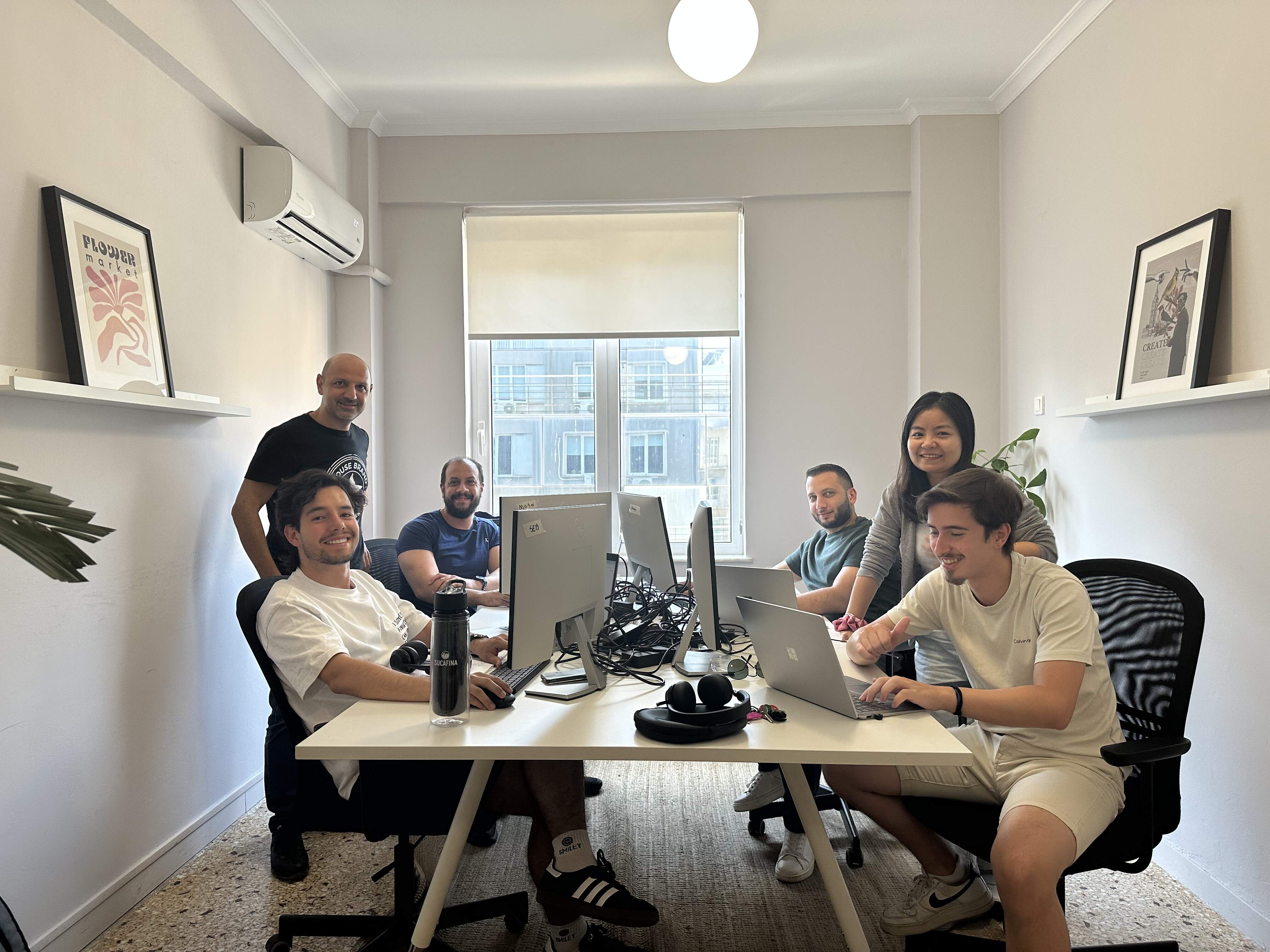
Copy of Team at Stone Soup 3

The Power Of Community

One of the biggest misconceptions about coworking spaces is that people join simply to access a desk and reliable internet.

In reality, community is often the greatest benefit.

Coworking environments naturally bring together people from different industries, countries, and professional backgrounds. A conversation over coffee can lead to a new client, a collaboration, valuable advice, or even a lasting friendship.

For expats and international professionals, these interactions can be especially valuable. Being surrounded by people who have experienced similar relocation challenges creates an instant sense of belonging and support.

At community-focused spaces like Stone Soup, members often find themselves learning from each other, sharing opportunities, and becoming part of a network that extends far beyond the office walls.

Building Your Professional Network In Athens

Networking in a new city can feel intimidating. Traditional networking events are often formal and infrequent, while coworking spaces create opportunities for meaningful connections every day.

Whether you're a freelance designer, software developer, startup founder, consultant, marketer, or content creator, being surrounded by other professionals creates countless opportunities for knowledge sharing and collaboration.

Many coworking members report that some of their most valuable business relationships started with a simple conversation in a shared kitchen or common area.

For entrepreneurs launching a business in Greece, these relationships can provide local insights, partnerships, referrals, and access to expertise that would otherwise take months or years to develop.
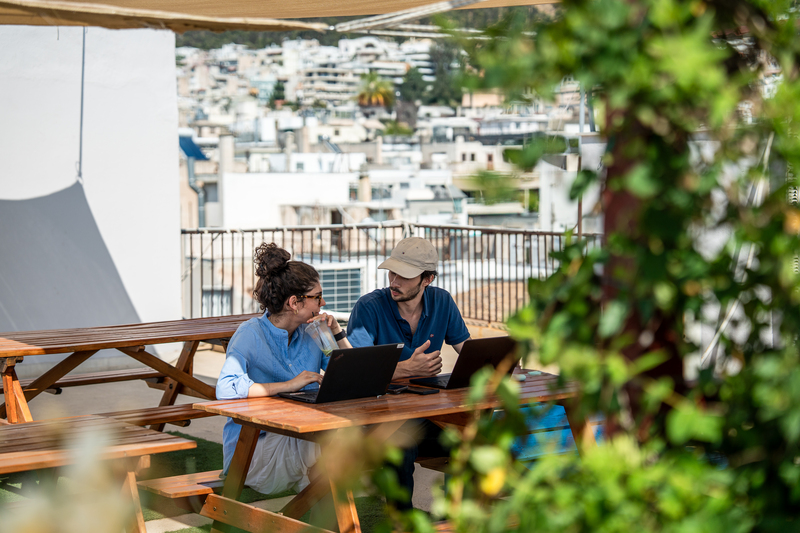
Copy of Print offices 5th floor NP 130625 23

Events, Workshops, & Opportunities To Connect

One of the most valuable aspects of joining a coworking community is access to events that bring people together outside of their daily work routines.

Many coworking spaces host networking evenings, workshops, talks, social gatherings, and community meetups that encourage members to exchange ideas, learn new skills, and build meaningful professional relationships. These events often become catalysts for collaborations, business opportunities, mentorships, and friendships.

For expats and newcomers to Greece, these gatherings can be particularly valuable. They offer a welcoming environment where meeting people feels natural rather than forced, helping newcomers integrate into both the local and international community.

At Stone Soup, community-building has always been at the heart of the coworking experience. Throughout the year, members and visitors can participate in events designed to encourage conversation, learning, and connection.
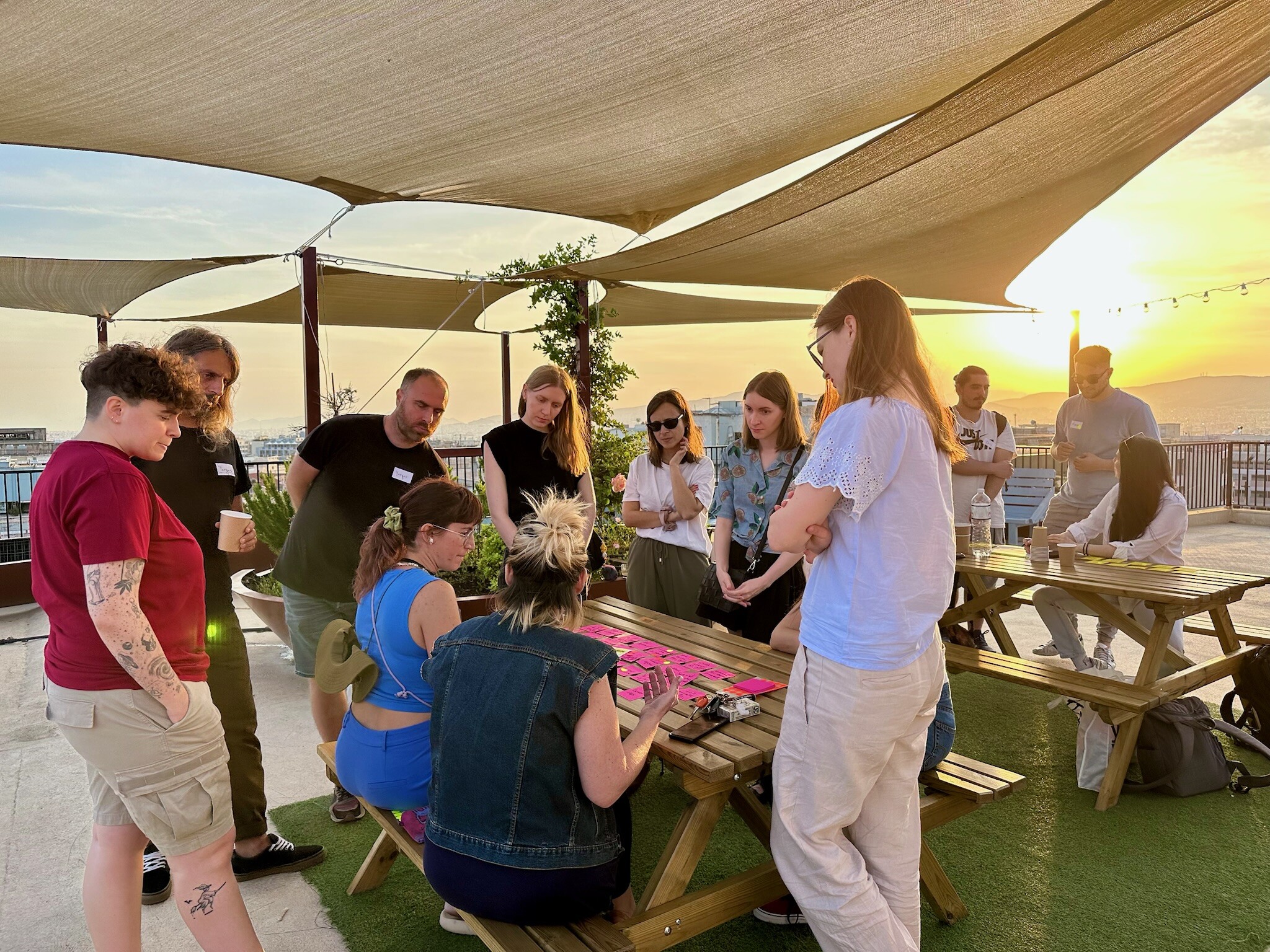
20060443 A3F9 435C 95CC EA317C55D902 2

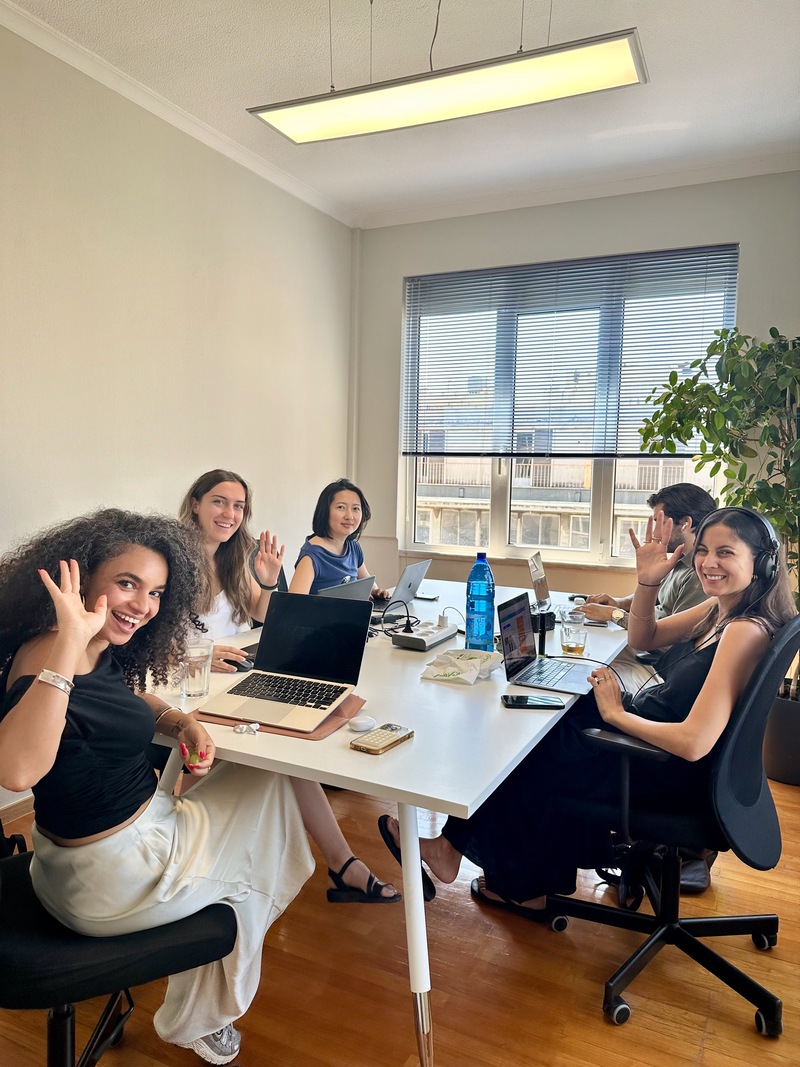
A perfect example is coming up on Thursday, June 25th (19:30 - 22:30)! Stone Soup is teaming up with Greek Out with Maria Gkeme for a special sunset gathering on the rooftop: "The art of making a parea." Inspired by the authentic Greek concept of parea, a close-knit group of friends sharing great times together, this interactive evening goes way beyond standard small talk. It’s an open invitation for expats, digital nomads, and locals to mingle over sunset drinks, dive into fun games, learn a few local customs, and even swap handy relocation tips.  For more info and to grab your ticket, click here!

Productivity Without Isolation

Working from home sounds ideal until distractions, loneliness, and blurred work-life boundaries begin to impact productivity.

Coworking spaces provide a dedicated environment designed specifically for focused work. High-speed internet, meeting rooms, quiet zones, phone booths, and professional facilities allow members to work efficiently while maintaining the flexibility that remote work offers.

The simple act of working alongside motivated professionals can also create a positive sense of accountability and energy that is difficult to replicate when working alone.

A Soft Landing For Expats & Digital Nomads

For many people moving to Greece, finding a community is just as important as finding accommodation.

Coworking spaces often become a first point of connection with the local and international professional community. Members exchange recommendations about neighborhoods, bureaucracy, healthcare, language learning, local events, and everyday life in Athens.

Instead of navigating a new city alone, newcomers gain access to a built-in network of people who can help them settle in and feel at home.

This combination of professional support and social connection is one of the reasons coworking has become such a popular choice among expats and digital nomads.
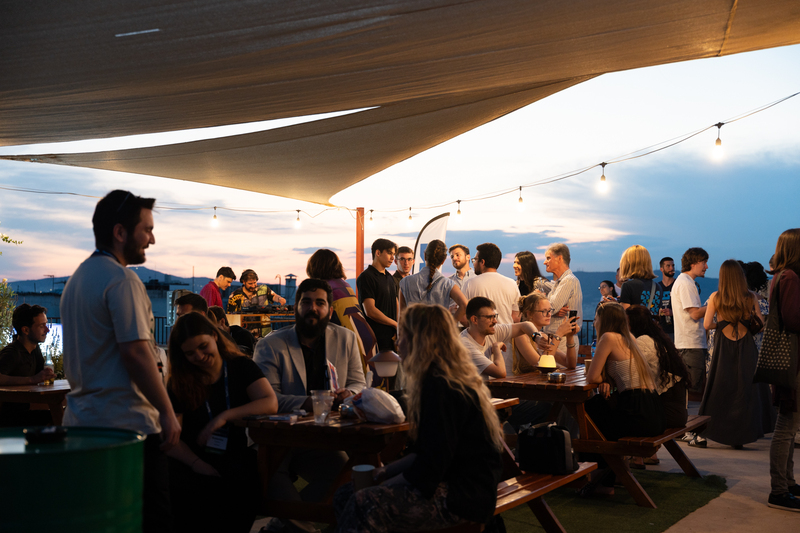
DSC00888

Why Athens Is Ideal for Coworking

Athens offers a unique blend of history, culture, affordability, and innovation. The city's growing startup ecosystem, international workforce, and vibrant urban lifestyle make it an ideal location for collaborative workspaces.

With excellent public transport, a thriving entrepreneurial scene, and easy access to both islands and mainland destinations, Athens allows professionals to enjoy a balanced lifestyle without sacrificing career opportunities.

As the city continues to attract international talent, coworking communities are becoming increasingly important hubs where ideas, businesses, and friendships can flourish.
Copy of Stone Soup roof top 28

Find Your Community At Stone Soup

For professionals looking to experience the benefits of coworking in Athens, Stone Soup offers a welcoming environment built around collaboration, flexibility, and genuine human connection.

Spread across two floors in central Athens, the space provides 23 private offices, dedicated resident desks, flexible coworking memberships, meeting rooms, team spaces for up to 30 people, business support services, phone booths, quiet work zones, and a spacious rooftop terrace overlooking the city. More importantly, it offers access to a diverse and supportive community of professionals who believe that work is better when people grow together.

Whether you're an expat settling into Greece, a remote worker looking for structure, a freelancer seeking community, or a growing team searching for a collaborative base in Athens, Stone Soup is more than just a place to work, it's a place to connect, learn, and belong.


Ready to discover the benefits of coworking in Athens? Explore Stone Soup's membership options and book a tour to experience the community for yourself.

If you want to dive even deeper into the world of Stone Soup, read our full interview with founder Olga Paraskevopoulou!

Note: All images used in this article are courtesy of Stone Soup Coworking.


Located in just a 5-minute walk (350 meters) from Panepistimio metro station, Stone Soup is one of Athens' longest-running independent coworking communities. Since 2014, it has provided a welcoming home for freelancers, startups, remote teams, entrepreneurs, creatives, and international professionals looking for more than just a desk. Built around the philosophy of collaboration, flexibility, and human connection, Stone Soup has evolved organically into a thriving community where people come together to work, learn, share ideas, and grow.

Spread across two floors in central Athens, the space offers a variety of workspace solutions designed to accommodate everyone from solo professionals to growing companies.

Copy of Stone Soup Daniële Alieke 2 2

Workspace Options

  • 23 fully equipped private offices
  • 25 Coworking stations and Day Offices  available across flexible and on-demand memberships
  • Dedicated Resident Desks for members seeking a permanent workstation
  • Flex Desks / Day Passes for freelancers, digital nomads, and occasional users
  • Meeting rooms in different sizes from 4 to for up to 15 people
  • Two large team spaces on the 6th floor, accommodating teams of up to 30 people
  • Flexible membership plans suitable for individuals, startups, and larger organizations
Untitled design 3

Facilities & Amenities

Members enjoy access to:

  • High-speed business-grade internet
  • Fully furnished offices and workstations
  • Meeting rooms and collaboration spaces
  • Quiet work zones
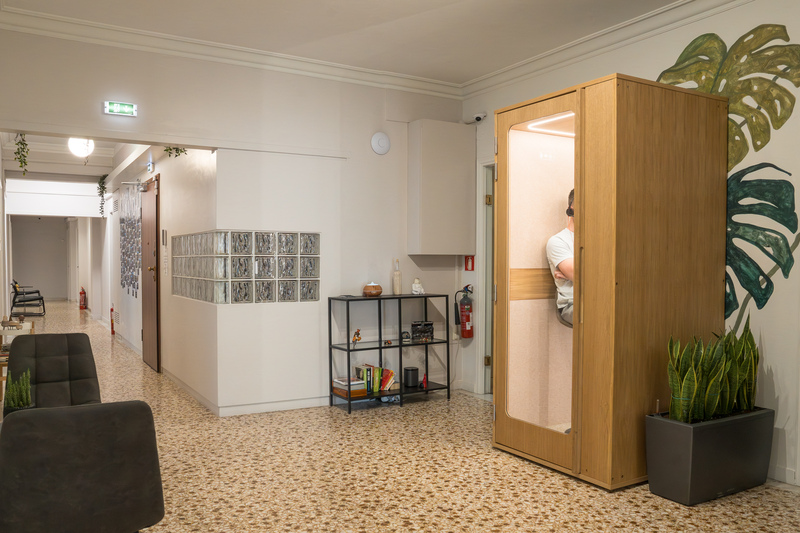
  • Phone booth for private calls and online meetings
  • Fully equipped kitchenette
  • Modern WC facilities
  • Mail handling and business address services
  • Daily cleaning and maintenance
  • Secure access through the Stone Soup App
  • Dedicated operational and community support
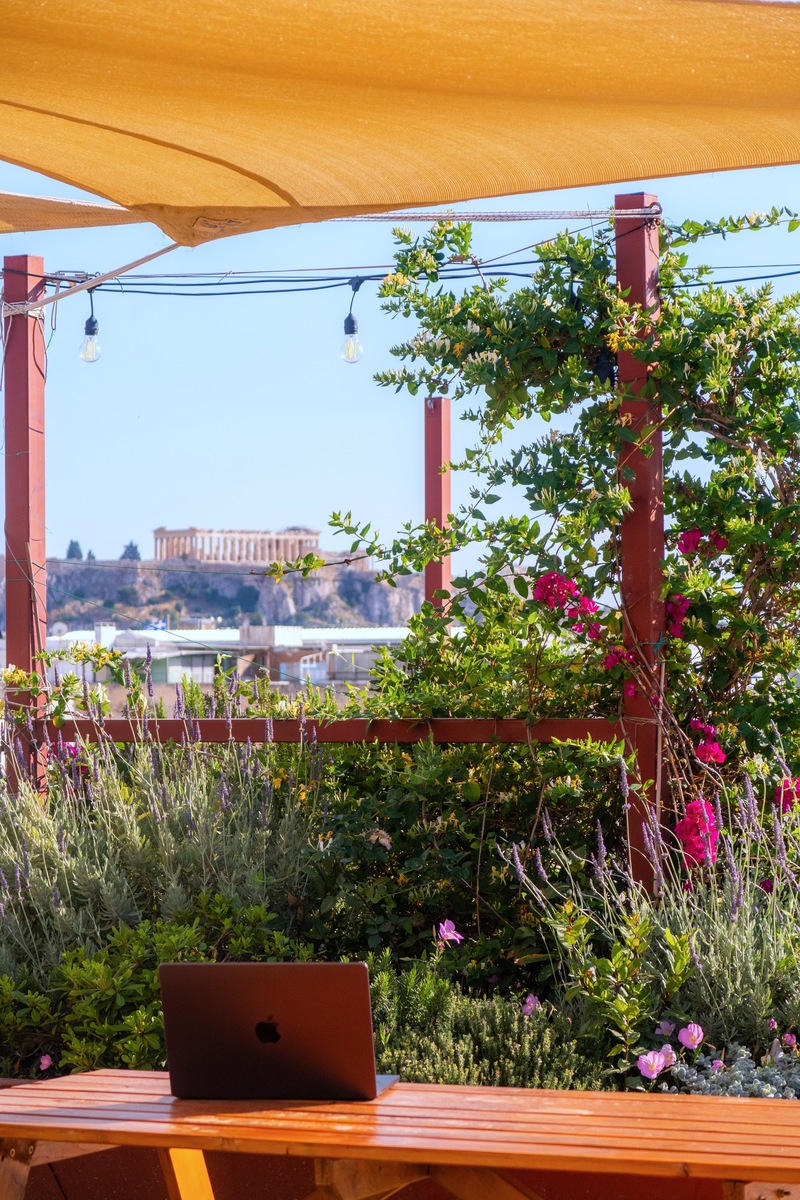
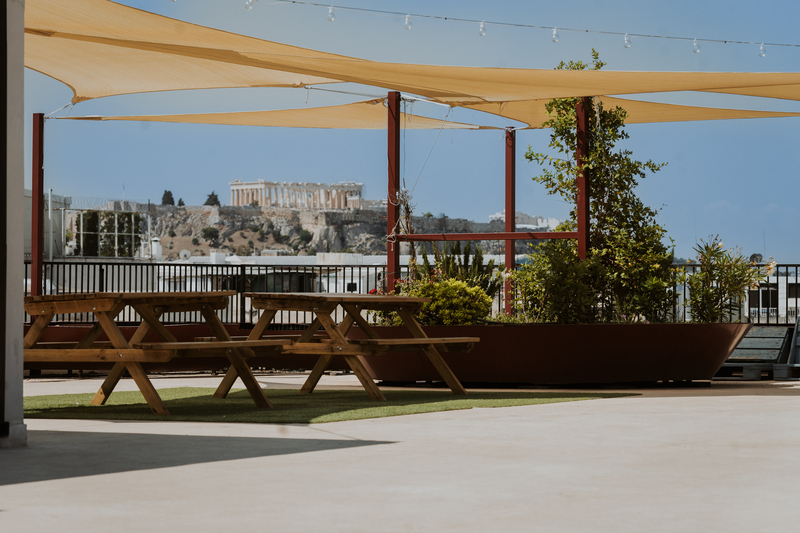
  • A spacious rooftop terrace with views over Athens & the Acropolis

Ready to find your place at Stone Soup? Explore membership options and book a tour today!

Community & Events

What truly distinguishes Stone Soup is its community-focused approach. Rather than operating as a traditional serviced office, the team actively fosters connections between members through introductions, networking opportunities, and shared experiences.

Regular community activities include:

  • Rooftop lunches
  • After-work drinks
  • Networking gatherings
  • Workshops and talks
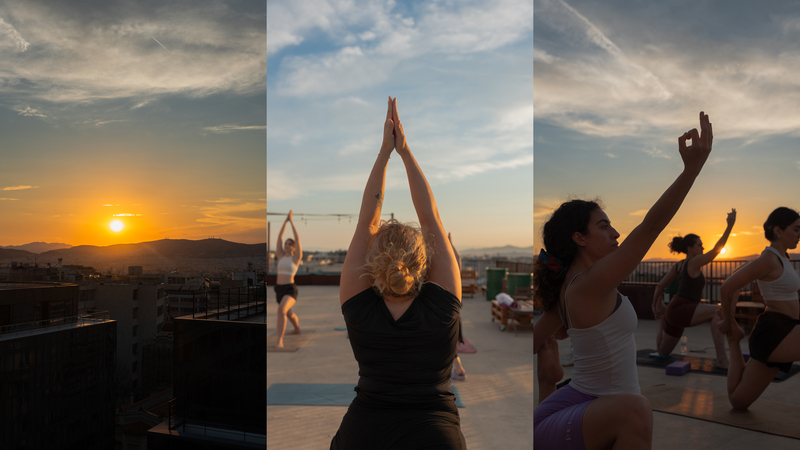
  • Wellness activities
  • Informal community events

The rooftop terrace has become one of the most popular gathering spaces, offering members a chance to connect, exchange ideas, and build relationships in a relaxed environment.

For many expats, remote workers, and digital nomads, Stone Soup acts as a soft landing point in Athens, providing not only workspace, but also access to a supportive network of professionals and friends.
roof yoga landscape 2


A Home in Exarchia

Stone Soup is deeply connected to its neighborhood. Located in the heart of Exarchia, members are surrounded by independent cafés, creative studios, galleries, bookstores, artisan workshops, concept stores, and local businesses that contribute to the area's unique character.

The Stone Soup team actively supports local initiatives and encourages members to experience the neighborhood beyond the office, helping them connect with the creative and entrepreneurial energy that makes Exarchia one of Athens' most interesting districts.

Who It's For

  • Freelancers and consultants
  • Startups and scale-ups
  • Remote-first companies
  • Creative professionals
  • Digital nomads
  • International teams
  • Expats relocating to Athens
  • Entrepreneurs seeking community and collaboration

Get in Touch

Stone Soup Coworking

📍 Akadimias & Charilaou Trikoupi 18, 5th & 6th Floor, Exarchia, Athens 10679, Greece

📧 info@stonesoup.io

📞 +30 210 338 8566

🌐 Stone Soup Coworking 

📱 Social Media:


Ready to find your place at Stone Soup? Explore membership options and book a tour today!


There is a noticeable shift happening in the Mediterranean. While global travel icons like Santorini and Mykonos have long defined the quintessential Greek holiday, international travelers are turning their gaze toward understated authenticity. This evolving preference was made clear in the newly released Condé Nast Traveller Readers’ Choice Awards, where Greece claimed nearly half of the spots on the list of Europe’s top 20 islands.

Securing the coveted number-one spot was Naxos, which earned an impressive score of 95.71. By outranking heavyweights like Ibiza, Capri, and Mallorca, the largest of the Cyclades has officially moved to the center of the European travel stage.

The Rise of the Authentic Aegean

Naxos’ triumph speaks directly to what modern travelers are searching for: space, heritage, and genuine local culture. Renowned for its sweeping sandy coastlines, ancient landmarks like the iconic Portara marble gateway, and a thriving agricultural tradition that fuels its famous culinary scene, the island offers a rich, unhurried alternative to its high-octane neighbors.
But the accolades didn't stop with Naxos. Greece dominated the rankings with eight islands making the final cut, proving that the country’s appeal lies in its immense diversity:
  • Crete & Corfu: Landing comfortably in the top 10, Crete (91.42) was celebrated for its vast landscapes, distinct food culture, and minoan history, while Corfu (90.95) charmed voters with its elegant Venetian architecture and green Ionian vistas.

  • Rhodes & Skiathos: Rhodes followed closely behind, buoyed by the timeless draw of its medieval Old Town, while the pine-fringed beaches of Skiathos secured a strong twelfth-place finish.

  • The Classics & The Hidden Gems: While cosmopolitan Mykonos and dramatic Santorini held their ground in the top 20, it was the inclusion of rugged, quiet Folegandros (ranking 17th) that underscored a growing desire for peaceful, slow-paced escapes.

Ultimately, these rankings reveal a deeper narrative for Greek tourism. Whether travelers are seeking vibrant nightlife, historical depth, or a quiet corner of the Aegean to simply breathe, Greece continues to deliver, not just through its famous landmarks, but through the enduring magic of its lesser-known shores.
There’s a moment that happens again and again.

You step off the plane, the air hits your skin — warm, salty, sunlit — and something inside you softens. Your shoulders drop. Your breath deepens. Your mind, which has been racing for weeks, suddenly goes quiet.

It’s not just the holiday feeling. It’s Greece.

And if you’ve ever wondered why you instantly feel more grounded here, you’re not imagining it.

1) The light does something to your nervous system

Greek light is different. Clearer. Brighter. More honest.

It pulls you out of your head and into your senses.
  • You notice colour again — whitewashed walls, deep blue sea, wild pink bougainvillea
  • You feel time slow down because your body is finally getting natural cues (sunrise, warmth, evening breeze)
  • You stop living under artificial light and constant stimulation
When your senses wake up, you come back to yourself.

2) The sea air is an instant reset

There’s a reason so many people feel better near the ocean.

In Greece, the sea is never far away, and the air carries that mineral, salty freshness that makes you breathe properly.

It’s the kind of breath you forget you’ve been missing.

For many travellers, that first deep inhale is the first time in months they’ve felt truly present.

3) Greece invites you to live at a human pace

Greek life has a rhythm that’s quietly healing.
  • Meals are unhurried
  • Conversations are face-to-face
  • People sit outside, even for a quick coffee
  • Even the simplest errands have a softness to them
It’s not laziness. It’s wisdom.

Your body recognises it as safety, and when your body feels safe, you feel grounded.

4) Nature is everywhere (and it’s not manicured)

In Greece, nature doesn’t feel like a “feature”. It’s just… there.

Olive groves, mountains, pine forests, herbal scents on the breeze, rocky paths down to hidden coves.

There’s something deeply regulating about being surrounded by landscapes that haven’t been over-designed.

You remember you’re part of something bigger than your to-do list.

5) There’s ancient depth in the land

Even if you’re not someone who’s “into history”, Greece has a presence.
You can feel it in:
  • the stones under your feet
  • the quiet power of temples and monasteries
  • the stories that live in the landscape
This is a place that has held humans through joy, grief, celebration, and change for thousands of years.

It reminds you: you’re not alone, and you’re not the first to feel what you’re feeling.

6) Greece makes it easier to be simple

In Greece, you don’t need much.

A swim. A walk. Fresh food. A shaded terrace. A sunset that stops you mid-sentence.

When life becomes simple, your mind stops searching for the next thing.

And that’s when peace arrives.

So why do we feel grounded the moment we land?

Because Greece meets you in your body, not your brain.

It gives you light, air, space, rhythm, and a kind of quiet permission to slow down.

And once you’ve felt that, you start craving it — not as an escape, but as a return.

This article was originally published on: retreats-in-greece.com

About the Author

Gilly Gwilliams is the founder of Retreats in Greece and Evexia Wellness on the island of Kos. A passionate wellness seeker, she is on a mission to showcase Greece as a leading wellness destination while helping people reconnect with themselves through meaningful retreat experiences. Inspired by her own journey through health challenges, Gilly believes in the power of holistic wellbeing, purposeful living, and creating space for personal transformation. Originally from the UK and now living in Kos with her husband, two dogs, and a lively collection of animals, she combines her love of Greece, nature, and wellness to help others live healthier, happier lives.


For many people, Greece is a dream holiday destination. For Gilly, it became something much more, a place of healing, purpose, and transformation.

In this interview, we sat down with Gilly, founder of Evexia and Retreats in Greece, to discuss her journey building a wellness-focused life on the island of Kos. We explore the inspiration behind her businesses, the power of retreats, the lessons she's learned from Greek living, and why she believes Greece is one of the world's most powerful destinations for wellbeing and personal growth.

From Pilates on the beach to helping people discover life-changing retreat experiences, Gilly shares her story, her philosophy, and her vision for a healthier, more connected way of living.

Can you tell us a bit about your background and how you ended up in Greece?

I live on the island of Kos, which is somewhere my family always came to on holiday. I'm originally from the UK, and like many British people, Greece was a favourite destination for us. I think I was about 5 or 6 years old when I first visited Kos, and we returned year after year.

Before moving here, I had a career in the British Army and spent 7 years working in intelligence. It was a completely different life; very stressful, demanding work. During that time, I experienced a number of health issues, but they were often dismissed by doctors, so I never fully understood what was going on.

Eventually, I reached a point where I knew I wanted to leave the Army, but I wasn't sure what came next. I'd trained as a fitness instructor and loved teaching, so I made what seemed like an impulse decision: I moved to Kos to see if I could build a life here.

I got a job as a fitness instructor and spent the first 6 months settling in. As I connected with more people, I eventually created Evexia, where I started personal training and teaching Pilates on the beach during the summer. In winter, most of my clients were expats, although it's never been exclusively for expats.

Originally, the business was called Victory Fitness Beach, inspired by my military background. But as I changed as a person, the business evolved too. I became more interested in wellness rather than just fitness. I trained in breathwork and focused more on helping people improve their wellbeing rather than pushing intense military-style workouts. In fact, I don't train that way at all anymore.

From there, I moved into retreats. I started organising fitness and wellness retreats, even though I had no real idea how to do it at first. Luckily, through the network I'd built, I met the right people who helped guide me. In my first year, I ran 3 retreats, and for several years after that I was hosting 3 or 4 retreats annually.

As the retreats grew, I realised that in Greece you need to be a licensed travel agent if you want to legally sell retreat packages. So I invested time in doing things properly and became a travel agent.
Around the same time, I noticed how difficult it was to market retreats. Through Facebook, I realised there wasn't a single group dedicated to all retreats happening in Greece. There were yoga groups, but nothing broader. So I created one and within a short time, it grew to around 1,500 members. That made me realise there was something missing in the market.

Because I was already organising retreats and operating as a travel agent, I decided to bring everything together and create Retreats in Greece. I built the website myself with virtually no investment because I didn't know how it would develop. But there was immediate interest, and since then it's continued to grow.

Retreats in Greece officially launched last year, so it's still very new. But this was really the birth of the idea. There are so many magical things happening in Greece, and everyone involved shares the belief that there's something special here. Greece is the perfect place for a retreat because even people who come here without attending one often leave feeling better.

That was certainly my experience. Moving here changed my life completely, and for the better. I'll never leave. Many expats say exactly the same thing. Even more Greeks are beginning to appreciate just how special their country is as a wellness destination, and we're now receiving increasing interest from Greek groups looking for retreat experiences too, which is something I never expected.

How can someone book a retreat through Retreats in Greece?

We're quite different from a typical booking site. Most retreat platforms simply present a long list of retreats and leave you to scroll through them. We wanted to create something more personal.

Visitors come to our website and complete a discovery form. We ask a variety of questions about how they're currently feeling, how they want to feel, whether they'd prefer the mainland or an island, and several other factors. Based on those answers, we match them with retreats we believe are genuinely suited to them. Sometimes we'll ask follow-up questions to narrow things down further.

Of course, if someone has already seen a retreat we've advertised, they can book that directly. But I always encourage people to let us get to know them first.

A retreat is a significant investment. People spend a lot of money and often arrive at a point in their lives where they're not feeling 100% themselves. The right environment and the right group can completely shape the experience. Our role is to remove some of that stress and help people find the retreat that's truly right for them.

Ready to find your dream retreat? Complete the Discovery Form and match with a retreat that aligns with your goals, interests, and wellbeing journey.

You could have built a wellness business anywhere in the world. What is it about Greece—and especially Kos—that makes it such a powerful place for personal transformation?
For me, Kos is deeply connected to my childhood. Moving here wasn't a random decision. I already knew the feeling the island gave me. Even before I moved here, I always felt safe in Kos. There's just something special about it; the beaches, the pace of life, the atmosphere. Most people struggle to describe it, but it has a grounding effect.

Historically, Kos wasn't a tourist island. It was an agricultural island, known for farming. I live in the countryside, surrounded by fields rather than hotels and resorts. I wake up every morning looking out across open land. The sea is only a kilometre away, 2 minutes by car or 15 minutes on foot.

And I genuinely have my dream job. I'm not caught up in the tourist rush. I teach Pilates on the beach at sunrise and sunset. To be able to do that every day is incredible. When I compare it to my previous life, they're complete opposites.

I wake up each day with gratitude.

Now, I wouldn't necessarily say Kos is the best Greek island. There are many islands that are absolutely stunning. But for me, for my business, and for the life I want to live, it's perfect.

The people are welcoming. Everyone feels accepted here. Whether it's the island's history, its connection to Hippocrates, its volcanic landscape, or something we can't explain, there is definitely a special energy here. I think that connection is deeply personal, but it's very real.

After several years living in Greece, what has the Greek lifestyle taught you about wellness, balance, and living well?

A lot of it starts with food. In the UK, you go to the supermarket and buy what's on the shelves. Here, I buy vegetables from local producers and roadside shops. We eat seasonal, local food rather than heavily processed supermarket food. 

Nature also plays a huge role. In summer, I'll be sitting by the sea drinking my coffee by 10 o'clock in the morning. In winter, I swap beach days for hiking. Being outdoors is simply part of daily life. Whether you're by the sea or in the mountains, nature is always accessible.

It's taught me the importance of slowing down, connecting with your surroundings, and making time for simple pleasures.

There's also a strong social culture. People spend time together. They sit for coffee. They connect.

One of the biggest lessons I've learned is that many of the things that genuinely make me happy don't cost money. In the UK, entertainment often meant spending money. Here, some of life's greatest pleasures are free.

Many people dream of moving to Greece and starting a new life. What has been the biggest challenge?

Without question, the biggest challenge has been bureaucracy. Especially when you're building a business, the system can feel incredibly complicated. Nothing seems straightforward, and everything goes through an accountant. If you don't have an accountant in Greece, you're completely lost.

That was a steep learning curve for me. When I was setting up my business, I was often given conflicting information. I would be told one thing, only to discover a year later that the rules were different. At times it feels like you're banging your head against a brick wall over something that should be simple.

That said, I've embraced both the good and the bad. No place is perfect, and I've built a life here that I love.

What inspired you to create the Evexia Podcast?

Originally, I simply wanted to talk about wellness. My work had become centred around wellbeing, and I was so passionate about both Kos and the lifestyle I'd created here.

I also love learning. I was constantly meeting fascinating people and discovering new ideas, so the podcast became a way to share those conversations.

When Retreats in Greece launched, the scope expanded. Instead of focusing only on Kos, I started interviewing retreat hosts from all over Greece. It gave them a platform to share their work while also allowing me to explore topics like nutrition, breathwork, sound healing, and many other wellness practices.

The podcast started as a passion project, and it still is. I do it because I genuinely enjoy learning and sharing knowledge. Even if only one person listens to an episode and learns something that improves their life, then I consider it a success.

Listen to the Evexia Podcast and discover stories, insights, and expert perspectives from across the Greek wellness community. Find all episodes here!

Is there one guest or conversation that has stayed with you?
Absolutely. Emily from Lemonpeels immediately comes to mind.

She's Greek/British living in Greece and specialises in nutrition. She talks about natural approaches to healing conditions such as IBS, digestive issues, and skin problems.

Both she and her husband faced significant health challenges, and through nutrition and lifestyle changes they were able to dramatically improve their health.

She focuses heavily on gut health, fermented foods, and the power of nutrition. I mention her work to clients all the time because it's so relevant. We live in a world where there's often a tablet for everything. Emily reminds us that food can be incredibly powerful medicine.

That said, every guest has inspired me in some way. I've learned something valuable from every conversation.

What does genuine wellbeing mean to you?

For me, genuine wellbeing is about conscious daily choices. It's being aware of the decisions you're making every day, from the food you buy to how you move your body.

We all have opportunities to move with purpose. We can walk instead of driving. We can swim, exercise, spend time outdoors, or connect with nature. It's about asking yourself: "Is this going to make me feel better or worse?"

Every day we have choices.I have health challenges myself, but I still choose to do the things that help me feel good. Exercise makes me feel better. Eating nutritious food makes me feel better. I know that if I eat a bag of sweets or a giant chocolate bar, I'll feel worse afterwards. Perfection isn't the goal. It's simply about making more conscious choices that support your wellbeing.

Through your work, you've explored many parts of Greece. Apart from Kos, is there another destination you'd recommend for a deeper wellness experience?

One place that really surprised me was Galaxidi. It's not a destination many people immediately think of, but it has a wonderful sense of calm and connection.

The nearby area around Delphi is also incredibly powerful. The history alone makes it worth experiencing.

People often focus on the islands, but there are so many beautiful places on the mainland and in northern Greece that deserve attention.

That said, one of my favourite islands is definitely Leros. I absolutely loved it.

If we had this conversation again five years from now, what would you like Evexia, Retreats in Greece, and the Evexia Effect to have become?

I've learned that planning too far ahead doesn't always work because life rarely goes exactly to plan. But what I'd really like to see is a growing community.

Of course I want the business to grow, but more importantly, I want to help more people. I'd love people to think of Retreats in Greece and Evexia whenever they think about wellness in Greece.

I want to help shift the perception of Greece from being just a holiday destination to being recognised as one of the world's leading wellness destinations. There's a reason so many retreats take place here. Whether that happens in five years or ten years, I don't know. But that's the vision.

I've experienced my own struggles with physical and mental health. Moving to Greece played a huge role in my recovery and wellbeing. Because of that, my purpose isn't simply about building a successful business. Success matters—we all need to make a living—but for me, it's about helping as many people as possible improve their lives. That's what motivates me every day. 


Gilly's journey is a powerful reminder that wellbeing is often found in the simplest things: connection, nature, movement, community, and conscious daily choices. 

We'd like to thank Gilly for taking the time to speak with us and for sharing her experiences, insights, and passion for wellness. We look forward to following the continued growth of Evexia and Retreats in Greece, and to seeing more people discover Greece not only as a holiday destination, but as a place for genuine wellbeing and personal transformation.
Team Owner Dean Spanos Returns To His Family’s Roots In Eva, Messinia, Ahead Of Flag Football’s Olympic Debut At LA28
 
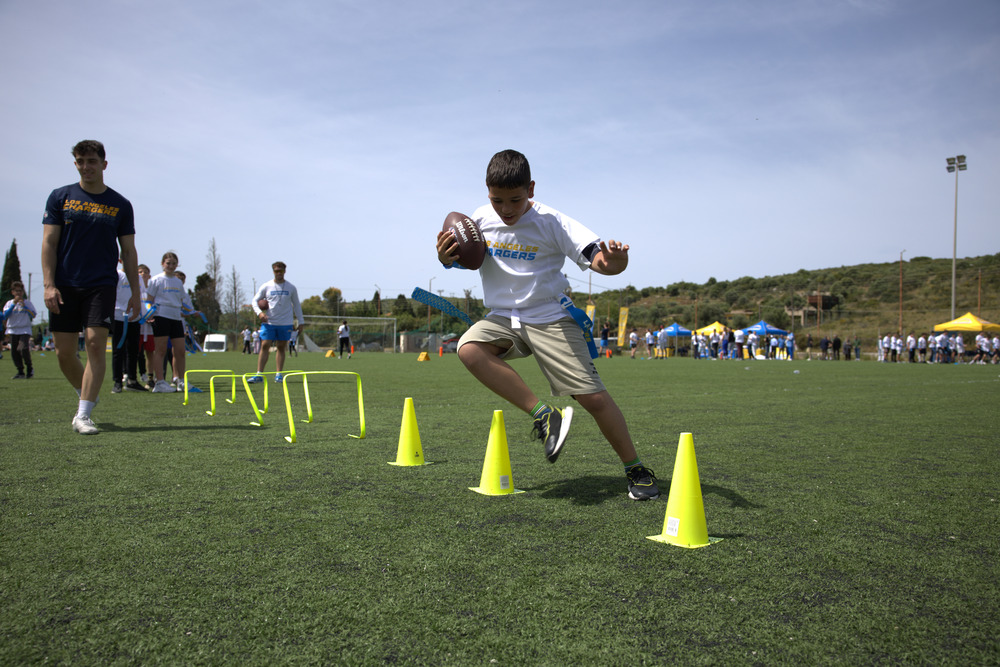
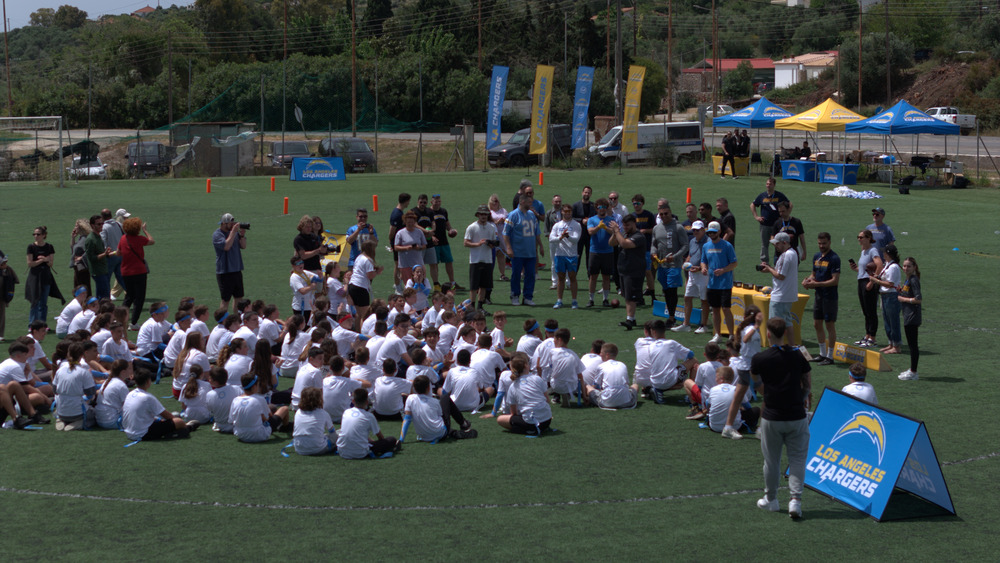
The Los Angeles Chargers successfully hosted the first-ever NFL Flag Football Camp in Messinia, bringing the excitement and values of American football to hundreds of children from across the region in the historic town of Methoni.
The event marked another major milestone in the international growth of flag football, as the sport continues its journey toward its official Olympic debut at the Los Angeles 2028 Olympic Games.
 
Held under the framework of the Messinia Challenge 2026, the camp formed part of the NFL’s broader global initiative to introduce the sport to younger generations around the world. Children from across Messinia had the opportunity to participate in drills and introductory sessions led by coaches and representatives from the Chargers organization. They experienced the core values of teamwork, discipline, inclusion, and sportsmanship, with former Chargers star linebacker Shawne Merriman present to offer encouragement and provide tips on how to play the game.

5 Eva Messini
 
Presence Of Greek Sports & Local Authorities

The event was honored by the presence of the General Secretary of Sports of Greece, Mr. George Mavrotas, who highlighted the importance of introducing new Olympic sports to young people and strengthening the connection between sports, education and local communities.
 
During his time in Messinia, Chargers Owner and Chairman of the Board, Mr. Dean Spanos also met with the President of the Hellenic Olympic Committee, Mr. Isidoros Kouvelos, and with Mr. Achilleas Constantakopoulos, Chairman & CEO of TEMES — meetings that reflected the broad support behind the development of flag football in Greece ahead of the LA28 Olympic Games.
 
Also in attendance was the Mayor of Pylos-Nestor, Mr. Panagiotis Karvelas, who presented Mr. Dean Spanos with a special commemorative award in recognition of his contribution to sports, his support of youth development, and his enduring connection with Messinia and Greece.
 
The activities were also attended by representatives of the U.S. Embassy in Greece, underscoring the strong cultural and sporting ties between Greece and the United States, as well as the growing international significance of flag football ahead of the LA28 Olympic Games.
 
In a particularly emotional moment, children and teachers from a Methoni school presented Dean Spanos with handmade gifts and commemorative mementos as a gesture of appreciation for bringing the NFL Flag Football Camp to the region and creating a once-in-a-lifetime experience for local families and students.

2 NFL Flag Football Camp Methoni
 
Dean Spanos Returns To Eva, Messinia

The following day, Dean Spanos visited Eva, Messinia, the village where his grandfather was born and raised before emigrating to the United States.
The visit carried deep emotional significance for the Spanos family and for the local community, as residents welcomed him back to the village that shaped his family’s roots and history.
 
During his visit, Dean Spanos and representatives of the Chargers stopped by the village’s elementary school, the only elementary school in Eva, where they met with students, teachers and local residents.
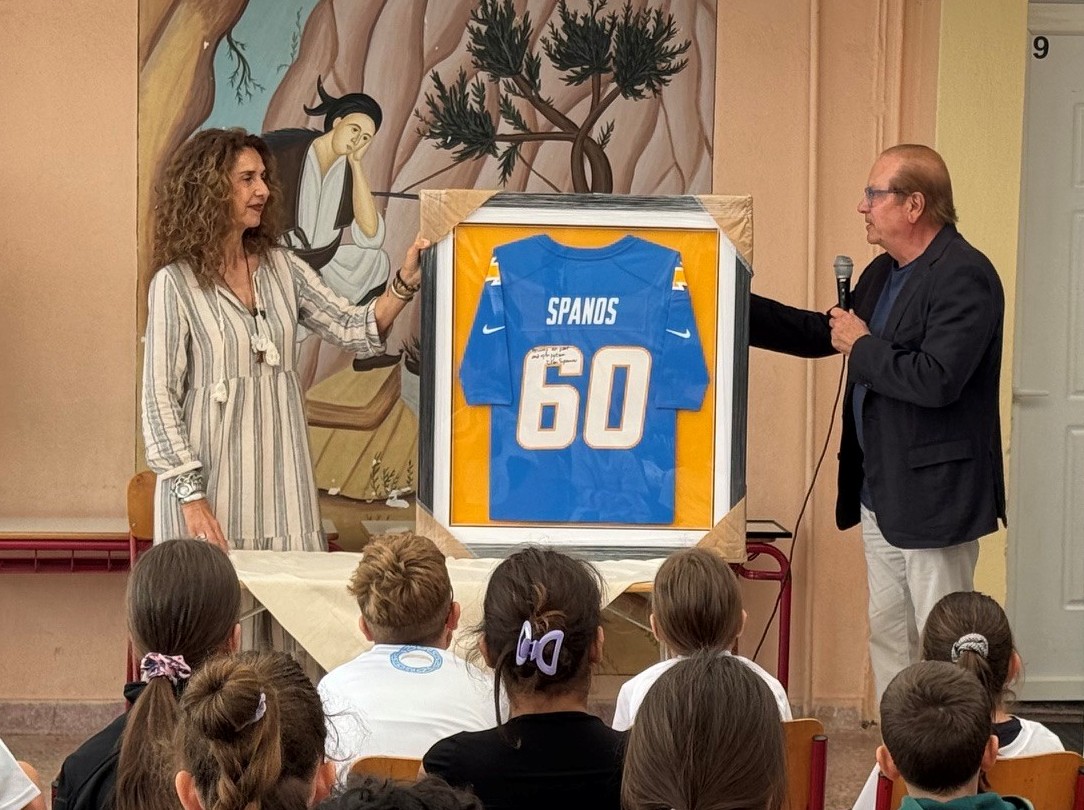
The Chargers organization donated signed memorabilia and an official autographed Chargers jersey to the students, and Dean Spanos presented a signed letter to the school. The organization also provided new air-conditioning units to support the school’s facilities and improve everyday conditions for students and staff.
 
One of the most touching moments of the visit was Dean Spanos’ stop at the local church, which was built many years ago with the financial support of his grandparents. The church remains a symbol of the family’s enduring connection to Eva and the wider Messinian community.

1 NFL Flag Football Camp Methoni
 
Building The Road To LA28

The Messinia event marked the fourth NFL Flag Football Camp to be organized in Greece, following successful camps in Santorini, Thessaloniki and Athens.
With flag football now officially included in the Olympic Games program for Los Angeles 2028, the Chargers continue to play an active role in introducing the sport to young athletes internationally and inspiring the next generation of players.
 
Speaking about his return to Greece, Dean Spanos said:

“Being here in Messinia and visiting the village where my family comes from is incredibly meaningful to me. Seeing so many children take part in the camp and embrace flag football makes me proud and optimistic for the future of the sport in Greece. My family has always had a deep connection with this country, and it is special to continue building that relationship through sports and community.”
 
The NFL Flag Football Camp in Messinia served not only as a sports initiative, but also as a celebration of heritage, youth empowerment and the growing global future of flag football ahead of its historic Olympic debut in Los Angeles.

For more information on upcoming initiatives in Greece, visit www.chargers.com or follow the Chargers Greece on Instagram.
A new study from holiday rental platform Holidu is challenging the way travellers choose their next city break. Instead of focusing on where drinks are cheapest, the research ranks 50 European cities according to six distinct "drinking personalities," helping travellers find destinations that better match their preferred social atmosphere and travel style.

The study comes at a time when younger generations are drinking less than previous generations, shifting the focus from quantity and price to experience and environment. According to Holidu, travellers are increasingly asking not "Where can I get the cheapest pint?" but rather "What kind of atmosphere am I looking for?"

To answer that question, researchers analysed European cities across factors including alcohol consumption, drinking participation rates, beer prices, and nightlife density. Based on the results, each city was assigned to one of six drinking personalities.

Among the categories, Prague emerged as the top destination for the "Beer Athlete",  travellers who value deep-rooted beer culture and high-volume social drinking. Brussels was identified as the ideal city for the "Social Butterfly," thanks to its dense concentration of bars and vibrant social scene.

For those seeking a more sophisticated experience, Oslo topped the rankings for the "Refined Drinker," offering premium bars and curated drinking experiences despite having some of Europe's highest drink prices. Meanwhile, Belgrade was named the best destination for the adventurous "Wildcard," attracting travellers looking for memorable nights beyond Europe's traditional party hotspots.

The study also highlighted Porto as the perfect destination for the "Casual Sipper," combining sunny terraces, relaxed drinking culture and affordable prices. Dublin, meanwhile, earned the title of Europe's leading destination for the "Culture Drinker," thanks to its historic pubs, long-standing brewing traditions and deep connection between drinking and local heritage.

According to Holidu, no single city is universally the best drinking destination. Instead, the findings suggest that travellers are more likely to enjoy a city when its drinking culture aligns with their personality and expectations. The research ultimately reframes the conversation around nightlife tourism, moving beyond cost and towards experience-driven travel.

For the full article visit: www.holidu.co.uk
Page 1 of 468