

More Than A Coworking Space: Olga On The Community Behind Stone Soup
- by XpatAthens
- Thursday, 18 June 2026

What does it take to build a coworking space that feels more like a community than an office? We sat down with Olga, co-founder of Stone Soup, to talk about the journey from a run-down building in Exarchia to one of Athens' most beloved coworking communities. From the philosophy behind the name and the power of human connection to the evolution of Athens as a hub for creatives, entrepreneurs, and remote workers, Olga shares the story, values, and people-first approach that continue to shape Stone Soup today.
I studied Communications and Media at the University of Athens and then moved to Amsterdam for a Master's degree in New Media. I think what's most interesting about how I ended up here at Stone Soup is my time in Amsterdam. That's where I discovered coworking spaces, which were still a relatively new concept at the time. As an expat living in a foreign country, being part of a coworking space made me feel like I belonged to a community. It also helped me find my first job, connect with accountants and other professionals, and ultimately build a circle of friends.
Before that, I had spent a few months alone at home, and while it was nice at first, I eventually reached a point where I felt isolated and started wondering what I was doing there. So that experience really inspired me.
What also impressed me was that many coworking spaces back then had a strong vision and a clear idea of the future they wanted to help create. Coworking wasn't just about investment or shiny offices. It was about bringing people together around a shared purpose and building something better for everyone. That resonated deeply with my values, and I wanted to create something similar here in Athens.
When I returned from the Netherlands in 2013, Greece was in the middle of the economic crisis. Opening a coworking space right away wasn't really an option because unemployment was so high and very few people were looking for office space. At the same time, my business partner had also decided to move to Athens. He loved the energy of the city, the country, and the people, and wanted to stay here for a while. So instead of launching a coworking space immediately, we started as an agency.
The building itself was in terrible condition. There was practically nothing we could use, so we had to rebuild everything from scratch. We did most of the work ourselves. The space wasn't ready for people to come and work from, so everything happened organically. People started bringing things from their homes—couches, chairs, curtains—and together, around 10 to 15 of us, we slowly transformed these walls into something meaningful.
At the same time, we started getting projects from Amsterdam, London, and later New York. Through our networks, people who wanted to build new products and services heard about us and decided to work with teams based in Athens. Those projects allowed us to pay salaries and support the people who had joined us.
In the beginning, we offered the space at very low cost, mainly to help people get started. A lot of artists, creatives, technology teams, and small studios found a home here because we provided an affordable solution during a very difficult period. Then, around 2019, we gradually evolved into a fully fledged coworking space.
Let’s start with the name because it sets the whole vibe. Do you want to explain it to us? How does that "sharing" philosophy actually show up for a new member who walks in today.
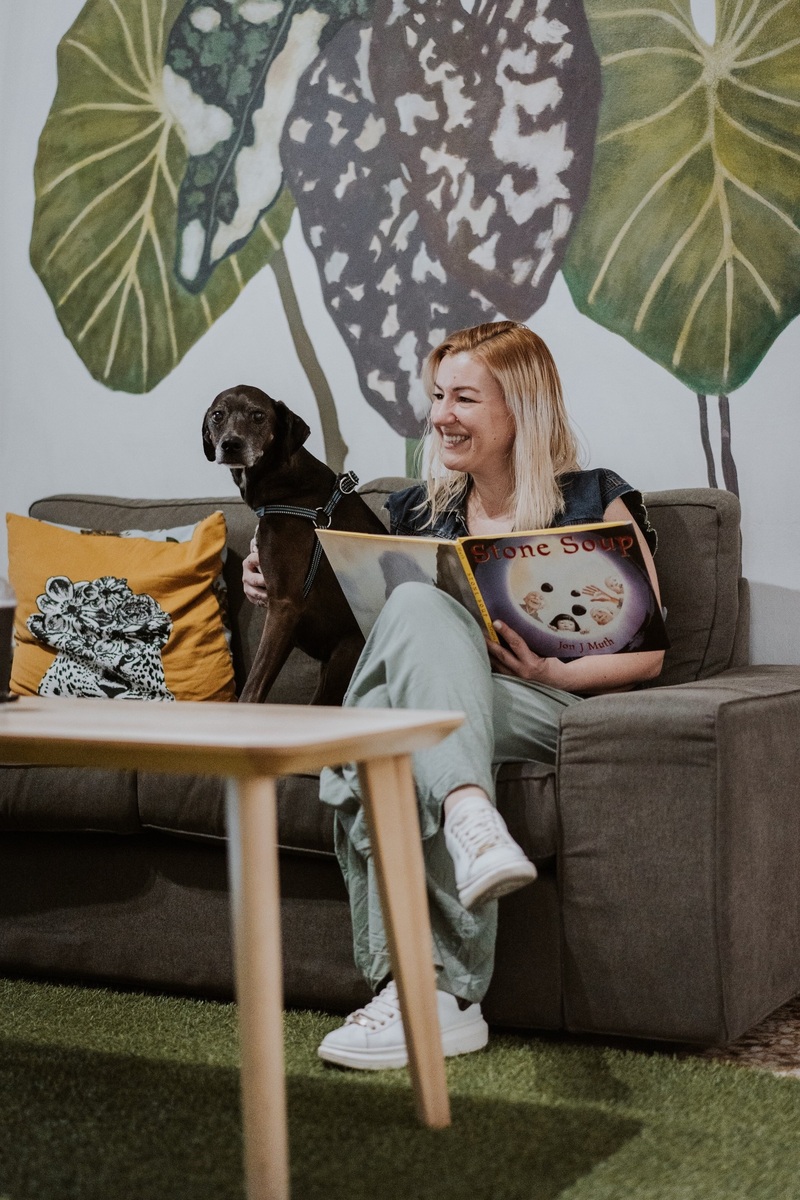
I guess you can already see where the idea came from based on our story. We borrowed the concept from the Stone Soup story itself. In a way, this space was the big pot in the middle of the village.
People became curious about what we were doing, and we'd tell them, "We're building something great. Come join us." Slowly, everyone started contributing a little of what they had. Sometimes that was furniture or equipment, and sometimes it was knowledge, skills, ideas, or connections. That's really how Stone Soup was built, and it's still what inspires us today.
People became curious about what we were doing, and we'd tell them, "We're building something great. Come join us." Slowly, everyone started contributing a little of what they had. Sometimes that was furniture or equipment, and sometimes it was knowledge, skills, ideas, or connections. That's really how Stone Soup was built, and it's still what inspires us today.
From the beginning, it was always a people project. The question was: how do you bring people together? How do you encourage them to think not only about themselves, but also about the community they're part of? We live in a very individualistic world, and it's easy to become isolated. People often forget the value of being together and the genuine joy that comes from contributing to something bigger than yourself. One of the lessons of the Stone Soup story is that when you contribute, you also receive something in return. The sense of belonging, happiness, and satisfaction that comes from being part of a community is very difficult to achieve alone.
Was that sense of community and collective contribution something you intentionally set out to create, or did it develop naturally as Stone Soup evolved?
No, I had no idea. It grew completely organically. Things just started happening, and at some point we realized, "This is actually working."
The funny thing is that the story itself came from a book we had here called The Pragmatic Programmer. It's a programming book, but it uses a number of stories and metaphors, including the Stone Soup story, the Boiled Frog, and the Broken Window.
We used those stories a lot in the early days. For example, the broken window theory is the idea that if something is left broken, people stop caring and things continue to deteriorate. But if you fix it, people are more likely to respect it and help maintain it. The boiled frog is about how problems can develop gradually without anyone noticing until it's too late. These stories offered useful ways of thinking about projects, communities, and how people behave.
Stone Soup was one of those stories. At some point in early 2014, we realized we still didn't have a proper name. We were operating under the name "Appsterdam Greece," but we knew we needed something that better reflected what we were building. As we discussed different ideas, we kept coming back to the Stone Soup story because it perfectly described what was happening here: people coming together, each contributing something small, and collectively creating something much bigger than any of us could have built alone.
How has Athens' coworking scene evolved over the years, and what do you think has kept Stone Soup relevant as the market has grown?
It's interesting because the landscape was very different back then. Before companies like Spaces arrived, there were only four or five local coworking spaces in Athens, most of them independent. The real shift happened after COVID, when coworking became more commercialized and investment-driven. Suddenly, you saw more buildings being acquired, renovated, and operated according to a specific business model.
In the early days, coworking was more of a movement than a business. Many spaces were created by people who simply wanted to build the kind of work environment they wanted for themselves. Each space had its own character, community, and philosophy. Today, coworking has become much more standardized, which isn't necessarily bad, but it's definitely different.
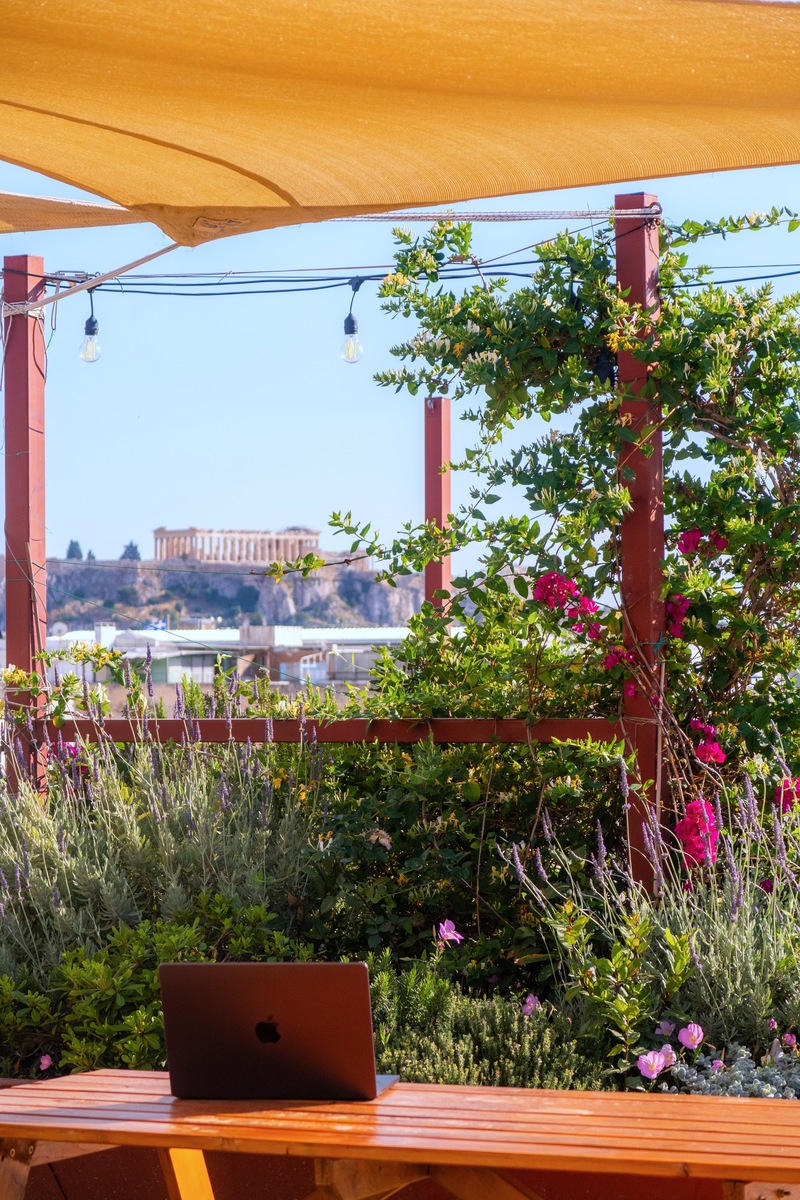
For us, the value has always been about more than desks and offices. Of course, we provide the infrastructure, great internet, meeting rooms, communal spaces, rooftop areas, and operational support, but what really makes a difference is the community. George and I are here every day, talking to members, helping them connect, and supporting them however we can.
What's interesting is that everyone gets something different out of the space. Some people make friends, some find business partners, others meet clients or collaborators. The best sign that a coworking space is working is when people stay because they feel at home. If you ask many of our members why they're still here, they'll simply say, "Because I like being here."
Of course, that's not for everyone. Some people prefer a more traditional corporate environment, and that's perfectly fine. What's great is that Athens now has enough variety for different people and different ways of working. We've simply stayed true to who we are: a community-driven space where people can do great work and feel they belong.
Stone Soup has a unique mix of community and productivity. How do you balance creating a social environment while also giving people the space they need to focus and get work done?
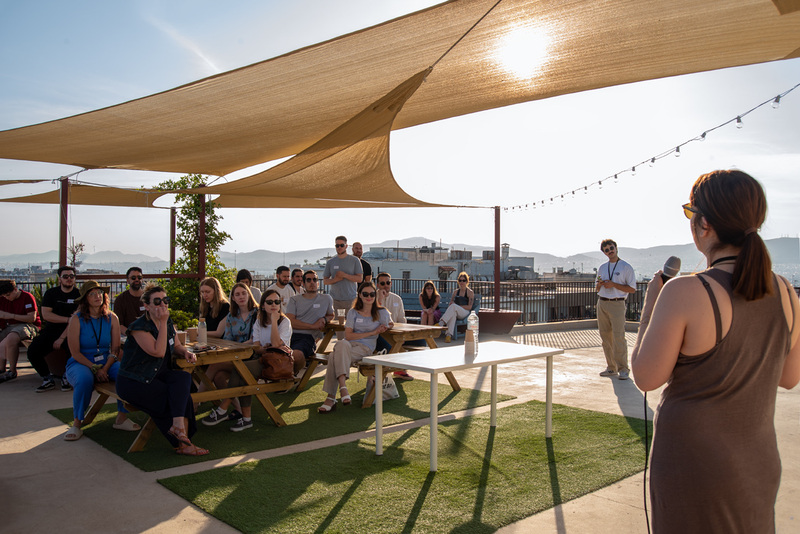
A big part of it comes from the facilities we offer, but also from the community activities we organize. For example, we'll often have informal lunches on the rooftop and invite people to bring their food and spend some time together. We also organize drinks and other gatherings, giving members a chance to get to know each other outside of work.
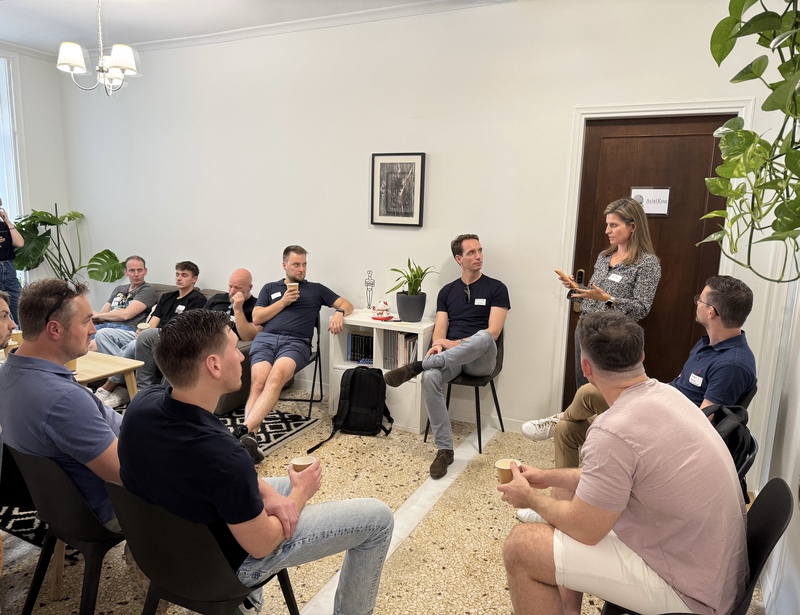
Because we know our members well and understand what they do, we can often make introductions that might otherwise take months to happen naturally. Sometimes we see opportunities for collaboration and help create those connections.
At the same time, we understand that people's needs change. Startups, for example, go through different phases. There are periods when they're very open to networking and meeting people, and then there are periods when they're focused entirely on delivering and hitting deadlines. During those times, they naturally participate less in community activities, and that's completely fine.
If there's one word that defines coworking, it's flexibility. That's what we try to offer here. You can start with a desk and later move into a private office for a team of ten. You can book meeting rooms when you need them or simply use the space in whatever way works best for you. We provide the environment, the support, and the community, but people are free to engage with it in the way that suits them best.
Athens has become a magnet for expats, remote workers, and digital nomads. What do you think makes the city so appealing, and what kind of experience can international professionals find here that they might not find elsewhere?
I think it's many of the same things that attract people to Southern European countries in general: the climate, the food, the culture, and the way of life. These are things that have always drawn people here.
Today, we have members and expats who come to Athens for a few months, a year, or even longer. Many are looking not only for good weather, but also for a different pace of life and a stronger connection with people. The climate and the culture go hand in hand.
That's something we've always wanted to reflect at Stone Soup as well. We want people who choose us to experience the local character of Athens. We don't want to be a standardized or generic coworking space. We want people to find that warm, authentic Greek atmosphere that they're often looking for when they come here.
Athens has a unique energy. It's vibrant, a little chaotic at times, full of life and personality. The people are expressive, the food is great, and there is always something happening. For many international professionals, that's exactly what makes the city special and what turns a temporary stay into something much longer.
Many international professionals arrive in Athens without an established network and often face challenges ranging from housing to bureaucracy. How does Stone Soup help newcomers settle in and feel part of the city?
From what I've seen, it's usually not the culture that shocks people. If anything, they're surprised by the cost of living, the housing market, and sometimes the bureaucracy. Housing is probably the biggest challenge. Many expats come planning to stay for a year and are surprised by how difficult it is to find a place to live. The reality is that even many Greeks are struggling with the same issue.
What I experienced myself when I was living in Amsterdam was how valuable a coworking space can be when you're new to a city. It's not just a place to work. For many people, especially expats, it's a place to meet others, build relationships, find support, and become part of a community.
We see that here all the time. Many international members love coming to the space because it helps them connect with people much faster than they would otherwise. They meet potential collaborators, business partners, friends, and sometimes even find practical help for everyday life in Athens.
In fact, expats are often some of the most active members of our community. They want to get involved, meet people, and experience everything the city has to offer. In that sense, Stone Soup can definitely act as a soft landing pad. It gives people a sense of belonging at a time when they're still finding their feet in a new city.
For someone visiting Stone Soup for the first time, what does the experience feel like?
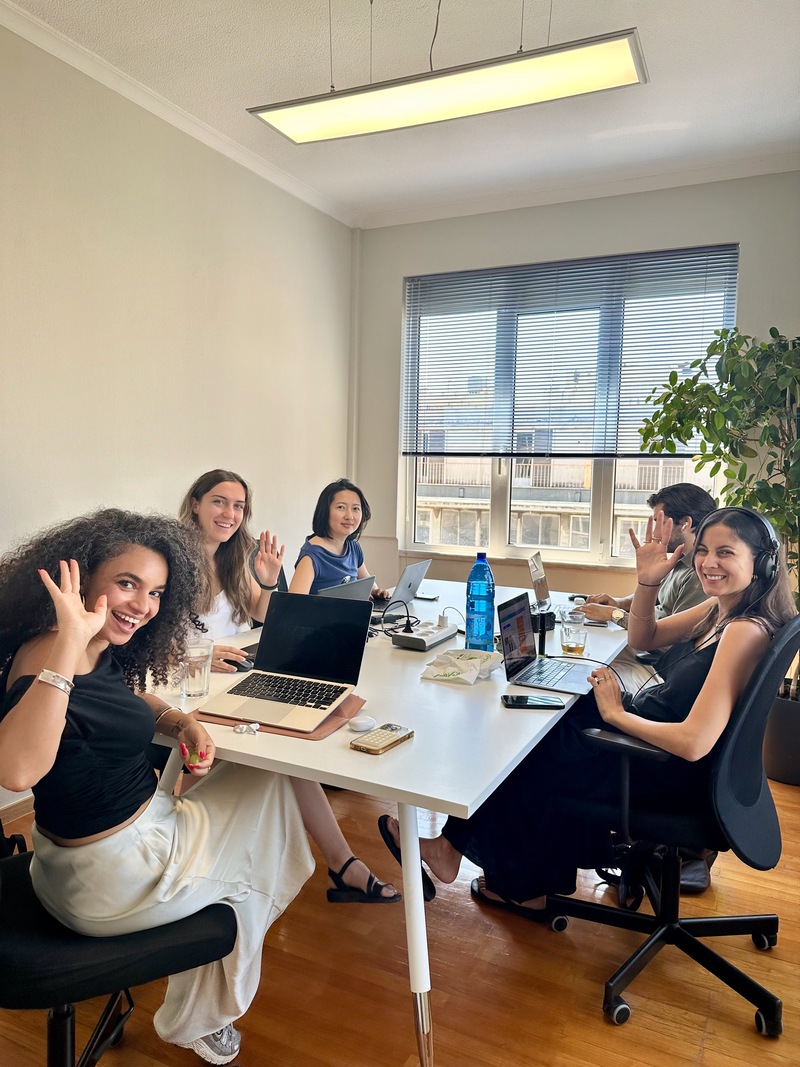
For everyone, the experience is different. It depends on their personality, what they're looking for, and how they choose to engage with the people and opportunities around them. But however different those experiences may be, I believe most people find something valuable here, whether that's new connections, fresh ideas, professional support, or simply a sense of belonging.
For me what stands out most about Stone Soup is that I feel enabled here. If I need help with something, there is usually someone around who can help, share knowledge, or point me in the right direction. Just as importantly, I enjoy the conversations and the feeling of being connected to other people.
I think the people who get the most out of coworking are those who are open to engaging with others. And if they're not, we try to help them open up in subtle ways, without putting any pressure on them. That's one of the reasons we have a Community Manager. Their role isn't simply to manage the office or act as a receptionist; it's to help people connect and support the community every day.
The neighborhood is also a big part of the experience. When we started, Exarchia was a very different place. Molotov cocktails were part of everyday life, and people were often hesitant when we told them where we were based. Since then, the area has changed significantly. There has been a lot of development, but at the same time, it has kept much of its independent character.
What I love today is the number of small creative businesses around us. There are independent studios, concept stores, craftspeople, jewelry makers, designers, and artists. Almost every shop has its own story and its own person behind it. That's something you don't find everywhere anymore.
We actively try to support and promote these local businesses because they are part of what makes the neighborhood special. So a perfect day at Stone Soup isn't just about working. It's also about stepping outside, exploring the area, discovering local makers, grabbing lunch nearby, and feeling connected not only to the community inside the space but also to the creative energy of Exarchia itself.
Stone Soup has always evolved alongside its community. As you look to the future, how do you see Stone Soup continuing to evolve, and what guides your decisions along the way?
It is true that our approach has always been to observe and respond. Of course, we try to be proactive where we can, but I'm not a big believer in long-term master plans. Life has taught me over the last ten years that no matter how much you plan, things rarely happen exactly as expected.
What has worked for us is staying alert, paying attention, talking to people, and understanding what they need. That's really how Stone Soup was built. By listening to members, understanding how they work, and adapting the space accordingly.
We never had an architect come in and design everything from the start and tell people where they should sit, work, or meet. The community shaped the space. People showed us where they wanted meeting rooms, where they felt productive, where they liked to gather, and where they felt comfortable. In many ways, Stone Soup evolved by observing how people naturally used it.
I like spaces that feel lived in. Spaces where you can sense that people have spent time there, worked there, and left part of themselves behind. Over the years, members have left books, paintings, furniture, ideas, and little details throughout the space. None of it was planned. It happened naturally, and that's what gives the place its character.
So if there's a next ingredient for the Stone Soup pot, it's probably more of the same: continuing to listen, adapt, and create a space that feels alive. We'd love to bring even more greenery, more warmth, and more personality into the space, while staying true to the community that has shaped it from the beginning.
If this conversation resonated with you, the best thing to do is simply reach out through Stone Soup’s website, email, or social media.
Even better, book a tour and come spend a few hours to experience the space, meet the community, and see whether Stone Soup feels like home.
LIFE & CULTURE