
SERVICES

XpatAthens
Athena’s Journey: A Heroine’s Experience for Women


What To Expect
Community - Connection with like-minded women in an intimate, supportive group.
Relaxation - A premium retreat with relaxing wellness moments and renewed energy.
Mindfulness - Gain clarity, experience rituals, and follow your own heart.
Enjoyment - Shared laughter, sharing joy of life, and discovering creative vitality.
-
5 Intensive Seminar Days - Structured sessions for reflection and exchange.
-
1:1 Heroine Coaching with Michaela Suchy – Individual, personal, effective.
-
Professional Photoshoot - Making visible what moves within.
-
Beauty Styling - Supportive, appreciative, type-appropriate.
-
KKM Workshop - Clarity about your inner strengths and their interplay.
Read about this retreat’s full offerings here.
Retreat Info
When: New 2026 dates to be announced soon!
Where: Athens
Organizer's Website: Athena’s Journey by Michaela Suchy
> Click here to reserve your spot
To request more information email:
info@michaelasuchy.de
Literature in Dialogue: The 1st Athens International Literature Festival
Identity, gendered violence, the relationship between politics and writing, the future of reading. From 27 to 29 March, AILF at Technopolis City of Athens will present a diverse program of discussions between some of the greatest Greek and international writers, journalists, and critics on the most urgent topics in the world of literature today.
The 1st Athens International Literature Festival (AILF) is happy to present its core program, an exciting lineup packed with conversations focusing on literature and its relation to major issues of our times. The first edition of AILF will take place at Technopolis City of Athens from 27 to 29 March 2026 with free entry. For three days, Athens will welcome leading writers, journalists, activists, academics, artists and curious readers from Greece and abroad, all coming together in a creative hub of dialogue and inspiration.
The discussions will focus on literature as a fertile field for creativity, artistic exploration, deep reflection and social intervention, touching on issues such as identity, gender, violence, inequality, the relationship between politics and literature, and the future of reading. By bringing together different voices and experiences, AILF aims to encourage a meaningful and nuanced conversation between writers and readers, establishing a new, dynamic institution in the city’s cultural life and elevating the festival to a modern celebration of literature where stories, ideas and people are in constant dialogue.
As the Mayor of Athens, Haris Doukas, states: “The Athens International Literature Festival pulls together distinct and disparate voices, experiences and concerns to highlight literature as a powerful tool for empathy and social transformation. For three days, great writers, journalists, activists, academics, artists and active readers from Greece and abroad will meet at Technopolis City of Athens. We are proud to bring you a rich schedule packed with conversations and events covering a variety of urgent topics, from the state of contemporary fiction and the relationship between politics and literature, to gender, violence and social inequality, the future of reading and the dialogue between cinema and literature, all available to you for free, along with masterclasses and open discussions with writers and artists. Let’s get literature off the shelf and into society.”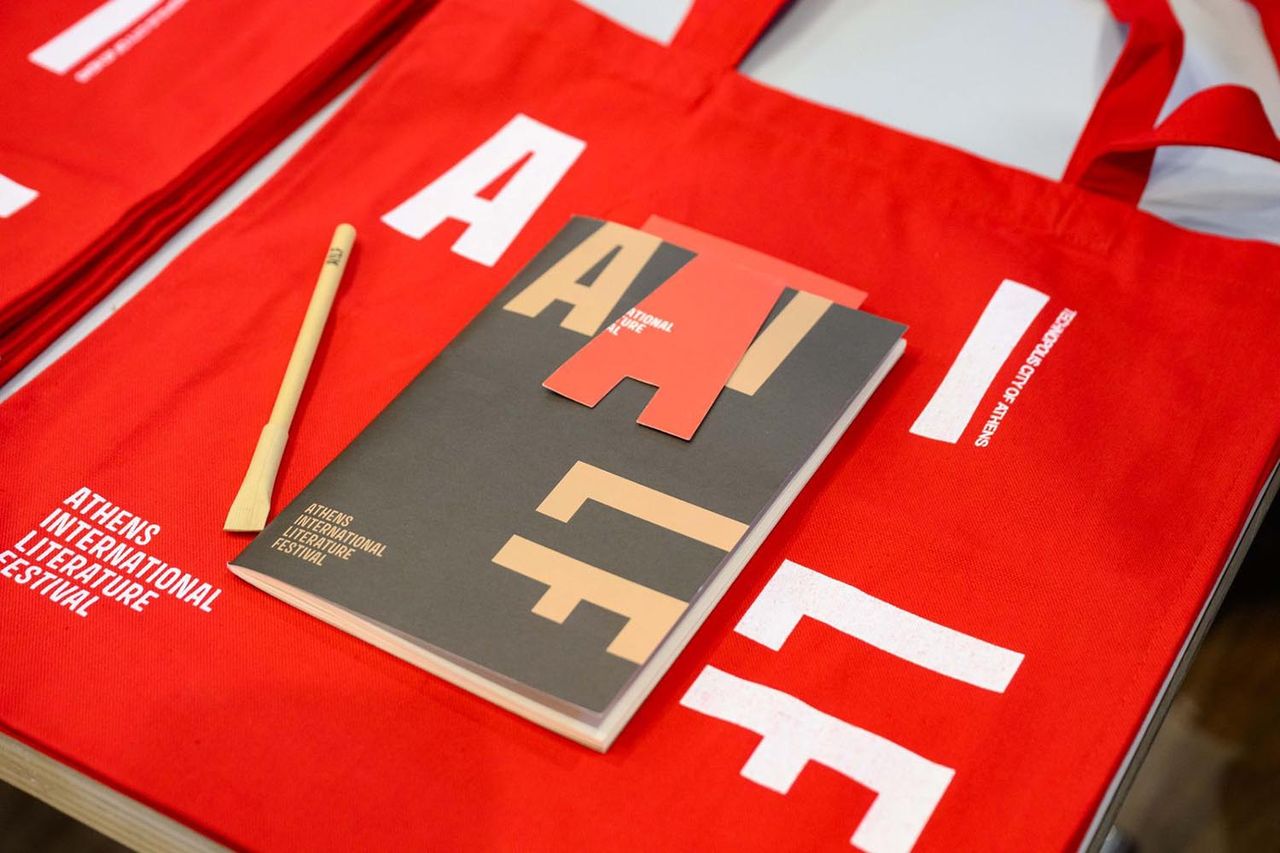
Centering Writers & Their Work
The core program of the festival revolves around conversations that illuminate the entire body of work of prominent international writers and the themes that permeate their writing. 2025 Nobel Prize winner László Krasznahorkai will meet The New Yorker critic Merve Emre for an intimate conversation about violence, decay, political anxiety and the power of his writing to awaken consciences, posing questions about literature as an act of resistance and vigilance in a crisis-stricken world. 2025 Booker Prize winner David Szalay talks with writer Sofia Nikolaidou about the relationship between writing and gender, drawing on his novel Flesh and the entire span of his work to discuss issues of identity, power and social experience. 2023 Booker Prize winner Paul Lynch meets writer Nikos Mandis to talk about the creative process, literature’s “Irish boom”, contemporary fiction and the challenges ahead in an age of Artificial Intelligence and global upheaval. Irish writer Kevin Barry is joined by writer and translator Christos Asteriou for a conversation about his unconventional heroes and his stylistic and narrative choices, focusing on his books Night Boat to Tangier and The Heart in Winter.
One of the most prominent American writers today, Nicole Krauss, will be in conversation with writer and translator Lefteris Kalospyros to analyze her complex narrative mechanisms, her approach to the issue of identity, and the diverse influences that shape her work. Starting off from a conversation about his book Le lacrime degli eroi [Tears of the heroes], Italian writer Matteo Nucci will be joined by writer and archaeology professor Dimitris Plantzos to talk about the modern uses of the “classical” and how antiquity is mobilized today as a cultural and political tool.
German writer Katharina Volckmer will meet poet, publisher and translator Danai Sioziou to talk about her provocative body of work and writing as a space ripe for risk and exposure. Argentinian writer Selva Almada is joined by journalist Tina Mandilara in a conversation about the relationship between writing and community, memory, gendered violence and social despair, exploring how the local and the specific can be transformed into a global literary experience. Lilian Thuram, former football player and now leading activist against racism, will have a discussion with Demis Nikolaidis and Lauretta Macauley, moderated by Panagiotis Menegos, about his recent book White Thinking: Behind the mask of racial identity and racial stereotypes on and off the field.
Literature, Politics & Contemporary Challenges
Discussions on racism and social inequality become a springboard for the festival to broaden its scope and examine the political and ideological context that allows such phenomena to emerge and proliferate: the rise of authoritarianism and the far-right in today’s Europe. In the festival’s main panel discussion titled Is hope a mistake? Literature and politics in Dark Europe, Nobel prize winner László Krasznahorkai, German intellectual and war correspondent Caroline Emcke, historian and writer Kostis Karpozilos, and the President of Technopolis City of Athens, educator and director of anti-far right collective “Simeio”, Kostis Papaioannou, will examine how barbarism and hate become normalized, how the standards of acceptability in public speech have shifted, and the limits of literature and political thought at a time of uncertainty. 
Gendered Identities, Violence & Modern Writing
Another thematic axis of the festival is the dialogue between gender and literature. In a panel titled Don’t call it murder. It’s femicide, moderated by Anastasia Grigoriadou, writers Selva Almada, Katharina Volckmer and Vicky Tselepidou will use their own books as a starting point to talk about how language obscures gendered violence, how this violence is depicted in literature, and what it means for a writer to create in a deeply patriarchal society. The issue of gender is approached from a different angle in the discussion “Male”, “female” and the concept of the literary character, which will bring together Nicole Krauss, David Szalay and Greek writer Kostas Kaltsas. The panel will use Szalay’s Booker Prize winning Flesh and the diverse array of narrators in Krauss’ work as reference points to talk about how male and female voices are constituted in modern literature, how masculinity and vulnerability are depicted, and what the concept of the literary character means today.
The Current State Of Literature
The festival will attempt to view the present and future of literature through a fresh lens. For the panel The past is in the past: a discussion on the present and the future of literature, influential literary critics Merve Emre (The New Yorker) and Thomas Meaney (editor of literary magazine Granta) are joined by journalist Athos Dimoulas (K magazine) to talk about the role of literature at a time when attention deficits and digital traps are setting new challenges for reading, upending the traditional relationship between books and readers.
This is also a time when the written word is called to constantly compete against the image. In the panel 1000 images, 1000 words, writers for the page and the screen, Nikos Panagiotopoulos, Kallia Papadaki, and Panagiotis Evangelidis, get together with director and screenwriter Yannis Economides to explore where the heart of storytelling beats today. Is the written word still the main tool for artists trying to understand the world or has it been relegated to a source of inspiration for film and TV writers?
Book clubs and reading groups have come to represent a large, dedicated and commercially consolidated community of readers, highlighting the power of active, collective reading. Book club pioneer Vivi Georgantopoulou will be leading the discussion The present and future of book clubs and collective reading with representatives from the most active Greek book clubs, moderated by Mikela Chartoulari.
Athens, A City For Writers
The festival would not be complete without some connection to the city that hosts it. The special section Athens, a city for writers will hopefully become a yearly staple for the Athens International Literature Festival, illuminating the ways in which the city shapes and inspires writers and their characters. For this first edition, the section will be dedicated to one of the most distinct postwar voices in Greek literature and a formidable chronicler of Athens, Menis Koumandareas (1931-2014). For Koumandareas, Athens is more than a mere backdrop, but a living organism that molds and traps his characters. The event “Time is just a toy. And Athens is everywhere”: Menis Koumandareas and the city will bring together writers Theodoros Grigoriadis, Eliana Hourmouziadou, Christos Chrysopoulos and Maria Fakinou to reintroduce the audience to Koumandareas, shedding light on the unfulfilled desires of his characters and the atmosphere of the city that permeates his entire body of work. 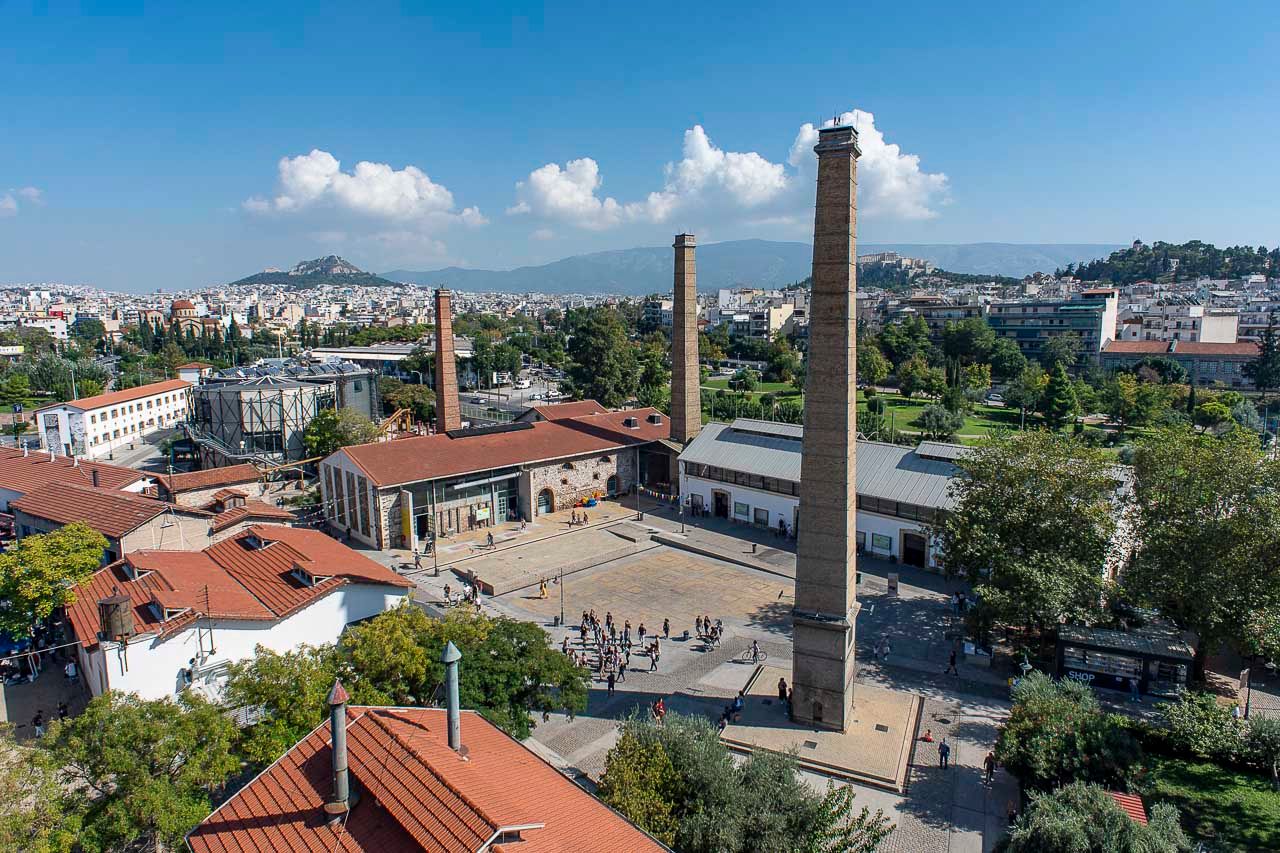
Masterclasses: In conversation With Contemporary International Literature
Booker Prize winner Paul Lynch and celebrated American novelist Nicole Krauss will be leading two masterclasses as part of the 1st AILF. Participants will have the opportunity to get an inside view of the creative process, explore how narratives are born, and discover the role of language in shaping memory and experience. The masterclasses are designed for readers, writers and literature lovers alike and will be available to a limited number of participants on a first-come, first-served basis. More information on booking and participation fees on ailf.gr.
The AILF Experience
All panel discussions will be hosted at two of the most iconic Technopolis venues, the Gasholder 1 – Auditorium “Miltiadis Evert” and the Purifier Hall. Entrance will be free with entry passes and more information on the booking process will be available soon. For those not able to secure a seat, all discussions will be shown on screens around the venue with live translation in Greek, English and Greek sign language.
Beyond the panels, AILF will focus on the direct interaction between the creators and the audience. After every discussion, visitors will be able to meet the participating writers for book signings, which will take place in the specially modified Old Retorts venue. Greek editions of the writers’ books and festival merchandise will be available to buy both at the Technopolis shop and the festival book café, which will take over the INNOVATHENS space.
But the festival does not end here. A rich slate of workshops, screenings, tours, concerts and other side events will be announced soon. For three days in the heart of Athens, AILF will create a welcoming and inspiring space where writers, readers and visitors can meet, not just to talk about books, but to share experiences, debate ideas and exchange stories. Our goal is for AILF to become a landmark event in the city’s cultural life and a celebration of literature open to all.
Friday, March 27, 202618:00 A wind that lays waste | Selva Almada, Tina Mandilara | Purifier Hall
19:45 Longing - anguish - melancholy: the emotional spectrum of resistance | László Krasznahorkai, Merve Emre | Gasholder 1 – Auditorium “Miltiadis Evert”
Saturday, March 28, 202612:00 The present and future of book clubs and collective reading | Moderator: Mikela Chartoulari | Gasholder 1 – Auditorium “Miltiadis Evert”
13:00 Contemporary uses and misuses of the “classical” | Matteo Nucci, Dimitris Plantzos | Purifier Hal
14:30 “Time is just a toy. And Athens is everywhere”: Menis Koumandareas and the city | Theodoros Grigoriadis, Eliana Hourmouziadou, Christos Chryssopoulos, Maria Fakinou, Alexandra Tranta | Gasholder 1 – Auditorium “Miltiadis Evert”
15:00 An Andalusian dog in Montana | Kevin Barry, Christos Asteriou | Purifier Hall
16:30 The past is in the past: a discussion on the present and the future of literature | Merve Emre, Thomas Meaney, Athos Dimoulas | Gasholder 1 – Auditorium “Miltiadis Evert”
17:00 Don’t call it murder. It’s femicide | Selva Almada, Katharina Volckmer, Vicky Tselepidou. Moderator: Anastasia Grigoriadou | Purifier Hall
18:30 Is hope a mistake? Literature and politics in Dark Europe | László Krasznahorkai, Caroline Emcke, Kostis Karpozilos, Kostis Papaioannou | Gasholder 1 – Auditorium “Miltiadis Evert”
19:00 “Male”, “female” and the concept of the literary character | Nicole Krauss, David Szalay, Kostas Kaltsas | Purifier Hall
14:00 1000 images, 1000 words | Nikos Panagiotopoulos, Kallia Papadaki, Panagiotis Evangelidis, Yannis Economides | Gasholder 1 – Auditorium “Miltiadis Evert”
14:30 Telling the stories we leave untold: a how-to guide | Katharina Volckmer, Danai Sioziou | Purifier Hall
16:00 Literature in turbulent times: the writer as creator and preserver of memory | Paul Lynch, Nikos Mandis | Gasholder 1 – Auditorium “Miltiadis Evert”
16:30 Man, Woman, Other: Does writing have a gender? | David Szalay, Sofia Nikolaidou | Purifier Hall
18:30 Navigating collapse: how to find our way through a forest dark | Nicole Krauss, Lefteris Kalospyros | Purifier Hall
19:00 Deconstructing “white thinking” on its own turf | Lilian Thuram, Demis Nikolaidis, Lauretta Macauley. Moderator: Panagiotis Menegos | Gasholder 1 – Auditorium “Miltiadis Evert”
Book Signings
Friday 27.03.2026 | Old Retorts
19:45 - 20:30 Selva Almada
21:15 - 22:00 László Krasznahorkai
Saturday 28.03.2026 | Old Retorts
14:45 - 15:30 Matteo Nucci, Dimitris Plantzos
16:15 - 16:45 Theodoros Grigoriadis, Eliana Hourmouziadou, Christos Chryssopoulos, Maria Fakinou
16:45 - 17:30 Kevin Barry
18:45 - 19:30 Selva Almada, Katharina Volckmer, Vicky Tselepidou
20:15 - 21:00 Caroline Emcke, Kostis Karpozilos, Kostis Papaioannou
20:45 - 21:30 Nicole Krauss, David Szalay, Kostas Kaltsas
Sunday 29.03.2026 | Old Retorts
15:45 - 16:30 Nikos Panagiotopoulos, Kallia Papadaki, Panagiotis Evangelidis
16:15 - 17:00 Katharina Volckmer, Danai Sioziou
17:45 - 18:30 Paul Lynch, Nikos Mandis
18:15 - 19:00 David Szalay, Sofia Nikolaidou
20:15 - 21:00 Nicole Krauss
20:45 - 21:30 Lilian Thuram
Festival participants: Selva Almada, Kevin Barry, Caroline Emcke, Merve Emre, Nicole Krauss, László Krasznahorkai, Paul Lynch, Thomas Meaney, Matteo Nucci, David Szalay, Lilian Thuram, Katharina Volckmer and Christos Asteriou, Mikela Chartoulari, Vivi Georgantopoulou, Theodoros Grigoriadis, Anastasia Grigoriadou, Athos Dimoulas, Panagiotis Evangelidis, Kostas Kaltsas, Kostis Karpozilos, Lauretta Macauley, Tina Mandilara, Nikos Mandis, Panagiots Menegos, Nikos Bakounakis, Lefteris Kalospyros, Demis Nikolaidis, Sofia Nikolaidou, Yannis Economides, Nikos Panagiotopoulos, Kallia Papadaki, Kostis Papaioannou, Dimitris Plantzos, Danai Sioziou, Alexandra Tranta, Vicky Tselepidou, Maria Fakinou, Eliana Hourmouziadou, Christos Chryssopoulos.
Artistic directors: Christos Asteriou, Lefteris Kalospyros, Mikela Chartoulari
Organized by: Technopolis City of Athens
The 1st Athens International Literature Festival is brought to you by COSMOTE TELEKOM (Technopolis City of Athens Major Sponsor), Athenaeum Eridanus Luxury Hotel (Official Hospitality Sponsor), Welcome Pickups (Official transport sponsor) and is supported by the Embassy of Ireland, the Goethe Institute of Athens (Goethe-Institut Athen), the French Institute of Greece (Institut français de Grèce), and the Italian Cultural Institute in Athens (Istituto Italiano di Cultura in Atene).
“A Closer Look II” Photography Exhibition At FokiaNou Art Space
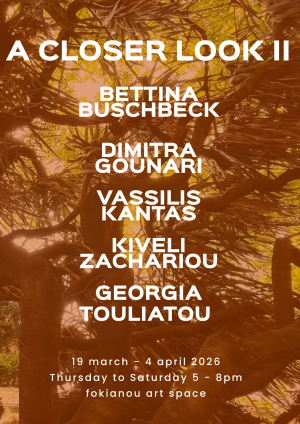
Duration: March 19 – April 4, 2026
Opening: Thursday, March 19, 18:00 Hours: Thursday – Saturday, 17:00–20:00



Athens English Comedy Club x Kostyantyn

The Athens English Comedy Club is thrilled to present Kostyantyn and his solo show ‘VICTIM OF LOVE’!
Opening act: Zuzana Ambrozová
🏠 Host: Athina Kefalopoulos
“Wow… I’ve made all those mistakes too.”
🎭 Enjoy stories about:
- Dates that ended too fast
- Situationships that lasted way too long
- Red flags he absolutely ignored
- Breakups that felt cinematic (but only to him)
- Ghosting, love-bombing, mixed signals, emotional damage
- And the exact moment a grown man says:
It’s sharp. It’s self-destructive. It’s painfully relatable. And yes - he probably does need therapy.
🎯 This is for YOU if you’ve ever been:
- ghosted
- dumped
- breadcrumbed
- left on read
- betrayed by your own optimism
- or stuck in a relationship you absolutely should’ve ended months earlier
…this show will not fix you. But it will make you laugh about it.
Perfect for:
✔️ Comedy lovers
✔️ Singles who need catharsis
✔️ Couples who want to feel better about themselves
✔️ Anyone who keeps saying “never again” and then absolutely does it again
About Kostyantyn:
Kostyantyn is Vienna’s self-proclaimed best well-dressed comedian. Born in Donetsk and raised in Athens, he brings a slightly confused international perspective to European stages. Since starting stand-up in November 2022, he has performed over 450 shows across more than 10 countries and hosted around 100 comedy nights, making him a familiar face in the European English-language comedy scene.
His comedy mixes everyday observations with unexpected turns - often described as “life insurance meets OnlyFans”, whatever that means. 
* * * * * * * * * * * * * * * * * * * * * * * * * * * * * * * * * * * * *
Date: Sunday 15th March 2026
Time: 21:00 (Doors open 20:40)
Duration: 1h15
Tickets:
* Early-bird: €10
* General admission: €15
* At the door: €20
🗺 Map: https://maps.app.goo.gl/uV8fHDWXcJM7YJr78
The theatre is wheelchair accessible.
Recommended for audiences aged 16 and above.
* * * * * * * * * * * * * * * * * * * * * * * * * * * * * * * * * * * * * * * * * * * * *
Find Kostyantyn online:
* * * * * * * * * * * * * * * * * * * * * * * * * * * * * * * * * * * * * * * * * * * * *
XpatAthens Hikes & Walks

-
February 15th, 2026: A Scenic Hike On Mount Ymittos
-
Next Meet-Up: Early April (Exact date and location to be announced soon)
Greek Tax Residency Rules Explained

Below, we break down exactly what it means to be a non-tax resident and the steps you must take to protect your status.
What Is a Non-Tax Resident of Greece? (Greek Tax Residency Explained)
Many people believe that simply leaving Greece automatically makes them a non-tax resident of Greece. This is incorrect.
Under Greek tax residency rules, tax status is not determined by what you say; it is determined by law and formal registration with the Greek tax authorities.
If you do not officially transfer your tax residency from Greece, you may still be considered a Greek tax resident, even if you live abroad.
Greek Tax Residency: The 183-Day Rule in Greece
The starting point for determining Greek tax residency is the 183-day rule in Greece. If you spend more than 183 days in Greece within the calendar tax year (January–December), you are generally considered a Greek tax resident.
The Greek tax year runs strictly from January to December. However, the 183-day rule alone does not fully determine your tax status.
Center of Vital Interests Under Greek Tax Law
In addition to the 183-day rule, the Greek tax authorities examine your center of vital interests.
This includes:
- Where you work
- Where your family lives
- Where you rent or own property
- Where you manage your finances
- Where your economic and social life is based
Even if you spend time abroad, if your center of vital interests remains in Greece, you may still be classified as a Greek tax resident.
How to Become a Non-Tax Resident of Greece
To become officially recognized as a non-tax resident of Greece, you must:
- Prove that you live abroad for more than 183 days
- Demonstrate that your center of vital interests is outside Greece
- Submit the required documentation
- Complete the formal process of transfer tax residency from Greece
This process may require:
- Tax residency certificate from the foreign country
- Employment contract abroad
- Proof of permanent residence abroad
- Supporting documentation requested by the tax office
Becoming a non-tax resident of Greece is a formal administrative procedure — not a simple declaration.
Issuing an AFM: Why Your Initial Tax Status Matters
When someone issues a Greek Tax Identification Number (AFM) for the first time, many register as ordinary Greek tax residents for convenience.
However, if you are living abroad or uncertain about permanent relocation, it may be strategically safer to register as a non-tax resident of Greece from the beginning.
Changing from non-tax resident to Greek tax resident is generally simpler.
Changing from Greek tax resident to non-tax resident of Greece can be significantly more complex and document-heavy.
For more tips on the early stages of relocation, check out these common questions expats ask when moving to Greece.
Declaring Foreign Income In Greece
If you are registered as a Greek tax resident, you are generally required to declare worldwide income in Greece.
If you worked abroad while remaining a Greek tax resident for that tax year, you must declare foreign income in Greece.
Whether you pay tax in Greece depends on the applicable Double Taxation Agreement (DTA) Greece has signed with that country. But the obligation to declare exists.
Double Taxation Agreement Greece: What It Really Means
A Double Taxation Agreement does not automatically mean you pay no taxes.
It determines:
- Which country has taxing rights
- Whether income is taxed exclusively in one country
- Whether foreign tax credits apply
Double Taxation Agreements allocate taxation, they do not eliminate it.
Temporary Relocation & Greek Tax Residency Risks
If you move abroad temporarily and do not properly manage your Greek tax residency status, you may:
- Remain classified as a Greek tax resident
- Be required to declare foreign income in Greece
- Face administrative complications later
- Experience delays when attempting to transfer tax residency from Greece
Not Sure About Your Greek Tax Residency Status?
Our partners at TaxWise Greece specialize in helping the international community navigate the "183-day rule," center of vital interests, and the formal transfer of tax residency.
Ready to get started?
- Head over to TaxWise Greece for more expert resources.
- Schedule a confidential session with a tax professional to review your specific situation and ensure your status is structured correctly from the start.
Article 5C Greece: What You Must Know

However, many individuals misunderstand what this regime requires after approval.
Article 5C is not simply a tax discount. It is a conditional regime based on genuine Greek tax residency.
To ensure you are fully compliant and protected from future audits, TaxWise Greece breaks down exactly what you need to know to maintain your status.
- Employees relocating to Greece
- Freelancers establishing business activity in Greece
- Returning Greeks
- Foreign professionals transferring tax residency to Greece
The fundamental requirement: You must be a Greek tax resident.
For more tips on the early stages of relocation, check out these common questions expats ask when moving to Greece.
Greek Tax Residency Is The Core Requirement
- Spend at least six months in Greece
- Maintain your center of vital interests in Greece
- Demonstrate actual physical and economic presence
- Utility bills (electricity, water, phone)
- Bank statements showing spending patterns
- Rental contracts (not long-term hosting)
- Evidence of year-round presence
If income or residence abroad appears inconsistent with Greek tax residency, an audit may follow.
If residency is challenged, you may:
- Lose Article 5C status
- Pay full tax rates retroactively
- Face interest and penalties
Protect Your Status with TaxWise Greece
If you have questions about your specific situation or want to ensure your documentation will stand up to a future audit, the highly capable team at TaxWise Greece is here to help. They provide personalized, expert guidance to ensure your first-year (and every year) position is structured correctly.
Get in touch with Taxwise Greece today to secure your tax position or alternatively send an email to info@taxwisegreece.com
First Tax Return In Greece: What You Must Know

If you relocated to Greece during the year, your first tax return may be more complex than expected. To ensure your transition is handled correctly, TaxWise Greece provides professional support to help you navigate these initial filings, offering personalized guidance on all your accounting and tax needs, ensuring you are structured for success from day one.
Scenario 1: You Moved to Greece Before July
As a Greek tax resident, you must declare:
- Income earned in Greece
- Foreign income earned during the same year
Even if your Greek address appears in the system, technically you may not have worldwide income reporting obligations.
This must be handled correctly during filing.
For more tips on the early stages of relocation, check out these common questions expats ask when moving to Greece.
If You Are Under Article 5C as an Employee
In many cases, payroll withholding does not immediately reflect the exemption, which may result in a tax refund after filing.
Refunds are paid only to a declared Greek IBAN.
Revenue – Expenses = Net Profit.
Under Article 5C:
- 50% of net profit is exempt
- 50% is taxed under normal brackets
It is not sufficient to declare it at the bank or immigration office.
To file jointly, you must submit:
- Official marriage certificate with Apostille and Official translation
If this threshold is not met, additional tax may apply.
Using a Greek bank account ensures automatic reporting of transactions.
Let's Be S.M.A.R.T Easter Bazaar

 Authentic English Tea Experience Indulge in traditional cream teas with homemade finger sandwiches, freshly baked scones with clotted cream & jam, and a selection of cakes including vegan options. Served on elegant tiered stands - pure afternoon tea perfection!
 Easter Egg Hunt for Children under 10 years old. Watch the excitement as little ones search for hidden treasures! Prizes for Golden Eggs! Limited spots available - book early to secure your child's place in this magical springtime adventure. Commences at 12 noon.
  Creative Fun for Children: Visit our Craft Station, enjoy children's activities, face painting, and participate in our exciting Lucky Dip!
 Support a Wonderful Cause: Every item, tombola ticket, every tea, every raffle ticket entry supports the rescue animals at Let's be S.M.A.R.T. and the strays we support. Shop, celebrate, and make a difference!
- Families looking for Easter weekend fun
- Anyone who loves supporting animal welfare
- Tea party enthusiasts & scone lovers
- Those seeking unique handmade crafts
- Community-minded locals & expats
 Artisan Bazaar Children's Arts & Crafts Activities outside Easter Egg Hunt (12:00 PM - Pre-booking Advised!)
 Tiered Tea Parties (Pre book via email)
 Raffle Prizes
  Homemade Cakes & Vegan Options Snacks & Drinks Available All Day
 Children's Entertainment and family tickets available.
Bookings for egg hunt and teas HERE!
#expatsingreece #bazaar #greece #attica #voula #easter #xpats #easterbazaar #charityevent #easteregghunt #creamtea #teaparty #3V #catrescue #dogrescue #supportlocal #foreignersingreece #greekhandmade #newcomers
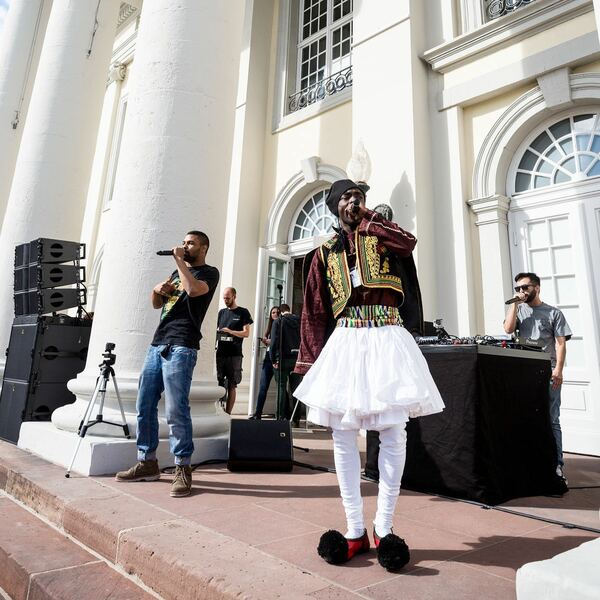
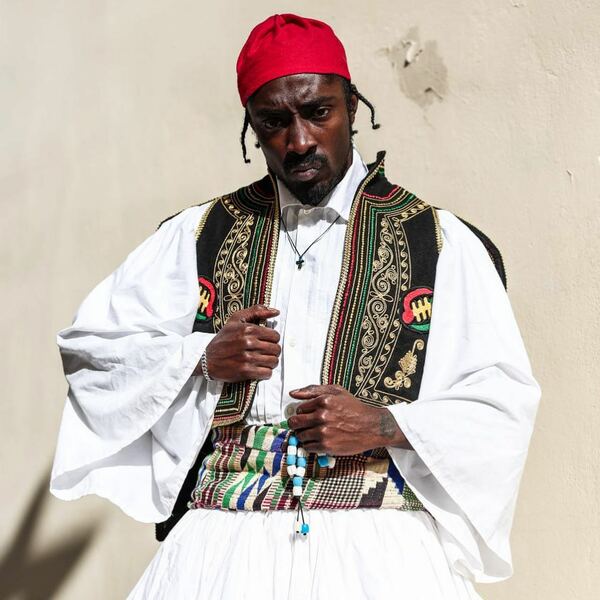
Rewriting Greekness: The Cultural Power of Negros Tou Moria

@blackmorris37
@blackmorris37