Rewriting Greekness: The Cultural Power of Negros Tou Moria
- by XpatAthens
- Tuesday, 10 March 2026

Negros Tou Moria is the sort of artist only the twenty‑first century could conjure: a vibrant crossroads of cultures, rhythms and lived experiences, at once defiantly modern and deeply rooted in tradition. His music carries the pulse of Athens and the heartbeat of Accra, stitched together with a sharp social awareness that refuses to be ignored. He is, in every sense, a child of multiple worlds, and he turns that multiplicity into art with irresistible flair.
Born in Athens to Ghanaian parents, he grew up in the then‑underprivileged neighbourhoods of Ampelokipi and Kypseli. These districts, buzzing with life and hardship in equal measure, became his first classrooms. There, he moved through a mosaic of immigrant communities (from Ghana, Congo and Sudan to Afghanistan and Albania), all converging around Plateia Amerikis, cheekily rebranded by locals as Plateia Afrikis. It was in this swirl of languages, foods, frustrations and friendships that he absorbed the contradictions of his upbringing, contradictions he would later pour into his music in Greek.
His lyrics often dance between solidarity and struggle: the warmth of immigrant networks contrasted with the cold sting of racism from the outside world. He has spoken openly about the insults and physical violence he and others endured, sometimes at the hands of far‑right youths linked to the Golden Dawn party. His life reflects a constant tension : profoundly Athenian yet pushed to the margins because of his foreign origins, fully part of Greek society yet forced to fight for legal recognition. As he wryly puts it, “If I win something big, like a Grammy Award, I’m Greek. If I go to prison, I’m Ghanaian.” It’s a paradox that shadows him still, fame or no fame.
He describes a society shaped by nationalist politics, discriminatory citizenship and immigration policies, and the long shadow of financial crisis. And yet, in a twist of irony, one might say he has become more Greek than many of his fellow citizens : his command of the language is razor‑sharp, and his affection for the city’s overlooked subcultures runs deep. In embracing the fringes, he has carved out a space that is unmistakably his own, turning the complexities of identity into a creative force that resonates far beyond the borders of Athens.
To bring his words to life, Negros Tou Moria surrounds himself with a new generation of producers and artists from a dazzling range of ethnic backgrounds. Together, they craft melodies laced with traditional Greek influences, the kind of sounds you might hear drifting from a kafeneio at dusk, and blend them with a flow that slides effortlessly between trap and R&B. Even the visuals that accompany his music radiate this multicultural spark: in interviews, he casually twirls a komboloi, that quintessentially Greek string of beads; on the cover of his latest album, he sits regally on a traditional African throne; and on stage, he sometimes appears in the full ceremonial costume of the Greek evzones, complete with fustanella and pom‑pom shoes. “I’m proud to show the world that I was born and raised here,” he says, and every aesthetic choice he makes seems to echo that sentiment.
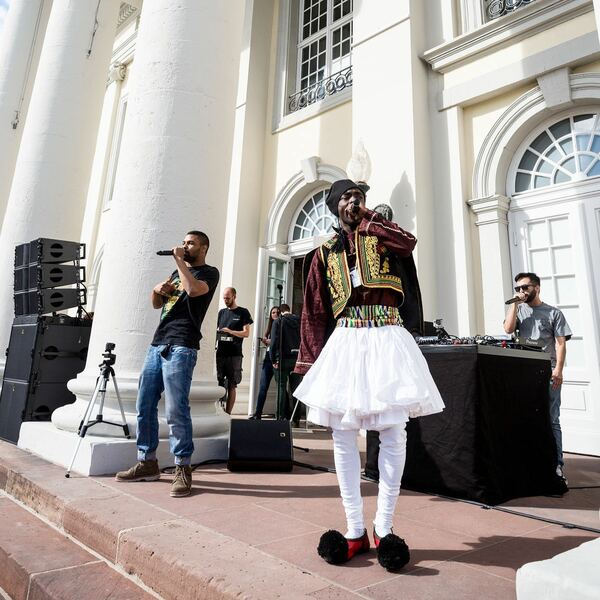
@blackmorris37
@blackmorris37
Even his name is a clever cultural knot. Negros Tou Moria is a witty twist on Geros tou Moria, the legendary general of the 1821 Greek Revolution against Ottoman rule — a figure deeply embedded in the country’s national mythology. By reworking such a classic symbol of “Greekness,” he captures the essence of his own artistic identity: playful, bold, and rooted in dual heritage. It’s a name that mirrors his music — a remix of history, humour and cultural commentary — and perfectly encapsulates the spirit of an artist who embodies twenty‑first‑century urban Athens. He speaks directly to a frustrated, restless youth with a style that’s unmistakably his: tenacious, self‑assured and brimming with personality.
Negros Tou Moria took his first tentative steps into Greek rap alongside the iconic MC TakiTsan, a partnership that helped him carve out his intuitive, unmistakable voice among the new wave of artists in his hometown. His rise was swift: in 2014, the Thessaloniki Hip Hop Festival crowned him Best New Artist of the Year, marking him as one to watch. Four years later, he released his second independent album, H.E.A.L.T.H. (How Economy And Love Tortured Humanity), a title that says everything about his blend of social critique, emotional honesty and sharp wit. With each project, he continues to expand his universe, proving that his multicultural lens isn’t just an aesthetic but a powerful creative engine.
In the end, Negros Tou Moria’s utterly distinctive style, born from his multicultural upbringing and deeply personal history, resonates far beyond his own story. For countless young immigrants and second‑generation kids carving out their place in Greece today, he has become a genuine beacon of inspiration. His mission is clear: to bring together a community that has long been pushed to the margins, using music as a bridge and tapping into a shared collective memory that binds rather than divides. There’s a sense of pride, defiance and joy in everything he creates, and it’s no wonder his audience feels seen through him.
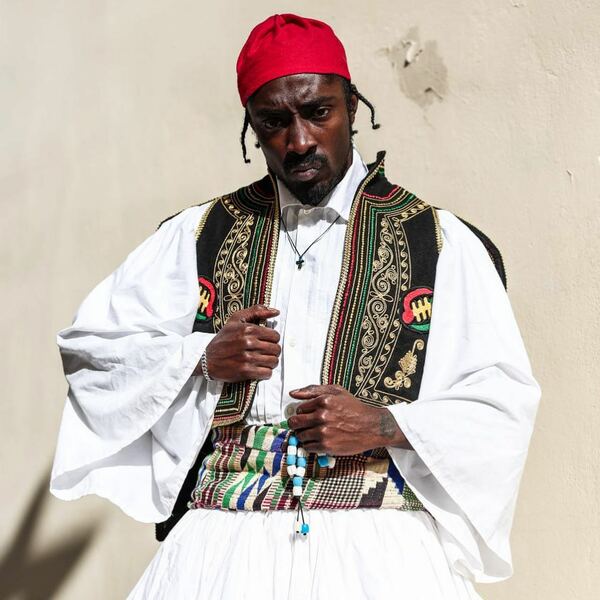
@blackmorris37
@blackmorris37
LIFE & CULTURE