
SERVICES

XpatAthens
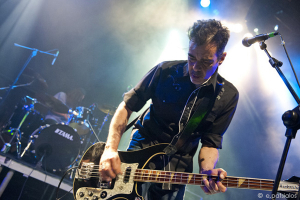
The Dream Syndicate Live in Athens
-
First, a best-of set, featuring their iconic tracks from The Days of Wine and Roses to their most recent work.
-
Then, for the first time ever live, the band will perform their seminal 1984 album “Medicine Show” in its entirety.
The Athens show features the band’s classic lineup:
-
Steve Wynn – vocals, guitar
-
Dennis Duck – drums
-
Mark Walton – bass
-
Jason Victor – guitar
-
Chris Cacavas – keyboards (Green on Red)
Between Greece & The Diaspora: The Mission Of Daughters Of Penelope Hesperus 359
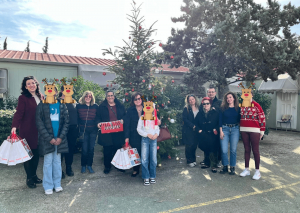
Together, Anna and Eva represent the heart of Hesperus 359, a chapter rooted in love, philanthropy, and the desire to give back. Their story is one of continuity and connection, bridging Greece and the diaspora, tradition and modern life, and reminding us that service has the power to unite cultures and generations alike.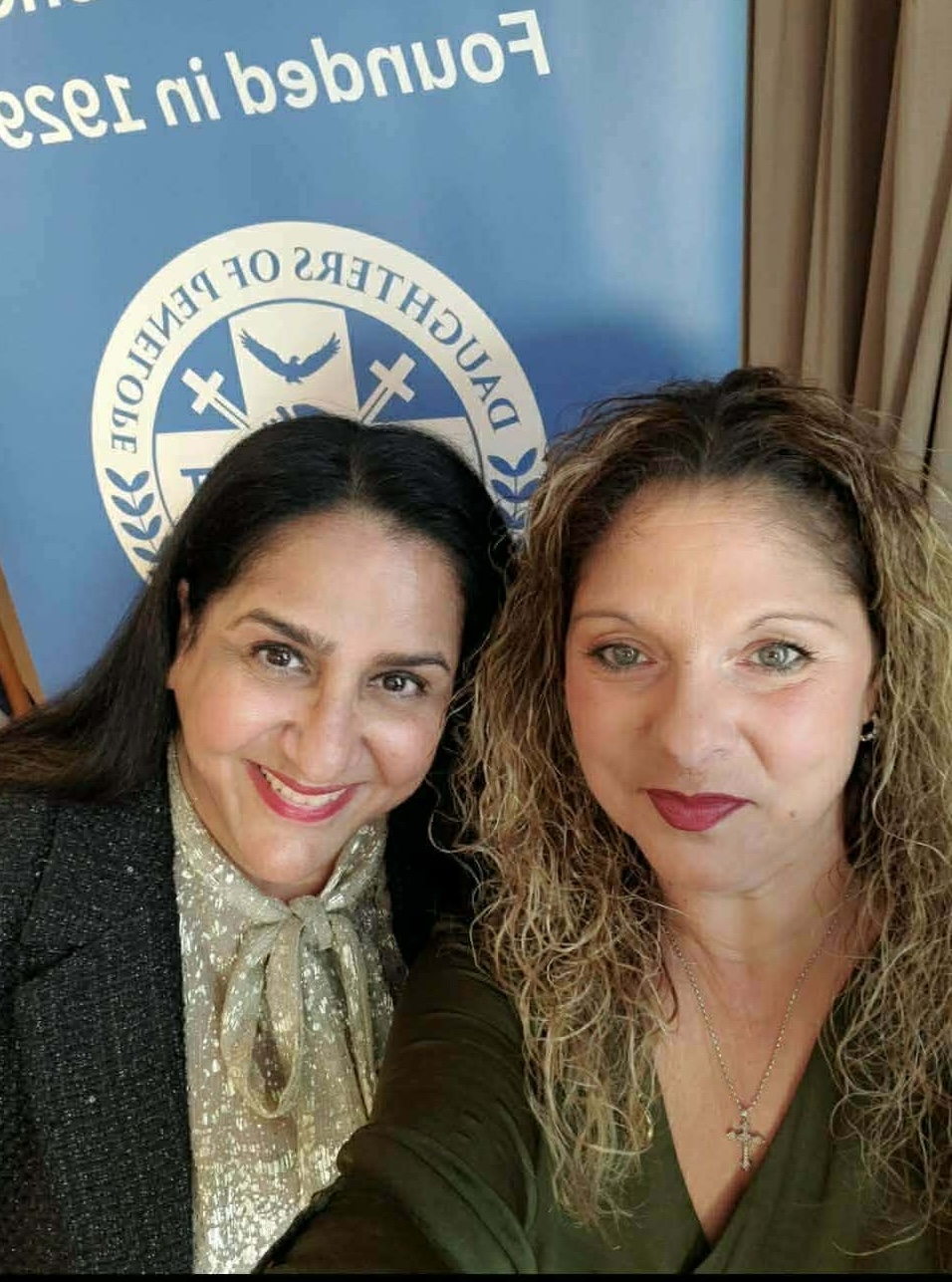
Anna & Eva
For those who may not be familiar, could you briefly explain what the Daughters of Penelope do and what Hesperus in particular does?
Anna:
The Daughters of Penelope is a fraternal philanthropic organization within the AHEPA family and is the largest women’s organization of its kind in the world. Our mission focuses on philanthropy, education, Hellenism, cultural identity, civic responsibility, and women’s empowerment. We engage in both fundraising and hands-on service, supporting children, families, educational programs, health initiatives, and vulnerable communities in Greece and across the diaspora.
Hesperus 359 is unique because we are based in Greece while maintaining strong ties with the Greek Diaspora. Our members come from diverse professional, cultural, and international backgrounds, and we collaborate closely with local institutions and organizations. We are especially proud that our chapter has been officially recognized by both the Hellenic government and the U.S. Embassy in Greece for our philanthropic and community work, an acknowledgment that validates the impact of our mission and reinforces our commitment to serve with integrity.
Eva:
Our main philanthropic activities include supporting the Unborn Child Center, scholarships, and fundraising for the Maids of Athena Fund, as well as contributions to the LAM Foundation in the U.S. We assist unwed mothers and victims of domestic violence, support Agia Sophia Children’s Hospital and Evangelismos Hospital, and provide aid to fire victims in Laconia and Ilia and flood victims in Kineta and Karditsa. We also support children with special needs, the Multiple Sclerosis Association, the Penelopio Foundation, and provide pharmaceuticals to SOS Children’s Villages.
Additionally, we annually support scholarships at the American Farm School and donate heating fuel, clothing, tablets, school supplies, and treats to the Hatzikyriakeio Foundation. We provide clothing donations to St. Varvara Church and the Center of Love in Elefsina, assist the nonprofit SYMMERIZOMAI, and support the special Youth Detention Facility of Avlona.
We also provide meals for senior citizens, including full Easter meals at St. Therapon Senior Citizens Hall and food donations to the Saint Apostol’s Senior Citizens Home in Tzitzifies and St. Spyridon Food Bank in Pagkrati. We purchase and donate books at Book Garden Bookstore in Koukaki, with proceeds supporting organizations in Athens that help abused women. Following our collaboration with Alexis Kliropoulos’ volunteer blood donation team, we also donated food to the Philoptochos of St. Nicholas Flarios in Kalamata, feeding 120 families.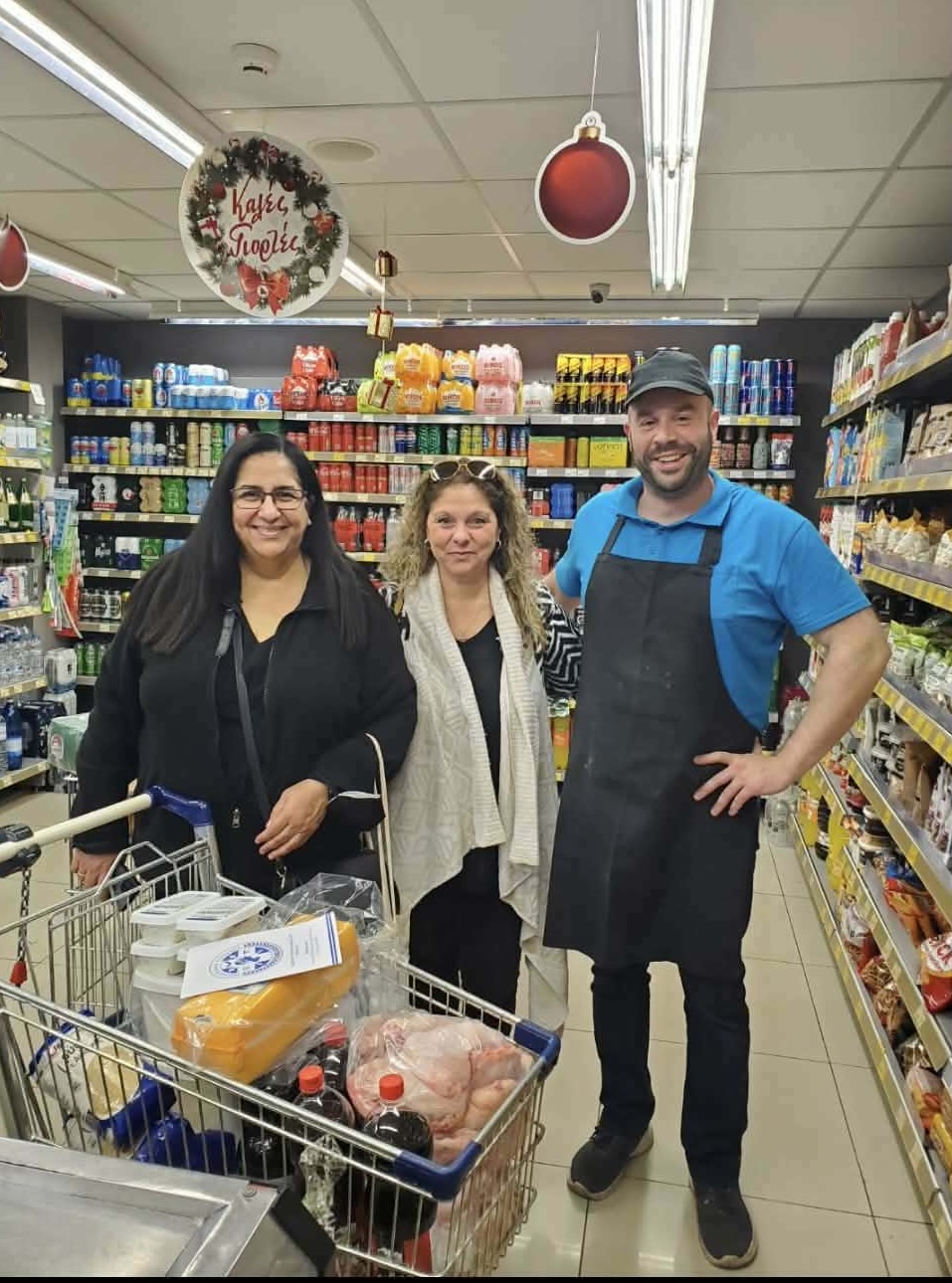
Our donations to the Seniors Homes & Food Banks
How do you choose which causes to support, and what criteria guide your choice?
Anna:
The first criterion is legality. Unfortunately, there are organizations and individuals who try to take advantage of people’s kindness. One of the strengths of our chapter —and the organization as a whole— is that we donate goods, not money. This helps ensure transparency.
If an organization refuses to accept goods, it’s usually a red flag, and we don’t continue supporting them. On the other hand, when organizations are transparent and accountable, everything runs smoothly. For instance, one year Hatzikyriakeio needed gas for heating; they sent us the bill, and we covered the expense. That’s exactly the kind of partnership we value: clear, responsible, and trustworthy.
We also stay closely involved: we visit, monitor, and ask for legal documentation and paperwork.
Eva:
All decisions are made by the board. We always hold board meetings; it’s never just two people deciding where donations go. It’s all about teamwork and careful oversight.
In what ways do you think that Hesperus embodies the ideals of the daughters of Penelope, but also addresses unique Greek needs?
Anna:
One of the key things about Hesperus is that the only official requirement is that members be women of the Christian faith who believe in God and uphold the ideals of Hellenism, education, philanthropy, family, and civic responsibility. What makes our chapter unique, though, is that it was the first Greek-American chapter, established 44 years ago by Greek-American women. This is particularly meaningful for many expats who come to Greece and they are looking for a sense of family and belonging.
When I first moved here, I struggled to adjust to Greek society. Living here is very different from visiting on vacation. In the U.S., I felt fully Greek, but here I was the “amerikanaki”. In searching for a community, I initially joined the American Women’s Organization of Greece, and I discovered that most of their members were also part of Hesperus. That’s how I found both friendship and a sense of home. Hesperus connects the Greek-American community while honoring Greek traditions, and that balance is what sets us apart.
Eva:
I had a similar experience when I moved here. As a young person, I faced challenges with a new language, culture, and daily life. While I was fortunate not to experience bullying and had many good times meeting new people, I wanted to join an organization that connected both my Greek and American roots. My parents were very involved in nonprofit work in the U.S., and that inspired me to find a community that bridged both cultures.
Anna:
Living in Greece as an expat comes with its difficulties. You can’t expect it to be the United States. You have to embrace Greek reality as it is. Many expats reach out to me, frustrated with the adjustment, and my advice is always: “If you can’t beat them, join them.” Once I embraced that mindset, my life here became much easier.
Hesperus embodies the ideals of the Daughters of Penelope by fostering philanthropy, education, Hellenism, and community, while also addressing the unique needs of Greeks abroad. For example, last year at the European Daughters of Penelope Conference in Stuttgart, we attended a celebration for the Greek Language Day. Greek schools from a 100 km radius participated with songs, dances, and cultural performances. Listening to the children there, I was reminded of growing up in the U.S. and realized the profound impact of nurturing Greek pride across generations. Hesperus plays a similar role in helping expats and locals alike feel connected to their heritage, ensuring that the spirit of Greece thrives far beyond its borders.
What’s the story behind the “Daughters of Penelope” and “Hesperus” names, and what do they symbolize for your chapter?
Eva:
Both names are deeply symbolic. The “Daughters of Penelope” refers to the mythological figure Penelope, wife of Odysseus. She embodies loyalty, patience, and devotion to home and family, waiting faithfully for Odysseus’s return These virtues, loyalty, commitment to family, and devotion to one’s roots, reflect the core principles of the Daughters of Penelope: dedication to Hellenism, family, community, and the wider world.
“Hesperus” is the ancient Greek name for the planet Venus when it appears in the evening sky. It symbolizes light shining in darkness, guidance, and beauty. In mythology, Hesperus is also the god/spirit of the west or the ‘evening,’ linked to the Hesperides, the nymphs who guarded the golden apples, symbols of harmony and virtue. Because the evening star consistently returns at sunset, Hesperus became a symbol of hope, guidance, calm, and reflection.
Our chapter was named Hesperus to convey this symbolism: a guiding light for women and the community, connecting us to Greek heritage, embodying harmony and virtue, and emphasizing in Hellenism, hope and continuity.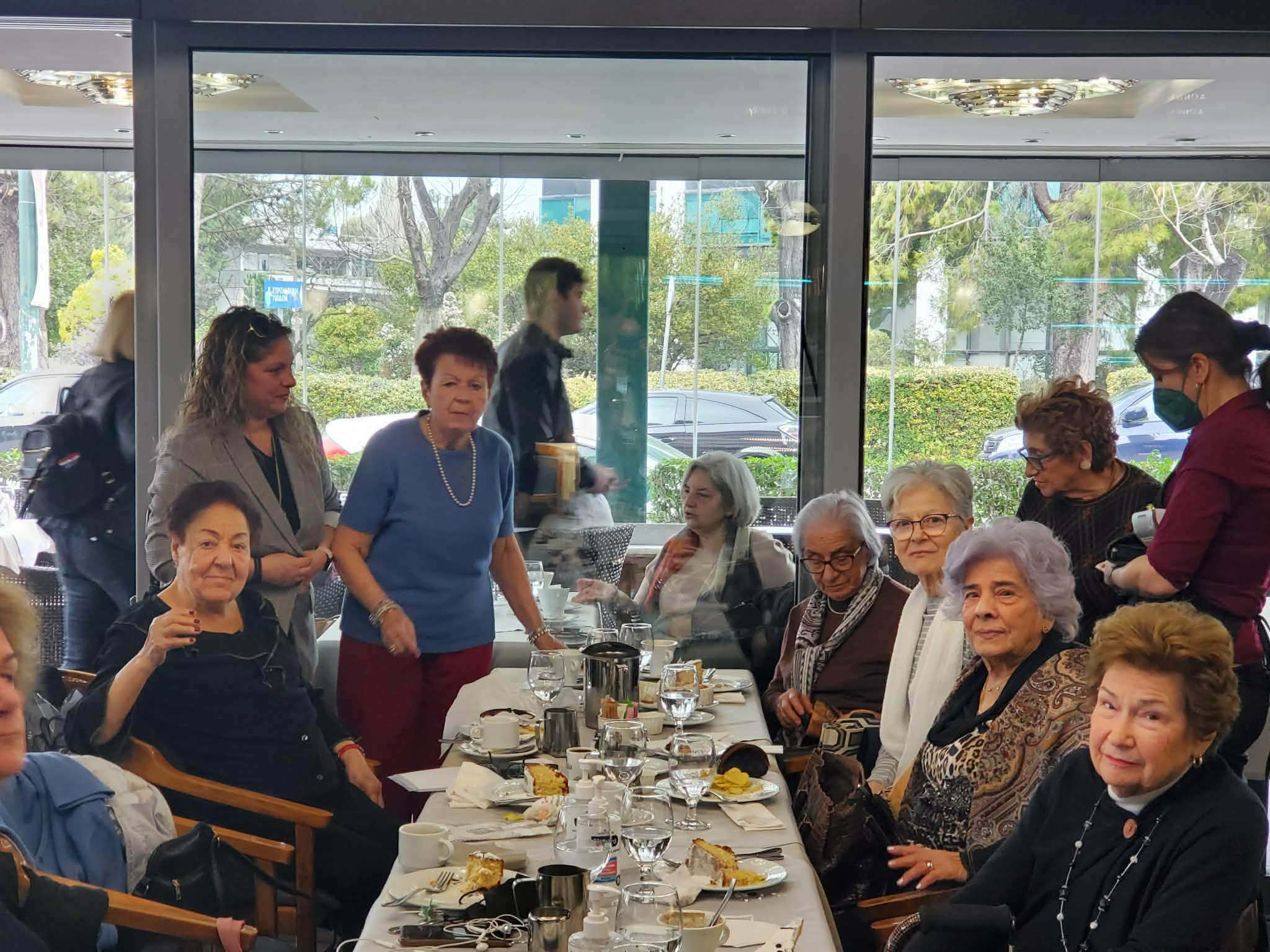
Hesperus 359’s Senior Members
What is your vision for Hesperus?
Anna:
Our vision is to expand our outreach, strengthen our collaborations with trusted institutions, engage younger women and professionals, and develop sustainable programs that will continue benefiting the community long after my presidency ends. That’s key: organizations can’t thrive without new energy and fresh ideas. We need young blood to carry the mission forward, and that’s exactly what we’re focused on: attracting young professional women who share our vision and can take the organization into the future.
We were thrilled at our last Thanksgiving event to see so many young participants. Other chapters also brought their younger members, and it was inspiring.
Eva:
Absolutely, young people are our future.
Can you share a moment or story when you directly saw the impact your contributions had?
Anna:
There have been many touching moments, but this one is etched in my heart. During a visit to a foundation we support, a little girl — no more than seven years old — came up to me and pointed to the bags we were carrying. She quietly asked what was inside. I told her they were clothes. She paused, looked up at me, and then asked, almost in a whisper, “Are they new?” When I said yes, she didn’t say another word — she simply hugged me tightly and held on. That hug said everything. In that moment, I realized how something we may take for granted can mean the world to a child, and why this work truly matters.
Another memory is from before COVID. I would visit a Senior’s home regularly, spending a couple of hours a month helping out, keeping company, making coffee, playing cards, and singing with the elderly residents. One elderly man in particular loved having me there to play cards with him. On one visit, he mentioned that he missed trachana, so I got in touch with my aunt in the village who sent some, and we organized a little “trachana party” with the residents. Seeing their joy in these simple moments was incredibly rewarding.
Another story I’ll never forget comes from our former president, who was also my mentor. She shared how the chapter had supported a woman during her pregnancy, providing clothes, guidance, and care. That woman was able to get off the streets, finish high school, and eventually become a professional. Hearing that story and seeing the long-term impact of our support was profoundly moving.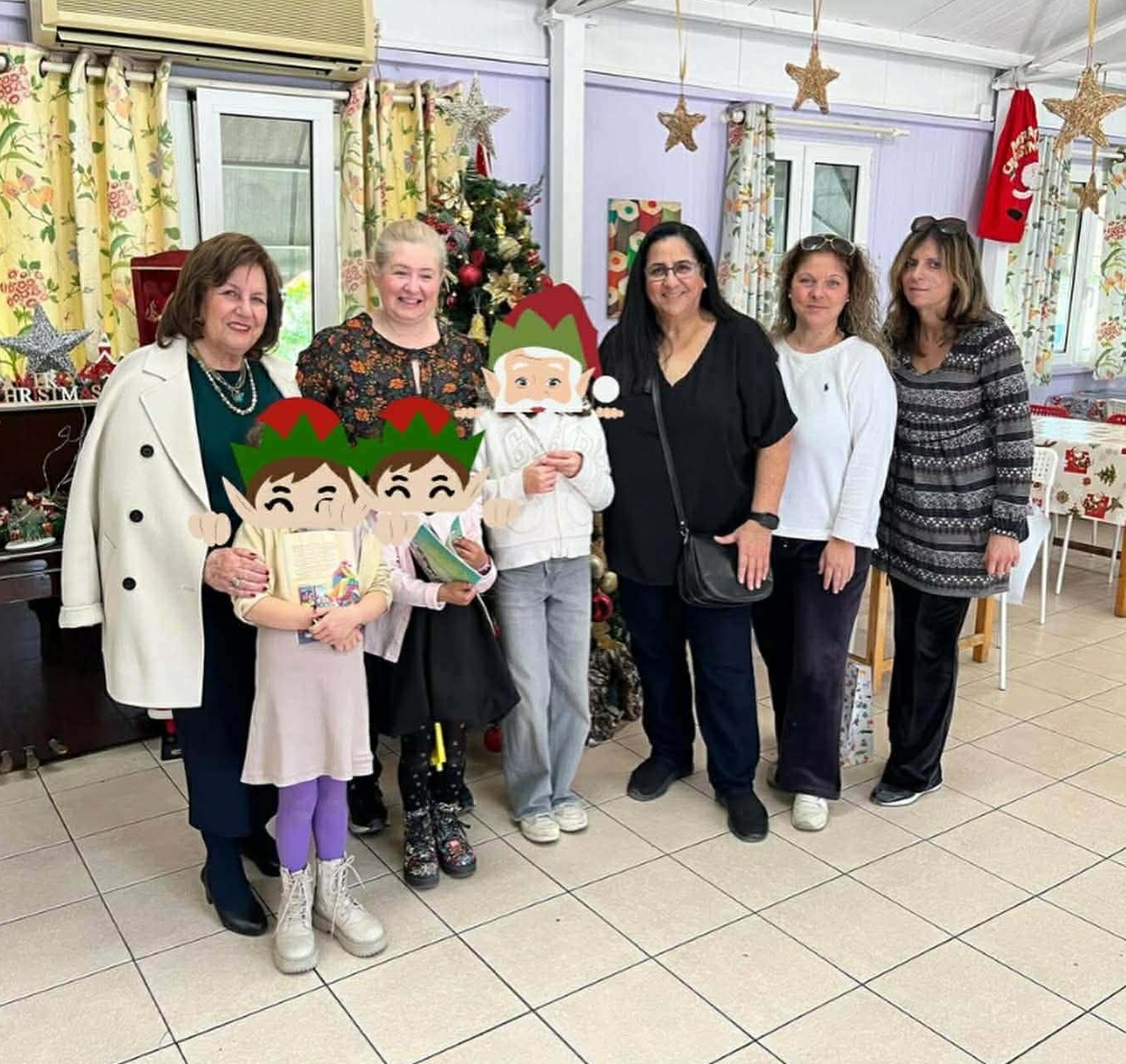
How can someone get involved, and what do you think inspires women to join your chapter today?
Eva:
Women who join Hesperus have the opportunity to meet new people and get involved in the community. It’s a chance to connect with others beyond their usual circles and activities.
Anna:
Exactly. At its core, we are a community, a family. If someone is looking for friendship, support, and a sense of belonging, they will find it here. Anyone can attend our events, volunteer with us, or explore membership in the chapter. Being involved in our activities is one of the most meaningful ways to feel connected and truly at home in a new country.
Looking toward the future, what are the chapter’s most important goals for the next few years?
Anna:
Our top priority is bringing in younger members, the “new blood.” That’s essential for the chapter’s continuity. For example, over the past few years, I’ve had to travel back and forth due to my mother’s health issues. When I’m away, the chapter struggles to coordinate activities, and while Eva does an excellent job, she can’t do it alone. We need passionate, committed members who are ready to step in and carry the work forward. An organization like ours can’t simply pause: it’s vital to ensure that our mission continues no matter what challenges arise.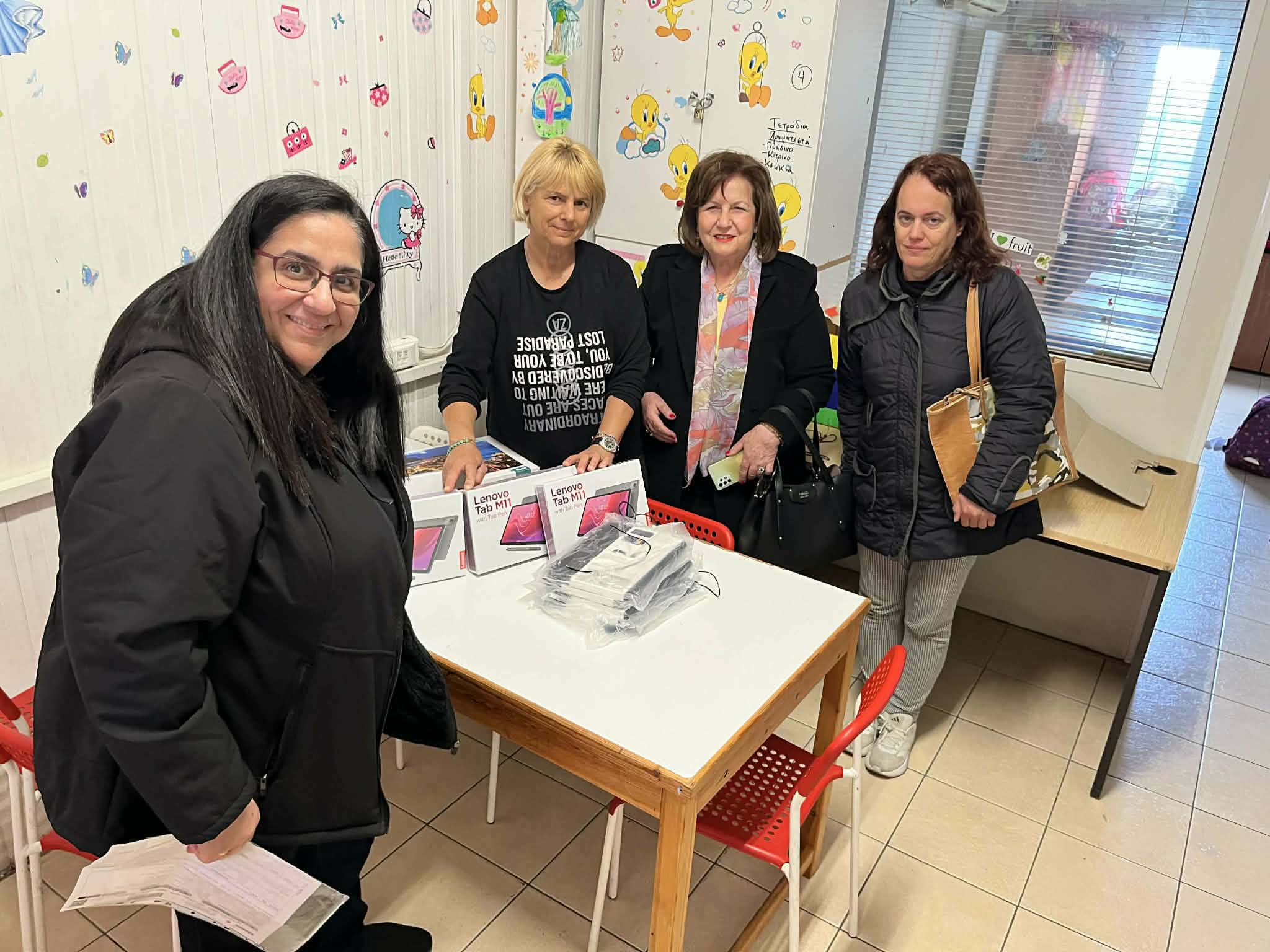
At the Chatzikiriakio donation of clothing and tablets in 2025
What do you want the legacy of Hesperus to be in Greece?
Eva:
That everything we do comes from the heart.
Anna:
Exactly. Without asking for anything in return. We don’t go chasing money or donations, we give everything from the heart. That’s our legacy.
And if you could send a message to the original members from 1981, what would you tell them about how far their vision has come?
Eva:
A big thank you and a promise that we will do our very best to make you proud. It is truly an honor to serve an organization whose founding members were strong, visionary women, driven solely by their love and care for their fellow human beings. Your vision not only endured, it continues to inspire us every single day.
Anna’s Final Message:
At the heart of everything we do is one simple belief: service unites people beyond borders, cultures, and backgrounds. Through the Daughters of Penelope Hesperus 359, and as part of the greater AHEPA family, we are honored to serve Greece with love, respect, and purpose.
I am deeply grateful to work alongside dedicated women who lead with integrity, compassion, and strength. To everyone reading this, I encourage you to get involved in your community in any way you can. When we give with our hearts, we don’t just change lives, we also change ourselves. Together, we are building bridges of service, hope, and unity, one act of kindness at a time.
This conversation was deeply inspiring and eye-opening, offering a meaningful glimpse into the impactful work Anna, Eva, and the members of Hesperus 359 carry out with such dedication and heart. Their commitment to service, community, and cultural connection is a powerful reminder that giving back doesn’t always begin with donations.
We invite everyone to consider getting involved through volunteering, offering time, skills, or simply compassion. The work of Hesperus proves that meaningful change is built through human connection, consistency, and care. We are grateful for the opportunity to share their story and to shine a light on the remarkable difference they make!
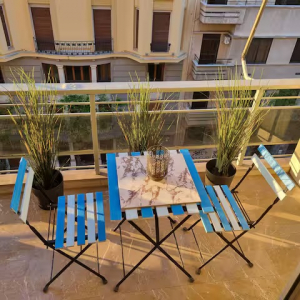
Apartment In Central Athens Next to National Archaeological Museum
- Floor: 4th floor
- Adress: Marni 8
- Size: 51 m²
- Bedroom: Featuring a comfortable double bed and a wardrobe
- Entrance: Spacious hallway / foyer
- Bathroom: Newly renovated with shower and WC
- Living Area: Bright open-plan kitchen and living room
- Kitchen: Fully equipped with all necessary appliances and utensils
- Living Room: Includes a dining table and a sofa (sofa bed for extra guests)
- Outdoor Space: Private balcony
- Availability: Mid-term rental (1 to 6 months)
- Monthly Rent: Price available upon request (All-inclusive: Includes water, electricity, and building maintenance fees) Note: The rate is offered individually to interested renters, especially for longer stays. Please get in touch to discuss pricing.
- Internet/WLAN: Please note that there is currently no WLAN installed. If internet access is a requirement for you, I am happy to arrange an installation. In this case, the monthly rent would be adjusted accordingly to cover the costs.
-
To arrange a viewing or for further questions, please contact: Christina Kosmea/ Phone: +41 79 625 88 59
Wind Harps & Other Fake News You Probably Fell For

So, how did we all fall for this?
First, because the story cleverly blends themes we want to believe in: sustainability, innovation, art, beauty, and futuristic urban design: the perfect cocktail for virality.
Second, because it came with sleek, aesthetic, futuristic AI‑generated images making the whole thing look plausible.
But chin up! Even if musical energy‑producing harps don’t exist (yet), there are real projects that combine design and clean energy production. One of the most interesting is the Wind Tree, created by the French company New World Wind. It’s an artificial tree equipped with 36 leaf‑shaped micro‑turbines that can generate electricity even with very light winds. These elegant structures have already been installed in several French cities and on corporate campuses.
The wind‑harp story isn’t the only recent fake news making the rounds. Between rumors of exotic fish or sharks washing up on Greek shores and incredible archaeological discoveries that turn out to be recycled stories or pure inventions, Greek news cycles often get sprinkled with this kind of imaginative nonsense.
If you think fake news is a modern phenomenon, think again! Long before the internet for example, European gazettes sometimes published entirely invented stories to attract readers or serve political interests. What is new, however, is the speed and scale at which misinformation spreads today. The internet and social media give fake news instant, massive reach. Once a false story is out, it often remains more visible than its correction. And with AI becoming increasingly sophisticated, generated images look more and more convincing, making it harder to tell what’s real. You may have even seen the recent trend where two videos of the same action are shown side by side, and you must guess which one is real and which one was generated by AI. Good luck getting a perfect score!
So, how do we avoid falling for these digital illusions?
Check the source: Is it reliable? Official? Well‑known? Always cross‑check information and keep your critical thinking switched on. Plus, use fact-checking tools: In Greece, one platform is especially useful: Ellinika Hoaxes. It’s a Greek certified anti‑disinformation website, belonging to the non‑profit AMKE “Centre for Combating Disinformation,” where you will find contents verifying fake news, debunking rumors, and analyzing viral misinformation. It even monitors international discussions about fact‑checking in Greece.
So next time a too‑good‑to‑be‑true headline pops up, take a breath, check twice… and enjoy the myth only if you choose to!
The Sisters On The Balcony: The Other Caryatids Of Athens
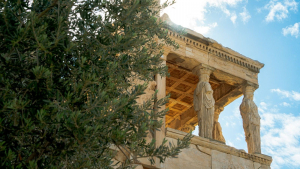
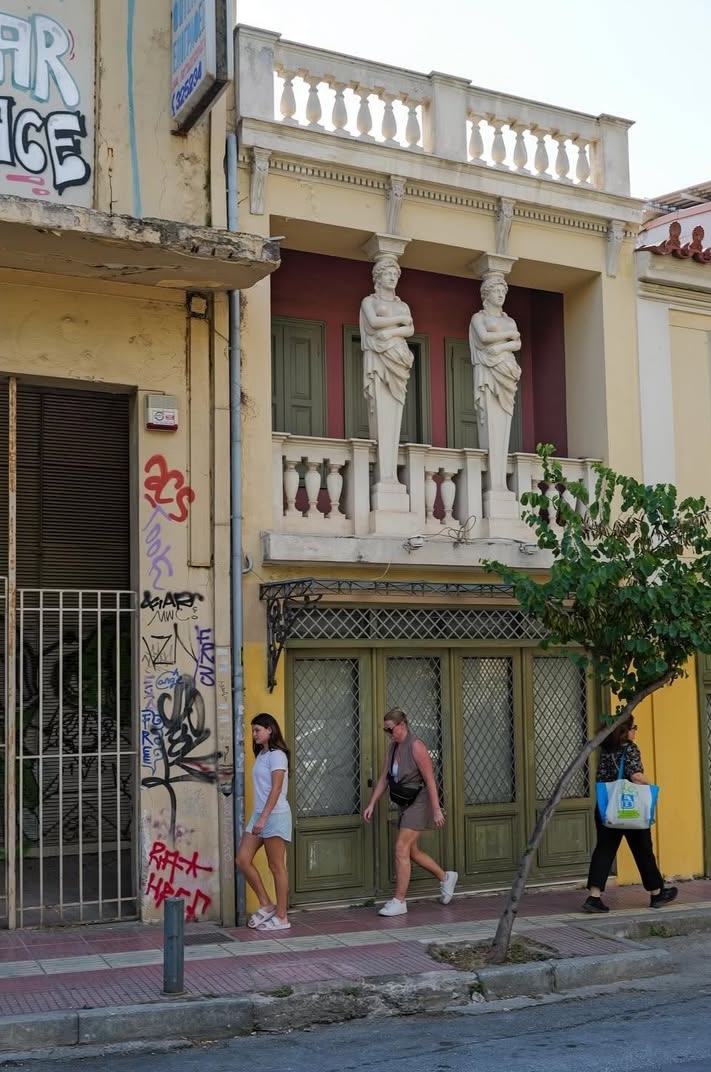
This lovely façade once belonged to the renowned sculptor Ioannis Karakatsanis, who lived and worked there until his death in 1906. Sharp‑eyed observers will notice something intriguing: the caryatids don’t quite follow the strict stylistic rules of their ancient predecessors. There’s a reason for that. These figures aren’t anonymous mythological maidens; they are portraits of Karakatsanis’ wife, Xanthi, and her sister, Eudoxia, the sculptor transforming the very simple building into a deeply personal tribute.
If the building’s unusual charm weren’t enough on its own, a popular legend adds an extra layer of mystery, all thanks to a local barber named Panagiotis Kritikakos, whose shop once occupied the ground floor (you can still spot his old sign at the entrance). To attract more customers, he loved telling visitors that the caryatids weren’t just decorative figures but actually represented Karakatsanis’ daughters, who had died young and were forever imprisoned on the balcony.
@danielgiacopelli
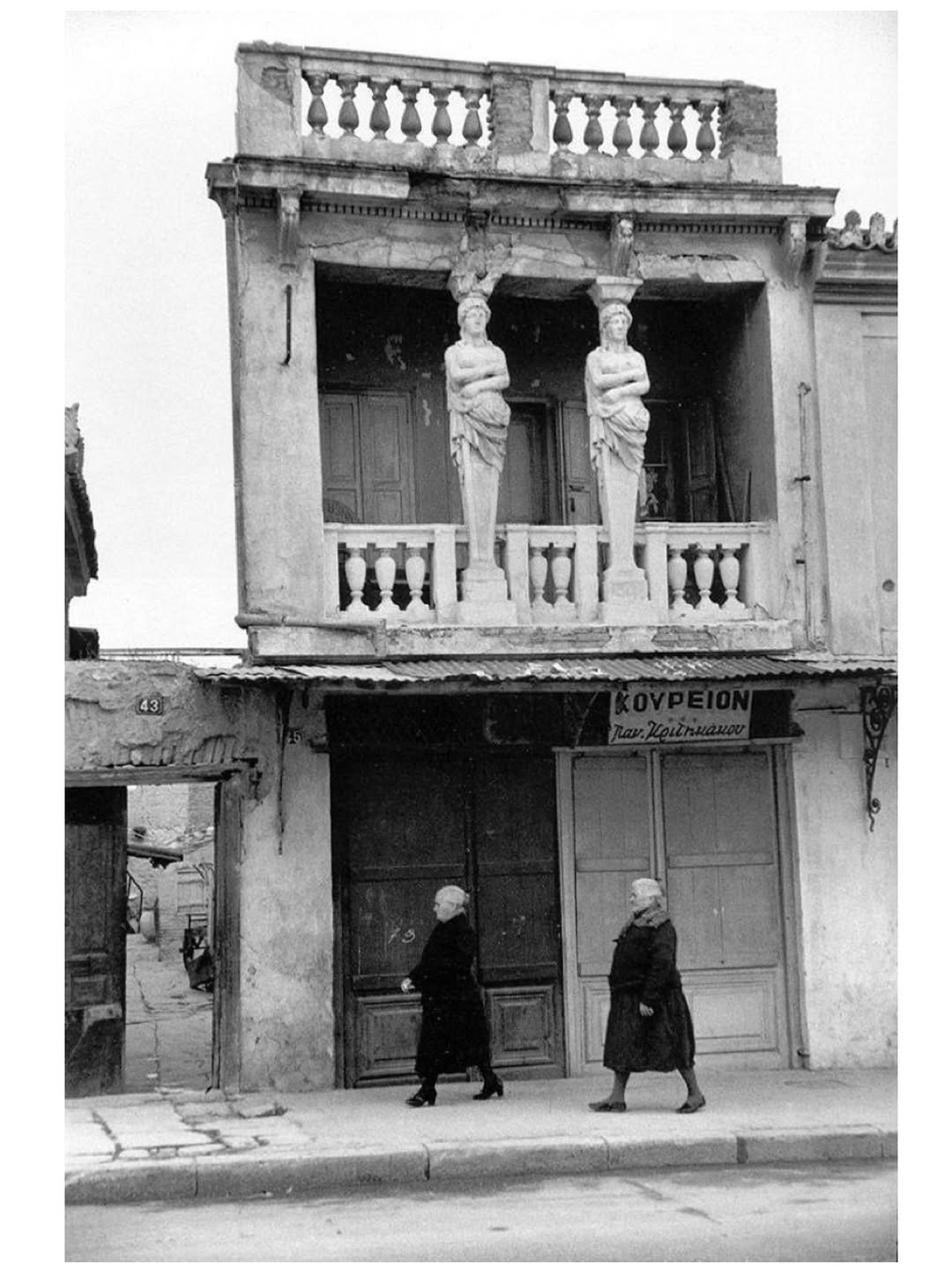
Just like many of us who stroll through Athens and suddenly fall under the spell of this unique façade, the French photographer Henri Cartier‑Bresson was captivated by it too. Naturally, it became the subject of one of his most iconic shots from his 1953 trip to Greece: two elderly women dressed in black walking past the building, perfectly framed beneath the youthful stone caryatids.
@henricartierbresson__
This famous photograph is part of a much larger collection captured during Henri Cartier‑Bresson’s successive trips to Greece, spanning from the 1930s to the 1960s. His journeys took him not only through Athens, but also across the Cycladic islands, the country’s major archaeological sites, and more remote regions such as the Peloponnese, Thessaly, and Epirus. Often described as the photographer of the “decisive moment,” Cartier‑Bresson had a gift for capturing faces, people, and everyday street scenes that reveal an authentic yet poetic vision of Greece, the gaze of a true philhellene, filled with tenderness and admiration.
His photograph of what is now affectionately known as “The House With the Caryatids” freezes in time a symbol of Greek heritage, an architectural gem delicately suspended between past and present. The original print is now displayed at the MoMA in New York.
The Haloa: Ancient Greece’s Most Mysterious Girls’ Night Out
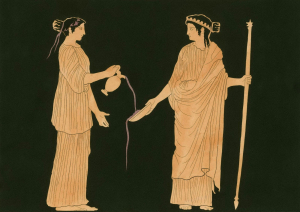
The Haloa was led entirely by women; no male priests, no hierophants, no patriarchal supervision. The first priestess presided over the rituals, which began with a bloodless offering to Demeter. After that, the tone shifted dramatically: an all-night feast, wine flowing freely, jokes that would make Aristophanes blush, and pastries shaped like… well, let’s say the ancient Greeks were not subtle about fertility symbolism.
But here’s the twist: almost everything we know about the Haloa comes from male authors who never attended. They relied on hearsay, imagination, or centuries-later commentary. So when they describe women shouting obscenities, waving giant phallic props, or being encouraged to pursue “illicit loves,” we have to ask: is this ethnography, or is it fantasy?
The Haloa was almost certainly a fertility festival. The symbolism is everywhere: fruits, grains, wine, sexual imagery, and even the burial of symbolic genitalia in the earth to “wake up” the soil for spring. But the more scandalous details (the wild dancing, the provocative songs, the supposed sexual license) may reflect male projections more than women’s actual behavior.
Modern scholars now suspect that the Haloa was less a debauched orgy and more a rare moment of communal joy, solidarity, and ritual empowerment for women. A space where they could breathe, joke, eat, drink, and reconnect with their bodies and each other, without the constant gaze of men.
After all, Athenian women were politically marginalized, confined to the household, and excluded from most public life. A festival where they could speak freely, laugh loudly, and mock social norms must have seemed terrifying to some male writers. Cue centuries of exaggeration.
But because the sources are fragmentary, biased, or simply unreliable, the Haloa remains one of antiquity’s most tantalizing enigmas. A festival glimpsed through a fog of satire, moral panic, and wishful thinking.
And maybe that’s what makes the Haloa so captivating today. It’s a reminder that ancient women had their own rituals, their own humor, their own agency. The Haloa invites us to imagine a world where women gathered in winter to celebrate life, fertility, and each other, far from the constraints of the everyday.
A girls’ night out, yes! but one wrapped in mystery, myth, and the delicious possibility that the truth was far more complex (and far more human) than the ancient gossip suggests.
Beautifully Bizarre: Discovering The Strange World Of Timboulis
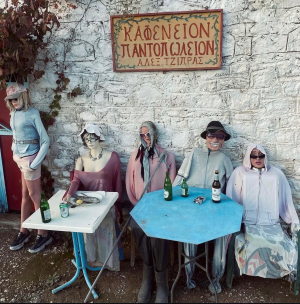
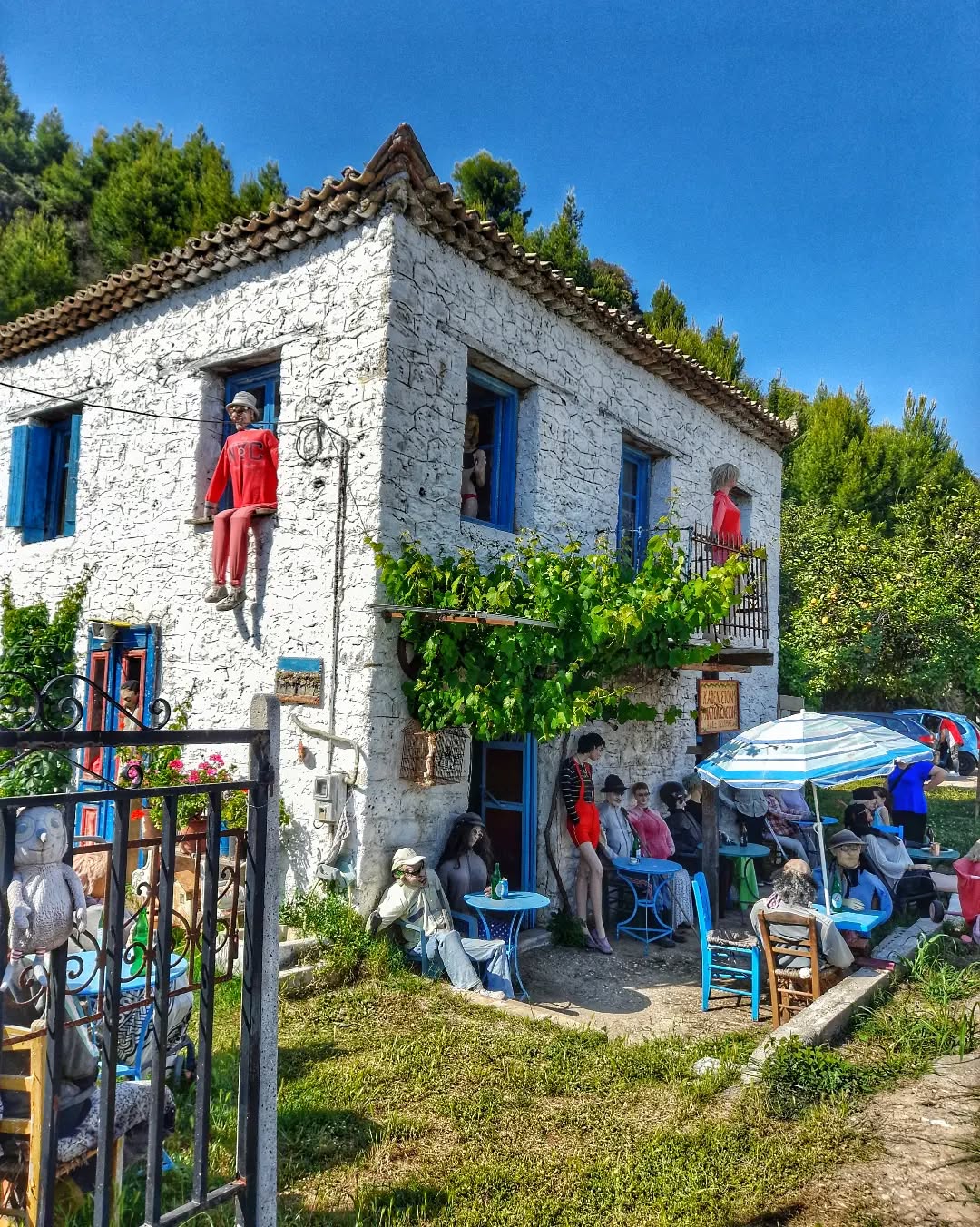
Hidden in the Peloponnese, it can be rightfully considered one of the most surreal vilalges of Greece, and is the creation of Uli and Tibor, a couple who go by the whimsical nickname the Timboulis. They took an old café‑grocery store and transformed it into a fully functioning… dolls village.
These passionate collectors gathered and recycled everything they could, from valuable vintage treasures to objects destined for the trash, and used them to build an entire world for their plastic inhabitants. And the result is astonishing. The dolls look uncannily like real villagers: sitting under the pergola sipping coffee, spying on visitors from the balcony, going about their daily lives inside the house. A little creepy? Maybe. But also wildly creative and strangely inspiring. Giving a second life to discarded objects, mixing them into a chaotic yet meaningful universe, they’ve built a place that feels bizarre, charming, and unforgettable.
As you stroll through this curious open‑air museum, you’ll weave between old telephones, vintage televisions, cart wheels, faded photographs, even boats stacked in corners... Every inch of the place is packed with stories, so let your imagination run wild!
And just when you think you’ve seen it all… the dolls move. Haunted dolls? Not quite. But the scenes are regularly rearranged, giving the plastic villagers new lives, new poses, new stories. So no matter how many times you visit, you’ll never see the same scene twice (which is a chance because entrance is free!)!
@artem1s_ale
Main image credit: @_athinadal
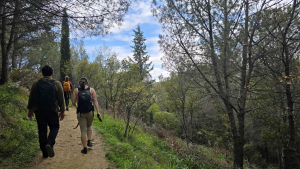
Sunday February 15th | A Scenic Hike On Mount Ymittos
Event Details
📅 Date: Sunday February 15th 2026
🕛 Time: 12:00
⏱ Hike Duration: Approximately 1 hour 15–30 minutes
📍 Starting Point: Google Maps link
✨ Participation Contribution: €12
👉 How to Join: Please RSVP your full name and number of participants to info@xpatathens.com.
💡Space is limited to 15 people. This event is subject to favorable weather conditions.
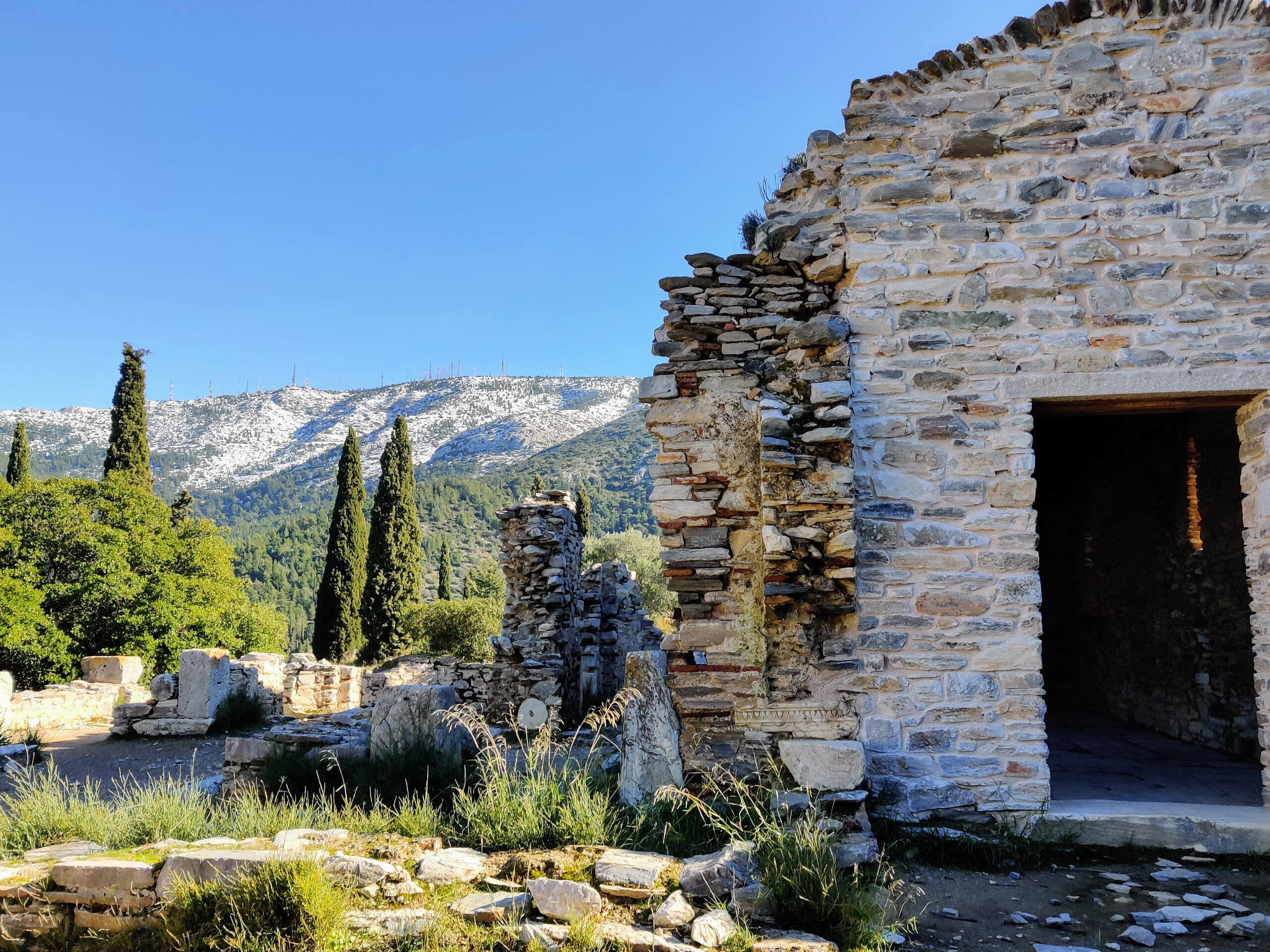
Optional Lunch Afterwards
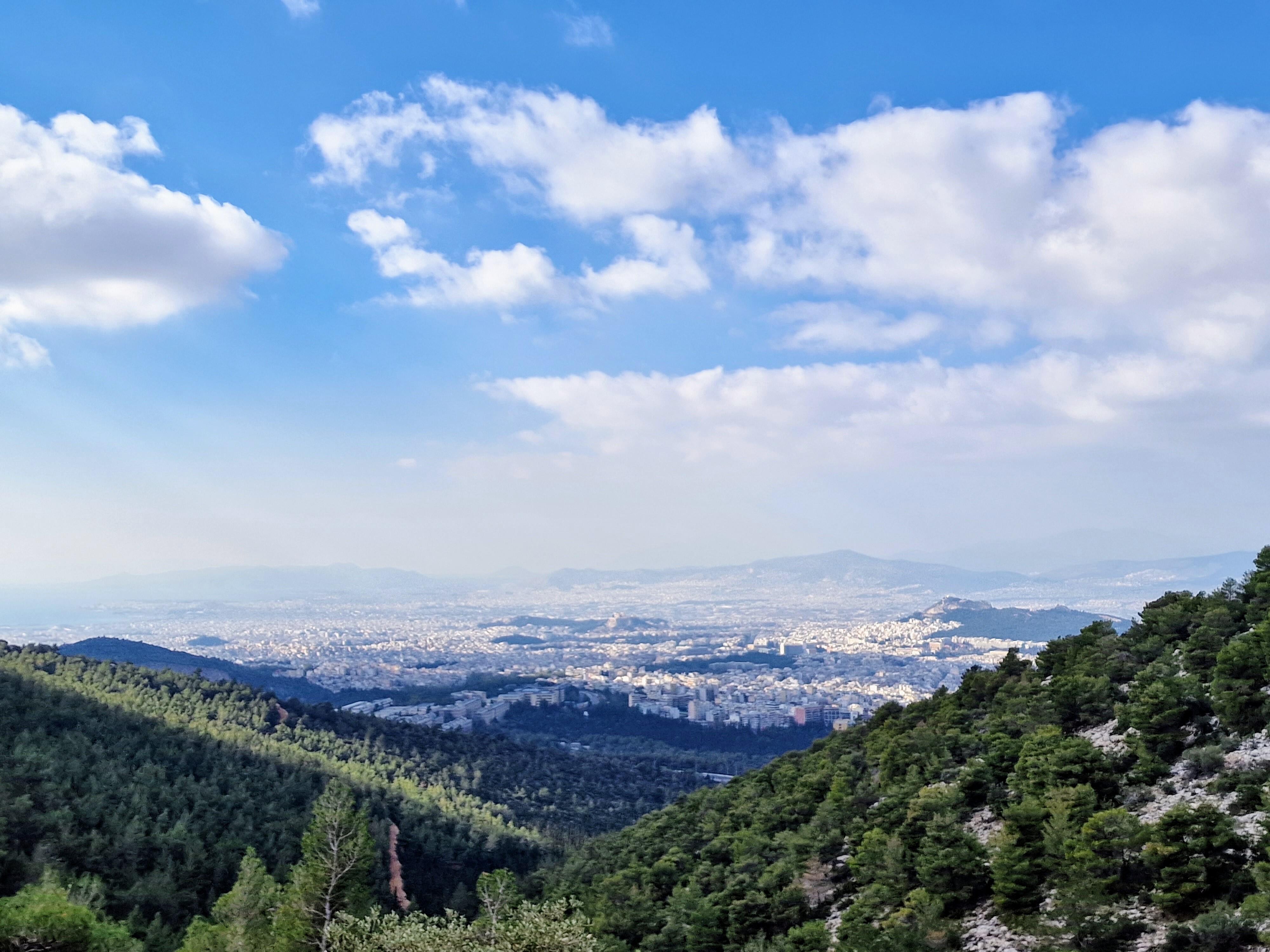
For those who’d like to continue the experience, we’ll head to Plateia Kaisariani for lunch together. Recommended spots include Rakaki or To Koutouki tou Kallinikou, both perfect for a relaxed meal after the hike.
Come for the views, stay for the atmosphere ~ this experience is about enjoying a gentle adventure just outside the city!
Event Details
📅 Date: Sunday February 15th 2026
🕛 Time: 12:00
⏱ Hike Duration: Approximately 1 hour 15–30 minutes
📍 Starting Point: Google Maps link
✨ Participation Contribution: €12
👉 How to Join: Please RSVP your full name and number of participants to info@xpatathens.com.
💡Space is limited to 15 people. This event is subject to favorable weather conditions.
3 Christmas Villages Around Athens
When December arrives, Athens doesn’t just decorate; it transforms. Across the wider metropolitan area, Christmas villages spring to life, each with its own personality, scale, and sense of wonder. From sprawling fantasy kingdoms to seaside spectacles and neighborhood traditions, these festive worlds are designed to immerse families in the magic of the season.
Santa Claus Kingdom – The Ultimate Christmas Universe
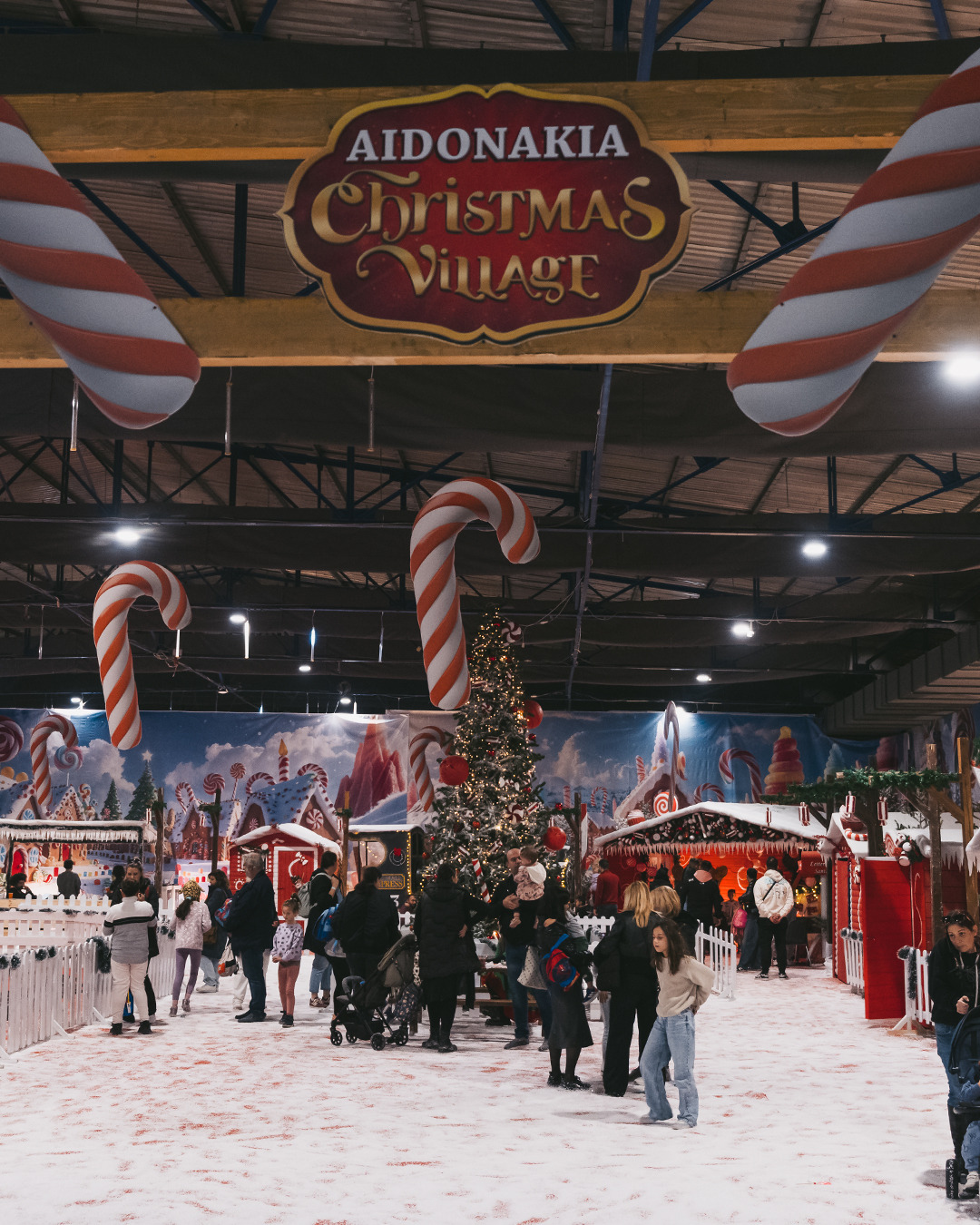
Until 6 January | M.E.C. Peania (Paiania)
If Christmas had an official capital, it would be Santa Claus Kingdom. Housed inside the vast M.E.C. Peania conference center, this is Greece’s most ambitious and high-energy festive destination, a full-scale holiday realm built for wonder, movement, and nonstop excitement.
The space expands into an indoor Christmas universe filled with lights, themed zones, performances, games, and activities that keep children engaged for hours on end. Everything is bigger, brighter, and louder here, a place where imagination runs at full speed and the festive spirit never slows down. Ideal for families looking for a grand, all-in Christmas experience.
Book your tickets HERE!
Paradise Park – Wishes, Play & New Beginnings
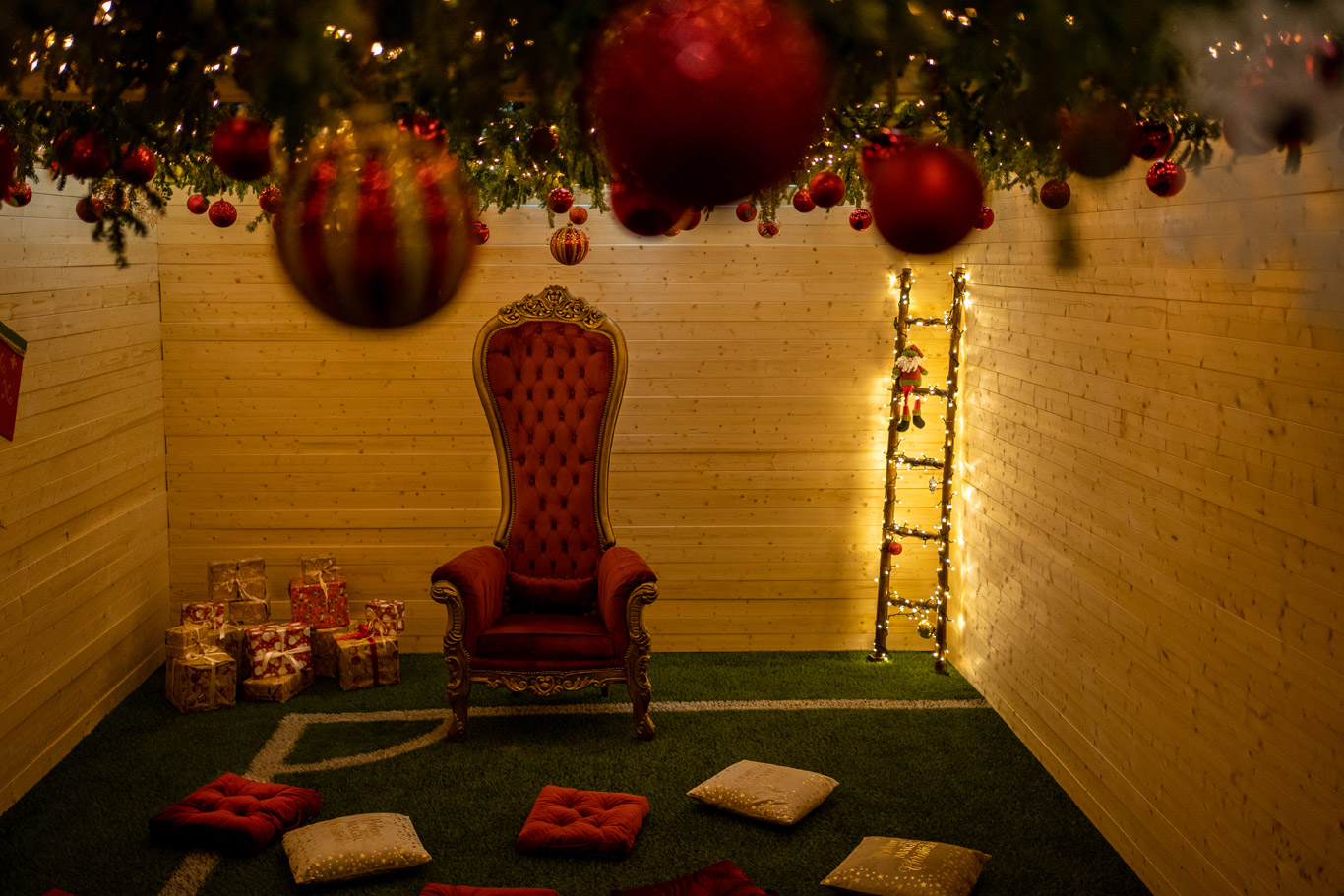
Until 6 January | Acharnes
Paradise Park in Acharnes offers a more immersive and thoughtfully structured holiday experience, designed especially for children. This year, the park is divided into two themed villages: the Christmas Village, centered on wishes and imagination, and the New Year’s Village, focused on hope and fresh starts.
Children participate in age-specific groups, guided by trained educators through creative, playful, and educational activities. Each visit lasts around three and a half hours, making it feel like a complete festive journey rather than a quick stop. It’s an ideal choice for families who value meaningful engagement alongside seasonal fun.
Book your tickets HERE!
Christmas by the Sea – Marina Flisvos Christmas Village
Until late December | Marina Flisvos
At Marina Flisvos, Christmas meets the waterfront, and the result is pure cinematic charm. The marina transforms into a glittering holiday playground where twinkling lights reflect off the water and festive energy fills the air.
Expect trampolines that bounce sky-high, a miniature train winding through the village, nostalgic carousels, bumper cars, and a roller-skating zone that feels like a retro holiday dream. For younger visitors, the magic multiplies with face painting, Santa’s workshops, photo booths, the ever-mysterious Wishing Phone, and appearances by the beloved Fivos Mascot.
It’s playful, polished, and irresistibly joyful, a Christmas village designed to delight both children and the adults reliving the magic through them.
A City of Many Christmas Worlds
What makes Christmas in Athens special is its variety. Whether you’re drawn to large-scale fantasy kingdoms, creative festivities, magic lights, seaside spectacles, or neighborhood celebrations, there’s a festive village waiting to be explored.
Each one offers a different version of Christmas — but all share the same promise: lights in the eyes of children, moments of joy, and memories that linger long after the decorations come down.
So bundle up, follow the lights, and step into the Christmas world that feels most like yours.
Christmas In Athens: Markets, Music & Magical Moments Across The City
Athens welcomes the festive season with a rich calendar of events that blend tradition, creativity, and city-wide celebration. From lively Christmas markets and spectacular countdowns to intimate cultural experiences and family-friendly workshops, the capital transforms into a winter playground filled with light, sound, and seasonal charm.
Here’s a curated guide to the highlights you won’t want to miss:
The Heart Of The Festivities
20 December 2025 – 6 January 2026 | Kotzia Square

Big Nights & Citywide Celebrations
Night of Wishes
24 December 2025 | Kotzia Square
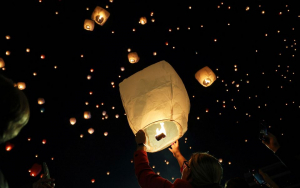
One of Athens’ most touching Christmas Eve traditions returns as biodegradable lanterns rise into the night sky, carrying the wishes of thousands gathered in the square. Radio station Athens 9.84 broadcasts live from the site starting at 17:00, creating a shared soundtrack for this quietly magical ritual.
Athens New Year’s Eve Celebration
31 December 2025 | Syntagma Square
The city’s official New Year’s Eve countdown takes place in front of the Parliament, with live performances, dancing crowds, and fireworks lighting up the Athenian sky. The evening opens with festive selections by the Athens Philharmonic Band, setting the tone for the capital’s largest public celebration.
Music & Innovation
AI Christmas Orchestra
21 December 2025 – 4 January 2026 | Various Neighborhoods
In a unique collaboration between OPANDA and the Athens Digital Arts Festival, musicians perform live alongside an AI system that responds in real time, creating ever-changing soundscapes and light visuals. Performances pop up in neighborhood squares including Kypseli, Thymarakia, Agios Dimitrios, Mesolongiou, and Sepolia, bringing experimental holiday music into everyday city life.
Culture & Quiet Festive Escapes
Carols – Embroidered Songs of Christmas
Until 11 January 2026 | Museum of Folk Art & Tradition ‘Angeliki Hatzimichali’
A beautifully atmospheric exhibition in Plaka that explores Christmas and New Year carols from Greece, Southern Italy, and Cyprus, told through intricate embroidery. Ceramic and metal artworks produced by the city’s Clay Centre accompany the textiles, offering a reflective counterpoint to the city’s louder festivities.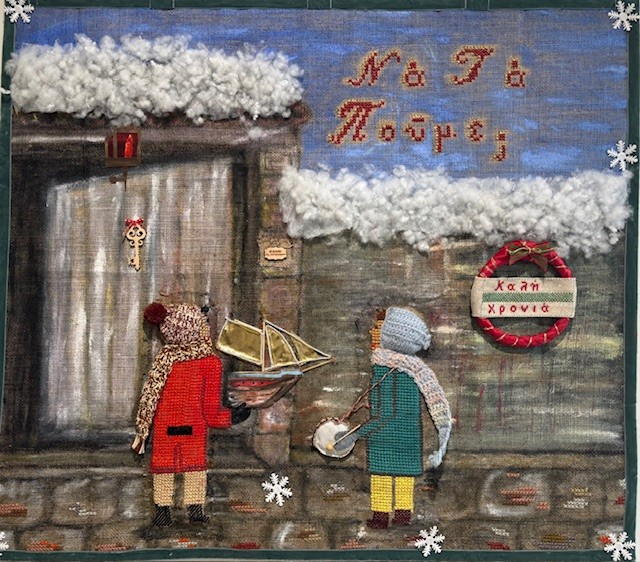
Dickens: The Christmas Writer
31 December 2025 | Municipal Library
A thoughtful literary session for adults focusing on Charles Dickens’ enduring Christmas legacy. Combining reading and writing elements, the event takes place on the final morning of the year—an ideal pause before the night’s celebrations begin.
Family Activities & Learning Through Play
Christmas Bubble Shows & Festive Parades
20, 21 & 28 December 2025 | Kotzia Square & Athens Book Space
Aerial performances, giant bubble displays, and whimsical parades fill the streets with color and movement. The beloved La Petite Marguerite troupe returns with fantasy characters and bubble parades, creating joyful, crowd-pleasing moments for all ages.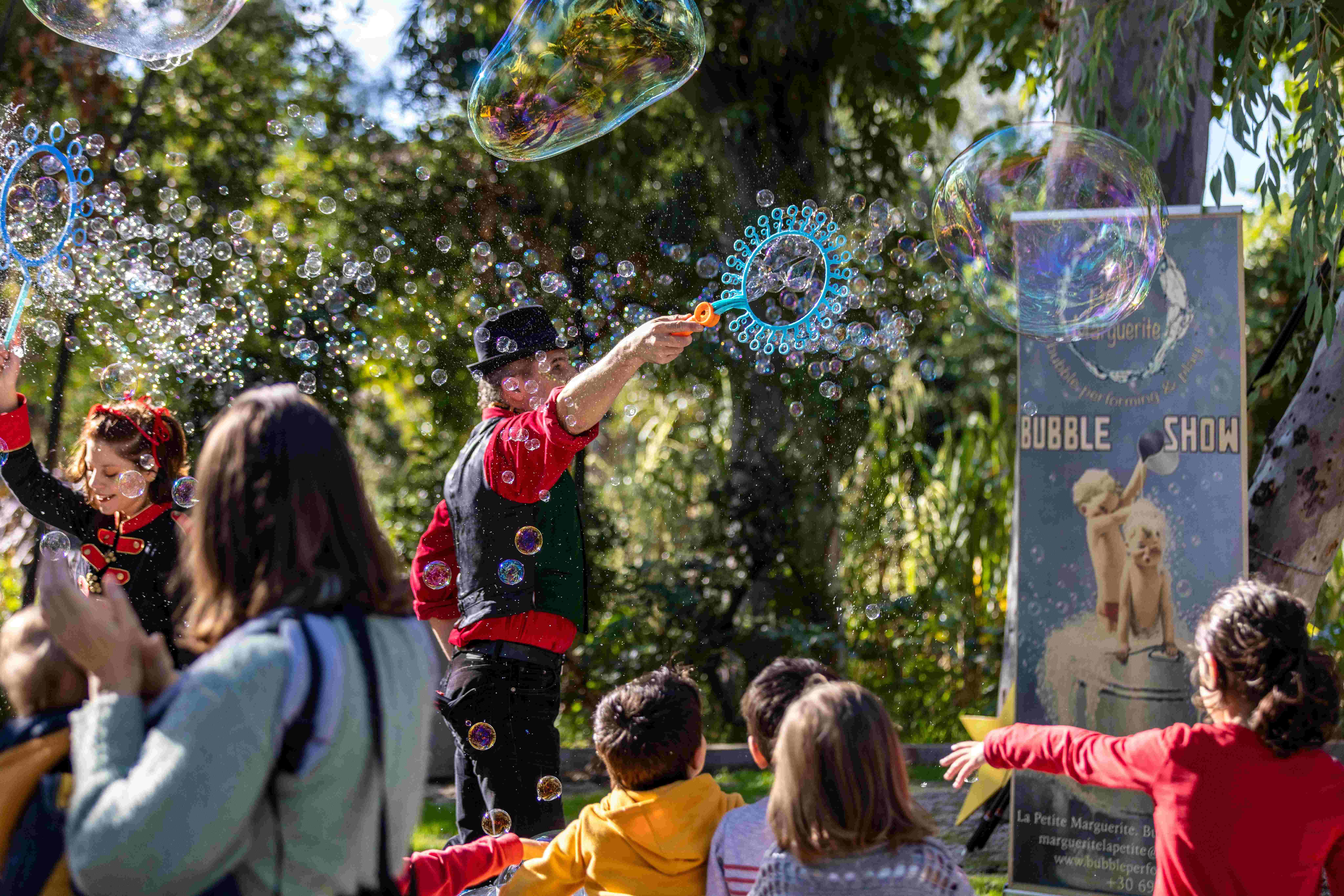
Salt-Dough & Festive Boat Workshops
27 December 2025 | Athens Children’s Museum
Children aged 3–12 can drop in to create Christmas boats and holiday ornaments in hands-on workshops, held within the museum’s “Hello Pythagoras” exhibition space.
Astronomy Night
21 December 2025 | Parko Eleftherias (Athens Book Space)
A winter stargazing evening led by astronomers from the National Observatory. Participants can observe Saturn, the Moon, and other celestial highlights through telescopes, with guided explanations adding depth to the experience.