

BUSINESS CENTRE

XpatAthens
The Top 10 Places To Visit In Greece This Winter
Pallas Theater To Introduce English Supertitles

Five Distinguished British Personalities Explain Their Deep Connection To Greece

To read this article in full, please visit: ekathimerini.com
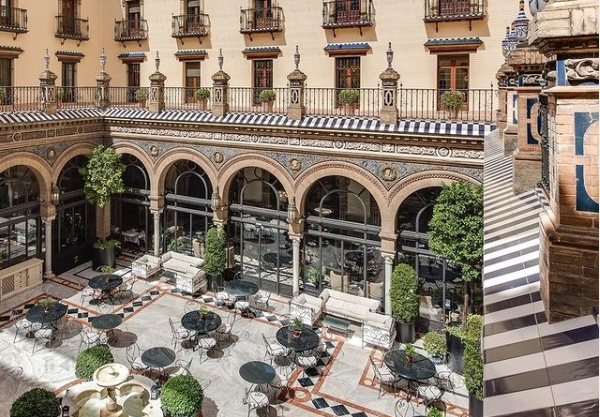
Europe's Finest Al Fresco Dining Spots For This Summer
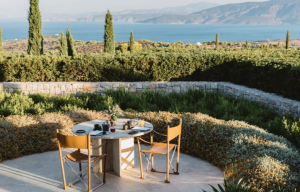
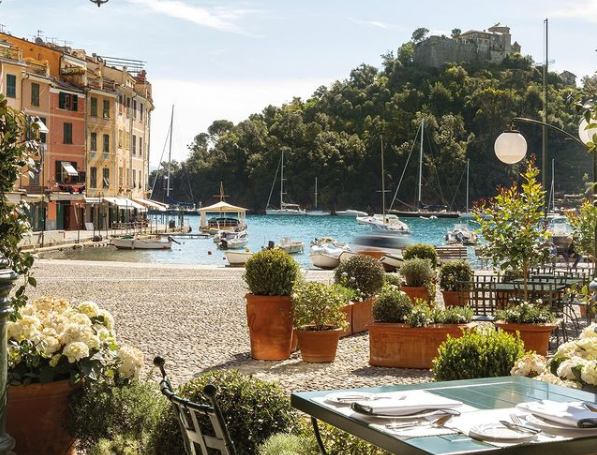
@belmondsplendidomare
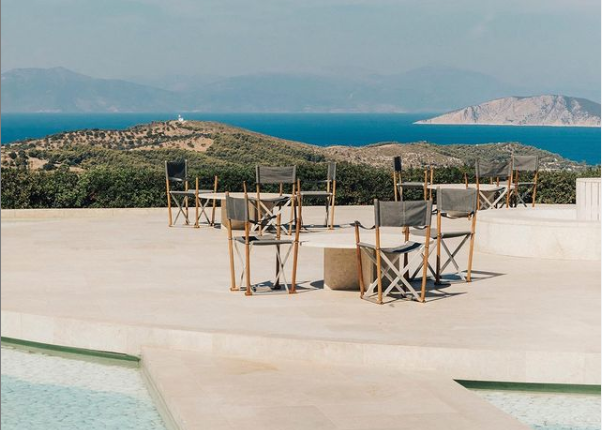
@amanzoe
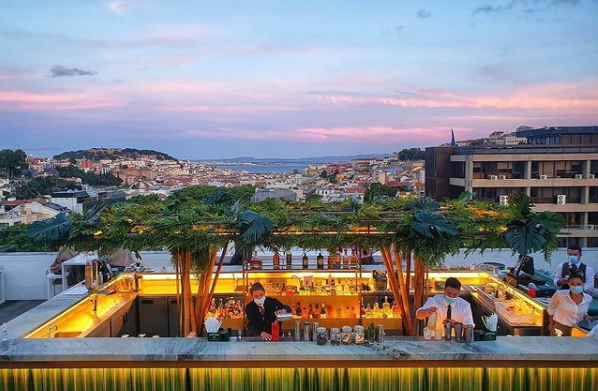
@tivoliavenidaliberdade
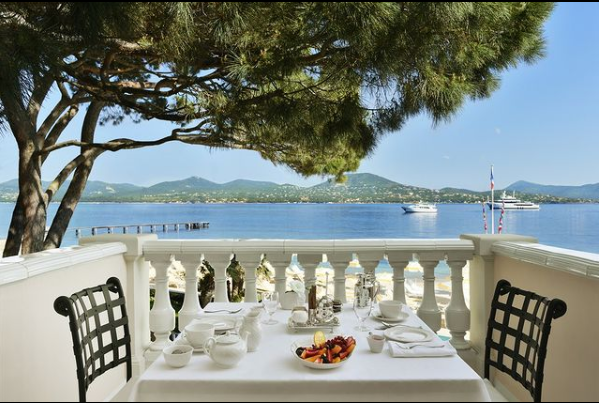
@chevalblancsttropez
To read this article in full, please visit: cnn.com
The 15 Most Beautiful Places In The World

A recent study by the Britain-based travel company Kuoni followed a more scientific approach to the above question in order to create an official ranking of the world’s most beautiful travel destinations.
In this scientific study, participants viewed a series of images from 50 of the world's most famous natural attractions, from the Grand Canyon to the Maldives. The research used eye movement recording technology to determine which images were the most attractive to the human eye, or, in other words, which captured the eye of the participants the longest.
According to the results of the study, the most beautiful place in the world is Lake Peyto in Canada - a natural wonder in Banff National Park. The magnificent shade of the lake's waters is a result of ice melting on the surrounding dazzling mountains. The second most beautiful place in the world is the island of Meeru in the Maldives, which enchants travelers thanks to its white sand and crystal-clear waters.
From exotic islands to colorful lakes and spectacular waterfalls, these are the most beautiful places in the world!
1. Peyto Lake, Canada

@resul.gumus
2. Meeru Island, Maldives

@meeruisland
3. Jurassic Coast, U.K.

@thejurassictog
4. Yosemite

@california_matt
5. Lake Tekapo, New Zealand

@lachiou
6. Niagara Falls

@thereal4koj
7. Mount Snowdon, Wales

@jo_fallows
8. Puerto Princesa Underground River, Philippines

@lydiajaneiballjones
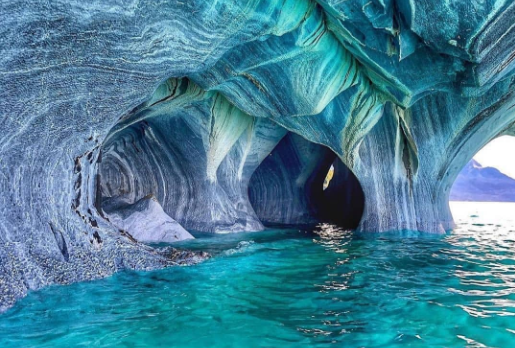
9. Marble Caves, Chile
@tillotoro
10. El Yunque National Forest, Puerto Rico
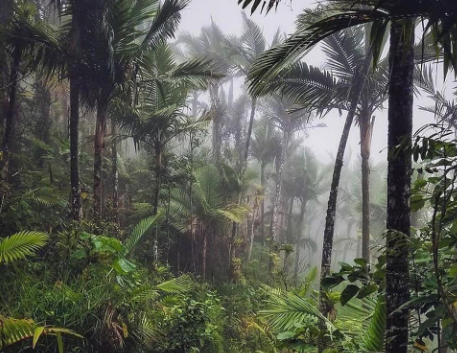
@evo_photography_pr
11. Aurora Borealis, Iceland

@eddiekruger7
12. Iguazu Falls

@kcakduman
13. Lake Matheson, New Zealand

@michalzborovjan
14. Phang Nga Bay, Thailand

@thefreedomcomplex
15. Grand Canyon
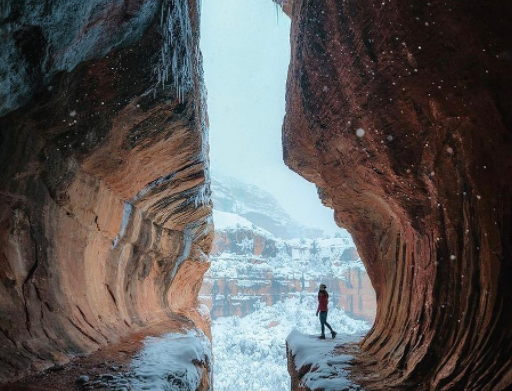
@ryanresatka
First Greek Series To Make Netflix Debut

The popular streaming platform recently bought the worldwide rights, as announced on Tuesday. The drama series, which Papakaliaatis wrote, directed, and starred in, will air in Greece and Cyprus on December 19, 2022, on Netflix. It will then premiere for the first time to audiences worldwide in early 2023.
Papakaliatis stated: ”I hold Maestro very close to my heart and I feel deeply honored and happy that this story will travel around the world through Netflix. I’m looking forward to this journey.”
Maestro: a story of passion and conflict
In the nine episodes of “Maestro”, Christoforos Papakaliatis narrates a story of passion and conflict. A cast of talented actors embodies multidimensional heroes, through whom the creator attempts to open discussions on societal matters.
In the story, Orestes travels to a small Greek island during the COVID-19 pandemic in order to set up, from scratch, a music festival. Confronted with the small society of the island, he will find himself involved in a passionate love story that will act as the catalyst for the manifestation of all the social problems that plague an entire group of people. The characters are connected to one another and therefore each complicit in what comes next.
Speaking about the series in September, Papakaliatis said: ”I am very proud of this project because I think that artistically it is a unique moment, not only for me but for everyone who was involved. ”
Maestro is produced by MEGA TV and stars Christoforos Papakaliatis, Maria Kavoyianni, Marisha Triantafyllidou, Fanis Mouratidis, Antinoos Albanis, Giannis Tsortekis, Kora Karvouni, and Haris Alexiou.
To read this article in full, please visit: greekreporter.com
How To Spend A Perfect Weekend In Thessaloniki

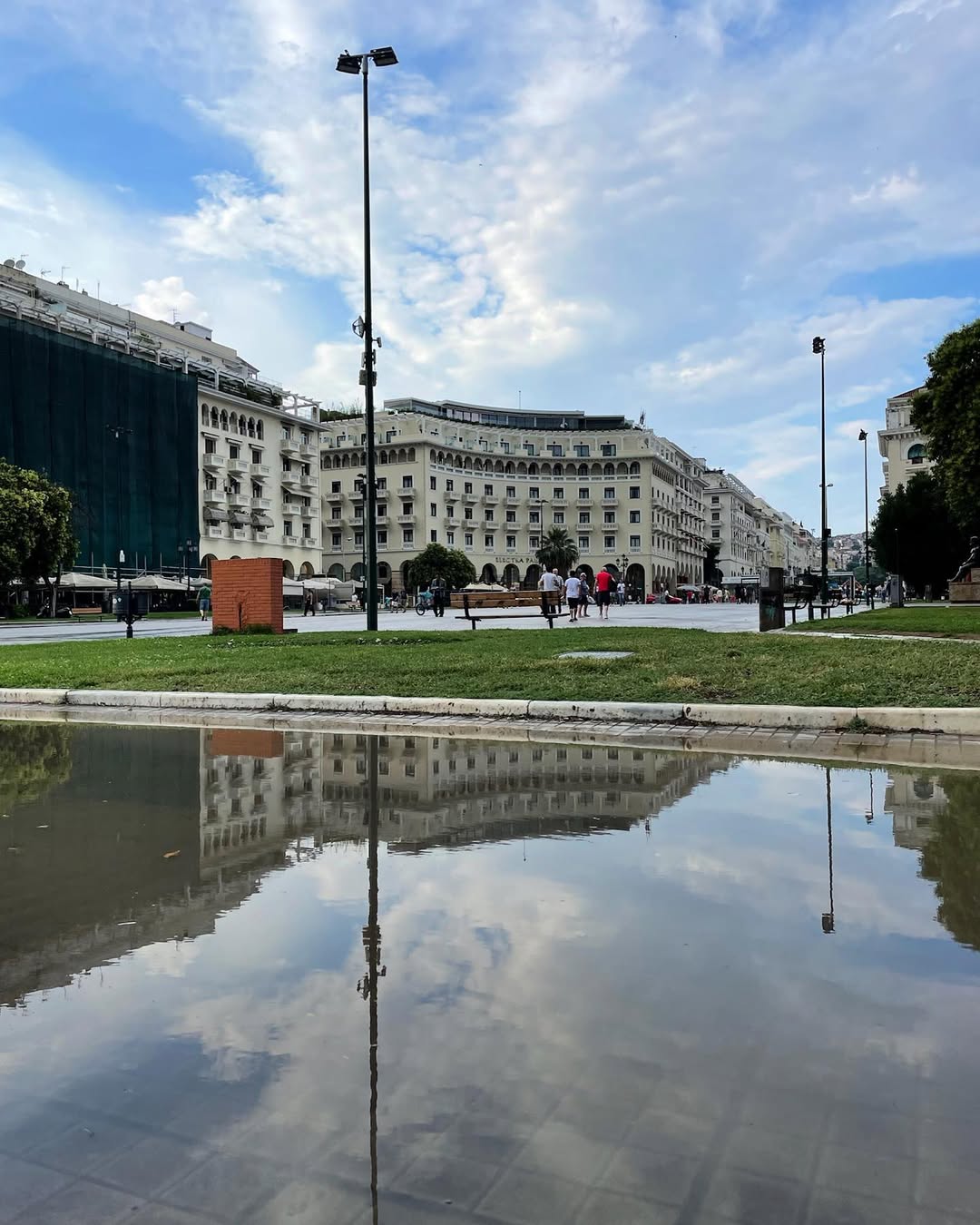
@o_thessalonikios
-
Rotunda and Arch of Galerius (early Christian and Roman architecture right in the city center)
-
The Byzantine Walls up in Ano Poli for amazing city views
-
Or the Museum of Byzantine Culture, which is way more interesting than it sounds
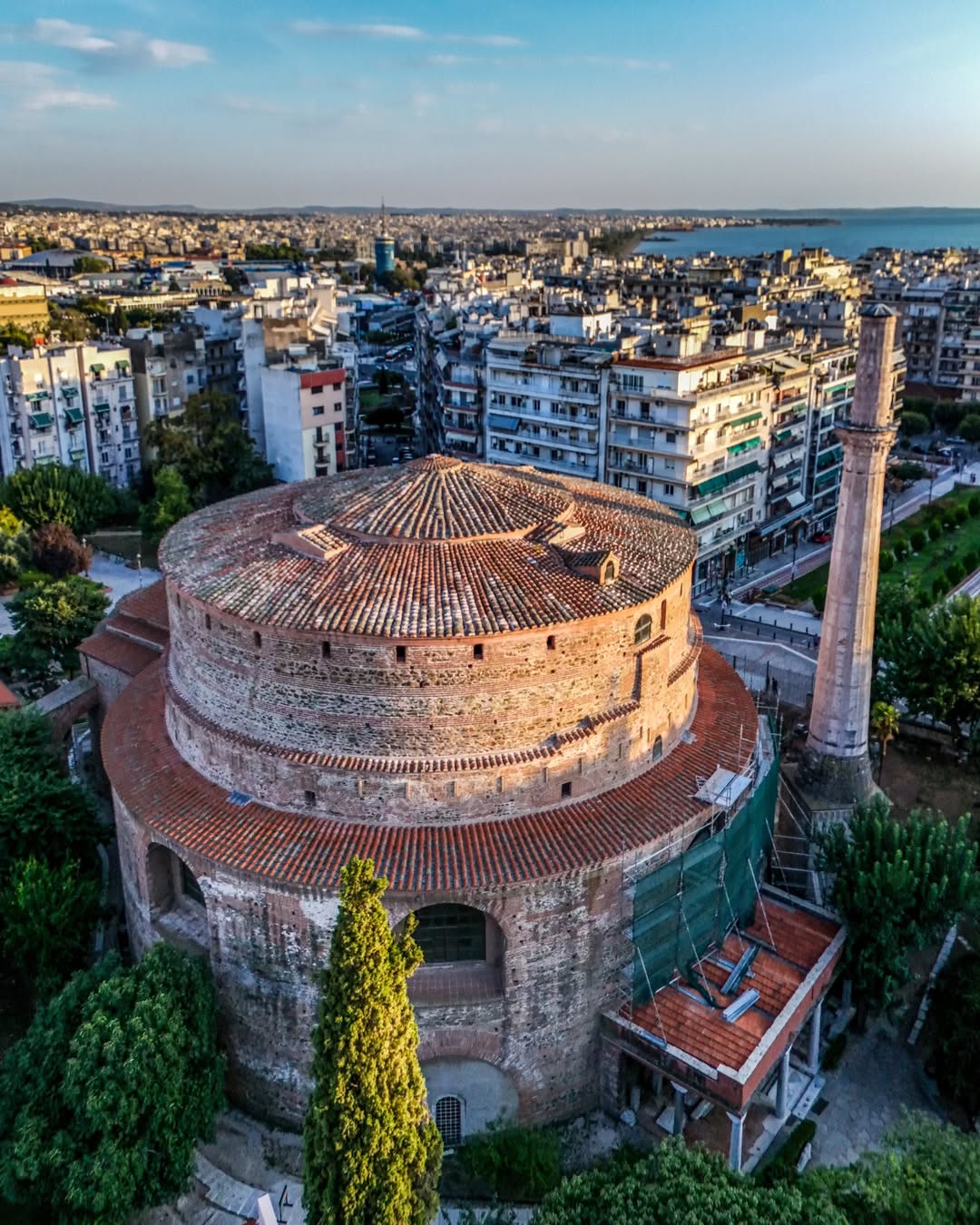
@triada_kon
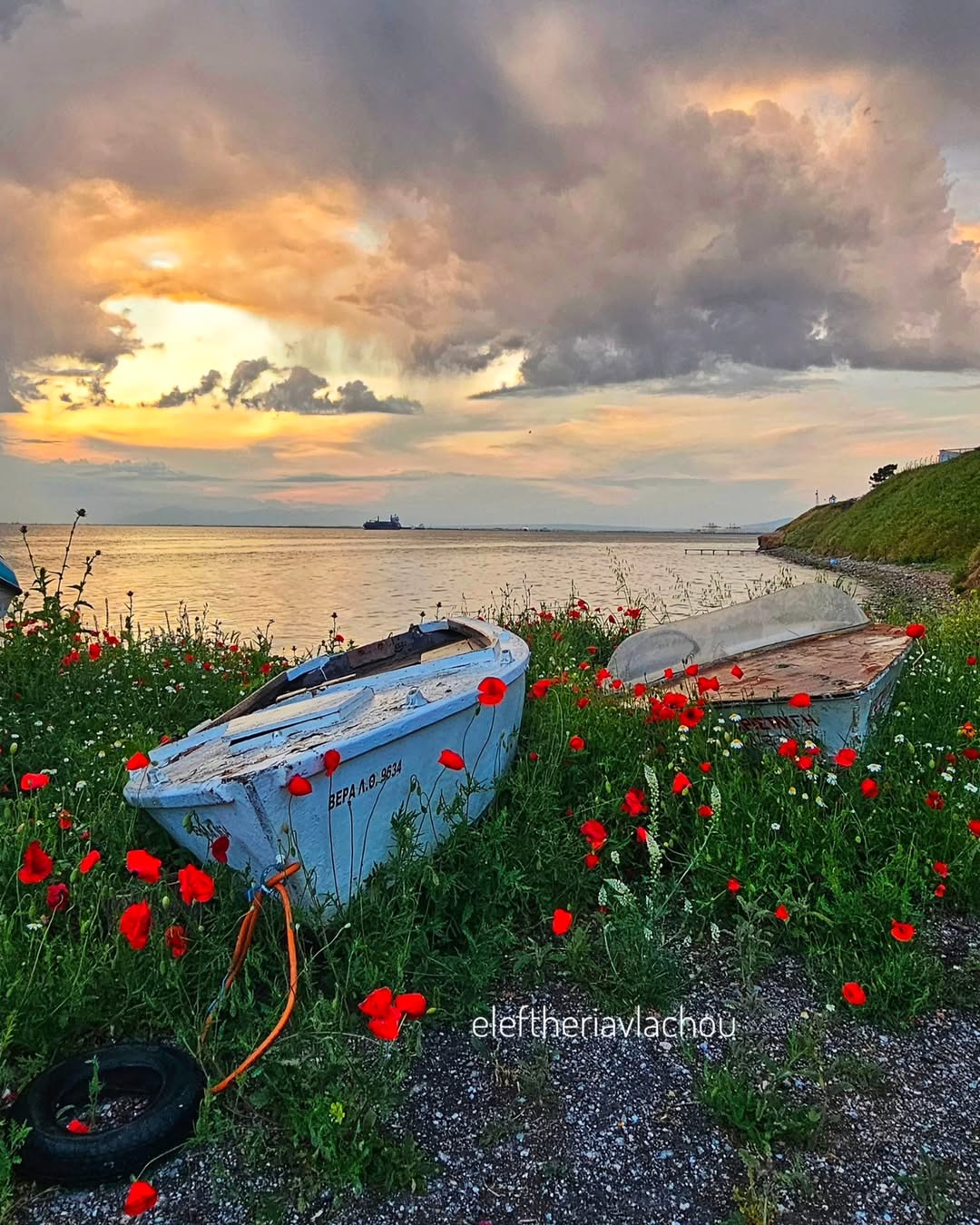
@eleftheriavla_5
-
Walk everywhere if you can. The city is compact and full of surprises.
-
Eat everything! Thessaloniki is a UNESCO City of Gastronomy for a reason.
-
And don’t rush it. This isn’t a checklist kind of place. It’s a vibe. Soak it in.
Divine Madness & Creativity In Ancient Greece
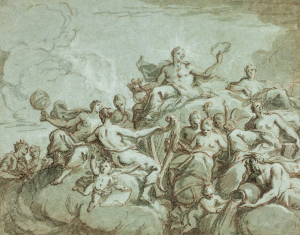
In Ancient Greece, was it “divine madness” that bestowed creativity?
Socrates and Plato wrote that inspired thoughts originated when a person was beside themselves – in a state of divine madness. Reason was suspended. So, Plato considered that art was an imitation of an imitation – twice removed. In Poetics, Aristotle championed art as a valuable way to experience emotions, integral to tragedy and poetry.
Myth and religion, art and architecture, philosophy and science, theater and music – it would take a library to delve into all this from ancient Greece. What would be the impulse or common ground for all this?
In the eyes and minds of ancient Greek people, it would have fallen under the umbrella of what they labelled mousikē: the sphere of the (usually nine) divine Muses who had their abode on Mount Helicon – where famously poet Hesiod claimed to have actually met them. It was Muses too that Homer invoked at the start of both the Iliad and Odyssey – as the cause of his poetic inspiration and craft. The Muses each had their individual circle of expertise and interest, but all operated literally under the sign of Memory (Mnemosyne in Greek), because that was their mother’s name.
Their father was Zeus, though his role was more that of one-time progenitor than of cultural mentor. I wrote ‘almost all’: two significant exceptions were (visual) artworks and architecture, and in a different way philosophy. Philosophers had no one divine inspirer – they might look at different times towards Athena, Apollo or even Zeus for intellectual aid. Craftsmen in metal, stone or wood (kheirotechnai) were thought to need a different kind of inspiration from ‘makers’ (poiētai) of words, and this came from either Athena or Hephaestus (Homer’s lame craftsman god, maker of Achilles’s arms and armour) or both.
To revert to the Muses: epic poetry was taken care of by Calliope, love poetry by Erato, lyric poetry by Euterpe, sacred poetry/hymns by Polyhymnia, tragic drama by Melpomene, comedy by Thalia, and dance (manifested in the dramatic or singing chorus, a word which originally meant ‘dance’) by Terpsichore (‘she who delights in the dance’).
Something of an outlier – or an uplier – was Ourania, meaning literally ‘heavenly’ and so the presiding Muse of astronomy. Astronomy – literally the disposition/arrangement of stars – was not an original Greek specialism. Rather, it was a manifestation of another key aspect of the ancient Greeks’ creative genius – their ability to borrow and take over something already very finely developed or crafted by another culture and then re-make it something new, and often something superior.
Richard Marranca is an author who teaches ancient world, myth, and religion at Montclair State University. He writes for various print and digital publications, and his upcoming book, "Speaking of the Dead: Mummies & Mysteries of Egypt," will be published by Blydyn Square Books. Richard has had the honor of receiving a Fulbright to teach at LMU Munich and spent a semester in Athens during his doctoral studies at New York University. In his career, Richard has had the privilege of interviewing esteemed classicist Paul Cartledge on topics ranging from Alexander the Great to Greek philosophy.
Online Everything

Summertime temperatures and sunny skies are all well and good. But it occurred to me the other day that for most of what we need these days, one need never leave the house at all.
Between my computer and my phone – and the ever-expanding world of (Greek) apps and online shops – you could really conduct every detail of your day-to-day life from the comfort of your sofa (or bed or balcony or…).
I suppose most of us do our banking online – transfers and payments and so on. With Paypal, you can pay for all manner of products and services with a couple clicks. And many of the Greek e-tailers are starting to accept Paypal transactions.
Skroutz.gr is a truly useful site for comparing and buying almost every product imaginable – from flower pots to bicycles to toys. The best part is that the site compares prices for the same products across all available online retailers – and 3 clicks later you’ve bought your new flower pot. The Skroutz smartphone app even lets you scan product barcodes for instant price comparisons – but this implies you actually left the house…
Buldoza.gr is one of many (many!) sites for clothes and homewares, with nice styles and a good range of stuff – at great prices, delivered to your front door. A quick scan of the internet revealed tons and tons of Greek e-tailers, who are more than happy to show up at your door with products in-hand. Seriously, from a bar of soap to a wedding gift - someone in Athens will bring it to your door!
Looking for a new apartment? Your first stop should really be Xpatproperty.com. But your second stop should really be Spitogatos.gr - an amalgamator of most of the Athens real estate firms’ listings. The smartphone app is also really cool – and allows you to ‘see’ all available listing based on your current GPS location.
For those of us who dread the trip to the supermarket, my best discovery has been the Carrefour online shop. In under 10 minutes, I selected and paid for all my groceries – many of which I can’t even get at my local supermarket. The site is still only in Greek, but with delivery charges between 3euros and 6euros, the effort is certainly worth it…
The point is this – modern technology is about convenience. And, apparently, never leaving the house. The point for me is to use all this technology wisely, make the most of it, so you have time for that evening walk. Which is where I’m heading right now…
Until next week,
Jack
PayPal
www.paypal.com
Skroutz
www.skroutz.gr
Buldoza
www.buldoza.gr
XpatProperty
www.xpatproperty.com
Spitogatos
www.spitogatos.gr
Carrefour
www.caremarket.gr
In this weekly space, keep up with ‘Jack’ as he navigates daily life in Athens… Anecdotes, stories, hits & misses, the good, the bad and, well, the rest…
Piperia Seafood Restaurant in Neo Psychico
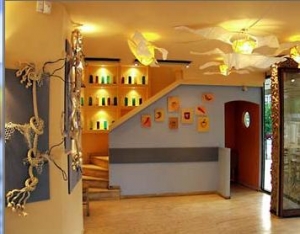
The kitchen is dominated by seafood tastes and is basically Greek, having a somewhat varied character, however, as we are going to see.
There are four appetizer proposals, and a wine selection of 30 excellent Greek choices including mainly white wines, which fit in the character of the kitchen, a good variety of beers and, of course, ouzo, which cannot be missing from a place like that.
The unbottled wine we serve (Muscat from Limnos and Agiorgitiko) is carefully chosen, and there is also unbottled tsipouro.
PIPERIA SEA FOOD
8 Ag. Sikelianou & Adrianiou Str.
115 25, N. Psychiko
Tel. : 210 67 29 114 - 210 67 28 438
Do you have a recommendation or recipe to share? Send it to us at ideas@xpatathens.com!