
XpatAthens

XpatAthens

Wednesday, 10 December 2025 07:00

Christmas Shopping Hours In Athens

Christmas may be the 'most wonderful time of the year' however sometimes it tends to be one of the most stressful times of the year too. There's a lot to do and usually there isn't enough time to get everything done!

To make holiday shopping easier, the shops in Athens have extended their opening hours and include 3 days of Sunday shopping.

This special holiday shopping schedule, designed to cater to the increased demand during Christmas and New Years, begins on Thursday, December 11, 2024 and runs until the end of the year.

Details of the 2025 Festive Schedule

From December 12 onwards, retail stores will operate with extended hours to ensure shoppers have plenty of time to prepare for the holidays. Here’s the complete schedule:

  • Thursday, December 11: 09:00 – 21:00
  • Friday, December 12: 09:00 – 21:00
  • Saturday, December 13: 09:00 – 16:00
  • Sunday, December 14: 11:00 – 16:00

  • Monday, December 15: 09:00 – 16:00
  • Tuesday, December 16 – Friday, December 19: 09:00 – 21:00
  • Saturday, December 20: 09:00 – 18:00
  • Sunday, December 21: 11:00 – 18:00
  • Monday, December 22: 09:00 – 21:00
  • Tuesday, December 23: 09:00 – 21:00
  • Wednesday, December 24 (Christmas Eve): 09:00 – 18:00
  • Saturday, December 27: 09:00 – 18:00
  • Sunday, December 28: 11:00 – 18:00

  • Monday, December 29: 09:00 – 21:00
  • Tuesday, December 30: 09:00 – 21:00
  • Wednesday, December 31 (New Year's Eve): 09:00 – 18:00

Holiday Closures:

Stores will remain closed on all of the following days:

Christmas Day - Thursday, December 25
Boxing Day
- Friday, December 26
New Years Day -
January 1
Also On -
January 2nd!

Sunday Shopping:

Stores will be open on the following 3 Sundays during the festive season:

  • December 14
  • December 21
  • December 28
Happy Shopping!
Friday, 05 June 2015 10:16

A Weekend Outside Of Athens

As with many of us, as the temperature continues to climb, my ‘week in Athens’ often ends up as my ‘weekend out of Athens’. And why not – with so much to see and do within a short drive of the city, you could do much worse than a weekend away. And certainly when a long weekend comes along, “I’m outa here”, as they say…

I wasn’t sure where to go, but I did know that I wanted to spend a relaxing few days with nothing to do but chill out on a beach – no site-seeing, no roadtrips, no late night parties, nothing but sea and sand. So, after a scan of Groupon for a hotel deal, and with my young nephew in tow, we headed for Euboia to a place called ‘Nea Styra.’ Never heard of it? Neither had I.

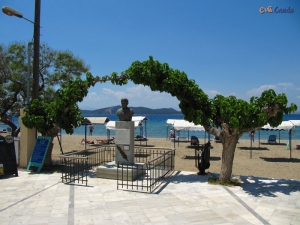
Evia is the second largest Greek island after Crete. Most people know it if you say ‘Xalkida’, the well-known city for day-trippers from Athens. Evia is a large island, with lots of off-the-beaten-track spots for sleeping and swimming. Nea Styra is a little coastal town along the southwestern coastline, a stone’s throw from the mainland.

We made the quick drive to Agia Marina, a tiny mainland port towards Marathon, and boarded the ferry for the 45 minute trip across the bay. Ferry tickets were €4 per adult and €16 for the car.  Once on the other side, you find yourself in a seaside town, where the main activity is, clearly, ‘relaxing’.  Nea Styra is a family-oriented town, with a seaside strip of lovely beaches, cafes, tavernas and a very relaxed, ‘low-glam’ feeling. This is a place to wake up, step outside onto the sand, and pretty much do nothing all day… And, evidently, this place is no secret to Athenians, since there are numerous ferries all day long, and the place was buzzing with weekend visitors.

If the ‘do nothing’ plan isn’t enough for you, I was told that there are ancient megalithic structures nearby, dated to around 4,500 years old, called Drakospita (Dragon Houses).  Maybe worth a visit.  But I wouldn’t know!

So, the weekend passed by with feet in the sand, throwing rocks in the water with my nephew. Nothing special. And totally special.

One of these weekends, I encourage you to jump in the car, point to a random place on the map (preferably along the coast) and just ‘go’. You can thank me later.

Until next week,

Jack
Although holidays in Greece have mostly been connected with the Greek islands, there are also many nice Greek cities to visit in the mainland.  City tourism in Greece is equally enjoyable and will certainly bring unforgettable experiences to the visitor.

Kalambaka: the base to Meteora
The town of Kalambaka, in northern Greece, is a highly developed toursit town blessed with breathtaking natural surroundings.  One of the most impressive Greek cities to visit, Kalambaka is actually the base to the wonderful region of Meteora, some gigantic rocky pillars, on top of which stand Byzantine monasteries.  Generally Kalambaka is busy year round due to the impressive spots of Meteora.

Monemvasia Old Town
Monemvasia, a Medieval Castle Town that is still inhabited until today, is one of the most romantic destinations in Greece.  Take a stroll through charming arched alleyways, Byzantine and Venetian churches, and aristocratic mansions and enjoy breathtaking sea views from the top of the Castle.  Outside hte Old Town is the new town of Monemvasia, called Nea Monemvasia.  In close distance are beaches that are both organised or secluded.

Ioannina
Visit Ioannina, a beautiful city in the region of Epirus, built around the beautiful lake of Pamvotida, to experience its multicultural environment and rich history. The culture of the city is strongly connected to this lake and promenading at the borders of the lake is a favoritr thing to do there. In Ioannina, visitors can see the Ottoman Mosque of Veli Pasha and the Byzantine Castle. 

While in town, do not miss the delicious local liqueurs and sweets, as well as the Museum of Historical Wax Figures Pavlos Vrellis and the Cave of Perama. Due to its geographical position, Ioannina is the perfect base for excursions to the picturesque villages of Zagoria and the archaeological site of Ancient Dodona, where the Sanctuary of Zeus and its ancient oracle are found.

To read this article in full, please visit: Greeka


Wednesday, 11 May 2022 07:00

4 Great Fish Taverns Next To The Sea

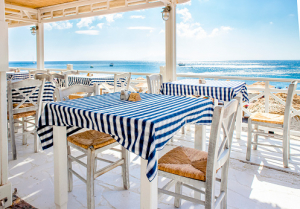
Summer is around the corner so it goes without saying that anyone can enjoy a meal next to the sea while listening to the sound of the waves! But choosing the best one can be quite a challenge.

Below, you will find some of the best fish taverns that are as close to the sea as you can get! 


Garbi   
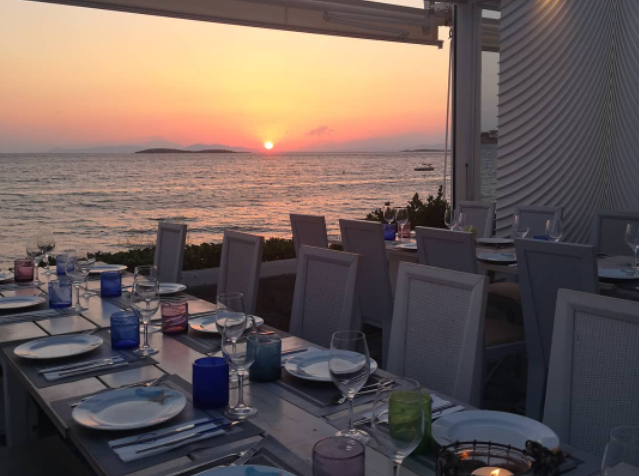
Garbi Restaurant
@garbirestaurant

This panoramic tavern in Vouliagmeni is quite charming, especially during the sunset and the terrace is simply relaxing. At Garbi, you will find classic dishes that characterize the 98-year-old history of the restaurant, including octopus with vinegar and eggplant salad, but also modern tastes like salmon hamburger and sea bass ceviche.

Location: Iliou 21, Vouliagmeni
Telephone: 
210 8963480

Sardelaki Me Thea 
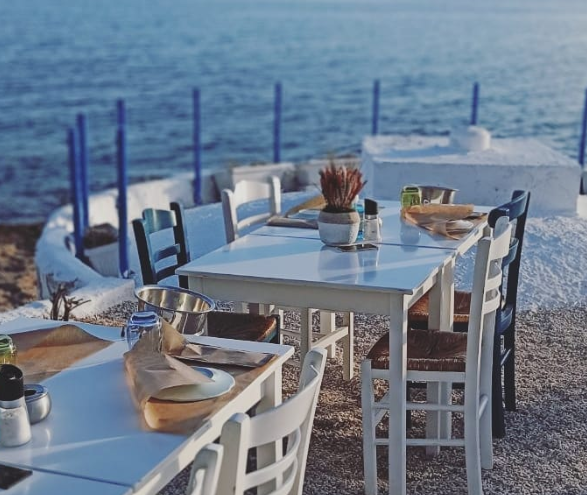
Sardelaki Me Thea
@sardelaki_me_thea


The terraces that look over the bay of Vouliagmeni offer a unique breathtaking view. Sardelaki Me Thea is a large restaurant with white tables and chairs, which create a very cheerful atmosphere. There are dishes you must try, including the marinated anchovies and the squid and grilled scorpaena. Also recommended are the sardines cooked with tomatoes, potatoes, and parsley. 

Location: Leof. Poseidunos 18, Vouliagmeni
Telephone: 
210 9670913

Thea Thalassa
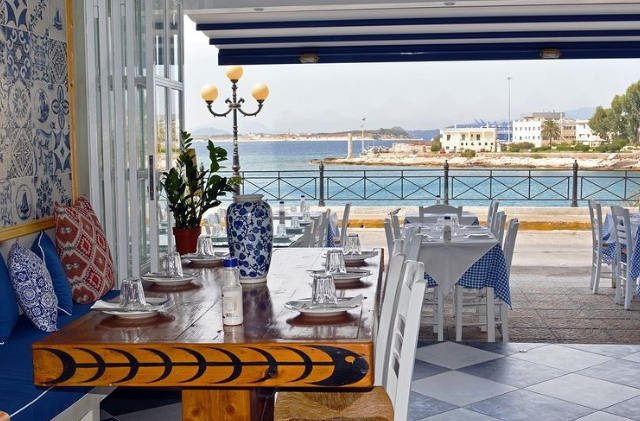
Thea Thalassa
@thea_thalassa_

Located on a gorgeous deck at Mikrolimano, Giorgos Lebidaki's fish tavern is simple and relaxing with a friendly atmosphere. The tavern offers a large menu of classic and modern dishes, including handmade morsels, oysters with seaweed wakame, and lemon fried seaweed (sea lettuce), which you break by hand into seafood chips.  This is a great place with good quality and prices.

Location: Akti Themistokleous 344, Piraeus
Telephone: 210 4132070

Ammos
Ammos Restaurant
@ammosportorafti 


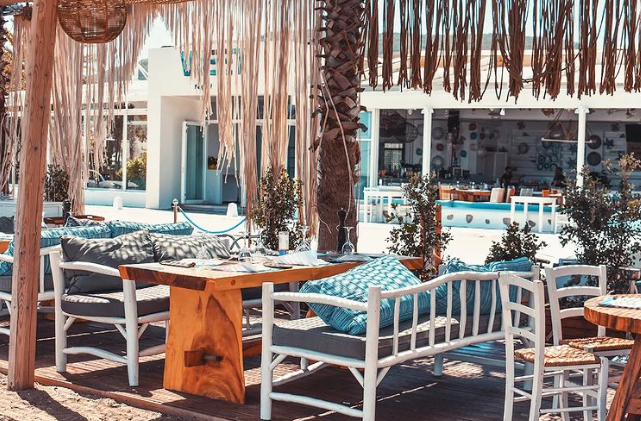
Grab a seat at one of the white sofas of this fish tavern in Porto Rafti and you will get the impression that you are on an Aegean island. In the kitchen, Chrysostomos Prasatzis makes fisherman's risotto, which is mussels with tomato sauce and linguini with clams. There are many choices for meat-eaters such as tenderloin marinated in black beer and served in a delicious mustard sauce.

Location: Avlakiou 52, Pοrto Rafti, Attiki
Telephone: 229 9084550


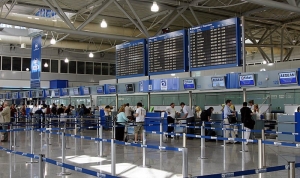
The Athens International Airport (AIA) “Eleftherios Venizelos” has received the “Fast Travel Gold Status” award by the International Air Transport Association (IATA) for acquiring the necessary infrastructure to support IATA’s six Fast Travel projects.

By implementing the projects, the airport has achieved significant innovation and improvement in passenger experience in several areas: Self-check-in, bags ready-to-go, document check, flight re-booking, self-boarding, and bag recovery.

According to IATA, the Fast Travel program is addressing the future of travel with more choice and more control for ​passengers and lower costs, representing annual savings of up to 2.1 billion US dollars for the industry.

To read this article in full, please visit: Greek Travel Pages
As of March 1, 2019, we have introduced a new fee structure regarding how individuals can post on XpatAthens. Until now, we did not charge for individuals to post on XpatAthens, which includes uploading Classified and Event posts.

We have elected to introduce a small fee for uploading posts because we respect your contribution, value the work that we do, and want to enable our team to continue improving the quality of our content and services.
 
As you can also see on our permanently published advertising page here, the cost for posting is now:

Classified Posts:
1 Classified Post: €5 +vat (€6,20)
3 Classified Posts: €15 +vat (€18,60)
1 Year of Classified Posts (limited to 5 weekly): €20 +vat (€24,80)

Event Posts:
1 Event Post: €10 +vat (€12,40)
5 Event Posts: €50 +vat (€62,00)
1 Year of Event Posts (limited to 5 monthly): €75 +vat (€93)
1 Year of Event Posts for Non-Profits & Charities: No Charge

Accommodation Listings:
1 Year listing: €50 +vat (€62)

Directory Listings:
1 Year listing: €50 +vat (€62)
1 Year Listing for Non-Profits & Charities: No Charge


If you’d like to post on XpatAthens, you can do so by creating a profile here, once logged in you can select the type of post you’d like to upload and walk through the process of completing the form provided.

Of course, if you have any question, or would like to learn more about posting and / or advertising on XpatAthens, please feel free to reach out to us at info@xpatathens.com.

Sunday, 22 September 2024 12:06

Dial 112 In Case Of Emergency In Greece & EU

112 is an integrated emergency communications service, which includes an inbound and an outbound component. In case of emergency, individuals can dial 112 for free from anywhere in Greece and the European Union.

The outbound component allows the reception of warnings via multiple technologies and communication channels in case of an imminent or occurring dangerous situation so that individuals can take the protective actions required to stay safe.

How To Use 112 In Case Of Emergency

Individuals in the EU need only to remember this emergency number to reach any emergency service. 112 is particularly useful for anyone who finds themselves in distress and needs emergency assistance while traveling within the EU.

The number is available in all EU member states alongside the domestic emergency numbers. However, some EU countries have opted for 112 as their single emergency number.

In Greece, 112 is available 24 hours a day, every day. By dialing 112, the caller can be connected to:

  • Police
  • Fire Brigade
  • Emergency Medical Services 
  • Coast Guard
  • the European Hotline for Missing Children 116000
  • the National Helpline for Children SOS 1056
The specially trained operators speak Greek, English, and French. Depending on the caller's emergency, the operator dispatches the call to the appropriate emergency service.
 
It is worth noting that 112 operators cannot provide traffic or weather reports, road assistance, or other general information.
 
Calls to 112 can be made from landline telephones, public payphones, and mobile phones (even without a SIM card) and are free of charge. 112 works inside the range of any cellular network.
 
Callers can also reach 112 through the following alternative channels:
  • Text message (SMS) or MMS to 112.
  • Email contact@112.gov.gr
  • Through the Gov.gr application. 

When dialing 112, the emergency call taker will ask for the location of the emergency and questions to determine whether you need police, fire, medical, or other assistance. When reaching 112 by text message or email please make sure to include the following information on your message:

  • What is your emergency?
  • What is the location of the emergency?
  • Are there any casualties?

The public authority having jurisdiction for 112 in Greece is the General Secretariat for Civil Protection.


For more information on the operation of 112 in each EU country, please click here


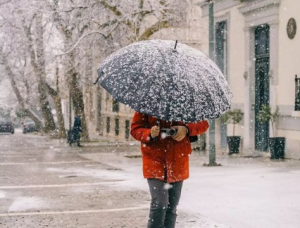
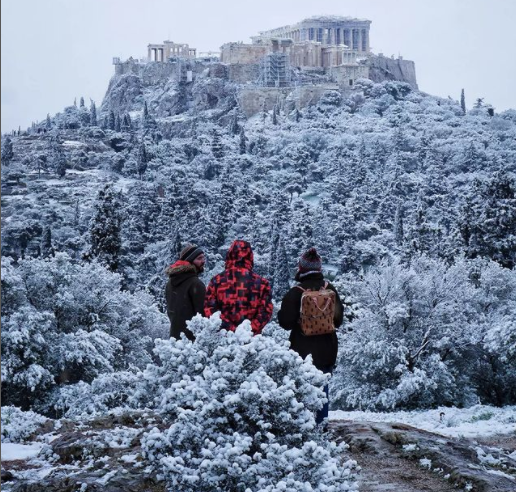
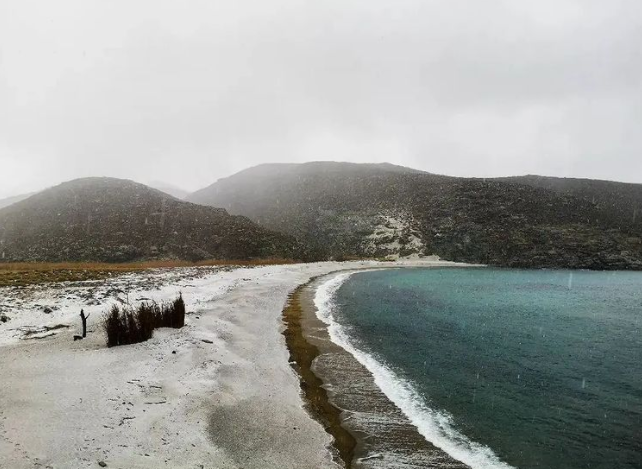
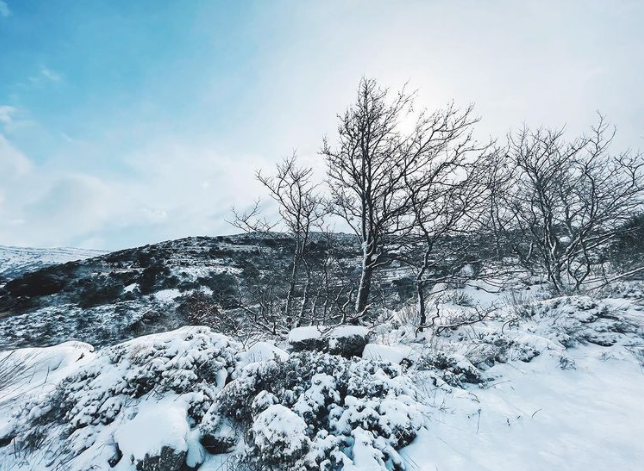
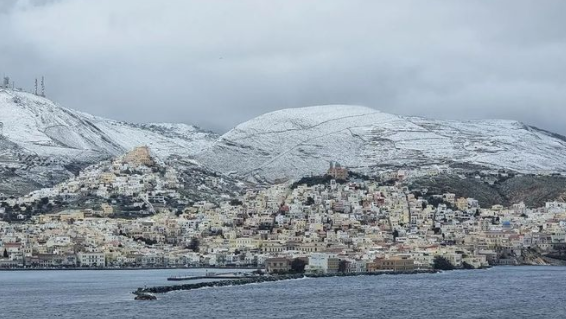
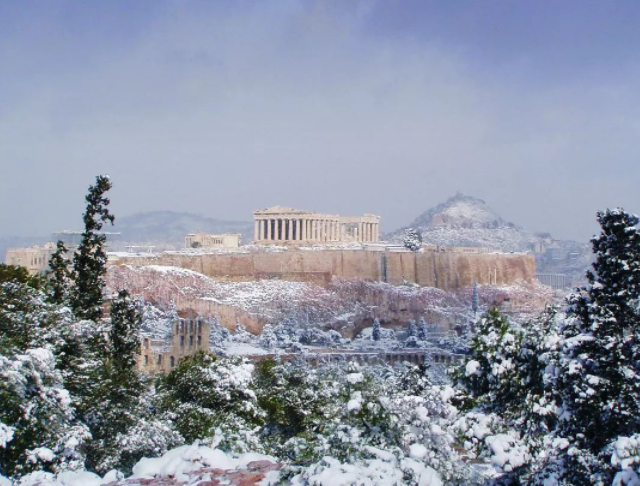
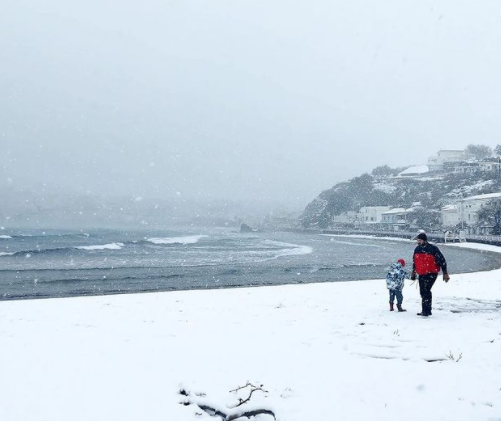
There is undeniably something magical about snow, especially when it falls in places that see it rarely. On Sunday and Monday, as the “Elpis” weather system brought freezing temperatures in many parts of the country, the air in Athens and on the islands filled with snowflakes. And although the Greek capital has experienced snow before, this is a once-in-a-lifetime weather event for the Greek islands, with locals saying that it has been decades since the last time they witnessed such an amount of snow!

The heavy snowfall has caused many problems both in Athens and the islands, as Greece, a sunny country, isn't used to coping with such extreme weather events. For this reason, the government announced that Tuesday, January 25th, is to be considered a holiday for all workers in both the private and public sectors.

All the problems aside, however, many enjoyed the weather and were eager to capture the magical, snowy moments! Here are some of our favorite pictures of Athens and the Greek islands blanketed in snow, looking like they are straight out of a fairytale!

Acropolis - Athens 
Acropolis Athens
@andreas_megos

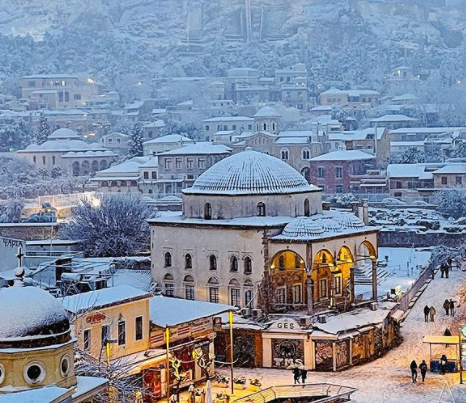
Monastiraki Square - Athens

Monastiraki Square
@athensvibe

Astir Beach - Athenian Riviera

Astir Beach
@spathumpa

Lofos Nymphon - Athens 

Lofos Nymphon
@tom_tsou

Kolimpithra - Tinos Island

Kolimpithra Tinos
@markisia.photography

Kinidaros Village - Naxos Island 

Kinidaros Naxos
@milona_katerina

Neimporio - Andros Island 
Neimporio Andros
@georgekolidas

Ano Siros - Siros Island 

Syrod
@visit.syros

📸 Main image: 
@amaliakovaiou
Tuesday, 26 December 2023 16:00

Archaeological Museum Enters Digital Age
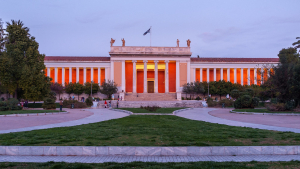
Digital transformation, one of the most overused terms of the last few years, acquires special interest when it refers to cultural institutions. Even more so when the institution in question is the National Archaeological Museum (NAM), Greece’s largest, which for decades has been lagging behind in terms of its digital profile.

The Culture Ministry aspires to change this reality with a comprehensive program “to modernize and highlight the NAM” using 1.5 million euros in EU funding, which was presented on December 19.

Changes include a new secondary website, ds.namuseum.gr, where one will be able to book any museum activity and plan a visit. The museum will offer 32 new thematic guided tours, which will be available in rotation (nine available at a time). Visitors will also be able to do a virtual tour and select specific exhibits in a personal folder as memories of the visit.

Our museums serve as managers and curators of cultural heritage. Museum policies must change to serve social needs and not ultimately become museums themselves,” said Culture Minister Lina Mendoni. “With this specific project, NAM harmonizes its operation with the requirements of the era and the new generation. Also, foreign visitors, who will enjoy this renewed experience, will serve as the best ambassadors of our culture around the world.” Meanwhile, two information stations inform visitors about available themed tours, current and future activities, and allow visitors to send a digital postcard to a friend with one of the museum”s exhibits. In the center of the main hall, there is a new circular kiosk, created with the sponsorship of Aegean Airlines, that offers free audio tour devices to explain the museum’s permanent collections.

Next to the display case with gold masks of the Mycenaean tombs, there is now a series of three-digit codes that can be typed into the audio tour device to hear the relevant excerpt. “Stories about love and infidelity, war and peace, the first computers and tablets,” explains Anna-Vasiliki Karapanagiotou, general director of the museum.

These special podcasts, while still experiencing some technical problems that are expected to be overcome, are available in six languages and cover a total of 883 exhibits, while separate texts have been compiled for guided tours in sign language and for the visually impaired.

An additional service, which will be activated soon, is a mobile application for the museum’s most iconic exhibits, while nine digital information islands have been placed in as many rooms, enriching the thematic tours with videos as they are automatically coordinated with the visitors’ devices.

Regarding the planned expansion of the museum, Mendoni said that the agreement for the required studies will be ratified in Parliament within the first two months of 2024. The date of the ratification will affect the timeline for the completion of the project and the sections of the museum that will be closed.

Originally published on: ekathimerini.com
by Angeliki Vourliotaki

After reading Fire on the Islanda suspenseful, heartfelt novel set in a Greek village, I was immediately intrigued by the man behind the story. My review barely scratched the surface of what Timothy Jay Smith brings to the page, and I couldn’t help but want to learn more about this fascinating writer and person.

So, we sat down for a long and heartfelt conversation. Timothy opened up about his life, his work, and his enduring bond with Greece. From planting tens of thousands of trees in Tanzania to founding a prize for political theater, to crafting layered characters drawn from real people, he offers the kind of perspective only a true global citizen can.

We began with the big question...

Q: For someone who isn't familiar with you or your background, how would you describe yourself as a writer and as a person?

That's a big question to start with! At a young age, I developed a social consciousness that would define my career and eventually my writing. Before I decided to become a full-time writer, I worked all over the world on projects to help low-income people, including in the United States, where we had a national program called the War on Poverty. When I was young and right out of college, I was able to get work that really allowed me to help others through different projects. So I guess I’m pretty compassionate in that sense.

When I was about 11 years old, my school had a spaghetti dinner fundraiser, a $1 meal to raise money for student activities. Sitting across from me at the table was what I thought was an old man (he was probably in his 30s) and he told me he spoke five languages and had been to 40 countries. On the spot, I decided: that’s the life I want to lead! And I managed to do that. So I’m a traveler, I’m a caring person. One of my ongoing projects is environmental. In Tanzania, I’ve been working with a village to plant trees. So far, we’ve planted 32,560.

Q: So, you want to help. People, the environment, everyone?

All my books really come from a sense of a big issue that’s affecting people’s lives. My very first book came out of the two and a half years I spent in Jerusalem managing the first significant U.S. government project to help Palestinians. Through that, I got to understand the multiple sides of that conflict. I decided to write a novel – later published as A Vision of Angels – that would, through fiction, reveal how the conflict affects ordinary people’s lives. The main characters were an Israeli war hero, an Arab Christian grocer, an American photojournalist, and a Palestinian farmer.

That sort of defined my other work as well. After that, I wrote a book where the story dealt with the issue of human trafficking. There’s a young girl who’s been trafficked, and it’s about what her life is like and someone who’s trying to help her. All my stories deal with big issues, social and worldwide concerns, but I concoct a suspenseful plot to keep readers interested. So my stories aren’t all about ‘message’. I show how these things really affect ordinary people who get caught up in them.

Q: You founded the Smith Prize for Political Theater, which, although no longer active, was a powerful initiative. Do you still see your writing as a form of activism, and is there a chance the prize might be revived in the future?

Yes, I definitely see my writing as a form of activism. It’s unfortunate that the Smith Prize is no longer happening. We had some very successful plays that went on to good productions. One Smith Prize playwright who went on to win the Pulitzer Prize for Drama! But when the pandemic hit, it really devastated the theater world as you couldn’t have people gathered in enclosed spaces, and theater doesn’t work well over video calls. It just became time to let it go.

I’ve thought about bringing it back. But it’s a lot of work and right now, I’m focused on the Tanzania Trees Project. Maybe when I reach 100,000 trees, I’ll revisit the idea of political theater.

Q: So you have traveled across the globe. Can you tell us a bit about the countries that have shaped you the most?

The countries I’ve lived in have shaped me. I’ve probably spent about seven years total in Greece, so of course Greece is very important to who I am. I also lived in Jerusalem which was a deeply powerful experience. Then I spent a couple of years in Thailand, headquartered in Bangkok but working all over Asia. I was based there while serving as a financial advisor and analyst on every U.S. government project funded in Asia at the time. So I was constantly on the move.

One of those projects was in India. I had already traveled there personally, but for work, I began going to Mumbai about every six weeks for over a couple of years. India made a huge impression on me; the overwhelming poverty but also the country’s determination to move forward. That contrast really stayed with me.

I don’t think I mentioned Poland, but that experience also moved me deeply. I spent over two years there serving as an advisor for the World Bank to the new Minister of Finance following the collapse of the Communist government when Solidarity came into power. I was a housing finance advisor and helped to create Poland’s first-ever mortgage system, something that allowed people to borrow money to buy homes, instead of relying solely on savings.

I’ve also worked extensively across the U.S., especially in areas facing deep poverty. I did a lot of work with Native American communities and was involved with an agency that focused only on “special impact areas”, the 40 poorest areas in America. These were often rural counties or urban census tracts, frequently predominantly Black or Hispanic neighborhoods. All of these experiences—abroad and at home—have shaped how I see the world.

Q: Is there a wild or unforgettable experience from your life, something people should hear?

One story that stands out is from my work with Native American communities. I became familiar with the legal framework around treaties—or the rare absence of them—with most of the tribes. In Alaska, there was no treaty, and a law called the Alaska Native Claims Settlement Act included a hidden time bomb: after 20 years, Native land, normally protected, would be taxed based on the value of its highest possible use. So, if there was oil under the land and it wasn’t being pumped out, indigenous Alaskans would still be taxed as if it were, which would have forced them to sell their land to pay taxes.

I brought this to the attention of the White House—President Carter specifically—and he issued an Executive Order to set aside that provision of the law. Because he had a Democratic Congress, that Executive Order was later turned into law, permanently protecting the sovereignty of Native Alaskan land. So yes, I’ve had the chance to impact people’s lives in meaningful ways.

Q: You’ve traveled and lived all over the world, and one of these places is also Santorini. You first lived there in the early ’70s, and you’ve been back recently. I know it’s hard to sum it all up, but how has Santorini changed since those early days? 

When I first went to Santorini in 1972, I had no idea what the island looked like. I hadn’t even seen a photo. I was working for the National Center of Social Research (EKKE) in Athens, studying rural-to-urban migration, but city life didn’t suit me. So I convinced EKKE that I should go to the islands to assess the ‘push’ factors driving people to move to Athens. Through connections in Amfiali, near Piraeus, where many Santorini families had settled, I chose Santorini, sight unseen.

The ferry ride was a 20-hour journey, passing dry, barren islands like Ios and Naxos. I began to worry I was heading to a desert. Then Santorini appeared—volcanic cliffs, lush vineyards, completely unlike anything I expected.

There was no airport, hardly any tourism, and very few foreigners. I spent two winters there, often the only non-Greek person around. The villages were small and surrounded by open land—not the sprawl of villas you see now. I lived without hot water, taking a weekly shower in Fira for 25 cents at a hotel—ironically, the same one I stayed at on my recent visit.

Back then, Oia was abandoned and crumbling. Now, it’s one of the most photographed places on Earth. The caldera view remains breathtaking, but much of the island’s quiet magic has been lost.

Q: And, what is it that made you a Grecophile? After your time in Santorini, how has your relationship with Greece evolved over the years?

Well, I just fell in love with the Greek people, basically. They’re very hospitable and love to tell good stories. In my village, we didn’t have a television set for a long time—one finally arrived eventually—but before that, people would say, “Oh, let’s tell stories tonight.” So everyone would gather in a little spot, sit on the ground, and we would share stories and things like that. I loved all of that. It was great. And then, of course, the natural beauty of the country, it really is wonderful.

Q: Do you have any more stories set in Greece?

I’ve been thinking about it, and the answer is yes and no. Yes, I’d like to write something set in Greece again because it means a lot to me and I know it well enough to portray it authentically. But I’m not interested in writing a series with the same main character. I prefer each story to stand on its own.

If I can come up with a suspenseful story that includes social activism, something that keeps readers engaged without hitting them over the head with a message, I’d consider it. I haven’t ruled it out, but writing a book takes years, and I don’t have unlimited time. Still, I love the idea.

Q: Okay, so what’s unique about this book being set in Greece compared to other places you’ve written about?

Well, there’s just so many things about being Greek. The church, for example, plays a big role, which wouldn’t be the same elsewhere. Honestly, it’s hard to pin down one thing, but just being in Greece sets it apart from my other books.

The geography, the landscape, the culture, all of that shapes the story in ways that wouldn’t happen in other places. For example, in another book I wrote, Cooper’s Promise, I created a fictitious African town with an Arab diamond district. I combined different cultural elements to build that world because I hadn’t lived in one place long enough to capture it authentically. But with Greece, I know the place well.

With Fire on the Island, I wanted to tell a refugee story but ended up making it more of an homage to Greece and its people. The refugees didn’t really mingle much in my village—they had to move on quickly—but their presence stirred conflicts among the villagers. So the story became more about the Greeks than the refugees.

Later, I wrote Istanbul Crossing, a true refugee story where almost all the characters are refugees. I don’t know Turkish society deeply, so I focused on the human side, but with Fire on the Island, my familiarity with Greek culture really shines through.

Q: Are you working on something new, right now? If so, where is it set this time?

Yes, I’m working on a new novel. I’m not too far into it yet, but I’ve been thinking about it for quite a while. This one is set in America. I actually have the rather unique distinction of being a 16th-generation American, my family came over on one of the earliest ships after the Mayflower. So we’ve been in the country for about approximately 400 years. I’m very concerned about what’s happening in the U.S. these days. I want to write something that looks at that long legacy. What does it mean to come from 16 generations of Americans? Where has that brought us? It feels like a story I’m in a good position to tell, because I grew up with all these stories. One cousin was even what we’d call the "Man Friday" to Abraham Lincoln, meaning he served as his personal assistant/butler. So there’s this long, textured history in my head that I need to explore, and I think I’ve found a way to start shaping it into a story.

Of course, it will have an autobiographical element as all of my novels. All my main characters are, in some way, parts of me. Even when I’m combining or reshaping them, the emotional truth is always there. So yes, while the stories are fictional, they’re built out of real places, people, and things I’ve personally felt or seen.

Q: Fire on the Island has feminist elements, with strong women who are leaders, rebellious, and uncompromising. Was that intentional from the start, or did the characters evolve that way?

The women characters, especially the three generations in one family – the grandmother, her daughter and granddaughter, are based on real people. Their voices in the book come from real life. I gave them a fictional story, but the characters themselves are drawn from people I know, which is true for most of my characters. In Fire on the Island, having returned to the same village every year for 20 years, I got to know this family well. They weren’t offended by how they were portrayed; in fact, they’re proud to be in the book, even though I didn’t use their real names.

I think women have a very important part in Greek society in general. They’re very strong characters. In my time here, it was clear to me that the men controlled the fields, but the women controlled the village and the household. That strength is reflected in the story.

Q: Throughout the book, you sprinkle in Greek phrases that really ground the story. So, do you know Greek?

I didn’t know Greek when I first moved to Athens. Before going to Greece, I got a Greek tutor, but we didn’t get far. The only word I really learned was malaka (laughs).

The tutor mostly wanted to talk about girls, so it wasn’t very productive! But I’ve always liked studying languages and grammar. I taught myself Greek sto dromo (on the street) when I got to Greece, especially after moving to Santorini, where nobody spoke English in my village. I had to learn it.

I actually love Greek. It’s not a hard language for me. The hardest part for most people is there aren’t many cognates, no words that sound similar to other languages. Like in French, révolution means revolution, but the Greek word for revolution – epanastasis – doesn’t sound ljke any obvious word in English. So students of Greek have to learn a lot of new words.

Back when I lived on Santorini, I spoke well enough that people wouldn’t believe I’m not Greek. I don’t speak as well now, but thirty years ago, I really did.

Q: One last question: if you had to describe yourself, Greece, and Fire on the Island each with just one word, what would they be?

I’d say for myself: empathetic. I care about people, especially the disenfranchised and that has motivated  drives what I do.

For Greece: welcoming.

And the book? I’d say thoughtful. The story asks readers to think about tough issues, like being a stranger in a strange land, or topics like homosexuality in Greek society. These are difficult subjects for many people, and I wanted to explore them honestly in the book.

Thank you, Tim, for sharing your stories, your passion, and your heart with us. It’s been a pleasure getting a deeper look into the life behind Fire on the Island, and the purpose behind every page!

Want to learn more about Tim? Visit his website and grab your copy of Fire on the Island HERE!



Page 168 of 452