

XpatAthens
Over 1.5 Million Arrivals Through Athens International Airport In March 2018

Island Of Tinos - A Wild And Raw Greek Experience

Celebrating French Gastronomy In Greece And Throughout The World
No Screen Boredom Busters For Kids

Most kids love helping out in the kitchen, so cooking and baking activities will probably be accepted with excitement, especially if the recipe calls for sugar, Nutella, and cocoa! Mug cakes don't require a hot oven; don't create a huge mess, and what's more, is that older kids can make them themselves. For a delicious mug cake mix 4 tablespoons self-raising flour, 4 tablespoons sugar and 3 tablespoons each of milk, oil, cocoa powder, and Nutella, and 1 egg. Divide the mixture into 2 mugs and microwave for 90 seconds or more if needed. Add a topping such as whipped cream or icing sugar and enjoy!
2. Enjoy Your Favorite Board Games & Puzzles
It's challenging to be stuck indoors due to weather (or virus) conditions but with a bunch of snacks, and a stack of games and puzzles staying indoors can be a ton of fun! On the upside, surely you'll stimulate family bonding and create some happy family moments!
3. Make DIY Puffy Paint
Painting is fun, but painting with puffy paint is even better. Young kids love this sensory paint and will spend hours creating their puffy masterpieces! For DIY puffy paint, you will need 3/4 cup shaving cream, 1/4 cup white glue, 1/4 cup flour, food coloring. Mix the ingredients until they are thoroughly combined—Color the paint with food colorings. Use squeeze bottles for delicate artwork or paintbrushes for a thicker texture. Make sure to use thick cardstock instead of plain paper– to avoid sogging–and to let the artwork to air dry for a few hours.
Rock candy is a delicious, fun recipe that also doubles as a science experiment because you get to watch the sugar crystals form. Get creative with endless flavor and color combinations that will delight children and grownups alike! One of the best things is that it takes time and patience. It can take up to a week for the rock candy to form, which makes it an ongoing project for the next few days! Learn how to make rock here.
5. Have Fun With A DIY Indoor Bowling Game
This DIY indoor bowling game is fun to have on hand as a great boredom buster. Children can help out with making the pins and use their counting skills to set up the game. Create a simple bowling game with recycled bottles for some stay-at-home fun! The only things you'll need are 10 small water bottles numbered from 1 to 10 with stickers or labels, and a small ball. Place the water bottles in a triangle shape in the garden or at the end of a hall.
6. Make Salt Dough
Use 1 cupful of plain flour (about 250g), half a cup of table salt (about 125g), and half a cup of water (about 125ml). Knead the dough, cut out different shapes, and cook in the oven for 3 hours in low heat. When your creations have completely cooled down, paint them with colors and glitter to create little masterpieces!
7. Make Rainbow Rice
Follow these easy steps to create colored rice without using rubbing alcohol. You will need 1 cup of long-grain white rice, 1/2 tsp vinegar, several drops of liquid food coloring, and a food storage container. Put the rice, food coloring, and vinegar in a food container and shake very well. Open the box and leave the rice to dry for a couple of days. You can make batches of different colored rice. Rainbow rice is excellent for sensory bins and craft projects.
8. Make A Sensory Ice Bucket
Add water in a plastic food container or bucket and toss in small plastic toys such as plastic animals or lego bricks. Let it freeze in the freezer and then ask your children to break the ice and discover what's hidden inside!
9. Make An Indoor Obstacle Course
Use your creativity to put together an obstacle course inside your home. The goal of an obstacle course is to get your child moving. Use any variation of the items below for your toddler's obstacle course. You can use pillows, blankets, sofa, chairs, masking tape, a basketball and hoop, boxes, step stool, a tunnel, and a ball pit. While setting up your obstacle course, include activities such as shooting a ball into a basket, climbing on pillows, crawling under a row of chairs and through a tunnel, and much more. The indoor obstacle course will keep your little ones happy for a long while!
10. Get Reading
Being read to is usually a toddler's favorite time, while older kids also love diving into a good book. Make an effort to read your way through The Book Trust's 100 Best Books– a list of the 100 best children's' books from the last 100 years.
11. Make A Habitat Diorama
This content has been sourced and prepared by Codico Lab
Man Plays Bouzouki While Undergoing Brain Surgery

Greece To Ban Development In Mountain Areas To Protect Habitats
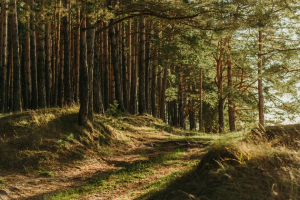
Making the transition to green energy a key priority, the conservative government of Prime Minister Kyriakos Mitsotakis has promised to shut down nearly all its lignite-fired plants by 2025 and protect areas with native plants and animals.
Following devastating wildfires fuelled by a protracted heatwave last summer, the government has also promised to build better climate change defenses to protect its forests, which have a key role in reducing greenhouse emissions and attracting visitors.
“We have witnessed extreme weather phenomena and disasters in recent years which pose a great risk for nature and mankind,” Skrekas told an online news conference.
For that reason, Greece will not allow any new roads or any other kind of human construction in six mountains on the islands of Crete and Samothrace, on the Peloponnese peninsula, and in central Greece – which have a huge environmental value and are an integral part of our tourism, he said.
Mitsotakis has pledged to transform Greece’s economy through better use of its natural resources but has been forced to strike a balance between expanding wind parks in mountain areas with the need to protect forest habitats.
Environmental groups and locals have long opposed plans by private companies to build roads and allow the installation of wind turbines in mountain forests, arguing they would scar some of the country’s last remaining virgin areas.
Any permits of different stages for wind turbines that have been issued for wind projects in those mountains will be canceled, Skrekas said.
Originally published on: greece-is.com
5 Amazing Spots To Enjoy Sunset In Athens
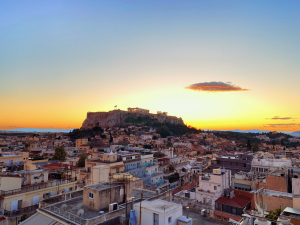
But, you probably don’t know that you don’t have to travel to a Greek island for a memorable golden hour experience. Sunsets in Athens are equally indescribable, unsurpassable, and unforgettable. Here’s a list of 5 places in the Greek capital that every sunset chaser like us will fall in love with!
Areopagus
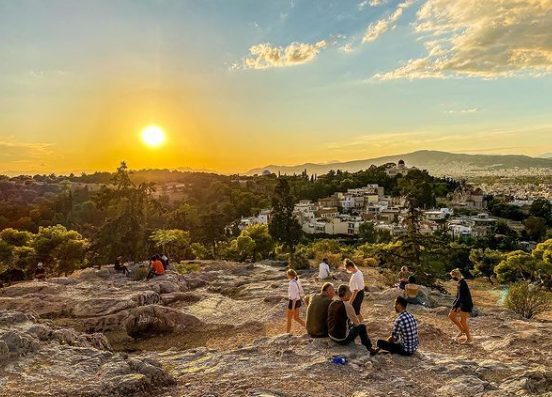
@iamsmark
Located northwest of the Acropolis, this prominent rock used to be the supreme court of ancient Athens. Today it is just as fascinating, providing panoramic views of the whole city. A beloved hangout spot for locals, there you will see groups of friends and couples chatting and taking in the spectacular vistas any time of the day (or night!).
Kastella

@3_k_0_t_s
Set on a hill overlooking the Port of Mikrolimano, Kastella is, without a doubt, the most picturesque district in Piraeus. As you make your way to the top of the hill, meandering through the narrow, scenic streets, you will encounter impressive neoclassical buildings, architectural gems, and the Veakeio Theatre, until you reach the church of Profitis Ilias where the views over the Saronic Gulf will leave you speechless.
Lycabettus Hill

@chiara.zagli
Gracefully standing 277 meters above sea level, Lycabettus Hill is the highest point in Athens. You can get there by taxi, the funicular, or on foot, but, no matter what, the views from the top are rewarding. Go all the way up until you reach the Holy Church of Saint Isidore, a chapel of striking beauty, and enjoy the mesmerizing views of the islands of Salamina and Aegina.
Temple Of Poseidon At Sounio
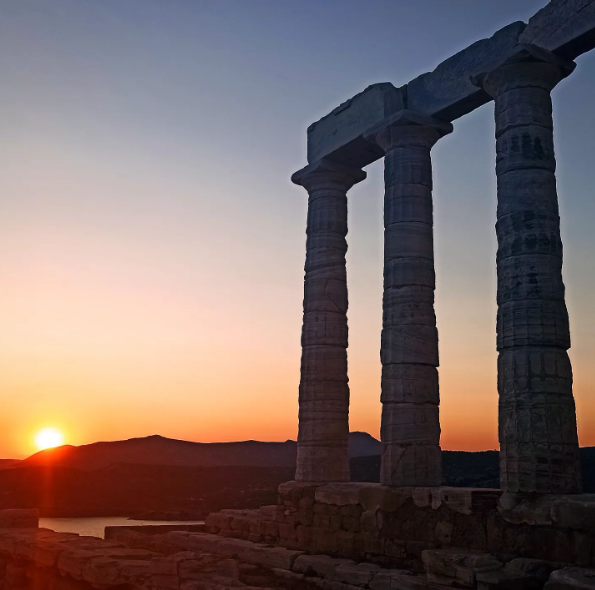
@Tibortokai
At the end of the Sounio Peninsula, at the southernmost point of Attica, lies the Temple of Poseidon, a site of worship of the sea god Poseidon, built during Athens’ Golden Age. Today, it continues to enthrall visitors who, except for the bewitching views, can swim in crystalline waters while marveling at the marble-white columns of a 5th-century BC temple. A combination you can’t miss!
Parthenon
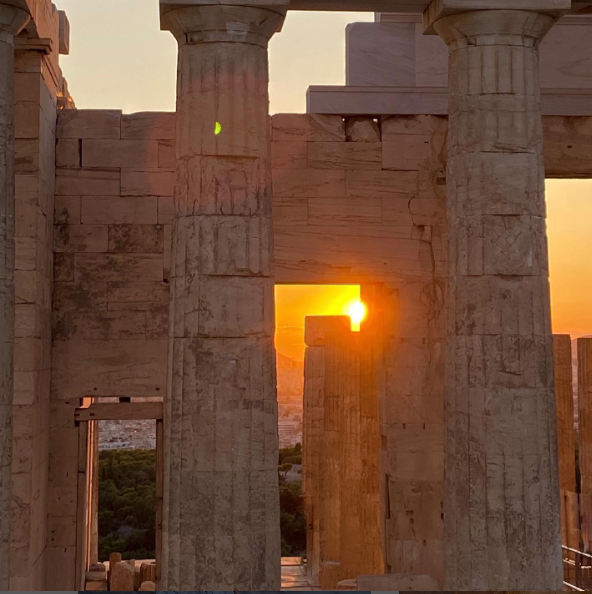
@manon_alzieu
Of course, a visit to Athens isn’t complete until you go all the way up to the temple of Parthenon that dominates the hill of the Acropolis. Undeniably Athens’ most famous historical landmark, a symbol of democracy, and a masterpiece of ancient architecture, Parthenon is the perfect place to enjoy the sunset, just like Athenians did 2.500 years ago!
The Oldest Weather Station In The World Is In Greece
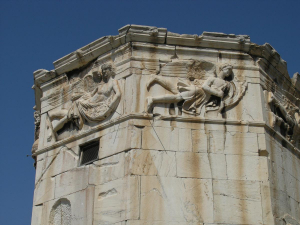
Originally published in Greek on: newsbeast.gr
The Wholesome Goodness Of Greek Cuisine
Alin Batanian - Yoga & Pilates Instructor


As a dancer, she has taught classical ballet at the Gymnastics Club of Irakleio Attikis (2010–2011) and contemporary dance at The Henny Jurriëns Foundation in Amsterdam (2012). She has performed in productions across the Netherlands, Germany, Spain, and Portugal (2012–2014) under the choreography of Manuel Ronda.
In Greece, she has collaborated extensively with choreographer Menti Mega on projects such as Unlimited Access—a European program supporting professional dancers and individuals with motor, cognitive, or visual impairments (2014–2016); the educational program Triples and Triplets (2017–2018); and the performance Sweet Abyss (2015). She also participated in the 3rd Young Choreographers Festival at the Onassis Cultural Centre (Fläche en Handfläche by Ioanna Angelopoulou, 2015) and in Stavros Petropoulos’ documentary I Am a Dancer (2016), all produced by the Onassis Foundation.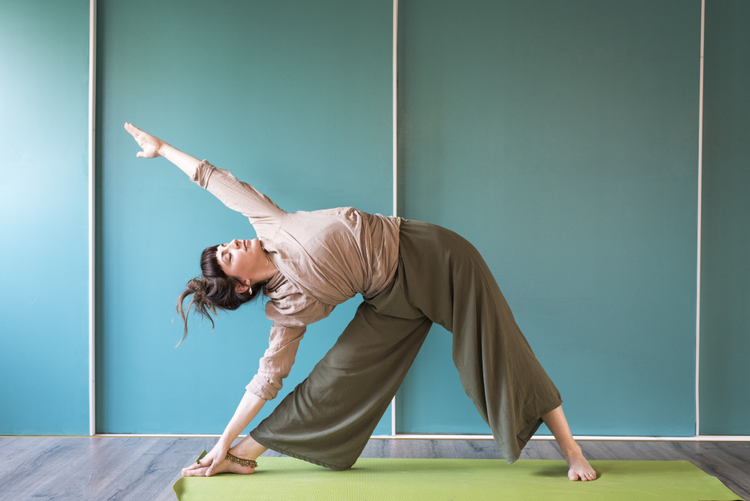
In recent years, she has worked closely with Irini Kourouvani, organizing dance workshops and performances in public primary schools across Attica. These initiatives, part of the International Olympic Truce Centre’s educational programs, aim to help children reconnect with their bodies, explore rhythm and movement as forms of expression, and embrace the diversity of every body.
She also volunteers with the “Pisti” Association at the “Agia Sofia” Children’s Hospital in Athens, offering dance therapy and yoga sessions to young patients and their families in the Pediatric Oncology-Hematology Unit (POAIM – K.E.TH.).
Certifications
-
Professional Dance School “Rallou Manou” (2011)
-
200-Hour Yoga Teacher Training (The Yoga Studio Marousi)
under Course Director Swami Nirvikalpananda (Olga Alexiou) and Lead Trainer Mahatman (Michalis Evangelidis) – Yoga Alliance International Certified -
120-Hour Bahiranga Restorative Yoga for Musculoskeletal Pain (Nada Yoga Place) with Lead Trainer Mahatman (Michalis Evangelidis)
-
120-Hour Bahiranga Holistic Healing Aspects of Yoga (Nada Yoga Place) with Lead Trainer Mahatman (Michalis Evangelidis)
-
60-Hour Aerial Flow Yoga Teacher Training (Kyklos Aerial Lab)
with Aggeliki Sotiropoulou -
Advanced Level II in the Royal Academy of Dance (R.A.D.) training program, studying classical ballet under Carol Hanis and reaching.
🌐 https://alignbyalin.gr