
XpatAthens
Vlassis Restaurant
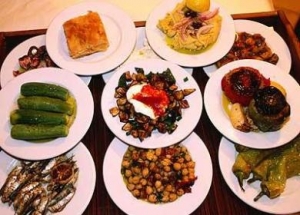
We gorged so happily on these mezedes that we couldn’t summon much enthusiasm for our entrees, which warranted at least a bit of it. A simply grilled red snapper had tender flesh; baked chicken fulfilled its prosaic obligations.
Come dessert Vlassis looked beyond the national borders, serving us a panna cotta reminiscent of Italy and a cheesecake evocative of nowhere and everywhere. I could excuse the digression. It was the last act of our final meal, and we’d had our contented fill of Greece.
Vlassis, Maiandrou 15, Athens; (30-210) 7256335. Dinner for two, with wine, is 85 euros.
nytimes.com
Do you have a recommendation or recipe to share? Send it to us at ideas@xpatathens.com!
Athens & Thessaloniki Among '100 Resilient Cities'
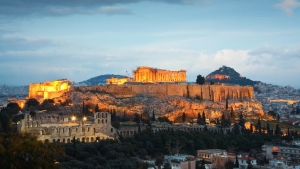
Athens and Thessaloniki have both been selected to join 100 Resilient Cities – a programme 'pioneered' by the Rockefeller Foundation to promote resilience in urban areas to challenges and potential disasters.
The initiative was launched 18 months ago with the selection of the first 32 cities to participate. Today the second group of 35 cities around the world to join the network were announced, with the candidacies of Thessaloniki and Athens both proving successful. In total 331 cities had applied to join the programme.
To read more, please visit thetoc.gr/eng
Most Beautiful Towns In Greece
A land of incredible natural beauty, fascinating history, and colorful folklore, Greece arguably has something for everyone. From quaint coastal towns to alpine mountain villages and multicultural Macedonian cities, this is a selection of the must-visit, off-the-beaten-path destinations where you will discover a different side of this remarkable country.
1. Nafplio
Few cities reflect Greece’s rich and diverse history as well as Nafplio, one of the country’s most elegant and romantic destinations. Located in the heart of the historic Argolis region on the Peloponnese peninsula, Nafplio has deep cultural roots in Ancient Greece and the Venetian period of the 15th and 17th centuries. It flourished as modern Greece’s first capital in the early 1800s. The city boasts gorgeous neoclassical mansions, beautiful Venetian architecture and scenic alleys. Its landscape is composed by two Venetian castles, Palamidi and Acronafplia, built on two successive hills. Not to be missed, the small fortress of Bourtzi in the Argolic gulf, a short ferry ride from the city, offers unique views over Nafplio and an ideal setting for romantic getaways.
2. Parga
The quaint town of Parga is the most popular summer destination in Epirus, in western Greece. Built amphitheatrically on the slopes of Pezovolos hill and surrounded by lavish greenery and beautiful blue sea, the town has a laid-back island feel to it. Amongst Parga’s highlights, the visitor can enjoy its charming and colorful waterfront houses and stone-paved squares, and visit the ruins of an old Venetian castle atop the hill. Nearby Valtos and Lichnos beaches, connected to the port of Parga by boat, are amongst Greece’s finest.
3. Kalampaka
With a population of roughly 12,000 people, the small town of Kalampaka is located in Central Greece. It is built on the foot of the most spectacular Meteora pinnacles, a complex of abrupt rock formations that host one of Greece’s biggest and most important group of monasteries and UNESCO World Heritage site. Kalampaka has a rich history dating back to ancient Greece and especially the Byzantine era, with plenty of beautiful Orthodox churches and chapels. You can stroll down the narrow cobblestone streets of the town’s picturesque old quarter, Sopotos, much of which is built under the shadow of the rocks, and enjoy beautiful Macedonian traditional architecture.
4. Kastoria
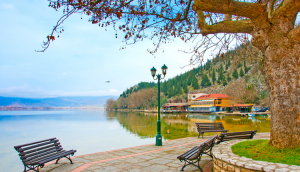
Northern Greece’s hidden gem, the photogenic city of Kastoria is built on a narrow strip of land amidst the still waters of beautiful Lake Orestiada, giving the impression of a floating island. The city flourished during the 19th century as a fur trade and manufacturing center, and many of its traders’ luxurious mansions and traditional houses can be admired in the old quarters of Doltso and Apozari, along with 72 beautiful churches that are a testament to Kastoria’s rich Byzantine past. The lovely promenade around the lake is perhaps one of Greece’s most scenic walks, offering spectacular views of Kastoria and its surrounding mountains.
5. Karpenisi
Widely popular among winter sport enthusiasts and nature lovers, Karpenisi is a small town situated in a remote and sparsely populated area of Central Greece that is called the country's ‘Little Switzerland.’ The town’s reputation owes much to the unspoiled natural beauty of its surrounding mountains, alpine forests, and whitewater rivers, which make it an ideal destination for true escapism. For its size, Karpenisi offers a decent choice of traditional lodgings, bakeries, and restaurants, and boasts a wide variety of local delicacies, such as its famous leek sausages and internationally awarded prosciutto, crafted from a porcine breed native to the area.
6. Metsovo
Situated at an altitude of 1,200 meters in the very heart of the majestic mountain range of Pindos in Epirus, Metsovo is undoubtedly one of Greece’s more picturesque towns. The city was home to some of the country’s most skilled stonemasons who used the region’s rich natural resources to build gorgeous mansions, monasteries, fountains, and cobbled streets and squares, most of which remain untouched by time. Nearby mountain peaks and slopes and pristine forests offer an arresting sight to visitors, who can enjoy scenic hikes in the surrounding area. Despite the rapid increase in tourism in recent years, Metsovo still preserves its traditional character, perfectly combining the past with the present by offering a multitude of cultural and sport activities all year round.
To read this article in full, please visit: TheCultureTrip.com
Ancient Shipwrecks Amongst Top Archaeological Finds Of 2015
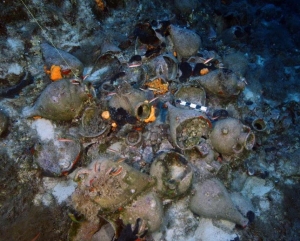
The newfound wrecks include cargo that dates from the Archaic Period (700 to 480 B.C.) up to the 16th century. The expedition team says the finds could change the way historians think about ancient Greek trade. For example, some of the amphorae styles found around the wrecks have never been seen before on the seafloor.
The Fourni archipelago is a small group of islands, islets and reefs that lies in the northeastern Aegean Sea, in the triangle formed by the islands of Ikaria, Samos and Patmos. The region sits in the middle of a shipping channel that is believed to have been an important maritime corridor during antiquity. Though the archipelago itself wasn’t a destination for traders, it did become the final resting place for plenty of ships buffeted by sudden southern storms as they made their way from Greece to Cyprus and Egypt.
This is the first time that an underwater archaeological expedition was organized around these islands. Archaeologists from the Greek Ephorate of Underwater Antiquities and RPM Nautical Foundation worked together with local sponge divers, fishermen, and free divers. Funding for the expedition was provided by the Honor Frost Foundation, a UK charity that supports research in the eastern Mediterranean through an endowment from pioneer maritime archaeologist Honor Frost.
Michelin-Starred Restaurants In Athens
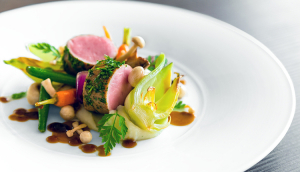
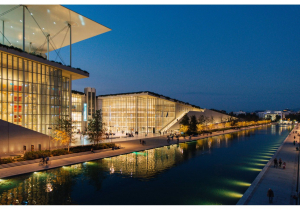
Take the express lift up to the 6th floor of the striking Onassis Cultural Centre; here you'll find a sultry restaurant looking out over Syngrou. Classic Greek recipes are executed in a refined modern manner - for something a little different try the cocktail pairings. They also offer a bistro menu at the bar.
Address: 6th Floor, Onassis Cultural Centre, 107-109 Syngrou Ave, 11745, Athens
Price Point: $$$$
Dress Code: Smart
Spondi
A discreet, intimate restaurant with two delightful courtyards and two charming dining rooms - one built from reclaimed bricks in the style of a vaulted cellar. Top quality seasonal ingredients are used in imaginative, deftly executed, stunningly presented modern French dishes. Greek, French and Italian wines feature on an impressive list.
Cuisine: French
Michelin Stars: Two
Address: 5 Pyronos, Varnava Square, Pangrati, Athens
Telephone: 210 7564021
Price Point: $$$$
Dress Code: Smart
Varoulko Seaside
Varoulko sits in a great spot in Mikrolimano Marina - the chef's old neighbourhood. Watch the yachts glide by from the maritime-themed dining room which opens onto the water. Greek and Mediterranean dishes showcase organic vegetables, Cretan olive oil and the freshest seafood; squid and octopus feature highly.
Cuisine: Fish and seafood
Michelin Stars: One
Address: Akti Koumoundourou 52, Mikrolimano, Piraeus
Telephone: 210 5228400
Price Point: $$$$
Dress Code: Smart
Botrini's
A keenly run, ultra-modern restaurant away from the centre of the city; sit in the main room with its view of the chefs at work. Creative, characterful, flavour-packed dishes showcase the owner-chef's Greek-Italian heritage. He hails from Corfu and ingredients from the island are well used..
Cuisine: Mediterranean
Michelin Stars: One
Address: 24b Vasileos Georgiou, 10435, Chalandri
Telephone: 210 6857323
Price Point: $$$$
Dress Code: Smart
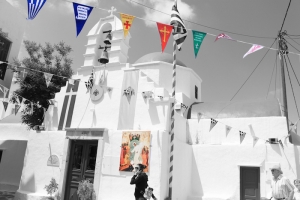
Top 10 Things To Do In Mykonos
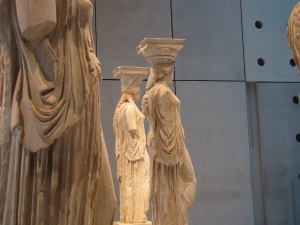
Acropolis Museum Among The Top 25 Museums In The World
5 Years Of Impact - Impact Hub Athens

#5YearsOfImpact
By establishing a collaborative space that has already hosted 700 members, we have satisfied the conditions for creative people to meet, connect, collaborate, co-create. Impact Hub Athens has been the starting point for about 200 socially oriented business initiatives that have been supported and have taken their first steps, while at the same time Impact Hub has acted as an incubator and as accelerator for 100 emerging social businesses. Moreover, through our actions, more than 600,000 € has been invested in social enterprises and 150 new jobs have been created.
The people we met all these years helped us shape our stigma while the moments that designated us are many and difficult to record. But if we wanted to distinguish some points, the following would be:
- The social economy exhibitions (1st & 2nd EXPO Κ.AL.Ο. November 2017, November 2018) organized together with the Ministry of Labor, Social Security and Social Solidarity, giving a substantial impetus to the cooperation and dialogue between the members of the Greek ecosystem of social entrepreneurship.
- The assignment of the management of the Kypseli Municipal Market, which came as a recognition of our experience in the development of active groups, the re-use of spaces, the positive imprint in the neighborhood we are participating in. In the Agora, with the main pillars of culture, education and, of course, social entrepreneurship, we promote social cohesion and citizen participation, and we have helped more than 200 vulnerable social groups.
- Collaboration with institutions such as Robert & Bosch and MitOst regarding the Kypseli Municipal Market which resulted in organizing the Cine-Mageiremata and the Super Kypseli, and will soon be developed into independent organizations. Also, the cooperation with WWF to implement programs that link entrepreneurship with environmental protection, and with Allianz to promote the social inclusion of children and young people. Furthermore, with the Onassis Stegi Foundation and the US Embassy in Athens for the program "Hack The Camp", which became thespringboard for creating new foundations in the lives of young refugees and the occasion to design new programs.
- The major European programs we participate in are dealing with serious social problems. One of them, HYDROUSA, provides innovative cyclical economy solutions for water management in the islands.
- The Kypseli Music - a program for children and young people using El Sistema's global methodology and music as a tool for social inclusion and empowerment of vulnerable social groups.
- And, of course, a top distinction: The IVLP Alumni Social Innovation & Change Award, awarded for the collective work of Impact Hub Athens, during the global meeting of Global Ties U.S. 2018 in Washington DC.
Having completed 5 impactful years, we welcome the “new era”. Anyone who is currently entering the Impact Hub Athens building and meeting the social entrepreneurs who have their office there, anyone who attends the events that take place here and participates in our actions, will acquire a very good preview of the modern and the dynamic that is currently happening in Greece, and will be in direct dialogue with the respective foreign communities.
And now, it is the moment, Impact Hub Athens community, that first talked about social entrepreneurship, to discuss,- with researchers from leading universities, creative professionals and actors from all over the world - what will determine the evolution of the social ecosystem in the next 5 years. It is the time to design along with the growing domestic community the guidelines for the next steps to maximize the positive social impact, the steps that will further affect social changes and will lead us over the upcoming 5 years.
On 28, 29 and 30 March 2019, during the # 5yearsofimpact, which will take place at Impact Hub Athens and the Kypseli Municipal Market, we will discuss what is currently occuring and will be crucial to us in the years to come in the areas of social innovation , urbanism, activism, technology and the cyclical economy.
What is emerging? Why is social innovation and entrepreneurship vital for the following 5 years? Where do we need to devote our potential and what are the most effective tools to contribute to positive change? Soon we will discover it together!
XpatAthens - Proud Media Sponsor
When To Watch The Supermoon In Greece

Originally posted on newsbeast.gr.
Athens Unpacked Episode 8 - From Benefactors To Buskers
Thank you This is Athens for your contribution as an XpatAthens Partner.