

XpatAthens
Golf, Footgolf, & Wine Tasting - Porto Carras Pro-Am AEGEAN Mini Tour 2025 Begins!





In 2026 Dive (Back) Into Greek Mythology!
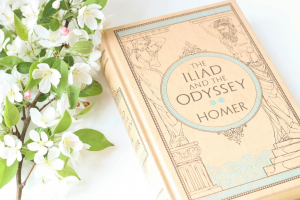
Homer’s Odyssey, the ancient Greek epic composed towards the end of the 8th century BC, tells the story of Odysseus’ long and perilous journey back to his island of Ithaca after the Trojan War. What should have been a homecoming becomes a ten‑year saga filled with trials, temptations and mythical encounters, all in the hope of reuniting with his wife Penelope and his son Telemachus. And even when he finally reaches his shores, his troubles are far from over.

@nolanarchives
Nearly three thousand years after it first emerged, The Odyssey continues to speak to us because it touches on the most fundamental human experiences. It isn’t simply a tale of gods and monsters (even if we can’t help looking forward to shivering alongside Odysseus’ men as Poseidon unleashes his wrath or imagining ourselves succumbing to the Sirens’ hypnotic song) : at its heart, it is a deeply human story, exploring what it means to be alive, lost, tempted, brave, fragile, and forever searching for a home, both in the literal sense and in the emotional one.
The epic is threaded with themes that feel as fresh today as they did in antiquity: loyalty tested by time, the pull of temptation, the fear of the unknown, the ache of nostalgia, and the lifelong quest to understand who we are. These emotions belong to no single era or culture; they resonate with anyone who has ever felt torn, hopeful, or uncertain.
Part of the enduring charm of The Odyssey lies in its hero. Odysseus is not a flawless demi‑god but a wonderfully human figure who lies, hesitates, makes mistakes, gives in to temptation and fails more than once. His vulnerability makes him relatable, even modern. Today’s heroes, whether in films, novels or series, tend to resemble him far more than the untouchable champions of ancient myth.
This timelessness explains why The Odyssey has inspired artists across the ages. In literature, Nikos Kazantzakis offered a monumental reinvention of the myth in The Odyssey: A Modern Sequel, while James Joyce transformed it into a modern masterpiece with Ulysses, set in the Dublin of the early twentieth century. In cinema, Christopher Nolan’s Interstellar echoes the structure of the ancient epic with its lost hero and impossible return, while Hayao Miyazaki’s Spirited Away follows a young girl through strange worlds, trials and transformation. Philosophers such as Hannah Arendt have read Odysseus’ return as a meditation on identity and memory, while Adorno and Horkheimer famously interpreted him as the first “modern subject”, a man who shapes his destiny through cunning and control. Even psychology has embraced the epic as a model for personal transformation, and contemporary pop culture continues to draw from it, from video games like Assassin’s Creed Odyssey to the myth‑infused characters of Marvel’s universe. Every era reinvents The Odyssey, and that constant reinvention is precisely what keeps it alive.

To bring this legendary tale to life, Christopher Nolan has embarked on one of his boldest projects yet, assembling a truly stellar cast: Matt Damon as Odysseus, Tom Holland as Telemachus, Anne Hathaway as Penelope, or Zendaya as Athena, with additional roles played by Robert Pattinson, Mia Goth, Lupita Nyong’o, and more, the film promises a modern retelling of the myth on a scale as ambitious as the epic itself.
With its American release scheduled for 17 July 2026, audiences will need to wait a little longer - but the excitement is already building.
Before or after watching what is sure to be a masterpiece of a film, dive (or dive back) into the myth once cherished by the rhapsodes of ancient Greece. You may even find yourself exploring the country through a fresh lens: tracing Odysseus’ imagined route across islands and coastlines, rediscovering landscapes steeped in legend, or seeking out the real‑life locations that shaped both the ancient epic and Nolan’s bold new interpretation. This is the kind of story that draws us to Greece not merely for its sun and sea, but for the chance to follow a tale that has travelled across millennia and still feels astonishingly alive.
My Week in Athens… May 9

But Easter is also a time of beautiful traditions and a time to spend with loved ones.
For me this meant calmly explaining to the family why I would not be joining them for Easter dinner, and instead opting to spend Easter Sunday with a group of Greek and expat friends. (Easter is also a time of high drama, as it turns out…)
During the evening of Good Friday, I ventured out for a walk, to discover a very unusual side of Athens – ‘silence’. Streets were almost deserted, no music at the cafes, everywhere calm - people young and old were following some unspoken rule, all of them, at the same time. Believers or not, I was impressed by this cross-generational observance of a tradition, which resulted in a common cross-generational behavior.
At the Anastasi service on Saturday night, my local church was packed – overflowing - with at least as many people outside as inside. And again, a cross section of Greek society, at the same place, following the same unspoken rules, calmly and without fuss. Easter in Greece seems to cross generations – young and old following a tradition that is very strong in the national psyche. And it’s not just Easter – this country is one of the few places I’ve been where the dominant culture crosses generations to such a great extent. I’m sure there’s a lesson in there somewhere…
Sunday was a great day. The wine was flowing, the lamb was roasting, the faces were smiling. And I thought that this amazing reward, this ‘payoff’ of the fantastic Easter feast, really made following the rules quite easy. If A + B = ‘really awesome’ C, then surely I’ll endure A & B… hmm…
Xronia polla to all!
Until next week,
Jack
In this weekly space, keep up with ‘Jack’ as he navigates daily life in Athens… Anecdotes, stories, hits & misses, the good, the bad and, well, the rest…
Kozi's Meet 'n Eat

Kozi was born and raised in the beautiful country of South Africa. When his parents, who are from the island of Imvros, decided to return to Greece, Kozi made a promise that he would never forget the delicious braai's that he so often enjoyed in South Africa. He decided to continue this tradition and share it with all his family & friends in Athens.
Today Kozi invites everyone interested in eating good, clean & fresh meat to his still small but comfy space in Melissia.
Having recently been there ourselves, we definitely recommend the burger and the rib-eye. Beware - this restaurant doesn't take reservations - you must get there early!
Address: Panagi Tsaldari 32-34, Melissia, 15127, Athens
Tel: 210 81 01 584, email: eat@kozis.com
Do you have a recommendation or recipe to share? Send it to us at ideas@xpatathens.com!
Learn Greek And Get Discounts At Local Businesses

Glossopolis is looking for people to test their services. If you'd like to learn Greek and receive reward discounts at local businesses for actually using your Greek, then get in touch with Athina Pitta (pitta@glossopolis.com) and let your linguistic trip begin!
Help Us Better Our Services!
Pilot testing for Greek language courses with rewards discounts at local businesses.
Glossopolis (http://glossopolis.com/) is a Greek start-up that offers an e-learning platform of Greek language courses to individuals who live in Greece or visitors who want to visit Greece and speak the language of the locals, with the locals!
Once you sign-up to Glossopolis, you have access to all the educational content built in the colloquial form of the language and to a series of advertisements from local businesses we cooperate with, such as bars, restaurants, hotels, taxis, etc. If you visit the relevant businesses and speak to them in Greek ~ you will receive a discount on their services or a special gift as a reward for your effort! Not only will you save money while experiencing Greece, you will interact with the locals in their language and support local business in Greece.
Pilot testing procedure.
We need English speaking people to sign-in, learn the courses, access the local business services and give us their feedback for our service. In return we are going to provide vouchers to our affiliate businesses.
If you are interested in participating please contact Athina Pitta at pitta@glossopolis.com for further information and let your linguistic trip begin!
Carrot Soup With Kalamata Olive Paste
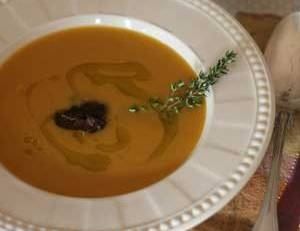
On a chilly Sunday in Athens, still worn out from a marathon of holiday cooking, and too spent to have gone to the supermarket with the Saturday crowds, I cooked with what was left in the fridge. That turned out to be a bunch of carrots, a little ginger, a dollop of the only Kalamata olive paste I’ve found that doesn’t numb your tongue with saltiness, and a Greek salad for the winter table, that came straight from a jar.
The olive paste and the Greek salad are new discoveries; Peloponnese makes them. I found them at the Hellenic Gourmet Shop at the Athens airport. I do have a few other specialty foods that are always on hand, one of which is my all-time favorite vinegar, which is so good you can drink it. Vassilis Vaimakis makes it in Ioannina and you can find it at a few select gourmet shops in Athens, among them the Pantopoleion.
Ingredients:
10 carrots
1 one-inch knob of ginger
1 large red onion
2 garlic cloves
1/2 cup extra virgin Greek olive oil
1 heaping teaspoon turmeric
1 teaspoon cumin
6 – 8 cups water
1/3 cup rice
Salt to taste
2 – 3 tablespoons sweet Greek vinegar or good balsamic
A few drops of Habanero or Chipotle Tabasco (to taste)
6 teaspoons Kalamata olive paste, preferably from Peloponnese, because it isn’t too salty
Olive oil for garnish
One jar of Greek salad in a jar (I used Peloponnese, again because it was flavorful without being salty)
Pinch of dried Greek oregano
Instructions:
1. Peel and chop the carrots and ginger and chop the onions and garlic. Heat the olive oil in a large, wide pot and add the carrots, ginger, onions, and garlic. Cover the pot, keep the heat on low, and let the vegetables cook without water for a few minutes, steaming in their own moisture. Stir in the spices and toss all together for a minute.
2. Add the water to the pot. Add the rice. Season with salt. Cover, raise heat to bring the soup to a boil then lower it again, simmer for about 45 minutes, or until all the vegetables are extremely soft.
3. Use an immersion blender or empty the soup into the bowl of a food processor and process until very smooth. Return to the pot if using a food processor. Adjust the consistency with a little water and adjust the spices to taste. Reheat for a few minutes, and add enough vinegar to balance the soup. Stir in the hot sauce, if using.
4. Serve the soup in individual bowls, spooning in a little of the olive paste and drizzling in Greek extra virgin olive oil. Drain the Greek salad and place in a small bowl. Drizzle extra virgin olive oil and a little oregano over it, and Voila, lunch is ready.
By Diane Kochilas
Greece Considered The Most Flirtatious Country In The World

Furthermore, Thrillist added that according to Dr. Simon Hardy, author of the “The Greeks, Eroticism and Ourselves,” Greeks may have perfected their flirting skills in antiquity during the “ultra-sexual symposiums.”
Meet Some Of Greece's Promising Entrepreneurs

Stay tuned, because pitches and entrepreneurial battles never end!
December 28 - Our Warmest Wishes For 2017

Sending our warmest wishes to you and yours for the 2017 New Year!
Please click HERE to view this issue of our newsletter!
Remember to stay connected with us through our weekly newsletter, Facebook, and Twitter!
February 28 - Spring Is In The Air

Remember to stay connected with us through our weekly newsletter, Facebook, and Twitter!