
The Evolution Of The Kafeneio: From Old-School Men's Clubs To Hip Hangout Hubs
- by XpatAthens
- Monday, 03 August 2026

There are few places that capture the spirit of Greece quite like the kafenio. More than a café, it has long been the beating heart of village life: a place where stories were exchanged, politics passionately debated, friendships forged, and history quietly recorded on smoke-stained walls.
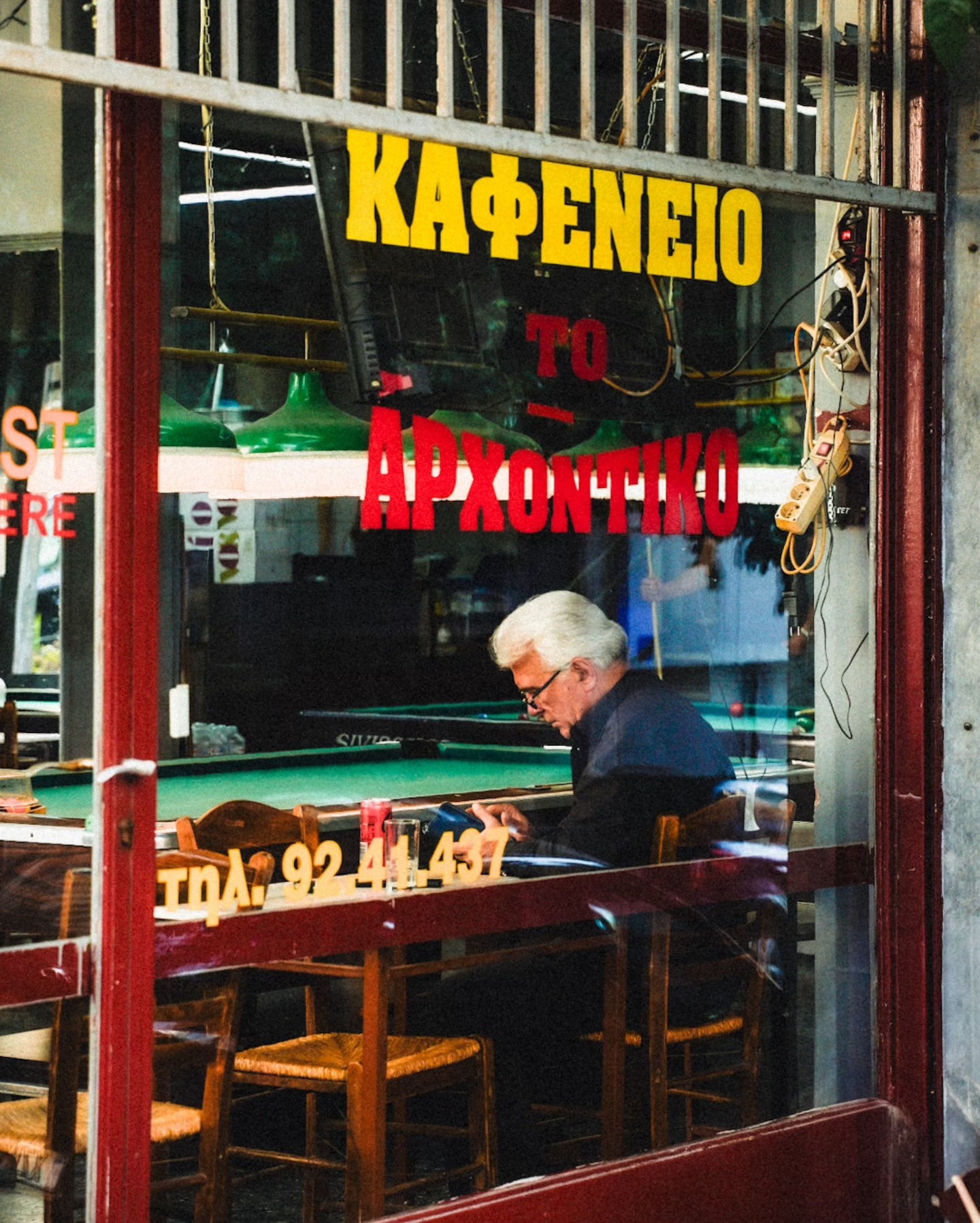
The word kafenio (καφενείο) refers to the traditional Greek coffee house, where generations of Greeks have gathered over cups of rich Greek coffee, icy frappés in summer, glasses of retsina or ouzo accompanied by simple mezedes. Often family-run and, in some cases, almost as old as the villages themselves, kafenia have traditionally offered prices far lower than tavernas, restaurants or tourist cafés, making them an accessible meeting place for everyone.
@megalo_kafeneio_tripolis
@megalo_kafeneio_tripolis
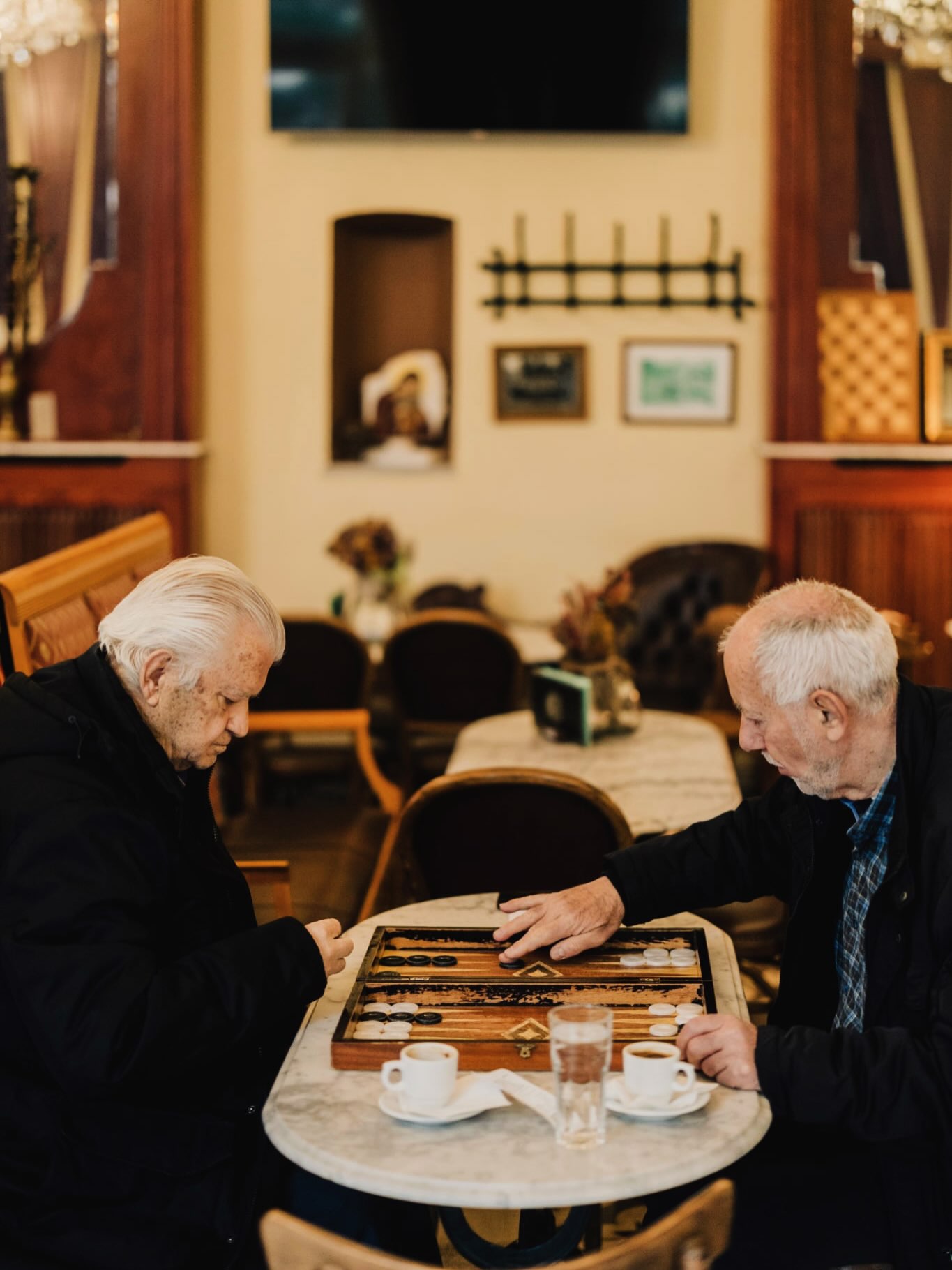
For decades, the kafenio served as the social centre of every neighbourhood and village. It was the first stop for anyone seeking directions, local gossip or news about the area. Travellers could pause after a long journey with a cup of Greek coffee or a glass of ouzo, while locals gathered to mark every chapter of life. Weddings, funerals, wars, political crises and celebrations all found their way into conversations around its tables.
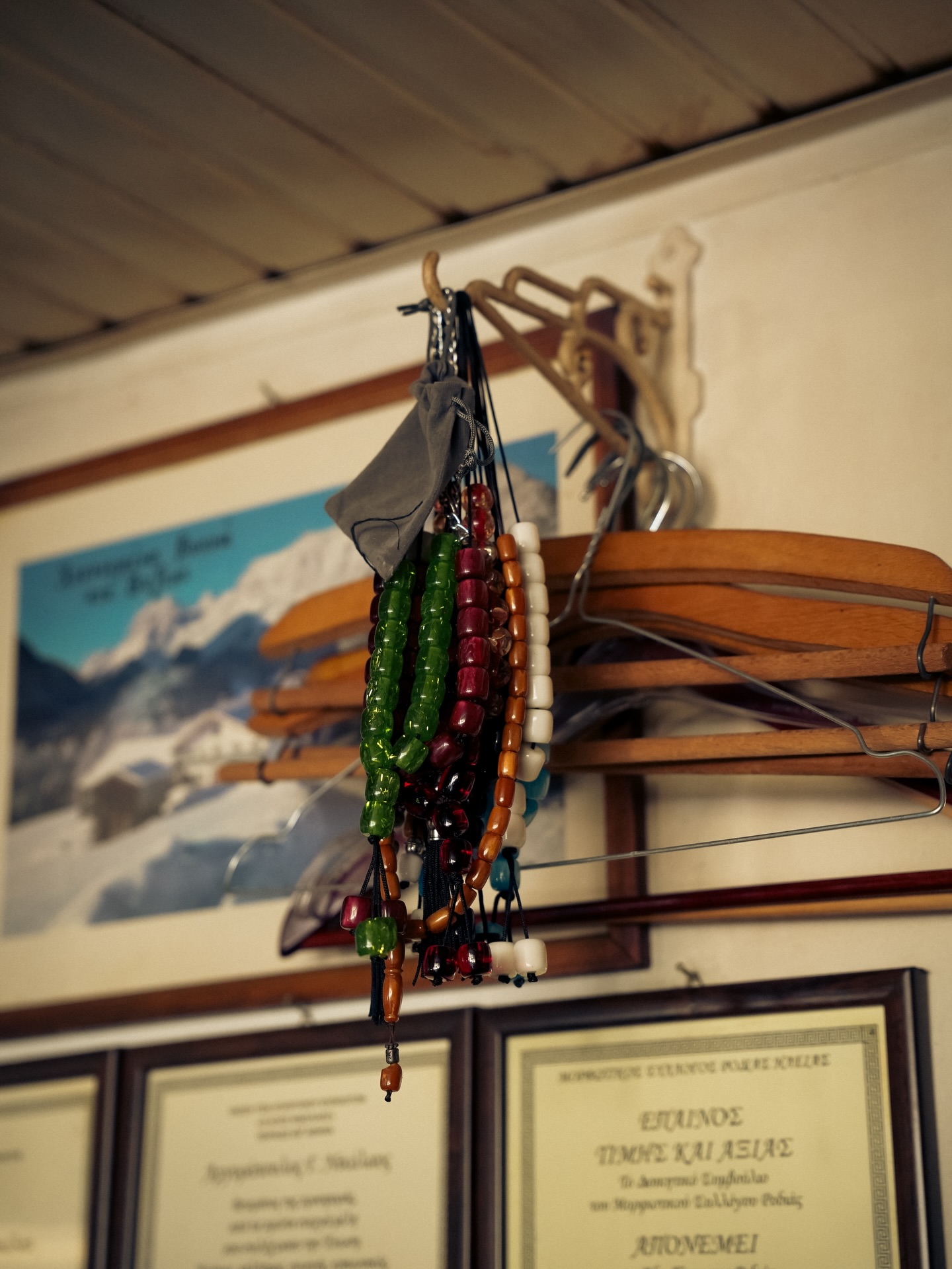
The walls themselves often became living archives of the community. Faded photographs of local football teams, portraits of villagers, images of buildings long since demolished, and, in communities founded by refugees, photographs of lost homelands in Asia Minor or the Balkans all told stories that official history books rarely could. The interiors were modest but unmistakable: whitewashed walls, simple wooden chairs, marble or metal-topped tables, and an atmosphere shaped as much by conversation as by coffee.
@itsnefely
@itsnefely
Traditionally, however, the kafenio was very much a man's world. Women were rarely welcomed as regular customers, although visitors were often treated as exceptions to the rule. Throughout the day, elderly men would gather after work (or simply as part of their daily routine) to play cards, challenge one another to games of tavli (the Greek version of backgammon), absent-mindedly twirl a komboloi between their fingers, watch the world pass by and, above all, talk.
Politics occupied a particularly prominent place at the kafenio table. Discussions frequently became animated, especially in the run-up to elections, with arguments stretching late into the night. Nothing was off limits. Newspaper headlines, radio broadcasts and later television news all became fuel for spirited debate.
In many towns, political identity was reflected in the cafés themselves. One kafenio might attract supporters of the Left while another became the gathering place for conservatives or royalists. The walls often revealed these allegiances. Royalist cafés displayed portraits of the royal family, while republican and liberal establishments proudly hung photographs of political figures such as Konstantinos Karamanlis or Eleftherios Venizelos. Left-wing kafenia tended to be more discreet, reflecting the difficult periods in modern Greek history when they often found themselves under political scrutiny.
@vasilis_gorogias
@vasilis_gorogias
A Changing Coffee Culture
@villageheightsresort
@villageheightsresort
Like much of Greek society, the kafenio gradually evolved.
Urbanisation shifted everyday life away from tightly knit villages, reducing the role of a single communal meeting place. At the same time, changing attitudes towards gender transformed cafés into welcoming spaces for everyone rather than exclusively male domains.
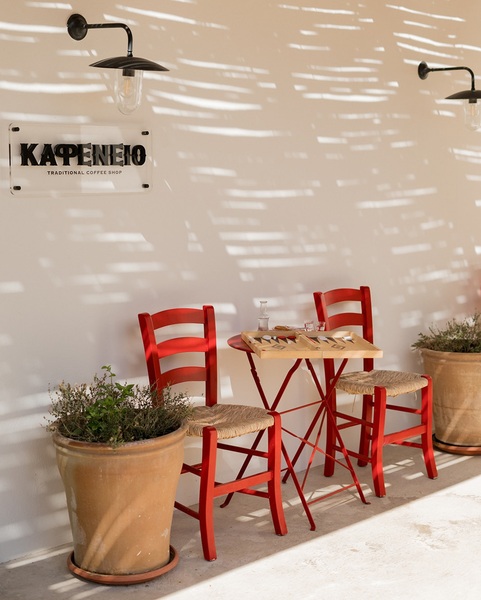
The rise of global coffee culture also left its mark. Espresso machines, speciality coffee, carefully designed interiors and more varied menus introduced new expectations, while tourism encouraged many owners to modernise without abandoning the traditions that made their establishments unique.
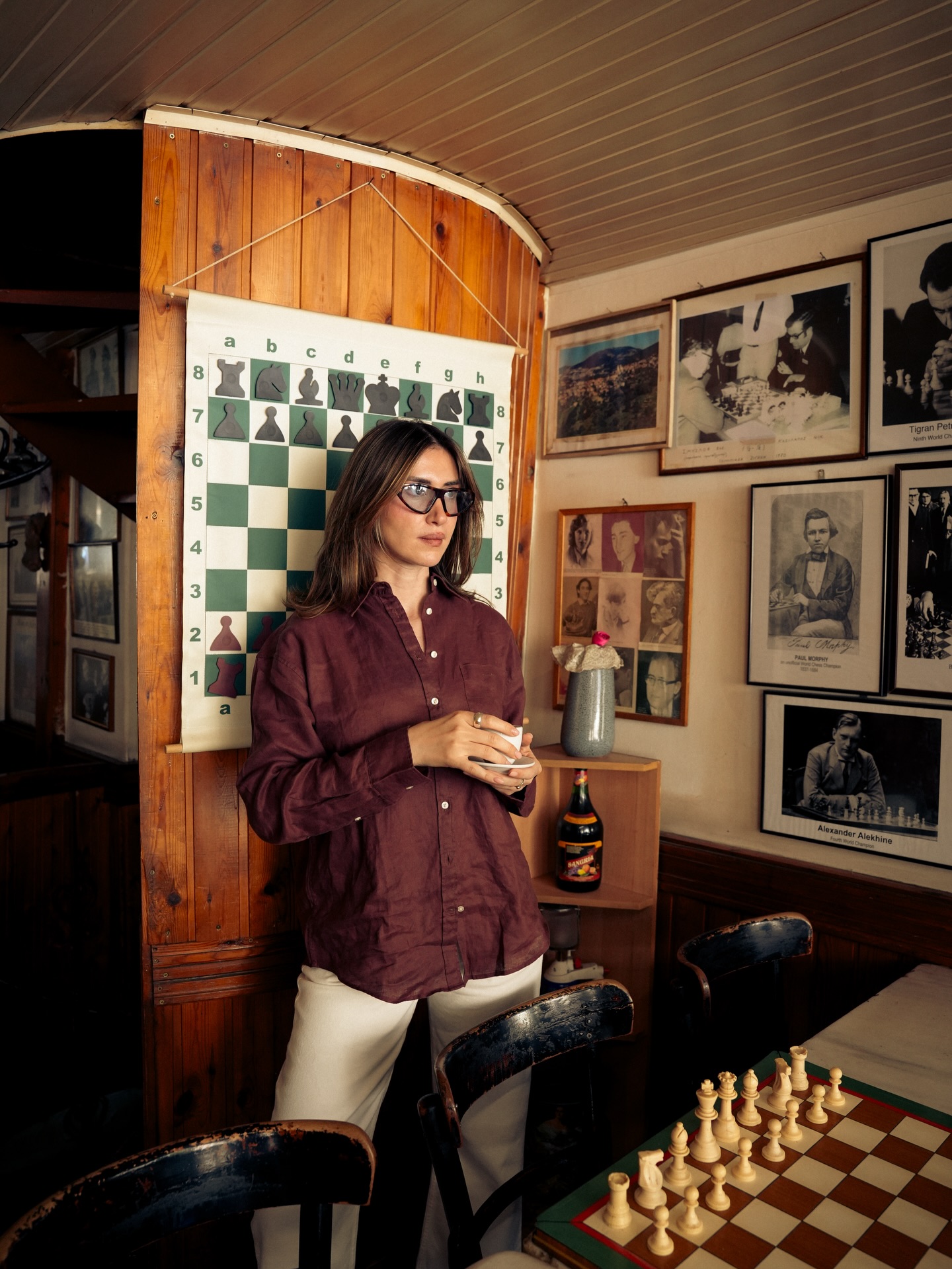
Today's kafenio is often a thoughtful blend of heritage and contemporary café culture. Alongside expertly prepared Greek coffee, visitors may find speciality espresso drinks, herbal mountain teas, local wines, craft beers and homemade desserts. Fast Wi-Fi, comfortable seating and leafy outdoor terraces have become common features, particularly in cities, yet many owners intentionally preserve marble tables, vintage décor and the warm hospitality that has always defined the kafenio experience.
@itsnephely
@itsnephely
Increasingly, these cafés have also become cultural spaces. Live music evenings, poetry readings, art exhibitions, book clubs, board game nights and community workshops attract younger generations while remaining true to the kafenio's original purpose: bringing people together.
@villageheightsresort
@villageheightsresort
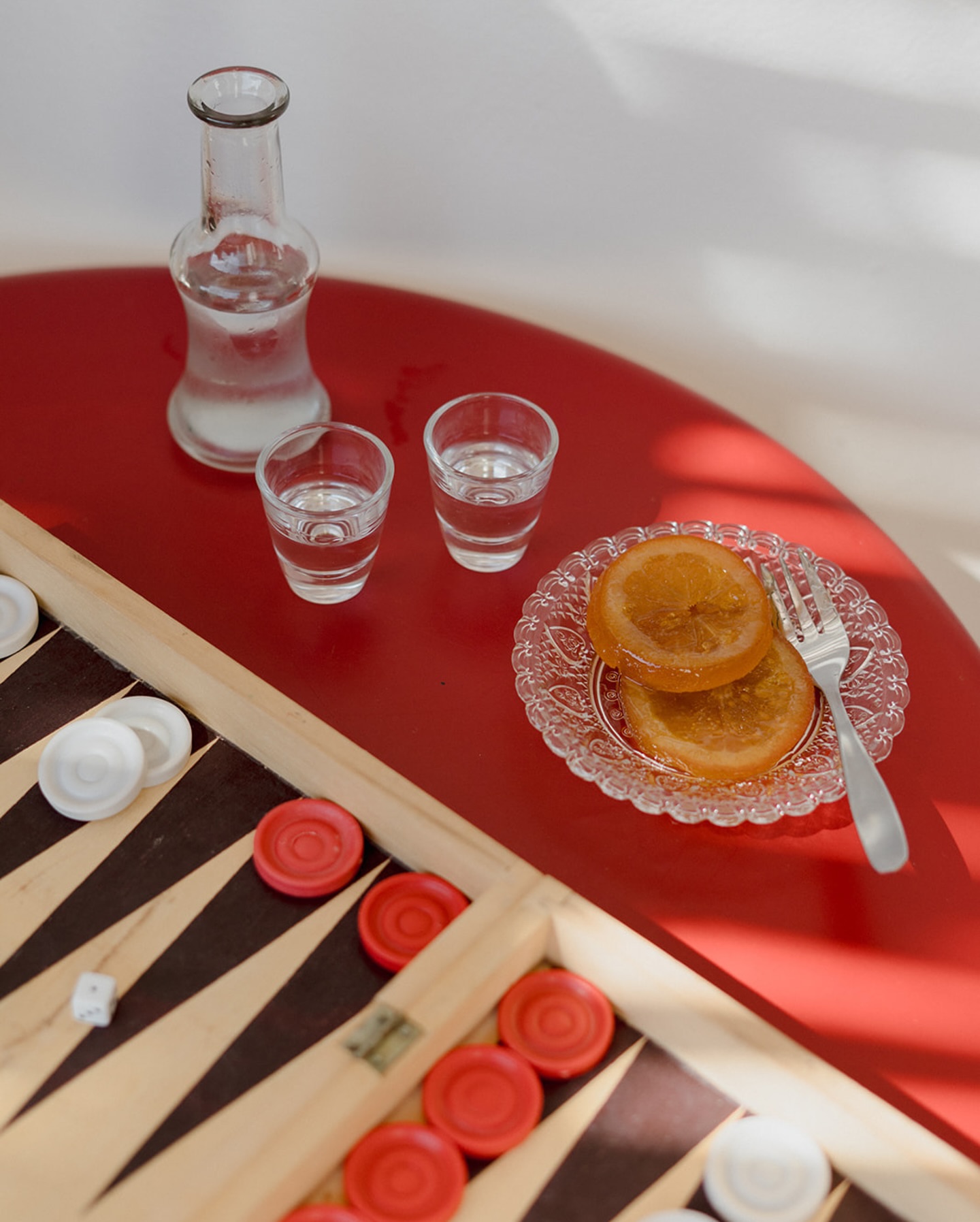
Another recent transformation has come with the rise of remote working. In Athens, Thessaloniki and many of Greece's islands, renovated kafenia now welcome freelancers and digital nomads with reliable internet connections, power sockets, comfortable seating and excellent coffee throughout the day. This international clientele has added a new dimension without displacing the local regulars who still return daily for conversation and company.
Tradition Lives On
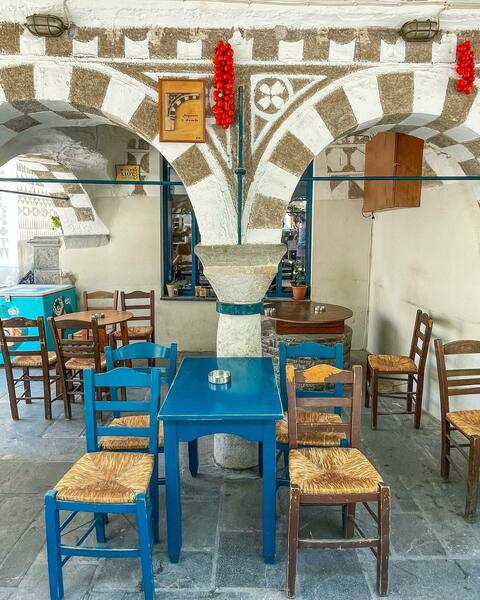
Despite these changes, many traditional kafenia remain remarkably untouched by time, particularly in rural Greece and on the smaller islands. Worn wooden furniture, faded photographs, walls stained by decades of cigarette smoke and elderly patrons immersed in lengthy games of tavli continue to define these timeless spaces.
Here, Greek coffee is still prepared slowly over low heat, often accompanied by homemade spoon sweets, and conversations unfold without any sense of urgency. It is not unusual for a single coffee to last several hours.
The enduring charm of the kafenio has inspired generations of writers, artists and filmmakers. Alexandros Papadiamantis found countless stories within their walls, while Theo Angelopoulos immortalised the historic Panellinion Kafenio in Amfissa in his masterpiece The Travelling Players. Giorgos Pittas, in his bilingual book Cafés of Greece, celebrates more than one hundred traditional kafenia across the country, noting that these are still among the few places where a Greek coffee often costs no more than €1.50.
Among the country's most remarkable examples is the Forlidas Kafenio in the village of Lafkos on Mount Pelion, believed to be the oldest continuously operating kafenio in Greece. Open since 1785, it continues to welcome both locals and visitors more than two centuries later. Equally iconic are the Panellinion Kafenio in Amfissa, which has become a true local institution, and Kafeneio 111 in Athens' Monastiraki district, serving customers since 1918.
@eleniflor
@eleniflor
Perhaps the greatest achievement of the modern kafenio is its ability to evolve without losing its soul. Menus may have expanded, interiors may have become more stylish, and laptops may now sit alongside backgammon boards, but the essence remains unchanged. Whether in a mountain village, on a Cycladic square or in the heart of Athens, the kafenio continues to offer what it always has: hospitality, conversation and a sense of belonging over a good cup of coffee.
LIFE & CULTURE