
Myths of the Greek Revolution & The History Behind Them
- by Ambre Ceretto
- Friday, 20 March 2026

Every year on 25 March, Greece bursts into celebration for Independence Day, a moment that blends national pride, collective memory and larger‑than‑life heroic tales.
Between the military parades, the traditional costumes and food, and the festive buzz in the streets, everyone feels like they know this iconic day by heart. But there are some stories passed down from generation to generation that aren’t exactly the full picture. Some of the “facts” you’ve heard might be more myth than reality…
Myth #1: The Revolution Didn’t Actually Begin on 25 March
One of the most enduring legends surrounding Greek Independence Day is that the revolution began on 25 March 1821. The story goes that on this very date, peasants in northern Peloponnese miraculously drove off Ottoman horsemen who had come to arrest the Archbishop of Patras. Inspired by this victory, the archbishop is said to have preached rebellion, granted a sweeping pre‑emptive absolution to the crowd, and set figures like the famed war hero Theodoros Kolokotronis on the path to insurrection. It’s a stirring story but the date was chosen later, crafted into a symbolic narrative anchored in the Christian calendar, as 25 March coincides with the Annunciation. Tying the uprising to a sacred moment gave it divine weight, unified the story, and emphasised the contrast with Muslim Ottoman rule. In truth, the first sparks of revolt ignited earlier: uprisings erupted in February in the Danubian Principalities under Alexandros Ypsilantis, and by early March rebellions were already spreading across the Peloponnese, well before any official proclamation. The myth is powerful — but the reality is far more nuanced.
Myth #2: The Great Powers Supported Greece from the Start
It’s often assumed that the Great Powers rallied behind Greece from the very beginning of the revolution, but in reality, the early stages of the uprising were met with deep suspicion. European governments, shaped by the conservative spirit of the Holy Alliance and Metternich’s Austria, feared that any revolutionary spark might inspire unrest within their own borders, still haunted by the memory of the French Revolution and the Napoleonic wars that followed. Their stance only shifted after years of fighting, diplomatic pressure, and a series of shocking events that stirred public opinion: The massacre of Chios, where around 25,000 people were killed and tens of thousands enslaved, horrified Europe. At the same time, waves of philhellenism swept across the continent: committees raised funds and weapons, and figures like the British poet Lord Byron sailed to Greece to support the cause. Byron himself died there, becoming a symbol of the struggle and galvanising sympathy across Europe. Artists and composers, including Berlioz, helped spread the emotional impact of the Greek fight for independence. Only after this groundswell of public support did France, Russia (motivated in part by Orthodox solidarity), and the United Kingdom intervene militarily — most decisively at the Battle of Navarino in 1827, a turning point that finally tipped the balance in Greece’s favour.
Myth #3: We All Know the Heroes of the Greek Revolution
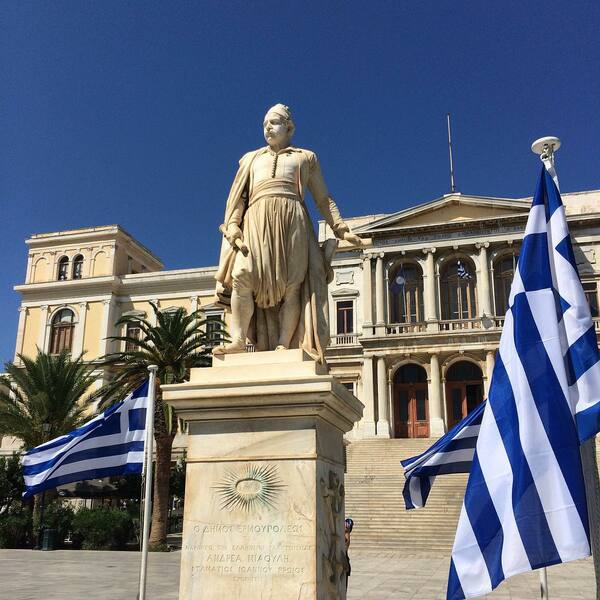
Everyone knows the headline names of the Greek War of Independence. There’s Theodoros Kolokotronis, the “Old Man of the Morea”, the undisputed icon of the revolution and the brilliant strategist behind the liberation of the Peloponnese. Then comes Laskarina Bouboulina, the legendary female commander who financed and led her own fleet, negotiating alliances and managing logistics with remarkable skill. And of course Papaflessas, monk, politician, firebrand, and one of the most flamboyant figures of the uprising, whose dramatic death at Maniaki in 1825 sealed his place in the national imagination. But these famous faces were far from alone. Manto Mavrogenous, an aristocrat from Crete, poured her entire fortune into the struggle. Nikitaras, known as “the Turk‑eater”, fought with fierce loyalty to Kolokotronis, a loyalty that would cost him dearly after the war. And Andreas Miaoulis, a brilliant naval strategist, played a crucial role at sea. The revolution was not the work of a handful of heroes, but a vast, complex tapestry of people whose contributions deserve to be remembered.
@syrosgreece
@syrosgreece
Myth #4: The Greek Revolution Was a United, Straightforward Struggle
It’s often forgotten that between 1823 and 1825, the Greek revolutionaries fought not only the Ottomans but also each other, plunging into two civil wars that severely weakened the independence movement and opened the door for Ibrahim Pasha’s devastating campaign in the Peloponnese. These internal conflicts reveal just how fragile the uprising was, and how difficult it proved to build a unified nation. The revolutionaries were split between two camps: the “politicals”, largely liberal and dominant in the Peloponnese, and the “militarists”, who favoured a strong, even authoritarian central power during wartime. When the First National Assembly at Epidaurus proclaimed independence on 1 January 1822 (12 January in the Gregorian calendar), adopted a constitution and selected new institutions, the political faction succeeded in imposing its vision, but the militarists refused to accept defeat, while the political elites sought to sideline them entirely. An alliance of Peloponnesian notables and island shipowners turned against the military leaders, triggering the first civil war and allowing the Ottomans to counter‑attack. Geography deepened the rifts: mainland Roumeliotes, Peloponnesians, and the powerful island communities of Hydra and Spetses often clashed, while tensions simmered between lowland populations and the fiercely independent Maniots, who were accused of brigandage and returned the disdain. Far from a seamless march to freedom, the revolution was a turbulent, fractured struggle, and understanding these divisions is essential to understanding how modern Greece was born.
Myth #5: The Fustanella Has 400 Pleats for 400 Years of Ottoman Rule
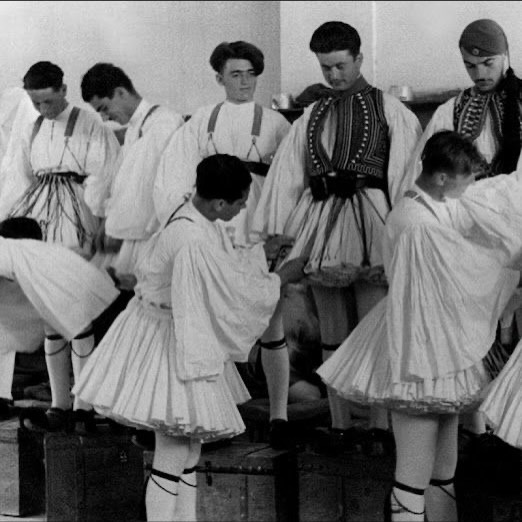
The fustanella, this traditional white pleated skirt‑like garment worn by Greek men, especially the evzones, the elite presidential guards you see outside the Parliament in Athens, evolved from older Balkan and Greek garments and became a powerful symbol of the fighters of 1821. The myth would want that the fustanella has 400 pleats to represent 400 years of Ottoman occupation. The number of pleats was never fixed, and traditional versions varied depending on the region, the tailor and the period. So the next time someone proudly repeats the “400 pleats for 400 years” you’ll know it’s more about the symbolism than historic truth.
@leahdewavrin
The fustanella, this traditional white pleated skirt‑like garment worn by Greek men, especially the evzones, the elite presidential guards you see outside the Parliament in Athens, evolved from older Balkan and Greek garments and became a powerful symbol of the fighters of 1821. The myth would want that the fustanella has 400 pleats to represent 400 years of Ottoman occupation. The number of pleats was never fixed, and traditional versions varied depending on the region, the tailor and the period. So the next time someone proudly repeats the “400 pleats for 400 years” you’ll know it’s more about the symbolism than historic truth.
@leahdewavrin
So why do such myths, half‑truths and legends persist? Simply because humans love stories that are clear, uplifting and easy to pass on. But revisiting the Greek Revolution with nuance doesn’t diminish its heroism — quite the opposite. It reveals a profoundly human struggle: chaotic, courageous, shaped by imperfect yet determined individuals who fought, argued, failed, rose again and ultimately changed the course of history.
Happy Independence Day Greece!
Happy Independence Day Greece!
LIFE & CULTURE