

XpatAthens

XpatAthens

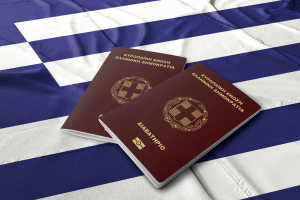
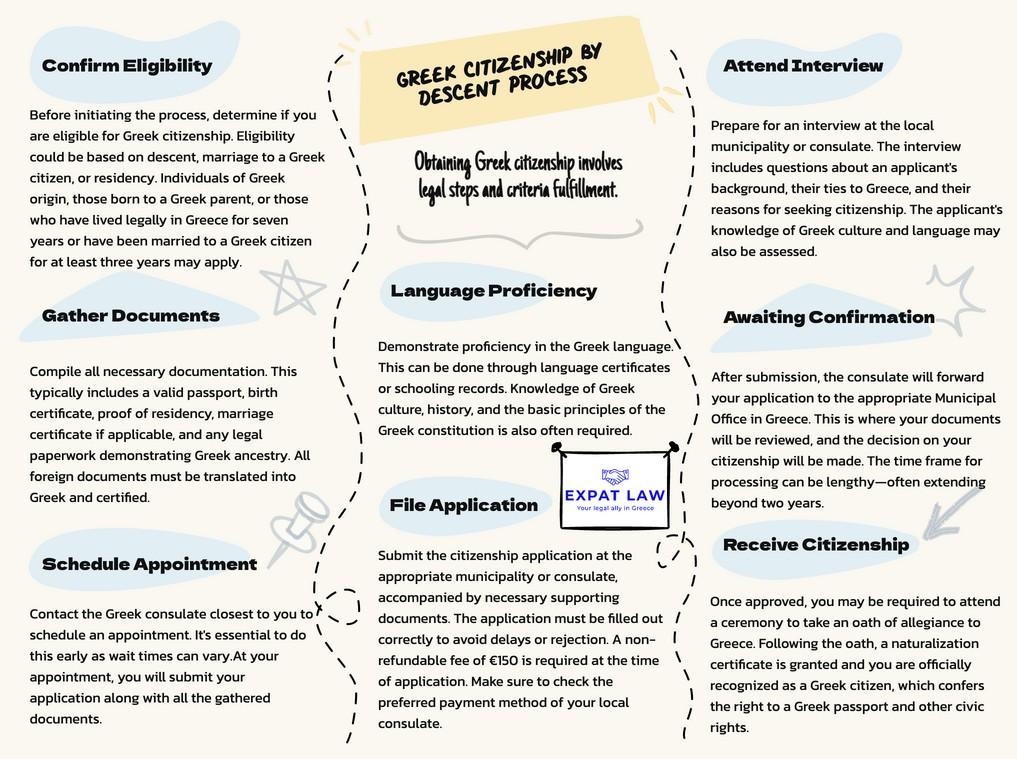
Thinking about reconnecting with your Greek roots? Here’s a simplified breakdown of how you might be eligible for Greek citizenship by descent:

  1. Parental Heritage: If your mother or father is a registered Greek citizen, you qualify automatically.
  2. Born in Greece: If you were born in Greece and one parent held legal residency for at least five years before your birth, you're eligible.
  3. Out-of-Wedlock Birth: If your parents weren’t married, citizenship is granted through a Greek mother. If the father is Greek, legal proof of paternity is required.
  4. Adoption: Adopted by a Greek citizen before turning 18? You’re entitled to Greek citizenship.
  5. Third-Generation Greeks: If a grandparent was born in Greece or naturalized, you may apply—though your parent might need to claim citizenship first.

Your eligibility may also depend on when you were born and your parents' marital status at the time. To avoid pitfalls, consult Expat Law early on—accurate legal advice can save time and money.

Building Your Case: The Required Documentation

Once eligibility is confirmed, the next step is to secure your Certificate of Registration, the official record of your status as a Greek citizen. Here's what you'll need:

  • Valid passport and birth certificate
  • Christening/baptism certificate (if applicable)
  • Passport-sized photo that adheres to official guidelines
  • Your children's birth and baptism records (if applying for them too)
  • Parents’ marriage certificate, indicating civil or religious union
  • Parents’ and grandparents’ birth certificates (plus death certificates, if needed)
  • Proof of Greek municipal registration
  • Divorce or name change documentation (if applicable)
  • Recent criminal record certificate
  • Certified Greek translations of all documents
  • Registration of foreign marriages in the Special Registry of Athens.

Once everything is in order, you will book an appointment with the Greek consulate closest to you and submit your application along with a €150 fee. Keep in mind, though, that processing may take up to two years, so plan ahead.

The Application Process

With documents in hand, you’re ready to submit your file to Greek authorities. A carefully assembled application boosts your chances of approval—every accurate document and form gets you closer to reclaiming your heritage.
The Perks of Greek Dual Citizenship

Greece allows dual nationality, meaning you don’t have to give up your existing citizenship. As a Greek citizen, you gain:

  • The right to live and work in Greece and across the EU
  • Access to Greek public healthcare and education
  • Voting rights in Greek elections

But citizenship also comes with duties. Be sure to understand any tax obligations or, for male citizens, mandatory military service requirements.

Let Expat Law Guide You

The journey to Greek citizenship can be complex, but you don’t have to do it alone. Expat Law offers personalized legal support tailored to your unique background, including in-depth guidance for more complicated cases like asylum, deportation defense, and dual nationality.

Contact Expat Law here:

📧 kyveli@expatlaw.gr
📱 +30 694 555 1914 (call or text)

Have questions or need guidance tailored to your case? Don’t hesitate to get in touch—we’re here to help!

by Angeliki Vourliotaki

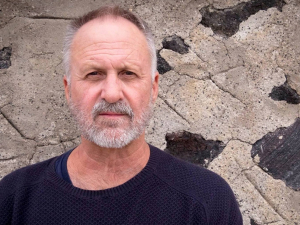
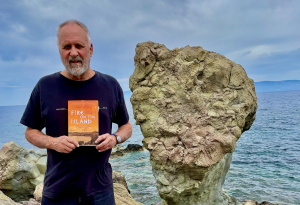
After reading Fire on the Islanda suspenseful, heartfelt novel set in a Greek village, I was immediately intrigued by the man behind the story. My review barely scratched the surface of what Timothy Jay Smith brings to the page, and I couldn’t help but want to learn more about this fascinating writer and person.

So, we sat down for a long and heartfelt conversation. Timothy opened up about his life, his work, and his enduring bond with Greece. From planting tens of thousands of trees in Tanzania to founding a prize for political theater, to crafting layered characters drawn from real people, he offers the kind of perspective only a true global citizen can.

We began with the big question...

Q: For someone who isn't familiar with you or your background, how would you describe yourself as a writer and as a person?

That's a big question to start with! At a young age, I developed a social consciousness that would define my career and eventually my writing. Before I decided to become a full-time writer, I worked all over the world on projects to help low-income people, including in the United States, where we had a national program called the War on Poverty. When I was young and right out of college, I was able to get work that really allowed me to help others through different projects. So I guess I’m pretty compassionate in that sense.

When I was about 11 years old, my school had a spaghetti dinner fundraiser, a $1 meal to raise money for student activities. Sitting across from me at the table was what I thought was an old man (he was probably in his 30s) and he told me he spoke five languages and had been to 40 countries. On the spot, I decided: that’s the life I want to lead! And I managed to do that. So I’m a traveler, I’m a caring person. One of my ongoing projects is environmental. In Tanzania, I’ve been working with a village to plant trees. So far, we’ve planted 32,560.

Q: So, you want to help. People, the environment, everyone?

All my books really come from a sense of a big issue that’s affecting people’s lives. My very first book came out of the two and a half years I spent in Jerusalem managing the first significant U.S. government project to help Palestinians. Through that, I got to understand the multiple sides of that conflict. I decided to write a novel – later published as A Vision of Angels – that would, through fiction, reveal how the conflict affects ordinary people’s lives. The main characters were an Israeli war hero, an Arab Christian grocer, an American photojournalist, and a Palestinian farmer.

That sort of defined my other work as well. After that, I wrote a book where the story dealt with the issue of human trafficking. There’s a young girl who’s been trafficked, and it’s about what her life is like and someone who’s trying to help her. All my stories deal with big issues, social and worldwide concerns, but I concoct a suspenseful plot to keep readers interested. So my stories aren’t all about ‘message’. I show how these things really affect ordinary people who get caught up in them.

Q: You founded the Smith Prize for Political Theater, which, although no longer active, was a powerful initiative. Do you still see your writing as a form of activism, and is there a chance the prize might be revived in the future?

Yes, I definitely see my writing as a form of activism. It’s unfortunate that the Smith Prize is no longer happening. We had some very successful plays that went on to good productions. One Smith Prize playwright who went on to win the Pulitzer Prize for Drama! But when the pandemic hit, it really devastated the theater world as you couldn’t have people gathered in enclosed spaces, and theater doesn’t work well over video calls. It just became time to let it go.

I’ve thought about bringing it back. But it’s a lot of work and right now, I’m focused on the Tanzania Trees Project. Maybe when I reach 100,000 trees, I’ll revisit the idea of political theater.

Q: So you have traveled across the globe. Can you tell us a bit about the countries that have shaped you the most?

The countries I’ve lived in have shaped me. I’ve probably spent about seven years total in Greece, so of course Greece is very important to who I am. I also lived in Jerusalem which was a deeply powerful experience. Then I spent a couple of years in Thailand, headquartered in Bangkok but working all over Asia. I was based there while serving as a financial advisor and analyst on every U.S. government project funded in Asia at the time. So I was constantly on the move.

One of those projects was in India. I had already traveled there personally, but for work, I began going to Mumbai about every six weeks for over a couple of years. India made a huge impression on me; the overwhelming poverty but also the country’s determination to move forward. That contrast really stayed with me.

I don’t think I mentioned Poland, but that experience also moved me deeply. I spent over two years there serving as an advisor for the World Bank to the new Minister of Finance following the collapse of the Communist government when Solidarity came into power. I was a housing finance advisor and helped to create Poland’s first-ever mortgage system, something that allowed people to borrow money to buy homes, instead of relying solely on savings.

I’ve also worked extensively across the U.S., especially in areas facing deep poverty. I did a lot of work with Native American communities and was involved with an agency that focused only on “special impact areas”, the 40 poorest areas in America. These were often rural counties or urban census tracts, frequently predominantly Black or Hispanic neighborhoods. All of these experiences—abroad and at home—have shaped how I see the world.

Q: Is there a wild or unforgettable experience from your life, something people should hear?

One story that stands out is from my work with Native American communities. I became familiar with the legal framework around treaties—or the rare absence of them—with most of the tribes. In Alaska, there was no treaty, and a law called the Alaska Native Claims Settlement Act included a hidden time bomb: after 20 years, Native land, normally protected, would be taxed based on the value of its highest possible use. So, if there was oil under the land and it wasn’t being pumped out, indigenous Alaskans would still be taxed as if it were, which would have forced them to sell their land to pay taxes.

I brought this to the attention of the White House—President Carter specifically—and he issued an Executive Order to set aside that provision of the law. Because he had a Democratic Congress, that Executive Order was later turned into law, permanently protecting the sovereignty of Native Alaskan land. So yes, I’ve had the chance to impact people’s lives in meaningful ways.

Q: You’ve traveled and lived all over the world, and one of these places is also Santorini. You first lived there in the early ’70s, and you’ve been back recently. I know it’s hard to sum it all up, but how has Santorini changed since those early days? 

When I first went to Santorini in 1972, I had no idea what the island looked like. I hadn’t even seen a photo. I was working for the National Center of Social Research (EKKE) in Athens, studying rural-to-urban migration, but city life didn’t suit me. So I convinced EKKE that I should go to the islands to assess the ‘push’ factors driving people to move to Athens. Through connections in Amfiali, near Piraeus, where many Santorini families had settled, I chose Santorini, sight unseen.

The ferry ride was a 20-hour journey, passing dry, barren islands like Ios and Naxos. I began to worry I was heading to a desert. Then Santorini appeared—volcanic cliffs, lush vineyards, completely unlike anything I expected.

There was no airport, hardly any tourism, and very few foreigners. I spent two winters there, often the only non-Greek person around. The villages were small and surrounded by open land—not the sprawl of villas you see now. I lived without hot water, taking a weekly shower in Fira for 25 cents at a hotel—ironically, the same one I stayed at on my recent visit.

Back then, Oia was abandoned and crumbling. Now, it’s one of the most photographed places on Earth. The caldera view remains breathtaking, but much of the island’s quiet magic has been lost.

Q: And, what is it that made you a Grecophile? After your time in Santorini, how has your relationship with Greece evolved over the years?

Well, I just fell in love with the Greek people, basically. They’re very hospitable and love to tell good stories. In my village, we didn’t have a television set for a long time—one finally arrived eventually—but before that, people would say, “Oh, let’s tell stories tonight.” So everyone would gather in a little spot, sit on the ground, and we would share stories and things like that. I loved all of that. It was great. And then, of course, the natural beauty of the country, it really is wonderful.

Q: Do you have any more stories set in Greece?

I’ve been thinking about it, and the answer is yes and no. Yes, I’d like to write something set in Greece again because it means a lot to me and I know it well enough to portray it authentically. But I’m not interested in writing a series with the same main character. I prefer each story to stand on its own.

If I can come up with a suspenseful story that includes social activism, something that keeps readers engaged without hitting them over the head with a message, I’d consider it. I haven’t ruled it out, but writing a book takes years, and I don’t have unlimited time. Still, I love the idea.

Q: Okay, so what’s unique about this book being set in Greece compared to other places you’ve written about?

Well, there’s just so many things about being Greek. The church, for example, plays a big role, which wouldn’t be the same elsewhere. Honestly, it’s hard to pin down one thing, but just being in Greece sets it apart from my other books.

The geography, the landscape, the culture, all of that shapes the story in ways that wouldn’t happen in other places. For example, in another book I wrote, Cooper’s Promise, I created a fictitious African town with an Arab diamond district. I combined different cultural elements to build that world because I hadn’t lived in one place long enough to capture it authentically. But with Greece, I know the place well.

With Fire on the Island, I wanted to tell a refugee story but ended up making it more of an homage to Greece and its people. The refugees didn’t really mingle much in my village—they had to move on quickly—but their presence stirred conflicts among the villagers. So the story became more about the Greeks than the refugees.

Later, I wrote Istanbul Crossing, a true refugee story where almost all the characters are refugees. I don’t know Turkish society deeply, so I focused on the human side, but with Fire on the Island, my familiarity with Greek culture really shines through.

Q: Are you working on something new, right now? If so, where is it set this time?

Yes, I’m working on a new novel. I’m not too far into it yet, but I’ve been thinking about it for quite a while. This one is set in America. I actually have the rather unique distinction of being a 16th-generation American, my family came over on one of the earliest ships after the Mayflower. So we’ve been in the country for about approximately 400 years. I’m very concerned about what’s happening in the U.S. these days. I want to write something that looks at that long legacy. What does it mean to come from 16 generations of Americans? Where has that brought us? It feels like a story I’m in a good position to tell, because I grew up with all these stories. One cousin was even what we’d call the "Man Friday" to Abraham Lincoln, meaning he served as his personal assistant/butler. So there’s this long, textured history in my head that I need to explore, and I think I’ve found a way to start shaping it into a story.

Of course, it will have an autobiographical element as all of my novels. All my main characters are, in some way, parts of me. Even when I’m combining or reshaping them, the emotional truth is always there. So yes, while the stories are fictional, they’re built out of real places, people, and things I’ve personally felt or seen.

Q: Fire on the Island has feminist elements, with strong women who are leaders, rebellious, and uncompromising. Was that intentional from the start, or did the characters evolve that way?

The women characters, especially the three generations in one family – the grandmother, her daughter and granddaughter, are based on real people. Their voices in the book come from real life. I gave them a fictional story, but the characters themselves are drawn from people I know, which is true for most of my characters. In Fire on the Island, having returned to the same village every year for 20 years, I got to know this family well. They weren’t offended by how they were portrayed; in fact, they’re proud to be in the book, even though I didn’t use their real names.

I think women have a very important part in Greek society in general. They’re very strong characters. In my time here, it was clear to me that the men controlled the fields, but the women controlled the village and the household. That strength is reflected in the story.

Q: Throughout the book, you sprinkle in Greek phrases that really ground the story. So, do you know Greek?

I didn’t know Greek when I first moved to Athens. Before going to Greece, I got a Greek tutor, but we didn’t get far. The only word I really learned was malaka (laughs).

The tutor mostly wanted to talk about girls, so it wasn’t very productive! But I’ve always liked studying languages and grammar. I taught myself Greek sto dromo (on the street) when I got to Greece, especially after moving to Santorini, where nobody spoke English in my village. I had to learn it.

I actually love Greek. It’s not a hard language for me. The hardest part for most people is there aren’t many cognates, no words that sound similar to other languages. Like in French, révolution means revolution, but the Greek word for revolution – epanastasis – doesn’t sound ljke any obvious word in English. So students of Greek have to learn a lot of new words.

Back when I lived on Santorini, I spoke well enough that people wouldn’t believe I’m not Greek. I don’t speak as well now, but thirty years ago, I really did.

Q: One last question: if you had to describe yourself, Greece, and Fire on the Island each with just one word, what would they be?

I’d say for myself: empathetic. I care about people, especially the disenfranchised and that has motivated  drives what I do.

For Greece: welcoming.

And the book? I’d say thoughtful. The story asks readers to think about tough issues, like being a stranger in a strange land, or topics like homosexuality in Greek society. These are difficult subjects for many people, and I wanted to explore them honestly in the book.

Thank you, Tim, for sharing your stories, your passion, and your heart with us. It’s been a pleasure getting a deeper look into the life behind Fire on the Island, and the purpose behind every page!

Want to learn more about Tim? Visit his website and grab your copy of Fire on the Island HERE!


We are excited to announce that XpatAthens has partnered with Wellness Retreats Greece as the official sponsor and service provider for our new section dedicated to wellness in Greece.
 
This partnership marks the beginning of an inspiring new chapter, dedicated to promoting mindful living, holistic well-being, and meaningful wellness experiences for Greece's vibrant global community.

As part of this partnership, Wellness Retreats Greece will exclusively handle all wellness-related content, initiatives, and collaborations featured on XpatAthens. The recently launched Wellness Hub section serves as the go-to destination for curated content, events, retreats, and services that align with a conscious, healthy, and balanced lifestyle in Greece.

“We are thrilled to join forces with XpatAthens, a trusted voice in the international community of Athens,” said Eliza Dalakidi, Co-Founder of Wellness Retreats Greece. “Together, we aim to inspire individuals to embrace wellness as a way of life - through retreats, nature, movement, community, and inner harmony.”

As part of this partnership, Wellness Retreats Greece will bring together wellness experts, retreat venues, and experiences from across the country, helping people discover, connect, and participate in the best Greece has to offer in the world of well-being.

🌿 Discover the Wellness Hubhttps://www.xpatathens.com/wellness-hub
📩 For collaborations and wellness listings visit: https://www.wellnessretreatsgreece.com/get-listed-english
 
About Wellness Retreats Greece

Wellness Retreats Greece is the ultimate platform for discovering, listing, creating, and consulting on wellness experiences across Greece. It serves as a trusted hub for individuals, wellness professionals, and companies seeking to explore, organize, or receive expert guidance on retreats, workshops, and wellness gatherings in some of the most inspiring destinations in the world.


Contact Details

 
Align by Alin is a holistic wellness and movement studio located in Alimos, Athens, Greece. The studio is dedicated to cultivating a safe, inclusive, and empowering space where individuals of all levels can explore yoga, functional movement, and mindful embodiment. Through a unique blend of alignment-based yoga, somatic practices, and restorative techniques, Align by Alin supports students in reconnecting with their bodies, building strength and flexibility, and deepening their awareness both on and off the mat.

2 1 768x513

Class offerings include Hatha Yoga, Vinyasa Yoga, Yin Yoga, Restorative Yoga, Aerial Yoga, Nada Yoga, Meditation, Pilates Reformer, Pilates Mat, Ballet Body, Contemporary Dance, and Alignment Movement sessions—specially designed to promote mobility, injury prevention, and sustainable posture.

IMGP4195 768x509


  📧 🌐  
Thursday, 12 June 2025 09:52

Alin Batanian - Yoga & Pilates Instructor

Alin was born and raised in Athens. She holds a degree in Food Technology and Nutrition from the Technological Educational Institute of Athens (2009) and graduated from the Professional Dance School “Rallou Manou” (2011). Her journey in movement began early—at the age of four, she enrolled in the Royal Academy of Dance (R.A.D.) training program, studying classical ballet under Carol Hanis and reaching Advanced Level II.

Her deep interest in the study of the body led her to the teachings of Michalis Mahatman Saraswati and Swami Nirvikalpa (Olga Alexiou), where she completed her first Hatha Yoga Teacher Training (RYT 200hr, 2013), followed by specializations in Restorative Yoga (120hr), Healing Parts of Yoga (120hr), Chakra Work – Level 1 (32hr), and Clinical Yoga for Hypertension (120hr, 2018). She also studied Kriya Yoga under Alessandro Ortona from 2016 to 2018. Over the years, she expanded her practice by attending workshops in Vinyasa Flow, Ashtanga, Anusara, Acro, and Aerial Yoga across Greece, the Netherlands, and Belgium.

Alin 01

As a dancer, she has taught classical ballet at the Gymnastics Club of Irakleio Attikis (2010–2011) and contemporary dance at The Henny Jurriëns Foundation in Amsterdam (2012). She has performed in productions across the Netherlands, Germany, Spain, and Portugal (2012–2014) under the choreography of Manuel Ronda.

In Greece, she has collaborated extensively with choreographer Menti Mega on projects such as Unlimited Access—a European program supporting professional dancers and individuals with motor, cognitive, or visual impairments (2014–2016); the educational program Triples and Triplets (2017–2018); and the performance Sweet Abyss (2015). She also participated in the 3rd Young Choreographers Festival at the Onassis Cultural Centre (Fläche en Handfläche by Ioanna Angelopoulou, 2015) and in Stavros Petropoulos’ documentary I Am a Dancer (2016), all produced by the Onassis Foundation.

yin 1024x684

In recent years, she has worked closely with Irini Kourouvani, organizing dance workshops and performances in public primary schools across Attica. These initiatives, part of the International Olympic Truce Centre’s educational programs, aim to help children reconnect with their bodies, explore rhythm and movement as forms of expression, and embrace the diversity of every body.

She also volunteers with the “Pisti” Association at the “Agia Sofia” Children’s Hospital in Athens, offering dance therapy and yoga sessions to young patients and their families in the Pediatric Oncology-Hematology Unit (POAIM – K.E.TH.).

Certifications

With its vibrant culture, scenic coastlines, and affordable lifestyle, Greece has become a prime destination for remote workers. If you're planning to live and work here, you’ll likely choose between two main paths: the Digital Nomad Visa and the Digital Nomad Residence Permit. Here's how to decide which suits your goals best.


At a Glance: Key Differences


Digital Nomad Visa

Digital Nomad Residence Permit

Validity

Up to 12 months

Two years (renewable)

Application Point

From abroad via a Greek consulate

From within Greece

Best For

Short stays, flexibility

Long-term plans, family relocation

Conversion

Can convert to residence permit before expiry

N/A


1. The Digital Nomad Visa

Ideal for short-term remote work stays, the Digital Nomad Visa (Type D) allows you to live in Greece for up to 12 months while working for foreign employers or clients. It's designed for flexibility, with the option to renew annually or convert to a residence permit.

Why Choose It:
  • Easy to apply from abroad
  • Suitable for remote workers testing the waters in Greece
  • No commitment to permanent relocation
  • Potential tax benefits (depending on stay duration and tax residency)
Requirements:
  • Proof of non-Greek employment or business
  • Minimum income of €3,500/month (plus 20% for a spouse, 15% per child)
  • Valid health insurance and clean criminal record
  • Declaration of intent to work remotely while living in Greece
  • Health Certificate that assures good health and absence of certain diseases.
2. The Digital Nomad Residence Permit

For those ready to stay longer, the Digital Nomad Residence Permit offers a more permanent solution. Often, applicants arrive in Greece under a visa waiver or Schengen visa and apply from within the country.

Why Choose It:
  • Valid for two years, renewable
  • Ideal for families or those seeking stability
  • Can be a step toward permanent residency
  • Avoids dealing with consulates abroad
Requirements:
  • Remote employment (non-Greek source)
  • Minimum income of €3,500/month, with an increase for dependents.
  • Proof of housing in Greece (rental lease or property ownership)
  • Comprehensive health insurance
  • Financial documents proving stability may be required
Which One is Right for You?

Choose the Digital Nomad Visa if:
  • You’re planning to stay under a year
  • You prefer applying before arriving in Greece
  • You're still exploring long-term possibilities
Choose the Residence Permit if:
  • You’re aiming for a multi-year stay
  • You want a solution that accommodates family
  • You’re already in Greece and want to apply locally
Common Questions

Can I work for a Greek company on either permit?

No. Both options are strictly for remote work with employers/clients outside Greece.

Will I pay taxes in Greece?

If you stay less than 183 days/year, you may not become a tax resident. Longer stays could change that. It's best to consult a tax advisor.

Can I bring my family?

Yes, but your monthly income must increase to cover dependents. The residence permit generally offers better support for families.

How long does processing take?

The visa can take a few weeks after your consulate appointment. Residence permits often grant a temporary approval within 15 days, with full processing taking a few months.

Let’s Help You Navigate the Process

Whether you’re planning a short-term remote work stay or laying down roots in Greece, Expat Law is here to make the legal side simple. They handle the paperwork, permits, and everything in between—so you can focus on your next adventure!

Have questions? Contact Kyveli Zachou today at kyveli@expatlaw.gr or get in touch with us to explore your options!
Inheriting property in Greece can be a meaningful asset but it’s not without complications, especially for non-residents. Thankfully, recent legal updates now allow many steps to be handled remotely, through legal representation. Whether you're accepting or rejecting an inheritance, it’s important to understand the legal framework and act quickly to protect your rights and avoid unwanted liabilities.


Step 1: Get a Greek Inheritance Lawyer on Your Side


Your first—and most important—step is to work with a lawyer who specializes in Greek inheritance law. Today, your lawyer can act entirely on your behalf, submitting all required documents directly to the court without needing a notary. That means you don’t need to travel to Greece to handle the process.

Your lawyer will:
  • Identify what assets and debts are part of the estate
  • Advise whether it’s smarter to accept or reject
  • Prepare and submit all necessary court declarations
Step 2: Assess the Estate's Value

Knowing what you’re inheriting is critical. Your lawyer will evaluate:
  • Properties, bank accounts, and other assets
  • Any outstanding debts tied to the estate
If the estate is burdened with significant debt, you may want to consider rejecting it, or accept it with a legal safeguard called “benefit of inventory.”

3. Submit Legal Declarations to the Court

The process: Instead of going through a notary, your lawyer now files the official acceptance documents directly with the court, a recent change in Greek law that speeds up the process.
Your role: Once you’ve decided to accept, your lawyer handles all filings and interactions with the court, making it possible to complete the process without setting foot in Greece.

4. Consider Accepting with the Benefit of Inventory

What it means: If the estate has debts, you can accept “with the benefit of inventory,” which limits your liability to the value of the assets. This way, your personal wealth is protected.
Pros and cons: It’s a smart option for high-risk inheritances. Your lawyer will file the inventory directly with the court, replacing the old notary-based process.

5. Take Care of Tax Obligations

What to expect: Greek inheritance tax depends on the heir’s relationship to the deceased and the estate’s total value. Tax declarations must be filed, and any taxes paid, before the process is complete.
What your lawyer will do: They’ll file the tax paperwork on your behalf, ensure compliance, and help you avoid penalties—all while keeping the process as smooth and timely as possible.

How to Reject an Inheritance in Greece

If the estate is burdened with debts or complications, rejecting it might be the safer option. Here’s how that works:

1. File a Declaration of Renunciation

What’s involved: Your lawyer can file a rejection notice directly with the Greek court. This must be done within 4 months of being notified—or 1 year if you live abroad.
Why it matters: Missing this deadline could lead to automatic acceptance, which means you would become responsible for the estate’s debts, even if you never intended to accept it.

2. Submit the Required Documents

What’s needed: Documentation typically includes identification and proof of relationship to the deceased. For contested inheritances, additional paperwork might be required.
Handled by your lawyer: They'll gather, verify, and submit all required documents to ensure your rejection is properly filed.

3. Understand the Consequences

What to know: Once you reject an inheritance, you permanently give up any claim to it, including any future rights to the property or assets.
Take your time, but not too much: It’s a serious decision that can’t be reversed, so legal advice is essential.

Common Challenges for Non-Residents

Language Barriers & Legal Complexity

Greek inheritance laws are detailed and sometimes difficult to interpret without guidance. A lawyer experienced in both Greek and international estate law is crucial for non-residents.

Documentation & Timelines

Missing a deadline or lacking key documents can result in delays—or worse, unwanted liabilities. A good lawyer will keep you on track and ensure everything is handled correctly and on time.

Risk of Automatic Acceptance

If you don’t act within the legal time window, Greek law assumes you’ve accepted the inheritance by default. Staying in close contact with your lawyer ensures that doesn’t happen by mistake.

Act Early & Get Expert Help

Dealing with inherited property in Greece as a non-resident doesn't have to be overwhelming. Whether you're considering accepting or rejecting an inheritance, the most important thing is to act promptly and get the right legal advice.

Let a trusted legal professional guide you through the process—so you can protect your interests, stay compliant with Greek law, and avoid unnecessary risks.

Contact support@expatlaw.gr or reach out directly via call or text at +306945551914. Expat Law will make your inheritance journey in Greece as smooth and stress-free as possible!
If you have additional questions, don’t hesitate to reach out to us by completing this form!
We are excited to announce that XpatAthens has partnered with Celebrity International Movers as the official sponsor and service provider for our new section dedicated to Relocation Greece. This partnership blends unparalleled cultural insight with professional logistics for individuals, families, and businesses.

Celebrity is a relocation specialist with four decades of experience in the industry; they deliver seamless, end‑to‑end relocation services for expats, digital nomads, families, and businesses moving to, from, or within Greece. 

Celebrated for our deep local expertise, this partnership empowers XpatAthens to share a full service portfolio—ranging from relocation and visa support to tax guidance, property consulting, and business setup assistance. Our relocation offerings simplify administrative processes such as AMKA/AFM registration, bank account opening, and residency permits like Digital Nomad & Golden Visas, and much more!

By combining XpatAthens’ intimate knowledge of living and working in Greece with Celebrity’s logistical prowess, together we offer unmatched peace of mind when it comes to relocation services in Greece.

Some of our partnership highlights include:
> Integrated relocation support from pre-move orientation through to move and arrival support.
> Comprehensive practical assistance, including visa, tax, property, legal, and insurance guidance.
> Secure, full‑service moving and settling-in solutions, including home search, and property management.
> Bilingual support and concierge services, ensuring smooth transitions and cultural integration.

 
For more information or to inquire about tailored relocation services, please contact:
XpatAthens through our contact form here.
Celebrity through their website here.
This is Loco is hitting the street food scene in Crete for the very first time — and they’re bringing bold bites and epic flavors with them!

Get ready for bold spices, mouthwatering street eats, and the kind of vibrant food vibes that only Latin America can deliver. 
  • The Vegan Lentil Burrito: Prepare for a flavor explosion! Loaded this with perfectly smashed lentils, sweet roasted peppers, creamy avocado purée, and a tangy vegan sour cream. It's hearty, healthy, and unbelievably delicious!

  • Burrito de Pollo: Inside a soft flour tortilla, you'll find tender grilled chicken, zesty pickled cabbage, and a smoky chipotle mayo that brings it all together.

  • Tacos de Pollo con Salsa Verde: Two are better than one, especially when they're chicken tacos! Nestled in warm flour tortillas, you'll savor juicy grilled chicken, crisp pickled cabbage, and that irresistible chipotle mayo, all topped with a vibrant salsa verde.

  • Tacos Pibil: Slow-cook succulent pork infused with the sweet tang of pineapple and the gentle warmth of guajillo pepper. Finished with bright pickled onions and fresh cilantro, these tacos are a true experience.

🗓️ Festival Dates & Hours:

Friday, June 13 | 17:00–24:00
Saturday, June 14 | 17:00–24:00
Sunday, June 15 | 12:00–24:00

** Free entry for kids under 11 and individuals with special needs

Come hungry. Leave happy. See you there!
A Journey to Vourvoulos (Not the One on Santorini)

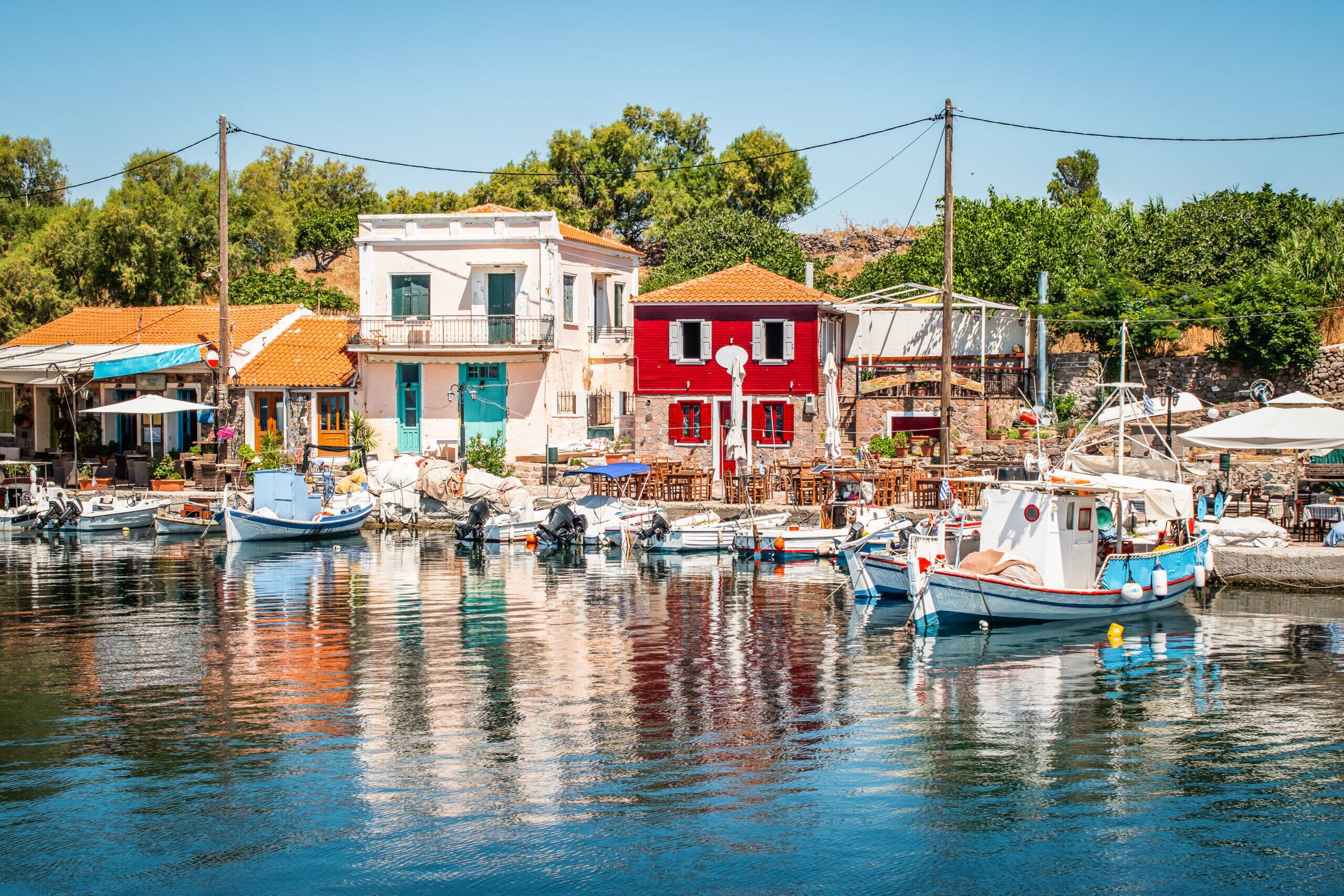
From the first page, Fire on the Island transports you to the lesser-known Vourvoulos — not the Santorini village, but a fictional coastal town in Greece where beauty and hardship coexist. Through deeply evocative writing, Timothy Jay Smith doesn't just paint a scene; he places you right there. You can feel the sun and sense the sea breeze in the air. This is a Greece that tourists rarely see, raw, real, and heartbreakingly human.

shutterstock 1646611345 scaled 2

Plot: Fire, Secrets & Soul

Greek-American FBI agent Nick Damigos arrives to investigate a string of suspicious arsons. As the mystery slowly unfolds, so do the lives of the villagers, complex, conflicted, and deeply intertwined. But while the fire is the plot’s ignition point, the heart of this book lies not in whodunnit suspense, but in its intimate human storytelling; its exploration of grief, identity, belonging, and resilience.
Smith uses the thriller structure as a vessel to explore something much bigger: the emotional and social layers that make up real communities facing real crises.

Characters & Greek Reality: A Village That Feels Alive

What makes Fire on the Island stand out is how deeply rooted in Greek life it feels. Smith doesn’t simply set his story in Greece, but he captures the rhythms, customs, tensions, and nuances of Greek village life with startling accuracy.

The characters, from Vassoula, the unapologetic village siren who flirts with fire in every sense, and Ridi, the Albanian immigrant, to Takis, the gay man and fierce and rebellious Athina, who represents a restless Greek youth. They all reflect different aspects of Greek society and especially, its contradictions.

Even secondary details reflect real Greek life: the stray cats, the gossip in cafés, the mingling of tradition and modernity. And then there is the church, not just a backdrop but a living part of the village ecosystem. In Vourvoulos, as in most Greek communities, the church isn’t only spiritual; it’s social, cultural, and often political. It's where people gather, judge, confess, celebrate, and mourn.
Whether it’s the tolling of bells or the priest appearing as an authority or social figure, the presence of the church helps anchor the novel’s events in a deeply Greek context. Its role is essential, just like in many real Greek villages, where faith and tradition often shape the boundaries of freedom, love, and identity.

By incorporating the church, along with its influence, its expectations and its (not always) silent rules, Smith once again adds another layer of realism to the story. It becomes clear that in Vourvoulos, as in much of Greece, the past is never fully past, and institutions like the church continue to hold both comfort and constraint.

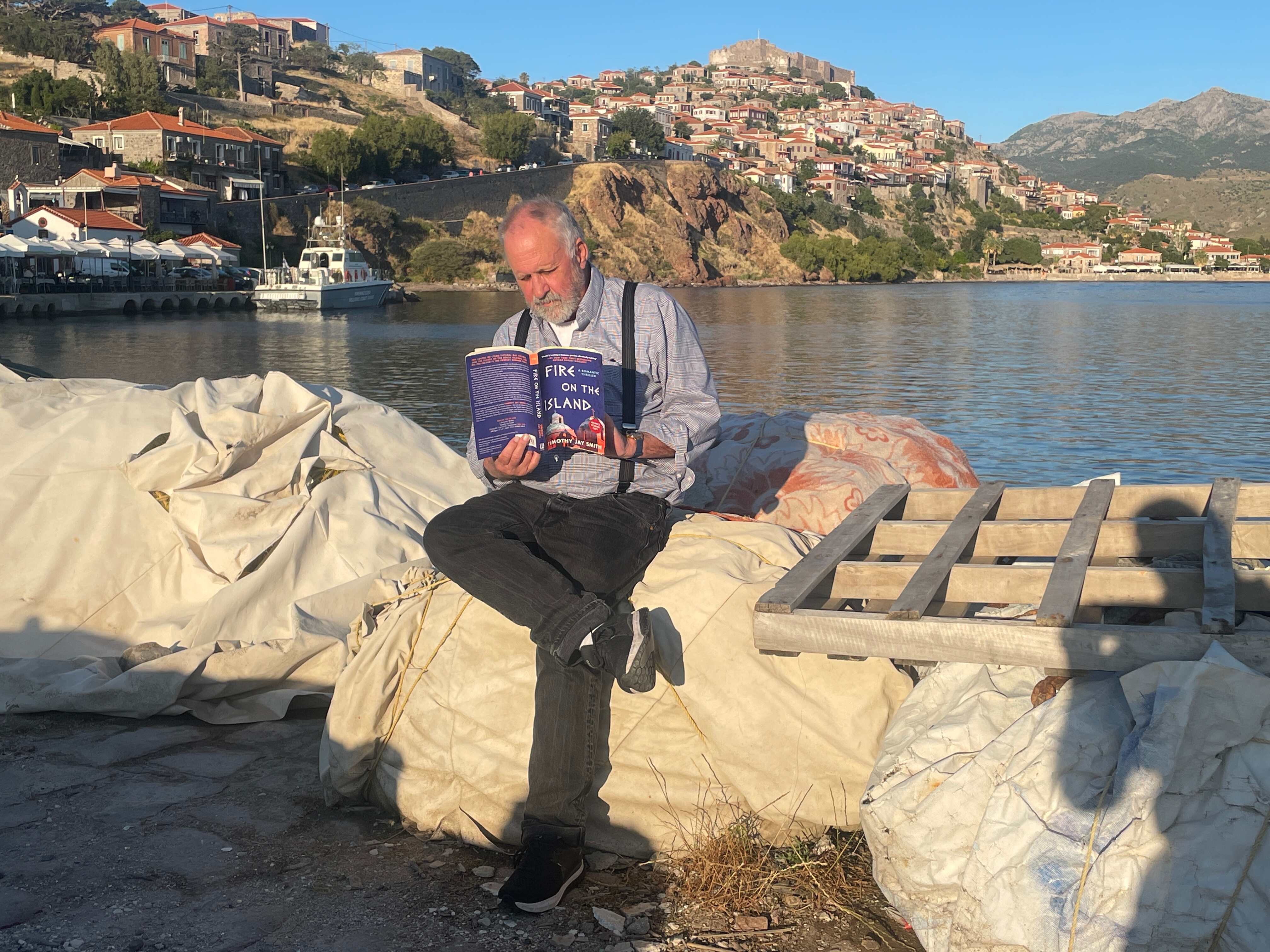
Tim reading in harbor 1

Ready to dive into the story? Get your copy of Fire on the Island HERE!

Feminism & The Matriarchal Undercurrent
 
What may not be obvious at first but becomes strikingly clear is the feminist undercurrent running through the novel. Women, in all their forms and power, are the true emotional and moral anchors of this story.

You have Shirley, the English expat who came all the way from Australia, full of wit, experience, and unflinching strength. Then her daughter Lydia is the force of reason, the one who refuses to accept things at face value. She’s determined to complete the puzzle, to do her own research, to uncover what’s really going on beneath the surface, and she’s not afraid to wrestle with the norms of her community if that’s what it takes. And finally, Lydia’s daughter, Athina, full of fire, questioning everything around her, already a force of disruption in a rigid society.

These three women — grandmother, mother, and daughter — form a matrilineal triad, a modern Greek matriarchy, standing firm in a patriarchal setting. They don’t dominate with violence or ego, but with intelligence, emotion, and endurance. They challenge gender roles with their actions, choices, and refusal to be anyone but themselves.

Themes: Humanity, Hardship & Grief

Timothy Jay Smith masterfully blends social issues with personal, emotional journeys. Fire on the Island it’s about how people survive, adapt, and care in a world full of complexities. Beneath the sun-drenched beauty of Greece lies a community dealing with issues that feel all too real:
  • The refugee crisis, shown not as an abstract problem but through human faces and suffering, especially in Jura’s story who may not be a refugee but experiences the luck of many
  • Xenophobia, both casual and systemic, echoing wider European tensions
  • The suppression of LGBTQ+ identities, especially in small, deeply traditional societies
  • Suicide and the lifelong trauma of adoption, and how these wounds quietly shape lives
  • Sexual firsts, revealing how coming-of-age is rarely what we expect
And deeply present in all of this is griefraw, real grief. Grief for a child lost. Grief for a partner lost. Grief for a life not fully lived. Grief for love denied, for freedom never found, for a sense of home that may never exist.

Smith doesn’t dramatize grief; he honors it. He allows his characters to sit with it, wrestle with it, and sometimes, rise from it. Jura’s heartbreaking loss, Takis’s internal despair, Athina’s aching restlessness, they all carry forms of grief that are deeply human and universally felt.

Yet even with all this weight, the novel doesn’t collapse under it. What emerges instead is a strong current of resilience and compassion. The village is fractured, yes, but some people still show up, with food for refugees, with water, with care for stray animals, with truth, even when it’s difficult. And that’s what Fire on the Island ultimately celebrates: the endurance of kindness, even in a world set ablaze.

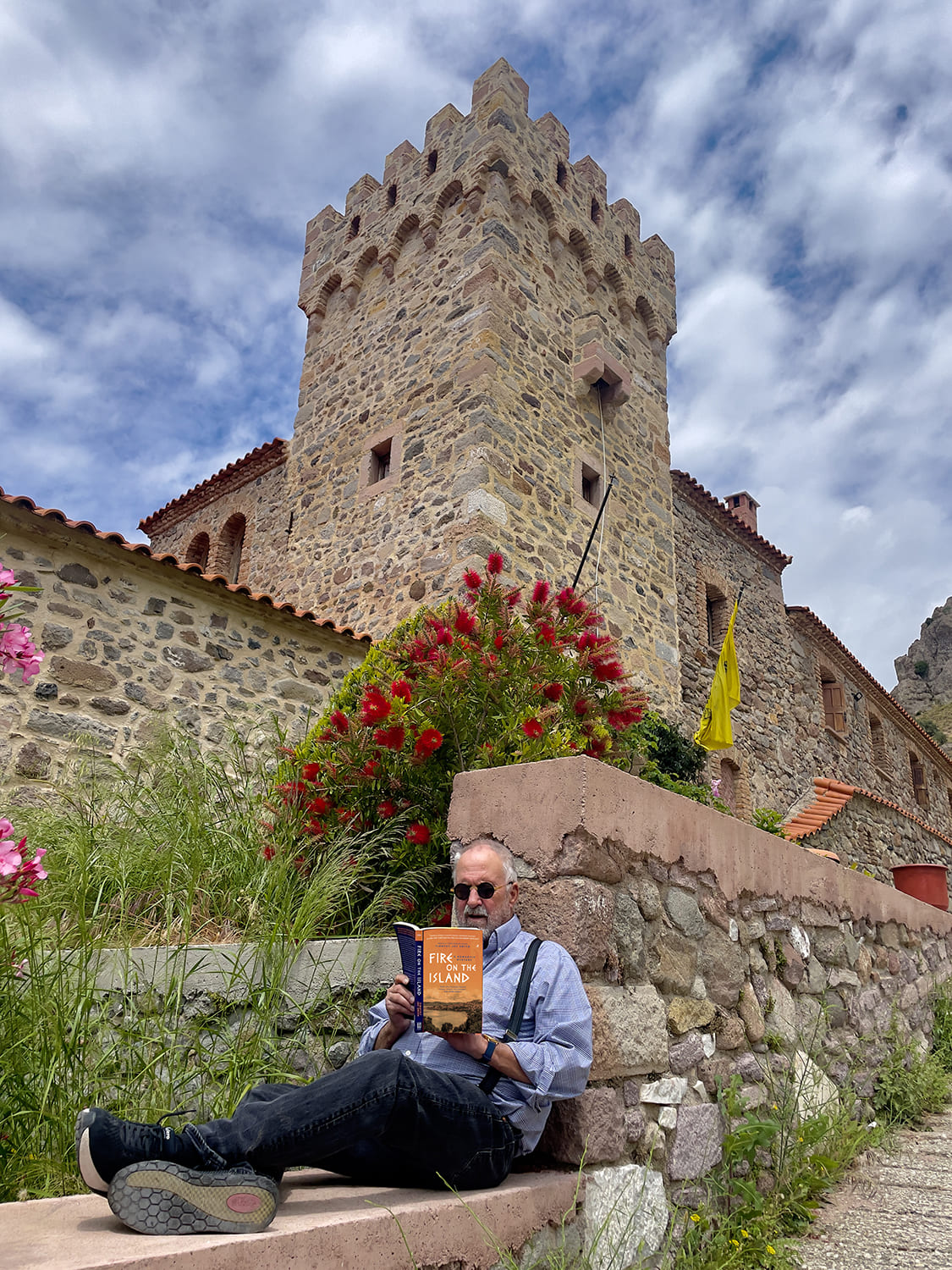
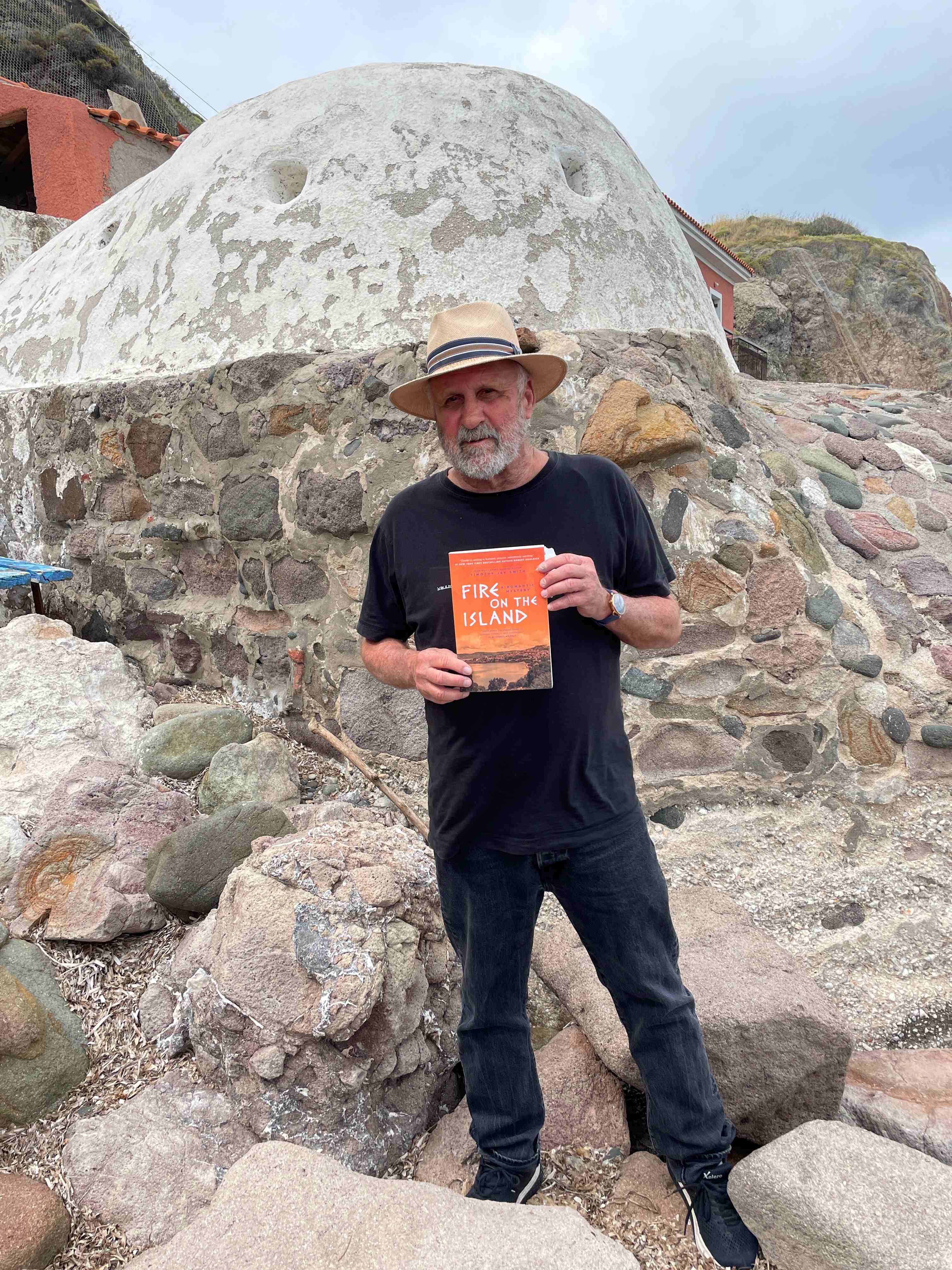
Tim standing outside hammam 1
 

A Moment That Hurts (and Stays)
 
There are many moments in the book that strike the heart, but one scene that stands apart is that of Jura, the immigrant woman who nearly drowns, not metaphorically, but literally, trying to reach Greece. She survives, but her child does not. This moment, soaked in Ancient Greek tragic irony, is written with such emotional precision that it nearly breaks you. It's a quiet, crushing moment that forces the reader to sit with the weight of grief, helplessness, and injustice.

But Light Breaks Through

Despite the heartbreak, there’s joy, connection, and community. There’s the group giving sandwiches to refugees. There’s the care for stray cats, a subtle yet deeply Greek act of grassroots compassion. There’s Dingo, the stray dog Nick saves. In a world full of problems, these small gestures shine bright.

Language: A Truly Greek Story 

The use of Greek language throughout the book is not only charming but grounding. Smith sprinkles Greek expressions and words with effortless precision, giving the reader the feel of the language without ever making it confusing. For readers unfamiliar with Greek, it’s a fun introduction. For Greek readers, it’s a sign of deep cultural respect and accuracy.

It feels like a mini Greek lesson, wrapped in storytelling, one that adds local flavor and roots the novel even deeper in its Aegean soil.

Lived Experience: Why This Story Feels Authentic

What makes Fire on the Island resonate so deeply is that it’s not written from a distance. It’s clear that Timothy Jay Smith has lived and breathed Greece not just visited, but truly experienced it. The villages, the people, the way the sea smells in the morning, the way gossip travels faster than the wind, all of it speaks to someone who knows this world from the inside. And that’s what good writing is: writing what you know, and doing it with honesty and heart.

The characters don’t feel imagined, they feel observed, absorbed, and lovingly recreated. Every one of them could be someone you’ve met in a Greek village. And, perhaps, in a way, they are. There’s a quiet sense that pieces of Timothy himself are woven into each of these people, that their struggles, desires, and contradictions are not only reflections of Greek society, but of a writer who sees and feels deeply.

This is why Fire on the Island doesn't just tell a story but transports you in a lived reality, one only someone who truly knows Greece could portray so truthfully.


Conclusion: A Book That Bears & Shares Real Feelings

Fire on the Island is more than a mystery. It’s more than a Greek village story. It is a novel of human truths, full of emotion, contradiction, warmth, and shadows.

It gives you what every great book should: the feeling that you’ve lived somewhere else, that you’ve felt other lives, that you’ve walked in someone else’s shoes under someone else’s sun. And when you close the final page, you feel a little changed, a little more aware, a little more compassionate, a little more human.

If you’re looking for a book that speaks to the soul, that delivers both tension and tenderness, that brings Greece alive in ways most travel guides never could, Fire on the Island is for you.

Ready to dive into the story? Get your copy of Fire on the Island HERE!
About the Author

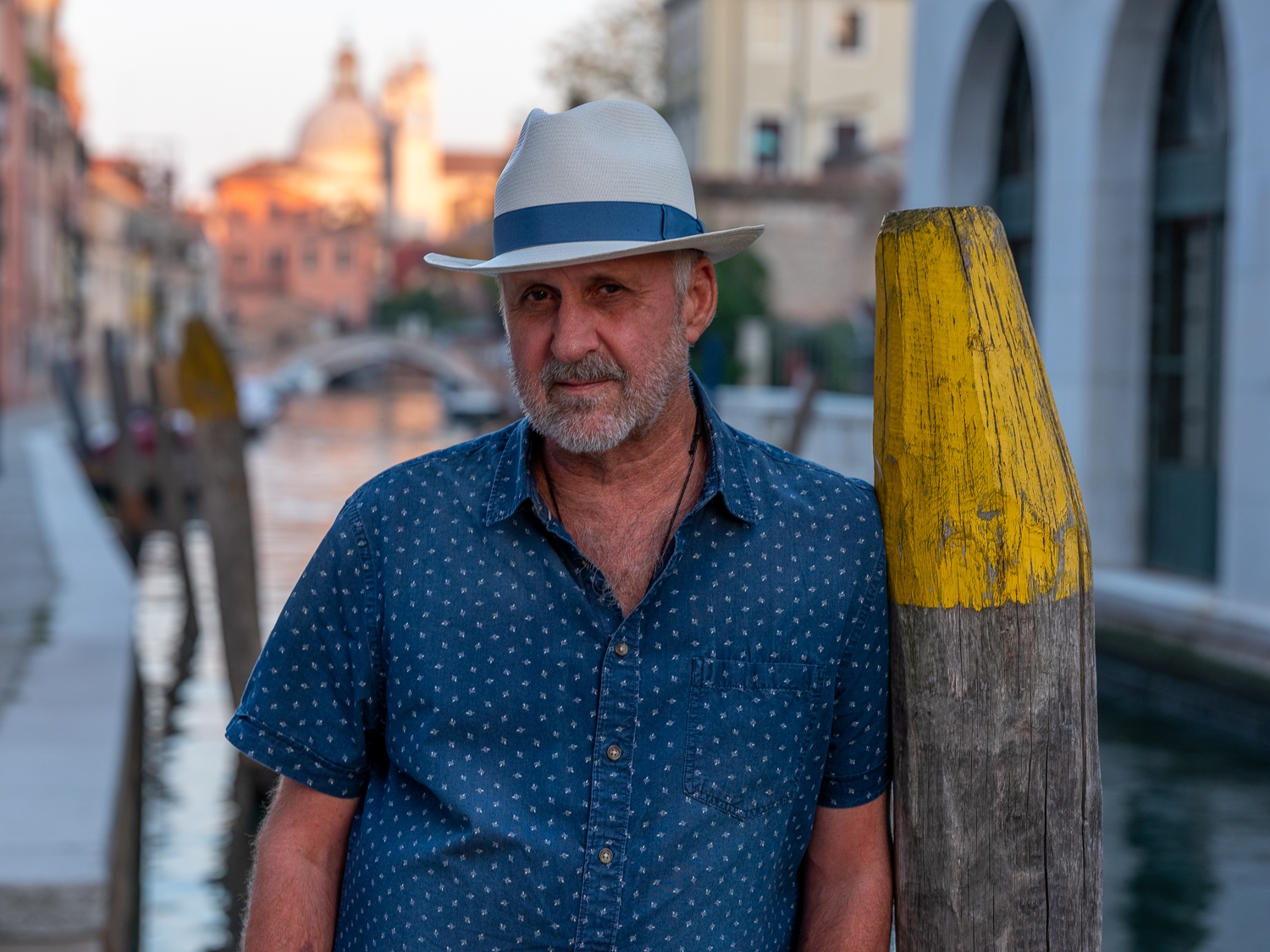
Tim in Venice leaning against yellow pole 2

Timothy Jay Smith
 is a critically acclaimed author with a lifelong passion for Greece. His travels and experiences, from working as a sociologist in Greece to aiding refugees on Lesvos, have inspired his immersive, character-driven stories. An award-winning novelist, screenwriter, and playwright, Smith’s work has garnered numerous accolades, including the Gold Medal in the Faulkner-Wisdom Competition for Fire on the Island not to mention that his screenplay adaptation of it was named Best Indie Script by WriteMovies. His diverse career has taken him around the world, from the streets of Istanbul to the jungles of Africa, giving him a unique perspective that brings depth and authenticity to his writing. Smith’s novels and screenplays have won top honors in competitions, and his stories resonate with readers for their vivid settings, complex characters, and rich social commentary.

Page 31 of 462